
Trade stocks with funded capital
ExploreA short squeeze is a sharp price rally driven by short sellers being forced to buy back the asset they sold. When a heavily shorted stock starts rising, short sellers face growing losses, and their buying to close those positions pushes the price higher still, which forces more of them to buy. The rally feeds on itself until the forced buying runs out.
This guide covers the mechanics, warning signs, famous examples and crypto squeezes, as part of wider risk management in trading.
Quick answer: A short squeeze is a rapid price rise in a heavily shorted asset, caused when short sellers buy back shares to limit losses or meet margin requirements. Their buying adds demand, lifts the price further, and forces more short covering. Squeezes are often triggered by surprise news and usually fade once the forced buying ends.
Highlights of this article
- A short squeeze happens when short sellers are forced to buy back, and their buying drives the price higher still
- Warning signs: high short interest as a % of float, high days to cover, rising borrow fees and a catalyst
- A gamma squeeze adds forced buying from options dealers hedging call options they have sold
- GameStop (January 2021) and Volkswagen (October 2008) are the best-known stock squeezes
- In crypto, squeezes often come from cascading liquidations of leveraged short perpetual positions
- Chasing a squeeze is high risk: entries are late and reversals are fast
What is a short squeeze?
A short squeeze is a rally in which short sellers become forced buyers. In short selling, a trader borrows shares, sells them, and hopes to buy them back later at a lower price and return them to the lender. The profit is the difference between the two prices, minus borrow fees and other costs.
The problem is the shape of the risk. A long position can lose at most 100% of what was paid, because a price cannot fall below zero. A short position has no ceiling on its loss, because there is no ceiling on price.
The chart compares the two positions opened at 100. The short is the mirror image of the long: it gains as price falls, but its loss keeps growing as price rises, with no upper limit. That open-ended loss is the engine of every short squeeze.
| Item | Detail |
|---|---|
| Definition | A rapid price rise in a heavily shorted asset, driven by short sellers buying back to close positions |
| Rule of thumb | Higher short interest as a % of float and higher days to cover mean more potential forced buying |
| Worked example | 30 million shares short, 100 million share float = 30% short interest; 3 million average daily volume = 10 days to cover |
| When it matters | Surprise news, earnings, crowded shorts, tight borrow, heavy call option buying |
| Main risk | Unlimited loss for shorts; late entries and sudden reversals for traders chasing the rally |
| Related terms | Short selling, margin call, gamma squeeze, liquidation |
If you trade this on a funded account, the rules around it matter as much as the setup. Useful next reads: how leverage works at prop firms, how to avoid liquidation on a funded account and the best crypto prop firms.
How does a short squeeze happen, step by step?
A short squeeze follows a sequence: crowded shorts, a trigger, forced covering, and a feedback loop.
- Shorts build up. Many traders short a stock they believe is overvalued. Short interest rises and the price often drifts lower, which reinforces the thesis.
- A catalyst arrives. Better than expected earnings, takeover talk, a product announcement, or a burst of crowd buying surprises the market.
- Losses grow. Every short seller is now losing money, and the loss grows with every tick higher.
- Shorts cover. Some buy back to cut losses. Others are forced to, because a margin call hits as rising prices eat into their equity, or because lenders recall borrowed shares.
- Covering adds fuel. Buying back is buying. The extra demand lifts the price, which forces more shorts to cover.
- Price and volume spike. The loop accelerates and momentum traders pile in on top of the forced buyers.
- The squeeze peaks and fades. Once most shorts have covered, the fuel is gone and the price often falls back sharply.
The chart shows this anatomy on a single stock. The price drifts lower while shorts are in control, then a rally forces them to buy back. Price and volume climb steeply as covering feeds on itself, the move peaks, and then it fades.

What are the warning signs of a short squeeze?
The main warning signs are high short interest, a high days-to-cover figure, expensive or scarce borrow, and a catalyst. None predicts a squeeze on its own; together they describe a crowded trade that could unwind violently.
Short interest as a percentage of float
Short interest is the number of shares sold short. Float is the number of shares available for public trading. Worked example: 30 million shares short in a 100 million share float.
30,000,000 / 100,000,000 = 30% short interest
That is very high; most stocks have far lower short interest. In the US, short interest is published twice a month, so the figure is always somewhat out of date.
Days to cover
Days to cover (the short interest ratio) estimates how many days of normal trading all shorts would need to buy back.
Days to cover = shares sold short / average daily volume
With average daily volume of 3 million shares: 30,000,000 / 3,000,000 = 10 days to cover. Shorts cannot all exit quickly, so if they try, they compete for limited supply and drive the price up.
Borrow fee and availability
To short a stock, a trader must borrow it and pay a borrow fee. When shares are hard to borrow, the fee rises, sometimes sharply, signalling that lendable supply is tight. Lenders can also recall shares, forcing shorts to buy back. Short selling is never free and not always available.
Catalysts
A catalyst is the spark: earnings beats, guidance upgrades, takeover interest, regulatory approvals, or coordinated retail buying. A crowded short without a catalyst can sit for months.
What is a gamma squeeze?
A gamma squeeze is a rally driven by options dealers buying shares to hedge call options they have sold. When traders buy large numbers of calls (contracts that gain value as price rises), dealers usually hedge by holding some of the underlying stock. As price climbs toward the calls' strike prices, dealers must hold more stock, so they buy more, which lifts the price further.
Gamma is the options term for how fast that hedging need changes as price moves. A gamma squeeze can run alongside a short squeeze, so forced buying comes from two directions. For the basics, see call vs put options. Velotrade does not offer options, so gamma squeezes matter to its traders only as a force moving the stocks and ETFs they trade.
What are the most famous short squeezes?
The two best-known short squeezes are GameStop in January 2021 and Volkswagen in October 2008.
GameStop (January 2021). GameStop, a US video game retailer, was one of the most heavily shorted stocks in the market, as the SEC's staff report on the episode documents. Retail traders coordinating on online forums, especially Reddit, bought the shares and call options in large volumes. The price rose many times over within weeks, short sellers took heavy losses, and several brokers restricted buying at the height of the move. The price later fell a long way from its peak. It is often cited as a combined short and gamma squeeze.
Volkswagen (October 2008). Porsche disclosed that it controlled a far larger stake in Volkswagen, partly through derivatives, than the market had assumed. With the state of Lower Saxony also holding a large stake, very few shares were free to trade while short interest was substantial. Shorts scrambled for a tiny supply, and Volkswagen briefly became the world's most valuable company by market capitalisation before falling back.
The founder view: when prices disconnect from fundamentals
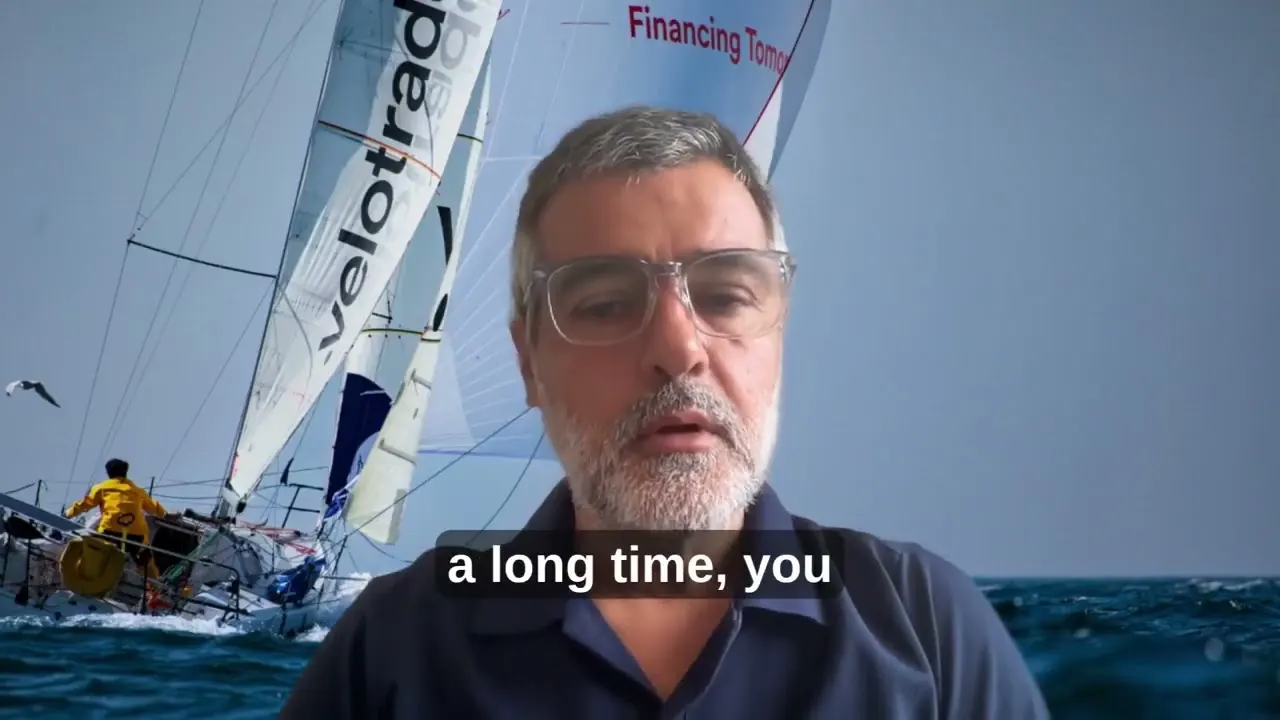
Vittorio De Angelis, Velotrade's co-founder, describes the GameStop rally as "a massive move, and it was completely disconnected from fundamentals." In the video below he discusses why such moves happen and why fundamentals alone are not enough.
 7:20
7:20Read the transcript
Today, a short rant, but an important one, I think. No technical stuff, just a few considerations.
Back in the old days, and I like referring to those, fundamentals were driving trading. I remember the prop desk at Dresdner Bank, sitting next to my desk. They were looking at sectors, and at the themes that were affecting those sectors.
They would then drill in and find catalysts that would explain why a sector should be affected, positively or negatively. Then they would go further in depth and start looking at single names, trying to understand which names had lagged or which had moved too much, whether the general catalyst applied to those names, and whether there were specific events that would trigger interest in them.
It was a very diligent study: very accurate, very tedious, very long. But eventually, once they found the targets, the undervalued company or the overvalued company, they would put on very, very large positions. Their performance was impressive, their P&Ls were staggering. They were very smart and very successful.
The idea underpinning their trading was that ultimately fundamentals do matter, and prices do converge to some sort of fair value.
Now let's fast forward, because the events I'm talking about were at the beginning of the 2000s. One event that was very notable in the financial markets was the rally in GameStop. That was a massive move, and it was completely disconnected from fundamentals.
I remember listening to a very interesting podcast that I still follow diligently, the Prof G podcast. They invited Aswath Damodaran, who is a professor at NYU and is famous for writing books on valuation, fundamental valuation, that have been used in most universities and master's programmes.
I found it rather interesting because the host, Scott Galloway, was asking Damodaran: how do you explain GameStop? You're a fundamentals guy, and you see something so disconnected from fundamentals. How do you justify it?
Damodaran came up with a very interesting answer. He said there are three factors that can explain something like this happening.
One is a total lack of faith in the experts. Once upon a time, experts were regarded as people to follow and listen to. Nowadays, especially the younger cohorts feel that experts don't know what they're talking about.
A second effect, which is tied to technology, is network effects: the Reddit crowd, the possibility of exchanging information, real, fake or not necessarily reliable, very fast.
And third, which is maybe the most worrying part, is a society that is now extremely divided ideologically. I'm referring specifically to the US, where either you're a Democrat or you're a Republican, and your political views affect your trading. Movements in the markets are more and more affected by political decisions, speeches and statements, rather than by fundamental analysis.
Now let's move to another asset class, which is crypto. There are some names in the crypto world that have a massive use. Bitcoin can be seen as a store of value. ETH is powering the new generation of smart contracts. Solana, the same but faster. HYPE, the token of a decentralized exchange, is tied to a business generating real fees.
So these are somewhat fundamentally driven coins. But then you have a whole load of coins, and the most notable is DOGE, which is a meme coin, and nobody's even hiding that. It's an explicitly meme asset, which means it moves on the whims of emotion.
And when you see an asset with no obvious fundamental value being given multi-billion dollar valuations for a long time, you realize that fundamental trading is only part of the story.
All of this to say that, looking forward, I think trading only on fundamentals can be dangerous, because, as Keynes famously put it, markets can remain irrational longer than you can remain solvent.
Valuation is something to bear in mind. I still think it's an important component of a trading decision, but it's not the only one. We have to look at the network effects. We have to see what retail is doing. And this, by the way, applies to all asset classes. Look at the move we saw in gold, which can hardly be anchored to a fundamental explanation.
So my recommendation is: do your work, do your fundamental work, but look outside the box to try to understand what the flows are and what the narratives are.
And this might sound like a contradiction for a value trader, but do look at charts, because charts have the ability to condense information about participants' behavior. Some of the moves you detect in charts might give you insight into the variables we discussed earlier.
I remember this from when I was at university, many, many years ago. A professor gave a lecture on technical analysis, and the whole point of technical analysis, from his perspective back in those days, was that it allows you to find out when the insiders are moving in an asset and when retail is following.
I hope these few words will be helpful in thinking about financial markets in a different way, a modern way, maybe not a better way. But I think that for the foreseeable future, these inefficiencies, these drivers of price that cannot be associated with fundamentals, will remain and might even become prevalent. Thank you.
His conclusion: valuation still matters, but traders should watch flows, narratives and what retail is doing, because charts "condense information about participants' behavior." For short sellers, a thesis can be right on fundamentals and still lose money if the crowd is on the other side.
How do short squeezes work in crypto?
In crypto, short squeezes usually come from liquidations of leveraged short positions on perpetual futures. As BitMEX's perpetual contracts guide explains, a perpetual future (a "perp") is a derivative with no expiry that lets traders go long or short with leverage. When a highly leveraged short moves against the trader, the exchange closes it automatically, which is called liquidation.
Closing a short means buying, so each liquidation adds buy orders. If many shorts sit at similar leverage, one wave of liquidations pushes price into the next, and the move cascades.
Worked example: at 10x leverage, margin is 10% of position size, so a rise of roughly 10% wipes it out. Liquidation comes slightly earlier, once equity falls to the maintenance margin level. At 20x, the buffer shrinks to roughly 5%.
Funding rates (periodic payments between longs and shorts) and open interest are the crypto equivalents of borrow fees and short interest for judging how crowded the short side is.
Why is chasing a short squeeze risky?
Chasing a squeeze is risky because most traders notice it late, when the price has already moved and volatility is at its peak. Broker disclosures and academic studies consistently find that most retail day traders lose money, and squeeze chasing concentrates the conditions behind those losses.
- Late entry. By the time a squeeze makes headlines, much of the forced buying may be done.
- Violent reversals. When covering ends, price can fall as fast as it rose.
- Gaps and halts. A stop order may fill far from its trigger price.
- Wide spreads and slippage. Liquidity thins in extreme moves.
- No reliable timing. High short interest can persist for months without a squeeze.
For short sellers the danger is the reverse. Worked example: a trader shorts 500 shares at $20 and a squeeze sends the price to $60.
($60 - $20) x 500 = $20,000 loss, or 200% of the $10,000 position value.
A long position of the same size could never lose more than $10,000.
How do you manage risk around short squeezes?
Managing squeeze risk comes down to position size, defined exits and avoiding crowded trades you cannot control.
- Check how crowded the short is. Look at short interest as a % of float, days to cover and borrow fee before shorting.
- Size small. Many traders risk around 1% of their account per trade, so a sharp move costs a planned, survivable amount.
- Use a stop-loss, and know its limits. A stop-loss caps losses in normal conditions, but in a gap it can fill well beyond the trigger. Size as if it might slip.
- Avoid holding shorts into known catalysts such as earnings.
- Respect leverage. High leverage turns a squeeze into a liquidation.
- Do not chase. Late entries usually offer a poor risk-reward ratio.
- Review afterwards. Record the trade and your emotions in a trading journal. Fear of missing out is a trading psychology problem as much as a market one.
How do short squeezes affect a prop trading evaluation?
In a prop trading evaluation, a squeeze matters because of how fast it can consume your loss limits. Velotrade, a multi-asset prop trading firm, offers simulated evaluations on crypto, forex, stocks, index ETFs and commodities, with long and short positions. Accounts are simulated, so no real shares are borrowed. Leverage and shorting rules differ between firms, so compare them across the best prop firms first.
The hard limits are the daily loss limit and the static maximum drawdown. The daily loss limit resets at 00:30 UTC and is set from the higher of balance or equity: 5% on CLASSIC 2-Step, 4% on CLASSIC 1-Step and 3% on PRO 1-Step. Position size is limited only by the leverage available per instrument, so an oversized short caught in a fast rally can breach the daily limit within minutes. Single stocks also carry rules around earnings, dividends and holding, including closing positions at least 24 hours before a scheduled earnings release, a common squeeze trigger. See prop firm leverage for how leverage interacts with these limits.
Can AI help with spotting short squeezes?
AI can help with screening and research, but it does not remove the risk. Models can scan many stocks for high short interest, rising borrow costs or unusual call volume, summarise news that might act as a catalyst, and speed up backtesting of trading strategies on past squeeze patterns.
Squeezes depend on crowd behaviour, sudden news and liquidity, which are hard to model and easy to overfit. Position size and timing still need human judgement. For more, see AI trading strategies.
Sources
- SEC, "Staff Report on Equity and Options Market Structure Conditions in Early January 2021" (2021): the GameStop short and gamma squeeze of January 2021.
- SEC, "Key Points About Regulation SHO": how short sales and share borrowing work.
- BitMEX, "Perpetual Contracts Guide": how perpetual swaps and funding work in crypto.
Frequently Asked Questions
About the author

Vittorio De Angelis
Executive Chairman
Former equity-derivatives trader at JP Morgan, Dresdner Kleinwort and Bank of America in London. Later Head of Brokerage at a global broker in Hong Kong.
Velotrade was founded in Hong Kong in 2016 by a team from JP Morgan, Dresdner Kleinwort and Bank of America, has paid out over $2.5 billion to its trade-finance clients, and has been featured in Bloomberg, the Financial Times, the Wall Street Journal and on Nasdaq. Its prop trading evaluations are simulated and educational.
View author page