Trade crypto with funded capital
ExploreCrypto derivatives are contracts whose value comes from the price of a cryptocurrency, such as bitcoin or ether, without the trader owning the coin itself. The three main types are dated futures, perpetual futures and options. Traders use them to hedge, to speculate with leverage, to go short easily and to earn the gap between futures and spot prices.
Quick answer: Crypto derivatives are financial contracts that track the price of a cryptocurrency without transferring the coin. Dated futures settle on a fixed expiry date, perpetual futures never expire and use funding payments to stay near spot, and options give the right but not the obligation to buy or sell at a set price. Most are traded with leverage and margin.
Highlights of this article
- A derivative is a contract that tracks an underlying asset; you trade price exposure, not the coin
- The three main crypto derivatives are dated futures, perpetual futures and options, each with different expiry, cost and risk
- Leverage lets a small margin deposit control a large position, so gains and losses grow by the same multiple
- Four mechanics drive day-to-day risk: the funding rate, mark price, open interest and liquidation
- Hedgers, speculators, market makers and basis traders all use derivatives for different reasons
- Crypto derivatives are high risk, and broker disclosures and academic studies consistently find that most retail traders using leverage lose money
 5:24
5:24Read the transcript
A couple more stories from the trenches. War stories.
The reason I like sharing these stories is to make all investors aware that sometimes an investor sits in front of his screen, has access to a huge amount of information, is very good at looking at charts, but there are always elements that the investor will never know about, or is unlikely ever to know about. Two examples.
The first: I was trading RWE, which is a German utility company, and we had a corporate trade. We called them corporate trades when they were extremely large and generally initiated by a corporate.
The transaction entailed the client going synthetically long RWE, so the client was buying calls and selling puts. I'm not sure why he needed to do that. Maybe he was not allowed to buy more shares, maybe there was some corporate agreement that prevented him from increasing his exposure to the company further.
Anyway, it took us a couple of days, maybe a week, to price the transaction. It was very large. Eventually the client said done, and of course, as I was buying the puts and selling the calls, I had to go and buy the delta in the market, which was a very large transaction.
Then, once the transaction was booked, I also had to hedge the volatility, because this transaction put me very, very long vega. The strike of the put I was buying was much closer to the money than the call I was selling. And at the time I was not overly bullish on volatility. So I went out and sold two or three million dollars' worth of vega, which is a ton of options.
The reason I'm mentioning this is that if you are trading RWE, you can look at all the charts in the world, but you'll never know when the client says done to the investment bank, and you don't know when the bank is going to go out there and execute the delta.
In this case, I had to buy a very large amount of shares. I was buying puts, so I had to hedge the puts. I was selling calls, so I had to hedge those as well. And obviously the flows I was executing hugely distorted the market, at least in the short term.
I had an added bonus on that transaction, because buying puts and selling calls left me long dividends. As I mentioned previously, because of structured products, dividends were priced very low in the market. So when RWE eventually reported results and gave news on the dividend, I made a lot of P&L.
The second example actually cost me, as a professional, a fair amount of money. I believe it was January 2008. There was a trader at Société Générale, Jérôme Kerviel, who had experience in the back office, which is generally a somewhat dangerous combination.
Because once he came to the front office, he started trading and accumulated a massive rogue position. He was able to hide it because he knew how the back office worked. He knew the weaknesses of the reporting systems.
He built a long futures position on, I believe, the Euro Stoxx, the CAC and a bunch of European indices, of around 50 billion euros. When he was eventually caught, unwinding it cost the bank about 4.9 billion euros.
The reason I'm mentioning it is that I had some danger on the downside, meaning I had some structured products in my books that could be dangerous if the market went down. So I decided to buy options on the Euro Stoxx, to buy some gamma.
As I explained previously, if you are long options, the more the market moves, the more money you make. However, to hold long options you are paying theta. When you buy options you have to pay a premium, and that premium decays over time. It can be a really substantial amount of money.
So what happened there? Because Jérôme Kerviel was buying an enormous amount of futures, the market never actually went down. You had occasions on which the US opened 1% or 2% lower and Europe opened flat. Not because the correlation broke down, but because there was an individual buying a huge amount of futures at that level.
So of course my options never performed. They decayed slowly but surely, and it cost me a lot of money.
And that was as a professional, so I had very good access to information. Imagine if you're a retail trader trading the Euro Stoxx and there is an event like that happening. You're obviously at a disadvantage.
I'm not telling people not to trade. I'm sharing my experiences so that next time you think you know it all, you bear in mind that there is a certain amount of information that is not shared. Speak soon.
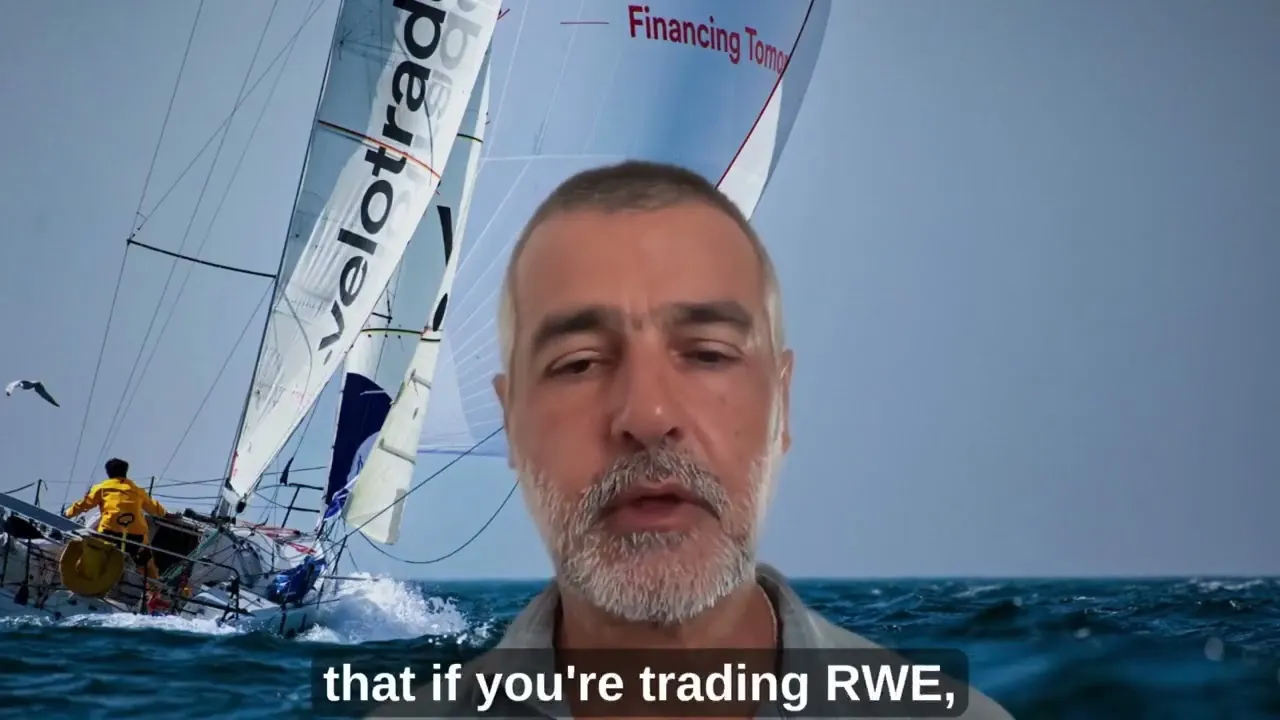
In this video, Vittorio De Angelis, Velotrade's co-founder, shares two stories from his years on bank derivatives desks. His point is that a trader can study every chart and still miss what is happening underneath, because "there are always elements that the investor will never know about". In one example, he describes how hedging a single large options trade meant "the flows I was executing hugely distorted the market, at least in the short term". Crypto derivatives work the same way: positioning, hedging and forced flows move price, not only charts.
Crypto derivatives at a glance
| Item | Detail |
|---|---|
| Definition | A contract whose value is derived from the price of a cryptocurrency (the underlying) |
| Main types | Dated futures, perpetual futures (perps), options |
| How positions are funded | Margin: a deposit that is a fraction of the position's notional value |
| Leverage rule of thumb | Profit or loss = notional x price change %; at 5x, a 1% move equals 5% of your margin |
| Worked example | 1,000 USD margin at 5x = 5,000 USD notional; a 20% fall loses 1,000 USD, the whole margin |
| Key mechanics | Funding rate, mark price, open interest, liquidation |
| Risk per trade | Many risk frameworks cap the loss on one idea at a small share of the account; see risk management in trading |
| Stop placement | Put the stop-loss where the trade idea is wrong, then size the position to it |
| Main risk | Leverage turns a normal price move into a total loss of margin |
| Related terms | Contango and backwardation, cross vs isolated margin, margin call |
Want to try this in a prop firm evaluation? Most evaluations are decided by the loss limits and position sizing more than by the setup itself. Start with how leverage works at prop firms, then how to avoid liquidation on a funded account and the best crypto prop firms.
What is a derivative?
A derivative is a contract between two parties whose value depends on the price of something else, called the underlying asset. In crypto, the underlying is usually a coin such as BTC or ETH, or an index that averages its price across several spot exchanges.
The key difference from buying coins is ownership. Buying 1 BTC on a spot exchange gives you the bitcoin. Going long one bitcoin futures contract gives you a contract that gains if the price rises and loses if it falls, and most crypto contracts settle in cash or stablecoins rather than coins.
What are the main types of crypto derivatives?
The main types of crypto derivatives are dated futures, perpetual futures and options. Each gives exposure to the same underlying price, but they differ in expiry, how the price stays linked to spot, and what the holder can lose.
| Feature | Dated futures | Perpetual futures | Options |
|---|---|---|---|
| Expiry | Fixed date (monthly, quarterly) | None | Fixed date |
| What you hold | Obligation to buy or sell at the contract price | Open position, held as long as margin allows | Right, not obligation, to buy (call) or sell (put) |
| Link to spot | Converges to spot at expiry | Funding payments between longs and shorts | Value depends on spot, strike, time and volatility |
| Main ongoing cost | Basis (premium or discount to spot) | Funding rate, usually every 8 hours | Premium paid upfront, which decays over time |
| Maximum loss for a buyer | Margin, and more if the account is not protected | Margin, and more if the account is not protected | The premium paid |
| Typical venues | Regulated exchanges such as CME, plus crypto exchanges | Mostly crypto-native exchanges | Crypto options venues and regulated exchanges |
What is a dated crypto future?
A dated future is a contract to buy or sell an asset at an agreed price on a set expiry date. Before expiry, its price can sit above spot (a premium) or below it (a discount). At expiry, the futures price converges to the spot index and the contract settles. The shape of these prices across several expiries is called the futures curve, explained in our guide to contango and backwardation.
What is a perpetual future?
A perpetual future, also called a perpetual swap or perp, is a futures contract with no expiry date. According to BitMEX's perpetual contracts guide, BitMEX launched the perpetual swap in 2016, and it has since become the most traded crypto derivative. Because there is no settlement date to pull the price back to spot, perps use a funding mechanism instead. The full mechanics are in our perpetual futures guide.
The chart shows a perpetual contract trading above the spot index while demand from longs is strong. As funding payments make it expensive to stay long, the perpetual price is pulled back toward spot. There is no expiry in this picture, which is exactly why funding exists.
What is a crypto option?
A crypto option gives the buyer the right, but not the obligation, to buy (a call) or sell (a put) the underlying at a fixed price, the strike, on or before expiry. The buyer pays a premium for that right, and the most the buyer can lose is that premium. The seller collects the premium but takes on the obligation, which can mean large losses. Our guide to call vs put options covers the basics with payoff examples.
How do leverage and margin work in crypto derivatives?
Leverage lets a trader control a position larger than the cash deposited, and margin is that deposit. The position's full size is called the notional value. If you post 1,000 USD of margin and open a 5,000 USD position, you are using 5x leverage.
Profit and loss is calculated on the notional, not the margin. Here is the arithmetic:
- Notional value = margin x leverage = 1,000 x 5 = 5,000 USD.
- A 1% price move changes the position by 5,000 x 1% = 50 USD.
- In spot, the same 1,000 USD changes by 1,000 x 1% = 10 USD per 1%.
- A 20% fall costs the futures position 5,000 x 20% = 1,000 USD, the entire margin.
The crypto futures calculator does this arithmetic for any entry, exit and leverage, with fees included.
The chart compares the two lines. The spot holding moves 10 USD per 1% and is down 200 USD after a 20% fall, so the trader still holds the coin and can wait. The 5x futures position moves 50 USD per 1% and its 1,000 USD margin is gone at the same point. In practice, exchanges liquidate earlier, at a maintenance margin level. The full side-by-side comparison is in our guide to crypto futures vs spot.
Exchanges also let traders choose how margin is shared between positions. Isolated margin limits the loss to the margin assigned to one position, while cross margin lets one position draw on the whole account balance. The trade-offs are explained in cross vs isolated margin. For a wider look at how leverage compares inside an evaluation, see prop firm leverage.
What are the key mechanics of crypto derivatives?
Four mechanics drive a derivatives position day to day: funding, mark price, open interest and liquidation.
Who pays the funding rate?
On a perpetual future, longs pay shorts when the funding rate is positive, and shorts pay longs when it is negative. The payment is calculated as position notional x funding rate, and many exchanges settle it every 8 hours, although intervals and caps vary by venue. Funding is paid between traders, not to the exchange.
The chart shows an illustrative 8-hour funding rate over four days. It starts at 0.010%, rises to 0.031% as longs crowd in, turns negative to minus 0.012% when shorts dominate, then returns near zero. On a 10,000 USD long, a 0.031% rate costs 10,000 x 0.031% = 3.10 USD for that period. If that rate held for three periods in a day, the cost would be 9.30 USD. More in our funding rate guide.
Why do exchanges use mark price?
Exchanges use mark price to value open positions and trigger liquidations because the last traded price can be pushed around by a single large order or a thin order book. Mark price is typically built from an index of spot exchange prices plus a basis or premium component, with the exact formula varying by venue. See mark price explained.
What does open interest tell you?
Open interest is the total number of derivatives contracts that are open and not yet closed. Rising open interest means new money is entering positions; falling open interest means positions are being closed. With price, it separates rallies built on new longs from short covering. Our open interest guide walks through the four combinations.
When does liquidation happen?
Liquidation happens when losses reduce a position's margin to the maintenance level set by the exchange, and the exchange closes the position to stop losses from exceeding the collateral. The mechanics are covered in what is liquidation in trading, and the warning stage before it is the margin call.
Who uses crypto derivatives?
Crypto derivatives are used by four broad groups: hedgers, speculators, market makers and basis traders. They often take opposite sides of the same contract for completely different reasons.
| User | Goal | Typical use |
|---|---|---|
| Hedgers | Reduce risk on coins they already hold | A miner or long-term holder shorts futures to lock in a price |
| Speculators | Profit from direction | Long or short perps with leverage, including short selling a falling market |
| Market makers | Earn the spread by quoting both sides | Provide bids and offers, then hedge the inventory in spot or other contracts |
| Basis traders | Earn the gap between futures and spot | Buy spot and sell a dated future at a premium, or collect positive funding |
Hedgers. A bitcoin miner who expects to sell coins in three months can sell a dated future today to lock in a price. If bitcoin falls, the gain on the short future offsets the lower value of the coins.
Market makers. Their hedging is part of the hidden flow Vittorio describes in the video above.
Basis traders. When a dated future trades at a premium to spot, a trader can buy spot and sell the future, then hold both to expiry. The two legs converge, and the trader keeps the premium minus costs. The same idea applies to perps when funding is persistently positive. The risks are fees, margin on the short leg and venue risk. Our crypto arbitrage guide works through an example and explains why prop firms generally prohibit these trades.
What are the risks of crypto derivatives?
The main risk of crypto derivatives is leverage: a move that would be a normal fluctuation in spot can wipe out the whole margin on a leveraged position.
Other risks to understand before trading:
- Liquidation cascades. Clusters of leveraged positions can be forced out together, causing sharp wicks.
- Funding drag. Holding a perp against a crowded side can cost money every funding period, even if price goes nowhere.
- Gaps and slippage. Fast markets can fill a stop well away from its level; see slippage.
- Option decay. Bought options lose time value every day, so a correct view on direction can still lose money if it comes too late.
- Venue and counterparty risk. An exchange can halt trading, change margin rules or fail.
- Behavioural risk. 24/7 markets and high leverage encourage overtrading.
Broker disclosures and academic studies consistently find that most retail day traders lose money, and leverage makes those losses arrive faster. According to ESMA, between 74% and 89% of retail CFD accounts lose money. Practical habits help: risk a small, fixed share of the account per trade, set the stop where the idea is invalid before sizing, and use lower leverage than the maximum available. Our risk management in trading guide covers the full routine. This article is educational and is not investment advice.
What is the difference between spot and derivatives trading?
Spot trading means owning the coin, while derivatives trading means holding a contract on its price, with leverage, easy shorting, ongoing costs and the risk of forced closure.
| Factor | Spot | Derivatives |
|---|---|---|
| Ownership | You own the coin | You own a contract |
| Leverage | None (unless borrowing on margin) | Common, often several times the deposit |
| Going short | Hard; usually needs borrowing | Simple; sell the contract |
| Holding cost | None beyond custody | Funding (perps), basis (dated futures) or premium (options) |
| Forced exit | No, you can wait out a fall | Yes, liquidation if margin runs out |
| Best suited to | Long-term holding | Hedging, shorting, short-term trading |
Where are crypto derivatives traded: regulated or offshore venues?
Crypto derivatives trade on two broad kinds of venue: regulated exchanges and offshore crypto-native exchanges. Regulated venues such as CME list bitcoin and ether futures with fixed expiries, standard contract sizes and centralized clearing, and they are mainly used by institutions and professional traders.
Offshore crypto exchanges carry most perpetual futures volume, often with higher leverage and many more coins. Rules, investor protections and access differ by jurisdiction, so check that a venue is permitted where you live and how it handles client funds.
How does a simulated prop evaluation differ from trading derivatives on an exchange?
A simulated prop evaluation tests your trading with firm-set risk limits on a simulated account, while trading derivatives on an exchange puts your own collateral at risk under that exchange's margin and liquidation rules. If you want to apply derivatives skills on a funded account, compare the best prop firms for crypto traders first.
Velotrade, a multi-asset prop trading firm, offers simulated evaluations across crypto, forex, stocks, index ETFs and commodities. Crypto trades 24/7 with more than 100 instruments on the crypto page. Leverage is set per instrument, shown as challenge then funded: BTC 10x/5x, ETH and SOL 6x/5x, mid-cap crypto 3x/2x and all other crypto 2x/2x. The full list is on /instruments. Velotrade does not offer options.
The cost structure is different from a perpetual exchange. Velotrade does not charge a variable funding rate. It charges a flat overnight rate of 0.05% of notional on crypto positions still open at 00:30 UTC, every day including weekends, the same whether long or short. On a 10,000 USD position, that is 10,000 x 0.05% = 5 USD per night. Commission on crypto is 0.03% per side, or 3 USD per side on the same position. For price comparison, the Velotrade FAQ points traders to the matching KuCoin USDT perpetual symbols on TradingView.
The hard limits are also different. Instead of margin levels and liquidation engines, the official rules are a daily loss limit and a static maximum drawdown. The daily loss limit resets at 00:30 UTC and is set from the higher of balance or equity: 5% on CLASSIC 2-Step, 4% on CLASSIC 1-Step and 3% on PRO 1-Step. Position size is limited only by leverage, there is no time limit, and each phase has a minimum trading period. See static maximum drawdown explained and the full plan list on /challenges. The funded trading vs leverage trading guide compares the two approaches in more depth.
Can AI help with crypto derivatives trading?
AI can help with parts of the work, such as screening contracts for unusual funding or open interest, analysing a trading journal, or testing rules on historical data. Our guides to AI trading strategies and backtesting trading strategies explain the approach, and our crypto trading bot guide covers how automated systems trade perpetuals and their risks.
AI does not remove the risk of leverage, liquidation cascades or sudden gaps. Historical tests can overfit, and models know nothing about the private flows Vittorio describes. Treat any AI output as an input to human judgement, not a signal to follow blindly.
Related reading: Primary vs Secondary Crypto Market.
Related reading: How to Predict Bitcoin's Price Direction.
Sources
- BitMEX, "Perpetual Contracts Guide": perpetual swap origin in 2016 and the funding mechanism.
- BitMEX, "Fair Price Marking": why exchanges use a fair mark price for liquidations.
- Investor.gov (SEC), "Futures contract": definition of a futures contract.
- ESMA, "ESMA agrees to prohibit binary options and restrict CFDs to protect retail investors" (2018): 74% to 89% of retail CFD accounts lose money.
Frequently Asked Questions
About the author

Vittorio De Angelis
Executive Chairman
Former equity-derivatives trader at JP Morgan, Dresdner Kleinwort and Bank of America in London. Later Head of Brokerage at a global broker in Hong Kong.
Velotrade was founded in Hong Kong in 2016 by a team from JP Morgan, Dresdner Kleinwort and Bank of America, has paid out over $2.5 billion to its trade-finance clients, and has been featured in Bloomberg, the Financial Times, the Wall Street Journal and on Nasdaq. Its prop trading evaluations are simulated and educational.
View author page