New to funded trading?
ExploreSpot trading means buying the coin itself and owning it once the trade settles. Futures trading means buying or selling a contract that tracks the coin's price, usually with leverage, the ability to go short, and either an expiry date or a funding payment. The difference matters because the same 10% price move produces very different results in each market. Futures are one branch of the wider family of crypto derivatives, and this guide compares them side by side with spot.
Quick answer: Crypto spot trading is buying or selling a cryptocurrency for immediate settlement, so the buyer owns the coin and can hold it indefinitely. Crypto futures trading is trading a contract on the coin's price, which allows leverage and short selling but adds liquidation risk, expiry or funding costs, and no ownership of the underlying coin.
Highlights of this article
- Spot means you own the coin; futures means you hold a contract on its price and never touch the coin
- Futures allow leverage and easy shorting, so gains and losses move faster than in spot
- On 1,000 USD, spot changes by 10 USD per 1% move, while a 5x futures position changes by 50 USD per 1% move
- A 5x position loses its whole margin after a 20% move against it, often earlier once maintenance margin applies
- Futures carry extra costs (funding on perpetuals, roll costs on dated contracts) and liquidation risk that spot does not have
- The gap between futures and spot prices is called the basis, and it is shaped by contango and backwardation
Funded accounts
Ready to get funded?
Trade up to $200,000 in firm capital with static drawdown, no consistency rule, and payouts within 24 hours. Pass the challenge and keep up to 90% of your profits.
Get funded from $40What is crypto spot trading?
Crypto spot trading is the direct purchase or sale of a cryptocurrency at the current market price, with settlement more or less immediately. If you buy 0.1 BTC on a spot exchange, 0.1 BTC is credited to your account. You can leave it there, withdraw it to your own wallet, send it to someone else, or sell it later.
Three features define spot:
- Ownership. You hold the actual asset. If the price falls 50%, you still own the same number of coins.
- No forced exit. Without borrowing, nobody can close your position because of price moves.
- Custody responsibility. Coins on an exchange carry that exchange's risks; coins in a self-custody wallet are only as safe as your private keys.
What is crypto futures trading?
Crypto futures trading is buying or selling a contract whose value follows the price of a cryptocurrency, without exchanging the coin itself. You post margin (collateral), and the contract's profit or loss is credited or debited to your account as the price moves.
There are two main types:
- Dated (expiring) futures. These settle on a fixed date. Regulated venues such as CME list cash-settled bitcoin and ether futures with monthly expiries. As expiry approaches, the futures price converges toward spot.
- Perpetual futures. These have no expiry. Introduced by BitMEX in 2016, perpetual futures use a periodic funding rate paid between longs and shorts to keep the contract price close to spot. Funding is commonly exchanged every 8 hours, though the interval and caps vary by exchange.
Futures add leverage (controlling a large position with a smaller deposit), easy shorting, and a new risk: liquidation, where the exchange closes your position once losses use up your margin.
Crypto futures vs spot: key facts
| Item | Detail |
|---|---|
| Definition | Spot is owning the coin; futures is a contract on the coin's price |
| Rule of thumb | Futures profit or loss = position notional x percentage price move |
| Worked example | 1,000 USD margin at 5x = 5,000 USD notional, so a 1% move = 50 USD |
| When it matters | Choosing between holding long term and trading short-term moves or shorting |
| Main risk | Futures: liquidation from leverage. Spot: holding through a deep drawdown |
| Related terms | Leverage, margin, liquidation, funding rate, basis, contango |
Crypto futures vs spot: comparison table
| Feature | Spot | Futures |
|---|---|---|
| Ownership | You own the coin | You own a contract, not the coin |
| Leverage | None on plain spot (margin spot accounts exist separately) | Common, from 2x to very high levels depending on venue |
| Shorting | Not possible without borrowing the coin | Built in: sell the contract to open a short |
| Costs | Trading fee and spread | Trading fee and spread, plus funding (perpetuals) or roll costs (dated contracts) |
| Liquidation risk | None without borrowing | Yes, once losses use up the margin |
| Custody | Exchange account or self-custody wallet | Margin held at the exchange; no coin to withdraw |
| Expiry | None | Dated contracts expire; perpetuals do not |
| Tax note | Treatment varies by country; often a disposal of an asset | Treatment varies by country and can differ from spot; check local rules |
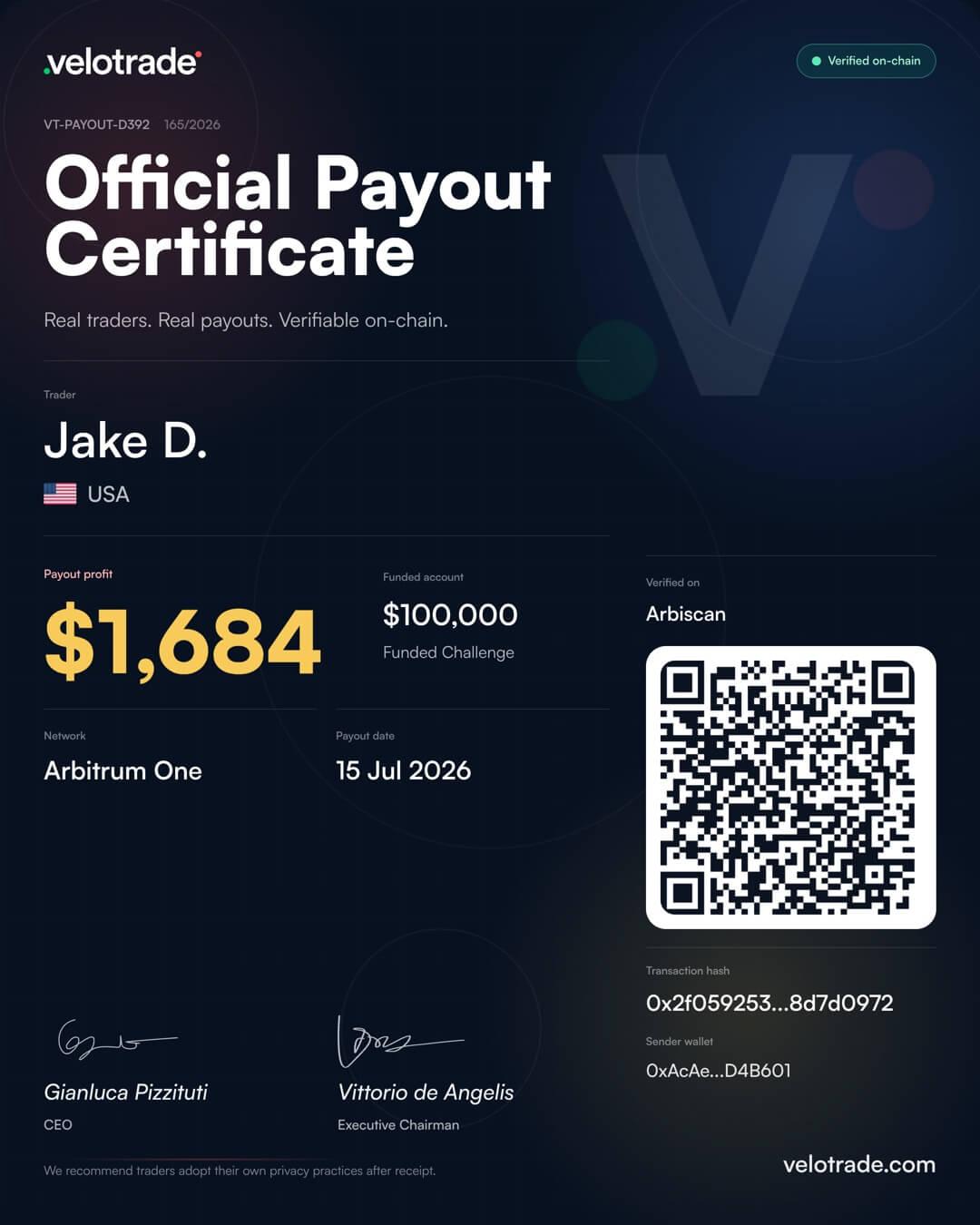
Payout proof
Fast, real payouts. Traceable on Arbitrum.
- Paid within 24 hours of approval
- Settled on Arbitrum in USDC or USDT
- Look up any transaction on Arbiscan

How much more do you make or lose with futures than spot?
With futures, your profit or loss is multiplied by the leverage you use, so a 5x position gains or loses five times as much as the same deposit in spot. The arithmetic is simple, and it is worth doing before every trade.
Take 1,000 USD in each market:
- Spot: 1,000 USD buys 1,000 USD of the coin. A 1% move changes the position by 1,000 x 1% = 10 USD.
- 5x futures: 1,000 USD of margin opens a position with 5 x 1,000 = 5,000 USD of notional. A 1% move changes the position by 5,000 x 1% = 50 USD.
The chart below plots both positions from a 20% fall to a 20% rise.
Reading across the chart:
| Price move | Spot P&L | 5x futures P&L |
|---|---|---|
| +10% | +100 USD | +500 USD |
| +20% | +200 USD | +1,000 USD |
| -10% | -100 USD | -500 USD |
| -20% | -200 USD | -1,000 USD (margin gone) |
At a 20% fall, the spot holder is down 200 USD and still owns the coin. The futures trader has lost the entire 1,000 USD deposit, because 5,000 x 20% = 1,000. In practice the position is usually liquidated before that point, because exchanges require a maintenance margin that must stay in the account. A higher multiple shortens the distance: at 10x, a 10% move against you wipes out the margin.
Spot can wait out a drawdown; a liquidated futures position is closed, and any recovery happens without you.
What does holding a futures position cost?
Holding futures costs more than trading fees, because perpetuals charge funding and dated contracts embed a premium or discount to spot. On a perpetual, funding equals position notional x funding rate. On the 5,000 USD position above, a funding rate of 0.01% per 8 hours means 5,000 x 0.01% = 0.50 USD per interval, or 1.50 USD per day with three intervals. When funding is positive, longs pay shorts; when negative, shorts pay longs. Rates move with positioning, so a long held through a crowded rally can pay far more.
Can you short crypto in spot?
Not directly. To short in spot you must borrow the coin and sell it, which needs a margin account. In futures, you simply sell the contract and profit if the price falls, which is why traders who want to bet on falling prices, or hedge coins they own, usually use futures. Losses on a short grow as price rises; see short selling explained.
What is the basis between futures and spot?
The basis is the difference between a futures price and the spot price of the same coin. If spot bitcoin is 100 (in round numbers) and a contract expiring in 12 months trades at 106, the basis is 6, a premium of 6%.
The shape of the futures curve across different expiries has names. When later contracts cost more than spot, the market is in contango. When later contracts cost less than spot, it is in backwardation.
In the chart, spot is 100. In contango the curve rises to about 106 at 12 months; in backwardation it falls to about 95. Both lines meet spot at expiry, because a futures contract and the coin must be worth the same at settlement. Our guide to contango and backwardation explains what drives each shape.
The basis matters for two reasons. In contango, a long futures position rolled each month gives up part of the premium as each contract converges to spot. And a large premium often reflects heavy demand for leveraged longs; perpetuals have no expiry, so funding pulls their price back toward spot instead.
When does spot fit better?
Spot fits better when you want to own the asset, hold it for months or years, and avoid being forced out by short-term volatility. It suits:
- Long-term holders who can tolerate deep drawdowns
- People who want to withdraw coins to self-custody or use them on-chain
- Beginners still learning how volatile crypto can be
The main risk in spot is that the coin can fall a long way and stay down, but without leverage you cannot lose more than you put in.
When do futures fit better?
Futures fit better when you are trading shorter-term price moves, want to go short, or need to hedge. They suit:
- Active traders with a defined plan and a stop-loss
- Traders who want to profit from falling prices
- Holders who want to hedge a spot position temporarily
The trade-off is that leverage magnifies every mistake. Broker disclosures and academic studies consistently find that most retail day traders lose money, and leverage tends to speed that up. Using futures does not require high leverage; see risk management in trading for sizing by risk.
Common mistakes when moving from spot to futures
- Sizing by margin instead of notional. A 1,000 USD deposit at 5x is a 5,000 USD position, and risk is measured on the 5,000.
- Forgetting holding costs. Funding and roll costs add up on positions held for weeks.
- Using leverage to recover losses. Increasing size after a loss turns small drawdowns into wiped-out accounts.
How does this work in a simulated prop account?
In a simulated prop account, you trade with leverage and can go long or short, but you are trading the firm's evaluation balance rather than buying coins. Velotrade, a multi-asset prop trading firm, offers more than 100 crypto instruments that trade 24/7 on simulated accounts. Leverage depends on the instrument: BTC is 10x in the challenge and 5x once funded, ETH and SOL are 6x then 5x, and mid-cap crypto is 3x then 2x. Our guide to prop firm leverage covers how to use those limits sensibly.
Costs are fixed rather than variable. Velotrade does not charge a variable funding rate. Crypto commission is 0.03% per side on notional, and positions open at 00:30 UTC pay a flat overnight rate of 0.05% of notional, every day including weekends, the same whether long or short. On a 5,000 USD position, that is 5,000 x 0.03% = 1.50 USD per side, and 5,000 x 0.05% = 2.50 USD per night held. For price comparison, the matching KuCoin USDT perpetual symbols on TradingView are the closest reference.
The risk limits also differ. Velotrade's two hard limits are a daily loss limit that resets at 00:30 UTC and is set from the higher of balance or equity (5% on CLASSIC 2-Step, 4% on CLASSIC 1-Step, 3% on PRO 1-Step), and a static maximum drawdown. There is no time limit to pass. The practical lesson is the same as in futures: size so that a normal adverse move cannot hit those limits. For a broader comparison, read funded trading vs leverage trading.
Can AI help you choose between futures and spot?
AI can help with the analysis around the decision, but it cannot make leverage safe. It can screen markets, summarise how volatile an asset has been, review your trade journal for patterns such as oversizing after losses, and run backtesting on rules for entries, exits and position size.
What AI does not do is remove risk. Models trained on past prices can be wrong when conditions change, so use AI as a research aid with human judgement on top; our guide to AI trading strategies covers where it fits.
Frequently Asked Questions
About the author

Vittorio De Angelis
Executive Chairman
Former equity-derivatives trader at JP Morgan, Dresdner Kleinwort and Bank of America in London. Later Head of Brokerage at a global broker in Hong Kong.
View author page