
Run your algo on funded capital
ExploreMost prop firms now allow EAs and trading bots in some form. Whether your bot is allowed depends on the fine print: which strategies are banned, whether third-party EAs count, latency and HFT limits, copy trading rules, limits on running one strategy across accounts, and which platform or API the firm supports.
"EAs allowed" on a sales page tells you very little. One firm allows any EA but bans the strategy it runs; another allows bots only on small accounts, or only if you wrote the code. This guide compares the EA policies of six firms, checked on their official sites and help centres in October 2026, across forex, indices, stocks, commodities and crypto. If you only trade crypto, see the best crypto prop firms for algo traders.
Highlights of this article
- Nearly every major prop firm allows automated trading, but the policy varies by account size, platform and who wrote the code
- High-frequency trading, tick scalping and latency arbitrage are banned almost everywhere; grid and martingale bans vary by firm
- Third-party EAs are the biggest grey area: The5ers and HyroTrader require your own code, FTMO caps allocation for widely used EAs, and FundedNext bans named "challenge passer" EAs
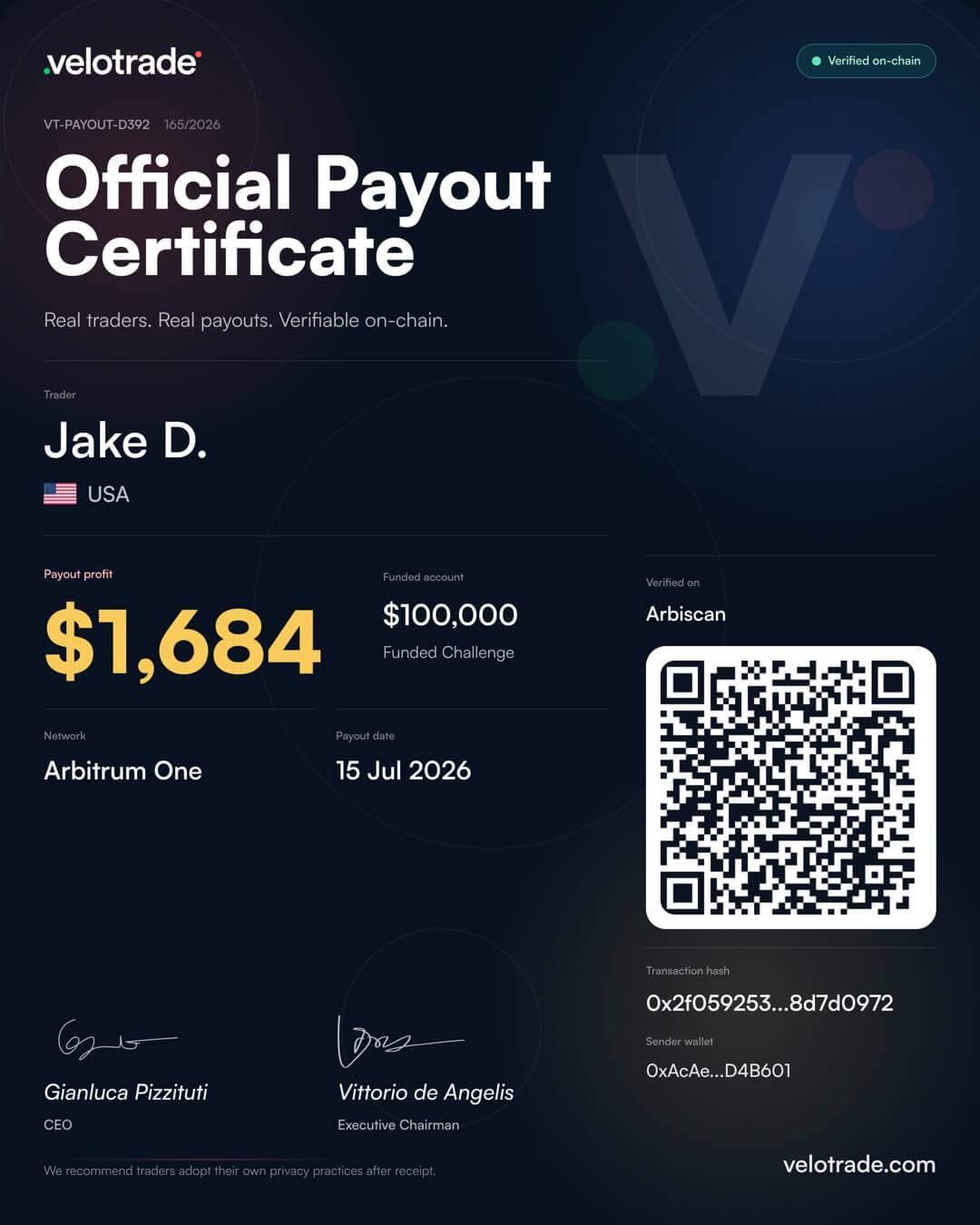
- Velotrade allows EAs, bots, signal services and full API trading on every account through DXtrade, but has no MT4 or MT5, so MQL EAs must be ported
- Before you pay, backtest your bot against the exact daily loss and drawdown limits of the plan you are buying

What "EAs allowed" actually means at a prop firm
An Expert Advisor (EA) is an automated program, originally the MetaTrader term, that reads market data and places or manages orders. Today the same idea covers Python bots, API clients, signal automation and AI-assisted systems. If you are new to it, start with what algorithmic trading is.
Prop firms run simulated evaluations and want to see skill that would survive in a real market. Automation is fine in principle. What they guard against is automation that only profits because the account is simulated, and many traders passing with the same copied system. Almost every rule below comes from those two worries.
Check five things at any firm:
- Is automation allowed on the account type and size you want?
- Are third-party EAs allowed, or only code you wrote?
- Which automated strategies are banned?
- What are the copy trading and multi-account limits?
- Which platform or API does your bot connect to?
EA and bot policies compared (October 2026)
1) Velotrade, best for traders who code their own bots against an API
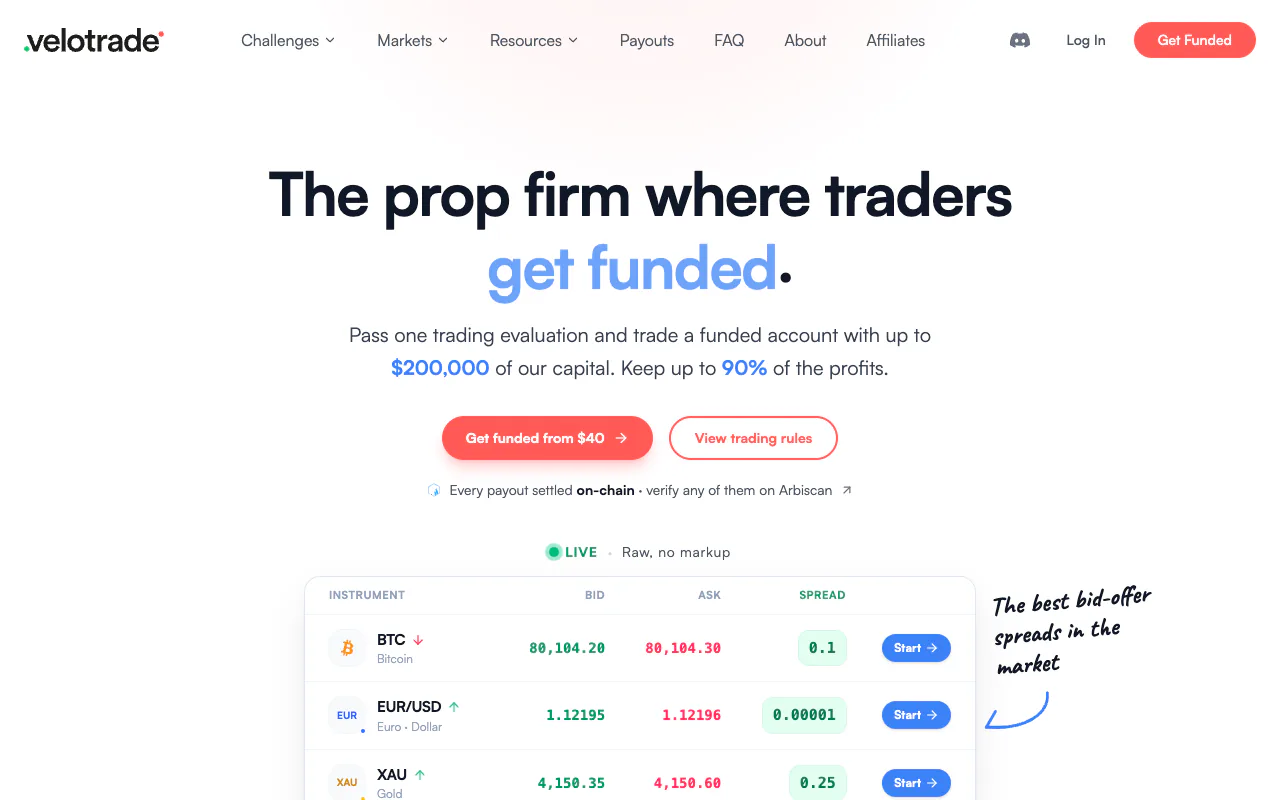
HQ: Hong Kong
Platform: DXtrade (plus REST and WebSocket API)
Max funding: Up to $200,000
Markets: Crypto, forex, stocks, index ETFs, commodities
EA policy: EAs, bots, signal services and API trading allowed on every account; no MT4 or MT5
Velotrade permits EAs, trading bots, algorithmic strategies, AI-assisted trading and public signal services. Programmatic access through the DXtrade REST and WebSocket API is included on every account, evaluation and funded, at no extra cost and with no approval step. See API access for details.
Third-party EAs are allowed; the rules note that other traders may run the same commercial EA, which is not a breach on its own. Copy trading is allowed only between accounts you personally own, and private or invitation-only signal groups are not allowed. VPS hosting is fine as long as only you trade the account.
Prohibited strategy types, as set out in the trading rules:
- Grid trading
- Arbitrage, including latency arbitrage against delayed prices
- Tick scalping
- High-frequency trading, such as placing and cancelling orders within milliseconds
- Martingale and other position-doubling strategies
- Averaging down (repeatedly adding to a losing position) is flagged as risk-abusive behaviour
Velotrade does not offer MT4 or MT5, so an MQL4 or MQL5 EA will not run as-is. You would port the logic to a language that calls the DXtrade API, usually Python or JavaScript. If you only own a compiled EA file with no source code, that is a dealbreaker.
Strengths:
- free REST and WebSocket API on every account, evaluation and funded
- third-party and commercial EAs allowed
- VPS hosting allowed if only you trade the account
Trade-offs:
- no MT4 or MT5, so MQL EAs must be ported
- compiled EA files with no source code cannot be used
- copy trading only between accounts you own
For a full review, see Velotrade review.
2) FTMO, best for running MetaTrader EAs as they are
HQ: Prague
Platform: MetaTrader, cTrader
EA policy: EAs allowed, including third-party, with an allocation limit for widely used EAs
FTMO allows discretionary, algorithmic and EA trading if it reflects real market conditions and could be replicated on a live account. Third-party EAs are allowed, but if many traders run the same EA you can be refused a funded account under its maximum capital allocation rule. Its forbidden practices page bans exploiting price errors or slow feeds, "ultra-high-speed" tools, and EAs that exceed 2,000 server requests per day. Platforms include MetaTrader and cTrader.
Strengths:
- MQL EAs run without porting
- third-party EAs allowed
Trade-offs:
- funded allocation can be refused if many traders run the same EA
- EAs capped at 2,000 server requests per day
For a full breakdown, see FTMO review and FTMO vs Velotrade.
3) FundedNext, best for small MT4 and MT5 EA accounts
HQ: UAE
Platform: MT4, MT5, cTrader, Match-Trader
EA policy: EAs on MT4 and MT5 only, below $50,000, with a paid add-on
FundedNext's CFD accounts are the most restrictive. EAs run only on MT4 and MT5, only on accounts below $50,000, with a paid EA add-on. Accounts of $50,000 and above must be traded manually, and tools that only adjust stop-loss, take-profit or lot size count as EAs. No automation on cTrader or Match-Trader. Each EA must run a distinct strategy without identical trades across FundedNext accounts, one EA strategy is capped at $300,000 of allocation, and named "challenge passing" EAs are banned.
Strengths:
- MQL EAs run on MT4 and MT5 without porting
- third-party EAs allowed with conditions
Trade-offs:
- accounts of $50,000 and above must be traded manually
- EAs need a paid add-on
- no automation on cTrader or Match-Trader
- one EA strategy capped at $300,000 of allocation
For a full breakdown, see FundedNext review and FundedNext vs Velotrade.
4) The5ers, best for EA traders who own their source code

HQ: UK
Platform: MT5
EA policy: Any EA allowed if you own its source code and it avoids banned behaviour
The5ers allows any EA if you own its source code and it avoids banned behaviour: copying others' signals, tick scalping, latency, reverse or hedge arbitrage, HFT and emulators. Stop-losses must be visible, so "stealth" stops are out. It also bans third-party EAs where other traders hold identical trades, and robots that flood the server. Its futures programme is stricter and forbids algorithmic trading.
Strengths:
- broad EA permission for code you own
- clear list of banned behaviour
Trade-offs:
- third-party EAs where other traders hold identical trades are banned
- stealth stop-losses not allowed
- futures programme forbids algorithmic trading
For a full breakdown, see The5ers review and The5ers vs Velotrade.
5) Topstep, best for automating futures through an API

HQ: Chicago
Platform: TopstepX
EA policy: Custom bots through the paid TopstepX API; no VPS for order flow
Topstep is futures only. Custom bots run through the TopstepX API (ProjectX), which costs $29 a month with a discount for Topstep traders. HFT is prohibited, and so are VPS, VPNs and remote servers for order flow: your bot must trade from your own device.
Strengths:
- API access for custom futures bots
- discount on the API for Topstep traders
Trade-offs:
- futures only
- API costs $29 a month
- no VPS, VPN or remote server for order flow
For a full breakdown, see Topstep review and Topstep vs Velotrade.
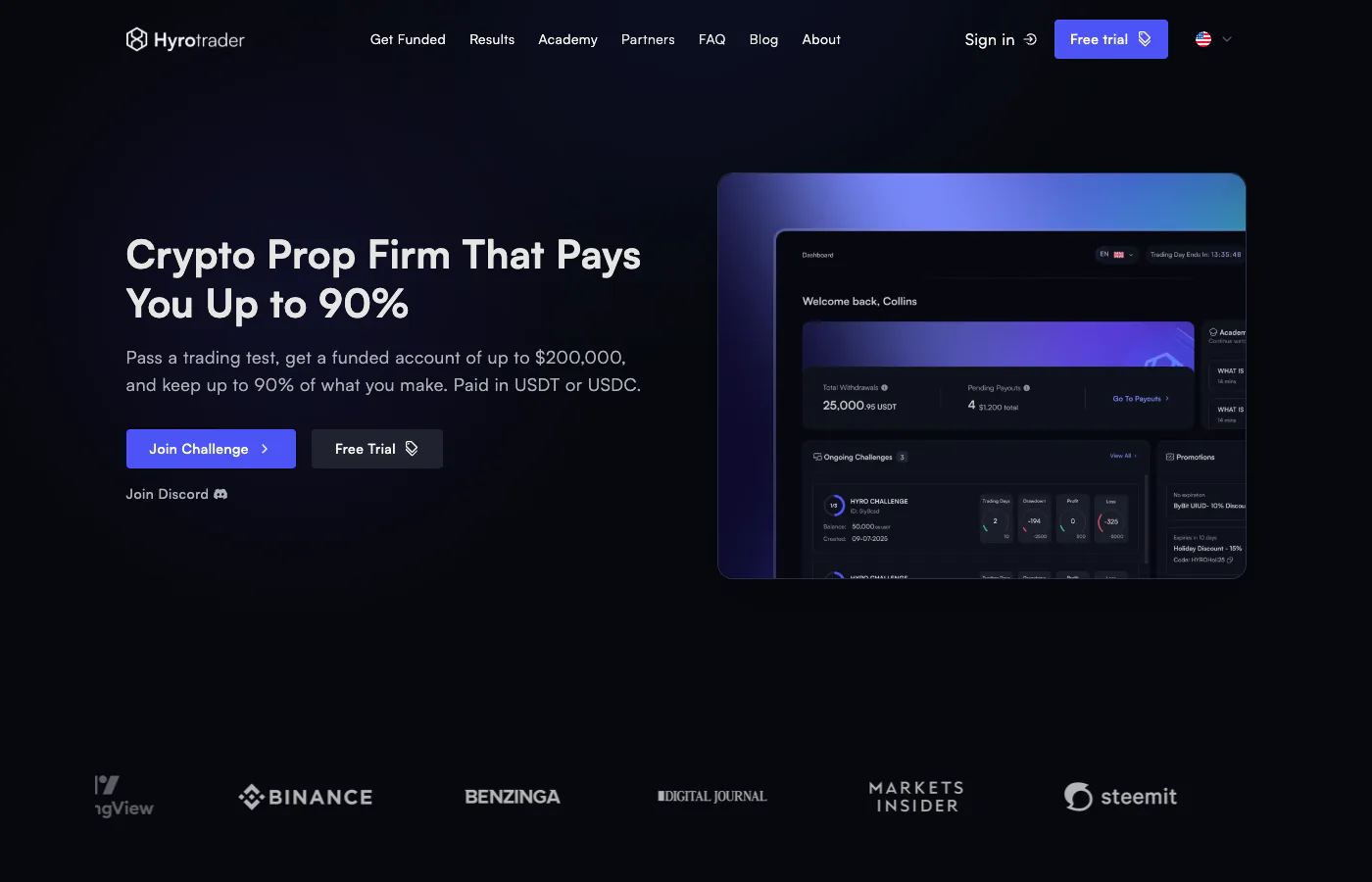
6) HyroTrader, best for crypto traders automating their own strategy
HQ: Slovakia
Platform: Exchange demo APIs and its own platform
EA policy: Own strategy only; purchased systems, copy trading and third-party signals prohibited
HyroTrader is crypto only. Its terms (updated September 29, 2026) permit automating your own strategy, including through its agent token or Model Context Protocol interfaces. Bots running a strategy that is not your own, such as purchased systems, copy trading or third-party signals, are prohibited, as are latency exploits and increasing stakes after losses.
Strengths:
- automation of your own strategy allowed, including agent token and Model Context Protocol interfaces
Trade-offs:
- crypto only
- purchased systems, copy trading and third-party signals prohibited
- increasing stakes after losses prohibited
For a full breakdown, see HyroTrader review and HyroTrader vs Velotrade.

Comparison table
| Firm | EAs or bots allowed? | Third-party EAs | Named automated bans | Platform or API |
|---|---|---|---|---|
| Velotrade | Yes, all accounts | Allowed | Grid, arbitrage, tick scalping, HFT, martingale | DXtrade REST and WebSocket API (no MT4 or MT5) |
| FTMO | Yes | Allowed, allocation limit | Feed exploits, ultra-high-speed tools, over 2,000 server requests a day | MetaTrader, cTrader |
| FundedNext (CFDs) | Under $50K only | Allowed with conditions, named EAs banned | Identical trades across accounts | MT4 and MT5 only |
| The5ers | Yes | Only with source code | Tick scalping, HFT, arbitrage, emulators | Check your programme |
| Topstep | Yes, via API | At your own risk | HFT; no VPS for orders | TopstepX API, paid monthly |
| HyroTrader | Own strategy only | Not allowed | Latency exploits, stake increases after losses | Exchange demo APIs, own platform |
Checked on each firm's official site or help centre in October 2026. Rules change often, so re-read the page for your exact account type before you buy.
Which automated strategies prop firms ban and why
The banned list comes down to two questions: would this profit exist in a real market, and does it show individual skill?
High-frequency trading and tick scalping. Simulated accounts fill orders instantly at quoted prices. A system sending thousands of orders a minute, or holding for seconds to catch a tick, is often harvesting fills real liquidity would never give it, and it can overload servers. That is why FTMO counts server requests.
Arbitrage and latency arbitrage. Buying on a delayed feed and selling when it updates is profit from a technical gap, not a market view. Every firm here bans it in some form.
Grid trading. A grid places orders at fixed intervals with no directional view. It looks smooth in ranges and can blow through a drawdown limit in a trend. See our guide to grid trading bots.
Martingale and averaging down. Doubling size after each loss turns a small edge into a near-certain wipe on a long losing streak, so firms ban it or treat it as risk-abusive.
Copy trading and identical EAs. If hundreds of traders run one purchased bot, the firm is not evaluating anyone's skill and is concentrating risk on one strategy. That explains FTMO's allocation rule, FundedNext's per-strategy cap and the ownership rules at The5ers and HyroTrader.
What survives everywhere: trend following, mean reversion, breakout, momentum and signal-based systems that carry real market risk.
How to check your bot fits the rules before you pay

An allowed bot can still fail in week one because nobody checked its worst day against the firm's limits.
1. Read the rules for your account type. Check the EA, prohibited strategies and copy trading pages for the exact plan and platform you will buy.
2. Confirm the connection. On Velotrade that means the DXtrade API, so plan any port before you pay. See how to run a trading bot on a funded crypto account for setup and how to build a trading bot for the code.
3. Map the drawdown model. Velotrade uses a static maximum drawdown: the floor is fixed from your starting balance and never trails upward, so your bot can treat it as one hard number. A trailing floor moves after every new high and has to be tracked live.
4. Code the daily loss limit exactly. On Velotrade the daily loss limit is set from the higher of your balance or equity at 00:30 UTC, so open profit at the reset raises the reference point. Your bot should read that value daily and halt before the limit, not at it. The rules require automated systems to monitor live P&L and equity and stop before a breach.
5. Backtest against the plan's numbers. PRO 1-Step allows 3% daily loss and 3% static drawdown, CLASSIC 1-Step 4% and 7%, CLASSIC 2-Step 5% and 10%. A system with a 6% historical drawdown fails PRO but can fit CLASSIC 1-Step. Compare them in 1-Step PRO vs 1-Step CLASSIC.
6. Scan for banned behaviour. Count orders per minute and average hold time, and check whether the bot adds to losers or doubles size after a loss.
7. Check hosting and copying. Confirm VPS use is allowed for order flow, and that every account you mirror to is yours.
Which firm fits which automated trader
- You write your own code and want a direct API. Velotrade fits: free API access on every account, static drawdown, no consistency rule, news and weekend trading allowed, and multi-asset coverage across forex, crypto, index ETFs, US stocks and commodities. The limits: no MT4 or MT5, no CME futures, and payouts in USDC or USDT rather than bank transfer. The split is 80%, up to 90% with a paid add-on.
- You run MQL EAs and do not want to port them. FTMO, or The5ers if you own the source code. FundedNext works only below $50,000.
- You bought a commercial EA. Velotrade and FTMO allow it (FTMO may cap allocation if the EA is widely used), FundedNext allows it only below $50,000 and bans named challenge passers, and The5ers and HyroTrader require your own code.
- You automate futures. Topstep's API works, but not from a VPS.
Velotrade has operated since 2016 from Hong Kong. Challenges are simulated evaluations, fees are non-refundable, and Velotrade is not a broker. For the wider field, see the best prop firms.
To compare any two firms rule by rule, use our prop firm comparison tool.
Sources
All pages checked October 2026.
- FTMO, forbidden trading practices
- FTMO, instruments and strategies FAQ
- FundedNext, is EA allowed
- The5ers, EA and stealth stop-loss FAQ
- The5ers, prohibited trading practices
- Topstep, TopstepX API access
- HyroTrader, terms and conditions
Last updated: October 2026. Confirm current EA and prohibited strategy terms with each firm before buying a challenge.
Frequently Asked Questions
About the author

Vittorio De Angelis
Executive Chairman
Former equity-derivatives trader at JP Morgan, Dresdner Kleinwort and Bank of America in London. Later Head of Brokerage at a global broker in Hong Kong.
Velotrade was founded in Hong Kong in 2016 by a team from JP Morgan, Dresdner Kleinwort and Bank of America, has paid out over $2.5 billion to its trade-finance clients, and has been featured in Bloomberg, the Financial Times, the Wall Street Journal and on Nasdaq. Its prop trading evaluations are simulated and educational.
View author page