Run your algo on funded capital
ExploreHigh frequency trading is a form of automated trading where firms use very fast computers, direct exchange data feeds and servers placed next to the exchange to send, update and cancel huge numbers of orders, usually holding positions for seconds or less. Speed is the product. The strategies themselves, market making and arbitrage, are old ideas run at machine timescales.
This guide covers how HFT works, its share of volume, the 2010 flash crash, regulation, why retail traders cannot compete, and why prop firms, including Velotrade, prohibit latency-exploiting HFT.
Quick answer: High frequency trading (HFT) is automated trading that relies on speed measured in microseconds. Firms co-locate servers inside exchange data centres, read direct data feeds, and place and cancel large numbers of orders to earn small amounts per trade from market making and arbitrage. It is a professional infrastructure business, not a retail strategy.
Highlights of this article
- HFT is defined by speed, order volume and very short holding periods, not by a single strategy
- The SEC's 2010 concept release said estimates of HFT volume in US equities "typically are 50% of total volume or higher"
- The 2010 flash crash showed that HFT liquidity can vanish exactly when markets need it most
- Retail traders cannot compete on latency because the edge is bought with co-location, direct feeds and custom hardware
- On Velotrade, HFT that exploits latency or places excessive orders is prohibited, while normal bots and EAs are allowed
Run it on funded capital
Run your bot on a funded account from $40
Bots and EAs are allowed on challenge accounts, with full REST and WebSocket API access at no extra fee, no consistency rule and a static drawdown floor your risk code can rely on.
Get funded from $40High frequency trading: key facts
| Item | Detail |
|---|---|
| Definition | Automated proprietary trading that generates a very large number of orders and trades, with very short holding periods |
| What HFT means | High frequency trading, sometimes called high speed trading |
| Typical holding period | Seconds or less, usually ending the day close to flat |
| Core tools | Co-location, individual exchange data feeds, low-latency networks, fast order routing |
| Main strategies | Passive market making, arbitrage, structural (latency) strategies, short-term directional |
| Share of US equity volume | SEC 2010: estimates "typically are 50% of total volume or higher" |
| Key regulation | SEC Market Access Rule (15c3-5), EU MiFID II algorithmic trading rules |
| Prop firm status | Latency-exploiting HFT is banned at most prop firms, including Velotrade |
What is high frequency trading?
High frequency trading is a subset of algorithmic trading. Every HFT system is an algorithm, but most algorithms are not HFT. What separates HFT is the timescale and the volume of messages.
The SEC's 2010 Concept Release on Equity Market Structure noted that the term "is relatively new and is not yet clearly defined". It described the firms involved as professional traders acting in a proprietary capacity, and listed five characteristics often attributed to them:
- Extraordinarily high-speed computer programs for generating, routing and executing orders
- Co-location services and individual data feeds to minimise latency
- Very short timeframes for opening and closing positions
- Submitting numerous orders that are cancelled shortly after submission
- Ending the trading day as close to flat as possible
The EU's MiFID II takes a similar approach, defining high frequency techniques by low-latency infrastructure, automated order decisions and high message rates. So HFT is a way of operating rather than a single strategy, at the far end of quant trading.
How does high frequency trading work?
HFT works by being first in line. In a continuous limit order book, orders at the same price are generally filled in the order they arrive, so the firm that reacts first to a price change gets the trade.
Co-location and latency
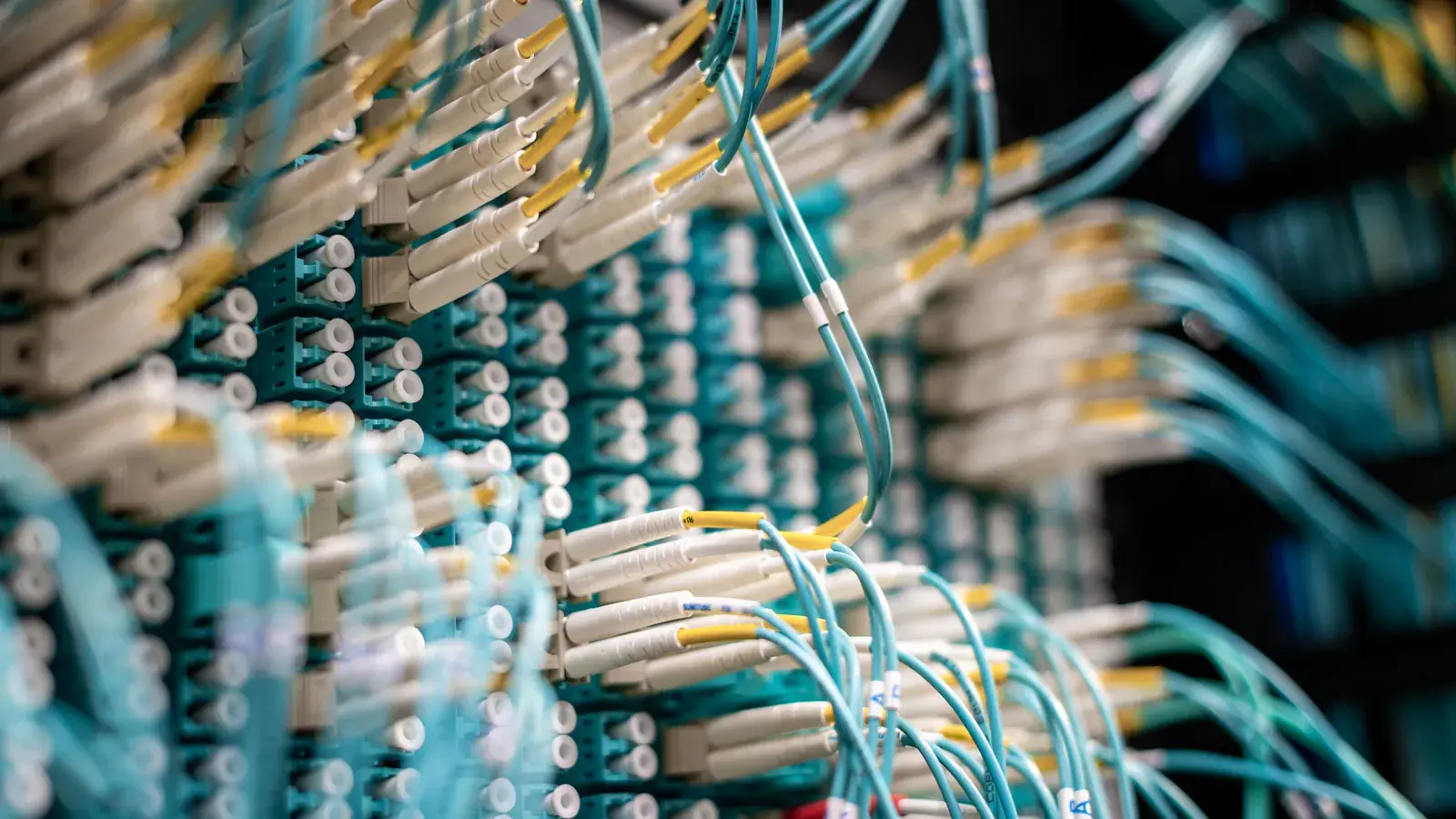
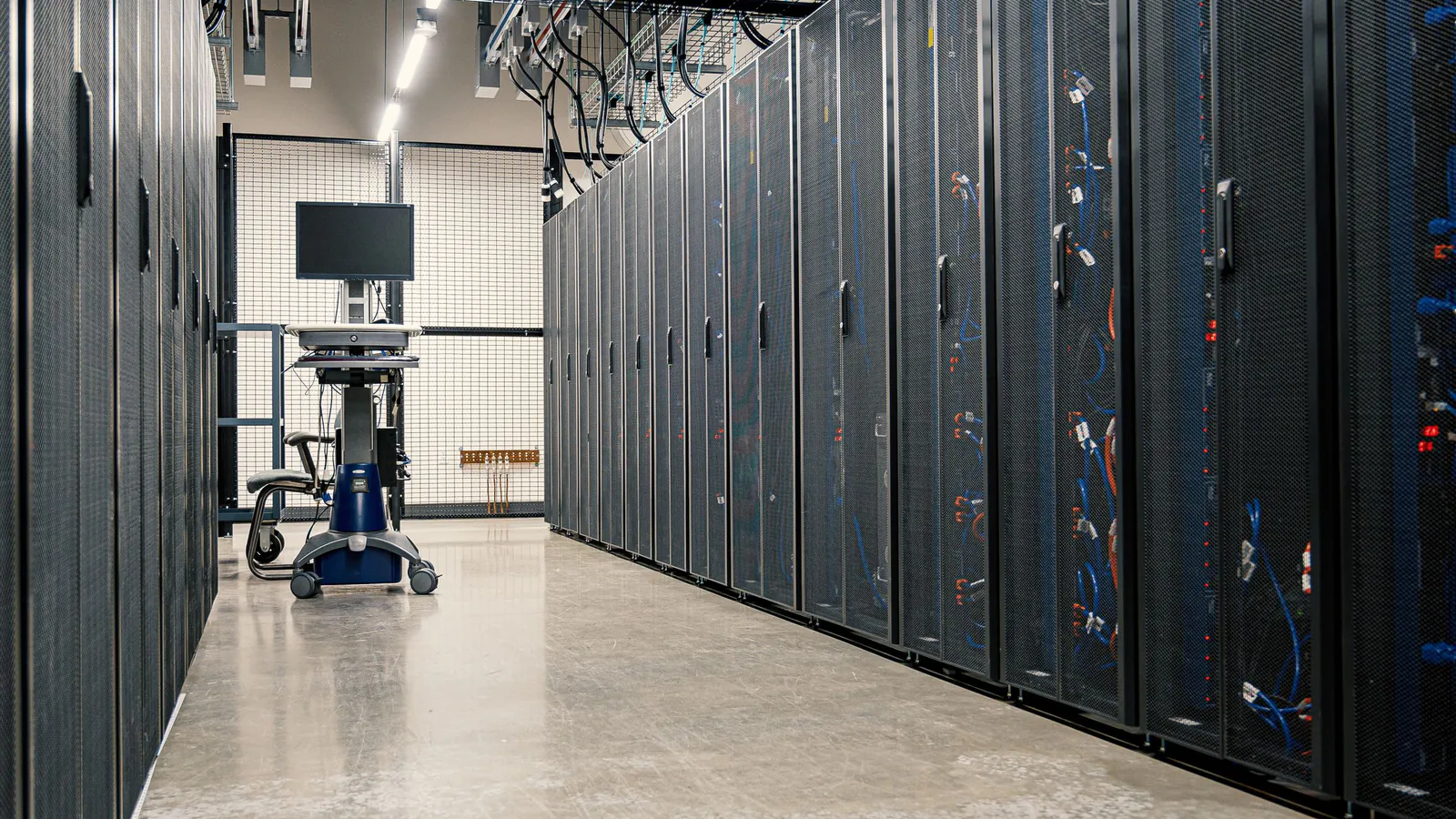
Latency is the delay between an event and your reaction to it. HFT firms cut it by renting rack space next to the exchange's matching engine (co-location), buying each exchange's direct data feed instead of the slower consolidated feed, and using fast networks and custom hardware.
The four main HFT strategy types
The SEC concept release grouped the strategies of these proprietary firms into four buckets.
| Strategy | What it does | How it makes money |
|---|---|---|
| Passive market making | Posts resting bids and offers on both sides of the book | Earns the bid-ask spread and, on some venues, liquidity rebates |
| Arbitrage | Trades price gaps between related products, such as an ETF and its underlying stocks | Buys the cheaper product and sells the more expensive one |
| Structural | Exploits slower participants or market design | Trades against stale quotes before they update |
| Directional | Takes very short-term views on price moves | Predicts the next tick or the next few seconds from order flow |
The structural category matters most for this article. The SEC described firms that, by getting the fastest market data through co-location and direct feeds, "theoretically could profit by identifying market participants who are offering executions at stale prices". That is latency arbitrage, and it is the behaviour prop firms ban. Slower price gaps between digital asset venues are covered in our crypto arbitrage explainer.
The speed arms race
In a 2015 Quarterly Journal of Economics paper, Budish, Cramton and Shim used millisecond exchange data to show that correlations between closely related instruments break down at very short horizons, creating mechanical arbitrage opportunities. Competition had not shrunk those opportunities. It had only raised the bar for how fast you must be to capture them.
Payout proof
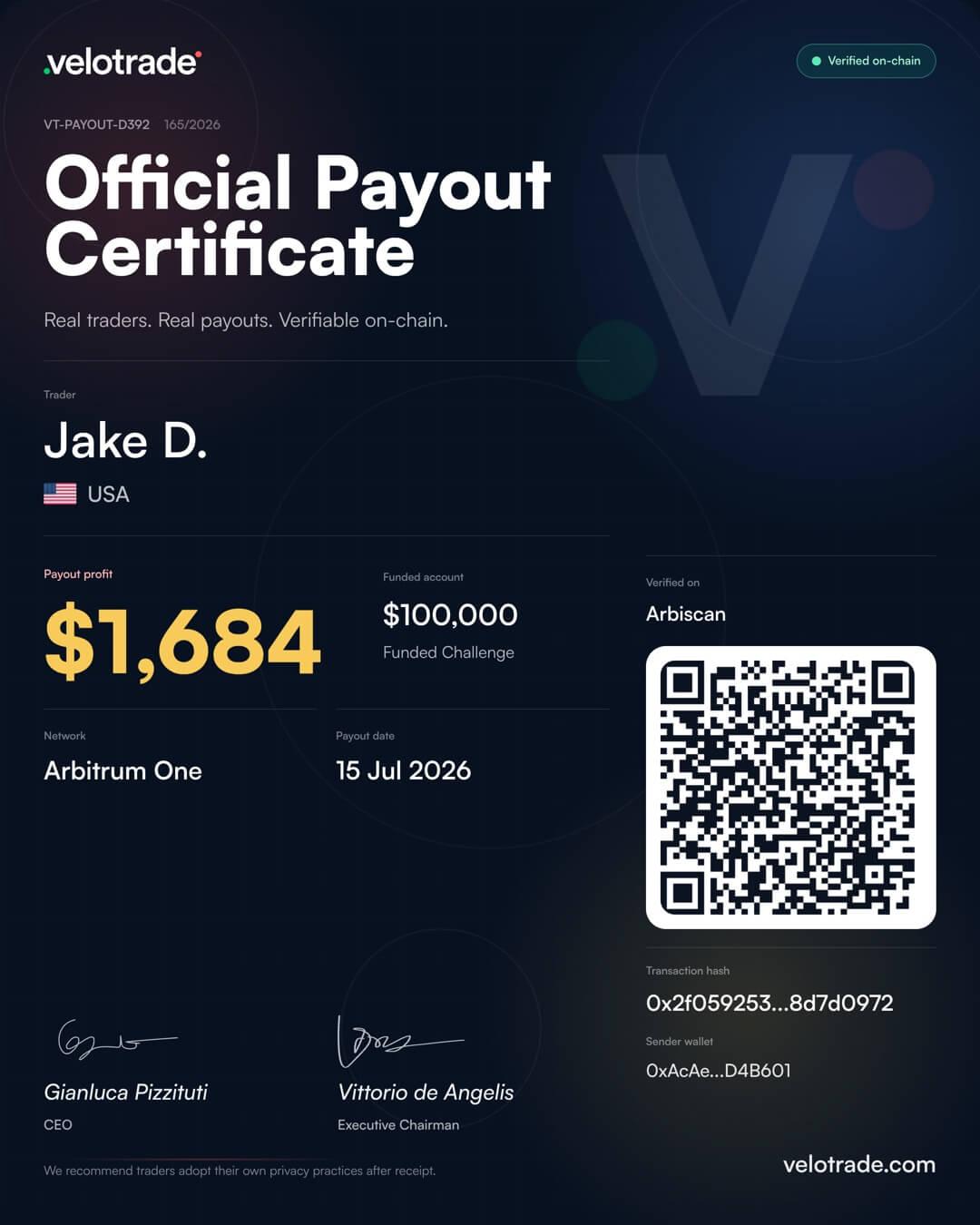
Fast, real payouts. Traceable on Arbitrum.
- Paid within 24 hours of approval
- Settled on Arbitrum in USDC or USDT
- Look up any transaction on Arbiscan

How much of the market is high frequency trading?
No official statistic measures HFT volume precisely, because there is no single legal definition. The most cited figure comes from the SEC. Its 2010 concept release said estimates of HFT volume in equity markets "vary widely, though they typically are 50% of total volume or higher", and concluded that HFT is "a dominant component of the current market structure". The SEC staff's 2014 literature review repeated that estimate, so treat any precise percentage online with caution.
What happened in the 2010 flash crash?
On 6 May 2010, US markets saw one of the fastest crashes in their history. The joint report by the staffs of the CFTC and SEC, "Findings Regarding the Market Events of May 6, 2010", sets out the sequence:
- Major indices, already down over 4% on the day, fell a further 5 to 6% in a matter of minutes before rebounding almost as quickly.
- At 2:32 p.m. a mutual fund complex started an automated program to sell 75,000 E-Mini S&P 500 futures contracts, worth about 4.1 billion USD, targeting 9% of the previous minute's volume "without regard to price or time".
- HFT firms initially bought, then sold aggressively to cut their inventory. Between 2:45:13 and 2:45:27, HFTs traded over 27,000 contracts, about 49% of volume, while buying only about 200 contracts net. The report calls this a "hot-potato" effect.
- Trading in the E-Mini was paused for five seconds at 2:45:28 by the CME's Stop Logic Functionality.
- Over 20,000 trades across more than 300 securities were executed at prices more than 60% away from their values moments before, some at a penny and some at 100,000 USD.
The report identified the large sell program, not HFT, as the trigger. A later Journal of Finance study by Kirilenko, Kyle, Samadi and Tuzun found that the trading pattern of the most active intermediaries, classified as HFTs, did not change as prices fell. As the report itself warns, "high trading volume is not necessarily a reliable indicator of market liquidity."
How is high frequency trading regulated?
HFT is legal in major markets, but it is regulated through rules on market access, risk controls and system resilience rather than a ban.
- SEC Market Access Rule (Rule 15c3-5): adopted in 2010, it requires brokers that give customers market access to apply pre-trade risk controls, such as credit limits and erroneous order checks.
- Circuit breakers: after the flash crash, the SEC worked with exchanges and FINRA on single-stock circuit breakers that paused trading after a 10% move in five minutes.
- MiFID II in the EU: Article 17 requires algorithmic trading firms to have effective systems and risk controls and to notify their regulator, with extra record keeping for high frequency techniques.
Can retail traders do high frequency trading?
Realistically, no. The edge in HFT is not a clever indicator. It is infrastructure that costs far more than a retail account could ever earn back.
| What HFT needs | Professional HFT firm | Typical retail trader |
|---|---|---|
| Location | Servers co-located at the exchange | Home internet or a cloud VPS |
| Market data | Direct exchange feeds | Broker or platform feed |
| Latency | Microseconds | Far slower, over the public internet |
| Order handling | Direct exchange access via a broker's risk filters | Retail platform API with rate limits |
| Costs | Exchange fees and rebates negotiated at volume | Retail spreads and commission |
A retail order travels over the internet and through a platform API, and by the time it arrives professional firms have already reacted. Strategies that earn a fraction of a tick also cannot survive retail slippage, spread and commission. Compete where speed does not decide the outcome: holds of minutes to days and a real market view, the territory of most algorithmic trading strategies and a well-built trading bot.
Can you do high frequency trading on a prop firm evaluation?
No. Velotrade, a multi-asset prop firm offering simulated evaluations, answers "Is high-frequency trading (HFT) allowed?" in its FAQ with: "No. High-frequency trading strategies that exploit latency or place excessive orders are prohibited."
The Velotrade rules go further. Their table of abusive strategy types lists High-Frequency Trading (HFT) as prohibited because it "Relies on executing thousands of orders per minute; outside the scope of human skill evaluation". The same rules name "Latency arbitrage tools designed to profit from differences between delayed and current prices" as a prohibited example of automation abuse.
The API access FAQ lists the automated strategies that are not allowed: "The same strategies that are banned manually: latency arbitrage, tick scalping that exploits platform data feed behavior, and coordinated multi-account bots. Automating a strategy does not exempt it from any rule."
Why prop firms prohibit latency-exploiting HFT
An evaluation measures whether a trader can take and manage genuine market risk. Velotrade prices track KuCoin USDT perpetuals. A system that profits because the platform's quote is milliseconds behind another source is harvesting a technical delay, the "stale prices" behaviour the SEC described. The rules also list tick scalping, which "Enters and exits within seconds to capture tiny movements", among prohibited strategy types, and the API has default rate limits of 10 trading requests per second, so it is not built for order spam.
What fast but allowed trading looks like
Bots, EAs and algorithmic trading are allowed on every Velotrade account, with full REST and WebSocket API access. Fast trading is fine when it involves genuine market risk:
- Normal short-term trading: a scalping or intraday system that holds trades for minutes, based on a real view of price, momentum or order flow.
- Reasonable order rates: orders placed because the strategy wants a position, not streams of orders and cancellations to probe the book.
- One live price source: signals built on the same data you trade, not a faster external feed used to front-run the platform.
- Risk code that respects the limits: the daily loss limit (3% to 5% by plan, set from the higher of balance or equity at 00:30 UTC) and the static maximum drawdown apply to bots exactly as to manual trades.
If you are unsure whether a fast strategy crosses the line, check the FAQ and rules, or ask support before you run it.
Funded accounts
Ready to get funded?
Trade up to $200,000 in firm capital with static drawdown, no consistency rule, and payouts within 24 hours. Pass the challenge and keep up to 90% of your profits.
Get funded from $40For an individual trader, HFT is a cost you pay indirectly through spreads, not a strategy you can copy. Learn more in the algo section of the learning library.
Sources
- SEC, "Concept Release on Equity Market Structure" (2010): HFT characteristics, the four strategy types and the 50% volume estimate.
- CFTC and SEC staff, "Findings Regarding the Market Events of May 6, 2010": the joint flash crash report.
- CFTC, Statement by Chairman Gensler and SEC Chairman Schapiro on the joint report regarding May 6: release of the flash crash findings.
- SEC staff, "Equity Market Structure Literature Review Part II: High Frequency Trading" (2014): review of academic research on HFT.
- Budish, Cramton and Shim, "The High-Frequency Trading Arms Race", Quarterly Journal of Economics (2015): mechanical arbitrage and the speed race.
- Kirilenko, Kyle, Samadi and Tuzun, "The Flash Crash: High-Frequency Trading in an Electronic Market", Journal of Finance (2017): HFT behaviour on 6 May 2010.
- Federal Register, "Risk Management Controls for Brokers or Dealers With Market Access" (2010): SEC Rule 15c3-5.
- EUR-Lex, Directive 2014/65/EU (MiFID II): EU rules on algorithmic and high frequency trading.
Velotrade provides education and simulated trading only. It is not a broker, bank or regulated financial institution, and nothing in this article is investment advice. Trading carries risk. Always confirm current rules before running any automated system.
Frequently Asked Questions
About the author

Vittorio De Angelis
Executive Chairman
Former equity-derivatives trader at JP Morgan, Dresdner Kleinwort and Bank of America in London. Later Head of Brokerage at a global broker in Hong Kong.
Velotrade was founded in Hong Kong in 2016 by a team from JP Morgan, Dresdner Kleinwort and Bank of America, has paid out over $2.5 billion to its trade-finance clients, and has been featured in Bloomberg, the Financial Times, the Wall Street Journal and on Nasdaq. Its prop trading evaluations are simulated and educational.
View author page