
Run your algo on funded capital
ExploreCrypto arbitrage means buying a cryptocurrency where it is cheaper and selling it where it is more expensive at the same time, aiming to keep the price gap as profit. Because crypto trades on hundreds of separate exchanges with no single official price, those gaps appear often. Most of them are smaller than the fees, transfer delays and slippage needed to capture them.
This guide covers the main types, a worked example with real costs, the risks, and how arbitrage is treated on a prop firm evaluation.
Quick answer: Crypto arbitrage is the practice of exploiting price differences for the same or related crypto assets across exchanges, trading pairs or contracts. The main types are cross-exchange, triangular, funding rate or basis (cash-and-carry), and DEX versus CEX arbitrage. Profits are usually thin, and transfer delays, fees and exchange failures are the main risks.
Highlights of this article
- Crypto arbitrage profits from price differences between venues, trading pairs or contracts
- Academic research found large, recurring arbitrage gaps in crypto, much larger across countries than within them
- In the worked example, a 0.5% gap leaves about 0.23% after fees and slippage, or a 0.44% loss if price moves during the transfer
- Cash-and-carry captures the gap between futures and spot, which BIS research found can reach up to 60% a year in boom periods, with real liquidation risk
- Counterparty risk is real: an exchange holding your arbitrage balance can freeze withdrawals or fail
- Arbitrage strategies are prohibited on Velotrade evaluations and funded accounts; this article is an educational explainer of arbitrage with your own capital on exchanges
Funded accounts
Ready to get funded?
Trade up to $200,000 in firm capital with static drawdown, no consistency rule, and payouts within 24 hours. Pass the challenge and keep up to 90% of your profits.
Get funded from $40Crypto arbitrage: key facts
| Item | Detail |
|---|---|
| Definition | Buying and selling the same or related crypto assets in different places to capture a price difference |
| Main types | Cross-exchange, triangular, funding rate or basis (cash-and-carry), DEX versus CEX |
| Why gaps exist | Fragmented exchanges, capital controls, transfer times, uneven liquidity |
| Typical gap after costs | Often a fraction of a percent, or negative |
| Biggest costs | Trading fees, withdrawal fees, slippage, bid-ask spread |
| Biggest risks | Transfer delays, exchange failure or frozen withdrawals, liquidation on leveraged legs |
| Prop firm status | Arbitrage is listed as a prohibited strategy at Velotrade |
What is crypto arbitrage?
Textbook arbitrage is risk-free: buy and sell the same thing at the same moment at two prices. In crypto, the "same moment" is rarely true, because you often need to move coins between exchanges or hold one leg longer than the other. That gap in time is where the risk comes in.
Why do crypto prices differ at all? In a 2020 study in the Journal of Financial Economics, Makarov and Schoar found that "cryptocurrency markets exhibit periods of large, recurrent arbitrage opportunities across exchanges". These deviations were much larger across countries than within them, pointing to capital controls as a key reason the gaps persist.

Easy gaps are closed quickly by bots. The gaps that stay open usually exist because something stops capital from moving: withdrawal limits, banking restrictions, slow networks or an exchange people do not trust.
What are the main types of crypto arbitrage?
There are four common types, each with a different source of profit and a different main risk.
| Type | How it works | Main risk |
|---|---|---|
| Cross-exchange | Buy on exchange A, sell on exchange B | Price moves during the transfer |
| Triangular | Trade three pairs on one exchange, for example USDT to BTC to ETH to USDT | Gap is smaller than three sets of fees |
| Funding rate or basis (cash-and-carry) | Long spot, short a perpetual or dated future | Funding flips, margin calls on the short leg |
| DEX versus CEX | Trade a gap between an on-chain pool and a centralised exchange | Gas costs, front-running bots, smart contract risk |
Cross-exchange arbitrage
This is the simplest version. If Bitcoin is quoted lower on one exchange than another, you buy on the cheaper one and sell on the more expensive one. There are two ways to do it:
- Transfer method: buy, withdraw the coins, deposit them on the second exchange, then sell. Cheap on capital, but exposed to price moves while the coins are in transit.
- Pre-funded method: hold coins and stablecoins on both exchanges, buy on one and sell on the other at the same moment, then rebalance later. This removes transfer risk but needs twice the capital and leaves more money sitting on exchanges.
Triangular arbitrage
Triangular arbitrage happens on a single exchange across three trading pairs. If the ETH price implied by BTC/USDT and ETH/BTC differs from the direct ETH/USDT price, you can loop through all three and end with more USDT than you started with. No transfers are needed, but you pay three trading fees.
A quick illustration: with BTC/USDT at 60,000, ETH/BTC at 0.0500 and ETH/USDT at 3,010, the implied ETH price is 3,000, a 0.33% gap. Starting with 10,000 USDT and paying 0.1% per trade, the loop ends with about 10,003 USDT. Three fees took roughly 90% of the gap, before any slippage.
Funding rate and basis arbitrage (cash-and-carry)
A perpetual futures contract has no expiry. To keep its price close to spot it uses a funding rate: when funding is positive, longs pay shorts. A cash-and-carry trade buys the coin on the spot market and shorts the same amount of the perpetual. Price moves roughly cancel out while funding is collected.
With dated futures, buying spot and selling a future priced above spot locks in that gap, the basis, if both are held to expiry.
Research from the Bank for International Settlements (BIS) on "crypto carry" found that the gap between futures and spot prices can become very large, up to 60% a year, and averaged above 10% a year for Bitcoin and Ethereum in its sample. The same paper explains why it is not free money: running cash-and-carry "is risky due to spikes in margins and liquidations amid drawdowns". When prices surge, the short futures leg needs more margin. If it is liquidated, the trader is left with an unhedged long position at the worst moment.
DEX versus CEX arbitrage
Decentralised exchanges (DEXs) price tokens through on-chain liquidity pools, so their prices can drift from centralised exchanges (CEXs). Arbitrage bots buy on the cheaper venue and sell on the other, which keeps pool prices in line.
The paper "Flash Boys 2.0" by Daian and co-authors documented bots bidding against each other for transaction ordering to capture these opportunities, which the Ethereum documentation calls maximal extractable value (MEV). A visible arbitrage transaction can be front-run by a bot paying higher fees, and gas costs make small gaps rarely worth it.
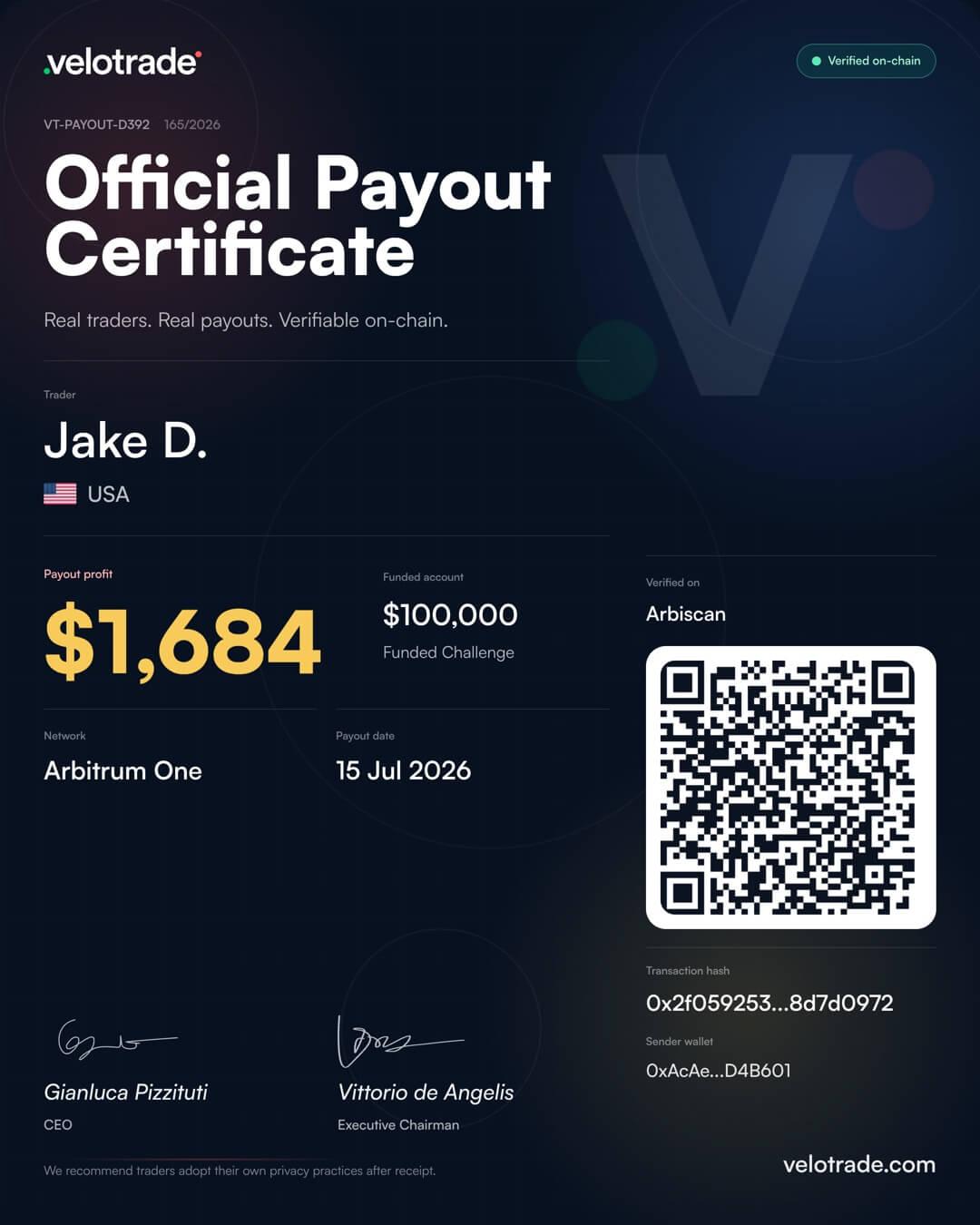
Payout proof
Fast, real payouts. Traceable on Arbitrum.
- Paid within 24 hours of approval
- Settled on Arbitrum in USDC or USDT
- Look up any transaction on Arbiscan

Crypto arbitrage worked example: fees, transfer time and slippage
Here is a cross-exchange trade using the transfer method. The prices and fees below are illustrative assumptions, chosen to be in a realistic range. Always check the actual fee schedule of each exchange.
Setup
- Exchange A best ask: 60,000 USD per BTC
- Exchange B best bid: 60,300 USD per BTC, a 0.5% gap
- Trading fee: 0.1% per trade on both exchanges
- Withdrawal fee on exchange A: 0.0002 BTC
- Slippage when selling on B: 0.05%
- Assumed transfer and confirmation time: 40 minutes
Step 1: buy on exchange A. 1 BTC at 60,000 USD plus a 60 USD fee costs 60,060 USD.
Step 2: withdraw and transfer. The 0.0002 BTC withdrawal fee leaves 0.9998 BTC arriving on exchange B after about 40 minutes.
Step 3: sell on exchange B. The result depends on what the price does during those 40 minutes.
| Gap still open | Price fell during transfer | |
|---|---|---|
| Exchange B bid on arrival | 60,300 USD | 59,900 USD |
| 0.9998 BTC at that bid | 60,287.94 USD | 59,888.02 USD |
| Slippage (0.05%) | minus 30.14 USD | minus 29.94 USD |
| Trading fee (0.1%) | minus 60.26 USD | minus 59.86 USD |
| Proceeds | 60,197.54 USD | 59,798.22 USD |
| Total cost (Step 1) | 60,060.00 USD | 60,060.00 USD |
| Result | +137.54 USD (+0.23%) | minus 261.78 USD (minus 0.44%) |
The 0.5% gap shrank to 0.23% after costs even in the good case. A move of less than 0.7% in Bitcoin during a 40-minute transfer turned the trade into a loss larger than the best-case profit. That is the core problem with transfer-based crypto arbitrage: the "arbitrage" is really a short directional bet on price staying still while your coins are in transit.
Pre-funding both exchanges avoids this, at the cost of twice the capital and more counterparty exposure.
What are the risks of crypto arbitrage?
Transfer delays and frozen withdrawals
Every on-chain transfer waits for network confirmations, and exchanges set their own requirements before crediting a deposit. Busy networks slow transfers just when prices move fastest, and exchanges can pause withdrawals during maintenance or stress, leaving you holding one open leg.
Counterparty and exchange risk
Arbitrage capital sits on exchanges, so the exchange itself is a risk. The CFTC's customer advisory on virtual currency trading warns that platforms in the cash market "may lack critical system safeguards, including customer protections" and lists hacking and flash crashes among the risks. The collapse of FTX in 2022 is the clearest example: the SEC charged its founder with defrauding investors, and customers could not withdraw funds. A price gap on an exchange that is struggling can be a warning sign, not an opportunity.
Liquidation on leveraged legs
Cash-and-carry and many pre-funded strategies use futures or margin. A sharp move can trigger margin calls or liquidation on one leg while the other leg sits on a different venue. The BIS research specifically warns about margin spikes and liquidations in crypto carry trades.
Competition and execution
Professional firms run arbitrage bots with fast connections, low fees and capital already in place, so visible gaps often close before you can act. Slippage on thin order books can also exceed the quoted gap. Every trade may also be a taxable event in your jurisdiction.
Can you do crypto arbitrage on a prop firm evaluation?
No, not at Velotrade. Velotrade is a multi-asset prop firm offering simulated evaluations, and its rules list arbitrage as a prohibited strategy type on evaluations and funded accounts. The official wording describes arbitrage as a strategy that "Exploits temporary price differences between platforms; does not reflect predictive skill".
Related rules close the obvious variations:
- Latency arbitrage: the rules prohibit "Latency arbitrage tools designed to profit from differences between delayed and current prices". The API access FAQ also lists latency arbitrage among banned automated strategies.
- Exploiting price feed delays: buying at a stale quote and profiting when the feed updates is prohibited, as is using a slower or inconsistent external data feed to gain an advantage.
- Hedging across accounts or firms: opposite positions on the same instrument across multiple Velotrade accounts, or between a Velotrade account and another prop firm, are prohibited.
Velotrade prices track KuCoin USDT perpetuals, and the FAQ notes that prices may differ slightly from standard market hours quotes. Trading those differences against another venue is exactly the arbitrage the rules ban.
Funding rate and basis arbitrage are also not something you can run on a Velotrade account. Velotrade does not charge a variable funding rate; it charges a flat 0.05% overnight rate on crypto positions open at 00:30 UTC, the same for longs and shorts. There is no funding stream to collect, and pairing a Velotrade position with an opposite position elsewhere breaks the hedging rules. Treat the cash-and-carry section above as education about how crypto markets work.
Velotrade does allow directional trading with genuine market risk, including bots and EAs via full REST and WebSocket API access. If you build systems, start with how to build a trading bot, the crypto trading bot guide, or the algo section of the learning library.
Run it on funded capital
Run your bot on a funded account from $40
Bots and EAs are allowed on challenge accounts, with full REST and WebSocket API access at no extra fee, no consistency rule and a static drawdown floor your risk code can rely on.
Get funded from $40Sources
- Makarov and Schoar, "Trading and arbitrage in cryptocurrency markets", Journal of Financial Economics (2020): recurring arbitrage gaps, larger across countries than within.
- Schmeling, Schrimpf and Todorov, "Crypto carry", BIS Working Paper No 1087: size and risks of the futures basis and cash-and-carry trades.
- Daian et al., "Flash Boys 2.0: Frontrunning in Decentralized Exchanges, Miner Extractable Value, and Consensus Instability", IEEE Symposium on Security and Privacy (2020): arbitrage bots and front-running on DEXs.
- ethereum.org, "Maximal extractable value (MEV)": how DEX arbitrage and transaction ordering work.
- CFTC, "Customer Advisory: Understand the Risks of Virtual Currency Trading": platform safeguards, hacking and flash crash risks.
- SEC, "SEC Charges Samuel Bankman-Fried with Defrauding Investors in Crypto Asset Trading Platform FTX" (2022): exchange counterparty risk.
Velotrade provides education and simulated trading only. It is not a broker, bank or regulated financial institution, and nothing in this article is investment advice. Crypto trading carries a high level of risk. Always confirm current rules before trading.
Frequently Asked Questions
About the author

Vittorio De Angelis
Executive Chairman
Former equity-derivatives trader at JP Morgan, Dresdner Kleinwort and Bank of America in London. Later Head of Brokerage at a global broker in Hong Kong.
Velotrade was founded in Hong Kong in 2016 by a team from JP Morgan, Dresdner Kleinwort and Bank of America, has paid out over $2.5 billion to its trade-finance clients, and has been featured in Bloomberg, the Financial Times, the Wall Street Journal and on Nasdaq. Its prop trading evaluations are simulated and educational.
View author page