
See exactly how much room your account gives you
ExploreFOMO trading means entering a trade because a market is moving fast and you are afraid of being left behind, not because your plan gave you a signal. The urge usually arrives after most of the move has happened, so FOMO entries tend to be late, oversized and badly protected. FOMO is one of the most common emotional traps covered in our guide to trading psychology, and it is fixable with structure rather than willpower.
Quick answer: FOMO trading (fear of missing out trading) is buying or selling a market impulsively because price is moving quickly and the trader fears missing the profit. FOMO trades are taken without a pre-planned entry, usually late in the move, often with too much size and no stop-loss, which gives them poor reward-to-risk.
Highlights of this article
- FOMO is acting on the fear of missing a move instead of on a pre-defined setup
- Common triggers are big green candles, social media, other traders' wins and crypto pumps
- FOMO shows up as late entries, oversized positions, missing stops and chasing price
- A late entry with a wide stop can need a win rate near 70% just to break even
- The fix is a written plan: watchlist, pre-defined entries, alerts, limit orders, and accepting missed trades
- Momentum trading is a planned strategy; FOMO is an unplanned reaction to the same price action
Funded accounts
Ready to get funded?
Trade up to $200,000 in firm capital with static drawdown, no consistency rule, and payouts within 24 hours. Pass the challenge and keep up to 90% of your profits.
Get funded from $40Gianluca Pizzituti, Velotrade's co-founder, spent more than 25 years trading at London banks and building algorithmic strategies. In this short video he makes a point that sits at the heart of beating FOMO: "Sometimes non-trading is the best trade you can take." He adds that traders sometimes need to be "disciplined enough not to take any trade", which is exactly the skill FOMO tests.
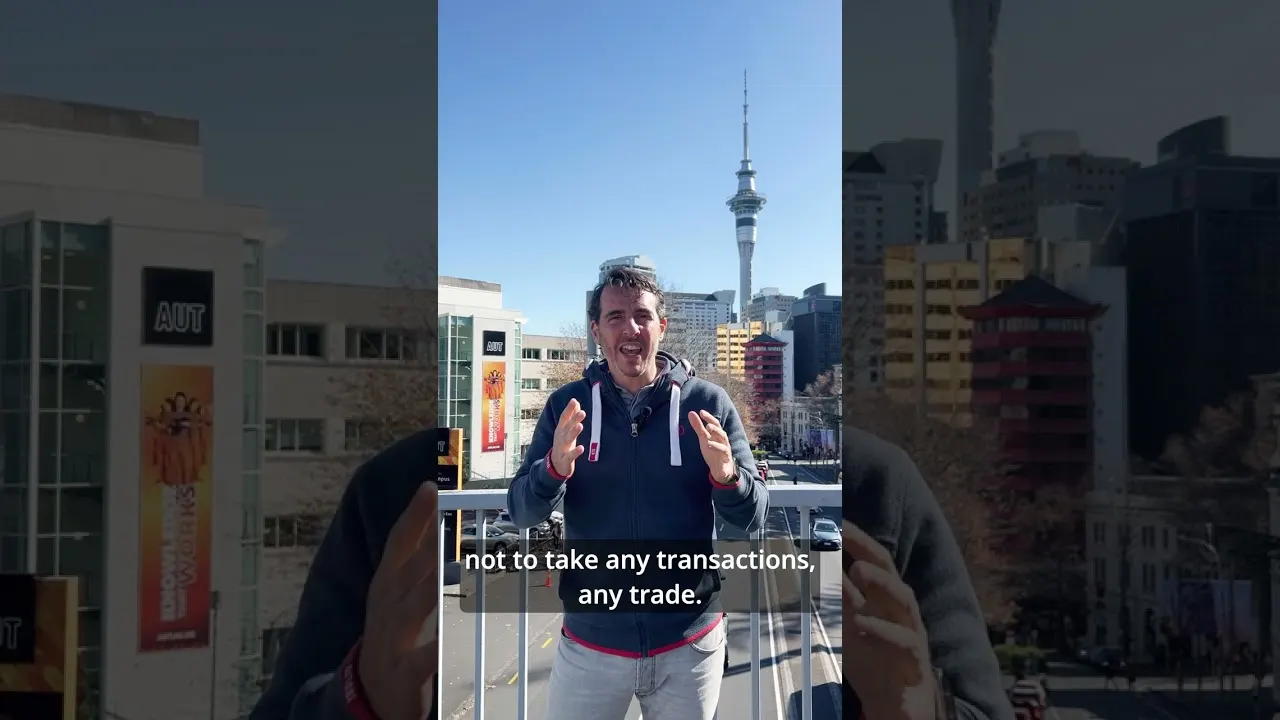 1:01
1:01Read the transcript
Sometimes non-trading is the best trade you can take. When trading becomes tough, when the day's P&L is not looking good, there is no need to stay at the desk.
Just go out, enjoy the sun, go for a walk, clear your mind. This is the best way for you to come back fresh and start again with a clear head.
Trading is about discipline and consistency. So sometimes you need to be disciplined enough not to take any trade. That's the best way forward.
The traders who keep their accounts alive for longer are those who understand not only when to trade, but also when not to trade. So for me, today, stay off, go out, enjoy the sun and take it from there. See you guys.
FOMO trading at a glance
| Item | Detail |
|---|---|
| Definition | Entering a trade because of fear of missing a move, not because a plan signalled it |
| Rule of thumb | If the entry was not written down before the move started, treat it as a FOMO trade |
| Worked example | Buying at 106.69 after a breakout from 102.80, with a stop below the breakout, risks 4.09 per unit for a target 1.81 away (about 0.44R) |
| When it matters | Fast breakouts, news spikes, crypto pumps, social media hype, after a losing streak |
| Main risk | Poor reward-to-risk, oversized positions and missing stops that turn one trade into a large loss |
| Related terms | Revenge trading, overtrading, momentum trading, confirmation bias |
What is FOMO in trading?
FOMO in trading is the anxiety a trader feels when a market moves without them, followed by the urge to jump in at any price. In markets it has a direct cost: the decision is made by emotion when price is most stretched.
FOMO is closely related to two other behaviours. Revenge trading is trading to win back a loss, and overtrading is taking more trades than your plan allows. All three replace a rule with a feeling, and they often feed each other: a FOMO trade loses, the loss triggers a revenge trade, and the day ends with ten trades instead of two.
It helps to be honest about the backdrop. Broker disclosures and academic studies consistently find that most retail day traders lose money. Emotional entries like FOMO are one of the reasons, because they push traders to buy high and sell low, the reverse of what a plan intends.
What triggers FOMO in trading?
FOMO is triggered by information that suggests other people are making money and you are not. The most common triggers are:
- Big green candles. A single large candle on a chart creates urgency. The bigger the candle, the more it feels like the train is leaving, even though the move has already happened.
- Social media. Screenshots of profits, "this is going to the moon" posts and countdowns to a breakout create a sense that everyone else is already in.
- Other people's wins. A friend, colleague or chat group member posting a winning trade makes your own flat day feel like a loss.
- Crypto pumps. Crypto trades around the clock and small coins can move tens of percent in hours, so there is always something pumping somewhere. That constant supply of moves makes crypto a common FOMO trigger.
- A losing or flat period. After a few quiet or losing days, traders feel they need a trade to get back on track, so any moving market looks like an opportunity.
Research in behavioural finance suggests that people weigh the regret of missing a gain heavily, and that social proof (copying what others seem to be doing) shapes financial decisions. FOMO combines both.
Payout proof
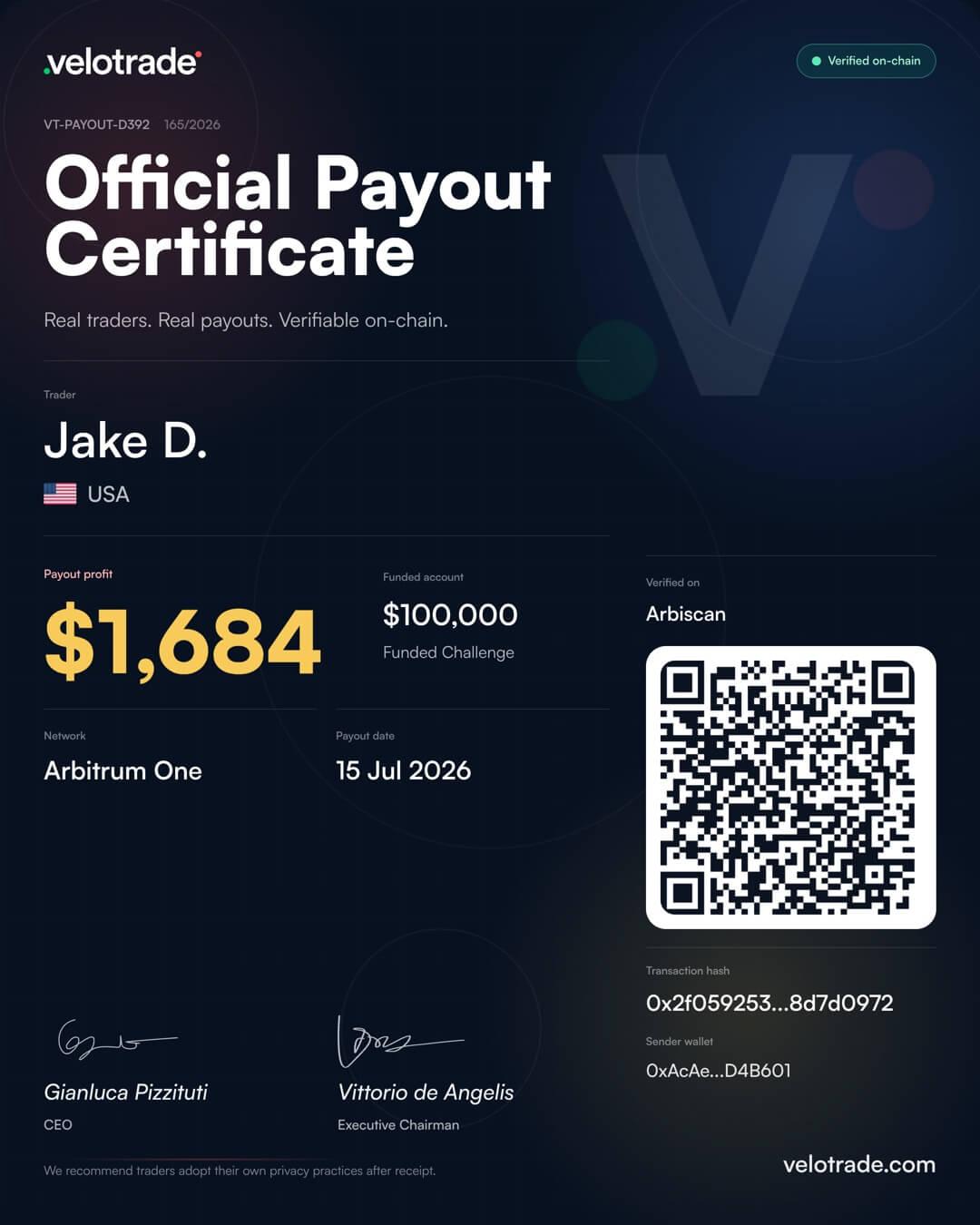
Fast, real payouts. Traceable on Arbitrum.
- Paid within 24 hours of approval
- Settled on Arbitrum in USDC or USDT
- Look up any transaction on Arbiscan

How does FOMO show up in your trades?
FOMO shows up in a small number of repeatable behaviours, and you can spot them in your trading journal:
- Late entries. You buy after the breakout has already run, often near the high of the move.
- Oversized positions. Because the move "is happening now", you size up to make it count, ignoring your normal risk management rules.
- No stop, or a stop moved. A FOMO entry has no logical stop-loss level nearby, so traders either skip the stop or place it so far away that the loss is far larger than planned.
- Chasing. If price keeps going after you miss the first entry, you buy higher. If it pulls back after you enter, you add more to "average in".
- Market orders. FOMO entries are almost always market orders, because the trader wants in immediately at any price.
If your journal shows that your largest losses cluster on trades that were not on your watchlist that morning, FOMO is probably the cause.
Why FOMO entries lose money: the chart
The chart below shows a typical FOMO pattern. Price builds a base, breaks out above the breakout level at 102.80, and runs for several candles. The FOMO buy comes late, near the top of the run at about 106.69, and immediately sits on a loss as price pulls back. The planned entry waits for the retest of the breakout level and buys around 103.53.
Here is the arithmetic, using the chart's prices and a stop just below the breakout level at 102.60 for both trades:
- FOMO buy at 106.69: risk = 106.69 minus 102.60 = 4.09 per unit.
- Planned entry at 103.53: risk = 103.53 minus 102.60 = 0.93 per unit.
Now assume a hypothetical target at 108.50:
- FOMO buy reward: 108.50 minus 106.69 = 1.81, so reward-to-risk is 1.81 divided by 4.09, about 0.44.
- Planned entry reward: 108.50 minus 103.53 = 4.97, so reward-to-risk is 4.97 divided by 0.93, about 5.3.
Position sizing makes the difference concrete. If you risk 100 USD on each trade, the FOMO trade allows 100 divided by 4.09, about 24 units. The planned trade allows 100 divided by 0.93, about 107 units. Same risk, same stop level, but the planned trade earns roughly 12 times as much if the target is hit. You can run your own numbers with the position size calculator.
The second chart shows why this matters over many trades. The win rate you need to break even depends on your reward-to-risk ratio.
At 1:1 you need to win 50% of trades to break even, and at 1:3 only 25%. Using the same formula, 1 divided by (1 + 0.44), the FOMO trade at about 0.44R needs a win rate of roughly 69% just to break even before fees. Very few strategies win that often. FOMO quietly moves you to the wrong end of this chart.
How do you stop FOMO trading?
You stop FOMO trading by deciding your trades before the market moves, so there is nothing left to decide when it does. These six steps turn that idea into a routine.
- Define your entries in advance. Write down the exact conditions for a trade before the session: the level, the trigger (for example, a retest of a breakout level that holds), the stop and the target. If a trade does not match a written setup, it is not a trade.
- Build a short watchlist. Pick three to five markets each day that fit your strategy. Anything outside the list is ignored, however fast it moves. A short list removes the feeling that you must catch every move in every market.
- Use alerts and limit orders. Set price alerts at your levels and place limit orders where your plan wants to enter. A limit order fills at your price or better, as the SEC's Investor.gov guide to order types explains, so it cannot chase. Gianluca's own preference is always limit orders. As our guide to market orders vs limit orders explains, a limit order can miss a move, which is the point.
- Fix your risk per trade. Decide a fixed percentage (many traders use 0.5% to 1% of the account) and calculate size from the stop distance every time. A fixed number stops FOMO from inflating your size.
- Accept missed trades. Missing a move is not a loss. Log missed trades in your journal with one line: "Was it in my plan?" If it was not, missing it was correct. If it was, ask why the order was not in place.
- Remember the next setup always comes. Markets produce new setups every week. A strategy with an edge does not depend on any single trade, so no single move is worth breaking your rules for. If you feel the urge, step away from the screen, which is the point of the video above.

FOMO vs genuine momentum trading
Momentum trading is a legitimate strategy that buys strength and sells weakness, so it can look like FOMO from the outside. The difference is whether the decision was planned.
| Momentum trading | FOMO trading | |
|---|---|---|
| Entry | Defined in advance (breakout close, retest, pullback) | Whenever the urge hits |
| Stop | Placed at a logical level before entry | Missing, or far away |
| Position size | Calculated from fixed risk | Increased because the move "is real" |
| Market selection | From a watchlist | Whatever is moving or trending online |
| Missed trades | Accepted and logged | Chased |
| Order type | Often limit or stop orders at set levels | Market order at any price |
A momentum trader who misses a breakout waits for the next qualifying signal. A FOMO trader buys anyway. The same price chart can produce a good momentum trade and a bad FOMO trade, and only the plan tells them apart. A profitable trade is not the same as a good trade: a FOMO trade that happens to win still reinforces a habit that will cost money later. Testing your momentum rules first with backtesting gives you the confidence to wait for them.
FOMO in a prop evaluation
FOMO is especially costly in a prop trading evaluation, because the rules put a hard cap on how much a few bad trades can lose. Velotrade, a multi-asset prop trading firm with simulated accounts, sets a daily loss limit that resets at 00:30 UTC from the higher of balance or equity (5% on the CLASSIC 2-Step, 4% on the CLASSIC 1-Step, 3% on the PRO 1-Step) and a static maximum drawdown.
Those limits work as an external discipline system. A single oversized FOMO trade with no stop can use up most of a daily loss limit in one move. Because there is no time limit on Velotrade evaluations (only a minimum trading period per phase), there is no deadline forcing you to catch any particular move. You can wait for your setup. Our guide on why traders fail prop challenges shows how emotional trades, rather than bad strategies, end many evaluations.
Can AI help with FOMO trading?
AI tools can help reduce FOMO by doing some of the work that emotion usually hijacks. They can screen markets for setups that match your written rules, flag trades in your journal that were taken outside your plan, and help with backtesting trading strategies so you trust your rules enough to wait. Our overview of AI trading strategies covers the main approaches.
AI does not remove risk, and it can create its own FOMO if you chase every signal it produces. Treat any AI output as one input, and keep the final decision, the stop and the position size under your own judgement and rules.
Sources
- Investor.gov (SEC), "Types of Orders": how market and limit orders execute.
- FINRA, "Frequent Intraday Trading: Understanding the Basics": risks of frequent intraday trading.
- Investor.gov (SEC), "Day Trading": day trading risks.
- Barber and Odean, "Trading Is Hazardous to Your Wealth", Journal of Finance (2000): households that trade most earn the lowest net returns.
Frequently Asked Questions
About the author

Gianluca Pizzituti
Chief Executive Officer
Formerly on the derivatives desk at Dresdner Kleinwort in London, then founded and ran a proprietary HFT firm in FX and equity indices out of Singapore.
View author page