
Trade indices with funded capital
ExploreOnly a handful of prop firms genuinely let you trade options in 2026. Options Funding, Vanquish Trader, TradeFundrr and Imperial Trader Funding run simulated options evaluations, Maverick Trading puts real capital behind a fee and performance bond, and T3 Trading runs licensed broker-dealer desks. Topstep and Elite Trader Funding do not allow options at all.
If you are looking for a prop firm for options trading, start here. Most of the big names in the prop challenge industry are futures, forex or crypto firms, even when comparison lists say otherwise. This guide separates the options prop trading firms that really allow calls and puts from the ones that do not, and shows which strategies each one allows. Rules were checked on the firms' own pages on October 20, 2026. This is educational content, not investment advice.
Highlights of this article
- Options prop firms split into 3 models: simulated options evaluations, fee-plus-bond real capital, and licensed broker-dealer desks
- Options Funding's Growth plan allows spreads, condors, butterflies, calendars and diagonals; from October 19, 2026 its index options are buy-only
- Vanquish Trader's Advanced plan adds spreads and selling to open; its other plans are long calls and puts only, closed by 3:59pm ET
- Topstep and Elite Trader Funding do not permit options, including options on futures, according to their own help pages
- Velotrade does not offer options; directional traders can trade the underlying, such as SPY and QQQ, instead
What is an options prop firm?
An options prop firm is a proprietary trading firm that lets you trade listed options contracts, such as calls and puts on stocks, ETFs or indices, with the firm's capital or in a firm-run evaluation. As the SEC's Investor.gov glossary explains, an option gives the buyer the right, but not the obligation, to buy or sell an underlying asset at a set price on or before a set date. That non-linear payoff is why an options funded account needs different risk rules from the futures and forex accounts most prop firms run.
Options prop firms key facts
| Item | Detail |
|---|---|
| Firms that allow options | Options Funding, Vanquish Trader, TradeFundrr, Imperial Trader Funding, Maverick Trading, T3 Trading desks |
| Firms that do not | Topstep, Elite Trader Funding, Funder Trading's TrueEdge challenge, and most futures, forex and crypto challenge firms |
| Most common model | Simulated evaluation with a monthly subscription |
| Real capital routes | Maverick Trading (fee plus bond) and T3 broker-dealer desks (SIE and Series 57 licensing) |
| Typical underlyings | SPY, QQQ, single-stock options, plus SPX, XSP and VIX at some firms |
| Short premium | Limited: Vanquish allows selling to open on Advanced only; Options Funding's Growth plan allows naked shorts at an absolute delta of 0.15 or more |
| Options on futures | No current retail firm with verified options on futures was found |
What types of options prop firm exist?
There are four groups to understand before you compare prices, and only the first three actually let you trade options.
1. Simulated options evaluations. Options Funding, Vanquish Trader, TradeFundrr and Imperial Trader Funding charge a fee, monthly or one-time, for a simulated account. You trade options against a profit target and a drawdown limit, and payouts are based on simulated performance under the firm's terms.
2. Fee-plus-bond real capital. Maverick Trading charges a fee plus a performance bond and allocates real firm capital after a demo qualification. It is closer to a paid apprenticeship than a challenge.
3. Licensed broker-dealer desks. T3 Trading Group is an SEC-registered broker-dealer and FINRA member. Traders on its desks trade real listed options, but need SIE and Series 57 licensing.
4. Firms that do not allow options. Topstep lists CME, CBOT, NYMEX and COMEX futures only. Elite Trader Funding says it does not permit options, including options on futures. Funder Trading's TrueEdge challenge lists NASDAQ and NYSE stocks only. If a list ranks any of them as an options prop firm, it is wrong.
Best options prop firms compared
1) Options Funding, best for spreads and multi-leg strategies
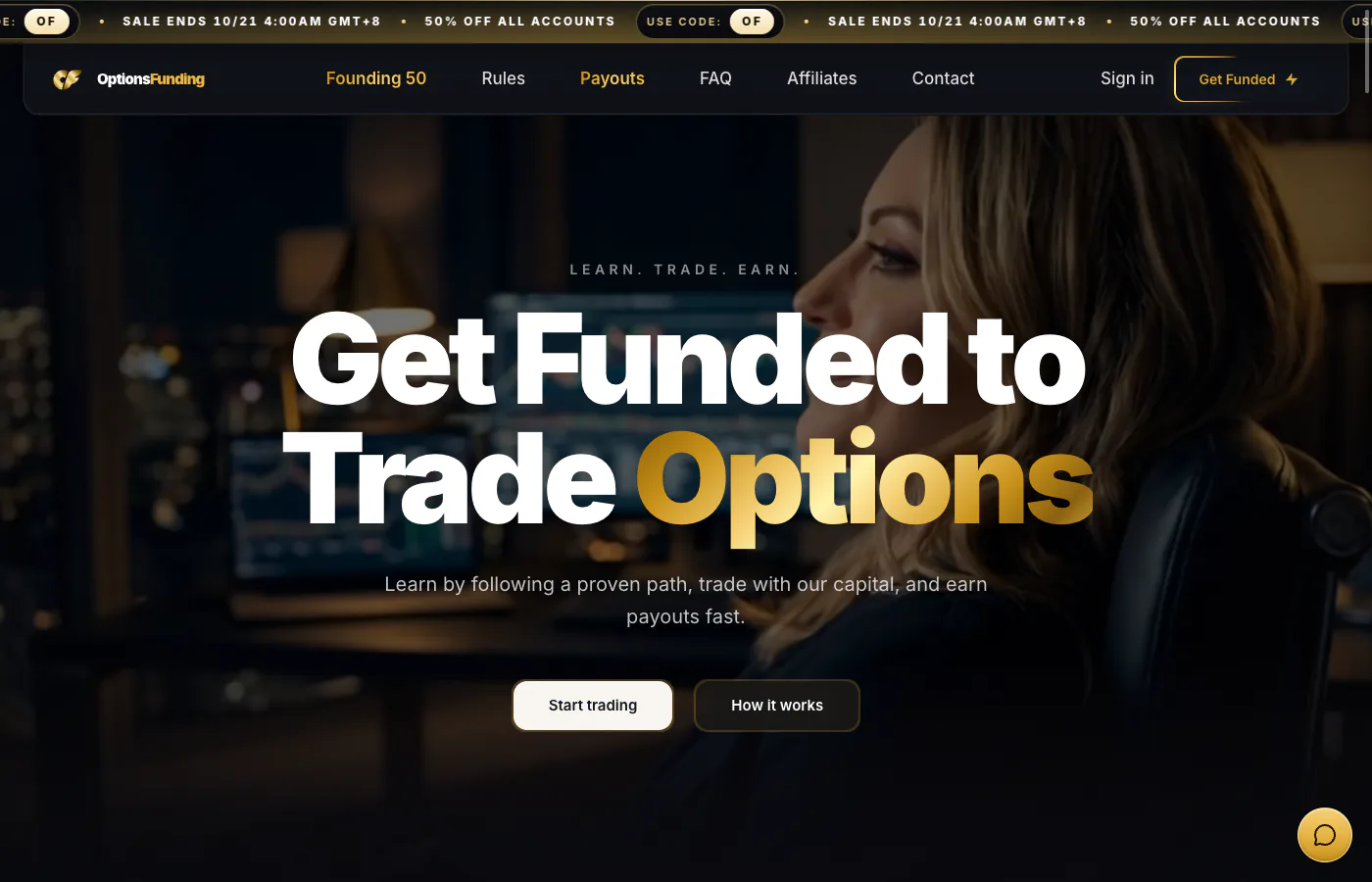
HQ: Sheridan, Wyoming
Platform: RixTrade
Price from: $239 per month for $25K (Express)
Options allowed: SPY, QQQ and whitelisted stock options; index options buy-only
Options Funding is the most flexible options funding prop firm for multi-leg traders. Its Growth plan allows Level 5 strategies: spreads, condors, butterflies, calendars and diagonals. Naked short options on Growth need an absolute delta of 0.15 or more. The Express plan allows long calls and puts only. From October 19, 2026, index options (SPX, SPXW, XSP, RUT, VIX and OEX) are buy-only.
Express costs $239, $279 or $389 per month for $25K, $50K or $100K; Growth costs $309, $399 or $499. Billing stops once you are funded. Growth has a 6% end-of-day trailing drawdown and a 12% target; Express has a 5% intraday trailing drawdown and a 10% target. There are no minimum days and no time limit, and the split is 80%. A $129 activation fee is refunded on the first payout, each payout cycle needs 8 qualifying winning days, and paid resets are capped at 3. A live account at Interactive Brokers is by invitation.
Strengths:
- the widest set of multi-leg strategies of any simulated evaluation here
- overnight holding allowed, no minimum days
- subscription stops once funded
Trade-offs:
- monthly cost adds up if you do not pass quickly
- 8 winning days per payout cycle slows payouts
- index options are now buy-only
2) Vanquish Trader, best for SPX and same-day index options
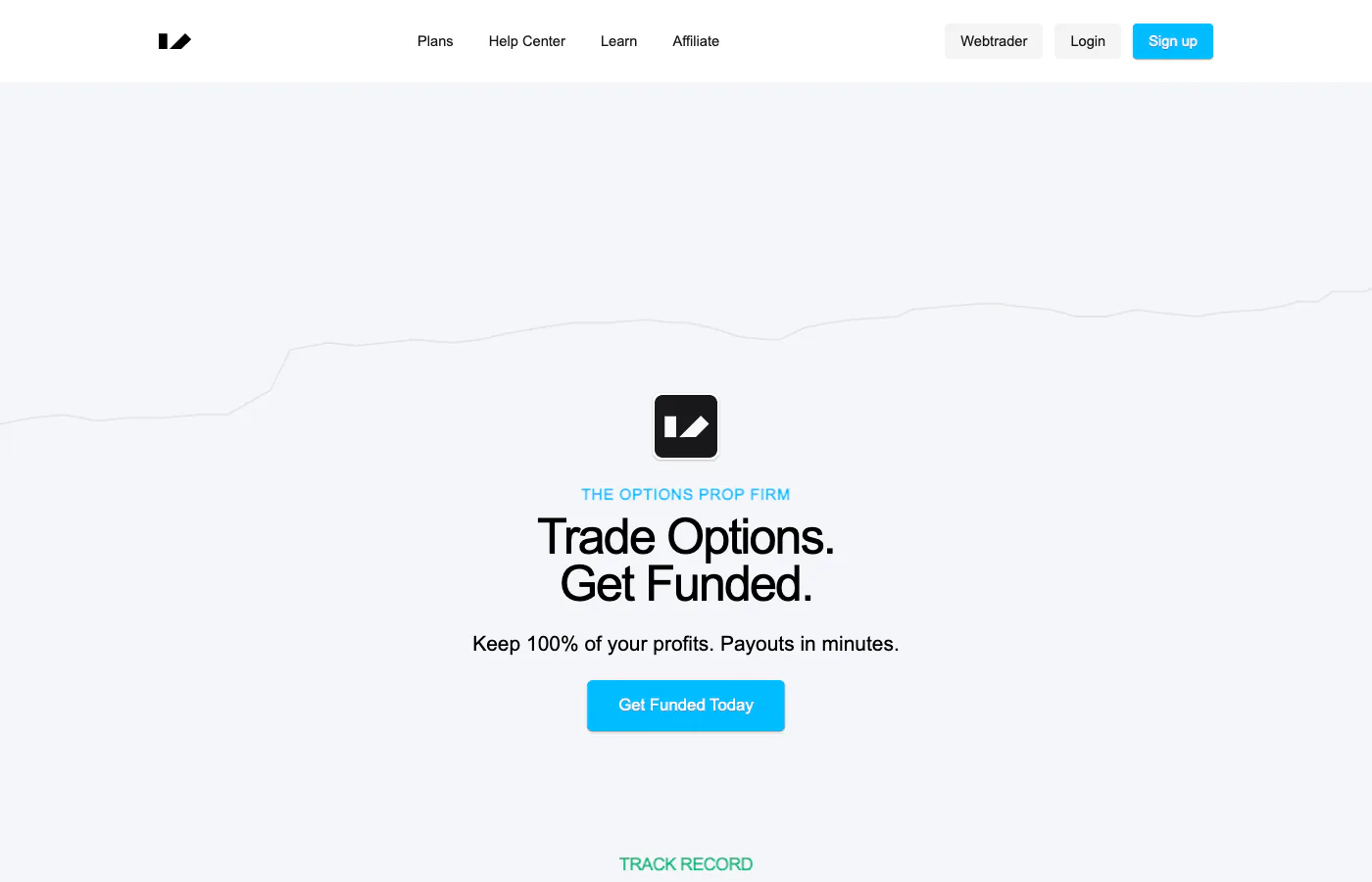
Platform: DXtrade (branded Vanquish XT)
Price from: $79 per month for $10K (Rapid Express)
Options allowed: single-leg calls and puts; Advanced adds spreads and selling to open
Eligibility: US residents only
Vanquish Trader runs three plan families on virtual capital. Options and Rapid Options allow long single-leg calls and puts only, with no spreads or selling to open. Advanced Options adds spreads, multi-leg trades and selling to open, while SPX, XSP and VIX stay long single-leg only. Every trade must be closed by 3:59pm ET, so there is no swing trading.
Options starts at $99 per month for $10K ($750 for $150K), Rapid Express at $79 per month for $10K, and Advanced from $199 to $1,499 per month, across sizes of $10K, $50K, $75K, $100K and $150K. The subscription continues after you qualify. Its homepage says "keep 100% of your profits". Options uses a 5% intraday trailing drawdown from the unrealized peak and Advanced a 5% end-of-day trailing drawdown; Rapid uses 3%. Targets are 10% (9% on Rapid), with a 30% consistency rule on Options and Advanced. The Options evaluation needs 10 trades and Advanced 4 days.
Strengths:
- SPX, XSP and VIX access
- low entry price
- 100% profit share marketed
Trade-offs:
- US residents only
- intraday only, every trade closed by 3:59pm ET
- subscription keeps running after funding; trailing drawdown on every plan
3) TradeFundrr, best for 0DTE and broad symbol coverage
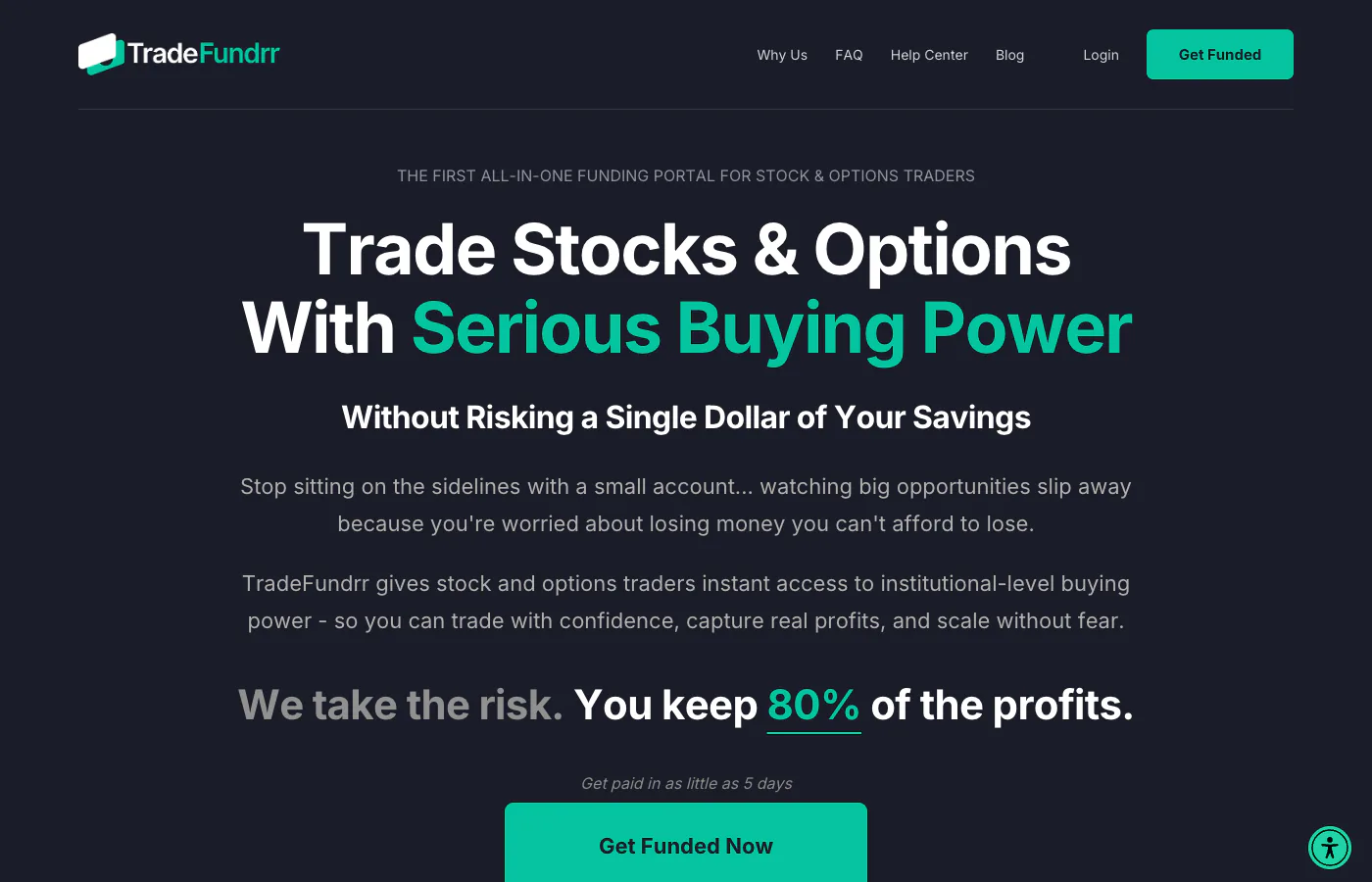
HQ: New York
Price from: $599 plus $99 per month (Pre-Prop, $25K buying power)
Options allowed: US symbols including SPX, weeklies and 0DTE
TradeFundrr lists options on US symbols including SPX, weeklies and 0DTE. Pre-Prop costs $599 plus $99 per month for $25K of simulated buying power. The Prop tier costs $1,499, refunded on the first payout, plus $99 per month, and the Pro tier requires a capital contribution of $100K to $1M. It names T3 Trading Group as a strategic partner, and the split is 80%.
Its own disclosures describe it as a provider of simulated funded programs, so ask in writing which stage, if any, trades live capital before you pay for a higher tier.
Strengths:
- 0DTE and weekly options listed
- broad US symbol coverage
- fee refund on the Prop tier
Trade-offs:
- higher upfront cost than subscription-only firms
- simulated versus live status needs written confirmation
4) Imperial Trader Funding, best for a one-time fee
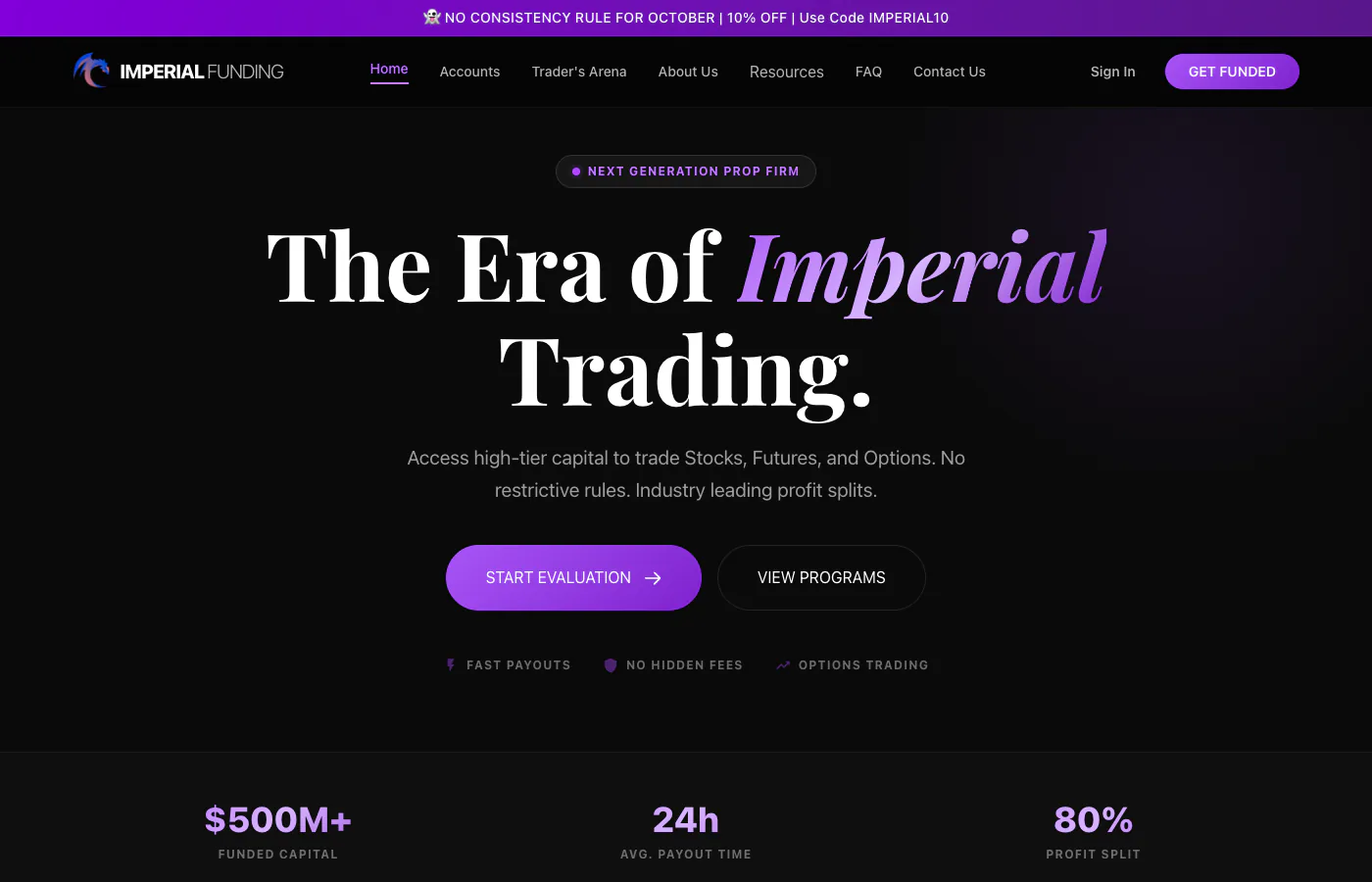
Price from: $194 one-time for $25K (Elite 1-step)
Options allowed: options, alongside stocks and futures
Split: 80% in the simulated funded stage
Imperial Trader Funding covers stocks, futures and options. Its Elite 1-step evaluation is a one-time fee: $194 for $25K, $357 for $50K and $686 for $100K. The simulated funded split is 80%, and a 33% consistency rule applies. Its October banner advertised a temporary waiver of the consistency rule, so check the current terms on the day you buy.
Strengths:
- one-time fee instead of a monthly subscription
- stocks, futures and options in one program
Trade-offs:
- 33% consistency rule outside promotions
- fewer published details on which options strategies are allowed
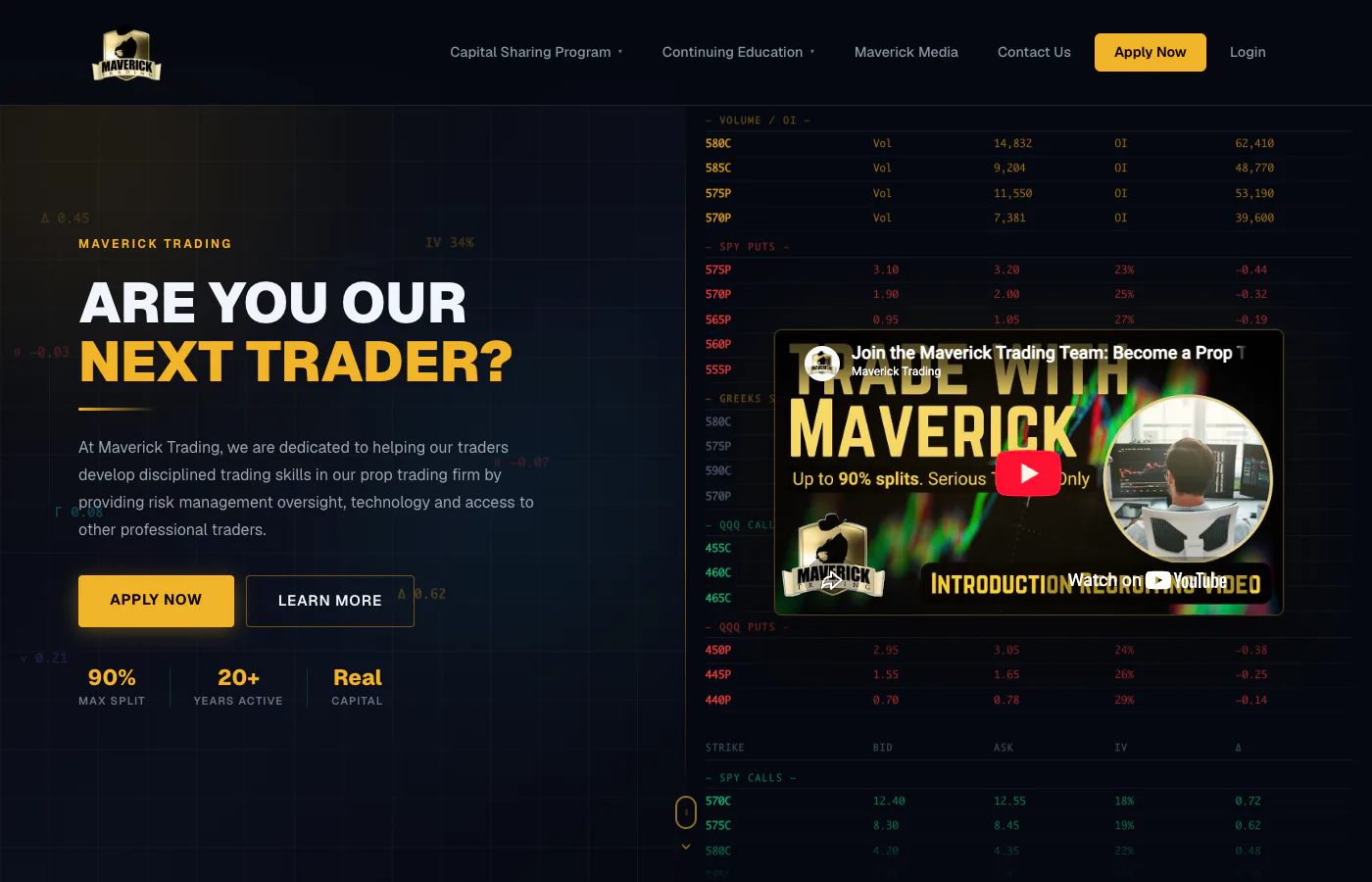
5) Maverick Trading, best for real capital
HQ: Salt Lake City
Price from: $1,000 fee plus $1,000 bond plus $199 per month
Options allowed: SPY, QQQ and single-stock options
Capital: real, after a demo qualification
Maverick Trading allocates real capital after a demo qualification. The Associate tier is a $1,000 fee plus a $1,000 bond for $4,000 of capital. Professional is $4,000 plus $2,000 for $10,000, and Partner is $8,000 plus $2,000 for $20,000. All tiers add $199 per month, and splits are 60%, 80% or 90% depending on tier.
Strengths:
- real capital rather than a simulated account
- up to 90% split on the top tier
Trade-offs:
- the upfront cost is high relative to the starting capital
- add up the fee, bond and 12 months of the monthly charge, and read the bond refund terms first
6) T3 Trading Group, best for a licensed career path
Model: SEC-registered broker-dealer, FINRA member (CRD 154431)
Requirements: SIE and Series 57 licences
T3 Trading Group desks trade real listed options, including multi-leg structures. This is not a challenge product: you need SIE and Series 57 licensing, which makes it a career decision rather than a trial.
Options prop firm comparison table
| Firm | Options allowed | Multi-leg and short premium | Same-day close or overnight | Simulated or real | Price from | Split |
|---|---|---|---|---|---|---|
| Options Funding | SPY, QQQ, whitelisted stock options; index options buy-only | Growth: spreads, condors, butterflies, calendars, diagonals; naked shorts at delta 0.15 or more | Overnight allowed | Simulated; live at IBKR by invitation | $239/month ($25K Express) | 80% |
| Vanquish Trader | Single-leg calls and puts; SPX, XSP, VIX | Advanced only: spreads, multi-leg, selling to open | Closed by 3:59pm ET | Simulated | $79/month ($10K Rapid Express) | Marketed 100% |
| TradeFundrr | US symbols, SPX, weeklies, 0DTE | Not stated | Not stated | Disclosures say simulated | $599 + $99/month | 80% |
| Imperial Trader Funding | Options, stocks, futures | Not stated | Not stated | Simulated funded stage | $194 one-time ($25K) | 80% |
| Maverick Trading | SPY, QQQ, single-stock options | Not stated | Not stated | Real, after demo qualification | $1K fee + $1K bond + $199/month | 60% to 90% |
| T3 Trading desks | Real listed options | Yes, multi-leg | Desk rules | Real | Licensing (SIE, Series 57) | Not stated |
Which strategies can you actually run?
Single-leg long options. Buying calls and puts is the strategy every options prop firm allows. It is the only strategy on Vanquish's Options and Rapid plans and on Options Funding's Express plan.
Spreads, condors and calendars. Defined-risk multi-leg trades are available on Options Funding's Growth plan, Vanquish's Advanced plan and licensed desks.
Short premium. Selling to open is the hardest strategy to find. Vanquish allows it on Advanced only, and Options Funding's Growth plan allows naked shorts only at an absolute delta of 0.15 or more, and not on index options. A naked short call has theoretically unlimited loss if the underlying keeps rising, and short premium collides with daily loss and trailing drawdown rules more than any other style.
0DTE and SPX. TradeFundrr lists SPX, weeklies and 0DTE. Vanquish lists SPX and XSP for long single-leg trades and closes every trade by 3:59pm ET. Options Funding's index options are buy-only from October 19, 2026.
Overnight and swing holds. Options Funding allows overnight holding. Vanquish requires every trade closed the same day. If your strategy holds through earnings or holds calendars for weeks, rule out same-day firms first.
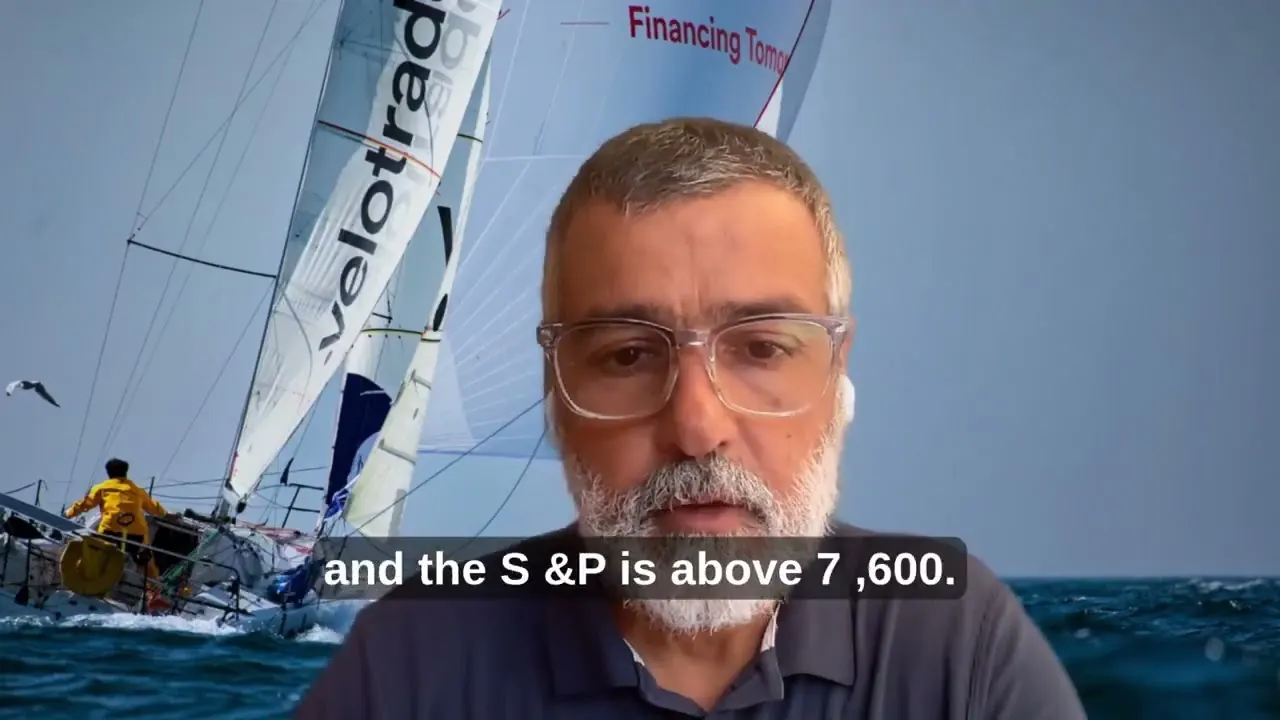
Option selling is where many derivatives traders start, and where the risk is easiest to underestimate. Velotrade co-founder Vittorio De Angelis, a former equity derivatives trader at JP Morgan and Dresdner Kleinwort, walks through selling a call on the S&P 500 and, if the call is assigned, selling puts at the same strike to reduce the loss if the market comes back. The full breakdown is in our guide to selling puts and covered calls.
 3:42
3:42Read the transcript
Today I would like to discuss trading direction on indices and single stocks by selling options. It's a strategy that can be profitable, but it can also be very, very dangerous. So you've been warned.
When you sell options, your upside is capped at the amount of premium in your pocket, but your downside is unlimited. So beware of what you do.
Let me give an example. The S&P is trading at 7500. I can sell a September 7600 call and pocket, let's say, 50 to 60 points. That money I make upfront, and if at expiry the S&P is below 7600, I pocket the entire premium.
This is great because it actually covers two out of three scenarios. What does that mean? It means that if the S&P doesn't move, I pocket the money, because the call finishes out of the money.
If the S&P goes down, which was my original view, I make all my money from the premium, because obviously the call will expire out of the money. And I'm even covered in the scenario in which the S&P rises a little, up to 7599. Of course, on any move above 7600 the call is in the money and I start losing money.
Again, the point I want to convey is that if the market doesn't move, you're still making money. If I had sold futures and the market didn't move, I wouldn't make money. I would make money only if the market went down.
Why is the call-selling strategy dangerous? Because of course you're pocketing 50 to 60 points, but if the S&P were to rally between now and expiry to, I don't know, 8000, well, you're down 400 points. So you've got a net loss of 350 points, which obviously is a massive multiple of the premium you pocketed.
So beware. Still, the fact that you're covered in two out of three scenarios makes it, per se, an interesting strategy.
Then there are some other little things you can do if you were wrong. Let's say we reach September and the S&P is above 7600, so my calls get exercised and I'm given futures. I end up being short futures at 7600, and realistically, if I've been exercised, it means the S&P is higher than that, so I'm actually losing money.
But I can try to reduce that loss by selling puts. I sell puts on the original strike, that's what I mainly do, 7600. If the S&P were then to come back down to the 7600 level or below, of course I'd be losing money on the short put, but I have the short futures, which make up for that.
So not only do I make up my original loss, I'm also making the extra profit of the premium on the put.
I know this sounds really confusing, so you might have to work it through with a piece of paper. If you're interested, I'm very happy to do it with some graphs and some little numbers, because it might help.
It's food for thought. These strategies can be employed on most underlyings where there is an active options market, and these days option markets, especially the short-dated ones, are extremely liquid. So there are many strategies you can work on with the same frame of mind.
Again, they can be very complex strategies, and they can be very dangerous. Please reach out if you want to discuss them in further detail.
Whatever the firm, size every short-premium position for the move you cannot predict, not the average day. A clear stop-loss plan and the basics of risk management in trading matter more with options than with any linear instrument.
Do Topstep or other futures firms allow options?
No. Some comparison lists claim that Topstep or Elite Trader Funding allow options trading, but both firms' own help pages say otherwise.
- Topstep lists CME, CBOT, NYMEX and COMEX futures as its tradable products, trades on TopstepX only, and requires positions to be closed by 3:10pm CT. Options, including options on futures, are not on the list.
- Elite Trader Funding states that it "does not permit the trading of equities or options, including options on futures contracts".
- Funder Trading markets stocks and options, but its TrueEdge Challenge lists NASDAQ and NYSE stocks only.
We found no current retail prop firm with verified options on futures. If you trade ES or crude oil options, the realistic futures route is the outright contract, compared in our best futures prop firms ranking and our Topstep review.
Red flags to check before paying

- Total cost of a monthly subscription. $239 per month is $717 over 3 months if you do not pass quickly. Compare the 3-month cost, not the first month, and check whether the subscription continues after funding, as it does at Vanquish.
- Payout conditions. Look for lifetime or per-cycle caps, minimum winning days (Options Funding requires 8 per cycle), minimum payout amounts (Vanquish's is $250) and activation fees.
- Rule changes. Options Funding made index options buy-only from October 19, 2026. Check the rules page on the day you buy, not a review from last quarter.
- Simulated versus live. Ask in writing whether your funded account trades real capital, and at which stage. TradeFundrr's disclosures describe simulated funded programs.
- Strategy permissions. Confirm whether your exact structure, such as a credit spread or a short put, is allowed on the plan you are buying, not just on the firm's top tier.
- Eligibility. Vanquish is open to US residents only. Check your country before paying any options trading funded account fee.
If you trade direction, not volatility
HQ: Hong Kong
Platform: DXtrade (plus REST and WebSocket API)
Max funding: Up to $200,000
Markets: Crypto, forex, stocks, index ETFs, commodities
Options: not offered
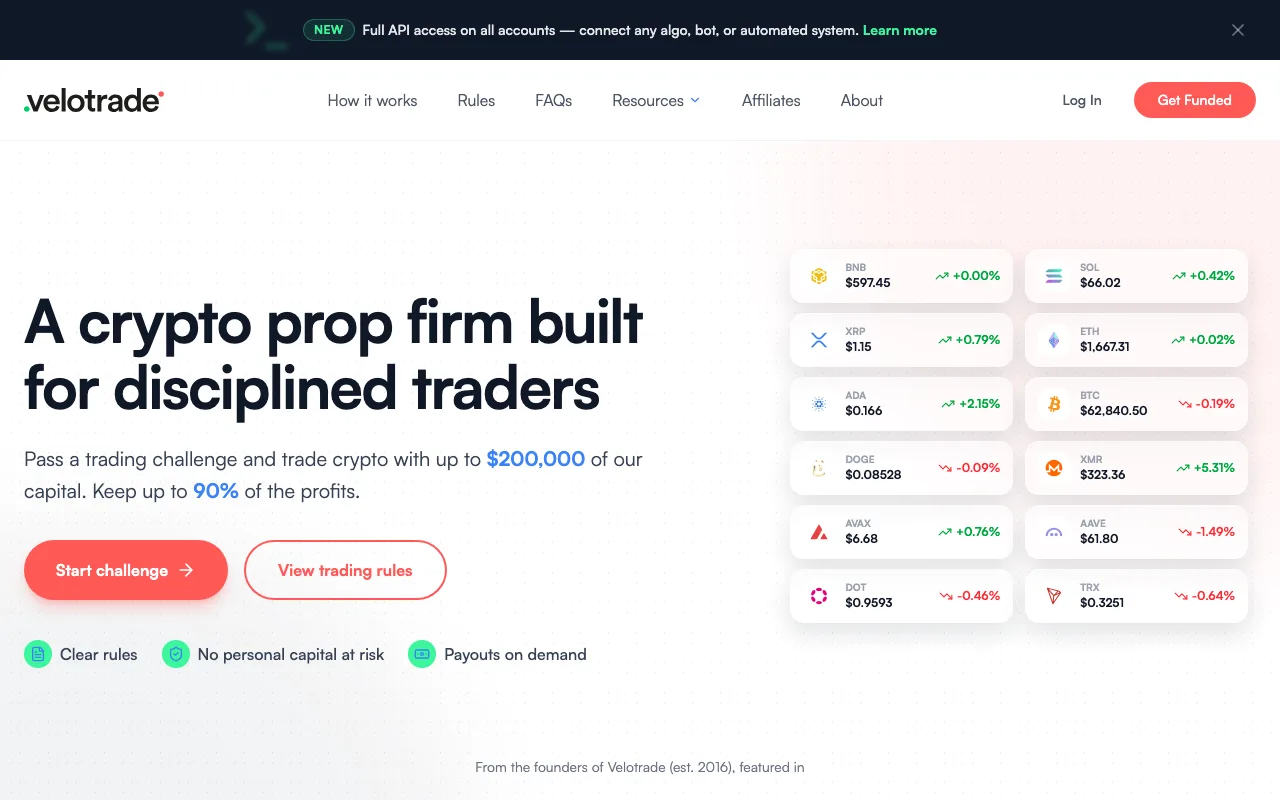
Velotrade, a multi-asset prop trading firm, does not offer options and is not an options prop firm. If your options trading is mostly directional, such as buying calls on QQQ ahead of a move, you can express the same view through the underlying instead.
Velotrade's simulated evaluations include index ETFs such as SPY, QQQ and IWM at 6x leverage in the challenge, 77 single stocks at 5x, plus forex, commodities and crypto, with a static maximum drawdown that is fixed from the starting balance. Entry starts at $40 for a $5K 1-Step PRO challenge.
The trade-off is clear: you lose the defined-loss payoff of a long option, so you replace it with position sizing and a stop that caps the loss at what you would have paid in premium. You also gain the ability to go short, covered in our guide to short selling. Single stocks must be closed before earnings and ex-dividend dates. For stock-focused firms, see the best prop firm for stocks.
This route does not replace spreads, short premium or volatility trading.
Sources
All pages checked October 20, 2026.
- Investor.gov, options glossary entry
- Options Funding and Options Funding, rules
- Vanquish Trader and Vanquish Trader, terms
- TradeFundrr
- Imperial Trader Funding
- Maverick Trading, capital sharing
- FINRA BrokerCheck, T3 Trading Group (CRD 154431)
- Topstep Help Center, permitted products
- Elite Trader Funding Help, what instruments can I trade
- Funder Trading
- Velotrade indices, stocks and challenges
Frequently Asked Questions
About the author

Vittorio De Angelis
Executive Chairman
Former equity-derivatives trader at JP Morgan, Dresdner Kleinwort and Bank of America in London. Later Head of Brokerage at a global broker in Hong Kong.
Velotrade was founded in Hong Kong in 2016 by a team from JP Morgan, Dresdner Kleinwort and Bank of America, has paid out over $2.5 billion to its trade-finance clients, and has been featured in Bloomberg, the Financial Times, the Wall Street Journal and on Nasdaq. Its prop trading evaluations are simulated and educational.
View author page