One account, every market we offer
ExploreDay trading is buying and selling a market within the same trading day and closing every position before the session ends, so nothing is held overnight. Day traders aim to profit from small intraday price moves in stocks, index ETFs, forex, crypto or commodities. It is one of several types of trading, and it is the most demanding of the common trading styles in time, focus and discipline.
Quick answer: Day trading is a trading style in which every position is opened and closed within the same trading day, usually lasting minutes to a few hours. Day traders use intraday charts (1 to 15 minute), tight stop losses and small position risk to capture short price moves, and they end each day flat with no overnight exposure.
Highlights of this article
- Day trading means opening and closing all positions within one trading day, with no overnight holds
- In the US, the pattern day trader rule requires 25,000 USD of equity in margin accounts that make 4 or more day trades in 5 business days
- The first and last hour of the US regular session (9:30 to 16:00 ET) usually carry the most volume
- Five beginner strategies: opening range breakout, VWAP pullback, momentum, support and resistance, and news trading
- Risking around 1% of the account per trade keeps a losing streak survivable
- Most retail day traders lose money, so practice, a written plan and a journal come before real risk
 3:00
3:00Read the transcript
Here is something nobody in this industry will ever tell you. You are trading too much, and it is quietly killing your account.
I am Gianluca Pizzituti, CEO of Velotrade. I've been trading for over 25 years, institutionally and privately. And what I'm about to say goes against almost everything you've been sold.
Open any feed and it is the same message on repeat. You can trade, you can become a trader, you can make money, you can build a career out of this. And look, all of that can be true. I'm not here to crush the dream. But there is a part of the story nobody mentions.
The whole machine is built to make you trade more. Not better. More.
Think about who is on the other side of all the noise. Every exchange, every broker, every platform wants one thing from you: volume. The more you trade, the more rebates they collect, the more fees they earn, the more VIP tiers and badges they dangle in front of you to keep you clicking.
Their business does not run on whether you are profitable. It runs on how often you press the button. Your activity is their revenue. Read that again. They are not incentivized for you to win. They are incentivized for you to trade.
And here is the quiet truth underneath it all. The more you trade, the more mistakes you make. It is simple math. Every extra trade is another chance to get it wrong.
And then there is the statistic almost nobody in this space wants to put on a billboard. Depending on the study you read, somewhere around 9 out of 10 day traders lose money over time. 9 out of 10. 90%.
So ask yourself an honest question. Why do you want to go against those odds? Why fight the statistics when the statistics are screaming at you? I am not saying this to discourage you. I am saying it because somebody finally should.
So here is my advice, and it is the opposite of what the industry feeds you. Trade less. Think carefully before you enter. Take a position with a real thesis and hold it.
Stop living on the five-minute chart, refreshing every candle, hunting for the next click. I have been there. I've done exactly that. And I can tell you with confidence that the vast majority of people are going to lose money. That is not me being harsh. That is the data nobody wants to repeat.
So be honest with me. How many trades did you take last week? Drop it in the comments. I read them.
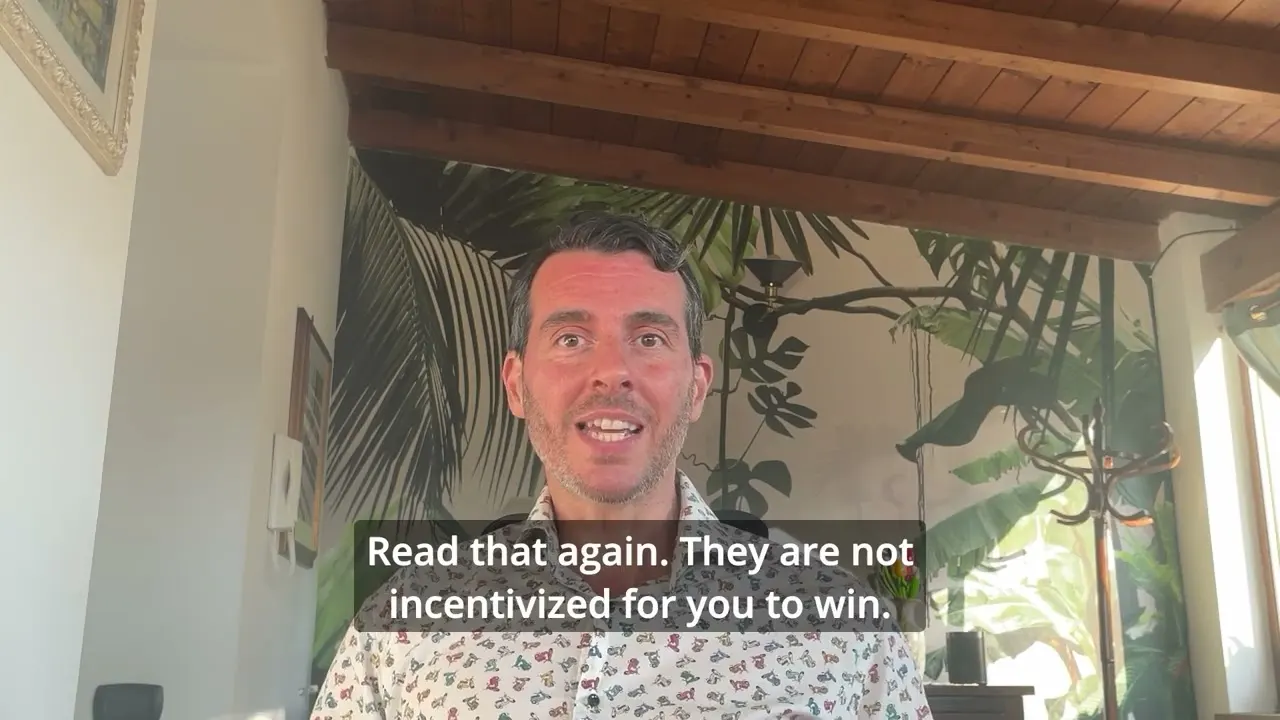
In this short video, Gianluca Pizzituti, Velotrade's co-founder, explains why trading more often usually means making more mistakes. His advice to beginners is blunt: "Trade less."
Key facts about day trading
| Item | Detail |
|---|---|
| Typical holding time | Minutes to a few hours, always closed the same day |
| Typical timeframes | 1, 5 and 15 minute charts, with a daily chart for context |
| Trades per day | Usually 1 to 5 for a disciplined beginner |
| Time commitment | 2 to 4 focused hours per session, plus preparation and review |
| Key tools | Intraday charts, VWAP, support and resistance levels, an economic calendar, a stop loss on every trade |
| Main costs | Spreads, commissions, slippage |
| Main risk | Overtrading and outsized losses from poor position sizing |
| Suits | People with time during market hours, quick decision making and strict discipline |
Want to try this in a prop firm evaluation? Most evaluations are decided by the loss limits and position sizing more than by the setup itself. Start with the best prop firms for beginners, then the best prop firms for day trading and why traders fail prop challenges.
What is day trading?
Day trading is a short-term trading style where all positions are opened and closed within a single session. Holding nothing overnight avoids gap risk (the price jumping between one day's close and the next open), but each day must produce enough movement to cover costs.
Day trading sits between scalping (seconds to minutes) and swing trading (days to weeks). Most day traders focus on liquid markets with tight spreads: large-cap stocks, index ETFs such as SPY and QQQ, major forex pairs and the largest cryptocurrencies.
Be realistic: broker disclosures and academic studies consistently find that most retail day traders lose money. According to ESMA, between 74% and 89% of retail CFD accounts lose money.
How much money do you need to day trade?
The amount you need depends on your market and account type. In the US, FINRA's pattern day trader (PDT) rule applies to margin accounts at US broker-dealers: FINRA defines you as a pattern day trader if you make 4 or more day trades within 5 business days, you are flagged as a pattern day trader and must keep at least 25,000 USD of equity in the account to continue day trading.
Points beginners often miss:
- The PDT rule applies to US brokerage margin accounts. It does not apply in the same way to cash accounts, though cash accounts can only trade with settled funds.
- Forex and crypto accounts are not covered by the PDT rule.
- Prop firm evaluations are not brokerage accounts. You trade a simulated account under the firm's rules, so the PDT rule does not apply to them.
Whatever the account, only trade money you can afford to lose while learning.
When is the best time to day trade?
The best time to day trade US stocks is usually the first and last hour of the regular session, because that is when volume and price movement are highest. The chart below shows the US stock market sessions in Eastern Time.
Pre-market (4:00 to 9:30 ET) and after-hours (16:00 to 20:00 ET) are open for trading, but liquidity is thinner and spreads are wider, which makes them harder for beginners. The regular session runs from 9:30 to 16:00 ET. The opening hour reacts to overnight news, the closing hour sees positions squared, and midday is often quieter.
Forex runs 24 hours on weekdays, busiest when London and New York overlap (see forex market hours, or the live forex sessions clock for the overlap in your time zone). Crypto trades around the clock.
What does a day trader's daily routine look like?
A good daily routine turns day trading into following a plan. A simple structure for US stocks and index ETFs:
- Before the open (8:00 to 9:15 ET). Check the economic calendar, scan for news or unusual pre-market volume, and mark the previous day's high, low and close.
- Build a short watchlist of 2 to 5 instruments.
- Write the plan. Note each entry trigger, stop loss and target, plus your maximum loss for the day.
- Trade the open (9:30 to 11:00 ET). Wait for your setups. No setup means no trade.
- Midday. Reduce activity or step away.
- Closing hour (15:00 to 16:00 ET). Manage or close any remaining positions. Everything is flat by the close.
- Review. Log every trade in a trading journal: entry, exit, reason and result in R (multiples of your risk).

5 day trading strategies for beginners
These five day trading strategies each have a clear entry trigger, a logical stop and a defined target. Test any strategy on historical data and in a simulator before risking money. For the wider menu of styles beyond the intraday session, see our guide to trading strategies.
1. Opening range breakout
The opening range breakout uses the high and low of the first 5, 15 or 30 minutes of the session as a range. A trader buys if price breaks and holds above the range high, or sells short if it breaks below the range low.
- Entry: a break of the range with rising volume.
- Stop: inside the range, often at its midpoint or the opposite side.
- Target: a multiple of the risk, for example 2 times the distance to the stop.
- Watch out for: false breakouts. Waiting for a candle to close outside the range filters some of them.
2. VWAP pullback
VWAP (volume-weighted average price) is the average price paid during the session, weighted by volume, and it resets every day. Our VWAP indicator guide explains the calculation.
In the chart, price trades below VWAP in the morning, then reclaims it and holds above. A VWAP pullback trader waits for that shift, then buys the first pullback that holds near VWAP.
- Entry: a bounce off VWAP after price has reclaimed it.
- Stop: a little below VWAP or below the pullback low.
- Target: the session high or a fixed reward-to-risk multiple.
3. Momentum trading
Momentum trading means buying instruments already moving strongly on high volume, usually because of news or earnings, on the idea that strong moves often continue before fading.
- Entry: a small pause or flag after a strong move, then a break to new intraday highs.
- Stop: below the low of the pause.
- Target: trail the stop under higher lows rather than guessing a top.
- Watch out for: chasing a vertical move, which leaves the stop far away.
4. Support and resistance
Support and resistance are price levels where buying or selling has repeatedly appeared, such as the previous day's high and low or a round number. A trader buys near support with a stop just below it, or sells near resistance with a stop just above it.
- Entry: a rejection from the level (for example a long lower wick at support).
- Stop: just beyond the level.
- Target: the next level on the other side.
5. News trading
News trading means trading the reaction to scheduled releases (inflation data, jobs reports, central bank decisions) or company news. Prices can move sharply in seconds and spreads often widen.
- Approach for beginners: do not trade the first seconds. Wait for the initial spike to settle, mark the high and low it created, and trade a break or a retest of those levels.
- Stop: beyond the post-news range.
- Watch out for: slippage in fast markets, so use smaller size.
For more setup tools, see our overview of technical indicators.
How much should you risk per trade?
Most beginners should risk around 1% of their account per trade, and no more than 2%. Risk is what you lose if the stop is hit, not the position size.
Worked example on a 10,000 USD account:
- 1% risk = 10,000 × 0.01 = 100 USD.
- You buy a stock at 50.00 with a stop at 49.50, so the risk per share is 0.50 USD.
- Position size = 100 ÷ 0.50 = 200 shares.
- If the stop is hit, you lose 200 × 0.50 = 100 USD, which is 1% of the account.
The free position size calculator does this arithmetic for stocks, forex and crypto. If you day trade currency pairs, the lot size calculator works in pips and lots, the pip calculator shows what each pip is worth, and the forex profit calculator shows the result after costs.
Risk only makes sense alongside reward. Your reward-to-risk ratio decides the win rate you need just to break even.
At 1:1 you need to win 50% of trades to break even before costs. At 1:2 the figure falls to 33.3%, and at 1:3 to 25%. The formula is break-even win rate = 1 ÷ (1 + reward-to-risk), so at 1:2 it is 1 ÷ 3 = 33.3%. See the risk-reward ratio guide. Add a personal daily loss limit too, such as stopping after a 2% loss or three losers in a row.
What does day trading cost?
Day trading costs are spreads, commissions and slippage, and they add up fast.
- Spread: the gap between the bid and the ask price. You pay it on every round trip. Our explainer on the bid-ask spread shows how it scales with size.
- Commissions: a fee per trade or per share.
- Slippage: the gap between the expected and actual fill price.
Worked example: if each round trip costs 10 USD in spread and commission and you take 5 trades a day, that is 50 USD a day. Over 20 trading days it is 1,000 USD a month, before a single winning trade. Limit orders help control the fill price, and fewer trades cut total cost.
What are the most common day trading mistakes?
The most common day trading mistakes come from trading too much and risking too much.
- Overtrading. Trading out of boredom or to win back a loss. Gianluca Pizzituti warns traders to "Stop living on the five-minute chart", and sitting out is a valid decision.
- No stop loss. Hoping a loser comes back turns a small loss into a large one.
- Oversizing. Risking 5% or 10% per trade means a short losing streak can end the account.
- Revenge trading. Increasing size after a loss.
- Ignoring costs. A strategy profitable before costs can lose after them.
- Judging trades by outcome. A profitable trade that broke your rules is still a bad trade. Review the process in your journal, not just the P&L.
- Skipping practice. Start with a demo account or paper trading until your results and your journal are consistent.
Emotions drive most of these errors, so trading psychology is a core skill.
Is day trading right for you?
Day trading suits people who can be at the screen during active hours, decide quickly and follow rules without exception. If you work during market hours, swing trading or position trading usually fit better. Either way, expect months of practice and review before your results mean anything.
How does day trading work in a prop firm evaluation?
In a prop firm evaluation, you day trade a simulated account toward a profit target without breaking the risk rules. At Velotrade, a multi-asset prop trading firm, the evaluation covers crypto, forex, stocks, index ETFs and commodities, and the rules that matter most for day traders are:
- Daily loss limit: 5% on CLASSIC 2-Step, 4% on CLASSIC 1-Step and 3% on PRO 1-Step. It resets at 00:30 UTC and is set from the higher of your balance or equity.
- Maximum drawdown: static, a fixed dollar floor that does not trail your profits. See static maximum drawdown explained.
- No time limit: each phase has a minimum trading period but no maximum, so there is no pressure to force trades.
- News trading is allowed.
The account is simulated, so the PDT rule does not apply. To compare firms, see the best prop firm for day trading. This is educational content, not investment advice.
Can AI help with day trading?
AI can help with screening instruments for unusual volume, summarising news, analysing a trading journal for repeated mistakes, and speeding up backtesting trading strategies.
AI does not remove risk. Models can be wrong, and human judgement still decides what to trade and how much to risk. See AI trading strategies for realistic uses.
Sources
- FINRA, "Frequent Intraday Trading: Understanding the Basics": pattern day trader rule, 25,000 USD minimum and day trading risks.
- Investor.gov (SEC), "Day Trading": what day trading is and why it is risky.
- ESMA, "ESMA agrees to prohibit binary options and restrict CFDs to protect retail investors" (2018): 74% to 89% of retail CFD accounts lose money.
- Investor.gov (SEC), "Bid Price/Ask Price": bid, ask and the spread paid on every round trip.
Frequently Asked Questions
About the author

Gianluca Pizzituti
Chief Executive Officer
Formerly on the derivatives desk at Dresdner Kleinwort in London, then founded and ran a proprietary HFT firm in FX and equity indices out of Singapore.
Velotrade was founded in Hong Kong in 2016 by a team from JP Morgan, Dresdner Kleinwort and Bank of America, has paid out over $2.5 billion to its trade-finance clients, and has been featured in Bloomberg, the Financial Times, the Wall Street Journal and on Nasdaq. Its prop trading evaluations are simulated and educational.
View author page