Trade gold and commodities with funded capital
ExploreGold is one of the most traded assets in the world, and there is more than one way to trade it. You can trade spot gold as a CFD (the XAUUSD pair), trade gold futures on an exchange, hold tokenized gold on-chain, or buy the physical metal. Each route has different costs, leverage, and access rules, and the right one depends on where you live and how you trade.
This guide explains each method in plain terms, covers what actually moves the gold price, and shows how traders access gold through a funded account when a domestic broker is not an option.
Highlights of this article
- Gold trades four main ways: spot CFD (XAUUSD), futures, tokenized gold (like XAUT), and physical metal
- Spot XAUUSD is the most common route for active traders, priced against the US dollar and traded with leverage
- US retail traders often cannot access spot XAUUSD through domestic brokers, so a funded prop account is a common workaround
- Tokenized gold trades 24/7 on-chain and tracks the gold price without holding the metal yourself
- On a Velotrade commodities funded account you can trade spot gold (XAUUSD) at up to 6x and tokenized gold (XAUT) alongside crypto, forex, indices, and stocks on one platform
The four ways to trade gold
1. Spot gold (XAUUSD CFD). Spot gold is quoted as XAUUSD, the price of one ounce of gold in US dollars. Most active traders access it as a contract for difference (CFD), which tracks the spot price and lets you go long or short with leverage. You never take delivery of metal. This is the route with the tightest spreads and the most flexible position sizing.
2. Gold futures. Exchange-listed contracts (such as CME's GC and micro MGC) to buy or sell gold at a set price on a future date. Futures have fixed contract sizes, expiry dates, and require rollovers. They suit traders who want centralized-exchange liquidity and a regulated instrument structure.
3. Tokenized gold. Tokens such as Tether Gold (XAUT) and PAX Gold (PAXG) represent ownership of physical gold, issued on a blockchain. They track the gold price, settle on-chain, and trade 24/7 without a traditional broker. Tokenized gold sits between crypto and commodities: it is a digital asset, but its value is pegged to the metal.
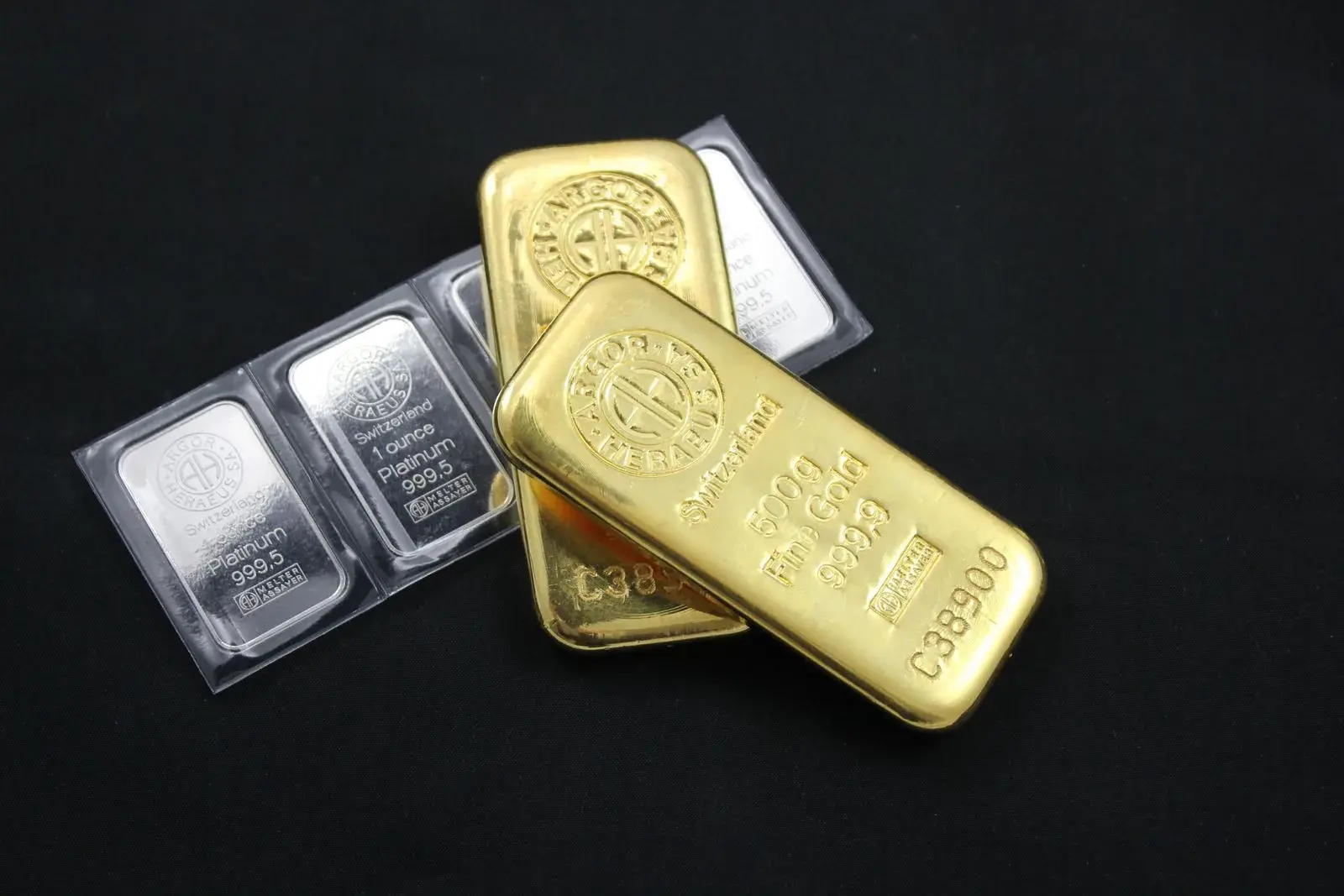
4. Physical gold. Bars and coins. This is ownership, not trading. It carries storage and insurance costs and is impractical for active positions.
For an explanation of position value across any of these, see notional value explained.
Want to try this in a prop firm evaluation? Most evaluations are decided by the loss limits and position sizing more than by the setup itself. Start with the best prop firms for gold traders, then how a static maximum drawdown works and how the top prop firms compare.
Spot gold (XAUUSD), explained
XAUUSD is the symbol for spot gold priced in US dollars. XAU is the ISO code for one troy ounce of gold; USD is the quote currency. When XAUUSD is 2,400, one ounce of gold costs 2,400 US dollars. For a full breakdown of the symbol and how it is priced, see what is XAUUSD.
Spot gold behaves like a currency pair in some ways (it is quoted against the dollar, moves in pips, and trades nearly around the clock on weekdays) but it is a commodity, not a currency. It is sensitive to real interest rates, the strength of the dollar, inflation expectations, and safe-haven demand during risk-off periods.
Because spot XAUUSD is traded with leverage, a small move in the gold price produces a larger move in your account. Leverage magnifies both gains and losses, which is why position sizing and a fixed loss limit matter more on gold than on slower instruments.
Gold futures
Gold futures are standardized contracts on a regulated exchange. The full-size CME contract (GC) represents 100 ounces, and the micro contract (MGC) represents 10 ounces. Futures give you genuine exchange liquidity and price discovery, but the fixed contract sizes make fine position sizing harder for smaller accounts, and you have to manage expiry and rollovers.
Futures and spot CFDs track the same underlying gold price closely. The practical difference is structure: futures are exchange-cleared with set contract units and expiries; spot CFDs are continuous and sized flexibly.
Tokenized gold (XAUT and PAXG): the 24/7 route
Tokenized gold is the newest way to trade the metal. A token like XAUT (Tether Gold) is backed by physical gold held in reserve, and each token tracks the price of one ounce. Because it lives on a blockchain, it trades 24 hours a day, 7 days a week, including weekends when traditional gold markets are closed.
For traders who already operate in crypto, tokenized gold is a natural bridge: it gives gold exposure inside a 24/7 environment, with on-chain settlement and no traditional brokerage account. The trade-off is that tokenized-gold liquidity is thinner than spot XAUUSD, and the tokens carry issuer and smart-contract considerations that physical or exchange-traded gold does not. For a full comparison, see tokenized gold vs spot gold.
How US traders access gold
Here is a practical problem many traders hit: spot XAUUSD is widely available to traders in Europe, Asia, and elsewhere, but US retail traders are often unable to trade spot gold CFDs through domestic brokers because of how the instrument is regulated locally. US traders are typically pushed toward gold futures instead, which are less flexible for smaller accounts.
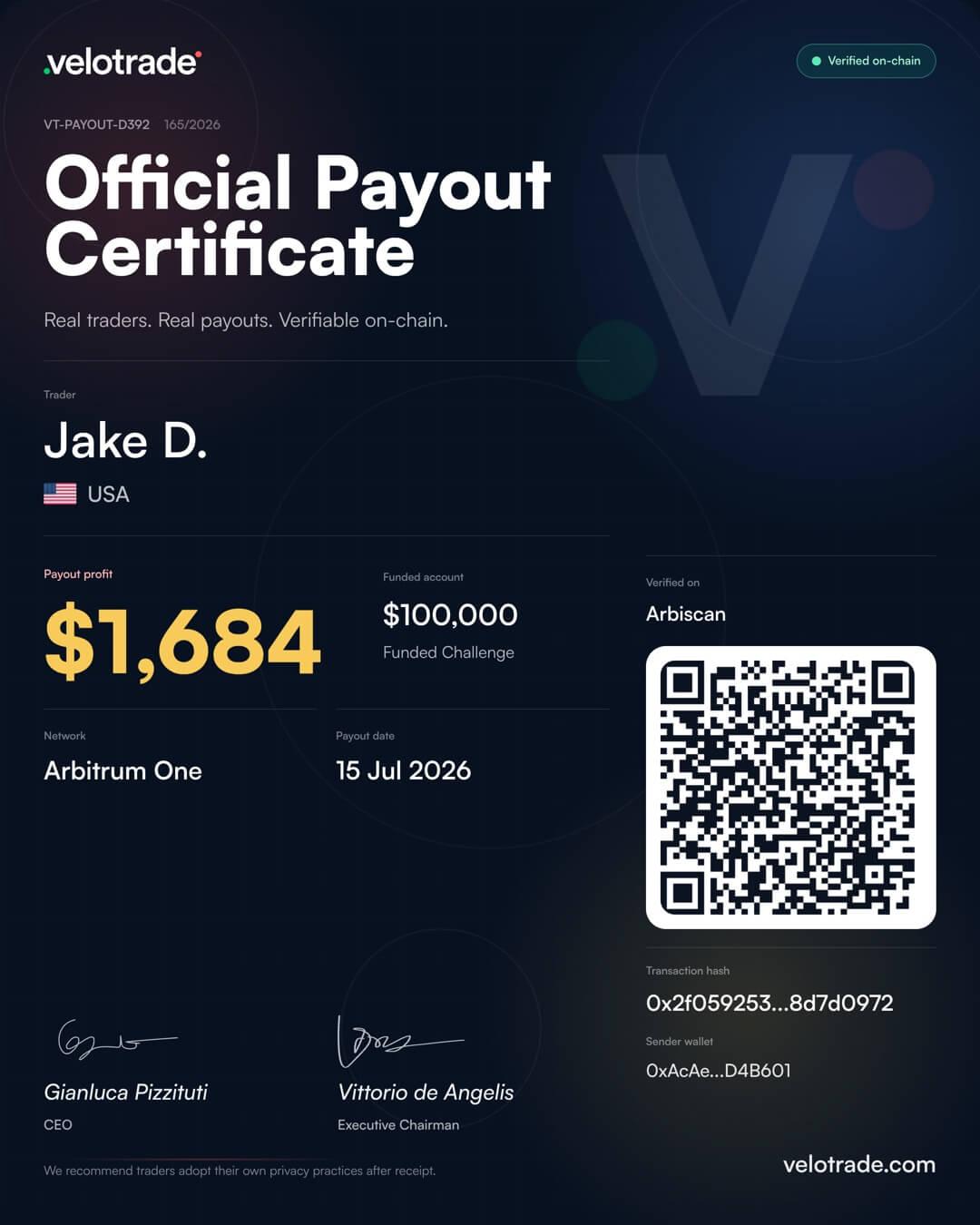
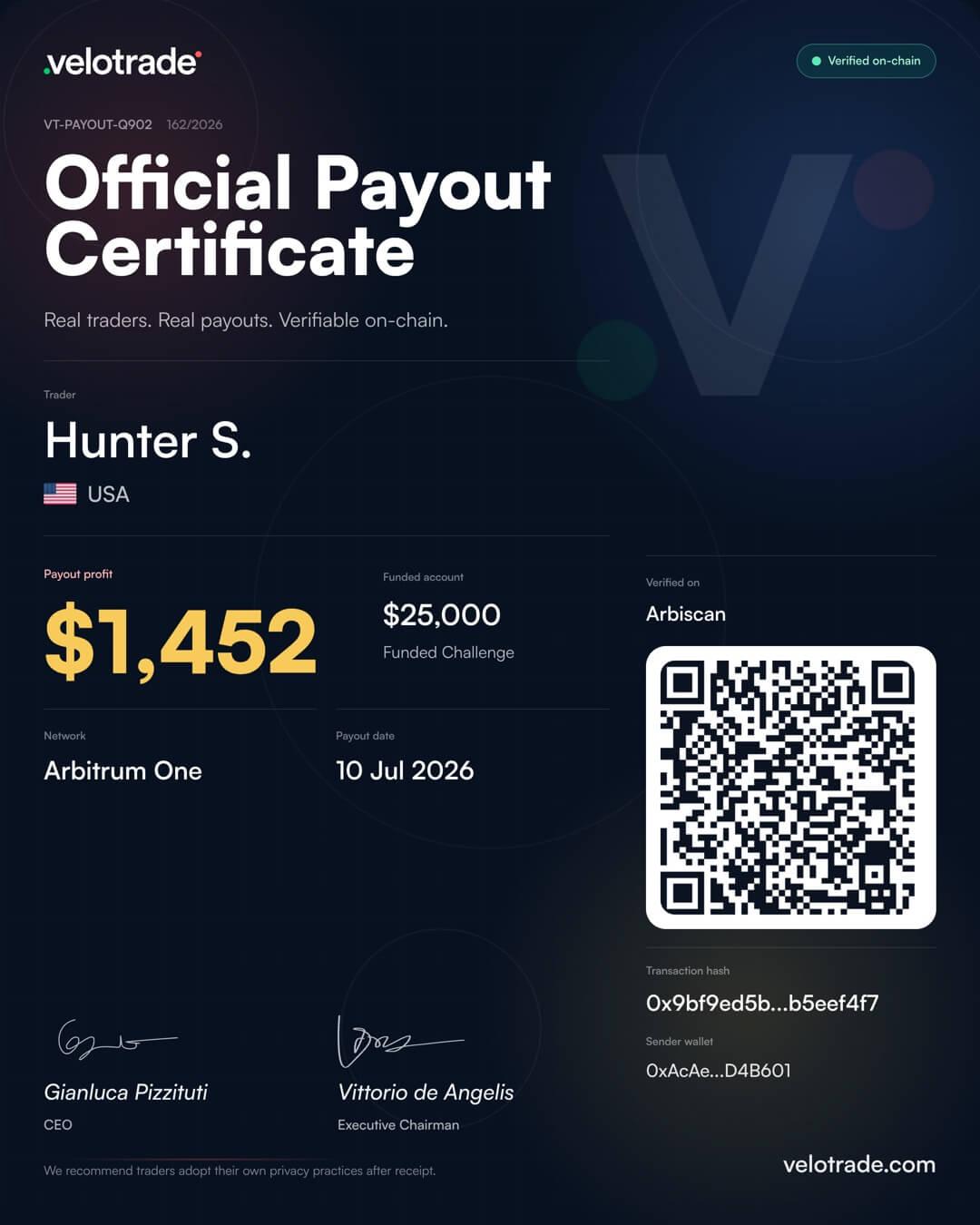
A funded prop account is one common way traders get around this. Because a prop challenge is an educational, simulated evaluation priced against real-time markets rather than a domestic brokerage account, traders can practice and prove a gold strategy on spot XAUUSD pricing without a local broker relationship. It is not investment advice or a substitute for a broker; it is a way to trade a strategy against live gold pricing on a funded evaluation.
Trading gold on a funded account
If you want to trade gold with more capital than you hold personally, a funded account lets you trade a firm's capital against a profit split, with your downside limited to a one-time challenge fee. For a full comparison of the model against trading your own money, see funded trading vs leverage trading.
Velotrade is a multi-asset prop firm, and gold is a first-class instrument on it (for a ranked comparison of firms for gold, see best prop firm for gold):
- Spot gold (XAUUSD) trades as a commodity at up to 6x leverage on the challenge (5x funded), with commission of 0.01% per side and no spread markup.
- Tokenized gold (XAUT, Tether Gold) is available on the crypto side at up to 3x, so you can trade gold in a 24/7 environment on the same account.
- Both sit on one DXtrade funded account alongside crypto, forex, indices, and stocks, so you can rotate between gold and other markets without switching firms. See the full instrument list for every symbol and its leverage, and for other markets see how to trade silver, how to trade oil, how to trade indices and how to trade forex.
- The rules are calibrated for active trading: static maximum drawdown (the loss floor is fixed from your starting balance and never trails your equity), no consistency rule, and news trading permitted, which matters on gold because the metal moves hard around macro releases.
Velotrade is unregulated and offers educational, simulated evaluations with real-time market pricing. It is not a broker, dealer, or custodian, and no orders are placed on an exchange.
What moves the gold price
Gold does not pay a yield, so its price is driven mostly by the opportunity cost of holding it and by demand for safety:
- Real interest rates. When real yields fall, gold usually rises, because holding a non-yielding asset costs less.
- The US dollar. Gold is priced in dollars, so a stronger dollar tends to pressure gold and a weaker dollar tends to support it.
- Inflation expectations. Gold is a traditional inflation hedge, so rising inflation expectations often lift demand.
- Risk sentiment. In risk-off periods (geopolitical stress, market shocks), safe-haven flows push gold up.
- Scheduled macro events. FOMC decisions, CPI, and non-farm payrolls routinely move gold sharply. Trading these events is where a firm's news-trading policy matters. See what is FOMC trading and what is NFP trading.
Gold's run to repeated record highs is also a reminder that price is not set by fundamentals alone. Our guide to fundamental vs technical analysis covers how flows and narratives fit in.
On the chart, gold traders watch the same structures as other markets, from cup and handle bases to double tops; see our chart patterns guide.
Gold trading basics
- Sessions. Gold is most active during the London and New York overlaps; liquidity thins in the late Asian session. The live market sessions clock shows which session is open now.
- Volatility. Gold can move 1% to 2% in a session and much more around major news, so size positions against your daily loss limit, not against your conviction.
- Style. Gold's long, macro-driven moves suit swing trading strategies on the 4-hour and daily charts, and multi-month runs suit trend following or position trading.
- Pips and lots. On XAUUSD a one-dollar move is 100 pips; confirm the contract size and pip value on your platform before sizing, then use a position size calculator to size from your stop.
- Correlation. Gold often moves inversely to the dollar and can decouple from equities during stress, which makes it useful for diversification within a multi-asset account.
Frequently Asked Questions
About the author

Vittorio De Angelis
Executive Chairman
Former equity-derivatives trader at JP Morgan, Dresdner Kleinwort and Bank of America in London. Later Head of Brokerage at a global broker in Hong Kong.
Velotrade was founded in Hong Kong in 2016 by a team from JP Morgan, Dresdner Kleinwort and Bank of America, has paid out over $2.5 billion to its trade-finance clients, and has been featured in Bloomberg, the Financial Times, the Wall Street Journal and on Nasdaq. Its prop trading evaluations are simulated and educational.
View author page