New to funded trading?
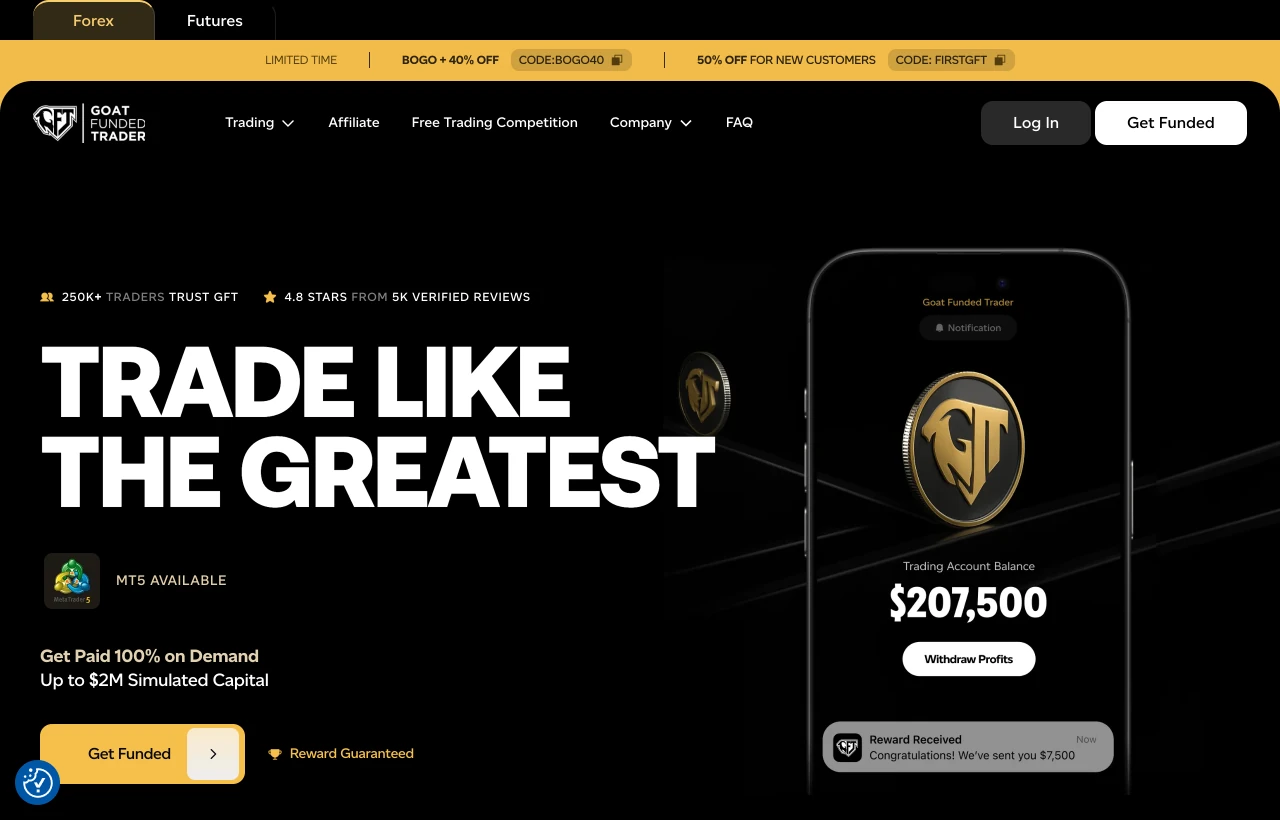
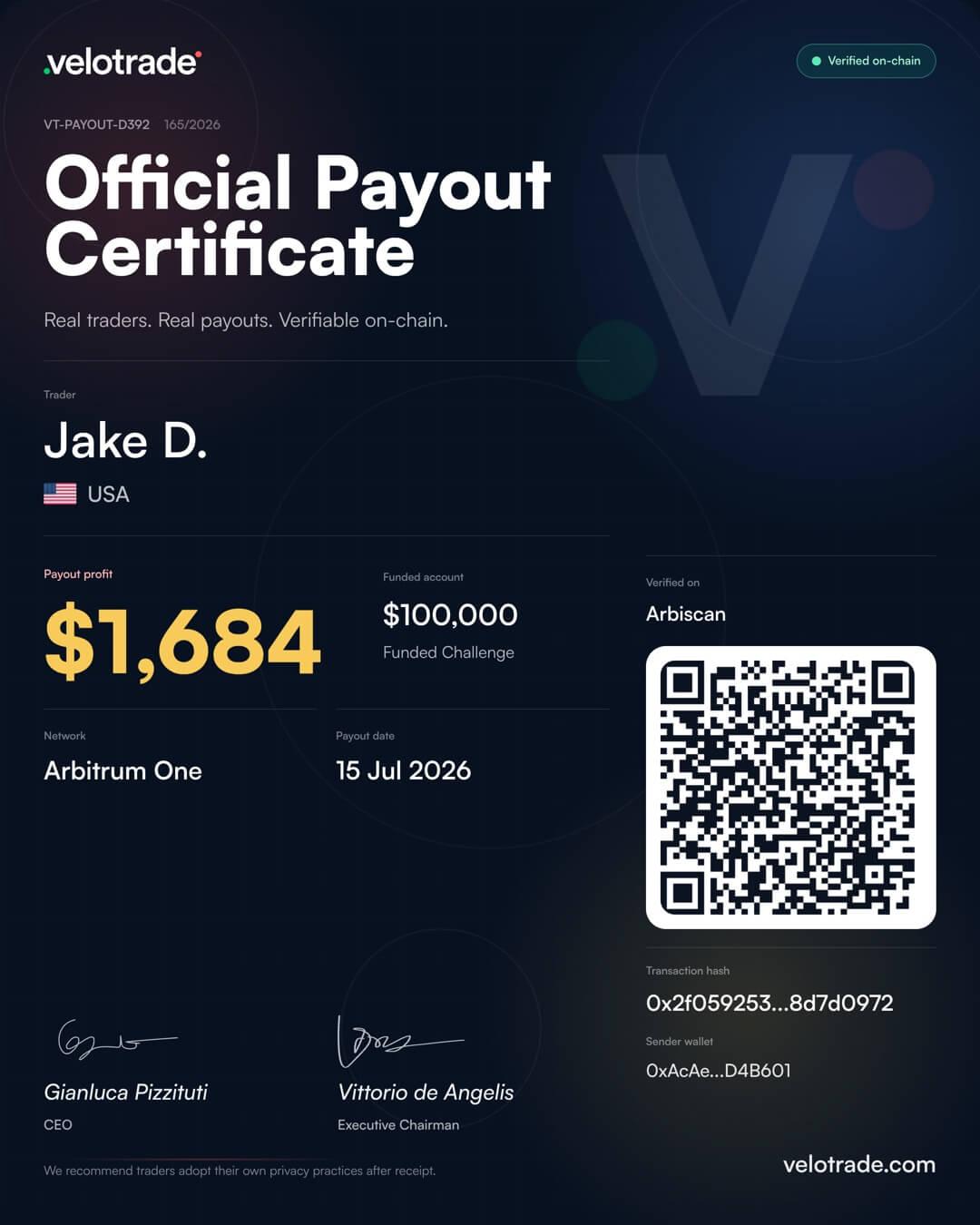
ExploreGoat Funded Trader and Velotrade are both Hong Kong based, both multi-asset, and both use a static drawdown. On the surface they look similar. The differences that decide which one fits you are in the rules layered on top: the consistency rule, the news-trading cap, the profit-split ceiling, and the fee refund. This comparison puts them side by side.
Highlights of this article
- Both firms use a static drawdown and are headquartered in Hong Kong
- Goat Funded Trader pays 80% as standard with a 100% add-on, and refunds the fee on the fourth payout; Velotrade pays 80% as standard with a 90% add-on, with no fee refund
- Neither firm applies a consistency rule to its challenges, but Goat caps funded daily profit at $3,000 and its first two payouts at 6% or $10,000; Velotrade has no such caps
- Velotrade places no cap on news-trade profit; Goat caps profit within 5 minutes of high-impact news at 1%
- Goat supports MT4, MT5, TradeLocker, and cTrader; Velotrade runs on DXtrade only
- Goat has the longer track record (2023, $30M+ paid) and larger accounts ($400K, scaling to $2M)
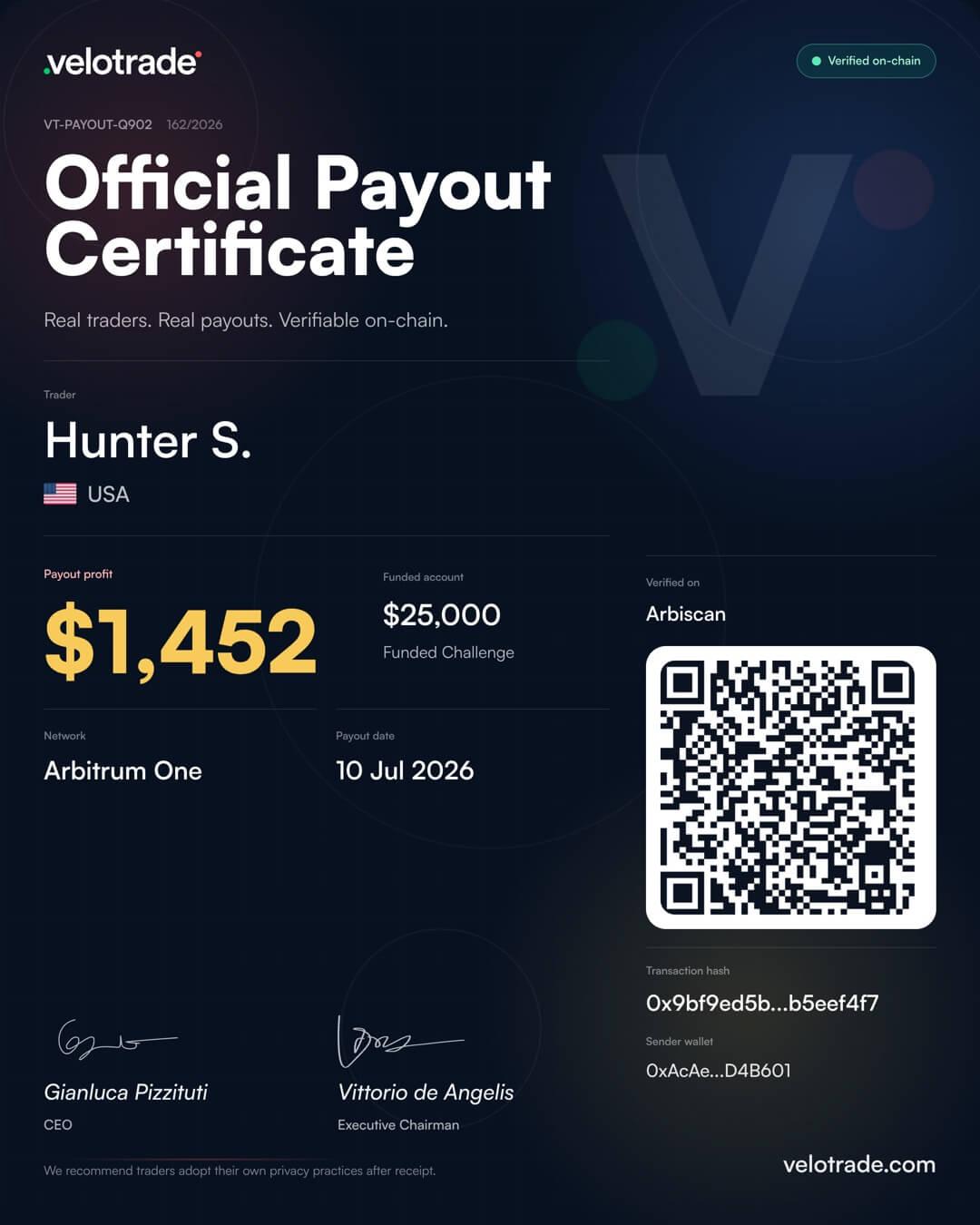
Quick Comparison: Goat Funded Trader vs Velotrade
| Goat Funded Trader | Velotrade | |
|---|---|---|
| Founded | 2023 | 2026 (crypto prop launch) |
| HQ | Hong Kong | Hong Kong |
| Markets | Crypto, forex, stocks, ETFs, indices | Crypto, forex, stocks, indices, commodities |
| Account sizes | $5K to $400K | $5K to $200K |
| Challenge types | 1-step and 2-step | 1-step and 2-step |
| Drawdown type | Static | Static |
| Max drawdown | 6% (1-Step) or 10% (2-Step) static; 3% to 5% daily | CLASSIC 2-Step 10%, CLASSIC 1-Step 7%, PRO 1-Step 3%; 3% to 5% daily |
| Consistency rule | None on challenges (15% on Instant); $3,000 daily profit cap when funded | None |
| News trading | Allowed, profit capped 1% within 5 min | Allowed (no cap) |
| Weekend holding | Allowed (gap adjustment on funded) | Allowed |
| EAs / automation | Allowed (no HFT, arbitrage, martingale, hedging, copy) | Allowed |
| Platforms | MT4, MT5, TradeLocker, cTrader | DXtrade only |
| Profit split | 80%, 100% as an add-on | 80%, 90% as an add-on |
| Fee refund | Yes, with the fourth payout | No |
| Track record | Since 2023, $30M+ paid | Since 2026 |
Drawdown: Both Static, Different Buffers
This is the area where the two firms are most alike. Both use a static drawdown, where the loss floor is fixed from your starting balance and never trails up against you. That is the more forgiving model for volatile markets, and it is a point in both firms' favour against firms that use tick-by-tick trailing.
The difference is the size of the buffer. Goat Funded Trader's 1-Step runs a tight 6% maximum overall loss with a 3% daily limit (for accounts bought from August 2026); its 2-Step models allow 10%. Velotrade's static limits vary by plan: 10% on the CLASSIC 2-Step, 7% on the CLASSIC 1-Step, and 3% on the PRO 1-Step, with a 5% daily limit on the 2-Step. If you want more overall room, Velotrade's CLASSIC plans give it; if you are comfortable trading tight, Goat's 6% is workable.
For why the calculation method matters as much as the percentage, see static maximum drawdown explained. To model your floor on either setup, use the prop trading drawdown calculator.
Funded-Account Caps: None vs a $3,000 Daily Cap
This is the first decisive difference. Velotrade has no consistency rule and no daily profit cap. You can make the bulk of your profit on a single high-conviction day without it affecting payout eligibility.
Goat Funded Trader's challenge models have no consistency rule, but once funded, daily profit is capped at $3,000 (anything above is deducted), the first two payouts are capped at 6% of the account or $10,000, and each payout needs four trading days of at least 0.5% profit. A Goat Guard rule also triggers if open positions reach a combined 2% floating loss. For a trader whose edge concentrates returns on a few sessions, those caps limit how quickly profit can be built and withdrawn. Goat's Instant accounts add a 15% consistency rule on top.
News Trading: Uncapped vs a 1% Cap
The second decisive difference. Velotrade allows news trading with no documented profit cap. Goat Funded Trader also allows news trading, but caps any profit made within 5 minutes of a high-impact release at 1%.
For event-driven and news traders, that cap is significant: you can trade the news at Goat, but the upside on those trades is limited. If trading high-impact releases is central to your edge, Velotrade is the more permissive choice. If you rarely trade the first few minutes of news, the cap will not affect you.
Profit Split and Fee Refund: Goat's Edge
Where Goat Funded Trader pulls ahead is the ceiling. Its standard split is 80%, but you can buy a 100% split as a checkout add-on, against Velotrade's 80% standard split with a 90% add-on. Goat also refunds the challenge fee with your fourth payout, while Velotrade does not offer a fee refund.
For a trader confident of passing and paying out regularly, Goat's 100% option and eventual refund are a genuine cost advantage. The caveat is that the daily profit cap and news cap apply to how you earn that split, so the higher ceiling comes with more conditions on the trading itself.
Platforms: Four Choices vs One
Goat Funded Trader supports MT4, MT5, TradeLocker, and cTrader. That breadth lets traders keep an existing setup, including allowed EAs and indicators, without migrating. Velotrade runs exclusively on DXtrade.
If you are committed to MT4/MT5 or cTrader, Goat has the clear edge. If you are happy on DXtrade, Velotrade's single-platform focus keeps its rule set consistent across every asset. Note that Goat restricts automation: it bans HFT, arbitrage, martingale, hedging, and third-party EAs, so confirm your strategy is allowed there.
Track Record and Scaling
Goat Funded Trader's longer history is a real point in its favour. A 2023 launch with a reported $30M+ paid in rewards and scaling up to $2M gives it more accumulated payout history than Velotrade's 2026 crypto prop launch. In a category where trust is the scarcest commodity, that history is worth checking.
Velotrade's counterpoint is a documented institutional team background (JP Morgan, Dresdner Kleinwort, Bank of America) and a fully published rule set. Where Goat leads on operating history and scaling ceiling, Velotrade leads on rule simplicity and transparency.
For the deeper firm profiles, see the Goat Funded Trader review and the Velotrade review.
What Each Firm Suits Best
Choose Velotrade if:
- You want no daily profit cap or consistency rule, useful for concentrated or event-driven strategies
- You want uncapped news-trade profit
- You want more overall drawdown room (CLASSIC plans) or a documented, single rule set
- You are comfortable on DXtrade
Choose Goat Funded Trader if:
- You want a 100% split option and a fee refund once you are paying out regularly
- You want platform choice across MT4, MT5, TradeLocker, and cTrader
- You want large accounts and aggressive scaling toward $2M
- You do not rely on concentrating profit into a few days or on news-trade upside
Which Prop Firm Is Better?
There is no single winner. Goat Funded Trader wins on economics and reach: a 100% split option, a fee refund on the fourth payout, four platforms, larger accounts, and a longer track record. Velotrade wins on rule freedom: no daily profit cap and no news cap, plus more overall drawdown room on its CLASSIC 2-Step.
Decide on the variable that actually constrains your trading. If you concentrate profit or trade news, Velotrade's rule freedom likely outweighs Goat's split add-on. If you trade steadily across many days and want the highest ceiling and an eventual fee refund, Goat is the stronger economic package. Verify the current terms directly before purchasing either.
For the wider market, see best crypto prop firms in 2026, and for Goat's full rule profile, the Goat Funded Trader directory page.
Frequently Asked Questions
About the author

Vittorio De Angelis
Executive Chairman
Former equity-derivatives trader at JP Morgan, Dresdner Kleinwort and Bank of America in London. Later Head of Brokerage at a global broker in Hong Kong.
Velotrade was founded in Hong Kong in 2016 by a team from JP Morgan, Dresdner Kleinwort and Bank of America, has paid out over $2.5 billion to its trade-finance clients, and has been featured in Bloomberg, the Financial Times, the Wall Street Journal and on Nasdaq. Its prop trading evaluations are simulated and educational.
View author page