New to funded trading?
ExploreJérôme Kerviel is the former Société Générale trader whose hidden positions in European index futures led to a loss of about EUR 4.9 billion for the bank in January 2008. At the time it was the largest trading loss ever attributed to a single trader. Kerviel was a junior trader on the bank's Delta One desk, he had come from the middle office, and he concealed positions worth around EUR 50 billion behind fictitious offsetting trades.
This account adds a view from the other side of the screen. Vittorio De Angelis, Velotrade's co-founder, was running an equity derivatives book in Europe in January 2008, and Kerviel's hidden buying cost him real money before anyone knew the position existed. His story shows something every trader should understand: the price on your chart can be driven by flows you will never see.
Quick answer: Jérôme Kerviel is the former Société Générale junior trader whose hidden positions of about EUR 50 billion in European index futures cost the bank about EUR 4.9 billion when they were unwound in January 2008. He concealed the risk with fictitious offsetting trades, was convicted in 2010, and remains the textbook rogue trader case.
Highlights of this article
- Jérôme Kerviel built unauthorised positions of around EUR 50 billion in European index futures (Euro Stoxx 50, DAX, FTSE 100) and hid them with fictitious trades
- Société Générale discovered the positions in January 2008 and unwound them between 21 and 23 January, during a global sell-off, for a loss of about EUR 4.9 billion
- Kerviel was convicted in 2010; in 2016 an appeal court cut the civil damages he owed to EUR 1 million and found the bank partly responsible through its control failures
- A rogue trader is someone who takes unauthorised risk and hides it; Nick Leeson at Barings and Kweku Adoboli at UBS are the other best-known cases
- Vittorio's first-hand story: his protective Euro Stoxx options lost value because, on days the US sold off, hidden futures buying kept Europe flat
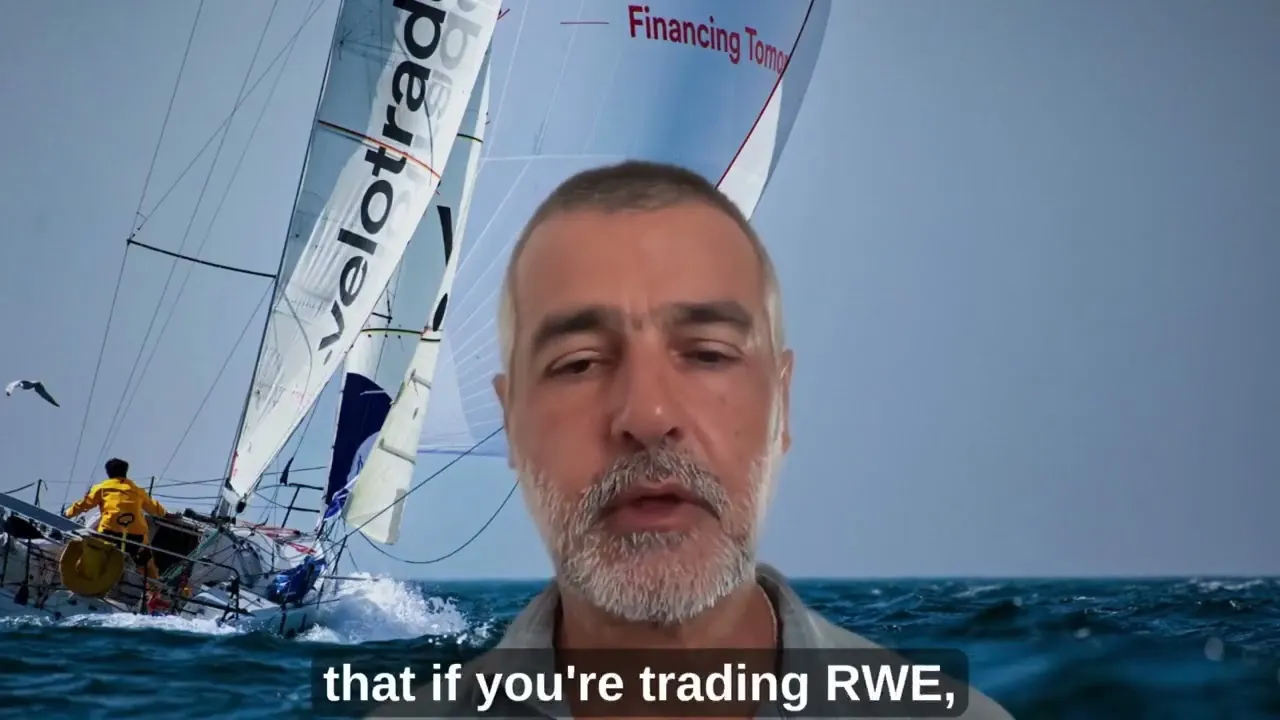 5:24
5:24Read the transcript
A couple more stories from the trenches. War stories.
The reason I like sharing these stories is to make all investors aware that sometimes an investor sits in front of his screen, has access to a huge amount of information, is very good at looking at charts, but there are always elements that the investor will never know about, or is unlikely ever to know about. Two examples.
The first: I was trading RWE, which is a German utility company, and we had a corporate trade. We called them corporate trades when they were extremely large and generally initiated by a corporate.
The transaction entailed the client going synthetically long RWE, so the client was buying calls and selling puts. I'm not sure why he needed to do that. Maybe he was not allowed to buy more shares, maybe there was some corporate agreement that prevented him from increasing his exposure to the company further.
Anyway, it took us a couple of days, maybe a week, to price the transaction. It was very large. Eventually the client said done, and of course, as I was buying the puts and selling the calls, I had to go and buy the delta in the market, which was a very large transaction.
Then, once the transaction was booked, I also had to hedge the volatility, because this transaction put me very, very long vega. The strike of the put I was buying was much closer to the money than the call I was selling. And at the time I was not overly bullish on volatility. So I went out and sold two or three million dollars' worth of vega, which is a ton of options.
The reason I'm mentioning this is that if you are trading RWE, you can look at all the charts in the world, but you'll never know when the client says done to the investment bank, and you don't know when the bank is going to go out there and execute the delta.
In this case, I had to buy a very large amount of shares. I was buying puts, so I had to hedge the puts. I was selling calls, so I had to hedge those as well. And obviously the flows I was executing hugely distorted the market, at least in the short term.
I had an added bonus on that transaction, because buying puts and selling calls left me long dividends. As I mentioned previously, because of structured products, dividends were priced very low in the market. So when RWE eventually reported results and gave news on the dividend, I made a lot of P&L.
The second example actually cost me, as a professional, a fair amount of money. I believe it was January 2008. There was a trader at Société Générale, Jérôme Kerviel, who had experience in the back office, which is generally a somewhat dangerous combination.
Because once he came to the front office, he started trading and accumulated a massive rogue position. He was able to hide it because he knew how the back office worked. He knew the weaknesses of the reporting systems.
He built a long futures position on, I believe, the Euro Stoxx, the CAC and a bunch of European indices, of around 50 billion euros. When he was eventually caught, unwinding it cost the bank about 4.9 billion euros.
The reason I'm mentioning it is that I had some danger on the downside, meaning I had some structured products in my books that could be dangerous if the market went down. So I decided to buy options on the Euro Stoxx, to buy some gamma.
As I explained previously, if you are long options, the more the market moves, the more money you make. However, to hold long options you are paying theta. When you buy options you have to pay a premium, and that premium decays over time. It can be a really substantial amount of money.
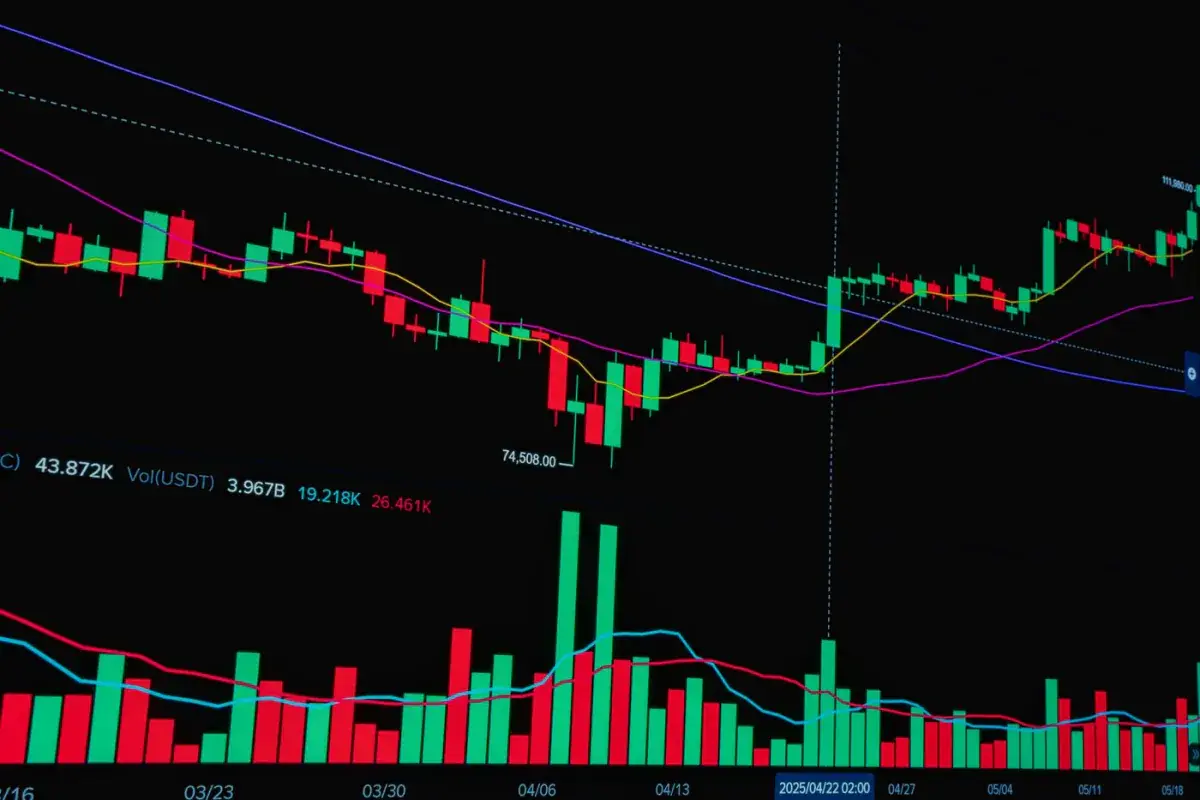
So what happened there? Because Jérôme Kerviel was buying an enormous amount of futures, the market never actually went down. You had occasions on which the US opened 1% or 2% lower and Europe opened flat. Not because the correlation broke down, but because there was an individual buying a huge amount of futures at that level.
So of course my options never performed. They decayed slowly but surely, and it cost me a lot of money.
And that was as a professional, so I had very good access to information. Imagine if you're a retail trader trading the Euro Stoxx and there is an event like that happening. You're obviously at a disadvantage.
I'm not telling people not to trade. I'm sharing my experiences so that next time you think you know it all, you bear in mind that there is a certain amount of information that is not shared. Speak soon.
Who is Jérôme Kerviel?
Jérôme Kerviel is a French former trader, born in 1977 in Brittany. He joined Société Générale in 2000 and spent his first years in the middle office, the function that checks, confirms and reconciles the trades booked by the front office. In 2005 he moved to the front office as a junior trader on the Delta One desk in Paris.
A Delta One desk trades products that move one for one with an underlying asset, such as index futures, ETFs and swaps. Much of the business is arbitrage, so positions are meant to be hedged and the net market risk small. The desk's monitoring was built around that assumption, which matters for what followed.
If you trade this on a funded account, the rules around it matter as much as the setup. Useful next reads: why traders fail prop challenges, how daily drawdown limits work and how to pass a prop firm challenge.
How did the Société Générale trading loss happen?
According to the bank's own investigation and the later court rulings, Kerviel began taking large directional bets that were not hedged at all. He bought and sold European index futures outright and then entered fictitious trades in the bank's systems that appeared to offset them, so the book looked flat to the people supervising it.
His middle office background was central: he knew how trades were confirmed and when checks ran, so fictitious entries could be cancelled and replaced before they were challenged. Vittorio puts the risk simply: a trader with back office experience who moves to the front office is "generally a somewhat dangerous combination", because he knows where the reporting systems are weak.
How big was Kerviel's hidden position?
By January 2008 the unauthorised positions amounted to roughly EUR 50 billion, mostly long futures on the Euro Stoxx 50, the DAX and the FTSE 100. That figure was larger than the bank's own capital.
It is widely reported that Kerviel's hidden trading showed a large paper profit at the end of 2007.
How was the position discovered and unwound?
The positions came to light around the weekend of 19 and 20 January 2008. Société Générale decided to close them as quickly as possible and sold the futures between Monday 21 and Wednesday 23 January. The timing could hardly have been worse. Global stock markets were already falling sharply on fears of a US recession, and on 22 January the US Federal Reserve made an emergency 0.75 percentage point rate cut.
As Wikipedia's account of the case records, the bank announced the loss on 24 January 2008: about EUR 4.9 billion after unwinding the trades. Commentators have debated how much the forced selling added to the European sell-off that week. Either way, the episode showed how a single hidden book can become a market event when it has to be closed.
What did the courts decide?
The courts upheld Kerviel's criminal conviction but eventually cut the damages he owed the bank to EUR 1 million. The legal process ran for most of the following decade. The key steps are summarised below.
| Year | Court decision |
|---|---|
| 2010 | Convicted in Paris of breach of trust, forgery and unauthorised use of computer systems. Sentenced to five years in prison, two of them suspended, and ordered to repay the full EUR 4.9 billion |
| 2012 | Paris Court of Appeal upheld the conviction and the damages |
| 2014 | France's highest court upheld the criminal conviction but overturned the EUR 4.9 billion damages award, sending that question back for a new hearing. Kerviel served part of his prison term that year before release under electronic monitoring |
| 2016 | Versailles Court of Appeal reduced the damages he owed the bank to EUR 1 million, finding that Société Générale's own control failures were partly responsible for the loss |
Kerviel has always maintained that his superiors tolerated his trading while it made money. The bank has consistently denied knowing about the positions. The courts upheld his conviction while also finding serious weaknesses in the bank's controls.
What is a rogue trader?
A rogue trader is an employee of a bank or trading firm who takes positions without authorisation, usually far beyond their risk limits, and conceals them. The defining features are the lack of permission and the concealment, not the size of the loss: losing inside your limits is bad trading, not rogue trading.
Most cases follow the same pattern: unauthorised directional risk, concealment through fake trades or error accounts, doubling down to recover losses, and weak separation between the trader and the people checking the trades.
Other famous rogue trader cases
| Trader | Firm | Year revealed | Instruments | Approximate loss |
|---|---|---|---|---|
| Nick Leeson | Barings Bank | 1995 | Nikkei 225 futures and options | GBP 827 million |
| Yasuo Hamanaka | Sumitomo Corporation | 1996 | Copper | USD 2.6 billion |
| John Rusnak | Allfirst (Allied Irish Banks) | 2002 | Currency options and forwards | USD 691 million |
| Jérôme Kerviel | Société Générale | 2008 | European index futures | EUR 4.9 billion |
| Kweku Adoboli | UBS | 2011 | Index futures and ETFs | USD 2.3 billion |
Nick Leeson and Barings. Leeson was the general manager of Barings' futures operation in Singapore, and crucially he ran both the trading and the settlement side of the office. He hid losing positions on Nikkei futures and options in an error account numbered 88888. The Kobe earthquake in January 1995 sent his losses spiralling. Barings, a 233-year-old British bank, collapsed and was sold to ING for one pound. Leeson was sentenced to six and a half years in prison in Singapore.
Kweku Adoboli and UBS. Adoboli worked on a Delta One desk at UBS in London, the same type of desk as Kerviel. He exceeded his limits on index futures and ETF positions and concealed the risk with fictitious trades, causing a loss of about USD 2.3 billion that came to light in September 2011. He was convicted of fraud in 2012 and sentenced to seven years.
The common thread is systems more than personalities: a trader who could book or explain away their own positions, and limits monitored too loosely to catch it.
The view from the trading floor: Vittorio's Euro Stoxx options
In January 2008, Vittorio was trading equity derivatives in Europe. His book contained structured products that would become dangerous if the market fell sharply. To protect against that, he bought options on the Euro Stoxx 50, which made him long gamma.
Being long gamma means you make money when the market moves a lot. The cost is theta: options lose a little of their value every day as time passes, so you are paying a steady premium for protection. "It can be a really substantial amount of money," Vittorio explains. The trade only pays off if the market actually moves. Option sellers sit on the other side, collecting that premium, which is the trade covered in selling puts and covered calls.
It did not move, at least not in Europe. "You had occasions on which the US opened 1% or 2% lower, and Europe opened flat," he recalls. "Not because the correlation broke down, but because there was an individual buying a huge amount of futures at that level."
That individual was Kerviel. As Vittorio remembers it, while Kerviel was building his hidden long position, his buying absorbed selling that would normally have pushed European indices down in sympathy with Wall Street on those days. Vittorio's options sat there and decayed. "My options never performed. They decayed slowly but surely, and it cost me a lot of money."
Vittorio was a professional with far better information than any retail trader, and he still had no way of knowing one person was propping up the market. "Imagine if you're a retail trader trading the Euro Stoxx and there is an event like that happening," he says. "You're obviously at a disadvantage."
A second story: the RWE corporate trade
Vittorio tells a second story in the same video to show that this was not a one-off. In another episode he traded RWE, the German utility, and handled what banks call a corporate trade: a very large derivatives transaction initiated by a company. The client wanted synthetic long exposure to RWE, so it bought calls and sold puts. Vittorio did not know exactly why; one possibility was that the client could not simply buy more shares outright.
Once the client said "done", Vittorio had to buy a very large amount of RWE shares in the market to hedge his delta, and then sell a large amount of volatility because the trade had left him long vega. "The flows I was executing hugely distorted the market, at least in the short term," he says.
Anyone watching RWE on a chart had no way to know why. "You can look at all the charts in the world, but you'll never know when the client says done to the investment bank." It is the Kerviel lesson seen from inside the flow. If you want to understand where these flows come from, our guides to order flow trading and institutional hedging go deeper.

Lessons for traders today
Risk limits only work if they are hard
Société Générale had limits. The problem was that they were measured on the net position the systems reported, and that net position had been manipulated. A limit that relies on the trader's own bookings can be gamed. A limit that is enforced automatically, on real positions, at the account level, cannot.
This is one reason modern prop evaluations use automated, non-negotiable rules. In a Velotrade evaluation, the daily loss limit and the maximum drawdown are enforced by the platform on your simulated account, and the drawdown is static: it is fixed from your starting balance and never moves. Nobody can hide a losing position from it, including you. The full set is on the rules page, and our guide to static maximum drawdown explains why a fixed floor makes your risk budget easy to plan.
Separate the people who trade from the people who check
Leeson ran his own back office. Kerviel knew the middle office checks from the inside. In both cases, the person taking the risk was too close to the process designed to catch it. Banks now enforce stricter segregation of duties, with independent teams reconciling positions against exchange records rather than internal bookings.
For an individual trader, the equivalent is to take your own risk management out of your own hands during the session. Set your stop and your maximum daily loss before you trade, and let them work mechanically. The moment you start "managing" a losing position by moving the stop, you are doing a small version of what every rogue trader did: overriding the control because you believe you can trade it back.
Almost every rogue trading case also includes doubling down to recover losses, a habit just as common among retail traders. Our article on why traders fail prop challenges covers how revenge trading and oversizing end most evaluations. If you are about to take your first evaluation, compare the best prop firms for beginners before you choose one.
Respect the flows you cannot see
Vittorio's point is not that retail traders should not trade. It is that every chart is shaped by flows you will never know about: a bank hedging a corporate trade, a fund rebalancing, or, very occasionally, a hidden position on a scale nobody expected. "I'm sharing my experiences so that next time you think you know it all, you bear in mind that there is a certain amount of information that is not shared."
In practice that means sizing so an unexpected move cannot hurt you badly, and not assuming a correlation will hold just because it usually does. If you trade index exposure, our guide on how to trade indices covers the mechanics.
Sources
- Wikipedia, "Jérôme Kerviel": the Société Générale case, January 2008, about EUR 4.9 billion loss.
- CME Group, "Introduction to Futures": how index futures, margin and settlement work.
- Wikipedia, "Market microstructure": how order flow and liquidity move prices.
Frequently Asked Questions
About the author
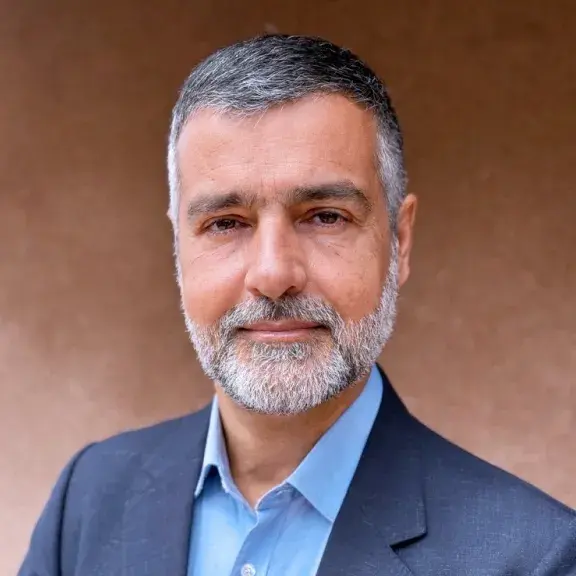
Vittorio De Angelis
Executive Chairman
Former equity-derivatives trader at JP Morgan, Dresdner Kleinwort and Bank of America in London. Later Head of Brokerage at a global broker in Hong Kong.
Velotrade was founded in Hong Kong in 2016 by a team from JP Morgan, Dresdner Kleinwort and Bank of America, has paid out over $2.5 billion to its trade-finance clients, and has been featured in Bloomberg, the Financial Times, the Wall Street Journal and on Nasdaq. Its prop trading evaluations are simulated and educational.
View author page