
New to funded trading?
ExploreAnyone can open a trading account in ten minutes. Becoming a trader takes a lot longer. The difference between the two is the subject of this guide: what success in trading actually means, how long it realistically takes to learn, the step-by-step path that serious traders follow, the routes into the profession, and the reasons most people never get there.
It draws on the experience of Gianluca Pizzituti, Co-Founder and CEO of Velotrade, who has traded for more than 25 years, institutionally and privately, including at a bank in London and building algorithmic strategies in Singapore. His view is simple: trading can be a profession, but only if you treat it like one.
Quick answer: To become a trader, define what success means for your temperament and capital, study market structure, order types and risk, then practise on simulated capital with written rules. Keep a journal, review weekly and scale only after consistent results. Expect years, not months, and choose a route: a bank, a prop firm or self-directed trading.
Highlights of this article
- Define what success means to you before you start. A strategy that fits someone else's temperament can wreck yours
- Learning to trade takes years, not three months. Knowledge comes quickly; judgement does not
- The path follows any serious profession: research, study, practise on simulated capital, build rules and a routine, journal and review, then scale responsibly
- There are three main routes in: a bank or institution, a proprietary trading firm (often via a simulated evaluation), or self-directed trading with your own capital
- Most people fail for predictable reasons: unrealistic expectations, oversized risk, overtrading and no review process
What does it mean to be a successful trader?
A successful trader is one whose results and risk match their own temperament, capital and goals, not someone else's. Most guides jump straight to charts. Gianluca starts somewhere else. "Can you become a successful trader? The short answer is yes," he says. "The longer answer depends on one question. What does success actually mean to you?"
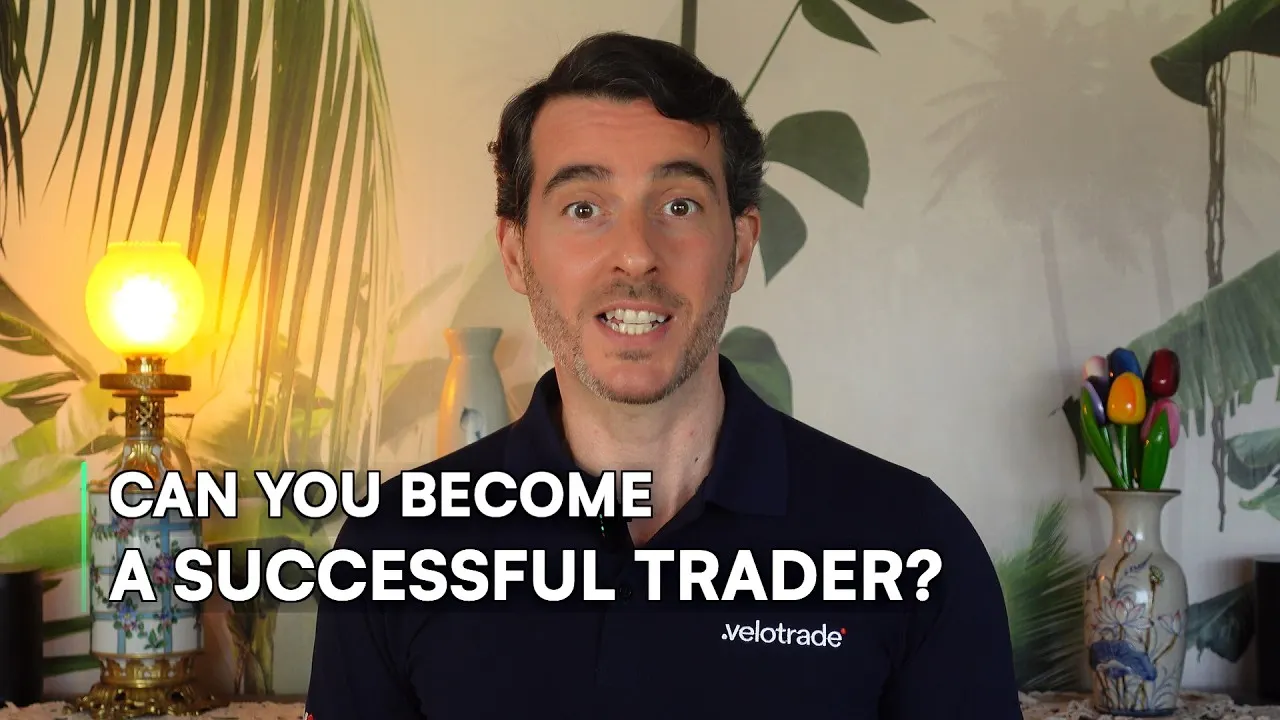 3:14
3:14Read the transcript
Can you become a successful trader? The short answer is yes. The longer answer depends on one question: what does success actually mean to you?
I am Gianluca Pizzituti, CEO of Velotrade. I've been trading for over 25 years, and during that time I have met many successful traders who could not have been more different from one another.
When I was working at a bank in London, there was a trader who was famous for being one of the most volatile performers in the City. In one year, he reportedly made around 25 million dollars. In another year, he lost around 10 million dollars.
If you were his manager, you knew exactly why you hired him. You wanted the possibility of that extraordinary year. But to get that possibility, you also had to accept the volatility that came with it.
I spoke with him a few times, and it became very clear that his way of thinking was completely different from mine. My approach was more conservative. If I reached a level of profit that satisfied me, I was comfortable protecting it.
I wanted to build wealth steadily. I did not need every good month to become an extraordinary month. He was different. When he reached a strong P&L, he did not slow down. He pressed the advantage.
His thinking was: what could go wrong? Worst case, I lose the profit I made this month, or the profit I made this quarter. Best case, I turn a good period into an exceptional one.
That requires a very particular mindset. Some people are genuinely wired that way. Most people are not.
And let me be clear, I am not talking about taking random risks. He had the experience, a mandate and a defined approach. This was not a beginner doubling his position because he felt lucky.
The lesson is not that you should copy him. The lesson is that success must match your temperament, your capital, your objectives and your tolerance for loss. If your strategy keeps you awake at night, it is not the right strategy for you, regardless of how impressive somebody else's results look.
For one person, success means producing a consistent second income with controlled risk. For another, it means pursuing exceptional returns and accepting substantial volatility. Neither definition is automatically right or wrong.
The mistake is borrowing somebody else's definition and pretending it belongs to you. You do not need the biggest P&L in the room. You need an approach you can tolerate, repeat and sustain.
So, which one are you? Are you the steady builder, or are you prepared to accept more volatility for the possibility of an exceptional result? Drop it in the comments.
When he worked at a bank in London, one trader on the floor was known for having one of the most volatile track records in the city. In one year he reportedly made around $25 million. In another, he reportedly lost around $10 million. His managers knew exactly what they were paying for: the chance of an extraordinary year, with the volatility that came attached.
Gianluca spoke with him a few times; they thought about risk in opposite ways. "My approach was more conservative," he recalls. "If I reached a level of profit that satisfied me, I was comfortable protecting it." The other trader did the opposite. After a strong month he pressed the advantage, reasoning that the worst case was giving back that month's or that quarter's profit, while the best case was turning a good period into an exceptional one.
Gianluca is careful to point out that this was not reckless gambling. The trader had experience, a mandate and a defined approach. "This was not a beginner doubling his position because he felt lucky."
The lesson is not to copy either style. It is that success has to match your temperament, your capital, your objectives and your tolerance for loss. For one person, success is a steady second income with tightly controlled risk. For another, it is pursuing exceptional returns and accepting large swings. Neither is automatically right. As Gianluca puts it: "If your strategy keeps you awake at night, it is not the right strategy for you."
Before you learn a single setup, write down your answer to these questions:
| Question | Why it matters |
|---|---|
| What return would you be satisfied with in a year? | Sets realistic position sizes and stops you chasing someone else's numbers |
| How much could you lose without it affecting your life? | Defines your maximum risk per trade and overall |
| How many hours a week can you commit? | Decides whether you day trade, swing trade or invest |
| Is this a second income or a career change? | Shapes how fast you scale and how much you depend on results |
| How do you react to losing streaks? | Tells you how much volatility you can actually tolerate |
How long does it take to learn trading?
The honest answer is uncomfortable. Plenty of courses promise you can go from beginner to consistent trader in 90 days. Gianluca calls that belief "one of the most damaging misconceptions in retail trading."
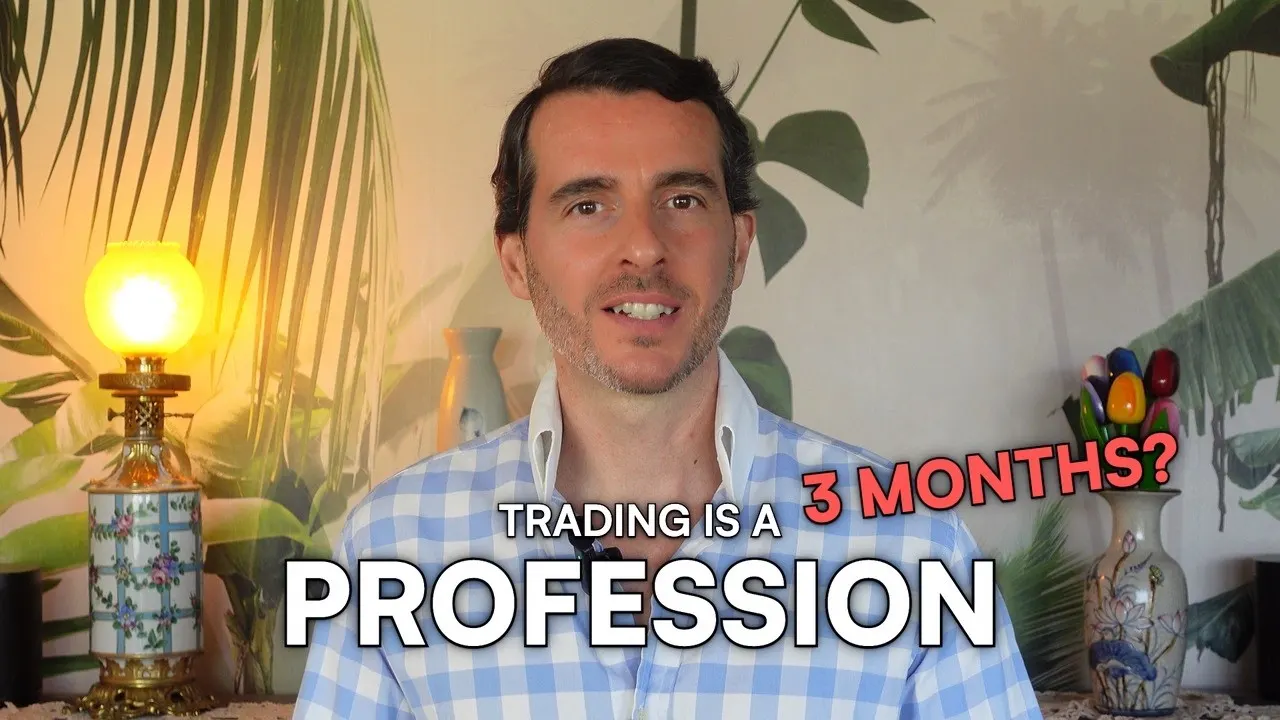 4:20
4:20Read the transcript
If trading is a profession, why do so many people expect to master it in three months?
After my last video about becoming a successful trader, I received several private messages. I am Gianluca Pizzituti, CEO of Velotrade. I've been trading for over 25 years, both institutionally and privately. So I want to expand on one point.
Trading can be a profession. You may do it for a living, or alongside another job. But if you call it a profession, you must approach it professionally, not casually. Not only when you feel like it.
Think about any serious profession. First, you research it. You understand what the work involves and decide whether it is genuinely what you want to pursue. Then you study. You learn the principles, the tools and the language of the profession.
After that, you begin applying what you've learned, slowly, through practice and experience. If you develop enough competence, you can operate consistently. Only then do you become capable of working in an environment that is supposed to be a profession.
Trading is no different. That environment does not need to be a bank or an office. You can create it at home.
How many hours will you commit every day or every week? How much capital can you responsibly allocate? Which markets will you study? Which tools and information sources do you need? When will you review your decisions and performance?
A profession receives a defined part of your time on a regular basis. If you only do it whenever you feel like it, you are treating it as a hobby.
Now, put all of that together. Do you genuinely believe you can go from zero to consistent professional success in three months? It is extremely unlikely. What about six months? That depends on your effort, background and objectives.
But even then, knowledge is not the same as developed skill. You can watch every trading video on YouTube. That does not mean you have built judgement. It doesn't mean you have experienced enough market conditions. And it does not mean you know how you will behave when real money is at stake.
Forget trading for a moment. Think about the profession you already know. How long did it take you to reach your current level? How many mistakes did you make? How many difficult situations did you need to experience before people could rely on your judgement?
It probably took years. So why would trading be the only profession you can master in three months? That is one of the most damaging misconceptions in retail trading.
The problem is not wanting to become successful quickly. Everybody wants that. The problem is believing a shortcut exists and building your expectations around it.
If you expect professional results without accepting the professional learning process, every setback will seem like failure. In reality, it is part of developing the skill.
And there is another important moment in that journey: the moment you realize paper trading is not the same as trading with real money. That deserves a separate video.
So before you call trading your profession, ask yourself whether your routine reflects that ambition. If you want professional results, you must treat trading like a profession long before it pays you like one.
Think about your current profession. How many years did it take you to become genuinely competent? Drop your answer in the comments or send me a message. See you in the next video.
No serious profession is mastered in three months. "Do you genuinely believe you can go from zero to consistent professional success in three months? It is extremely unlikely." Six months depends on your effort, background and goals, and even then he separates knowledge from skill. "You can watch every trading video on YouTube. That does not mean you have built judgement."
Judgement comes from living through many market conditions (trends, choppy ranges, news shocks, losing streaks) and from discovering how you behave when real money is at stake.
Gianluca's test: how long did it take you to become genuinely competent in the work you already do? For most people the answer is years. Trading is not the exception.
A realistic timeline looks more like this:
| Stage | Typical focus | Realistic duration |
|---|---|---|
| Research | Understand what trading involves and whether it suits you | Weeks |
| Study | Market structure, order types, risk, one or two markets | 3 to 6 months |
| Simulated practice | Apply a defined method with strict rules | 6 to 12 months |
| Consistency | Repeatable process, reviewed results across conditions | 1 to 3 years |
These are rough ranges, not promises. Some move faster, many slower, and some discover trading is not for them, which is also a valid outcome.
How do you become a trader, step by step?
You research the profession, study the fundamentals, practise on simulated capital, build rules and a routine, journal and review, then scale responsibly. Gianluca describes the same sequence you would follow to enter any serious profession. Here it is applied to trading.
1. Research the profession
Understand what the work involves before committing time or money. Trading is mostly preparation, waiting, risk management and review. Learn the difference between day trading, swing trading and investing, and be honest about which fits your life. Our overview of the types of trading compares the main styles side by side.
2. Study the fundamentals
Learn the principles, tools and language of markets. That means how prices are formed, how market orders differ from limit orders, what spreads and slippage cost you, how leverage magnifies both gains and losses, and how to size a position so that a single trade cannot do serious damage. Pick one or two markets and learn them properly rather than skimming ten.
Risk management deserves more attention than strategy at this stage. Understanding the risk-reward ratio and how position size controls your loss per trade will matter more over time than any entry signal.
3. Practise on simulated capital
This is where knowledge starts turning into skill. Apply what you have studied slowly, with small size and a written plan for every trade. Simulated trading lets you make the expensive early mistakes without losing your savings.
Gianluca adds a caveat: paper trading is not the same as trading with money at stake. In our view, a structured evaluation, where breaking a rule ends the attempt, sits in between, because the rules are real even though the capital is simulated.

4. Build rules and a routine
A profession gets a defined share of your time on a regular basis. "If you only do it whenever you feel like it, you are treating it as a hobby," Gianluca says. He suggests answering five practical questions:
- How many hours will you commit every day or every week?
- How much capital can you responsibly allocate?
- Which markets will you study?
- Which tools and information sources do you need?
- When will you review your decisions and performance?
The environment can be your home, as long as it is structured: fixed hours, a pre-market routine, a maximum daily loss and clear conditions for not trading at all.
5. Journal and review
Record every trade in a trading journal: setup, reason for entry, size, exit, result and how you felt. Review weekly at minimum, to separate good decisions from lucky outcomes. A trade that broke your rules and made money is still a mistake, and a trade that followed your plan and lost money may have been exactly right.
6. Scale responsibly
Increase size only once results are consistent across many trades and market conditions, and cut it again after a drawdown. Many traders who survive the learning phase fail here, scaling up after a good run and giving it all back.


What are the main routes into trading?
The three main routes are a bank or institution, a proprietary trading firm and self-directed trading. There is no single path into the profession. The three main routes each suit a different person.
| Route | How it works | Suits | Trade-offs |
|---|---|---|---|
| Bank or institution | Join a trading desk, usually via a graduate scheme or a related role | People with strong academic backgrounds willing to start junior | Highly competitive entry, long apprenticeship, little control over strategy |
| Proprietary trading firm | Trade under a firm's rules; many retail firms use a paid simulated evaluation | Developing traders who want structure and defined risk limits | Fees, strict rules, and simulated accounts rather than personal capital |
| Self-directed | Trade your own capital through a broker | People with savings they can afford to risk and strong discipline | Full exposure to losses, no external structure unless you build it |
Bank or institutional trading
This is the route Gianluca took. Desk roles are scarce, and most start in junior positions, but you gain training, mentorship and risk limits enforced from day one.
Proprietary trading firms and simulated evaluations
A prop firm sets the rules and risk limits, and you trade within them. Many modern firms, Velotrade included, are evaluation-based: you pay a fee, trade a simulated account under fixed rules such as a daily loss limit and a maximum drawdown, and if you pass you move to a simulated funded account. Velotrade uses a static maximum drawdown and an 80% profit split by default, with a paid add-on that raises it to 90%. You can see the full process on the how it works page.
The appeal is structure: the rules enforce controlled daily risk and no oversized bets. If you are weighing this route, our guide to the best prop firm for beginners explains what to look for. Velotrade is an educational, simulated evaluation, not a broker or investment service.
Self-directed trading with your own capital
Your own account means complete freedom and complete responsibility. Nobody stops you from overtrading or moving your stop, so you must build the structure yourself: written rules, hard loss limits and a review process. Only use capital you can afford to lose.
Can you really day trade for a living?
Some people do, but far fewer than social media suggests. Several broker disclosures and academic studies have found that the large majority of retail day traders lose money over time. Day trading for a living needs a tested method, enough capital to absorb losing periods, and the temperament to sit through weeks when nothing works.
Gianluca's advice applies directly: decide what success means first. For many, a realistic goal is a consistent second income alongside another job. Needing this week's trades to pay the rent is one of the fastest ways to start breaking your own rules.
What skills does a trader need?
The skills that separate a successful trader from a hobbyist are less glamorous than chart patterns:
- Risk management. Sizing every position so that no single trade, day or week can knock you out of the game.
- Discipline. Following your plan when it is boring and when you are emotional.
- Emotional control. Handling losses without revenge trading, and wins without overconfidence. Our guide to trading psychology covers this in depth.
- Patience. Accepting that not trading is often the right decision.
- Self-review. Being honest about mistakes and changing behaviour.
- Market knowledge. Deep understanding of the few markets you trade.

Why do most people fail at trading?
Most failures are predictable:
- Expecting fast results. Every setback then feels like failure and pushes you to take more risk.
- Borrowing someone else's definition of success. A style you cannot tolerate leads to panic decisions.
- Risking too much per trade. A few oversized losses can undo months of careful work.
- Overtrading. More trades mean more costs and more low-quality decisions, not more profit. Barber and Odean (2000) found that the households that trade most earn the lowest net returns.
- No routine. Trading only when you feel like it produces inconsistent results you cannot learn from.
- No journal or review. Without records, you repeat the same mistakes without noticing.
- Scaling too quickly. Increasing size after a lucky run, then giving it all back.
Many of the same patterns show up in prop firm evaluations specifically, as we cover in why traders fail prop challenges.
Your next step
If you have defined what success means to you, accepted that the learning curve is long, and built a routine around study and simulated practice, a structured evaluation can be a sensible next test of your process. Our guide on how to become a funded trader walks through the evaluation route step by step. You can compare Velotrade's simulated challenges across account sizes, or, if crypto is your market, read our dedicated guide on how to become a funded crypto trader.
Whatever route you choose, take Gianluca's closing advice: "If you want professional results, you must treat trading like a profession long before it pays you like one." This article is educational only and is not investment advice.
Sources
- FINRA, "Frequent Intraday Trading: Understanding the Basics": the risks of day trading and the pattern day trader rule.
- Barber and Odean, "Trading Is Hazardous to Your Wealth" (2000): households that trade most earn the lowest net returns.
- Investor.gov (SEC), "Types of Orders": the basic order types every new trader should study.
Frequently Asked Questions
About the author
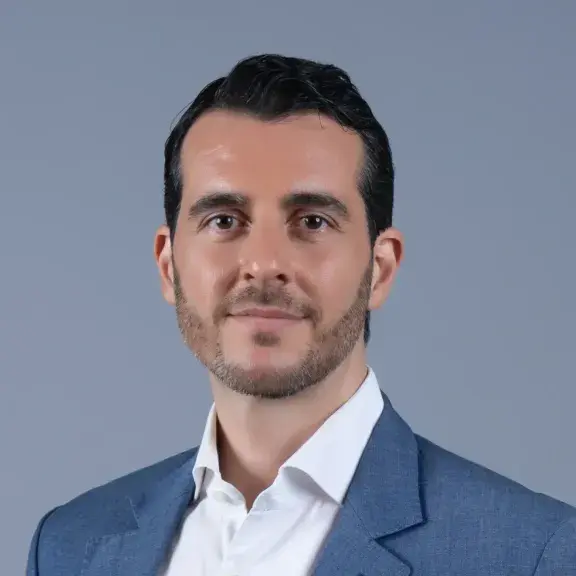
Gianluca Pizzituti
Chief Executive Officer
Formerly on the derivatives desk at Dresdner Kleinwort in London, then founded and ran a proprietary HFT firm in FX and equity indices out of Singapore.
Velotrade was founded in Hong Kong in 2016 by a team from JP Morgan, Dresdner Kleinwort and Bank of America, has paid out over $2.5 billion to its trade-finance clients, and has been featured in Bloomberg, the Financial Times, the Wall Street Journal and on Nasdaq. Its prop trading evaluations are simulated and educational.
View author page