One account, every market we offer
ExploreWhether prediction markets are legal depends on two things: where you are, and what type of platform you use. In the United States, some prediction markets operate under federal regulation while others sit in a grey zone or block US users entirely. This guide explains the current picture in plain terms, covers the main platforms, and points to a free way to test your market-reading skill with no money at risk.
Highlights of this article
- Prediction market legality is decided by jurisdiction and platform type, not by one blanket rule
- In the US, the CFTC regulates event contracts; Kalshi operates as a federally regulated exchange
- Polymarket settles in crypto and has historically restricted US users for regulatory reasons
- Some US states treat certain event contracts as gambling, and the rules are still moving
- A free skill game like Velotrade's Sprint Trading uses demo tokens, so it avoids the wagering question entirely
The Short Answer
Prediction markets are legal in some forms and restricted in others. The line usually runs between regulated event contracts and unregulated wagering.
A regulated event contract is a financial instrument. It trades on an exchange that answers to a financial regulator. In the US, that regulator is the Commodity Futures Trading Commission, or CFTC. Platforms that register with the CFTC can offer event contracts to US users within the rules.
An unregulated prediction market is different. It may run offshore, settle in cryptocurrency, and decline to register with any financial regulator. These platforms often restrict users from countries where they are not licensed, including the US. Using them is a personal legal question that depends on your country and your local law.
This article describes the general picture as of 2026. Rules in this area are changing quickly. Nothing here is legal advice. Confirm your own position with a qualified professional before acting.
United States: How the Rules Work
The US is the most important market to understand because it is where most of the legal debate sits.
The CFTC and event contracts
The CFTC oversees derivatives, including event contracts that pay out based on a future outcome. A platform that wants to offer these contracts to US users generally needs to operate as, or work with, a CFTC-regulated exchange. This is the legal route for prediction-style markets in the US.
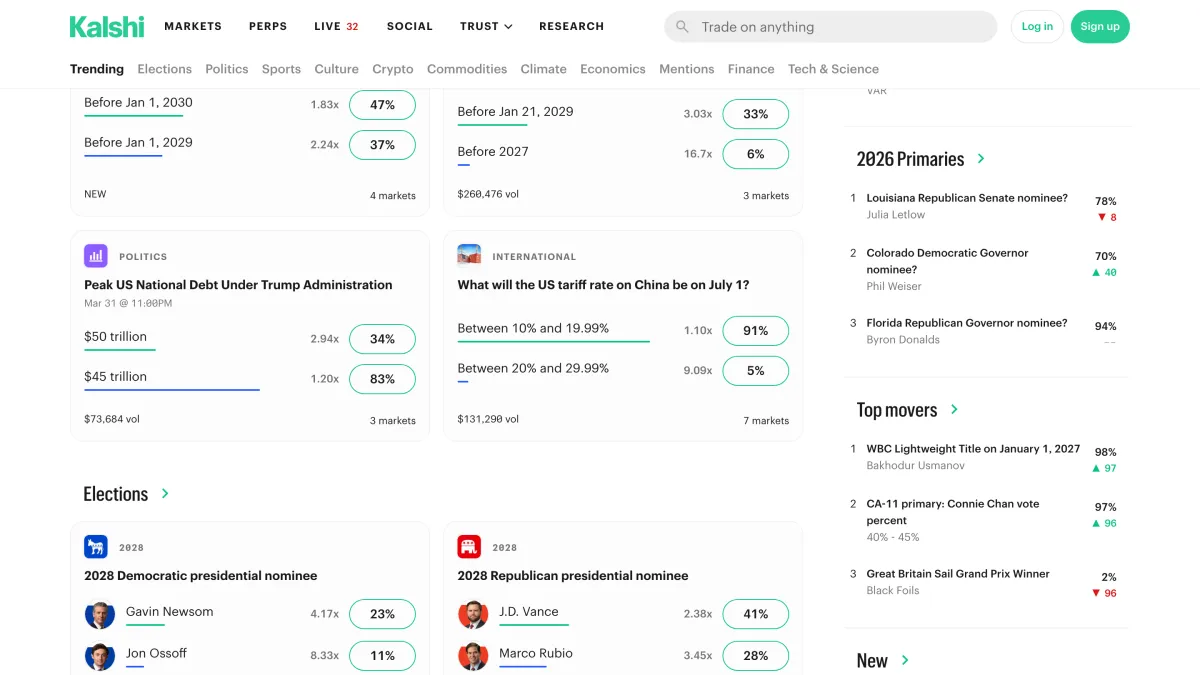
Kalshi
Kalshi is a US exchange that operates under CFTC oversight. It offers event contracts on economic data, weather, and other measurable outcomes. Because it is regulated at the federal level, US residents can use it within its terms. Kalshi has spent years working through the regulatory process, and that status is the main reason it can serve US customers directly.
Robinhood and brokered event contracts
Some US brokers have introduced event contracts to their customers through partnerships with regulated exchanges. This brings prediction-style trading into mainstream brokerage apps. The legal basis is the same: the underlying contract sits on a regulated venue.
Polymarket
Polymarket is a large prediction market that settles in USDC on a blockchain. It has historically restricted US users for regulatory reasons. Its model, offshore and crypto-settled, is a different legal category from a CFTC-regulated exchange. Access and legality for any given user depend on where they live and how the platform is permitted to operate there.
| Platform type | Example | US status (general) | Regulator |
|---|---|---|---|
| CFTC-regulated exchange | Kalshi | Available to US users within terms | CFTC |
| Brokered event contracts | Broker partnerships | Available via regulated venue | CFTC via exchange |
| Offshore crypto market | Polymarket | Historically restricted for US users | None at federal level |
| Academic or play-money | PredictIt, Manifold | Limited or no-stakes models | Varies or none |
State-level complications
Federal regulation is only part of the story. Some US states treat certain event contracts, especially those tied to sports or elections, as gambling under state law. This has produced legal challenges and cease-and-desist actions even against federally engaged platforms. The result is a patchwork: a contract that is permitted federally can still face objections at the state level. Expect this to keep shifting.
Outside the United States
The rest of the world is just as varied.
In the United Kingdom and parts of the European Union, contracts that resemble betting often fall under gambling regulators, while contracts that resemble financial instruments fall under financial regulators. The classification decides the rules.
In several Asian markets, both gambling and offshore crypto platforms face tight restrictions, and access is frequently blocked. In other regions, enforcement is light and platforms operate in a grey zone.
The practical takeaway is simple. Legality is local. A platform that is fine for one user can be off-limits for another in a different country. Always check the platform's own country restrictions and your local law.
Prediction Markets vs Gambling Under the Law
Regulators draw the line between a prediction market and gambling based on function, not branding.
A regulated event contract is treated as a financial product. It can be used to hedge real risk, it aggregates information into a price, and it sits inside a financial framework. A pure wager, by contrast, is a stake on an outcome with a house margin and no hedging function.
This distinction matters because it decides which rulebook applies. For a deeper look at where that line falls, see prediction markets vs gambling. For a fuller explainer on how these markets work in the first place, see prediction markets explained.

Where Crypto Prediction Fits
Crypto raises the stakes on the legal question because crypto-settled platforms are harder to regulate and easier to access across borders. Markets that ask whether Bitcoin will be above a level by a date are popular, but the legal treatment of the platform hosting them is what counts. For how these specific markets function, see crypto prediction markets, and for a platform breakdown see Polymarket vs Kalshi.
Why Regulators Treat Platforms Differently
It helps to understand the logic behind the rules, because it explains why two similar-looking platforms can have opposite legal status.
Regulators care about function and protection. A regulated exchange has to meet standards: it segregates customer funds, publishes how contracts settle, runs surveillance against manipulation, and answers to an authority if something goes wrong. Those protections are the price of being allowed to offer contracts to the public. A platform that takes on those obligations earns a clear legal footing.
An unregulated platform offers none of those guarantees by default. It may still be well run, but there is no regulator standing behind it, and no framework forcing it to protect users. That is why authorities restrict access to it, and why the same contract can be permitted on one venue and challenged on another. The contract is not the issue. The oversight around it is.
This is also why the gambling question keeps coming up. If a contract has no hedging or information function and simply lets people stake money on an outcome, regulators are more likely to treat it as a wager and apply gambling law. If it behaves like a financial instrument, financial rules apply instead.
What This Means for You as a User
For a normal user, the legal picture comes down to a few practical checks.
First, identify the platform type. A CFTC-regulated exchange in the US, or a financially licensed venue elsewhere, sits on firmer ground than an offshore crypto market. Second, read the platform's own country restrictions. If it blocks your country, that is a clear signal. Third, remember that state or local law can differ from national rules, so federal permission is not always the whole story.
If all of that feels like more risk and admin than you want, the simplest answer is to avoid wagering money at all and use a free skill route instead.
A Free Route With No Wagering Question
If your interest is calling crypto direction rather than betting on events, there is a route that avoids the legal grey zone.
Sprint Trading is a free game. You predict whether Bitcoin will be up or down over the next 5-minute sprint, and the live BTC/USDT price decides the result. You get 10 seconds of warning before each sprint locks.
The key legal point is that Sprint Trading uses demo tokens only. You receive 100 free tokens a day, reset at 12:00 UTC, and you cannot buy more. No real money is deposited and none is at risk. A winning call pays 1.8x into your Competition Vault. Because nothing is wagered, the wagering question does not arise. It is a skill game, not a bet.
The prizes are real. Across four leaderboards, Highest Vault, Most Sprints Won, Best Hit Rate, and Longest Winning Streak, the top players win free Velotrade challenge accounts. A new competition runs every second Monday, with 12 winners per competition and a maximum of one prize per player. Prize account sizes start at $10,000, $5,000, and $2,500 and scale up as more traders join.
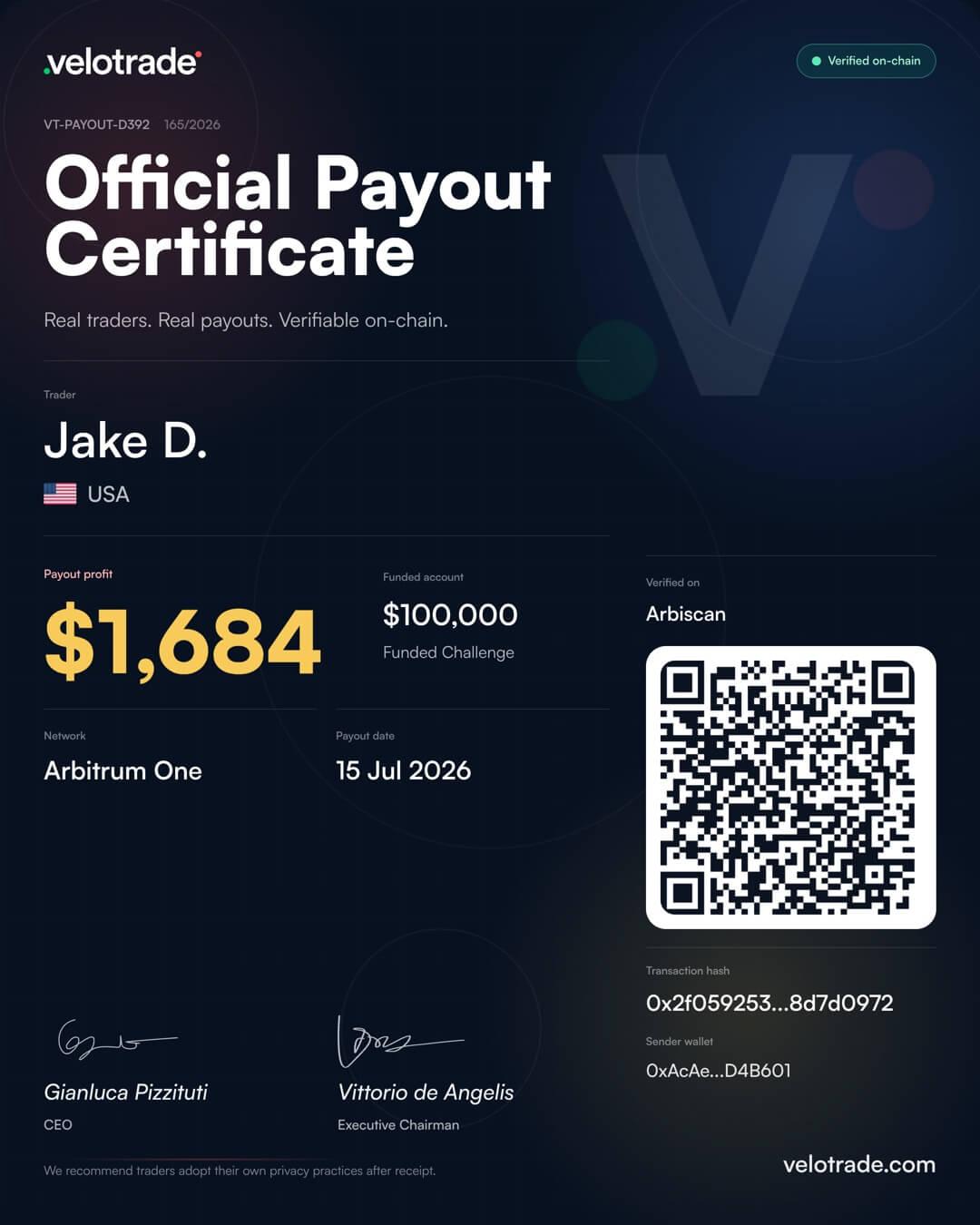
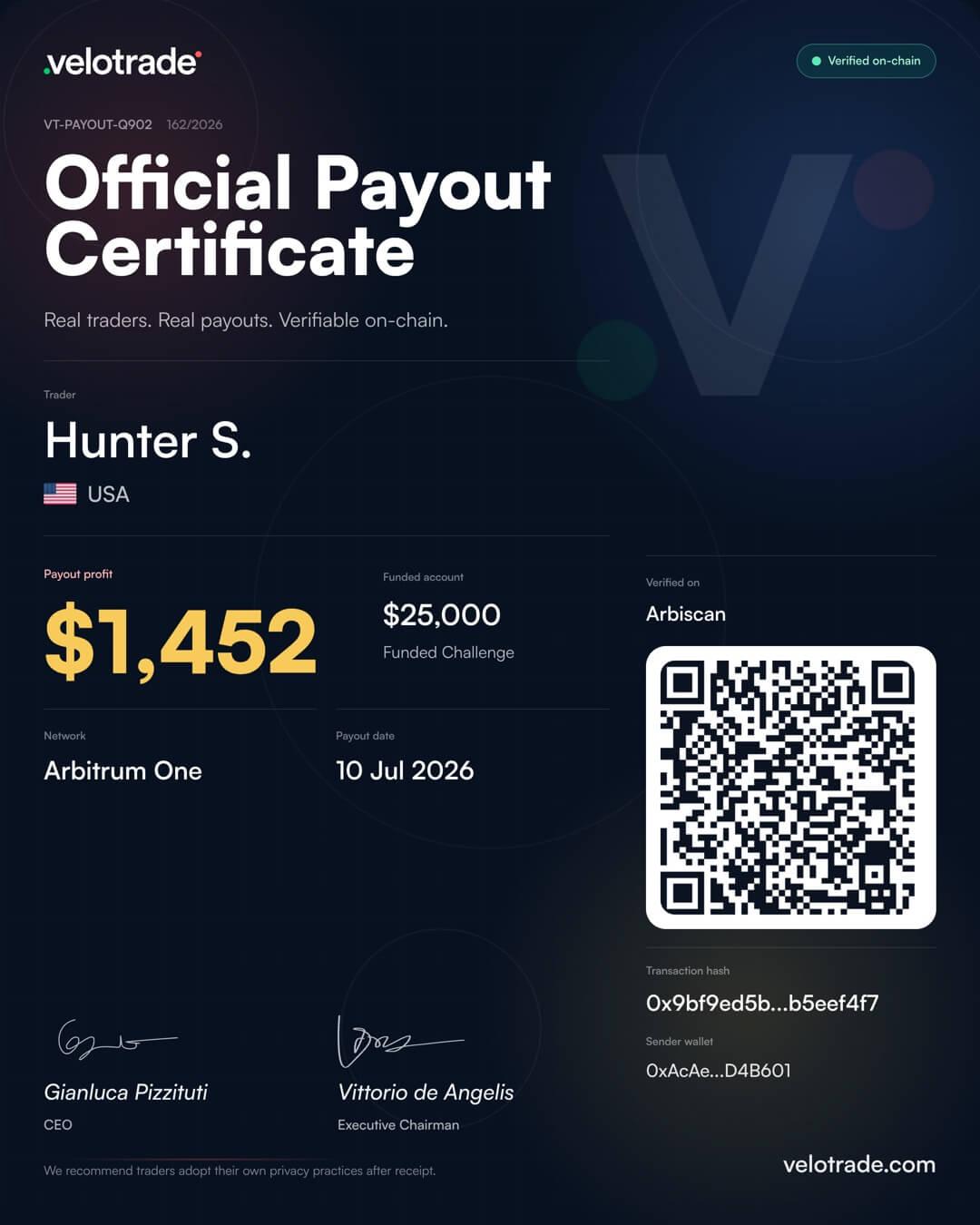
That is also a route into something different from a prediction market. Winning, or simply passing, a Velotrade challenge gives you a funded trading account: an educational, simulated evaluation priced against real-time markets, not a wager on a single event outcome. Velotrade is unregulated and is not a broker, dealer, or custodian, and no orders reach an exchange, but a funded account rewards trading skill across real market pricing rather than a yes/no bet. If you want to compare firms first, see best crypto prop firms, and for the genuinely free entry points see free prop firm challenge.
This article is general information about how prediction market legality is structured. It is not legal advice, and rules change often.
More on prediction markets: Best Prediction Market Apps and Platforms in 2026.
Frequently Asked Questions
About the author

Vittorio De Angelis
Executive Chairman
Former equity-derivatives trader at JP Morgan, Dresdner Kleinwort and Bank of America in London. Later Head of Brokerage at a global broker in Hong Kong.
Velotrade was founded in Hong Kong in 2016 by a team from JP Morgan, Dresdner Kleinwort and Bank of America, has paid out over $2.5 billion to its trade-finance clients, and has been featured in Bloomberg, the Financial Times, the Wall Street Journal and on Nasdaq. Its prop trading evaluations are simulated and educational.
View author page