Considering Lucid Trading? See how Velotrade compares
ExploreLucid Trading is a US futures prop firm that has grown fast since launching around 2025, leaning on one-time pricing, fast payouts, and an end-of-day drawdown model that avoids intraday spike-outs. If you trade CME futures and want a cheap entry with a trader-friendly rulebook, it is a genuine contender. But "futures-only" and a real consistency rule are the two things that decide whether it fits you, and both are easy to miss on the marketing pages.
This review covers what Lucid actually offers in 2026: the LucidPro evaluation, account sizes and fees, the EOD trailing drawdown, the consistency rule, the profit split, and how payouts really work, plus who it suits and who should look elsewhere. Every number here should be confirmed on Lucid's own pages before you buy, because prop firm terms change often.
Highlights of this article
- Lucid is a futures-only prop firm trading CME and CBOT products (ES, NQ, CL, GC), on NinjaTrader, Tradovate, TradingView, and Rithmic platforms, with no forex, stocks, or crypto
- The core LucidPro path is a one-step evaluation with a one-time fee across $25K to $150K (prices change with promotions, so check the official site), not a monthly subscription
- Drawdown is end-of-day trailing: your max loss limit trails your closed daily balance, so a bad intraday spike will not breach you, but the floor still moves up as you profit until it locks at your initial balance plus $100 on LucidPro
- Funded accounts carry a 40% consistency rule on LucidPro (20% on the instant-funding LucidDirect), so a single huge day can delay a payout
- The profit split is 90%, payouts can be requested any day once eligible and are paid within 2 business days, and US traders are accepted


What Is Lucid Trading
Lucid Trading is a proprietary trading firm based in Delaware, United States, that funds futures traders through simulated evaluation accounts. You pay a one-time fee to take an evaluation, hit a profit target without breaching the loss limits, and receive a funded account where you keep the majority of the profits. It is squarely a futures firm: everything trades on CME Group exchanges, and there is no forex, equities, or crypto product.

Lucid markets itself hard on scale and speed: its homepage claims more than $400M paid to traders, 350,000+ traders, and fast payouts (Lucid's help center says payouts are deducted within minutes and paid within 2 business days). Treat those as company figures rather than independently audited numbers. Its public Trustpilot profile sits at 4.4 out of 5 across about 6,750 reviews (October 2026), which is solid, though worth noting the site itself advertises a higher 4.8 that the live Trustpilot score does not currently match.

How the Evaluation Works
The flagship path is LucidPro, a single-phase (one-step) evaluation. You hit the profit target while staying inside the loss limits, and you can pass in as little as a day, with funding following in as little as two. There is no minimum-trading-days requirement stated in Lucid's own funded-account rules, so fast passes are possible.
Lucid also runs other families: LucidDirect (instant funding, skip the evaluation for a higher fee and stricter rules), plus LucidFlex (no consistency rule once funded, a 50% consistency rule in the evaluation), LucidDaily (choose an intraday or EOD drawdown), the relaunched LucidMaxx, and LucidLive, a later live-capital stage traders graduate to after building a payout track record. The core mechanics below describe LucidPro, which is what most traders start on.


Account Sizes, Targets, and Drawdown
LucidPro is sold in four sizes, on a one-time fee (there is a reset fee if you fail and want to retry an evaluation, but no monthly cost):
| Account | Profit target | Daily loss limit | Max loss limit |
|---|---|---|---|
| $25K | $1,250 | None | $1,000 |
| $50K | $3,000 | $1,200 | $2,000 |
| $100K | $6,000 | $1,800 | $3,000 |
| $150K | $9,000 | $2,700 | $4,500 |
The targets work out to roughly 5 to 6 percent of the account. Lucid's one-time fees are competitively cheap, but prices change with promotions, so check the official site for the current price of each size. The $25K LucidPro has no daily loss limit, and on other sizes the daily loss limit is optional: you choose a fixed daily limit at checkout, opt for a scaling version tied to your balance, or turn it off entirely.
The Drawdown Model: EOD Trailing, Not Intraday
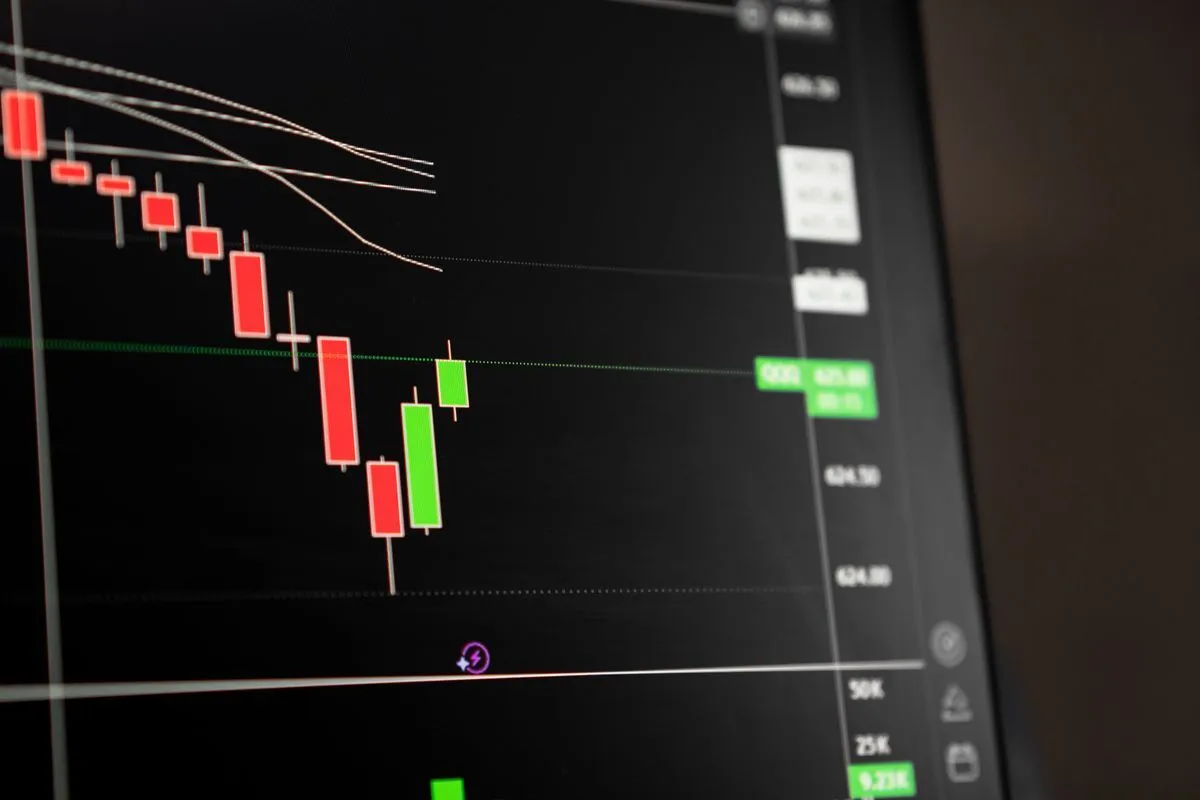
This is Lucid's headline feature and the thing most worth understanding. The max loss limit is an end-of-day (EOD) trailing drawdown. It trails your closed daily balance, not your live intraday equity. In practice that means an unrealized intraday swing against you will not breach the account, as long as you close the day above the limit. That is more forgiving than the intraday trailing drawdown some futures firms use, where a single spike against an open position can end the account.
The trade-off is that it still trails. As you bank profit and your end-of-day balance climbs, the loss floor climbs with it, so the cushion below your starting balance shrinks once you are in profit. On LucidPro the trailing limit stops moving once it reaches your initial balance plus $100, at which point it is locked. If you want a floor that never moves at all, that is a static maximum drawdown, which is a different model entirely.
Consistency Rule and Trading Restrictions
LucidPro funded accounts carry a 40% consistency rule: your single largest profit day cannot exceed 40% of your total profit in a payout cycle, and it resets each cycle. The instant-funding LucidDirect is stricter at 20%. A consistency rule is not a dealbreaker, but it means one outsized day can hold up a withdrawal until your profit is spread more evenly.
On the permissive side, Lucid allows news trading and allows EAs, bots, automated strategies, and copy trading (you carry the risk of your own software). What it prohibits is hedging across accounts or correlated instruments, microscalping (flagged when more than half your profit comes from trades held five seconds or less), and general HFT or abusive patterns, which are detected automatically. Positions must be flat by 4:45 PM EST with no overnight or weekend holding on simulated accounts.
Profit Split and Payouts
The profit split is 90% to the trader, 10% to Lucid across the funded plans. Note that an older "100% on your first $10K" perk was retired for accounts bought or reset after late November 2025, so current accounts are a flat 90/10, not the 100%-first promotion you may see quoted in older reviews.
Payouts are one of Lucid's selling points. There is no fixed payout window, so you can request any day once eligible; Lucid says the amount is deducted within minutes and paid within 2 business days. The minimum payout request is $500, and each size has a minimum profit goal before your first withdrawal ($250 to $1,000 depending on account size) plus a buffer equal to the max loss limit plus $100 that you cannot withdraw into. US traders are paid via Plaid instant transfer or WorkMarket, and international traders can take crypto payouts.
Is Lucid Trading legit or a scam?
Lucid is a real, operating prop firm with a large Trustpilot footprint (4.4 out of 5 across about 6,750 reviews in October 2026) and documented payout processes, so it is not a scam in the outright sense. The honest caveats are the ones common to the whole industry: funded accounts are simulated until you graduate to the live LucidLive stage, the firm is new (launched around 2025, so it lacks a long track record), and some marketing figures are self-reported. There is also a hard rule worth knowing: 30 days of inactivity permanently deletes an account, with no recovery, so it is not a firm to buy and forget.
Lucid Trading pros and cons
Pros
- End-of-day trailing drawdown, no intraday spike-outs
- Cheap one-time pricing, no monthly subscription, resets available on evaluations
- 90% profit split and fast, no-window payouts (paid within 2 business days)
- News trading, EAs, bots, and copy trading all allowed
- Accepts US traders, with 1099 tax forms and instant Plaid payouts
Cons
- Futures-only and CME-only: no forex, stocks, indices CFDs, or crypto
- A real 40% consistency rule on LucidPro (20% on LucidDirect) that can delay payouts
- The drawdown still trails up as you profit, shrinking your cushion
- No overnight or weekend holding on simulated accounts
- New firm without a long operating history, and funded accounts are simulated
Who Lucid Trading Suits
Lucid is a good fit if you are a dedicated CME futures trader who wants a cheap one-time entry, an EOD drawdown that will not spike you out intraday, and fast payouts, and you are comfortable pacing your days around a consistency rule. If you run bots or news strategies on futures, the permissive rulebook helps.
It is the wrong firm if you trade anything other than futures, want to hold overnight or over the weekend, dislike consistency rules, or want a loss floor that never trails at all. If you are still comparing, see our ranking of the best prop firms.
The Alternative: Multi-Asset With Static Drawdown
If the appeal of Lucid is the trader-friendly ruleset but the futures-only, EOD-trailing, consistency-capped model does not fit, Velotrade is built on the opposite trade-offs. It is multi-asset (crypto, forex, stocks, indices, and commodities on one funded account), uses a static drawdown with a floor fixed from your starting balance that never trails, and has no consistency rule, so one big day is fine. It also accepts US traders, allows news trading, splits up to 90%, and its PRO 1-step evaluation starts at $40 across $5,000 to $200,000 accounts. The head-to-head is in Lucid Trading vs Velotrade.
For other US futures options, see the Take Profit Trader review and the Apex Trader Funding review, or the roundup of the best prop firm for futures and the best prop firm for US traders, or compare all prop firms in one directory.
Last updated: October 2026. Lucid Trading's plans, fees, consistency percentages, and country eligibility change regularly. Confirm current terms on Lucid's own site before purchasing.
How Lucid Trading compares
This review is published by Velotrade, so here is where the two differ, including where Lucid Trading is stronger.
| Rule | Lucid Trading | Velotrade |
|---|---|---|
| Drawdown model | End-of-day trailing, locks at start plus $100 | Static from starting balance, never trails |
| Consistency rule | 40% on funded LucidPro, 20% on LucidDirect | None at any stage |
| Holding and hours | Flat by 4:45 PM EST, no overnight or weekend holds | Weekend holding allowed; crypto trades 24/7 |
| Markets | CME futures only (ES, NQ, CL, GC) | Crypto, forex, stocks, index ETFs, commodities |
Where Lucid Trading is stronger
- Flat 90% split on funded plans, no add-on needed
- Payouts any day once eligible, paid within 2 business days
Frequently Asked Questions
About the author

Vittorio De Angelis
Executive Chairman
Former equity-derivatives trader at JP Morgan, Dresdner Kleinwort and Bank of America in London. Later Head of Brokerage at a global broker in Hong Kong.
Velotrade was founded in Hong Kong in 2016 by a team from JP Morgan, Dresdner Kleinwort and Bank of America, has paid out over $2.5 billion to its trade-finance clients, and has been featured in Bloomberg, the Financial Times, the Wall Street Journal and on Nasdaq. Its prop trading evaluations are simulated and educational.
View author page