Trade forex with funded capital
ExploreAI forex trading uses software models to read currency markets, generate signals, and place trades with little or no manual input. The idea is simple: let a machine watch pairs like EUR/USD around the clock and act faster than a human can. This guide explains how AI forex systems actually work, where the honest limits are, and how to run one on a funded multi-asset account. If you are still new to the market itself, start with what is forex trading.
Highlights of this article
- AI forex trading covers everything from simple rule-based EAs to machine-learning models that adapt to price data.
- Most "forex robots" sold online are scams or curve-fit backtests, so treat any guaranteed-profit claim as a warning sign.
- EAs and API bots do the same job in different ways: one runs inside a terminal, the other talks directly to a broker or firm API.
- Risk management, not the model, decides whether an AI forex strategy survives a losing streak.
- Velotrade allows bots, EAs, and full API automation on every account, with no consistency rule and static drawdown.
What AI forex trading actually is
AI forex trading is the use of algorithms to analyze the currency market and make or suggest trading decisions. The term covers a wide range of tools. At the simple end sits a rule-based system that buys when one moving average crosses another. At the complex end sits a machine-learning model that ingests price history, volatility, and sometimes news sentiment, then outputs a probability for the next move.
The word "AI" is used loosely in this space. A lot of products marketed as AI are just fixed if-then rules with a modern label. True machine learning adapts its parameters as it sees more data. Both can be useful, but they are not the same thing, and vendors rarely make the distinction clear.
What every version shares is speed and consistency. Software does not get tired, does not revenge-trade after a loss, and can monitor dozens of pairs at once. That discipline is the real edge, more than any secret model. For a broader view of how these methods fit together, see our pillar guide on quant trading.
How AI and EAs are used in forex
In practice, most retail automated forex trading runs through an Expert Advisor, or EA. An EA is a program that attaches to a chart inside a trading terminal and executes a strategy for you. It reads indicators, opens and closes positions, and manages stops based on the rules you or the developer coded.
AI enters the picture in a few ways. Some systems use models to filter signals, so a trade only fires when the model agrees with the base rule. Others use AI to size positions based on recent volatility. A smaller group tries to predict direction outright, which is the hardest and least reliable use.
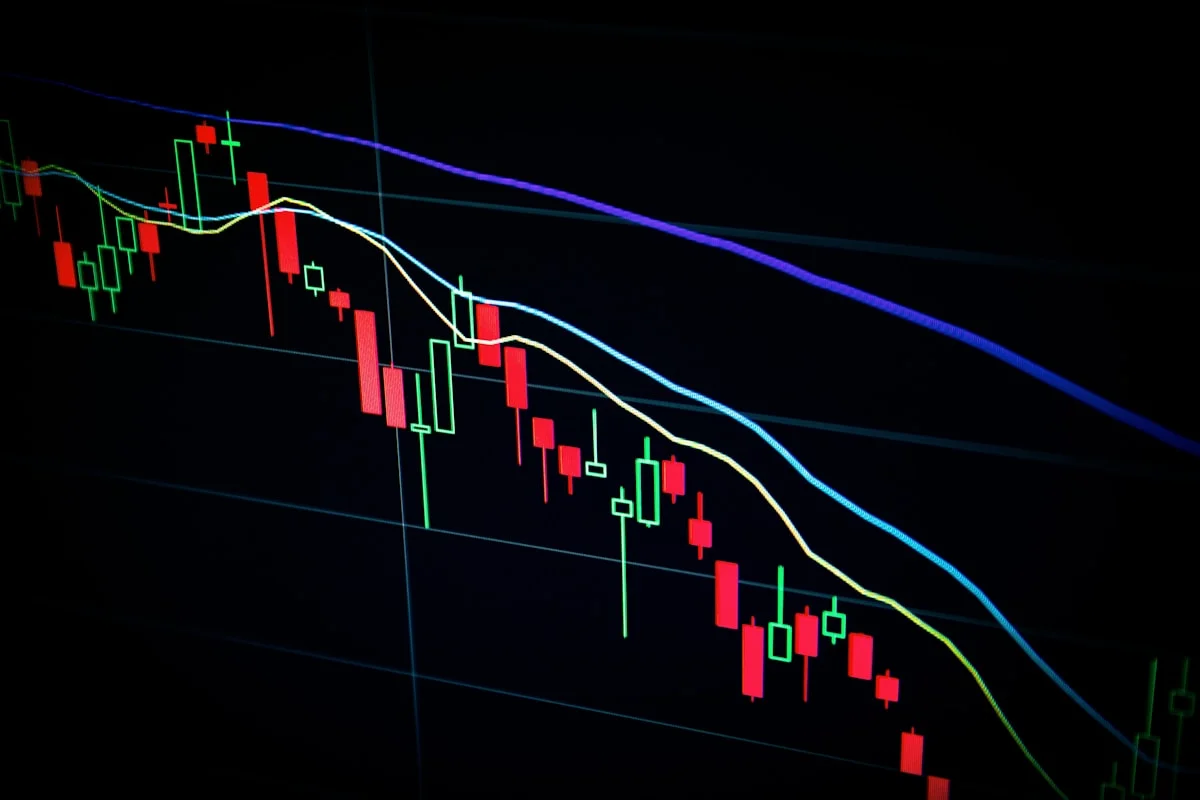
The honest truth is that the model is a small part of the work. Data cleaning, execution logic, slippage handling, and risk rules take far more effort than the prediction step. A mediocre model with strong risk control usually beats a clever model with none.


MT-style EAs vs API bots
There are two main ways to run an AI forex bot. The first is the classic EA, which lives inside a MetaTrader-style terminal. The second is an API bot, a standalone program that connects directly to a broker or prop firm through a REST or WebSocket interface. Both automate trading, but they suit different builders. For a full walkthrough of building and deploying an AI bot, see the AI trading guide.
| Feature | MT-style EA | API bot |
|---|---|---|
| Where it runs | Inside the trading terminal | Any server or machine you control |
| Language | Platform script language | Python, JavaScript, Go, or others |
| Best for | Prebuilt strategies, quick setup | Custom models, multi-asset logic |
| Data access | Terminal feed | Direct market data over the API |
| Machine learning | Limited, awkward to integrate | Full, use any library you want |
| Portability | Tied to the platform | Runs anywhere with internet |
EAs win on speed of setup. You can buy or download one, attach it to a chart, and it runs. API bots win on flexibility. If you want to train a model in Python, backtest it properly, and run the same code across forex, crypto, and indices, an API is the cleaner path. Velotrade gives every account full API access with REST and WebSocket endpoints, so you can build either way. For a closer look at EAs, robots and how to test one before going live, see our forex trading bot guide.
Realistic expectations and the scam-EA warning
This is the part most articles skip. The forex robot market is full of scams. A large share of EAs sold on marketplaces and social media are either outright fraud or backtests that were curve-fit to look perfect on past data and fall apart live. If a product promises a fixed monthly return, a "no loss" strategy, or 90 percent win rates, it is almost certainly one of these.
The tells are consistent. Watch for screenshots with no verified track record, pressure to buy now, martingale systems that hide risk by doubling losers, and results that only exist on a demo account. A strategy that grew an account 10 times in a month is not repeatable, it is survivorship bias or a blown account waiting to happen.
Real AI forex trading is unglamorous. A solid system might aim for a modest, steady edge that compounds over time, with plenty of losing days along the way. Does AI forex trading work? It can, in the sense that disciplined automation removes emotion and executes a tested edge. It does not print money, and no model removes market risk. Treat every claim you cannot verify as false until proven otherwise.
Risk management comes first
Every durable AI forex system is built around risk, not returns. The model decides what to trade. The risk rules decide whether you are still trading next month. Fixed fractional sizing, hard stop losses, a daily loss limit, and a cap on how many correlated positions you hold at once matter more than any signal. Before you hard-code a sizing rule into a bot, check it by hand: the forex lot size calculator turns a risk amount and a stop in pips into lots, and the pip value calculator shows what each pip is worth on the pairs it trades.
Automation cuts both ways here. A bot follows its rules perfectly, which is great when the rules are sound and dangerous when they are not. A single missing stop or an unbounded martingale can erase months of gains in one session. Before you run any AI forex bot with real stakes, test it on historical data across different market conditions, then run it on a paper trading demo, then run it small. Compare manual and AI-assisted approaches honestly:
| Factor | Manual forex trading | AI-assisted forex trading |
|---|---|---|
| Speed | Human reaction time | Milliseconds |
| Emotion | High, drives most mistakes | None, follows rules |
| Coverage | A few pairs at once | Many pairs around the clock |
| Discipline | Varies by mood | Consistent by design |
| Blind spots | Fatigue, bias | Overfitting, silent bugs |
| Oversight needed | Constant | Periodic, but essential |
Neither is automatically better. AI removes human error and adds machine error. Your job is to monitor the system, not to set it and forget it.
Running an AI forex bot on a funded multi-asset account
Once you have a tested strategy, the question is where to run it. Most prop firms restrict or ban bots, hide EA rules in the fine print, or add a consistency rule that punishes the uneven results automation naturally produces. That makes them a poor home for an AI forex system.
Velotrade is built the other way. (For how other firms handle automation, see the prop firms that allow EAs and forex bots.) Bots, EAs, and algorithmic trading are allowed on every account, with full REST and WebSocket API access at no extra fee and no approval step. There is no consistency rule at any stage, so a few large winning days will not void your account. Drawdown is a static maximum, meaning the loss floor is fixed from your starting balance and never trails your equity up, which suits automated strategies that need room to breathe. There is no per-trade risk cap and no maximum lot size, so your risk logic, not an arbitrary limit, governs sizing.
Because Velotrade is multi-asset on the DXtrade platform, the same API bot can trade forex on a funded account alongside crypto, stocks, indices, and commodities. You build once and deploy across asset classes.
If you want the deeper mechanics, read how to run a trading bot on a funded account and our guide to algo bot trading at a prop firm. To see how the rules compare across firms, the best prop firms for algo traders breakdown is a good next step. For the signal layer behind many forex bots, see AI trading signals, and for the broader method, AI trading strategies that actually work.
Velotrade provides education and simulated trading only. It is not a broker, bank, or regulated financial institution, and nothing here is investment advice. All trading involves risk, and automated systems do not remove it.
Frequently Asked Questions
About the author

Vittorio De Angelis
Executive Chairman
Former equity-derivatives trader at JP Morgan, Dresdner Kleinwort and Bank of America in London. Later Head of Brokerage at a global broker in Hong Kong.
Velotrade was founded in Hong Kong in 2016 by a team from JP Morgan, Dresdner Kleinwort and Bank of America, has paid out over $2.5 billion to its trade-finance clients, and has been featured in Bloomberg, the Financial Times, the Wall Street Journal and on Nasdaq. Its prop trading evaluations are simulated and educational.
View author page