Run your algo on funded capital
ExploreAI trading signals are automated buy or sell suggestions produced by machine learning models that scan market data for patterns. They promise to turn raw price action into a clear entry, exit, and direction, but the gap between a signal that looks good on a chart and one that holds up in a live account is wide. This guide explains how AI trading signals are generated, why most published accuracy numbers are misleading, and how to use signals inside a disciplined, tested strategy instead of trusting them blindly.
Highlights of this article
- AI trading signals are model outputs, not predictions of certainty, and their real value depends on how they are tested and executed
- Most published accuracy claims are inflated by overfitting, survivorship bias, and cherry-picked backtests
- Paid signal services carry a high scam risk, with many selling the same recycled or randomly generated calls to thousands of users
- A signal is only useful inside a systematic strategy with fixed risk rules, position sizing, and out-of-sample validation
- Velotrade lets you execute signals end to end through a full REST and WebSocket API, with no consistency rule and static drawdown
What AI Trading Signals Actually Are
A trading signal is a specific instruction: buy this instrument, at roughly this price, with a suggested stop and target. An AI trading signal is the same instruction generated by a statistical model rather than a human analyst. The model ingests historical and live data, applies learned patterns, and outputs a directional call with some confidence score attached.
The word "AI" covers a lot of ground here. In practice it usually means one of a few things:
- Classical machine learning: models such as random forests or gradient boosting trained on features like moving averages, volatility, and volume.
- Deep learning: neural networks that learn patterns directly from sequences of price and order book data.
- Large language models: systems that read news and social sentiment and convert that text into a directional bias.
- Reinforcement learning: agents trained to maximize a reward such as risk-adjusted return over many simulated episodes.
None of these produce certainty. They produce a probability estimate that a pattern seen before will repeat. That distinction matters, because a signal marketed as "92% accurate" is describing past fit, not future outcome. The market does not owe the model the same conditions it trained on.
How AI Trading Signals Are Generated
Every signal pipeline follows roughly the same four stages, whether it is a hobby project or a hedge fund system.
- Data collection. The model pulls price data, volume, order book depth, funding rates, and sometimes alternative data like news sentiment or on-chain flows. Data quality here sets the ceiling for everything downstream.
- Feature engineering. Raw data is transformed into inputs the model can learn from: returns over various windows, volatility measures, momentum indicators, and relationships between correlated assets.
- Model training. The algorithm learns to map those features to a future outcome, usually whether price will be higher or lower after a defined horizon.
- Signal output. When live data matches a learned pattern, the model emits a call with a direction and often a confidence value, which a trader or an automated system then acts on.
The important point is that a signal is only as honest as the process that made it. A model trained and tested on the same data will look excellent and fail in production.

Accuracy, Overfitting, and Why Backtests Lie
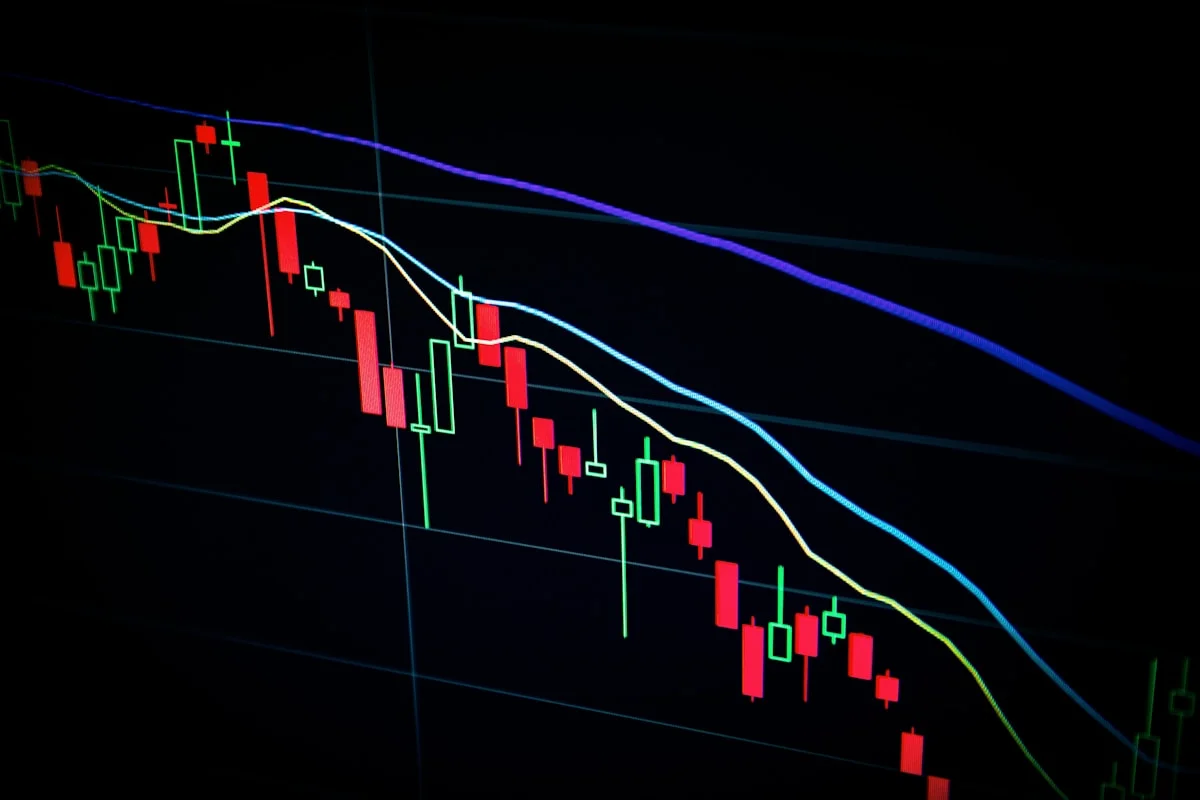
The single biggest reason AI trading signals disappoint is overfitting. Overfitting happens when a model memorizes noise in historical data instead of learning a durable pattern. On the training data it looks near perfect. On new data it collapses to little better than a coin flip.
Several forces inflate the accuracy numbers you see advertised:
- In-sample testing: measuring performance on the same data the model was trained on. This is not a test, it is a memory check.
- Survivorship bias: building and showing off the one strategy that worked out of hundreds tried, while the failures are quietly discarded.
- Look-ahead bias: accidentally feeding the model information it would not have had at the moment of the trade.
- Ignoring costs: backtests that leave out spread, slippage, and fees can turn a losing system into a winning one on paper.
A more honest evaluation uses out-of-sample data the model has never seen, walk-forward testing across different market regimes, and realistic transaction costs. Even then, "accuracy" alone is a weak metric. A signal that is right 40% of the time can be highly profitable if the winners are large and the losers are cut short. A signal that is right 70% of the time can bleed an account dry if the rare losses are catastrophic. What matters is the full distribution of outcomes, not the hit rate. For a deeper treatment of how models are validated, see the pillar guide on quant trading.
Many signal tools are built on classic chart patterns and candlestick patterns, which is why understanding the patterns yourself helps you judge the signals.
Free vs Paid Signal Services and the Scam Risk
There is a large industry selling trading signals by subscription, and much of it preys on beginners. A genuinely profitable signal generator has little reason to sell calls to thousands of strangers, because doing so erodes the edge. Most services that advertise guaranteed win rates are selling a story. Our guide on how to judge a crypto signals provider lists the checks to run before you pay.
Common patterns to watch for:
- Screenshots of wins with no record of losses.
- "Guaranteed" or "risk-free" language, which no real trader would ever use.
- The same generic calls sent to every subscriber regardless of account size or risk tolerance.
- Signals timed so that the sheer volume of them guarantees some will look correct after the fact.
- Pressure to act fast, upgrade, or recruit others.
The table below compares the three broad ways traders get signals.
| Source | Typical cost | Transparency | Main risk |
|---|---|---|---|
| Free public signals | None | Very low | Recycled or random calls, no accountability |
| Paid signal service | Monthly fee | Usually low | Cherry-picked track records, hidden losses, outright scams |
| Self-built model | Time and data | Full, you own the logic | Overfitting if not validated properly |
A self-built model is the only option where you can fully inspect the logic and verify it on out-of-sample data. It costs more effort, but you are not trusting a stranger's marketing. If you do pay for a service, treat every claim as unproven until you have forward-tested the calls in a demo account across at least several weeks and different market conditions.
Using Signals Inside a Systematic Strategy
A signal on its own is not a strategy. It is one input. The traders who use signals successfully wrap them in a rule set that governs everything the signal does not tell you.
A workable framework looks like this:
- Position sizing: decide in advance how much of the account each signal risks, usually a small fixed percentage, so no single call can do serious damage.
- Risk per trade: attach a stop-loss to every entry. A signal without a defined invalidation point is a gamble.
- Filtering: only take signals that agree with your higher-level bias, such as the prevailing trend or a volatility condition, rather than every call the model emits. A simple trend filter like the MACD above or below zero is a common starting point.
- Record keeping: log every signal and its outcome so you can measure the system honestly over time rather than remembering the wins.
This is where prop firm rules interact with signal trading directly. A strategy that fires many signals a day needs room to operate. Firms that impose a consistency rule, a per-trade risk cap, or a maximum lot size can quietly break a signal-based system that was profitable on paper. Velotrade runs no consistency rule at any stage, sets no per-trade risk cap, and uses a static maximum drawdown, meaning the loss floor is fixed from your starting balance and never trails your equity up. That gives a systematic signal strategy a stable, predictable risk boundary to build around. For how those rules fit together, see crypto prop firm rules explained.
Executing Signals Through an API
Manually copying signals into a platform introduces delay and human error, the two things automation is meant to remove. The natural end state for a signal strategy is full automation: the model generates a call, and code places, manages, and closes the position without a person in the loop.
Most prop firms restrict or discourage this. Bots, expert advisors, and API access are often gated behind approval, extra fees, or outright bans. Our comparison of prop firms that allow EAs, bots and API trading shows where those hurdles sit at each firm. Velotrade takes the opposite position. Every account allows EAs, bots, and algorithmic trading, with full REST and WebSocket API access included at no extra fee and no approval step. You can read live equity, monitor the static drawdown floor, place orders, adjust stops, and close positions entirely in code, across crypto, forex, stocks, indices, and commodities on the DXtrade platform.
A sensible automation build does three things beyond placing the trade:
- Reads live account state before every order, so a reconnection never double-enters a position.
- Enforces the risk rules in code, halting new entries as equity approaches the drawdown floor rather than trusting the signal source to stop.
- Logs everything, so live results can be compared against the backtest and the model can be retired if it decays.
For the full walkthrough of wiring a signal or bot to a funded account, see how to run a trading bot on a funded crypto account and algo and bot trading in crypto prop firms. For which firms give automated systems the most room, see best crypto prop firms for algo traders. Full integration details are on the API access page. Signals are one input to a larger system: see AI trading strategies that actually work, and for signals applied to currency pairs, AI forex trading.
Velotrade provides education and simulated trading only. It is not a broker, bank, or regulated financial institution and does not provide investment advice. AI trading signals are model outputs, not guarantees of any outcome, and nothing in this article is a recommendation to buy or sell any asset. Test any signal-based strategy in a simulated environment before risking a paid evaluation.
Frequently Asked Questions
About the author

Vittorio De Angelis
Executive Chairman
Former equity-derivatives trader at JP Morgan, Dresdner Kleinwort and Bank of America in London. Later Head of Brokerage at a global broker in Hong Kong.
Velotrade was founded in Hong Kong in 2016 by a team from JP Morgan, Dresdner Kleinwort and Bank of America, has paid out over $2.5 billion to its trade-finance clients, and has been featured in Bloomberg, the Financial Times, the Wall Street Journal and on Nasdaq. Its prop trading evaluations are simulated and educational.
View author page