Trade crypto with funded capital
Explore cryptoNews trading is one of the most restricted strategies in crypto prop trading. A Fed rate decision, a CPI print, or a major on-chain event can move BTC/USD 4-8% in minutes. These are exactly the setups where skilled traders generate outsized returns, and exactly the setups most prop firms specifically prohibit.
Before paying a challenge fee, confirming whether a firm allows news trading can be the difference between a compatible evaluation and a wasted one.
Highlights of this article
- Most prop firms ban or restrict trading during scheduled news events
- Restrictions typically cover a 2-minute window before and after major releases
- Velotrade allows news trading at every stage with no news windows (single stocks close around earnings and ex-dividend dates)
- Breakout Prop and Bitfunded also publish no news blackout windows
- FTMO, BrightFunded, DNA Funded and FundedNext restrict news trading, mostly on funded accounts
- Before paying any challenge fee, verify the firm's news trading policy in writing
What Is News Trading in Crypto Prop Trading?
News trading is any strategy that involves taking positions around scheduled economic events or major market-moving announcements. In crypto markets, the most significant include:
- US macro releases: CPI, NFP, Fed rate decisions, FOMC minutes
- Crypto-specific events: Bitcoin halving, major protocol upgrades, ETF approval decisions, significant exchange listings
- Geopolitical events: Regulatory rulings, exchange collapses, government bans or endorsements
These events create short windows of extremely high volatility where price can move sharply in one direction before retracing or continuing. Traders who correctly position ahead of or immediately after these events can capture large moves in compressed timeframes. When a surprise catches crowded positioning on the wrong side (often visible beforehand as rising open interest), the move can turn into a short squeeze that runs much further than the data alone justifies.
The key distinction is that news trading is not random speculation. It involves reading macro context, having a directional view before the event, and managing risk through the volatility window. It is a legitimate and repeatable edge, which is exactly why its restriction in prop trading is worth scrutinising.
Why Prop Firms Restrict News Trading
The restrictions exist for several reasons, not all of them trader-focused.
Slippage and execution risk. During high-volatility news windows, spreads widen and fill quality degrades. Prop firms running simulated accounts backed by real liquidity are exposed to slippage that is not reflected in the simulated price. A trader entering a news event on a sim account might see a fill that would not be achievable in the real market.
Risk concentration. A firm managing thousands of funded traders simultaneously does not want correlated exposure. If every trader goes long BTC ahead of a bullish CPI print and the move materialises, the firm's aggregated risk is enormous in a single 60-second window.
Model exploitation. Some traders specifically optimise for news events to pass evaluations quickly, then trade conservatively on funded accounts. Firms use news restrictions to prevent the evaluation from being gamed by a single lucky trade.
These are legitimate concerns for the firm. The problem is that they are often applied as blanket bans that penalise skilled news traders who are managing risk properly, not just speculators.
For a broader breakdown of how prop firm rules are designed and what they measure, see crypto prop firm rules explained.

Which Crypto Prop Firms Allow News Trading?
The table below shows the news trading policy for major prop firms, checked against each firm's published rules in September 2026. Always verify directly: rules change, and many firms apply one policy to the challenge and a stricter one to the funded account.
| Firm | News Trading | Policy Details |
|---|---|---|
| Velotrade | Allowed | No news windows in the evaluation or on funded accounts. Single stocks only: close at least 24 hours before the company's earnings release or ex-dividend date. |
| Breakout Prop | Allowed | No news blackout windows, size limits or penalties. |
| Bitfunded | Allowed | No news blackout window in its published rules. |
| Topstep | Mostly allowed | Allowed in all phases; only entering a full max-size position into scheduled major news is barred. |
| HyroTrader | Varies | Allowed, but strategies that trade only major news events are banned. |
| FundedNext | Varies | Unrestricted in the challenge; funded accounts keep only 40% of profit made within 5 minutes of high-impact news. |
| BrightFunded | Restricted when funded | Unrestricted in the challenge; funded accounts cannot trade 5 minutes before or after high-impact news. |
| DNA Funded | Restricted when funded | Funded accounts cannot trade within 5 minutes of high-impact news; no news scalping. |
| FTMO | Restricted | Standard accounts cannot trade 2 minutes before or after restricted news; Swing accounts are exempt. |
Velotrade, Breakout Prop and Bitfunded are the firms in this comparison that publish no news windows at any stage. Most of the others allow news in the challenge and restrict it once you are funded, which is the stage where the restriction costs you real payouts.
For a full side-by-side comparison of Velotrade against HyroTrader including drawdown model and payout structure, see HyroTrader vs Velotrade. For how BrightFunded's approach compares, see BrightFunded vs Velotrade. For FTMO alternatives that don't carry these restrictions, see best FTMO alternative for crypto traders.
Why Velotrade Allows News Trading
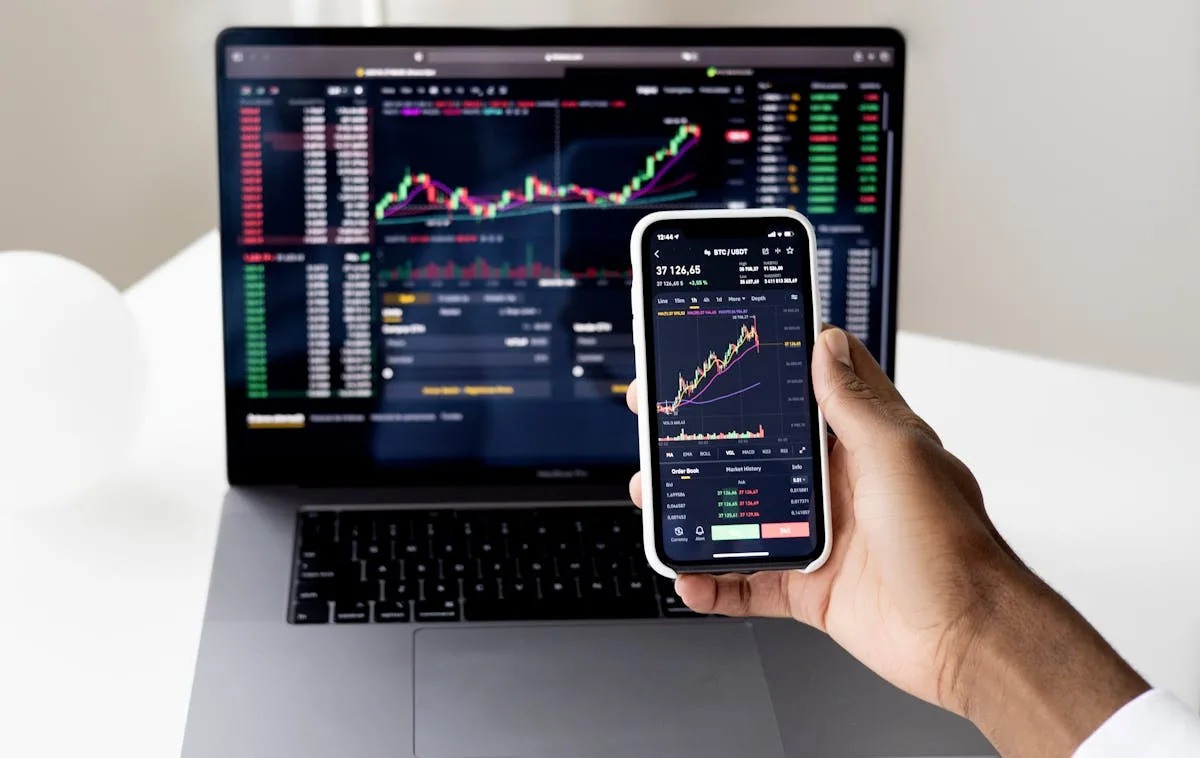
Velotrade's position is that the timing of a trade should not determine whether it counts toward the evaluation. The evaluation measures whether you can manage risk and hit a profit target. A trade taken during a news window follows the same rules as any other trade: it must stay within the daily loss limit and the overall static drawdown limit. The only event rule is for single stocks, which must be closed at least 24 hours before the company's earnings release or ex-dividend date.
Banning news trading does not make the evaluation harder to pass on merit. It just filters out a specific trading style. Velotrade's view is that if a trader can consistently identify high-probability setups around macro events and manage risk through volatility, that is a skill worth funding.
Velotrade's challenges all use static drawdown, which means the drawdown floor is fixed from your starting balance and never moves: Classic 1-Step at 93% of the starting balance (7%), Classic 2-Step at 90% (10%), Pro 1-Step at 97% (3%). Intraday spikes during volatile news events never tighten your drawdown buffer, because the floor does not trail your equity, does not move intraday, and does not move at day close. This makes news trading structurally safer at Velotrade than at firms using tick-by-tick trailing models. For a full explanation of how this works, see EOD trailing vs tick-by-tick trailing drawdown.
The full rules breakdown, including drawdown model, profit split, and challenge structure, is in the Velotrade review.
How News Restrictions Affect Your Evaluation Strategy
If you trade at a firm with a news trading ban, the restriction shapes your whole evaluation, not just the trades you can take during events.
Forced inactivity at peak opportunity. News events are when the market is most directional. If you cannot trade during the 30-60 minutes around a major release, you are sitting out the most liquid and momentum-driven window of the session.
Evaluation duration extends. Evaluations typically require a minimum of 4 trading days. If you cannot trade several hours per session due to news windows, your effective trading time per day shrinks. Hitting the profit target within the drawdown limits takes longer when your best opportunities are blocked. Most of those releases land at fixed times within the trading session, so knowing the schedule helps you plan around the news windows.
Risk of accidental breach. News window rules require tracking scheduled events in real time. Missing a news window restriction, especially when trading across time zones, is a common reason traders fail evaluations they should have passed. A trade placed 90 seconds before an NFP release can void an otherwise clean evaluation.
Strategy incompatibility. News traders who focus on 3-5 high-conviction trades per month built around macro events will find that news restrictions eliminate their primary edge entirely. No amount of drawdown discipline compensates for not being able to execute the strategy.
The consistency rule creates the same structural problem. For more on how these rules interact with specific trading styles, see why most traders fail crypto prop challenges.
What to Check Before Trading News at Any Firm
Before starting any evaluation, verify the following about news trading policy:
Read the full rules document. Do not rely on marketing copy. Search for "news", "economic event", "NFP", "FOMC", and "high-impact" in the terms.
Check whether restrictions apply to entries, exits, or both. Some firms ban opening new positions during news windows but allow closing existing ones. Others restrict all activity.
Identify what qualifies as a restricted event. Some firms restrict only Tier 1 events (Fed decisions, CPI). Others restrict all scheduled economic data releases. The difference significantly affects how much of each session is tradeable.
Confirm whether the rule applies to both evaluation phases and funded accounts. Some firms are permissive during the evaluation and stricter on funded accounts, or vice versa.
Ask support directly. Ask: "Can I open a long BTC position 5 minutes before an NFP release?" A direct answer is more reliable than a policy document that may be ambiguous.
For the broader due-diligence process when choosing a firm, see how to evaluate a crypto prop firm and best crypto prop firms 2026. For a complete list of what to verify before any challenge purchase, see top crypto prop firm red flags.
This article is for informational purposes only and does not constitute financial or investment advice. Always review a firm's full published rules before starting any evaluation.
Frequently Asked Questions
About the author

Vittorio De Angelis
Executive Chairman
Former equity-derivatives trader at JP Morgan, Dresdner Kleinwort and Bank of America in London. Later Head of Brokerage at a global broker in Hong Kong.
Velotrade was founded in Hong Kong in 2016 by a team from JP Morgan, Dresdner Kleinwort and Bank of America, has facilitated over $2.5 billion in trade-finance payments, and has been featured in Bloomberg, the Financial Times, the Wall Street Journal and on Nasdaq. Its prop trading evaluations are simulated and educational.
View author page