







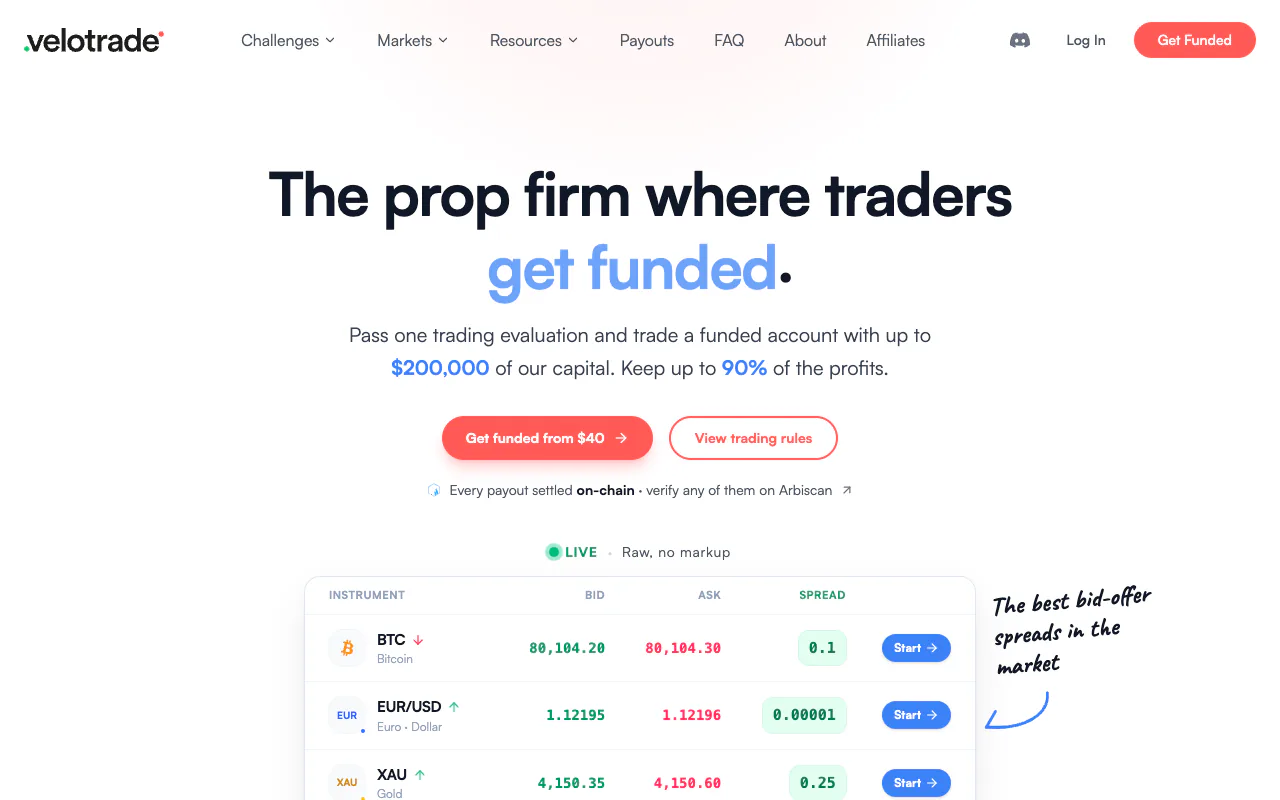







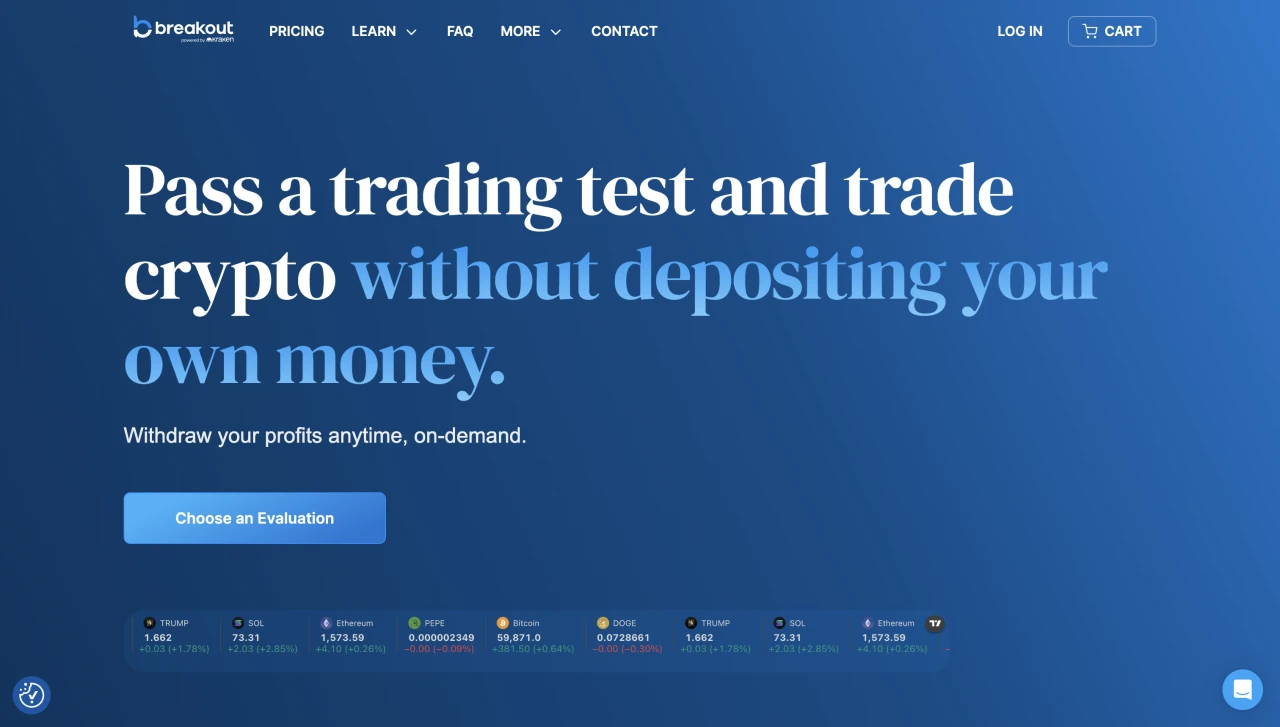
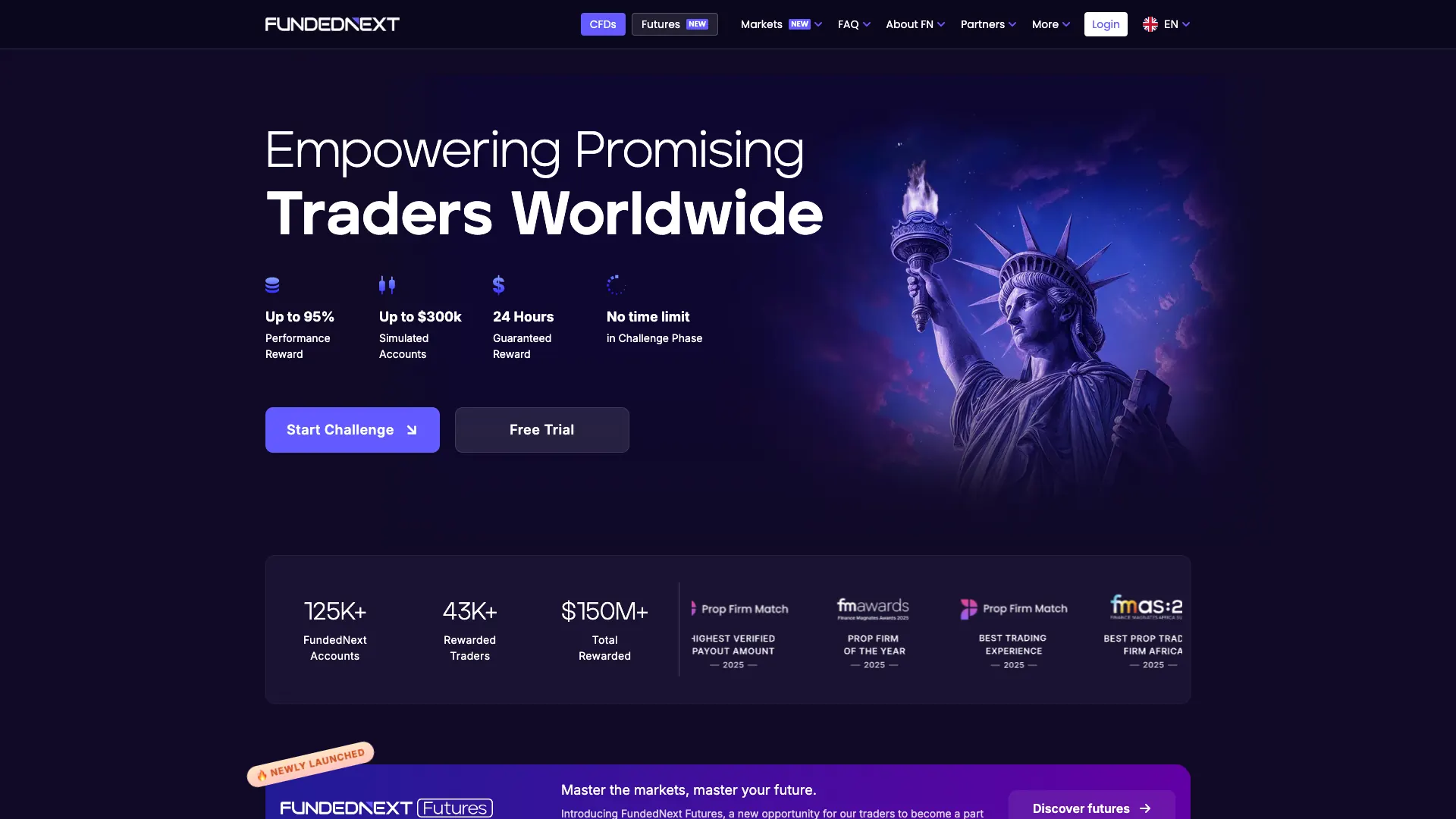
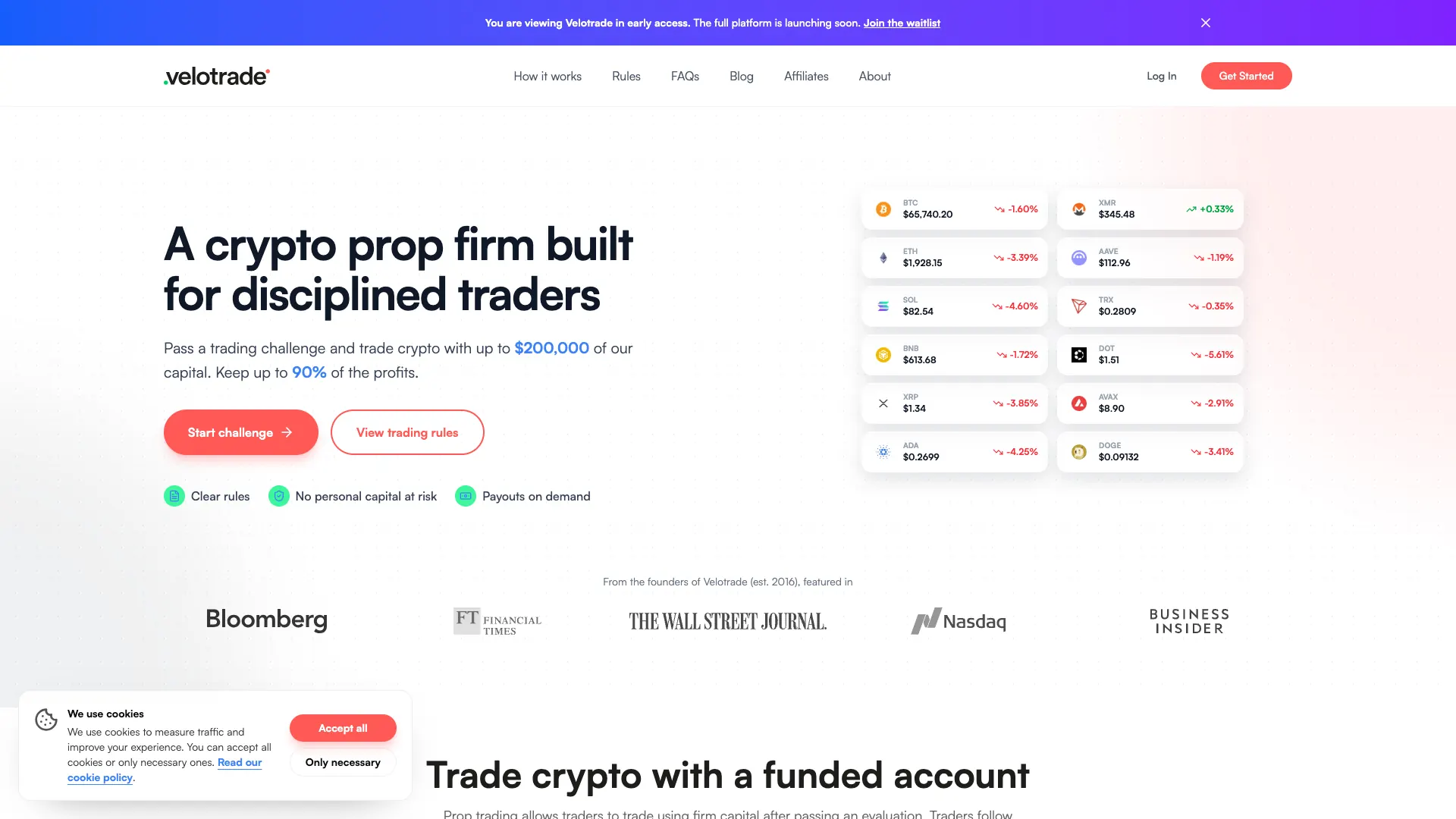
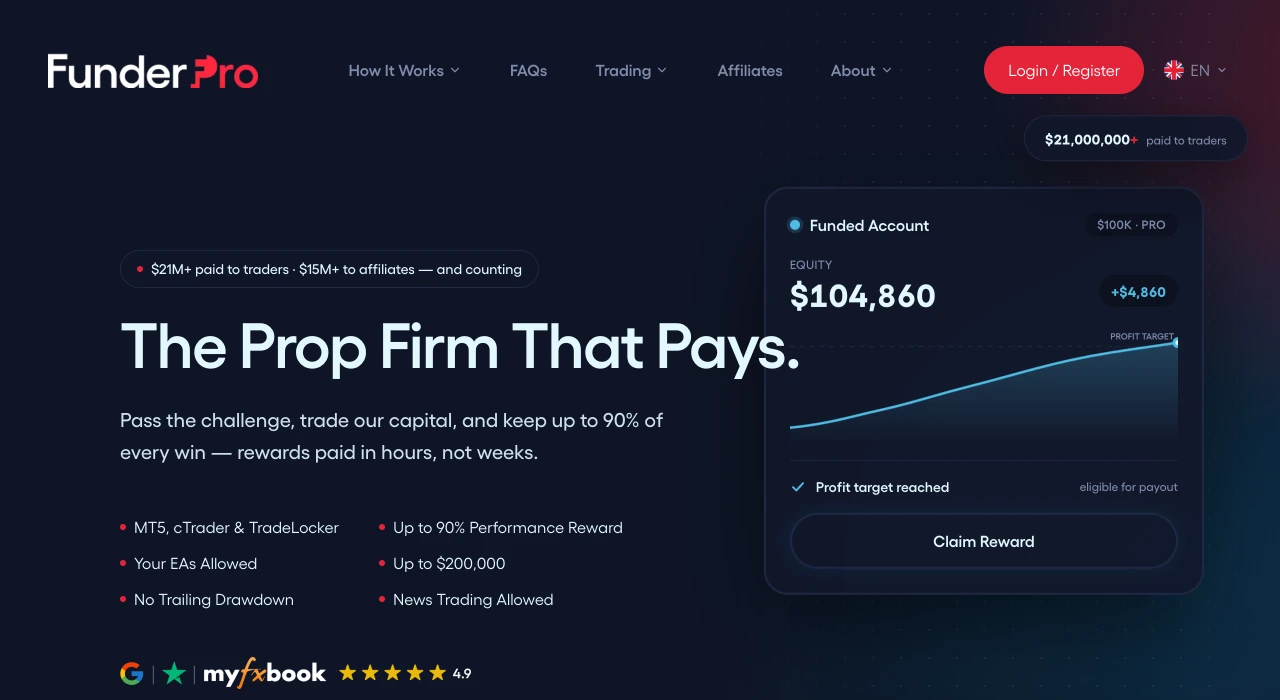

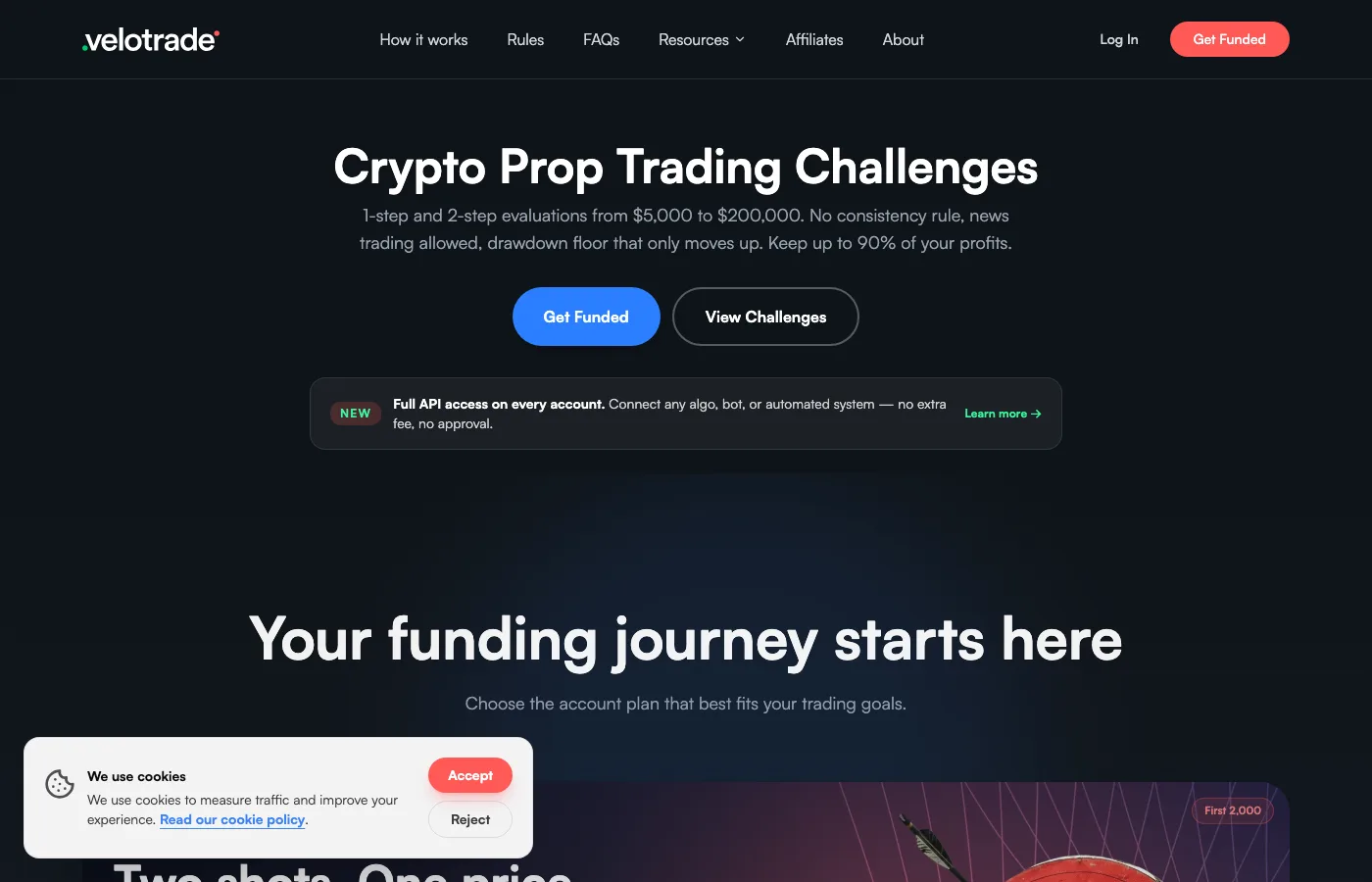
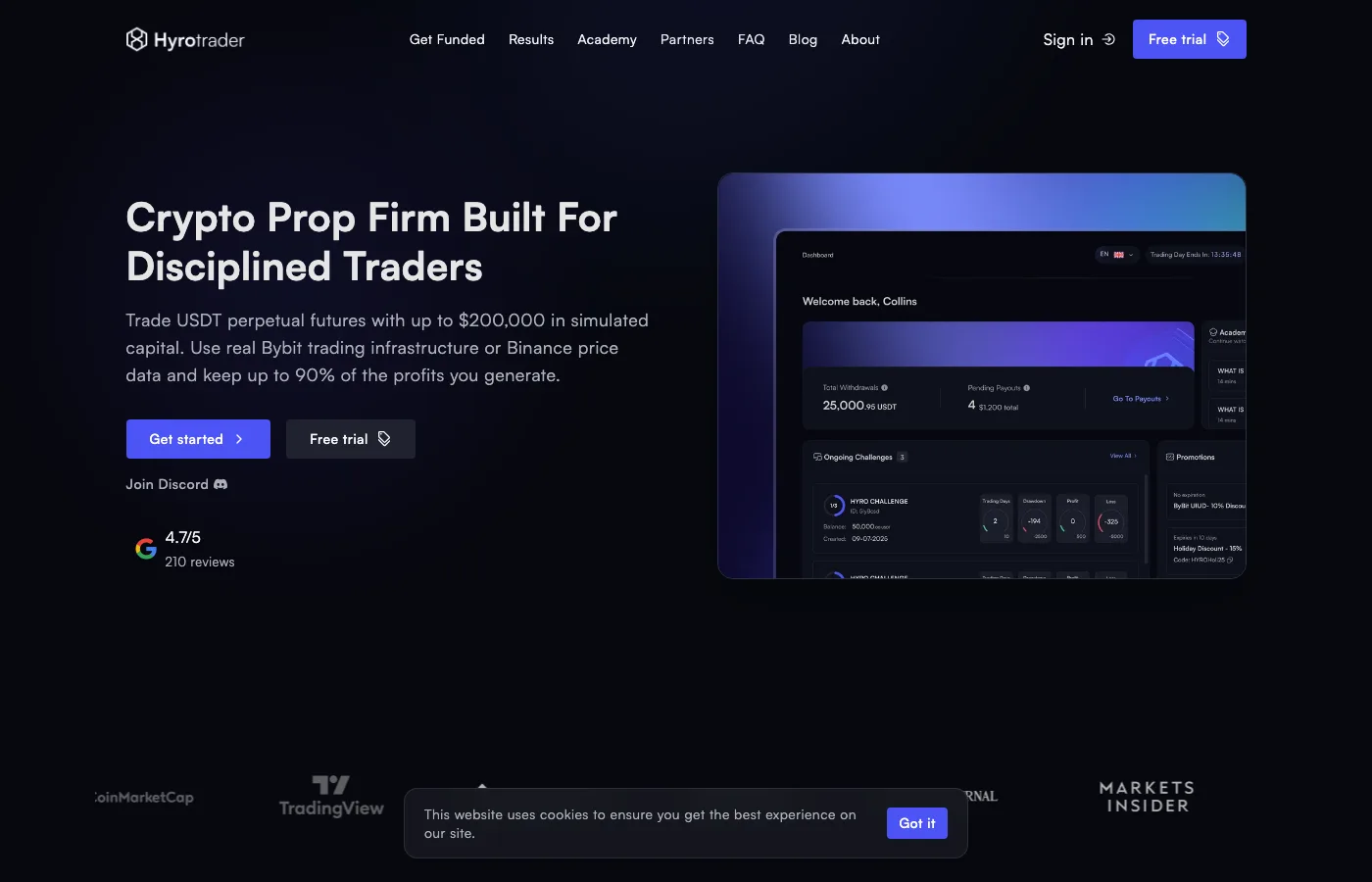
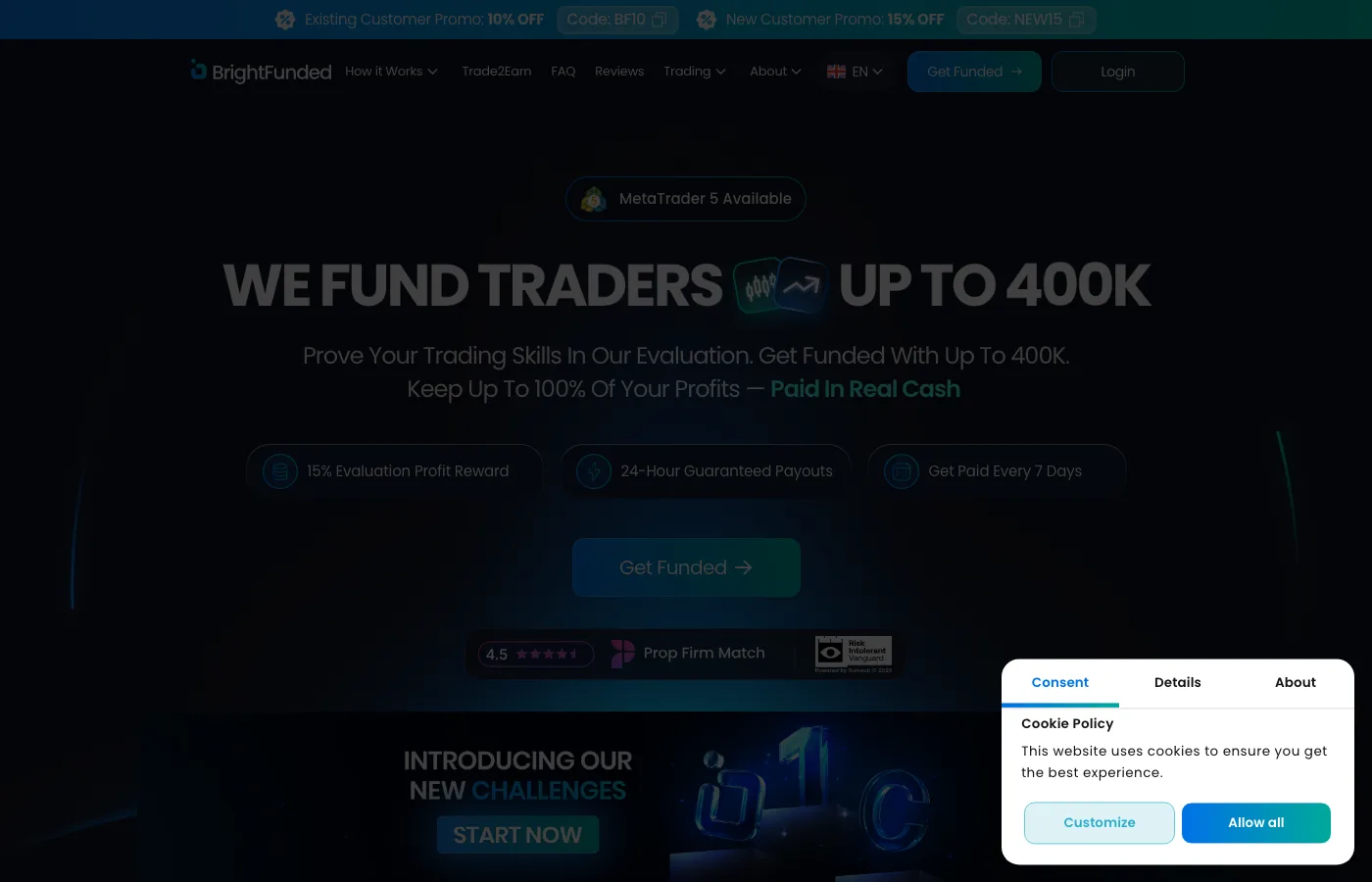






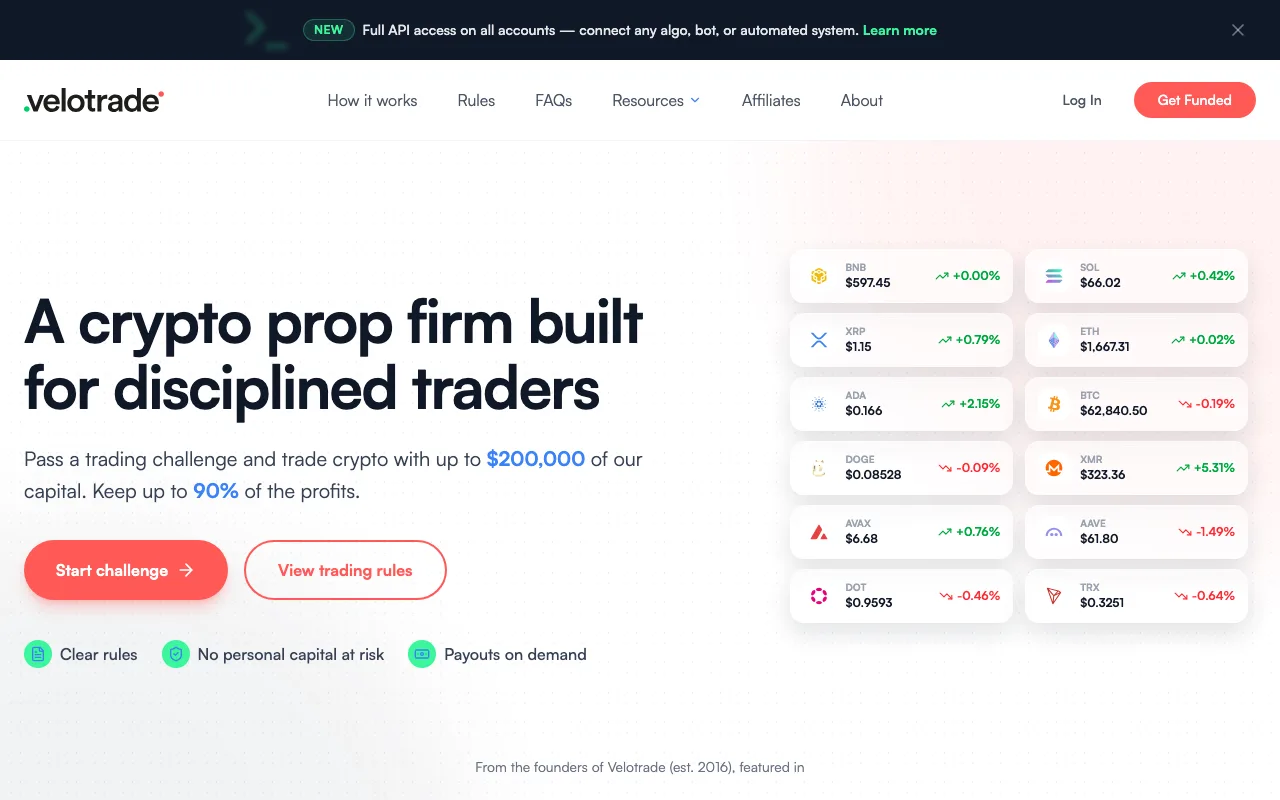




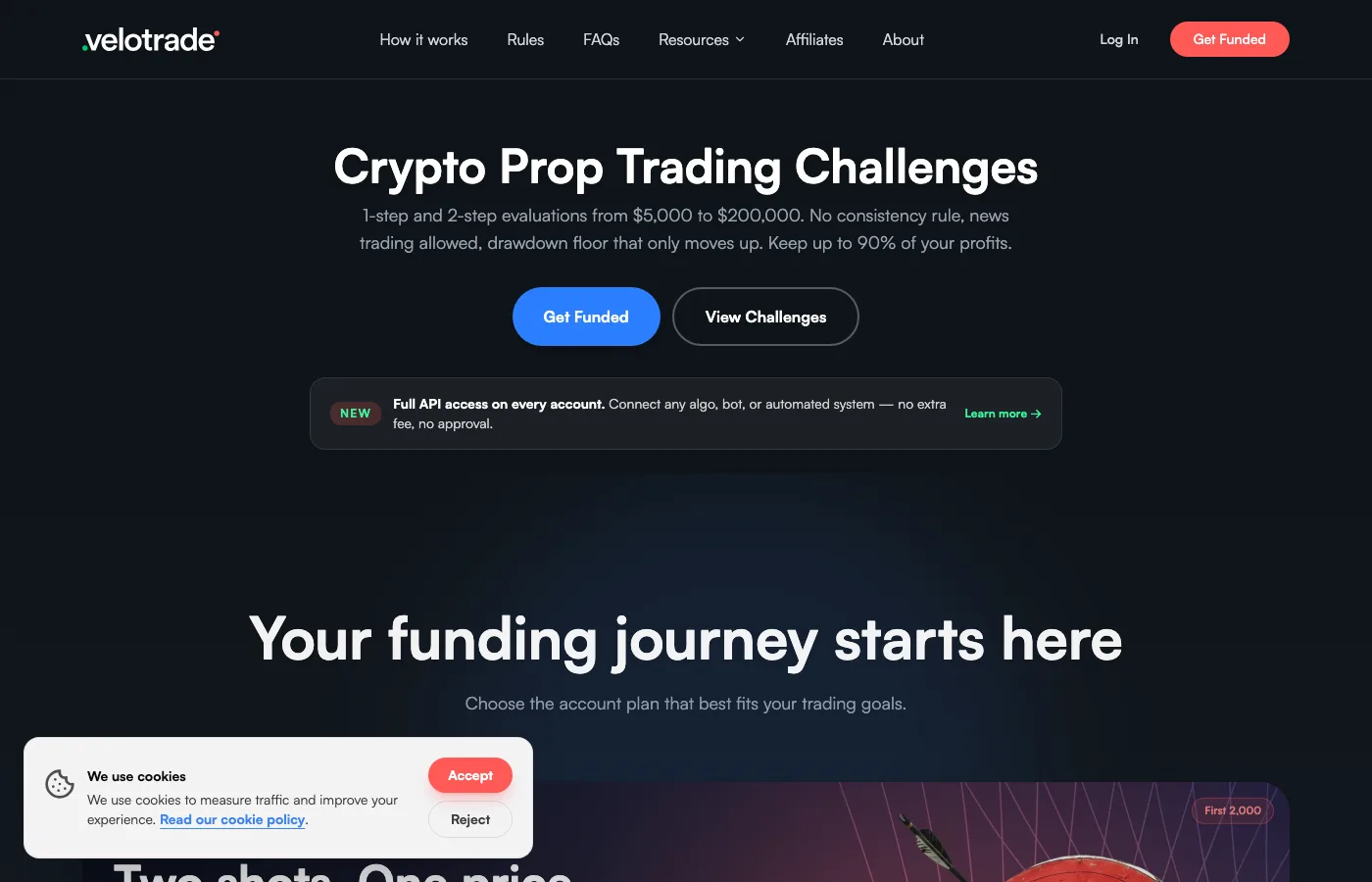



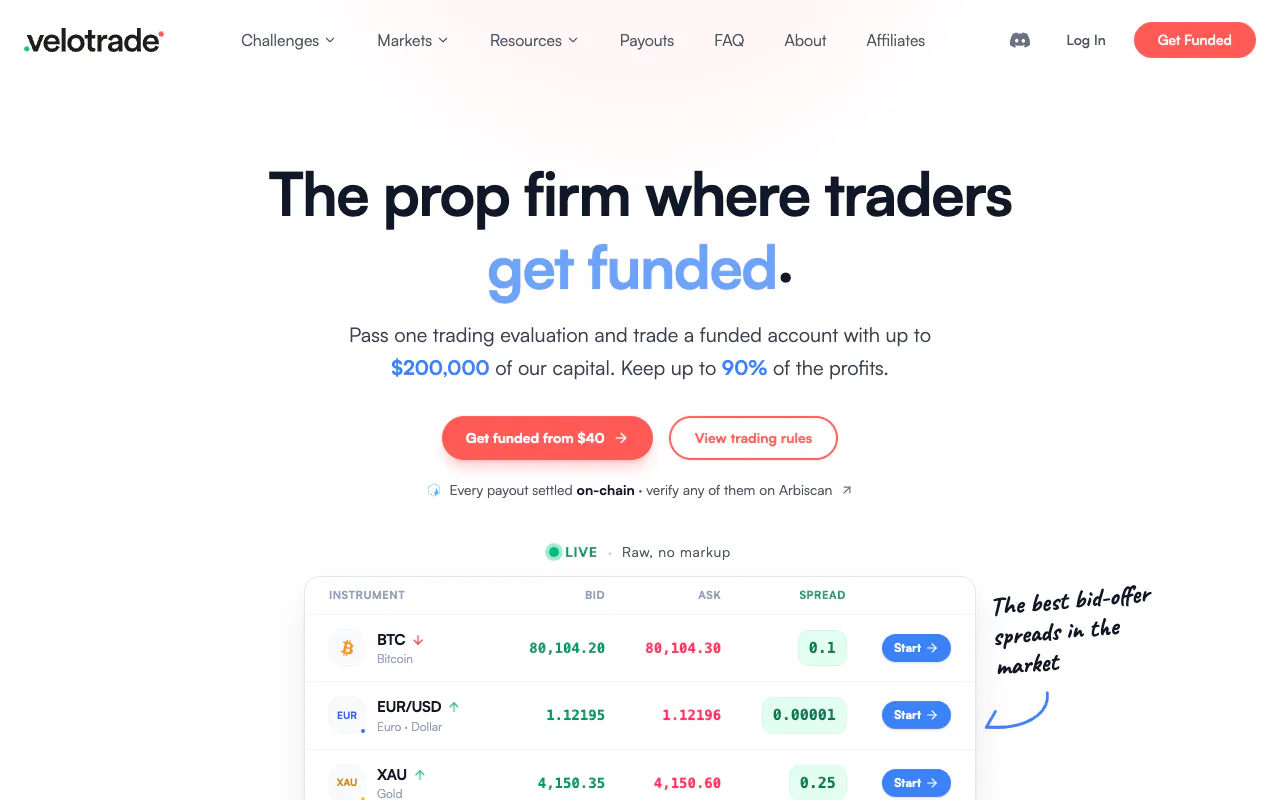

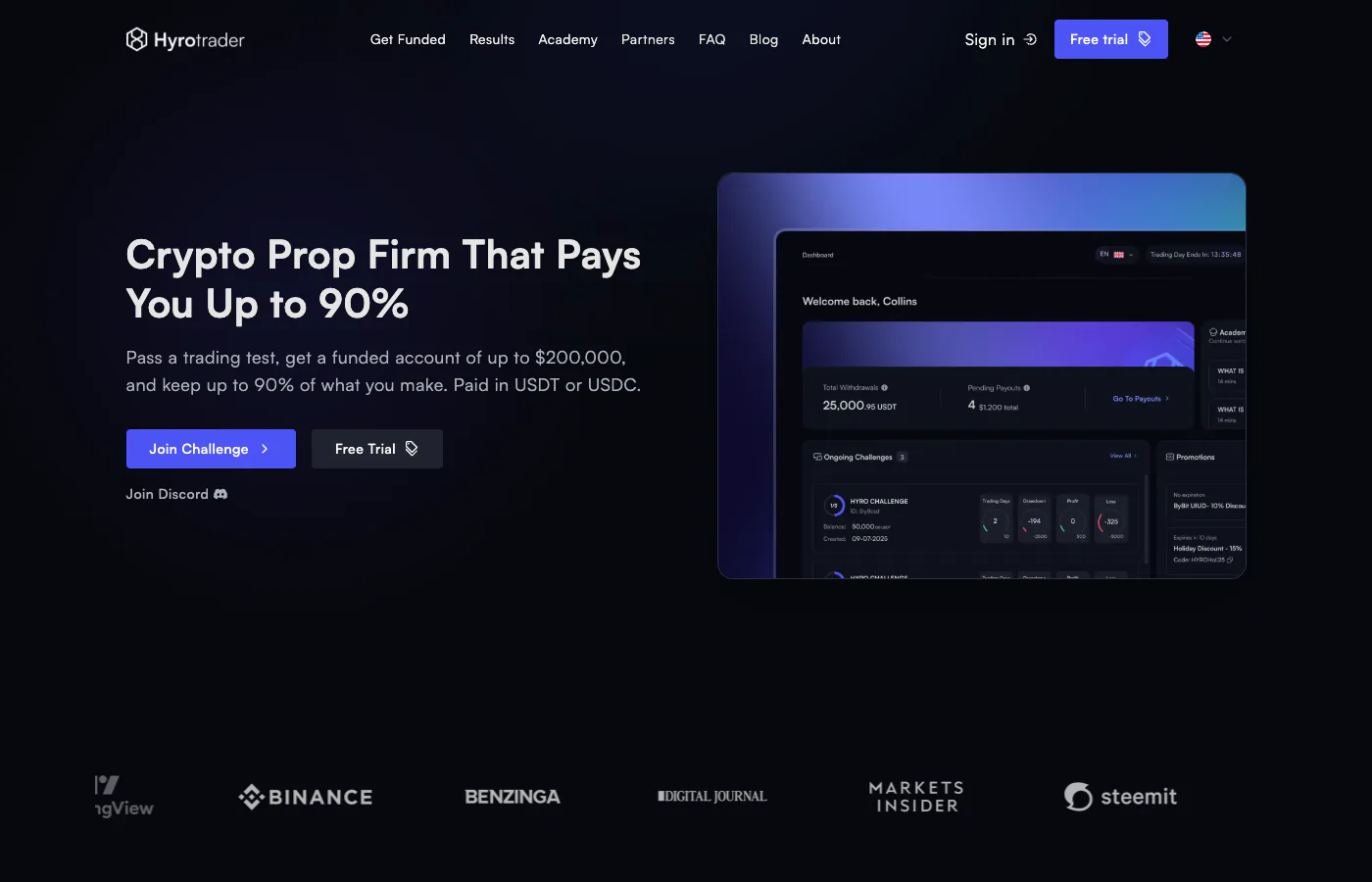
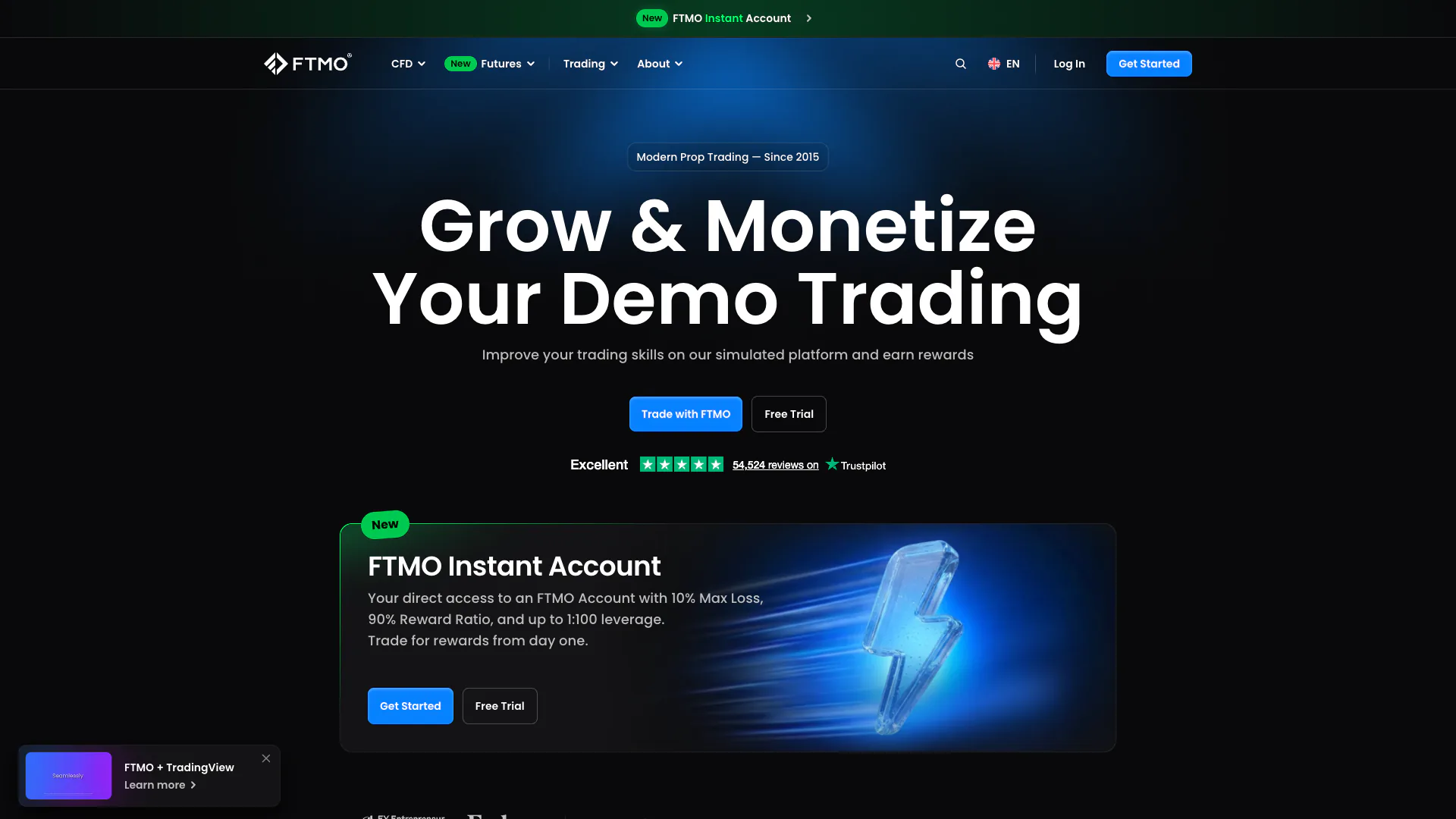


















# Velotrade Full AI Context > Aggregated markdown context for Velotrade's current crypto prop trading site and live blog content. Canonical HTML pages remain the primary URLs for search and user traffic. ## Primary Pages - Home: https://velotrade.com/ - How It Works: https://velotrade.com/how-it-works - Rules: https://velotrade.com/rules - Challenges: https://velotrade.com/challenges - Prop Firm Directory: https://velotrade.com/prop-firms - Blog: https://velotrade.com/blog - FAQ: https://velotrade.com/faq - About: https://velotrade.com/about - Affiliates: https://velotrade.com/affiliates ## Velotrade - Challenge Rules Velotrade is a multi-asset prop trading firm. All accounts use the DXtrade platform (crypto, forex, stocks, indices and commodities) with static drawdown: the maximum drawdown floor is fixed from your starting balance at account activation and never moves, for the life of the account. The daily loss limit is a separate, day-level control. It recalculates every day at 00:30 UTC from your account balance at that time. That daily recalculation applies only to the daily loss limit and never to the maximum drawdown, which stays static throughout. ### 2-Step Classic - Daily loss limit: 5% of your account balance at 00:30 UTC, recalculated daily - Max drawdown: 10% static (floor fixed from starting balance, never trails) - Phase 1 profit target: 10% - Phase 2 profit target: 5% - Profit split: 80-90% - Account sizes: $5K, $10K, $25K, $50K, $100K - No consistency rule | News trading allowed | Weekend holding allowed | EA and bot trading allowed ### 1-Step Classic - Daily loss limit: 4% of your account balance at 00:30 UTC, recalculated daily - Max drawdown: 7% static (floor fixed from starting balance, never trails) - Profit target: 10% - Profit split: 80-90% - Account sizes: $5K, $10K, $25K, $50K, $100K - No consistency rule | News trading allowed | Weekend holding allowed | EA and bot trading allowed ### 1-Step Pro - Daily loss limit: 3% of your account balance at 00:30 UTC, recalculated daily (matches the max drawdown percentage, the strictest option) - Max drawdown: 3% static (floor fixed at account activation, never moves) - Profit target: 10% - Profit split: 80-90% - Account sizes: $5K, $10K, $25K, $50K, $100K, $200K - No consistency rule | News trading allowed | Weekend holding allowed | EA and bot trading allowed ### Daily loss limit in dollars at the starting balance These are the day-one figures. The limit is recalculated every day at 00:30 UTC from your balance at that time, so it rises as the account grows and falls as it shrinks. The limit is set from balance (closed trades and realised profit or loss only), then monitored against live equity, including floating profit and loss on open positions. | Challenge | $5K | $10K | $25K | $50K | $100K | $200K | |---|---|---|---|---|---|---| | 2-Step Classic | $250 | $500 | $1,250 | $2,500 | $5,000 | n/a | | 1-Step Classic | $200 | $400 | $1,000 | $2,000 | $4,000 | n/a | | 1-Step Pro | $150 | $300 | $750 | $1,500 | $3,000 | $6,000 | ### Key rules (all challenge types) - No consistency rule on any challenge - News trading allowed (no restrictions around high-impact events) - Weekend holding allowed (no forced close at Friday close) - EA and algorithmic trading allowed (full REST and WebSocket API on DXtrade) - Static drawdown on all challenges (floor fixed from starting balance, never trails) - Minimum 5 qualifying trading days per phase, not necessarily consecutive; a day qualifies only if it closes with realised profit of at least 0.8% of the starting account balance - Copy trading permitted only between accounts personally owned by the same trader; copying to or from another person's account is prohibited - Payout in USDC or USDT within 24 hours - Platform: DXtrade (multi-asset: crypto, forex, stocks, indices and commodities) ## Velotrade - Programmatic Prop Firm Directory - [All Crypto Prop Firms](https://velotrade.com/prop-firms) - side-by-side comparison of all major crypto prop firms - [No Consistency Rule Prop Firms](https://velotrade.com/prop-firms/no-consistency-rule) - firms with no daily profit cap - [News Trading Prop Firms](https://velotrade.com/prop-firms/news-trading) - firms that allow trading during high-impact events - [Weekend Holding Prop Firms](https://velotrade.com/prop-firms/weekend-holding) - firms that allow holding positions over the weekend - [EOD Trailing Drawdown Prop Firms](https://velotrade.com/prop-firms/eod-trailing-drawdown) - firms using end-of-day trailing drawdown - [Fee Refund Prop Firms](https://velotrade.com/prop-firms/fee-refund) - firms that refund the challenge fee on first payout - [Crypto-Only Prop Firms](https://velotrade.com/prop-firms/crypto-only) - firms focused exclusively on cryptocurrency - [Algo and Bot Trading Prop Firms](https://velotrade.com/prop-firms/algo-bot-trading) - firms that allow automated and algorithmic trading - [DXtrade Prop Firms](https://velotrade.com/prop-firms/dxtrade) - firms running on the DXtrade platform ## Prop Firm Rules Comparison Cross-firm comparison of major proprietary trading firms, compiled by Velotrade against each firm's official documentation (rules as of 2026-09-08). Full interactive and sortable version: https://velotrade.com/data/prop-firm-rules | Firm | Drawdown model | Consistency rule | News trading | Weekend holding | Profit split | |---|---|---|---|---|---| | Velotrade | Static | No | Yes | Yes | up to 90% | | HyroTrader | Tick-by-tick trailing | Yes | Varies | Yes | 70%-90% | | BrightFunded | Varies | No | Varies | Yes | 80% base, 90% add-on | | DNA Funded | Varies | Yes | Varies | Varies | up to 90% | | FundedNext | Varies | Varies | Yes | Varies | up to 95% | | FTMO | Varies | Yes | Varies | Varies | up to 90% | | Topstep | EOD trailing | Varies | Yes | No | up to 90% | | Crypto Fund Trader | Varies | Varies | Varies | Yes | up to 90% | | Goat Funded Trader | Static | Varies | Varies | Yes | up to 100% | | FundingPips | Varies | Varies | Varies | Varies | up to 100% | | The5ers | Static | Varies | Varies | Yes | up to 100% | | E8 Markets | Varies | Varies | Varies | Varies | up to 100% | | FunderPro | Static | Varies | Varies | Varies | 80-90% | | Breakout Prop | Varies | No | Yes | Yes | 80-95% | | Bitfunded | Static | No | Yes | Yes | 80% | - Prop firms with a static drawdown (floor fixed from starting balance, never trails): Velotrade, Goat Funded Trader, The5ers, FunderPro, Bitfunded - Prop firms with EOD trailing drawdown: Topstep - Prop firms with tick-by-tick trailing drawdown: HyroTrader - Prop firms with no consistency rule: Velotrade, BrightFunded, Breakout Prop, Bitfunded Rules change frequently. The live database at https://velotrade.com/data/prop-firm-rules is the source of truth. ## Data and Research - [Prop Firm Rules Database](https://velotrade.com/data/prop-firm-rules) - Side-by-side comparison of every major prop firm's rules: drawdown model, daily and overall loss limits, consistency rule, news trading, weekend holding, EA/bot policy, fee refund and profit split. Verified against each firm's official documentation. - [2026 Prop Firm Transparency Report](https://velotrade.com/reports/prop-firm-transparency) - Velotrade research on why most funded accounts are closed by rules, not trading, with a six-firm rulebook comparison. ## Blog Corpus # Best Prop Firm for Indices in 2026: Top Picks Ranked Canonical URL: https://velotrade.com/blog/best-prop-firm-for-indices Markdown mirror: https://velotrade.com/blog/best-prop-firm-for-indices.md Canonical HTML page is the search and user-facing source of truth. Published: 2026-09-08T10:00:00Z Author: Vittorio De Angelis Category: Comparisons The best prop firms for index traders in 2026, ranked on leverage, drawdown model, news policy, and ETF (SPY, QQQ) versus synthetic CFD index access. --- Indices are a favourite of funded traders: they trend on macro themes, move hard around scheduled data, and let you trade a whole market without picking single stocks. But prop firms differ sharply on how they offer indices, on leverage, drawdown model, news policy, and whether you trade a synthetic CFD index or a real exchange-listed ETF. This guide ranks the best prop firms for index traders by what matters in practice, and explains the ETF-versus-CFD distinction that separates them. **Quick answer:** The best prop firm for indices depends on your priority. Velotrade suits traders who want liquid US index ETFs (SPY, QQQ) with a trader-friendly static drawdown and news trading. FTMO has the longest payout track record and offers index CFDs, and FundedNext offers the widest overall market range. Weigh drawdown model and news policy above the headline profit split. ![Highlights of this article](https://velotrade.com/images/blog/highlights-of-the-article.webp) ## Highlights of this article - Most multi-asset prop firms offer indices, but leverage, drawdown model, and news policy vary widely - The key distinction is synthetic CFD indices (NAS100, US30) versus real exchange-listed ETFs (SPY, QQQ) - Velotrade offers index ETFs (SPY, QQQ, IWM, and more) at up to 6x, with static drawdown and no consistency rule - News trading policy matters most for indices, because they move sharply around FOMC, CPI, and NFP - Static drawdown is more forgiving than trailing models for index volatility around data releases {{cta:challenges}} --- ## What to look for in an index prop firm Not every multi-asset firm is well set up for indices. Four factors decide whether an index strategy is workable. ### 1) News trading policy Indices are event-driven. FOMC decisions, CPI releases, and non-farm payrolls routinely move the S&P 500 and Nasdaq-100 by 1% or more in minutes. Firms that restrict trading around news, or prohibit holding through it, eliminate a large share of the best index setups. Confirm the policy before buying. See [what is FOMC trading](https://velotrade.com/blog/what-is-fomc-trading). ### 2) Drawdown model Index moves around data releases punish tight trailing drawdowns. A tick-by-tick trailing model raises your loss floor on every intraday equity peak, so a position that runs in your favour and retraces can tighten your buffer to nothing. A static drawdown, fixed from your starting balance, does not move at all, which suits index volatility far better. See [static maximum drawdown explained](https://velotrade.com/blog/static-maximum-drawdown-explained). ### 3) ETF vs CFD index access This is the distinction most traders overlook. Some firms offer indices as **synthetic CFDs** (NAS100, US30, US500) priced by the provider. Others offer **exchange-listed ETFs** (SPY for the S&P 500, QQQ for the Nasdaq-100) that hold the real underlying basket and trade on a regulated exchange. ETFs give exchange transparency and are the accessible route for US-based traders, who generally cannot trade index CFDs domestically. ### 4) Leverage and instrument range Index leverage varies by firm and by whether the instrument is a CFD, a future, or an ETF. Also check the range: beyond the S&P 500 and Nasdaq-100, does the firm offer small caps (Russell 2000) and regional indices, so you can trade more than the two US headline benchmarks? ## Best prop firms for index traders in 2026 ### 1) Velotrade, best for liquid US index ETFs **HQ:** Hong Kong **Platform:** DXtrade **Max funding:** Up to $200,000 **Indices:** SPY (S&P 500), QQQ (Nasdaq-100), IWM (Russell 2000), plus regional ETFs Velotrade is the strongest fit for a trader who wants real exchange-listed index exposure. Indices trade as liquid US ETFs at up to 6x on the challenge (5x funded), with commission of 0.03% per side and no spread markup. You get the two headline US benchmarks (S&P 500 via SPY, [Nasdaq-100](https://velotrade.com/blog/what-is-nas100) via QQQ), small caps via IWM, and regional ETFs for Japan, South Korea, Brazil, and Europe. The rule set is calibrated for index behaviour: static maximum drawdown (the floor never trails your equity), no consistency rule, news trading permitted so you can trade FOMC and CPI moves, and positions can be held through the weekend. Indices sit alongside crypto, forex, commodities, and single stocks on one [DXtrade](https://velotrade.com/blog/what-is-dxtrade) account, so you can rotate as conditions change. See the full [instrument list](https://velotrade.com/instruments). Velotrade is unregulated and offers educational, simulated evaluations with real-time market pricing. [See challenge options and account sizes →](https://velotrade.com/challenges) ![A live S&P 500 and Nasdaq-100 chart on a trading screen](/images/blog/best-prop-firm-for-indices/image-1.webp "Velotrade offers indices as liquid US ETFs (SPY, QQQ, IWM) at up to 6x on one DXtrade funded account.") ### 2) FTMO, strongest legacy track record **HQ:** Prague **Platform:** MT4, MT5 **Indices:** Index CFDs (US30, US100, and others) FTMO offers major index CFDs alongside forex and commodities, and has the longest verifiable payout history in the retail prop space. For traders who prioritize counterparty track record above all, it is the benchmark. Trade-offs for indices specifically: a consistency rule applies on most account types, and news trading has historically been restricted around high-impact events, which limits event-driven index strategies. See [FTMO vs Velotrade](https://velotrade.com/blog/ftmo-vs-velotrade). ### 3) FundedNext, best for widest market range **HQ:** UAE **Platform:** MT4, MT5, cTrader, Match-Trader **Indices:** Index CFDs (multi-asset) FundedNext is the pick for traders who trade indices alongside a wide book of forex, metals, and crypto. It offers broad platform support and a high advertised split ceiling. Rules and drawdown vary by plan, so read the specific plan terms for indices before buying. See [FundedNext vs Velotrade](https://velotrade.com/blog/fundednext-vs-velotrade). ## Index prop firm comparison | Firm | Index instruments | Max funding | Drawdown model | News trading | Best for | |---|---|---|---|---|---| | Velotrade | ETFs (SPY, QQQ, IWM + regional) | $200,000 | Static (all plans) | Allowed | Real ETF exposure, event trading | | FTMO | Index CFDs (US30, US100) | Up to $200,000 | Varies by plan | Restricted historically | Longest payout track record | | FundedNext | Index CFDs (multi-asset) | Up to $4,000,000 | Varies by plan | Varies by plan | Widest market range | ![An index trading desk with S&P 500 and Nasdaq-100 charts across several screens](/images/blog/best-prop-firm-for-indices/image-2.webp "Indices move hard around FOMC, CPI, and NFP, so a firm that permits news trading matters most for an index strategy.") ## Which index prop firm is right for you? - **You want real exchange-listed exposure** (ETFs over synthetic CFDs): Velotrade, with SPY, QQQ, and more. - **You trade indices around news** (FOMC, CPI, NFP): choose a firm that permits news trading and uses a static or forgiving drawdown. Velotrade fits. - **You want the longest track record**: FTMO, accepting the consistency rule and news restrictions. - **You are a US trader locked out of index CFDs**: an ETF-based funded account is the practical route to broad-index exposure. {{cta:calculator}} ## FAQs ### Which prop firm is best for index trading? It depends on your priority. Velotrade suits traders who want liquid US index ETFs (SPY, QQQ) with static drawdown and news trading. FTMO has the longest payout track record and offers index CFDs, and FundedNext the widest market range. For indices specifically, weigh news policy and drawdown model above the headline split. ### Can you trade indices at a prop firm? Yes. Most multi-asset prop firms offer indices. What varies is how: some offer synthetic CFD indices (NAS100, US30, US500), while others, including Velotrade, offer exchange-listed ETFs (SPY, QQQ) that hold the real basket. Leverage, drawdown model, and news policy also vary. ### What is the difference between an index ETF and an index CFD? An index ETF (such as SPY or QQQ) holds the underlying basket of shares and trades on a regulated exchange, so you get real exchange pricing and can trade it on a margin or funded account. An index CFD (such as NAS100) is a synthetic contract priced by the provider that tracks the same benchmark without holding shares. ETFs are the accessible route for US-based traders, who generally cannot trade index CFDs domestically. ### What leverage do prop firms offer on indices? It varies by firm and instrument type. On a Velotrade funded account, index ETFs (SPY, QQQ, and others) are available at up to 6x on the challenge phase and 5x once funded. Indices can move quickly around data releases, so size positions against your daily loss limit rather than the maximum leverage. ### Can US traders trade indices at a prop firm? Yes. US retail traders often cannot access index CFDs through domestic brokers and use ETFs or futures instead. An ETF-based funded prop account lets them trade broad-index exposure (through SPY, QQQ, and more) against live market pricing, as an educational, simulated evaluation. # How to Trade Indices: CFDs, Futures, ETFs, and Funded Accounts Canonical URL: https://velotrade.com/blog/how-to-trade-indices Markdown mirror: https://velotrade.com/blog/how-to-trade-indices.md Canonical HTML page is the search and user-facing source of truth. Published: 2026-09-08T10:00:00Z Author: Vittorio De Angelis Category: Education How to trade stock indices in 2026: index CFDs, futures, and ETFs (SPY, QQQ) explained, what moves index prices, and how to trade indices on a funded account. --- A stock index tracks a basket of companies in one number, so trading an index is a way to take a view on a whole market instead of a single stock. There is more than one way to do it: index CFDs, index futures, and index ETFs each track the same underlying benchmark but differ in cost, leverage, and access. The right one depends on where you trade and how you want your positions structured. This guide explains what a stock index is, the practical ways to trade one, what actually moves index prices, and how traders access indices through a funded account using liquid US ETFs. ![Highlights of this article](https://velotrade.com/images/blog/highlights-of-the-article.webp) ## Highlights of this article - A stock index (S&P 500, Nasdaq-100, Russell 2000) tracks a basket of companies in a single price - Indices trade three main ways: index CFDs, index futures, and index ETFs - ETFs like SPY and QQQ track the S&P 500 and Nasdaq-100 and trade on regulated US exchanges - Index prices move on macro data, rate decisions, and earnings season, not on any one company - On a Velotrade funded account you trade indices through liquid ETFs (SPY, QQQ, and more) at up to 6x, alongside crypto, forex, commodities, and stocks {{cta:challenges}} --- ## What is a stock index? A stock index measures the combined value of a group of companies. The S&P 500 tracks 500 large US companies, the Nasdaq-100 tracks the 100 largest non-financial companies on the Nasdaq, and the Russell 2000 tracks 2,000 smaller US companies. Instead of picking one stock, you take a position on the whole basket, which is why indices are a core way to trade the broad direction of a market. You cannot buy an index directly, because it is a calculation, not an asset. What you trade is an instrument that tracks the index: a CFD, a futures contract, or an ETF. ## The three ways to trade indices **1. Index CFDs.** A contract for difference that tracks an index price (often labelled NAS100, US30, or US500 on some platforms). You go long or short with leverage and never own the underlying shares. CFDs are flexible and widely used outside the US, but they are synthetic instruments priced by the provider rather than traded on a central exchange. **2. Index futures.** Exchange-listed contracts such as the E-mini S&P 500 (ES) and E-mini Nasdaq-100 (NQ) on the CME. Futures have deep liquidity, transparent central-exchange pricing, and fixed contract sizes and expiries, which makes fine position sizing harder for smaller accounts and adds rollover management. **3. Index ETFs.** Exchange-traded funds that hold the underlying basket and track the index closely: SPY for the S&P 500, QQQ for the Nasdaq-100, IWM for the Russell 2000. ETFs trade on regulated US exchanges with real underlying holdings, deep liquidity, and tight spreads, and they can be traded long or short with leverage on a margin or funded account. For how position value is calculated across any of these, see [notional value explained](https://velotrade.com/blog/notional-value-explained). ## Index CFDs vs index futures vs ETFs The three routes track the same benchmark, so the difference is structure and cost: - **CFDs** are the most flexible for sizing but are synthetic, provider-priced instruments. - **Futures** give genuine exchange liquidity and price discovery, but fixed contract units and expiries suit larger, more active accounts. - **ETFs** hold the real basket and trade on a regulated exchange, combining exchange transparency with flexible sizing. A practical point for US-based traders: index CFDs are generally not available through US domestic brokers, so US retail traders typically use ETFs or futures. That makes ETFs the most accessible route to broad-index exposure for many traders. ## What moves index prices An index is a basket, so no single company drives it. What moves indices is macro: - **Interest-rate decisions.** FOMC decisions and the rate path move equity indices sharply, because rates change the discount applied to future earnings. See [what is FOMC trading](https://velotrade.com/blog/what-is-fomc-trading). - **Inflation and jobs data.** CPI and non-farm payrolls reset expectations for policy and growth. See [what is NFP trading](https://velotrade.com/blog/what-is-nfp-trading). - **Earnings season.** When a large share of index constituents report, aggregate results move the whole index, and the Nasdaq-100 is especially sensitive to a handful of mega-cap tech names. - **Risk sentiment.** Geopolitical shocks and liquidity conditions drive broad risk-on and risk-off moves across every index at once. ![A trading screen showing index price action reacting to a macro news release](/images/blog/how-to-trade-indices/image-1.webp "Index prices move on macro data and rate decisions, so a firm that permits news trading matters for an index strategy.") ## Trading indices on a funded account A funded account lets you trade a firm's capital against a profit split, with your downside limited to a one-time challenge fee. For a full comparison of the model against trading your own money, see [funded trading vs leverage trading](https://velotrade.com/blog/funded-trading-vs-leverage-trading). Velotrade offers indices through liquid US ETFs rather than synthetic CFD indices: - **SPY** (S&P 500) and **QQQ** (Nasdaq-100), the two most liquid equity ETFs, plus **IWM** (Russell 2000) and regional ETFs for Japan, South Korea, Brazil, and Europe. - Index ETFs trade at up to **6x** leverage on the challenge (5x funded), with commission of 0.03% per side and no spread markup. - They sit on one [DXtrade](https://velotrade.com/blog/what-is-dxtrade) funded account alongside crypto, forex, commodities, and single stocks, so you can rotate between markets without switching firms. See the full [instrument list](https://velotrade.com/instruments). - The rules suit an active index strategy: **static maximum drawdown** (the loss floor is fixed from your starting balance and never trails your equity), **no consistency rule**, **news trading permitted**, and positions can be held through the weekend. Velotrade is unregulated and offers educational, simulated evaluations with real-time market pricing. It is not a broker, dealer, or custodian, and no orders are placed on an exchange. ![An index trading workspace with S&P 500 and Nasdaq-100 charts across several screens](/images/blog/how-to-trade-indices/image-2.webp "On a Velotrade funded account you trade indices through liquid ETFs like SPY and QQQ at up to 6x, on the same account as crypto, forex, and commodities.") {{cta:calculator}} ## Index trading basics - **Sessions.** US equity indices are most active during US cash-market hours; the open and close carry the heaviest volume and the sharpest moves. - **Volatility.** The Nasdaq-100 is typically more volatile than the S&P 500 because of its tech concentration; the Russell 2000 reacts hardest to growth and rate expectations. - **Sizing.** Size positions against your daily loss limit and static drawdown, not against the maximum leverage available. Index moves can be fast around data releases. - **Diversification.** Trading an index alongside single stocks, forex, and commodities on one account spreads risk across drivers rather than concentrating it in one name. To compare firms specifically for index trading, see [best prop firm for indices](https://velotrade.com/blog/best-prop-firm-for-indices), and for the Nasdaq-100 in detail, see [what is NAS100](https://velotrade.com/blog/what-is-nas100). ## FAQs ### What is the best way to trade indices? It depends on where you trade and your account size. Index CFDs are flexible but synthetic and often unavailable to US retail traders. Index futures give exchange liquidity but use fixed contract sizes. Index ETFs like SPY and QQQ hold the real basket, trade on a regulated exchange, and can be sized flexibly, which makes them the most accessible route for many traders. ### Can you trade indices in the US? Index CFDs are generally not available through US domestic brokers, so US retail traders usually trade indices through ETFs (such as SPY and QQQ) or index futures. A funded prop account is one way traders access broad-index exposure through ETFs against live market pricing, as an educational, simulated evaluation. ### What is the difference between SPY, QQQ, and NAS100? SPY is an ETF that tracks the S&P 500, and QQQ is an ETF that tracks the Nasdaq-100. NAS100 is a common CFD label for the Nasdaq-100 index. SPY and QQQ hold the underlying basket and trade on a regulated exchange; NAS100 is a synthetic CFD that tracks the same benchmark without holding shares. ### What moves stock indices? Indices are baskets, so they move on macro factors rather than a single company: interest-rate decisions (FOMC), inflation and jobs data (CPI, NFP), earnings season, and broad risk sentiment. The Nasdaq-100 is especially sensitive to a small group of mega-cap tech names. ### What leverage can you use on indices? Leverage varies by firm and instrument. On a Velotrade funded account, index ETFs (SPY, QQQ, and others) are available at up to 6x on the challenge phase and 5x once funded. Because indices can move quickly around data releases, size positions against your daily loss limit rather than the maximum leverage. # How to Trade Oil (WTI and Brent): CFDs, Futures, and Funded Accounts Canonical URL: https://velotrade.com/blog/how-to-trade-oil Markdown mirror: https://velotrade.com/blog/how-to-trade-oil.md Canonical HTML page is the search and user-facing source of truth. Published: 2026-09-08T10:00:00Z Author: Vittorio De Angelis Category: Education How to trade crude oil in 2026: WTI vs Brent, oil CFDs and futures explained, what moves the oil price, and how to trade oil on a funded account. --- Crude oil is one of the most actively traded commodities in the world. It moves on supply and demand, OPEC decisions, inventory data, and geopolitics, which makes it a favourite for traders who want a liquid, event-driven instrument. There is more than one way to trade it, and the right route depends on your account size and where you trade. This guide explains the two main crude benchmarks, the practical ways to trade oil, what actually moves the price, and how traders access oil through a funded account. ![Highlights of this article](https://velotrade.com/images/blog/highlights-of-the-article.webp) ## Highlights of this article - Oil trades against two benchmarks: WTI (US crude) and Brent (international crude) - You can trade oil as a CFD, as futures, or on a funded account, without ever handling a barrel - Oil prices move on OPEC policy, weekly inventory data, demand expectations, and geopolitics - Oil is volatile and event-driven, so a firm that permits news trading matters - On a Velotrade funded account you trade WTI crude at up to 6x, alongside crypto, forex, indices, and other commodities {{cta:challenges}} --- ## WTI vs Brent: the two oil benchmarks Crude oil is priced against two main benchmarks: - **WTI (West Texas Intermediate)** is the US benchmark, lighter and sweeter crude, priced at delivery in Cushing, Oklahoma. It is the reference most retail platforms quote. - **Brent** is the international benchmark, drawn from North Sea fields and used to price most of the world's traded crude. The two track each other closely and the gap between them (the Brent-WTI spread) reflects regional supply, transport, and demand differences. Most active traders focus on WTI because it is the most quoted and liquid retail contract. ## The ways to trade oil **1. Oil CFDs.** A contract for difference that tracks the crude price. You go long or short with leverage and never take delivery of a barrel. This is the most flexible route for position sizing and the most common for active retail traders. **2. Oil futures.** Exchange-listed contracts (CME's WTI contract CL, and the smaller micro contract) to buy or sell crude at a set price on a future date. Futures give deep exchange liquidity and transparent pricing, but fixed contract sizes and expiries make fine sizing harder for smaller accounts and add rollover management. **3. A funded account.** Trade crude oil pricing on a firm's capital against a profit split, with your downside limited to a one-time challenge fee. Physical crude and energy equities exist too, but for active trading the practical routes are CFDs, futures, and funded accounts. For how position value is calculated across any of these, see [notional value explained](https://velotrade.com/blog/notional-value-explained). ## What moves the oil price Oil is driven by supply and demand, and both react to scheduled events: - **OPEC and OPEC+ decisions.** Production quotas from the major exporting nations move crude sharply. A surprise cut or increase can reprice oil in minutes. - **Inventory data.** Weekly US inventory reports (the EIA and API figures) show whether supply is building or drawing down, and they are among the most reliable intraday catalysts for WTI. - **Demand expectations.** Global growth, industrial activity, and seasonal driving and heating demand all move consumption forecasts. - **Geopolitics.** Conflict, sanctions, and disruptions to production or shipping routes add a risk premium fast, because so much crude moves through a few chokepoints. - **The US dollar.** Oil is priced in dollars, so a stronger dollar tends to pressure crude and a weaker dollar tends to support it. ![An onshore oil pump jack extracting crude oil against a clear sky](/images/blog/how-to-trade-oil/image-1.webp "Oil moves sharply around OPEC output decisions and weekly inventory data, so a firm that permits news trading matters for an oil strategy.") ## Trading oil on a funded account A funded account lets you trade a firm's capital against a profit split, with your downside limited to the challenge fee. For a full comparison of the model against trading your own money, see [funded trading vs leverage trading](https://velotrade.com/blog/funded-trading-vs-leverage-trading). Velotrade offers crude oil as a first-class commodity instrument: - **WTI crude oil** trades at up to **6x** leverage on the challenge (5x funded), with commission of 0.01% per side and no spread markup. - It sits on one [DXtrade](https://velotrade.com/blog/what-is-dxtrade) funded account alongside crypto, forex, indices, and other commodities including gold, [silver](https://velotrade.com/blog/how-to-trade-silver), copper, and natural gas, so you can rotate between markets without switching firms. See the full [instrument list](https://velotrade.com/instruments). - The rules are calibrated for active trading: **static maximum drawdown** (the loss floor is fixed from your starting balance and never trails your equity), **no consistency rule**, and **news trading permitted**, which matters on oil because it moves hard around OPEC decisions and inventory data. Velotrade is unregulated and offers educational, simulated evaluations with real-time market pricing. It is not a broker, dealer, or custodian, and no orders are placed on an exchange. ![A fuel pump nozzle at a filling station, representing refined-product demand](/images/blog/how-to-trade-oil/image-2.webp "Refined-product demand is one of the forces that moves the crude oil price, alongside OPEC supply and the US dollar.") {{cta:calculator}} ## Oil trading basics - **Volatility.** Crude can move several percent in a session around a major catalyst, so size positions against your daily loss limit, not against your conviction. - **Sessions.** Oil is most active during US and European hours and around the weekly inventory release, when liquidity and volume peak. - **Contango and backwardation.** Because oil has a futures curve, the relationship between near and far contracts (contango when far months are pricier, backwardation when they are cheaper) tells you about supply expectations. - **Correlation.** Oil often moves with risk sentiment and against the dollar, and it can trade independently of equities during supply shocks, which makes it useful for diversification within a multi-asset account. For a wider view of trading commodities, see [how to trade gold](https://velotrade.com/blog/how-to-trade-gold), and to compare firms for commodity trading, see [best multi-asset prop firm](https://velotrade.com/blog/best-multi-asset-prop-firm). ## FAQs ### What is the difference between WTI and Brent oil? WTI (West Texas Intermediate) is the US crude benchmark, priced at Cushing, Oklahoma, and it is the contract most retail platforms quote. Brent is the international benchmark drawn from the North Sea and used to price most of the world's traded crude. The two track each other closely; the difference between them reflects regional supply and demand. ### How do you trade oil without owning barrels? Most traders access oil as a CFD or a futures contract that tracks the crude price, so you go long or short with leverage and settle in cash without ever taking delivery. On a funded account you trade crude oil pricing on a firm's capital against a profit split, again without handling any physical oil. ### What moves the price of oil? Oil is driven by supply and demand. The main catalysts are OPEC and OPEC+ production decisions, weekly US inventory data (EIA and API), global demand expectations, geopolitics, and the US dollar. Inventory releases and OPEC meetings are the most reliable intraday movers for WTI. ### Is oil good for day trading? Oil is popular with active traders because it is liquid and event-driven, with reliable intraday catalysts like the weekly inventory report. It is also volatile, so it rewards disciplined position sizing and a fixed loss limit. A firm that permits news trading matters, because many of the best oil setups form around scheduled data. ### What leverage can you use on oil? Leverage varies by firm and instrument. On a Velotrade funded account, WTI crude oil is available at up to 6x on the challenge phase and 5x once funded, with commission of 0.01% per side. Because oil is volatile, size positions against your daily loss limit rather than the maximum leverage. # How to Trade Silver (XAGUSD): Spot, Futures, and Funded Accounts Canonical URL: https://velotrade.com/blog/how-to-trade-silver Markdown mirror: https://velotrade.com/blog/how-to-trade-silver.md Canonical HTML page is the search and user-facing source of truth. Published: 2026-09-08T10:00:00Z Author: Vittorio De Angelis Category: Education How to trade silver in 2026: spot XAGUSD, futures, and funded accounts explained, what moves the silver price, the gold-silver ratio, and silver vs gold. --- Silver is a two-sided market: it is a precious metal that trades as a safe haven like gold, and an industrial metal used in solar panels, electronics, and electric vehicles. That dual demand makes it more volatile than gold and a favourite for traders who want bigger intraday ranges. There is more than one way to trade it, and the right route depends on your account size and where you live. This guide explains what silver trading is, the practical ways to trade it, what actually moves the silver price, and how traders access silver through a funded account. ![Highlights of this article](https://velotrade.com/images/blog/highlights-of-the-article.webp) ## Highlights of this article - Silver (XAGUSD) is both a precious metal and an industrial metal, which makes it more volatile than gold - You can trade silver as a spot CFD (XAGUSD), as futures, or on a funded account - Silver moves on the same macro forces as gold, plus industrial demand and the gold-silver ratio - Silver's higher volatility means position sizing against a fixed loss limit matters more than on gold - On a Velotrade funded account you trade silver (XAG) at up to 6x, alongside gold, crypto, forex, indices, and other commodities {{cta:challenges}} --- ## What is silver trading? Silver is quoted as **XAGUSD**, the price of one troy ounce of silver in US dollars. XAG is the ISO code for silver (the "X" prefix marks a precious metal, like XAU for gold), and USD is the quote currency. When XAGUSD reads 30.00, one ounce of silver costs 30 US dollars. What makes silver distinctive is its split personality. Roughly half of silver demand is industrial: it is used in solar panels, electronics, batteries, and medical devices. The other half is investment and jewellery demand, where silver behaves like a smaller, faster version of gold. That combination means silver reacts both to the macro forces that drive gold and to the industrial cycle, which is why it moves harder in both directions. ## The ways to trade silver **1. Spot silver (XAGUSD CFD).** A contract for difference that tracks the spot silver price. You go long or short with leverage and never take delivery of metal. This is the most flexible route for position sizing and the most common for active retail traders. **2. Silver futures.** Exchange-listed contracts (CME's full-size SI and micro SIL) to buy or sell silver at a set price on a future date. Futures give deep exchange liquidity and transparent pricing, but fixed contract sizes and expiries make fine sizing harder for smaller accounts and add rollover management. **3. A funded account.** Trade silver pricing on a firm's capital against a profit split, with your downside limited to a one-time challenge fee. Physical silver (bars and coins) exists too, but that is ownership rather than trading. For how position value is calculated across any of these, see [notional value explained](https://velotrade.com/blog/notional-value-explained). ## What moves the silver price Silver is driven by the same forces as gold, plus an industrial layer: - **Real interest rates.** Like gold, silver pays no yield, so when real rates fall, holding it costs less and demand rises. See [what is FOMC trading](https://velotrade.com/blog/what-is-fomc-trading). - **The US dollar.** Silver is priced in dollars, so a stronger dollar tends to pressure it and a weaker dollar tends to support it. - **Safe-haven demand.** In risk-off periods, silver catches some of the same flows as gold, though it is the more volatile of the two. - **Industrial demand.** Because half of silver demand is industrial, global growth, manufacturing activity, and the solar and EV cycles move the price in a way that does not affect gold. - **The gold-silver ratio.** Traders watch how many ounces of silver equal one ounce of gold. When the ratio is historically high, some traders favour silver expecting it to catch up, and vice versa. ![A silver bullion bar and silver coins on a dark background](/images/blog/how-to-trade-silver/image-1.webp "Silver reacts to the same macro forces as gold plus industrial demand, so it moves harder in both directions.") ## Silver vs gold: what is the difference for traders? Both are precious metals quoted against the dollar, and they often move together, but silver behaves differently in practice: - **Volatility.** Silver is typically more volatile than gold, with larger percentage swings, because the market is smaller and half its demand is cyclical. - **Industrial exposure.** Gold is almost purely a monetary and safe-haven asset; silver carries a real industrial-demand component. - **Sizing.** Because silver moves harder, the same dollar position carries more risk than on gold, so size against your loss limit accordingly. For the gold side of the comparison, see [how to trade gold](https://velotrade.com/blog/how-to-trade-gold) and [what is XAUUSD](https://velotrade.com/blog/what-is-xauusd). ## Trading silver on a funded account A funded account lets you trade a firm's capital against a profit split, with your downside limited to the challenge fee. For a full comparison of the model against trading your own money, see [funded trading vs leverage trading](https://velotrade.com/blog/funded-trading-vs-leverage-trading). Velotrade offers silver as a first-class commodity instrument: - **Silver (XAG)** trades at up to **6x** leverage on the challenge (5x funded), with commission of 0.01% per side and no spread markup. - It sits on one [DXtrade](https://velotrade.com/blog/what-is-dxtrade) funded account alongside gold, crude oil, copper, natural gas, crypto, forex, indices, and stocks, so you can rotate between markets without switching firms. See the full [instrument list](https://velotrade.com/instruments). - The rules are calibrated for active trading: **static maximum drawdown** (the loss floor is fixed from your starting balance and never trails your equity), **no consistency rule**, and **news trading permitted**, which matters on silver because it moves hard around macro releases. Velotrade is unregulated and offers educational, simulated evaluations with real-time market pricing. It is not a broker, dealer, or custodian, and no orders are placed on an exchange. ![Stacks of silver coins on a light background](/images/blog/how-to-trade-silver/image-2.webp "On a Velotrade funded account you trade silver (XAG) at up to 6x, alongside gold and other commodities on the same account.") {{cta:calculator}} ## Silver trading basics - **Volatility.** Silver can move several percent in a session, more than gold, so size positions against your daily loss limit, not against your conviction. - **Sessions.** Silver is most active during the London and New York overlaps, when liquidity is deepest and spreads tightest. - **Correlation.** Silver usually tracks gold but with bigger swings, and it can decouple when industrial demand or the solar and EV cycles dominate the narrative. - **The ratio trade.** Some traders trade the gold-silver ratio itself, going long one metal and short the other rather than taking outright direction. To compare firms for metals and commodities, see [best multi-asset prop firm](https://velotrade.com/blog/best-multi-asset-prop-firm), and for gold specifically, see [best prop firm for gold](https://velotrade.com/blog/best-prop-firm-for-gold). ## FAQs ### What is XAGUSD? XAGUSD is spot silver priced in US dollars. XAG is the ISO code for one troy ounce of silver and USD is the quote currency, so an XAGUSD price of 30 means one ounce of silver costs 30 dollars. Most active traders trade it as a CFD, going long or short with leverage without taking delivery of metal. ### Is silver more volatile than gold? Yes. Silver is typically more volatile than gold because the market is smaller and roughly half of silver demand is industrial, so it reacts to the manufacturing cycle as well as to the macro forces that drive gold. That means larger percentage swings in both directions, and it is why disciplined position sizing matters on silver. ### How do you trade silver without owning metal? Most traders access silver as a spot CFD (XAGUSD) or a futures contract that tracks the silver price, so you go long or short with leverage and settle in cash without ever taking delivery. On a funded account you trade silver pricing on a firm's capital against a profit split, again without handling physical metal. ### What is the gold-silver ratio? The gold-silver ratio is how many ounces of silver it takes to equal the price of one ounce of gold. Traders use it to judge whether silver looks cheap or expensive relative to gold: a historically high ratio can suggest silver may catch up, and a low ratio the reverse. Some traders trade the ratio directly by going long one metal and short the other. ### What leverage can you use on silver? Leverage varies by firm and instrument. On a Velotrade funded account, silver (XAG) is available at up to 6x on the challenge phase and 5x once funded, with commission of 0.01% per side. Because silver is volatile, size positions against your daily loss limit rather than the maximum leverage. # What Is NAS100? The Nasdaq-100 Index Explained Canonical URL: https://velotrade.com/blog/what-is-nas100 Markdown mirror: https://velotrade.com/blog/what-is-nas100.md Canonical HTML page is the search and user-facing source of truth. Published: 2026-09-08T10:00:00Z Author: Vittorio De Angelis Category: Education What NAS100 means: the Nasdaq-100 index explained, what companies it tracks, why it is volatile, how it compares to the S&P 500, and how to trade it via QQQ. --- NAS100 is a common ticker for the Nasdaq-100, a stock index that tracks the 100 largest non-financial companies listed on the Nasdaq exchange. It is one of the most traded indices in the world because it is heavily weighted toward mega-cap technology, which makes it a direct way to trade the direction of big tech. This guide explains what NAS100 is, what companies it tracks, why it is so volatile, how it differs from the S&P 500, and the practical ways traders take a position on it, including through the QQQ ETF on a funded account. ![Highlights of this article](https://velotrade.com/images/blog/highlights-of-the-article.webp) ## Highlights of this article - NAS100 is a ticker for the Nasdaq-100, an index of the 100 largest non-financial companies on the Nasdaq - It is heavily weighted toward technology, so a handful of mega-cap names drive much of its movement - NAS100, US100, USTEC, and NDX are all labels for the same underlying Nasdaq-100 index - The QQQ ETF tracks the Nasdaq-100 and trades on a regulated US exchange - On a Velotrade funded account you trade the Nasdaq-100 through QQQ at up to 6x, alongside four other asset classes {{cta:challenges}} --- ## What NAS100 actually is NAS100 is a shorthand ticker many trading platforms use for the **Nasdaq-100 index**. The index tracks the 100 largest non-financial companies listed on the Nasdaq stock exchange, weighted by market capitalization, so the biggest companies have the largest influence on its price. Different platforms label the same index differently. **NAS100**, **US100**, **USTEC**, and **NDX** all refer to the Nasdaq-100. The ticker changes; the underlying basket does not. Because it excludes financial companies and is weighted by size, the Nasdaq-100 is dominated by technology and consumer-tech giants. That concentration is the whole point for many traders: NAS100 is the cleanest single instrument for taking a view on big tech. ## What companies are in the Nasdaq-100? The index holds 100 of the largest non-financial Nasdaq-listed companies across technology, consumer services, healthcare, and communications. The top holdings are the familiar mega-cap technology and consumer-tech names, and because the index is capitalization-weighted, that small group at the top carries an outsized share of the total. When those names move together on an earnings day or a rate decision, the whole index moves with them. This is why the Nasdaq-100 can trend hard: it is effectively a leveraged bet on a concentrated group of the market's largest growth companies. ## Why is NAS100 so volatile? The Nasdaq-100 is typically more volatile than a broad index like the S&P 500 for two reasons: - **Concentration.** A large share of the index sits in a handful of mega-cap tech names, so a single earnings surprise or guidance change ripples across the whole index. - **Rate sensitivity.** Growth and technology companies are valued on future earnings, which are discounted more heavily when interest rates rise. That makes the Nasdaq-100 especially reactive to [FOMC decisions](https://velotrade.com/blog/what-is-fomc-trading) and inflation data. Intraday moves of 1% to 2% are routine, and data days can move it much more, so position sizing against a fixed loss limit matters on NAS100. ## NAS100 vs the S&P 500 (US500) Both are large US equity indices, but they are built differently: - **NAS100 (Nasdaq-100)** holds 100 non-financial Nasdaq companies and is tech-heavy, so it swings harder and trends with the technology cycle. - **US500 (S&P 500)** holds 500 companies across every sector, including financials, so it is broader and generally less volatile. Traders often use the Nasdaq-100 for higher-beta tech exposure and the S&P 500 for a broader read on the US market. For how to trade either, see [how to trade indices](https://velotrade.com/blog/how-to-trade-indices). ## How to trade NAS100 ![A candlestick chart of the Nasdaq-100 with moving averages on a trading platform](/images/blog/what-is-nas100/image-1.webp "NAS100, US100, USTEC, and NDX are all labels for the Nasdaq-100; the QQQ ETF tracks the same index on a regulated exchange.") There are three practical routes: 1. **A NAS100 CFD** through a broker, where available. Flexible sizing, but a synthetic instrument priced by the provider, and generally unavailable to US retail traders. 2. **Nasdaq-100 futures** (CME E-mini NQ or micro MNQ) on a regulated exchange, with fixed contract sizes and expiries. 3. **The QQQ ETF**, which holds the Nasdaq-100 basket and trades on a regulated US exchange, long or short with leverage on a margin or funded account. For US-based traders, NAS100 CFDs are usually not available domestically, which makes the QQQ ETF or NQ futures the practical routes to Nasdaq-100 exposure. ## Trading the Nasdaq-100 on a funded account On a Velotrade funded account, you trade the Nasdaq-100 through the **QQQ ETF** rather than a synthetic CFD. QQQ holds the underlying basket and trades on a regulated exchange, and on a funded account it is available at up to **6x** leverage on the challenge (5x funded), with commission of 0.03% per side and no spread markup. It sits on one [DXtrade](https://velotrade.com/blog/what-is-dxtrade) account next to SPY (S&P 500), the Russell 2000, crypto, forex, and commodities, so you can trade the Nasdaq-100 and rotate into other markets without switching firms. The rules suit an active index strategy: **static maximum drawdown** (the floor is fixed from your starting balance and never trails your equity), **no consistency rule**, **news trading permitted**, and positions can be held through the weekend. To compare firms for index trading, see [best prop firm for indices](https://velotrade.com/blog/best-prop-firm-for-indices). Velotrade is unregulated and offers educational, simulated evaluations with real-time market pricing. It is not a broker, dealer, or custodian, and no orders are placed on an exchange. ![A multi-monitor desk showing technology stock charts and the Nasdaq-100 index](/images/blog/what-is-nas100/image-2.webp "The Nasdaq-100 is concentrated in mega-cap technology, so it reacts sharply to earnings and rate decisions.") ## FAQs ### What does NAS100 stand for? NAS100 is a ticker for the Nasdaq-100 index, which tracks the 100 largest non-financial companies listed on the Nasdaq exchange. Some platforms label the same index US100, USTEC, or NDX. It is heavily weighted toward technology, so it is widely used to trade the direction of big tech. ### Is NAS100 the same as the Nasdaq Composite? No. The Nasdaq-100 tracks the 100 largest non-financial Nasdaq companies, while the Nasdaq Composite tracks almost every company listed on the Nasdaq, over 3,000 of them. NAS100 refers to the Nasdaq-100, the smaller, large-cap, tech-heavy index. ### Is NAS100 the same as QQQ? They track the same index. NAS100 is a CFD label for the Nasdaq-100, while QQQ is an ETF that holds the Nasdaq-100 basket and trades on a regulated US exchange. Both move with the same underlying index; the difference is that QQQ holds the real shares and NAS100 is a synthetic contract. ### Why is NAS100 so volatile? The Nasdaq-100 is concentrated in a handful of mega-cap technology companies and excludes financials, so a single earnings surprise moves the whole index. Technology stocks are also valued on future earnings, which makes the index especially sensitive to interest-rate decisions and inflation data. Intraday moves of 1% to 2% are common. ### Can you trade NAS100 in the US? NAS100 CFDs are generally not available through US domestic brokers. US retail traders usually access the Nasdaq-100 through the QQQ ETF or E-mini/micro Nasdaq-100 futures instead. A funded prop account is one way traders take Nasdaq-100 exposure through QQQ against live market pricing, as an educational, simulated evaluation. # Best Prop Firm for Gold Trading in 2026: Top Picks Ranked Canonical URL: https://velotrade.com/blog/best-prop-firm-for-gold Markdown mirror: https://velotrade.com/blog/best-prop-firm-for-gold.md Canonical HTML page is the search and user-facing source of truth. Published: 2026-09-07T10:00:00Z Author: Vittorio De Angelis Category: Comparisons The best prop firms for gold (XAUUSD) traders in 2026, ranked on leverage, drawdown model, news policy, and spot vs tokenized gold access. --- Gold is one of the most popular instruments for funded traders: it trends cleanly, moves hard around macro events, and diversifies a book away from a single asset class. But prop firms differ sharply on how tradable gold actually is, on leverage, drawdown model, news policy, and whether you can even access spot XAUUSD in your country. This guide ranks the best prop firms for gold traders by what matters in practice, and covers the tokenized-gold angle that only a few firms offer. **Quick answer:** The best prop firm for gold depends on your priority. Velotrade suits traders who want spot gold (XAUUSD) with a trader-friendly static drawdown and news trading, plus tokenized gold (XAUT) on the same account. FTMO has the longest payout track record for gold and other instruments, and FundedNext offers the widest overall market range. Weigh drawdown model and news policy above the headline profit split. ![Highlights of this article](https://velotrade.com/images/blog/highlights-of-the-article.webp) ## Highlights of this article - Gold (XAUUSD) is offered by most multi-asset prop firms, but leverage, drawdown model, and news policy vary widely - Velotrade offers both spot gold (XAUUSD, up to 6x) and tokenized gold (XAUT) on one funded account, with static drawdown and no consistency rule - News trading policy matters most for gold, because the metal moves sharply around FOMC, CPI, and NFP - US traders often cannot access spot XAUUSD through domestic brokers; a funded account is a common workaround - Static drawdown is more forgiving than trailing models for gold's intraday volatility {{cta:challenges}} --- ## What to look for in a gold prop firm Not every multi-asset firm is well set up for gold. Four factors decide whether a gold strategy is workable. ### 1) News trading policy Gold is an event-driven instrument. FOMC decisions, CPI releases, and non-farm payrolls routinely move XAUUSD by 1% to 2% in minutes. Firms that restrict trading around news, or prohibit holding through it, eliminate a large share of the best gold setups. Confirm the policy before buying. See [what is FOMC trading](https://velotrade.com/blog/what-is-fomc-trading). ### 2) Drawdown model Gold's intraday swings punish tight trailing drawdowns. A tick-by-tick trailing model raises your loss floor on every intraday equity peak, so a gold position that runs in your favour and retraces can tighten your buffer to nothing. A static drawdown, fixed from your starting balance, does not move at all, which suits gold's volatility far better. See [static maximum drawdown explained](https://velotrade.com/blog/static-maximum-drawdown-explained). ### 3) Leverage and instrument access Gold leverage varies by firm and by whether the instrument is classed as a commodity or a CFD. More important is access: spot XAUUSD is widely available in Europe and Asia but often not to US retail traders through domestic brokers. A prop account can bridge that gap. ### 4) Spot vs tokenized gold A small number of firms also offer tokenized gold (such as XAUT), which trades 24/7 on-chain. If you want gold exposure outside traditional session hours, this matters. See [tokenized gold vs spot gold](https://velotrade.com/blog/tokenized-gold-vs-spot) for the full breakdown, and [how to trade gold](https://velotrade.com/blog/how-to-trade-gold) for every route. ## Best prop firms for gold traders in 2026 ### 1) Velotrade, best for spot and tokenized gold on one account **HQ:** Hong Kong **Platform:** DXtrade **Max funding:** Up to $200,000 **Gold:** Spot XAUUSD (up to 6x) + tokenized gold XAUT Velotrade is the strongest fit for a dedicated gold trader who wants flexibility. Spot gold trades as a commodity at up to 6x on the challenge (5x funded), with commission of 0.01% per side and no spread markup. Tokenized gold (XAUT) is available on the crypto side, so you can trade gold in a 24/7 environment on the same [DXtrade](https://velotrade.com/blog/what-is-dxtrade) account. The rule set is calibrated for gold's behaviour: static maximum drawdown (the floor never trails your equity), no consistency rule, and news trading permitted, so you can trade the FOMC and CPI moves that define gold. Gold sits alongside crypto, forex, indices, and stocks on one account, so you can rotate as conditions change. See the full [instrument list](https://velotrade.com/instruments), and to compare firms for indices see [best prop firm for indices](https://velotrade.com/blog/best-prop-firm-for-indices). Velotrade is unregulated and offers educational, simulated evaluations with real-time market pricing. [See challenge options and account sizes →](https://velotrade.com/challenges) ![A live XAUUSD price chart on a trading screen](/images/blog/best-prop-firm-for-gold/image-1.webp "Velotrade offers spot gold XAUUSD at up to 6x plus tokenized gold XAUT on one DXtrade funded account.") ### 2) FTMO, strongest legacy track record **HQ:** Prague **Platform:** MT4, MT5 **Gold:** XAUUSD (and other metals) FTMO offers gold alongside forex, indices, and commodities, and has the longest verifiable payout history in the retail prop space. For traders who prioritize counterparty track record above all, it is the benchmark. Trade-offs for gold specifically: a consistency rule applies on most account types, and news trading has historically been restricted around high-impact events, which limits event-driven gold strategies. See [FTMO vs Velotrade](https://velotrade.com/blog/ftmo-vs-velotrade). ### 3) FundedNext, best for widest market range **HQ:** UAE **Platform:** MT4, MT5, cTrader, Match-Trader **Gold:** XAUUSD (multi-asset) FundedNext is the pick for traders who trade gold alongside a wide book of forex, indices, and crypto. It offers broad platform support and a high advertised split ceiling. Rules and drawdown vary by plan, so read the specific plan terms for gold before buying. See [FundedNext vs Velotrade](https://velotrade.com/blog/fundednext-vs-velotrade). ## Gold prop firm comparison | Firm | Gold instruments | Max funding | Drawdown model | News trading | Best for | |---|---|---|---|---|---| | Velotrade | Spot XAUUSD + tokenized XAUT | $200,000 | Static (all plans) | Allowed | Spot + tokenized gold, event trading | | FTMO | XAUUSD + metals | Up to $200,000 | Varies by plan | Restricted historically | Longest payout track record | | FundedNext | XAUUSD (multi-asset) | Up to $4,000,000 | Varies by plan | Varies by plan | Widest market range | ![Gold trading session with candlestick charts across several screens](/images/blog/best-prop-firm-for-gold/image-2.webp "Gold moves hard around FOMC, CPI, and NFP, so a firm that permits news trading matters most for a gold strategy.") ## Which gold prop firm is right for you? - **You trade gold around news** (FOMC, CPI, NFP): choose a firm that permits news trading and uses a static or forgiving drawdown. Velotrade fits. - **You want the longest track record**: FTMO, accepting the consistency rule and news restrictions. - **You trade gold inside a wide multi-asset book**: FundedNext for range, or Velotrade if you also want tokenized gold and static drawdown. - **You are a US trader locked out of spot XAUUSD**: a funded account is the practical route to live gold pricing. {{cta:calculator}} ## FAQs ### Which prop firm is best for gold trading? It depends on your priority. Velotrade suits traders who want spot XAUUSD with static drawdown and news trading, plus tokenized gold (XAUT) on one account. FTMO has the longest payout track record, and FundedNext the widest market range. For gold specifically, weigh news policy and drawdown model above the headline split. ### Can you trade gold (XAUUSD) at a prop firm? Yes. Most multi-asset prop firms offer gold as XAUUSD. What varies is leverage, drawdown model, and whether news trading is allowed. A few firms, including Velotrade, also offer tokenized gold (XAUT) for 24/7 exposure. ### What leverage do prop firms offer on gold? It varies. On a Velotrade funded account, spot gold (XAUUSD) is available at up to 6x on the challenge phase and 5x once funded. Gold is volatile, so size positions against your daily loss limit rather than the maximum leverage. ### Can US traders trade gold at a prop firm? Yes. US retail traders often cannot access spot XAUUSD through domestic brokers and are directed to gold futures. A funded prop account lets them trade a gold strategy against live XAUUSD pricing, as an educational, simulated evaluation. ### What is the difference between spot gold and tokenized gold at a prop firm? Spot gold (XAUUSD) is a commodity CFD that tracks the dollar price of gold on weekdays. Tokenized gold (XAUT) is a blockchain token backed by physical gold that tracks the same price but trades 24/7. Velotrade offers both; most firms offer only spot XAUUSD. # How to Trade Gold (XAUUSD): Spot, Futures, Tokenized, and Funded Accounts Canonical URL: https://velotrade.com/blog/how-to-trade-gold Markdown mirror: https://velotrade.com/blog/how-to-trade-gold.md Canonical HTML page is the search and user-facing source of truth. Published: 2026-09-07T10:00:00Z Author: Vittorio De Angelis Category: Education How to trade gold in 2026: spot XAUUSD, futures, and tokenized gold explained, plus how US traders access gold and trade it on a funded account. --- Gold is one of the most traded assets in the world, and there is more than one way to trade it. You can trade spot gold as a CFD (the XAUUSD pair), trade gold futures on an exchange, hold tokenized gold on-chain, or buy the physical metal. Each route has different costs, leverage, and access rules, and the right one depends on where you live and how you trade. This guide explains each method in plain terms, covers what actually moves the gold price, and shows how traders access gold through a funded account when a domestic broker is not an option. ![Highlights of this article](https://velotrade.com/images/blog/highlights-of-the-article.webp) ## Highlights of this article - Gold trades four main ways: spot CFD (XAUUSD), futures, tokenized gold (like XAUT), and physical metal - Spot XAUUSD is the most common route for active traders, priced against the US dollar and traded with leverage - US retail traders often cannot access spot XAUUSD through domestic brokers, so a funded prop account is a common workaround - Tokenized gold trades 24/7 on-chain and tracks the gold price without holding the metal yourself - On a Velotrade funded account you can trade spot gold (XAUUSD) at up to 6x and tokenized gold (XAUT) alongside crypto, forex, indices, and stocks on one platform {{cta:challenges}} --- ## The four ways to trade gold **1. Spot gold (XAUUSD CFD).** Spot gold is quoted as XAUUSD, the price of one ounce of gold in US dollars. Most active traders access it as a contract for difference (CFD), which tracks the spot price and lets you go long or short with leverage. You never take delivery of metal. This is the route with the tightest spreads and the most flexible position sizing. **2. Gold futures.** Exchange-listed contracts (such as CME's GC and micro MGC) to buy or sell gold at a set price on a future date. Futures have fixed contract sizes, expiry dates, and require rollovers. They suit traders who want centralized-exchange liquidity and a regulated instrument structure. **3. Tokenized gold.** Tokens such as Tether Gold (XAUT) and PAX Gold (PAXG) represent ownership of physical gold, issued on a blockchain. They track the gold price, settle on-chain, and trade 24/7 without a traditional broker. Tokenized gold sits between crypto and commodities: it is a digital asset, but its value is pegged to the metal. **4. Physical gold.** Bars and coins. This is ownership, not trading. It carries storage and insurance costs and is impractical for active positions. For an explanation of position value across any of these, see [notional value explained](https://velotrade.com/blog/notional-value-explained). ## Spot gold (XAUUSD), explained XAUUSD is the symbol for spot gold priced in US dollars. XAU is the ISO code for one troy ounce of gold; USD is the quote currency. When XAUUSD is 2,400, one ounce of gold costs 2,400 US dollars. For a full breakdown of the symbol and how it is priced, see [what is XAUUSD](https://velotrade.com/blog/what-is-xauusd). Spot gold behaves like a currency pair in some ways (it is quoted against the dollar, moves in pips, and trades nearly around the clock on weekdays) but it is a commodity, not a currency. It is sensitive to real interest rates, the strength of the dollar, inflation expectations, and safe-haven demand during risk-off periods. Because spot XAUUSD is traded with leverage, a small move in the gold price produces a larger move in your account. Leverage magnifies both gains and losses, which is why position sizing and a fixed loss limit matter more on gold than on slower instruments. ## Gold futures Gold futures are standardized contracts on a regulated exchange. The full-size CME contract (GC) represents 100 ounces, and the micro contract (MGC) represents 10 ounces. Futures give you genuine exchange liquidity and price discovery, but the fixed contract sizes make fine position sizing harder for smaller accounts, and you have to manage expiry and rollovers. Futures and spot CFDs track the same underlying gold price closely. The practical difference is structure: futures are exchange-cleared with set contract units and expiries; spot CFDs are continuous and sized flexibly. ## Tokenized gold (XAUT and PAXG): the 24/7 route Tokenized gold is the newest way to trade the metal. A token like XAUT (Tether Gold) is backed by physical gold held in reserve, and each token tracks the price of one ounce. Because it lives on a blockchain, it trades 24 hours a day, 7 days a week, including weekends when traditional gold markets are closed. For traders who already operate in crypto, tokenized gold is a natural bridge: it gives gold exposure inside a 24/7 environment, with on-chain settlement and no traditional brokerage account. The trade-off is that tokenized-gold liquidity is thinner than spot XAUUSD, and the tokens carry issuer and smart-contract considerations that physical or exchange-traded gold does not. For a full comparison, see [tokenized gold vs spot gold](https://velotrade.com/blog/tokenized-gold-vs-spot). ## How US traders access gold Here is a practical problem many traders hit: spot XAUUSD is widely available to traders in Europe, Asia, and elsewhere, but US retail traders are often unable to trade spot gold CFDs through domestic brokers because of how the instrument is regulated locally. US traders are typically pushed toward gold futures instead, which are less flexible for smaller accounts. A funded prop account is one common way traders get around this. Because a prop challenge is an educational, simulated evaluation priced against real-time markets rather than a domestic brokerage account, traders can practice and prove a gold strategy on spot XAUUSD pricing without a local broker relationship. It is not investment advice or a substitute for a broker; it is a way to trade a strategy against live gold pricing on a funded evaluation. ## Trading gold on a funded account If you want to trade gold with more capital than you hold personally, a funded account lets you trade a firm's capital against a profit split, with your downside limited to a one-time challenge fee. For a full comparison of the model against trading your own money, see [funded trading vs leverage trading](https://velotrade.com/blog/funded-trading-vs-leverage-trading). Velotrade is a multi-asset prop firm, and gold is a first-class instrument on it (for a ranked comparison of firms for gold, see [best prop firm for gold](https://velotrade.com/blog/best-prop-firm-for-gold)): - **Spot gold (XAUUSD)** trades as a commodity at up to **6x** leverage on the challenge (5x funded), with commission of 0.01% per side and no spread markup. - **Tokenized gold (XAUT, Tether Gold)** is available on the crypto side at up to 3x, so you can trade gold in a 24/7 environment on the same account. - Both sit on one [DXtrade](https://velotrade.com/blog/what-is-dxtrade) funded account alongside crypto, forex, indices, and stocks, so you can rotate between gold and other markets without switching firms. See the full [instrument list](https://velotrade.com/instruments) for every symbol and its leverage, and for other markets see [how to trade silver](https://velotrade.com/blog/how-to-trade-silver), [how to trade oil](https://velotrade.com/blog/how-to-trade-oil) and [how to trade indices](https://velotrade.com/blog/how-to-trade-indices). - The rules are calibrated for active trading: **static maximum drawdown** (the loss floor is fixed from your starting balance and never trails your equity), **no consistency rule**, and **news trading permitted**, which matters on gold because the metal moves hard around macro releases. Velotrade is unregulated and offers educational, simulated evaluations with real-time market pricing. It is not a broker, dealer, or custodian, and no orders are placed on an exchange. ![A candlestick chart on a trading screen representing spot XAUUSD price action](/images/blog/how-to-trade-gold/image-1.webp "Spot gold (XAUUSD) trades as a commodity CFD at up to 6x on a Velotrade challenge, alongside tokenized gold XAUT on the same account.") {{cta:calculator}} ## What moves the gold price Gold does not pay a yield, so its price is driven mostly by the opportunity cost of holding it and by demand for safety: - **Real interest rates.** When real yields fall, gold usually rises, because holding a non-yielding asset costs less. - **The US dollar.** Gold is priced in dollars, so a stronger dollar tends to pressure gold and a weaker dollar tends to support it. - **Inflation expectations.** Gold is a traditional inflation hedge, so rising inflation expectations often lift demand. - **Risk sentiment.** In risk-off periods (geopolitical stress, market shocks), safe-haven flows push gold up. - **Scheduled macro events.** FOMC decisions, CPI, and non-farm payrolls routinely move gold sharply. Trading these events is where a firm's news-trading policy matters. See [what is FOMC trading](https://velotrade.com/blog/what-is-fomc-trading) and [what is NFP trading](https://velotrade.com/blog/what-is-nfp-trading). ![Gold price reacting to a macro news release on a multi-monitor trading setup](/images/blog/how-to-trade-gold/image-2.webp "Gold moves sharply around FOMC, CPI, and NFP releases, so a firm that permits news trading matters for a gold strategy.") ## Gold trading basics - **Sessions.** Gold is most active during the London and New York overlaps; liquidity thins in the late Asian session. - **Volatility.** Gold can move 1% to 2% in a session and much more around major news, so size positions against your daily loss limit, not against your conviction. - **Pips and lots.** On XAUUSD a one-dollar move is 100 pips; confirm the contract size and pip value on your platform before sizing. - **Correlation.** Gold often moves inversely to the dollar and can decouple from equities during stress, which makes it useful for diversification within a multi-asset account. ## FAQs ### What is XAUUSD? XAUUSD is spot gold priced in US dollars. XAU is the code for one troy ounce of gold and USD is the quote currency, so an XAUUSD price of 2,400 means one ounce of gold costs 2,400 dollars. It is traded as a CFD by most active traders and behaves like a commodity, driven by real yields, the dollar, and safe-haven demand. ### Is gold forex or a commodity? Gold is a commodity. It is often traded on forex-style platforms and quoted against the dollar as XAUUSD, which is why it appears alongside currency pairs, but its price drivers are commodity and macro factors, not another country's monetary policy. ### Can you trade gold (XAUUSD) in the US? US retail traders frequently cannot access spot XAUUSD CFDs through domestic brokers and are directed to gold futures instead. A funded prop account is one way traders practice and trade a gold strategy against live spot pricing, as an educational, simulated evaluation rather than a domestic brokerage account. ### What is the difference between spot gold and tokenized gold? Spot gold (XAUUSD) is a CFD that tracks the dollar price of gold and trades on weekdays with tight spreads. Tokenized gold (such as XAUT) is a blockchain token backed by physical gold that tracks the same price but settles on-chain and trades 24/7. Velotrade offers both on one account. ### What leverage can you use on gold? Leverage varies by firm and instrument. On a Velotrade funded account, spot gold (XAUUSD) is available at up to 6x on the challenge phase (5x funded), and tokenized gold (XAUT) at up to 3x. Leverage magnifies both gains and losses, so size against your daily loss limit. ### When is the best time to trade gold? Gold is most liquid during the London and New York session overlap, roughly 13:00 to 17:00 UTC, when spreads are tightest and moves are cleanest. Major scheduled events (FOMC, CPI, NFP) create the largest moves and require a firm that permits news trading. # Tokenized Gold vs Spot Gold: XAUT, PAXG, and XAUUSD Explained Canonical URL: https://velotrade.com/blog/tokenized-gold-vs-spot Markdown mirror: https://velotrade.com/blog/tokenized-gold-vs-spot.md Canonical HTML page is the search and user-facing source of truth. Published: 2026-09-07T10:00:00Z Author: Vittorio De Angelis Category: Education Tokenized gold (XAUT, PAXG) vs spot gold (XAUUSD): what each is, how they differ on hours, settlement, and liquidity, and how to trade both in 2026. --- Tokenized gold lets you hold gold as a blockchain token that trades 24/7, while spot gold (XAUUSD) is the traditional way traders take a position on the dollar price of the metal. Both track the same underlying gold price, but they differ in how they settle, when they trade, and what you actually own. This guide explains what tokenized gold is, how tokens like XAUT and PAX Gold (PAXG) work, and how tokenized gold compares to spot XAUUSD for traders who want gold exposure. ![Highlights of this article](https://velotrade.com/images/blog/highlights-of-the-article.webp) ## Highlights of this article - Tokenized gold is a blockchain token backed by physical gold; each token tracks the price of one ounce - The two largest are Tether Gold (XAUT) and PAX Gold (PAXG) - Tokenized gold trades 24/7 on-chain; spot gold (XAUUSD) trades on weekdays as a CFD - Both track the same gold price, so the choice is about settlement, hours, and what you own - On a Velotrade funded account you can trade tokenized gold (XAUT) and spot gold (XAUUSD) on the same platform {{cta:challenges}} --- ## What is tokenized gold? Tokenized gold is a digital token, issued on a blockchain, that represents ownership of physical gold held in reserve. Each token is pegged to a fixed amount of gold, usually one troy ounce, and its price moves with the gold market. When you hold the token, you hold a claim on real metal, but you transact it like any other on-chain asset: instantly, 24 hours a day, without a traditional broker. The two largest tokenized-gold assets are: - **Tether Gold (XAUT).** Issued by Tether, each XAUT represents one troy ounce of gold held in a Swiss vault. - **PAX Gold (PAXG).** Issued by Paxos, each PAXG represents one fine troy ounce of London Good Delivery gold. Both aim to track the spot gold price closely, and both are redeemable for physical gold under their issuers' terms. ## Spot gold (XAUUSD): the traditional route Spot gold is quoted as [XAUUSD](https://velotrade.com/blog/what-is-xauusd), the price of one ounce of gold in US dollars. Most active traders access it as a contract for difference (CFD), which tracks the spot price and lets you go long or short with leverage without holding metal. It trades nearly around the clock on weekdays and has the tightest spreads and deepest liquidity of any gold instrument. Spot XAUUSD is a commodity, driven by real interest rates, the strength of the dollar, inflation expectations, and safe-haven demand. For the full picture of how to trade it, see [how to trade gold](https://velotrade.com/blog/how-to-trade-gold). ## Tokenized gold vs spot gold: the key differences ![A crypto trading app showing digital-asset prices, including Tether, the issuer of tokenized gold XAUT](/images/blog/tokenized-gold-vs-spot/image-1.webp "Tokenized gold settles on-chain and trades 24/7; spot XAUUSD trades on weekdays with the deepest liquidity.") | Factor | Tokenized gold (XAUT, PAXG) | Spot gold (XAUUSD CFD) | |---|---|---| | What you hold | A token backed by physical gold | A contract tracking the gold price | | Trading hours | 24/7, including weekends | Weekdays, near around-the-clock | | Settlement | On-chain, near-instant | Broker or platform settlement | | Liquidity | Growing, but thinner | Deepest of any gold instrument | | Leverage | Lower (traded as a crypto asset) | Higher (traded as a commodity) | | Redeemable for metal | Yes, under issuer terms | No | | Main use | 24/7 exposure, on-chain holding | Active trading, tight spreads | **Hours.** The biggest practical difference is that tokenized gold trades 24/7, including weekends when traditional gold markets are closed. If you want to react to a weekend catalyst, tokenized gold lets you; spot XAUUSD does not. **What you own.** Tokenized gold is a claim on real metal held in a vault. A spot XAUUSD CFD is a contract that tracks the price; you never own or can redeem metal. **Liquidity and spreads.** Spot XAUUSD is the more liquid, tighter-spread instrument, which matters for active intraday trading. Tokenized-gold liquidity is growing but thinner, and the tokens carry issuer and smart-contract considerations that a CFD does not. ## Which should you trade? - **You want 24/7 gold exposure or to hold gold on-chain:** tokenized gold (XAUT or PAXG). - **You want tight spreads and deep liquidity for active trading:** spot XAUUSD. - **You trade both crypto and metals:** having both on one account lets you switch based on session and setup. For a trader, the two are complementary rather than competing: spot XAUUSD for weekday precision, tokenized gold for weekend and 24/7 continuity. ## Trading both on a funded account Velotrade is one of the few prop firms that offers both. **Tokenized gold (XAUT, Tether Gold)** trades on the crypto side at up to 3x, and **spot gold (XAUUSD)** trades as a commodity at up to 6x on the challenge (5x funded), both on one [DXtrade](https://velotrade.com/blog/what-is-dxtrade) funded account alongside crypto, forex, indices, and stocks. See the full [instrument list](https://velotrade.com/instruments), and to compare firms for gold specifically, see [best prop firm for gold](https://velotrade.com/blog/best-prop-firm-for-gold). The rules are the same across both: static maximum drawdown (the floor is fixed from your starting balance and never trails your equity), no consistency rule, and news trading permitted. Because tokenized gold trades 24/7, the weekend-holding freedom that suits crypto applies to it too. Velotrade is unregulated and offers educational, simulated evaluations with real-time market pricing. It is not a broker, dealer, or custodian, and no orders are placed on an exchange. {{cta:calculator}} ![The word blockchain spelled in tiles beside crypto coins, representing how tokenized gold is issued on-chain](/images/blog/tokenized-gold-vs-spot/image-2.webp "Tokenized gold (XAUT, PAXG) is backed by physical gold held in reserve; each token tracks one troy ounce.") ## Risks and considerations Tokenized gold adds a layer that physical or exchange-traded gold does not: you are relying on the issuer to hold the backing reserves and on the smart contract and blockchain to function. Reputable issuers publish attestations of their reserves, but the counterparty and technology risk is real. Liquidity can also thin out in stressed conditions. As with any gold instrument, size positions against your risk limits rather than the maximum leverage available. ## FAQs ### What is tokenized gold? Tokenized gold is a blockchain token backed by physical gold held in reserve. Each token tracks the price of a fixed amount of gold, usually one troy ounce, and trades 24/7 on-chain. The two largest are Tether Gold (XAUT) and PAX Gold (PAXG). ### What is the difference between tokenized gold and spot gold (XAUUSD)? Both track the dollar price of gold. Tokenized gold is a token backed by physical metal that settles on-chain and trades 24/7. Spot gold (XAUUSD) is a CFD that tracks the price, trades on weekdays, and has deeper liquidity and tighter spreads. You can redeem tokenized gold for metal under issuer terms; a CFD you cannot. ### Is XAUT the same as PAXG? They are similar: both are tokens representing one troy ounce of physical gold, redeemable under their issuers' terms. XAUT is issued by Tether and PAXG by Paxos. They differ in issuer, vaulting, and fee structure, but both aim to track the spot gold price. ### Can you trade tokenized gold at a prop firm? Most prop firms offer only spot gold (XAUUSD). A few, including Velotrade, also offer tokenized gold (XAUT), so you can trade gold in a 24/7 environment on a funded account. See [best prop firm for gold](https://velotrade.com/blog/best-prop-firm-for-gold). ### Does tokenized gold trade on weekends? Yes. Because it lives on a blockchain, tokenized gold trades 24 hours a day, 7 days a week, including weekends when traditional spot and futures gold markets are closed. Spot XAUUSD trades on weekdays only. # What Is XAUUSD? Spot Gold Priced in US Dollars, Explained Canonical URL: https://velotrade.com/blog/what-is-xauusd Markdown mirror: https://velotrade.com/blog/what-is-xauusd.md Canonical HTML page is the search and user-facing source of truth. Published: 2026-09-07T10:00:00Z Author: Vittorio De Angelis Category: Education XAUUSD is spot gold priced in US dollars. What it means, whether it is forex or a commodity, how it is priced and sized, and how to trade it in 2026. --- XAUUSD is the ticker for spot gold priced in US dollars. XAU is the ISO code for one troy ounce of gold, and USD is the quote currency, so when XAUUSD reads 2,400, one ounce of gold costs 2,400 US dollars. It is the most common way active traders take a position on the gold price. This guide explains what XAUUSD is, whether it counts as forex or a commodity, how it is priced and sized, and how traders access it, including the traders who cannot get it through a domestic broker. ![Highlights of this article](https://velotrade.com/images/blog/highlights-of-the-article.webp) ## Highlights of this article - XAUUSD = the price of one ounce of gold (XAU) in US dollars (USD) - It is a commodity, even though it is quoted like a currency pair and traded on forex-style platforms - Most active traders trade XAUUSD as a CFD with leverage; you never take delivery of metal - A one-dollar move in the gold price equals 100 pips on XAUUSD - On a Velotrade funded account, XAUUSD trades at up to 6x, alongside tokenized gold (XAUT) and four other asset classes on one platform {{cta:challenges}} --- ## What XAUUSD actually means Break the symbol in half. **XAU** is the standardized code for one troy ounce of gold (the "X" prefix marks a precious metal, like XAG for silver or XPT for platinum). **USD** is the currency the price is expressed in. Put together, XAUUSD is simply "the dollar price of an ounce of gold." It works the same way a currency pair does: the first code is what you are buying or selling (gold), and the second is what you are paying in (dollars). If you go long XAUUSD, you profit when gold strengthens against the dollar; if you go short, you profit when it weakens. ## Is XAUUSD forex or a commodity? This is the most common point of confusion. **XAUUSD is a commodity.** It appears on forex platforms and is quoted against the dollar, which is why many people file it under forex, but its price is driven by commodity and macro forces, not by another country's monetary policy. What moves XAUUSD: - **Real interest rates.** Gold pays no yield, so when real rates fall, holding it costs less and demand rises. - **The US dollar.** Because gold is priced in dollars, a stronger dollar usually pressures XAUUSD and a weaker dollar supports it. - **Inflation expectations.** Gold is a traditional inflation hedge. - **Safe-haven demand.** In risk-off periods, flows into gold push XAUUSD up. Scheduled macro events (FOMC, CPI, non-farm payrolls) move XAUUSD sharply, so trading it well often means trading around news. See [what is FOMC trading](https://velotrade.com/blog/what-is-fomc-trading) and [what is NFP trading](https://velotrade.com/blog/what-is-nfp-trading). ## How XAUUSD is priced and sized ![Gold price chart showing XAUUSD candlesticks and moving averages](/images/blog/what-is-xauusd/image-1.webp "XAUUSD is quoted to two decimals; a one-dollar move in the gold price equals 100 pips.") XAUUSD is quoted to two decimal places. A move from 2,400.00 to 2,401.00 is a one-dollar move, which equals **100 pips** on XAUUSD (each pip is a 0.01 change). This matters because gold is more volatile than most currency pairs: intraday moves of 1% to 2% are routine, so a position that feels small in lots can carry large dollar risk. Most traders access XAUUSD as a **contract for difference (CFD)**, which tracks the spot price and lets you go long or short with leverage without ever holding physical metal. Leverage magnifies both gains and losses, so position sizing against a fixed daily loss limit matters more on gold than on slower instruments. For how position value is calculated, see [notional value explained](https://velotrade.com/blog/notional-value-explained). ## How to trade XAUUSD There are three practical routes: 1. **Spot XAUUSD CFD** through a broker, where available. The most flexible and tightest-spread route. 2. **Gold futures** (CME GC or micro MGC) on a regulated exchange, with fixed contract sizes and expiries. 3. **A funded prop account**, where you trade XAUUSD pricing on a firm's capital against a profit split. A note for US traders: spot XAUUSD CFDs are often unavailable through US domestic brokers, which pushes US retail traders toward gold futures. A funded account is a common workaround, because a challenge is an educational, simulated evaluation priced against real-time markets rather than a domestic brokerage account. For the full breakdown of every route, see [how to trade gold](https://velotrade.com/blog/how-to-trade-gold). ![Trader analyzing the XAUUSD gold market on a multi-monitor desk setup](/images/blog/what-is-xauusd/image-2.webp "US traders often cannot access spot XAUUSD through domestic brokers, so a funded account is a common route to live gold pricing.") ## Trading XAUUSD on a funded account On a Velotrade funded account, XAUUSD is a first-class commodity instrument: up to **6x** leverage on the challenge (5x funded), commission of 0.01% per side, and no spread markup. It sits on one [DXtrade](https://velotrade.com/blog/what-is-dxtrade) account next to [tokenized gold (XAUT)](https://velotrade.com/blog/tokenized-gold-vs-spot), crypto, forex, indices, and stocks, so you can trade gold and rotate into other markets without switching firms. The rules suit an active gold strategy: **static maximum drawdown** (the floor is fixed from your starting balance and never trails your equity), **no consistency rule**, and **news trading permitted**. To compare firms specifically for gold, see [best prop firm for gold](https://velotrade.com/blog/best-prop-firm-for-gold). Velotrade is unregulated and offers educational, simulated evaluations with real-time market pricing. It is not a broker, dealer, or custodian, and no orders are placed on an exchange. ## FAQs ### What does XAUUSD stand for? XAU is the ISO code for one troy ounce of gold, and USD is the US dollar. XAUUSD is therefore the price of one ounce of gold in US dollars. An XAUUSD price of 2,400 means one ounce of gold costs 2,400 dollars. ### Is XAUUSD forex or a commodity? XAUUSD is a commodity. It is quoted against the dollar and traded on forex-style platforms, which is why it is often grouped with forex, but its price drivers are commodity and macro factors (real rates, the dollar, inflation, safe-haven demand), not another country's interest-rate policy. ### How much is one pip in XAUUSD? On XAUUSD one pip is a 0.01 change in price, so a one-dollar move in the gold price equals 100 pips. Confirm the exact pip value for your contract size on your platform before sizing a position. ### Can you trade XAUUSD in the US? Spot XAUUSD CFDs are frequently unavailable through US domestic brokers, so US retail traders are usually directed to gold futures instead. A funded prop account is one way traders access live XAUUSD pricing, as an educational, simulated evaluation rather than a domestic brokerage account. ### What leverage is available on XAUUSD? Leverage depends on the firm. On a Velotrade funded account, XAUUSD is available at up to 6x on the challenge phase and 5x once funded. Because gold is volatile, size positions against your daily loss limit rather than the maximum leverage. ### Why is XAUUSD so volatile? Gold reacts quickly to real interest rates, the dollar, and safe-haven demand, and it moves hard around scheduled macro events like FOMC and CPI. Intraday swings of 1% to 2% are common, which is why disciplined position sizing and a fixed loss limit matter on XAUUSD. # AI Trading: How It Works and How to Build Your Own Bot Canonical URL: https://velotrade.com/blog/ai-trading Markdown mirror: https://velotrade.com/blog/ai-trading.md Canonical HTML page is the search and user-facing source of truth. Published: 2026-08-31T10:00:00Z Author: Vittorio De Angelis Category: Algo & Quant Trading What AI trading actually is, the three kinds of AI trading bots, and a practical guide to building your own with Python and AI assistants like ChatGPT or Claude, then running it on funded capital. --- AI trading has become a catch-all term for everything from a simple rule-based script to a machine-learning model to asking ChatGPT to write your strategy. Most of the hype is noise, but underneath it is something real and now genuinely accessible: you can build a trading bot yourself, use an AI assistant to write most of the code, and run it on real capital. This guide separates what AI trading actually is from the marketing, walks through how to build your own bot, and covers the part almost every other guide skips: where you are actually allowed to run one. The honest headline first: AI does not give you an edge. It speeds up the work of building, testing, and running a strategy you already believe in. If you understand that, the tooling below turns a months-long project into a weekend one. ![Highlights of this article](https://velotrade.com/images/blog/highlights-of-the-article.webp) ## Highlights of this article - "AI trading" covers three different things: rule-based algorithms, machine-learning models, and using AI assistants (like ChatGPT or Claude) to help build a bot - You do not need to be an expert coder anymore. An AI assistant can write most of a bot in Python if you can describe the strategy clearly - The hard part is not the code, it is having a real edge and honest backtesting. AI cannot manufacture either - To run a bot you need a broker or firm that allows automation and exposes an API. Most prop firms restrict bots; Velotrade does not - Velotrade ships a downloadable AI Knowledge Base you can drop into a ChatGPT or Claude project to build directly against its trading API ## What Is AI Trading? There is no single definition, which is why the term is so slippery. In practice, "AI trading" means one of three things, and they are very different in what they require of you. **1. Rule-based algorithmic trading.** A bot that follows explicit rules you define: buy when the 50-period moving average crosses the 200, size the position at 1% risk, exit at a fixed stop. There is no "AI" in the machine-learning sense here, it is deterministic code. This is [algorithmic trading](https://velotrade.com/blog/what-is-algorithmic-trading), and it is where most successful retail bots actually live. **2. Machine-learning models.** A model trained on historical data to predict a price move, classify a regime, or size a position. This is the "AI" people usually picture. It is powerful and also where most retail attempts fail, because markets are noisy, non-stationary, and unforgiving of overfitting. **3. AI-assisted development.** Using a large language model (ChatGPT, Claude) to help you write, debug, and iterate on the bot itself. This is the flavour that has changed the game for individuals, because it collapses the coding barrier without pretending to find an edge for you. Most practical "build your own AI trading bot" projects in 2026 are a rule-based or lightly-ML strategy, built with heavy help from an AI assistant. That is the combination this guide focuses on. ## Types of AI Trading Bots ![Python code for a trading strategy on screen, the kind an AI assistant can help you write and refine](/images/blog/ai-trading/image-1.webp "Most AI trading bots are rule-based strategies in Python; an AI assistant writes and debugs the code, but the edge still has to be yours.") Before you build, know which kind you are building, because it changes everything downstream: - **Signal bots** generate alerts but do not execute. Lowest risk, lowest reward, a good first step. See [AI trading signals](https://velotrade.com/blog/ai-trading-signals) for how these work. - **Execution bots** place and manage orders automatically through a broker API. This is a "real" trading bot and what most people mean. - **Portfolio or allocation bots** manage exposure across several instruments or strategies at once. For a first project, an execution bot running a single, well-understood strategy on one or two instruments is the right scope. Ambition kills more bots than bugs do. ## What You Need to Build an AI Trading Bot Five things, in order of importance: 1. **A real strategy with an edge.** A rule set you can state precisely and have reason to believe works. This is the only part AI cannot give you. 2. **A language, almost always Python.** Its data and trading libraries are unmatched, and every AI assistant writes it fluently. 3. **Market data.** Historical data to backtest and live data to trade. Your broker's API usually provides the live feed. 4. **An execution API.** A programmatic connection to a broker or firm that lets your code place orders. This is the piece that decides where you can actually run the bot (more below). 5. **A backtesting and risk framework.** A way to test the strategy on history honestly, and hard limits so a bug cannot blow up the account. ## How to Build Your Own AI Trading Bot, Step by Step **Step 1: Define the strategy in plain language.** Write the exact rules for entry, exit, position size, and risk before you write any code. If you cannot state them in a paragraph, you are not ready to automate them. **Step 2: Get data and an execution API.** Pull historical data to test against, and choose where the bot will trade. You need an API that lets code authenticate, read market data, and place orders. A full [REST and WebSocket API](https://velotrade.com/blog/dxtrade-api-algo-trading) is ideal because it covers both order placement and live streaming. **Step 3: Write the bot, with an AI assistant.** This is where 2026 differs from a few years ago. Describe your strategy and your API to ChatGPT or Claude, and let it draft the connection code, the strategy logic, and the order handling. You review, test, and correct, but you are editing, not writing from scratch. See [how to build a trading bot](https://velotrade.com/blog/how-to-build-a-trading-bot) for the step-by-step code walkthrough. **Step 4: Backtest honestly.** Run the strategy over historical data and be ruthless about the traps: lookahead bias, survivorship bias, over-fitting to the test set, and ignoring costs. [Backtesting a strategy](https://velotrade.com/blog/backtesting-trading-strategies) properly is what separates a real edge from a curve fit. **Step 5: Paper trade, then go live small.** Run the bot on simulated or tiny live size first. Watch how it behaves with real fills, latency, and slippage, none of which show up in a backtest. Only scale once it behaves as expected. **Step 6: Run it on capital that allows bots.** A working bot is useless if your broker bans automation. The last section covers this, because it is where most people get stuck. ## Building a Bot With ChatGPT or Claude The single biggest change for individual traders is that an AI assistant can now write most of a trading bot. Describe the strategy and hand it the API documentation, and it will produce working code you refine rather than author. The catch is that the assistant needs to know your API. Generic help gets you generic code; accurate help needs the real endpoints, authentication flow, and message formats. That is exactly why Velotrade publishes a downloadable **AI Knowledge Base**: a package you drop into a ChatGPT or Claude project so the assistant can build directly against [Velotrade's trading API](https://velotrade.com/api-access), with the correct login flow, REST calls, and WebSocket subscriptions. It is read-only by default and ships with no credentials, so you can prototype safely. Used well, the workflow is: load the knowledge base, describe your strategy, get a working bot, backtest it, and deploy. What the assistant does not do, and cannot, is invent an edge. Keep that line clear and the tool is genuinely powerful. {{cta:aikb}} ## Where to Run an AI Trading Bot This is the question most guides skip, and it is the one that stops people. To run a bot you need somewhere that (a) allows automated trading, (b) exposes a real API, and (c) ideally gives you capital to trade beyond your own. Most prop firms fail at least one of these. Many **ban expert advisors and bots outright**, cap automated behaviour, add a **consistency rule** that penalises the uneven returns a systematic strategy naturally produces, or gate API access behind extra fees. That is a poor fit for anyone building their own bot. [Velotrade](https://velotrade.com/blog/velotrade-review) is built the opposite way, which is why algo traders gravitate to it: - **A full REST and WebSocket API on every account**, at no extra cost, for both order placement and live data. - **Automation allowed**: expert advisors, custom bots, and copy-trading are all permitted within the standard risk limits. - **No consistency rule and no per-trade risk cap**, so a systematic edge is not punished for being lumpy. - **Static drawdown**, a fixed loss floor your code can be designed around rather than a moving target. - **Multi-asset on one account** (crypto, forex, stocks, indices, commodities) and **open to US traders**, since it runs on DXtrade rather than MT-only rails. The practical path is: build and test your bot, take a [challenge](https://velotrade.com/blog/free-prop-firm-challenge) to get a funded account, and run the bot on Velotrade's capital. For the wider landscape, see the [best crypto prop firms for algo traders](https://velotrade.com/blog/best-crypto-prop-firms-algo-traders) and the [API access guide](https://velotrade.com/blog/velotrade-api-access-funded-accounts). ## Is AI Trading Legit? A Reality Check Yes and no, and the distinction matters. **Building your own bot to execute a strategy you understand is completely legitimate**, it is just automation. What is not legitimate is the wave of products promising a "profitable AI trading robot" or guaranteed returns. No honest bot guarantees profit, most retail bots lose money, and any service promising otherwise is a red flag. Treat AI as what it is: a tool that removes the coding barrier and speeds up testing. The edge, the risk management, and the discipline still have to come from you. If you keep expectations grounded, AI trading is not a scam or a magic money machine, it is simply a faster way to build and run the strategy you were going to trade anyway. For the systematic side of this discipline, the [quant trading](https://velotrade.com/blog/quant-trading) guide goes deeper. {{cta:challenges}} Last updated: August 2026. Tooling and platform terms change; confirm current API and account details on Velotrade's own pages before building. ## FAQs ### What is an AI trading bot? An AI trading bot is software that trades automatically. The term covers three things: rule-based algorithmic bots that follow explicit rules, machine-learning models that predict or classify market conditions, and bots built with the help of AI assistants like ChatGPT or Claude. Most practical bots are rule-based strategies coded with AI assistance. ### Can I build an AI trading bot without coding? Almost. You still need to understand your strategy and read the code, but AI assistants like ChatGPT and Claude can now write most of a bot in Python from a clear description. You review and correct rather than write from scratch, which puts bot-building within reach of non-expert coders. ### Can ChatGPT or Claude build a trading bot? They can write and debug most of the code if you give them an accurate strategy and the correct API documentation. Velotrade publishes an AI Knowledge Base you can load into a ChatGPT or Claude project so the assistant builds directly against its trading API. What an AI assistant cannot do is create a profitable strategy for you. ### Is AI trading profitable or legit? Building a bot to run a strategy you understand is legitimate automation. But no honest AI bot guarantees profit, and most retail bots lose money. Any product promising guaranteed returns from "AI trading" is a red flag. AI speeds up building and testing; it does not manufacture an edge. ### What do I need to build an AI trading bot? A real strategy, Python, market data, an execution API from a broker or firm, and a backtesting and risk framework. The strategy is the only part AI cannot provide. ### Where can I run an AI trading bot? You need a broker or prop firm that allows automation and exposes an API. Many prop firms ban bots or add consistency rules that penalise systematic strategies. Velotrade allows expert advisors and bots, offers a full REST and WebSocket API on every account, and has no consistency rule, so you can run a bot on funded capital. ### Can I use an AI trading bot on a prop firm funded account? At most firms, no or only with restrictions. At Velotrade, yes: automation is permitted, the API is included on every account, and there is no consistency rule or per-trade cap, so you can build a bot, pass a challenge, and run it on a funded account. # Lucid Trading Review 2026: Rules, Payouts, and the EOD Drawdown Catch Canonical URL: https://velotrade.com/blog/lucid-trading-review Markdown mirror: https://velotrade.com/blog/lucid-trading-review.md Canonical HTML page is the search and user-facing source of truth. Published: 2026-08-27T10:00:00Z Author: Vittorio De Angelis Category: Comparisons Lucid Trading review 2026: a futures-only prop firm with EOD trailing drawdown, a 40% consistency rule, a 90% split, and roughly 15-minute payouts. What to check before you buy. --- Lucid Trading is a US futures prop firm that has grown fast since launching around 2025, leaning on one-time pricing, fast payouts, and an end-of-day drawdown model that avoids intraday spike-outs. If you trade CME futures and want a cheap entry with a trader-friendly rulebook, it is a genuine contender. But "futures-only" and a real consistency rule are the two things that decide whether it fits you, and both are easy to miss on the marketing pages. This review covers what Lucid actually offers in 2026: the LucidPro evaluation, account sizes and fees, the EOD trailing drawdown, the consistency rule, the profit split, and how payouts really work, plus who it suits and who should look elsewhere. Every number here should be confirmed on Lucid's own pages before you buy, because prop firm terms change often. ![Highlights of this article](https://velotrade.com/images/blog/highlights-of-the-article.webp) ## Highlights of this article - Lucid is a futures-only prop firm trading CME products (ES, NQ, CL, GC), on NinjaTrader, Tradovate, and Rithmic platforms, with no forex, stocks, or crypto - The core LucidPro path is a one-step evaluation with a one-time fee (roughly $70 to $245 with the current coupon across $25K to $150K), not a monthly subscription - Drawdown is end-of-day trailing: your max loss limit trails your closed daily balance, so a bad intraday spike will not breach you, but the floor still moves up as you profit - Funded accounts carry a 40% consistency rule on LucidPro (20% on the instant-funding LucidDirect), so a single huge day can delay a payout - The profit split is 90%, payouts are advertised at around 15 minutes once approved, and US traders are accepted ## What Is Lucid Trading Lucid Trading is a proprietary trading firm based in Delaware, United States, that funds futures traders through simulated evaluation accounts. You pay a one-time fee to take an evaluation, hit a profit target without breaching the loss limits, and receive a funded account where you keep the majority of the profits. It is squarely a futures firm: everything trades on CME Group exchanges, and there is no forex, equities, or crypto product. ![A futures trader monitoring a live index chart, the kind of CME market a Lucid Trading account is built around](/images/blog/lucid-trading-review/image-1.webp "Lucid funds CME futures traders only. The drawdown model and consistency rule, not the profit target, decide most outcomes.") Lucid markets itself hard on scale and speed: its homepage claims more than $400M paid to traders, 350,000+ traders, and an average payout time of about 15 minutes. Treat those as company figures rather than independently audited numbers. Its public Trustpilot profile sits around 4.4 out of 5 across roughly 5,500 reviews, which is solid, though worth noting the site itself advertises a higher 4.8 that the live Trustpilot score does not currently match. ## How the Evaluation Works The flagship path is **LucidPro**, a single-phase (one-step) evaluation. You hit the profit target while staying inside the loss limits, and you can pass in as little as a day, with funding following in as little as two. There is no minimum-trading-days requirement stated in Lucid's own funded-account rules, so fast passes are possible. Lucid also runs other families: **LucidDirect** (instant funding, skip the evaluation for a higher fee and stricter rules), plus **LucidFlex** and **LucidDaily** evaluation variants, and **LucidLive**, a later live-capital stage traders graduate to after building a payout track record. The core mechanics below describe LucidPro, which is what most traders start on. ## Account Sizes, Targets, and Drawdown LucidPro is sold in four sizes, on a one-time fee (there is a reset fee if you fail and want to retry an evaluation, but no monthly cost): | Account | Profit target | Daily loss limit | Max loss limit | | --- | --- | --- | --- | | $25K | $1,250 | $600 | $1,000 | | $50K | $3,000 | $1,200 | $2,000 | | $100K | $6,000 | $1,800 | $3,000 | | $150K | $9,000 | $2,700 | $4,500 | The targets work out to roughly 5 to 6 percent of the account. With Lucid's current promotional pricing and coupon, entry runs from around $70 for the $25K up to roughly $245 for the $150K, which is competitively cheap. The daily loss limit is optional: you choose a fixed daily limit at checkout, opt for a scaling version tied to your balance, or turn it off entirely. ![A red futures chart in a drawdown, the scenario Lucid's end-of-day loss limit is designed to survive without an intraday breach](/images/blog/lucid-trading-review/image-2.webp "Lucid's max loss limit trails on the end-of-day closed balance, so an intraday spike will not breach you, but the floor still ratchets up as you bank profit.") ## The Drawdown Model: EOD Trailing, Not Intraday This is Lucid's headline feature and the thing most worth understanding. The max loss limit is an **end-of-day (EOD) trailing** drawdown. It trails your closed daily balance, not your live intraday equity. In practice that means an unrealized intraday swing against you will not breach the account, as long as you close the day above the limit. That is more forgiving than the intraday trailing drawdown some futures firms use, where a single spike against an open position can end the account. The trade-off is that it still trails. As you bank profit and your end-of-day balance climbs, the loss floor climbs with it, so the cushion below your starting balance shrinks once you are in profit. Some third-party reviews report that the trailing limit locks to a static level once you reach the profit target, but Lucid's own pages were not explicit on that when we checked, so confirm it directly. If you want a floor that never moves at all, that is a [static maximum drawdown](https://velotrade.com/blog/static-maximum-drawdown-explained), which is a different model entirely. ## Consistency Rule and Trading Restrictions LucidPro funded accounts carry a **40% consistency rule**: your single largest profit day cannot exceed 40% of your total profit in a payout cycle, and it resets each cycle. The instant-funding LucidDirect is stricter at 20%. A consistency rule is not a dealbreaker, but it means one outsized day can hold up a withdrawal until your profit is spread more evenly. On the permissive side, Lucid **allows news trading** and **allows EAs, bots, automated strategies, and copy trading** (you carry the risk of your own software). What it prohibits is **hedging** across accounts or correlated instruments, **microscalping** (flagged when more than half your profit comes from trades held five seconds or less), and general HFT or abusive patterns, which are detected automatically. Positions must be flat by 4:45 PM EST with **no overnight or weekend holding** on simulated accounts. ## Profit Split and Payouts The profit split is **90% to the trader, 10% to Lucid** across the funded plans. Note that an older "100% on your first $10K" perk was retired for accounts bought or reset after late November 2025, so current accounts are a flat 90/10, not the 100%-first promotion you may see quoted in older reviews. Payouts are one of Lucid's selling points. There is no fixed payout window, so you can request once eligible, and the firm advertises an average payout time of around 15 minutes after approval, with funds typically disbursed within a couple of business days at most. The minimum payout request is $500, and each size has a minimum profit goal before your first withdrawal ($250 to $1,000 depending on account size) plus a buffer equal to the max loss limit plus $100 that you cannot withdraw into. US traders are paid via Plaid instant transfer or WorkMarket, and international traders can take crypto payouts. ## Is Lucid Trading legit or a scam? Lucid is a real, operating prop firm with a large Trustpilot footprint (around 4.4 out of 5 across roughly 5,500 reviews) and documented payout processes, so it is not a scam in the outright sense. The honest caveats are the ones common to the whole industry: funded accounts are **simulated** until you graduate to the live LucidLive stage, the firm is **new** (launched around 2025, so it lacks a long track record), and some marketing figures are self-reported. There is also a hard rule worth knowing: **30 days of inactivity permanently deletes an account**, with no recovery, so it is not a firm to buy and forget. ## Lucid Trading pros and cons **Pros** - End-of-day trailing drawdown, no intraday spike-outs - Cheap one-time pricing, no monthly subscription, resets available on evaluations - 90% profit split and fast, no-window payouts (advertised around 15 minutes) - News trading, EAs, bots, and copy trading all allowed - Accepts US traders, with 1099 tax forms and instant Plaid payouts **Cons** - Futures-only and CME-only: no forex, stocks, indices CFDs, or crypto - A real 40% consistency rule on LucidPro (20% on LucidDirect) that can delay payouts - The drawdown still trails up as you profit, shrinking your cushion - No overnight or weekend holding on simulated accounts - New firm without a long operating history, and funded accounts are simulated ## Who Lucid Trading Suits Lucid is a good fit if you are a **dedicated CME futures trader** who wants a cheap one-time entry, an EOD drawdown that will not spike you out intraday, and fast payouts, and you are comfortable pacing your days around a consistency rule. If you run bots or news strategies on futures, the permissive rulebook helps. It is the wrong firm if you trade anything other than futures, want to hold overnight or over the weekend, dislike consistency rules, or want a loss floor that never trails at all. ## The Alternative: Multi-Asset With Static Drawdown If the appeal of Lucid is the trader-friendly ruleset but the futures-only, EOD-trailing, consistency-capped model does not fit, [Velotrade](https://velotrade.com/blog/velotrade-review) is built on the opposite trade-offs. It is **multi-asset** (crypto, forex, stocks, indices, and commodities on one funded account), uses a **static drawdown** with a floor fixed from your starting balance that never trails, and has **no consistency rule**, so one big day is fine. It also **accepts US traders**, allows news trading, splits up to 90%, and its PRO 1-step evaluation starts at $40 across $5,000 to $200,000 accounts. The head-to-head is in [Lucid Trading vs Velotrade](https://velotrade.com/blog/lucid-trading-vs-velotrade). For other US futures options, see the [Take Profit Trader review](https://velotrade.com/blog/take-profit-trader-review) and the [Apex Trader Funding review](https://velotrade.com/blog/apex-trader-funding-review), or the roundup of the [best prop firm for futures](https://velotrade.com/blog/best-prop-firm-for-futures) and the [best prop firm for US traders](https://velotrade.com/blog/best-prop-firm-for-us-traders), or [compare all prop firms](https://velotrade.com/prop-firms) in one directory. {{cta:drawdown}} Last updated: August 2026. Lucid Trading's plans, fees, consistency percentages, and country eligibility change regularly. Confirm current terms on Lucid's own site before purchasing. ## FAQs ### Is Lucid Trading legit? Yes. Lucid is a real, operating US futures prop firm with a large Trustpilot presence (around 4.4 out of 5 across roughly 5,500 reviews) and documented payout processes. The usual industry caveats apply: funded accounts are simulated until the live LucidLive stage, and the firm is new (launched around 2025). ### What is the catch with Lucid Trading? Two things most reviews under-emphasize: it is futures-only (CME products, no forex, stocks, or crypto), and its funded accounts carry a real 40% consistency rule (20% on LucidDirect) that can delay a payout if one day is too large a share of your profit. The end-of-day drawdown also still trails up as you bank profit. ### How does Lucid Trading's drawdown work? Lucid uses an end-of-day trailing max loss limit. It trails your closed daily balance rather than your live intraday equity, so an intraday spike against you will not breach the account as long as you close the day above the limit. The floor still moves up as your end-of-day balance grows. ### What are Lucid Trading's account sizes and fees? LucidPro is offered at $25K, $50K, $100K, and $150K, on a one-time fee (roughly $70 to $245 with the current coupon), not a subscription. Evaluations can be reset for a fee; funded accounts cannot. ### Does Lucid Trading accept US traders? Yes. US traders are accepted and paid via Plaid instant transfer or WorkMarket, with 1099 tax forms issued. Lucid restricts a number of sanctioned or high-risk countries, checked at KYC, so confirm your country is eligible before buying. ### How fast are Lucid Trading payouts? Lucid advertises an average payout time of around 15 minutes after approval, with no fixed payout window. The minimum payout request is $500, and each account size has a minimum profit goal and a buffer before your first withdrawal. ### Is Lucid Trading better than Velotrade? They suit different traders. Lucid is better if you trade only CME futures and want its EOD drawdown. Velotrade is better if you want multi-asset access (crypto, forex, stocks, indices, commodities), a static drawdown that never trails, and no consistency rule, all while still accepting US traders. See [Lucid Trading vs Velotrade](https://velotrade.com/blog/lucid-trading-vs-velotrade). # Lucid Trading vs Velotrade: Which Prop Firm Wins in 2026? Canonical URL: https://velotrade.com/blog/lucid-trading-vs-velotrade Markdown mirror: https://velotrade.com/blog/lucid-trading-vs-velotrade.md Canonical HTML page is the search and user-facing source of truth. Published: 2026-08-27T10:00:00Z Author: Vittorio De Angelis Category: Comparisons Lucid Trading vs Velotrade compared: futures-only CME with EOD trailing drawdown and a 40% consistency rule, versus multi-asset with static drawdown and no consistency rule. --- Lucid Trading and Velotrade both fund traders, both split up to 90%, and both accept US clients, but they are built for different people. Lucid is a futures-only firm with an end-of-day trailing drawdown and a consistency rule. Velotrade is a multi-asset firm with a static drawdown and no consistency rule. The right answer depends almost entirely on one question: do you trade only CME futures, or do you want crypto, forex, stocks, indices, and commodities on one account? This comparison lays out the real differences in 2026, so you can pick the model that fits your trading rather than the louder marketing page. ![Highlights of this article](https://velotrade.com/images/blog/highlights-of-the-article.webp) ## Highlights of this article - Lucid is futures-only (CME products); Velotrade is multi-asset (crypto, forex, stocks, indices, commodities) on one funded account - Lucid uses an end-of-day trailing drawdown; Velotrade uses a static drawdown fixed from your starting balance that never trails - Lucid enforces a 40% consistency rule on LucidPro; Velotrade has no consistency rule, so one big day is fine - Both split up to 90% and accept US traders; Lucid's 90% is flat, Velotrade's default is 80% with a 90% upgrade - Velotrade's PRO 1-step starts at $40 across $5K to $200K; Lucid's entry runs from around $70 across $25K to $150K ## Quick Comparison: Lucid Trading vs Velotrade | | **Lucid Trading** | **Velotrade** | | --- | --- | --- | | Markets | CME futures only (ES, NQ, CL, GC) | Crypto, forex, stocks, indices, commodities | | Trading hours | CME session hours, no overnight or weekend holding | 24/7, weekend holding allowed | | Drawdown model | End-of-day trailing | Static, fixed from starting balance, never trails | | Consistency rule | 40% (LucidPro), 20% (LucidDirect) | None | | Evaluation | 1-step (LucidPro) plus instant funding (LucidDirect) | 1-step, 2-step, and 1-step PRO | | Entry price | About $70 to $245 one-time ($25K to $150K) | PRO 1-step from $40 ($5K to $200K) | | Profit split | 90% flat | Up to 90% (80% default, 90% upgrade) | | Platforms | NinjaTrader, Tradovate, Rithmic | DXtrade | | Payouts | About 15 minutes, $500 minimum | On-demand, crypto | | Founded / base | Around 2025, United States | 2016, Hong Kong | ## Markets and Hours: CME Futures vs Multi-Asset This is the fork in the road. **Lucid is futures-only**, trading CME contracts (index, energy, metals, and their micros) on futures platforms, with no forex, equities, or crypto and no overnight or weekend holding. **Velotrade is multi-asset**: crypto, forex, stocks, indices, and commodities on a single funded account, trading 24/7 with weekend holding allowed. If your entire edge is in CME futures, Lucid keeps you native to that market on the platforms built for it. If you trade crypto, want to hold over the weekend, or want the option to move across asset classes without opening a second firm, Velotrade covers ground Lucid structurally cannot. ## Drawdown: EOD Trailing vs Static Both firms avoid the harshest model (intraday trailing), but they diverge after that. Lucid uses an **end-of-day trailing** max loss limit: it trails your closed daily balance, so an intraday spike will not breach you, but the floor still ratchets up as you bank profit, shrinking your cushion below the starting balance once you are ahead. Velotrade uses a **[static drawdown](https://velotrade.com/blog/static-maximum-drawdown-explained)**: the loss floor is fixed from your starting balance on day one and never moves, up or down, for the life of the account. You always know exactly where the line is, and profitable days do not tighten it. ![A chart with a fixed loss floor versus a trailing one, illustrating static drawdown against an end-of-day trailing limit](/images/blog/lucid-trading-vs-velotrade/image-2.webp "Lucid's end-of-day limit trails your closed balance upward as you profit; Velotrade's static floor is fixed from the start and never trails.") Neither is objectively better. EOD trailing rewards steady daily gains; static rewards traders who want a floor they can plan around and who dislike watching the limit follow them up. ## Consistency Rule Lucid's LucidPro funded accounts carry a **40% consistency rule** (its instant-funding LucidDirect is stricter at 20%): your best single day cannot exceed 40% of your total profit in a payout cycle, or the payout waits until your profit is spread more evenly. Velotrade has **no consistency rule at all**, so a single large day, including a big news move, does not put a payout at risk. For traders whose edge is lumpy or event-driven, that difference is significant. ## Profit Split and Payouts On headline split the two are close: Lucid pays a **flat 90%**, while Velotrade defaults to **80% and offers a 90% upgrade**, so at the top both reach 90%. Lucid's flat 90% is the simpler default. On payouts, Lucid advertises an average of about **15 minutes** after approval with no fixed window and a **$500 minimum**, paid via Plaid or WorkMarket for US traders and crypto for international ones. Velotrade pays **on-demand in crypto (USDC/USDT)**. Both are fast by industry standards; Lucid's US bank rails suit traders who want fiat, Velotrade's crypto rails suit traders who want to avoid cross-border banking. ## Fees and Entry Velotrade is the cheaper way in and spans a wider size range. Its **PRO 1-step starts at $40** and scales to a **$200K** account, on a one-time fee. Lucid's LucidPro runs from around **$70 for the $25K** up to roughly **$245 for the $150K**, also one-time, with paid resets on evaluations. Both avoid monthly subscriptions. If you want a small, cheap first account, Velotrade's $5K PRO at $40 is hard to beat; if you want to start at $25K futures, Lucid is competitively priced. ## Platforms Lucid runs on **NinjaTrader, Tradovate, and Rithmic**-connected platforms (Sierra Chart, Quantower, and others), the standard futures stack. Velotrade runs on **DXtrade**, a single multi-asset platform. Traders who are already set up on a Rithmic or NinjaTrader workflow will feel at home on Lucid; traders who want one platform across crypto, forex, and equities will prefer DXtrade. ## Track Record and Background Velotrade traces to 2016 and is based in Hong Kong. Lucid launched more recently, around 2025 in the United States, and has scaled quickly, with a large Trustpilot presence (about 4.4 out of 5 across roughly 5,500 reviews). Lucid has the bigger review footprint; Velotrade has the longer corporate history. As with the whole industry, funded accounts at both are simulated until any live-capital stage. ## What Each Firm Suits Best ### Choose Velotrade if: - You trade crypto, forex, stocks, or indices, or want more than one asset class on a single account - You want a static drawdown floor that never trails as you profit - You dislike consistency rules and want your best day to count - You want 24/7 and weekend trading, or a cheap $40 entry point ### Choose Lucid Trading if: - You trade only CME futures and want to stay native to that market - You prefer an end-of-day drawdown that will not spike you out intraday - You want a flat 90% split and fast fiat payouts via US bank rails - You are comfortable pacing days around a 40% consistency rule ## Which Prop Firm Is Better? For a **dedicated futures trader**, Lucid is the more natural home: futures-native platforms, an EOD drawdown, and a flat 90% split. For **everyone else**, and especially traders who want multiple asset classes, a static drawdown, no consistency rule, weekend trading, or a cheaper entry, you can [browse Velotrade's challenges](https://velotrade.com/challenges) for the better fit. They are not really competing for the same trader, which is the most useful thing to know before you buy. {{cta:calculator}} Last updated: August 2026. Both firms change plans, fees, and rules regularly. Confirm current terms on each firm's own site before purchasing. ## FAQs ### Is Lucid Trading or Velotrade better for futures traders? Lucid, if you trade only futures. It is futures-native on NinjaTrader, Tradovate, and Rithmic with an end-of-day drawdown built for CME contracts. Velotrade does not offer a CME futures desk; its strength is multi-asset trading (crypto, forex, stocks, indices, commodities) with a static drawdown. ### What is the main difference between Lucid Trading and Velotrade? Asset class and drawdown. Lucid is futures-only with an end-of-day trailing drawdown and a consistency rule. Velotrade is multi-asset with a static drawdown that never trails and no consistency rule. Both accept US traders and split up to 90%. ### Does Velotrade have a consistency rule like Lucid? No. Velotrade has no consistency rule, so a single large day does not delay a payout. Lucid's LucidPro applies a 40% consistency rule (LucidDirect 20%). ### Which is cheaper, Lucid Trading or Velotrade? Velotrade's PRO 1-step starts at $40 for a $5K account and scales to $200K. Lucid's LucidPro starts around $70 for a $25K account. Both are one-time fees with no subscription. ### Do both Lucid Trading and Velotrade accept US traders? Yes. Both accept US traders. Lucid pays US traders via Plaid or WorkMarket and issues 1099 forms; Velotrade pays on-demand in crypto. Read the full [Lucid Trading review](https://velotrade.com/blog/lucid-trading-review) and [Velotrade review](https://velotrade.com/blog/velotrade-review) for the details, or compare the wider field in the [best prop firm for US traders](https://velotrade.com/blog/best-prop-firm-for-us-traders) guide. # Best Prop Firm for US Traders in 2026 Canonical URL: https://velotrade.com/blog/best-prop-firm-for-us-traders Markdown mirror: https://velotrade.com/blog/best-prop-firm-for-us-traders.md Canonical HTML page is the search and user-facing source of truth. Published: 2026-08-24T10:00:00Z Author: Vittorio De Angelis Category: Comparisons Many prop firms restrict US clients. This guide covers the firms that actually accept US traders in 2026 across multi-asset, crypto, and futures, and what to check first. --- US traders face a smaller menu than most. Many well-known prop firms restrict or block clients based in the United States, usually because offering leveraged forex and CFDs to US retail traders runs into US derivatives regulation. So a firm that looks perfect on paper often turns you away at signup, or worse, at payout. The firms that genuinely work for US traders cluster into three groups: multi-asset firms that accept US clients, US-based futures firms that operate on regulated exchanges, and crypto prop firms whose model sits outside the forex-CFD rules entirely. This guide covers which firms actually accept US traders in 2026, what each is best for, and the specific things a US trader should verify before paying a challenge fee. For the wider field beyond US-friendly picks, see our roundup of the [top prop firms of 2026](https://velotrade.com/blog/top-prop-firms-2026). The single most important check is boring but decisive: confirm the firm accepts US clients *and* can pay you, before you spend a cent. ![Highlights of this article](https://velotrade.com/images/blog/highlights-of-the-article.webp) ## Highlights of this article - Many forex and CFD prop firms restrict US clients; the reliable routes for US traders are multi-asset, futures, and crypto firms - Velotrade accepts US traders with no country restriction, across crypto, forex, indices, stocks, and commodities on one funded account - US-based futures firms (like Apex and Topstep) are a strong fit if you only trade futures on US exchanges - Crypto prop firms sit outside the off-exchange forex rules, so US crypto traders usually have the widest choice - Always confirm three things before paying: US eligibility, a payout method that works for you, and the drawdown model {{cta:challenges}} ## Why US Traders Have Fewer Prop Firm Options The restriction is not about your skill or your account size. It is about how the firm is set up. Offering off-exchange leveraged forex and CFDs to US retail clients falls under US derivatives rules overseen by the CFTC and NFA, and most offshore prop firms simply do not want that exposure. Rather than register, they exclude US clients from their forex and CFD products. That is why a US trader can pass a challenge elsewhere and then hit a wall at verification or withdrawal. Three types of firm avoid that wall: - **Multi-asset firms that accept US clients.** These run a challenge model across several asset classes and do not exclude the US. You get forex, indices, stocks, commodities, and crypto in one place. Velotrade is in this group. - **US-based futures firms.** Trading futures on regulated US exchanges (the CME group) is a different legal path. Firms like Apex Trader Funding and Topstep are US companies built specifically for this, so US traders are their core audience. - **Crypto prop firms.** Crypto derivatives are not off-exchange retail forex, so crypto-focused firms generally have the fewest US restrictions of all. Knowing which group fits your strategy is most of the decision. The rest is comparing conditions. ![Candlestick price chart on a trading screen during a US market session](/images/blog/best-prop-firm-for-us-traders/image-1.webp "Confirm the platform actually offers the US markets and sessions you trade, not just a long instrument list.") ## Best Prop Firms for US Traders ### 1) Velotrade, best multi-asset firm for US traders Velotrade accepts US traders with no country restriction, and it is multi-asset: you can trade crypto, forex, indices, stocks, and commodities on a single funded account rather than being boxed into one instrument. For a US trader who wants breadth without juggling several firms, that is the standout feature. The conditions are trader-friendly in the ways that matter for US strategies: - **Static drawdown.** Every challenge uses a [static maximum drawdown](https://velotrade.com/blog/static-maximum-drawdown-explained): the loss floor is fixed from your starting balance and never trails your equity up. You always know exactly where your line is, which suits the volatility of US index and crypto sessions. - **No consistency rule, news trading allowed, weekend holding allowed.** You are not penalized for a good day, and you can trade the US economic calendar, which matters if you trade around CPI, FOMC, or earnings. - **Up to 90% profit split from day one,** with no time-based scaling to unlock it. - **No cap on risk per trade and no max lot size;** your only sizing limit is the static drawdown. - **On-demand crypto payouts,** which sidestep the cross-border bank friction US traders often hit with offshore firms. Account sizes run from $5,000 to $200,000, and the PRO 1-Step evaluation starts at $40. Platform is DXtrade. Full detail in the [Velotrade review](https://velotrade.com/blog/velotrade-review). ### 2) Apex Trader Funding, best for US futures traders If you trade only futures, a US-based futures firm is the natural home. Apex Trader Funding is built around US futures on the CME exchanges, with a one-step evaluation and a large menu of account sizes. It is a US company, so US traders are its core market, not an exception it tolerates. The trade-off is scope: you are trading futures, not a multi-asset book. See the [Apex Trader Funding review](https://velotrade.com/blog/apex-trader-funding-review) for the current rules, drawdown model, and the subscription structure. ### 3) Topstep, best-known US futures alternative Topstep is the other well-established US futures name, with a long track record and a strong reputation for actually paying. Like Apex, it is futures-only and US-based, so it fits a US trader who has settled on futures as their instrument. If you are weighing the two, the [Topstep review](https://velotrade.com/blog/topstep-review) covers its evaluation structure and rules in detail. A newer, cheaper futures alternative is [Lucid Trading](https://velotrade.com/blog/lucid-trading-review), which uses an end-of-day drawdown and a flat 90% split; see [Lucid Trading vs Velotrade](https://velotrade.com/blog/lucid-trading-vs-velotrade) for how it compares. ### 4) HyroTrader, best for US crypto-native traders If your edge is purely in crypto, a crypto-native firm keeps you closest to your market. HyroTrader is crypto-focused and trades on a familiar crypto-exchange interface, which crypto traders often prefer over a generic CFD platform. It is narrower than Velotrade by design (crypto only), so it suits a trader who does not need forex, indices, or stocks. The [HyroTrader review](https://velotrade.com/blog/hyrotrader-review) has the full breakdown, and the [HyroTrader vs Velotrade](https://velotrade.com/blog/hyrotrader-vs-velotrade) comparison is worth reading if you are deciding between crypto-only and multi-asset. ## Comparison Table | Firm | Best for US traders who | Assets | Drawdown | Profit split | | --- | --- | --- | --- | --- | | Velotrade | want multi-asset breadth on one account | Crypto, FX, indices, stocks, commodities | Static | Up to 90% from day one | | Apex Trader Funding | trade only futures | US futures (CME) | See review | High, per current terms | | Topstep | want an established futures name | US futures (CME) | See review | High, per current terms | | HyroTrader | trade only crypto | Crypto | See review | High, per current terms | Conditions change, so treat this as a starting point and confirm the live numbers on each firm's site before you buy. ## How to Choose: What Kind of US Trader Are You? - **You trade several markets, or want to.** A multi-asset firm that accepts US clients is the efficient choice: one challenge, one funded account, crypto through to commodities. Velotrade is built for this. - **You are a dedicated futures trader.** A US-based futures firm on the CME exchanges (Apex, Topstep, or newer names like Lucid) is purpose-built for you and keeps everything on regulated US infrastructure. See the [best prop firm for futures](https://velotrade.com/blog/best-prop-firm-for-futures) roundup to compare them. - **You live in crypto.** A crypto prop firm gives you the widest US access and a native trading interface. Velotrade covers crypto too if you also want the option to branch out later. See our [best crypto prop firms](https://velotrade.com/blog/best-crypto-prop-firms) guide for the ranked field. - **You are cost-sensitive.** Compare the actual challenge fee for the account size you want, not the headline. A cheap 1-step with a tight drawdown can cost more in retries than a slightly pricier evaluation you pass once. ## What US Traders Should Check Before Paying ![Two traders reviewing market data on multiple monitors at a trading desk](/images/blog/best-prop-firm-for-us-traders/image-2.webp "Confirm US eligibility, a working payout method, and the drawdown model before paying any challenge fee.") 1. **US eligibility, in writing.** Check the terms for a restricted-countries list. If the United States is excluded from the product you want (often the forex or CFD product), do not buy, even if the crypto product is open. 2. **A payout method that works for you.** Confirm how you will actually get paid. Crypto payouts (as Velotrade uses) avoid a lot of cross-border bank friction; bank-wire-only firms can be slower or problematic for US clients. 3. **The drawdown model.** A [static drawdown](https://velotrade.com/blog/static-maximum-drawdown-explained) gives you a fixed floor you can plan around. A trailing drawdown moves up with your equity and can breach you on a normal pullback after a good run. 4. **Instrument access for your strategy.** Make sure the assets and sessions you actually trade (US indices, crypto, metals) are available on the platform, not just listed in marketing. 5. **Rules that fit how you trade.** News trading, weekend holding, consistency rules, and per-trade risk caps decide whether your real strategy is even allowed. On the tax side, prop-firm payouts to US residents are generally treated as income, but how you report them depends on your situation. This is not tax advice; talk to a qualified US tax professional about your own case. {{cta:calculator}} Last updated: August 2026. Prop firm rules, fees, and country eligibility change regularly. Confirm the current terms directly with each firm before purchasing a challenge. ## FAQs ### Can US traders use prop firms? Yes, but the choice is narrower. Many offshore forex and CFD prop firms restrict US clients, so US traders should focus on firms that explicitly accept the US: multi-asset firms like Velotrade, US-based futures firms like Apex and Topstep, and crypto prop firms. ### Why do some prop firms not accept US clients? Offering leveraged off-exchange forex and CFDs to US retail traders falls under US derivatives regulation (CFTC and NFA). Most offshore firms choose to exclude US clients rather than register, which is why a firm can look ideal and still turn you away. ### What is the best prop firm for US futures traders? US-based futures firms such as Apex Trader Funding and Topstep are purpose-built for US futures traders on the CME exchanges. If you trade only futures, they are a natural fit. If you also trade crypto or other markets, a multi-asset firm may serve you better. ### Can US traders trade crypto at a prop firm? Yes. Crypto sits outside the off-exchange retail forex rules, so US crypto traders usually have the widest choice. Velotrade offers crypto alongside forex, indices, stocks, and commodities, and HyroTrader is a crypto-only option. ### Does Velotrade accept US traders? Yes. Velotrade has no country restriction and accepts US traders across all of its markets: crypto, forex, indices, stocks, and commodities, on a single funded account with static drawdown and up to a 90% profit split. ### Do I pay tax on prop firm payouts in the United States? Payouts to US residents are generally treated as income, but the specifics depend on your circumstances. This article is educational and not tax advice; consult a qualified US tax professional. ### What should US traders check before buying a challenge? Three things above all: that the firm accepts US clients for the product you want, that it offers a payout method that works for you, and that the drawdown model is one you can plan around. Instrument access and rule fit come next. # Can You Use MT5 in the US? Why Prop Firms Switched to DXtrade Canonical URL: https://velotrade.com/blog/can-you-use-mt5-in-the-us Markdown mirror: https://velotrade.com/blog/can-you-use-mt5-in-the-us.md Canonical HTML page is the search and user-facing source of truth. Published: 2026-08-07T10:00:00Z Author: Vittorio De Angelis Category: Education Can you use MetaTrader 5 in the US? Why most US traders cannot, what the 2024 MetaQuotes crackdown changed, and the DXtrade and cTrader alternatives. --- Short answer: most US-based retail traders cannot easily use MetaTrader 5 the way traders elsewhere can. It is not that MT5 is outright illegal to open, but the brokers and prop firms that offer it to US clients need US regulatory authorization that most do not hold, and a 2024 licensing crackdown pushed the firms that served US traders off MetaTrader entirely. This guide explains what actually changed, why it happened, and the platforms US traders use instead, led by DXtrade. ![Highlights of this article](https://velotrade.com/images/blog/highlights-of-the-article.webp) ## Highlights of this article - MetaTrader 5 is not banned for US traders outright, but offering it to US retail clients requires NFA/CFTC or FINRA authorization that most offshore brokers and prop firms lack. - In early 2024, MetaQuotes terminated the grey-label licenses many prop firms used, and a wave of firms cut US clients or dropped MetaTrader. - The firms that kept serving traders migrated to DXtrade, cTrader, and Match-Trader, all of which run in a browser. - DXtrade became the most common replacement because it is web-based, easy to license, and exposes a full trading API. - Simulated, educational prop evaluations that run on DXtrade, such as Velotrade, remain accessible to US-based traders. ## Can You Use MT5 in the US? You can technically download MetaTrader 5, but the harder question is who you are allowed to trade with on it. In the United States, offering leveraged forex or CFD trading to retail clients is tightly regulated. Retail forex must go through a broker registered with the National Futures Association (NFA) and Commodity Futures Trading Commission (CFTC), and securities trading through a FINRA member. The vast majority of the offshore brokers and prop firms that offered MT5 never held those registrations, so they could not legally onboard US clients. The practical effect for a US trader is that the MT5 options available are few, and many of the international brokers and prop firms that advertise MetaTrader will not accept a US address at signup. This is why so many US traders end up on a browser platform like DXtrade instead. ## Why MT5 Is Hard to Access in the US Two things stacked up. First, the app availability. In 2022, Apple removed the MetaTrader 4 and MetaTrader 5 apps from the US App Store over concerns about fraudulent brokers using them. The apps were later reinstated, but the episode signaled how much scrutiny the platform was under in the US market. Second, and more durable, is the regulatory requirement. Leverage products sold to US retail traders sit under the NFA, CFTC, and FINRA. A broker or prop firm that wants to offer MT5-based trading to US clients has to be authorized by the relevant body. Most of the fast-growing retail prop firms were not, so serving US clients on MetaTrader put both the firm and its platform license at risk. ## The 2024 MetaQuotes Crackdown The turning point came in early 2024. MetaQuotes, the company behind MetaTrader, began pulling the licenses of the grey-label brokers that many prop firms used to run MT4 and MT5. On February 2, 2024, it terminated a major provider's licenses with little warning, and a chain reaction followed across the industry. A large part of the concern was firms offering MetaTrader to clients, including US clients, without the proper local authorization. In response, many prop firms either paused US onboarding, cut US clients, or moved off MetaTrader altogether. Industry coverage at the time described a wave of firms suspending services and migrating clients to new platforms almost overnight. ## MT5 Alternatives for US Traders The firms that kept operating moved their traders to browser-based platforms that were easier to license and control. These are the main MetaTrader alternatives a US trader will encounter today. | Platform | Access | Automation | Notes | |---|---|---|---| | DXtrade | Browser and app | REST and WebSocket API | The most common MetaTrader replacement at prop firms | | cTrader | Desktop and web | cAlgo (C#) | Strong charting, dedicated automation language | | Match-Trader | Browser and app | API and copy trading | Adopted by several large firms | | TradingView-linked | Browser | Webhooks | Charting front end connected to a broker or firm | All four sidestep the MetaTrader licensing problem because they are not MetaTrader. For a fuller breakdown of the leading option, see [what is DXtrade](https://velotrade.com/blog/what-is-dxtrade). ## Why DXtrade Became the Go-To DXtrade ended up as the default for a few practical reasons. It runs entirely in a browser, so there is no app-store dependency and nothing for a trader to install. It is straightforward for a firm to license and brand. And it ships with a full REST and WebSocket API, so traders who relied on automated strategies on MetaTrader can rebuild them against a modern interface. For a prop firm that needs to enforce drawdown and risk rules, DXtrade also exposes live equity, drawdown, and margin, which makes rule compliance easier to monitor. The trade-off is that existing MetaTrader Expert Advisors do not carry over. An MT4 or MT5 EA has to be ported or connected through an adapter, because DXtrade does not run MQL. New automation is built against the [DXtrade API](https://velotrade.com/blog/dxtrade-api-algo-trading) instead. ## Trading in the US Without MetaTrader For a US-based trader shut out of MetaTrader, the realistic path to [funded forex trading](https://velotrade.com/forex) is a firm that runs on one of the browser platforms above and accepts US traders. Velotrade is one option: it runs on DXtrade across [crypto, forex, stocks, indices, and commodities](https://velotrade.com/instruments), and US-based traders are not excluded under its terms. Two things are worth being precise about. Velotrade is a simulated, educational evaluation, not a regulated US brokerage, so it is a different product from a real-money MetaTrader broker rather than a licensed replacement for one. And it uses DXtrade, not MetaTrader, which is exactly why it is reachable in markets where MetaTrader-based firms pulled back. Full REST and WebSocket API access is included on every account, so automated traders can rebuild their systems without MQL. To see the platform and rules, visit the [DXtrade platform page](https://velotrade.com/dxtrade), or [view the challenge options](https://velotrade.com/challenges) to get started. ## FAQs ### Can US residents use MT5? US residents can install MetaTrader 5, but the brokers and prop firms that offer leveraged trading on it must be authorized by the NFA, CFTC, or FINRA to accept US clients. Most offshore MT5 providers are not, so they will not onboard a US address, which leaves US traders with very few compliant MT5 options. ### Is MetaTrader banned in the US? No, MetaTrader is not banned outright. The restriction is on who can offer it: leveraged forex and CFD trading for US retail clients is regulated, and most firms offering MT5 do not hold the required US registrations. Apple also removed the MetaTrader apps from the US App Store in 2022 before later reinstating them. ### Why did my prop firm switch off MetaTrader? In early 2024 MetaQuotes began terminating the grey-label licenses that many prop firms used to run MT4 and MT5, partly over firms serving clients, including US clients, without proper authorization. Firms migrated traders to browser platforms like DXtrade, cTrader, and Match-Trader to keep operating. ### What is the best MT5 alternative in the US? DXtrade is the most widely adopted MetaTrader alternative at prop firms, because it runs in a browser, is easy to license, and includes a full trading API. cTrader and Match-Trader are the other common options. The best choice depends on the firm you trade with and whether you need built-in charting or programmatic control. ### Can I use DXtrade in the US? Yes. DXtrade is offered by firms that serve US-based traders and is a leading reason prop firms could keep operating in the US after MetaTrader access tightened. Whether a specific account is available still depends on the individual firm's terms. ### Is Velotrade available to US traders? Under Velotrade's terms, the United States is not a restricted territory, so US-based traders are not excluded. Velotrade is a simulated, educational prop evaluation that runs on DXtrade rather than MetaTrader. It is not a regulated US brokerage, so treat it as an educational funded-account evaluation, not a real-money MT5 replacement. # What Is DXtrade? The Prop Firm Trading Platform Explained Canonical URL: https://velotrade.com/blog/what-is-dxtrade Markdown mirror: https://velotrade.com/blog/what-is-dxtrade.md Canonical HTML page is the search and user-facing source of truth. Published: 2026-08-07T10:00:00Z Author: Vittorio De Angelis Category: Education DXtrade is the browser-based platform prop firms switched to after the MetaTrader crackdown. What it is, DXtrade vs MT5 and cTrader, and who uses it. --- DXtrade is a web and mobile trading platform built by Devexperts that brokers and prop firms use to give traders access to forex, crypto, indices, commodities, and other markets. If you have signed up with a funded account provider in the last two years and were handed a browser-based platform instead of MetaTrader, there is a good chance it was DXtrade. This guide explains what DXtrade is, why so many prop firms moved to it, how it compares to MetaTrader and cTrader, and what to expect when you trade on it. ![Highlights of this article](https://velotrade.com/images/blog/highlights-of-the-article.webp) ## Highlights of this article - DXtrade is a browser and app based multi-asset trading platform from Devexperts, the same firm behind dxFeed and thinkorswim technology. - It became the default prop firm platform after MetaQuotes cracked down on unlicensed MetaTrader use by prop firms in early 2024. - DXtrade runs in any browser with no download, streams live prices over WebSocket, and exposes a full REST and WebSocket API for automation. - It is not owned by any single broker, so the same platform looks similar across many firms while each firm sets its own instruments and rules. - Velotrade runs on DXtrade across crypto, forex, stocks, indices, and commodities, with full API access on every account. ## What Is DXtrade? DXtrade is a trading platform developed by [Devexperts](https://dx.velotrade.com/developers/), a technology company that has built trading and market-data infrastructure for brokers, exchanges, and proprietary trading desks for over two decades. Rather than sell to retail traders directly, Devexperts licenses DXtrade to brokers and prop firms, who brand it and offer it to their own clients. That is why DXtrade feels familiar across different firms. The core platform is the same: a clean, web-based order ticket, real-time charts, a positions and orders panel, and account metrics down the side. What changes from firm to firm is the instrument list, the leverage, the fees, and the rules layered on top. DXtrade comes in two main flavors. DXtrade CFD is aimed at forex and CFD brokers and is the version most prop firms use. DXtrade XT is a more full-featured version used by multi-asset brokers. For a trader, the day-to-day experience is similar: place, modify, and cancel orders, manage positions, and monitor risk, all from a browser or a mobile app with no software to install. ## Why Prop Firms Moved to DXtrade For years, most retail prop firms ran on MetaTrader 4 and MetaTrader 5. That changed fast in early 2024. MetaQuotes, the company behind MetaTrader, began terminating the licenses of the grey-label brokers that many prop firms relied on to offer MT4 and MT5, in part because those firms were serving clients in jurisdictions, including the United States, without the required local authorization. The result was a scramble. Firms that lost MetaTrader access overnight had to migrate clients to a platform they could actually license and control. DXtrade, cTrader, and Match-Trader became the main destinations. Large firms including FundingPips and Instant Funding publicly moved to DXtrade and other non-MetaTrader platforms during this period. For the full background on the MetaTrader restrictions and what they mean for traders in the United States specifically, see [can you use MT5 in the US](https://velotrade.com/blog/can-you-use-mt5-in-the-us). ## DXtrade vs MetaTrader (MT4 and MT5) The most common question traders ask is how DXtrade stacks up against the MetaTrader platforms they may already know. | Feature | DXtrade | MetaTrader 4 / 5 | |---|---|---| | Access | Browser and mobile app, no download | Desktop app, plus browser and mobile | | Automation | REST and WebSocket API, any language | MQL4 / MQL5 Expert Advisors | | Existing EAs | MT4/MT5 EAs need porting or an adapter | Native EA support | | Prop firm availability | Widely available post-2024 | Restricted for many prop firms | | Learning curve | Light, familiar web interface | Heavier, more built-in tooling | | Charting | Solid built-in charts, TradingView-friendly | Deep built-in charting | The honest summary: MetaTrader still has the deepest built-in charting and the largest library of ready-made Expert Advisors. DXtrade wins on accessibility (nothing to install), on a modern API that any language can call, and on simply being available where MetaTrader is not. If you are building automation from scratch, DXtrade's REST and WebSocket API is often cleaner to work with than MQL. If you rely on an existing MT4 or MT5 Expert Advisor, you will need to port it or run a bridge. ## DXtrade vs cTrader cTrader is the other platform prop firms adopted after the MetaTrader crackdown. cTrader has a strong reputation for charting and a dedicated automation language (cAlgo, in C#). DXtrade's advantage is its lighter, browser-first footprint and its language-agnostic API, which lets you connect a bot written in Python, JavaScript, Go, or anything else that can speak HTTP and WebSocket. Which is better depends on your workflow: cTrader for a rich desktop-style charting experience, DXtrade for fast web access and flexible programmatic control. ## Key Features of DXtrade - **No download.** DXtrade runs in any modern browser on desktop and mobile. Your account is reachable from any machine without installing anything. - **Real-time streaming.** Prices, positions, and account metrics stream over WebSocket, so the platform reacts the instant the market moves. - **Full order toolkit.** Market, limit, and stop orders, with stop-loss and take-profit management on open positions. - **API access.** A documented REST API handles orders and account data, and a Push (WebSocket) API streams live data, so you can automate strategies without touching the interface. - **Live risk metrics.** Equity, drawdown, and margin are shown in real time, which matters when a prop firm rule set depends on staying inside a drawdown limit. ## Is DXtrade Good for Prop Trading? For prop trading specifically, DXtrade is a strong fit. Prop firms live and die by risk rules, and DXtrade surfaces the exact account metrics (equity, drawdown, margin) that those rules depend on. Its API makes it straightforward to build a bot that reads account state and halts before a limit is breached, which is the safe way to automate on an evaluation account. And because it is browser-based, a trader can manage a funded account from anywhere without carrying a specific machine. The one adjustment for MetaTrader veterans is automation. You cannot drop an MT5 Expert Advisor onto DXtrade and expect it to run. New automated systems are built against the DXtrade API instead. For a step-by-step walkthrough, see [how to use DXtrade for crypto prop trading](https://velotrade.com/blog/how-to-use-dxtrade-for-crypto-prop-trading) and the [DXtrade API setup guide](https://velotrade.com/blog/dxtrade-api-algo-trading). ## DXtrade at Velotrade Velotrade runs entirely on DXtrade. Every evaluation challenge and funded account uses the platform to trade [crypto, forex, stocks, indices, and commodities](https://velotrade.com/instruments) from one account, in a simulated environment with real-time market pricing. Because Velotrade uses DXtrade rather than MetaTrader, it is available to traders in regions where MetaTrader-based prop firms pulled out, including the United States, though it is a simulated, educational evaluation rather than a regulated brokerage account. Full REST and WebSocket API access is included on every account at no extra fee and with no approval step, so the same platform you evaluate on is the one you trade funded capital on. For the product overview, see the [DXtrade platform page](https://velotrade.com/dxtrade), and to put it to work, [view the challenge options](https://velotrade.com/challenges). ## FAQs ### What is DXtrade? DXtrade is a web and mobile trading platform built by Devexperts and licensed to brokers and prop firms. Traders use it to trade forex, crypto, indices, commodities, and other markets from a browser or app, with no software to install. ### Who owns DXtrade? DXtrade is developed and owned by Devexperts, a trading technology company. Devexperts licenses the platform to brokers and prop firms, who brand it and set their own instruments, leverage, fees, and rules. No single broker owns DXtrade. ### Is DXtrade better than MT5? Neither is strictly better. MetaTrader 5 has deeper built-in charting and a large library of ready-made Expert Advisors. DXtrade wins on browser-based access with no download, a modern REST and WebSocket API for automation in any language, and wide availability at prop firms where MetaTrader is now restricted. ### Can I use DXtrade in the US? Yes. DXtrade is browser-based and is offered by firms that serve US-based traders, which is a major reason prop firms moved to it after MetaTrader access was restricted in the United States. Availability of any specific account still depends on the individual firm's terms. ### Does DXtrade have a mobile app? Yes. DXtrade runs in any mobile browser and also has dedicated iOS and Android apps, with the same account reachable across web and mobile. ### What prop firms use DXtrade? Many prop firms adopted DXtrade after the 2024 MetaTrader licensing changes, including large firms that migrated their clients from MT4 and MT5. Velotrade runs on DXtrade across crypto, forex, stocks, indices, and commodities. ### Is DXtrade free to use? Traders do not pay Devexperts directly for DXtrade. You access it through a broker or prop firm, and any cost comes from that firm (for example a challenge fee or spreads), not from the platform itself. # DXtrade API: Connect a Trading Bot to Velotrade Canonical URL: https://velotrade.com/blog/dxtrade-api-algo-trading Markdown mirror: https://velotrade.com/blog/dxtrade-api-algo-trading.md Canonical HTML page is the search and user-facing source of truth. Published: 2026-08-03T10:00:00Z Author: Vittorio De Angelis Category: Algo & Quant Trading Connect your trading bot to Velotrade with the DXtrade API: REST and Push endpoints, authentication, order safety, and a downloadable AI knowledge base. --- The DXtrade API is how you connect your own bot, algo, or AI model to a Velotrade funded account and trade it programmatically. Velotrade gives every account full REST and Push (WebSocket) API access with no extra fee and no approval step, which is rare among prop firms. This guide is the practical, Velotrade-specific path from no integration to a working, read-only connection, and then to safe order placement once you have reviewed the live rules. It is a technical setup guide, not trading or financial advice. Start read-only, verify everything against your own account, and review the current Velotrade rules before you place a single live order. ![Highlights of this article](https://velotrade.com/images/blog/highlights-of-the-article.webp) ## Highlights of this article - Velotrade exposes the DXtrade REST API (orders, account data) and Push API (live streaming) on every account, with no extra fee and no approval. It is REST and Push only: FIX is not supported - The safe path is: authenticate, discover your account, discover instruments, read-only data, then orders - Your trading-account username and password authenticate the API. Never paste them into code or an AI chat - A 200 response with an order ID is an acknowledgement, not proof of execution. Always confirm through order history - We ship a downloadable AI Knowledge Base you can feed to ChatGPT or Claude to build your integration faster - Technical API success is not proof of rule compliance. Review the live Velotrade rules before any live order ## What You Can Build The API is the same programmatic interface used by professional trading desks, available on every Velotrade evaluation and funded account. Common builds include: - **Algorithmic trading engines:** bots, services, or strategy engines written in any language that can call the DXtrade REST and Push APIs. Existing MT4/MT5 EAs are not directly compatible unless they are ported or connected through a suitable adapter. - **Signal automation:** an external signal feed routed into live order execution. - **Real-time risk dashboards:** reading equity, drawdown, and margin over WebSocket to monitor account state live. - **Quantitative strategies:** full systematic strategies with defined entry, exit, and position sizing. For the wider methodology, see [quant trading](https://velotrade.com/blog/quant-trading) and [how to build a trading bot](https://velotrade.com/blog/how-to-build-a-trading-bot). Automated trading is permitted on Velotrade evaluation and funded accounts, but automation stays subject to the current Terms, Trading Rules, account and plan conditions, instrument restrictions, and technical rate limits. Automating an action does not exempt it from any applicable rule. The live [Terms](https://velotrade.com/terms) and [API access page](https://velotrade.com/api-access) remain controlling. ## Before You Start You will need: - A Velotrade challenge-account username and password. - Node.js 20 or later, or Python 3.10 or later. - Access to the current official Velotrade website for the pre-order rules check. Your trading-account username and password are also your DXtrade API credentials. Do not paste them into source code, a public repository, or an AI conversation. Store them in a local environment file that is excluded from version control, and never print or log the session token. ## Velotrade Connection Values These are the live-verified Velotrade endpoints. For the full machine-readable reference, download the [AI Knowledge Base](https://velotrade.com/downloads/velotrade-dxtrade-ai-kb.zip). | Setting | Value | |---|---| | REST base | `https://dx.velotrade.com/dxsca-web` | | REST login path | `/login` | | REST login domain | `default` | | REST authorisation header | `Authorization: DXAPI ` | | Business Push (WebSocket) | `wss://dx.velotrade.com/dxsca-web/?format=JSON` | | Market-data Push (WebSocket) | `wss://dx.velotrade.com/dxsca-web/md?format=JSON` | Two details catch people out. The business Push URI's trailing slash is required, the version without it returns a 404. And the website login's `vendor=velotrade` parameter is not the REST login domain: the REST `domain` is `default`. Velotrade client integrations use REST and Push (WebSocket) only. FIX Trading and FIX Market Data are not currently supported or provisioned, and the existence of generic DXtrade FIX specifications does not imply a usable Velotrade FIX gateway or account entitlement. ![Developer connecting code to a trading API](/images/blog/best-crypto-prop-firms-algo-traders/api-code-concept.webp "The REST API handles orders and account data; the Push API streams live prices and account state") ## Step 1: Authenticate Authentication uses your trading-account credentials to obtain a session token. ```http POST https://dx.velotrade.com/dxsca-web/login Content-Type: application/json ``` ```json { "username": "", "domain": "default", "password": "" } ``` A successful login returns a `sessionToken` and a `timeout` (the tested inactivity timeout was 30 minutes). Send the token in the `Authorization: DXAPI ` header on REST calls, and in the `session` field of Push messages. Keep the session alive with `POST /ping`, which renews the REST inactivity timeout. On a planned shutdown, call `POST /logout`. Note that the logout endpoint can return a 200 with an empty body, so read the body as text and only parse JSON when it is not empty. If login returns HTTP 500 with error code 110, stop retrying. DXtrade has confirmed that this is a generic mapping used when authentication returns neither a clean `SESSION` nor `REJECT` result. Known triggers include an expired password and pending MFA enrolment or challenge, but error 110 does not identify the exact pending step and does not by itself prove a server outage. Complete any required web-side password or MFA flow through the Velotrade web interface, then retry the documented REST login once. ## Step 2: Discover Your Account Never use the account number shown in the trading interface on its own. Call: ```http GET /users ``` Select the intended account after checking its `accountStatus` (for example `FULL_TRADING`, not an old `NO_TRADING` account), currency, and position mode. Use its full `account` value, which looks like `default:`. When you put it in a path, URL-encode the colon as `%3A`: ```text default%3A ``` Using only the visible number causes 404 errors on account-specific paths and a Push subscription reject. ## Step 3: Discover Instruments Do not assume symbols or order sizes. Query the account's own instrument catalogue: ```http GET /accounts/{encodedAccountCode}/instruments/query ``` Read each instrument's `symbol`, `tradingStatus`, `minOrderSize`, `maxOrderSize`, `minOrderSizeIncrement`, `marginRate`, and `assetClass`. Velotrade is multi-asset: tested fresh accounts exposed instruments across crypto, forex, equities, indices/ETFs, and commodities. Availability remains account-specific, so always use account-specific instrument discovery before assuming that an asset class or symbol is available. Quantity units are asset-specific. On the tested deployment, forex instrument discovery expressed sizes in lots, but the order endpoint required base-currency units, so the working mapping was lots multiplied by 100,000 (EURUSD minimum 0.01 lots became 1,000 units). Do not generalise that mapping to other asset classes or accounts. Confirm the current instrument response for your own account before sizing an order. ## Step 4: Read Account Data (Read-Only) Start with read-only calls. These never change account state: ```text GET /accounts/{account}/metrics GET /accounts/{account}/portfolio GET /accounts/{account}/positions GET /accounts/{account}/orders GET /accounts/{account}/orders/history GET /accounts/{account}/instruments/query POST /marketdata ``` REST and Push do different jobs. Use whichever fits, and use both for a durable system. | Use REST for | Use Push for | |---|---| | Login and logout | Live order and portfolio changes | | Account and instrument discovery | Position updates and account metrics | | Snapshots and order actions | Quotes and candles | | One-off market-data requests | Reducing repeated polling | A robust long-running algorithm takes a REST snapshot, listens on Push for updates, and takes a fresh REST snapshot again after any reconnection before trusting its local state. ![Live trading dashboard reading account metrics](/images/blog/how-to-run-trading-bot-funded-crypto-account/trading-dashboard.webp "Read equity, drawdown, and margin live over the Push API to monitor account state") ## Step 5: Stream Live Data With the Push API Business events and market data use two separate sockets. Subscribe with your session token. For example, a market quote subscription on the market-data socket: ```json { "type": "MarketDataSubscriptionRequest", "requestId": "", "timestamp": "", "session": "", "payload": { "account": "default:", "symbols": [""], "eventTypes": [{ "type": "Quote", "format": "COMPACT" }] } } ``` Account portfolio, metrics, events, instrument details, quotes, and 5-minute candles are all verified on the sockets. Correlate replies using `inReplyTo`, handle `Reject` messages, reply to a `PingRequest` with a Push `Ping`, and reconnect with exponential back-off and jitter. On WebSocket close code 1013 (backpressure), consume faster or reduce load before retrying. Close each subscription explicitly on shutdown with its matching close request. ## Placing Orders Safely Only place orders after your read-only workflow is solid and you have completed the live rules check below. The new-order endpoint is: ```http POST /accounts/{encodedAccountCode}/orders ``` Technical invariants that prevent the most common failures: - `orderCode` must be client-generated and unique on the account. - Include an explicit, compatible `tif`. The controlled tests used `GTC` for market opens, closes, and protective stops. - Take symbols and quantities from your own instrument discovery, not from assumptions or public examples. - A 200 response with `orderId` and `updateOrderId` is an acknowledgement, not proof of execution. Orders can still be rejected (for example a forex size below the minimum). Always confirm the outcome: ```http GET /accounts/{encodedAccountCode}/orders/history?with-order-id={orderId} ``` Record the final status, reject reason, and any executions. A timeout is not proof of rejection: reconcile through order history before you retry anything. Never blindly retry a trade. > **Ready to run your strategy on funded capital?** [Start a challenge →](https://velotrade.com/challenges) ### The live rules check before any order Technical API success is not proof of rule compliance. Before enabling any live order, review the current official Velotrade pages: [terms](https://velotrade.com/terms), [rules](https://velotrade.com/rules), [risk disclosures](https://velotrade.com/risk-disclosures), the [API access page](https://velotrade.com/api-access), the [FAQ](https://velotrade.com/faq), and [instruments](https://velotrade.com/instruments). The evaluation rules, including the daily loss limit and the [static maximum drawdown](https://velotrade.com/blog/static-maximum-drawdown-explained), apply to API activity exactly as they apply to manual trades. This guide deliberately does not restate the rules, because the live website is the source of truth and rules can change. ## Closing Positions and Shutting Down Closing your software or a WebSocket does not close positions or cancel orders. To close a position, submit a closing order with `positionEffect: "CLOSE"`, the retrieved `positionCode`, the opposite side, a matching instrument, a new unique `orderCode`, and `tif: "GTC"`. For a full close, omit the quantity so the current position size is used, then verify that the target position has disappeared and that no associated closing or protective order remains working. In an isolated connectivity smoke test whose authorised final state is flat, also verify that total positions and working orders are zero. On a planned shutdown: stop new actions, reconcile in-flight requests, confirm positions and working orders, send explicit close requests for active Push subscriptions, close the sockets, then log out the REST token. ## Common Errors | Status / code | Meaning | Safe action | |---|---|---| | 401 / 3 | Bad credentials or domain, or account lock | Use domain `default`; stop retrying | | 404 (HTML) | Usually an incorrect path shape | Check the full encoded account code | | 400 / 32 | Incorrect parameters | Check fields, enums, account, symbol | | 400 / 33 | Malformed or incompatible order | Validate the order schema locally | | 409 / 100 | Duplicate client identifier | Reconcile the original; do not blindly retry | | 429 | Rate limit | Back off; never blindly retry a trade | | Push 1 | Missing or expired session | Reauthenticate and resubscribe | | Push 34 | Market-data permission absent | Confirm entitlement | DXtrade documents configurable defaults of one login request per second per IP, ten read requests per second per session, ten trading requests per second per session, and one large-data or historical request per second per session. These are standard DXtrade defaults, not guaranteed Velotrade limits. Honour any 429 and keep conservative client-side limits. ## Build Faster With the AI Knowledge Base We package everything above as a downloadable AI Knowledge Base you can upload into a ChatGPT or Claude project so an assistant can help you build against the Velotrade DXtrade API. It includes the connection reference, REST and Push guides, worked examples, a safety and mutation-gate workflow, and validation questions. The latest version also instructs the assistant to confirm your account type, challenge plan, and current phase before touching credentials, and documents that Velotrade is REST and Push only, with no FIX connectivity. {{cta:aikb}} It is architecture-neutral and read-only by default: mutation support stays disabled unless you provide explicit bounded authorisation and complete the documented safety gate. It never contains credentials, and it directs any assistant to the live Velotrade website for current rules before any order. It is a technical aid only, not trading advice. ## Next Steps You now have the full connection path: authenticate, discover, read-only data, stream, and place orders under the live rules check. For the strategy side, read [how to build a trading bot](https://velotrade.com/blog/how-to-build-a-trading-bot) and [backtesting trading strategies](https://velotrade.com/blog/backtesting-trading-strategies). For which prop firms genuinely allow automation, see [best crypto prop firms for algo traders](https://velotrade.com/blog/best-crypto-prop-firms-algo-traders). When your system is tested and ready, [view the challenge options](https://velotrade.com/challenges) to run it on funded capital. --- *This guide is provided to facilitate technical implementation only. It is general informational material and is not legal, regulatory, compliance, tax, financial, investment, risk-management, or trading advice. Velotrade provides education and simulated trading only and is not a broker, bank, or regulated financial institution. DXtrade is a third-party platform whose interfaces and behaviour can change. The trader and implementer are responsible for design, testing, supervision, credential security, risk controls, and compliance with the current official Velotrade website and applicable law. If this guide conflicts with a current official Velotrade page, the official page controls.* ## FAQs ### Does Velotrade have a trading API? Yes. Velotrade provides full DXtrade REST and Push (WebSocket) API access on every evaluation and funded account, with no extra fee and no approval step. The REST API handles login, account and instrument discovery, snapshots, and order actions. The Push API streams live orders, positions, account metrics, best bid and ask quotes (top of book), and candles. ### Is FIX API available? No, only REST and WebSocket APIs are included. FIX is not available and cannot be enabled. Everything in this guide, including order placement and live streaming, is built on the DXtrade REST and Push (WebSocket) endpoints. ### Can I view Level 2 and Level 3 order book data through the API? No. Level 2 and Level 3 order book depth are not available through the DXtrade API. They are available only through the DXtrade platform interface. The API provides top of book data only, showing the best available bid and ask rather than the full order book depth. ### What are the Velotrade DXtrade connection details? The REST base is `https://dx.velotrade.com/dxsca-web`, the login path is `/login`, and the login domain is `default`. The session token is sent as `Authorization: DXAPI `. The business Push socket is `wss://dx.velotrade.com/dxsca-web/?format=JSON` (the trailing slash is required) and the market-data socket is `wss://dx.velotrade.com/dxsca-web/md?format=JSON`. ### How do I authenticate with the DXtrade API on Velotrade? Send a POST to `/login` with your trading-account `username`, `domain` set to `default`, and `password`. A success returns a session token with a 30-minute inactivity timeout. Renew it with `POST /ping` and end the session with `POST /logout`. Never paste your credentials into code or an AI chat, and never log the token. ### Can I run a trading bot or EA on a Velotrade funded account? Yes. Automated trading, EAs, and algorithmic strategies are allowed on every evaluation and funded account, and automated trades are subject to the same rules as manual ones. Automation does not exempt any action from the current Terms, Trading Rules, plan conditions, instrument restrictions, or rate limits. Velotrade's published conditions are favourable to automated traders, but always confirm the current [rules](https://velotrade.com/rules) and [Terms](https://velotrade.com/terms) before enabling live orders, since technical API success is not proof of rule compliance. ### Why did my order return a 200 but not fill? A 200 response with an order ID is an acknowledgement, not proof of execution. The order can still be rejected, for example when a forex quantity is below the minimum base-unit size. Always query `orders/history?with-order-id={orderId}` to read the final status and reject reason before you retry, and reconcile rather than blindly resubmitting. ### Is there an AI tool to help set up the Velotrade API? Yes. We publish a downloadable AI Knowledge Base you can upload into a ChatGPT or Claude project. It contains the connection reference, REST and Push guides, worked examples, and a safety workflow, so an assistant can help you build your integration. It is read-only by default, with mutation support disabled unless you give explicit bounded authorisation and complete the documented safety gate. It contains no credentials and points to the live Velotrade website for current rules. # AI Forex Trading: How It Works and Where to Run It Canonical URL: https://velotrade.com/blog/ai-forex-trading Markdown mirror: https://velotrade.com/blog/ai-forex-trading.md Canonical HTML page is the search and user-facing source of truth. Published: 2026-08-01T10:00:00Z Author: Vittorio De Angelis Category: Algo & Quant Trading How AI forex trading works, EAs vs API bots, the scam-robot warning, risk management, and running an AI forex bot on a funded multi-asset account. --- AI forex trading uses software models to read currency markets, generate signals, and place trades with little or no manual input. The idea is simple: let a machine watch pairs like EUR/USD around the clock and act faster than a human can. This guide explains how AI forex systems actually work, where the honest limits are, and how to run one on a funded multi-asset account. ![Highlights of this article](https://velotrade.com/images/blog/highlights-of-the-article.webp) ## Highlights of this article - AI forex trading covers everything from simple rule-based EAs to machine-learning models that adapt to price data. - Most "forex robots" sold online are scams or curve-fit backtests, so treat any guaranteed-profit claim as a warning sign. - EAs and API bots do the same job in different ways: one runs inside a terminal, the other talks directly to a broker or firm API. - Risk management, not the model, decides whether an AI forex strategy survives a losing streak. - Velotrade allows bots, EAs, and full API automation on every account, with no consistency rule and static drawdown. ## What AI forex trading actually is AI forex trading is the use of algorithms to analyze the currency market and make or suggest trading decisions. The term covers a wide range of tools. At the simple end sits a rule-based system that buys when one moving average crosses another. At the complex end sits a machine-learning model that ingests price history, volatility, and sometimes news sentiment, then outputs a probability for the next move. The word "AI" is used loosely in this space. A lot of products marketed as AI are just fixed if-then rules with a modern label. True machine learning adapts its parameters as it sees more data. Both can be useful, but they are not the same thing, and vendors rarely make the distinction clear. What every version shares is speed and consistency. Software does not get tired, does not revenge-trade after a loss, and can monitor dozens of pairs at once. That discipline is the real edge, more than any secret model. For a broader view of how these methods fit together, see our pillar guide on [quant trading](https://velotrade.com/blog/quant-trading). ## How AI and EAs are used in forex In practice, most retail automated forex trading runs through an Expert Advisor, or EA. An EA is a program that attaches to a chart inside a trading terminal and executes a strategy for you. It reads indicators, opens and closes positions, and manages stops based on the rules you or the developer coded. AI enters the picture in a few ways. Some systems use models to filter signals, so a trade only fires when the model agrees with the base rule. Others use AI to size positions based on recent volatility. A smaller group tries to predict direction outright, which is the hardest and least reliable use. ![Live forex trading dashboard](/images/blog/how-to-run-trading-bot-funded-crypto-account/trading-dashboard.webp "An AI forex system still lives or dies on risk control, not the model") The honest truth is that the model is a small part of the work. Data cleaning, execution logic, slippage handling, and risk rules take far more effort than the prediction step. A mediocre model with strong risk control usually beats a clever model with none. ## MT-style EAs vs API bots There are two main ways to run an AI forex bot. The first is the classic EA, which lives inside a MetaTrader-style terminal. The second is an API bot, a standalone program that connects directly to a broker or [prop firm](https://velotrade.com/blog/what-is-a-prop-firm) through a REST or WebSocket interface. Both automate trading, but they suit different builders. For a full walkthrough of building and deploying an AI bot, see the [AI trading](https://velotrade.com/blog/ai-trading) guide. | Feature | MT-style EA | API bot | | --- | --- | --- | | Where it runs | Inside the trading terminal | Any server or machine you control | | Language | Platform script language | Python, JavaScript, Go, or others | | Best for | Prebuilt strategies, quick setup | Custom models, multi-asset logic | | Data access | Terminal feed | Direct market data over the API | | Machine learning | Limited, awkward to integrate | Full, use any library you want | | Portability | Tied to the platform | Runs anywhere with internet | EAs win on speed of setup. You can buy or download one, attach it to a chart, and it runs. API bots win on flexibility. If you want to train a model in Python, backtest it properly, and run the same code across forex, crypto, and indices, an API is the cleaner path. Velotrade gives every account full [API access](https://velotrade.com/api-access) with REST and WebSocket endpoints, so you can build either way. ## Realistic expectations and the scam-EA warning This is the part most articles skip. The forex robot market is full of scams. A large share of EAs sold on marketplaces and social media are either outright fraud or backtests that were curve-fit to look perfect on past data and fall apart live. If a product promises a fixed monthly return, a "no loss" strategy, or 90 percent win rates, it is almost certainly one of these. The tells are consistent. Watch for screenshots with no verified track record, pressure to buy now, martingale systems that hide risk by doubling losers, and results that only exist on a demo account. A strategy that grew an account 10 times in a month is not repeatable, it is survivorship bias or a blown account waiting to happen. Real AI forex trading is unglamorous. A solid system might aim for a modest, steady edge that compounds over time, with plenty of losing days along the way. Does AI forex trading work? It can, in the sense that disciplined automation removes emotion and executes a tested edge. It does not print money, and no model removes market risk. Treat every claim you cannot verify as false until proven otherwise. > **Ready to get funded?** [Start your challenge →](https://velotrade.com/challenges) ## Risk management comes first Every durable AI forex system is built around risk, not returns. The model decides what to trade. The risk rules decide whether you are still trading next month. Fixed fractional sizing, hard stop losses, a daily loss limit, and a cap on how many correlated positions you hold at once matter more than any signal. ![Algorithmic trading system setup](/images/blog/algo-bot-trading-crypto-prop-firm/algo-setup.webp "Automated forex strategies run unattended through an API or EA") Automation cuts both ways here. A bot follows its rules perfectly, which is great when the rules are sound and dangerous when they are not. A single missing stop or an unbounded martingale can erase months of gains in one session. Before you run any AI forex bot with real stakes, test it on historical data across different market conditions, then run it on a demo, then run it small. Compare manual and AI-assisted approaches honestly: | Factor | Manual forex trading | AI-assisted forex trading | | --- | --- | --- | | Speed | Human reaction time | Milliseconds | | Emotion | High, drives most mistakes | None, follows rules | | Coverage | A few pairs at once | Many pairs around the clock | | Discipline | Varies by mood | Consistent by design | | Blind spots | Fatigue, bias | Overfitting, silent bugs | | Oversight needed | Constant | Periodic, but essential | Neither is automatically better. AI removes human error and adds machine error. Your job is to monitor the system, not to set it and forget it. ## Running an AI forex bot on a funded multi-asset account Once you have a tested strategy, the question is where to run it. Most prop firms restrict or ban bots, hide EA rules in the fine print, or add a consistency rule that punishes the uneven results automation naturally produces. That makes them a poor home for an AI forex system. Velotrade is built the other way. Bots, EAs, and algorithmic trading are allowed on every account, with full REST and WebSocket API access at no extra fee and no approval step. There is no consistency rule at any stage, so a few large winning days will not void your account. Drawdown is a static maximum, meaning the loss floor is fixed from your starting balance and never trails your equity up, which suits automated strategies that need room to breathe. There is no per-trade risk cap and no maximum lot size, so your risk logic, not an arbitrary limit, governs sizing. Because Velotrade is multi-asset on the DXtrade platform, the same API bot can [trade forex on a funded account](https://velotrade.com/forex) alongside crypto, stocks, indices, and commodities. You build once and deploy across asset classes. Challenges come in 1-Step and 2-Step formats, with up to 90 percent profit split and payouts in USDC or USDT. If you want the deeper mechanics, read [how to run a trading bot on a funded account](https://velotrade.com/blog/how-to-run-trading-bot-funded-crypto-account) and our guide to [algo bot trading at a prop firm](https://velotrade.com/blog/algo-bot-trading-crypto-prop-firm). To see how the rules compare across firms, the [best prop firms for algo traders](https://velotrade.com/blog/best-crypto-prop-firms-algo-traders) breakdown is a good next step. For the signal layer behind many forex bots, see [AI trading signals](https://velotrade.com/blog/ai-trading-signals), and for the broader method, [AI trading strategies that actually work](https://velotrade.com/blog/ai-trading-strategies). When you are ready, you can [start a challenge](https://velotrade.com/challenges). *Velotrade provides education and simulated trading only. It is not a broker, bank, or regulated financial institution, and nothing here is investment advice. All trading involves risk, and automated systems do not remove it.* --- ## FAQs ### Does AI forex trading actually work? It can work in the sense that automation executes a tested strategy without emotion or fatigue, which removes a common source of losses. It does not guarantee profit and does not remove market risk. The results depend on the quality of the strategy and the risk rules around it, not on the word "AI." ### Are AI forex robots a scam? Many are. A large share of forex robots sold online are fraud or curve-fit backtests that fail in live markets. Any product promising fixed returns, no losses, or extreme win rates is a red flag. Legitimate systems come with verified track records, realistic expectations, and honest talk about drawdowns. ### Can you use an AI forex bot on a prop firm account? At some firms, yes, but many restrict or ban bots or add rules that penalize automated results. Velotrade allows bots, EAs, and full API automation on every account with no extra fee and no approval, no consistency rule, and static drawdown, which makes it well suited to running an AI forex bot. ### What is the best AI for forex trading? There is no single best AI, because the right tool depends on your strategy and skill. Rule-based EAs suit traders who want a prebuilt system, while API bots in Python or JavaScript suit those who want to train custom models. The best choice is the one you can test, understand, and monitor, not the one with the loudest marketing. ### What is the difference between an EA and an API bot? An EA runs inside a trading terminal and attaches to a chart, which makes it quick to set up. An API bot runs on your own machine or server and connects directly to a broker or firm through REST or WebSocket, which gives you full control and easy machine-learning integration. Both automate trading, but API bots are more flexible for custom and multi-asset strategies. ### Is automated forex trading legal? Automated forex trading is legal in most regions and is widely used by institutions and retail traders alike. The legality question usually comes down to your local broker and firm rules, not the automation itself. Always check the terms of the platform you use, since some prop firms and brokers restrict bots even where the practice is allowed. # AI Trading Signals: How They Work and Their Limits Canonical URL: https://velotrade.com/blog/ai-trading-signals Markdown mirror: https://velotrade.com/blog/ai-trading-signals.md Canonical HTML page is the search and user-facing source of truth. Published: 2026-08-01T10:00:00Z Author: Vittorio De Angelis Category: Algo & Quant Trading How AI trading signals are generated, why most accuracy claims mislead, the scam risk in paid services, and how to use signals in a tested strategy. --- AI trading signals are automated buy or sell suggestions produced by machine learning models that scan market data for patterns. They promise to turn raw price action into a clear entry, exit, and direction, but the gap between a signal that looks good on a chart and one that holds up in a live account is wide. This guide explains how AI trading signals are generated, why most published accuracy numbers are misleading, and how to use signals inside a disciplined, tested strategy instead of trusting them blindly. ![Highlights of this article](https://velotrade.com/images/blog/highlights-of-the-article.webp) ## Highlights of this article - AI trading signals are model outputs, not predictions of certainty, and their real value depends on how they are tested and executed - Most published accuracy claims are inflated by overfitting, survivorship bias, and cherry-picked backtests - Paid signal services carry a high scam risk, with many selling the same recycled or randomly generated calls to thousands of users - A signal is only useful inside a systematic strategy with fixed risk rules, position sizing, and out-of-sample validation - Velotrade lets you execute signals end to end through a full REST and WebSocket API, with no consistency rule and static drawdown ## What AI Trading Signals Actually Are A trading signal is a specific instruction: buy this instrument, at roughly this price, with a suggested stop and target. An AI trading signal is the same instruction generated by a statistical model rather than a human analyst. The model ingests historical and live data, applies learned patterns, and outputs a directional call with some confidence score attached. The word "AI" covers a lot of ground here. In practice it usually means one of a few things: - **Classical machine learning:** models such as random forests or gradient boosting trained on features like moving averages, volatility, and volume. - **Deep learning:** neural networks that learn patterns directly from sequences of price and order book data. - **Large language models:** systems that read news and social sentiment and convert that text into a directional bias. - **Reinforcement learning:** agents trained to maximize a reward such as risk-adjusted return over many simulated episodes. None of these produce certainty. They produce a probability estimate that a pattern seen before will repeat. That distinction matters, because a signal marketed as "92% accurate" is describing past fit, not future outcome. The market does not owe the model the same conditions it trained on. ## How AI Trading Signals Are Generated Every signal pipeline follows roughly the same four stages, whether it is a hobby project or a hedge fund system. 1. **Data collection.** The model pulls price data, volume, order book depth, funding rates, and sometimes alternative data like news sentiment or on-chain flows. Data quality here sets the ceiling for everything downstream. 2. **Feature engineering.** Raw data is transformed into inputs the model can learn from: returns over various windows, volatility measures, momentum indicators, and relationships between correlated assets. 3. **Model training.** The algorithm learns to map those features to a future outcome, usually whether price will be higher or lower after a defined horizon. 4. **Signal output.** When live data matches a learned pattern, the model emits a call with a direction and often a confidence value, which a trader or an automated system then acts on. The important point is that a signal is only as honest as the process that made it. A model trained and tested on the same data will look excellent and fail in production. ![Live trading dashboard with signals](/images/blog/how-to-run-trading-bot-funded-crypto-account/trading-dashboard.webp "A signal is only useful if it is tested and executed with disciplined risk") ## Accuracy, Overfitting, and Why Backtests Lie The single biggest reason AI trading signals disappoint is overfitting. Overfitting happens when a model memorizes noise in historical data instead of learning a durable pattern. On the training data it looks near perfect. On new data it collapses to little better than a coin flip. Several forces inflate the accuracy numbers you see advertised: - **In-sample testing:** measuring performance on the same data the model was trained on. This is not a test, it is a memory check. - **Survivorship bias:** building and showing off the one strategy that worked out of hundreds tried, while the failures are quietly discarded. - **Look-ahead bias:** accidentally feeding the model information it would not have had at the moment of the trade. - **Ignoring costs:** backtests that leave out spread, slippage, and fees can turn a losing system into a winning one on paper. A more honest evaluation uses out-of-sample data the model has never seen, walk-forward testing across different market regimes, and realistic transaction costs. Even then, "accuracy" alone is a weak metric. A signal that is right 40% of the time can be highly profitable if the winners are large and the losers are cut short. A signal that is right 70% of the time can bleed an account dry if the rare losses are catastrophic. What matters is the full distribution of outcomes, not the hit rate. For a deeper treatment of how models are validated, see the pillar guide on [quant trading](https://velotrade.com/blog/quant-trading). ## Free vs Paid Signal Services and the Scam Risk There is a large industry selling trading signals by subscription, and much of it preys on beginners. A genuinely profitable signal generator has little reason to sell calls to thousands of strangers, because doing so erodes the edge. Most services that advertise guaranteed win rates are selling a story. Common patterns to watch for: - Screenshots of wins with no record of losses. - "Guaranteed" or "risk-free" language, which no real trader would ever use. - The same generic calls sent to every subscriber regardless of account size or risk tolerance. - Signals timed so that the sheer volume of them guarantees some will look correct after the fact. - Pressure to act fast, upgrade, or recruit others. The table below compares the three broad ways traders get signals. | Source | Typical cost | Transparency | Main risk | |:---|:---|:---|:---| | Free public signals | None | Very low | Recycled or random calls, no accountability | | Paid signal service | Monthly fee | Usually low | Cherry-picked track records, hidden losses, outright scams | | Self-built model | Time and data | Full, you own the logic | Overfitting if not validated properly | A self-built model is the only option where you can fully inspect the logic and verify it on out-of-sample data. It costs more effort, but you are not trusting a stranger's marketing. If you do pay for a service, treat every claim as unproven until you have forward-tested the calls in a demo account across at least several weeks and different market conditions. ## Using Signals Inside a Systematic Strategy A signal on its own is not a strategy. It is one input. The traders who use signals successfully wrap them in a rule set that governs everything the signal does not tell you. A workable framework looks like this: - **Position sizing:** decide in advance how much of the account each signal risks, usually a small fixed percentage, so no single call can do serious damage. - **Risk per trade:** attach a stop-loss to every entry. A signal without a defined invalidation point is a gamble. - **Filtering:** only take signals that agree with your higher-level bias, such as the prevailing trend or a volatility condition, rather than every call the model emits. - **Record keeping:** log every signal and its outcome so you can measure the system honestly over time rather than remembering the wins. This is where prop firm rules interact with signal trading directly. A strategy that fires many signals a day needs room to operate. Firms that impose a consistency rule, a per-trade risk cap, or a maximum lot size can quietly break a signal-based system that was profitable on paper. Velotrade runs no consistency rule at any stage, sets no per-trade risk cap, and uses a static maximum drawdown, meaning the loss floor is fixed from your starting balance and never trails your equity up. That gives a systematic signal strategy a stable, predictable risk boundary to build around. For how those rules fit together, see [crypto prop firm rules explained](https://velotrade.com/blog/crypto-prop-firm-rules-explained). > **Ready to get funded?** [Start your challenge →](https://velotrade.com/challenges) ## Executing Signals Through an API Manually copying signals into a platform introduces delay and human error, the two things automation is meant to remove. The natural end state for a signal strategy is full automation: the model generates a call, and code places, manages, and closes the position without a person in the loop. ![Algorithmic trading workstation](/images/blog/best-crypto-prop-firms-algo-traders/algo-trading-setup.webp "Signals can be automated end to end through an API") Most prop firms restrict or discourage this. Bots, expert advisors, and API access are often gated behind approval, extra fees, or outright bans. Velotrade takes the opposite position. Every account allows EAs, bots, and algorithmic trading, with full REST and WebSocket API access included at no extra fee and no approval step. You can read live equity, monitor the static drawdown floor, place orders, adjust stops, and close positions entirely in code, across crypto, forex, stocks, indices, and commodities on the DXtrade platform. A sensible automation build does three things beyond placing the trade: 1. **Reads live account state** before every order, so a reconnection never double-enters a position. 2. **Enforces the risk rules in code,** halting new entries as equity approaches the drawdown floor rather than trusting the signal source to stop. 3. **Logs everything,** so live results can be compared against the backtest and the model can be retired if it decays. For the full walkthrough of wiring a signal or bot to a funded account, see [how to run a trading bot on a funded crypto account](https://velotrade.com/blog/how-to-run-trading-bot-funded-crypto-account) and [algo and bot trading in crypto prop firms](https://velotrade.com/blog/algo-bot-trading-crypto-prop-firm). For which firms give automated systems the most room, see [best crypto prop firms for algo traders](https://velotrade.com/blog/best-crypto-prop-firms-algo-traders). Full integration details are on the [API access page](https://velotrade.com/api-access). Signals are one input to a larger system: see [AI trading strategies that actually work](https://velotrade.com/blog/ai-trading-strategies), and for signals applied to currency pairs, [AI forex trading](https://velotrade.com/blog/ai-forex-trading). *Velotrade provides education and simulated trading only. It is not a broker, bank, or regulated financial institution and does not provide investment advice. AI trading signals are model outputs, not guarantees of any outcome, and nothing in this article is a recommendation to buy or sell any asset. Test any signal-based strategy in a simulated environment before risking a paid evaluation.* --- ## FAQs ### Are AI trading signals accurate? Accuracy depends entirely on how a signal was tested. Numbers advertised by signal sellers are usually measured on the same data the model was trained on, which overstates real performance. A signal validated on out-of-sample data across different market conditions, with realistic costs included, is far more trustworthy. Even then, hit rate alone is a weak measure, because the size of wins relative to losses matters more than how often the call is correct. ### Are AI trading signals worth it? They can be, but only as one input inside a tested strategy with fixed risk rules, not as a standalone answer. A signal that tells you direction but not position size, stop placement, or when to stand aside is incomplete. Free and paid services carry a real scam risk, so the safest path is usually building or heavily validating your own model. If you pay for signals, forward-test them in a demo account before committing real capital. ### How do AI trading signals work? A model collects price, volume, and sometimes news or on-chain data, transforms it into features, and learns to map those features to a future price move. When live data matches a learned pattern, the model outputs a directional call, often with a confidence score. That output is a probability estimate based on past data, not a prediction of certainty, which is why validation and risk management around the signal matter as much as the signal itself. ### Can you automate AI trading signals? Yes. A signal pipeline can be connected directly to a trading platform so that calls are placed, managed, and closed in code with no manual step. This removes execution delay and human error. Velotrade supports this on every account through full REST and WebSocket API access with no extra fee or approval, so a signal strategy can run end to end across crypto, forex, stocks, indices, and commodities. ### Why do most paid trading signals fail? Because a genuinely profitable signal loses its edge when it is sold to thousands of people, so many services sell recycled, generic, or randomly generated calls instead. Track records are commonly cherry-picked, showing wins while hiding losses, and "guaranteed" language is a red flag no real trader would use. Without an out-of-sample record you can verify, treat any paid signal claim as unproven until you have forward-tested it yourself. ### What is overfitting in AI trading signals? Overfitting is when a model memorizes noise in historical data instead of learning a durable pattern. It looks near perfect on the data it was trained on and then fails on new data. It is the main reason impressive backtests do not survive contact with a live market. Guarding against it requires out-of-sample testing, walk-forward validation across market regimes, and honest accounting for spread, slippage, and fees. # AI Trading Strategies That Actually Work Canonical URL: https://velotrade.com/blog/ai-trading-strategies Markdown mirror: https://velotrade.com/blog/ai-trading-strategies.md Canonical HTML page is the search and user-facing source of truth. Published: 2026-08-01T10:00:00Z Author: Vittorio De Angelis Category: Algo & Quant Trading AI trading strategies explained: the main approaches, why most overfit, realistic expectations, and how to test and deploy one on a funded account. --- AI trading strategies use machine learning models to find patterns in market data and turn those patterns into trade decisions. Most of them fail in live markets because they memorize noise instead of learning signal. This guide covers what actually works, where the traps are, and how to test an AI trading strategy before you risk a [funded account](https://velotrade.com/blog/what-is-a-prop-firm). ![Highlights of this article](https://velotrade.com/images/blog/highlights-of-the-article.webp) ## Highlights of this article - An AI trading strategy is a model that maps market data to a trade decision, then a risk layer that decides how much to trade. - The 4 common approaches are supervised classifiers, reinforcement learning, sentiment and NLP models, and feature engineering pipelines. - Overfitting is the main reason AI strategies look great in backtests and lose money live. - Realistic edges are small and fragile. Discipline, position sizing, and drawdown control matter more than model complexity. - Velotrade allows bots, EAs, and full API access on every account, with no consistency rule and static maximum drawdown, so automated strategies can run cleanly. ## What an AI trading strategy actually is An AI trading strategy has 2 parts. The first is a model that takes market data as input and produces a signal, such as "long", "short", or "flat". The second is a risk layer that turns that signal into a real order with a specific size and stop. People obsess over the first part and ignore the second. That is backwards. A mediocre model with strict risk control survives. A brilliant model with no risk control blows up on its first bad streak. The input data is usually price and volume history, but it can include order book depth, funding rates, on-chain metrics, or news text. The model learns a relationship between those inputs and future returns. The problem is that this relationship is weak, unstable, and shared by thousands of other traders. Markets adapt, so any edge decays. Treat AI as one more tool for building a rule set, not as a machine that prints money. If you want the wider context, our [quant trading](https://velotrade.com/blog/quant-trading) pillar covers how these pieces fit into a full systematic process. ## Common AI trading approaches There is no single "AI". Using AI to trade means picking a method that fits your data, your horizon, and your tolerance for complexity. Here are the 4 you will meet most often. ### Supervised classifiers This is the most common starting point. You label historical bars with an outcome, for example "price rose 1% within the next hour", then train a model like gradient boosting or a random forest to predict that label from features. It is fast to build and easy to test. The weakness is that financial labels are noisy, classes are imbalanced, and accuracy above 55% on real out of sample data is rare and often illusory. ### Reinforcement learning Reinforcement learning trains an agent to take actions that maximize a reward, such as risk adjusted return, by interacting with a market simulation. In theory it learns entry, exit, and sizing together. In practice it needs huge amounts of data, is unstable to train, and overfits to the exact simulation you built. Most retail attempts at reinforcement learning trading fail not because the idea is wrong but because the simulation does not match live conditions. ### Sentiment and NLP models These models read text from news, filings, or social feeds and score it for sentiment or extract events. Language models can turn unstructured text into a numeric feature you feed into a trading model. The edge is real for fast reaction to news, but it decays quickly and is crowded by well funded firms. Data quality and latency usually matter more than the model itself. ### Feature engineering This is not a model type, it is the work that decides whether any model succeeds. Feature engineering means building the inputs: normalized returns, volatility measures, momentum, mean reversion signals, and regime flags. A simple model on strong features beats a complex model on weak features almost every time. Most of your effort belongs here. ![Algorithmic trading workstation](/images/blog/best-crypto-prop-firms-algo-traders/algo-trading-setup.webp "An AI strategy is only as good as its testing and risk control") ## The approaches compared Each method trades off complexity, data needs, and how easily it overfits. Use this table to pick a realistic starting point rather than the most fashionable one. | Approach | Data needed | Complexity | Overfit risk | Best for | | --- | --- | --- | --- | --- | | Supervised classifier | Moderate | Low | Medium | First strategy, clear labeled setups | | Reinforcement learning | Very high | High | Very high | Research, teams with large compute | | Sentiment and NLP | High, real time | Medium | Medium | News reaction, event driven trades | | Feature engineering | Moderate | Low to medium | Low | Improving any of the above | If you are new to machine learning trading strategies, start with a supervised classifier on well built features. It is the cheapest way to learn whether you have an edge at all, and it fails loudly rather than quietly. ## The overfitting problem Overfitting is when a model learns the specific noise in your historical data instead of a repeatable pattern. It is the single biggest reason an AI trading strategy looks profitable in a backtest and then loses money live. The danger is that overfitting is easy to create by accident. Every time you tweak a parameter, retrain, and check the backtest, you are fitting the model to that data set a little more. After 50 iterations your "great" strategy is just a curve drawn through past prices. It has no predictive power. Signs you are overfitting: - The equity curve is smooth and almost never draws down in the backtest. - Performance collapses when you shift the test dates by a few weeks. - Small changes to a parameter cause large changes in results. - The strategy has many rules and each was added to fix a specific past loss. Defenses that help: keep a strict out of sample period the model never sees during development, use walk forward testing, prefer fewer parameters, and be suspicious of any result that looks too clean. A realistic winning strategy still has losing months and ugly stretches. If yours does not, distrust it. > **Ready to get funded?** [Start your challenge →](https://velotrade.com/challenges) ## Realistic expectations Here is the honest part. Most AI trading strategies do not work in live markets. The edges that exist are small, they decay, and they are competed away by faster and better resourced players. A strategy that returns a steady 2% to 4% a month with controlled drawdown is a strong result, not a disappointment. Complexity is not a virtue. The strategies that survive tend to be simple, robust, and paired with tight risk rules. A basic model that sizes positions correctly and cuts losses will outlast a sophisticated model that risks too much per trade. This is why professionals spend more time on risk management than on model architecture. ![Risk monitoring dashboard](/images/blog/algo-bot-trading-crypto-prop-firm/risk-monitoring.webp "Position sizing and drawdown limits matter more than model complexity") Set expectations before you start. Decide the maximum you will lose per trade, per day, and in total. Decide when you will turn the strategy off. An AI model does not remove risk, it just automates the same decisions a human would make, for better or worse. If the rules are bad, the automation loses money faster. To turn a strategy into a running bot, the [AI trading](https://velotrade.com/blog/ai-trading) guide covers building one with an AI assistant. ## How to test and deploy Moving from idea to live trading follows a fixed order. Skipping steps is how accounts get destroyed. 1. Build features and label the data. Split off an out of sample period and do not touch it until the end. 2. Train and tune only on the in sample data. Use cross validation that respects time order, never random shuffling. 3. Backtest with realistic costs: spread, slippage, fees, and funding. A strategy that only works at zero cost does not work. 4. Run walk forward validation, retraining on a rolling window and testing on the next unseen period. 5. Paper trade or run on a simulated account in live conditions. This catches latency, data gaps, and execution issues a backtest hides. 6. Deploy small. Scale up only after the live results match the test results. For deployment you need reliable execution. Velotrade gives every account full [REST and WebSocket API access](https://velotrade.com/api-access) with no extra fee and no approval step, so you can connect a model directly to the platform. Bots, EAs, and algorithmic trading are allowed on every account, which is not true at most prop firms. The account rules also matter for automation. Velotrade uses [static maximum drawdown](https://velotrade.com/blog/static-maximum-drawdown-explained), so your loss floor is fixed from the starting balance and never trails your equity up. There is no consistency rule at any stage, no per trade risk cap, and no maximum lot size. That gives a systematic strategy room to run without tripping hidden restrictions. Our [crypto prop firm rules explained](https://velotrade.com/blog/crypto-prop-firm-rules-explained) guide breaks down why those rules suit automated trading. If you are choosing where to run a model, compare firms carefully. Most restrict bots or add approval friction. See [best crypto prop firms for algo traders](https://velotrade.com/blog/best-crypto-prop-firms-algo-traders) and our practical guide to [running a trading bot on a funded account](https://velotrade.com/blog/how-to-run-trading-bot-funded-crypto-account) for the details that actually affect a strategy in production. For the building blocks, see [AI trading signals](https://velotrade.com/blog/ai-trading-signals) and, for currency markets, [AI forex trading](https://velotrade.com/blog/ai-forex-trading); to connect a model to a live account, follow the [DXtrade API setup guide](https://velotrade.com/blog/dxtrade-api-algo-trading). Velotrade runs 1-Step and 2-Step challenges, offers up to 90% profit split, and pays out in USDC or USDT. Once your strategy is tested and stable, a funded account is a way to trade a larger simulated balance without risking your own capital on unproven code. *Velotrade provides education and simulated trading only. It is not a broker, bank, or regulated financial institution, and nothing here is investment advice. Automated trading carries risk and most AI strategies do not produce a durable edge. Do your own research and never risk more than you can afford to lose.* --- ## FAQs ### Can AI really trade profitably? Sometimes, but far less often than the marketing suggests. A well built AI trading strategy can capture a small, real edge, but most models overfit and lose money in live markets. Profitability comes more from disciplined risk control and honest testing than from the sophistication of the model. ### What is the best AI trading strategy? There is no single best one. For most people a supervised classifier built on strong, well engineered features is the best place to start because it is simple to test and fails loudly when it does not work. The best strategy is the one you have validated out of sample and paired with strict position sizing and drawdown limits. ### Do AI trading strategies overfit? Yes, overfitting is the most common failure. Every time you retrain and re-check a backtest you fit the model closer to past noise. Defend against it with a strict out of sample period, walk forward testing, fewer parameters, and healthy suspicion of any backtest that looks too clean. ### Can you run an AI trading strategy on a prop firm account? On some firms yes, on many no. A lot of prop firms restrict bots or require approval before you automate. Velotrade allows bots, EAs, and algorithmic trading on every account with full REST and WebSocket API access, no extra fee, and no consistency rule, which makes it suitable for running a model. ### How much data do I need to train a trading model? It depends on the approach and time frame, but more is not automatically better. Reinforcement learning needs very large data sets, while a supervised classifier can start with a few years of clean data. What matters most is that the data covers different market regimes, so the model is not tuned to a single trend. ### Is machine learning trading better than manual trading? Neither is inherently better. Machine learning removes emotion and runs consistently, but it only automates the rules you give it, so bad rules lose money faster. Manual trading adapts to context but is slower and prone to emotion. Many traders use a model for signals and keep human oversight on risk. # Backtesting Trading Strategies: A Practical Guide Canonical URL: https://velotrade.com/blog/backtesting-trading-strategies Markdown mirror: https://velotrade.com/blog/backtesting-trading-strategies.md Canonical HTML page is the search and user-facing source of truth. Published: 2026-08-01T10:00:00Z Author: Vittorio De Angelis Category: Algo & Quant Trading How to backtest trading strategies step by step, the biases that ruin most tests, forward testing, and moving from a backtest to a funded account. --- Backtesting trading strategies means running a fixed set of rules against historical price data to see how it would have performed before any real money is at risk. Done honestly, it is the filter that separates a durable edge from a curve-fit accident. This guide walks through what backtesting is, how to backtest a trading strategy step by step, the biases that ruin most tests, and how a validated system moves from a backtest to a live [funded account](https://velotrade.com/blog/what-is-a-prop-firm). ![Highlights of this article](https://velotrade.com/images/blog/highlights-of-the-article.webp) ## Highlights of this article - Backtesting measures how a rule set would have behaved on past data, and forward testing confirms it still holds on new data. - Lookahead bias, overfitting, and survivorship bias are the 3 errors that make a backtest look better than the strategy really is. - Splitting data into in-sample and out-of-sample segments is the single most useful discipline for honest testing. - A backtest is a hypothesis, not a promise. Forward testing on live data is what confirms it. - Velotrade allows bots, EAs, and full API access on every account, so a validated automated strategy can be deployed on funded capital without risking personal savings. ## What backtesting is Backtesting is the process of applying a trading strategy to historical market data and recording every trade the rules would have produced. The output is a track record you never had to fund: entries, exits, win rate, average win, average loss, maximum drawdown, and the equity curve over time. The point is not to admire a profitable chart. The point is to answer one question. Does this set of rules have a real, repeatable edge, or does it only look good because it was shaped to fit the exact data you tested it on? A backtest is only as trustworthy as the data and the assumptions behind it. Clean historical data, realistic spreads, and honest fees are what separate a useful test from a fantasy. If your backtest assumes perfect fills at the exact price you wanted, it is measuring a market that does not exist. ## Why backtesting matters Most traders fail challenges and blow accounts for the same reason. They deploy a strategy they have never actually measured. Backtesting forces the strategy to defend itself with numbers before it touches capital. It matters for 3 concrete reasons. First, it sets expectations. If a system produced a 22% maximum drawdown over 3 years of history, you know not to panic at a 10% drop in live trading. Second, it exposes fragility. A strategy that only made money in 1 specific year, or on 1 specific asset, is telling you it has no general edge. Third, it builds discipline. A rule set you can state precisely enough to backtest is a rule set you can follow under pressure. ![Algorithmic trading system setup](/images/blog/algo-bot-trading-crypto-prop-firm/algo-setup.webp "Backtesting runs a rule set against historical data before any money is risked") Backtesting is also the foundation of any automated approach. You cannot code a bot without first defining exact, testable rules. This is where quant trading starts, and it is worth reading the [quant trading](https://velotrade.com/blog/quant-trading) pillar for how the wider discipline fits together. ## How to backtest a trading strategy step by step A backtest is only useful if the process is structured. Here is a clean sequence. 1. Define the rules exactly. Entry conditions, exit conditions, position size, and risk per trade must be unambiguous. If a human has to interpret the rule, a backtest cannot test it. 2. Choose the market and timeframe. Test on the asset and interval you actually intend to trade. A strategy validated on daily forex bars tells you little about 5-minute crypto. 3. Gather clean historical data. Use a reliable source with accurate highs, lows, and timestamps. Gaps and bad ticks produce phantom trades. 4. Set realistic costs. Include spread, commission, and slippage. Skipping these is the most common way to turn a losing strategy into a fake winner. 5. Run the test over a meaningful sample. Cover multiple market conditions: trending, ranging, and volatile periods. A few hundred trades is a starting point, not thousands of hand-picked ones. 6. Record the full statistics. Win rate alone means nothing. Log profit factor, maximum drawdown, average trade, and the shape of the equity curve. 7. Review the trade log, not just the summary. The worst 10 trades usually reveal whether the edge is real or whether a handful of lucky outliers carried the whole result. The output of this process is a hypothesis with evidence attached. It is not proof that the strategy will work tomorrow. ## Common pitfalls that ruin a backtest Three biases quietly inflate almost every amateur backtest. Understanding them is what makes your testing honest. Lookahead bias happens when the backtest uses information that was not available at the moment of the trade. A classic case is using the closing price of a bar to decide an entry that supposedly happened at the open of that same bar. The strategy appears to predict the future because, in the test, it literally did. Overfitting is the most seductive error. You keep adding parameters and filters until the strategy fits the historical data almost perfectly. The result is a system tuned to noise, not signal. It describes the past beautifully and predicts nothing. A strategy with 15 optimized parameters that only worked on 1 dataset is overfit by definition. Survivorship bias creeps in when your data only includes assets that still exist today. Test a stock strategy only on companies currently in an index and you have silently deleted every company that went to zero. The backtest looks safe because the failures were removed before you started. | Bias | What it does | How to fix it | |---|---|---| | Lookahead bias | Uses data not yet available at trade time | Only feed the model information known at that bar | | Overfitting | Fits noise with too many parameters | Keep rules simple, validate out-of-sample | | Survivorship bias | Ignores assets that failed or delisted | Use point-in-time data including dead assets | | Ignoring costs | Assumes perfect fills, no fees | Add spread, commission, and slippage | ## In-sample versus out-of-sample testing The strongest defense against overfitting is to never let the strategy see all your data at once. Split the history into 2 parts. The in-sample segment is where you build and tune the strategy. You are allowed to optimize here. The out-of-sample segment is data the strategy has never touched during development. You run the finished rules on it once and see whether the edge survives. A common split is 70% in-sample and 30% out-of-sample. If a strategy earns a 1.8 profit factor in-sample and collapses to 0.9 out-of-sample, it was curve-fit. If it holds a similar profit factor across both, you have real evidence of an edge. The gap between the 2 results is your honesty check. > **Ready to get funded?** [Start your challenge →](https://velotrade.com/challenges) ## Forward testing: the final filter Out-of-sample testing still uses old data. Forward testing, sometimes called paper trading or a walk-forward test, runs the strategy on live, incoming market data in real time without risking capital. This is the closest thing to reality before you commit money. ![Risk monitoring dashboard](/images/blog/algo-bot-trading-crypto-prop-firm/risk-monitoring.webp "Forward testing confirms the backtest held up on live data") Forward testing catches problems a backtest structurally cannot. Real spreads widen during news. Orders slip. Liquidity dries up at exactly the wrong moment. A strategy that assumed frictionless fills in the backtest often behaves very differently when the market is live. If the forward test tracks the backtest reasonably closely, confidence is justified. If it diverges sharply, the backtest was hiding something. | Dimension | Backtesting | Forward testing | |---|---|---| | Data | Historical | Live, real time | | Speed | Instant, years in seconds | Real time, plays out live | | Cost realism | Assumed, easy to fake | Actual market conditions | | Main risk | Overfitting to the past | Requires patience | | Best used for | Building and validating rules | Confirming the edge holds | The sequence that works is simple. Backtest to form the hypothesis. Split in-sample and out-of-sample to check for overfitting. Forward test to confirm the edge survives live conditions. Only then does the strategy earn real capital. ## Moving from a backtest to a live funded account A validated strategy still needs capital to matter, and this is where most independent traders stall. Risking personal savings on a system that is only 6 months into forward testing is exactly the mistake backtesting was supposed to prevent. A prop firm challenge is a cleaner path. You demonstrate the strategy on a simulated account, and if it meets the target, you trade firm capital and keep a share of the profit. Velotrade runs 1-Step and 2-Step challenges across crypto, forex, stocks, indices, and commodities on the DXtrade platform, with profit splits up to 90% paid in USDC or USDT. For a tested, rule-based system, Velotrade fits how quant traders actually work. It allows EAs, bots, and algorithmic trading on every account, with full REST and WebSocket [API access](https://velotrade.com/api-access) at no extra fee and no approval step. Most prop firms restrict or ban automation, which makes deploying a backtested bot difficult. Velotrade is one of the few that allows it cleanly. The rules also suit systematic trading. There is no consistency rule at any stage, so a strategy that makes most of its money on a few high-conviction days is not penalized. The maximum drawdown is static, meaning the loss floor is fixed from your starting balance and never trails your equity up, which makes risk far easier to model in a backtest. There is no per-trade risk cap and no maximum lot size to code around. If you plan to run automation, the guides on [running a trading bot on a funded crypto account](https://velotrade.com/blog/how-to-run-trading-bot-funded-crypto-account) and [algo and bot trading at a crypto prop firm](https://velotrade.com/blog/algo-bot-trading-crypto-prop-firm) cover the practical setup, and [what algorithmic trading is](https://velotrade.com/blog/what-is-algorithmic-trading) covers the discipline a backtest feeds into. It is also worth understanding [static maximum drawdown](https://velotrade.com/blog/static-maximum-drawdown-explained) before you size positions, and reviewing [why traders fail prop challenges](https://velotrade.com/blog/why-traders-fail-prop-challenges) so your tested edge is not undone by avoidable mistakes. *Velotrade provides education and simulated trading only. It is not a broker, bank, or regulated financial institution and does not provide investment advice. Backtested and past results are hypothetical and are not indicative of future performance.* --- ## FAQs ### What is backtesting a trading strategy? Backtesting a trading strategy is the process of running a fixed set of trading rules against historical price data to see how it would have performed. It produces statistics like win rate, profit factor, and maximum drawdown without risking any capital. The goal is to test whether a strategy has a real edge before trading it live. ### How do you backtest a trading strategy? Start by defining exact entry, exit, position size, and risk rules. Then apply those rules to clean historical data for your chosen market and timeframe, include realistic costs like spread and slippage, and record the full results. Review the trade log, not just the summary, and validate the strategy on data it was not built on. ### Is backtesting reliable? Backtesting is reliable only if the data is clean, costs are realistic, and the test avoids lookahead bias, overfitting, and survivorship bias. Even then, a backtest is a hypothesis about the past, not a guarantee about the future. It should always be confirmed with out-of-sample and forward testing before you commit capital. ### What is the difference between backtesting and forward testing? Backtesting runs a strategy on historical data, so results appear instantly but can be distorted by unrealistic assumptions. Forward testing runs the same strategy on live, incoming data in real time without risking money, which captures real spreads, slippage, and liquidity. Backtesting builds the hypothesis, and forward testing confirms it holds under live conditions. ### How much historical data do you need to backtest? Enough to cover several different market conditions, including trending, ranging, and volatile periods, rather than a fixed number of years. A useful test usually involves at least a few hundred trades so the results are not driven by a handful of lucky outliers. More important than raw length is that the sample is varied and includes periods where the strategy should struggle. ### Can you use a backtested strategy on a prop firm account? Yes. A strategy that passed backtesting, out-of-sample validation, and forward testing can be deployed on a prop firm challenge to trade firm capital instead of personal savings. Velotrade allows bots, EAs, and full API automation on every account, with no consistency rule and a static maximum drawdown, which makes it practical to run a systematic, tested strategy. # How to Build a Trading Bot (Step by Step) Canonical URL: https://velotrade.com/blog/how-to-build-a-trading-bot Markdown mirror: https://velotrade.com/blog/how-to-build-a-trading-bot.md Canonical HTML page is the search and user-facing source of truth. Published: 2026-08-01T10:00:00Z Author: Vittorio De Angelis Category: Algo & Quant Trading How to build a trading bot in 6 steps: strategy, language, API, backtesting, risk controls, and where to run the finished bot on a funded account. --- Learning how to build a trading bot comes down to 6 practical steps: pick a strategy, choose a language, connect to a market API, backtest, add risk controls, then deploy. A trading bot is just a set of rules written in code that reads prices and places orders without you clicking anything. The harder part is not the code, it is finding somewhere to run the finished bot on real size, because most prop firms restrict automation. This guide walks through the full process, then shows where a working bot can trade funded capital under rules that actually permit it. ![Highlights of this article](https://velotrade.com/images/blog/highlights-of-the-article.webp) ## Highlights of this article - Building a trading bot takes 6 steps: strategy, language, API, backtest, risk controls, deployment - Python is the most common language for a first bot because of its data and API libraries - A bot needs a REST and WebSocket API to read prices and send orders programmatically - Backtesting and paper trading catch the errors that would otherwise blow a live account - Most prop firms restrict bots, Velotrade allows them on every account with full API access, so a finished bot has funded capital to run on ## Step 1: Pick a Strategy Before You Write Code A trading bot automates a strategy. It cannot invent one. So the first task is not coding, it is defining a set of rules clear enough that a computer can follow them with no judgment calls. A workable first strategy has 4 defined parts: - **Entry:** the exact condition that opens a position, for example a 50-period moving average crossing above the 200-period moving average. - **Exit:** the condition that closes it, whether a profit target, an opposite signal, or a time limit. - **Position size:** how much to risk per trade, expressed as a fixed percentage of account equity. - **Stop loss:** the price at which the trade is abandoned. Common starting strategies include moving average crossovers, breakout systems that buy new highs, mean reversion that fades extreme moves, and RSI threshold entries. Avoid anything that depends on discretion, news interpretation, or "feel", because a bot cannot replicate those. Automated execution is the delivery layer of [quant trading](https://velotrade.com/blog/quant-trading), and the strategy has to be mechanical from the start. If you cannot write the rule as an if statement, the bot cannot trade it. ![Programming a trading bot on a laptop](/images/blog/how-to-run-trading-bot-funded-crypto-account/bot-programming-setup.webp "A trading bot is a coded rule set connected to the market through an API") ## Step 2: Choose Your Language and Tools You can build a trading bot in almost any language, but the practical shortlist is short. The choice usually comes down to how much support the ecosystem gives you for data handling and API calls. | Language | Best for | Strengths | Trade-offs | | --- | --- | --- | --- | | Python | First bots, research, most retail algos | Huge library set (pandas, ccxt, backtrader), easy to read | Slower execution than compiled languages | | JavaScript / Node.js | Web-connected bots, real-time streams | Native WebSocket handling, runs anywhere | Fewer backtesting libraries | | C++ | High-frequency, latency-sensitive systems | Fastest execution | Steep learning curve, slow to develop | | Rust | Modern low-latency systems | Speed with memory safety | Smaller trading ecosystem | For most people building a trading bot for the first time, Python is the right answer. The "trading bot python" path is popular for a reason: libraries like pandas handle price data, requests and websocket-client handle the API, and backtrader or vectorbt handle testing. You are assembling parts, not writing everything from scratch. You will also need a code editor, a way to store API keys securely as environment variables rather than in the script, and a place to run the bot later, covered in Step 6. ## Step 3: Connect the Bot to a Market API An API is how the bot talks to the market. Without one, your code has no prices to read and no way to place an order. This is the step that turns a backtest script into a live trading bot. Two API types matter: - **REST API:** request-and-response calls. The bot asks for the current price, account balance, or open positions, and sends orders. Good for actions that happen on a schedule. - **WebSocket API:** a streaming connection. The market pushes price updates to the bot the moment they happen, with no repeated polling. This is what you want for anything reacting to live price movement. A typical loop looks like this: the WebSocket streams live prices, your strategy logic checks each update against the entry and exit rules, and when a rule triggers, a REST call places the order. The bot then tracks the open position and manages the exit the same way. Full REST and WebSocket access is not something every platform offers to bot builders, and some charge extra or require approval. On [Velotrade](https://velotrade.com/api-access), both are included on every account with no fee and no approval step, so the same API you test on is the one you trade on. ![Python code connecting to a trading API](/images/blog/best-crypto-prop-firms-algo-traders/api-code-concept.webp "A REST and WebSocket API lets the bot place orders and stream prices") ## Step 4: Backtest Before You Risk Any Money Backtesting runs your strategy against historical price data to see how it would have performed. It is the cheapest way to find out that an idea does not work, before it costs you anything. Feed the bot 2 to 5 years of historical data and let it trade the rules exactly as written. Then read the output honestly: - **Win rate:** the percentage of trades that closed in profit. - **Maximum drawdown:** the largest peak-to-trough drop in equity. This number matters more than total return, because it tells you the worst the strategy felt. - **Profit factor:** gross profit divided by gross loss. Above 1 is profitable, below 1 loses. - **Number of trades:** a strategy with 12 trades has not proven anything. You want a few hundred at least. Watch for overfitting. If you tune a strategy until it looks perfect on past data, you have usually just memorized the past, not found an edge. A rule set that only works with 1 exact parameter value is fragile. After backtesting, run the bot in paper trading, live prices, simulated money, for a few weeks. Paper trading exposes bugs that backtests hide, like orders that never fill or a WebSocket that drops and never reconnects. > **Ready to get funded?** [Start your challenge →](https://velotrade.com/challenges) ## Step 5: Build Risk Controls Into the Bot A bot with no risk controls will trade an error thousands of times before you notice. Risk logic is not optional decoration, it is the part that keeps a bug from emptying an account. At minimum, build in: - **Position sizing:** never risk a large fixed percentage per trade. Size from account equity so losses shrink the next position instead of compounding. - **A hard stop loss on every trade:** the bot must set it automatically, never leave it for later. - **A daily loss limit:** if cumulative losses hit a threshold, the bot stops trading for the day. This single control saves more accounts than any entry signal. - **Error handling:** wrap every API call so a dropped connection or rejected order pauses the bot instead of crashing it or firing blind. - **A kill switch:** one command that flattens all positions and halts everything. These controls matter even more on an evaluation account, where breaching a drawdown limit ends the challenge. This is where the drawdown model of the firm you run on becomes part of your bot's design. A static maximum drawdown fixes the loss floor at the starting balance and never moves it, so your bot can calculate its exact stop distance once and rely on it. A trailing model moves the floor up as equity rises, which your risk code has to track live. See [static maximum drawdown explained](https://velotrade.com/blog/static-maximum-drawdown-explained) for why the fixed version is simpler to code against. ## Step 6: Deploy the Bot Where It Can Trade Funded Capital A bot that only trades your own small account is a science project. The point of building one is to run it on size. That means 2 things: hosting it so it runs 24/7, and finding an account with enough capital that also permits automation. For hosting, run the bot on a cloud server or VPS rather than your laptop, so it does not stop when your machine sleeps or loses wifi. Keep API keys in environment variables, log every action, and set alerts for errors. The capital problem is where most bot builders get stuck. Trading a large personal account means risking your own money. Prop firms solve that by funding you after an evaluation, but here is the catch: most prop firms restrict or ban bots outright. | Common firm restriction | Effect on a bot builder | | --- | --- | | Bots or EAs banned entirely | The finished bot cannot run at all | | Automation allowed only with prior approval | Delays and manual review before deployment | | No API access, or paid API add-on | The bot has no way to connect | | Consistency rule | Bot must be re-engineered to spread profit evenly | | Per-trade risk cap or max lot size | Position sizing logic has to be rebuilt around the cap | Velotrade is built the other way. Bots, EAs, and algorithmic trading are allowed on every account with full REST and WebSocket API access, no extra fee, and no approval step. There is no consistency rule at any stage, no per-trade risk cap, and no max lot size, so your position sizing logic runs as written. The static maximum drawdown gives your risk code a fixed floor to calculate against. Pass a [1-Step or 2-Step challenge](https://velotrade.com/challenges) and the same bot trades funded capital, with up to 90% profit split paid in USDC or USDT. For a deeper walkthrough of wiring a finished bot to a [funded account](https://velotrade.com/blog/what-is-a-prop-firm), see [how to run a trading bot on a funded crypto account](https://velotrade.com/blog/how-to-run-trading-bot-funded-crypto-account). For which strategy types pass evaluation cleanly, see [algo and bot trading in crypto prop firms](https://velotrade.com/blog/algo-bot-trading-crypto-prop-firm), and for a side-by-side of the most automation-friendly firms, see [best crypto prop firms for algo traders](https://velotrade.com/blog/best-crypto-prop-firms-algo-traders). New to the concept? Start with [what algorithmic trading is](https://velotrade.com/blog/what-is-algorithmic-trading), and before you deploy, validate the strategy with [backtesting trading strategies](https://velotrade.com/blog/backtesting-trading-strategies). To have an AI assistant like ChatGPT or Claude write most of the bot, see the [AI trading](https://velotrade.com/blog/ai-trading) guide. *Velotrade provides education and simulated trading only. It is not a broker, bank, or regulated financial institution, and nothing in this article is investment advice. Building and running a trading bot carries risk, and past backtested performance does not predict future results. Always confirm current platform and rule details before deploying any automated system.* --- ## FAQs ### What language is best for building a trading bot? Python is the most common choice for a first trading bot because its libraries handle data, API calls, and backtesting with very little setup. JavaScript is a strong alternative when you want native WebSocket streaming. C++ and Rust are worth the extra effort only for high-frequency systems where execution speed is the whole strategy. For most builders, Python covers everything from research to live trading. ### Can you build a trading bot with no coding experience? You can use no-code and visual bot builders that let you assemble rules without writing code, and they are fine for simple strategies. The limitation is control: once you want custom logic, precise risk handling, or a direct API connection, you will hit the ceiling of a no-code tool. Learning basic Python gives you far more flexibility, and a simple moving average bot is a realistic first project even for a beginner. ### How long does it take to build a trading bot? A basic bot that connects to an API and trades 1 simple rule can be built in a few days if you already code. The time sink is not the first version, it is backtesting, fixing edge cases, adding risk controls, and paper trading until it behaves reliably. Budget several weeks before you trust a bot with real money, and expect ongoing maintenance after that. ### Do I need real money to test a trading bot? No. You test in 2 stages that cost nothing. Backtesting runs the strategy against historical data, and paper trading runs it against live prices with simulated money. Only after a bot survives both should it touch a funded account. Skipping these steps is the fastest way to lose money to a bug rather than a bad strategy. ### Can you run a trading bot on a prop firm account? It depends on the firm. Many prop firms restrict or ban automated trading, require prior approval, or charge extra for API access, which leaves a finished bot with nowhere to run. Velotrade allows bots, EAs, and algorithmic trading on every account with full REST and WebSocket API access at no extra cost, no consistency rule, and no per-trade risk cap. That means a bot you build can trade funded capital straight after passing a challenge. ### What is the most important part of a trading bot? Risk control, not the entry signal. A strong entry with no daily loss limit, no automatic stop loss, and no error handling will eventually trade a bug or a bad streak into a blown account. The bots that survive are the ones where position sizing, stops, and a kill switch are built in from the start. On an evaluation account, that risk logic is also what keeps you inside the drawdown limit. # Quant Trading Explained: Strategies, Tools, and Funded Capital Canonical URL: https://velotrade.com/blog/quant-trading Markdown mirror: https://velotrade.com/blog/quant-trading.md Canonical HTML page is the search and user-facing source of truth. Published: 2026-08-01T10:00:00Z Author: Vittorio De Angelis Category: Algo & Quant Trading Quant trading explained: how systematic strategies work, the tools quants use, and where to run a tested bot on funded capital with no consistency rule. --- Quant trading is the use of data, statistical models, and code to make trading decisions instead of discretion and gut feel. This guide covers what quant trading is, how the workflow actually runs from idea to live execution, the main strategy families, the tools quants use, and where to deploy a working strategy on funded capital when you do not want to risk your own. The audience for quant trading has widened fast. You no longer need a hedge-fund desk to build a systematic strategy: an API, a data feed, Python, and a [funded account](https://velotrade.com/blog/what-is-a-prop-firm) are enough. The hard part is not writing code. It is finding an edge, testing it honestly, and running it somewhere that lets you automate without tripping a rule. ![Highlights of this article](https://velotrade.com/images/blog/highlights-of-the-article.webp) ## Highlights of this article - Quant trading turns a market idea into a rules-based system: data in, signal out, order executed, risk controlled - Quant, algorithmic, and automated trading overlap but are not identical. Quant is the modelling, algo is the execution, automation is the delivery - The core workflow is idea, backtest, forward test, then live deployment with strict risk limits - Python plus a broker or exchange API covers most retail quant work; you do not need C++ or a data-science degree to start - Most prop firms restrict bots. Velotrade allows EAs, bots, and full REST and WebSocket API access on every account, with no consistency rule - A funded account lets you run a tested strategy on firm capital, so a drawdown hits the firm's money, not your savings ## What Is Quant Trading? Quant trading, short for quantitative trading, is a method of trading that uses mathematical models and historical data to identify and execute trades. A quant defines a hypothesis about the market, expresses it as a set of rules, tests those rules against past data, and then lets the system trade the rules without further human judgment on each position. The defining feature is that the decision to enter or exit is made by a model, not by a person reading a chart in the moment. A discretionary trader looks at price and decides. A quant trader decides the logic once, in advance, and the model applies it consistently across every setup. That consistency is the point. Humans are inconsistent under pressure: they cut winners early, hold losers, and change plans mid-trade. A model does not get scared or greedy. It does exactly what it was told, which is only useful if what it was told actually has an edge. For a broader primer on funded systematic trading, see [what crypto prop trading is](https://velotrade.com/blog/what-is-crypto-prop-trading). ## Quant vs Algorithmic vs Automated Trading These three terms get used interchangeably, but they describe different parts of the same machine. For the execution layer on its own, see [what algorithmic trading is and how it works](https://velotrade.com/blog/what-is-algorithmic-trading). | Term | What it means | Example | |---|---|---| | Quant trading | The research and modelling: finding a statistical edge in data | Testing whether Bitcoin mean-reverts after a 3% intraday drop | | Algorithmic trading | The execution logic: the coded rules that place and manage orders | An algo that buys the dip, sets a stop, and exits at a target | | Automated trading | The delivery: the system running unattended via an API or EA | A bot on DXtrade executing the algo 24/7 with no manual input | You can be quant without being automated: some quants generate signals with a model and place orders by hand. You can be automated without being quant: a simple grid bot follows fixed rules with no statistical research behind it. Most serious systematic traders do all three. For the practical side of running the automated layer, read [algo and bot trading in crypto prop firms](https://velotrade.com/blog/algo-bot-trading-crypto-prop-firm). ## How Quant Trading Works: The Pipeline Every quant strategy, from a hedge fund's to a solo trader's, moves through the same five stages. **1. Data.** The system ingests price, volume, and sometimes alternative data (order book depth, funding rates, on-chain flows). Clean, accurate data is the foundation. Garbage data produces confident, wrong signals. **2. Signal.** The model processes the data and outputs a signal: long, short, or flat, often with a strength or size attached. This is where the edge lives, whether it is a moving-average crossover or a machine-learning classifier. For how AI-generated signals actually work, and why most accuracy claims mislead, see [AI trading signals](https://velotrade.com/blog/ai-trading-signals). **3. Execution.** The signal becomes an order. Execution logic decides order type, size, entry, stop-loss, and target, then sends it to the market through an API. Poor execution (slippage, bad fills) can erase a real edge. **4. Risk.** Position sizing, maximum exposure, and drawdown limits sit on top of every trade. A model with a genuine edge still blows up without risk control. This layer is what keeps a losing streak survivable. **5. Monitoring.** Live systems are watched for errors, disconnections, and regime change. A strategy that worked for a year can stop working when the market changes character, and the monitoring layer is how you catch it. ![Quant trading system architecture and code](/images/blog/algo-bot-trading-crypto-prop-firm/algo-setup.webp "A quant system moves from data to signal to execution, with risk limits wrapped around every stage") ## Common Quant Trading Strategies Most systematic strategies fall into a handful of families. None is a magic formula. Each works in some market conditions and fails in others. **Mean reversion.** Bets that price returns to an average after an extreme move. Buy sharp drops, sell sharp spikes. Works in ranging markets, gets run over in strong trends. **Momentum and trend following.** Bets that moves continue. Buy strength, sell weakness. The mirror image of mean reversion: it thrives in trends and bleeds in choppy ranges. **Statistical arbitrage.** Trades the relationship between correlated instruments (for example two exchanges' prices for the same coin, or two correlated assets) and profits when the spread reverts. Lower directional risk, higher operational complexity. **Market making.** Places bids and offers around the mid-price and earns the spread. Requires low latency and tight risk control, and most prop firms prohibit the latency-sensitive versions. **Machine-learning models.** Use classifiers or regressors trained on historical features to predict direction or volatility. Powerful and prone to overfitting: a model that scores well on past data often fails live because it memorised noise. For the main AI approaches and how to test one before risking capital, see [AI trading strategies that actually work](https://velotrade.com/blog/ai-trading-strategies), and for the theory behind one classic approach, see [Wyckoff accumulation explained](https://velotrade.com/blog/wyckoff-accumulation-explained). The strategy family matters less than the discipline behind it. A simple momentum rule, tested honestly and risk-managed properly, beats a complex model that was curve-fit to look perfect on a backtest. ## The Workflow: From Idea to Live A repeatable process separates quants who last from those who blow up on their first live strategy. **Backtesting.** Run the rules against historical data to see how they would have performed. This is where most edges die, and that is the point: the backtest is a filter. Watch for lookahead bias (using data the strategy could not have known at the time) and overfitting (tuning parameters until the past looks perfect). For the full method, the biases that ruin most tests, and how to move from a backtest to a funded account, see [backtesting trading strategies](https://velotrade.com/blog/backtesting-trading-strategies). **Forward testing.** Run the strategy on live market data without real money, or with a tiny size, to confirm the backtest was not a fantasy. Markets change, and a strategy that only ever saw historical data has never been tested against the present. **Deployment.** Move to real execution with full risk limits. Start small. Scale only after the live results match the tested expectation over a meaningful sample. > **Ready to get funded?** [Start your challenge →](https://velotrade.com/challenges) The gap between a good backtest and a profitable live system is wide. Costs, slippage, latency, and your own reaction to a real drawdown all show up only when money is on the line. That is exactly why a funded account matters: it lets you run the deployment stage on capital you did not have to save up, so the cost of learning is the challenge fee, not your account. ## Tools and Languages for Quant Trading You do not need an exotic stack to start. Retail quant work runs on a short list of tools. - **Python** is the default language. Libraries like pandas (data), NumPy (maths), backtrader or vectorbt (backtesting), and scikit-learn (machine learning) cover most needs. - **A broker or exchange API** connects the code to the market. A REST API handles orders and account data; a WebSocket feed streams live prices with low latency. - **A charting and execution platform** such as DXtrade gives a manual overlay and a place to monitor automated positions. - **A data source** for clean historical and live prices. Bad data is the most common hidden cause of a broken strategy. ![Python code connecting to a trading API](/images/blog/best-crypto-prop-firms-algo-traders/api-code-concept.webp "Python plus a REST and WebSocket API covers most retail quant work") You do not need C++, a maths PhD, or co-located servers unless you are doing genuine high-frequency work, which most prop firms prohibit anyway. For a step-by-step build, see [how to build a trading bot](https://velotrade.com/blog/how-to-build-a-trading-bot); to wire it to a live funded account, see [how to run a trading bot on a funded crypto account](https://velotrade.com/blog/how-to-run-trading-bot-funded-crypto-account) and the [DXtrade API setup guide](https://velotrade.com/blog/dxtrade-api-algo-trading), or go straight to the [API access](https://velotrade.com/api-access) page for the REST and WebSocket endpoints available on every Velotrade account. ## Where to Run a Quant Strategy: Your Own Capital vs a Funded Account Once a strategy is tested, it needs capital to be worth running. You have two options: your own money, or a prop firm's. Trading your own account means every drawdown is your savings. A systematic strategy with a real edge can still sit through a 15% drawdown before recovering, and most retail traders do not have the capital to make that worthwhile or the stomach to hold through it. A funded account solves the capital problem: you pass an evaluation, trade the firm's money, and keep the majority of the profit. But there is a catch that hits quants specifically. **Most prop firms restrict automation.** Bots, EAs, and API access are limited, gated, or banned outright, and even where they are allowed, a consistency rule can penalise a strategy that makes most of its money on a few strong days, which is exactly how many systematic edges behave. This is where the firm you choose matters more for a quant than for a discretionary trader. On the [prop firm rules database](https://velotrade.com/data/prop-firm-rules) you can compare bot and API policies across firms directly. The short version: clean, unrestricted automation is rare. | Feature | Why it matters for a quant | Velotrade | |---|---|---| | EAs and bots allowed | The strategy runs unattended | Allowed on every account | | Full API access | Programmatic orders and live data | REST and WebSocket, no extra fee or approval | | Consistency rule | Penalises lumpy, few-big-days returns | None, at any stage | | Per-trade risk or lot cap | Limits position sizing logic | None; only the static drawdown limits size | | Drawdown model | Determines survivable losing streaks | Static, fixed from the starting balance | Velotrade allows EAs, bots, and algorithmic strategies with [full REST and WebSocket API access](https://velotrade.com/api-access) on every account, applies no consistency rule, and uses a [static maximum drawdown](https://velotrade.com/blog/static-maximum-drawdown-explained) that never trails your equity. It is [multi-asset](https://velotrade.com/crypto) too, so one funded account covers crypto, forex, stocks, indices, and commodities. For a systematic trader, that combination removes the three rules that most often break an otherwise profitable strategy. For the full rulebook, see [crypto prop firm rules explained](https://velotrade.com/blog/crypto-prop-firm-rules-explained). ## Risk Management for Quant Systems A model with an edge and no risk control is a slower way to blow up. The risk layer is what turns a good signal into a durable system. - **Position sizing.** Size each trade off a fixed fraction of the account and the distance to the stop, not a fixed lot. This keeps a single bad trade from doing outsized damage. - **Maximum exposure.** Cap how much the system can hold at once across correlated positions. Three long crypto trades are not three independent bets; they move together. - **Drawdown limits.** Know the dollar floor your account cannot cross. On a static drawdown, that floor is fixed from your starting balance, so banked profit widens your buffer instead of moving the target. Model the exact numbers for any account size with the [prop challenge calculator](https://velotrade.com/tools/prop-challenge-calculator). {{cta:calculator}} The reason drawdown model matters so much to a quant is that systematic strategies trade frequently and mechanically. A trailing drawdown that ratchets up on every equity high can breach a strategy mid-run even while it is net profitable. A static floor removes that failure mode, which is one more reason the funded venue matters as much as the strategy itself. ## Getting Started With Quant Trading If you are moving from discretionary to systematic trading, the order of operations is simple: 1. Pick one strategy family and one market (for example [AI applied to forex](https://velotrade.com/blog/ai-forex-trading), or start from the [AI trading](https://velotrade.com/blog/ai-trading) overview if you want to build a bot with an AI assistant). Do not build a machine-learning ensemble on day one. 2. Code the rules and backtest them honestly, watching for lookahead bias and overfitting. 3. Forward test on live data at tiny size until the results match the backtest. 4. Deploy on a funded account so the drawdown risk sits with the firm, not your savings. 5. Monitor, and be willing to switch the system off when the market regime changes. The traders who succeed at quant trading are not the ones with the most complex models. They are the ones who test honestly, size correctly, and run their strategy somewhere that does not fight the way it trades. To see how the evaluation works end to end, [view the challenge options](https://velotrade.com/challenges), or read the [crypto funded trading account guide](https://velotrade.com/blog/crypto-funded-trading-account) for what happens after you pass. > **Ready to deploy your system on funded capital?** Explore [Velotrade's API access](https://velotrade.com/api-access) or [start a challenge →](https://velotrade.com/challenges). --- *This article is for informational and educational purposes only and does not constitute financial or investment advice. Trading involves substantial risk. Velotrade provides education and simulated trading only. Always do your own research before deploying any strategy.* ## FAQs ### What is quant trading? Quant trading, or quantitative trading, uses mathematical models and historical data to make trading decisions instead of human discretion. A quant defines rules based on a statistical edge, tests them against past data, and lets a system execute those rules consistently. The model decides each trade, not a person reading the chart in the moment. ### Is quant trading profitable? It can be, but the edge comes from the strategy and the discipline, not from automation itself. A systematic strategy is only profitable if it has a genuine statistical edge that survives real costs, slippage, and live market conditions. Most backtested strategies fail forward testing, which is why honest testing before deployment matters more than the code. ### Do you need to know how to code for quant trading? For fully automated quant trading, yes, usually Python. However, you can run a quant approach semi-manually by generating signals with a model and placing orders by hand. To automate execution through an API or an EA, basic programming is required, but you do not need advanced computer science or a maths degree to start. ### What is the difference between quant trading and algorithmic trading? Quant trading is the research and modelling that finds a statistical edge in data. Algorithmic trading is the coded execution logic that places and manages orders based on that edge. Quant is the idea, algo is the execution. Most systematic traders do both, plus automation to run it unattended. ### Can you use trading bots on prop firm accounts? At most prop firms, automation is restricted, gated, or banned, and many apply a consistency rule that penalises the lumpy returns systematic strategies produce. Velotrade is an exception: it allows EAs, bots, and full REST and WebSocket API access on every account, with no consistency rule and no per-trade risk cap. Always confirm a firm's automation policy before you buy a challenge. ### What is the best programming language for quant trading? Python is the standard choice for retail and most professional quant work because of its data and machine-learning libraries. C++ is used only where genuine low-latency or high-frequency execution is required, which most prop firms prohibit. For nearly all systematic retail trading, Python plus a broker or exchange API is enough. ### How much capital do you need to start quant trading? You can backtest and forward test with no capital at all. To trade live without risking your own savings, a funded account lets you pass an evaluation and run the strategy on firm capital, keeping the majority of the profit. That removes the need to fund a large personal account just to make a systematic edge worth trading. # What Is Algorithmic Trading? A Clear Guide Canonical URL: https://velotrade.com/blog/what-is-algorithmic-trading Markdown mirror: https://velotrade.com/blog/what-is-algorithmic-trading.md Canonical HTML page is the search and user-facing source of truth. Published: 2026-08-01T10:00:00Z Author: Vittorio De Angelis Category: Algo & Quant Trading What is algorithmic trading? How automated strategies work, the main types, the tools you need, and where to run a tested bot on funded capital. --- Algorithmic trading is the use of computer code to place orders in a market automatically, based on a fixed set of rules. Instead of clicking buy and sell by hand, you define the conditions once and the software watches the market and acts the moment those conditions are met. This guide explains what algorithmic trading is, how it works, and how to run a tested strategy on a [funded account](https://velotrade.com/blog/what-is-a-prop-firm). ![Highlights of this article](https://velotrade.com/images/blog/highlights-of-the-article.webp) ## Highlights of this article - Algorithmic trading turns a written rule set into code that executes orders without manual input. - The main types include trend, mean reversion, arbitrage, market making, and execution algorithms. - A strategy needs data, entry and exit rules, risk limits, and a connection to the market through an API. - You do not need a computer science degree, but you do need clear rules and honest testing. - Most prop firms restrict bots, so where you deploy matters as much as the code itself. ## What algorithmic trading actually means Algorithmic trading means handing your trading decisions to a program. You write down a rule, for example "buy when the 50 period moving average crosses above the 200 period average," and turn that rule into code. The program then reads live prices, checks the condition, and sends the order to the market on its own. The value is speed and consistency. A machine does not get bored, does not chase a loss, and does not skip a signal because it is 3am. It follows the same logic on trade number 1 and trade number 4,000. This removes the emotional mistakes that cost most discretionary traders money. Algorithmic trading is not a guaranteed profit machine. A bad rule set loses money faster and more reliably than a human would. The edge comes from the quality of the strategy, not the automation itself. Automation only makes a good rule scalable and a bad rule expensive. The field sits under the broader discipline of [quant trading](https://velotrade.com/blog/quant-trading), where strategies are built and validated with data and statistics. Algorithmic trading is the execution layer of that discipline: the part that takes a researched idea and runs it in the live market. ## How algorithmic trading works, step by step Understanding how algorithmic trading works is easier when you break it into stages. Every automated system, from a simple script to a hedge fund engine, follows the same 5 steps. 1. Data intake. The program pulls live and historical prices, volume, and sometimes order book depth. 2. Signal logic. It runs the numbers through your rules to decide if the current moment is a buy, a sell, or a wait. 3. Risk check. Before any order goes out, the code confirms position size, stop distance, and exposure limits. 4. Order execution. It sends the order to the market through an API and records the fill. 5. Monitoring. It tracks open positions and manages exits, then loops back to step 1. ![Developer setting up algorithmic trading code](/images/blog/algo-bot-trading-crypto-prop-firm/algo-setup.webp "Algorithmic trading turns a rule set into code that executes automatically") The loop runs continuously. On a crypto market that trades 24 hours a day, this is a real advantage, because the system never needs to sleep. The gap between a signal and an order can be milliseconds, far faster than any person can react. The connection in step 4 is the critical piece. Your strategy code has to talk to the market somehow, and that link is almost always an API. Without programmatic access, your bot is just a spreadsheet with no way to act. ## Algo trading explained through its core building blocks To keep algo trading explained in plain terms, think of any system as 4 parts working together. The strategy is the idea. It answers one question: under what exact conditions do I enter and exit? Vague ideas cannot be coded. "Buy when it looks strong" is not a rule. "Buy when price closes above the 20 day high" is. The data feed supplies the raw prices the strategy reads. Clean, reliable data matters more than beginners expect. A feed that lags or drops ticks will produce phantom signals and bad fills. The risk module protects the account. It caps how much any single trade can lose and how large a position can get. This is where many bots fail, because a strategy with no risk limits can wipe an account in one bad session. The execution layer is the API bridge that sends orders and reads fills. It is the hands of the system. ![Python code connecting to a trading API](/images/blog/best-crypto-prop-firms-algo-traders/api-code-concept.webp "An API connects the strategy code to the market") Velotrade gives every account full REST and WebSocket [API access](https://velotrade.com/api-access) at no extra fee and with no approval step. REST is used for placing orders and pulling account data. WebSocket streams live prices in real time so your bot reacts the instant a level is hit. Together they cover both halves of the execution layer. ## Types of algorithmic trading strategies The types of algorithmic trading fall into a handful of families. Most live bots are a variation on one of these. | Strategy type | Core idea | Best market condition | | --- | --- | --- | | Trend following | Buy strength, sell weakness, ride the move | Strong directional trends | | Mean reversion | Fade extremes, bet price returns to average | Range bound, choppy markets | | Arbitrage | Exploit price gaps between venues or pairs | Any, when gaps appear | | Market making | Quote both sides, earn the spread | High liquidity, tight ranges | | Execution algorithms | Split a large order to reduce impact | Any, for large size | Trend following is the most common starting point because the logic is simple and the rules are easy to test. Mean reversion works well in sideways markets but gets hurt by strong breakouts. Arbitrage and market making demand low latency and heavy infrastructure, which puts them out of reach for most retail traders. Beginners usually do best with a single, clear trend or mean reversion rule on one instrument. Complexity is not an edge. A simple system you understand and trust beats a complicated one you cannot debug. > **Ready to get funded?** [Start your challenge →](https://velotrade.com/challenges) ## Why the venue decides whether your bot can run You can build the best strategy in the world and still be blocked from running it. Most retail brokers and prop firms restrict or ban automated trading, and the fine print is where good bots go to die. Common restrictions include outright bans on EAs, hidden per trade risk caps, maximum lot size limits, and consistency rules that punish a bot for having one strong day. This is the point most guides skip. Rules like trailing drawdown or consistency requirements can force a profitable bot to break the account terms even while it makes money. If you plan to automate, read the [crypto prop firm rules explained](https://velotrade.com/blog/crypto-prop-firm-rules-explained) before you write a single line of code. Velotrade is built the opposite way. EAs, bots, and automated trading are allowed on every account with no extra fee and no approval. There is no consistency rule at any stage, so a bot that makes most of its profit in a few strong sessions stays compliant. There is no per trade risk cap and no maximum lot size, so your risk logic runs as you designed it. The drawdown model matters just as much. Velotrade uses a [static maximum drawdown](https://velotrade.com/blog/static-maximum-drawdown-explained), meaning the loss floor is fixed from your starting balance and never trails your equity up. A bot can bank profit without the failure line creeping closer behind it, which is exactly the behavior an automated system needs to survive a long run of trades. ## From tested strategy to funded account The path from idea to a live, funded bot follows a clear order. First, write your rules down in plain language. Then code them and backtest against historical data to see how they would have performed. Next, run the bot forward on a demo or simulated feed to confirm it behaves the same on data it has never seen. Only then should you put it on an account that matters. Velotrade fits the final stage. You take a DXtrade account, connect your bot through the API, and trade a [1-Step or 2-Step challenge](https://velotrade.com/challenges) across crypto, forex, stocks, indices, and commodities. Pass the objective and you keep up to 90% of the profit, paid in USDC or USDT. For the mechanics of connecting a bot to a funded account, see [how to run a trading bot on a funded crypto account](https://velotrade.com/blog/how-to-run-trading-bot-funded-crypto-account) and the deeper walkthrough on [algo bot trading at a crypto prop firm](https://velotrade.com/blog/algo-bot-trading-crypto-prop-firm). If you are still comparing where to deploy, the guide to the [best crypto prop firms for algo traders](https://velotrade.com/blog/best-crypto-prop-firms-algo-traders) breaks down which firms genuinely allow automation and which only claim to. For the wider context of the model itself, read [what crypto prop trading is](https://velotrade.com/blog/what-is-crypto-prop-trading). To go from concept to a working system, see [how to build a trading bot](https://velotrade.com/blog/how-to-build-a-trading-bot) and the [DXtrade API setup guide](https://velotrade.com/blog/dxtrade-api-algo-trading). The strategy is yours to build. The account is where it gets to run without artificial limits getting in the way. *Velotrade provides education and simulated trading only. It is not a broker, bank, or regulated financial institution, and nothing here is investment advice. All trading involves risk, and past performance of any strategy does not predict future results. Always test your own rules and trade within limits you can afford.* --- ## FAQs ### Is algorithmic trading legal? Yes, algorithmic trading is legal in most major markets and is used by banks, funds, and retail traders every day. What matters is that your specific strategy follows the rules of the venue you trade on and does not use manipulative tactics like spoofing. Always check the terms of your broker or prop firm before you automate. ### Do you need to know how to code for algorithmic trading? You need enough coding to turn rules into a working program, but you do not need to be a professional software engineer. Python is the most common language because it is readable and has strong trading libraries. Many traders start by editing existing scripts or using platform tools, then learn to code their own logic as they go. ### What is the difference between algorithmic trading and quant trading? Quant trading is the research discipline of finding an edge using data and statistics. Algorithmic trading is the execution step that runs that edge automatically in the market. In short, quant work decides what to trade and algorithmic trading handles how the orders get placed. The 2 overlap heavily but are not the same thing. ### How much money do you need to start algorithmic trading? You can start learning and backtesting for free, since historical data and coding tools cost nothing. Live trading with your own capital can begin with a few hundred dollars, though small accounts limit what you can do. A funded challenge is an alternative, letting you trade a larger simulated balance for a smaller entry fee instead of risking a big personal stake. ### Can algorithmic trading be profitable for beginners? It can, but profit depends on the strategy, not the automation. A tested rule with honest risk limits has a real chance, while a bot built on a guess will lose money quickly and automatically. Beginners do best with one simple strategy, careful backtesting, and a venue that does not add hidden restrictions. ### Can you use trading bots on a prop firm account? At most prop firms you cannot, or you can only under heavy restrictions like consistency rules and per trade risk caps. Velotrade is one of the few firms that cleanly allows EAs and bots on every account, with full API access, no consistency rule, and static drawdown. That combination lets an automated strategy run the way it was designed. # MyFundedFutures vs Velotrade: Which Prop Firm Wins in 2026? Canonical URL: https://velotrade.com/blog/myfundedfutures-vs-velotrade Markdown mirror: https://velotrade.com/blog/myfundedfutures-vs-velotrade.md Canonical HTML page is the search and user-facing source of truth. Published: 2026-07-23T11:00:00Z Author: Vittorio De Angelis Category: Comparisons MyFundedFutures vs Velotrade compared: CME futures vs 24/7 crypto, no daily loss limit vs one static drawdown, five plans vs one rule set, splits, payouts, and fees. --- MyFundedFutures and Velotrade are both well-regarded prop firms, but they fund different traders in different markets. MyFundedFutures, often shortened to MFFU, is a US futures firm that funds CME contracts on session hours, with a wide menu of five plans and a genuine strength that most rivals lack: several of its plans have no daily loss limit at all. Velotrade is crypto-native and multi-asset, trading 24/7 under a single uniform rule set built on one static drawdown fixed from your starting balance. The choice between them is really a choice of markets and structure. If you trade CME futures on US session hours and like the freedom of a plan with no daily loss cap, MFFU is built for you. If you trade crypto or want 24/7 multi-asset access under one predictable rule set, Velotrade is the closer fit. This comparison puts them side by side so you can decide. **Quick answer:** MyFundedFutures is a US CME futures firm with five plans (Core, Rapid, Pro, Flex, Builder), roughly 6% profit targets, no daily loss limit on any current plan, and a drawdown model that changes by plan (end-of-day trailing, intraday trailing, or fixed). Velotrade is a crypto-first multi-asset firm that trades 24/7 under one uniform static drawdown fixed from your starting balance, with no consistency rule and no maximum risk per trade. Neither is strictly better; MFFU wins for futures traders who want plan flexibility, Velotrade wins for 24/7 crypto traders who want one simple rule set. ![Highlights of this article](https://velotrade.com/images/blog/highlights-of-the-article.webp) ## Highlights of this article - MyFundedFutures trades CME futures on session hours; Velotrade trades crypto and multi-asset markets 24/7 including weekends - MFFU has no daily loss limit on any current plan, a real strength, but its drawdown model changes by plan (end-of-day trailing, intraday trailing, or fixed) - Velotrade uses one uniform static drawdown fixed from your starting balance that never trails, with no consistency rule and no maximum risk per trade - MFFU offers five plans to match different styles; Velotrade offers one rule set with no plan-by-plan variation to decode - MFFU runs 80/20 to 90/10 splits with frequent payouts; Velotrade applies up to 90% from your first payout - MFFU launched in September 2023 with an Excellent Trustpilot rating and more than $120M paid; Velotrade launched its crypto prop product in 2026
MyFundedFutures website homepage. Screenshot July 2026.
MyFundedFutures website. Screenshot taken July 2026.
## Quick Comparison: MyFundedFutures vs Velotrade | | **MyFundedFutures** | **Velotrade** | |---|---|---| | Markets | CME futures only | Crypto-first; forex, stocks, indices, commodities | | Trading hours | CME session hours | 24/7 including weekends | | Drawdown model | Plan-dependent (end-of-day trailing, intraday trailing, or fixed) | One uniform static drawdown fixed from starting balance | | Daily loss limit | None on any current plan | 4% to 5% (CLASSIC), 3% (PRO 1-Step) | | Consistency rule | Some plans on evaluation / sim stage | None | | Max risk per trade | Not applicable | None | | Plans | Five (Core, Rapid, Pro, Flex, Builder) | One rule set, 1-step and 2-step | | Profit split | 80/20 to 90/10 (Rapid) | Up to 90% from day 1 | | Payouts | Frequent (every 5 winning days, bi-weekly, or 48 hours) | Frequent | | Platforms | Futures platforms (NinjaTrader, Tradovate, etc.) | DXtrade | | Track record | Since Sept 2023, $120M+ paid, Trustpilot Excellent (~4.9) | Since 2026 (crypto prop launch) | ## Markets and Hours: CME Futures vs 24/7 Crypto This is the first fork in the road. MyFundedFutures funds CME futures contracts only, with no crypto, forex, indices, or stock markets. Trading is bound to CME session hours, so there is no true 24/7 or weekend trading. For a dedicated futures trader, that focus is a feature, not a limitation: MFFU is built end to end for the instruments and hours you already trade. Velotrade takes the opposite approach. It is crypto-native and multi-asset, funding crypto, forex, stocks, indices, and commodities under one rule set, and the market runs 24/7 including weekends. News trading and weekend holding are allowed. If your edge lives in crypto or you want the flexibility to hold through the weekend when the market never closes, Velotrade matches how you trade in a way a session-bound futures firm cannot. Neither approach is better in the abstract. It comes down to which markets you actually trade. For the wider futures field, see [the best prop firm for futures](https://velotrade.com/blog/best-prop-firm-for-futures). ## Drawdown and Daily Loss: Plan-Dependent vs One Static Rule Both firms handle risk well, but in very different ways, and MFFU deserves real credit here. None of MyFundedFutures' five current plans has a daily loss limit, so a single rough session cannot end your account as long as you stay above the overall drawdown. That is a genuinely trader-friendly feature and one of the firm's strongest selling points. The catch is that the drawdown model itself changes by plan: Core and Pro use a 3% end-of-day trailing drawdown, Rapid uses a 4% intraday trailing drawdown that locks at your starting balance once you are in profit, Flex uses a 4% end-of-day fixed drawdown, and Builder uses a fixed max loss set at checkout. The plan you pick matters more than the account size, and a trailing model can still move against a profitable account. Velotrade keeps it uniform. It uses one static maximum drawdown fixed from your starting balance that never trails, in the evaluation or when funded. There is no plan-by-plan variation to decode, no consistency rule, and no maximum risk per trade. You get a single predictable floor and full discretion over position sizing. To understand why the calculation method matters as much as the percentage, see [static maximum drawdown explained](https://velotrade.com/blog/static-maximum-drawdown-explained). So the honest read is this: MFFU gives you the freedom of no daily loss limit but asks you to learn which drawdown model your chosen plan uses, while Velotrade gives you one static floor that behaves the same everywhere. Both are fair; they suit different preferences. ![A trading desk with multiple monitors showing candlestick charts, representing prop firm risk rules](/images/blog/myfundedfutures-vs-velotrade/image-2.webp "MyFundedFutures has no daily loss limit but a drawdown model that changes by plan; Velotrade uses one uniform static drawdown fixed from your starting balance.") ## Plans: Five Options vs One Rule Set MyFundedFutures offers five plans, Core, Rapid, Pro, Flex, and Builder, each with its own drawdown, split, and payout schedule. That range is powerful once you know what you want: fast payouts on Rapid, a forgiving end-of-day drawdown on Core or Pro, a simple fixed max loss on Builder. The trade-off is that you have to understand five plans to choose well, and legacy plans such as Starter and Expert were phased out during 2025, so older reviews can mislead. Velotrade runs one rule set with 1-step and 2-step challenges. There is no menu to decode: the static drawdown, the absence of a consistency rule, and the profit split apply the same way across the board. If plan-picking feels like homework, that simplicity is the appeal. If you value being able to tune your rules to a specific style, MFFU's menu is the advantage. For the full MFFU plan breakdown, see the [MyFundedFutures review](https://velotrade.com/blog/myfundedfutures-review). Before you commit to either firm, model your odds with the [challenge pass calculator](https://velotrade.com/tools/challenge-pass-calculator). ## Profit Split and Payouts Both firms are strong on payouts. MyFundedFutures runs a 90/10 split on Rapid and 80/20 on Core, Pro, Flex, and Builder, with frequent payouts: Core and Rapid pay every 5 winning trading days, Pro pays bi-weekly, and Builder pays every 48 hours during its sim-funded stage with a per-cycle cap. Combined with no daily loss limits, that makes MFFU one of the more trader-friendly futures firms on payout mechanics. Velotrade applies up to 90% from your first payout with no tier to climb, and its payouts are frequent as well. On headline split, both firms reach the 90% mark, MFFU on its Rapid plan and Velotrade from day one across its single rule set. The practical difference is structure: at MFFU your split and cadence depend on which plan you bought, while at Velotrade the top-tier split applies from the start with no plan to optimise. ## Fees and Resets MyFundedFutures charges a monthly evaluation fee that scales with account size, and it runs frequent promotions, so headline pricing moves often. Activation fees have been removed across plans, so the monthly evaluation fee is the main cost. It generally lets you reset a failed evaluation for a fee rather than rebuying the plan, with reset costs and any refund terms varying by plan. Treat any specific figure as a snapshot and confirm current pricing on myfundedfutures.com before buying. Velotrade charges a one-time challenge fee per account rather than a recurring monthly evaluation, and the fee is not refunded on passing. That difference is worth weighing: MFFU's monthly model can add up if an evaluation runs long, while Velotrade's one-time fee is fixed regardless of how long you take to pass. Both firms revise pricing and promotions frequently, so verify the current terms directly. ## Platforms MyFundedFutures runs on established futures platforms such as NinjaTrader and Tradovate, the standard tooling for CME futures traders, so you can keep a familiar setup. Velotrade runs on DXtrade. Neither is inherently better; the right choice is the platform that fits the markets you trade. A futures trader will feel at home on MFFU's platform lineup, while a crypto and multi-asset trader gets a single consistent interface on DXtrade. ## Track Record and Background MyFundedFutures is the more established name in this comparison. Launched in September 2023, it holds an Excellent rating on Trustpilot, around 4.9 out of 5 across roughly 18,000 or more reviews, and publishes a running payout total of more than $120 million across 55,000-plus payouts by mid-2026. It has not been hit by the kind of mass payout controversy that has damaged some competitors. In a category where trust is scarce, that record is a real point in its favour, even though the firm is still relatively young. Velotrade launched its crypto prop product in 2026, so it has less accumulated payout history than MFFU. Its counterpoint is a documented institutional team background and a rule set built specifically for 24/7 crypto and multi-asset trading. Where MFFU leads on operating history and public payout proof, Velotrade leads on crypto-native rules and a simpler structure. Both are legitimate; they are just at different stages. ## What Each Firm Suits Best ### Choose Velotrade if: - You trade crypto or want 24/7 multi-asset access including weekends - You want one uniform static drawdown fixed from your starting balance that never trails - You want no consistency rule and no maximum risk per trade - You prefer one simple rule set over a menu of plans, and you are comfortable on DXtrade ### Choose MyFundedFutures if: - You trade CME futures on US session hours - You value having no daily loss limit on your account - You want to pick a plan that matches your style (fast payouts, forgiving drawdown, or fixed max loss) - You want a longer public payout record and an Excellent Trustpilot reputation ## Which Prop Firm Is Better? Neither is strictly better; they serve different traders. MyFundedFutures is the stronger choice for CME futures traders who want session-hours trading, no daily loss limit, and the flexibility to pick a plan whose drawdown and payout cadence match how they trade, backed by a strong public payout record. Velotrade is the stronger choice for crypto and multi-asset traders who want 24/7 markets under one uniform static drawdown, with no consistency rule and no maximum risk per trade. Decide on markets first. If you trade futures, MFFU is built for you and its no-daily-limit plans are a genuine advantage. If you trade crypto or want always-on multi-asset access under one predictable rule set, a [Velotrade challenge](https://velotrade.com/challenges) fits the way you trade. Verify the current terms directly before purchasing either. For the wider market, see [top prop firms in 2026](https://velotrade.com/blog/top-prop-firms-2026). {{cta:calculator}} --- ## FAQs ### Is MyFundedFutures or Velotrade better for futures traders? MyFundedFutures. It funds CME futures contracts directly, on the session hours and platforms futures traders already use, and several of its plans have no daily loss limit. Velotrade does not offer futures; it funds crypto, forex, stocks, indices, and commodities. If futures are your market, MFFU is the clear fit. ### What is the main difference between MyFundedFutures and Velotrade? Markets and structure. MyFundedFutures trades CME futures on session hours with five plans and a drawdown model that changes by plan. Velotrade trades crypto and multi-asset markets 24/7 under one uniform static drawdown fixed from your starting balance, with no consistency rule and no maximum risk per trade. ### Does MyFundedFutures or Velotrade have a daily loss limit? Velotrade does; MyFundedFutures does not. None of MyFundedFutures' five current plans has a daily loss limit, which is one of the firm's main selling points. Velotrade's is plan-specific: 4% on CLASSIC 1-Step, 5% on CLASSIC 2-Step, and 3% on PRO 1-Step, resetting at 00:30 UTC. The other difference is the overall drawdown: MFFU's model varies by plan, while Velotrade uses one static floor fixed from your starting balance. ### Which firm has the more forgiving drawdown? It depends on how you trade. MyFundedFutures gives you no daily loss limit, but some plans use a trailing drawdown that can move against a profitable account. Velotrade uses one static drawdown fixed from your starting balance that never trails. Traders who dislike a moving floor tend to prefer the static model; traders who want no daily cap value MFFU's approach. ### How often do MyFundedFutures and Velotrade pay out? Both pay frequently. MyFundedFutures pays every 5 winning trading days on Core and Rapid, bi-weekly on Pro, and every 48 hours on Builder during its sim-funded stage with a per-cycle cap. Velotrade offers frequent payouts and applies up to 90% from your first payout with no tier to climb. ### Which firm is more established? MyFundedFutures. It launched in September 2023, holds an Excellent Trustpilot rating around 4.9 out of 5, and has paid more than $120 million across 55,000-plus payouts by mid-2026. Velotrade launched its crypto prop product in 2026, so it has less accumulated history, though it brings a documented institutional team and crypto-native rules. # Take Profit Trader vs Velotrade: Which Prop Firm Wins in 2026? Canonical URL: https://velotrade.com/blog/take-profit-trader-vs-velotrade Markdown mirror: https://velotrade.com/blog/take-profit-trader-vs-velotrade.md Canonical HTML page is the search and user-facing source of truth. Published: 2026-07-23T10:30:00Z Author: Vittorio De Angelis Category: Comparisons Take Profit Trader vs Velotrade compared: CME futures vs 24/7 crypto, the end-of-day to intraday drawdown switch vs static, consistency rules, splits, and payouts. --- Take Profit Trader and Velotrade both fund traders fast and pay quickly, but they are built for different markets and different drawdown models. Take Profit Trader is a CME futures firm with a simple one-step evaluation and genuine day-one payouts, trading index, energy, and metals contracts within session hours. Velotrade is a crypto-native, multi-asset firm that runs 24/7 with a static drawdown that never trails. Both are well liked; the question is which structure matches how you actually trade. The decision usually comes down to one detail most comparisons skip: the loss floor. At Take Profit Trader the evaluation uses a forgiving end-of-day drawdown, but the funded PRO account switches to intraday trailing that moves with your unrealized profit. At Velotrade the floor is fixed from your starting balance and never moves against you. **Quick answer:** Take Profit Trader is a CME futures firm with a one-step evaluation, a 6% profit target, and day-one payouts, but its funded PRO account switches from the evaluation's end-of-day drawdown to an intraday trailing drawdown. Velotrade is a crypto-first, multi-asset firm trading 24/7 with a static drawdown that never trails, no consistency rule, and no maximum risk per trade. Neither is strictly better; pick futures and day-one payouts, or 24/7 markets and a predictable floor. ![Highlights of this article](https://velotrade.com/images/blog/highlights-of-the-article.webp) ## Highlights of this article - Take Profit Trader funds CME futures only within session hours; Velotrade funds crypto and multi-asset 24/7 - Take Profit Trader's evaluation drawdown is end-of-day but switches to intraday trailing when funded; Velotrade's static drawdown never trails on either - Velotrade has no consistency rule and no maximum risk per trade; Take Profit Trader applies a 50% consistency rule in the evaluation - Both pay fast: Take Profit Trader has genuine day-one payouts at 80% (90% on PRO+); Velotrade applies up to 90% from your first payout - Take Profit Trader has the longer track record (since 2021, ~4.4 on Trustpilot across 9,000-plus reviews); Velotrade launched in 2026 - Take Profit Trader runs on Tradovate and NinjaTrader; Velotrade runs on DXtrade only
Take Profit Trader website homepage. Screenshot July 2026.
Take Profit Trader website. Screenshot taken July 2026.
## Quick Comparison: Take Profit Trader vs Velotrade | | **Take Profit Trader** | **Velotrade** | |---|---|---| | Markets | CME futures only (index, energy, metals, micros) | Crypto-first; forex, stocks, indices, commodities | | Trading hours | CME session hours, no overnight or weekend holding | 24/7, weekend holding allowed | | Drawdown model | End-of-day in evaluation, intraday trailing on funded PRO | Static, fixed from starting balance, never trails | | Consistency rule | 50% during the evaluation | None | | Profit split | 80% PRO, up to 90% PRO+ | Up to 90% from day 1 | | Payouts | Day-one payouts, $250 minimum | Fast payouts, up to 90% | | Platforms | Tradovate, NinjaTrader | DXtrade only | | Track record | Since 2021, ~4.4 Trustpilot (9,000+ reviews) | Since 2026 | ## Markets and Hours: CME Futures vs 24/7 Crypto Take Profit Trader funds futures traders only. You trade CME contracts (index, energy, metals, and micro futures) through the Tradovate and NinjaTrader ecosystem, within session hours. There is no crypto, forex, or stock offering, and the model is built around intraday futures rather than overnight or weekend positions. Velotrade is the structural opposite: crypto-native and multi-asset, funding crypto, forex, stocks, indices, and commodities, and the crypto market it is built for never closes. Weekend holding is allowed by default and there is no forced session close. If you are a dedicated CME day trader who flattens before the close, session hours are no limitation and Take Profit Trader fits naturally. If you trade crypto or want markets that run through the weekend, Velotrade is designed for that. See where each sits in [the best futures prop firm](https://velotrade.com/blog/best-prop-firm-for-futures) roundup and the wider [top prop firms in 2026](https://velotrade.com/blog/top-prop-firms-2026) list. ## Drawdown: The EOD-to-Intraday Switch vs Static This is the most important difference between the two firms, and worth understanding in full before you buy either. At Take Profit Trader, the evaluation uses an end-of-day trailing drawdown: your loss limit is recalculated only at each daily close based on your highest end-of-day balance, so intraday swings do not move it. That is why the evaluation feels forgiving. The catch is that once you pass and trade a funded PRO account, the drawdown switches to intraday trailing, tracking your peak balance in real time including unrealized profit and trailing upward as an open trade moves in your favor. If a trade runs in your favor and then reverses, your floor may have already moved up by that unrealized gain, so a pullback that leaves you flat on the day can still breach the account. Traders who passed under the easier model often blow the funded account on this stricter one. The PRO+ upgrade returns to an end-of-day drawdown, which is why experienced traders push toward it. This is a documented mechanic, not a hidden trap, but it is the single detail you must plan around. For the full explanation, see [end-of-day trailing versus tick-by-tick drawdown](https://velotrade.com/blog/eod-trailing-vs-tick-by-tick-drawdown). Velotrade takes a different approach. It uses a [static maximum drawdown](https://velotrade.com/blog/static-maximum-drawdown-explained): the floor is fixed from your starting balance and never trails, in the evaluation or the funded account. A favorable move can never raise your loss limit against you, so the number you start with is the number you manage against for the life of the account. There is also no consistency rule and no maximum risk per trade. Neither model is universally better. Take Profit Trader's end-of-day evaluation drawdown is genuinely forgiving while you qualify, and disciplined traders manage the funded intraday version every day. But if a predictable floor that never moves is what you value most, Velotrade's static model is the more forgiving structure. ![A trading chart with a drawdown floor line, illustrating a static loss limit that stays fixed versus a trailing one that moves up with unrealized profit](/images/blog/take-profit-trader-vs-velotrade/image-2.webp "Take Profit Trader's funded PRO drawdown trails intraday with unrealized profit; Velotrade's static floor is fixed from the starting balance and never trails.") ## Profit Split and Payouts Both firms are strong here, and payout speed is a real point in Take Profit Trader's favor. It pays an 80% split on PRO accounts and up to 90% on PRO+, and its headline feature is genuine: payouts can begin on day one, with same-day or next-day funding cited repeatedly in reviews and a $250 minimum withdrawal. On a standard PRO account you first clear a buffer (the balance must reach the account size plus the maximum drawdown) before withdrawing at the full split; PRO+ removes that buffer and pays from day one at 90%. Velotrade applies up to 90% from your first payout with no tier to climb and no buffer, so it reaches the top rate sooner. Both firms deliver on fast, proven payouts, and the split ceiling is similar once you account for the PRO+ path. ## Fees and Resets Take Profit Trader bills its evaluation as a monthly subscription that renews every 30 days until you pass, so a slow evaluation costs more than a fast one. A failed Test does not force a fresh purchase: you can reset the account for a fee (around $100, confirm current terms) rather than buying a new one, and the firm frequently runs discounts and activation-fee waivers. Model your odds first with the [challenge pass calculator](https://velotrade.com/tools/challenge-pass-calculator). Velotrade charges a one-time challenge fee rather than a recurring subscription, so no clock adds cost while you work through the evaluation, though the fee is not refunded on passing. In short, Take Profit Trader's subscription is cheap if you pass quickly and adds up if you do not, while Velotrade's fee is a fixed known cost. ## Platforms Take Profit Trader runs on Tradovate and NinjaTrader, the standard futures platforms, so if you already trade CME contracts you can keep a familiar setup and your existing charting and order tools. Velotrade runs exclusively on DXtrade, whose single-platform focus keeps the rule set consistent across every asset it offers. Match the platform to the markets you actually intend to trade. ## Track Record and Background Take Profit Trader's longer history is a real point in its favor. It has operated since 2021 and holds a Trustpilot rating of about 4.4 out of 5 across more than 9,000 reviews, one of the larger review bases in the futures prop category. The recurring praise is fast, reliable payouts and clear rules; the recurring complaint is not about honesty but about the drawdown switch on the funded PRO account, a mechanic to plan around rather than a reason to distrust the firm. For the deeper profile, see the [Take Profit Trader review](https://velotrade.com/blog/take-profit-trader-review). Velotrade's counterpoint is a crypto-native rule set and a documented institutional team background, paired with a newer 2026 launch that has less accumulated public payout history. Take Profit Trader leads on operating history and verified payouts; Velotrade leads on 24/7 rules and a drawdown that never trails. ## What Each Firm Suits Best ### Choose Velotrade if: - You trade crypto or multi-asset and want 24/7 markets with weekend holding - You want a static drawdown that never trails, plus no consistency rule and no maximum risk per trade - You are comfortable on DXtrade and prefer a one-time fee over a subscription ### Choose Take Profit Trader if: - You are a dedicated CME futures day trader who wants genuine day-one payouts and a verified track record - You can manage an intraday trailing drawdown on the funded account, or will use PRO+ - You prefer Tradovate or NinjaTrader and can pass the evaluation quickly ## Which Prop Firm Is Better? Neither is strictly better; they are built for different traders. Take Profit Trader wins for CME futures day traders who want a simple one-step test, no daily loss limit in the evaluation, and some of the most verified day-one payouts in the category, provided they manage the funded account's intraday trailing drawdown. A [Velotrade challenge](https://velotrade.com/challenges) wins for traders who want 24/7 crypto and multi-asset markets, a static drawdown that never moves against them, no consistency rule, and no maximum risk per trade. Decide on the markets and drawdown model you actually trade, and verify the current terms directly with each firm before purchasing. {{cta:calculator}} --- ## FAQs ### Is Take Profit Trader or Velotrade better for futures traders? Take Profit Trader, clearly. It is a dedicated CME futures firm with a one-step evaluation, day-one payouts, and platforms built for futures. Velotrade does not fund CME futures; it is crypto-first and multi-asset, so it is the alternative only if you want to trade different assets 24/7. ### What is the main difference between Take Profit Trader and Velotrade? The drawdown model and the markets. Take Profit Trader trades CME futures within session hours and uses an end-of-day evaluation drawdown that switches to intraday trailing when funded. Velotrade trades crypto and multi-asset 24/7 with a static drawdown that never trails, plus no consistency rule and no maximum risk per trade. ### How does Take Profit Trader's drawdown switch work? During the evaluation the drawdown is end-of-day, recalculated only at each daily close, so intraday swings do not move it. On a funded PRO account it switches to intraday trailing, tracking your peak balance in real time including unrealized profit, so a trade that runs in your favor and reverses can breach the account even if you end flat on the day. The PRO+ upgrade returns to an end-of-day drawdown. ### Which firm has faster payouts? Both are fast. Take Profit Trader offers genuine day-one payouts, frequently same-day or next-day, with a $250 minimum withdrawal and one of the most verified payout records in the futures category. Velotrade applies up to 90% from your first payout with no tier to climb. The two are closely matched; Take Profit Trader has the longer public track record. ### Does Velotrade have a consistency rule or maximum risk per trade? No to both. Velotrade has no consistency rule and no maximum risk per trade, so you can concentrate profit on your best days and size trades however your edge dictates. Take Profit Trader applies a 50% consistency rule during the evaluation, so no single day can account for more than half of your total profit, which can force extra trading days before you qualify. ### Which firm is cheaper? It depends on how fast you pass. Take Profit Trader bills its evaluation as a monthly subscription that renews every 30 days until you pass, so a fast pass is cheap and a slow one adds up. Velotrade charges a one-time challenge fee, a fixed known cost that is not refunded on passing. Confirm current pricing and any discounts directly with each firm. # Apex Trader Funding vs Velotrade: Which Prop Firm Wins in 2026? Canonical URL: https://velotrade.com/blog/apex-trader-funding-vs-velotrade Markdown mirror: https://velotrade.com/blog/apex-trader-funding-vs-velotrade.md Canonical HTML page is the search and user-facing source of truth. Published: 2026-07-23T10:00:00Z Author: Vittorio De Angelis Category: Comparisons Apex Trader Funding vs Velotrade compared: CME futures vs 24/7 crypto, trailing vs static drawdown, the 50% consistency rule, profit split, fees, and payouts. --- Apex Trader Funding and Velotrade are both established prop firms, but they fund completely different traders. Apex is one of the largest futures firms in the world, funding CME contracts on session hours with a trailing drawdown and a 50% consistency rule. Velotrade is crypto-native, funding crypto and multi-asset trading 24/7 on a static drawdown with no consistency rule on funded accounts. On paper they compete for the same "get funded" search, but they solve different problems. Because their markets and rules diverge so sharply, this is not a case of one firm beating the other on a spec sheet. The right answer depends entirely on what and when you trade. This comparison puts the two side by side so you can see exactly where each one fits. **Quick answer:** Apex Trader Funding is a US futures firm: CME contracts, session hours, a one-step evaluation, a trailing drawdown (with an optional end-of-day drawdown), and a 50% consistency rule. Velotrade is a crypto-native multi-asset firm: [crypto, forex, stocks, indices, and commodities](https://velotrade.com/instruments) traded 24/7, a static drawdown fixed from your starting balance that never trails, no consistency rule on funded accounts, and no maximum risk per trade. A futures day trader who wants CME contracts leans Apex; a trader who wants always-on crypto and multi-asset markets with a predictable static floor leans Velotrade. ![Highlights of this article](https://velotrade.com/images/blog/highlights-of-the-article.webp) ## Highlights of this article - Apex funds CME futures on session hours; Velotrade funds crypto and multi-asset markets 24/7, including weekends - Apex uses a trailing drawdown (with an optional end-of-day drawdown); Velotrade uses a static drawdown fixed from your starting balance that never trails - Apex keeps a 50% consistency rule on funded accounts; Velotrade has no consistency rule and no maximum risk per trade - Both firms now charge a one-time evaluation fee, so billing model is no longer the differentiator; markets, drawdown, and the consistency rule are - Apex pays up to 100% (first $25,000 in profit at 100%, then 90/10) with automated payouts; Velotrade pays up to 90% from your first payout - Apex runs on Tradovate and NinjaTrader; Velotrade runs on DXtrade
Apex Trader Funding website homepage. Screenshot July 2026.
Apex Trader Funding website. Screenshot taken July 2026.
## Quick Comparison: Apex Trader Funding vs Velotrade | | **Apex Trader Funding** | **Velotrade** | |---|---|---| | Markets | CME futures only (index, energy, micros) | Crypto-first; forex, stocks, indices, commodities | | Trading hours | CME session hours, no weekends | 24/7, including weekends | | Drawdown model | Trailing, with optional end-of-day | Static, fixed from starting balance | | Consistency rule | 50% of total profit | None on funded accounts | | Profit split | Up to 100% (first $25K at 100%, then 90/10) | Up to 90% from day 1 | | Fees | One-time eval fee + separate activation fee | One-time eval fee, from $35 (PRO 1-Step) | | Payouts | Automated, 24 to 48h, $500 minimum | Up to 90% split, per Velotrade cycle | | Platforms | Tradovate, NinjaTrader | DXtrade | | Track record | Founded 2021, $700M+ self-reported paid, Trustpilot ~4.3 | Crypto prop launch 2026, institutional team background | ## Markets and Hours: CME Futures vs 24/7 Crypto This is the first fork in the road. Apex funds CME futures only: index, energy, and micro contracts such as MES, MNQ, ES, NQ, RTY, and CL. There is no crypto, forex, or stock offering, and trading follows CME session hours, so there are no weekend markets. For a dedicated futures day trader, that focus is a feature, not a limitation. Velotrade is built the other way around. It is crypto-native, funding crypto alongside forex, stocks, indices, and commodities, and its markets run 24/7. Weekend holding and news trading are allowed by default because the crypto market never closes. If your edge lives in overnight moves, weekend volatility, or assets outside the CME, Velotrade covers ground Apex structurally cannot. Neither is strictly better here. Apex is the specialist for CME contracts; Velotrade is the generalist for always-on crypto and multi-asset trading. Match the firm to the market you actually trade. For the wider futures field, see [the best prop firm for futures traders](https://velotrade.com/blog/best-prop-firm-for-futures). ## Drawdown: Trailing vs Static The drawdown model is the second decisive difference, and it changes how a losing session feels. Apex uses a trailing drawdown by default, where the loss floor follows your account higher as you make profit. Its 2026 lineup added an optional end-of-day drawdown that only recalculates the floor at market close, which is far more forgiving than a pure intraday trail and is the plan most experienced Apex traders choose. Velotrade uses a static drawdown. The loss floor is fixed from your starting balance and never moves up against you, so a green run early in the account cannot shrink your buffer later. For volatile 24/7 markets, that predictability is the point. There is also no maximum risk per trade, so position sizing is left to you. Both models are defensible, but they suit different temperaments. If you want a floor that only updates at close, Apex's EOD option gets you part of the way; if you want a floor that never trails at all, Velotrade's static model is the cleaner fit. For the mechanics, see [static maximum drawdown explained](https://velotrade.com/blog/static-maximum-drawdown-explained) and [EOD trailing vs tick-by-tick drawdown](https://velotrade.com/blog/eod-trailing-vs-tick-by-tick-drawdown). ![A financial dashboard showing index quotes and a candlestick chart, representing the different drawdown models each firm applies](/images/blog/apex-trader-funding-vs-velotrade/image-2.webp "Apex uses a trailing drawdown with an optional end-of-day recalculation; Velotrade uses a static floor fixed from your starting balance that never trails.") ## Consistency Rule: 50% vs None Apex applies a 50% consistency rule: no single trading day may exceed half of your total profit. That pushes you toward spreading returns across multiple sessions rather than banking most of your target in one strong day. It is a common futures-firm rule and manageable, but it does shape how you trade. Velotrade has no consistency rule on funded accounts. If your edge concentrates returns on a few high-conviction sessions, you can bank them without a daily cap working against you. For traders whose profit naturally clusters, that freedom is meaningful. This one tilts toward Velotrade for concentrated styles and toward Apex only if you were going to spread returns evenly anyway. It is a genuine structural difference, not a marketing point. ## Fees: One-Time Eval Both Ways For years the fee model was the obvious contrast, because Apex billed its evaluation as a monthly subscription. That changed with Apex's 2026 "4.0" overhaul, which replaced the subscription with a one-time evaluation fee. Passing then triggers a separate activation fee that promo codes do not reduce, and because Apex lets you run up to 20 accounts, those one-time fees multiply across every account you take. The eval fee itself is frequently discounted heavily during Apex's regular sales. Velotrade also charges a one-time evaluation fee, starting from $35 on the PRO 1-Step, with no subscription. So billing model is no longer the thing that separates these two firms. Both are one-time fees. The real differentiators are the ones above: markets, the trailing versus static drawdown, and the consistency rule. Read the fee stack on each firm's site before buying, but do not let the headline price decide a choice that markets and rules should drive. ## Profit Split and Payouts Apex pays up to a 100% profit split: you keep 100% of your first $25,000 in profit per account, then 90/10 after that. Payouts are automated with no manual denial gate and typically process within 24 to 48 hours, with a $500 minimum per cycle. Combined with generous scaling across up to 20 accounts and roughly $6 million in total funded capital, that is a strong payout package for active traders running multiple accounts. Velotrade applies up to 90% from your first payout with no tier to climb. Apex's headline ceiling is higher on the first $25,000, and its automated, fast-processing payouts are a real strength. Velotrade's counterpoint is reaching a high split immediately without a scaling ladder. On payouts, Apex leads on the top-end number and automation; Velotrade leads on getting a high split from day one. ## Platforms Apex runs on futures-native platforms like Tradovate and NinjaTrader, which is exactly what a CME futures trader expects. Velotrade runs exclusively on DXtrade. If you already have a NinjaTrader or Tradovate setup for futures, Apex fits your existing workflow; if you are trading crypto and multi-asset markets, DXtrade keeps Velotrade's rule set consistent across every asset. This is a preference and workflow question more than a winner-takes-all one. ## Track Record and Background Apex's operating history is a genuine strength. Founded in 2021 in Austin, Texas, it self-reports over $700 million in cumulative trader payouts and holds a Trustpilot rating of around 4.3 from tens of thousands of reviews. It is one of the highest-volume futures firms in the market, and that accumulated payout proof is worth weighing. As with any firm, negative reviews exist, mostly around slow or held payouts, so follow your plan's rules closely and keep records. Velotrade launched its crypto prop product in 2026, so it does not have Apex's years of payout history. Its counterpoint is a documented institutional team background (JP Morgan, Dresdner Kleinwort, Bank of America) and a rule set built specifically for 24/7 crypto and multi-asset trading. Apex leads on operating history and public payout volume; Velotrade leads on crypto-native rules and team transparency. For the full firm profile, see the [Apex Trader Funding review](https://velotrade.com/blog/apex-trader-funding-review). ## What Each Firm Suits Best ### Choose Apex Trader Funding if: - You trade CME futures and want index, energy, or micro contracts - You are comfortable trading on session hours without weekend markets - You want a trailing drawdown with an optional end-of-day recalculation - You want automated fast payouts and scaling across many accounts ### Choose Velotrade if: - You trade crypto or multi-asset markets and want 24/7 access, including weekends - You want a static drawdown fixed from your starting balance that never trails - You want no consistency rule and no maximum risk per trade on funded accounts - You want up to 90% profit split from your first payout ## Which Prop Firm Is Better? Neither is strictly better, because they are built for different traders. Apex wins for CME futures: a respected, high-volume firm with automated payouts, generous multi-account scaling, and an end-of-day drawdown option that softens its trailing model. Velotrade wins for 24/7 crypto and multi-asset trading: a static drawdown that never trails, no consistency rule, and no maximum risk per trade. Decide on what and when you trade. If you want CME contracts on session hours and value a long public payout record, Apex is the stronger package. If you want always-on crypto and multi-asset markets with a predictable static floor and no consistency rule, a [Velotrade challenge](https://velotrade.com/challenges) is the better fit. Both now charge a one-time evaluation fee, so the choice is markets and rules, not billing. Verify the current terms on each firm's site before purchasing. For the wider market, see [top prop firms in 2026](https://velotrade.com/blog/top-prop-firms-2026). {{cta:calculator}} --- ## FAQs ### Is Apex Trader Funding or Velotrade better for futures traders? Apex, if you specifically want CME futures. It funds index, energy, and micro contracts on session hours with a one-step evaluation and automated payouts, and it is one of the largest futures firms in the market. Velotrade does not offer CME futures; it funds crypto and multi-asset markets 24/7. For a dedicated futures day trader, Apex is the natural fit. ### What is the main difference between Apex and Velotrade? Markets and rules. Apex funds CME futures on session hours with a trailing drawdown and a 50% consistency rule. Velotrade funds crypto and multi-asset markets 24/7 with a static drawdown fixed from your starting balance and no consistency rule on funded accounts. Both now charge a one-time evaluation fee, so billing model is no longer the differentiator. ### Which firm has the better drawdown model? It depends on what you value. Apex uses a trailing drawdown, with an optional end-of-day version that only recalculates at market close. Velotrade uses a static drawdown that never trails, fixed from your starting balance. If you want a floor that never moves against you, Velotrade's static model is more predictable; if you want the highest futures flexibility, Apex's EOD option softens its trail. ### Which firm has the better profit split and payouts? Apex pays up to 100% (the first $25,000 in profit at 100%, then 90/10), with automated payouts that typically process in 24 to 48 hours and a $500 minimum per cycle. Velotrade applies up to 90% from your first payout with no tier to climb. Apex leads on the top-end number and automation; Velotrade reaches a high split immediately. ### Does Velotrade have a consistency rule like Apex? No. Apex applies a 50% consistency rule, so no single day may exceed half your total profit. Velotrade has no consistency rule on funded accounts and no maximum risk per trade. If your profit tends to concentrate on a few strong sessions, Velotrade gives you more freedom to bank those days. ### Can I trade crypto or hold over weekends at Apex? No. Apex funds CME futures only, on session hours, with no crypto offering and no weekend markets. If you want 24/7 crypto and multi-asset trading with weekend holding and news trading allowed, Velotrade is built for that. Use the [challenge pass calculator](https://velotrade.com/tools/challenge-pass-calculator) to check your realistic odds on either firm's evaluation before you buy. # E8 Markets vs Velotrade: Which Prop Firm Wins in 2026? Canonical URL: https://velotrade.com/blog/e8-markets-vs-velotrade Markdown mirror: https://velotrade.com/blog/e8-markets-vs-velotrade.md Canonical HTML page is the search and user-facing source of truth. Published: 2026-07-22T18:00:00Z Author: Vittorio De Angelis Category: Comparisons E8 Markets vs Velotrade compared: trailing vs static drawdown, E8's best-day consistency rule, profit split, fees, crypto-native execution, and platforms. --- E8 Markets and Velotrade are both multi-asset prop firms that include crypto, so on the surface they look like close cousins. The difference that decides which one fits you is the rule set. E8 is built around a highly customizable account-builder but layers on a drawdown that varies by model (E8 One and Signature trail on the funded stage; only E8 Zero is static) and a consistency rule, while Velotrade keeps a simpler, more predictable model: a static drawdown fixed from your starting balance on every plan, no consistency rule on funded accounts, and crypto-native 24/7 execution. This comparison puts the two side by side on what actually changes your odds of passing and getting paid: how the drawdown is calculated, whether a best-day rule caps your profit, how each handles crypto, and what the split, fees, and platforms look like. **Quick answer:** E8 Markets suits traders who want account-builder flexibility across forex, futures, and crypto, and who are comfortable with a drawdown that varies by model (E8 One and Signature trail on the funded stage; E8 Zero static) plus a 40% consistency rule (35% on Signature). Velotrade suits traders who want a static drawdown that never trails, no consistency rule on funded accounts, no maximum risk per trade, and crypto-native 24/7 trading, with the profit split included rather than sold as an upgrade. Neither is strictly better; the right pick depends on whether you value customization or a simpler, more forgiving rule set. ![Highlights of this article](https://velotrade.com/images/blog/highlights-of-the-article.webp) ## Highlights of this article - Both firms are multi-asset and include crypto, so the decisive difference is the rule set, not the asset menu - E8's drawdown varies by model (E8 One and Signature dynamic/EOD trailing on the funded stage, E8 Zero static); Velotrade uses a static drawdown fixed from your starting balance on every plan - E8 applies a consistency, or best-day, rule (40%, 35% on Signature); Velotrade has no consistency rule on funded accounts - E8's split runs up to 100% (80/90/100% tiers, higher tiers paid); Velotrade applies up to 90% with the split included - E8 has a longer track record (over $68M paid to 18,900-plus traders, Trustpilot about 4.3); Velotrade launched its crypto prop product in 2026 - Velotrade is crypto-native and 24/7 with no maximum risk per trade; E8's crypto access is CFD-style and not exchange-native
E8 Markets website homepage. Screenshot July 2026.
E8 Markets website. Screenshot taken July 2026.
## Quick Comparison: E8 Markets vs Velotrade | | **E8 Markets** | **Velotrade** | |---|---|---| | Markets | Forex, futures, crypto, commodities, indices (150-plus) | Crypto-first; forex, stocks, indices, commodities | | Drawdown model | Varies by model: E8 One and Signature dynamic/EOD trailing (about 4 to 14%) plus 3% daily, E8 Zero static | Static on every plan, fixed from starting balance, never trails | | Consistency rule | 40% best day (35% on Signature) | None on funded accounts | | Profit split | Up to 100% (80/90/100% tiers, higher tiers paid) | Up to 90%, included | | Payouts | After 14 days, 5 profitable days at 0.3% each | Up to 90% from first payout | | Platforms | Customizable at checkout; Tradovate for futures | DXtrade | | Track record | Since multi-year, $68M-plus paid, Trustpilot ~4.3 | Since 2026 (crypto prop launch) | ## Drawdown: Trailing vs Static This is the central difference between the two firms. E8's drawdown varies by model: E8 One and Signature use a dynamic/EOD trailing drawdown on the funded stage, while E8 Zero uses a static one. On E8 One the trailing drawdown runs roughly 4 to 14% depending on the build you choose at checkout, stacked on top of a 3% daily limit. A trailing drawdown moves with your equity: as your balance climbs, the floor climbs behind it, so a pullback from a peak can breach your account even while you are still up on the day you started. The daily limit resets each morning based on the prior day's close. Velotrade uses a static maximum drawdown on every plan (2-Step 10%, 1-Step 7%, Pro 3%), where the loss floor is fixed from your starting balance and never trails up against you. That is the more forgiving model in volatile markets, because a winning run does not tighten the noose behind you. You always know exactly where your floor sits, from day one to withdrawal. For most traders this is the single most important line in the comparison. If you tend to run profits up and then give some back, a trailing floor can end a challenge that a static floor would have survived. To understand why the calculation method matters as much as the percentage, see [static maximum drawdown explained](https://velotrade.com/blog/static-maximum-drawdown-explained) and [EOD trailing vs tick-by-tick drawdown](https://velotrade.com/blog/eod-trailing-vs-tick-by-tick-drawdown). ## Consistency Rule: E8's Best-Day Rule vs None E8 applies a consistency, or best-day, rule: on E8 One, Classic, and Track your single strongest trading day cannot exceed 40% of your total profit, tightening to 35% on Signature accounts. The practical effect is that one big day can force you to keep trading, at risk, just to dilute that day's share before you qualify to withdraw. It is a genuine discipline mechanism, and it is also a recurring reason traders report a delayed first payout. Velotrade has no consistency rule on funded accounts. If your edge concentrates returns on a few sessions, you can take those days without a cap forcing you back into the market to average them down. For traders whose profits are lumpy by nature, which describes a lot of crypto strategies, this removes a real obstacle to getting paid on your own timeline. For more on this rule and which firms skip it, see [best crypto prop firms](https://velotrade.com/blog/best-crypto-prop-firms). ![A financial newspaper page with a printed price chart and market data, representing reading the fine print on a prop firm challenge](/images/blog/e8-markets-vs-velotrade/image-2.webp "E8's account-builder is flexible, but the trailing drawdown and best-day rule shape whether you pass and withdraw more than the customization does.") ## Markets and Crypto-Native Execution Both firms are genuinely multi-asset, which is what makes this a fair fight rather than a mismatch. E8 covers forex, futures, crypto, commodities, and indices across more than 150 markets, with futures added in 2026 via Tradovate. Its crypto access, though, is CFD-style rather than exchange-native, and it is not traded around the clock like a dedicated crypto venue. Velotrade is crypto-first and built for the 24/7 market. Trading runs continuously, weekend holding is not a special case, and there is no maximum risk per trade or lot-size cap. For a trader whose primary market is crypto, that always-on, exchange-native design matches how the asset actually trades. E8 is the broader menu if you split time across futures and forex; Velotrade is the sharper tool if crypto is the center of your strategy. ## Profit Split, Fees, and Payouts E8's profit split runs up to 100%, offered as 80/90/100% tiers, with 90 and 100% a paid add-on layered onto the challenge fee, so the cheapest entry and the highest split are not the same purchase. Because E8 One is configurable, there is no single price list: the fee moves with account size, the drawdown you pick, and the split tier. A representative $5,000 default build runs around $48 before discounts, and account sizes reach $500,000 on forex and $200,000 on crypto. Payouts open after your first 14 days, once you have stacked 5 profitable days at 0.3% profit each. Velotrade applies up to 90% with the split included rather than sold as a tier you pay to unlock, and there is no consistency rule to dilute before you withdraw. So the headline is straightforward: at E8 the top split is a paid upgrade, while at Velotrade it is part of the base offer. ## Platforms E8 lets you choose your platform at checkout as part of the account-builder, and it added Tradovate for its futures track in 2026, so you can match the platform to the asset you trade. Velotrade runs on DXtrade, a single platform that keeps the rule set and interface consistent across every asset you trade with the firm. If platform choice matters to you, especially if you want a specific futures front-end, E8 has the edge. If you are happy on DXtrade, Velotrade's single-platform focus means one consistent environment with no per-asset quirks to learn. ## Track Record and Background E8's longer history is a real point in its favour. Operating as E8 Funding LLC in the US, it reports more than $68 million paid to over 18,900 traders and holds a Trustpilot rating of about 4.3 out of 5 across roughly 3,270 reviews, which is solid for a firm of its size. The recurring complaints cluster around rule complexity, spreads, and the best-day rule delaying a first payout, rather than around withheld money, so treat it as legitimate but read the fine print. Velotrade's counterpoint is a documented institutional team background (JP Morgan, Dresdner Kleinwort, Bank of America) and a rule set built specifically for crypto, though its crypto prop product launched in 2026 and so has less accumulated public payout history. Where E8 leads on operating history and payout proof, Velotrade leads on crypto-native rules and team transparency. For the deeper profile, see the [E8 Markets review](https://velotrade.com/blog/e8-markets-review). ## What Each Firm Suits Best ### Choose Velotrade if: - You want a static drawdown that never trails against a winning run - You want no consistency rule on funded accounts - You trade crypto and want 24/7, exchange-native execution - You want no maximum risk per trade and the profit split included, not sold as an upgrade ### Choose E8 Markets if: - You want account-builder flexibility across forex, futures, and crypto - You are comfortable with a trailing drawdown on most models (E8 One and Signature) and a 40% best-day rule - You value a longer public payout record ($68M-plus paid, Trustpilot about 4.3) - You want to pick your platform, including a futures front-end via Tradovate ## Which Prop Firm Is Better? There is no single winner. E8 wins on flexibility and proof: an account-builder that tunes drawdown, split, and platform to your style, a broad multi-asset menu, and a longer public payout record. Velotrade wins on a simpler, more forgiving rule set: a static drawdown that never trails, no consistency rule on funded accounts, no maximum risk per trade, and crypto-native 24/7 trading with the split included. Decide on how you trade. If you want customization across asset tracks and can work within a trailing drawdown and a best-day rule, E8 is the more configurable package with more history behind it. If you trade crypto or want the most predictable, forgiving floor with no consistency cap, [Velotrade's challenge plans](https://velotrade.com/challenges) are the cleaner fit. Verify the current terms directly before purchasing either. For the wider market, see [top prop firms in 2026](https://velotrade.com/blog/top-prop-firms-2026) and check your odds of passing first with the [challenge pass calculator](https://velotrade.com/tools/challenge-pass-calculator). {{cta:calculator}} --- ## FAQs ### Is E8 Markets better than Velotrade? Neither is universally better. E8 offers more account-builder customization across forex, futures, and crypto, plus a longer public payout record, but it trails the drawdown on most models (E8 One and Signature), applies a consistency rule, and charges for the higher split tiers. Velotrade uses a static drawdown on every plan, no consistency rule on funded accounts, no maximum risk per trade, news and weekend trading, and is crypto-native. The better firm depends on whether you value customization or a simpler, more forgiving rule set. ### What is the main difference between E8 Markets and Velotrade? The drawdown model. E8's drawdown varies by model: E8 One and Signature use a dynamic/EOD trailing drawdown on the funded stage that moves with your equity, so a pullback from a peak can breach the account even while you are up overall, while E8 Zero is static. Velotrade uses a static drawdown fixed from your starting balance on every plan that never trails, which is more forgiving in volatile markets. Both are multi-asset and include crypto, so the rules, not the asset menu, decide the fit. ### Does E8 Markets or Velotrade have a consistency rule? E8 does. Your single best day cannot exceed 40% of total profit on E8 One, Classic, and Track, tightening to 35% on Signature accounts, which can delay a first payout. Velotrade has no consistency rule on funded accounts, so you can concentrate profit on your best sessions without a cap forcing you to keep trading to dilute them. ### Which firm has the better profit split? Velotrade applies up to 90% with the split included in the base offer. E8's split runs up to 100%, offered as 80/90/100% tiers, with 90 and 100% available only as a paid add-on to the challenge fee, so the cheapest entry and the highest split are different purchases at E8. On an included-split basis, Velotrade reaches a high rate without an upgrade, while E8 reaches 100% only if you pay for it. ### Which firm is better for crypto traders? Velotrade is the sharper fit for crypto. It is crypto-native and 24/7 with exchange-native execution, a static drawdown that never trails, and no consistency rule on funded accounts. E8 does offer crypto (from $5,000 to $200,000), but its access is CFD-style rather than exchange-native and is not traded around the clock, so it fits a broader multi-asset trader better than a crypto specialist. ### Which platforms do E8 Markets and Velotrade use? E8 lets you choose your platform at checkout as part of the account-builder and added Tradovate for its futures track in 2026. Velotrade runs on DXtrade only, which keeps the rule set and interface consistent across every asset. If platform choice matters, E8 has the edge; if DXtrade works for you, Velotrade's single-platform focus keeps everything consistent. # The5ers vs Velotrade: Which Prop Firm Wins in 2026? Canonical URL: https://velotrade.com/blog/the5ers-vs-velotrade Markdown mirror: https://velotrade.com/blog/the5ers-vs-velotrade.md Canonical HTML page is the search and user-facing source of truth. Published: 2026-07-22T17:30:00Z Author: Vittorio De Angelis Category: Comparisons The5ers vs Velotrade compared: forex-first programs and daily loss limits versus a crypto-native static drawdown, plus profit split, platforms, and payouts. --- The5ers and Velotrade sit at opposite ends of the prop trading spectrum. The5ers is a forex-first firm with a decade of history, several evaluation programs, and a scaling path toward large capital. Velotrade is a crypto-native, multi-asset firm built around one uniform static-drawdown rule set with no daily loss limit. On paper they barely overlap, and that is exactly what makes the choice clear once you know how you trade. The deciding factors are track record versus rule structure. The5ers brings longevity and trust that few firms can claim, along with a menu of programs each with its own daily loss limits. Velotrade brings 24/7 crypto markets and a single simple rule set with no daily limit and no consistency rule on funded accounts. This comparison puts them side by side so you can pick the one that fits. **Quick answer:** The5ers wins on track record and structured scaling: founded in 2016, a decade of payout history, multiple programs, and a path toward $4 million. Velotrade wins on 24/7 fit and simplicity: crypto-native multi-asset markets, one static maximum drawdown with no daily loss limit, and no consistency rule on funded accounts. Neither is strictly better. If you trade forex and value proven longevity, The5ers leads. If you trade crypto and want an always-on market under one clean rule set, Velotrade leads. ![Highlights of this article](https://velotrade.com/images/blog/highlights-of-the-article.webp) ## Highlights of this article - The5ers is a forex-first firm founded in 2016 with a decade-long track record; Velotrade is a crypto-native multi-asset firm - The5ers runs multiple programs (Hyper Growth, High Stakes, Bootcamp), each with its own daily loss limits; Velotrade uses one uniform static-drawdown rule set - The5ers uses daily loss limits plus a per-program max loss; Velotrade has a static drawdown, no daily loss limit, and no consistency rule on funded accounts - The5ers profit splits run 70% to 100%, most funded accounts at 80%, with bi-weekly payouts; Velotrade applies up to 90% from day one - The5ers scales toward $4 million over time, its biggest edge for career-minded traders; Velotrade offers 24/7 markets and simpler rules - The5ers' decade of longevity is a genuine trust signal; Velotrade launched its crypto prop product in 2026
The5ers website homepage. Screenshot July 2026.
The5ers website. Screenshot taken July 2026.
## Quick Comparison: The5ers vs Velotrade | | **The5ers** | **Velotrade** | |---|---|---| | Markets | Forex-first; currencies, metals, indices | Crypto-first; forex, stocks, indices, commodities | | Drawdown model | Daily loss limit plus per-program max loss | Static maximum drawdown, no daily limit | | Daily loss limit | Yes (varies by program, around 3 to 5%) | None | | Consistency rule | Program-dependent | None on funded accounts | | Profit split | 70% to 100%, most funded at 80% | Up to 90% from day 1 | | Payouts | Bi-weekly | Regular payouts, up to 90% split | | Platforms | MT-based platforms | DXtrade only | | Track record | Since 2016, decade of payouts, scaling to $4M | Since 2026 (crypto prop launch) | ## Drawdown and Daily Loss Limits This is the structural fork between the two firms. The5ers' programs generally combine a daily loss limit with an overall per-program maximum loss. Hyper Growth pairs a 10% target with tighter daily and max-loss rules for a fast route to funding, High Stakes runs a 5% daily loss and 10% overall max loss, and Bootcamp uses a low target spread across three steps with a 3% daily pause at the funded stage. The daily limit means a single bad session can end a run even if your overall account is healthy. Velotrade takes the opposite approach. It uses one static maximum drawdown fixed from your starting balance that never trails up against you, with no daily loss limit at all. There is also no consistency rule on funded accounts, so you can concentrate profit on your best sessions without a daily cap. That is a simpler, more predictable structure, though it comes without the per-program flexibility The5ers offers. For why the calculation method matters as much as the percentage, see [static maximum drawdown explained](https://velotrade.com/blog/static-maximum-drawdown-explained). Neither model is universally better: daily limits enforce discipline and suit traders who want guardrails, while a single static floor rewards traders who prefer to manage risk on their own terms. ## Markets: Forex-First vs Crypto-Native 24/7 The5ers is forex-first. It covers currencies, metals, and indices, with some additional instruments, and its rules are shaped around markets that close on weekends. For a forex trader who flattens before Friday's close anyway, that is exactly the right fit. Velotrade is built for the 24/7 crypto market. It funds crypto, forex, stocks, indices, and commodities on markets that run around the clock, so weekend holding and news trading are part of the default rule set rather than an exception. For a trader whose edge is in crypto, where the market never closes and weekends are active, that always-on structure matters. To see where each sits among peers, compare the field in [the best crypto prop firms](https://velotrade.com/blog/best-crypto-prop-firms). ## Program Structure vs One Rule Set The5ers runs its evaluations as distinct programs rather than one challenge, so the rules depend on which you pick. Hyper Growth is a one-step, fast route to funding with a 10% target. High Stakes is a two-step evaluation with 10% then 5% targets. Bootcamp spreads a lower 6% target across three steps, making it the most survivable per attempt. Each program has its own targets, daily limits, and drawdowns, which gives you the flexibility to match cost and structure to your style at the cost of more complexity. Velotrade takes the simpler path: one uniform static-drawdown rule set applied consistently across every asset and account. There is no menu of programs to compare, no per-program daily rule to track, and the same rules apply whether you trade crypto or forex. That trades The5ers' flexibility for predictability. If you want to fine-tune the number of steps and the rule profile, The5ers gives you the levers; if you want one clean structure you can learn once, Velotrade is the cleaner fit. ![A trader comparing prop firm rule sets on screen, one with multiple program options and one with a single uniform structure](/images/blog/the5ers-vs-velotrade/image-2.webp "The5ers runs multiple programs each with its own daily loss limits; Velotrade applies one uniform static-drawdown rule set across every asset.") ## Profit Split, Fees, and Payouts The5ers' profit splits run from 70% up to 100% depending on the program, with most funded accounts at 80%, and funded traders withdraw on a bi-weekly cycle. Splits climb toward 100% as the account scales, which rewards traders who stay for the long-term path. Pricing depends on which program and account size you pick rather than a single flat fee, with Bootcamp the lowest-cost entry and High Stakes and Hyper Growth priced higher. Velotrade applies up to 90% from your first payout with no tier to climb, so you reach a high split immediately rather than scaling into it. For a trader who wants the top rate from day one, that is the more direct route. For a trader building toward the largest capital and a 100% split over time, The5ers' scaling model rewards patience. Both are reasonable, and the better one depends on whether you optimise for the split now or the ceiling later. ## Platforms The5ers runs on MetaTrader-based platforms, familiar to most forex traders and compatible with existing setups, indicators, and allowed automation. Velotrade runs exclusively on DXtrade. If you are committed to a MetaTrader workflow, The5ers has the edge; if you are happy on DXtrade, Velotrade's single-platform focus keeps the rule set consistent across every asset. Confirm your strategy and any automation are allowed at either firm before purchasing. ## Track Record and Background The5ers' longevity is its biggest edge, and it is a real one. Funding traders since 2016, it is one of the longest-operating firms in an industry where most competitors are only a few years old. That decade of reliable payouts, an "Excellent" Trustpilot rating around 4.8 out of 5 across tens of thousands of reviews, and industry recognition add up to a trust signal newer firms simply cannot match. In a category where trust is scarce, that history is worth paying attention to. Velotrade's counterpoint is a documented institutional team background and a rule set built specifically for crypto's 24/7 markets, though its crypto prop product launched in 2026 and does not carry the same accumulated payout history. Where The5ers leads on operating longevity and proven payouts, Velotrade leads on crypto-native rules and an always-on market. For the deeper firm profile, see the [The5ers review](https://velotrade.com/blog/the5ers-review). ## What Each Firm Suits Best ### Choose The5ers if: - You trade forex, metals, or indices and value a proven, decade-long track record above all - You want a structured scaling path toward large capital, up to a reported $4 million - You prefer choosing among multiple programs to match cost and rule structure to your style - You are comfortable with daily loss limits as guardrails on your trading ### Choose Velotrade if: - You trade crypto and want a 24/7 market with weekend and news trading in the default rule set - You want one uniform static maximum drawdown with no daily loss limit - You want no consistency rule on funded accounts - You want up to 90% profit split from your first payout and are comfortable on DXtrade ## Which Prop Firm Is Better? There is no single winner. The5ers wins on track record and scaling: a decade of payouts since 2016, strong independent ratings, multiple programs to choose from, and a path toward $4 million in capital. Velotrade wins on 24/7 fit and simplicity: crypto-native multi-asset markets, one static drawdown with no daily loss limit, no consistency rule on funded accounts, and up to 90% from day one. Decide on how you trade. If you trade forex on weekday hours and want proven longevity with a structured scaling path, The5ers is the stronger package. If you trade crypto and want an always-on market under one clean rule set without daily limits, you can [start a Velotrade challenge](https://velotrade.com/challenges) for the better fit. Neither firm is strictly better than the other, so match the firm to the markets and rule structure you prefer, and verify the current terms directly before purchasing. Compare the wider field in [top prop firms in 2026](https://velotrade.com/blog/top-prop-firms-2026), and estimate your odds of passing either evaluation with the [challenge pass calculator](https://velotrade.com/tools/challenge-pass-calculator). {{cta:calculator}} --- ## FAQs ### Is The5ers better than Velotrade? Neither is universally better. The5ers leads on track record and scaling: a decade of payouts since 2016, strong independent ratings, multiple programs, and a path toward $4 million. Velotrade leads on 24/7 crypto trading and simplicity: a static drawdown with no daily loss limit and no consistency rule on funded accounts. The better firm depends on whether proven longevity or always-on crypto rules matter more to you. ### What is the main difference between The5ers and Velotrade? The5ers is forex-first with multiple programs that each use daily loss limits, backed by a decade-long track record. Velotrade is crypto-native and multi-asset, with one uniform static-drawdown rule set, no daily loss limit, and no consistency rule on funded accounts. In short, it is a legacy forex firm with structured programs versus a crypto-native firm with one simple rule set. ### Which firm has the better profit split? Velotrade applies up to 90% from your first payout with no tier to climb. The5ers runs 70% to 100% depending on the program, with most funded accounts at 80% and splits that climb toward 100% as the account scales. Velotrade reaches a high rate sooner, while The5ers rewards traders who scale over the long term with a higher ceiling. ### Which firm is better for crypto traders? Velotrade. It is crypto-native and multi-asset, so it trades 24/7 markets under one static-drawdown rule set with no daily loss limit and no consistency rule on funded accounts. The5ers is forex-first, covering currencies, metals, and indices, and its rules are built around markets that close on weekends, which works less naturally for an always-on crypto strategy. The5ers still leads on track record: it has funded traders since 2016, so if proven longevity is your priority, its history is the stronger signal. ### How do the drawdown rules compare? The5ers pairs a daily loss limit with an overall maximum loss, and the exact numbers vary by program, so a single heavy session can end a day even while the account is otherwise healthy. Velotrade uses one static maximum drawdown fixed from your starting balance, with no daily loss limit, so the only floor to track never moves. If you want a single predictable limit, Velotrade is simpler; if you are comfortable managing daily rules per program, The5ers gives you more program choice. ### Which firm pays out faster? Both pay reliably. The5ers processes payouts on a bi-weekly cycle once you are funded, backed by its decade-long record. Velotrade runs crypto-native payouts and settles in the stablecoin or crypto rails it is built around. For traders who want faster, always-on crypto settlement, Velotrade fits more naturally, while The5ers offers the reassurance of a long, public payout history. # FundingPips vs Velotrade: Which Prop Firm Wins in 2026? Canonical URL: https://velotrade.com/blog/fundingpips-vs-velotrade Markdown mirror: https://velotrade.com/blog/fundingpips-vs-velotrade.md Canonical HTML page is the search and user-facing source of truth. Published: 2026-07-22T17:00:00Z Author: Vittorio De Angelis Category: Comparisons FundingPips vs Velotrade compared: static drawdown, the per-trade risk cap, consistency rule, profit split, payouts, platforms, and which prop firm fits you. --- FundingPips and Velotrade are closer than most prop firm comparisons. Both are multi-asset, both include crypto, and both use a static drawdown that fixes your loss floor from the starting balance. On the headline numbers they look almost interchangeable. The difference that actually decides which one fits you sits in one rule: FundingPips caps how much you can risk on a single trade, and Velotrade does not. That single rule shapes how you size positions, how you express a high-conviction idea, and whether the firm suits your style. This comparison puts the two side by side on drawdown, the per-trade cap, consistency, splits, payouts, platforms, and track record, so you can match the right firm to how you actually trade. **Quick answer:** FundingPips is the larger, more established firm, founded in 2022, with over $260 million paid out, a Trustpilot rating around 4.5, and a static drawdown on most plans. Its main restriction is a maximum risk per trade, roughly 3% under $50k and 2% at $50k and above. Velotrade is crypto-native and 24/7, with a static drawdown, no consistency rule on funded accounts, and no maximum risk per trade or lot-size cap, so your only sizing limit is the drawdown itself. Neither is strictly better; they suit different risk styles. ![Highlights of this article](https://velotrade.com/images/blog/highlights-of-the-article.webp) ## Highlights of this article - Both firms use a static drawdown, so the loss floor is fixed from your starting balance rather than trailing your equity up - FundingPips caps risk per trade (about 3% under $50k, 2% at $50k and up); Velotrade has no per-trade cap and no lot-size limit - Velotrade has no consistency rule on funded accounts; FundingPips applies consistency requirements on several plans - FundingPips is the larger firm with the longer payout record ($260M-plus paid since 2022); Velotrade launched its crypto prop product in 2026 - Velotrade is crypto-native and 24/7 on DXtrade; FundingPips is multi-asset with CFD-style crypto on MT5, cTrader, and TradeLocker - Both advertise high splits; Velotrade applies up to 90% from the first payout, FundingPips reaches up to 90 to 100% on slower payout cycles
FundingPips website homepage. Screenshot July 2026.
FundingPips website. Screenshot taken July 2026.
## Quick Comparison: FundingPips vs Velotrade | | **FundingPips** | **Velotrade** | |---|---|---| | Markets | Forex, indices, commodities, crypto (CFD-style) | Crypto-native; forex, stocks, indices, commodities | | Drawdown model | Static on most plans (Zero route trails) | Static on every plan | | Max risk per trade | About 3% under $50k, 2% at $50k and up | None (no lot-size cap) | | Consistency rule | Applies on several plans (Zero, Pro) | None on funded accounts | | Profit split | Up to 90 to 100%, tied to payout cycle | Up to 90% from day 1 | | Payouts | $260M-plus paid; fast, often within a day | Up to 90% from first payout | | Platforms | MT5, cTrader, TradeLocker | DXtrade only | | Track record | Since 2022, Trustpilot around 4.5 | Since 2026 (crypto prop launch) | ## Drawdown: Both Static Both firms use a static drawdown, which is the more forgiving model and counts in both firms' favour against firms that trail tick-by-tick. On a static drawdown the loss floor is fixed from your starting balance and never moves up against you, so a trade that spikes in your favour and then retraces does not raise the limit you have to respect. On a $50,000 account with a 10% maximum, the floor stays at $45,000 no matter how high your balance climbs. FundingPips runs a static drawdown on its 1-Step and 2-Step routes, with the exact percentage depending on the plan (roughly 6% on the tighter Pro variant, 10% on the standard 2-Step). Its instant-funding Zero route is the exception and uses a trailing floor. Velotrade uses a static drawdown on every plan, with limits of 10% on the CLASSIC 2-Step, 7% on the CLASSIC 1-Step, and 3% on the PRO 1-Step. Because both firms lead with a static model, drawdown alone does not separate them. For why the calculation method matters as much as the percentage, see [static maximum drawdown explained](https://velotrade.com/blog/static-maximum-drawdown-explained). The real gap is one rule further down. ## The Real Difference: Per-Trade Risk Cap This is the rule that decides the comparison. FundingPips limits how much you can lose on a single trade idea: roughly 3% of the account for sizes under $50,000, and about 2% for $50,000 and above, tightening to around 1% on some funded accounts. Exceed it on one position and you can breach the rule even if the account is otherwise healthy. For disciplined risk managers who spread exposure across several positions, this is a non-issue. For a trader whose edge involves occasionally sizing up on a high-conviction setup, it removes a lever the strategy relies on. Velotrade has no maximum risk per trade and no lot-size cap. Your only sizing constraint is the static drawdown, so you can put full size on a single high-conviction trade, which is exactly what the FundingPips per-trade rule prevents. That freedom cuts both ways: without a per-trade guardrail, position sizing discipline is entirely on you. For traders who want to control their own risk rather than have it capped, it is the more flexible structure. For a fuller explanation of sizing freedom and why a firm with no per-trade cap trades differently, see [prop firm leverage and no maximum risk per trade](https://velotrade.com/blog/prop-firm-leverage). ![A candlestick price chart on a dark screen representing a high-conviction trade sized to the full account](/images/blog/fundingpips-vs-velotrade/image-2.webp "FundingPips caps risk per trade at roughly 2 to 3% of the account; Velotrade has no per-trade cap, so your only sizing limit is the static drawdown.") ## Consistency Rule and Crypto-Native Markets Velotrade has no consistency rule on funded accounts, so you can concentrate profit on your best days without a daily cap. That suits event-driven or concentrated strategies where returns cluster around a few sessions. FundingPips applies consistency requirements on several of its plans, including the Zero and Pro routes, so if your edge concentrates returns you need to check which FundingPips plan avoids the cap before buying. The markets themselves also differ in character. Velotrade is crypto-native and built around the 24/7 crypto market, with the rule set calibrated for markets that never close and then extended across forex, stocks, indices, and commodities. FundingPips is genuinely multi-asset and includes crypto, but its crypto access is CFD-style rather than exchange-native, and it follows CFD hours rather than round-the-clock crypto trading. If crypto is your core market, that difference in design matters. For the wider field, see [the best crypto prop firms](https://velotrade.com/blog/best-crypto-prop-firms). ## Profit Split, Fees, and Payouts FundingPips pays a high split, up to 90 to 100%, but the top figure is tied to the payout cycle you choose: faster, more frequent payouts come at a lower split, while the highest split applies to a slower cycle. That is a fair trade to weigh rather than a hidden catch. Its payout reliability is a genuine strength, with over $260 million reported paid to traders and withdrawals often processed within a day. Evaluation fees on the 1-Step and 2-Step plans are typically refunded after a set number of successful payouts. Velotrade applies up to 90% from your first payout, with no tier to climb to reach the top rate, and its PRO 1-Step entry starts at $35, one of the lowest entry points in crypto prop. So on headline split, Velotrade reaches its top rate sooner, while FundingPips can pair a very high split with a refundable evaluation fee if you use a qualifying plan and pass. Confirm the current cycles, minimums, and refund terms at each firm before buying. ## Platforms FundingPips supports MT5, cTrader, and TradeLocker, so you can keep an existing setup, including allowed indicators and automation, without migrating. Velotrade runs exclusively on DXtrade. If you are committed to MT5 or cTrader, FundingPips has the edge on platform choice. If you are happy on DXtrade, Velotrade's single-platform focus keeps the rule set consistent across every asset on one account. Both firms restrict certain automation, so confirm your strategy is allowed at either firm before purchasing. ## Track Record and Background FundingPips' longer history is a real point in its favour. A 2022 launch with over $260 million reported paid and a Trustpilot rating around 4.5 across tens of thousands of reviews gives it more accumulated payout proof than Velotrade's 2026 crypto prop launch. In a category where trust is scarce, that history is worth checking, alongside the recurring cluster of complaints about account closures and rule disputes that is common to firms operating at this scale. Velotrade's counterpoint is a documented institutional team background (JP Morgan, Dresdner Kleinwort, Bank of America) and a fully published rule set built specifically for crypto. Where FundingPips leads on operating history and public payout proof, Velotrade leads on crypto-native rules and team transparency. For deeper detail, see the [FundingPips review](https://velotrade.com/blog/fundingpips-review) and compare the wider market in [top prop firms in 2026](https://velotrade.com/blog/top-prop-firms-2026). ## What Each Firm Suits Best ### Choose Velotrade if: - You want no maximum risk per trade and no lot-size cap, so you can size a single high-conviction trade to the account - You want no consistency rule on funded accounts - You trade crypto and want a crypto-native, 24/7 design - You want up to 90% profit split from your first payout, and are comfortable on DXtrade ### Choose FundingPips if: - You manage risk with disciplined per-trade sizing that fits comfortably under the 2 to 3% cap - You value a long, verifiable payout record ($260M-plus paid, Trustpilot around 4.5) - You want platform choice across MT5, cTrader, and TradeLocker - You want a very high split on a slower payout cycle with a refundable evaluation fee ## Which Prop Firm Is Better? There is no single winner, because the two firms optimise for different things. FundingPips wins on scale and proof: an established firm since 2022, over $260 million paid, a strong Trustpilot standing, three platforms, and a per-trade guardrail that keeps risk disciplined. Velotrade wins on sizing freedom and crypto fit: no maximum risk per trade, no lot-size cap, no consistency rule on funded accounts, a static drawdown on every plan, and a crypto-native 24/7 design. Decide on how you size. If your strategy needs to put full size on a single high-conviction idea, the FundingPips per-trade cap works against you and a [Velotrade challenge](https://velotrade.com/challenges) is the more flexible structure. If you spread risk across positions and value a large firm with a verifiable payout history, FundingPips is the stronger package. Both use a static drawdown, so neither is strictly better; verify the current terms directly before purchasing either. {{cta:calculator}} --- ## FAQs ### Is FundingPips or Velotrade better for crypto? They are close, since both include crypto and both use a static drawdown. Velotrade is crypto-native and 24/7, with no per-trade cap and no consistency rule on funded accounts, which suits traders who want to size freely on round-the-clock crypto markets. FundingPips is genuinely multi-asset but its crypto is CFD-style and follows CFD hours, and it applies a maximum risk per trade. Choose Velotrade for crypto-native sizing freedom, or FundingPips for a larger firm with a longer payout record. ### What is the main difference between FundingPips and Velotrade? The per-trade risk cap. Both use a static drawdown, so the floor mechanics are similar. The decisive difference is that FundingPips limits how much you can risk on a single trade (about 3% under $50k, 2% at $50k and up), while Velotrade has no maximum risk per trade and no lot-size cap, leaving the static drawdown as your only sizing constraint. ### Which firm has the better profit split? Velotrade applies up to 90% from your first payout with no tier to climb. FundingPips reaches up to 90 to 100%, but the highest split is tied to a slower payout cycle, and faster cycles pay a lower split. On reaching the top rate quickly, Velotrade has the edge; on the absolute ceiling, FundingPips can go higher if you accept a slower cycle. ### How do FundingPips and Velotrade payouts work? FundingPips has paid out over $260 million since 2022, with withdrawals often processed within a day and a split that depends on the payout cycle you choose. Evaluation fees on its 1-Step and 2-Step plans are typically refunded after a set number of payouts. Velotrade applies up to 90% from the first payout with no ramp to climb. Confirm the current minimums, cycles, and refund terms at each firm before buying. ### Does FundingPips or Velotrade cap risk per trade? FundingPips does. It limits risk to roughly 3% of the account under $50,000 and about 2% at $50,000 and above, per single trade idea, tightening further on some funded accounts. Velotrade has no maximum risk per trade and no lot-size cap, so you can put full size on a single high-conviction trade, limited only by the static drawdown. ### Is FundingPips or Velotrade the safer, more established firm? FundingPips is the larger, more established firm, founded in 2022 with over $260 million paid and a Trustpilot rating around 4.5 across tens of thousands of reviews. Velotrade launched its crypto prop product in 2026, so it has a shorter track record, but its team comes from institutional finance and its rule set is fully published. For accumulated payout history, FundingPips leads; for crypto-native rule transparency, Velotrade does. Check your odds of passing either with the [challenge pass calculator](https://velotrade.com/tools/challenge-pass-calculator). # Aqua Funded Review 2026: Rules, Payouts, and Value Canonical URL: https://velotrade.com/blog/aqua-funded-review Markdown mirror: https://velotrade.com/blog/aqua-funded-review.md Canonical HTML page is the search and user-facing source of truth. Published: 2026-07-16T16:00:00Z Author: Vittorio De Angelis Category: Comparisons Aqua Funded (AquaFunded) review 2026: low-cost 1-Step and 2-Step challenges, a static drawdown plus a daily limit, up to 90% split, and the track-record caveat. --- Aqua Funded (AquaFunded) is a fast-growing, budget-friendly prop firm that has attracted a large trader base with low entry prices and a static drawdown. It is newer than the established names, which is both its appeal (aggressive pricing) and the thing to check (a shorter track record). This review covers what Aqua Funded actually offers in 2026, how its 1-Step and 2-Step challenges work, and how it compares for traders weighing a cheap forex-first firm against a crypto-native one. **Quick answer:** Aqua Funded is a low-cost, forex-first multi-asset prop firm with 1-Step and 2-Step challenges, account sizes up to $200,000, a static maximum drawdown on its Standard models, and up to a 90% profit split (100% as a paid upgrade). Payouts run every 14 days. Its strengths are aggressive pricing and a static drawdown; the things to weigh are a daily drawdown limit and a shorter track record than the established firms. ![Highlights of this article](https://velotrade.com/images/blog/highlights-of-the-article.webp) ## Highlights of this article - Aqua Funded is a low-cost, forex-first multi-asset prop firm with a large and fast-growing trader base - It offers 1-Step (9% target) and 2-Step (8% then 5%) challenges, with account sizes up to $200,000 - Its Standard models use a static maximum drawdown fixed from the initial balance (some 1-Step and Pro variants use a trailing drawdown), plus a daily drawdown limit - The profit split is up to 90%, with 100% available as a paid upgrade, and payouts run every 14 days - As a newer firm, its main trade-off versus established names is a shorter payout track record, worth verifying before you buy ## What Is Aqua Funded Aqua Funded, branded AquaFunded, is a proprietary trading firm that funds forex-first traders across currencies, metals, indices, and crypto, with futures also available. It has grown quickly, reporting a large trader base and strong review-site ratings, and it competes primarily on price, with entry challenges starting around $99 for a $10,000 account and frequent promotions. It is newer than the decade-old firms, so its main structural difference is a shorter operating history rather than a difference in rules.
Aqua Funded website homepage reading 'Dive into Success with our Capital', citing 240,000-plus forex traders and a 9.4/10 rating. Screenshot July 2026.
Aqua Funded's site, a low-cost forex-first prop firm with a large trader base. Confirm current account sizes, drawdowns, and payout terms directly before purchasing. Screenshot taken July 2026.
## How the Challenges Work Aqua Funded offers two evaluation routes. The 1-Step challenge asks for a single 9% profit target while respecting the drawdown limits, a faster path for confident traders. The 2-Step challenge splits the requirement across two phases: an 8% target in Phase 1 and a 5% target in Phase 2, which confirms the first phase was not a one-off. Aqua also runs a 3-Step route and an instant-funding option, but the 1-Step and 2-Step challenges are the ones most traders reference. Account sizes reach $200,000, with small starter sizes among the cheapest in the market, which is Aqua's main draw. ## Account Sizes and Pricing Aqua Funded's core appeal is price, and its fee structure sits among the lowest in the space. The table below shows indicative 1-Step account sizes and starting fees, the route most traders quote. Exact prices move with promotions and differ between the Standard and Pro versions, so treat these as a guide and confirm current terms on aquafunded.com before you buy. | Account size | Fee (from) | Profit target | Drawdown model | Daily limit | | --- | --- | --- | --- | --- | | $5,000 | ~$59 | 9% (1-Step) | 6% max, trailing on 1-Step | 3% | | $10,000 | ~$99 | 9% (1-Step) | 6% max, trailing on 1-Step | 3% | | $25,000 | ~$199 | 9% (1-Step) | 6% max, trailing on 1-Step | 3% | | $50,000 | ~$289 | 9% (1-Step) | 6% max, trailing on 1-Step | 3% | | $100,000 | ~$459 | 9% (1-Step) | 6% max, trailing on 1-Step | 3% | | $200,000 | ~$899 | 9% (1-Step) | 6% max, trailing on 1-Step | 3% | The cheaper 2-Step route uses a static maximum drawdown (roughly 8 to 10%) with a 5% daily limit and lower fees per account size, and the 3-Step route lowers the fee again while spreading the targets across three phases. In other words, the route you pick changes both the price and the drawdown model, so read the plan page carefully rather than assuming the figures above apply everywhere. ## Drawdown, Rules, and Scaling Aqua Funded's Standard models use a static maximum drawdown calculated from your initial balance, so the loss floor does not trail your equity upward as you profit, which is more predictable than a trailing model. Note that some other models, including certain 1-Step and Pro variants, use a trailing drawdown instead, so check which applies to the plan you buy. Alongside the overall floor sits a daily drawdown limit (around 3 to 5% depending on the model, reset at 00:00 UTC), so a single heavy session can still end a day even while the overall floor stays fixed. For scaling, hitting roughly 12% profit over a three-month window increases the account by 25%, up to a $4 million ceiling for consistent traders. For the mechanics of why a static floor is more forgiving than a trailing one, see [static maximum drawdown explained](https://velotrade.com/blog/static-maximum-drawdown-explained). ![A trader watching a crypto price chart on a phone with a trading terminal on a laptop behind, representing the multi-asset markets an Aqua Funded account trades](/images/blog/aqua-funded-review/image-2.webp "Aqua Funded competes on price and a static drawdown. The daily drawdown limit and its shorter track record are the details to weigh.") ## Profit Split and Payouts The standard profit split is up to 90%, with an optional upgrade to 100% for an additional fee at checkout. Payouts run on a 14-day cycle and process quickly. The pricing and split are competitive, but as with any newer firm, the most important thing to confirm is the payout track record: check independent reviews and payout proof before committing, because a low entry price only matters if the firm reliably pays. ## Is Aqua Funded legit or a scam? Aqua Funded is an operating prop firm that funds traders and processes payouts, not a scam in the sense of taking money and disappearing. The honest picture is mixed. It reports a large trader base, and many recent reviews praise responsive support and quick withdrawals. At the same time, Trustpilot has hidden its star rating and placed a public breach-of-guidelines notice on the page after removing a number of fake reviews, across roughly 1,400 reviews, so any headline score you see should be read with care. A recurring complaint theme is payout denials tied to account flags, including alleged IP-address overlaps between traders. None of this proves wrongdoing, but as a newer firm its payout history is shorter than the decade-old names. Before buying, look for recent, independent payout proof rather than relying on the firm's own 9.4/10 badge or any single rating. ## Aqua Funded pros and cons **Pros** - Very low entry pricing, with $10,000 accounts starting around $99 and frequent promotions - Static maximum drawdown on the Standard 2-Step and 3-Step models, more predictable than a trailing floor - High profit split, up to 90% with a paid upgrade to 100% - Several evaluation routes (1-Step, 2-Step, 3-Step, and instant funding) to match different styles - Fast 14-day payout cycle - Multi-asset access across forex, metals, indices, and crypto, with futures available **Cons** - Shorter payout track record than established firms, the key caveat for a newer name - A daily drawdown limit (roughly 3 to 5%) applies alongside the overall floor - Drawdown model is model-dependent, with some 1-Step and Pro variants using a trailing floor rather than static - Pro and instant versions add a 25% consistency rule - Trustpilot has flagged the review page (fake reviews removed, a public breach-of-guidelines notice), so ratings need careful reading - Crypto is CFD-style rather than exchange-native, and markets follow standard sessions rather than 24/7 ## Who Aqua Funded Suits Aqua Funded suits price-conscious forex-first traders who want a low-cost entry, a static maximum drawdown, and a high split, and who are comfortable with a daily drawdown limit and a firm that is still building its long-term track record. It is a weaker fit for traders who want crypto-native, 24/7 markets, no consistency rule, or the reassurance of a multi-year payout history. ## The Alternative: Crypto-Native, 24/7 Markets On its Standard models, Aqua Funded uses a static maximum drawdown like Velotrade, though Aqua's 1-Step and Pro variants can switch to a trailing floor, whereas Velotrade keeps a static drawdown on every plan. Both firms enforce a daily loss limit (Velotrade's is 4% on the CLASSIC 1-Step, 5% on the CLASSIC 2-Step, and 3% on the PRO 1-Step, reset at 00:30 UTC). The bigger difference is elsewhere: Velotrade is crypto-native and 24/7, built around crypto and multi-asset markets that never close, with no consistency rule on funded accounts and [no maximum risk per trade](https://velotrade.com/blog/prop-firm-leverage). Both are relatively young firms competing on trader-friendly terms rather than decade-long track records. Neither is strictly better: Aqua competes hard on price and a forex-first multi-asset lineup, while Velotrade offers a crypto-native, 24/7 structure with no consistency rule. Compare the field in [top prop firms in 2026](https://velotrade.com/blog/top-prop-firms-2026) and [the best crypto prop firms](https://velotrade.com/blog/best-crypto-prop-firms), and check your odds of passing first with the [challenge pass calculator](https://velotrade.com/tools/challenge-pass-calculator). {{cta:calculator}} --- ## FAQs ### Is Aqua Funded legit? Aqua Funded is a fast-growing prop firm with a large trader base and strong review-site ratings, but it is newer than the established names, so it has a shorter payout track record. It appears to operate normally and pay traders, but as with any newer firm, verify recent payout proof and independent reviews before buying rather than relying on the headline rating alone. ### Is Aqua Funded a scam? No, Aqua Funded is a real, operating prop firm that funds traders and pays withdrawals, not a disappearing scam. That said, its reviews are polarized, Trustpilot has flagged the page for removed fake reviews, and some traders report payout denials tied to account flags. Treat it as a legitimate but newer firm, and verify recent payout proof before committing. ### How do Aqua Funded payouts and the 100% upgrade work? Payouts run on a roughly 14-day cycle, with the standard profit split up to 90%. You can raise the split to 100% by paying an add-on fee at checkout. Refund and reset terms vary by promotion and route, so confirm the current payout schedule, split, and any first-payout refund directly on aquafunded.com before you buy. ### What are Aqua Funded's challenges? Two: a 1-Step challenge with a single 9% profit target, and a 2-Step challenge with an 8% target in Phase 1 and a 5% target in Phase 2. Account sizes reach $200,000, with entry prices among the lowest in the market. ### What drawdown does Aqua Funded use? It depends on the model. Aqua's Standard models use a static maximum drawdown from your initial balance (the floor does not trail your equity), while some 1-Step and Pro variants use a trailing drawdown. Most plans also apply a daily drawdown limit, around 3 to 5% depending on the model, reset at 00:00 UTC. ### What is Aqua Funded's profit split? Up to 90% as standard, with an optional upgrade to 100% for an additional fee at checkout. Payouts run on a 14-day cycle. The firm also offers scaling, roughly a 25% account increase for 12% profit over three months, up to a $4 million ceiling. ### Does Aqua Funded offer crypto? Aqua Funded is forex-first but multi-asset, covering forex, metals, indices, and crypto, with futures also available. Its crypto access is CFD-style rather than exchange-native. For crypto-native, 24/7 trading with no consistency rule, a firm like Velotrade is a different model. ### Is Aqua Funded better than Velotrade? They are both younger firms with trader-friendly terms, and both use a static maximum drawdown. Aqua competes on low pricing and a forex-first multi-asset lineup but adds a daily drawdown limit. Velotrade is crypto-native and 24/7 with no consistency rule on funded accounts and no maximum risk per trade, though both firms apply a daily loss limit. Choose Aqua for a cheap forex-first entry, or Velotrade for crypto-native, 24/7 markets. # E8 Markets Review 2026: Rules, Payouts, and the Fine Print Canonical URL: https://velotrade.com/blog/e8-markets-review Markdown mirror: https://velotrade.com/blog/e8-markets-review.md Canonical HTML page is the search and user-facing source of truth. Published: 2026-07-16T15:00:00Z Author: Vittorio De Angelis Category: Comparisons E8 Markets (E8 Funding) review 2026: the customizable E8 One challenge, multi-asset (forex, futures, crypto), and the trailing drawdown and consistency rule to know. --- E8 Markets, registered as E8 Funding, is a multi-asset prop firm known for its highly customizable challenges and a discipline-focused funded model. It lets you build your own account, choosing drawdown, split, and platform, and trades forex, futures, and crypto. Its drawdown varies by model (E8 One and Signature use a dynamic/EOD trailing drawdown on the funded stage, while E8 Zero uses a static one), and it layers on a consistency rule that shapes outcomes more than the headline flexibility suggests. This review covers what E8 Markets actually offers in 2026, how its account-builder works, and the rules to understand before buying. **Quick answer:** E8 Markets is a US multi-asset prop firm (forex, futures, crypto) built around its customizable E8 One challenge, where you choose account size, drawdown (roughly 4 to 14%), and profit split (80/90/100% tiers) at checkout. Account sizes reach $500,000 on forex. The split runs up to 100%, with 80 and 90% as the lower tiers. The fine print to understand: the drawdown varies by model (E8 One and Signature use a daily plus dynamic/EOD trailing drawdown on the funded stage, while E8 Zero is static), plus a consistency rule (40%, or 35% on Signature accounts). ![Highlights of this article](https://velotrade.com/images/blog/highlights-of-the-article.webp) ## Highlights of this article - E8 Markets (E8 Funding) is a US multi-asset prop firm covering forex, futures, and crypto, with over $68M paid to 18,900-plus traders - Its flagship E8 One is an account-builder: you customize account size, drawdown (about 4 to 14%), split, and platform at checkout - Account sizes reach $5,000 to $500,000 on forex and $5,000 to $200,000 on crypto, mostly through one-step challenges - The profit split runs up to 100% (80/90/100% tiers at checkout), with the higher tiers a paid add-on to the challenge fee - The rules to read: a drawdown that varies by model (E8 One and Signature dynamic/EOD trailing on the funded stage, E8 Zero static), and a consistency rule of 40% (35% on Signature accounts) ## What Is E8 Markets E8 Markets, operating as E8 Funding LLC in the US, is a multi-asset prop firm that funds traders across forex, futures, crypto, commodities, and indices, over 150 markets in total. It reports more than $68 million paid to over 18,900 traders. Its recent positioning centers on discipline: a simulated environment (branded SimFi) that scores behavior and rewards consistent trading. By 2026 it has moved mostly to one-step challenges, retiring most of its older multi-step models, and it is genuinely multi-asset including crypto, which makes it a closer comparison to a crypto-native firm than the futures-only firms.
E8 Markets website homepage reading 'Stop gambling. Get paid to trade with discipline', advertising 150-plus markets across crypto, futures, commodities, indices, and forex. Screenshot July 2026.
E8 Markets' site, a multi-asset firm built around a discipline-scoring simulated model. Confirm current account sizes, drawdown options, and consistency terms directly before purchasing. Screenshot taken July 2026.
## The E8 One Account Builder E8's standout feature is customization. On the flagship E8 One challenge you build your account at checkout: pick the account size, the maximum drawdown (roughly 4 to 14%), the profit split, the platform, and the asset track (forex, futures, or crypto). This flexibility is genuinely useful, a conservative trader can choose a wider drawdown for survivability, while an aggressive trader can trade a tighter one. Account sizes run from $5,000 to $500,000 on forex and up to $200,000 on crypto, and futures was added in 2026 via Tradovate. The trade-off is that the higher profit splits are not free. The split runs up to 100%, but taking it beyond the 80% base to 90 or 100% is a paid add-on layered onto the challenge fee, so the cheapest entry and the highest split are not the same purchase. ## E8 Markets account sizes and pricing Because E8 One is configurable, there is no single price list. The fee moves with the account size, the drawdown you choose (4, 6, 8, 10, or 14%), and the profit-split tier, and the profit target scales with the drawdown you pick (roughly 6 to 21%). The table below shows a representative default build (about 6% drawdown, 9% target) before any discount code, to give a sense of the ladder. Account sizes reach $500,000 on forex and $200,000 on crypto, with larger tiers priced above the ones shown. Confirm the exact fee for your chosen configuration on e8markets.com, since prices shift with drawdown, split, and promotions. | E8 One account (default build) | Fee (approx.) | Profit target | Max drawdown | Best-day rule | | --- | --- | --- | --- | --- | | $5,000 | around $48 | 9% ($450) | 6% ($300) | 40% | | $10,000 | around $88 | 9% ($900) | 6% ($600) | 40% | | $25,000 | around $188 | 9% ($2,250) | 6% ($1,500) | 40% | | $50,000 | around $288 | 9% ($4,500) | 6% ($3,000) | 40% | | $100,000 | around $488 | 9% ($9,000) | 6% ($6,000) | 40% | Choosing a wider drawdown raises both survivability and the profit target, and layering a 90 or 100% split onto the fee raises the price further, so the cheapest configuration and the most generous one sit at opposite ends of the builder. Signature accounts are priced separately and tighten the best-day rule to 35%. ## The Fine Print: Trailing Drawdown and a Consistency Rule Two rules matter more than the customization. First, the drawdown varies by model: E8 One and Signature use a dynamic/EOD trailing drawdown on the funded stage, while E8 Zero uses a static one. On E8 One it stacks a 3% daily drawdown on top of that trailing drawdown (around 4% on the default build), where the daily limit resets each morning based on the prior day's close and the overall floor trails your balance. A trailing drawdown moves with your equity, which is less forgiving than a static floor fixed from your starting balance. Understanding [end-of-day versus tick-by-tick trailing drawdown](https://velotrade.com/blog/eod-trailing-vs-tick-by-tick-drawdown) helps here. Second, E8 applies a consistency rule: on E8 One, Classic, and Track your best trading day cannot exceed 40% of your total profit, and on Signature accounts it tightens to 35%. A single strong day can therefore force you to keep trading to dilute it before you qualify or withdraw. Neither rule is hidden, but both are easy to overlook next to the account-builder flexibility. ![A financial newspaper page with a printed price chart and market data, representing reading the fine print on a prop firm challenge](/images/blog/e8-markets-review/image-2.webp "E8's customization is real, but the trailing drawdown and consistency rule are what most shape whether you pass and withdraw.") ## Profit Splits and Payouts The split runs up to 100%, upgradeable from the 80% base to 90 or 100% for a premium. Payouts open after your first 14 days, after which you can withdraw once you have stacked 5 profitable days at 0.3% profit each. E8's payout record is solid for its size, with over $68 million distributed, though as with any firm you should confirm current withdrawal conditions and any per-cycle caps before buying. ## E8 Markets pros and cons Weighed as a whole, E8 Markets is a capable multi-asset firm whose main trade-off is flexibility bought at the cost of rule complexity. **Pros** - Genuinely multi-asset, covering forex, futures, crypto, commodities, and indices across more than 150 markets - The E8 One account-builder lets you tune account size, drawdown, split, and platform to your own style - Account sizes scale to $500,000 on forex, with a top profit split of up to 100% - Established track record, with a reported $68 million-plus paid to over 18,900 traders - On-demand payouts once conditions are met, with crypto and bank withdrawal options - Strong Trustpilot standing (about 4.3 out of 5 across roughly 3,270 reviews) for a firm of its size **Cons** - E8 One and Signature use a dynamic/EOD trailing drawdown on the funded stage, less forgiving than a static floor fixed from your starting balance (E8 Zero is the static exception) - A daily drawdown (from 3%) stacks on top of that trailing limit, so an early loss can constrain the rest of the challenge - A consistency, or best-day, rule caps your single best day at 40% of total profit (35% on Signature), which can delay a first payout - The highest profit splits (90 and 100%) are a paid upgrade rather than included in the base fee - Crypto access is CFD-style rather than exchange-native, and markets are not traded 24/7 like a crypto-native venue - Recurring reviews mention stringent payout conditions and spreads that some traders find costly ## Is E8 Markets legit or a scam? E8 Markets is a legitimate prop firm, not a scam. Operating as E8 Funding LLC in the US, it has a multi-year track record and reports more than $68 million paid to over 18,900 traders. On Trustpilot it holds roughly 4.3 out of 5 from around 3,270 reviews, which is solid for a firm of its scale. Confirm the current figure yourself, as ratings move over time. The praise is consistent: traders cite fast, reliable payouts, a clean dashboard, and responsive support. The complaints are just as consistent and worth weighing. They cluster around rule complexity, spreads that some find expensive, and the best-day rule blocking or delaying a first payout more often than expected, rather than around withheld money. In other words, the recurring criticism is about strict conditions, not about whether E8 actually pays. Read the drawdown and consistency terms closely before buying. ## Who E8 Markets Suits E8 Markets suits multi-asset traders who value customization, being able to tune drawdown, split, and platform to their style, and who are comfortable with a trailing drawdown on most models (E8 One and Signature) and a 40% consistency rule. It is a weaker fit for traders who want a static drawdown on every plan that never trails, no consistency rule on funded accounts, or who would rather not pay extra to reach the highest profit split. ## The Alternative: Static Drawdown, No Consistency Rule E8 and Velotrade are both multi-asset and both include crypto, so the difference is the combination of rules. Velotrade uses a [static maximum drawdown](https://velotrade.com/blog/static-maximum-drawdown-explained) fixed from your starting balance on every plan (2-Step 10%, 1-Step 7%, Pro 3%), where E8's drawdown varies by model (E8 One and Signature trail on the funded stage; only E8 Zero is static). Velotrade has no consistency rule on funded accounts, where E8 One applies 40% and Signature 35%. And Velotrade allows news and weekend trading, has [no maximum risk per trade and no lot-size cap](https://velotrade.com/blog/prop-firm-leverage), runs multi-asset on DXtrade with a full API, and settles in USDC/USDT, with a profit split of up to 90% included rather than sold as an upgrade. Velotrade is also crypto-native and 24/7. Neither is strictly better: E8 offers unusual account-builder flexibility across asset tracks, while Velotrade offers a simpler, more predictable rule set for crypto-native trading. For a full side-by-side, see [E8 Markets vs Velotrade](https://velotrade.com/blog/e8-markets-vs-velotrade). Compare the field in [top prop firms in 2026](https://velotrade.com/blog/top-prop-firms-2026) and [the best crypto prop firms](https://velotrade.com/blog/best-crypto-prop-firms), and check your odds of passing first with the [challenge pass calculator](https://velotrade.com/tools/challenge-pass-calculator). {{cta:calculator}} --- ## FAQs ### Is E8 Markets legit? Yes. E8 Markets, registered as E8 Funding LLC in the US, is an established multi-asset prop firm with over $68 million paid to more than 18,900 traders and a solid payout reputation for its size. As always, confirm the current rules, drawdown options, and any payout caps on its official site before buying. ### What is E8 One? E8 One is E8's flagship customizable challenge. At checkout you choose your account size, maximum drawdown (roughly 4 to 14%), profit split (80/90/100%), platform, and asset track (forex, futures, or crypto). It is a one-step evaluation, and its flexibility is E8's main selling point. ### What is the catch with E8 Markets? Two rules to read carefully. The drawdown varies by model: E8 One and Signature use a daily plus dynamic/EOD trailing drawdown on the funded stage that moves with your equity, less forgiving than a static floor, while E8 Zero is static. E8 also applies a consistency rule (40%, or 35% on Signature) that limits how much of your profit can come from a single day. The higher profit splits (90 and 100%) are also a paid upgrade rather than included. ### Is E8 Markets a scam? No. E8 Markets, registered as E8 Funding LLC, is an established US prop firm with a multi-year record and more than $68 million reported paid to over 18,900 traders. Its Trustpilot standing is roughly 4.3 out of 5 from around 3,270 reviews. Recurring complaints center on strict rules and spreads rather than unpaid withdrawals, so treat it as legitimate but read the fine print first. ### How do E8 Markets payouts and the consistency rule work? Payouts open after your first 14 days, once you have stacked 5 profitable days at 0.3% profit each, and are then processed on demand within a few business days. The catch is the best-day (consistency) rule: your single strongest day cannot exceed 40% of total profit, or 35% on Signature. A big day can force you to keep trading to dilute it before you qualify to withdraw. Confirm current minimums and conditions on e8markets.com. ### Does E8 Markets offer crypto? Yes. E8 is genuinely multi-asset, covering forex, futures, crypto, commodities, and indices (over 150 markets). Crypto account sizes run from $5,000 to $200,000. Its crypto access is CFD-style rather than exchange-native. ### What is E8's profit split? The split runs up to 100%, with 80/90/100% tiers at checkout; moving above the 80% base to 90 or 100% is a paid add-on to the challenge fee. Payouts open after 14 days, after which you can withdraw once you have accumulated 5 profitable days at 0.3% profit each. ### Is E8 Markets better than Velotrade? They are close comparisons, since both are multi-asset and include crypto. E8 offers more account-builder customization but trails the drawdown on most models (E8 One and Signature), applies a consistency rule, and charges for the higher split tiers. Velotrade uses a static drawdown on every plan, no consistency rule on funded accounts, no maximum risk per trade, news and weekend trading, and is crypto-native with a full API. Choose E8 for customization across asset tracks, or Velotrade for a simpler static-drawdown rule set on crypto-native markets. # The5ers Review 2026: Programs, Rules, and Payouts Canonical URL: https://velotrade.com/blog/the5ers-review Markdown mirror: https://velotrade.com/blog/the5ers-review.md Canonical HTML page is the search and user-facing source of truth. Published: 2026-07-16T14:00:00Z Author: Vittorio De Angelis Category: Comparisons The5ers review 2026: an established forex-first prop firm since 2016. Hyper Growth, High Stakes, and Bootcamp programs, up to $250k, scaling to $4M, 70-100% splits. --- The5ers is one of the oldest and most trusted prop firms in the industry, funding traders since 2016, a decade of track record that very few firms in this space can claim. It is forex-first, program-heavy, and built around long-term scaling rather than quick payouts. This review covers what The5ers actually offers in 2026, how its evaluation programs differ, and how it compares for traders deciding between a legacy forex firm and a crypto-native one. **Quick answer:** The5ers is an established forex-first prop firm (founded 2016) with several evaluation programs, Hyper Growth, High Stakes, and Bootcamp being the main ones, account sizes up to $250,000, and scaling toward $4 million. Profit splits run from 70% up to 100%, with most funded accounts at 80% and bi-weekly payouts. Its main strengths are longevity and trust; its trade-off is a forex-first, multi-program structure with daily loss limits rather than a single simple rule set. ![Highlights of this article](https://velotrade.com/images/blog/highlights-of-the-article.webp) ## Highlights of this article - The5ers is a forex-first prop firm founded in 2016, one of the longest-running and most trusted in the industry - Its main evaluation programs are Hyper Growth (one step), High Stakes (two steps), and Bootcamp (three steps), plus scaling programs - Account sizes reach $250,000, with a scaling path toward $4 million for consistent traders - Profit splits run from 70% up to 100%, with most funded accounts at 80% and bi-weekly payouts - The programs use daily loss limits and per-program rules, so the model is less uniform than a single static-drawdown firm ## What Is The5ers The5ers is a proprietary trading firm founded in 2016 and one of the longest-operating firms in the industry, a genuine differentiator in a space where most competitors are only a few years old. It funds forex-first traders across currencies, metals, and indices (with some additional instruments), positions itself around long-term funded careers and scaling, and has a strong reputation and independent ratings built over its decade of operation. That track record is its single biggest strength: a firm that has paid traders reliably for years carries a trust signal newer firms cannot match.
The5ers website homepage reading 'Since 2016, Turning Your Passion Into A Trading Career', with a 10-year anniversary badge and industry awards. Screenshot July 2026.
The5ers' site, emphasising its decade-long track record, scaling to $4M, and industry awards. Confirm current program rules, targets, and drawdowns directly before purchasing. Screenshot taken July 2026.
## The Programs, Compared The5ers runs its evaluations as distinct programs rather than one challenge, so the rules depend on which you pick. The main ones in 2026 are: | Program | Steps | Profit target | Notes | | --- | --- | --- | --- | | Hyper Growth | One step | 10% (on the $25k plan) | Tighter daily and max-loss limits; fast route to funded | | High Stakes | Two steps | 10% then 5% | 10% maximum loss; standard two-phase structure | | Bootcamp | Three steps | 6% | The most survivable per attempt: a low target spread across three steps | | Pro Growth / scaling | Varies | Varies | Long-term scaling path toward larger capital | Confirm the exact targets, daily limits, and drawdowns for the specific program and account size on the firm's site, as The5ers revises these periodically. The through-line is that most of its programs use daily loss limits, and the more forgiving programs like Bootcamp trade a longer evaluation for more survivability. ## Account Sizes and Pricing Because The5ers runs separate programs rather than one challenge, pricing depends on which program and account size you pick rather than a single flat fee. The table below shows representative entry figures and the core rules for each main program. Prices and tiers change periodically, so confirm current terms on the5ers.com before buying. | Program (typical sizes) | Entry price (approx.) | Profit target | Daily loss / max loss | Key note | | --- | --- | --- | --- | --- | | Bootcamp ($6k to $100k) | From about $39 | 6% per step, three steps | 3% daily pause (funded stage), 5% max loss per step | Lowest cost and most survivable per attempt; 1:30 leverage | | High Stakes ($5k to $100k) | About $275 to $875 | 10% then 5% | 5% daily loss, 10% overall max loss | Two steps, 1:100 leverage, 80% to 100% split | | Hyper Growth (up to about $40k, some tiers larger) | About $260 to $1,225 | 10%, one step | 3% daily pause, 6% max-loss stop-out | Fastest route to funded; accounts double on each 10% target | Across all three, evaluations have no calendar deadline (only a 30-day activity requirement), overnight holds are allowed, and stop-losses are required. Profit splits scale with account growth, and funded traders withdraw on a bi-weekly cycle. Figures here are drawn from The5ers' published program pages; treat the prices as approximate and verify the live tier you want. ## Rules, Drawdown, and Scaling The5ers' programs generally combine a daily loss limit with an overall maximum loss, and the parameters vary by program. Hyper Growth, for example, pairs a 10% target with tighter daily and max-loss rules for a fast route to funding, while Bootcamp spreads a lower 6% target across three steps, which makes it more survivable per attempt. Account sizes reach $250,000, and consistent traders can scale toward $4 million over time, which is one of the firm's core selling points for career-minded traders. ![A trader's multi-monitor setup showing charts and market data, representing the forex-first markets a The5ers account trades](/images/blog/the5ers-review/image-2.webp "The5ers is forex-first with a long track record. Its programs use daily loss limits, so pick the one whose rules match your style.") ## Profit Splits and Payouts Profit splits range from 70% up to 100% depending on the program, with most funded accounts sitting at 80%. Once funded, traders can request payouts on a bi-weekly cycle. The combination of a decade-long payout history, industry recognition, and a clear scaling path is what has kept The5ers near the top of trust-based rankings for years, and it is the main reason to choose it over a newer firm. ## The5ers pros and cons Every prop firm involves trade-offs. Here is a balanced view of where The5ers is strong and where it may not fit. **Pros** - A decade-long track record since 2016, one of the longest in the industry and a rare trust signal - Around 4.8 out of 5 on Trustpilot across tens of thousands of reviews (verify the live count) - Multiple programs, so you can match cost, number of steps, and rules to your style - No calendar deadline on evaluations, only a light 30-day activity requirement - A clear scaling path toward larger capital for consistent traders - Profit splits that climb toward 100% as accounts grow, with bi-weekly payouts **Cons** - Forex-first scope; not crypto-native and not built for 24/7 markets - Most programs use a daily loss limit, which can end a run on a single bad session - Stop-losses are mandatory on every position, which not all styles prefer - A multi-program structure is less uniform than one simple rule set - Some reviews report payout processing that runs longer than the headline bi-weekly window - Platform choice is more limited than at firms offering several options ## Is The5ers legit or a scam? The5ers is a legitimate, established prop firm, not a scam. It has funded traders since 2016, one of the longest track records in an industry where most competitors are only a few years old, and that longevity is the clearest trust signal here. On Trustpilot it carries roughly 4.8 out of 5 across tens of thousands of reviews (confirm the current figure), an "Excellent" rating that few firms in this space sustain at that volume. The recurring praise is consistent: reliable, on-time payouts, clear rules, and responsive support. The recurring complaints are worth knowing too, with some traders reporting platform connection issues and payout processing that runs longer than the advertised window. Neither pattern points to withheld funds, and the balance of evidence, a paid, well-rated, decade-old firm, supports treating The5ers as trustworthy. As always, confirm current program rules and payout terms on the5ers.com before buying. ## Who The5ers Suits The5ers suits forex-first traders who value a long, proven track record above all else, want a structured scaling path toward large capital, and are comfortable choosing among several programs with daily loss limits. It is a weaker fit for traders who want crypto-native, 24/7 markets, prefer a single simple rule set without daily limits, or want a static drawdown that never moves rather than a daily-plus-max structure. ## The Alternative: Crypto-Native, Static Drawdown, No Daily Limit If the forex-first scope and daily loss limits are the sticking points, a crypto-native firm takes a different approach. Velotrade funds crypto, forex, stocks, indices, and commodities on markets that run 24/7, under a single [static maximum drawdown](https://velotrade.com/blog/static-maximum-drawdown-explained) fixed from your starting balance with no daily loss limit and no consistency rule on funded accounts. That is a simpler, more predictable structure than a menu of programs each with its own daily rules, though it comes without The5ers' decade-long track record. Neither is strictly better: The5ers offers proven longevity and forex-first scaling, while Velotrade offers crypto-native 24/7 markets and one uniform rule set. For a full side-by-side, see [The5ers vs Velotrade](https://velotrade.com/blog/the5ers-vs-velotrade). Compare the field in [top prop firms in 2026](https://velotrade.com/blog/top-prop-firms-2026) and [the best crypto prop firms](https://velotrade.com/blog/best-crypto-prop-firms), and estimate your odds of passing first with the [challenge pass calculator](https://velotrade.com/tools/challenge-pass-calculator). {{cta:calculator}} --- ## FAQs ### Is The5ers legit? Yes. The5ers is one of the most established prop firms in the industry, operating since 2016 with a decade-long payout history, strong independent ratings, and industry awards. That longevity is a rare and meaningful trust signal in prop trading. As always, confirm the current program rules and payout terms on its official site before buying. ### What are The5ers' programs? The main evaluation programs are Hyper Growth (one step, fast route to funding), High Stakes (two steps, 10% then 5% targets), and Bootcamp (three steps, 6% target, the most survivable per attempt), alongside scaling programs. Each has its own targets, daily limits, and drawdowns, so choose the program that matches your trading style. ### What is The5ers' profit split? Profit splits range from 70% up to 100% depending on the program, with most funded accounts at 80%. Payouts are available on a bi-weekly cycle once you are funded, and the firm offers a scaling path toward larger capital for consistent traders. ### Does The5ers have a daily loss limit? Yes, most of its programs use a daily loss limit alongside an overall maximum loss, with the exact parameters varying by program. This is different from a firm that uses only a single static drawdown fixed from the starting balance. Bootcamp is the most survivable per attempt because its low 6% target is spread across three evaluation steps. ### Does The5ers offer crypto? The5ers is forex-first, covering currencies, metals, and indices, with additional instruments available. It is not crypto-native. For 24/7 crypto and multi-asset trading with a static drawdown and no daily loss limit, a crypto-native firm like Velotrade is a different model. ### Is The5ers better than Velotrade? They serve different traders. The5ers is the choice for forex-first traders who prize a decade-long track record and a structured scaling path, and who are comfortable with programs that use daily loss limits. Velotrade is for traders who want crypto-native 24/7 markets under one static-drawdown rule set with no daily loss limit and no consistency rule on funded accounts. Match the firm to the markets and rule structure you prefer. ### Is The5ers a scam? No. The5ers is a legitimate prop firm that has operated since 2016 with a decade-long payout history, an "Excellent" Trustpilot rating around 4.8 out of 5 across tens of thousands of reviews, and industry recognition. Recurring complaints centre on platform stability and payout timing rather than withheld funds. Confirm current terms on the5ers.com before buying. ### How do The5ers payouts and scaling work? Funded traders can request withdrawals on a bi-weekly cycle, with profit splits that start around 50% to 80% depending on the program and rise toward 100% as the account scales. Consistent performance grows your capital through scaling milestones toward larger balances, up to a simulated ceiling reported near $4 million. Refund and reset terms vary by program, so confirm the current details on the5ers.com. # FundingPips Review 2026: Rules, Payouts, and the Per-Trade Cap Canonical URL: https://velotrade.com/blog/fundingpips-review Markdown mirror: https://velotrade.com/blog/fundingpips-review.md Canonical HTML page is the search and user-facing source of truth. Published: 2026-07-16T13:00:00Z Author: Vittorio De Angelis Category: Comparisons FundingPips review 2026: multi-asset evaluations (Zero, 1-Step, 2-Step), static drawdown, up to 100% split, $260M+ paid, and the max-risk-per-trade rule to know. --- FundingPips is one of the largest multi-asset prop firms in the world, with a verified nine-figure payout record and a wide menu of evaluation types. It is also a firm with a specific rule that trips up many traders: a cap on how much you can risk on a single trade. This review covers what FundingPips actually offers in 2026, how its evaluations and payouts work, the per-trade rule to understand before buying, and how it compares for crypto traders. **Quick answer:** FundingPips is a large multi-asset prop firm (forex, indices, commodities, crypto) with Zero, 1-Step, and 2-Step evaluations, account sizes from $5,000 to $100,000 (more on some plans), and a static drawdown on most models. Splits reach up to 90 to 100% depending on payout cycle, and it has paid out over $260 million. The main catch is a maximum-risk-per-trade rule (about 3% under $50k, 2% at $50k and up per trade idea) that a lot of traders find restrictive. ![Highlights of this article](https://velotrade.com/images/blog/highlights-of-the-article.webp) ## Highlights of this article - FundingPips is a large multi-asset prop firm (forex, indices, commodities, and crypto) with a verified $260M-plus payout record - It offers three evaluation types, Zero (instant), 1-Step, and 2-Step, with account sizes from $5,000 to $100,000 and larger sizes on select plans - Most plans use a static drawdown fixed from the starting balance, which is more predictable than a trailing model - Profit splits reach up to 90 to 100%, but the higher splits are tied to slower payout cycles - The key rule to understand is a maximum risk per trade (roughly 3% under $50k, 2% above), a frequent complaint among traders ## What Is FundingPips FundingPips is a proprietary trading firm founded in 2022 and headquartered in the UAE. It has grown into one of the largest firms in the space, funding traders across forex, indices, commodities, and crypto, and it reports over $260 million distributed to traders as of 2026. It runs a scaling program (PRIME) and a range of evaluation types, and its payout record is one of the more verifiable in the industry. Unlike the futures-only firms, FundingPips is genuinely multi-asset and includes crypto, which makes it a closer comparison to a crypto-native firm. Another large multi-asset firm in this category is [E8 Markets](https://velotrade.com/blog/e8-markets-review); see [E8 Markets vs Velotrade](https://velotrade.com/blog/e8-markets-vs-velotrade) for the crypto-focused head-to-head.
FundingPips website homepage reading 'Turn your trading skills into income', citing over 3,000,000 traders and up to 100% rewards. Screenshot July 2026.
FundingPips' site, a large multi-asset prop firm with a verified payout record. Confirm current account sizes, splits, and the per-trade rule directly before purchasing. Screenshot taken July 2026.
## How the Evaluations Work FundingPips offers three evaluation routes. Zero is an instant-funding style account with no traditional evaluation phase. 1-Step, 2-Step, and a 2-Step Pro variant are standard challenges where you hit a profit target while respecting the drawdown and risk rules, with 2-Step splitting the target across two phases. Account sizes run from $5,000 to $100,000, with larger allocations available on select plans and through scaling. Most plans use a static drawdown: on a $50,000 account with a 10% maximum, the floor stays at $45,000 regardless of how high your balance climbs, which is more predictable than a trailing model. The table below summarises how the four routes differ on price, target, and drawdown. Prices move with promotions and vary slightly by source, and the exact per-trade risk cap depends on account size, so treat these as a 2026 snapshot and confirm the current terms on fundingpips.com before buying. | Evaluation | Account sizes | Price range | Profit target | Max drawdown | Per-trade risk cap | | --- | --- | --- | --- | --- | --- | | Zero (instant) | $5,000 to $100,000 | about $69 to $500 | none | about 5%, trailing | tightest, roughly 1% on the funded account | | 1-Step | $5,000 to $100,000 | about $59 to $555 | 10% | 6%, static | about 3% under $50k, 2% at $50k and up | | 2-Step Standard | $5,000 to $100,000 | about $36 to $530 | 8% then 5% | 10%, static | about 3% under $50k, 2% at $50k and up | | 2-Step Pro | $5,000 to $100,000 | about $29 to $400 | 6% then 6% | 6%, static | about 3% under $50k, 2% at $50k and up | The 2-Step Pro is the cheapest entry but carries the tightest 6% drawdown and an added consistency requirement, while the 2-Step Standard trades a higher price for a roomier 10% floor. The Zero route skips the challenge entirely in exchange for a trailing drawdown and a stricter set of funded-account limits. ## The Catch: A Maximum Risk Per Trade This is the rule most FundingPips reviews underplay, and the one traders complain about most. FundingPips limits how much you can lose on a single trade idea: roughly 3% of the account for sizes under $50,000, and about 2% for $50,000 and above. Exceed it on one position and you can breach the rule even if your account is otherwise healthy. For disciplined risk managers this is not a problem, but it removes a lever some strategies rely on. If your edge involves occasionally sizing up on a high-conviction setup, or your style naturally concentrates risk, the per-trade cap forces you to spread thinner than you might want. It is worth confirming the exact current percentages and how the firm defines a single trade idea before you buy. ![A candlestick price chart on a dark screen, representing the multi-asset markets a FundingPips account can trade](/images/blog/fundingpips-review/image-2.webp "FundingPips is genuinely multi-asset, including crypto. The per-trade risk cap is the rule that most shapes how you can trade it.") ## Profit Splits and Payouts FundingPips pays a high split, up to 90 to 100%, but the top figure is tied to the payout cycle you choose: faster, more frequent payouts come at a lower split, while the highest split applies to a slower cycle. This is a fair trade to be aware of rather than a hidden catch. The firm's payout reliability is a genuine strength, with a large, publicly reported total distributed and a scaling path through PRIME for consistent traders. ## FundingPips pros and cons Weighed as a whole, FundingPips is a strong, established firm whose main friction points are its risk rules rather than its reliability. **Pros** - One of the largest and most established multi-asset firms, founded in 2022, with a verified payout record above $260 million - Genuinely multi-asset, covering forex, indices, commodities, and crypto, rather than futures-only - Static drawdown on most plans, fixed from your starting balance, which is more predictable than a trailing model - High profit split, up to 90 to 100% on the slower payout cycles, with a PRIME scaling path for consistent traders - Four evaluation routes (Zero, 1-Step, 2-Step, and 2-Step Pro) so you can match the price and rule set to your style - Strong Trustpilot standing and fast, frequently praised payouts **Cons** - A maximum risk per trade of roughly 3% under $50k and 2% at $50k and above, tightening to around 1% on funded accounts, which restricts sizing up on a single high-conviction idea - The highest 100% split is tied to a slower payout cycle; faster cycles pay a lower split - Consistency requirements apply on several plans, including the Zero and Pro routes - Crypto access is CFD-style rather than exchange-native, and markets follow CFD hours rather than 24/7 crypto trading - A recurring cluster of complaints about account closures and rule-interpretation disputes, common to large firms but worth reading before buying - News-trading profits can be stripped if a position is opened or closed within minutes of major events ## Is FundingPips legit or a scam? FundingPips is a legitimate, established prop firm, not a scam. It has operated since 2022, funds traders across four asset classes, and reports over $260 million distributed to traders, one of the more verifiable payout records in the industry. On Trustpilot it holds roughly 4.5 out of 5 across tens of thousands of reviews (more than 50,000 as of 2026), with the exact count worth confirming on Trustpilot directly. The recurring praise is genuine: fast payouts, often within a day, plus a usable platform and responsive support. The recurring complaint is equally real: a minority of one-star reviews describe account closures and disputes over how rules, including the per-trade and daily-loss limits, are applied. That pattern is common to firms operating at this scale. The sensible read is that FundingPips pays and is safe to use, provided you understand its risk rules before you buy rather than after a breach. ## Who FundingPips Suits FundingPips is a strong fit for multi-asset and forex traders who want a large, established firm with a verifiable payout record, a static drawdown, and a high profit split, and who trade with disciplined per-trade risk that fits comfortably under the 2 to 3% cap. It is a weaker fit for traders whose strategy needs to size up on individual high-conviction trades, or who specifically want crypto-native, exchange-style execution rather than CFD multi-asset access. ## The Alternative: No Per-Trade Cap, Crypto-Native FundingPips and Velotrade are closer than most comparisons, both use a static drawdown and both include crypto, so the difference is in two specific places. First, Velotrade has [no maximum risk per trade and no lot-size cap](https://velotrade.com/blog/prop-firm-leverage): your only sizing limit is the static drawdown, so you can put full size on a single high-conviction trade, which is exactly what the FundingPips per-trade rule prevents. Second, Velotrade is crypto-native and 24/7, built around crypto and multi-asset markets that never close, with no consistency rule on funded accounts and weekend holding allowed. Neither is strictly better; they suit different risk styles. FundingPips is the larger firm with the longer payout record and a per-trade guardrail; Velotrade is the crypto-native option for traders who want to control their own sizing. For a full side-by-side, see [FundingPips vs Velotrade](https://velotrade.com/blog/fundingpips-vs-velotrade). Compare the field in [top prop firms in 2026](https://velotrade.com/blog/top-prop-firms-2026) and [the best crypto prop firms](https://velotrade.com/blog/best-crypto-prop-firms), and check your odds of passing first with the [challenge pass calculator](https://velotrade.com/tools/challenge-pass-calculator). {{cta:calculator}} --- ## FAQs ### Is FundingPips legit? Yes. FundingPips is an established multi-asset prop firm founded in 2022 with a large, publicly reported payout record (over $260 million distributed as of 2026) and one of the more verifiable track records in the industry. As always, confirm the current rules, splits, and per-trade limits on its official site before buying. ### Is FundingPips a scam? No. FundingPips is an established firm that has operated since 2022, funds traders across forex, indices, commodities, and crypto, and reports over $260 million paid to traders. It holds around 4.5 out of 5 on Trustpilot across tens of thousands of reviews. Like any large firm it has some negative reviews, mostly about account closures and rule disputes, so read the risk rules carefully before buying. ### How do FundingPips payouts and refunds work? Payouts follow a tiered cycle, and the split you receive depends on how often you withdraw: faster, more frequent payouts pay a lower split, and the highest split applies to a slower cycle. Minimum withdrawals are commonly around 1% of the account size. Evaluation fees on 1-Step and 2-Step plans are typically refunded after a set number of successful payouts. Confirm the current cycles, minimums, and refund terms on fundingpips.com. ### What is the catch with FundingPips? The main rule to understand is the maximum risk per trade: roughly 3% of the account for sizes under $50,000 and about 2% for $50,000 and above, per single trade idea. It is a common complaint because it limits sizing up on individual trades. The tiered payout split (higher split for slower cycles) is the other detail to weigh. ### What is FundingPips' profit split? Up to 90 to 100%, but the highest split is tied to a slower payout cycle; faster, more frequent payouts come at a lower split. Choose the cycle that matches your cash-flow needs. The firm also offers scaling through its PRIME program. ### Does FundingPips offer crypto? Yes. FundingPips is genuinely multi-asset, covering forex, indices, commodities, and crypto, which makes it a closer comparison to a crypto-native firm than the futures-only prop firms. Its crypto access is CFD-style rather than exchange-native. ### Does FundingPips use a trailing drawdown? Most FundingPips plans use a static drawdown, where the loss floor is fixed from your starting balance and does not trail your equity upward. The instant-funding Zero account is the exception. A static drawdown is more predictable than a trailing model, and it is one of the firm's more trader-friendly features. ### Is FundingPips better than Velotrade? They are closer than most comparisons, since both use a static drawdown and both include crypto. FundingPips is the larger firm with the longer payout record and a maximum-risk-per-trade rule. Velotrade has no maximum risk per trade and no lot-size cap, and is crypto-native and 24/7. Choose FundingPips for a large multi-asset firm with a per-trade guardrail, or Velotrade if you want to control your own position sizing on crypto-native markets. # MyFundedFutures Review 2026: Plans, Rules, and Payouts Compared Canonical URL: https://velotrade.com/blog/myfundedfutures-review Markdown mirror: https://velotrade.com/blog/myfundedfutures-review.md Canonical HTML page is the search and user-facing source of truth. Published: 2026-07-16T12:00:00Z Author: Vittorio De Angelis Category: Comparisons MyFundedFutures (MFFU) review 2026: five plans compared (Core, Rapid, Pro, Flex, Builder), no daily loss limits, frequent payouts, and how the drawdown differs. --- MyFundedFutures, often shortened to MFFU, is one of the most highly rated futures prop firms in 2026, known for frequent payouts, no daily loss limits, and an unusually wide plan lineup. The flip side of that flexibility is complexity: five different plans, each with its own drawdown, split, and payout schedule. This review breaks down what MyFundedFutures actually offers, how its plans differ, and who each one suits. **Quick answer:** MyFundedFutures is a US futures prop firm with single-phase evaluations from $25,000 to $150,000 and five current plans (Core, Rapid, Pro, Flex, Builder). Profit targets are around 6%, there are no daily loss limits on any plan, and splits run 80/20 to 90/10 with frequent payouts. The main thing to get right is choosing the plan whose drawdown model and payout schedule match how you trade, they are not the same across plans. ![Highlights of this article](https://velotrade.com/images/blog/highlights-of-the-article.webp) ## Highlights of this article - MyFundedFutures (MFFU) is a US futures firm launched in 2023 and one of the highest-rated prop firms in 2026 - It runs single-phase evaluations from $25,000 to $150,000 with profit targets of roughly 6% - There are five current plans, Core, Rapid, Pro, Flex, and Builder, each with a different drawdown, split, and payout schedule - No plan has a daily loss limit, and payouts are frequent (as often as every 5 winning days or every 48 hours on Builder) - The drawdown model varies by plan (end-of-day trailing, intraday trailing, or fixed), so the plan you pick matters more than the account size ## What Is MyFundedFutures MyFundedFutures is a US-based proprietary trading firm launched in 2023 that funds futures traders on CME contracts. It built a strong reputation quickly on consistent, fast payouts and a clear rule set, and it is regularly rated among the top futures prop firms by independent review sites. Like other firms in this segment, it is futures-only, with no crypto, forex, or stock offering.
MyFundedFutures website homepage reading 'Finally, a Prop Firm That Delivers', with a payout certificate and a promo for its Rapid, Builder, and Pro plans. Screenshot July 2026.
MyFundedFutures' site, promoting consistent payouts and its Rapid, Builder, and Pro plans. Confirm current plan rules, drawdowns, and payout schedules directly before purchasing. Screenshot taken July 2026.
## The Five Plans, Compared The biggest difference between MyFundedFutures and a simpler firm is that its rules depend entirely on the plan you buy. As of 2026 the five active plans are: | Plan | Account sizes | Split | Drawdown | Payouts | | --- | --- | --- | --- | --- | | Core | $50,000 | 80/20 | 3% end-of-day trailing | Every 5 winning days | | Rapid | $50,000 to $150,000 | 90/10 | 4% intraday trailing (locks at start once in profit) | Every 5 winning days | | Pro | $50,000 to $150,000 | 80/20 | 3% end-of-day trailing | Every 14 days (bi-weekly) | | Flex | $25,000 to $50,000 | 80/20 | 4% end-of-day fixed | Varies | | Builder | $50,000 | 80/20 | $1,500 or $2,000 max loss | Every 48 hours (capped per cycle) | Legacy plans such as Starter and Expert were phased out during 2025, so older reviews describing them are out of date. Confirm the current plan terms on the firm's site before buying, as prop firms revise these frequently. ## Rules, Targets, and Drawdown Profit targets are roughly 6% of the account: about $1,500 on a $25,000 plan, $3,000 on $50,000, $6,000 on $100,000, and $9,000 on $150,000. The standout rule is what is absent: none of the five current plans has a daily loss limit, so a single rough session cannot end your account as long as you stay above the overall drawdown. The drawdown itself is where plans diverge. Core and Pro use a 3% end-of-day trailing drawdown, recalculated only at market close, which is the most forgiving model. Rapid uses a 4% intraday trailing drawdown that locks at your starting balance once you are in profit, a reasonable middle ground. Flex uses a 4% end-of-day fixed drawdown. Builder uses a simple fixed max-loss set at checkout. Understanding [end-of-day versus tick-by-tick trailing drawdown](https://velotrade.com/blog/eod-trailing-vs-tick-by-tick-drawdown) is the key to picking the right plan here. ![A financial newspaper page with a printed price chart and market tables, representing analysing prop firm plan terms](/images/blog/myfundedfutures-review/image-2.webp "MyFundedFutures runs five plans with different drawdowns, splits, and payout schedules. Read the plan you are buying, not a generic review.") ## Pricing and Profit Targets by Plan Pricing is a monthly evaluation fee that scales with account size, and MyFundedFutures runs frequent promotions, so the figures below are approximate and move often. Profit targets sit at roughly 6% of the account across all plans. Treat this as a snapshot and confirm current pricing on myfundedfutures.com before buying. | Plan (sizes) | Evaluation price | Profit target | Drawdown | Key limit | | --- | --- | --- | --- | --- | | Core ($50k) | from about $65 to $80/mo | ~$3,000 (6%) | 3% end-of-day trailing (~$1,500) | No daily loss limit; ~$250 min payout | | Rapid ($50k to $150k) | from about $110 to $130/mo at $50k | ~$3,000 to $9,000 (6%) | 4% intraday trailing | 90/10 split; per-cycle payout cap | | Pro ($50k to $150k) | around $220/mo at $50k | ~$3,000 to $9,000 (6%) | 3% end-of-day trailing | Bi-weekly payouts; $100k sim cap | | Flex ($25k to $50k) | from about $49/mo at $25k | ~$1,500 to $3,000 (6%) | 4% end-of-day fixed ($1,000 to $2,000) | 50% of net profit per withdrawal | | Builder ($50k) | two tiers set at checkout | ~$3,000 (6%) | $1,500 or $2,000 fixed max loss | 48-hour payouts; ~$2,000 per-cycle cap | Prices and promotions change frequently, and profit targets are the more stable number to plan around: roughly 6% of whatever account size you pick. ## Profit Splits and Payouts Splits run 90/10 on Rapid and 80/20 on Core, Pro, Flex, and Builder. Payout frequency is a genuine strength: Core and Rapid pay every 5 winning trading days, Pro pays bi-weekly, and Builder pays every 48 hours during its sim-funded stage (capped per cycle). Combined with no daily loss limits, this makes MyFundedFutures one of the more trader-friendly futures firms on payout mechanics, provided you match your plan to your trading style. ## MyFundedFutures pros and cons Weighed against other futures firms, MyFundedFutures leans on payout mechanics and flexibility, and the cost is complexity. **Pros** - No daily loss limit on any plan, so a single rough session cannot end an account that stays above the overall drawdown - Frequent, well-documented payouts, with a public running total of more than $120 million across 55,000-plus payouts by mid-2026 - A wide plan menu that lets traders match the drawdown model and payout cadence to how they trade - Single-phase evaluations with low, roughly 6% profit targets and short minimum trading days - Strong independent reputation, rated Excellent on Trustpilot, with no history of a mass payout controversy - Activation fees removed across plans, so the monthly evaluation fee is the main cost **Cons** - Five plans with different drawdowns, splits, and payout rules make it harder to choose well - Futures-only on CME contracts, with no crypto, forex, indices, or stock markets - Trading is bound to CME session hours, so there is no true 24/7 or weekend trading - Some plans carry a consistency rule on the evaluation or sim-funded stage that caps a single day's share of profit - Trailing drawdown on several plans can move against a profitable account intraday or at day close - Pricing shifts often with promotions, which makes like-for-like comparison harder ## Is MyFundedFutures legit or a scam? MyFundedFutures is a legitimate, established futures prop firm, not a scam. Launched in September 2023, it holds an Excellent rating on Trustpilot, around 4.9 out of 5 across roughly 18,000 or more reviews (the count keeps climbing, so treat it as a snapshot). The firm publishes a running payout total, more than $120 million across 55,000-plus payouts by mid-2026, and it has not been hit by the kind of mass payout controversy that has damaged some competitors. The recurring praise is consistent: fast, reliable withdrawals, often processed within minutes, and clear rules. The recurring complaint is the flip side of any firm that runs a risk desk. A minority of traders report accounts flagged for prohibited activity such as coordinated or mirrored trading, with communication during those reviews described as slow or unclear. As with any prop firm, read the rules for the plan you buy and confirm current terms on myfundedfutures.com. ## Who MyFundedFutures Suits MyFundedFutures suits CME futures traders who want frequent payouts, no daily loss limit, and the flexibility to pick a plan (fast payouts on Rapid, forgiving end-of-day drawdown on Core or Pro, simple fixed loss on Builder). The trade-off is that you have to understand five plans to choose well, and it is futures-only. It is a weaker fit for traders who want crypto or forex, need to hold overnight or over weekends, or prefer one simple rule set over a menu of plans. ## The Alternative: One Rule Set, 24/7 Multi-Asset If plan-picking is the part that feels like homework, a crypto-native firm takes the opposite approach. Velotrade funds crypto, forex, stocks, indices, and commodities under a single rule set: one [static maximum drawdown](https://velotrade.com/blog/static-maximum-drawdown-explained) fixed from your starting balance that never trails, in the evaluation or when funded, with no consistency rule on funded accounts and no daily-versus-plan variation to decode. Markets run 24/7 rather than on CME session hours, and news trading and weekend holding are allowed. It is not a like-for-like swap: MyFundedFutures is for CME futures, while Velotrade is for 24/7 crypto and multi-asset trading. But if you want one predictable drawdown instead of a plan menu, it is worth comparing. See the head-to-head [MyFundedFutures vs Velotrade](https://velotrade.com/blog/myfundedfutures-vs-velotrade) comparison, [the best prop firms for futures traders](https://velotrade.com/blog/best-prop-firm-for-futures), and [top prop firms in 2026](https://velotrade.com/blog/top-prop-firms-2026), and check your odds of passing first with the [challenge pass calculator](https://velotrade.com/tools/challenge-pass-calculator). {{cta:drawdown}} --- ## FAQs ### Is MyFundedFutures legit? Yes. MyFundedFutures is an established US futures prop firm launched in 2023, consistently rated among the top futures firms by independent review sites for its payout reliability and clear rules. As always, confirm the current plan terms, drawdowns, and payout schedules on its official site before purchasing. ### What are MyFundedFutures' plans? There are five current plans: Core ($50k, 80/20, 3% end-of-day trailing), Rapid ($50k to $150k, 90/10, 4% intraday trailing), Pro ($50k to $150k, 80/20, 3% end-of-day trailing, bi-weekly payouts), Flex ($25k to $50k, 4% end-of-day fixed), and Builder ($50k, 80/20, 48-hour payouts). Older plans such as Starter and Expert were phased out during 2025. ### Does MyFundedFutures have a daily loss limit? No. None of the five current plans has a daily loss limit, so a single bad session will not end your account as long as you stay above the overall drawdown. This is one of the firm's main selling points. ### How often does MyFundedFutures pay out? It depends on the plan. Core and Rapid pay every 5 winning trading days, Pro pays every 14 days, and Builder pays every 48 hours during its sim-funded stage with a per-cycle cap. Frequent payouts are one of MyFundedFutures' strongest features. ### What drawdown does MyFundedFutures use? It varies by plan. Core and Pro use a 3% end-of-day trailing drawdown, Rapid uses a 4% intraday trailing drawdown that locks at your starting balance once in profit, Flex uses a 4% end-of-day fixed drawdown, and Builder uses a fixed max loss set at checkout. Choose the plan whose drawdown matches how you trade. ### Is MyFundedFutures a scam? No. MyFundedFutures is a legitimate futures prop firm operating since September 2023, rated Excellent on Trustpilot (around 4.9 out of 5) with a published payout record of more than $120 million by mid-2026. No mass payout controversy has been reported. The usual caution applies: follow the rules for your specific plan and confirm current terms before buying. ### Does MyFundedFutures offer resets or refunds? MyFundedFutures generally lets you reset a failed evaluation for a fee rather than rebuying the plan, and it runs frequent promotions on both new accounts and resets. Reset costs and any refund policy vary by plan and change often, so confirm the current reset fee and refund terms on myfundedfutures.com before purchasing. ### Is MyFundedFutures better than Velotrade? They serve different traders. MyFundedFutures is for CME futures traders who want frequent payouts, no daily loss limit, and a choice of plans. Velotrade is for traders who want 24/7 crypto and multi-asset markets under one simple static-drawdown rule set with no consistency rule on funded accounts. Match the firm to the markets and rule structure you prefer. # Apex Trader Funding Review 2026: Rules, Payouts, and the Subscription Catch Canonical URL: https://velotrade.com/blog/apex-trader-funding-review Markdown mirror: https://velotrade.com/blog/apex-trader-funding-review.md Canonical HTML page is the search and user-facing source of truth. Published: 2026-07-16T11:00:00Z Author: Vittorio De Angelis Category: Comparisons Apex Trader Funding review 2026: one-step futures eval, up to 100% split, EOD drawdown option, and the 4.0 shift from monthly billing to a one-time fee. --- Apex Trader Funding is one of the largest and most searched futures prop firms in the world, known for automated payouts, generous scaling, and a big 2026 rule and pricing overhaul. Its "4.0" update in March 2026 replaced the old monthly subscription with a one-time evaluation fee, which changes how you should think about the real cost. This review covers what Apex actually offers in 2026, how its evaluation and payouts work, the stacked one-time fees most reviews gloss over, and who it suits. **Quick answer:** Apex Trader Funding is a US futures prop firm with a one-step evaluation, account sizes from $25,000 to $300,000, and up to 100% profit split (100% of the first $25,000, then 90/10). Its 2026 plans added an end-of-day drawdown option and dropped the MAE and risk-reward rules, but kept a 50% consistency rule and a daily loss limit. Its "4.0" overhaul also replaced the old monthly subscription with a one-time evaluation fee, so the cost to watch now is the stacked one-time fees: a discounted eval fee, then a separate non-discounted activation fee when you pass, multiplied if you run several accounts. ![Highlights of this article](https://velotrade.com/images/blog/highlights-of-the-article.webp) ## Highlights of this article - Apex Trader Funding is a US futures firm (Austin, Texas, founded 2021) and one of the highest-volume prop firms in 2026 - Account sizes run from $25,000 to $300,000, with built-in scaling and up to 20 funded accounts - The 2026 overhaul added an end-of-day drawdown option and removed the MAE and 5:1 risk-reward rules, while keeping a 50% consistency rule and adding a daily loss limit - Profit split is up to 100% (the first $25,000 in profit at 100%, then 90/10), with automated payouts and no manual denial gate - The 2026 "4.0" overhaul replaced monthly billing with a one-time evaluation fee; the cost to model now is the stacked one-time fees across multiple accounts ## What Is Apex Trader Funding Apex Trader Funding is a US-based proprietary trading firm founded in 2021 by Darrell Martin and headquartered in Austin, Texas. It funds futures traders on CME contracts (index, energy, and micros such as MES, MNQ, ES, NQ, RTY, and CL) through platforms like Tradovate and NinjaTrader. Apex self-reports over $700 million in cumulative trader payouts and carries a strong Trustpilot rating (4.2 from more than 20,000 reviews shown on its site). It is futures-only, with no crypto, forex, or stock offering. Its main futures-firm rivals are Take Profit Trader and [MyFundedFutures](https://velotrade.com/blog/myfundedfutures-review). For how those rivals compare against a 24/7 crypto alternative, see [Take Profit Trader vs Velotrade](https://velotrade.com/blog/take-profit-trader-vs-velotrade) and [MyFundedFutures vs Velotrade](https://velotrade.com/blog/myfundedfutures-vs-velotrade).
Apex Trader Funding website homepage, 'Welcome to the all new Apex', listing EOD drawdown, no MAE rule, no 5/1 risk-reward rule, and 50% consistency. Screenshot July 2026.
Apex Trader Funding's site after its 2026 rule overhaul, highlighting an end-of-day drawdown and removed rules. Confirm current fees, drawdown options, and consistency terms directly before purchasing. Screenshot taken July 2026.
## How the Evaluation Works Apex runs a one-step evaluation with a profit target (typically around 6% of the account), a trailing or end-of-day drawdown depending on the plan you pick, and a 50% consistency rule (no single day may exceed half your total profit). The 2026 overhaul simplified the rules considerably: the MAE (maximum adverse excursion) rule, the 5:1 risk-reward rule, the one-direction restriction, and the 7-day minimum were all removed. In their place, the newer plans added a daily loss limit, so read the specific plan's terms before you buy. The headline improvement is the end-of-day drawdown option. On an EOD-trail plan, your loss limit is recalculated only at market close, so floating profit and closed intraday gains do not move the floor during the session. That is far more forgiving than a pure intraday trailing model, and it is the plan most experienced Apex traders choose. ## Account Sizes, Scaling, and Drawdown Apex offers account sizes from $25,000 to $300,000, with built-in scaling and the ability to run up to 20 funded accounts (up to roughly $6 million in total funded capital). Drawdown depends on the plan: a full trailing drawdown, or an end-of-day or static option on select plans (for example a fixed drawdown on the 100K static plan). ![A financial markets dashboard showing index quotes and a price chart, representing the CME futures Apex traders access](/images/blog/apex-trader-funding-review/image-2.webp "Apex funds CME futures traders across index, energy, and micro contracts. The plan you pick decides whether your drawdown trails intraday or only at end of day.") ## Apex Account Sizes and Pricing at a Glance The table below summarises Apex's current account tiers. Evaluation prices are frequently discounted 80 to 90% during Apex's regular sales, so the price you actually pay is usually a fraction of the list price. Passing then adds a separate Performance Account activation fee that promo codes do not reduce. Since the 2026 "4.0" overhaul the evaluation is a one-time fee rather than a monthly subscription, though platform and market-data feeds can still carry their own charges, so confirm the current numbers on apextraderfunding.com before you buy. | Account size | Eval price (approx, frequently discounted) | Profit target | Trailing drawdown | EOD daily loss limit | | --- | --- | --- | --- | --- | | $25,000 | ~$199 to $390 | $1,500 | $1,000 | $500 | | $50,000 | ~$249 to $490 | $3,000 | $2,000 | $1,000 | | $100,000 | ~$399 to $790 | $6,000 | $3,000 | $1,500 | | $150,000 | ~$599 to $1,490 | $9,000 | $4,000 | $2,000 | The price range spans the cheaper intraday-trailing plan and the pricier end-of-day plan; the daily loss limit applies to the end-of-day plans. Larger legacy sizes up to $300,000 have existed, and Apex still advertises scaling to roughly $6 million in total funded capital across up to 20 accounts. Treat these numbers as a starting point and verify the live terms, since Apex changes plans and prices often. ## The Real Cost After the 4.0 Overhaul This is the area Apex's 2026 "4.0" overhaul changed most. For years Apex billed the evaluation as a monthly subscription, and many older reviews still describe it that way. Since the March 2026 update, the evaluation is a one-time fee per account instead, listed at a few hundred dollars depending on account size but frequently discounted 70 to 90% during Apex's regular sales. Passing then triggers a separate Performance Account activation fee (commonly around $69 to $149) that promo codes do not reduce. Platform and market-data feeds can still carry small charges depending on the software you use. The practical cost lever now is scale: because Apex lets you run many accounts at once, the one-time fees multiply across every account you take, so a trader grinding several accounts still pays far more than a single challenge fee. Model the full stack, not just the discounted first payment. ## Profit Split and Payouts Apex pays up to a 100% profit split: you keep 100% of your first $25,000 in profit per account, then 90/10 after that. Payouts are automated, with no manual review, screenshots, or subjective denial gate, and approvals typically process within 24 to 48 hours. Combined with the removed rules and the EOD drawdown option, the 2026 model is genuinely more trader-friendly than Apex's older rule set. The offsetting cost is the stacked one-time fees described above. ## Apex Trader Funding pros and cons No prop firm fits every trader. Here is a balanced view of where Apex is strong and where it is not. **Pros** - One-step evaluation with no minimum trading days, so a disciplined trader can pass quickly, even on day one - Up to 100% profit split (100% of the first $25,000 in profit per account, then 90/10) - Automated payouts with no manual denial gate, typically processed within 24 to 48 hours - End-of-day drawdown option that only recalculates at market close, far more forgiving than a pure intraday trailing model - Generous scaling, with up to 20 funded accounts and roughly $6 million in total funded capital - Frequent 80 to 90% discounts that make the upfront entry cost among the lowest in futures prop trading **Cons** - Futures only on CME contracts, with no crypto, forex, or stock offering - A 50% consistency rule still applies, so no single day may exceed half your total profit - Newer plans add a daily loss limit that the previous rule set did not have - Costs stack beyond the discounted eval fee, including a non-discounted activation fee and any platform or data charges, and they multiply across every account you run, so model the full cost - Trading is limited to CME session hours, with no 24/7 or weekend markets - Recurring Trustpilot complaints about slow or held payouts and accounts closed after becoming profitable ## Is Apex Trader Funding legit or a scam? Apex Trader Funding is a legitimate, established firm, not a scam. It has operated since 2021, self-reports more than $700 million in cumulative trader payouts, and holds a Trustpilot score of around 4.3 out of 5 from roughly 19,000 reviews in mid-2026. Most of that feedback is positive, with traders repeatedly praising the cheap evaluations, lenient pass conditions, and fast automated withdrawals. The criticism is worth reading too. Recurring one-star reviews cluster around slow or held payouts, accounts closed after becoming profitable, denials that reference rules Apex says it removed, and support going quiet during disputes. None of this makes Apex a scam, and the payout record is real, but it does mean you should follow the rules of your specific plan closely, keep your own records, and confirm the current terms on apextraderfunding.com before funding. ## Who Apex Trader Funding Suits Apex is a strong fit for active CME futures day traders who want automated payouts, generous scaling across multiple accounts, and the EOD drawdown option, and who are comfortable managing per-account fees when they run several accounts. It is a weaker fit for traders who want crypto or forex, need to hold overnight or over weekends, or want a single simple rule set without a consistency rule. ## The Alternative: 24/7 Multi-Asset With a Static Drawdown If the futures-only scope, the trailing drawdown, or the 50% consistency rule are the sticking points, a crypto-native firm is a structurally different option. Velotrade funds crypto, forex, stocks, indices, and commodities on a [static maximum drawdown](https://velotrade.com/blog/static-maximum-drawdown-explained) that is fixed from your starting balance and never trails. There is no consistency rule on funded accounts, news trading and weekend holding are allowed, and markets run 24/7 rather than on CME session hours. Both firms now charge a one-time evaluation fee rather than a subscription, so the real decision is markets and rules, not billing model. It is not a like-for-like swap: Apex is for CME futures, while Velotrade is for 24/7 crypto and multi-asset trading. But if you want a predictable static drawdown and no consistency rule on the funded account, it is worth comparing. See the head-to-head [Apex Trader Funding vs Velotrade](https://velotrade.com/blog/apex-trader-funding-vs-velotrade) comparison, [the best prop firms for futures traders](https://velotrade.com/blog/best-prop-firm-for-futures), and [top prop firms in 2026](https://velotrade.com/blog/top-prop-firms-2026), and check your realistic odds first with the [challenge pass calculator](https://velotrade.com/tools/challenge-pass-calculator). {{cta:drawdown}} --- ## FAQs ### Is Apex Trader Funding legit? Yes. Apex Trader Funding is an established US futures prop firm founded in 2021, with automated payouts, over $700 million in self-reported cumulative payouts, and a strong Trustpilot rating from more than 20,000 reviews. As always, verify the current rules, fees, and drawdown options on its official site before buying. ### What is the catch with Apex Trader Funding? Since the 2026 "4.0" overhaul the evaluation is a one-time fee rather than the old monthly subscription, so the main catch is now the stacked cost: a discounted eval fee, then a separate non-discounted activation fee when you pass, multiplied if you run several accounts. The 50% consistency rule and, on newer plans, a daily loss limit are the other constraints to read. ### What is Apex Trader Funding's profit split? Up to 100%. You keep 100% of the first $25,000 in profit on an account, then 90/10 after that. Payouts are automated with no manual denial gate and typically process within 24 to 48 hours. ### Does Apex use a trailing or end-of-day drawdown? Both, depending on the plan. Apex's 2026 lineup added an end-of-day drawdown option where the loss limit is recalculated only at market close, which is more forgiving than an intraday trailing drawdown. Some plans also offer a static drawdown. Confirm which drawdown applies to the specific plan you choose. ### How many accounts can you have with Apex? Up to 20 funded accounts, with built-in scaling and up to roughly $6 million in total funded capital. This is one of Apex's distinguishing features, but running many accounts also multiplies the per-account fees. ### Is Apex Trader Funding a scam? No. Apex is an established futures prop firm operating since 2021 with a public track record of automated payouts and a Trustpilot score of around 4.3 out of 5 from roughly 19,000 reviews. Negative reviews do exist, mostly about slow payouts or accounts closed after profitability, so read your plan's rules carefully. But the payout history and volume point to a legitimate firm, not a scam. ### What does Apex cost after you pass the evaluation? Beyond the evaluation fee, which is frequently discounted 80 to 90%, passing triggers a separate Performance Account activation fee that promo codes do not reduce (commonly around $69 to $149 depending on the plan and drawdown type). Since the 2026 overhaul the evaluation itself is a one-time fee rather than a monthly subscription, though platform and market-data feeds can still carry charges, so confirm the current fee structure directly. Payouts are then automated with a $500 minimum per cycle. ### Is Apex Trader Funding better than Velotrade? They serve different traders. Apex is for CME futures day traders who want automated payouts and multi-account scaling. Velotrade is for traders who want 24/7 crypto and multi-asset markets and a static drawdown that never trails, with no consistency rule on funded accounts. Both now charge a one-time fee rather than a subscription, so match the firm to the markets and rules you prefer. # Take Profit Trader Review 2026: Rules, Payouts, and the Drawdown Catch Canonical URL: https://velotrade.com/blog/take-profit-trader-review Markdown mirror: https://velotrade.com/blog/take-profit-trader-review.md Canonical HTML page is the search and user-facing source of truth. Published: 2026-07-16T10:00:00Z Author: Vittorio De Angelis Category: Comparisons Take Profit Trader review 2026: one-step futures evaluation, 6% target, 80-90% split, day-one payouts, and the intraday drawdown catch on funded accounts. --- Take Profit Trader is one of the most searched names in futures prop trading, known for day-one payouts and a simple one-step evaluation. It is also a firm where the drawdown rules change between the evaluation and the funded account, which catches a lot of traders off guard. This review covers what Take Profit Trader actually offers in 2026, how its evaluation and payouts work, the drawdown detail you must understand before buying, and who it suits. **Quick answer:** Take Profit Trader is a US futures prop firm with a one-step evaluation (6% profit target, end-of-day trailing drawdown, 5-day minimum, no daily loss limit) and account sizes from $25,000 to $150,000. It pays 80% on PRO accounts and up to 90% on PRO+, with day-one payouts available. The catch: the drawdown is end-of-day during the evaluation but switches to intraday trailing on the funded PRO account, which is stricter than it looks. ![Highlights of this article](https://velotrade.com/images/blog/highlights-of-the-article.webp) ## Highlights of this article - Take Profit Trader funds futures traders only, with a single-phase evaluation and account sizes from $25,000 to $150,000 - The evaluation uses a 6% profit target, an end-of-day trailing drawdown, a 50% consistency rule, and a 5-trading-day minimum, with no daily loss limit - The profit split is 80% on PRO accounts and rises to 90% on the PRO+ upgrade, with payouts available from day one - The key catch is the drawdown model: end-of-day during the evaluation, but intraday trailing once you are funded on a PRO account - If you want a drawdown that never moves against you and 24/7 markets instead of futures sessions, a crypto-native firm is a structurally different alternative ## What Is Take Profit Trader Take Profit Trader is a US-based proprietary trading firm that funds futures traders. Launched in 2021, it built its reputation on fast, day-one payouts and a straightforward evaluation, and it trades CME futures (index, energy, metals, and micro contracts) on platforms in the Tradovate and NinjaTrader ecosystem. It is futures-only: there is no crypto, forex, or stock offering. Its closest high-volume competitor is [Apex Trader Funding](https://velotrade.com/blog/apex-trader-funding-review), which uses a subscription model rather than a one-time fee; for a crypto-native comparison, see [Apex Trader Funding vs Velotrade](https://velotrade.com/blog/apex-trader-funding-vs-velotrade). Another highly rated futures option is [MyFundedFutures](https://velotrade.com/blog/myfundedfutures-review), which runs five plans with frequent payouts and no daily loss limit.
Take Profit Trader website homepage reading 'We Fund Futures Traders', with a day-one PRO payout message and a promotional discount banner. Screenshot July 2026.
Take Profit Trader's site, a futures-only prop firm advertising day-one PRO payouts. Confirm current account sizes, fees, and drawdown terms directly before purchasing. Screenshot taken July 2026.
## How the Evaluation Works Take Profit Trader runs a single-phase evaluation called the Test. To pass, you reach a 6% profit target while staying above an end-of-day trailing drawdown, trade a minimum of 5 days, and respect a 50% consistency rule (no single day can account for more than half of your total profit). There is no daily loss limit during the Test, which gives you room on any individual session. The end-of-day trailing drawdown is the trader-friendly part: your loss limit is recalculated only at the close of each trading day based on your highest end-of-day balance, so intraday swings do not move it. The consistency rule is the constraint most traders underestimate, because a single big day can force you to keep trading to dilute it before you qualify. ## Account Sizes, Targets, and Drawdown Take Profit Trader offers account sizes from $25,000 to $150,000. Profit targets and trailing drawdowns scale with the account: | Account size | Profit target | Trailing drawdown | | --- | --- | --- | | $25,000 | $1,500 | $1,500 | | $50,000 | $3,000 | $2,000 | | $75,000 | $4,500 | $3,000 | | $100,000 and up | Scales at 6% | Scales with size | Confirm the exact target and drawdown for the size you want directly on the firm's site, as parameters and promotions change. Take Profit Trader frequently runs discounts and activation-fee waivers, so the effective entry cost varies. Here is the full 2026 lineup, including the monthly Test fee and the maximum contract limit for each tier. The evaluation is billed as a monthly subscription that renews every 30 days until you pass, so a slow evaluation costs more than a fast one. | Account size | Test price (monthly) | Profit target | Trailing drawdown | Max contracts | | --- | --- | --- | --- | --- | | $25,000 | $150 | $1,500 | $1,500 | 3 | | $50,000 | $170 | $3,000 | $2,000 | 6 | | $75,000 | $245 | $4,500 | $3,000 | 9 | | $100,000 | $330 | $6,000 | $4,000 | 12 | | $150,000 | $360 | $9,000 | $4,500 | 15 | Prices and limits above reflect the firm's standard 2026 terms before any discount code, and Take Profit Trader runs discounts often, so confirm current terms on takeprofittrader.com. Note that the target-to-drawdown ratio is tightest on the $25,000 account, where the $1,500 target sits on top of a $1,500 drawdown, and most forgiving on the $50,000 account. ![A trading terminal showing index and futures markets, representing the CME contracts a Take Profit Trader account trades](/images/blog/take-profit-trader-review/image-2.webp "Take Profit Trader funds CME futures traders. The drawdown model, not the profit target, is what decides most outcomes.") ## The Drawdown Catch: End-of-Day in Evaluation, Intraday When Funded This is the single most important thing to understand before buying. During the Test, the drawdown is end-of-day, calculated on your closing balance. But once you pass and trade a funded PRO account, the drawdown switches to intraday trailing: it tracks your peak balance in real time, including unrealized profit, and trails upward as an open trade moves in your favor. The practical effect is harsh. If a trade runs $2,000 in your favor intraday and then reverses, your trailing floor may have already moved up by that unrealized gain, so a pullback that leaves you flat on the day can still breach the account. Traders who passed the evaluation under a forgiving end-of-day model often blow the funded account on this stricter intraday version. The PRO+ upgrade path returns to an end-of-day drawdown, which is why experienced traders push toward it. Understanding [end-of-day versus tick-by-tick trailing drawdown](https://velotrade.com/blog/eod-trailing-vs-tick-by-tick-drawdown) is essential before you fund an account here. ## Profit Split and Payouts Take Profit Trader pays an 80% profit split on PRO accounts and up to 90% on PRO+. Its headline feature is genuine: payouts can begin on day one, without the long minimum-trading-day waits some firms impose. On a PRO account you must first clear a buffer, your balance has to reach the account size plus an amount equal to the maximum drawdown, before you can withdraw at the full split. PRO+ removes the buffer requirement and allows withdrawals from day one at the 90% split. Payout speed and reliability are among the firm's stronger points. ## Is Take Profit Trader legit or a scam? Take Profit Trader is a legitimate, established firm, not a scam. It has operated since 2021 and holds a Trustpilot rating of about 4.4 out of 5 across more than 9,000 reviews, one of the larger review bases in the futures prop category. Confirm the current score on Trustpilot, as it moves over time. The recurring praise is consistent: fast, reliable payouts (many traders cite same-day or next-day funding), clear and well-documented rules, and a multi-year operating track record. The recurring complaint is just as consistent, and it is not about honesty but about mechanics: traders are caught out when the funded PRO account switches from the evaluation's end-of-day drawdown to intraday trailing, and some report slow support during high-volume periods or platform stability issues on busy days. In short, the firm pays and the rules are documented; the risk is misreading the drawdown model, not getting cheated. ## Take Profit Trader pros and cons **Pros** - Single-phase evaluation with a clear 6% profit target and no daily loss limit, so one bad session does not end your Test - Genuine day-one payouts, with same-day or next-day funding cited repeatedly in reviews - Forgiving end-of-day trailing drawdown during the evaluation, which ignores intraday swings - Strong, verifiable payout track record and a large Trustpilot review base (about 4.4 out of 5 across 9,000-plus reviews) - PRO+ upgrade lifts the split to 90%, removes the withdrawal buffer, and keeps an end-of-day drawdown - Transparent, well-documented rules and a multi-year operating history since 2021 **Cons** - The funded PRO drawdown switches to intraday trailing on unrealized profit, stricter than the evaluation and the top source of trader frustration - Futures only: no crypto, forex, or stocks, and no overnight or weekend holding - A 50% consistency rule applies during the evaluation, which can force extra trading days - The evaluation is a monthly subscription, so a slow pass costs more than a fast one - Reaching the full 80% split on a standard PRO account requires clearing a buffer first - Reports of slower support and platform stability issues during high-volume sessions ## Who Take Profit Trader Suits Take Profit Trader is a reasonable fit for disciplined CME futures day traders who want day-one payouts, no daily loss limit, and a simple one-step test, and who fully understand that the funded PRO drawdown is intraday trailing, not end-of-day. It is not for traders who want to hold overnight or over weekends, trade crypto or forex, or avoid a trailing drawdown that moves with unrealized profit. ## The Alternative: 24/7 Multi-Asset With Static Drawdown If the drawdown mechanics above are the part that worries you, the structural opposite is a crypto-native, multi-asset firm. Velotrade funds crypto, forex, stocks, indices, and commodities on a [static maximum drawdown](https://velotrade.com/blog/static-maximum-drawdown-explained): the floor is fixed from your starting balance and never trails, in the evaluation or the funded account, so a favorable intraday move can never raise your loss limit against you. There is no consistency rule on funded accounts, news trading and weekend holding are allowed, and markets run 24/7 rather than on CME session hours. It is not a like-for-like swap: Take Profit Trader is for CME futures, while Velotrade is for 24/7 crypto and multi-asset trading. But if what you actually want is a predictable drawdown and markets that never close, it is the more forgiving model. See how the two compare in the head-to-head [Take Profit Trader vs Velotrade](https://velotrade.com/blog/take-profit-trader-vs-velotrade) breakdown, [the best prop firms for futures traders](https://velotrade.com/blog/best-prop-firm-for-futures), and [top prop firms in 2026](https://velotrade.com/blog/top-prop-firms-2026), and estimate your own odds first with the [challenge pass calculator](https://velotrade.com/tools/challenge-pass-calculator). {{cta:drawdown}} --- ## FAQs ### Is Take Profit Trader legit? Yes. Take Profit Trader is an established US futures prop firm operating since 2021, with a documented day-one payout process and a large trader base. As with any firm, verify the current rules, fees, and drawdown terms on its official site before purchasing, and understand that the funded PRO drawdown differs from the evaluation. ### What is the catch with Take Profit Trader? The main catch is the drawdown model. The evaluation uses a forgiving end-of-day trailing drawdown, but the funded PRO account uses an intraday trailing drawdown that tracks unrealized profit in real time. Traders who pass under the easier model often breach the funded account on the stricter one. The PRO+ upgrade returns to an end-of-day drawdown. ### How much does Take Profit Trader pay out? The profit split is 80% on PRO accounts and up to 90% on PRO+. Payouts can start on day one. On PRO you must first clear a buffer equal to the account size plus the maximum drawdown before withdrawing at the full split; PRO+ removes that buffer. ### What are Take Profit Trader's account sizes? Account sizes range from $25,000 to $150,000. The profit target is 6% of the account, so a $50,000 account needs $3,000 in profit with a $2,000 trailing drawdown. Larger accounts scale the target and drawdown proportionally. ### Does Take Profit Trader allow crypto or overnight holding? No. Take Profit Trader is a futures-only firm trading CME contracts within session hours, so it does not offer crypto, forex, or stocks, and it is built around intraday futures trading rather than overnight or weekend positions. For 24/7 crypto and multi-asset trading with a static drawdown, a crypto-native firm like Velotrade is a different model. ### Is Take Profit Trader a scam? No. Take Profit Trader is a legitimate futures prop firm running since 2021, with a documented day-one payout process and a Trustpilot rating of about 4.4 out of 5 across more than 9,000 reviews. The most common complaint is not fraud but the funded PRO account's shift to an intraday trailing drawdown, which surprises traders who pass under the easier evaluation model. ### How fast are Take Profit Trader payouts, and can I reset or refund a failed evaluation? Payouts can begin on day one and are frequently paid same-day or next-day, with a $250 minimum withdrawal. A failed Test does not end things: you can reset the account for a fee (around $100, confirm current terms on takeprofittrader.com) rather than buying a new evaluation. Because the Test is a monthly subscription rather than a one-time fee, refund policies differ from single-payment firms, so check the current terms before purchasing. ### Is Take Profit Trader better than Velotrade? They serve different traders. Take Profit Trader is the choice for CME futures day traders who want day-one payouts and accept an intraday trailing drawdown on funded accounts. Velotrade suits traders who want 24/7 crypto and multi-asset markets with a static drawdown that never trails and no consistency rule on funded accounts. Match the firm to the markets and drawdown model you actually trade. # Prop Firm Leverage: How Much You Get on a Funded Account Canonical URL: https://velotrade.com/blog/prop-firm-leverage Markdown mirror: https://velotrade.com/blog/prop-firm-leverage.md Canonical HTML page is the search and user-facing source of truth. Published: 2026-07-07T12:00:00Z Author: Vittorio De Angelis Category: Crypto Prop Trading How much leverage do prop firms give on a funded account? Velotrade offers up to 10x on BTC, with no per-trade risk cap. Usable leverage explained. --- Leverage is one of the first things traders check before taking a [prop firm](https://velotrade.com/blog/what-is-a-prop-firm) challenge, and one of the most misunderstood. The headline number a firm advertises is rarely the leverage you can actually deploy, because most firms quietly cap how much risk you can put on a single trade. This guide explains what leverage means on a funded account, why usable leverage matters more than the headline figure, and exactly how much Velotrade gives you per instrument. **Quick answer:** Velotrade gives up to 10x leverage on BTC during the challenge and 5x once funded, with no maximum risk per trade and no lot-size cap. That combination matters more than a bigger headline multiple, because leverage you cannot fully deploy is not leverage you can use. You size every position against a fixed drawdown, not an arbitrary per-trade limit. ![Highlights of this article](https://velotrade.com/images/blog/highlights-of-the-article.webp) ## Highlights of this article - Leverage on a funded account lets you control a larger position than your account balance would allow on its own - The headline leverage figure is often neutered by a hidden cap on risk or lot size per trade - Usable leverage, the amount you can genuinely put to work, is the number that actually matters - Velotrade offers up to 10x on BTC during the challenge and 5x once funded, with no maximum risk per trade and no lot-size cap - Higher usable leverage raises both upside and liquidation risk, so it has to be sized against your drawdown ## What Leverage Means on a Funded Account On a funded account, leverage is the multiple of your account balance that you can control in open positions. At 5x leverage, a $10,000 funded account can hold up to $50,000 of exposure. You are not borrowing money in the retail sense: the firm provides the capital and the risk framework, and leverage defines how large a position that capital can support. This is different from leverage on your own brokerage account, where you post margin and borrow against it. For a full breakdown of that distinction, see [funded trading vs leverage trading](https://velotrade.com/blog/funded-trading-vs-leverage-trading). The practical effect is the same, though: more leverage means a given price move produces a larger profit or loss on your account. ## The Number That Matters Is Usable Leverage, Not Headline Leverage Here is the part most comparison tables miss. A firm can advertise high leverage and then cap the risk you are allowed to take on any single trade, or cap your maximum lot size. A large multi-asset firm like [FundingPips](https://velotrade.com/blog/fundingpips-review), for instance, caps single-trade risk at roughly 2 to 3% of the account. When that happens, the headline leverage is a marketing figure you can never fully use. For how its rules stack up against a crypto-native firm, see [FundingPips vs Velotrade](https://velotrade.com/blog/fundingpips-vs-velotrade). Say a firm advertises 1:100 but limits you to a maximum of 1% risk per trade or a fixed lot cap. The moment you try to build a position that uses the leverage, the risk rule stops you. Your effective, usable leverage is a fraction of the headline. The number that decides how you can actually trade is not the multiplier on the sales page, it is the multiplier you are allowed to deploy once the rules are applied. This is why two firms with identical headline leverage can trade completely differently. The one without a per-trade risk cap lets you concentrate your leverage where your edge is strongest. The one with a cap forces you to spread thin regardless of conviction. ## Velotrade Leverage by Instrument Velotrade sets leverage by asset tier, with slightly higher leverage during the challenge and a conservative step down once you are funded and trading real capital. | Instrument tier | Examples | Challenge leverage | Funded leverage | | --- | --- | --- | --- | | Bitcoin | BTC | 10x | 5x | | Large-cap crypto | ETH, SOL | 6x | 5x | | Mid-cap crypto | XRP, BNB, DOGE, ADA, and similar | 3x | 2x | | Other crypto | Smaller-cap tokens | 2x | 2x | | Index ETFs | SPY, QQQ, IWM | 6x | 5x | | Commodities | Gold, silver, oil, natural gas | 6x | 5x | | Single stocks | AAPL, TSLA, NVDA, and 74 more | 5x | 3x | These are spot-style multiples rather than the triple-digit figures some crypto venues advertise, and that is deliberate. The point is not the biggest possible number, it is leverage you can fully use without a per-trade cap working against you. Because exposure is calculated on notional value, it helps to understand [how notional value works](https://velotrade.com/blog/notional-value-explained) before sizing a position. ![A trader reviewing position sizing and leverage on a crypto trading chart](/images/blog/prop-firm-leverage/image-1.webp "Usable leverage is the multiple you can actually deploy once the firm's risk rules are applied, not the headline figure on the sales page.") ## Why Velotrade Does Not Cap Your Risk Per Trade Velotrade has no maximum risk per trade and no lot-size cap. You decide how to allocate the leverage across your positions, including putting the full amount behind a single high-conviction trade if that is your strategy. | Common prop firm limit | What it restricts | Velotrade | | --- | --- | --- | | Maximum risk per trade | How much you can lose on a single position | None | | Maximum lot or position size | How large any one trade can be | None | | Maximum drawdown | Total loss on the account | Static, the only sizing limit | This matters because a per-trade risk cap is the most common way a firm quietly limits you. Removing it means the 5x on a funded large-cap position is genuinely 5x, not 5x on paper and 2x in practice. Combined with the rest of the rule set, a static drawdown on every plan, no consistency rule, news trading allowed, and weekend holding permitted, it gives you the room to trade your actual strategy. For the complete framework, see the [crypto prop firm rules explained](https://velotrade.com/blog/crypto-prop-firm-rules-explained) or the [full trading rules](https://velotrade.com/rules). The only guardrail that governs your sizing is the drawdown, which is the honest place for a limit to sit: it caps total loss, not the shape of any individual trade. > "Most firms hand you leverage and then quietly cap your risk per trade, so you can never fully use it. We do the opposite: no maximum risk per trade, no lot-size cap, and one honest limit, the drawdown. That is what usable leverage actually means.", Velotrade trading team {{cta:roi}} ## Leverage and Liquidation: Managing the Downside Higher usable leverage cuts both ways. The same 5x that doubles your gain on a favorable move doubles the loss on an adverse one, and a leveraged position can be liquidated if price moves far enough against it. Understanding [what liquidation means in trading](https://velotrade.com/blog/what-is-liquidation-trading) is essential before you size up. On a funded account the practical risk is not just liquidation of a single position, it is breaching your account drawdown. Because Velotrade uses a [static maximum drawdown](https://velotrade.com/blog/static-maximum-drawdown-explained), the loss limit is fixed from your starting balance and never trails your equity upward, so you always know exactly how much room a leveraged trade has before it threatens the account. ![A candlestick chart on a screen illustrating the two-sided risk of leveraged crypto positions](/images/blog/prop-firm-leverage/image-2.webp "Higher usable leverage raises upside and downside together, so it has to be sized against a fixed drawdown, not traded blindly.") ## How to Use Leverage Without Blowing the Drawdown The traders who use leverage well treat it as a tool for expressing conviction, not a way to trade bigger for its own sake. A few principles: - Size each position from your drawdown, not from the maximum leverage available. The leverage sets the ceiling; your risk tolerance sets the actual size. A [position size calculator](https://velotrade.com/tools/position-size-calculator) turns that risk into an exact number of units. - Concentrate leverage where your edge is clearest rather than spreading it thin across weak setups. - Account for volatility. A 5x position in a large-cap moves very differently from a 2x position in a thin altcoin. - Keep a buffer below your drawdown so a normal adverse swing does not end the account. Used this way, the absence of a per-trade cap is an advantage rather than a trap: it lets a disciplined trader deploy full size on the trades that deserve it. To see how leverage terms compare across the market, see [the best crypto prop firms in 2026](https://velotrade.com/blog/best-crypto-prop-firms), and when you are ready to put it to work, [explore Velotrade's challenges](https://velotrade.com/challenges). If you would rather not pay an entry fee, you can also [win a funded account for free](https://velotrade.com/free-challenge). --- ## FAQs ### How much leverage do prop firms offer? It varies widely by firm and asset class, from low single-digit multiples on crypto to triple-digit figures on forex. The more important question is how much of that leverage you can actually use, because many firms cap risk or lot size per trade. Velotrade offers up to 10x on BTC during the challenge and 5x once funded, with no per-trade risk cap. ### What is the difference between headline leverage and usable leverage? Headline leverage is the multiple a firm advertises. Usable leverage is what you can genuinely deploy after the firm's risk rules are applied. If a firm advertises high leverage but caps you at a small maximum risk or lot size per trade, your usable leverage is far lower than the headline. Usable leverage is the number that determines how you can actually trade. ### Does Velotrade cap risk per trade? No. Velotrade has no maximum risk per trade and no lot-size cap, so you can allocate your leverage however your strategy requires, including a full-size position on a single high-conviction trade. The only limit on sizing is the account drawdown, which caps total loss rather than the shape of any one trade. ### How much leverage does Velotrade give on Bitcoin? Bitcoin carries 10x leverage during the challenge and 5x once you are funded. A $10,000 funded account can therefore hold up to $50,000 of Bitcoin exposure, and a $10,000 challenge account up to $100,000. ### Is higher leverage better on a funded account? Not automatically. Higher usable leverage increases both potential profit and the risk of breaching your drawdown or being liquidated. It is valuable when it is genuinely usable and sized with discipline, and dangerous when it is used to oversize positions. The right amount depends on your strategy and volatility, not on chasing the biggest multiple. ### Can leverage cause you to fail a challenge? Yes, if it is used carelessly. Oversized leveraged positions are a common reason traders breach the drawdown and fail. The leverage itself is not the problem; sizing positions from the maximum available leverage rather than from your risk limit is. Size from your drawdown and leverage becomes an advantage rather than a liability. # Breakout Prop Review 2026: Rules, Drawdown, and Payouts Canonical URL: https://velotrade.com/blog/breakout-prop-review Markdown mirror: https://velotrade.com/blog/breakout-prop-review.md Canonical HTML page is the search and user-facing source of truth. Published: 2026-06-28T10:00:00Z Author: Vittorio De Angelis Category: Comparisons Breakout Prop review 2026: account sizes, static vs trailing drawdown, no consistency rule, the 95% split, on-demand USDC payouts, and what to verify. --- Breakout Prop is a crypto-native prop firm founded in 2023 and headquartered in the USA. It offers 1-step and 2-step evaluations from $5,000 to $200,000, trades on its own platform backed by Kraken liquidity, pays out on demand in USDC, and runs a clean rule set with no consistency rule. This review covers what is confirmed about Breakout Prop's rules, the one drawdown detail to check, and what to verify before purchasing. **Quick answer:** Breakout Prop is a crypto-native prop firm (USA, founded 2023) with 1-step and 2-step challenges from $5,000 to $200,000, its own platform backed by Kraken liquidity, on-demand USDC payouts, and no consistency rule. It suits crypto traders who want exchange-native execution, but check the one drawdown detail before you buy. ![Highlights of this article](https://velotrade.com/images/blog/highlights-of-the-article.webp) ## Highlights of this article - Breakout Prop runs 1-step and 2-step challenges across 6 account sizes from $5,000 to $200,000, with low fees (from $45) - Drawdown depends on the path: the 1-step uses a static floor, the 2-step uses a trailing floor (4% daily, 6% overall) - No consistency rule, no profit caps, and no minimum trading days (verified) - News trading and weekend holding are fully allowed, with no blackout windows - Profit split starts at 80% and scales to 95%, with on-demand 24/7 payouts in USDC - Crypto-only, trading on Breakout's own platform with Kraken liquidity ## What Breakout Prop Is Breakout Prop launched in 2023 as a crypto-only prop firm built around exchange-native execution. Rather than reselling a third-party platform, it runs its own trading interface backed by Kraken liquidity, which appeals to traders who want real order-book depth on crypto. It is crypto-focused by design, so the rules are calibrated for a 24/7 market. Two things stand out. First, the rule set is clean: no consistency rule, no profit caps, no minimum trading days, and news and weekend trading fully allowed. Second, payouts are crypto-native, processed on demand around the clock in USDC (ERC-20). For an active crypto trader, that combination removes most of the friction that forex-first firms carry over. The one detail to understand before buying is the drawdown, which differs between the 1-step and 2-step paths. That is covered below. For a full evaluation framework to apply before joining any prop firm, see [how to evaluate a crypto prop firm](https://velotrade.com/blog/how-to-evaluate-a-crypto-prop-firm). ## Challenge Structure Breakout Prop offers both 1-step and 2-step evaluations, so you can choose a single-phase or two-phase path. **Account sizes:** $5,000, $10,000, $25,000, $50,000, $100,000, $200,000 **Reported parameters:** | Parameter | Breakout Prop | Notes | |---|---|---| | Challenge types | 1-Step and 2-Step | Choose by phase preference | | Max daily loss | 4% | Confirm for your account size | | Max overall loss | 6% | 1-Step static, 2-Step trailing | | Drawdown type | Varies by path | 1-Step static, 2-Step trailing | | Consistency rule | None (verified) | No profit caps, no minimum trading days | | News trading | Allowed | No blackout windows, size limits, or penalties | | Weekend holding | Allowed | No restrictions (crypto trades 24/7) | | Platform | Breakout platform (Kraken liquidity) | Exchange-native execution | | Profit split | 80 to 95% | Starts at 80%, scales with performance | | Payout | On-demand, 24/7 | USDC (ERC-20) | Reference fees: $45 for $5,000, $199 for $25,000, $599 for $100,000, $999 for $200,000. The fee is not refunded, so factor it into your cost. Confirm the current fee schedule and parameters for the specific path and account size you are buying, as terms in this space update regularly.
Breakout Prop website homepage showing the brand, powered by Kraken, and on-demand crypto payouts. Screenshot June 2026.
Breakout Prop promotes trading without depositing your own money and on-demand payouts, powered by Kraken liquidity. Confirm current rules, drawdown, and fees directly before purchasing. Screenshot taken June 2026.
## Drawdown: Static on the 1-Step, Trailing on the 2-Step The most important detail at Breakout Prop is that the drawdown model depends on which path you take. The 1-step evaluation uses a static drawdown, where the floor is fixed from your starting balance and does not move up. The 2-step evaluation uses a trailing drawdown, where the floor follows your equity as it grows. This matters more than the 6% number itself. On a crypto account with regular intraday swings, a trailing floor tightens after every new equity high, so a position that runs up and retraces can breach a limit that a static floor would never trigger. If you want the more forgiving model, the 1-step path keeps the floor fixed. If you take the 2-step, size your positions for a moving floor. For why the calculation method matters as much as the percentage, see [static maximum drawdown explained](https://velotrade.com/blog/static-maximum-drawdown-explained) and [EOD trailing vs tick-by-tick drawdown explained](https://velotrade.com/blog/eod-trailing-vs-tick-by-tick-drawdown). To model your floor on either setup, use the [prop trading drawdown calculator](https://velotrade.com/tools/prop-trading-drawdown-calculator). {{cta:drawdown}} ## Trading Rules: A Clean Set Breakout Prop's rules are among the most permissive in the crypto prop category. **No consistency rule.** Breakout Prop has verified that it applies no consistency rule, no profit caps, and no minimum trading days. You can concentrate profit on your best days and withdraw without a daily cap working against you. For why this matters and which firms still enforce it, see [crypto prop firms with no consistency rule](https://velotrade.com/prop-firms/no-consistency-rule). **News trading fully allowed.** There are no blackout windows, size limits, or penalties around high-impact news. You can trade releases without restriction. **Weekend holding allowed.** Positions can be held over weekends with no restrictions, which fits the 24/7 crypto market. **EAs allowed, with limits.** Bots are permitted, but Breakout Prop bans HFT and latency exploitation, cross-account hedging, and copy trading or signal-following. Confirm your specific automation is allowed before purchasing. > **Comparing firms on these specific rules?** [View Velotrade's confirmed rule set →](https://velotrade.com/challenges) ## Profit Split and Payout Breakout Prop's profit split starts at 80% and scales to 95% based on performance, one of the higher ceilings in the market. The standout feature is the payout process: on-demand, 24/7, paid in USDC (ERC-20). For a crypto trader, getting paid in stablecoin around the clock without waiting for a scheduled cycle is a genuine advantage. The challenge fee is not refundable, so unlike fee-refund firms you do not recover the entry cost on your first payout. Confirm the current payout minimums and any verification steps directly. For what to check before the first payout, see [crypto prop firm payout speed: what traders need to check](https://velotrade.com/blog/crypto-prop-firm-payout-speed). ![A gold Bitcoin coin resting on a laptop keyboard, representing crypto-native payouts](/images/blog/breakout-prop-review/image-2.webp "Breakout Prop pays out on demand, 24/7, in USDC (ERC-20). Confirm payout minimums and verification steps before relying on them.") ## Breakout Prop vs Velotrade: Key Differences | | **Breakout Prop** | **Velotrade** | |---|---|---| | Founded | 2023 | 2026 (crypto prop launch) | | HQ | USA | Hong Kong | | Markets | Crypto only | Crypto, forex, stocks, indices, commodities | | Account sizes | $5K to $200K | $5K to $200K | | Challenge types | 1-step and 2-step | 1-step and 2-step | | Drawdown type | 1-Step static, 2-Step trailing | Static on all plans | | Max drawdown | 6% overall, 4% daily | CLASSIC 2-Step 10%, CLASSIC 1-Step 7%, PRO 1-Step 3%; 5% daily | | Consistency rule | None | None | | News trading | Allowed | Allowed | | Weekend holding | Allowed | Allowed | | EAs / automation | Allowed (no HFT, hedging, copy) | Allowed | | Platform | Breakout platform (Kraken liquidity) | DXtrade only | | Profit split | 80 to 95% | Up to 90% from day 1 | | Payout | On-demand 24/7, USDC | Verify current terms | | Track record | Since 2023 | Since 2026 | These two firms are closely matched on rule freedom: both are crypto-native, both apply no consistency rule, and both allow news trading and weekend holding. The differences are in two places. First, Velotrade is multi-asset (crypto plus forex, stocks, indices, and commodities), while Breakout Prop is crypto-only, so if you want to trade beyond crypto on one account, Velotrade covers it. Second, Velotrade uses a static drawdown on every plan, while Breakout Prop's 2-step path uses a trailing drawdown that tightens as you profit. Breakout Prop's own strengths are real: a higher split ceiling (up to 95%), exchange-native execution through Kraken liquidity, and on-demand USDC payouts. For a pure-crypto trader who values those, it is a strong option. For a trader who wants multi-asset access or a fully static drawdown, Velotrade is the better structural fit. For the full head-to-head on rules, drawdown, and payouts, see [Breakout Prop vs Velotrade](https://velotrade.com/blog/breakout-prop-vs-velotrade). For Breakout Prop's rule profile alongside all major firms in one view, see the [Breakout Prop directory page](https://velotrade.com/prop-firms/breakout-prop), and for the broader market, [best crypto prop firms in 2026](https://velotrade.com/blog/best-crypto-prop-firms). ## What to Verify Before Purchasing Before paying any Breakout Prop challenge fee, confirm these points directly with the firm: 1. **Which drawdown applies** to your path (1-step static, 2-step trailing) and request a worked example for the 2-step. 2. **Exact profit targets** for the 1-step or 2-step at your account size. 3. **Profit-split tiers**, including what performance scales you from 80% toward 95%. 4. **Payout minimums and verification**, beyond the advertised on-demand USDC speed. 5. **EA policy for your strategy**, confirming your automation is not classed as HFT, hedging, or copy trading. 6. **Platform specifics**, since Breakout runs its own interface rather than MT5 or cTrader. These answers are available through Breakout Prop's support quickly and eliminate the most common sources of post-purchase problems. For the full due diligence framework, see [how to evaluate a crypto prop firm](https://velotrade.com/blog/how-to-evaluate-a-crypto-prop-firm) and [top crypto prop firm red flags](https://velotrade.com/blog/crypto-prop-firm-red-flags). ## Who Breakout Prop Suits **Breakout Prop is a reasonable choice if:** - You trade crypto only and want exchange-native execution with Kraken liquidity - You want on-demand 24/7 payouts in USDC - You want a clean rule set: no consistency rule, news and weekend trading allowed - You want a high split ceiling (up to 95%) **Breakout Prop is a harder fit if:** - You want to trade beyond crypto (forex, stocks, indices) on the same account - You want a static drawdown on every path rather than a trailing floor on the 2-step - You prefer a familiar platform like MT5 or cTrader over a proprietary interface - You want the challenge fee refunded on your first payout For a broader view of the market, see [best crypto prop firms in 2026](https://velotrade.com/blog/best-crypto-prop-firms) or browse the [crypto prop firm directory](https://velotrade.com/prop-firms) to filter by drawdown model, trading rules, and platform. *Data sourced from publicly available Breakout Prop materials and community reporting as of May 2026. Confirm all current terms directly with Breakout Prop before purchasing.* --- ## FAQs ### Is Breakout Prop a legitimate prop firm? Breakout Prop launched in 2023, is US-based, and runs its own platform backed by Kraken liquidity with on-demand USDC payouts. It is not widely flagged as a scam in the community. As with any prop firm, counterparty risk exists, so review recent payout reports on Trustpilot and Reddit's r/PropFirmTester before committing. ### What is Breakout Prop's profit split? Breakout Prop's profit split starts at 80% and scales to 95% based on performance, one of the higher ceilings in the market. Payouts are processed on demand, 24/7, in USDC (ERC-20). The challenge fee is not refundable, so factor that into your cost. ### What drawdown model does Breakout Prop use? It depends on the path. The 1-step evaluation uses a static drawdown, where the floor is fixed from your starting balance. The 2-step evaluation uses a trailing drawdown, where the floor follows your equity up. The limits are 4% daily and 6% overall. The 2-step's trailing floor is the stricter model, so size accordingly. ### Does Breakout Prop have a consistency rule? No. Breakout Prop has verified that it applies no consistency rule, no profit caps, and no minimum trading days. You can concentrate profit on your best days without a daily cap affecting payout eligibility, which suits event-driven and concentrated strategies. ### Does Breakout Prop allow news trading? Yes, fully. There are no blackout windows, size limits, or penalties around high-impact news. You can trade releases without restriction, which is more permissive than firms that gate news trading behind add-ons or time windows. ### What platform does Breakout Prop use? Breakout Prop runs its own trading platform backed by Kraken liquidity, rather than reselling MT5 or cTrader. This gives exchange-native execution on crypto, but it also means there is a platform to learn if you are used to MetaTrader. Confirm the available order types and tools for your strategy. ### How does Breakout Prop compare to Velotrade? Both are crypto-native with no consistency rule and full news and weekend trading. The differences: Velotrade is multi-asset (crypto plus forex, stocks, indices, commodities) while Breakout Prop is crypto-only, and Velotrade uses a static drawdown on all plans while Breakout Prop's 2-step uses a trailing floor. Breakout Prop counters with a higher split ceiling (95%) and on-demand USDC payouts. For the full market view, see [best crypto prop firms in 2026](https://velotrade.com/blog/best-crypto-prop-firms). ### What account sizes does Breakout Prop offer? Breakout Prop offers six account sizes: $5,000, $10,000, $25,000, $50,000, $100,000, and $200,000. Fees start at $45 for the $5,000 account and rise to $999 for the $200,000 account, and are not refundable. Confirm the current fee for each size on the firm's site, as pricing updates regularly. # Breakout Prop vs Velotrade: Which Crypto Prop Firm Wins in 2026? Canonical URL: https://velotrade.com/blog/breakout-prop-vs-velotrade Markdown mirror: https://velotrade.com/blog/breakout-prop-vs-velotrade.md Canonical HTML page is the search and user-facing source of truth. Published: 2026-06-28T10:00:00Z Author: Vittorio De Angelis Category: Comparisons Breakout Prop vs Velotrade compared: static vs trailing drawdown, multi-asset vs crypto-only, profit split, USDC payouts, platforms, and which suits you. --- Breakout Prop and Velotrade are two of the most crypto-native prop firms in the market. Both apply no consistency rule, both allow news trading and weekend holding, and both are built for the 24/7 crypto market. They are closely matched, so the decision comes down to two things: whether you want multi-asset access, and how each handles drawdown. This comparison puts them side by side. ![Highlights of this article](https://velotrade.com/images/blog/highlights-of-the-article.webp) ## Highlights of this article - Both firms are crypto-native with no consistency rule, and both allow news trading and weekend holding - Velotrade is multi-asset (crypto plus forex, stocks, indices, commodities); Breakout Prop is crypto-only - Velotrade uses a static drawdown on every plan; Breakout Prop's 1-step is static but its 2-step uses a trailing floor - Breakout Prop has a higher split ceiling (up to 95%) and pays out on demand in USDC; Velotrade applies up to 90% from day one - Breakout Prop runs its own platform on Kraken liquidity; Velotrade runs on DXtrade - Both founded recently (Breakout 2023, Velotrade's crypto prop launch 2026), so check payout history for each
Breakout Prop website homepage. Screenshot July 2026.
Breakout Prop website. Screenshot taken July 2026.
## Quick Comparison: Breakout Prop vs Velotrade | | **Breakout Prop** | **Velotrade** | |---|---|---| | Founded | 2023 | 2026 (crypto prop launch) | | HQ | USA | Hong Kong | | Markets | Crypto only | Crypto, forex, stocks, indices, commodities | | Account sizes | $5K to $200K | $5K to $200K | | Challenge types | 1-step and 2-step | 1-step and 2-step | | Drawdown type | 1-Step static, 2-Step trailing | Static on all plans | | Max drawdown | 6% overall, 4% daily | CLASSIC 2-Step 10%, CLASSIC 1-Step 7%, PRO 1-Step 3%; 5% daily | | Consistency rule | None | None | | News trading | Allowed | Allowed | | Weekend holding | Allowed | Allowed | | EAs / automation | Allowed (no HFT, hedging, copy) | Allowed | | Platform | Breakout platform (Kraken liquidity) | DXtrade only | | Profit split | 80 to 95% | Up to 90% from day 1 | | Payout | On-demand 24/7, USDC | Verify current terms | | Track record | Since 2023 | Since 2026 | ## Drawdown: Static Everywhere vs Trailing on the 2-Step This is the first real difference. Velotrade uses a static drawdown on every plan: the loss floor is fixed from your starting balance and never moves up against you. Breakout Prop is mixed: its 1-step path is also static, but its 2-step path uses a trailing drawdown that follows your equity as it grows. For a crypto account with frequent intraday swings, a trailing floor is the stricter model. After every new equity high it tightens, so a position that runs up and retraces can breach a limit a static floor would never trigger. If you take Breakout Prop's 1-step, the two firms are comparable on drawdown. If you take its 2-step, Velotrade's all-static approach is the more forgiving structure. ![A Bitcoin to USD price chart on a crypto exchange screen](/images/blog/breakout-prop-vs-velotrade/image-1.webp "Velotrade is static on every plan; Breakout Prop's 1-step is static but its 2-step trails your equity up, tightening the floor.") For why the calculation method matters as much as the percentage, see [static maximum drawdown explained](https://velotrade.com/blog/static-maximum-drawdown-explained). To model your floor on either setup, use the [prop trading drawdown calculator](https://velotrade.com/tools/prop-trading-drawdown-calculator). {{cta:drawdown}} ## Rule Freedom: Both Clean On trading rules, these two firms are about as aligned as any pair in the market. Neither applies a consistency rule, so you can concentrate profit on your best days. Both allow news trading with no blackout windows, and both allow weekend holding, which matches the 24/7 crypto market. For event-driven and concentrated strategies, either firm gives you room that forex-first firms often do not. This shared rule freedom is exactly why the decision comes down to the structural differences: multi-asset access, drawdown model, platform, and payouts. For more on the consistency rule and which firms still enforce it, see [crypto prop firms with no consistency rule](https://velotrade.com/prop-firms/no-consistency-rule). ## Multi-Asset vs Crypto-Only This is Velotrade's clearest advantage. Velotrade is multi-asset: you can trade crypto alongside forex, stocks, indices, and commodities on the same funded account. Breakout Prop is crypto-only by design. If you trade nothing but crypto, that focus is not a drawback, and Breakout Prop's exchange-native execution may even suit you better. But if you want to diversify across asset classes, hedge crypto exposure with another market, or simply keep your options open on one account, Velotrade covers ground that Breakout Prop does not. For how the multi-asset model works, see [best multi-asset prop firm](https://velotrade.com/blog/best-multi-asset-prop-firm). ## Platform and Execution Breakout Prop runs its own trading platform backed by Kraken liquidity, which gives genuine exchange-native execution on crypto. The trade-off is that there is a proprietary interface to learn rather than a familiar MetaTrader setup. Velotrade runs exclusively on [DXtrade](https://velotrade.com/blog/what-is-dxtrade), a single platform calibrated for its static, multi-asset rule set. If exchange-native crypto execution is your priority, Breakout Prop's Kraken-backed platform is the differentiator. If you want one platform that handles crypto and other asset classes under a consistent rule set, Velotrade is built for that. Both firms restrict automation, so confirm your EA or bot is allowed at either. ![A computer circuit board representing crypto trading infrastructure and execution](/images/blog/breakout-prop-vs-velotrade/image-2.webp "Breakout Prop runs its own platform on Kraken liquidity; Velotrade runs on DXtrade. Match the execution venue to how you trade.") ## Profit Split and Payouts Breakout Prop has the higher ceiling. Its split starts at 80% and scales to 95% based on performance, against Velotrade's up to 90% from your first payout. Breakout Prop also pays out on demand, 24/7, in USDC (ERC-20), which is about as crypto-native as payouts get. Note that Breakout Prop does not refund the challenge fee. Velotrade applies up to 90% from day one with no tier to climb. So Breakout Prop can pay a higher top split and offers stablecoin payouts on demand, while Velotrade gives a strong split immediately without a performance ramp. Weigh the higher ceiling against how quickly you expect to reach it. ## What Each Firm Suits Best ### Choose Velotrade if: - You want multi-asset access (crypto plus forex, stocks, indices, commodities) on one account - You want a static drawdown on every plan, including the 2-step - You want up to 90% profit split from your first payout - You prefer one platform with a consistent rule set across assets ### Choose Breakout Prop if: - You trade crypto only and want exchange-native execution on Kraken liquidity - You want the highest split ceiling (up to 95%) and on-demand USDC payouts - You are comfortable on a proprietary platform rather than MetaTrader - You take the 1-step path, or are comfortable with a trailing floor on the 2-step ## Which Prop Firm Is Better? There is no single winner, because these firms are genuinely close. Breakout Prop wins on crypto-native depth: Kraken-backed execution, a 95% split ceiling, and on-demand USDC payouts. Velotrade wins on breadth and structure: multi-asset access on one account and a static drawdown on every plan. Decide on two questions. Do you trade only crypto, or do you want other markets too? And do you want the 2-step's trailing floor, or static everywhere? If you are crypto-only and want exchange-native execution, Breakout Prop is excellent. If you want multi-asset coverage and a fully static drawdown, Velotrade is the better fit. Verify the current terms directly before purchasing either. For the deeper firm profiles, see the [Breakout Prop review](https://velotrade.com/blog/breakout-prop-review) and the [Velotrade review](https://velotrade.com/blog/velotrade-review). For the wider market, see [best crypto prop firms in 2026](https://velotrade.com/blog/best-crypto-prop-firms), and for Breakout Prop's full rule profile, the [Breakout Prop directory page](https://velotrade.com/prop-firms/breakout-prop). > **Ready to compare rule sets directly?** [View Velotrade's challenge options →](https://velotrade.com/challenges) --- ## FAQs ### Is Breakout Prop better than Velotrade? Neither is universally better. Breakout Prop leads on crypto-native depth: Kraken-backed execution, a 95% split ceiling, and on-demand USDC payouts. Velotrade leads on breadth and structure: multi-asset access and a static drawdown on every plan. The better firm depends on whether you trade only crypto and on which drawdown model you prefer. ### What is the main difference between Breakout Prop and Velotrade? Both are crypto-native with no consistency rule, so rule freedom is similar. The two real differences are that Velotrade is multi-asset while Breakout Prop is crypto-only, and that Velotrade uses a static drawdown on all plans while Breakout Prop's 2-step path uses a trailing floor. ### Which firm has the better profit split? Breakout Prop has the higher ceiling, scaling from 80% to 95% based on performance, and pays out on demand in USDC. Velotrade applies up to 90% from your first payout with no ramp. Breakout Prop reaches a higher top rate, while Velotrade gives a strong split immediately. ### Does Breakout Prop or Velotrade have a consistency rule? Neither. Both Breakout Prop and Velotrade apply no consistency rule, so you can concentrate profit on your best days without a daily cap. This makes both well suited to event-driven and concentrated crypto strategies. ### Which firm is better for multi-asset trading? Velotrade. It is multi-asset, covering crypto plus forex, stocks, indices, and commodities on one account. Breakout Prop is crypto-only. If you trade nothing but crypto, Breakout Prop's focus is fine; if you want other markets too, Velotrade is the only one of the two that offers them. ### What platform does each firm use? Breakout Prop runs its own platform backed by Kraken liquidity for exchange-native crypto execution. Velotrade runs exclusively on DXtrade. If you want order-book-style crypto execution, Breakout Prop has the edge; if you want one platform across multiple asset classes, Velotrade is built for that. ### How do payouts compare at Breakout Prop and Velotrade? Breakout Prop pays out on demand, 24/7, in USDC (ERC-20), which is highly crypto-native. Velotrade's payout terms should be confirmed directly. Note that Breakout Prop does not refund the challenge fee, so factor the entry cost into your comparison. ### Which firm is better for crypto-only traders? Both are strong for crypto. Breakout Prop edges it on pure-crypto depth with Kraken-backed execution and USDC payouts, while Velotrade offers the same rule freedom plus the option to add other markets later and a static drawdown on every plan. Choose based on whether execution venue or future multi-asset flexibility matters more to you. # Free Funded Account With No Deposit: What's Real in 2026 Canonical URL: https://velotrade.com/blog/free-funded-account-no-deposit Markdown mirror: https://velotrade.com/blog/free-funded-account-no-deposit.md Canonical HTML page is the search and user-facing source of truth. Published: 2026-06-28T10:00:00Z Author: Vittorio De Angelis Category: Crypto Prop Trading A free funded account with no deposit is mostly marketing. Here is what 'no deposit' really means in prop trading and the three real low-cost routes. --- Search for a "free funded account with no deposit" and you will find a wall of offers promising capital for nothing. Most of them are marketing. The phrase "no deposit" is borrowed from forex broker promotions and rarely means what traders hope it means in prop trading. This article explains what "no deposit" actually refers to, the three real routes to a funded account at little or no cost, and how to tell a genuine offer from a list-building trap. **Quick answer:** No established prop firm gives you a live, withdrawable funded account with no evaluation and no payment at all. "No deposit" is borrowed marketing language. The three real low-cost routes are promotional free challenges, fee-refund challenges, and free competitions. A free competition like Velotrade Sprint Trading is the closest thing to a genuine no-deposit funded account, because you pay nothing at any stage. {{cta:sprint}} ![Highlights of this article](https://velotrade.com/images/blog/highlights-of-the-article.webp) ## Highlights of this article - "No deposit" is a phrase carried over from forex broker bonuses; in prop trading it rarely means a genuine funded account for zero cost - No reputable firm hands out a live, withdrawable funded account with no evaluation and no payment at all - The three real low-cost routes are promotional free challenges, fee-refund challenges, and free trading competitions - A free competition where the prize is a challenge account is the closest thing to a genuine no-deposit funded account - Always check payout history and the full rule set before trusting any "no deposit" offer ## What "No Deposit" Actually Means In forex, a "no deposit bonus" is a small amount of trading credit a broker gives you to try its platform without funding an account. Prop firm marketing borrowed the phrase, but the model is different. A prop firm does not give you a bonus to trade your own account; it gives you access to a funded account after you prove yourself in an evaluation. So when you see "free funded account, no deposit," read it as shorthand for one of the low-cost routes below, not as free capital with no strings. No reputable firm hands out a live funded account you can withdraw from with no evaluation and no payment at all. The evaluation is how the firm manages its risk, so something has to stand in for it. For the broader picture of what free challenges include, see [free prop firm challenges: what they actually include](https://velotrade.com/blog/free-prop-firm-challenge). ## The Three Real Low-Cost Routes There are three legitimate ways to reach a funded account at little or no upfront cost. **1. Promotional free challenges.** Firms occasionally run limited-time campaigns offering free access to an evaluation. These are real but temporary, tied to a marketing push rather than a permanent product. You still pass an evaluation; you just do not pay the entry fee during the promo window. **2. Fee-refund challenges.** You pay the challenge fee upfront, pass, and the firm refunds the fee on your first payout. You are out of pocket during the evaluation but net zero if you pass. This is the most common "effectively free" route at established firms. **3. Free trading competitions.** Some firms run free competitions where the prize is a funded or challenge account. You pay nothing to enter, and winning earns the account. This is the closest thing to a genuine no-deposit funded account, because there is no fee at any stage. ![A hand holding a phone with a calculator over financial paperwork, representing the real cost of a free funded account](/images/blog/free-funded-account-no-deposit/image-2.webp "The three real routes: a promotional free challenge, a fee-refund challenge, or a free competition where the prize is a funded account.") ## Why a Genuine No-Deposit Funded Account Is Rare The challenge fee is not only revenue for a prop firm; it filters applicants. Traders who pay to take an evaluation have more at stake than traders who access it for free, which produces cleaner evaluation data and fewer rule-breach failures. Remove the fee entirely and firms see far higher attempt volumes and lower pass rates. That is why established firms structure the refund as an exit rather than an entry: you pay first, pass, then recover the fee. The filter stays in place. A firm that offers a genuinely free funded account with no evaluation at all is either running a short promotion or is a newer operation buying brand awareness, and in the second case you are trading the financial filter for a weaker payout track record. ![A laptop, notepad, pencils, and coffee on a desk, representing reviewing prop firm terms before committing](/images/blog/free-funded-account-no-deposit/image-1.webp "Treat any no-deposit offer as a free or promotional challenge, then run the same checks: payout history, full rule set, and funded-account profit split.") ## How to Spot a Fake "No Deposit" Offer Apply the same due diligence you would to any prop firm, and treat the absence of a fee as a reason for more scrutiny, not less. - **No verifiable payout history.** A firm promising free funded accounts with no documented payouts is a firm that may not pay you. Check independent sources, not testimonials on its own site. - **Pressure and urgency.** "Free for 48 hours only" framing is used by weak firms to build email lists. A real promotion does not need to rush you past the rule set. - **Hidden funded-account terms.** Some offers give generous free access but reduce the profit split or add restrictions once you are funded. The funded terms are what actually matter. - **Vague rules.** If the consistency rule, daily loss limit, drawdown type, and payout process are not published clearly before you start, ask, and get the answer in writing. For a full red-flag checklist, see [top crypto prop firm red flags](https://velotrade.com/blog/crypto-prop-firm-red-flags) and the framework in [how to evaluate a crypto prop firm](https://velotrade.com/blog/how-to-evaluate-a-crypto-prop-firm). ## The Closest Thing to No-Deposit: Free Competitions If you genuinely want a funded account with no payment at any stage, a free trading competition is the route that fits. You enter for free, and the top performers win challenge or funded accounts. There is no entry fee and no refund to wait for, because you never paid one. Velotrade's Sprint Trading is one of these: a free game where top players win real challenge accounts. It is the most literal form of "no deposit," because there is no deposit at any point. See [how to win a funded account for free](https://velotrade.com/free-challenge), or read more on [crypto trading competitions](https://velotrade.com/blog/crypto-trading-competition). For the full range of free and low-cost paths and how they compare, see [free prop firm challenges: what they actually include](https://velotrade.com/blog/free-prop-firm-challenge), and for a step-by-step on the cheapest route, see [how to get a funded account for free](https://velotrade.com/blog/how-to-get-a-funded-account-for-free). --- ## FAQs ### Is there really a free funded account with no deposit? Not in the literal sense most traders mean. No reputable firm gives you a live, withdrawable funded account with no evaluation and no payment at all. "No deposit" is a marketing phrase borrowed from forex bonuses. The real routes are promotional free challenges, fee-refund challenges, and free competitions where the prize is a funded account. ### What does "no deposit" mean for a prop firm? It is shorthand for a free or promotional path to a funded account, not free capital with no strings. You still pass an evaluation in almost every case. The one genuine no-payment route is a free competition where the prize is a challenge or funded account. ### What is the closest thing to a no-deposit funded account? A free trading competition. You enter for free, and winning earns a challenge or funded account, so there is no fee at any stage. Velotrade's Sprint Trading is an example: a free game where top players win real challenge accounts. ### Are no-deposit prop firm offers safe? Treat them with extra scrutiny, not less. The absence of a fee removes the filter that screens serious traders, so verify the firm's payout history on independent sources, read the full rule set, and confirm the funded-account profit split before committing. ### What is a fee-refund challenge? A fee-refund challenge requires you to pay the evaluation fee upfront. If you pass and receive a funded account, the firm refunds the fee on your first withdrawal, so your net cost is zero if you pass. It is the most common "effectively free" route at established firms. ### How do I avoid a fake free funded account offer? Check for verifiable payouts on independent platforms, be wary of urgency framing, confirm the funded-account terms rather than just the free entry, and make sure the full rule set is published before you start. If any of those are missing, treat the offer as a list-building trap. # Best FundedNext Alternative for Crypto Traders in 2026 Canonical URL: https://velotrade.com/blog/fundednext-alternative-crypto Markdown mirror: https://velotrade.com/blog/fundednext-alternative-crypto.md Canonical HTML page is the search and user-facing source of truth. Published: 2026-06-28T10:00:00Z Author: Vittorio De Angelis Category: Comparisons FundedNext is a strong multi-asset firm, but its drawdown and weekend rules vary by model. Here is the crypto-native FundedNext alternative for 2026. --- FundedNext is one of the largest and most established prop firms in the market, with a strong payout record, a high split ceiling, and aggressive scaling. But it is a forex-first, multi-asset firm, and for crypto traders that shows up in the details: the drawdown model and weekend rules vary by account type, and crypto sits on a rule architecture built for currency pairs. This article covers what FundedNext offers, where its setup can frustrate crypto traders, and the crypto-native alternative to consider. ![Highlights of this article](https://velotrade.com/images/blog/highlights-of-the-article.webp) ## Highlights of this article - FundedNext is a strong multi-asset firm (founded 2022, up to 95% split, scaling to $4M reported), with no consistency rule and news trading allowed - Its drawdown model varies by account type, and some models are reported to use tick-by-tick trailing rather than a static floor - Weekend holding also varies by model, which matters for the 24/7 crypto market - Crypto is a secondary product at FundedNext, on platforms (MT4, MT5, cTrader, Match-Trader) built for forex - A crypto-native alternative gives you a static drawdown on every plan, weekend holding by default, and a platform calibrated for crypto - Velotrade is built crypto-first with static drawdown, no consistency rule, and news and weekend trading included ## What FundedNext Offers and Where It Stops FundedNext launched in 2022 and has grown into one of the most recognised names in prop trading. It is genuinely strong on several fronts: a high headline profit split (up to 95%), reported scaling up to $4M, no consistency rule, and news trading allowed. For a multi-asset or forex trader, it is an easy firm to recommend. The qualifier is that FundedNext is forex-first. It covers crypto, forex, indices, metals, and stocks, but crypto is a secondary product layered onto an evaluation built for currency pairs. That design choice surfaces in two rules that matter most to crypto traders: how the drawdown is calculated, and whether you can hold over the weekend.
FundedNext website showing its multi-asset challenge models and evaluation structure. Screenshot June 2026.
FundedNext is a forex-first, multi-asset firm. Crypto is available, but the rule architecture and platforms are built for currency pairs. Confirm the drawdown model for your account type before purchasing. Screenshot taken June 2026.
## Why FundedNext's Setup Can Frustrate Crypto Traders FundedNext does not carry the obvious restrictions some forex-first firms do. It has no consistency rule and allows news trading. The friction for crypto traders is subtler, and it sits in two places. ### Drawdown Varies by Model FundedNext runs several challenge models, and the drawdown calculation is not the same across all of them. Some models are reported to use a tick-by-tick trailing drawdown, where the loss floor moves up on every new intraday equity high. On a crypto account with regular intraday swings, that is the stricter model: a position that runs up and retraces can breach a floor that a static model would never trigger. The practical problem is uncertainty. You have to confirm which drawdown applies to the specific account type you are buying, because the answer changes the real risk more than the headline percentage does. For why the calculation method matters this much, see [crypto prop firm rules and drawdowns explained](https://velotrade.com/blog/crypto-prop-firm-rules-explained) and [EOD trailing vs tick-by-tick drawdown explained](https://velotrade.com/blog/eod-trailing-vs-tick-by-tick-drawdown). {{cta:drawdown}} ### Weekend Holding Varies Crypto trades 24/7, and weekends are active. At FundedNext, whether you can hold positions over the weekend varies by model. For a crypto trader, a model that forces a Friday close cuts against how the market actually moves. Confirm the weekend policy for your account type before committing. ### A Forex-First Platform Stack FundedNext runs on MT4, MT5, cTrader, and Match-Trader, platforms built around forex sessions and currency-pair execution. They work for crypto CFDs, but the infrastructure and rule calibration were not designed for 24/7 crypto order flow. ## What to Look for in a Crypto FundedNext Alternative If you trade crypto and want to avoid model-by-model rule checking, look for a firm that is crypto-native by design rather than forex-first with crypto added: ### 1. A Static Drawdown on Every Plan You want the loss floor fixed from your starting balance on every account type, so you always know exactly where your limit sits, with no model-by-model verification. ### 2. Weekend Holding by Default The 24/7 market should be reflected in the rules. Weekend holding should be included, not dependent on which model you bought. ### 3. News Trading Allowed FundedNext already allows this, and a good alternative should match it: no blackout windows or caps around high-impact releases. ### 4. No Consistency Rule FundedNext has none, and the right alternative should also let you concentrate profit on your best days without a daily cap. ### 5. A Crypto-Native Platform and Rule Architecture Every parameter, from daily loss limits to drawdown mechanics, should be calibrated for crypto volatility rather than inherited from a forex product. ## Velotrade: The Crypto-Native FundedNext Alternative Velotrade is a multi-asset prop firm built by a team with institutional backgrounds at Dresdner Kleinwort, JP Morgan, and Bank of America. It operates from Hong Kong and offers funded accounts up to $200,000, with a rule set built crypto-first on the DXtrade platform.
Velotrade crypto prop firm challenge page showing evaluation structure with no consistency rule and a static drawdown. Screenshot June 2026.
Velotrade homepage. Static drawdown on every plan, no consistency rule, news trading and weekend holding included. Screenshot taken June 2026.
### How Velotrade Compares to FundedNext | | **Velotrade** | **FundedNext** | |---|---|---| | Founded / HQ | 2026 / Hong Kong | 2022 / UAE | | Asset focus | Crypto-native (crypto-first design) | Forex-first, multi-asset (crypto secondary) | | Markets | Crypto, forex, stocks, indices, commodities | Crypto, forex, indices, metals, stocks | | Account sizes | $5,000 to $200,000 | $5,000 to $200,000 | | Challenge model | 1-step and 2-step | 1-step and 2-step | | Drawdown model | Static on every plan (floor fixed) | Varies by model (some tick-by-tick trailing) | | Consistency rule | None | None | | News trading | Allowed | Allowed | | Weekend holding | Allowed by default | Varies by model | | Profit split | Up to 90% from day 1 | Up to 95% | | Scaling | Available | Up to $4M reported | | Platform | DXtrade (crypto-calibrated) | MT4, MT5, cTrader, Match-Trader | The honest read: FundedNext leads on a couple of headline numbers, a higher split ceiling (up to 95%) and larger scaling (up to $4M). Velotrade's advantage is certainty for crypto traders: a static drawdown on every plan and weekend holding by default, with no need to check which rules apply to which model. ### Velotrade Challenge Pricing | Account Size | 2-Step Challenge | 1-Step Challenge | |---|---|---| | $5,000 | $54 | $67 | | $10,000 | $100 | $127 | | $25,000 | $225 | $290 | | $50,000 | $419 | $543 | | $100,000 | $769 | $1,075 | The CLASSIC 2-Step and 1-Step plans cap at $100,000. A $200,000 account is available on the PRO 1-Step plan only, priced at $1,114 base. All fees are one-time. No recurring billing. ## The Drawdown Rules Side by Side The mechanics of Velotrade's static drawdown are worth understanding before starting any evaluation. The maximum drawdown floor is fixed from your starting balance and never moves, not intraday and not at the end of the day. On the Classic 2-Step it sits at 90% of your starting balance (a 10% max drawdown); on the Classic 1-Step at 93% (a 7% max drawdown); on the Pro 1-Step at 97% (a 3% max drawdown). Because the floor is static, a session that runs up significantly and then retraces leaves your drawdown room exactly where it started. You always know precisely where your limit sits. Under a tick-by-tick model, that same session would have permanently tightened your floor at the intraday peak. You would enter the next session with less room than you closed with, even though your closing equity was the same. With FundedNext, whether you face that depends on the model you bought, which is the uncertainty a crypto-native firm removes. For a full breakdown of drawdown types and their effect on pass rates, see [static maximum drawdown explained](https://velotrade.com/blog/static-maximum-drawdown-explained). ## Why Crypto-Native Architecture Matters The most common mistake traders make when moving to crypto is choosing a generalist firm with crypto added onto a forex product. Those firms carry forex-calibrated mechanics: drawdown models built for lower-volatility markets, weekend rules built around currency sessions, and platform infrastructure not designed for crypto order flow. A crypto-native firm like Velotrade starts from different first principles. Every parameter in the evaluation, from the daily loss limits to the drawdown floor to the weekend and news permissions, is calibrated to how crypto actually behaves. FundedNext is an excellent firm for multi-asset and forex traders; for a trader focused on crypto who wants rule certainty across every plan, a crypto-native alternative is the better structural fit. For more, see [why crypto-only prop firms give traders an edge](https://velotrade.com/blog/why-crypto-only-matters). ## Can I Run FundedNext and Velotrade at the Same Time? Yes. Many traders run more than one funded account to diversify across firms and rule sets. There is nothing stopping you from holding a FundedNext account for multi-asset or forex trading and a Velotrade account for crypto, and using each where its rules fit best. Confirm each firm's policy on trading the same strategy across accounts, since copy trading across firms is often restricted. For the deeper firm profiles, see the [FundedNext review](https://velotrade.com/blog/fundednext-review) and [FundedNext vs Velotrade](https://velotrade.com/blog/fundednext-vs-velotrade). To see Velotrade alongside the rest of the market, see [best crypto prop firms in 2026](https://velotrade.com/blog/best-crypto-prop-firms). --- ## FAQs ### What is the best FundedNext alternative for crypto traders? For crypto specifically, the best alternative is a crypto-native firm that gives you a static drawdown on every plan and weekend holding by default, rather than a forex-first firm where those rules vary by model. Velotrade is built crypto-first with a static drawdown, no consistency rule, and news and weekend trading included. FundedNext remains a strong choice for multi-asset and forex traders. ### Does FundedNext offer crypto trading? Yes. FundedNext covers crypto alongside forex, indices, metals, and stocks. The caveat is that crypto is a secondary product on platforms and a rule architecture built for currency pairs, so confirm the drawdown model and weekend policy for your specific account type before purchasing. ### What drawdown model does FundedNext use? It varies by model. FundedNext runs several challenge types, and some are reported to use a tick-by-tick trailing drawdown rather than a static floor. Because the calculation method affects your real risk more than the headline percentage, confirm which drawdown applies to the account type you are buying. ### Does FundedNext have a consistency rule? No. FundedNext does not enforce a consistency rule, so you can concentrate profit on your best days. This is one area where it matches a crypto-native alternative like Velotrade, which also has no consistency rule. ### Can I hold crypto positions over the weekend at FundedNext? It depends on the model. Weekend holding varies by FundedNext account type, so a model that forces a Friday close would cut against the 24/7 crypto market. Confirm the weekend policy for your account before committing. Velotrade includes weekend holding by default on every plan. ### How does Velotrade's profit split compare to FundedNext's? FundedNext advertises a higher ceiling, up to 95%, while Velotrade applies up to 90% from your first payout with no tier to climb. FundedNext can reach a higher top rate, while Velotrade gives a strong split immediately. Weigh the higher ceiling against how quickly you expect to reach it. ### Is FundedNext better than Velotrade for crypto? FundedNext is the stronger firm for multi-asset and forex trading, with a higher split ceiling and larger scaling. For crypto specifically, Velotrade's static drawdown on every plan, default weekend holding, and crypto-native platform give more rule certainty. The better choice depends on whether you trade mostly crypto or across many asset classes. # FunderPro Review 2026: Rules, Drawdown, and the Swing Add-On Canonical URL: https://velotrade.com/blog/funderpro-review Markdown mirror: https://velotrade.com/blog/funderpro-review.md Canonical HTML page is the search and user-facing source of truth. Published: 2026-06-28T10:00:00Z Author: Vittorio De Angelis Category: Comparisons FunderPro review 2026: account sizes, static drawdown, the paid Swing add-on for weekend and news trading, profit split, fee refund, and what to verify. --- FunderPro is a multi-asset prop firm founded in 2023 and headquartered in Malta. It offers 1-step and 2-step evaluations from $5,000 to $200,000, a static drawdown, low entry fees, and a public payout record of over $21M. This review covers what is confirmed about FunderPro's rules, the paid add-on that crypto traders need to know about, and what to verify before purchasing. **Quick answer:** FunderPro is a forex-first multi-asset prop firm (Malta, founded 2023) with 1-step and 2-step challenges from $5,000 to $200,000, a static drawdown, low fees, and over $21M in verified payouts. It is a strong pick for transparency, but crypto traders should note the paid add-on required for crypto access. ![Highlights of this article](https://velotrade.com/images/blog/highlights-of-the-article.webp) ## Highlights of this article - FunderPro runs 1-step and 2-step challenges across 6 account sizes from $5,000 to $200,000, with low entry fees (from $69) - Drawdown is static (balance-based): 3 to 5% daily and 6 to 10% overall, depending on plan - Weekend holding and news trading on funded accounts require the paid Swing add-on, otherwise positions close Friday 16:30 EST - The Classic plan has no consistency rule; One Phase and Pro cap the best day at 40 to 45% of total profit - Profit split is 80% standard, up to 90% on Pro, with fees refunded on Classic and One-Phase (not Pro) - Founded 2023, forex-first, with over $21M reported paid to traders and a strong public Myfxbook record ## What FunderPro Is FunderPro launched in 2023 as a forex-first multi-asset prop firm and has built a reputation on transparency and fast payouts. It covers forex, crypto, indices, metals, stocks, and commodities, and supports MT5, cTrader, and TradeLocker. Its public track record is a genuine strength: over $21M reported paid to traders and a strong Myfxbook rating, which is more verifiable proof than most firms offer. FunderPro's pricing is among the most competitive in the market, starting at $69 for a $5,000 account. The challenge structure is clear and the fees are published, which makes it easy to compare on cost. The detail that matters most, especially for crypto traders, is how weekend holding and news trading are handled. FunderPro is built around forex market hours, and that shows up in its funded-account rules, covered below. For a full evaluation framework to apply before joining any prop firm, see [how to evaluate a crypto prop firm](https://velotrade.com/blog/how-to-evaluate-a-crypto-prop-firm). ## Challenge Structure FunderPro offers both 1-step and 2-step evaluations, so you can pick a single-phase or two-phase path. **Account sizes:** $5,000, $10,000, $25,000, $50,000, $100,000, $200,000 **Reported parameters (Classic plan):** | Parameter | FunderPro | Notes | |---|---|---| | Challenge types | 1-Step and 2-Step | Choose by phase preference | | Max daily loss | 3 to 5% | Varies by plan | | Max overall loss | 6 to 10% | Static, balance-based | | Drawdown type | Static | No trailing | | Consistency rule | Classic: none | One Phase / Pro: best day capped at 40 to 45% | | News trading | Challenges: allowed | Funded: needs paid Swing add-on | | Weekend holding | Needs paid Swing add-on | Otherwise closes Friday 16:30 EST | | Platforms | MT5, cTrader, TradeLocker | Confirmed | | Profit split | 80 to 90% | 80% standard, up to 90% Pro | | Fee refund | Classic / One-Phase: yes | Pro: not refunded | Reference fees on the Classic plan: $69 for $5,000, $219 for $25,000, $539 for $100,000, $989 for $200,000. Confirm the current fee and the exact parameters for the specific plan and account size you are buying, as terms in this space update regularly.
FunderPro website homepage showing the brand, $21M paid to traders, and the challenge offer. Screenshot June 2026.
FunderPro's homepage promotes fast payouts and a 90% split. Note that the advertised "News Trading Allowed" applies to challenges; on funded accounts it needs the paid Swing add-on. Confirm current terms directly before purchasing. Screenshot taken June 2026.
## Drawdown: Static and Balance-Based FunderPro uses a static drawdown. The loss floor is fixed from your starting balance and does not trail up as your equity grows, which the firm markets as "no trailing drawdown." The limits are a 3 to 5% maximum daily loss and a 6 to 10% maximum overall loss, depending on the plan. A static model is the more forgiving structure for volatile markets, because the floor does not chase your intraday peaks. The buffer itself is moderate, so position sizing still matters, but you keep your full room throughout the day. For why the calculation method matters as much as the percentage, see [static maximum drawdown explained](https://velotrade.com/blog/static-maximum-drawdown-explained). To model your floor and trade capacity on a confirmed setup, use the [prop trading drawdown calculator](https://velotrade.com/tools/prop-trading-drawdown-calculator). {{cta:drawdown}} ## Trading Rules: The Swing Add-On Catch FunderPro's headline rules look generous, but the detail crypto traders need to understand is the Swing add-on. **Weekend holding and news trading need a paid add-on.** On funded accounts, holding positions over the weekend and trading through high-impact news both require FunderPro's paid Swing add-on. Without it, all positions must close by Friday 16:30 EST, and you cannot trade within 2 minutes of a high-impact news release. For a crypto trader, where the market runs 24/7 and weekends are active, a forced Friday close is a structural limitation, not a minor rule. Factor the add-on cost into your comparison. **Consistency rule varies by plan.** The Classic plan has no consistency rule. The One Phase and Pro plans cap your best day at 40 to 45% of total profit. If your edge concentrates returns on a few days, choose the plan accordingly. For why this rule matters and which firms skip it entirely, see [crypto prop firms with no consistency rule](https://velotrade.com/prop-firms/no-consistency-rule). **EAs allowed, with limits.** Automated strategies are permitted, but FunderPro bans HFT, latency and hedge and scalping arbitrage, gap exploitation, cross-account copy trading, and third-party EAs you do not own. Confirm your specific strategy is allowed before purchasing. > **Comparing firms on these specific rules?** [View Velotrade's confirmed rule set →](https://velotrade.com/challenges) ## Profit Split and Payout FunderPro's profit split is 80% on standard funded accounts and up to 90% on Pro accounts. The challenge fee is fully credited on your first reward for the Classic and One-Phase plans, so a passed challenge effectively costs nothing on those plans. Pro challenge fees are not refunded. Payouts are a genuine FunderPro strength. The firm advertises rewards paid in hours rather than weeks and backs it with a public Myfxbook record and over $21M reported paid. Still, confirm the current payout methods and any minimum thresholds directly. For what to verify before the first payout, see [crypto prop firm payout speed: what traders need to check](https://velotrade.com/blog/crypto-prop-firm-payout-speed). ![A pile of gold and silver crypto coins representing prop firm payouts and profit splits](/images/blog/funderpro-review/image-2.webp "FunderPro advertises payouts in hours and a public Myfxbook record. Confirm the fee-refund conditions, which differ between the Classic and Pro plans.") ## FunderPro vs Velotrade: Key Differences | | **FunderPro** | **Velotrade** | |---|---|---| | Founded | 2023 | 2026 (crypto prop launch) | | HQ | Malta | Hong Kong | | Markets | Forex-first; crypto, indices, metals, stocks, commodities | Crypto-first; forex, stocks, indices, commodities | | Account sizes | $5K to $200K | $5K to $200K | | Challenge types | 1-step and 2-step | 1-step and 2-step | | Drawdown type | Static | Static | | Max drawdown | 6 to 10% overall, 3 to 5% daily | CLASSIC 2-Step 10%, CLASSIC 1-Step 7%, PRO 1-Step 3%; 5% daily | | Consistency rule | Classic none; One Phase / Pro 40 to 45% | None | | News trading | Funded needs paid Swing add-on | Allowed (no add-on) | | Weekend holding | Needs paid Swing add-on (else Friday 16:30 close) | Allowed (no add-on) | | EAs / automation | Allowed (no HFT, arbitrage, copy, third-party) | Allowed | | Platforms | MT5, cTrader, TradeLocker | DXtrade only | | Profit split | 80% standard, up to 90% Pro | Up to 90% from day 1 | | Fee refund | Classic / One-Phase yes; Pro no | No | | Track record | Since 2023, $21M+ paid | Since 2026 | Both firms use a static drawdown and similar account sizes, so the floor mechanics are comparable. The decisive difference is how each handles 24/7 trading. FunderPro is forex-first: weekend holding and news trading on funded accounts both sit behind the paid Swing add-on, and without it positions close Friday 16:30 EST. Velotrade is crypto-native, so weekend holding and news trading are included with no add-on, which matches how the crypto market actually trades. FunderPro's advantages are real: lower entry fees, a longer track record, three platform choices, and strong public payout proof. Velotrade's advantage is always-on rules built for crypto plus no consistency rule on any plan. If you trade crypto or hold over weekends, the add-on requirement is the number to weigh. For the full head-to-head on rules, drawdown, and pricing, see [FunderPro vs Velotrade](https://velotrade.com/blog/funderpro-vs-velotrade). For FunderPro's rule profile alongside all major firms in one view, see the [FunderPro directory page](https://velotrade.com/prop-firms/funderpro), and for the broader market, [best crypto prop firms in 2026](https://velotrade.com/blog/best-crypto-prop-firms). ## What to Verify Before Purchasing Before paying any FunderPro challenge fee, confirm these points directly with the firm: 1. **Swing add-on cost and terms** if you intend to hold over weekends or trade news on a funded account. 2. **Which consistency rule applies** to your plan (Classic none, One Phase / Pro 40 to 45%). 3. **Exact daily and overall drawdown** for the specific plan and account size you are buying. 4. **Fee-refund conditions**, which apply to Classic and One-Phase but not Pro. 5. **EA policy for your strategy**, confirming your automation is not classed as HFT, arbitrage, copy, or third-party. 6. **Payout methods and minimum thresholds**, beyond the advertised speed. These answers are available through FunderPro's support quickly and eliminate the most common sources of post-purchase problems. For the full due diligence framework, see [how to evaluate a crypto prop firm](https://velotrade.com/blog/how-to-evaluate-a-crypto-prop-firm) and [top crypto prop firm red flags](https://velotrade.com/blog/crypto-prop-firm-red-flags). ## Who FunderPro Suits **FunderPro is a reasonable choice if:** - You want low entry fees and a clear, published price list - You value a public payout record (Myfxbook) and fast reward processing - You trade primarily forex or other non-24/7 markets, or you are willing to pay for the Swing add-on - You want platform choice across MT5, cTrader, and TradeLocker **FunderPro is a harder fit if:** - You trade crypto and want weekend holding and news trading included by default - You do not want to pay an add-on to hold positions past Friday 16:30 EST - You want the same rule set across every plan rather than consistency rules that vary by plan For a broader view of the market, see [best crypto prop firms in 2026](https://velotrade.com/blog/best-crypto-prop-firms) or browse the [crypto prop firm directory](https://velotrade.com/prop-firms) to filter by drawdown model, trading rules, and platform. *Data sourced from publicly available FunderPro materials and community reporting as of May 2026. Confirm all current terms directly with FunderPro before purchasing.* --- ## FAQs ### Is FunderPro a legitimate prop firm? FunderPro launched in 2023 and reports over $21M paid to traders, backed by a public Myfxbook record, which is stronger payout proof than most firms provide. It is not widely flagged as a scam in the community. As with any prop firm, counterparty risk exists, so review recent payout reports on Trustpilot and Reddit's r/PropFirmTester before committing. ### What is FunderPro's profit split? FunderPro pays an 80% profit split on standard funded accounts and up to 90% on Pro accounts. The challenge fee is fully credited back on your first reward for the Classic and One-Phase plans, but Pro challenge fees are not refunded. Confirm which plan you are buying before assuming the refund applies. ### What drawdown model does FunderPro use? FunderPro uses a static, balance-based drawdown that does not trail up, which it markets as "no trailing drawdown." The limits are a 3 to 5% maximum daily loss and a 6 to 10% maximum overall loss, depending on the plan. A static model is more forgiving than a tick-by-tick trailing one. ### Does FunderPro allow weekend holding? Only with the paid Swing add-on. Without it, all positions must close by Friday 16:30 EST. For crypto traders, where the market runs 24/7 and weekends are active, this is an important limitation to factor into the cost. Confirm the Swing add-on price before purchasing if you hold over weekends. ### Does FunderPro allow news trading? News trading is allowed during the challenge phase. On funded accounts it requires the paid Swing add-on, otherwise you cannot trade within 2 minutes of a high-impact news release. Confirm the add-on terms if news trading is part of your strategy. ### What platforms does FunderPro support? FunderPro supports MT5, cTrader, and TradeLocker, a wider platform range than many firms. Traders can keep an existing MT5 or cTrader setup, including indicators and allowed EAs, without migrating. Confirm the specific automation policy for your strategy. ### How does FunderPro compare to Velotrade? Both use a static drawdown and similar account sizes. The key difference is 24/7 trading: FunderPro is forex-first and gates weekend holding and news trading on funded accounts behind a paid Swing add-on, while Velotrade is crypto-native and includes both with no add-on. FunderPro has lower entry fees and a longer track record; Velotrade has always-on rules and no consistency rule. For the full comparison, see [FunderPro vs Velotrade](https://velotrade.com/blog/funderpro-vs-velotrade). ### What account sizes does FunderPro offer? FunderPro offers six account sizes: $5,000, $10,000, $25,000, $50,000, $100,000, and $200,000. Classic-plan fees start at $69 for the $5,000 account and rise to $989 for the $200,000 account. Confirm the current fee for each size on the firm's site, as pricing updates regularly. # FunderPro vs Velotrade: Which Prop Firm Wins in 2026? Canonical URL: https://velotrade.com/blog/funderpro-vs-velotrade Markdown mirror: https://velotrade.com/blog/funderpro-vs-velotrade.md Canonical HTML page is the search and user-facing source of truth. Published: 2026-06-28T10:00:00Z Author: Vittorio De Angelis Category: Comparisons FunderPro vs Velotrade compared: static drawdown, the paid Swing add-on for weekend and news trading, consistency rule, profit split, fees, and platforms. --- FunderPro and Velotrade are both multi-asset prop firms with static drawdowns and similar account sizes. On paper they look close. The difference that decides which one fits you is how each handles 24/7 trading: FunderPro is forex-first and gates weekend holding and news trading behind a paid add-on, while Velotrade is crypto-native and includes both by default. This comparison puts them side by side. ![Highlights of this article](https://velotrade.com/images/blog/highlights-of-the-article.webp) ## Highlights of this article - Both firms use a static drawdown and offer 1-step and 2-step challenges from $5K to $200K - FunderPro gates weekend holding and news trading on funded accounts behind a paid Swing add-on; Velotrade includes both with no add-on - Velotrade has no consistency rule; FunderPro's Classic plan has none but its One Phase and Pro plans cap the best day at 40 to 45% - FunderPro has lower entry fees (from $69) and a longer track record ($21M+ paid since 2023); Velotrade launched its crypto prop product in 2026 - FunderPro runs on MT5, cTrader, and TradeLocker; Velotrade runs on DXtrade only - Velotrade applies up to 90% from day one; FunderPro pays 80% standard, up to 90% on Pro
FunderPro website homepage. Screenshot July 2026.
FunderPro website. Screenshot taken July 2026.
## Quick Comparison: FunderPro vs Velotrade | | **FunderPro** | **Velotrade** | |---|---|---| | Founded | 2023 | 2026 (crypto prop launch) | | HQ | Malta | Hong Kong | | Markets | Forex-first; crypto, indices, metals, stocks, commodities | Crypto-first; forex, stocks, indices, commodities | | Account sizes | $5K to $200K | $5K to $200K | | Challenge types | 1-step and 2-step | 1-step and 2-step | | Drawdown type | Static | Static | | Max drawdown | 6 to 10% overall, 3 to 5% daily | CLASSIC 2-Step 10%, CLASSIC 1-Step 7%, PRO 1-Step 3%; 5% daily | | Consistency rule | Classic none; One Phase / Pro 40 to 45% | None | | News trading | Funded needs paid Swing add-on | Allowed (no add-on) | | Weekend holding | Needs paid Swing add-on (else Friday 16:30 close) | Allowed (no add-on) | | EAs / automation | Allowed (no HFT, arbitrage, copy, third-party) | Allowed | | Platforms | MT5, cTrader, TradeLocker | DXtrade only | | Profit split | 80% standard, up to 90% Pro | Up to 90% from day 1 | | Fee refund | Classic / One-Phase yes; Pro no | No | | Entry fee | From $69 | From $40 (PRO 1-Step) | | Track record | Since 2023, $21M+ paid | Since 2026 | ## Drawdown: Both Static, Different Buffers Both firms use a static drawdown, where the loss floor is fixed from your starting balance and never trails up against you. That is the more forgiving model for volatile markets, and it counts in both firms' favour against firms that use tick-by-tick trailing. The buffers differ by plan. FunderPro runs a 6 to 10% maximum overall loss with a 3 to 5% daily limit. Velotrade's static limits are 10% on the CLASSIC 2-Step, 7% on the CLASSIC 1-Step, and 3% on the PRO 1-Step, with a 5% daily limit on the 2-Step. The ranges overlap, so on drawdown alone the two are broadly comparable; pick the plan that matches your risk tolerance. For why the calculation method matters as much as the percentage, see [static maximum drawdown explained](https://velotrade.com/blog/static-maximum-drawdown-explained). To model your floor on either setup, use the [prop trading drawdown calculator](https://velotrade.com/tools/prop-trading-drawdown-calculator). {{cta:drawdown}} ## The Swing Add-On: FunderPro's 24/7 Catch This is the decisive difference for crypto traders. Velotrade is built for the 24/7 crypto market: weekend holding and news trading are included on funded accounts with no extra cost. FunderPro is forex-first, and it shows in the rules. On a FunderPro funded account, holding over the weekend and trading through high-impact news both require the paid Swing add-on. Without it, all positions must close by Friday 16:30 EST, and you cannot trade within 2 minutes of a high-impact release. For a forex trader who flattens before the weekend anyway, that is a non-issue. For a crypto trader, where the market never closes and weekends are active, a forced Friday close is a structural limitation, and the add-on is a recurring cost you have to factor in. Velotrade does not charge for what crypto traders need by default. ![A crypto trading chart on screen representing 24/7 market activity that continues through weekends](/images/blog/funderpro-vs-velotrade/image-1.webp "Velotrade includes weekend holding and news trading; FunderPro gates both on funded accounts behind a paid Swing add-on, with a Friday 16:30 EST close otherwise.") ## Consistency Rule: None vs Plan-Dependent Velotrade has no consistency rule on any plan, so you can concentrate profit on your best days without a daily cap. FunderPro depends on the plan: the Classic plan has no consistency rule, but the One Phase and Pro plans cap your best day at 40 to 45% of total profit. If your edge concentrates returns on a few sessions, Velotrade is the cleaner fit on any plan, while at FunderPro you would need to stay on Classic to avoid the cap. For more on this rule and which firms skip it, see [crypto prop firms with no consistency rule](https://velotrade.com/prop-firms/no-consistency-rule). ## Profit Split, Fees, and Refunds FunderPro's edge is cost. Entry fees start at $69 for a $5,000 account, and the challenge fee is fully credited on your first reward for the Classic and One-Phase plans (Pro fees are not refunded). The profit split is 80% on standard funded accounts and up to 90% on Pro. FunderPro also brings a strong public payout record, over $21M reported paid and a Myfxbook history. Velotrade applies up to 90% from your first payout with no tier to climb, and its PRO 1-Step entry starts at $35, lower than FunderPro's $69. Velotrade does not refund the challenge fee. So FunderPro can be cheaper net if you use a refundable plan and pass, while Velotrade gives the higher split sooner. ## Platforms: Three Choices vs One FunderPro supports MT5, cTrader, and TradeLocker, so you can keep an existing setup, including allowed EAs and indicators, without migrating. Velotrade runs exclusively on DXtrade. If you are committed to MT5 or cTrader, FunderPro has the edge. If you are happy on DXtrade, Velotrade's single-platform focus keeps the rule set consistent across every asset. Both firms restrict automation: FunderPro bans HFT, arbitrage, copy trading, and third-party EAs, so confirm your strategy is allowed at either firm. ![A laptop and phone showing trading platforms with candlestick charts and buy and sell controls](/images/blog/funderpro-vs-velotrade/image-2.webp "FunderPro runs on MT5, cTrader, and TradeLocker; Velotrade runs on DXtrade only. Match the platform to your existing setup.") ## Track Record and Background FunderPro's longer history is a real point in its favour. A 2023 launch with over $21M reported paid and a public Myfxbook record gives it more accumulated payout proof than Velotrade's 2026 crypto prop launch. In a category where trust is scarce, that history is worth checking. Velotrade's counterpoint is a documented institutional team background (JP Morgan, Dresdner Kleinwort, Bank of America) and a rule set built specifically for crypto. Where FunderPro leads on operating history and public payout proof, Velotrade leads on crypto-native rules and team transparency. For the deeper firm profiles, see the [FunderPro review](https://velotrade.com/blog/funderpro-review) and the [Velotrade review](https://velotrade.com/blog/velotrade-review). ## What Each Firm Suits Best ### Choose Velotrade if: - You trade crypto and want weekend holding and news trading included by default - You want no consistency rule on any plan - You want up to 90% profit split from your first payout - You are comfortable on DXtrade ### Choose FunderPro if: - You trade primarily forex or other non-24/7 markets, or will pay for the Swing add-on - You want the lowest entry fees with a refundable Classic or One-Phase plan - You value a long public payout record (Myfxbook, $21M+ paid) - You want platform choice across MT5, cTrader, and TradeLocker ## Which Prop Firm Is Better? There is no single winner. FunderPro wins on cost and proof: low entry fees, a refundable Classic plan, three platforms, and a strong public payout record. Velotrade wins on 24/7 fit: weekend holding and news trading included with no add-on, no consistency rule on any plan, and up to 90% from day one. Decide on how you trade. If you trade crypto or hold over weekends, the Swing add-on requirement tilts it to Velotrade, which includes that by default. If you trade forex on weekday hours and want the cheapest refundable entry with verified payout history, FunderPro is the stronger package. Verify the current terms directly before purchasing either. For the wider market, see [best crypto prop firms in 2026](https://velotrade.com/blog/best-crypto-prop-firms), and for FunderPro's full rule profile, the [FunderPro directory page](https://velotrade.com/prop-firms/funderpro). > **Ready to compare rule sets directly?** [View Velotrade's challenge options →](https://velotrade.com/challenges) --- ## FAQs ### Is FunderPro better than Velotrade? Neither is universally better. FunderPro leads on cost and verifiable payout history: low entry fees, a refundable Classic plan, three platforms, and a public Myfxbook record. Velotrade leads on 24/7 trading: weekend holding and news trading included with no add-on, and no consistency rule. The better firm depends on whether cost or always-on crypto rules matter more to you. ### What is the main difference between FunderPro and Velotrade? Both use a static drawdown, so the floor mechanics are similar. The decisive difference is 24/7 trading. FunderPro is forex-first and requires a paid Swing add-on to hold over weekends or trade news on funded accounts, with a Friday 16:30 EST close otherwise. Velotrade is crypto-native and includes both by default. ### Which firm has the better profit split? Velotrade applies up to 90% from your first payout with no tier to climb. FunderPro pays 80% on standard accounts and up to 90% on Pro. On headline split, Velotrade reaches the top rate sooner, though FunderPro's refundable Classic plan can make the net cost lower if you pass. ### Does FunderPro or Velotrade have a consistency rule? Velotrade has no consistency rule on any plan. FunderPro depends on the plan: Classic has none, but One Phase and Pro cap the best day at 40 to 45% of total profit. If you concentrate profit on a few days, Velotrade fits on any plan and FunderPro only on Classic. ### Can I hold trades over the weekend at FunderPro? Only with the paid Swing add-on. Without it, FunderPro requires all positions to close by Friday 16:30 EST. Velotrade includes weekend holding by default, which matches how the 24/7 crypto market trades. If weekend holding is part of your strategy, factor the FunderPro add-on cost into the comparison. ### Which platforms do FunderPro and Velotrade use? FunderPro supports MT5, cTrader, and TradeLocker. Velotrade runs exclusively on DXtrade. If you want to keep an MT5 or cTrader setup, FunderPro has the edge; if DXtrade works for you, Velotrade's single-platform focus keeps the rule set consistent. ### Which firm is cheaper, FunderPro or Velotrade? FunderPro's entry fees start at $69 and are refundable on the Classic and One-Phase plans. Velotrade's PRO 1-Step starts at $35 but the fee is not refunded. So FunderPro can be cheaper net if you pass on a refundable plan, while Velotrade has the lower upfront entry. Add the Swing add-on cost to FunderPro if you trade crypto or hold over weekends. ### Which firm is better for crypto traders? Velotrade. It is crypto-native, so weekend holding and news trading are included with no add-on, and there is no consistency rule on any plan. FunderPro lists crypto but is forex-first, and its funded-account rules close positions Friday 16:30 EST unless you pay for the Swing add-on, which works against a 24/7 crypto strategy. # How to Get a Funded Account for Free in 2026 Canonical URL: https://velotrade.com/blog/how-to-get-a-funded-account-for-free Markdown mirror: https://velotrade.com/blog/how-to-get-a-funded-account-for-free.md Canonical HTML page is the search and user-facing source of truth. Published: 2026-06-28T10:00:00Z Author: Vittorio De Angelis Category: Crypto Prop Trading Four real routes to a funded trading account at little or no cost: free competitions, fee-refund challenges, promotions, and discount codes, ranked by cost. --- You can reach a funded trading account without paying out of pocket, but the honest version is narrower than the marketing suggests. "Free" almost always means "refundable" or "won," not "given away." This guide walks through the four real routes to a funded account at little or no cost, ranks them by how genuinely free they are, and gives you a step-by-step path to the lowest-cost option. ![Highlights of this article](https://velotrade.com/images/blog/highlights-of-the-article.webp) ## Highlights of this article - A genuinely free funded account comes from winning a free competition; everything else is refundable or discounted, not free - The four routes are free competitions, fee-refund challenges, promotional free challenges, and discount codes - A fee-refund challenge costs nothing net if you pass, because the fee is returned on your first payout - Discount codes typically cut 10 to 40% off, not to zero, but are reliably available - Whichever route you take, verify the firm's payout history and full rule set first ## The Honest Answer: "Free" Usually Means "Refundable" Before the routes, set expectations. No established firm hands you a live funded account with no evaluation and no payment. The challenge fee exists to filter applicants, so firms keep it in place and instead return it (fee refund) or waive it temporarily (promotions) or hand out accounts as prizes (competitions). So the realistic goal is not "pay nothing ever," it is "end up at zero net cost." Two routes get you there: winning a free competition (genuinely free) and passing a fee-refund challenge (free if you pass). The other two get you close. For the wider context, see [free prop firm challenges: what they actually include](https://velotrade.com/blog/free-prop-firm-challenge). ## Route 1: Win a Free Trading Competition This is the only route that is free at every stage. Some firms run free competitions where the prize is a challenge or funded account. You enter for nothing, trade against other entrants, and the top performers win the account. There is no fee and no refund to wait for. Velotrade's Sprint Trading is one of these: a free game where the best players win real challenge accounts. Because there is no payment at any point, it is the most literal "free funded account" route available. See [how to win a funded account for free](https://velotrade.com/free-challenge), and [crypto trading competitions](https://velotrade.com/blog/crypto-trading-competition) for how these work. {{cta:sprint}} ## Route 2: Take a Fee-Refund Challenge A fee-refund challenge is the most practical "effectively free" route. You pay the evaluation fee upfront, pass, and the firm refunds it on your first payout. If your strategy is solid enough to pass, the challenge costs you nothing on net. The catch is that the refund only applies if you pass. Fail and retry, and you pay again. So a fee-refund route is genuinely free only for traders with a high probability of passing on the first attempt, which calls for honest self-assessment before starting. ![Bitcoin and Ethereum coins in front of a trading chart, representing the challenge fee returned on a first payout](/images/blog/how-to-get-a-funded-account-for-free/image-2.webp "A fee-refund challenge nets to zero if you pass: you pay the fee upfront and the firm returns it on your first payout.") ## Route 3: Catch a Promotional Free Challenge Firms occasionally run limited-time promotions offering free access to an evaluation. These are real but temporary, tied to a marketing campaign rather than a permanent product. You still pass the evaluation; you just skip the entry fee during the window. The best way to catch them is to follow the firms you are interested in directly, through their email lists and official channels, rather than third-party sites that often list expired offers. ![A green upward trading chart on a laptop screen](/images/blog/how-to-get-a-funded-account-for-free/image-1.webp "Promotional free challenges and discount codes lower the cost of entry, but you still pass the same evaluation. Follow firms directly to catch live offers.") ## Route 4: Use a Discount Code to Get Close to Free Discount codes are different from free challenges: they typically cut 10 to 40% off the fee, not to zero. They are far more reliably available than fully free offers, though, and can meaningfully reduce the cost of a first attempt. Firm-affiliated communities, content creators, and Discord servers are the most common sources of active codes. A discount code paired with a fee-refund firm is a strong combination: you pay a reduced fee upfront and recover it on your first payout. ## Step by Step: The Lowest-Cost Path 1. **Decide how confident you are of passing.** If you have a tested strategy, a fee-refund challenge is genuinely free on net. If you are still building consistency, a free competition risks nothing. 2. **Enter any live free competition** you qualify for, since it costs nothing to try. 3. **Shortlist fee-refund firms** with verifiable payout histories and rules that fit your strategy. 4. **Apply a discount code** to the challenge fee to reduce your upfront outlay. 5. **Pass, then claim the refund** on your first payout to reach zero net cost. ## What to Check Before You Start Whichever route you take, run the same checks: confirm the firm's payout history on independent sources, read the full rule set (consistency rule, daily loss limit, drawdown type, news and weekend policy), and confirm the funded-account profit split. A cheap or free entry does not compensate for a firm that does not pay or rules that do not fit your strategy. For the full framework, see [how to evaluate a crypto prop firm](https://velotrade.com/blog/how-to-evaluate-a-crypto-prop-firm) and, for the "no deposit" question specifically, [free funded account with no deposit](https://velotrade.com/blog/free-funded-account-no-deposit). --- ## FAQs ### Can you really get a funded account for free? Yes, but narrowly. The only route that is free at every stage is winning a free competition where the prize is a funded or challenge account. A fee-refund challenge is free on net if you pass, because the fee is returned on your first payout. Everything else reduces the cost rather than removing it. ### What is the cheapest way to get a funded account? Win a free competition, which costs nothing, or pass a fee-refund challenge, which nets to zero if you pass. To lower the upfront cost further, apply a discount code (typically 10 to 40% off) to a fee-refund firm and recover the reduced fee on your first payout. ### What is a fee-refund challenge? A fee-refund challenge requires you to pay the evaluation fee upfront. If you pass and get funded, the firm refunds the fee on your first withdrawal, so your net cost is zero. If you fail and retry, you pay again, so it is only genuinely free for traders likely to pass on the first attempt. ### Are free trading competitions legitimate? Reputable firms run them as marketing, and the prizes (challenge or funded accounts) are real. As with any offer, check that the firm has a verifiable payout history before investing your time. Velotrade's Sprint Trading is an example of a free competition with real challenge-account prizes. ### Do discount codes make a challenge free? No. Discount codes typically reduce the fee by 10 to 40%, not to zero. They are more reliably available than free challenges, and pairing one with a fee-refund firm gets you close to free: a reduced fee upfront that you recover on your first payout. ### What should I check before taking a free or discounted challenge? Verify the firm's payout history on independent platforms, read the full rule set, and confirm the funded-account profit split. The absence of a fee is a reason for more scrutiny, not less, because it removes the filter that screens serious traders. # Crypto Fund Trader Review 2026: Rules, Drawdown, and Profit Split Canonical URL: https://velotrade.com/blog/crypto-fund-trader-review Markdown mirror: https://velotrade.com/blog/crypto-fund-trader-review.md Canonical HTML page is the search and user-facing source of truth. Published: 2026-06-27T10:00:00Z Author: Vittorio De Angelis Category: Comparisons Crypto Fund Trader review 2026: account sizes, tick-by-tick drawdown, the 50-to-90% profit split, platforms, news trading, and what to verify before you buy. --- Crypto Fund Trader is a crypto-first prop firm founded in 2022 and headquartered in Spain. It offers 2-step evaluations from $10,000 to $200,000 across MT5, Match-Trader, and Bybit, with a profit split that scales up to 90%. This review covers what is confirmed about Crypto Fund Trader's rules, where the structure differs from other firms, and what you should verify before purchasing. **Quick answer:** Crypto Fund Trader is a crypto-first prop firm (Spain, founded 2022) with 2-step challenges from $10,000 to $200,000 and up to a 90% split. Its standout is direct Bybit integration for exchange-native crypto execution, which is unusual among prop firms. It suits crypto traders who want real exchange execution rather than CFD-only access. ![Highlights of this article](https://velotrade.com/images/blog/highlights-of-the-article.webp) ## Highlights of this article - Crypto Fund Trader runs 2-step challenges across 5 account sizes from $10,000 to $200,000 - Drawdown varies by program: the 2-Phase and 3-Phase evaluations use a static max loss, while the 1-Phase and Break models use a trailing max loss; no program uses tick-by-tick on unrealised intraday peaks - Profit split scales from 50% up to 90% at the highest tier, not 90% from day one - News trading is generally allowed, with a restriction around high-impact events on the Ascend evaluation - Weekend holding is allowed on all account types; EAs are allowed but HFT, tick scalping, arbitrage, and copy trading are not - Founded in 2022, it carries a longer track record than most crypto prop firms ## What Crypto Fund Trader Is Crypto Fund Trader launched in 2022 as a crypto-focused prop firm and has since extended into forex, indices, stocks, and commodities. Its crypto-first design is reflected in the platform mix: alongside MT5 and Match-Trader, it integrates directly with Bybit, which is unusual among prop firms and appeals to traders who want exchange-native crypto execution rather than CFD-only access. A 2022 launch gives Crypto Fund Trader a longer operating history than most firms in the crypto prop category, where many competitors launched in 2024 or later. A longer track record is not a guarantee of anything, but it does mean more accumulated payout history to check before you commit. Because the firm spans multiple markets, its rule design reflects a multi-asset context. For dedicated crypto traders, the most important detail is the drawdown model, covered below, because it determines how much room you actually have to manage volatile intraday positions. That model is not uniform: it varies by program (2-Phase and 3-Phase static, 1-Phase and Break trailing). For a full evaluation framework to apply before joining any prop firm, see [how to evaluate a crypto prop firm](https://velotrade.com/blog/how-to-evaluate-a-crypto-prop-firm). ## Challenge Structure Crypto Fund Trader uses a 2-step evaluation model. You pass two phases before gaining access to a funded account. **Account sizes:** $10,000, $25,000, $50,000, $100,000, $200,000 **Reported parameters:** | Parameter | Crypto Fund Trader | Notes | |---|---|---| | Challenge type | 2-Step | Standard evaluation model | | Max overall loss | 10% (2-Phase) | Static on 2-Phase and 3-Phase | | Daily loss limit | 5% | Confirm for your account size | | Drawdown type | Varies by program | 2-Phase and 3-Phase static; 1-Phase and Break trailing; not tick-by-tick | | Consistency rule | 40% single-day cap | Applies to Break Final Stage accounts | | News trading | Generally allowed | Restricted on the Ascend evaluation | | Weekend holding | Allowed | All account types and instruments | | EAs / automation | Allowed (with limits) | No HFT, tick scalping, arbitrage, copy | | Platforms | MT5, Match-Trader, Bybit | Confirmed | | Profit split | Up to 90% | Starts at 50%, scales with tier | | Fee refund | Not documented | Confirm before purchasing | The parameters above are drawn from publicly available Crypto Fund Trader materials and community reporting. Programs vary in both drawdown model and percentage: the 2-Phase and 3-Phase evaluations use a static max loss (the 2-Phase overall limit is 10%), while the 1-Phase and Break models use a trailing max loss. Confirm the exact fee schedule and parameters for the specific program and account size you are buying, as terms in this space update regularly.
Crypto Fund Trader website homepage showing the brand logo, main navigation, and the You trade we boost hero. Screenshot June 2026.
Crypto Fund Trader's homepage. Confirm current programs, drawdown percentages, and fees directly on the site before purchasing. Screenshot taken June 2026.
## Drawdown: Varies by Program The most important thing to understand about Crypto Fund Trader is that its drawdown model is not uniform, it varies by program. The 2-Phase and 3-Phase evaluations use a static max loss, fixed from the starting balance. The 1-Phase and Break models use a trailing max loss instead. No Crypto Fund Trader program uses tick-by-tick on unrealised intraday peaks. The models behave very differently: - **Static** (Crypto Fund Trader 2-Phase and 3-Phase): the floor is fixed from the initial balance and never moves up - **Trailing** (Crypto Fund Trader 1-Phase and Break): the floor moves up as your balance grows, then locks - **Tick-by-tick**: a floor that chases every intraday equity peak in real time, a model Crypto Fund Trader does not use on any program This distinction matters as much as the percentage. On the 2-Phase and 3-Phase evaluations the static floor stays put, so your full buffer is available no matter how the equity curve moves intraday. On the 1-Phase and Break models the trailing floor tightens as your balance climbs, so confirm which model your program uses before sizing positions. Because the model changes by program, do not assume one behaviour across the range. Before purchasing, check whether your specific Crypto Fund Trader program is static (2-Phase, 3-Phase) or trailing (1-Phase, Break) and model your floor accordingly. ![Crypto candlestick chart in a downtrend with moving averages, showing price spiking and retracing](/images/blog/crypto-fund-trader-review/image-1.webp "Crypto Fund Trader's drawdown varies by program: the 2-Phase and 3-Phase evaluations use a static floor, while the 1-Phase and Break models use a trailing floor.") For a full explanation of why the calculation method determines actual risk more than the stated percentage, read [EOD trailing vs tick-by-tick drawdown explained](https://velotrade.com/blog/eod-trailing-vs-tick-by-tick-drawdown). To model your exact floor and trade capacity on any confirmed setup, use the [prop trading drawdown calculator](https://velotrade.com/tools/prop-trading-drawdown-calculator). {{cta:drawdown}} ## Trading Rules: What Is Confirmed **Consistency rule on final-stage accounts.** Crypto Fund Trader applies a 40% rule: no single day may account for more than 40% of total profit. This is checked at reward request on Break Final Stage accounts. It is softer than a standard daily profit cap, but if your strategy concentrates returns around a few high-conviction days, plan your payout timing around it. **News trading generally allowed.** Trading through high-impact releases is permitted on most programs. The exception is the Ascend evaluation, which bans opening or increasing risk within 2 minutes of high-impact news or market opens. Confirm which rule applies to the program you buy. **Weekend holding allowed.** Positions can be held over weekends on all account types and instruments, with no documented requirement to flatten before Friday or Saturday close. This suits crypto traders given the 24/7 market. **EAs allowed, with limits.** Automated strategies are permitted, but Crypto Fund Trader bans high-frequency trading, tick scalping, arbitrage, news-scalping EAs, and any cross-account or copy-trading strategies. If you run automation, confirm your specific approach is allowed before purchasing. > **Comparing firms on these specific rules?** [View Velotrade's confirmed rule set →](https://velotrade.com/challenges) ## Profit Split and Payout Crypto Fund Trader advertises a profit split of up to 90%, but it is important to read the structure: the split starts at 50% and scales toward 90% as you move up the firm's tiers. The headline 90% is the ceiling, not the starting point. Confirm the exact ramp and what triggers each tier before assuming a given split on your first payout. Payouts are processed in crypto. The withdrawal speed and minimum payout thresholds should be confirmed directly. With a 2022 launch, Crypto Fund Trader has more accumulated payout history than most crypto prop firms, so check recent trader payout reports before committing. For guidance on what to verify before the first payout, see [crypto prop firm payout speed: what traders need to check](https://velotrade.com/blog/crypto-prop-firm-payout-speed). ## Crypto Fund Trader vs Velotrade: Key Differences | | **Crypto Fund Trader** | **Velotrade** | |---|---|---| | Founded | 2022 | 2026 (crypto prop launch) | | HQ | Spain | Hong Kong | | Markets | Crypto-first; also forex, indices, stocks, commodities | Crypto, forex, stocks, indices, commodities | | Account sizes | $10K to $200K | $5K to $200K | | Drawdown type | Varies by program (2-Phase/3-Phase static, 1-Phase/Break trailing) | Static on all plans (confirmed) | | Max drawdown | 10% overall (2-Phase static) | Static: CLASSIC 2-Step 10%, CLASSIC 1-Step 7%, PRO 1-Step 3% | | Daily loss limit | 5% | 5% (2-Step) | | Consistency rule | 40% single-day cap (final-stage accounts) | None | | News trading | Generally allowed (restricted on Ascend) | Allowed | | Weekend holding | Allowed | Allowed | | EAs / automation | Allowed (no HFT, tick scalping, arbitrage, copy) | Allowed | | Platforms | MT5, Match-Trader, Bybit | DXtrade only | | Profit split | Up to 90% (starts at 50%, scales) | Up to 90% from day 1 | | Track record | Since 2022 | Since 2026 | The two firms differ most on two points: drawdown model and how the profit split is reached. Crypto Fund Trader's drawdown varies by program (2-Phase and 3-Phase static, 1-Phase and Break trailing, none tick-by-tick), so the trailing models tighten your floor as your balance grows; Velotrade uses a static drawdown on every plan, where the floor is fixed from the starting balance and there is no consistency rule to plan around. For a volatile crypto strategy, that combination changes how you size positions and time payouts more than any single rule. On profit split, both advertise up to 90%, but Crypto Fund Trader starts at 50% and scales with tier, while Velotrade applies up to 90% from the first payout. Crypto Fund Trader's advantage is its longer track record (2022 vs 2026) and exchange-native Bybit execution; Velotrade's is a static drawdown on every plan with no consistency rule, plus news and weekend trading, multi-asset access on DXtrade, a full API, and USDC/USDT payouts. For the full head-to-head on rules, drawdown, and pricing, see [Crypto Fund Trader vs Velotrade](https://velotrade.com/blog/crypto-fund-trader-vs-velotrade). For Crypto Fund Trader's rule profile alongside all major firms in one view, see the [Crypto Fund Trader directory page](https://velotrade.com/prop-firms/crypto-fund-trader), and for the broader market, [best crypto prop firms in 2026](https://velotrade.com/blog/best-crypto-prop-firms). ## What to Verify Before Purchasing Before paying any Crypto Fund Trader challenge fee, confirm these points directly with the firm: 1. **Which drawdown model and percentage apply** to your specific program: the 2-Phase and 3-Phase evaluations are static, while the 1-Phase and Break models trail, so confirm whether your floor is fixed or moves and request a worked example. 2. **Exact profit targets** for Phase 1 and Phase 2 at your account size. 3. **Profit split tier schedule**: what split you start on and what triggers each step toward 90%. 4. **Which news rule applies**: standard programs versus the Ascend evaluation's 2-minute restriction. 5. **EA policy for your strategy**: confirm your automation is not classed as HFT, tick scalping, arbitrage, or copy trading. 6. **Fee refund and payout terms**: whether the fee is refundable, and the withdrawal speed, thresholds, and currencies. These answers are available through Crypto Fund Trader's support quickly and eliminate the most common sources of post-purchase problems. For the full due diligence framework, see [how to evaluate a crypto prop firm](https://velotrade.com/blog/how-to-evaluate-a-crypto-prop-firm) and [top crypto prop firm red flags](https://velotrade.com/blog/crypto-prop-firm-red-flags). ## Who Crypto Fund Trader Suits **Crypto Fund Trader is a reasonable choice if:** - You want exchange-native crypto execution through Bybit alongside MT5 or Match-Trader - You value a longer operating history in a category full of 2024-and-later launches - You are comfortable confirming which drawdown model your program uses (2-Phase and 3-Phase static, 1-Phase and Break trailing) - You want multi-asset access from a crypto-first firm **Crypto Fund Trader is a harder fit if:** - You want a static drawdown on every plan with no consistency rule, rather than a model that is static on some programs (2-Phase, 3-Phase) and trailing on others (1-Phase, Break) - You expect the top profit split from your first payout rather than after scaling - You run HFT, tick scalping, arbitrage, or copy-trading strategies - You prefer a single documented rule set rather than rules that vary by program For a broader view of the market, see [best crypto prop firms in 2026](https://velotrade.com/blog/best-crypto-prop-firms) or browse the [crypto prop firm directory](https://velotrade.com/prop-firms) to filter by drawdown model, trading rules, and platform. *Data sourced from publicly available Crypto Fund Trader materials and community reporting as of May 2026. Confirm all current terms directly with Crypto Fund Trader before purchasing.* --- ## FAQs ### Is Crypto Fund Trader a legitimate prop firm? Crypto Fund Trader launched in 2022 and has a longer operating history than most firms in the crypto prop category. It is not widely flagged as a scam in the community, and its 2022 start means more accumulated payout history to check than newer firms offer. As with any prop firm, counterparty risk exists, so review recent trader payout reports on Trustpilot and Reddit's r/PropFirmTester before committing. ### What is Crypto Fund Trader's profit split? Crypto Fund Trader advertises up to 90%, but the split starts at 50% and scales toward 90% as you move up the firm's tiers. The 90% figure is the ceiling, not the starting point. Confirm the exact tier schedule and what triggers each step before assuming a given split on your first payout. ### What drawdown model does Crypto Fund Trader use? Crypto Fund Trader's drawdown varies by program: the 2-Phase and 3-Phase evaluations use a static max loss (fixed from the starting balance), while the 1-Phase and Break models use a trailing max loss. No program uses tick-by-tick on unrealised intraday peaks. On the 2-Phase evaluation the overall limit is 10%. Confirm which model applies to the specific program you are buying before sizing positions. ### Does Crypto Fund Trader allow news trading? Generally yes. Most programs allow trading through high-impact releases. The exception is the Ascend evaluation, which bans opening or increasing risk within 2 minutes of high-impact news or market opens. Confirm which rule applies to the program you are buying. ### Does Crypto Fund Trader allow weekend holding? Yes. Weekend holding is allowed on all account types and instruments, with no documented requirement to close before the weekend. This suits crypto strategies given the 24/7 market. ### What platforms does Crypto Fund Trader support? Crypto Fund Trader supports MT5, Match-Trader, and a direct Bybit integration. The Bybit option is unusual among prop firms and gives traders exchange-native crypto execution rather than CFD-only access. Confirm the specific EA and automation policy for your platform and strategy. ### How does Crypto Fund Trader compare to Velotrade? Both offer up to 90% profit split and similar account sizes. The main differences: Crypto Fund Trader's drawdown varies by program (2-Phase and 3-Phase static, 1-Phase and Break trailing, none tick-by-tick) and it reaches 90% by scaling from 50%, while Velotrade uses a static drawdown on every plan with no consistency rule and applies up to 90% from the first payout. Crypto Fund Trader has a longer track record (2022 vs 2026) and Bybit execution; Velotrade pairs its static rule set with news and weekend trading, multi-asset access, a full API, and USDC/USDT payouts on DXtrade. For the full market view, see [best crypto prop firms in 2026](https://velotrade.com/blog/best-crypto-prop-firms). ### What account sizes does Crypto Fund Trader offer? Crypto Fund Trader offers five account sizes: $10,000, $25,000, $50,000, $100,000, and $200,000. Both the drawdown model and percentage vary by program (2-Phase and 3-Phase are static, 1-Phase and Break trail, with the 2-Phase overall limit at 10%), so confirm the parameters for the specific size and program before purchasing. # Crypto Fund Trader vs Velotrade: Which Crypto Prop Firm Wins in 2026? Canonical URL: https://velotrade.com/blog/crypto-fund-trader-vs-velotrade Markdown mirror: https://velotrade.com/blog/crypto-fund-trader-vs-velotrade.md Canonical HTML page is the search and user-facing source of truth. Published: 2026-06-27T10:00:00Z Author: Vittorio De Angelis Category: Comparisons Crypto Fund Trader vs Velotrade compared side by side: tick-by-tick vs static drawdown, profit split, platforms, track record, and which suits your strategy. --- Crypto Fund Trader and Velotrade are both crypto-first prop firms with multi-asset access and a headline profit split of up to 90%. The differences that matter are underneath the headline: how the drawdown is calculated, how you reach the top split, which platforms you trade on, and how long each firm has operated. This comparison puts them side by side so you can match the right firm to your strategy. ![Highlights of this article](https://velotrade.com/images/blog/highlights-of-the-article.webp) ## Highlights of this article - Crypto Fund Trader's drawdown varies by program (2-Phase and 3-Phase static, 1-Phase and Break trailing, none tick-by-tick); Velotrade uses a static drawdown on every plan - Both advertise up to 90% profit split, but Crypto Fund Trader scales from 50% while Velotrade applies up to 90% from the first payout - Crypto Fund Trader has the longer track record (2022 vs Velotrade's 2026 crypto prop launch) - Crypto Fund Trader runs on MT5, Match-Trader, and Bybit; Velotrade runs on DXtrade only - Velotrade has no consistency rule; Crypto Fund Trader applies a 40% single-day cap on final-stage accounts - Both allow news trading and weekend holding and support multi-asset trading
Crypto Fund Trader website homepage. Screenshot July 2026.
Crypto Fund Trader website. Screenshot taken July 2026.
## Quick Comparison: Crypto Fund Trader vs Velotrade | | **Crypto Fund Trader** | **Velotrade** | |---|---|---| | Founded | 2022 | 2026 (crypto prop launch) | | HQ | Spain | Hong Kong | | Markets | Crypto-first; also forex, indices, stocks, commodities | Crypto, forex, stocks, indices, commodities | | Account sizes | $10K to $200K | $5K to $200K | | Challenge type | 2-Phase (plus 1-Phase, 3-Phase, Break) | 1-step and 2-step | | Drawdown type | Varies by program (2-Phase/3-Phase static, 1-Phase/Break trailing) | Static on all plans | | Max drawdown | 10% overall (2-Phase static) | CLASSIC 2-Step 10%, CLASSIC 1-Step 7%, PRO 1-Step 3% | | Daily loss limit | 5% | 5% (2-Step) | | Consistency rule | 40% single-day cap (final-stage) | None | | News trading | Generally allowed (restricted on Ascend) | Allowed | | Weekend holding | Allowed | Allowed | | EAs / automation | Allowed (no HFT, tick scalping, arbitrage, copy) | Allowed | | Platforms | MT5, Match-Trader, Bybit | DXtrade only | | Profit split | Up to 90% (starts at 50%, scales) | Up to 90% from day 1 | | Track record | Since 2022 | Since 2026 | ## Drawdown: Static on Every Velotrade Plan vs Varies by Program This is the difference that changes how you actually trade. Crypto Fund Trader's drawdown varies by program: the 2-Phase and 3-Phase evaluations use a static max loss, while the 1-Phase and Break models use a trailing max loss. No Crypto Fund Trader program uses tick-by-tick on unrealised intraday peaks. Velotrade uses a static drawdown on every plan: the floor is fixed from your starting balance and never moves. On a crypto account with regular 5% intraday swings, the model matters. Under a trailing model (Crypto Fund Trader's 1-Phase and Break), the floor rises as your balance grows and then locks, so the buffer you plan around shifts over the run. Under a static model, the floor stays put, so your full buffer is available no matter how the equity curve moves intraday. Velotrade's edge here is not just static drawdown, it is static on every plan, combined with no consistency rule at all. Neither approach is wrong. But if you want the headline percentage to be your real buffer on every account, Velotrade's static-on-all-plans model is the more predictable structure. With Crypto Fund Trader, confirm whether your specific program is static (2-Phase, 3-Phase) or trailing (1-Phase, Break) before sizing positions. For the full mechanics of why the calculation method matters more than the percentage, see [EOD trailing vs tick-by-tick drawdown explained](https://velotrade.com/blog/eod-trailing-vs-tick-by-tick-drawdown). To model your floor on either setup, use the [prop trading drawdown calculator](https://velotrade.com/tools/prop-trading-drawdown-calculator). {{cta:drawdown}} ## Profit Split: 90% from Day One vs Scaling to 90% Both firms advertise up to 90%, and on paper that looks identical. The structure is not. Velotrade applies up to 90% from your first payout. There is no ramp to climb. Crypto Fund Trader starts the split at 50% and scales it toward 90% as you progress through the firm's tiers, so the 90% figure is the ceiling you work up to, not the rate on your first withdrawal. For a trader focused on early payouts, this matters: the same gross profit yields a different net depending on which tier you sit in. Before choosing on the headline number, confirm exactly what split applies to your first payout at Crypto Fund Trader and what triggers each step up. ## Consistency Rule: None vs a 40% Cap Velotrade has no consistency rule. You can make the bulk of your profit on a single high-conviction day without it affecting your payout eligibility. Crypto Fund Trader applies a 40% rule on Break Final Stage accounts: no single day may account for more than 40% of total profit, checked at reward request. It is softer than a strict daily profit cap, but if your edge concentrates returns around a few sessions, you need to plan your payout timing so one day does not dominate the total. For strategies built around high-impact events or occasional large moves, the absence of any consistency rule is a genuine advantage for Velotrade. ## News Trading and Weekend Holding Both firms are friendly here, with one caveat. Velotrade allows news trading with no documented restricted windows. Crypto Fund Trader generally allows it too, except on the Ascend evaluation, which bans opening or increasing risk within 2 minutes of high-impact news or market opens. If you trade releases, confirm which Crypto Fund Trader program you are buying. Weekend holding is allowed at both firms across account types, which suits crypto strategies given the 24/7 market. Neither requires you to flatten before the weekend. ## Platform: MT5, Match-Trader, and Bybit vs DXtrade Crypto Fund Trader supports MT5, Match-Trader, and a direct Bybit integration. The Bybit option is its standout feature: exchange-native crypto execution rather than CFD-only access, which appeals to traders who want to trade on the order book they already know. MT5 support also lets traders bring existing strategies and indicators without rebuilding. Velotrade runs exclusively on DXtrade. The trade-off is focus over flexibility: a single platform calibrated for the firm's static, multi-asset rule set rather than several platforms to choose between. If you are committed to MT5 or want Bybit execution, Crypto Fund Trader has the edge. If you are happy on DXtrade, Velotrade's single-platform design keeps the rule set consistent. For EA users, note that Crypto Fund Trader bans HFT, tick scalping, arbitrage, and copy strategies; confirm your automation is allowed before purchasing at either firm. ![A trader checking a Bitcoin price and chart on a phone with a trading platform open on a laptop in the background](/images/blog/crypto-fund-trader-vs-velotrade/image-1.webp "Crypto Fund Trader runs on MT5, Match-Trader, and Bybit; Velotrade runs on DXtrade only.") ## Crypto-Native Design and Multi-Asset Access Both firms started crypto-first and extended into other markets. Crypto Fund Trader covers crypto, forex, indices, stocks, and commodities, with Bybit giving it genuine exchange-native crypto roots. Velotrade covers crypto, forex, stocks, indices, and commodities on one DXtrade account, with drawdown, news, and weekend rules calibrated for 24/7 crypto behaviour and then extended across the other assets. If exchange-native crypto execution is your priority, Crypto Fund Trader's Bybit integration is the differentiator. If you want a single account with a uniform static rule set across every asset, Velotrade is built for that. ## Track Record and Team Crypto Fund Trader's clearest advantage is time in market. A 2022 launch gives it more accumulated payout history than Velotrade's 2026 crypto prop launch, and in a category full of 2024-and-later firms, that history is worth checking before you commit. Velotrade's counterpoint is documented team background: its founders come from institutional finance (JP Morgan, Dresdner Kleinwort, Bank of America), and its rule set is fully published rather than varying by program. Where Crypto Fund Trader leads on operating history, Velotrade leads on rule transparency. For the deeper firm profiles, see the [Crypto Fund Trader review](https://velotrade.com/blog/crypto-fund-trader-review) and the [Velotrade review](https://velotrade.com/blog/velotrade-review). ## Pricing Both firms price competitively at smaller account sizes, and fees in this space change often. Velotrade's PRO 1-Step starts at $35, one of the lowest entry points in crypto prop. Crypto Fund Trader's fees vary by program and account size and should be confirmed on its site before purchasing. Because Crypto Fund Trader runs several program types (1-Phase, 2-Phase, 3-Phase, Break) with different drawdown models and percentages, compare the fee against the program rules, not just the sticker price. A cheaper program with a trailing floor (1-Phase, Break) can be harder to pass than a static one (2-Phase, 3-Phase) with the same headline percentage. For how to weigh fees against rules, see [cheapest crypto prop firms in 2026](https://velotrade.com/blog/cheapest-crypto-prop-firms). ![A laptop screen displaying a financial trading chart with grid lines and indicators](/images/blog/crypto-fund-trader-vs-velotrade/image-2.webp "Compare each firm's fee against its program rules and drawdown model, not the sticker price alone.") ## What Each Firm Suits Best ### Choose Velotrade if: - You want a static drawdown on every plan, with no consistency rule anywhere - You want up to 90% profit split from your first payout, with no tier to climb - You want news and weekend trading and multi-asset access, plus a full API and USDC/USDT payouts - You prefer a single documented rule set on one platform ### Choose Crypto Fund Trader if: - You want exchange-native crypto execution through Bybit, or want to keep your MT5 setup - You value a longer operating history and more accumulated payout records - You are comfortable confirming which drawdown model your program uses (2-Phase and 3-Phase static, 1-Phase and Break trailing) - You want a range of program types (1-Phase, 2-Phase, 3-Phase, Break) to choose from ## Which Crypto Prop Firm Is Better? There is no single winner, because the firms optimise for different things. Crypto Fund Trader wins on track record and execution flexibility: a 2022 launch, MT5 and Match-Trader support, and Bybit integration. Velotrade wins on rule structure: a static drawdown on every plan, up to 90% from day one, no consistency rule, and a fully documented rule set. If your decision hinges on how much room you have to trade, the static drawdown and day-one split make Velotrade the more forgiving structure. If it hinges on platform choice and operating history, Crypto Fund Trader has the edge. Match the firm to the variable that actually constrains your trading, then verify the current terms directly before purchasing. For the wider market, see [best crypto prop firms in 2026](https://velotrade.com/blog/best-crypto-prop-firms), and for Crypto Fund Trader's full rule profile, the [Crypto Fund Trader directory page](https://velotrade.com/prop-firms/crypto-fund-trader). > **Ready to compare rule sets directly?** [View Velotrade's challenge options →](https://velotrade.com/challenges) --- ## FAQs ### Is Crypto Fund Trader better than Velotrade? Neither is universally better. Crypto Fund Trader leads on track record (founded 2022) and execution flexibility (MT5, Match-Trader, and Bybit). Velotrade leads on rule structure: a static drawdown on all plans, up to 90% profit split from the first payout, and no consistency rule. The better firm depends on whether platform choice and history or drawdown model and split structure matter more to your strategy. ### What is the main difference between Crypto Fund Trader and Velotrade? The drawdown model. Crypto Fund Trader's drawdown varies by program: the 2-Phase and 3-Phase evaluations are static, while the 1-Phase and Break models trail; no program uses tick-by-tick on unrealised intraday peaks. Velotrade uses a static drawdown on every plan, where the floor is fixed from your starting balance, with no consistency rule anywhere. On volatile crypto accounts this changes position sizing more than any other rule. ### Which firm has the better profit split? Both advertise up to 90%, but the structure differs. Velotrade applies up to 90% from the first payout. Crypto Fund Trader starts at 50% and scales toward 90% across its tiers. For early payouts, Velotrade's day-one 90% is the stronger structure; confirm the exact tier schedule at Crypto Fund Trader before comparing. ### Does Crypto Fund Trader or Velotrade have a consistency rule? Velotrade has no consistency rule. Crypto Fund Trader applies a 40% single-day cap on Break Final Stage accounts, checked at reward request, meaning no single day can exceed 40% of total profit. If your strategy concentrates returns on a few days, Velotrade's lack of a consistency rule is an advantage. ### Which platforms do Crypto Fund Trader and Velotrade use? Crypto Fund Trader supports MT5, Match-Trader, and a direct Bybit integration for exchange-native crypto execution. Velotrade runs exclusively on DXtrade. If you want MT5 or Bybit, Crypto Fund Trader has the edge; if DXtrade works for you, Velotrade's single-platform design keeps the rule set consistent. ### Which firm has the longer track record? Crypto Fund Trader, founded in 2022, has a longer operating history than Velotrade, whose crypto prop product launched in 2026. A longer track record means more accumulated payout history to verify, which is worth checking for any prop firm. ### Which firm is better for dedicated crypto traders? Both are crypto-first. Crypto Fund Trader's Bybit integration gives it exchange-native execution, which appeals to traders who want order-book access. Velotrade calibrates its static, no-consistency-rule design around 24/7 crypto behaviour on a single account. Choose based on whether execution venue or drawdown structure matters more to you. ### Which firm is cheaper, Crypto Fund Trader or Velotrade? Velotrade's PRO 1-Step starts at $35, among the lowest entry points in crypto prop. Crypto Fund Trader's fees vary by program and account size and should be confirmed on its site. Compare the fee against the program rules rather than the sticker price, since a cheaper program with a trailing floor (1-Phase or Break) can be harder to pass than a static one (2-Phase or 3-Phase). # Goat Funded Trader Review 2026: Rules, Drawdown, and Profit Split Canonical URL: https://velotrade.com/blog/goat-funded-trader-review Markdown mirror: https://velotrade.com/blog/goat-funded-trader-review.md Canonical HTML page is the search and user-facing source of truth. Published: 2026-06-27T10:00:00Z Author: Vittorio De Angelis Category: Comparisons Goat Funded Trader review 2026: account sizes, static drawdown, up-to-100% profit split, the consistency rule and news cap, and what to verify before you buy. --- Goat Funded Trader is a multi-asset prop firm founded in 2023 and headquartered in Hong Kong. It offers 1-step and 2-step evaluations from $5,000 to $400,000, a static drawdown model, a profit split up to 100%, and a fully refundable challenge fee. This review covers what is confirmed about Goat Funded Trader's rules, where the structure has catches, and what you should verify before purchasing. **Quick answer:** Goat Funded Trader is a multi-asset prop firm (Hong Kong, founded 2023) with 1-step and 2-step challenges from $5,000 to $400,000, a static drawdown, up to 100% profit split, and a refundable fee. It suits traders who want aggressive scaling and broad platform choice, but verify the scaling and drawdown catches before you buy. ![Highlights of this article](https://velotrade.com/images/blog/highlights-of-the-article.webp) ## Highlights of this article - Goat Funded Trader runs 1-step and 2-step challenges across 7 account sizes from $5,000 to $400,000 - Drawdown is static (4% max daily, 6% max overall), so the floor is fixed from your starting balance - Profit split scales up to 100%, and the challenge fee is 100% refundable on your first funded payout - A consistency rule applies on funded accounts: no single day may exceed 15% of total profit (20% on Instant Pro) - News trading is allowed, but profit made within 5 minutes of high-impact news is capped at 1% - Founded 2023 with a reported $20M+ paid in rewards and scaling up to $2M ## What Goat Funded Trader Is Goat Funded Trader launched in 2023 and has built a reputation on aggressive scaling and a high profit-split ceiling. It is multi-asset, covering crypto, forex, stocks, ETFs, and indices, and supports a wide platform range: MT4, MT5, TradeLocker, and cTrader. That platform choice is broader than most firms offer and lets traders keep an existing setup rather than migrating. Two features stand out. First, the profit split reaches up to 100%, higher than the 80 to 90% ceiling at most firms. Second, the challenge fee is fully refundable on your first funded payout, so a passed challenge effectively costs nothing. Goat reports over $20M paid in rewards and scaling up to $2M in allocation, which points to an active, established operation rather than a new entrant. Because the firm spans multiple markets, its rule design reflects a multi-asset context. The details that matter most are the consistency rule and the news-trading cap, both covered below. For a full evaluation framework to apply before joining any prop firm, see [how to evaluate a crypto prop firm](https://velotrade.com/blog/how-to-evaluate-a-crypto-prop-firm). ## Challenge Structure Goat Funded Trader offers both 1-step and 2-step evaluations, so you can choose a single-phase or two-phase path depending on your risk appetite and budget. **Account sizes:** $5,000, $10,000, $25,000, $50,000, $100,000, $200,000, $400,000 **Reported parameters:** | Parameter | Goat Funded Trader | Notes | |---|---|---| | Challenge types | 1-Step and 2-Step | Choose by phase preference | | Max daily loss | 4% | Confirm for your account size | | Max overall loss | 6% | Static (floor fixed from start) | | Drawdown type | Static | Floor does not trail up | | Consistency rule | Yes (funded only) | 15% of total profit per day (20% Instant Pro) | | News trading | Allowed, with a cap | Profit within 5 min of high-impact news capped at 1% | | Weekend holding | Allowed | Funded accounts apply a weekend-gap adjustment | | Platforms | MT4, MT5, TradeLocker, cTrader | Confirmed | | Profit split | Up to 100% | Scales to $2M allocation | | Fee refund | Yes (100%) | Refunded on first funded payout | The parameters above are drawn from publicly available Goat Funded Trader materials and community reporting. As a reference point, a $100,000 challenge is reported around $263 with the full fee refundable on the first payout. Confirm the exact fee schedule for the program and account size you are buying, as terms in this space update regularly.
Goat Funded Trader website homepage showing the brand, challenge options, and profit-split messaging. Screenshot June 2026.
Goat Funded Trader's site promoting its challenges and up-to-100% profit split. Confirm current rules, fees, and the consistency-rule terms directly before purchasing. Screenshot taken June 2026.
## Drawdown: Static, 4% Daily and 6% Overall Goat Funded Trader uses a static drawdown. The maximum loss floor is fixed from your starting balance and does not trail up as your equity grows. The limits are 4% maximum daily loss and 6% maximum overall loss. A static model is the more forgiving structure for volatile markets, because the floor does not chase your intraday peaks the way a tick-by-tick trailing model does. Your full buffer stays available no matter how the equity curve moves during the day. The trade-off at Goat is that the overall buffer itself is relatively tight at 6%, so position sizing still matters: a 6% static limit gives you less room than a 10% one, even though the floor is fixed. For why the calculation method matters as much as the percentage, see [static maximum drawdown explained](https://velotrade.com/blog/static-maximum-drawdown-explained) and [EOD trailing vs tick-by-tick drawdown explained](https://velotrade.com/blog/eod-trailing-vs-tick-by-tick-drawdown). To model your floor and trade capacity on a confirmed setup, use the [prop trading drawdown calculator](https://velotrade.com/tools/prop-trading-drawdown-calculator). {{cta:drawdown}} ## Trading Rules: The Catches to Know Goat Funded Trader is competitive on headline numbers, but three rules need attention before you commit. **Consistency rule on funded accounts.** No single day may exceed 15% of total profit (20% on Instant Pro). It does not apply during the challenge, only once you are funded. If your edge concentrates returns on a few high-conviction days, this caps how quickly you can build and withdraw, so plan payout timing around it. For why this rule matters and which firms skip it, see [crypto prop firms with no consistency rule](https://velotrade.com/prop-firms/no-consistency-rule). **News-trading profit cap.** News trading is allowed in both phases, but any profit made within 5 minutes of a high-impact news release is capped at 1%. For event-driven and news traders, this is a meaningful restriction: you can trade the news, but the upside on those trades is limited. **Weekend holding with a gap adjustment.** Weekend holding is allowed in all phases, but funded accounts apply a weekend-gap profit adjustment. Confirm exactly how that adjustment is calculated if you regularly hold positions over the weekend. On automation, Goat allows EAs but bans high-frequency trading, gold-arbitrage EAs, martingale, hedging, latency exploits, and third-party or off-the-shelf EAs. Confirm your specific strategy is permitted before purchasing. > **Comparing firms on these specific rules?** [View Velotrade's confirmed rule set →](https://velotrade.com/challenges) ## Profit Split and Payout Goat Funded Trader's profit split reaches up to 100%, one of the highest ceilings in the market, and scales as your allocation grows toward the $2M cap. Combined with the 100% fee refund on your first payout, a trader who passes and withdraws can recover the entry cost entirely. The payout methods and speed should be confirmed directly. Goat reports over $20M paid in rewards, which is a positive signal, but always check recent trader payout reports before committing. For what to verify before the first payout, see [crypto prop firm payout speed: what traders need to check](https://velotrade.com/blog/crypto-prop-firm-payout-speed). ![A pile of gold and silver crypto coins representing prop firm payouts and profit splits](/images/blog/goat-funded-trader-review/image-2.webp "Goat Funded Trader advertises up to 100% profit split and refunds the challenge fee on the first payout. Confirm payout methods and the consistency-rule cap before relying on them.") ## Goat Funded Trader vs Velotrade: Key Differences | | **Goat Funded Trader** | **Velotrade** | |---|---|---| | Founded | 2023 | 2026 (crypto prop launch) | | HQ | Hong Kong | Hong Kong | | Markets | Crypto, forex, stocks, ETFs, indices | Crypto, forex, stocks, indices, commodities | | Account sizes | $5K to $400K | $5K to $200K | | Challenge types | 1-step and 2-step | 1-step and 2-step | | Drawdown type | Static | Static | | Max drawdown | 6% overall, 4% daily | CLASSIC 2-Step 10%, CLASSIC 1-Step 7%, PRO 1-Step 3%; 5% daily | | Consistency rule | Yes, funded accounts (15% / 20% per day) | None | | News trading | Allowed, profit capped 1% within 5 min of high-impact news | Allowed (no cap) | | Weekend holding | Allowed (gap adjustment on funded) | Allowed | | EAs / automation | Allowed (no HFT, arbitrage, martingale, hedging, copy) | Allowed | | Platforms | MT4, MT5, TradeLocker, cTrader | DXtrade only | | Profit split | Up to 100% | Up to 90% from day 1 | | Fee refund | Yes, 100% on first payout | No | | Track record | Since 2023, $20M+ paid | Since 2026 | Both firms are Hong Kong based and both use a static drawdown, so the floor mechanics are similar. The real differences are in the rules layered on top. Goat Funded Trader leads on headline economics: a higher split ceiling (up to 100% vs up to 90%), a fully refundable fee, more platform choice, and larger account sizes and scaling. Velotrade's counter is rule simplicity. It applies no consistency rule, so you can concentrate profit on your best days without a daily cap, and it places no profit cap on news trades. For event-driven and concentrated crypto strategies, those two differences can matter more than the extra split percentage. Goat's consistency rule and 1% news cap are the trade-off for its higher ceiling. For the full head-to-head on rules, drawdown, and economics, see [Goat Funded Trader vs Velotrade](https://velotrade.com/blog/goat-funded-trader-vs-velotrade). For Goat's rule profile alongside all major firms in one view, see the [Goat Funded Trader directory page](https://velotrade.com/prop-firms/goat-funded-trader), and for the broader market, [best crypto prop firms in 2026](https://velotrade.com/blog/best-crypto-prop-firms). ## What to Verify Before Purchasing Before paying any Goat Funded Trader challenge fee, confirm these points directly with the firm: 1. **Consistency-rule details** for your account type (15% standard, 20% Instant Pro), and that it applies only once funded. 2. **Exact profit targets** for the 1-step or 2-step path at your account size. 3. **News-cap mechanics**: how the 1% cap within 5 minutes of high-impact news is measured and enforced. 4. **Weekend-gap adjustment**: how it is calculated if you hold over weekends. 5. **EA policy for your strategy**: confirm your automation is not classed as HFT, arbitrage, martingale, hedging, or third-party. 6. **Payout methods and speed**, and the exact conditions of the 100% fee refund. These answers are available through Goat Funded Trader's support quickly and eliminate the most common sources of post-purchase problems. For the full due diligence framework, see [how to evaluate a crypto prop firm](https://velotrade.com/blog/how-to-evaluate-a-crypto-prop-firm) and [top crypto prop firm red flags](https://velotrade.com/blog/crypto-prop-firm-red-flags). ## Who Goat Funded Trader Suits **Goat Funded Trader is a reasonable choice if:** - You want the highest profit-split ceiling available (up to 100%) and a refundable fee - You want platform choice across MT4, MT5, TradeLocker, and cTrader - You want large account sizes and aggressive scaling toward $2M - You do not rely on concentrating profit into a few days or trading the first 5 minutes of news **Goat Funded Trader is a harder fit if:** - Your edge concentrates returns on a small number of high-conviction days (the consistency rule limits this) - You are a news or event-driven trader who needs uncapped upside on news trades - You want the simplest possible rule set with no consistency rule and no news cap For a broader view of the market, see [best crypto prop firms in 2026](https://velotrade.com/blog/best-crypto-prop-firms) or browse the [crypto prop firm directory](https://velotrade.com/prop-firms) to filter by drawdown model, trading rules, and platform. *Data sourced from publicly available Goat Funded Trader materials and community reporting as of May 2026. Confirm all current terms directly with Goat Funded Trader before purchasing.* --- ## FAQs ### Is Goat Funded Trader a legitimate prop firm? Goat Funded Trader launched in 2023 and reports over $20M paid in rewards, which points to an active, established operation. It is not widely flagged as a scam in the community. As with any prop firm, counterparty risk exists, so review recent payout reports on Trustpilot and Reddit's r/PropFirmTester before committing. ### What is Goat Funded Trader's profit split? Goat Funded Trader offers a profit split up to 100%, one of the highest ceilings in the market, scaling as your allocation grows toward the $2M cap. The challenge fee is also 100% refundable on your first funded payout. Confirm the exact tier conditions for the top split before purchasing. ### What drawdown model does Goat Funded Trader use? Goat Funded Trader uses a static drawdown: the loss floor is fixed from your starting balance and does not trail up. The limits are 4% maximum daily loss and 6% maximum overall loss. A static model is more forgiving than a tick-by-tick trailing one, though the 6% overall buffer is relatively tight, so position sizing still matters. ### Does Goat Funded Trader have a consistency rule? Yes, on funded accounts. No single day may exceed 15% of total profit (20% on Instant Pro). It does not apply during the challenge phase, only once you are funded. If your strategy concentrates returns on a few days, this caps how quickly you can build and withdraw. ### Does Goat Funded Trader allow news trading? News trading is allowed in both phases, but any profit made within 5 minutes of a high-impact news release is capped at 1%. You can trade the news, but the upside on those specific trades is limited, which matters for event-driven strategies. ### What platforms does Goat Funded Trader support? Goat Funded Trader supports MT4, MT5, TradeLocker, and cTrader, a wider platform range than most firms. Traders can keep an existing MT4/MT5 setup, including indicators and allowed EAs, without migrating. Confirm the specific automation policy for your strategy. ### How does Goat Funded Trader compare to Velotrade? Both are Hong Kong based and both use a static drawdown. Goat Funded Trader leads on headline economics: up to 100% profit split (vs Velotrade's up to 90%), a refundable fee, more platforms, and larger accounts. Velotrade counters with no consistency rule and no news-trading cap, which suits concentrated and event-driven strategies. For the full market view, see [best crypto prop firms in 2026](https://velotrade.com/blog/best-crypto-prop-firms). ### What account sizes does Goat Funded Trader offer? Goat Funded Trader offers seven account sizes: $5,000, $10,000, $25,000, $50,000, $100,000, $200,000, and $400,000, with scaling up to $2M in allocation. Confirm the current fee for each size on the firm's site, as pricing updates regularly. # Goat Funded Trader vs Velotrade: Which Prop Firm Wins in 2026? Canonical URL: https://velotrade.com/blog/goat-funded-trader-vs-velotrade Markdown mirror: https://velotrade.com/blog/goat-funded-trader-vs-velotrade.md Canonical HTML page is the search and user-facing source of truth. Published: 2026-06-27T10:00:00Z Author: Vittorio De Angelis Category: Comparisons Goat Funded Trader vs Velotrade compared: static drawdown, consistency rule, news cap, profit split, fee refund, platforms, and which suits your strategy. --- Goat Funded Trader and Velotrade are both Hong Kong based, both multi-asset, and both use a static drawdown. On the surface they look similar. The differences that decide which one fits you are in the rules layered on top: the consistency rule, the news-trading cap, the profit-split ceiling, and the fee refund. This comparison puts them side by side. ![Highlights of this article](https://velotrade.com/images/blog/highlights-of-the-article.webp) ## Highlights of this article - Both firms use a static drawdown and are headquartered in Hong Kong - Goat Funded Trader offers up to 100% profit split and a refundable fee; Velotrade offers up to 90% from day one with no fee refund - Velotrade has no consistency rule; Goat applies a 15% (20% Instant Pro) single-day cap on funded accounts - Velotrade places no cap on news-trade profit; Goat caps profit within 5 minutes of high-impact news at 1% - Goat supports MT4, MT5, TradeLocker, and cTrader; Velotrade runs on DXtrade only - Goat has the longer track record (2023, $20M+ paid) and larger accounts ($400K, scaling to $2M)
Goat Funded Trader website homepage. Screenshot July 2026.
Goat Funded Trader website. Screenshot taken July 2026.
## Quick Comparison: Goat Funded Trader vs Velotrade | | **Goat Funded Trader** | **Velotrade** | |---|---|---| | Founded | 2023 | 2026 (crypto prop launch) | | HQ | Hong Kong | Hong Kong | | Markets | Crypto, forex, stocks, ETFs, indices | Crypto, forex, stocks, indices, commodities | | Account sizes | $5K to $400K | $5K to $200K | | Challenge types | 1-step and 2-step | 1-step and 2-step | | Drawdown type | Static | Static | | Max drawdown | 6% overall, 4% daily | CLASSIC 2-Step 10%, CLASSIC 1-Step 7%, PRO 1-Step 3%; 5% daily | | Consistency rule | Yes, funded (15% / 20% per day) | None | | News trading | Allowed, profit capped 1% within 5 min | Allowed (no cap) | | Weekend holding | Allowed (gap adjustment on funded) | Allowed | | EAs / automation | Allowed (no HFT, arbitrage, martingale, hedging, copy) | Allowed | | Platforms | MT4, MT5, TradeLocker, cTrader | DXtrade only | | Profit split | Up to 100% | Up to 90% from day 1 | | Fee refund | Yes, 100% on first payout | No | | Track record | Since 2023, $20M+ paid | Since 2026 | ## Drawdown: Both Static, Different Buffers This is the area where the two firms are most alike. Both use a static drawdown, where the loss floor is fixed from your starting balance and never trails up against you. That is the more forgiving model for volatile markets, and it is a point in both firms' favour against firms that use tick-by-tick trailing. The difference is the size of the buffer. Goat Funded Trader runs a tight 6% maximum overall loss with a 4% daily limit. Velotrade's static limits vary by plan: 10% on the CLASSIC 2-Step, 7% on the CLASSIC 1-Step, and 3% on the PRO 1-Step, with a 5% daily limit on the 2-Step. If you want more overall room, Velotrade's CLASSIC plans give it; if you are comfortable trading tight, Goat's 6% is workable. For why the calculation method matters as much as the percentage, see [static maximum drawdown explained](https://velotrade.com/blog/static-maximum-drawdown-explained). To model your floor on either setup, use the [prop trading drawdown calculator](https://velotrade.com/tools/prop-trading-drawdown-calculator). {{cta:drawdown}} ## Consistency Rule: None vs a 15% Cap This is the first decisive difference. Velotrade has no consistency rule. You can make the bulk of your profit on a single high-conviction day without it affecting payout eligibility. Goat Funded Trader applies a consistency rule on funded accounts: no single day may exceed 15% of total profit (20% on Instant Pro). It does not apply during the challenge, only once funded. For a trader whose edge concentrates returns on a few sessions, this caps how quickly profit can be built and withdrawn. If you trade that way, Velotrade's lack of a consistency rule is a real advantage. For more on this rule and which firms skip it, see [crypto prop firms with no consistency rule](https://velotrade.com/prop-firms/no-consistency-rule). ![A BTC/USD candlestick chart on a crypto trading platform with buy and sell controls](/images/blog/goat-funded-trader-vs-velotrade/image-1.webp "Velotrade places no consistency rule and no news cap on profit; Goat Funded Trader applies both on funded accounts.") ## News Trading: Uncapped vs a 1% Cap The second decisive difference. Velotrade allows news trading with no documented profit cap. Goat Funded Trader also allows news trading, but caps any profit made within 5 minutes of a high-impact release at 1%. For event-driven and news traders, that cap is significant: you can trade the news at Goat, but the upside on those trades is limited. If trading high-impact releases is central to your edge, Velotrade is the more permissive choice. If you rarely trade the first few minutes of news, the cap will not affect you. ## Profit Split and Fee Refund: Goat's Edge Where Goat Funded Trader pulls ahead is headline economics. Its profit split reaches up to 100%, against Velotrade's up to 90% from day one. Goat also refunds the challenge fee in full on your first payout, while Velotrade does not offer a fee refund. For a trader confident of passing and reaching the top tier, Goat's 100% ceiling and refundable fee are a genuine cost advantage. The caveat is that the consistency rule and news cap apply to how you earn that split, so the higher ceiling comes with more conditions on the trading itself. ## Platforms: Four Choices vs One Goat Funded Trader supports MT4, MT5, TradeLocker, and cTrader. That breadth lets traders keep an existing setup, including allowed EAs and indicators, without migrating. Velotrade runs exclusively on DXtrade. If you are committed to MT4/MT5 or cTrader, Goat has the clear edge. If you are happy on DXtrade, Velotrade's single-platform focus keeps its rule set consistent across every asset. Note that both firms restrict automation: Goat bans HFT, arbitrage, martingale, hedging, and third-party EAs, so confirm your strategy is allowed at either firm. ![A software dashboard showing performance charts and metrics on a laptop screen](/images/blog/goat-funded-trader-vs-velotrade/image-2.webp "Goat supports MT4, MT5, TradeLocker, and cTrader; Velotrade runs on DXtrade only. Match the platform to your existing setup.") ## Track Record and Scaling Goat Funded Trader's longer history is a real point in its favour. A 2023 launch with a reported $20M+ paid in rewards and scaling up to $2M gives it more accumulated payout history than Velotrade's 2026 crypto prop launch. In a category where trust is the scarcest commodity, that history is worth checking. Velotrade's counterpoint is a documented institutional team background (JP Morgan, Dresdner Kleinwort, Bank of America) and a fully published rule set. Where Goat leads on operating history and scaling ceiling, Velotrade leads on rule simplicity and transparency. For the deeper firm profiles, see the [Goat Funded Trader review](https://velotrade.com/blog/goat-funded-trader-review) and the [Velotrade review](https://velotrade.com/blog/velotrade-review). ## What Each Firm Suits Best ### Choose Velotrade if: - You want no consistency rule, useful for concentrated or event-driven strategies - You want uncapped news-trade profit - You want more overall drawdown room (CLASSIC plans) or a documented, single rule set - You are comfortable on DXtrade ### Choose Goat Funded Trader if: - You want the highest profit-split ceiling (up to 100%) and a refundable fee - You want platform choice across MT4, MT5, TradeLocker, and cTrader - You want large accounts and aggressive scaling toward $2M - You do not rely on concentrating profit into a few days or on news-trade upside ## Which Prop Firm Is Better? There is no single winner. Goat Funded Trader wins on economics and reach: up to 100% split, a refundable fee, four platforms, larger accounts, and a longer track record. Velotrade wins on rule freedom: no consistency rule and no news cap, plus more overall drawdown room on its CLASSIC plans. Decide on the variable that actually constrains your trading. If you concentrate profit or trade news, Velotrade's rule freedom likely outweighs Goat's extra split percentage. If you trade steadily across many days and want the highest ceiling and a refundable fee, Goat is the stronger economic package. Verify the current terms directly before purchasing either. For the wider market, see [best crypto prop firms in 2026](https://velotrade.com/blog/best-crypto-prop-firms), and for Goat's full rule profile, the [Goat Funded Trader directory page](https://velotrade.com/prop-firms/goat-funded-trader). > **Ready to compare rule sets directly?** [View Velotrade's challenge options →](https://velotrade.com/challenges) --- ## FAQs ### Is Goat Funded Trader better than Velotrade? Neither is universally better. Goat Funded Trader leads on economics: up to 100% profit split, a refundable fee, four platforms, and larger accounts. Velotrade leads on rule freedom: no consistency rule and no news-trading cap. The better firm depends on whether headline economics or rule simplicity matters more to your strategy. ### What is the main difference between Goat Funded Trader and Velotrade? Both use a static drawdown, so the floor mechanics are similar. The decisive differences are the rules on top: Goat applies a consistency rule (15% of profit per day on funded accounts) and a 1% cap on profit within 5 minutes of news, while Velotrade applies neither. In exchange, Goat offers a higher split ceiling and a fee refund. ### Which firm has the better profit split? Goat Funded Trader has the higher ceiling at up to 100%, against Velotrade's up to 90% from day one, and Goat also refunds the challenge fee on the first payout. The trade-off is that Goat's consistency rule and news cap apply to how you earn that split, while Velotrade places no such conditions. ### Does Goat Funded Trader or Velotrade have a consistency rule? Velotrade has no consistency rule. Goat Funded Trader applies one on funded accounts: no single day may exceed 15% of total profit (20% on Instant Pro), not applied during the challenge. If your strategy concentrates returns on a few days, Velotrade's lack of a consistency rule is an advantage. ### Which platforms do Goat Funded Trader and Velotrade use? Goat Funded Trader supports MT4, MT5, TradeLocker, and cTrader. Velotrade runs exclusively on DXtrade. If you want to keep an MT4/MT5 or cTrader setup, Goat has the edge; if DXtrade works for you, Velotrade's single-platform focus keeps the rule set consistent. ### Which firm has the longer track record? Goat Funded Trader, founded in 2023 with a reported $20M+ paid in rewards, has a longer operating history than Velotrade, whose crypto prop product launched in 2026. A longer track record means more accumulated payout history to verify, which is worth checking for any prop firm. ### Can I trade news at Goat Funded Trader and Velotrade? Both allow news trading. Velotrade places no documented profit cap on news trades. Goat Funded Trader caps profit made within 5 minutes of a high-impact release at 1%. For event-driven traders, Velotrade is the more permissive choice. ### Which firm is better for concentrated or event-driven strategies? Velotrade. Its lack of a consistency rule lets you concentrate profit on your best days, and its uncapped news trading suits event-driven setups. Goat Funded Trader's 15% consistency cap and 1% news cap both work against strategies that rely on a few large or news-driven trades. # Are Prediction Markets Legal? US and Global Status Canonical URL: https://velotrade.com/blog/are-prediction-markets-legal Markdown mirror: https://velotrade.com/blog/are-prediction-markets-legal.md Canonical HTML page is the search and user-facing source of truth. Published: 2026-06-25T10:00:00Z Author: Vittorio De Angelis Category: Prediction Markets Are prediction markets legal? A clear 2026 guide to CFTC rules, Kalshi, Polymarket and global status, plus a free skill route with no money at risk. --- Whether prediction markets are legal depends on two things: where you are, and what type of platform you use. In the United States, some prediction markets operate under federal regulation while others sit in a grey zone or block US users entirely. This guide explains the current picture in plain terms, covers the main platforms, and points to a free way to test your market-reading skill with no money at risk. ![Highlights of this article](https://velotrade.com/images/blog/highlights-of-the-article.webp) ## Highlights of this article - Prediction market legality is decided by jurisdiction and platform type, not by one blanket rule - In the US, the CFTC regulates event contracts; Kalshi operates as a federally regulated exchange - Polymarket settles in crypto and has historically restricted US users for regulatory reasons - Some US states treat certain event contracts as gambling, and the rules are still moving - A free skill game like Velotrade's Sprint Trading uses demo tokens, so it avoids the wagering question entirely ## The Short Answer Prediction markets are legal in some forms and restricted in others. The line usually runs between regulated event contracts and unregulated wagering. A regulated event contract is a financial instrument. It trades on an exchange that answers to a financial regulator. In the US, that regulator is the Commodity Futures Trading Commission, or CFTC. Platforms that register with the CFTC can offer event contracts to US users within the rules. An unregulated prediction market is different. It may run offshore, settle in cryptocurrency, and decline to register with any financial regulator. These platforms often restrict users from countries where they are not licensed, including the US. Using them is a personal legal question that depends on your country and your local law. This article describes the general picture as of 2026. Rules in this area are changing quickly. Nothing here is legal advice. Confirm your own position with a qualified professional before acting. ## United States: How the Rules Work The US is the most important market to understand because it is where most of the legal debate sits. ### The CFTC and event contracts The CFTC oversees derivatives, including event contracts that pay out based on a future outcome. A platform that wants to offer these contracts to US users generally needs to operate as, or work with, a CFTC-regulated exchange. This is the legal route for prediction-style markets in the US. ### Kalshi Kalshi is a US exchange that operates under CFTC oversight. It offers event contracts on economic data, weather, and other measurable outcomes. Because it is regulated at the federal level, US residents can use it within its terms. Kalshi has spent years working through the regulatory process, and that status is the main reason it can serve US customers directly. ![Kalshi markets page showing regulated event contracts on elections, economics and politics, each priced as a probability between 0 and 100 percent](/images/blog/are-prediction-markets-legal/image-2.webp "Kalshi operates as a US, CFTC-regulated exchange, which is why it can offer event contracts to US users within its terms.") ### Robinhood and brokered event contracts Some US brokers have introduced event contracts to their customers through partnerships with regulated exchanges. This brings prediction-style trading into mainstream brokerage apps. The legal basis is the same: the underlying contract sits on a regulated venue. ### Polymarket Polymarket is a large prediction market that settles in USDC on a blockchain. It has historically restricted US users for regulatory reasons. Its model, offshore and crypto-settled, is a different legal category from a CFTC-regulated exchange. Access and legality for any given user depend on where they live and how the platform is permitted to operate there. | Platform type | Example | US status (general) | Regulator | |---|---|---|---| | CFTC-regulated exchange | Kalshi | Available to US users within terms | CFTC | | Brokered event contracts | Broker partnerships | Available via regulated venue | CFTC via exchange | | Offshore crypto market | Polymarket | Historically restricted for US users | None at federal level | | Academic or play-money | PredictIt, Manifold | Limited or no-stakes models | Varies or none | ### State-level complications Federal regulation is only part of the story. Some US states treat certain event contracts, especially those tied to sports or elections, as gambling under state law. This has produced legal challenges and cease-and-desist actions even against federally engaged platforms. The result is a patchwork: a contract that is permitted federally can still face objections at the state level. Expect this to keep shifting. {{cta:sprint}} ## Outside the United States The rest of the world is just as varied. In the United Kingdom and parts of the European Union, contracts that resemble betting often fall under gambling regulators, while contracts that resemble financial instruments fall under financial regulators. The classification decides the rules. In several Asian markets, both gambling and offshore crypto platforms face tight restrictions, and access is frequently blocked. In other regions, enforcement is light and platforms operate in a grey zone. The practical takeaway is simple. Legality is local. A platform that is fine for one user can be off-limits for another in a different country. Always check the platform's own country restrictions and your local law. ## Prediction Markets vs Gambling Under the Law Regulators draw the line between a prediction market and gambling based on function, not branding. A regulated event contract is treated as a financial product. It can be used to hedge real risk, it aggregates information into a price, and it sits inside a financial framework. A pure wager, by contrast, is a stake on an outcome with a house margin and no hedging function. This distinction matters because it decides which rulebook applies. For a deeper look at where that line falls, see [prediction markets vs gambling](https://velotrade.com/blog/prediction-markets-vs-gambling). For a fuller explainer on how these markets work in the first place, see [prediction markets explained](https://velotrade.com/blog/prediction-markets-explained). ![Diagram contrasting a regulated event-contract exchange with an offshore crypto prediction market, showing how regulator oversight changes who can legally use each one](/images/blog/are-prediction-markets-legal/image-1.webp "Legality usually tracks platform type: a regulated exchange answers to a financial regulator, while an offshore crypto market does not.") ## Where Crypto Prediction Fits Crypto raises the stakes on the legal question because crypto-settled platforms are harder to regulate and easier to access across borders. Markets that ask whether Bitcoin will be above a level by a date are popular, but the legal treatment of the platform hosting them is what counts. For how these specific markets function, see [crypto prediction markets](https://velotrade.com/blog/crypto-prediction-markets), and for a platform breakdown see [Polymarket vs Kalshi](https://velotrade.com/blog/polymarket-vs-kalshi). ## Why Regulators Treat Platforms Differently It helps to understand the logic behind the rules, because it explains why two similar-looking platforms can have opposite legal status. Regulators care about function and protection. A regulated exchange has to meet standards: it segregates customer funds, publishes how contracts settle, runs surveillance against manipulation, and answers to an authority if something goes wrong. Those protections are the price of being allowed to offer contracts to the public. A platform that takes on those obligations earns a clear legal footing. An unregulated platform offers none of those guarantees by default. It may still be well run, but there is no regulator standing behind it, and no framework forcing it to protect users. That is why authorities restrict access to it, and why the same contract can be permitted on one venue and challenged on another. The contract is not the issue. The oversight around it is. This is also why the gambling question keeps coming up. If a contract has no hedging or information function and simply lets people stake money on an outcome, regulators are more likely to treat it as a wager and apply gambling law. If it behaves like a financial instrument, financial rules apply instead. ## What This Means for You as a User For a normal user, the legal picture comes down to a few practical checks. First, identify the platform type. A CFTC-regulated exchange in the US, or a financially licensed venue elsewhere, sits on firmer ground than an offshore crypto market. Second, read the platform's own country restrictions. If it blocks your country, that is a clear signal. Third, remember that state or local law can differ from national rules, so federal permission is not always the whole story. If all of that feels like more risk and admin than you want, the simplest answer is to avoid wagering money at all and use a free skill route instead. ## A Free Route With No Wagering Question If your interest is calling crypto direction rather than betting on events, there is a route that avoids the legal grey zone. Sprint Trading is a free game. You predict whether Bitcoin will be up or down over the next 5-minute sprint, and the live BTC/USDT price decides the result. You get 10 seconds of warning before each sprint locks. The key legal point is that Sprint Trading uses demo tokens only. You receive 100 free tokens a day, reset at 12:00 UTC, and you cannot buy more. No real money is deposited and none is at risk. A winning call pays 1.8x into your Competition Vault. Because nothing is wagered, the wagering question does not arise. It is a skill game, not a bet. The prizes are real. Across four leaderboards, Highest Vault, Most Sprints Won, Best Hit Rate, and Longest Winning Streak, the top players win free Velotrade challenge accounts. A new competition runs every second Monday, with 12 winners per competition and a maximum of one prize per player. Prize account sizes start at $10,000, $5,000, and $2,500 and scale up as more traders join. {{cta:challenges}} That is also a route into something different from a prediction market. Winning, or simply passing, a Velotrade challenge gives you a funded trading account: an educational, simulated evaluation priced against real-time markets, not a wager on a single event outcome. Velotrade is unregulated and is not a broker, dealer, or custodian, and no orders reach an exchange, but a funded account rewards trading skill across real market pricing rather than a yes/no bet. If you want to compare firms first, see [best crypto prop firms](https://velotrade.com/blog/best-crypto-prop-firms), and for the genuinely free entry points see [free prop firm challenge](https://velotrade.com/blog/free-prop-firm-challenge). This article is general information about how prediction market legality is structured. It is not legal advice, and rules change often. --- ## FAQs ### Are prediction markets legal in the United States? Some are. Event contracts offered through a CFTC-regulated exchange, such as Kalshi, are available to US users within their terms. Offshore crypto-settled platforms that decline federal registration often restrict US access. Some states also treat certain contracts as gambling, so the picture varies by location. ### Is Polymarket legal in the US? Polymarket settles in crypto and has historically restricted US users for regulatory reasons. Its model is different from a CFTC-regulated exchange. Whether a given person can legally use it depends on their country and how the platform is permitted to operate there. ### Is Kalshi legal? Kalshi operates as a US exchange under CFTC oversight, which is why it can offer event contracts to US residents within its terms. It went through a multi-year regulatory process to reach that status. Some individual contracts have still faced state-level legal challenges. ### Are prediction markets the same as gambling? Not under the law in most cases. Regulators treat a regulated event contract as a financial product with a hedging and information function, while a pure wager is a stake with a house margin. The classification decides which rules apply. See prediction markets vs gambling for the full distinction. ### Do I need to risk real money to try a prediction market? No. Some platforms use play money, and skill games like Sprint Trading use free demo tokens with no real money at risk. These avoid the wagering question entirely while still letting you test how well you read the market. ### Are the rules on prediction markets going to change? Almost certainly. Prediction market regulation is active and contested, with ongoing cases at both federal and state level in the US and evolving treatment elsewhere. Treat any summary, including this one, as a snapshot and confirm the current position before acting. # Best Prediction Market Apps and Platforms in 2026 Canonical URL: https://velotrade.com/blog/best-prediction-market-apps Markdown mirror: https://velotrade.com/blog/best-prediction-market-apps.md Canonical HTML page is the search and user-facing source of truth. Published: 2026-06-25T10:00:00Z Author: Vittorio De Angelis Category: Prediction Markets Compare the best prediction market apps in 2026 by type, regulation and markets, then find the free crypto-native option that pays real funded accounts. --- The best prediction market apps let you trade contracts on real-world outcomes, from elections to crypto price direction, with prices that read directly as probabilities. The right one for you depends on where you live, what you want to trade, and how you want to settle. This guide ranks the major platforms by what they do best, compares them side by side, and explains where a free, crypto-native option fits for traders who want to turn directional calls into real funded accounts. ![Highlights of this article](https://velotrade.com/images/blog/highlights-of-the-article.webp) ## Highlights of this article - The best prediction market apps split into crypto-settled venues, US-regulated exchanges, and mainstream broker apps, each suited to different users - Polymarket leads for crypto and global event volume, Kalshi for US-regulated event contracts, and Robinhood for traders already inside a brokerage - Play-money apps like Manifold are the lowest-risk way to learn the format before risking capital - Regulation and location matter more than the app itself: check what is available to you before you sign up - For crypto direction specifically, Velotrade's Sprint Trading is a free skill game that pays out real funded challenge accounts, not a prediction exchange ## How to choose a prediction market app Before ranking anything, it helps to know what actually separates these platforms. The contract format is similar almost everywhere: you buy a Yes or No share on a defined question, and the price runs from 0 to 100 cents, which reads as the implied probability of the outcome. If you are new to that mechanic, our [guide to how prediction markets work](https://velotrade.com/blog/prediction-markets-explained) walks through it from the ground up. What differs is everything around the contract. Four factors decide which app suits you. First, settlement currency. Some platforms settle in crypto stablecoins, others in US dollars through a regulated exchange. This affects how you fund an account, how you withdraw, and who can use it. Second, regulation and location. A US-regulated exchange is open to US participants under a clear legal framework. A crypto-settled venue may restrict or block users in certain regions. Your location often decides the question for you. Third, market coverage. Politics, economics, sports, and crypto are the main categories, and platforms weight them differently. A politics-heavy app and a crypto-heavy app can list very different questions on the same day. Fourth, liquidity. A headline price on a thin market is unreliable. Deep order books and high volume produce tighter spreads and prices that move quickly on news. Volume behind a number matters as much as the number itself. With those four in mind, here is the rundown. ## The best prediction market apps in 2026 ### Polymarket, best for crypto and global events Polymarket is the largest crypto-settled prediction market by volume and the one most people picture when they think of the category. It settles in a stablecoin (USDC) and runs on-chain, which is why it lists a broad range of global event markets, including heavy crypto and world-event coverage. The depth on major questions is among the best in the space, so prices tend to be informative rather than stale. The tradeoff is access. Polymarket has historically restricted US participants, and availability varies by region, so the first thing to confirm is whether you can use it where you are. For traders comfortable with stablecoins and a wallet, it is the venue with the widest crypto and event selection. For a direct comparison with the leading regulated alternative, see [Polymarket vs Kalshi](https://velotrade.com/blog/polymarket-vs-kalshi). ### Kalshi, best for US-regulated event contracts Kalshi is a US exchange regulated by the Commodity Futures Trading Commission (CFTC), which treats its event contracts as a recognised contract type. That regulatory standing is the headline feature: it is one of the clearest legal routes for US participants to trade event contracts, settled in US dollars rather than crypto. Its coverage leans toward economics and clearly defined events, the kind of questions that resolve against published official data. If you are in the United States and want a regulated venue with dollar settlement, Kalshi is usually the starting point. The legal picture for the wider category is still developing, and our overview of [whether prediction markets are legal](https://velotrade.com/blog/are-prediction-markets-legal) covers how that framework applies across venues. ![PredictIt market page showing a US politics prediction market with a price chart tracking the implied probability of an outcome over time](/images/blog/best-prediction-market-apps/image-1.webp "PredictIt focuses on US politics, with each market priced as the implied probability of an outcome.") ### Robinhood, best for traders already in a brokerage Robinhood added event contracts inside its mainstream brokerage app, which makes it the most frictionless entry point for people who already use it to trade stocks or crypto. Settlement is in US dollars, and the contracts sit alongside the rest of the account, so there is no separate wallet or platform to learn. The selection is narrower than a dedicated prediction venue, focused on selected event contracts rather than a deep catalogue. But for an existing Robinhood user who wants to add a few event positions without onboarding anywhere new, the convenience is real. Treat it as a feature inside a broker rather than a specialist prediction market. ### PredictIt, best for politics and research PredictIt is the long-running US platform built around political and election markets, operated with an academic research association behind it. For years it has been a reference point for political forecasting, and its markets are widely cited as a real-time read on election expectations. It carries practical limits, including caps on how much you can put into a single market and a focus that stays close to politics rather than ranging across crypto or sports. Its regulatory position has been the subject of ongoing legal back-and-forth, so confirm current availability before relying on it. For a politics-first audience that values the historical track record, it remains a recognised name. ### Manifold, best for play-money learning Manifold is a play-money prediction market. You trade with a platform currency rather than real money, which removes financial risk entirely and makes it one of the cleanest ways to learn how the Yes/No format behaves before you stake anything. Anyone can create a market, so the breadth of questions is large, if more informal than a regulated exchange. Because there is no real money at stake, the prices are less rigorous than on a high-volume cash venue: incentives are softer, so a Manifold price is a weaker probability estimate than a deep Polymarket or Kalshi market. As a training ground for the mechanics, though, it is hard to beat, and it carries none of the regulatory or funding friction of the cash platforms. ### Other venues worth knowing A few more platforms round out the landscape. Augur is the original on-chain, decentralised prediction protocol, fully crypto-native and permissionless, though liquidity has historically been thinner than the centralised leaders. Metaculus is a forecasting platform rather than a cash market: it aggregates calibrated predictions from a community for research and accuracy, not trading. Regional and sports-focused venues also exist, with rules and availability that vary widely. Wherever you land, confirm the exact resolution rule and the volume behind a price before you trade. ## Prediction market apps compared The table below is a neutral, high-level summary of where each app fits. Use it to shortlist by what matters to you, then verify the details on the platform itself, because terms and availability change. | Platform | Type | Regulation | Markets | Best for | |---|---|---|---|---| | Polymarket | Crypto-settled, on-chain | Offshore relative to US rules, region-restricted | Crypto, politics, world events | Crypto and global event volume | | Kalshi | US exchange, dollar-settled | CFTC-regulated | Economics, events, politics | US-regulated event contracts | | Robinhood | Broker app, dollar-settled | US brokerage | Selected event contracts | Existing brokerage users | | PredictIt | US platform, dollar-settled | Academic, contested status | Politics, elections | Politics and forecasting | | Manifold | Play-money | Not a cash market | Broad, user-created | Risk-free learning | | Augur | On-chain, decentralised | Permissionless protocol | Crypto-native events | Fully decentralised trading | A few rules apply across all of them. Read the exact resolution condition before you trade, because ambiguous wording is the most common reason a market settles in a way participants did not expect. Check volume and open interest, since a headline price on a thin market is unreliable. And confirm fees and withdrawal terms, which vary widely between crypto-settled venues and regulated exchanges. {{cta:sprint}} ## A free, crypto-native option: Sprint Trading Everything above is a prediction market in the strict sense: you buy a contract on an outcome, and the price is the probability. Sprint Trading is something different, and it is worth being precise about the distinction so you know what you are getting. Sprint Trading is not an exchange and you do not trade contracts against other participants. It is a free skill game focused on one thing: calling the direction of Bitcoin over a short window. That narrower focus is the point. Of all the prediction categories, crypto price direction is the one that maps most cleanly onto real trading, because calling whether BTC goes up or down is the same decision a trader makes opening a long or short. ### How Sprint Trading works Sprint Trading is a free game at sprint.velotrade.com. You predict whether BTC will be up or down over the next 5-minute sprint, and the live BTC/USDT price decides the result. There is no house price and no simulation: the real market is the referee. You get 10 seconds of warning before each sprint locks, so you commit to a call and then watch the live market settle it. You play with 100 free demo tokens per day, which reset at 12:00 UTC. The tokens cannot be purchased, they are demo tokens only, and no real money is deposited or at risk. A winning call pays 1.8x into your Competition Vault. Sprint Trading is skill-based market prediction using demo tokens. It is not gambling, and it is not real-money binary options. ### Why the prize makes it different The competitive layer is what separates Sprint Trading from a practice mode. There are 4 leaderboards: Highest Vault, Most Sprints Won, Best Hit Rate, and Longest Winning Streak. A new competition runs every second Monday, every two weeks, with 12 winners per competition and a maximum of one prize per player. The prizes are free Velotrade challenge accounts, starting at $10,000, $5,000, and $2,500 sizes and scaling up as more traders join. In other words, the top directional callers earn a real funded challenge without paying a fee. That is why Sprint Trading belongs in this conversation even though it is not a contract exchange: it is a free, crypto-native way to turn a directional read into real trading capital. You can see how it stacks up against other formats in our roundup of [crypto trading competitions](https://velotrade.com/blog/crypto-trading-competition). {{cta:challenges}} Sprint Trading is in closed beta with limited seats at launch. You can join the waitlist at [the Sprint Trading waitlist](https://velotrade.com/start/sprint-trading) to get in early. ![Sprint Trading live demo showing a 5-minute BTC up or down call on the live BTC/USDT price, with a countdown timer, Up and Down buttons, and the Competition Vault balance](/images/blog/best-prediction-market-apps/image-2.webp "Sprint Trading: call BTC up or down over a 5-minute window on the live price, with winning calls paying 1.8x into your Competition Vault.") ## Which prediction market app is best for you? There is no single best app, only the best fit for what you want to do. Here is how the recommendations group up. Best for politics. PredictIt is the historical reference for election and political markets, with Kalshi as the US-regulated alternative for dollar-settled event contracts. Best for crypto. Polymarket has the deepest crypto and global event coverage among the contract exchanges, assuming it is available where you are. Augur is the fully decentralised, on-chain alternative. Best play-money. Manifold is the cleanest way to learn the format with zero financial risk, ideal before you commit real capital anywhere. Best free-to-win. Sprint Trading is the free, crypto-native option where directional skill on BTC pays out real funded challenge accounts. It is not a contract exchange, but it is the only one on this list where the prize is trading capital rather than a cash settlement. The path many traders take runs in that order: learn the mechanics on a play-money app, sharpen directional reads on Sprint Trading, then carry the skill into a funded account. If you want to understand the broader connection between calling direction and getting funded, our overview of [crypto prediction markets](https://velotrade.com/blog/crypto-prediction-markets) covers how the two relate, and [crypto prop trading](https://velotrade.com/blog/what-is-crypto-prop-trading) explains the funded model itself. ### From calling direction to a funded account Sprint Trading trains the directional instinct in a no-risk environment. The natural next step is a funded account, where that instinct is applied to real positions with real risk management. A [crypto funded trading account](https://velotrade.com/blog/crypto-funded-trading-account) lets you trade a firm's capital and keep a share of the profit, after passing an evaluation that confirms you can trade within defined risk rules. If you would rather start without an upfront fee, our guide to the [free prop firm challenge](https://velotrade.com/blog/free-prop-firm-challenge) options covers what is genuinely free versus marketing, and Sprint Trading sits naturally alongside that as a way to earn a challenge through skill rather than payment. The leaderboards reward consistency, and consistency is exactly what a funded evaluation tests. This is general educational information about prediction markets and trading, not financial advice. --- ## FAQs ### What is the best prediction market app in 2026? There is no single best app, because the right one depends on your location and what you want to trade. Polymarket leads for crypto and global event volume, Kalshi is the main US-regulated choice for event contracts, and Manifold is the best play-money option for learning. For crypto direction specifically, Sprint Trading is a free skill game that pays out real funded accounts. ### Are prediction market apps legal in the United States? It depends on the venue. Some event contracts trade on exchanges regulated by the CFTC, which is the framework Kalshi operates under and the clearest legal route for US participants. Crypto-settled venues like Polymarket often restrict US access, and platforms such as PredictIt have a contested regulatory status. Always confirm a specific platform's availability in your jurisdiction before using it. ### Which prediction market app is best for crypto? Among contract exchanges, Polymarket has the deepest crypto and global event coverage, with Augur as the fully decentralised, on-chain alternative. If you care specifically about calling Bitcoin price direction, Sprint Trading is a free, crypto-native option that turns directional skill into real funded challenge accounts, though it is a skill game rather than a contract exchange. ### Is there a free prediction market app? Yes. Manifold is a free play-money app where you trade with a platform currency and risk no real cash. Sprint Trading is also free: you predict BTC up or down with 100 free demo tokens per day, no real money at risk, and top players win real funded challenge accounts. Both are good ways to learn without financial exposure. ### How is Sprint Trading different from a prediction market? A prediction market is a contract exchange where you buy a Yes or No share and the price equals the probability of an outcome. Sprint Trading is not an exchange. It is a free skill game where you call whether BTC will be up or down over a 5-minute window, the live BTC/USDT price settles it, and you play with demo tokens only. The reward is a real funded trading account, not a cash settlement. ### Do prediction market apps involve real money? Some do and some do not. Crypto-settled venues and regulated exchanges like Polymarket and Kalshi involve real money, settled in stablecoins or US dollars. Play-money apps like Manifold use a platform currency with no cash value. Sprint Trading uses free demo tokens with no real money at risk, while the prizes for top players are genuine funded challenge accounts. # Crypto Prediction Markets: How Predicting Bitcoin Works Canonical URL: https://velotrade.com/blog/crypto-prediction-markets Markdown mirror: https://velotrade.com/blog/crypto-prediction-markets.md Canonical HTML page is the search and user-facing source of truth. Published: 2026-06-25T10:00:00Z Author: Vittorio De Angelis Category: Prediction Markets Crypto prediction markets let you trade contracts on Bitcoin outcomes. How they work, on-chain vs regulated, and a free way to call BTC direction. --- Crypto prediction markets let you trade contracts on the outcome of a crypto event, such as whether Bitcoin will be above a price by a set date. The contract price acts as the market's implied probability of that outcome. This guide explains how these markets work, how on-chain platforms differ from regulated ones, and how calling crypto direction connects to actually trading it. ![Highlights of this article](https://velotrade.com/images/blog/highlights-of-the-article.webp) ## Highlights of this article - A crypto prediction market trades contracts on crypto outcomes, with price equal to implied probability - On-chain platforms settle in stablecoins like USDC and resolve through oracles - Regulated venues offer crypto event contracts under a financial framework instead - A prediction contract pays a fixed outcome, while trading captures the size of the move - Velotrade's Sprint Trading is a free way to call Bitcoin direction with no money at risk ## What a Crypto Prediction Market Is A prediction market is a market for outcomes. Instead of trading the asset itself, you trade a contract that pays out if a specific event happens. In crypto, the events are things people can measure. Will Bitcoin close above a level by Friday. Will Ethereum reach a milestone this quarter. Will a network upgrade ship on time. Each market offers contracts on the yes and no sides, and the price moves as traders take positions. The price is the useful part. A contract trading at 70 cents on the dollar implies the market thinks the outcome is about 70 percent likely. As new information arrives, the price moves, and the market aggregates many opinions into a single probability. That is the same mechanism described in [prediction markets explained](https://velotrade.com/blog/prediction-markets-explained), applied to crypto outcomes. ## How Crypto Prediction Markets Work There are two broad models, and the difference matters for how you use them. ### On-chain, crypto-settled markets On-chain platforms run on a blockchain and settle in a stablecoin, usually USDC. You connect a wallet, buy yes or no shares, and the contract resolves when the event is decided. Resolution often relies on an oracle, a system that reports the real-world result back to the blockchain so the contract can pay out. Polymarket is the best known example of this model. The advantages are open access and transparent settlement. The trade-offs are wallet and gas friction, and a regulatory status that varies by country. Many on-chain markets restrict users in jurisdictions where they are not licensed. ### Regulated event-contract venues The second model is a regulated exchange that offers crypto-linked event contracts under financial rules. Here the contract is treated as a financial instrument, and the venue answers to a regulator. Access is cleaner for users in supported countries, and the framework is more familiar to traditional traders. For a side-by-side look at the two leading platforms across these models, see [Polymarket vs Kalshi](https://velotrade.com/blog/polymarket-vs-kalshi). For a broader roundup of platforms, see [best prediction market apps](https://velotrade.com/blog/best-prediction-market-apps). For where each is available, see [are prediction markets legal](https://velotrade.com/blog/are-prediction-markets-legal). | Feature | On-chain market | Regulated venue | |---|---|---| | Settlement | Stablecoin on-chain | Cash through the exchange | | Resolution | Oracle reporting | Exchange settlement | | Access | Wallet, varies by country | Account, supported countries | | Treatment | Often unregulated | Financial instrument | ## Price-Direction Markets Specifically The most trading-relevant category is the price-direction market. These ask a simple question: will the price be up or above a level by a certain time. This is close to how a trader thinks, but it is not the same as trading. A direction contract pays a fixed amount if you are right and nothing if you are wrong. The size of the move does not change your payout. A trader who is right by a small amount and a trader who is right by a large amount get the same result on the contract. ![Polymarket crypto markets page listing Bitcoin up or down and price-target markets, including a short-window BTC up or down market, each with Yes and No prices](/images/blog/crypto-prediction-markets/image-2.webp "Polymarket's crypto section lists Bitcoin direction and price-target markets, including short-window up or down markets, each priced as a probability.") {{cta:sprint}} ## Crypto Prediction vs Crypto Trading This is the distinction that decides which path suits you. A prediction-market contract is binary in spirit. You are paid for being correct about an outcome, full stop. Your edge is reading probability better than the market. Trading the asset is different. When you trade a funded crypto account, you capture the move itself. Position sizing, entries, exits, and risk management all change the result. Being right by more makes you more. Being wrong is controlled by your stop and your drawdown rules, not by a fixed loss on a contract. ![Comparison showing a fixed-payout prediction contract on one side and a position-sized funded trade on the other, illustrating that trading captures the size of the move while a contract pays a flat outcome](/images/blog/crypto-prediction-markets/image-1.webp "A prediction contract pays a fixed outcome. A funded trade captures the size of the move, with risk controlled by position sizing and drawdown rules.") This is why many people who enjoy calling crypto direction eventually move toward trading. The skill, reading where price goes next, is the same. Trading just rewards that skill in proportion to how right you are, and lets you manage risk actively. If you are new to that side, start with [what is crypto prop trading](https://velotrade.com/blog/what-is-crypto-prop-trading). ## Reading a Contract Price as a Probability The single most useful skill in a prediction market is reading the price correctly. A contract that trades at 65 cents is the market saying the outcome is roughly 65 percent likely. If you think the true probability is higher, the contract is cheap and worth buying. If you think it is lower, the contract is expensive and worth selling or avoiding. Your edge is not predicting the outcome with certainty. It is judging whether the crowd has priced the probability too high or too low. This is why prediction markets reward information over luck. A trader who reads an upcoming event better than the crowd, and acts before the price adjusts, captures the gap. When the news arrives and the price moves to reflect it, the early, better-informed position is already profitable. The same logic drives trading: price reflects what is currently known, and the edge comes from reading what the market has not fully priced yet. The discipline transfers directly. Whether you are pricing a yes or no contract or sizing a directional trade, you are always asking the same question. Is the current price too generous, or too greedy, given what I know. ## Risks to Watch in Crypto Prediction Markets Crypto prediction markets carry risks beyond being wrong about the outcome. Resolution risk is the first. A market is only as reliable as the oracle or rule that settles it. Ambiguous questions, delayed data, or disputed results can hold up payouts or resolve in ways traders did not expect. Always read exactly how a market is defined before taking a position. Liquidity is the second. Thin markets can have wide spreads, so entering and exiting costs more than the headline price suggests. A contract that looks mispriced can stay that way simply because there is not enough volume to move it. Platform and custody risk is the third. On-chain markets hold value in a wallet and depend on smart-contract security and the platform's solvency. Offshore venues may also restrict withdrawals or access for users in certain countries. These are the same diligence questions that apply across crypto, and they matter as much as the call itself. ## A Free Bridge: Sprint Trading See [how to win a funded account for free](https://velotrade.com/free-challenge) through Sprint Trading. The cleanest way to test your directional read on crypto, without a wallet, a deposit, or any money at risk, is Sprint Trading. Sprint Trading is a free game at sprint.velotrade.com. You predict whether Bitcoin will be up or down over the next 5-minute sprint, and the live BTC/USDT price decides the result. No simulation and no house price. You get 10 seconds of warning before each sprint locks. You receive 100 free demo tokens a day, reset at 12:00 UTC, and you cannot buy more. A winning call pays 1.8x into your Competition Vault. There are four leaderboards: Highest Vault, Most Sprints Won, Best Hit Rate, and Longest Winning Streak. A new competition runs every second Monday, with 12 winners per competition and one prize maximum per player. {{cta:challenges}} The prizes are real Velotrade challenge accounts, with sizes starting at $10,000, $5,000, and $2,500 and scaling up as more traders join. That is the graduation point from calling direction for fun to trading firm capital for real. A Velotrade funded account runs on a static maximum drawdown, has no consistency rule, pays out within 24 hours, and offers up to a 90 percent profit split on capital up to $200,000 across multiple asset classes. If you want the next step after Sprint Trading, a [crypto funded trading account](https://velotrade.com/blog/crypto-funded-trading-account) explains how funded trading works, and you can compare firms in [best crypto prop firms](https://velotrade.com/blog/best-crypto-prop-firms). To go deeper on calling direction, see [how to predict Bitcoin's price](https://velotrade.com/blog/how-to-predict-bitcoin-price), and to win an account through a free contest see [crypto trading competitions](https://velotrade.com/blog/crypto-trading-competition). Sprint Trading is a skill game using demo tokens. It is not a prediction market, not gambling, and not real-money binary options. For why prediction markets themselves are not simply betting, see [prediction markets vs gambling](https://velotrade.com/blog/prediction-markets-vs-gambling). --- ## FAQs ### What is a crypto prediction market? It is a market where you trade contracts on the outcome of a crypto event, such as whether Bitcoin will be above a price by a date. The contract price reflects the market's implied probability of that outcome. You profit by judging probability better than the market. ### How do on-chain crypto prediction markets work? They run on a blockchain and settle in a stablecoin like USDC. You buy yes or no shares from a wallet, and the contract resolves when an oracle reports the real-world result back on-chain. Polymarket is the best known example. ### What is the difference between a crypto prediction market and trading crypto? A prediction contract pays a fixed amount if you are right, regardless of how far the price moves. Trading a funded account captures the size of the move, so being right by more makes you more, with risk controlled by position sizing and drawdown rules. ### Can I predict Bitcoin's price for free? Yes. Sprint Trading lets you call Bitcoin up or down on the live price using free demo tokens, with no real money at risk. Top players across four leaderboards win real funded challenge accounts. ### Are crypto prediction markets legal? It depends on the platform and your country. Regulated event-contract venues operate under financial rules in supported regions, while many on-chain crypto markets restrict users in jurisdictions where they are not licensed. See are prediction markets legal for detail. ### Why do prediction market users move to trading? The core skill, reading where price goes next, is the same. Trading rewards that skill in proportion to how right you are and lets you manage risk actively, rather than paying a flat outcome on a contract. # Crypto Trading Competitions: How to Win a Funded Account Canonical URL: https://velotrade.com/blog/crypto-trading-competition Markdown mirror: https://velotrade.com/blog/crypto-trading-competition.md Canonical HTML page is the search and user-facing source of truth. Published: 2026-06-25T10:00:00Z Author: Vittorio De Angelis Category: Prediction Markets A crypto trading competition ranks traders on a leaderboard and pays out prizes. Learn the types, how to win, and how to turn a win into a funded account. --- A crypto trading competition is a timed contest where traders are ranked on a public leaderboard and the top finishers win prizes. Most run on demo accounts or live exchange balances, with scoring based on return, accuracy, or volume. The most valuable competitions do not pay cash at all. They pay out a funded trading account you keep trading with, which is what this article is about. ![Highlights of this article](https://velotrade.com/images/blog/highlights-of-the-article.webp) ## Highlights of this article - A crypto trading competition is a timed, leaderboard-ranked contest scored by return, hit rate, or volume - Types range from paper trading competitions to live exchange contests and prop-firm-sponsored events - The best prize is not cash. It is a funded account you can keep trading and withdraw from - Winning comes down to risk control and consistency, not one lucky trade - Velotrade's Sprint Trading is a free crypto trading competition where prizes are real funded challenge accounts ## What a Crypto Trading Competition Is A crypto trading competition is a contest with a fixed start and end. Every entrant trades the same instruments under the same rules over the same window. Performance is tracked live, and a leaderboard ranks traders against each other in real time. The scoring metric defines the game. Three are common: - **Return.** The highest percentage gain on the starting balance wins. This rewards aggressive sizing and rewards risk-takers. - **Accuracy or hit rate.** The highest percentage of winning trades or correct calls wins. This rewards selectivity over size. - **Volume.** The largest traded notional wins. Exchanges run these to drive activity, and they reward frequency, not skill. Competitions can last an hour, a weekend, or several weeks. Some run continuously in fixed cycles. The format matters because it changes the strategy that wins. A return-based sprint rewards different behaviour than an accuracy-based one, and understanding the scoring before you enter is the single most useful thing you can do. If you are new to the idea of trading on the direction of a market without owning the asset, a crypto trading game or [simulator](https://velotrade.com/blog/crypto-trading-simulator) is a low-stakes way to learn the mechanics. The same skills that win a contest, reading momentum and managing exposure, also sit behind [prediction markets](https://velotrade.com/blog/prediction-markets-explained), where participants stake on outcomes rather than hold positions. ## Types of Crypto Trading Competition Not every competition is the same, and the prize structure tells you what kind you are looking at. The four main types differ in cost, risk, and what you actually win. | Type | What you trade | Money at risk | Typical prize | Best for | |---|---|---|---|---| | Paper trading competition | Demo balance | None | Cash, vouchers, merch | Learning, building a record | | Live-account competition | Your own deposited funds | Yes, your capital | Cash bonus or fee rebate | Confident traders with capital | | Exchange-run competition | Exchange demo or live | Varies | Token rewards, fee discounts | Active traders on that exchange | | Prop-firm-sponsored competition | Demo or simulator | None | A funded trading account | Traders who want capital, not cash | A **paper trading competition** runs on a demo balance. Nothing is at risk because no real money is deposited. These are the safest entry point and the most common form of crypto trading game. The trade-off is that prizes tend to be small: gift cards, merchandise, or modest cash. A **live-account competition** ranks traders by the performance of their own deposited funds. The leaderboard is real money, which means the risk is real money too. A leaderboard sorted by raw return pushes entrants toward oversized positions, and most blow up chasing the top spot. **Exchange-run competitions** exist to drive trading volume. Rewards are often paid in the exchange's own token or as fee discounts, and the scoring frequently favours volume over profit. Read the rules closely, because "winning" can mean trading the most, not trading the best. **Prop-firm-sponsored competitions** are the outlier. The firm runs a contest, usually on a demo or simulator so no entrant risks money, and the prize is a funded account. Instead of a one-time cash payout, the winner gets ongoing capital to trade. That is a far larger and more durable reward, and it is the model Velotrade uses. ![Four crypto trading competition types compared side by side, from paper trading demo contests through to prop-firm-sponsored events that award funded accounts](/images/blog/crypto-trading-competition/image-1.webp "The prize structure tells you what kind of competition you are in. A funded account is worth far more than a one-off cash payout.") ## What You Can Actually Win Prizes fall into three tiers, and they are not close in value. **Cash.** The most common prize. A return-based contest might pay the top three a fixed amount. Cash is simple, but it is a one-time event. You win it, you spend it, and the next competition starts from zero. **Vouchers, tokens, and fee discounts.** Exchange competitions lean on these. A fee rebate or a token allocation has value, but only if you keep trading on that platform, and the value is usually small relative to the time invested. **A funded trading account.** This is the prize that changes things. Instead of a single payout, you receive capital to trade with on an ongoing basis. You keep a share of the profits you generate, and you can withdraw repeatedly. A $10,000 funded account at a 90% profit split that produces even a modest monthly return will out-earn most cash prizes within weeks, and it keeps producing. The difference is durability. Cash ends. A funded account compounds, because every withdrawal is repeatable and the capital stays in play. This is why the phrase "win a funded account" carries more weight than "win $500." One is a moment; the other is a job. You can [win one free through Sprint Trading](https://velotrade.com/free-challenge). For a full picture of how funded capital works in crypto, see [how a crypto funded trading account works](https://velotrade.com/blog/crypto-funded-trading-account). ## How to Actually Win a Crypto Trading Competition Winning a leaderboard contest is not about a single big trade. It is about being the trader still standing, and still scoring, at the end. Four habits decide it. **Control risk first.** The traders who go all-in to climb a return leaderboard are the same traders who drop off it on a bad print. Cap your risk per trade. On a demo competition where there is nothing to lose, the discipline still matters, because it is the only thing that produces a consistent score across a full cycle. **Be consistent, not explosive.** Most leaderboard formats reward a steady accumulation more than a single spike. A trader who is right 58% of the time with controlled losses will usually finish above one who doubles up and then gives it all back. Consistency is also exactly what a prop firm wants to see, because it is what survives once real capital is involved. **Size positions deliberately.** Match your position to the setup, not to the leaderboard. Increasing size because you are behind is how good runs end. The traders at the top of a hit-rate or streak leaderboard are sizing for survival, not for a comeback. **Do not over-trade.** More trades is not more score unless the scoring rewards volume. On accuracy and streak formats, every marginal trade is a chance to break a run. Take the setups you have an edge on and skip the rest. Patience is a strategy. These are the same disciplines that separate funded traders from blown accounts. A competition is a compressed version of the funded journey, which is why prop firms use them as a filter. If you can rank near the top of a leaderboard under pressure, you can probably handle a [funded crypto trading account](https://velotrade.com/blog/how-to-become-a-funded-crypto-trader). For the specific rules and habits that get traders through a paid evaluation, see [how to pass a crypto prop challenge](https://velotrade.com/blog/how-to-pass-a-crypto-prop-challenge). {{cta:sprint}} ## Sprint Trading: A Free Crypto Trading Competition Sprint Trading is a free crypto trading competition where the prizes are real funded challenge accounts. It is the clearest example of the prop-firm-sponsored model, and the mechanic is simple enough to learn in one round. **How a sprint works.** You predict whether BTC will be UP or DOWN over a 5-minute sprint. The live BTC/USDT price decides the outcome. You get a 10-second warning before each round locks, so you choose your direction and commit before the window closes. A winning call pays 1.8x into your Competition Vault. No real money is deposited, and nothing is ever at risk. **Free demo tokens.** You receive 100 free demo tokens per day, and they reset at 12:00 UTC. They cannot be purchased, only earned by playing, so no one buys their way up the board. During an active competition, each successful referral adds 25 bonus tokens. Because the tokens are demo only, Sprint Trading is skill-based, not gambling, and it is not a real-money binary option. You are competing on prediction accuracy, not staking deposited cash. **Four leaderboards.** Sprint Trading does not rank everyone on one metric, which means more than one type of trader can win: | Leaderboard | What it rewards | Winning style | |---|---|---| | Highest Vault | Total demo tokens accumulated | Volume plus accuracy over the cycle | | Most Sprints Won | Raw count of winning calls | Frequency with a positive edge | | Best Hit Rate | Percentage of correct calls | Selectivity and patience | | Longest Winning Streak | Consecutive correct calls in a row | Consistency under pressure | **The prizes.** A new competition runs every second Monday, every two weeks. Each cycle awards 12 winners, the top 3 on each of the 4 leaderboards, with a maximum of one prize per player. Prizes are free Velotrade challenge accounts, starting at $10,000, $5,000, and $2,500 sizes and scaling up toward $25,000, $10,000, and $5,000 as more traders join. The pool grows with participation. **Why this is unusual.** Almost no free competition pays out funded accounts. Free contests pay cash or vouchers because those are cheap to give away. A funded account is a standing commitment of capital, so firms normally gate it behind a paid evaluation. Sprint Trading inverts that: a free, no-risk demo game whose top finishers earn a real funded challenge account. The closest comparison is the way [Polymarket and Kalshi](https://velotrade.com/blog/polymarket-vs-kalshi) turned market prediction into a scored, public activity, except here the payoff is trading capital rather than a settled bet. Sprint Trading is a closed beta with limited seats. You can join the waitlist at /start/sprint-trading. {{cta:challenges}} ![Sprint Trading prize-pool section showing 10,000, 5,000 and 2,500 dollar free challenge accounts, 12 winners per competition, four ways to win, and a new leaderboard every second Monday](/images/blog/crypto-trading-competition/image-2.webp "Sprint Trading pays 12 winners every two weeks across four leaderboards, with prize challenge accounts scaling up as more traders join.") ## From Winning to Funded: How a Velotrade Account Works Whether you win a Sprint Trading prize or skip the competition and go straight to a paid evaluation, the funded path is the same. A Velotrade challenge account is an evaluation: you trade to a profit target inside a clear rule set, and when you pass, you trade firm capital and keep a share of the profit. What the accounts include: - **Static maximum drawdown.** Your loss limit is fixed at the start. It does not trail your balance upward, so a green day cannot tighten your room the next day. - **No consistency rule.** You are not penalised for one strong day. A single good trade will not disqualify a passing account. - **Payouts within 24 hours.** Approved withdrawals are processed fast, not on a monthly cycle. - **Up to 90% profit split.** You keep the large majority of what you generate. - **Capital up to $200,000.** Account sizes scale as you grow. - **Multi-asset.** Trade crypto, forex, stocks, indices, and commodities, not crypto alone. A Sprint Trading prize hands you one of these accounts for free. From there, passing the evaluation works the same as it does for any trader who paid to enter. If you would rather not wait for a competition cycle, you can start a paid challenge today and use the same rules. For a side-by-side of where Velotrade sits against other firms, see [the best crypto prop firms](https://velotrade.com/blog/best-crypto-prop-firms). If you are weighing free entry points, [free prop firm challenges](https://velotrade.com/blog/free-prop-firm-challenge) explains what is real and what is marketing. --- This article is educational and not financial advice. Velotrade challenge accounts are evaluations on simulated capital; trading involves risk and outcomes vary by trader. ## FAQs ### What is a crypto trading competition? A crypto trading competition is a timed contest where traders are ranked on a leaderboard by a scoring metric such as return, hit rate, or volume. Most run on demo or simulator accounts so no money is at risk. The top finishers win prizes, which range from cash and vouchers to a funded trading account. ### Are crypto trading competitions free to enter? Many are, especially paper trading competitions and prop-firm-sponsored events that run on demo balances. Free contests usually pay smaller prizes like cash or vouchers. The exception is Sprint Trading, a free competition whose prizes are real funded challenge accounts, which is unusual for a no-cost event. ### Can you win real money in a crypto trading competition? Some competitions pay cash, but the more valuable prize is a funded account. Cash is a one-time payout. A funded account gives you ongoing capital to trade, a share of the profits you generate, and repeatable withdrawals. Over time a funded account out-earns most one-off cash prizes. ### What is the difference between a paper trading competition and a live one? A paper trading competition runs on a demo balance, so nothing is at risk. A live competition ranks traders by the performance of their own deposited funds, which means real capital is on the line. Demo contests are safer for learning; live contests carry the risk of real losses. ### How do you win a crypto trading competition? Control your risk, trade consistently, size positions deliberately, and avoid over-trading. Leaderboard winners are rarely the traders who go all-in on one trade. They are the ones who accumulate a steady, controlled score across the full cycle, which is the same discipline that separates funded traders from blown accounts. ### What is Sprint Trading? Sprint Trading is a free crypto trading game where you predict whether BTC will be up or down over a 5-minute window, with the live BTC/USDT price deciding the result. You get 100 free demo tokens a day, compete across four leaderboards, and the top 12 finishers each cycle win free Velotrade funded challenge accounts. It is a closed beta with a waitlist at /start/sprint-trading. # Best Crypto Trading Simulators and Games in 2026 Canonical URL: https://velotrade.com/blog/crypto-trading-simulator Markdown mirror: https://velotrade.com/blog/crypto-trading-simulator.md Canonical HTML page is the search and user-facing source of truth. Published: 2026-06-25T10:00:00Z Author: Vittorio De Angelis Category: Prediction Markets Compare the best crypto trading simulator and paper trading tools in 2026, from demo accounts to free games where top players win real funded accounts. --- A crypto trading simulator lets you trade or predict markets with virtual funds, so you can practise without risking your own money. Some are pure learning tools with no stakes at all. A small number are games where top players win real prizes. This guide covers the main options in 2026, what each one is good for, and where the line sits between a simulator that only teaches and one that can actually pay you. ![Highlights of this article](https://velotrade.com/images/blog/highlights-of-the-article.webp) ## Highlights of this article - A crypto trading simulator replaces real money with virtual funds so you can practise risk-free - Pure simulators (TradingView paper trading, exchange testnets, broker demos) teach mechanics but pay nothing - Competitions and games add prizes, ranging from merch and vouchers to funded trading accounts - Velotrade's Sprint Trading is a free game on the live BTC/USDT price where top players win real funded challenge accounts - The right tool depends on your goal: learning, strategy testing, or playing for real stakes ## What a Crypto Trading Simulator Is A crypto trading simulator mirrors a real market but settles in virtual currency. You place trades, watch them move against live or historical prices, and see a profit and loss figure update, without a single real coin changing hands. The interface looks and behaves like a real exchange or broker, so the muscle memory you build transfers directly. Traders use simulators for three main reasons. - **Learn the mechanics.** Placing orders, setting stops, reading a chart, and managing open positions are all skills you can drill for free before any money is involved. - **Test a strategy.** A simulator lets you run an idea over many trades and see whether it holds up, without paying for the lesson in real losses. - **Build a record.** A demo track record is evidence. It shows whether you can stay consistent across a full cycle, which is exactly what a prop firm wants to see. Not all simulators are the same. Some are pure practice with nothing on the line. Others wrap the practice in a contest with a leaderboard and prizes. That distinction decides which tool fits your goal, so it is worth being clear about before you pick one. ## Pure Simulators: Practise With No Stakes A pure simulator has no prize attached. You trade virtual funds, learn, and move on. These are the safest possible entry point because there is genuinely nothing to lose. Here are the main types in 2026. ### TradingView paper trading TradingView is the charting platform most active traders already use, and it includes a built-in paper trading mode. You connect a virtual account, place simulated orders straight from the chart, and trade against live market data. It is one of the most realistic ways to practise because the charts, indicators, and order types are the same ones you would use with real money. It is best for traders who want to test entries and exits on live prices without committing capital. ### Exchange demo and testnet accounts Most large crypto exchanges offer a demo mode or a testnet. A demo account funds you with virtual balance on the real exchange interface, so you learn that specific platform exactly as it works. A testnet runs on a separate test network where the coins have no value, which is useful for practising deposits, withdrawals, and order flow. Both are free. They are best for getting comfortable with one exchange before you fund it. ### Broker demo accounts Brokers that offer crypto alongside forex, stocks, or futures usually provide a demo account. You get a virtual balance and the broker's full platform. The advantage is breadth: you can practise crypto next to other asset classes in one place, which matters if you plan to trade more than coins. Demo accounts often reset or expire after a set period, so they suit a focused learning sprint rather than an open-ended habit. ### Investopedia-style stock and crypto simulators Education-focused simulators in the Investopedia mould give you a virtual portfolio and a simple interface aimed at beginners. They lean toward stocks but increasingly include crypto. The strength is the learning layer: explanations, glossaries, and a forgiving environment. They are best for someone new to markets entirely, less so for an experienced trader refining a fast strategy. ![A crypto trading simulator interface showing a candlestick chart with a virtual portfolio balance, open positions, and an order panel, all settling in demo funds rather than real money](/images/blog/crypto-trading-simulator/image-1.webp "Pure simulators mirror a real exchange or broker but settle in virtual funds, so you build real skills with nothing at risk.") The common thread is that nothing is at stake and nothing is paid out. They exist to teach. If your goal is to learn the mechanics or test an idea, a pure simulator is the right tool. ## Games and Competitions: Practise With Prizes The next tier adds a prize. A crypto trading game or competition still runs on virtual funds in most cases, but it ranks players on a leaderboard and rewards the top finishers. This changes the experience. You are no longer just practising against yourself; you are competing, and there is something to win. ### Wall Street Survivor-style trading games Games in the Wall Street Survivor mould turn investing into a structured contest, often with lessons, missions, and a virtual portfolio you grow over time. They gamify learning with badges and rankings. Prizes, where they exist, tend to be small, and the focus is education rather than payout. They are best for beginners who learn better with game mechanics than with a plain demo. ### Paper trading competitions A paper trading competition is a timed contest on demo balances. Everyone trades the same window under the same rules, and a leaderboard ranks them by return, accuracy, or volume. Nothing is at risk because no money is deposited. Prizes are usually modest: vouchers, merchandise, or small cash. They are a good way to test your skill under pressure and build a record. For a deeper look at how these contests are scored and won, see our guide to [crypto trading competitions](https://velotrade.com/blog/crypto-trading-competition). ### Exchange-run trading competitions Exchanges run competitions to drive activity. Rewards are often paid in the exchange's own token or as fee discounts, and the scoring frequently favours trading volume over actual profit. Read the rules closely, because "winning" can mean trading the most rather than trading the best. They suit active traders who already use that exchange. ### Prediction games A growing category lets you score points by predicting market direction rather than trading positions. You forecast whether a price will go up or down over a window, and your accuracy is what counts. This is the same instinct behind [prediction markets](https://velotrade.com/blog/prediction-markets-explained), where participants stake on outcomes instead of holding assets, except a prediction game keeps it on virtual funds. These games reward reading momentum and managing your calls, and they are the bridge between a pure simulator and a real-stakes contest. The dividing line across this tier is what you can actually win. Most of these games pay nothing meaningful, or pay in vouchers and tokens that only matter if you keep using one platform. The exception, and the reason the next section exists, is a game whose prize is real trading capital. ## Comparison: Crypto Trading Simulators and Games in 2026 Here is how the main options compare on type, cost, whether real prizes are on the table, and who each one suits best. | Tool | Type | Cost | Real prizes? | Best for | |---|---|---|---|---| | TradingView paper trading | Pure simulator | Free | No | Testing entries and exits on live charts | | Exchange demo / testnet | Pure simulator | Free | No | Learning one specific exchange | | Broker demo account | Pure simulator | Free | No | Practising crypto next to other assets | | Investopedia-style simulator | Pure simulator | Free | No | Complete beginners learning markets | | Wall Street Survivor-style game | Game | Free | Small / occasional | Beginners who prefer gamified learning | | Paper trading competition | Competition | Usually free | Vouchers, small cash | Testing skill under pressure | | Exchange-run competition | Competition | Free to enter | Tokens, fee discounts | Active traders on that exchange | | Sprint Trading | Prediction game | Free | Funded challenge accounts | Practising for real trading capital | The pattern is clear. Free simulators teach but pay nothing. Most games add only small or platform-locked rewards. One option pays out something durable: a real funded trading account. That is worth a section of its own. ## Sprint Trading: A Live-BTC Simulator That Pays Out Funded Accounts See [how to win a funded account for free](https://velotrade.com/free-challenge) through Sprint Trading. Sprint Trading is a free game played on the real BTC/USDT price, where top players win real Velotrade funded challenge accounts. It is not a backtest and not a fake house price. Every round is decided by the live market, which makes it a genuine simulator of short-term direction reading, with a prize structure almost no free game offers. **How a sprint works.** You predict whether BTC will go UP or DOWN over a 5-minute sprint. The live BTC/USDT price decides the outcome, with no simulation and no house price in between. You get a 10-second warning before each round locks, so you choose your direction and commit before the window closes. A winning call pays 1.8x into your Competition Vault. **Free demo tokens.** You receive 100 free demo tokens per day, and they reset at 12:00 UTC. They cannot be purchased. They are demo only, so no real money is ever at risk. Because the tokens carry no real-money value and the outcome depends on your prediction accuracy, Sprint Trading is skill-based. It is not gambling and it is not a real-money binary option. You are competing on how well you read the market, not on how much you can stake. **Four leaderboards.** Sprint Trading ranks players on four separate boards, so more than one style of player can win: | Leaderboard | What it rewards | Winning style | |---|---|---| | Highest Vault | Total demo tokens accumulated | Volume plus accuracy over the cycle | | Most Sprints Won | Raw count of winning calls | Frequency with a positive edge | | Best Hit Rate | Percentage of correct calls | Selectivity and patience | | Longest Winning Streak | Consecutive correct calls in a row | Consistency under pressure | **The prizes.** A new competition runs every second Monday, every two weeks. Each cycle awards 12 winners, the top 3 on each of the 4 leaderboards, with a maximum of one prize per player. Prizes are free Velotrade challenge accounts, starting at $10,000, $5,000, and $2,500 sizes and scaling up as more traders join. There is no fixed grand total. The pool grows with participation. {{cta:sprint}} **Why free practice that can win real capital is rare.** Almost no free game pays out a funded account. The reason is simple economics. A funded account is a standing commitment of trading capital, so firms normally gate it behind a paid evaluation. Free games pay cash, vouchers, or tokens because those are cheap to give away once and never again. Sprint Trading inverts that model: a free, no-risk game on the real BTC price whose top finishers earn a real funded challenge account. That combination, free practice that can win you actual trading capital, is what makes it different from every pure simulator above. If you want to sharpen the exact skill Sprint Trading tests, our guide on [how to predict the Bitcoin price](https://velotrade.com/blog/how-to-predict-bitcoin-price) breaks down reading short-term direction. Sprint Trading is a closed beta with limited seats. You can join the waitlist at /start/sprint-trading. {{cta:challenges}} ![Sprint Trading prize table showing four leaderboards, Highest Vault, Most Sprints Won, Best Hit Rate and Longest Winning Streak, each paying 10,000, 5,000 and 2,500 dollar challenge accounts](/images/blog/crypto-trading-simulator/image-2.webp "Sprint Trading scores four ways, so a patient predictor and a high-volume player can both win a funded account in the same cycle.") ## Which Crypto Trading Simulator Should You Use? The best tool depends on what you are trying to do. Here are the three most common goals and the clearest pick for each. **Best free simulator for learning the mechanics.** TradingView paper trading. It runs on live charts with the same order types and indicators you would use for real, so the skills transfer directly. An exchange demo is the better choice if your goal is to learn one specific platform before funding it. **Best for strategy testing.** A broker demo account or TradingView paper trading, depending on breadth. If you trade crypto alongside other assets, a broker demo lets you test across them in one place. If you live on the charts, TradingView gives you the deepest tooling to run an idea over many trades. **Best for real stakes.** Sprint Trading. It is the only option here where free, no-risk practice can win you a real funded trading account. You compete on prediction accuracy against the live BTC price, across four leaderboards, with no money at risk and a real prize at the end of each cycle. A simulator and a funded account are two ends of the same path. You practise for free to build the skill, then trade real capital once you can prove it. Sprint Trading connects the two directly: it is practice that pays out the next step. If you would rather skip the competition cycle and go straight to funded capital, you can start a paid evaluation any time. For where Velotrade sits against other firms, see [the best crypto prop firms](https://velotrade.com/blog/best-crypto-prop-firms), and for how the capital itself works, see [how a crypto funded trading account works](https://velotrade.com/blog/crypto-funded-trading-account). --- This article is educational and not financial advice. Simulators and Velotrade challenge accounts use virtual or simulated funds; trading involves risk and outcomes vary by trader. ## FAQs ### What is a crypto trading simulator? A crypto trading simulator is a tool that lets you trade or predict crypto markets using virtual funds instead of real money. It mirrors a real exchange or broker, so you place orders and track profit and loss exactly as you would with real capital, but with nothing at risk. Traders use simulators to learn the mechanics, test strategies, and build a track record before funding an account. ### Are crypto trading simulators free? Most are. TradingView paper trading, exchange demo and testnet accounts, broker demos, and beginner-focused simulators are all free to use. Some games and competitions are also free to enter. The cost only appears when a tool charges for premium features or when a competition has a paid entry, which is uncommon for pure practice tools. ### What is the difference between a simulator and a trading competition? A pure simulator is practice with no stakes and no prize. You trade virtual funds to learn or test, and nothing is paid out. A trading competition adds a leaderboard and a prize for top finishers. Most competitions still run on virtual funds, but they reward performance, with prizes ranging from vouchers and tokens up to a funded trading account. ### Can you win real money on a crypto trading simulator? Pure simulators pay nothing, because they exist to teach. Some games and competitions pay small prizes like vouchers or tokens. The standout exception is a game whose prize is a funded account, such as Sprint Trading, where free play on the live BTC price can win you real trading capital. That is rare, because most free tools have nothing valuable to give away. ### What is Sprint Trading? Sprint Trading is a free game where you predict whether BTC will be up or down over a 5-minute sprint, with the live BTC/USDT price deciding each round. You get 100 free demo tokens a day, compete across four leaderboards, and the top 12 finishers each two-week cycle win free Velotrade funded challenge accounts. It is skill-based, with no real money at risk, and it is in closed beta with a waitlist at /start/sprint-trading. ### Which crypto trading simulator is best for beginners? For learning the basics, an Investopedia-style simulator or a Wall Street Survivor-style game offers the most guidance, with explanations built in. For practising on live charts the way real traders do, TradingView paper trading is the strongest free choice. If you want to practise toward real trading capital, Sprint Trading lets you compete for a funded account at no cost and no risk. # How to Predict Bitcoin's Price Direction: A Practical Guide Canonical URL: https://velotrade.com/blog/how-to-predict-bitcoin-price Markdown mirror: https://velotrade.com/blog/how-to-predict-bitcoin-price.md Canonical HTML page is the search and user-facing source of truth. Published: 2026-06-25T10:00:00Z Author: Vittorio De Angelis Category: Prediction Markets How to predict Bitcoin price direction using technical, on-chain and macro signals, why no method is certain, and a free way to test your calls. --- To predict Bitcoin price direction, you combine a few sources of evidence and accept that none of them gives certainty. The realistic goal is a probabilistic edge plus strict risk control, not a crystal ball. This guide covers the main methods traders use to read Bitcoin, where each one falls short, and a free way to test your calls on live price. ![Highlights of this article](https://velotrade.com/images/blog/highlights-of-the-article.webp) ## Highlights of this article - No method predicts Bitcoin with certainty; the goal is a small edge plus risk control - Technical analysis reads trend, key levels, and volume to frame probabilities - On-chain and market-structure data, like funding and liquidations, drive short-term moves - Macro and sentiment set the bigger backdrop for risk appetite - The real edge is consistency and risk management, which you can practise for free ## Start With Honest Expectations Nobody predicts Bitcoin reliably. Anyone who claims a method that is always right is selling something. What good traders actually do is shift the odds. They find setups where the probability leans their way, size the position so a wrong call is survivable, and let the math work over many trades. A 55 percent edge, applied with discipline, compounds. A 90 percent hit rate with reckless sizing still blows up on the first bad streak. So treat prediction as probability, not prophecy. Every method below improves your read. None removes the risk. This is general education, not financial advice, and it contains no price targets. ## Technical Analysis Basics Technical analysis reads the price chart itself to frame what is likely next. The core ideas are trend, levels, and volume. Trend tells you the prevailing direction, and trading with it is usually higher probability than fighting it. Key levels are prices where the market has reacted before, often acting as support below or resistance above. Volume shows conviction, with strong moves on high volume more meaningful than drifts on thin volume. None of this is predictive on its own. A level holds until it breaks. A trend continues until it reverses. Technical analysis gives you a framework for probabilities and clear invalidation points, which is exactly what you need to manage risk. For the vocabulary, see the [crypto prop trading glossary](https://velotrade.com/blog/crypto-prop-trading-glossary). ## On-Chain and Market-Structure Signals Short-term Bitcoin moves are often driven by market structure rather than headlines. Perpetual funding rates show whether longs or shorts are paying to hold positions. Crowded one-sided positioning can set up a sharp move against the crowd. Open interest shows how much leverage is in the system. Liquidation levels matter because when price hits clusters of leveraged stops, the forced selling or buying can cascade and accelerate the move. These signals are most useful on short timeframes. They explain why Bitcoin can lurch in minutes with no obvious news. They do not tell you the destination, only that the conditions for a fast move are building. | Method | What it looks at | Best timeframe | Main limitation | |---|---|---|---| | Technical analysis | Trend, levels, volume | Minutes to weeks | Levels and trends only hold until they break | | Market structure | Funding, open interest, liquidations | Seconds to days | Signals risk, not direction or destination | | Macro and sentiment | Rates, risk appetite, news | Weeks to months | Slow, and surprises override it | ## Macro and Sentiment The wider backdrop sets the tone for risk assets, and Bitcoin trades as a risk asset much of the time. Interest rates and liquidity conditions shape how much appetite there is for risk. Major economic releases and policy events can shift the whole market in moments. Sentiment, the general mood of fear or greed, tends to stretch to extremes before it snaps back. Macro is slow-moving and easy to over-weight. It frames the environment well, but it rarely tells you what happens in the next hour. Treat it as the backdrop, not the trigger. {{cta:sprint}} ## Short-Term vs Long-Term Prediction The timeframe changes everything about what is predictable. A 5-minute call on Bitcoin is mostly noise with a thin layer of momentum and structure on top. You can build a small edge there from positioning and order flow, but variance is high. A multi-week view leans more on trend and the macro backdrop, where the signal is steadier but still uncertain. Match your method to your horizon. Funding and liquidation reads suit short calls. Trend and macro suit longer ones. Mixing them, using a macro thesis to justify a 5-minute scalp, is a common way to get hurt. ![Layout showing the same Bitcoin chart at a 5-minute and a multi-week scale, illustrating how short-term moves are dominated by noise while longer horizons reveal trend](/images/blog/how-to-predict-bitcoin-price/image-1.webp "Match the method to the horizon: short-term calls lean on structure and momentum, longer-term calls lean on trend and macro.") ## The Part That Actually Pays Here is the honest centre of it. The edge in trading is not a magic indicator. It is risk management and consistency. Two traders can use the same signals and get opposite results. The one who sizes positions sensibly, cuts losers at a planned level, and repeats a process over hundreds of trades comes out ahead. The one who doubles down to be right does not. This is the same discipline that funded accounts are built to test. For how that is assessed, see [how to pass a crypto prop challenge](https://velotrade.com/blog/how-to-pass-a-crypto-prop-challenge). A useful way to internalise this is to separate the call from the outcome. A good call can lose and a bad call can win on any single trade. You judge yourself on the process across many calls, not on one result. ## A Simple Framework to Combine the Signals Methods are more useful stacked than used alone. A practical way to combine them is to work from the top down. Start with the backdrop. Is the macro environment risk-on or risk-off, and is sentiment stretched. This sets your bias and your size. In a hostile backdrop, you trade smaller and demand better setups. Then read the structure. Where is leverage sitting, are funding rates lopsided, and where are the liquidation clusters that could fuel a fast move. This tells you the fuel and the likely direction of a squeeze. Finally, time the entry on the chart. Use trend, a key level, and volume to pick a spot with a clear invalidation point, the price at which your idea is wrong and you exit. When all three layers agree, the call is higher probability. When they conflict, the honest move is to pass. No trade is a position. ![Trading workspace with a Bitcoin price chart, trend lines and key levels alongside a simple risk and position-size checklist](/images/blog/how-to-predict-bitcoin-price/image-2.webp "Combining trend, structure and macro into one read, then sizing for the chance of being wrong, is what separates a managed trade from a guess.") ## Common Mistakes When Predicting Bitcoin Most prediction errors are not about the signals. They are about behaviour. The first mistake is confusing a long-term thesis with a short-term trade. Being right that Bitcoin trends up over a year tells you nothing about the next hour, yet traders routinely hold losing scalps because of a macro view. The second is chasing. Entering after a move has already run, with no level to lean on, means buying high and selling low when the move reverses. The setup is gone once price is extended. The third is ignoring invalidation. A prediction without a clear point at which it is wrong is just a hope. The level where you exit is what turns a guess into a managed trade. The fourth is over-sizing a high-confidence call. Confidence is not certainty. The most expensive losses come from putting too much on a call that felt sure and was not. Sizing for the chance of being wrong is what keeps you in the game. ## Practise Your Calls for Free The fastest way to learn whether you can read short-term Bitcoin is to make a lot of calls and keep score, without risking money. Velotrade's Sprint Trading is a free game built for exactly this. You predict whether Bitcoin will be up or down over the next 5-minute sprint, and the live BTC/USDT price decides the result. You get 10 seconds of warning before each sprint locks. You receive 100 free demo tokens a day, reset at 12:00 UTC, with no option to buy more and no real money at risk. A winning call pays 1.8x into your Competition Vault. {{cta:challenges}} Sprint Trading also keeps score in ways that match real trading skill. Four leaderboards track Highest Vault, Most Sprints Won, Best Hit Rate, and Longest Winning Streak. A new competition runs every second Monday, with 12 winners per competition and one prize each. The top players win real Velotrade challenge accounts, with sizes starting at $10,000, $5,000, and $2,500 and scaling up as more traders join. You can [win a funded account for free this way](https://velotrade.com/free-challenge). That is the bridge from predicting to trading. Once you can call direction with a positive hit rate and manage your tokens like risk, a funded account lets you trade that skill for real. Compare your options in [best crypto prop firms](https://velotrade.com/blog/best-crypto-prop-firms), see how a free contest can win you an account in [crypto trading competitions](https://velotrade.com/blog/crypto-trading-competition), or practise risk-free first with a [crypto trading simulator](https://velotrade.com/blog/crypto-trading-simulator). This article is general education about reading Bitcoin price direction. It is not financial advice and contains no price predictions. Sprint Trading is a skill game using demo tokens, not gambling. --- ## FAQs ### Can you actually predict Bitcoin's price? Not with certainty. No method is reliably accurate. Good traders aim for a small probabilistic edge from technical, structural, and macro signals, then use risk management so that being wrong is survivable. The goal is better odds, not prophecy. ### What is the best way to predict Bitcoin direction short-term? On short timeframes, market structure helps most: funding rates, open interest, and liquidation clusters explain many fast moves. Technical levels and momentum add context. Even so, short-term variance is high, so position sizing matters more than the call itself. ### Does technical analysis work for Bitcoin? It works as a framework for probabilities, not as a guarantee. Trend, key levels, and volume help you frame likely scenarios and set clear invalidation points. A level or trend holds only until it breaks, so always pair it with risk control. ### How can I practise predicting Bitcoin without risking money? Use a free skill game or simulator. Sprint Trading lets you call Bitcoin up or down on the live price with free demo tokens and no real money at risk, while keeping score on hit rate and streaks so you can measure your read. ### Is a 5-minute Bitcoin prediction just luck? A single 5-minute call is mostly noise, so any one result is close to a coin flip. Over many calls, a small edge from positioning, momentum, and discipline can show up in your hit rate and streaks. That is why scoring many calls matters more than any single one. ### What matters more, predicting direction or managing risk? Risk management. Two traders with the same signals can get opposite results depending on sizing and discipline. Consistent process across many trades is what turns a modest edge into a profitable record, which is exactly what funded challenges test. # Polymarket vs Kalshi: How the Two Prediction Markets Compare Canonical URL: https://velotrade.com/blog/polymarket-vs-kalshi Markdown mirror: https://velotrade.com/blog/polymarket-vs-kalshi.md Canonical HTML page is the search and user-facing source of truth. Published: 2026-06-25T10:00:00Z Author: Vittorio De Angelis Category: Prediction Markets Polymarket vs Kalshi compared on regulation, US access, fees, market types, and how each one settles, so you can pick the prediction market that fits you. --- Polymarket vs Kalshi is the most common matchup for anyone trying to call real-world events for money. They look similar from the outside, you pick an outcome and you get paid if you are right, but underneath they are built very differently. This article compares the two on regulation, US access, the kinds of markets they run, how you fund an account, fees, and how each one settles, so you can pick the platform that actually fits how you want to trade. ![Highlights of this article](https://velotrade.com/images/blog/highlights-of-the-article.webp) ## Highlights of this article - Kalshi is a CFTC-regulated US exchange; Polymarket is a crypto-native, on-chain market that has historically restricted US users - Kalshi takes US dollars through normal payment rails; Polymarket settles in USDC stablecoin on-chain - Polymarket has historically listed a very wide range of event markets; Kalshi lists regulated event contracts and has expanded its catalogue over time - Both resolve each market to a single yes or no outcome, but the resolution process and oversight differ - If what you actually want is to call crypto price direction, a prediction market is an indirect way to do it, and there are more direct paths ## Quick verdict: Polymarket vs Kalshi at a glance If you are in the United States and want a regulated venue with normal dollar funding, Kalshi is the natural fit. If you are comfortable with crypto wallets, stablecoins, and on-chain settlement, and you want the broadest possible range of event markets, Polymarket is built for that. Both let you take a position on a future event and get paid if you call it correctly. The differences are in who regulates them, who can use them, and how money moves in and out. Here is the short version side by side. | | **Polymarket** | **Kalshi** | |---|---|---| | Regulation | Crypto-native, decentralized settlement; not a CFTC-registered US exchange | CFTC-regulated US designated contract market | | US availability | Historically restricted for US users | Built for US users | | Market types | Very broad range of event markets | Regulated event contracts, catalogue expanded over time | | Currency / payment | USDC stablecoin, on-chain | US dollars via standard payment methods | | Fees | Crypto network and trading costs; verify current schedule | Exchange trading fees; verify current schedule | | How it resolves | Market resolves to yes or no via its on-chain resolution process | Contract settles to yes or no under exchange rules and CFTC oversight | Treat the fee rows as categories rather than exact numbers. Both platforms publish their own current fee schedules, and those change, so confirm the live figures on each site before you commit capital. For a plain-language primer on the whole category, see [what prediction markets are](https://velotrade.com/blog/prediction-markets-explained). ## What Polymarket is Polymarket is a crypto-native prediction market. You connect a wallet, fund it with USDC (a US dollar stablecoin), and buy shares in the outcome of a future event. Each market is a yes or no question, for example whether a specific event happens by a certain date. Shares trade between 0 and 1 dollar. If your side resolves true, each share is worth 1 dollar; if it resolves false, it is worth nothing. The price along the way reflects the market's running estimate of how likely the outcome is. How does Polymarket work mechanically? It runs on-chain, which means trades and settlement are recorded on a public blockchain rather than on a single company's internal ledger. Settlement is in USDC, so you are moving stablecoins in and out of a wallet rather than wiring dollars to a broker. This is why Polymarket appeals to people already comfortable with crypto: the funding, the trading, and the payout all live in the same on-chain stablecoin environment. The range of markets has historically been very broad, covering many categories of real-world events. That breadth is part of the appeal. The trade-off is that Polymarket has historically restricted access for users in the United States, and the on-chain model assumes you are willing to manage a wallet, hold a stablecoin, and deal with crypto network mechanics. ![Polymarket homepage showing live event markets across sports, politics, crypto and economics, each with Yes and No prices and trading volume](/images/blog/polymarket-vs-kalshi/image-1.webp "Polymarket lists event markets across categories, each settled in USDC with Yes and No prices that move with the crowd.") ## What Kalshi is Kalshi is a US-based, CFTC-regulated exchange for event contracts. The key word is regulated. Kalshi operates as a designated contract market under the oversight of the Commodity Futures Trading Commission, the same regulator that oversees US futures markets. That regulatory status is the single biggest thing that separates it from a crypto-native venue. On Kalshi you trade event contracts that pay out based on whether a defined event happens. Like Polymarket, each contract resolves to a yes or no outcome, and prices move between the floor and the cap as the market's view of the probability shifts. The difference is in the plumbing. You fund a Kalshi account in US dollars through standard payment methods, not by bridging stablecoins into a wallet. Settlement happens under exchange rules with regulatory oversight rather than through an on-chain resolution process. What is Kalshi best at? It is the straightforward answer for a US-based user who wants a regulated, dollar-denominated venue and does not want to touch crypto rails at all. Its catalogue of event contracts has expanded over time within the bounds of what a regulated exchange can list, so the specific markets available will differ from the wide-open range you might see on a crypto-native platform. ## Key differences between Polymarket and Kalshi The platforms rhyme, but the details that matter for a real user diverge sharply. Here are the differences worth understanding before you fund either one. **Regulation.** Kalshi is a CFTC-regulated US exchange. Polymarket is a crypto-native market with on-chain settlement and is not a CFTC-registered US exchange. If regulatory status is a priority for you, that is the cleanest dividing line between the two. **US access.** Kalshi is built for US users. Polymarket has historically restricted US access. This is often the deciding factor on its own. If you are in the United States, your practical options are shaped by this before anything else. **How you fund and pay.** Kalshi uses US dollars through normal payment methods. Polymarket uses USDC and on-chain wallets. One assumes a bank account and a card; the other assumes a crypto wallet and a stablecoin balance. Neither is harder in the abstract, but they suit different people. **Market breadth.** Polymarket has historically listed a very wide range of event markets. Kalshi lists event contracts within a regulated framework and has grown its catalogue over time. If sheer breadth of obscure markets is what you want, the crypto-native venue has historically offered more of it. **Resolution and settlement.** Both resolve each market to yes or no. Kalshi settles contracts under exchange rules with CFTC oversight. Polymarket resolves markets through its on-chain resolution process. The end state is the same shape, a binary payout, but the mechanism and the accountability behind it are different. **Fees.** Both charge for trading, and Polymarket also exposes you to crypto network costs when you move funds on-chain. Describe these to yourself as categories, not fixed numbers, and check each platform's current schedule before trading. Fees change, and the live figures are what matter. ![Kalshi homepage showing regulated event-contract markets across elections, economics, crypto and sports, each priced as a probability](/images/blog/polymarket-vs-kalshi/image-2.webp "Kalshi is a US, CFTC-regulated exchange listing event contracts, including markets on the next Bitcoin price move.") ## Is Polymarket legal, and who can use each platform Is Polymarket legal? The honest answer is that it depends on where you are. Polymarket is a crypto-native platform that has historically restricted access for users in the United States, and the legal treatment of on-chain prediction markets varies by jurisdiction. If you are outside the United States and comfortable with crypto, it may be available to you, but you should confirm the current rules for your own location rather than assume. Do not treat a general article as a ruling on your specific situation. Kalshi's position is more clear-cut for a US audience. It operates as a CFTC-regulated exchange, which is precisely why it is a common answer for US users who want a venue with formal oversight. Regulation does not mean risk-free, and it does not mean every market on the platform is right for you, but it does mean there is a defined regulatory framework around how the exchange operates. The practical takeaway: your location and your comfort with crypto rails usually decide this before any feature comparison does. A US-based user who wants to stay in dollars and inside a regulated venue leans Kalshi. A crypto-comfortable user outside the US who wants the widest market selection leans Polymarket. {{cta:sprint}} ## Which one to choose, by user type There is no single winner. The right pick depends on who you are and what you are trying to do. **Choose Kalshi if** you are in the United States, you want a regulated exchange, you prefer to fund in dollars, and you have no interest in managing a crypto wallet. The regulatory framework and the simple dollar funding are the whole point. **Choose Polymarket if** you are comfortable with crypto wallets and stablecoins, you want the broadest possible range of event markets, on-chain settlement does not bother you, and you have confirmed it is available and legal in your location. The breadth and the crypto-native design are the draw. **Consider neither, and look at something more direct, if** what you actually care about is calling crypto price moves. This is more common than people admit. A lot of prediction-market users are really trying to express a view on where Bitcoin or another asset is going. A prediction market is an indirect, event-shaped way to do that. If the underlying goal is crypto direction, there are cleaner paths. ## If it is crypto price direction you actually care about Here is the part most comparisons skip. A large share of people drawn to prediction markets are not really interested in the event mechanics. They want to call crypto. They want to be right about whether Bitcoin goes up or down, and a yes or no market is just the wrapper they found first. If that is you, Velotrade's Sprint Trading is a more direct way to test that exact skill, with zero money at risk. To be clear about what it is and is not: Sprint Trading is not a prediction market like Polymarket or Kalshi. It is a free, skill-based game played with demo tokens. You are never risking real money, and it is not betting and not a real-money binary option. It is a competition that feeds into Velotrade's funded crypto trading. Here is how it works. At [sprint.velotrade.com](https://sprint.velotrade.com) you predict whether BTC will go UP or DOWN over a 5-minute sprint, and the live BTC/USDT price decides the result. You get a 10-second warning before the call locks. You start with 100 free demo tokens per day, which reset at 12:00 UTC and cannot be purchased, so there is no real money in play at any point. A winning call pays 1.8x into your Competition Vault. The competitive layer is what turns it from a toy into a path. There are 4 leaderboards: Highest Vault, Most Sprints Won, Best Hit Rate, and Longest Winning Streak. A new competition starts every second Monday, every two weeks, and each competition has 12 winners, with a maximum of one prize each. The prizes are free Velotrade challenge accounts, starting at $10,000, $5,000, and $2,500, and scaling up as more traders join. That is the bridge into [funded crypto trading](https://velotrade.com/blog/crypto-funded-trading-account). Sprint Trading lets you sharpen short-horizon BTC direction calls for free, top players win a free funded challenge account, and from there the path runs into a real evaluation and a funded account. If you want to see how the competitive side works in more depth, read about the [crypto trading competition](https://velotrade.com/blog/crypto-trading-competition), and if you are weighing where to get funded, compare the [best crypto prop firms](https://velotrade.com/blog/best-crypto-prop-firms). {{cta:challenges}} You can also join the waitlist at [/start/sprint-trading](https://velotrade.com/start/sprint-trading) if you want in early. The point is simple: if the real itch is calling crypto direction, scratch it directly with a free skill game rather than through an event-market wrapper, and let it lead somewhere, a funded account, instead of nowhere. For traders who decide they want to go all the way to funded, the [free prop firm challenge](https://velotrade.com/blog/free-prop-firm-challenge) guide explains what a no-cost or fee-refund path into evaluation actually looks like. --- *This article is for informational purposes only and is not financial, investment, or legal advice. Platform features, fees, regulatory status, and availability change frequently and vary by location. Confirm the current terms directly with each platform before trading.* ## FAQs ### Is Polymarket legal? It depends on your location. Polymarket is a crypto-native prediction market that has historically restricted access for users in the United States, and the legal treatment of on-chain prediction markets varies by jurisdiction. If you are outside the US and comfortable with crypto, it may be available, but you should confirm the current rules for your own country rather than assume. This article is not legal advice for your specific situation. ### What is Kalshi? Kalshi is a US-based, CFTC-regulated exchange for event contracts. It operates as a designated contract market under the oversight of the Commodity Futures Trading Commission, the same regulator that oversees US futures. You fund an account in US dollars and trade contracts that resolve to a yes or no outcome based on whether a defined event happens. ### Is Polymarket or Kalshi better? Neither is universally better; they fit different users. Kalshi is the natural choice for US-based users who want a regulated, dollar-funded venue and no crypto wallets. Polymarket suits crypto-comfortable users, often outside the US, who want the broadest range of event markets and are fine with on-chain settlement in USDC. Your location and your comfort with crypto rails usually decide it. ### How does Polymarket work? Polymarket is an on-chain prediction market. You connect a wallet, fund it with USDC, and buy shares in the yes or no outcome of a future event. Shares trade between 0 and 1 dollar and the price reflects the market's running estimate of the probability. If your side resolves true, each share pays 1 dollar; if false, it pays nothing. Trades and settlement are recorded on a public blockchain. ### How do Polymarket and Kalshi make money? Both charge for trading through their own fee schedules, and Polymarket users also encounter crypto network costs when moving funds on-chain. The exact figures change over time, so treat fees as a category to check rather than a fixed number, and confirm the current schedule on each platform before you commit capital. ### Is there a prediction market app for calling crypto prices? Prediction markets like Polymarket and Kalshi can host crypto-related event markets, but they are an indirect way to express a view on crypto direction. If your real goal is to call whether Bitcoin goes up or down, Sprint Trading is a free, skill-based game at sprint.velotrade.com where you predict BTC direction over 5-minute sprints with demo tokens and no real money at risk, and top players win free funded challenge accounts. It is not a prediction market and not betting; it is a competition that feeds into funded crypto trading. For a wider comparison of prediction market venues, see [best prediction market apps](https://velotrade.com/blog/best-prediction-market-apps). # Prediction Markets Explained: How They Work, Platforms and Crypto Canonical URL: https://velotrade.com/blog/prediction-markets-explained Markdown mirror: https://velotrade.com/blog/prediction-markets-explained.md Canonical HTML page is the search and user-facing source of truth. Published: 2026-06-25T10:00:00Z Author: Vittorio De Angelis Category: Prediction Markets Prediction markets explained: how Yes/No event contracts price probability, the categories, top platforms and how crypto direction bridges to trading. --- Prediction markets let you trade contracts on the outcome of a future event, and the price of each contract reads as the market's implied probability of that event happening. If a contract on "will BTC close above $100,000 this month" trades at 64 cents, the market is pricing roughly a 64% chance. This guide covers what a prediction market is, how prediction markets work, the main categories from politics to crypto, the major platforms, and how crypto price direction sits closest to actual trading. ![Highlights of this article](https://velotrade.com/images/blog/highlights-of-the-article.webp) ## Highlights of this article - A prediction market is a market where contract prices, from 0 to 100 cents, map directly to the market's implied probability of an outcome - Most prediction markets use Yes/No shares that resolve to 1 dollar if correct and 0 if not, so price equals probability - The main categories are politics, economics, sports and crypto, with crypto price direction being the most trading-adjacent - Major platforms include Polymarket, Kalshi and Robinhood, each with different regulatory and asset profiles - Crypto direction prediction is a clean on-ramp to real trading, which is where Velotrade's Sprint Trading and funded challenges come in ## What is a prediction market? A prediction market is a market where you buy and sell contracts tied to the outcome of a specific future event. Each contract pays out a fixed amount if the event happens and nothing if it does not. Because the payout is fixed, the price you pay carries information: it is the market's collective estimate of how likely the outcome is. The standard format is a binary contract. You hold a "Yes" share or a "No" share on a clearly defined question, such as "will the Federal Reserve cut rates at its next meeting" or "will Ethereum trade above $4,000 by Friday." When the event resolves, one side is worth 1 dollar and the other is worth 0. The defining feature is that price and probability are the same number. A contract trading at 30 cents reflects a 30% implied probability. A contract at 85 cents reflects an 85% implied probability. This is what separates a prediction market from a forecast or a poll: the estimate is backed by real positions, and it updates in real time as new information arrives. For traders, this is familiar territory. A prediction market is a focused way to express a view on a single, well-defined outcome, with a payoff structure that is easy to read. ## How do prediction markets work? The mechanics are straightforward once you understand the unit. A prediction market question has a defined resolution condition, a resolution date, and two contracts: Yes and No. The prices of the two always add up to about 1 dollar, minus a small spread. ### Yes/No shares and the 0 to 100 scale Prices run from 0 to 100 cents, which you can read directly as 0% to 100%. If Yes trades at 70 cents, No trades at roughly 30 cents. Buy Yes at 70 cents and you risk 70 cents to make 30 cents if the event happens. Buy No at 30 cents and you risk 30 cents to make 70 cents if it does not. The cheaper side pays more because the market thinks it is less likely. ### How contracts resolve Every market has a resolution source agreed in advance, for example an official election result, a published economic data release, or a reference exchange price for a crypto question. On the resolution date, the market settles: the correct side pays 1 dollar per share, the other side pays 0. You can also close a position before resolution by selling your shares at the current market price, which is how active traders take profits or cut losses early. ### Where the odds come from and why liquidity matters No bookmaker sets the line. The price is set by the order flow of everyone trading the market. Buyers of Yes push the price up, buyers of No push it down, and the equilibrium is the crowd's aggregated probability estimate. This is the information-aggregation property that makes prediction markets interesting: they pull together private information, opinion and money into a single, continuously updated number. Liquidity determines how reliable that number is. A market with deep order books and high volume produces tight spreads and a price that responds quickly to news. A thin market can show a stale or distorted price, and large orders move it sharply. When you read a prediction market price, the volume behind it matters as much as the number itself. ### A worked example Say a market asks "will the next CPI print come in below 3%." Yes is trading at 40 cents, No at 60 cents. You research the recent inflation trend and conclude the chance is closer to 55%. The Yes side is underpriced relative to your estimate, so you buy Yes at 40 cents. If you are right and the data confirms it, your shares resolve to 1 dollar, a 60-cent profit on a 40-cent stake. If you are wrong, you lose the 40 cents. The key idea is that you are not betting on a number you cannot influence, you are taking the other side of a market price you believe is mispriced, using information and analysis. Over many such calls, an edge in judgement shows up as a positive expected return. That is the same logic a discretionary trader applies to entries, just expressed in a binary contract instead of a position size. ![Diagram showing a Yes/No prediction market contract priced at 64 cents, mapping the price directly to a 64 percent implied probability on the 0 to 100 scale](/images/blog/prediction-markets-explained/image-1.webp "On a prediction market, the contract price is the implied probability: 64 cents reads as a 64% chance of the event resolving Yes.") ## The main categories of prediction markets Prediction market platforms organise their questions into a few broad categories. Each has a different audience and a different relationship to trading. ### Politics and elections Election outcomes, policy decisions and approval ratings are the category that made prediction markets famous. These markets attract heavy volume around major events and are often cited as a real-time gauge of public expectation, separate from polling. ### Economics Interest rate decisions, inflation prints, jobs numbers and other macro data releases. These markets overlap directly with what rates and macro traders already follow, and they resolve against published official data, which keeps the resolution clean. ### Sports Game outcomes, season-long results and player milestones. This is the largest category by participation in many regions and the one closest in feel to traditional betting, though the contract structure is the same Yes/No format. ### Crypto Crypto is the category most relevant to active traders, because it includes price-direction questions. "Will BTC be above a given level by a given date," "will ETH outperform BTC this week," and similar contracts are, in effect, a clean way to express a directional view on an asset. The skills that win here, reading momentum, sizing a view, managing entries and exits, are the same skills that win in spot and derivatives trading. That overlap is the whole reason this article leans into crypto direction as the bridge to real trading. If you are new to the wider space, our [crypto prop trading glossary](https://velotrade.com/blog/crypto-prop-trading-glossary) defines the terms that come up most often when you move from prediction into live markets. ## Prediction market platforms at a glance A handful of platforms dominate the space, each with a different regulatory footprint and asset focus. The table below is a neutral, high-level summary. For a deeper, side-by-side breakdown of the two best known, see [Polymarket vs Kalshi](https://velotrade.com/blog/polymarket-vs-kalshi). | Platform | Settlement | Primary focus | Notes | |---|---|---|---| | Polymarket | Crypto (stablecoin) | Politics, crypto, world events | Large global volume, on-chain settlement | | Kalshi | US dollars | Economics, politics, events | US regulated event-contract exchange | | Robinhood | US dollars | Selected event contracts | Prediction contracts inside a mainstream brokerage app | | Others | Varies | Sports, niche events | Smaller or regional venues, verify resolution rules | The right venue depends on where you are, what you want to trade, and how you want to settle. Crypto-settled platforms tend to list more crypto and global-event markets, while dollar-settled exchanges lean toward economics and US-regulated event contracts. A few practical points apply across all of them. Check the exact resolution rule before you trade, because ambiguous wording is the most common reason a market settles in a way participants did not expect. Look at volume and open interest, since a headline price on a thin market is unreliable. And confirm fee structure and withdrawal terms, which vary widely between crypto-settled venues and regulated exchanges. The contract format is similar everywhere; the operational details are where platforms diverge. ![Manifold prediction market homepage listing live Yes and No markets across sports, technology and politics, each showing a crowd-set probability](/images/blog/prediction-markets-explained/image-2.webp "Manifold is one of many prediction market platforms. Each market shows a crowd-set probability you can trade against.") ## Are prediction markets legal and regulated? The short answer is that it depends on the venue and your location, and the picture is still developing. In the United States, certain event contracts trade on exchanges regulated by the Commodity Futures Trading Commission (CFTC), which treats them as a recognised contract type. That is the framework Kalshi operates under, and it is why some markets are explicitly available to US participants while others are not. Crypto-settled platforms often operate offshore relative to US rules, which is why access and availability vary by region. Rules around which event categories are permitted, particularly anything resembling sports or election wagering, continue to shift. The practical takeaway is to check the legal status of a specific platform in your jurisdiction before using it, rather than assuming a single global answer. This is general information, not legal advice. ## Prediction markets vs gambling This is the framing that matters most, and it is worth being precise. A pure gambling product, a roulette wheel or a slot machine, has a fixed house edge and an outcome driven entirely by chance. No amount of information or skill changes your expected return. A prediction market is different in two ways. First, the price aggregates information, so a participant who knows more, or reasons better, about an outcome has a genuine edge. Second, the outcome itself is often a real-world event that can be researched, modelled and anticipated. A trader who correctly reads that an interest rate cut is more likely than the market is pricing can buy the underpriced side and profit on average over many such calls. That does not mean prediction markets are risk-free. Any single contract can resolve against you, and thin markets, bad resolution rules or emotional sizing will lose money fast. But the core distinction holds: prediction markets reward information and judgement, where gambling does not. That skill component is exactly what makes crypto direction a useful training ground for real trading. There is also a practical reason traders care about the difference. If outcomes were pure chance, practising would be pointless. Because they are not, repetition compounds: every call you make and review teaches you something about how the market prices information, how it reacts to news, and where your own judgement is sharp or weak. That feedback loop is the whole value of treating prediction as training rather than entertainment. {{cta:sprint}} ## From prediction to trading: the crypto bridge Of all the categories, crypto price direction is the one that maps most cleanly onto trading. Calling whether Bitcoin goes up or down over a defined window is a directional decision, the same decision a trader makes when opening a long or short. Get good at reading short-term direction and you are building the exact skill that funded trading rewards. This is where Sprint Trading comes in. Sprint Trading is a free game at sprint.velotrade.com where you predict whether BTC will be up or down over the next 5-minute sprint. The live BTC/USDT price decides the result. There is no simulation and no house price, the real market is the referee. You get 10 seconds of warning before each sprint locks, so you commit to a call and then watch the live market settle it. See [how to win a funded account for free](https://velotrade.com/free-challenge). You play with 100 free demo tokens per day, which reset at 12:00 UTC. Tokens cannot be purchased, they are demo tokens only, and no real money is deposited or at risk. A winning call pays 1.8x into your Competition Vault. Sprint Trading is skill-based market prediction using demo tokens with prizes. It is not gambling, and it is not real-money binary options. The competitive layer is what makes it a genuine on-ramp. There are 4 leaderboards: Highest Vault, Most Sprints Won, Best Hit Rate and Longest Winning Streak. A new competition runs every second Monday, every two weeks, with 12 winners per competition and a maximum of one prize per player. The prizes are free Velotrade challenge accounts, starting at $10,000, $5,000 and $2,500 sizes and scaling up as more traders join. In other words, the top directional callers earn a real funded challenge without paying a fee. {{cta:challenges}} Sprint Trading is in closed beta with limited seats at launch. You can join the waitlist at [the Sprint Trading waitlist](https://velotrade.com/start/sprint-trading) to get in early. ### Graduating into funded crypto trading Sprint Trading trains the directional instinct. The natural next step is a funded account, where that instinct is applied to real positions with real risk management. A [crypto funded trading account](https://velotrade.com/blog/crypto-funded-trading-account) lets you trade a firm's capital and keep a share of the profit, after passing an evaluation that confirms you can trade within defined risk rules. If you want the full picture of how this model works, [what crypto prop trading is](https://velotrade.com/blog/what-is-crypto-prop-trading) explains the evaluation, the funded phase and the profit split. And if you are weighing where to start, our roundup of the [best crypto prop firms](https://velotrade.com/blog/best-crypto-prop-firms) compares the rules that actually affect your results. The path is consistent: read direction in a no-risk environment, prove it on a leaderboard, then carry the same skill into a funded challenge. The table below shows how the three stages compare. | Stage | What you risk | What you trade | What you can win | |---|---|---|---| | Prediction market | Your stake (or demo) | Yes/No on an outcome | The contract payout | | Sprint Trading | Nothing, demo tokens only | BTC up or down, 5-minute window | A free funded challenge account | | Funded challenge | A challenge fee, or won free via Sprint Trading | Live multi-asset positions | A funded account and profit split | For traders who want to start without an upfront fee, our guide to the [free prop firm challenge](https://velotrade.com/blog/free-prop-firm-challenge) options covers what is genuinely free versus marketing, and Sprint Trading sits naturally alongside that as a way to earn a challenge through skill. You can also see how Sprint Trading compares to other [crypto trading competitions](https://velotrade.com/blog/crypto-trading-competition) in the space. This is general educational information about prediction markets and trading, not financial advice. --- ## FAQs ### What is a prediction market in simple terms? A prediction market is a market where you trade contracts on whether a future event will happen, and the contract price equals the market's implied probability of that event. If a Yes contract trades at 70 cents, the market is pricing a 70% chance. When the event resolves, the correct side is worth 1 dollar and the other side is worth 0. ### How do prediction markets work? Each market has a clear question, two contracts (Yes and No), and a resolution date. Prices run from 0 to 100 cents and read directly as probability. You buy the side you think is correct, and you can either hold to resolution or sell early at the current price. The price is set by trader order flow, not a bookmaker, so it aggregates the crowd's information into a single number. ### What are event contracts? Event contracts are the binary Yes/No instruments that prediction markets trade. Each contract is tied to a defined real-world outcome and pays a fixed 1 dollar if that outcome occurs. In the United States, some event contracts trade on exchanges regulated by the CFTC, which is the legal framework that allows certain prediction markets to operate domestically. ### Are prediction markets the same as gambling? No. Gambling outcomes are driven by chance with a fixed house edge, while prediction market prices aggregate information, so participants with better knowledge or reasoning have a real edge. The outcomes are often researchable events rather than random draws. That said, any single contract can lose, and thin or poorly resolved markets carry real risk. For the full distinction, see [prediction markets vs gambling](https://velotrade.com/blog/prediction-markets-vs-gambling). ### What are the main prediction market platforms? The best known are Polymarket, which settles in stablecoins and focuses on politics, crypto and world events, and Kalshi, a US-regulated exchange focused on economics and event contracts. Robinhood also offers selected prediction contracts inside its brokerage app. Each differs in regulation, settlement currency and the categories it lists, so the right one depends on your location and goals. For a fuller roundup of where to trade, see [best prediction market apps](https://velotrade.com/blog/best-prediction-market-apps). ### How do crypto prediction markets relate to trading? Crypto prediction markets include price-direction questions, such as whether BTC will be above a level by a date, which is effectively a directional bet on an asset. The skills involved, reading momentum and managing entries, are the same skills funded trading rewards. Sprint Trading turns this into a free, no-risk way to practise directional calls on live BTC, where top players win real funded challenge accounts. # Prediction Markets vs Gambling vs Sports Betting Canonical URL: https://velotrade.com/blog/prediction-markets-vs-gambling Markdown mirror: https://velotrade.com/blog/prediction-markets-vs-gambling.md Canonical HTML page is the search and user-facing source of truth. Published: 2026-06-25T10:00:00Z Author: Vittorio De Angelis Category: Prediction Markets Prediction markets vs gambling and sports betting: who sets the odds, where skill changes your edge, and how trading fits. Learn where the real edge lives. --- These three look similar from the outside: you put money on an uncertain outcome and either win or lose. The difference that matters is who sets the odds and whether your own information can change your expected return. This guide breaks down prediction markets vs gambling vs sports betting on exactly that axis, then shows where trading and a free skill game like Velotrade's Sprint Trading sit on the same map. ![Highlights of this article](https://velotrade.com/images/blog/highlights-of-the-article.webp) ## Highlights of this article - In casino gambling the house sets the odds with a built-in edge, so no amount of information changes your long-run expected return - In a prediction market the price is set by participants and reads as an aggregated probability, so better information is a real edge - Sports betting sits in between: a bookmaker sets the line with a margin, and skilled bettors can sometimes beat that margin - Trading is closer to a prediction market than to gambling, because price reflects information and risk management compounds skill over time - Sprint Trading is a free skill game with demo tokens and no money at risk, where reading the market wins free funded challenge accounts ## The core distinction: who sets the odds Start with the question that separates everything else: who decides the price, and do they take a cut? In casino gambling, the house sets the odds. A roulette wheel pays 35 to 1 on a single number, but there are 37 or 38 pockets, so the true odds are worse than the payout. That gap is the house edge, and it is fixed into the game. You cannot research your way around it, and over enough spins the math grinds in the house's favour regardless of how you play. In a prediction market, no house sets the price. Participants buy and sell contracts tied to a future event, and the price is whatever buyers and sellers agree on. A contract trading at 60 cents reads as a 60% implied probability. The price moves as people with different information take positions, so it aggregates what the crowd collectively knows. There is a small fee or spread, but no built-in edge against you and no price rigged to lose. Sports betting sits between the two. A bookmaker sets the line, like a casino, but the line estimates a real outcome, like a prediction market. The bookmaker bakes a margin into the odds, often called the vig or the overround, so the implied probabilities of both sides add up to more than 100%. That margin is the bookmaker's edge. A skilled bettor who reads a game better than the line can still find value, but they have to beat the margin first. For a full primer on the contract mechanics, see our pillar guide on [prediction markets explained](https://velotrade.com/blog/prediction-markets-explained). ## Skill vs chance: where information changes your edge The cleanest way to compare these activities is to ask one question: if you got better at this, would you make more money? In casino games, the answer is mostly no. Blackjack with card counting is a narrow exception, which is why casinos ban it. For slots, roulette and craps, more knowledge does not move your expected value. The outcome is random and the edge is fixed against you, so practising is pointless because nothing you learn changes the math. In a prediction market, the answer is yes. The price is the crowd's estimate of a probability, and crowds are often wrong at the margin. If you research an outcome and conclude the true probability is 55% while the market prices it at 40%, you can buy the underpriced side. Over many such calls, a real edge in judgement shows up as a positive expected return. This is the structural difference. Gambling has a house edge that no skill removes. A prediction market has no house edge, so skill is the whole game. The risk is still real, any single contract can resolve against you, but the long-run math is not stacked against an informed participant the way it is in a casino. ![Diagram placing casino gambling, sports betting, prediction markets and trading on a single axis from pure chance to information-driven, showing how the house edge shrinks and skill matters more as you move right](/images/blog/prediction-markets-vs-gambling/image-1.webp "The further right you move, the less a fixed house edge works against you and the more your own information changes your expected return.") ## Prediction markets vs gambling vs sports betting vs trading The table below lines up all four on the dimensions that actually decide your outcome. Read it left to right and the pattern is clear: the edge moves from the house to the participant as you go. | Dimension | Casino gambling | Sports betting | Prediction markets | Trading | |---|---|---|---|---| | Who sets the odds | The house | A bookmaker | Participants (order flow) | The market (order flow) | | Edge source | Fixed house edge | Bookmaker margin | Aggregated information | Aggregated information | | Expected value for you | Negative by design | Negative after margin | Neutral, positive if informed | Neutral, positive if skilled | | Skill vs chance | Almost all chance | Mostly chance, some skill | Information and judgement | Information and risk management | | Does practice help | No | A little | Yes | Yes | | Regulation | Gaming regulators | Gaming or betting regulators | Varies by venue and region | Financial regulators | A few things to notice. Expected value is negative by design in a casino and negative after the margin in sports betting, so the average participant loses over time in both. In prediction markets and trading, expected value is neutral before fees and tips positive for someone with a genuine edge. That is not a promise of profit, just a statement about where the math starts from. The regulation row matters too. Casinos and sportsbooks fall under gaming and betting regulators. Prediction markets sit in a patchwork that depends on the venue and your location, which we cover in [are prediction markets legal](https://velotrade.com/blog/are-prediction-markets-legal). Trading falls under financial regulators. ## Sports betting vs prediction markets, side by side Sports betting and prediction markets get confused constantly, partly because some prediction markets list sports outcomes. The difference is structural, not topical. A sportsbook is a counterparty. You bet against the house, the house sets the line, and it wants balanced action so it collects the margin no matter who wins. The price you get already includes that margin, so to profit long term you have to be good enough to overcome it, which is why the share of sports bettors who win over time is small. A prediction market is peer to peer. You are not betting against the house, you are buying a contract from another participant who holds the opposite view. The price is set by the two sides meeting, not by an operator protecting a margin. There is still a fee, but it is typically smaller than a bookmaker's overround, and the price reflects the crowd's aggregated estimate. This is why the same question can have a fairer price on a prediction market than at a sportsbook: the margin you fight is thinner and the price carries more information. For a deeper comparison of the two largest venues, see [Polymarket vs Kalshi](https://velotrade.com/blog/polymarket-vs-kalshi). ![Side by side comparison of a sportsbook line with a built-in bookmaker margin versus a peer to peer prediction market price set by participant order flow, showing the thinner spread on the prediction market](/images/blog/prediction-markets-vs-gambling/image-2.webp "A sportsbook line includes the bookmaker's margin; a peer to peer prediction market price is set by participants meeting, so the spread you fight is usually thinner.") ## How trading fits on the same map Once you frame these activities by who sets the odds and whether information helps, trading lands clearly: it is closer to a prediction market than to gambling. When you trade an asset, no house sets your price. The price is set by order flow, the aggregate of every buyer and seller acting on their own information. Buying when you think the price is too low and selling when you think it is too high is the same logic as buying an underpriced contract on a prediction market. Price reflects information, and a trader who reads it better than the crowd has an edge. The part that separates trading from a coin flip is risk management. In a casino, position sizing cannot beat the house edge, the math is fixed. In trading, how you size positions, where you cut losses, and how you let winners run directly change your expected return. Two traders with the same directional accuracy can have wildly different results based on risk management alone. That is why skill compounds: every trade is a repeatable decision you can review and improve. Reading short-term price direction, the core skill in trading, is the same muscle a prediction market exercises. Get good at calling direction in a low-stakes setting and you are building the exact instinct that funded trading rewards. Crypto direction questions are where this overlap is cleanest, as our guide to [crypto prediction markets](https://velotrade.com/blog/crypto-prediction-markets) explains. {{cta:sprint}} ## Where Sprint Trading sits: skill, not a wager Sprint Trading makes the skill-not-gambling point concrete. It is a free game at sprint.velotrade.com where you predict whether BTC will be up or down over the next 5-minute sprint. The live BTC/USDT price decides the result, so there is no house price and no simulation, the real market is the referee. You get 10 seconds of warning before each sprint locks, then you commit to a call and watch the live market settle it. The reason Sprint Trading is a skill game and not a wager comes down to the same axis this article has used throughout. No house sets odds against you, you are reading the market the same way a trader does, and critically, no money is at risk. You play with 100 free demo tokens per day, which reset at 12:00 UTC. Tokens cannot be purchased, they are demo tokens only, and nothing you deposit is ever on the line. A winning call pays 1.8x in demo tokens. Sprint Trading is skill-based market prediction, not gambling and not real-money binary options. The competitive layer is what turns it into a genuine on-ramp. There are 4 leaderboards that reward different aspects of skill, so consistency, accuracy and streaks all count. A new competition runs every second Monday, every two weeks, with 12 winners per competition and a maximum of one prize per player. The prizes are free Velotrade challenge accounts, starting at $10,000, $5,000 and $2,500 sizes and scaling up as more traders join. The best directional callers earn a real funded challenge purely on skill, with no fee and no money wagered. {{cta:challenges}} Sprint Trading is in closed beta with limited seats at launch. You can join the waitlist at [the Sprint Trading waitlist](https://velotrade.com/start/sprint-trading) to get in early. ### Bridging into funded crypto trading Sprint Trading trains the directional instinct in a no-risk environment. The natural next step is a funded account, where that instinct is applied to real positions with real risk management. You read direction in a free game, prove it on a leaderboard, then carry the same skill into a funded challenge. If you want the full picture of the funded model and how the rules compare across firms, our roundup of the [best crypto prop firms](https://velotrade.com/blog/best-crypto-prop-firms) breaks down the conditions that affect your results. And if cost is the sticking point, our guide to the [free prop firm challenge](https://velotrade.com/blog/free-prop-firm-challenge) options covers what is genuinely free versus marketing, with Sprint Trading sitting alongside as a way to earn a challenge through skill rather than a fee. The through line is simple. Casino gambling is chance with a fixed house edge. Sports betting is mostly chance with a thinner edge you have to beat. Prediction markets and trading reward information and judgement, and Sprint Trading is a free, no-risk way to build that judgement before any real capital is involved. This is general educational information about prediction markets, betting and trading, not financial advice. --- ## FAQs ### Are prediction markets gambling? Not in the way a casino is. Gambling has a fixed house edge that no information can overcome, so the average player loses by design. A prediction market has no house setting odds against you; the price is set by participants and reflects aggregated information, so someone with better knowledge has a real edge. Any single contract can still lose, so the risk is real, but the structure is different from gambling. ### Is trading gambling? Trading is closer to a prediction market than to gambling. There is no house edge: price is set by order flow and reflects information, so a trader who reads the market well can profit over time. The key difference from gambling is risk management, which directly changes your expected return and is something you can learn and improve. Done without skill or discipline, though, trading can absolutely lose money like any risk-taking activity. ### What is the difference between sports betting and prediction markets? A sportsbook is a counterparty that sets the line and bakes in a margin, so you bet against the house and have to beat that margin to win long term. A prediction market is peer to peer: you buy a contract from another participant, and the price is set by the two sides meeting rather than by an operator protecting a margin. The result is usually a thinner spread and a price that carries more information. ### Why does the casino always win in the long run? Because the house edge is built into the rules of the game. Payouts are set slightly below the true odds, so over enough plays the math grinds in the casino's favour no matter how the player behaves. Unlike a prediction market or trading, there is no information or skill that shifts the expected value, which is why practising casino games does not improve your long-run results. ### Do prediction markets have a house edge? No fixed house edge in the casino sense. Prediction markets charge a fee or spread, but the price itself is set by participants rather than rigged against you, so an informed participant can have a positive expected return before fees. This is the structural reason prediction markets reward research and judgement, where casino games do not. ### Is Sprint Trading gambling? No. Sprint Trading is a free skill game where you predict whether BTC goes up or down over a 5-minute sprint, decided by the live BTC/USDT price. You play with 100 free demo tokens a day that reset at 12:00 UTC, cannot be purchased, and put no real money at risk. It is skill-based market prediction, not gambling or real-money binary options, and the prizes are free Velotrade challenge accounts won on a leaderboard. # Risk-Reward Ratio Explained for Funded Traders Canonical URL: https://velotrade.com/blog/risk-reward-ratio-explained Markdown mirror: https://velotrade.com/blog/risk-reward-ratio-explained.md Canonical HTML page is the search and user-facing source of truth. Published: 2026-06-24T16:00:00Z Author: Vittorio De Angelis Category: Education Risk-reward ratio explained: how to calculate it, the breakeven win rate at each ratio, and why it decides whether you pass a funded account evaluation. --- The risk-reward ratio compares how much you stand to lose on a trade against how much you stand to gain. A 1:2 ratio means you risk one unit to make two. It sounds simple, but it is the single number that decides whether a trading edge survives contact with a funded account, because it sets the win rate you need to be profitable. Most traders obsess over being right. Risk-reward is what lets you be wrong more than half the time and still pass an evaluation. A [prop challenge pass calculator](https://velotrade.com/tools/challenge-pass-calculator) shows exactly what win rate your risk-reward needs. ![Highlights of this article](https://velotrade.com/images/blog/highlights-of-the-article.webp) ## Highlights of this article - The risk-reward ratio compares the distance to your stop against the distance to your target - A 1:2 ratio means risking 1 to make 2, and it only needs a 33% win rate to break even - Win rate and risk-reward are linked: a higher reward ratio lowers the win rate you need - On a funded account, risk-reward decides how fast you reach the profit target relative to the [drawdown limit](https://velotrade.com/blog/crypto-prop-firm-rules-explained) - The most common way traders ruin their ratio is moving the stop and cutting the winner early ## What is the risk-reward ratio? The risk-reward ratio is the relationship between the potential loss and the potential profit on a single trade. It is written as risk to reward, so 1:2 means you are risking one unit of account value to make two. The risk is the distance from your entry to your stop loss. The reward is the distance from your entry to your target. If you buy at $100, place a stop at $95, and target $110, you are risking $5 to make $10, a 1:2 ratio. A ratio above 1:1 means the potential reward is larger than the potential risk. A ratio below 1:1, such as 2:1, means you are risking more than you stand to make, which forces a high win rate just to stay even. The ratio says nothing about whether a trade will win. It defines the payoff if it does, and that payoff is what a tested strategy compounds across hundreds of trades. ## How to calculate the risk-reward ratio Calculating it takes three numbers: the entry, the stop, and the target. 1. **Risk per unit** = entry price minus stop price (for a long), in dollars or percent. 2. **Reward per unit** = target price minus entry price. 3. **Ratio** = risk to reward, simplified. Worked example: you enter a long at $60,000, set a stop at $58,800 (a $1,200 risk), and a target at $63,600 (a $3,600 reward). The ratio is $1,200 to $3,600, which simplifies to 1:3. You are risking one to make three. The ratio should be set before the trade, from the chart structure, not adjusted afterward to justify staying in. A target placed at a logical level and a stop placed at a logical invalidation give you the real ratio. A target moved closer because you are nervous gives you a worse one. ![A trade marked with entry, stop loss, and target, the three levels that define the risk-reward ratio](/images/blog/risk-reward-ratio-explained/risk-reward-stop-target.webp "The risk is the distance to the stop; the reward is the distance to the target.") ## Risk-reward and win rate: the math that matters Risk-reward only means something alongside win rate. Together they decide whether a strategy makes money. The table shows the win rate you need just to break even at each ratio. | Risk-reward ratio | Breakeven win rate | |---|---| | 2:1 (risk more than you make) | 67% | | 1:1 | 50% | | 1:1.5 | 40% | | 1:2 | 33% | | 1:3 | 25% | This is the most important table in trading. At 1:3, you can be wrong 75% of the time and still break even. At 2:1, you need to be right two out of every three trades just to avoid losing. A modest edge in win rate becomes highly profitable with a good ratio, and a strong win rate can still lose money with a bad one. The practical takeaway is that chasing a high win rate with poor ratios is a trap. Many losing traders win often, taking small profits and letting losses run, which quietly produces a 2:1 or worse ratio that no win rate can save. > **Ready to get funded?** [Start your challenge →](https://velotrade.com/challenges) ![Risk and reward are two sides of every trade, and the ratio between them sets your required win rate](/images/blog/risk-reward-ratio-explained/risk-balance-scale.webp "At 1:2, you can be wrong on most trades and still finish ahead.") ## Why risk-reward matters on a funded account On a [funded account](https://velotrade.com/blog/what-is-crypto-prop-trading), the risk-reward ratio decides how efficiently you move toward the profit target relative to your drawdown limit. A challenge asks you to reach a profit target, often 8% to 10%, without breaching a maximum drawdown. With a good ratio, each winning trade covers several losing trades, so a normal win rate carries you to the target while keeping your losses small relative to the drawdown floor. With a poor ratio, every loss eats a disproportionate amount of your drawdown room, and a short losing streak can breach the account before the strategy has a chance to work. This is why the traders who pass evaluations tend to focus on the ratio first and the win rate second. A 1:2 or better ratio means a 5 trade losing streak costs far less drawdown than the profit a few winners produce. It is the structural reason a tested edge survives the [path to passing a challenge](https://velotrade.com/blog/how-to-pass-a-crypto-prop-challenge), and the reason a high-win-rate, poor-ratio approach so often fails one. ## Common risk-reward mistakes The ratio is easy to define and easy to ruin. A few mistakes destroy it in practice. - **Moving the stop.** Widening a stop because price is approaching it turns a 1:2 trade into a 1:1 or worse, and removes the invalidation that defined the risk in the first place. - **Cutting winners early.** Taking profit well before the target because the gain feels good shrinks the reward side and quietly inverts the ratio over many trades. - **Targets that are too far.** A 1:5 ratio looks great on paper, but if the target is at an unrealistic level it rarely fills, and the real expectancy collapses. The ratio has to be achievable, not just large. - **Ignoring position size.** A great ratio with an oversized position can still breach a [daily loss limit](https://velotrade.com/blog/daily-drawdown-crypto-prop-trading) on the losing trades. Size the position so the risk side fits your limit, then the ratio works as intended. Our [position size calculator](https://velotrade.com/tools/position-size-calculator) sizes it from your risk and stop in one step. The traders who last set the stop and the target before entering, then let the trade resolve. The ratio only protects you if you respect both ends of it. A ratio you abandon the moment a trade goes against you was never a ratio at all, just a number you wrote down and ignored when it mattered. ## Risk-reward in practice: a 10-trade example The clearest way to see why risk-reward matters is to run a series of trades. Take a trader risking 1% of a funded account per trade at a 1:2 ratio, with a 40% win rate, over 10 trades. - 4 winners at +2% each = +8% - 6 losers at -1% each = -6% - Net result = +2% across 10 trades The trader was wrong on 6 of 10 trades and still finished ahead, because each winner was worth two losers. Now flip the ratio to 2:1 with the same 40% win rate: - 4 winners at +1% each = +4% - 6 losers at -2% each = -12% - Net result = -8% across 10 trades Same win rate, opposite outcome. The only thing that changed was the ratio. This is expectancy: the average result per trade, equal to the win rate times the average win minus the loss rate times the average loss. A positive expectancy is the definition of an edge, and risk-reward is half of the equation. On a funded account the first sequence passes a challenge over time and the second breaches it, despite identical accuracy. Size each trade by its [notional value](https://velotrade.com/blog/notional-value-explained) so the 1% risk is real, set a ratio of 1:2 or better, and let expectancy do the work across many trades rather than depending on any single one. It is the same lesson behind [why most traders fail prop challenges](https://velotrade.com/blog/why-traders-fail-prop-challenges): the failure is rarely the strategy, it is the math of risking too much to make too little. *This article is educational and does not constitute financial advice. Trading leveraged products carries significant risk of loss.* --- ## FAQs ### What is a risk-reward ratio? The risk-reward ratio compares how much you can lose on a trade against how much you can gain. It is written as risk to reward, so 1:2 means risking one unit to make two. The risk is the distance from entry to stop, and the reward is the distance from entry to target. It defines the payoff of a trade, not the odds of it winning. ### What is a good risk-reward ratio? Most traders aim for 1:2 or better, meaning the potential reward is at least double the risk. A 1:2 ratio only needs a 33% win rate to break even, which gives a tested edge room to be wrong often and still profit. The right ratio depends on your win rate, but anything below 1:1 forces an uncomfortably high win rate. ### How do you calculate the risk-reward ratio? Take the distance from your entry to your stop loss as the risk, and the distance from your entry to your target as the reward, then express them as a ratio. For example, a $5 risk and a $10 reward is 1:2. Set both levels from the chart before entering, rather than adjusting them once the trade is open. ### How does risk-reward relate to win rate? They work together to determine profitability. A higher reward ratio lowers the win rate you need to break even: 1:1 needs 50%, 1:2 needs 33%, and 1:3 needs just 25%. A strong win rate with a poor ratio can still lose money, and a modest win rate with a good ratio can be highly profitable. ### Why is risk-reward important for prop firm traders? On a funded account, the ratio decides how efficiently you reach the profit target without breaching the drawdown limit. A good ratio means winners cover several losers, so a normal win rate carries you to the target with small drawdown. A poor ratio lets a short losing streak breach the account before the strategy works. ### What is the most common risk-reward mistake? Moving the stop loss further away as price approaches it. This turns a planned 1:2 trade into a 1:1 or worse and removes the invalidation level that defined the risk. The second most common mistake is taking profit well before the target, which shrinks the reward side and inverts the ratio over many trades. # What Is Liquidation in Trading and How It Works Canonical URL: https://velotrade.com/blog/what-is-liquidation-trading Markdown mirror: https://velotrade.com/blog/what-is-liquidation-trading.md Canonical HTML page is the search and user-facing source of truth. Published: 2026-06-24T15:00:00Z Author: Vittorio De Angelis Category: Education What is liquidation in trading? Learn how the liquidation price, leverage, and cascades work, and how a funded account closes on drawdown rules instead. --- Liquidation is when a leveraged position is force-closed because the account no longer has enough margin to keep it open. The exchange or broker closes the trade automatically to stop the loss from growing past the collateral posted. In crypto especially, liquidations happen fast and in clusters, which is why a sharp move can accelerate into a cascade. For a funded trader, the mechanics are worth understanding even though a prop account works differently: the drawdown rules usually close you long before a true liquidation, but the same forces are at work. ![Highlights of this article](https://velotrade.com/images/blog/highlights-of-the-article.webp) ## Highlights of this article - Liquidation is the forced closure of a leveraged position when margin falls below the maintenance requirement - The liquidation price is the level at which losses equal your remaining margin, set by leverage and position size - Higher leverage means a closer liquidation price, so the position survives a smaller move against it - A liquidation cascade happens when forced selling triggers more liquidations, accelerating a move - On a funded account you are not personally liquidated, but a [drawdown breach](https://velotrade.com/blog/crypto-prop-firm-rules-explained) ends the account for the same underlying reason ## What is liquidation? When you open a leveraged position, you post a fraction of its value as margin. That margin is the buffer that absorbs losses. As the trade moves against you, the buffer shrinks. Liquidation is the point where the loss has consumed enough of that buffer that the platform closes the position to protect itself from a negative balance. It is not a penalty. It is the mechanism that lets brokers offer leverage at all. Without forced liquidation, a large enough move could leave a trader owing more than they deposited. By closing the position at a defined level, the platform caps its own risk and, in most cases, caps the trader's loss at the margin posted. The key point for any leveraged trader is that liquidation is a function of leverage, not of being wrong about direction. A correct trade entered at too high a leverage can still be liquidated on normal noise before the move you expected arrives. ## How liquidation works: margin and the liquidation price Two margin numbers drive liquidation. - **Initial margin:** the deposit required to open the position. Higher leverage means a smaller initial margin for the same position size. - **Maintenance margin:** the minimum equity the position must keep. When your equity falls toward this level, you approach liquidation. The **liquidation price** is the level at which your loss equals the margin available to support the position. The closer your leverage pushes that price to your entry, the less room the trade has. A simple way to see it: a position at 5x leverage is liquidated roughly when price moves about 20% against you, because a 20% move on 5x exposure wipes the margin. At 25x, that distance shrinks to roughly 4%. At 100x, a move of around 1% can do it. The higher the leverage, the smaller the move needed to liquidate, which is why high leverage is the fastest route to a forced close. ![Higher leverage moves the liquidation price closer to entry, so a smaller move against the position forces it closed](/images/blog/what-is-liquidation-trading/leverage-liquidation-risk.webp "The more leverage you use, the smaller the move needed to liquidate the position.") ## What is a liquidation cascade? A liquidation cascade is a chain reaction. When price hits a cluster of liquidation levels, the forced closures themselves become market orders in the same direction, pushing price further and triggering the next cluster of liquidations. The move feeds on itself. This is why crypto can produce violent wicks that reverse almost immediately. A sharp drop triggers long liquidations, the forced selling drives price lower, more longs liquidate, and the move overshoots far beyond where fundamentals justify. Once the liquidations are exhausted, price often snaps back. Traders caught with tight stops or high leverage in that window are taken out at the worst possible price, often within a second or two of the spike beginning. > **Ready to get funded?** [Start your challenge →](https://velotrade.com/challenges) ![A sharp move can trigger a liquidation cascade, accelerating the drop as forced selling compounds](/images/blog/what-is-liquidation-trading/red-candle-selloff.webp "Cascades produce violent wicks that overshoot, then often snap back once liquidations are exhausted.") ## Liquidation on a funded account: how it is different On a funded account, you are [trading the firm's capital](https://velotrade.com/blog/what-is-crypto-prop-trading) under its rules, not your own deposited margin. That changes liquidation in an important way. You do not get personally liquidated, because the money is not yours. Instead, the firm's risk rules close you first. A maximum drawdown or daily loss limit is hit before a position would reach a true exchange liquidation, and the account is breached. The outcome feels similar, the position is closed and the account is gone, but the trigger is the rulebook, not a margin call. This is actually a softer failure mode than personal liquidation. Your loss is capped at the challenge fee, not at your trading capital. But it means the relevant number to watch is not the exchange liquidation price. It is your distance to the [daily loss limit and drawdown floor](https://velotrade.com/blog/daily-drawdown-crypto-prop-trading). On a Velotrade account the floor is static, fixed from your starting balance, so you can calculate exactly how far price can move against a given position before the rule, not the exchange, closes you. ## How to avoid liquidation and drawdown breach The same habits protect against both an exchange liquidation and a funded-account breach. - **Use less leverage than the platform allows.** The maximum is not a target. Lower leverage moves your liquidation price and your drawdown breach point further away, giving the trade room to work. - **Size by exposure, not by margin.** Calculate the [notional value](https://velotrade.com/blog/notional-value-explained) of the position, not just the margin posted, and make sure a realistic adverse move stays inside your limit. Margin tells you what you can open. Notional value tells you what it can lose. - **Always use a stop.** A stop closes the trade at a level you chose, before either the exchange or the firm closes it for you at a worse one. Trading without a stop hands the exit decision to a liquidation engine. - **Respect volatility windows.** During news events and thin sessions, the same position can swing far enough to breach a limit on noise alone. Size down when volatility is elevated. The discipline that keeps a funded account alive is the same one covered in the guide on how to [never get liquidated again](https://velotrade.com/blog/never-get-liquidated-again-prop-trading): position sizing first, leverage second, and a defined exit on every trade. ## A worked example: how leverage sets the liquidation price Numbers make the effect concrete. Take a trader opening a long on BTC at $60,000 with $1,000 of margin, and see how the leverage choice changes how far price can fall before liquidation. | Leverage | Notional value | Approx. liquidation move | Liquidation price | |---|---|---|---| | 2x | $2,000 | ~50% | ~$30,000 | | 5x | $5,000 | ~20% | ~$48,000 | | 10x | $10,000 | ~10% | ~$54,000 | | 25x | $25,000 | ~4% | ~$57,600 | | 50x | $50,000 | ~2% | ~$58,800 | These figures are simplified and ignore fees and the maintenance buffer, but the pattern is exact: the same $1,000 of margin survives a 50% drop at 2x and only a 2% dip at 50x. The trader who picks 50x is not taking a bigger directional bet. They are taking the same bet with almost no room for error. This is the trap that catches new leveraged traders. High leverage feels efficient because the margin is small, but it places the liquidation price so close to entry that ordinary volatility closes the trade. Bitcoin can move 2% in an hour on a quiet day, so a 50x long is one ordinary candle away from liquidation at all times. For a funded trader the lesson transfers directly. You will not reach these exchange liquidation prices because the firm's drawdown rule closes you first, but the relationship is the same: the more leverage you use, the smaller the move that ends the account. This is why funded traders who last tend to run far below the maximum leverage on offer. The edge in prop trading is not maximising exposure on one trade. It is staying in the game across hundreds of trades, which requires a liquidation distance, and a drawdown distance, wide enough to absorb normal market noise. *This article is educational and does not constitute financial advice. Trading leveraged products carries significant risk of loss.* --- ## FAQs ### What is liquidation in trading? Liquidation is the forced closure of a leveraged position when the account no longer has enough margin to support it. As a trade moves against you, the margin buffer shrinks, and at a defined level the exchange or broker closes the position automatically to prevent the loss from exceeding the collateral posted. ### What is a liquidation price? The liquidation price is the level at which your loss equals the margin available to support the position. It is determined by your leverage and position size. Higher leverage moves the liquidation price closer to your entry, so the position can be closed on a smaller move against you. ### How does leverage affect liquidation? Higher leverage means a closer liquidation price. At roughly 5x, a position is liquidated on about a 20% adverse move. At 25x, that shrinks to about 4%, and at 100x to around 1%. The more leverage you use, the smaller the move needed to liquidate, which is why high leverage is the fastest way to a forced close. ### What is a liquidation cascade? A liquidation cascade is a chain reaction where forced closures push price further and trigger more liquidations. A sharp move hits a cluster of liquidation levels, the forced orders drive price in the same direction, and the next cluster triggers. This is why crypto can produce violent wicks that overshoot and then snap back once the liquidations are exhausted. ### Can you get liquidated on a prop firm account? Not personally, because the capital belongs to the firm, not you. Instead, the firm's drawdown or daily loss rules close the position and breach the account before a true exchange liquidation would occur. The outcome is similar, the account is gone, but your loss is capped at the challenge fee rather than your own trading capital. ### How do you avoid liquidation? Use less leverage than the platform allows, size positions by their notional value rather than by margin, and place a stop on every trade so you exit at a level you chose. On a funded account, watch your distance to the daily loss limit and drawdown floor, since those close you before an exchange liquidation would. # Wyckoff Accumulation Explained for Crypto Traders Canonical URL: https://velotrade.com/blog/wyckoff-accumulation-explained Markdown mirror: https://velotrade.com/blog/wyckoff-accumulation-explained.md Canonical HTML page is the search and user-facing source of truth. Published: 2026-06-24T14:00:00Z Author: Vittorio De Angelis Category: Education Wyckoff accumulation explained: the five phases, the Spring, and key events, plus how funded traders enter with defined risk on a prop account. --- Wyckoff accumulation is a price-structure model that describes how large operators build a position before a market trends higher. It maps the sideways range that often forms after a downtrend into a sequence of phases and events, each one a clue about whether buyers or sellers are in control. For a funded trader, the value is not in predicting the future. It is in reading where a market sits in its cycle so you enter with a tight, defined risk instead of chasing a move that has already run. For the wider toolkit traders use to anticipate direction, see [how to predict Bitcoin's price](https://velotrade.com/blog/how-to-predict-bitcoin-price). ![Highlights of this article](https://velotrade.com/images/blog/highlights-of-the-article.webp) ## Highlights of this article - Wyckoff accumulation describes how large operators absorb supply in a trading range before a markup phase - The range is broken into five phases, A through E, each marking a shift in the balance of supply and demand - The Spring, a false breakdown below the range, is the classic low-risk entry the model is known for - The method is about structure and risk placement, not certainty: it gives a defined invalidation point - On a funded account, that defined risk is what makes Wyckoff entries compatible with a fixed [drawdown limit](https://velotrade.com/blog/crypto-prop-firm-rules-explained) ## What is Wyckoff accumulation? The Wyckoff method comes from Richard Wyckoff, an early 20th century trader who studied how the largest market operators worked. His core idea was that big positions cannot be built in a single move without pushing price away. Instead, large operators accumulate over time inside a range, absorbing the supply that smaller traders sell, until they have enough inventory to mark the price up. Accumulation is the phase where this happens. After a downtrend, price stops falling and moves sideways in a range. To the untrained eye it looks like indecision. In Wyckoff terms it is a battle being resolved: supply from earlier holders is being absorbed by stronger hands. When that absorption is complete, the markup, the new uptrend, begins. The opposite process, distribution, happens at the top of a trend, where large operators sell their inventory into a range before a markdown. The two are mirror images. ## The phases of a Wyckoff accumulation Wyckoff breaks the accumulation range into five phases. - **Phase A:** the downtrend stops. Selling slows, a climax of volume appears, and the first real bounce forms. The range begins to define itself. - **Phase B:** the building phase. Price swings up and down inside the range while large operators absorb supply. This is usually the longest phase, and it tests the patience of trend traders. - **Phase C:** the test. Price often makes a final move below the range, the Spring, to trigger stops and check whether any selling pressure remains. If it snaps back quickly, supply is exhausted. - **Phase D:** demand takes control. Price makes higher highs and higher lows inside the range and pushes toward the top of it. This is where the evidence of an uptrend becomes clear. - **Phase E:** the markup. Price leaves the range and trends higher. The accumulation is complete. ![A Wyckoff accumulation range showing the sideways base that forms after a downtrend before the markup phase](/images/blog/wyckoff-accumulation-explained/accumulation-range-chart.webp "Accumulation is the sideways range where supply is absorbed before a new uptrend.") ## Key events in the accumulation schematic Within those phases, Wyckoff named specific events. They will not appear identically in every chart, but the sequence is the framework. | Event | Abbreviation | What it signals | |---|---|---| | Preliminary support | PS | First sign that selling is slowing | | Selling climax | SC | Panic selling on high volume, often the low | | Automatic rally | AR | The bounce that sets the top of the range | | Secondary test | ST | Price retests the low on lower volume | | Spring | Spring | A false breakdown below the range that traps sellers | | Sign of strength | SOS | A strong rally that breaks toward the range high | | Last point of support | LPS | A higher low after the SOS, the launchpad for markup | The Spring and the LPS are the two events traders watch most closely, because they offer the lowest-risk entries with the clearest invalidation levels. > **Ready to get funded?** [Start your challenge →](https://velotrade.com/challenges) ![Reading accumulation structure on the chart is what defines the entry and the invalidation level](/images/blog/wyckoff-accumulation-explained/candlestick-structure.webp "The Spring and the Last Point of Support offer the lowest-risk entries with the clearest stops.") ## Why Wyckoff accumulation matters for funded traders On a [funded account](https://velotrade.com/blog/what-is-crypto-prop-trading), the problem is rarely finding a direction. It is entering with risk small enough to survive being wrong without breaching a rule. Wyckoff helps with exactly that. A Wyckoff entry comes with a built-in invalidation point. If you enter on a Spring, your stop sits below the Spring low. If price returns there, the read was wrong and you are out for a small, defined loss. That defined risk is what makes the setup compatible with a fixed drawdown floor: you know before you enter exactly what the trade can cost, so you can size it to fit inside your daily loss limit. Compare that to chasing a breakout after it has already run. The entry is higher, the stop is further away, and the risk per unit is larger. The same dollar risk forces a smaller position, and the trade is more likely to stop out on a pullback. Wyckoff entries are not magic, but they put you in earlier with a tighter stop, which is the structural advantage a funded trader needs. ## Applying Wyckoff accumulation on a funded account A few practical points keep the model useful rather than theoretical. - **Size from the stop, not the conviction.** Once you have the Spring low or the LPS as your invalidation, set position size so the distance to that stop equals a small fraction of your account, well inside your daily loss limit. The structure gives you the stop; your sizing turns it into risk you can survive. - **Wait for confirmation in Phase D.** Entering in Phase B, before supply is absorbed, exposes you to more chop. Many funded traders wait for the Sign of Strength and a Last Point of Support before committing, accepting a slightly worse price for a much higher probability. - **Respect the higher-timeframe context.** Accumulation on a 15 minute chart inside a larger downtrend is weaker than accumulation on a daily chart. Align the structure with the broader [market structure](https://velotrade.com/blog/primary-vs-secondary-crypto-market) before trusting it. - **Do not force the schematic.** Not every range is accumulation. If the events do not line up, there is no setup. Forcing a Wyckoff label onto random sideways price is one of the most common ways traders lose on the method. For traders building a repeatable approach, Wyckoff pairs well with the other [crypto trading strategies](https://velotrade.com/blog/best-crypto-trading-strategies-prop-firm) that suit prop evaluations, because it defines entries and stops clearly enough to size against a fixed limit. ## Limitations and common mistakes Wyckoff is a framework, not a guarantee. Ranges fail. A Spring can keep going down and become a genuine breakdown. The model gives you a structure and an invalidation point, not a certainty, and the discipline to take the small loss when the structure breaks is what makes it work. The most common mistakes are entering too early in Phase B, mislabelling a distribution range as accumulation, and sizing up because a setup looks clean. On a funded account, the third mistake is the dangerous one. A clean-looking Spring is still a probability, not a promise, and the [risk rules](https://velotrade.com/blog/daily-drawdown-crypto-prop-trading) do not care how good the chart looked. ## Reading volume during accumulation Wyckoff is as much about volume as about price. The method calls it the relationship between effort and result. Effort is the volume; result is the price move it produces. When the two diverge, it tells you who is in control. During a healthy accumulation, you want to see specific volume behaviour: - **High volume on the selling climax** as panic sellers are absorbed by stronger hands. This is effort meeting a wall. - **Lower volume on the secondary test.** If price retests the low on much lighter volume, the selling pressure has faded. Less effort is needed to hold the level. - **Declining volume on the down-swings inside the range.** As accumulation matures, the moves down should come on weaker volume, showing supply is drying up. - **Rising volume on the Sign of Strength.** When demand finally takes control, the rally out of the range should come on expanding volume, confirming real buying. A range that looks like accumulation on price but shows heavy volume on every rally and light volume on every dip may actually be distribution in disguise. Reading the volume alongside the structure is what separates a real accumulation read from a hopeful one. For a funded trader, that distinction is the difference between an entry with the odds behind it and a guess dressed up as analysis. *This article is educational and does not constitute financial advice. Trading leveraged products carries significant risk of loss.* --- ## FAQs ### What is Wyckoff accumulation? Wyckoff accumulation is a price-structure model describing how large operators build positions inside a trading range before a market trends higher. After a downtrend, price moves sideways while strong hands absorb the supply that weaker holders sell. When that absorption is complete, the markup phase, the new uptrend, begins. ### What are the phases of Wyckoff accumulation? There are five phases. Phase A is where the downtrend stops. Phase B is the long building phase where supply is absorbed. Phase C is the test, often a Spring below the range. Phase D is where demand takes control and price pushes higher inside the range. Phase E is the markup, where price leaves the range and trends up. ### What is a Spring in Wyckoff? A Spring is a false breakdown below the trading range, usually in Phase C. It pushes price below support to trigger stops and check for remaining sellers, then snaps back into the range. A successful Spring signals that supply is exhausted, and it offers a low-risk entry with a stop placed just below the Spring low. ### How do you trade Wyckoff accumulation? Most traders wait for confirmation in Phase C or D, entering on a Spring or a Last Point of Support with a stop just below the invalidation level. The defined stop lets you size the position so the risk fits your plan. Entering earlier in Phase B carries more uncertainty because supply may not be fully absorbed yet. ### Does Wyckoff work in crypto? The Wyckoff model is based on supply and demand, so it applies to any liquid market, including crypto. Crypto's high volatility can make the events sharper and the Springs more violent. The framework works the same way, but stops need to account for the larger swings typical of crypto markets. ### Why is Wyckoff useful for prop firm traders? Wyckoff entries come with a built-in invalidation level, so you know your risk before entering. That defined risk lets a funded trader size a position to stay inside a fixed drawdown or daily loss limit, rather than chasing a move with a distant stop. The method puts you in earlier with a tighter stop, which suits the risk rules of a funded account. # What Is FOMC and Why It Moves Markets Canonical URL: https://velotrade.com/blog/what-is-fomc-trading Markdown mirror: https://velotrade.com/blog/what-is-fomc-trading.md Canonical HTML page is the search and user-facing source of truth. Published: 2026-06-24T13:00:00Z Author: Vittorio De Angelis Category: Education What is FOMC? The Fed committee that sets US interest rates. Learn the schedule, why rate decisions move markets, and how funded traders trade FOMC days. --- FOMC stands for the Federal Open Market Committee, the body inside the US Federal Reserve that sets interest rate policy. Eight times a year it announces whether it will raise, hold, or cut the federal funds rate, and that single decision ripples through currencies, [stock indices](https://velotrade.com/blog/how-to-trade-indices), gold, bonds, and crypto within seconds. For a [funded trader](https://velotrade.com/blog/what-is-crypto-prop-trading), an FOMC day is one of the highest-volatility windows of the month, which makes it both an opportunity and one of the fastest ways to breach a drawdown rule if you size it wrong. ![Highlights of this article](https://velotrade.com/images/blog/highlights-of-the-article.webp) ## Highlights of this article - FOMC means the Federal Open Market Committee, the Federal Reserve body that sets US interest rates - It meets 8 times a year and announces its rate decision at 2:00pm Eastern Time, followed by a press conference at 2:30pm - The decision, the written statement, and the press conference can each move markets, often in different directions - US interest rates price nearly every asset, so FOMC moves currencies, stocks, [gold](https://velotrade.com/blog/what-is-xauusd), and crypto at once - Velotrade allows [news trading](https://velotrade.com/blog/crypto-prop-firms-news-trading), so a funded trader can hold or trade through FOMC, but the drawdown rules still apply ## What is the FOMC? The Federal Open Market Committee is the policy-setting arm of the Federal Reserve. It is made up of 12 voting members: the 7 members of the Board of Governors, the president of the New York Fed, and 4 of the remaining regional Fed presidents on a rotating basis. Its main job is to set the target range for the federal funds rate, the interest rate banks charge each other overnight. That rate is the anchor for borrowing costs across the whole economy, from mortgages to corporate debt, which is why a change in it reprices financial assets everywhere. The FOMC also guides the market on what it expects to do next. Every quarter it publishes the Summary of Economic Projections, including the dot plot, a chart showing where each member expects rates to be in the coming years. The market often reacts to the dot plot and the tone of the statement as much as to the rate decision itself. ## When does the FOMC meet? The FOMC holds 8 scheduled meetings a year, roughly every 6 weeks. Each meeting runs over two days, and the outcome is announced on the second day on a fixed timeline, all in Eastern Time: - **2:00pm:** the rate decision and the written policy statement are released - **2:30pm:** the Fed Chair begins a press conference taking questions from reporters Because this lands at 2:00pm, it hits during the deep liquidity of the US [regular trading session](https://velotrade.com/blog/futures-market-hours), unlike NFP which prints before the open. That does not make it calmer. It often makes the move larger, because the full market is active and reacting in real time. ## Why FOMC decisions move the markets FOMC matters because interest rates are the price of money, and the price of money sits underneath the valuation of nearly every asset. - **Higher rates** make borrowing more expensive, slow the economy, strengthen the dollar, and pressure risk assets like stocks and crypto; the rate-sensitive [Nasdaq-100](https://velotrade.com/blog/what-is-nas100) tends to react most. - **Lower rates** do the reverse: cheaper borrowing, a softer dollar, and often a rally in risk assets. But the market has usually priced in the expected decision before the meeting. The real volatility comes from the surprise: a decision, a statement, or a projection that differs from what traders expected. A rate hold can still cause a violent move if the statement is more hawkish or dovish than the market positioned for. ## The two-part move: decision then press conference FOMC is unusual because it produces two separate volatility events 30 minutes apart. At 2:00pm the decision and statement drop, and the market makes its first move. Then at 2:30pm the Chair's press conference begins, and the tone of the answers frequently reverses or amplifies the 2:00pm move. It is common to see the market spike one way on the statement, then whip the other way during the press conference as the Chair adds context. This two-stage structure is what catches funded traders. A position that looked correct at 2:05pm can be deeply underwater by 2:45pm, not because the call was wrong, but because the press conference changed the story. ![A Federal Reserve interest rate decision board, the centre of an FOMC day that moves every market at once](/images/blog/what-is-fomc-trading/fed-interest-rate-decision.webp "The 2:00pm rate decision and the 2:30pm press conference are two separate volatility events.") > **Ready to get funded?** [Start your challenge →](https://velotrade.com/challenges) ![The Federal Reserve sets US interest rates, the anchor under nearly every asset price](/images/blog/what-is-fomc-trading/federal-reserve-building.webp "An FOMC rate decision reprices currencies, stocks, gold, and crypto at the same time.") ## How FOMC affects different assets The direction depends on whether the decision and tone are more hawkish (leaning toward higher rates) or dovish (leaning toward lower rates) than expected. The table shows the typical reaction to a hawkish surprise. | Asset | Typical reaction to a hawkish FOMC | |---|---| | US dollar | Strengthens on higher rate expectations | | US stock indices | Often fall, as higher rates pressure valuations | | Gold | Often falls on a stronger dollar and higher real yields | | US bonds | Yields rise, prices fall | | Crypto (BTC, ETH) | Often falls with risk assets, though the reaction varies | As with [non-farm payrolls](https://velotrade.com/blog/what-is-nfp-trading), these are tendencies, not guarantees. The market can react to one line in the statement, ignore the headline decision, or reverse entirely during the press conference. The first move is rarely the last. ## Trading FOMC on a funded account FOMC is a sizing and timing problem, the same as any high-impact release. A few habits keep it inside the rules. - **Size for the two-part move.** Plan for both the 2:00pm release and the 2:30pm press conference. A position held across both is exposed to two separate spikes, often in opposite directions. Reduce size so even a double whipsaw stays inside your daily loss limit. - **Account for slippage.** During the spike, stops can fill far from their level. Because the static drawdown floor on a Velotrade account is fixed from your starting balance, you can calculate the exact loss that would breach it and size below that line. - **Consider trading the second move.** Many funded traders skip the 2:00pm spike entirely and wait for the press conference to establish a clearer direction before entering. This avoids the worst of the initial whipsaw. - **Check the firm's rules first.** Many prop firms ban trading in a window around FOMC. Velotrade allows news trading on every account, so there is no news-window rule to breach, but the responsibility for sizing sits with you. The traders who lose funded accounts on FOMC rarely do it on a wrong macro view. They do it by carrying an oversized position through a two-stage event, where the press-conference reversal hits a [drawdown limit](https://velotrade.com/blog/daily-drawdown-crypto-prop-trading) before the trade has room to work. For the full list of firms that allow it, see [crypto prop firms that allow news trading](https://velotrade.com/blog/crypto-prop-firms-news-trading). ## What FOMC means for a funded account specifically For a retail trader using their own capital, an FOMC mistake costs money. For a funded trader, it can cost the account, because the loss is measured against the firm's [drawdown and daily loss rules](https://velotrade.com/blog/crypto-prop-firm-rules-explained), not just your balance. That changes how you should think about the event. The risk is not only the size of the move. It is the combination of a large move and the slippage that comes with it. A 1.5% move against a position that should have stopped at 1% becomes a larger loss than planned, and on a tightly sized evaluation that gap can be the difference between passing and breaching. There is also a behavioural trap. FOMC days produce strong directional narratives, and it is tempting to size up because the setup feels obvious. The press-conference reversal exists precisely to punish that conviction. The traders who survive FOMC on a funded account are usually the ones who sized down when everyone else sized up. A simple rule covers most of it: on an FOMC day, trade a fraction of your normal size, or do not trade the event at all and wait for the next clean session. A funded account is a multi-month asset. No single 2:00pm release is worth risking it on an oversized position. The edge in prop trading comes from consistency across many sessions, not from being right on one Fed decision. *This article is educational and does not constitute financial advice. Trading leveraged products carries significant risk of loss.* --- ## FAQs ### What does FOMC mean in trading? FOMC means the Federal Open Market Committee, the part of the US Federal Reserve that sets interest rate policy. It meets 8 times a year and decides whether to raise, hold, or cut the federal funds rate. Because US interest rates underpin the valuation of most assets, FOMC decisions move currencies, stock indices, gold, bonds, and crypto. ### When does the FOMC announce its decision? The FOMC announces its rate decision and policy statement at 2:00pm Eastern Time on the second day of a scheduled meeting, followed by the Fed Chair's press conference at 2:30pm. There are 8 scheduled meetings a year, roughly every 6 weeks. The exact dates are published on the Federal Reserve calendar. ### Why does the FOMC move the market so much? Interest rates are the anchor for borrowing costs and asset valuations across the economy. When the FOMC surprises the market with a decision, statement, or projection that differs from expectations, it forces a rapid repricing. Because most assets are priced partly off US rates and the dollar, FOMC moves many markets at the same time. ### What is the difference between the FOMC decision and the press conference? The decision and written statement come out at 2:00pm and produce the first market move. The Fed Chair's press conference begins at 2:30pm, and the tone of the answers often reverses or amplifies that first move. FOMC therefore produces two separate volatility events 30 minutes apart, which is what catches many traders. ### Can you trade FOMC on a prop firm account? It depends on the firm. Many prop firms restrict trading in a window around FOMC because of slippage and gap risk. Velotrade allows news trading on every account, so a funded trader can hold or trade through the decision and the press conference, though the standard drawdown and daily loss rules still apply. ### What is the FOMC dot plot? The dot plot is part of the quarterly Summary of Economic Projections. It shows where each FOMC member expects the federal funds rate to be over the coming years, with one dot per member. The market reads it as a guide to the future path of rates, and a shift in the dots can move markets as much as the rate decision itself. # NFP Meaning: What Non-Farm Payrolls Mean for Traders Canonical URL: https://velotrade.com/blog/what-is-nfp-trading Markdown mirror: https://velotrade.com/blog/what-is-nfp-trading.md Canonical HTML page is the search and user-facing source of truth. Published: 2026-06-24T12:00:00Z Author: Vittorio De Angelis Category: Education NFP means non-farm payrolls, the US jobs report. Learn when it lands, why it moves markets, and how funded traders trade the volatility on a prop account. --- NFP stands for non-farm payrolls, the monthly United States jobs report that measures how many jobs the economy added outside farming, government, and a few other categories. It is the single most watched economic release on the calendar, and it moves currencies, indices, gold, and crypto within seconds of the print. For a [funded trader](https://velotrade.com/blog/what-is-crypto-prop-trading), NFP is both an opportunity and a trap: the move is large, but so is the slippage and gap risk if you size it wrong. ![Highlights of this article](https://velotrade.com/images/blog/highlights-of-the-article.webp) ## Highlights of this article - NFP means non-farm payrolls, the US jobs report released by the Bureau of Labor Statistics - It comes out on the first Friday of each month at 8:30am Eastern Time - The report drives expectations for Federal Reserve interest rate policy, which moves nearly every asset - Many prop firms restrict trading around NFP, so check the rule before you hold a position into the release - Velotrade allows [news trading](https://velotrade.com/blog/crypto-prop-firms-news-trading) on every account, so a funded trader can hold or open positions through the print ## What is NFP (non-farm payrolls)? Non-farm payrolls is part of the monthly Employment Situation report published by the US Bureau of Labor Statistics. It counts the change in the number of paid workers in the US economy, excluding farm workers, private household employees, and non-profit and government roles in some categories. The headline number is the change in jobs from the previous month. Alongside it, traders watch two other figures in the same release: - **Unemployment rate:** the percentage of the labor force without a job and actively looking - **Average hourly earnings:** wage growth, a key input into inflation expectations The market does not just react to the headline jobs number. It reacts to the gap between the actual figure and what economists expected. A print well above or below the consensus forecast is what produces the violent moves. A number in line with expectations can pass with barely a flicker. ## When is NFP released? NFP is released on the **first Friday of every month at 8:30am Eastern Time**. Occasionally the schedule shifts around holidays, so confirm the date on the BLS calendar each month. The timing matters as much as the data. 8:30am Eastern is before the US stock market opens at 9:30am, so the first reaction happens in futures and forex during a period of [thinner pre-market liquidity](https://velotrade.com/blog/futures-market-hours). That means wider spreads and faster moves than the same news would produce during the deep regular session. A position held into 8:30am can move several percent before you can react. ![An economic calendar marking the monthly non-farm payrolls release that drives volatility across markets](/images/blog/what-is-nfp-trading/economic-calendar-news.webp "NFP lands on the first Friday of the month at 8:30am Eastern, before the US stock market opens.") ## Why NFP moves the markets NFP matters because it shapes expectations for Federal Reserve policy. The Fed targets maximum employment and stable prices, so a jobs report tells the market how likely the Fed is to raise, hold, or cut interest rates. The chain is straightforward: 1. A strong jobs report suggests a hot economy, which raises the odds of higher interest rates. 2. Higher rate expectations strengthen the US dollar and pressure risk assets like stocks and crypto. 3. A weak report does the reverse: lower rate expectations, a softer dollar, and often a relief rally in risk assets. Because almost every asset is priced partly off US interest rates and the dollar, NFP ripples across all of them at once. This is why it produces correlated moves: the dollar, indices, gold, bonds, and crypto often all react to the same print in the same instant. ## How NFP affects different assets The direction depends on whether the report is stronger or weaker than expected. The table shows the typical reaction to a hotter-than-expected jobs report. | Asset | Typical reaction to a strong NFP | |---|---| | US dollar | Strengthens on higher rate expectations | | US stock indices | Often fall, as higher rates pressure valuations | | Gold | Often falls, as a stronger dollar weighs on it | | US bonds | Yields rise, prices fall | | Crypto (BTC, ETH) | Often falls with risk assets, though the link varies | These are tendencies, not rules. The market sometimes reacts to the wage and unemployment figures over the headline, or reverses the initial move within minutes once the full report is digested. The first spike is rarely the final direction. > **Ready to get funded?** [Start your challenge →](https://velotrade.com/challenges) ![The non-farm payrolls jobs report is the most watched economic release on the trading calendar](/images/blog/what-is-nfp-trading/jobs-report-data.webp "The market reacts to the gap between the actual jobs number and the consensus forecast.") ## NFP and prop firm rules: can you trade it? This is where funded traders get caught. Many prop firms ban or restrict trading in a window around high-impact news, often 2 to 5 minutes either side of the release. Hold a position through NFP at one of those firms and you can breach a rule even if the trade is profitable. The reasons firms restrict news trading are slippage and gap risk, not unfairness. During the spike, stops can fill far from their level, and the firm carries that execution risk. Restricting news trading is how most firms manage it. Velotrade takes the opposite approach and allows news trading on every account. A funded trader can hold a position into NFP, open one during the release, or trade the aftermath, with no news-window rule to breach. The trade-off is that the [risk rules](https://velotrade.com/blog/crypto-prop-firm-rules-explained) still apply: a large move against a large position can still hit your daily loss limit, so the responsibility for sizing sits with you. For a full breakdown of which firms allow it, see [crypto prop firms that allow news trading](https://velotrade.com/blog/crypto-prop-firms-news-trading). ## How funded traders approach NFP Trading NFP on a funded account is a sizing problem more than a direction problem. A few habits keep it inside the rules. - **Size down before the release.** The move is several times larger than a normal candle, so a normal position size carries several times the normal risk. Cut size so a violent move stays inside your daily loss limit. - **Respect slippage.** A stop placed before 8:30am can fill well past its level in the first seconds. Account for that gap when you decide how much you can lose, and remember that the static drawdown floor on a Velotrade account is fixed, so you can calculate the exact move that would breach it. - **Consider waiting for direction.** Many funded traders do not trade the spike at all. They wait 5 to 15 minutes for the initial whipsaw to settle, then trade the established direction with a clearer stop. This avoids the worst of the slippage while still capturing the trend. - **Watch the wider session.** NFP lands during [pre-market futures hours](https://velotrade.com/blog/futures-market-hours), so liquidity is thinner than it will be after the 9:30am open. The same trade is easier to manage once the regular session begins. The traders who blow funded accounts on NFP almost never do it on a wrong call. They do it on a right call at the wrong size, where the slippage and the move combine to breach a [drawdown limit](https://velotrade.com/blog/daily-drawdown-crypto-prop-trading) before the trade has time to work. ## How NFP fits with other high-impact releases NFP is the biggest scheduled mover, but it is not the only one. A funded trader planning around news should know the wider calendar, because several releases produce NFP-style volatility. - **CPI and PPI (inflation data):** released at 8:30am Eastern on their own schedule. Inflation surprises can move rate expectations as hard as jobs data, sometimes harder. - **[FOMC rate decisions](https://velotrade.com/blog/what-is-fomc-trading):** the Federal Reserve announces its rate decision at 2:00pm Eastern on scheduled meeting days, followed by a press conference. This is the other release that can move every asset at once. - **GDP and retail sales:** secondary releases that matter more when the market is focused on growth than on inflation. The common thread is that all of them feed the same question: where are US interest rates heading. NFP, CPI, and FOMC are the three that most often produce gap-and-slip moves large enough to threaten a funded account if a position is oversized into them. The practical takeaway is to mark these dates on a calendar at the start of each month and decide in advance how each one will be handled: flat before the release, sized down through it, or traded only after the initial move settles. The firms that restrict news trading make that decision for you by blocking the window. On an account that allows news trading, the decision and the responsibility are yours, which is why position sizing around these events is the skill that separates funded traders who last from those who do not. *This article is educational and does not constitute financial advice. Trading leveraged products carries significant risk of loss.* --- ## FAQs ### What does NFP mean in trading? NFP means non-farm payrolls, the monthly US jobs report from the Bureau of Labor Statistics. It measures the change in the number of paid workers outside farming and a few other categories. It is the most watched economic release because it shapes expectations for Federal Reserve interest rate policy, which moves currencies, indices, gold, and crypto. ### When is NFP released? Non-farm payrolls is released on the first Friday of each month at 8:30am Eastern Time, with occasional shifts around holidays. The 8:30am timing is before the US stock market opens, so the first reaction happens in futures and forex during thinner pre-market liquidity. ### Why does NFP move the market so much? NFP shapes expectations for Federal Reserve interest rate policy. A strong jobs report raises the odds of higher rates, which strengthens the dollar and pressures risk assets. A weak report does the reverse. Because most assets are priced partly off US rates and the dollar, NFP moves currencies, stocks, gold, bonds, and crypto at the same time. ### Can you trade NFP on a prop firm account? It depends on the firm. Many prop firms restrict trading in a window around high-impact news such as NFP, so holding a position through the release can breach a rule. Velotrade allows news trading on every account, so a funded trader can hold or open positions through NFP, though the standard drawdown and daily loss rules still apply. ### How much does the market move on NFP? The move depends on how far the report lands from expectations. A surprise can move index and currency futures by one to several percent in the first seconds, often with a sharp whipsaw before the direction settles. A figure in line with the consensus forecast can pass with very little movement. ### Is NFP good or bad for crypto? It varies. A strong jobs report that raises rate expectations often pressures crypto along with other risk assets, while a weak report can support it. The relationship is not fixed, and crypto sometimes reacts more to its own drivers than to the jobs data. Treat NFP as a volatility event for crypto rather than a guaranteed direction. # Futures Market Hours Explained for Funded Traders Canonical URL: https://velotrade.com/blog/futures-market-hours Markdown mirror: https://velotrade.com/blog/futures-market-hours.md Canonical HTML page is the search and user-facing source of truth. Published: 2026-06-24T11:00:00Z Author: Vittorio De Angelis Category: Education Futures market hours run Sunday evening to Friday evening, not 24/7. Learn the CME schedule, session structure, gap risk, and what it means for funded traders. --- Futures market hours run nearly around the clock on weekdays, but not 24/7. Most CME futures trade from Sunday evening to Friday evening with a short daily break, while crypto markets never close at all. For a funded trader, those hours decide when your stops can be hit, when liquidity dries up, and when a position you hold overnight can gap against your drawdown limit. Knowing the schedule is part of managing the account, not a detail. ![Highlights of this article](https://velotrade.com/images/blog/highlights-of-the-article.webp) ## Highlights of this article - Most CME futures trade Sunday 6pm to Friday 5pm Eastern Time, with a daily 1 hour maintenance break - Futures are not 24/7: there is a daily halt and a full weekend close, unlike [24/7 crypto markets](https://velotrade.com/blog/24-7-prop-trading) - Liquidity is concentrated in the regular session and thin overnight, which widens spreads and increases gap risk - Holding a futures position across the close exposes a funded account to weekend and overnight gaps - Crypto-native funded accounts remove the session-hours problem because the market never closes ## When do futures markets open and close? The largest futures venue is the CME Group, which runs the CME Globex electronic platform. Most CME futures, including the equity index, energy, metals, and currency contracts, follow a near-continuous weekday schedule. The standard CME Globex schedule is: - **Open:** Sunday 6:00pm Eastern Time - **Close:** Friday 5:00pm Eastern Time - **Daily break:** a 60 minute maintenance halt each day, typically 5:00pm to 6:00pm Eastern Time So a futures contract trades almost 23 hours a day during the week, then closes entirely for the weekend. This is the single biggest difference between futures and crypto. Futures have a hard daily reset and a two day weekend gap. Crypto does not. Exact hours vary slightly by product and exchange. Agricultural futures, for example, have shorter sessions, and other exchanges such as ICE or Eurex run their own schedules. Always confirm the exact hours for the specific contract you trade. ## The futures session structure Within the weekday schedule, a futures contract has two distinct periods. - **Regular trading hours (RTH):** the cash-session window when the underlying market is open. For the S&P 500 E-mini, this is 9:30am to 4:00pm Eastern Time, aligned with the New York stock exchange. Liquidity and volume are deepest here. - **Overnight or extended hours (ETH):** everything outside RTH, running on Globex. The market is open, but volume is lower, spreads are wider, and price can move sharply on thin liquidity. This matters because the same contract behaves differently depending on the session. A stop placed during the deep liquidity of the regular session may fill cleanly. The same stop during the thin overnight session can slip badly. ![Futures market hours run nearly around the clock on weekdays but close fully at the weekend, unlike continuous crypto markets](/images/blog/futures-market-hours/trading-session-clock.webp "Futures have a daily break and a weekend close. Crypto does not.") ## Why futures market hours matter for funded traders On a funded account, the rules are measured against your equity across sessions, so when you trade is as important as what you trade. - **Gap risk on the open.** Futures can gap from Friday close to Sunday open, and across the daily break. A position held through the close can open against you by more than your intended stop, breaching a daily loss limit or [drawdown rule](https://velotrade.com/blog/daily-drawdown-crypto-prop-trading) before you can act. - **Thin overnight liquidity.** Trading the overnight session means wider spreads and more slippage. The same notional position carries more execution risk than it would in the regular session. - **Scheduled news.** Major releases land at fixed times during futures hours. Volatility spikes around them, and a position held into the release can move several percent in seconds. > **Ready to get funded?** [Start your challenge →](https://velotrade.com/challenges) ## Futures hours vs crypto: the 24/7 contrast The cleanest way to understand futures hours is to compare them to crypto, which has none. | Feature | CME futures | Crypto markets | |---|---|---| | Weekday hours | ~23 hours, Sun-Fri | 24 hours | | Daily break | Yes, ~1 hour | No | | Weekend | Closed | Open | | Gap risk | High at open and across break | Minimal, continuous price | | Best liquidity | Regular session only | Varies by pair, generally continuous | For traders who want to avoid session gaps entirely, crypto perpetual futures remove the problem. The market never closes, so there is no weekend gap and no daily reset. This is why some traders comparing the [best prop firm for futures](https://velotrade.com/blog/best-prop-firm-for-futures) choose a [crypto-native funded account](https://velotrade.com/blog/what-is-crypto-prop-trading) instead, where a position can be held through any hour without a forced close or a session gap. ## Trading around news during futures hours Several high-impact releases occur during futures hours and reliably move markets: - **[Non-farm payrolls (NFP)](https://velotrade.com/blog/what-is-nfp-trading):** first Friday of the month, 8:30am Eastern Time - **[FOMC rate decisions](https://velotrade.com/blog/what-is-fomc-trading):** 2:00pm Eastern Time on scheduled meeting days - **CPI and PPI inflation data:** 8:30am Eastern Time on release days Each of these can move index and rate futures sharply in the first seconds. Many prop firms restrict trading around these events. Velotrade allows news trading on every account, so a funded trader can hold or open positions through these releases, but the session-hours risk still applies: a release during thin pre-market futures hours moves more than the same release during the deep regular session. For the firms that allow it, see [crypto prop firms that allow news trading](https://velotrade.com/blog/crypto-prop-firms-news-trading). ## Key futures contracts and their hours While most CME products share the Sunday-to-Friday Globex schedule, the regular session window differs by contract because it tracks the underlying market. The table below shows the regular trading hours for the most actively traded contracts, all in Eastern Time. | Contract | Symbol | Regular session (ET) | |---|---|---| | E-mini S&P 500 | ES | 9:30am to 4:00pm | | E-mini Nasdaq 100 | NQ | 9:30am to 4:00pm | | Crude oil | CL | 9:00am to 2:30pm | | Gold | GC | 8:20am to 1:30pm | | Euro FX | 6E | deepest in the European and US session overlap | Outside these windows the contracts still trade on Globex overnight, but the bulk of volume and the tightest spreads sit inside the regular session. A funded trader who scalps or uses tight stops should concentrate activity in the regular hours of the contract they trade, where execution is most reliable. Holding into the overnight session is a different risk profile: lower volume, wider spreads, and a higher chance of a stop filling at a worse price than the screen showed. This is also why the same strategy can pass an evaluation in one session and fail in another. The rules do not change, but the execution conditions do. ![Futures market hours differ by exchange and contract, all measured against a global trading clock](/images/blog/futures-market-hours/global-trading-clock.webp "Most CME futures trade nearly 23 hours a day, then close fully for the weekend.") ## Managing session risk on a funded account Treat the futures schedule as part of your risk plan, not background information. A few habits keep session hours from breaching the rules. **Know the daily break and the weekend close.** Decide in advance whether a position will be flat before the daily maintenance halt and before Friday close. A position carried through either one is exposed to a gap you cannot manage while the market is shut. **Size down for the overnight session.** If you must hold or trade outside the regular session, reduce position size so wider spreads and thinner liquidity do not turn a normal move into a limit breach. The same dollar risk needs a smaller position when slippage is higher. **Mark the news calendar against the session.** A release during the deep regular session is absorbed more smoothly than the same release during thin pre-market futures hours. Check whether a scheduled event lands inside or outside regular hours before deciding to hold through it. **Use static drawdown to your advantage.** On a Velotrade funded account the drawdown floor is fixed from your starting balance, so you can calculate the exact loss a weekend gap would need to produce to breach it, and size below that line. A trailing floor makes that harder because the limit moves with your equity. For traders who would rather remove session risk altogether, a crypto-native funded account is the alternative. The market trades continuously, so there is no daily break, no weekend close, and no session gap to plan around. The trade-off is the higher baseline volatility of crypto, which has its own sizing implications. *This article is educational and does not constitute financial advice. Trading leveraged products carries significant risk of loss. Market hours are subject to change by the exchange.* --- ## FAQs ### What are futures market hours? Most CME futures trade on Globex from Sunday 6:00pm to Friday 5:00pm Eastern Time, with a daily maintenance break of about one hour, usually 5:00pm to 6:00pm Eastern. That is close to 23 hours of trading per weekday, followed by a full weekend close. Exact hours vary by contract and exchange. ### Are futures markets open 24/7? No. Futures trade nearly around the clock on weekdays but have a daily maintenance break and close completely over the weekend. This is the key difference from crypto markets, which trade 24 hours a day, 7 days a week with no break and no weekend close. ### What is the difference between regular and overnight futures hours? Regular trading hours match the underlying cash market, such as 9:30am to 4:00pm Eastern for the S&P 500 E-mini, and have the deepest liquidity. Overnight or extended hours cover the rest of the session on Globex, where volume is lower, spreads are wider, and price can move sharply on thin liquidity. ### Why do futures market hours matter for prop traders? Futures can gap across the daily break and the weekend, so a position held through the close can open against you beyond your intended stop and breach a daily loss limit or drawdown rule. Overnight sessions also carry more slippage. On a funded account, when you trade affects your risk as much as what you trade. ### Can I hold a futures position over the weekend on a funded account? It depends on the firm. Many prop firms restrict or penalise overnight and weekend holding, partly because of gap risk. Velotrade allows weekend holding, and crypto-native funded accounts avoid the weekend gap entirely because the market never closes. ### What times do major news releases hit during futures hours? Non-farm payrolls land on the first Friday of the month at 8:30am Eastern Time. FOMC rate decisions are at 2:00pm Eastern on meeting days. CPI and PPI inflation data release at 8:30am Eastern. Each can move index and rate futures sharply in the first seconds. # Notional Value Explained for Funded Traders Canonical URL: https://velotrade.com/blog/notional-value-explained Markdown mirror: https://velotrade.com/blog/notional-value-explained.md Canonical HTML page is the search and user-facing source of truth. Published: 2026-06-24T10:00:00Z Author: Vittorio De Angelis Category: Education Notional value is your full position exposure, not your margin. Learn how to calculate it, how it differs from leverage, and why it drives funded-account risk. --- Notional value is the total market value of a leveraged position, not the money you put up to open it. On a funded account it is the number that actually drives your risk: it decides how fast a price move moves your equity, how close you sit to your daily loss limit, and how quickly you can breach a drawdown rule. Most traders watch their margin and ignore notional value. That is the wrong way around. ![Highlights of this article](https://velotrade.com/images/blog/highlights-of-the-article.webp) ## Highlights of this article - Notional value is position size multiplied by the current price, the full economic exposure of a trade - It is not the same as margin: margin is the deposit, notional value is the position the deposit controls - Leverage is just the ratio between the two: notional value divided by margin - On a funded account, notional value decides how a price move hits your [drawdown and daily loss limits](https://velotrade.com/blog/crypto-prop-firm-rules-explained), not the margin you posted - Controlling notional value, not chasing leverage, is what keeps funded traders inside the rules ## What is notional value? Notional value is the total value of the asset your position controls, measured at the current market price. The formula is simple: **Notional value = position size × current price** If you buy 2 BTC at $60,000, the notional value is $120,000. That is your real exposure to Bitcoin. It does not matter that you only posted a few thousand dollars in margin to open it. A 1% move in BTC changes your profit and loss by 1% of $120,000, which is $1,200, regardless of how small the margin was. This is the core idea every funded trader needs: your gains and losses scale with notional value, not with the cash you deposited. The deposit only determines whether the broker lets you open the position. The notional value determines what happens to your account after that. ## Notional value vs margin Margin and notional value are constantly confused, and the confusion is what blows up funded accounts. They measure two different things. - **Margin** is the deposit the platform locks to open and hold the position. It is a fraction of the full value. - **Notional value** is the full economic size of the position the margin controls. A trader who posts $1,000 of margin to control a $20,000 position has a notional value of $20,000 and is using 20x leverage. If the asset drops 5%, the loss is 5% of $20,000, which is $1,000. That single move [wipes out the entire margin](https://velotrade.com/blog/what-is-liquidation-trading). The trader was never risking $1,000 of exposure. They were risking $20,000 of exposure with a $1,000 buffer. On a [funded account](https://velotrade.com/blog/what-is-crypto-prop-trading), this matters even more, because the loss is measured against the firm's drawdown and daily loss rules, not against your personal margin. ## How leverage connects margin and notional value Leverage is not a separate input. It is the relationship between the two numbers above: **Leverage = notional value ÷ margin** So notional value can also be written as: **Notional value = margin × leverage** This is why two traders with the same account balance can carry completely different risk. The one running 10x has ten times the notional exposure of the one running 1x, even though both posted the same margin. The leverage number on the screen is just telling you how much notional value each dollar of margin is controlling. For the specific leverage multiples that apply on a funded account, see [prop firm leverage explained](https://velotrade.com/blog/prop-firm-leverage). ![Leverage turns a small margin into a large notional position, which is what drives funded-account risk](/images/blog/notional-value-explained/leverage-notional-risk.webp "The same margin at higher leverage controls far more notional value, and far more risk.") > **Ready to get funded?** [Start your challenge →](https://velotrade.com/challenges) ## Why notional value matters on a funded account Prop firms do not measure your risk by your margin. They measure it by what happens to your account equity, which is driven entirely by notional value. Here is the chain that ends most challenges: 1. A trader sizes a position by margin: "I will only risk $500 of margin." 2. They use high leverage, so that $500 of margin controls a large notional value. 3. The market moves against them by a few percent. 4. The loss, calculated on the large notional value, breaches the [daily loss limit or maximum drawdown](https://velotrade.com/blog/daily-drawdown-crypto-prop-trading). The trader felt safe because the margin was small. The account failed because the notional value was large. Velotrade uses static drawdown, so the floor is fixed from your starting balance, which makes the maths predictable: you can calculate the exact notional value that puts a given price move at your limit, and size below it. ## Calculating notional value: worked examples The table below shows how the same $1,000 of margin produces very different notional exposure and very different dollar risk for a 2% adverse move. | Margin | Leverage | Notional value | Loss on a 2% move | |---|---|---|---| | $1,000 | 1x | $1,000 | $20 | | $1,000 | 5x | $5,000 | $100 | | $1,000 | 10x | $10,000 | $200 | | $1,000 | 25x | $25,000 | $500 | | $1,000 | 50x | $50,000 | $1,000 | The margin never changes. The risk changes by 50 times across the rows, because the notional value changes by 50 times. A funded trader sizing for a 5% daily loss limit on a $50,000 account has a hard ceiling on total notional value, and every position has to fit under it. This is why experienced funded traders quote their risk in notional value rather than leverage or margin. Leverage describes the tool. Notional value describes the actual exposure on the account. ![Sizing a position by its notional value, the full exposure, is how funded traders stay inside the drawdown rules](/images/blog/notional-value-explained/position-sizing-calculation.webp "Work backwards from your loss limit to a maximum notional value, then size every position to fit.") ## Notional value in crypto perpetuals vs futures The concept is identical across instruments, but the contract details differ. - **Crypto perpetual futures** quote notional value directly in the base or quote currency. One BTC perpetual at $60,000 carries $60,000 of notional value per contract. Funding payments are also calculated on notional value, not margin. - **Traditional futures** use a contract multiplier. An E-mini S&P 500 contract is the index level times $50, so an index at 5,000 gives a notional value of $250,000 per contract. This is why a single index future carries large exposure even at low margin, a key point for anyone trading the [best prop firm for futures](https://velotrade.com/blog/best-prop-firm-for-futures). In both cases the rule is the same: read the notional value first, then decide how many contracts fit inside your risk limit. ## How to size a position by notional value The practical skill is working backwards from your risk limit to a maximum notional value, then sizing every position to fit under it. Funded traders who pass evaluations do this before they enter, not after. **Step 1: Find your hard dollar limit.** On a $50,000 account with a 5% daily loss limit, the limit is $2,500. Because the drawdown floor is static, this number is fixed, so you can plan around it with confidence instead of recalculating it after every winning day. **Step 2: Decide the move you must survive.** Pick the adverse price move you want to withstand before the position hits that limit. A trader who expects 3% swings sizes so a 3% move does not breach the rule. **Step 3: Divide to get your maximum notional value.** The limit divided by the survivable move gives the ceiling. $2,500 divided by 3% is about $83,000 of total notional value. Every open position combined has to stay under that number. **Step 4: Convert notional value into position size.** Divide the notional ceiling by the asset price. At a BTC price of $60,000, $83,000 of notional value is roughly 1.38 BTC. That is the largest position the rules allow for a 3% stop. A [free position size calculator](https://velotrade.com/tools/position-size-calculator) does this conversion for any stop distance and account size. **Step 5: Add up open positions.** Notional value is additive across the account. Two positions of $40,000 each carry $80,000 of combined exposure and combined risk, even though each looks small on its own. Correlated assets that move together should be treated as a single larger position against the limit. This is the reverse of how most traders size. They start with a leverage setting and a margin amount, then learn their real exposure only after the market moves against them. Starting from the loss limit and working back to notional value keeps the account inside the rules by design rather than by luck, and the [risk management habits](https://velotrade.com/blog/never-get-liquidated-again-prop-trading) that follow from it are what separate funded traders from blown evaluations. *This article is educational and does not constitute financial advice. Trading leveraged products carries significant risk of loss.* --- ## FAQs ### What is notional value in trading? Notional value is the total market value of a leveraged position, calculated as position size multiplied by the current price. It represents your full economic exposure to the asset, which is usually far larger than the margin you posted to open the trade. Your profit and loss scale with notional value, not with margin. ### How do you calculate notional value? Multiply the position size by the current market price. For example, 3 ETH at $3,000 gives a notional value of $9,000. For traditional futures, multiply the contract price by the contract multiplier. You can also calculate it as margin multiplied by leverage. ### What is the difference between notional value and margin? Margin is the deposit the platform locks to open a position. Notional value is the full size of the position that margin controls. A $500 margin at 20x leverage controls a $10,000 notional position, so a small margin can carry large exposure. Margin tells you if you can open the trade. Notional value tells you what the trade does to your account. ### Why does notional value matter for prop traders? Prop firms measure risk by account equity, which moves with notional value, not margin. A position with small margin but large notional value can breach a daily loss limit or maximum drawdown on a small price move. Sizing by notional value is what keeps a funded account inside the rules. ### Is notional value the same as leverage? No. Leverage is the ratio between notional value and margin. Notional value is the dollar size of the position itself. Leverage of 10x simply means each dollar of margin controls 10 dollars of notional value. Two traders can use the same leverage but hold very different notional values if their margin differs. ### What is a safe notional value on a funded account? A safe notional value is one where a realistic adverse price move stays inside your daily loss limit and maximum drawdown. Work backwards: take your loss limit in dollars, divide by the percentage move you want to survive, and that is your maximum total notional value. Size every position so the combined notional value stays under that ceiling. # 24/7 Prop Trading: Why Always-On Markets Change Everything Canonical URL: https://velotrade.com/blog/24-7-prop-trading Markdown mirror: https://velotrade.com/blog/24-7-prop-trading.md Canonical HTML page is the search and user-facing source of truth. Published: 2026-06-10T10:00:00Z Author: Vittorio De Angelis Category: Guides Most prop firms restrict trading to market hours. 24/7 prop trading means your funded account never sleeps - weekends, evenings, and major news events included. --- Most funded account models were built for forex. That means they were built for markets that close. Forex has session hours. Stocks have exchange hours. Even commodity futures have [defined trading windows](https://velotrade.com/blog/futures-market-hours). The original prop challenge structure, MT4, overnight holding restrictions, weekend gap risk policies, was designed around the reality that most instruments stop trading at some point. Crypto does not stop. And that single design constraint, building infrastructure for a market that runs continuously, produces a fundamentally different kind of prop trading firm. ![Highlights of this article](https://velotrade.com/images/blog/highlights-of-the-article.webp) ## Highlights of this article - Prop firms built for 24/7 crypto markets have infrastructure advantages that extend across all asset classes when they add multi-asset support - Overnight restrictions at forex-native firms disproportionately affect multi-asset traders who hold positions across session boundaries - Static drawdown is a structural consequence of designing for 24/7 markets, trailing drawdown creates unworkable risk dynamics in continuous markets - Weekend trading on equities and indices is available at 24/7-native firms, not at most forex-origin prop firms - 24/7 prop infrastructure means no forced closes and no session penalties, though positions held past the daily funding cutoff still incur overnight financing --- ## What "24/7 Prop Trading" Actually Means The phrase gets used loosely. Here is what it means in practice for a funded account trader. ### No session restrictions At a 24/7-native prop firm, you do not have to close positions before the London close, the New York close, or any other session boundary. You can open a position at 11pm on a Sunday and hold it through Monday's market open without violating any rule. At forex-origin firms that have added multi-asset instruments, the overnight holding policy is typically inherited from the forex model: hold overnight and you may violate rules or face restricted leverage. This is a significant constraint for traders whose setups develop outside standard market hours. ### Weekend holding Equity markets close on Fridays. At most prop firms, holding equity positions over the weekend is either prohibited or heavily penalised by leverage reduction or mandatory close rules. At a 24/7-native firm, weekend holding on all instruments, including stocks and indices, is permitted. The infrastructure was never built with a weekend close assumption, so there is no rule to enforce it. This matters specifically for: - Swing traders who enter positions mid-week and want to hold through macro developments - Traders in Asia-Pacific time zones who take positions during hours that would be "overnight" on a US-centric model - Strategies that use weekend price discovery on index futures or commodity markets ### Overnight financing still applies Holding positions overnight is unrestricted, but it is not free. Velotrade charges overnight funding of 0.05% of notional per day on any crypto, index, commodity or stock position open at the 00:30 UTC daily cutoff, charged every day including weekends. Forex positions are charged a swap at the 21:00 UTC rollover on weekdays, with a triple charge on Wednesday to cover the weekend. Factor this into cost calculation for any multi-day position: your net result is price movement against your entry, less the daily funding on positions carried past the cutoff. --- ## Why Crypto Infrastructure Produced 24/7 Prop Trading Understanding where 24/7 prop trading came from explains why the infrastructure genuinely differs from retrofitted multi-asset coverage. Crypto markets trade continuously because they have no central exchange with closing hours. Price discovery happens around the clock. A prop firm running funded crypto accounts cannot build infrastructure around a daily close cycle, the market simply does not stop. This forced specific infrastructure decisions that turn out to be advantages for all asset classes: **Static drawdown.** Trailing drawdown models, where the floor rises with your equity peaks, create nightmare scenarios in continuous markets. A funded trader who wakes up to discover an overnight price move has tightened their drawdown floor to an untenable level did not have a strategy failure; they had a structural problem created by the drawdown model itself. Static drawdown (floor fixed at starting balance, never moves) eliminates this dynamic. Once the risk team at a crypto-native prop firm decided on static drawdown, that decision applied to every instrument added afterward. **No overnight restriction logic.** If there is no session close, there can be no "overnight" policy. The rule simply does not exist. When multi-asset instruments are added to a 24/7 platform, they inherit the same no-restriction policy by default, not as a deliberate feature addition, but because the restriction was never coded in the first place. **Real-time risk monitoring.** Crypto markets can move 10% in minutes. Prop firms running crypto funded accounts built risk monitoring infrastructure that checks positions and drawdown metrics in real time, not at end-of-day. That same infrastructure monitors forex and equity positions with identical granularity. --- ![Always-on markets mean a funded account can react to moves at any hour, not just during a session window](/images/blog/24-7-prop-trading/always-on-markets.webp "24/7 prop trading removes the overnight gap risk that forces session-bound traders to close before the weekend.") ## How Overnight Restrictions Affect Multi-Asset Traders If you trade exclusively forex pairs during London and New York sessions, overnight restrictions might never affect you. But if your strategy spans asset classes or time zones, the implications are significant. Consider a multi-asset trader who: - Holds a TSLA position taken on a Thursday afternoon (US session) - Holds a XAUUSD long taken Friday evening as a weekend hedge - Maintains an EURUSD position through the Sunday open At a forex-native prop firm with overnight restrictions, at least two of these three positions could generate rule violations, not because the strategy failed, but because the firm's infrastructure was not built for continuous trading. At a 24/7-native prop firm, all three positions are held without restriction. The only rule is risk: stay within your drawdown floor, manage your daily loss limit, and trade any instrument, any time. --- ## 24/7 Prop Trading and News Events News trading is a related but distinct question. Some prop firms restrict trading during high-impact news events, FOMC decisions, NFP, CPI releases. This is a separate rule from overnight holding restrictions. At Velotrade, news trading is permitted on all instruments. No position needs to be closed ahead of scheduled macro releases. This applies to forex pairs (where news volatility is highest), commodity positions (XAUUSD moves sharply on inflation data), and equity index positions (US500 on FOMC days). The combination of 24/7 infrastructure with unrestricted news trading creates an environment where strategy constraints come only from risk rules, not from arbitrary session or event restrictions. --- ## Which Instruments Are Available 24/7 Not every instrument has price discovery outside standard hours. Here is how availability works on a 24/7 prop trading platform: **Crypto (BTC, ETH, SOL):** True 24/7 price discovery. No market close. **Forex pairs (EURUSD, GBPUSD, USDJPY):** Effectively 24/5, prices are available from Sunday evening (Sydney open) through Friday close. The 24/7 infrastructure handles the brief Friday-Sunday gap as expected downtime, not an overnight restriction event. **Indices (US500, US100, GER40):** Futures markets provide near-24/5 pricing for major indices. Weekend gaps exist but the firm does not force position closes ahead of Friday close. Positions can be held through the weekend with the understanding that the market gap from Friday close to Sunday/Monday open is part of the risk calculation. **Commodities (XAUUSD, XAGUSD, USOIL):** Similar to indices, futures pricing provides broad availability. XAUUSD in particular has very wide pricing hours and is one of the most liquid overnight instruments. **Stocks (TSLA, NVDA, AAPL):** Regular exchange hours for primary price discovery. Extended hours (pre-market, after-hours) may be available depending on the instrument. Weekend holding permitted without restriction. --- ![A funded trader managing positions across markets that never fully close](/images/blog/24-7-prop-trading/funded-trader-multiple-screens.webp "With no session restrictions, a position opened over the weekend can be held to Monday without a forced close.") ## The Practical Advantage for Funded Traders The 24/7 infrastructure advantage is most visible for three specific trader profiles: **Multi-asset swing traders.** If you hold positions for days to weeks across multiple instruments, a 24/7 model means you are never forced to close a live position to comply with overnight restrictions. **Asia-Pacific and non-US traders.** The London and New York session bias built into forex-origin prop firms creates structural disadvantages for traders operating in different time zones. A 24/7 model has no such bias, any hour is as valid as any other. **News-driven strategy traders.** Macro releases happen on specific days and times. Being able to hold positions into and through those events, across any instrument, without needing to manage around a firm's news restriction policy, is a significant practical advantage. --- ## Where to Trade 24/7 With a Funded Account Velotrade was built on crypto infrastructure and has extended that 24/7 foundation to multi-asset coverage: forex, stocks, indices, commodities and crypto on one account. Static drawdown. No overnight restrictions. News trading allowed. No consistency rule. For a ranked comparison of the top multi-asset prop firms, see [best multi-asset prop firm in 2026](https://velotrade.com/blog/best-multi-asset-prop-firm). [See Velotrade's funded account options →](https://velotrade.com/challenges) # Best Multi-Asset Prop Firm in 2026: Top Picks for Forex, Stocks & Crypto Canonical URL: https://velotrade.com/blog/best-multi-asset-prop-firm Markdown mirror: https://velotrade.com/blog/best-multi-asset-prop-firm.md Canonical HTML page is the search and user-facing source of truth. Published: 2026-06-10T10:00:00Z Author: Vittorio De Angelis Category: Comparisons The best multi-asset prop firms let you trade forex, stocks, indices, commodities and crypto on one funded account. Here are the top picks ranked for 2026. --- Most prop firms started as forex firms. A handful started as crypto firms. In 2026, a growing number claim to cover everything, but the quality of multi-asset coverage varies enormously between firms. This guide focuses specifically on multi-asset prop trading: funded accounts that let you trade forex, stocks, indices, commodities and crypto on one account, under one evaluation, with consistent rules across all asset classes. For traders who want real flexibility, not a firm that technically allows EURUSD and then restricts everything else, the differences below matter. **Quick answer:** The best multi-asset prop firm in 2026 is the one whose rules stay consistent across every asset class. Velotrade leads for traders who want static drawdown and no session restrictions across crypto, forex, stocks, indices, and commodities on one account. FTMO is strongest for forex-first traders, and FundedNext offers the widest instrument count. ![Highlights of this article](https://velotrade.com/images/blog/highlights-of-the-article.webp) ## Highlights of this article - True multi-asset prop trading means one evaluation, one funded account, and consistent rules across all asset classes, not selective access with heavy restrictions - Static drawdown is significantly more compatible with multi-asset strategies than trailing drawdown, which creates asymmetric risk across different asset volatility profiles - Firms built on 24/7 infrastructure (crypto-native) extend that uptime advantage to all assets including stocks and indices at weekends - DXtrade is currently the strongest platform for multi-asset prop trading in the retail funded account space - Velotrade is the only major prop firm that started as crypto-native and has extended its infrastructure to cover forex, stocks, indices and commodities on the same account ## What Makes a Prop Firm Genuinely Multi-Asset The phrase "multi-asset" is used loosely in prop trading marketing. What it actually means varies considerably. At minimum, a multi-asset prop firm should let you trade instruments across at least three distinct asset classes, currency pairs, equity instruments (stocks or indices), and commodities such as [gold](https://velotrade.com/blog/how-to-trade-gold), from a single funded account. Gold traders can compare firms in the [best prop firm for gold](https://velotrade.com/blog/best-prop-firm-for-gold) guide, and index traders in the [best prop firm for indices](https://velotrade.com/blog/best-prop-firm-for-indices) guide. For individual markets, see [how to trade indices](https://velotrade.com/blog/how-to-trade-indices), [how to trade oil](https://velotrade.com/blog/how-to-trade-oil), and [how to trade silver](https://velotrade.com/blog/how-to-trade-silver). But access alone is not the full picture. ### Consistent rules across asset classes Some firms allow access to multiple asset classes but apply different rules to different instruments. For example: - Different drawdown limits per instrument - News trading allowed on indices but not on forex - Crypto permitted only on specific account tiers - Weekend holding banned on stocks but not on commodities For a multi-asset strategy to work, the rules need to be consistent or at least clearly defined per instrument. Unexpected restrictions mid-evaluation are one of the most common sources of failed challenges for multi-asset traders. ### Drawdown model compatibility This is the most underappreciated factor in multi-asset prop trading. Trailing drawdown, where the floor rises as your equity peaks, creates fundamentally different risk profiles across different asset volatility levels. A position in a high-volatility asset like BTC or a volatile stock can tighten your trailing floor significantly, even if the position recovers. A static drawdown floor, fixed from the initial starting balance, is the same regardless of what instruments you trade or how volatile they are. For multi-asset traders running simultaneous positions across BTC, EURUSD, and US500, a trailing drawdown model can create compounding floor risk that would not affect a single-asset trader in the same way. Static drawdown removes this dynamic entirely. ### Platform quality MT4 and MT5 were built for forex. They handle crypto through synthetic instruments and most do not natively support equity market session restrictions or stock instrument handling. [DXtrade](https://velotrade.com/blog/what-is-dxtrade) is the current platform of choice for genuine multi-asset prop trading. It handles currency pairs, spot crypto, indices, commodities and stocks through a unified interface with proper instrument metadata (session hours, leverage limits, tick sizes) per asset class. --- ## Best Multi-Asset Prop Firms in 2026 ### 1) Velotrade: crypto-native, now multi-asset
Velotrade funded account page showing multi-asset trading on DXtrade across crypto, forex, stocks, indices and commodities with static drawdown.
Velotrade applies static drawdown and no session restrictions across every asset class on DXtrade. Screenshot taken June 2026.
**HQ:** Hong Kong **Platform:** DXtrade **Max funding:** Up to $200,000 **Markets:** Crypto (BTC/ETH/SOL), forex (EURUSD/GBPUSD/USDJPY), stocks (TSLA/NVDA/AAPL), indices (US500/US100/GER40), commodities (XAUUSD/XAGUSD/USOIL) Velotrade started as a crypto prop firm in 2025, built on infrastructure designed for 24/7 markets. That architecture, static drawdown, no overnight restrictions, no trailing floor mechanics, turns out to be a better foundation for multi-asset trading than the forex-native model most competitors use. When you add stocks, indices and commodities to a firm originally designed for round-the-clock crypto trading, the result is an account with no session restrictions: you can [trade US stocks](https://velotrade.com/stocks) such as TSLA, or an index like US500, at 2am Saturday and hold to Monday open without penalty. That is not the case at most forex-origin multi-asset firms, which treat out-of-hours holding on equity instruments as a rule violation. Velotrade uses static drawdown across all asset classes. Your drawdown floor is set at your starting balance and never moves. This makes risk calculation straightforward regardless of what you're trading. The DXtrade platform handles all instrument classes consistently. Leverage varies by asset (check the [instruments page](https://velotrade.com/instruments) for current figures), but the execution environment is the same across all markets. Key details for multi-asset traders: - Static (fixed) drawdown, floor never trails your equity peak - No overnight restrictions on any instrument - News trading allowed - No consistency rule - Withdrawals on demand Velotrade's multi-asset range is newer than its crypto offering. Instrument count is currently lower than longer-established forex firms. But for traders who want the same rules to apply across everything they trade, with infrastructure that does not penalise positions held across session boundaries, it is the clearest option in the market in 2026. [See Velotrade's challenge options →](https://velotrade.com/challenges) --- ### 2) FTMO: strongest legacy multi-asset track record
FTMO prop firm website showing its multi-asset evaluation across forex, indices, commodities and limited crypto and stocks.
FTMO has the longest verified payout history in the industry, strongest on forex and commodities. Screenshot taken June 2026.
**HQ:** Prague **Platform:** MT4, MT5, cTrader **Max funding:** Up to $200,000 **Markets:** Forex, indices, commodities, crypto (limited), stocks (limited) FTMO has the longest operating track record of any prop firm and the most verified payout history. For traders who prioritize counterparty trust above all other factors, FTMO remains the benchmark. Multi-asset coverage is broad on paper. In practice, crypto availability is limited and conditions on equity instruments are more restrictive than on forex. The platform stack (MT4/MT5) is well-suited to forex and commodity trading but less clean for crypto or stocks. FTMO applies a consistency rule (no more than 30-40% of profits from a single day in most account types), which can affect multi-asset traders whose results are skewed toward specific macro events or instrument-specific moves. For traders primarily interested in forex and commodities with multi-asset as a secondary need, FTMO is a strong choice. For traders who want crypto or equities as a primary focus, the coverage has gaps. --- ### 3) FundedNext: widest instrument count
FundedNext challenge page showing its wide multi-asset instrument list across forex, crypto, indices, commodities and stocks.
FundedNext offers one of the widest instrument counts in the retail prop space, with DXtrade available. Screenshot taken June 2026.
**HQ:** Dubai / UAE **Platform:** MT4, MT5, DXtrade **Max funding:** Up to $200,000 **Markets:** Forex, crypto, indices, commodities, stocks FundedNext offers one of the widest instrument lists in the retail prop space. DXtrade availability makes it a reasonable choice for multi-asset traders who want platform quality alongside coverage breadth. Split potential is high (up to 95% in some account tiers). However, FundedNext applies a consistency rule on most accounts and has had mixed reviews on payout reliability compared to older-established firms. Verify current payout reports before purchasing. --- ### 4) BrightFunded: solid mid-tier multi-asset option
BrightFunded challenge page showing its multi-asset DXtrade account across forex, crypto, indices and commodities.
BrightFunded pairs a clean, no-consistency-rule set with DXtrade across multiple asset classes. Screenshot taken June 2026.
**HQ:** Belize **Platform:** DXtrade **Max funding:** Up to $200,000 **Markets:** Forex, crypto, indices, commodities BrightFunded uses DXtrade and covers multiple asset classes with a clean rule set. It is a reasonable entry point for traders who want multi-asset without the premium cost of top-tier firms. Coverage is slightly narrower than Velotrade or FundedNext, stocks are limited. Static drawdown model. No consistency rule on most account types. A solid option for forex and commodity traders who want crypto access without changing platforms. --- ### 5) The5ers, strong forex base, expanding multi-asset **HQ:** Israel **Platform:** MT4, MT5 **Max funding:** Up to $4,000,000 (across scaling program) **Markets:** Forex, indices, commodities (crypto limited) The5ers is forex-native with the highest maximum funding ceiling in the industry through its scaling program. Multi-asset coverage is solid for forex and indices. Crypto is limited. For traders who want extreme capital access primarily in forex and indices, The5ers is worth considering. For traders whose strategy spans crypto and equities, the platform limitations and crypto restrictions are material. --- ## Key Comparison: Multi-Asset Rule Quality | Firm | Static drawdown | No overnight restriction | No consistency rule | Crypto + stocks | |------|----------------|--------------------------|---------------------|-----------------| | Velotrade | Yes | Yes | Yes | Both | | FTMO | No (trailing/EOD) | No | No (most accounts) | Limited | | FundedNext | Varies by account | Varies | No | Both | | BrightFunded | Yes | No | Yes (most) | Limited stocks | | The5ers | No | No | No | Limited crypto | --- ## Which Multi-Asset Prop Firm Should You Choose? **Choose Velotrade if:** You trade multiple asset classes, want identical rule quality across all instruments, and value no overnight restrictions or trailing drawdown mechanics. Especially strong for traders coming from crypto who want to expand into forex, XAUUSD, or equity indices without changing their approach. **Choose FTMO if:** Trust and payout history are your primary criteria, and your multi-asset focus is mostly forex and commodities rather than crypto or individual stocks. **Choose FundedNext if:** You want the widest instrument count and are comfortable with a consistency rule and slightly less established payout track record. **Choose BrightFunded if:** You want a clean DXtrade experience at lower cost, and your multi-asset needs are mostly forex and commodities with some crypto. **Choose The5ers if:** Forex is your primary focus and you want the highest possible funded account ceiling through a scaling program. ### Trading one asset class in particular? If your strategy centres on a single market, these guides rank the best prop firms for each: - [Best prop firm for futures](https://velotrade.com/blog/best-prop-firm-for-futures) - [Best prop firm for forex](https://velotrade.com/blog/best-prop-firm-for-forex) - [Best prop firm for options trading](https://velotrade.com/blog/best-prop-firm-for-options-trading) - [Best prop firm for stocks](https://velotrade.com/blog/best-prop-firm-for-stocks) --- ## How trading multiple assets on one funded account works Running several asset classes through one account is not the same as trading them on separate accounts. A few mechanics matter in practice. **Session hours differ by asset.** Crypto trades [24/7](https://velotrade.com/blog/24-7-prop-trading). Forex runs Sunday evening to Friday evening. Equity indices and individual stocks follow exchange hours with defined breaks. On a firm with static drawdown and no overnight restrictions, you can hold any of these across session boundaries without penalty. On firms that enforce session rules, an equity position held past the close can breach the rules even when crypto positions are fine. **Leverage is set per instrument, not per account.** A multi-asset account applies different maximum leverage to forex, crypto, indices and commodities because the underlying volatility differs. Position sizing has to account for this: the same dollar risk produces a very different notional size in EURUSD than in BTC. Check the [instruments page](https://velotrade.com/instruments) for current per-asset leverage before sizing trades. **Margin and drawdown are shared across the account.** Every open position draws from the same balance and the same drawdown floor, which is where the drawdown model becomes decisive. Under [static drawdown](https://velotrade.com/blog/static-maximum-drawdown-explained), the floor is fixed from your starting balance, so simultaneous positions in BTC, US500 and XAUUSD all measure against one stable number. Under [trailing drawdown](https://velotrade.com/blog/eod-trailing-vs-tick-by-tick-drawdown), a spike in any single volatile position can ratchet the floor up and shrink the headroom for every other trade you hold. **Correlation is a hidden risk.** Trading five asset classes feels diversified, but many instruments move together during macro events. A risk-off move can pull equities, crypto and commodities the same direction at once. Treat correlated positions as one larger exposure against your daily loss limit, not five independent trades. ## What to check before buying a multi-asset prop firm challenge Before paying any challenge fee, confirm these for the specific account you are buying, not the firm's marketing page: - **Drawdown model.** Static or trailing, and whether it is the same across every instrument. This is the single biggest factor for multi-asset risk. - **Which assets are actually included** on your account tier. Some firms gate crypto or stocks to higher tiers. - **Per-instrument rules.** Confirm news trading, weekend holding and overnight policy apply consistently, not just to forex. - **Consistency rule.** A consistency rule penalises results skewed to one instrument or one macro day, which is common for multi-asset traders. - **Platform.** DXtrade handles all asset classes in one interface. MT4 and MT5 were built for forex and handle crypto and stocks through synthetic instruments. - **Payout track record.** Verify recent, dated payout proof rather than headline split percentages. If you are moving from a single market, the transition guide on going [from crypto to multi-asset prop trading](https://velotrade.com/blog/crypto-to-multi-asset-prop-trading) covers what changes and what carries over. ## FAQs ### What is a multi-asset prop firm? A multi-asset prop firm funds traders to trade more than one asset class, such as forex, crypto, stocks, indices and commodities, from a single evaluation and one funded account. The defining feature is consistent rules across all of those instruments rather than selective access with different limits per market. ### Is multi-asset prop trading better than single-asset? It depends on your strategy. Multi-asset trading gives you more opportunities and lets you rotate between markets as conditions change, all under one drawdown limit. Single-asset trading is simpler to manage and size. If you only trade one market, a specialist account is fine. If your edge spans several markets, one multi-asset account is more capital-efficient than passing separate evaluations. ### Which drawdown model is best for multi-asset trading? Static drawdown. Because the floor is fixed from your starting balance, it measures every position against the same number regardless of how volatile the instrument is. Trailing drawdown can tighten your floor after a spike in any single volatile position, which creates asymmetric risk when you hold several asset classes at once. ### Can I trade crypto and stocks on the same funded account? At a genuine multi-asset firm, yes. Velotrade covers crypto, forex, stocks, indices and commodities on one DXtrade account under one rule set. Many forex-origin firms technically list multiple assets but restrict crypto or equities to specific tiers, so confirm coverage on the exact account you buy. ### What platform is best for multi-asset prop trading? DXtrade is the strongest option in the retail funded space because it handles every asset class through one interface with correct session hours, leverage and tick sizes per instrument. MT4 and MT5 were designed for forex and handle crypto and stocks through synthetic instruments, which is less clean for multi-asset strategies. ### How much capital can I get on a multi-asset funded account? Most multi-asset prop firms fund up to $200,000 on a single account, with some offering scaling programs that raise the ceiling over time. Velotrade funds up to $200,000 per account with up to a 90% profit split. ### Does Velotrade have a consistency rule on multi-asset accounts? No. Velotrade applies no consistency rule on any account, which matters for multi-asset traders whose profits are often concentrated in specific instruments or macro events. News trading and weekend holding are allowed across all asset classes. --- ## The Bottom Line Multi-asset prop trading is not just about which assets appear on an instrument list. The rule quality across those assets, the drawdown model, and the platform infrastructure determine whether a multi-asset strategy actually works in practice. The clearest multi-asset option for traders who want consistent rules across all instruments, static drawdown, no overnight restrictions, same execution environment for EURUSD, BTC, and US500, is Velotrade in 2026. [Start a Velotrade challenge →](https://velotrade.com/challenges) # From Crypto Prop Trading to Multi-Asset: What Changes and What Doesn't Canonical URL: https://velotrade.com/blog/crypto-to-multi-asset-prop-trading Markdown mirror: https://velotrade.com/blog/crypto-to-multi-asset-prop-trading.md Canonical HTML page is the search and user-facing source of truth. Published: 2026-06-10T10:00:00Z Author: Vittorio De Angelis Category: Guides Already funded in crypto? Here's what changes when you move to multi-asset prop trading - drawdown rules, session hours, leverage, and which habits transfer directly. --- If you have passed a crypto prop challenge, or come close, a multi-asset funded account is a logical next step. The mechanics overlap more than most traders expect. But there are specific differences in how instruments behave, how leverage is set, and how risk management rules apply across asset classes. This guide covers what changes when you move from a crypto-only account to a multi-asset funded account, and what habits transfer directly. ![Highlights of this article](https://velotrade.com/images/blog/highlights-of-the-article.webp) ## Highlights of this article - The core prop challenge mechanics (profit target, drawdown limit, minimum trading days) are identical regardless of which instruments you trade - Static drawdown, already standard in crypto prop trading, is the best match for multi-asset strategies because it applies consistent risk logic regardless of instrument volatility - Crypto-trained risk habits (position sizing against volatile assets, 24/7 market awareness, no session-close discipline) transfer directly to multi-asset environments - Leverage differs by asset class: forex typically offers higher leverage than stocks or crypto; commodities sit in the middle - The biggest practical transition is learning instrument-specific behavior: session hours for equities, correlation between [XAUUSD](https://velotrade.com/blog/what-is-xauusd) and DXY, how index composition affects volatility timing --- ## What Stays the Same The funded account evaluation structure is the same regardless of instrument. You have a profit target, a maximum drawdown limit, and a minimum number of trading days. You reach the profit target without breaching the drawdown limit, and you get funded. The instrument you use to do it does not change the fundamental challenge mechanics. This is a significant advantage for crypto prop traders making the transition. You already understand: **How to manage against a fixed drawdown floor.** If you traded on a platform with static drawdown, floor set at starting balance, never moves, you already understand the most important risk rule. That same floor logic applies across all instruments on a multi-asset account. A 10% drawdown limit on a $10,000 account means $1,000 of total drawdown headroom whether you lose it on BTC, EURUSD, or TSLA. **How to manage position size in volatile conditions.** Crypto markets are among the most volatile retail trading instruments available. If you have built position sizing habits around BTC or ETH, calculating lot size, risk per trade, stop distance relative to account balance, those habits are directly applicable to any other asset class. The specific numbers change, but the process is identical. **How to trade without session restrictions.** Crypto runs 24/7. If your challenge was on a crypto-native platform, you never had to manage overnight holds, forced closes, or position restrictions tied to market hours. That mental model carries over. On a multi-asset account at a 24/7-native firm, you can hold [stocks](https://velotrade.com/stocks) like TSLA over a weekend or keep a XAUUSD position open through a news event with the same freedom. For the full breakdown of trading gold, see [how to trade gold](https://velotrade.com/blog/how-to-trade-gold). **How to execute on DXtrade.** If your crypto prop challenge was on DXtrade, switching to multi-asset instruments is a platform menu change, not a platform change. The order interface, position manager, and P&L display work identically for EURUSD as for BTC. --- ![Moving from crypto to multi-asset adds forex, indices, stocks and commodities to the same funded account](/images/blog/crypto-to-multi-asset-prop-trading/multi-asset-instruments.webp "The core rules carry over; what changes is session hours, leverage, and instrument behaviour.") ## What Changes ### Leverage varies by asset class Crypto prop accounts typically offer relatively moderate leverage compared to forex. When you move to a multi-asset account, different instruments have different leverage settings: - **Forex pairs (EURUSD, GBPUSD):** High leverage available, typically 1:30 to 1:100 depending on the firm and account type. This means smaller price moves produce larger P&L swings relative to the same position size. - **Indices (US500, GER40):** Moderate leverage, typically 1:10 to 1:50. Index volatility is lower than crypto or forex on an intraday basis. - **Commodities (XAUUSD):** Varies, XAUUSD is one of the most heavily traded instruments in prop trading, with leverage typically around 1:20 to 1:100 depending on the firm. - **Stocks (TSLA, NVDA):** Lower leverage, typically 1:5 to 1:20. Individual stocks can have high event-driven volatility (earnings, major announcements) which often triggers leverage reductions. - **Crypto (BTC, ETH):** Typically 1:2 to 1:10 on funded accounts, lower than other asset classes due to the underlying asset volatility. The key adjustment: position sizing calculations need to account for the specific leverage of each instrument rather than using the same multiplier across the board. ### Instrument-specific session behavior Crypto has no sessions. Most other instruments do. **Forex** effectively runs Sunday evening to Friday close (following major financial centers, Sydney, Tokyo, London, New York). Within that window, liquidity varies significantly: the London session (7am-4pm UTC) and the New York/London overlap (1pm-4pm UTC) are the highest-volume windows for most major pairs. If you have traded only crypto, you may not have developed session-aware habits. They matter for forex because: - Bid-ask spreads widen significantly outside major sessions - Liquidity gaps at session opens can cause slippage on larger positions - Certain macro releases (NFP, FOMC, CPI) only occur during US session hours and can produce 50-200 pip moves on major pairs **Equities and indices** follow exchange hours. [US500 and US100](https://velotrade.com/blog/how-to-trade-indices) most actively track the New York Stock Exchange session (2:30pm-9pm UTC), and the tech-heavy [Nasdaq-100 (US100)](https://velotrade.com/blog/what-is-nas100) is the most rate-sensitive of the US indices. Pre-market and after-hours pricing is available but with reduced liquidity. GER40 follows Frankfurt exchange hours (7am-5:30pm UTC). **Commodities** vary. XAUUSD (gold) and [crude oil](https://velotrade.com/blog/how-to-trade-oil) are among the most accessible commodities for new multi-asset traders because gold trades near-24/5 and correlates heavily with macro factors that crypto traders often already track (USD strength, inflation expectations, risk appetite). ### Correlation dynamics shift In crypto, most instruments are correlated: BTC drops, ETH drops, most altcoins drop. This limits diversification but simplifies risk: your position book moves together. Multi-asset portfolios have more complex correlation structures: - XAUUSD and EURUSD both weaken when DXY (USD index) strengthens - US500 and USDJPY tend to move together during risk-on environments - BTC correlation to US100 has increased since 2022, crypto now partially behaves as a high-beta tech proxy - XAUUSD can diverge from risk sentiment during geopolitical stress, breaking the usual correlation pattern This is not a barrier to entry. It is simply different information to incorporate into position management. Running simultaneous long EURUSD and long XAUUSD positions has natural hedging properties that running simultaneous long BTC and long ETH does not. --- ## The Instruments Crypto Traders Usually Transition to First Based on skill transfer and instrument characteristics, these are the most natural first steps from a crypto background: **XAUUSD (gold/dollar).** Gold trades near-continuously, responds to macro factors that crypto traders follow (inflation, central bank policy, risk sentiment), and has high enough volatility to produce meaningful intraday moves. It is one of the most accessible non-crypto instruments for a crypto-trained trader. **US500 (S&P 500 index).** Major US macro releases affect BTC and US500 in similar directions during risk-off events. The chart structure (trends, consolidation ranges, breakout patterns) behaves similarly to crypto. US session focus required. **EURUSD.** The most liquid forex pair. Tight spreads, predictable session patterns, highly macro-driven. A slower-moving instrument than crypto, ideal if you want to develop forex pattern recognition without high intraday volatility. --- ## Risk Management in Multi-Asset: Adjustments Worth Making **Run separate drawdown tracking per asset class.** When you are trading multiple instruments, it is easy to lose visibility on where drawdown is concentrated. Tracking your running drawdown contribution from crypto positions separately from forex and equity positions helps you identify where risk is building before it becomes a problem. **Recalibrate lot sizes for leverage.** A 1-lot EURUSD position and a 1-lot TSLA position have completely different dollar risk profiles due to different pip values, leverage settings, and underlying volatility. Before transitioning instruments, calculate your equivalent risk position (e.g., 1% of account per trade) in actual lot sizes for each new instrument. **Watch for correlation stacking.** If you are long XAUUSD and short DXY (USD/JPY short, for example), and long BTC, you are effectively running three USD-weakness bets simultaneously. In a sharp USD reversal, all three positions move against you at the same time. Crypto traders used to thinking in single-instrument positions may not immediately recognize this correlation stack. --- ![Trading forex and index charts alongside crypto on a single multi-asset funded account](/images/blog/crypto-to-multi-asset-prop-trading/forex-stocks-charts.webp "On a static-drawdown account, the risk maths stays the same across every asset class you add.") ## How Velotrade Handles the Transition Velotrade started as a crypto prop firm and extended to multi-asset precisely because the demand came from funded crypto traders who wanted to trade EURUSD, XAUUSD, TSLA and US500 without switching firms. The account structure is identical across asset classes: - Same static drawdown floor (set at starting balance, never moves) - No overnight restrictions on any instrument - News trading allowed - No consistency rule - Withdrawals on demand You pass one evaluation. You get one funded account. You trade everything. For traders making the transition from crypto prop trading, Velotrade is the clearest path: the risk rules you already understand, the platform you already know (DXtrade), and the infrastructure that does not penalise the trading habits you built in crypto. For a full comparison of firms that support multi-asset funded accounts, see [best multi-asset prop firm in 2026](https://velotrade.com/blog/best-multi-asset-prop-firm). [Start a Velotrade challenge →](https://velotrade.com/challenges) --- ## Summary: Crypto to Multi-Asset Transition Checklist - Static drawdown rules carry over exactly, same logic, same floor, all instruments - Position sizing: recalculate lot sizes for each new instrument's leverage and pip value - Session awareness: forex and equity instruments have liquidity windows; plan entries accordingly - First instruments to try: XAUUSD, US500, EURUSD, closest to crypto in terms of macro sensitivity - Correlation tracking: multi-asset books create new correlation dynamics; monitor combined USD exposure - Platform: DXtrade users need no adjustment, same interface, new instruments in the dropdown # Best Crypto Prop Firms for Asian Traders in 2026 Canonical URL: https://velotrade.com/blog/best-crypto-prop-firms-asia Markdown mirror: https://velotrade.com/blog/best-crypto-prop-firms-asia.md Canonical HTML page is the search and user-facing source of truth. Published: 2026-06-09T10:00:00Z Author: Vittorio De Angelis Category: Comparisons Best crypto prop firms for Asian traders ranked. Velotrade is Hong Kong-based. Covers payout methods, jurisdiction access, time zone, and platform availability in Asia. --- Asia-based crypto traders face a specific set of practical concerns when choosing a prop firm: time zone alignment, payment method access, regulatory environment, and whether a firm built for European or US traders actually works in Southeast Asia, Hong Kong, Singapore, or Japan. This guide ranks the best crypto prop firms for traders based in Asia, with attention to the factors that matter beyond headline profit split. ![Highlights of this article](https://velotrade.com/images/blog/highlights-of-the-article.webp) ## Highlights of this article - Velotrade is headquartered in Hong Kong, making it the only major crypto prop firm with Asia-native operational infrastructure - 24/7 crypto markets mean no session restriction problems for Asian time zones. Unlike forex prop firms calibrated for London and New York sessions, crypto runs continuously. - Payout methods matter: confirm USDT, USDC, or bank wire availability before purchasing - Bybit-based HyroTrader is popular in Asia due to Bybit's dominant regional exchange presence - Most major crypto prop firms accept traders from Asia. The key differentiator is operational convenience and time zone alignment. - Check whether your jurisdiction has any restrictions on prop trading accounts before signing up ## Why time zone matters less for crypto than for forex The main friction point for Asian traders at Western prop firms is session-based trading rules. Forex prop firms calibrate their news restriction windows, daily reset times, and trading sessions around London and New York hours. An Asian trader is active during a window that gets minimal attention in most forex prop firm rule design. Crypto perpetual futures trade 24/7 with no session breaks. There is no "Asian session" that behaves differently from the New York open. The daily reset time may still be based on server time (typically UTC or New York time), but there are no forced session gaps or weekend lockouts regardless of where you are. This structural difference makes crypto prop firms significantly more practical for Asia-based traders than forex prop firms built around European market hours. ## Best crypto prop firms for Asia-based traders ### 1) Velotrade, best for Asia (Hong Kong HQ)
Velotrade homepage showing Hong Kong-based crypto prop trading firm for Asian traders.
Velotrade homepage. Headquartered in Hong Kong with institutional finance backgrounds across the founding team. Screenshot taken June 2026.
**HQ:** Hong Kong **Platform:** DXtrade **Max funding:** Up to $200,000 **Markets:** Crypto, forex, stocks (TSLA, NVDA, AAPL), indices (US500, NAS100, GER40), commodities (XAUUSD, XAGUSD, USOIL) Velotrade is the only major crypto prop firm with its operational base in Asia. Headquartered in Hong Kong, it was founded by professionals with institutional finance backgrounds from JP Morgan, Bank of America, and Dresdner Kleinwort, all firms with significant regional footprints in Asia. For Asian traders, this means the firm understands the regional market context, operates within an Asia-based legal and banking framework, and has built its product with an understanding of crypto market behavior that is calibrated to 24/7 global conditions rather than Western session assumptions. The rule set is the strongest available for crypto traders regardless of geography: - Static drawdown on all plans: the floor is fixed from the initial balance and never moves - No consistency rule: concentrated sessions are not penalized - News trading allowed: macro event setups are unrestricted - 24/7 market access: no session gaps or weekend lockouts - API access included: automated strategies fully supported **Payout options:** Cryptocurrency (USDT/USDC) and bank wire. For Asian traders in jurisdictions with limited bank wire options to European or US entities, crypto payout availability is a practical advantage. [See challenge structures and sizes →](https://velotrade.com/challenges) For the full review, see [Velotrade review 2026](https://velotrade.com/blog/velotrade-review). ### 2) HyroTrader, popular in Asia via Bybit integration
HyroTrader platform page showing Bybit-integrated crypto prop trading account options for Asian traders.
HyroTrader challenge page. Bybit is the dominant crypto exchange across much of Asia, making HyroTrader a natural fit for regional traders. Screenshot taken June 2026.
**HQ:** Bratislava, Slovakia **Platform:** Bybit + CLEO **Max funding:** Up to $1,000,000 HyroTrader executes funded account trades on Bybit. Bybit is the dominant crypto derivatives exchange across Southeast Asia and has a strong user base in Singapore, Indonesia, Vietnam, Thailand, and the broader region. For Asian traders already using Bybit as their primary exchange, HyroTrader provides a familiar execution environment for their funded account. The key advantage of Bybit integration for Asian traders is execution familiarity. Order books, spreads, and fill behavior on funded accounts reflect real Bybit conditions that regional traders already know from their personal accounts. Strengths for Asian traders: - Bybit integration: execution on a platform dominant in Asia - Up to $1,000,000 maximum funding - Static daily drawdown available via swing upgrade - Stablecoin payouts (USDT) Trade-offs: - Tick-by-tick trailing drawdown by default (static upgrade costs extra) - 40% consistency rule applies during evaluations - Headquartered in Slovakia, not Asia - Shorter operating track record than Velotrade For a full comparison, see [HyroTrader vs Velotrade](https://velotrade.com/blog/hyrotrader-vs-velotrade) and [HyroTrader review 2026](https://velotrade.com/blog/hyrotrader-review). ### 3) FundedNext, popular across Southeast Asia
FundedNext multi-asset prop trading platform page showing challenge options for Asian traders across multiple markets.
FundedNext challenge page. Based in Dubai with a large Southeast Asian trader community. Screenshot taken June 2026.
**HQ:** Dubai, UAE **Platform:** MT4, MT5, cTrader, Match-Trader **Max funding:** Up to $4,000,000 **Markets:** Forex, indices, stocks, crypto FundedNext has built one of the largest retail prop firm communities in Southeast Asia. Its Dubai HQ puts it in a Middle East and Asia-adjacent timezone, and its marketing and community presence across the region is extensive. For traders in the Philippines, Indonesia, Malaysia, and Vietnam who want multi-asset access beyond crypto alongside a large local community and local language support, FundedNext is a practical option. Strengths for Asian traders: - Strong Southeast Asian community presence - Multi-asset access: forex, indices, stocks, crypto under one account - Dubai-based (MENA/Asia timezone) - High maximum funding ceiling ($4,000,000) Trade-offs: - Not crypto-native: rules designed primarily for forex - Consistency rule applies on some plan types. Verify before purchasing. - Drawdown model varies by plan For a full comparison with Velotrade's crypto-native rule set, see [FundedNext vs Velotrade](https://velotrade.com/blog/fundednext-vs-velotrade) and [FundedNext review 2026](https://velotrade.com/blog/fundednext-review). ## Practical considerations for Asian traders ### Payment methods The most common payout friction for Asian traders at Western prop firms is payment method limitations. Many European and US firms default to SEPA bank transfers or US-bank wires that are slow and expensive to receive in Asia. For Asian traders, the most practical payout options are: - **USDT/USDC cryptocurrency payouts:** fast, borderless, available at most crypto prop firms - **Bank wire:** available but may carry correspondent bank fees and longer processing times - **PayPal/Payoneer:** some firms offer these but availability varies by jurisdiction Velotrade and HyroTrader both offer cryptocurrency payouts. Confirm the payout method options for your specific jurisdiction before purchasing any challenge. ### Jurisdiction restrictions A small number of jurisdictions have restrictions on receiving payments from foreign financial services companies or on prop trading specifically. The most commonly restricted are: - **United States:** most prop firms operate under terms that restrict US-based traders due to regulatory complexity - **Iran, North Korea, and OFAC-sanctioned countries:** blocked by all legitimate firms For most Asian jurisdictions (Singapore, Hong Kong, Japan, South Korea, Philippines, Indonesia, Malaysia, Thailand, Vietnam), there are no specific restrictions on crypto prop firm participation. Always confirm your specific country of residence is eligible before purchasing. ### Platform and internet infrastructure DXtrade (Velotrade) and Bybit (HyroTrader) both have global CDN infrastructure with stable access across Asia. MT4/MT5 (FundedNext) are globally distributed and reliable. No platform access concerns apply in major Asian markets. ![Asian trader monitoring crypto prop firm funded account performance on DXtrade platform from a home office setup, tracking daily loss limit and drawdown floor metrics in real time](/images/blog/best-crypto-prop-firms-asia/image-1.webp "24/7 crypto markets eliminate the session restriction problem that makes forex prop firms frustrating for Asian traders. The daily reset time still applies. Confirm the server time zone before your first trade.") ## Comparison table | Firm | HQ | Platform | Max funding | Drawdown | Consistency rule | Crypto payout | |---|---|---|---|---|---|---| | Velotrade | Hong Kong | DXtrade | $200,000 | Static | None | Yes (USDT/USDC) | | HyroTrader | Slovakia | Bybit + CLEO | $1,000,000 | Tick-by-tick trailing (static upgrade available) | 40% cap during evaluation | Yes (USDT) | | FundedNext | Dubai | MT4/MT5/cTrader | $4,000,000 | Varies | Varies | Yes | > **Ready to get funded?** [Start your challenge →](https://velotrade.com/challenges) {{cta:calculator}} Last updated: June 2026. Challenge conditions and payout availability change regularly. Verify directly with each firm before purchasing. --- ## FAQs ### Which crypto prop firm is best for Asian traders? Velotrade is the strongest option for Asian traders. Its Hong Kong headquarters, institutional finance founding team with regional roots, and crypto-native rule set (static drawdown, no consistency rule, 24/7 markets) make it the most natural fit. For traders who specifically use Bybit, HyroTrader provides familiar exchange execution. ### Can Asian traders join crypto prop firms? Yes. Most major crypto prop firms accept traders from Singapore, Hong Kong, Japan, South Korea, Philippines, Indonesia, Malaysia, Thailand, and Vietnam. A small number of jurisdictions have restrictions. Confirm your specific country is eligible before purchasing any challenge. ### Do crypto prop firms have different rules for Asian traders? No. Rules apply equally to all traders regardless of geography. The practical differences for Asian traders are time zone alignment (daily reset time), payment method availability, and whether the exchange infrastructure has reliable access in your region. ### What time does the daily reset happen for Asian traders? Daily reset time is set by the firm's server clock, typically UTC or US Eastern time. For Asian traders, this means the reset may happen during local business hours. Confirm the exact reset time in UTC and convert to your local time before starting any evaluation. A reset at midnight UTC is 8am Singapore time or 9am Japan time. ### Is prop trading legal in Singapore and Hong Kong? Participating in a foreign prop firm evaluation and receiving profit payouts is generally permissible in both Singapore and Hong Kong for individual traders. Neither jurisdiction has specific regulations targeting retail prop trading accounts. This is not legal advice. Consult a local professional if you have jurisdiction-specific concerns. ### What is the best payout method for Asian traders at prop firms? Cryptocurrency payouts (USDT or USDC) are the most practical option for most Asian traders. They are fast, borderless, and avoid the correspondent banking fees and processing delays common with international bank wires. Both Velotrade and HyroTrader offer cryptocurrency payouts. ### Why is Velotrade based in Hong Kong? The founding team has institutional finance backgrounds from firms with significant Asia-Pacific operations, including JP Morgan and Bank of America. Hong Kong provides access to Asia's deep financial infrastructure, crypto-friendly regulatory environment, and institutional hedging infrastructure that underpins the firm's risk model. For a full overview of Velotrade's structure and approach, see [Velotrade review 2026](https://velotrade.com/blog/velotrade-review). # Crypto Prop Firms with Highest Profit Split in 2026 Canonical URL: https://velotrade.com/blog/crypto-prop-firms-highest-profit-split Markdown mirror: https://velotrade.com/blog/crypto-prop-firms-highest-profit-split.md Canonical HTML page is the search and user-facing source of truth. Published: 2026-06-09T10:00:00Z Author: Vittorio De Angelis Category: Comparisons Crypto prop firm profit split comparison: who offers 90%+, what the starting split actually is, and why rules matter more than the headline percentage. --- Profit split is the most advertised number in prop firm marketing. It is also one of the least useful variables for deciding which firm to use. A 95% split at a firm with a consistency rule, news trading restrictions, and tick-by-tick trailing drawdown produces worse real-world outcomes for most traders than an 85% split at a firm with none of those restrictions. The rules determine whether you reach the split. The split only matters if you get funded. This guide covers crypto prop firm profit splits, what actually determines your take-home income, and where the headline percentage understates or overstates the real value. ![Highlights of this article](https://velotrade.com/images/blog/highlights-of-the-article.webp) ## Highlights of this article - Most top-tier crypto prop firms offer 80-90% profit splits. The differences between them are smaller than the rule differences. - Velotrade offers up to 90% with no consistency rule, static drawdown on all plans, and institutional hedging (not book model) - HyroTrader offers up to 90% with real Bybit exchange execution - BrightFunded offers up to 90% for multi-asset traders - The rule set determines whether you reach the split. Always evaluate rules before split percentage. - Institutional hedging at Velotrade means the firm profits when traders profit. This is a structural advantage over book-model firms. ## Why profit split is the wrong starting variable Every major prop firm advertises 80-95%. That 15-point range sounds meaningful. It is not, for most traders. The difference between 80% and 90% on a $100,000 account generating 5% per month is $500 per month ($4,000 vs $4,500). Over a year, $6,000. The difference between passing and failing an evaluation because of a consistency rule, a news trading restriction, or a tick-by-tick trailing drawdown model that tightened your buffer on an intraday run is the entire funded account income. Choose the rule set that fits your strategy. Then compare splits within the firms whose rules you can actually trade within. ## Crypto prop firm profit split comparison | Firm | Profit split | Drawdown model | Consistency rule | News trading | Starting split | |---|---|---|---|---|---| | Velotrade | Up to 90% | Static | None | Allowed | 80% | | HyroTrader | Up to 90% | EOD trailing | None | Allowed | 70% | | BrightFunded | Up to 90% | EOD trailing | None | Allowed | 80% | | DNA Funded | Up to 90% | EOD trailing | None | Allowed | 80% | | FundedNext | Up to 95% | Fixed/EOD (varies) | Varies by plan | Varies | 60-80% | | FTMO | Up to 90% | Fixed | Yes | Restricted | 80% | **Notes on the table:** - "Up to" means the maximum achievable, typically requiring a scaling plan or specific account type - Starting split is what you receive on day 1 of funding before any scaling applies - FundedNext's 95% is achievable on specific plan types with specific scaling milestones ## Firm-by-firm breakdown ### Velotrade: up to 90%, institutional hedging model
Velotrade homepage showing crypto prop trading firm with up to 90% profit split and institutional hedging model.
Velotrade homepage. Up to 90% profit split, institutional hedging model, static drawdown on all plans. Screenshot taken June 2026.
**Split:** Up to 90% **Starting split:** 80% from day 1 **Scaling:** Split increases with consistent performance Velotrade's 90% split is competitive with the best available in the market. What differentiates it from other 90% offers is the model behind it. Velotrade uses institutional hedging rather than a book model. In a book model, the firm profits when funded traders lose. Their interests are structurally opposed to yours. In an institutional hedging model, the firm hedges funded account positions in the market, meaning their revenue comes from the spread and fee structure, not from trader losses. This distinction matters practically. A book-model firm has a financial incentive to design rules that cause breaches. An institutionally hedged firm profits more when you trade successfully and generate a split. The incentive structure is aligned, not opposed. For the full rule stack, see [Velotrade review 2026](https://velotrade.com/blog/velotrade-review). [See challenge structures →](https://velotrade.com/challenges) ### HyroTrader: up to 90%, starting at 70%
HyroTrader platform page showing profit split structure and Bybit-linked funded account conditions.
HyroTrader challenge page with real Bybit exchange execution and profit split structure. Screenshot taken June 2026.
**Split:** Up to 90% **Starting split:** 70% on some setups **Exchange:** Real Bybit connectivity on funded accounts HyroTrader's differentiator is real exchange execution through Bybit. Funded account trades execute on real Bybit order books, not synthetic pricing. For strategies sensitive to fill quality, the execution difference can affect real-world results independently of the split percentage. The starting split at 70% on some HyroTrader setups is lower than Velotrade's 80% from day 1. Traders should model their expected monthly income against both the starting split and the realistic timeline to reach the 90% ceiling, not just compare the maximums. For a full comparison, see [HyroTrader vs Velotrade](https://velotrade.com/blog/hyrotrader-vs-velotrade) and [HyroTrader review 2026](https://velotrade.com/blog/hyrotrader-review). ### BrightFunded: up to 90%, multi-asset
BrightFunded prop trading challenge page showing profit split and multi-asset funded account structure.
BrightFunded challenge page showing profit split across forex, indices, and crypto accounts. Screenshot taken June 2026.
**Split:** Up to 90% **Markets:** Forex, indices, crypto **Consistency rule:** None BrightFunded offers up to 90% across its multi-asset range. For traders who trade forex and indices alongside crypto, this is the most comparable split structure to Velotrade without the crypto-native specialization. No consistency rule is a meaningful structural advantage for traders with concentrated sessions. For a full comparison, see [BrightFunded vs Velotrade](https://velotrade.com/blog/brightfunded-vs-velotrade) and [BrightFunded review 2026](https://velotrade.com/blog/brightfunded-review). ## What actually drives your take-home income **Starting split vs maximum split.** Most firms start you at a lower split and increase it through a scaling program. A firm advertising 95% might start you at 60%. A firm advertising 90% might start you at 80%. The starting split applied to your first 3-6 months of funded trading matters more than the eventual ceiling. **Monthly return rate.** Split percentage is a multiplier on your trading performance. A 90% split on a 3% monthly return is $2,700 on a $100,000 account. An 85% split on a 5% monthly return is $4,250. Better rules that let you trade your actual strategy will produce higher return rates than a 5-point split premium at a firm whose rules create friction. **Payout reliability.** A 95% split that is not paid is worth zero. Verify payout track record independently before any split percentage matters. Look for confirmed payouts across third-party platforms, not firm-published screenshots. **Fee-to-income ratio.** The challenge fee is a fixed cost against your funded account income. On a $300 challenge fee, breaking even requires roughly $333 of funded account income at 90% split. At a firm with a 20% pass rate, the true economic cost includes failed attempts. Model total cost across expected attempts, not just one-time fees. ![Prop trader calculating monthly income against profit split percentage and account size on a spreadsheet, comparing funded account returns across multiple firms at different split rates](/images/blog/crypto-prop-firms-highest-profit-split/image-1.webp "Model your expected monthly income using your historical return rate multiplied by your account size and split percentage. A better rule set that allows you to trade your strategy is usually worth more than 5 extra split points at a restrictive firm.") ## When a higher split is genuinely better If two firms have identical rule sets and the only difference is the split percentage, choose the higher split. In practice, this situation almost never exists. Every firm that advertises a higher-than-market split compensates through some combination of tighter rules, higher challenge fees, lower starting splits, or less favorable evaluation mechanics. The exception: scaling plans that reward consistent funded account performance with automatic split increases. If you are a consistently profitable funded trader, a firm with a well-structured scaling program that reaches 90% within 6 months of consistent performance is genuinely better than a flat 85% firm. > **Ready to get funded?** [Start your challenge →](https://velotrade.com/challenges) {{cta:roi}} Last updated: June 2026. Profit split structures and evaluation conditions change regularly. Verify directly with each firm before purchasing. --- ## FAQs ### Which crypto prop firm has the highest profit split? FundedNext advertises up to 95% on specific plan types. Velotrade, HyroTrader, BrightFunded, and DNA Funded all reach 90%. FTMO offers 80-90%. The maximum advertised split is less important than the starting split, payout reliability, and whether the rule set is compatible with your strategy. ### Is a 90% profit split good at a crypto prop firm? 90% is at the top of the standard range across the market. Combined with institutional hedging (not a book model), no consistency rule, and static drawdown on all plans, it represents the strongest overall package available in the prop market. For a full comparison of what matters beyond split percentage, see [prop firm comparison 2026](https://velotrade.com/blog/prop-firm-comparison). ### What is the difference between 80% and 90% profit split in real money? On a $100,000 funded account generating 5% per month ($5,000), an 80% split returns $4,000 per month and a 90% split returns $4,500. The difference is $500 per month or $6,000 per year. Whether that difference is worth choosing a less rule-friendly firm depends entirely on how the rule differences affect your actual monthly return rate. ### Do crypto prop firms pay the profit split in full? At legitimate firms with verified payout histories, yes. The split is paid on net profits after any applicable fees. Always verify payout track record independently across third-party platforms before treating advertised split percentages as guaranteed. For a framework to evaluate payout reliability, see [are crypto prop firms legit](https://velotrade.com/blog/are-crypto-prop-firms-legit). ### What is a profit split scaling plan? A scaling plan automatically increases your profit split and often your account size as you demonstrate consistent performance on a funded account. A typical structure might start at 80%, increase to 85% after 3 months of profitable trading, and reach 90% after 6 months. Scaling plans reward longevity and consistency over raw return rate. Evaluate the starting split and the realistic timeline to reach each milestone. ### Does Velotrade use a book model or institutional hedging? Velotrade uses institutional hedging, not a book model. In an institutional hedging model, the firm hedges funded account positions in the market rather than taking the other side of your trades. This means the firm profits from the spread and fee structure, not from trader losses. The incentive structure is aligned with trader success. For a full explanation of how this works, see [institutional hedging explained](https://velotrade.com/blog/institutional-hedging-explained). # Prop Firm Rules Explained: What Every Trader Needs to Know Canonical URL: https://velotrade.com/blog/prop-firm-rules-explained Markdown mirror: https://velotrade.com/blog/prop-firm-rules-explained.md Canonical HTML page is the search and user-facing source of truth. Published: 2026-06-09T10:00:00Z Author: Vittorio De Angelis Category: Comparisons Prop firm rules explained: daily loss limit, trailing drawdown, consistency rule, news restrictions, and prohibited strategies. Know the rules before you pay. --- Prop firm rules determine whether your trading strategy can pass an evaluation and stay funded. Most traders who fail a challenge do not fail because of poor trading. They fail because a rule they did not fully understand ended their account before they reached the profit target. This guide covers every major prop firm rule category, explains how each one works in practice, and identifies where different rules create the most friction for different trading styles. For a firm-by-firm breakdown of where each rule lands, see the [prop firm rules database](https://velotrade.com/data/prop-firm-rules). ![Highlights of this article](https://velotrade.com/images/blog/highlights-of-the-article.webp) ## Highlights of this article - Daily loss limit and trailing drawdown model are the 2 rules that cause the most account breaches - EOD trailing drawdown is more trader-friendly than tick-by-tick trailing because intraday peaks do not permanently tighten the floor - Consistency rules disqualify evaluations where a single strong session generates too large a share of total profits - News trading restrictions eliminate high-volatility setup windows for event-driven traders - Velotrade has no consistency rule, uses static drawdown on all plans, and allows news trading on all accounts - Read the written terms document, not the marketing page, before paying any challenge fee > Prefer a firm where every rule is published before you pay? [See Velotrade's challenge options →](https://velotrade.com/challenges) ## Daily loss limit The daily loss limit is the maximum amount you can lose in a single trading day before the account is suspended for that day. It resets at the start of the next trading day. Most prop firms set the daily loss limit at 4-5% of the account balance. On a $100,000 account, that is $4,000 to $5,000 per day. **How it is calculated varies significantly between firms.** Some firms calculate the daily loss limit against your closing balance from the previous day. Others calculate it against your current balance at the start of each session. Some include unrealized P&L from open positions in the daily loss calculation. Others only count closed trades. The most important question to ask: does an open position that is temporarily in loss count toward your daily limit even before you close the trade? If yes, a position that goes against you by 3% intraday can trigger the daily limit even if you close it later at breakeven. If no, only realized losses count. **Practical implications for position sizing:** If your daily loss limit is 5% of $50,000 ($2,500) and your normal stop loss per trade is 1% ($500), you have 5 losing trades at full size before the session suspension. Size your positions so that your normal worst-case daily outcome stays within that window. ## Maximum drawdown (trailing vs fixed) Maximum drawdown is the total distance your account can fall from its peak before the account is permanently closed. There are 3 main models: **Fixed drawdown:** the floor is set at a fixed percentage below your initial account balance and never moves. If you start with $100,000 and the maximum drawdown is 10%, the floor is always $90,000 regardless of how much profit you generate. Predictable, but does not reward profitable trading. **EOD trailing drawdown:** the floor follows your account equity upward, but only updates once per day at close. If you end a day at $105,000, your floor moves up to $95,000 (10% below the new high). Intraday peaks have no effect. A session where you run up 3% and close flat leaves the floor exactly where it started that morning. **Tick-by-tick trailing drawdown:** the floor updates in real time with every equity peak, including unrealized gains from open positions. If a position runs +2% intraday and you close flat, your floor has permanently risen 2%. You paid for that peak with drawdown room even though you never locked in the profit. For most trading styles, EOD trailing drawdown is the most practical model. It does not penalize intraday volatility. For a full comparison with worked examples, see [EOD trailing vs tick-by-tick drawdown explained](https://velotrade.com/blog/eod-trailing-vs-tick-by-tick-drawdown). Velotrade uses static (fixed) drawdown on all plans. The floor is set from the initial balance and never trails upward regardless of profits made. For a full breakdown of how the static model works, see [static maximum drawdown explained](https://velotrade.com/blog/static-maximum-drawdown-explained). ## Consistency rule A consistency rule limits the percentage of your total evaluation profit that can come from any single trading day. A typical consistency rule caps single-day profit contribution at 30-50% of the total. On a challenge with a $1,000 profit target, if you make $450 on one day and need only $550 more to pass, that one day represents more than 30% of your final total. Depending on how the rule is applied, this can invalidate the evaluation even if the profit target is hit. **Who this hurts most:** traders with concentrated, event-driven strategies who generate large portions of their weekly or monthly profits during a small number of high-conviction sessions. **Who it does not affect:** traders who spread consistent, even gains across many sessions over time. Firms without a consistency rule: Velotrade, TopStep, BrightFunded, DNA Funded, HyroTrader. FTMO applies a consistency rule on most account types. For a side-by-side comparison, see [prop firm comparison 2026](https://velotrade.com/blog/prop-firm-comparison). ## News trading restrictions News trading restrictions prohibit entering or holding positions during defined windows around high-impact macro events. Common restricted events include FOMC announcements, NFP releases, and CPI reports. **The restriction typically works in one of two ways:** 1. No new positions can be opened in a defined window before and after the event (e.g., 2 minutes before and 2 minutes after) 2. Any open positions must be closed before the event window begins For traders whose best setups come from volatility around macro releases, news restrictions eliminate a meaningful portion of viable opportunities. **Read the exact policy language before purchasing.** Marketing pages say "news trading allowed" or "news restrictions apply" without specifying which events, how wide the window is, or whether the restriction applies to crypto instruments specifically (or only to forex pairs). The exact definition is in the terms document, not the sales page. Velotrade allows news trading on all accounts with no event restrictions and no forced position-close windows. ![Prop trader checking the prop firm rules document on a laptop before starting an evaluation, with drawdown limits and daily loss calculations open on a second screen](/images/blog/prop-firm-rules-explained/image-1.webp "Read the full terms document before placing your first trade. The daily loss limit mechanics, drawdown model, and news trading policy are in the terms, not the marketing page.") ## Minimum trading days Many evaluations require a minimum number of trading days before you can hit the profit target and pass. Common minimums are 3, 5, or 10 trading days. This rule prevents traders from taking a single oversized position, hitting the profit target on one day, and immediately requesting a funded account. It forces distribution of results across multiple sessions. For traders who are patient and trade a normal schedule, minimum day requirements rarely create friction. For traders who want to pass quickly or who trade infrequently, this rule extends the evaluation timeline. Check whether the minimum day requirement counts calendar days or trading days, and whether a day counts only if you place at least one trade on it. ## Maximum position size and lot limits Many prop firms cap the number of simultaneous open positions or the maximum contract size on an account. Funded account limits often differ from evaluation account limits. For futures traders, this typically appears as a maximum contract limit per account tier (e.g., a $50,000 funded account allows up to 5 ES contracts simultaneously). For crypto traders, it may appear as a maximum position size as a percentage of account balance. Confirm the funded account limits specifically, not just the evaluation account limits. They can differ. ## Profit target The profit target is the percentage gain required to pass the evaluation and receive a funded account. Most challenges require 8-10% in a single phase or 10% followed by 5% across two phases. The profit target interacts directly with the daily loss limit. If your daily loss limit is 5% and your profit target is 10%, you need a minimum 2:1 reward-to-risk ratio across your evaluation period just to break even on the math. Factor this into your position sizing and expected evaluation duration. ## Prohibited strategies Most firms prohibit specific strategies that exploit structural weaknesses rather than market skill. Common prohibited strategies: - **Hedging between accounts at the same firm:** opening opposing positions on two accounts to lock a spread - **High-frequency trading:** some firms restrict order frequency per session or per day - **Latency arbitrage:** exploiting price feed delays between the firm's platform and reference markets - **Copy trading from a live funded account:** using a funded account as a signal source to mirror on challenge accounts Velotrade explicitly allows algorithmic trading, API access, and automated strategies. Confirm explicitly which strategy types are permitted if you use any systematic approach. ![Trader using a spreadsheet to calculate maximum position size against daily loss limit and drawdown floor before starting a prop firm evaluation challenge](/images/blog/prop-firm-rules-explained/image-2.webp "Map your historical worst-case daily loss against the evaluation's daily limit before purchasing. If your worst day in the last 20 sessions would have breached the daily limit, adjust your position size before entering the challenge.") ## Rule summary table | Rule | What it limits | Key question to ask | |---|---|---| | Daily loss limit | Max loss per trading day (4-5% typical) | Is it calculated on realized P&L only, or does it include floating unrealized losses? | | Maximum drawdown | Max total distance from equity peak to current balance | Is it fixed, EOD trailing, or tick-by-tick trailing? | | Consistency rule | Max % of total profit from any single day | Does it apply to my plan type? What is the cap? | | News trading | Entry/hold during macro event windows | Which events? How wide is the window? Does it cover crypto? | | Minimum trading days | Min sessions before profit target counts | Calendar days or trading days? Does a day count with 0 trades? | | Max position size | Max simultaneous contracts or position size | What are the funded account limits specifically (not just evaluation)? | | Profit target | % gain required to pass | What is the target per phase? Is there a time limit? | > **Ready to get funded?** [Start your challenge →](https://velotrade.com/challenges) {{cta:calculator}} Last updated: June 2026. Challenge conditions and rule sets change regularly. Verify directly with each firm before purchasing. --- ## FAQs ### What are the most important prop firm rules to understand? Daily loss limit and drawdown model are the two rules that cause the most account closures. Get these right before anything else. The daily loss limit determines your maximum position size per session. The drawdown model determines how much buffer you have at any point in the evaluation. Everything else is secondary. ### What is a daily loss limit at a prop firm? The daily loss limit is the maximum amount you can lose in a single trading day before the account is suspended for that day. It typically resets at the start of the next session. Most firms set it at 4-5% of the account balance. On a $100,000 account, that is $4,000 to $5,000 per day. Whether it includes unrealized losses from open positions varies by firm. ### What is the difference between a trailing drawdown and a fixed drawdown? Fixed drawdown keeps the floor at a set level from your opening balance and never moves. Trailing drawdown follows your equity peak upward over time. EOD trailing only updates the floor at day close. Tick-by-tick trailing updates it in real time with every equity peak. Fixed drawdown is the most predictable. EOD trailing rewards profitable trading without penalizing intraday volatility. Tick-by-tick is the most aggressive for traders who hold positions through intraday swings. ### What is a prop firm consistency rule? A consistency rule limits the percentage of your total evaluation profit that can come from a single day. If the cap is 30% and you need $1,000 to pass, no single day can contribute more than $300 to your final total. This rule penalizes traders who have concentrated, high-conviction sessions and rewards traders who spread gains evenly across many sessions. ### Which prop firms have no consistency rule? Velotrade, TopStep, BrightFunded, DNA Funded, and HyroTrader all operate without a consistency rule. FTMO applies one on most account types. FundedNext varies by plan. Always verify in the written terms before purchasing. ### Do prop firms allow algorithmic trading? It varies by firm. Velotrade includes full REST and WebSocket API access on all accounts at no extra fee and places no restrictions on automated strategies. FTMO allows EAs but restricts certain high-frequency patterns. Confirm your specific strategy type is permitted in writing before deploying any system on a challenge account. For a full breakdown, see [algo and bot trading in crypto prop firms](https://velotrade.com/blog/algo-bot-trading-crypto-prop-firm). ### What happens if you break a prop firm rule? Violating a breach condition (daily loss limit or maximum drawdown) results in the account being closed. You do not owe the firm any money beyond the original challenge fee. You would need to purchase a new challenge to trade again. For a full breakdown of what happens after a breach and what your options are, see [what happens if you break prop firm rules](https://velotrade.com/blog/what-happens-break-prop-firm-rules). # What Happens If You Break Prop Firm Rules? Breach Guide 2026 Canonical URL: https://velotrade.com/blog/what-happens-break-prop-firm-rules Markdown mirror: https://velotrade.com/blog/what-happens-break-prop-firm-rules.md Canonical HTML page is the search and user-facing source of truth. Published: 2026-06-09T10:00:00Z Author: Vittorio De Angelis Category: Comparisons What happens when you breach a prop firm rule. Covers daily limit vs drawdown breach, what you owe, reset options, and how to avoid the most common breach sequences. --- Breaking a prop firm rule ends the account. The exact consequence depends on which rule you breached, whether it was a soft limit or a hard breach, and what reset or retry options the firm offers. This guide covers what happens at each stage of a breach, what you owe (and do not owe), how reset and retry policies work, and how to avoid the most common breach scenarios. ![Highlights of this article](https://velotrade.com/images/blog/highlights-of-the-article.webp) ## Highlights of this article - Breaching the daily loss limit or maximum drawdown closes the account immediately - You do not owe the firm any trading losses beyond the original challenge fee - Most firms offer paid resets or discounted retries after a breach - The most common breach cause is revenge trading after a loss, not a bad trading strategy - Velotrade allows account resets before breach under certain conditions. Check the policy before your first trade. - Passing a new challenge is the only path back to a funded account after a hard breach ## What counts as breaking prop firm rules Prop firm rules fall into two categories: **hard breach conditions** that immediately close the account, and **soft violations** that typically result in a warning, trade invalidation, or evaluation disqualification. ### Hard breach conditions (account closed immediately) **Daily loss limit breach:** your losses for the day exceed the maximum allowed (typically 4-5% of account balance). The account is suspended for the day or closed permanently depending on whether this is an evaluation or a funded account. **Maximum drawdown breach:** your account balance falls below the drawdown floor. On a $100,000 account with a 10% maximum drawdown, the floor is $90,000. If your balance touches or falls below that level, the account is closed permanently regardless of how many profitable days preceded it. These two rules cause the overwhelming majority of prop firm account closures. ### Soft violations (disqualification or trade reversal) **Prohibited strategy use:** hedging between accounts, latency arbitrage, or high-frequency patterns that violate firm policy. Typically results in disqualification or profit clawback rather than immediate closure. **Consistency rule violation:** generating too large a proportion of total evaluation profit on a single day (at firms that apply this rule). Typically disqualifies the evaluation even if the profit target was hit. **News trading violation:** entering or holding positions during a restricted event window. Usually results in the trade being reversed or the evaluation being disqualified. **Exceeding position limits:** holding more contracts or a larger position than the account tier allows. May result in forced closure of the excess position and a warning. ## What you owe after a breach **Nothing beyond the challenge fee.** You do not owe the firm any trading losses. You do not owe the difference between your account balance and the drawdown floor. You do not owe back payouts you have already received on a funded account. The challenge fee paid upfront is the maximum personal financial risk. That is the entire point of the prop firm model. The firm assumes the trading capital risk. You assume the evaluation fee risk. When a funded account is closed due to a breach, any profit you generated before the breach but did not yet withdraw is typically forfeited. This is the most common source of financial pain in a funded account breach. Withdraw profits regularly rather than accumulating them. ## Reset and retry options After a breach, three paths exist depending on the firm's policy: **1. New challenge purchase.** Buy a new challenge at the standard price and start from the beginning. The most common and most straightforward option. **2. Discounted retry.** Many firms offer a discounted retry fee for traders who have recently breached, typically 20-50% off the standard price. Some firms offer this automatically. Others require you to request it. **3. Mid-challenge reset (before breach).** Some firms allow you to reset your account to its starting balance during the evaluation, before a breach occurs, if your account is declining but has not yet hit the drawdown floor. This is typically available at a reduced fee. Velotrade offers reset options. Check the current policy before your first trade. The key distinction: a reset option before breach is far more valuable than a discounted retry after breach. If your account is trending in the wrong direction early in an evaluation, assess whether resetting makes more economic sense than continuing. ## The most common breach sequences ### 1. Revenge trading after a loss A trader takes a loss. The loss is within acceptable range but triggers an emotional response. The trader increases position size on the next trade to recover. The oversized position moves against them. The accelerated loss triggers the daily limit within the same session. This is the single most common breach sequence across all firm types and all experience levels. The rule breach is not the cause. It is the outcome of a risk management failure under emotional pressure. For a full breakdown of why good traders fail challenges, see [why traders fail prop challenges](https://velotrade.com/blog/why-traders-fail-prop-challenges). ### 2. End-of-evaluation desperation sizing A trader is near the end of the evaluation period with insufficient progress toward the profit target. Time pressure creates psychological urgency. The trader increases position size to close the gap. One losing trade at the new size breaches the daily limit. The pressure of the evaluation window creates risk behavior that would not appear in calm conditions. ### 3. Misunderstanding the drawdown calculation A trader believes their drawdown is calculated on closed balance only. The firm calculates it on equity including unrealized positions. An open position in drawdown triggers the floor even before the position is closed. The account closes with an open trade that the trader planned to hold. This is avoidable with 10 minutes of due diligence on the exact calculation mechanics before opening the first trade. ### 4. Forgetting the daily reset A trader runs close to the daily limit in the morning session and stops trading. They return in the afternoon assuming the limit has reset. The firm resets the daily limit at a specific time (e.g., midnight server time, not at noon). The afternoon session adds to the morning's loss. The combined total breaches the daily limit. Know the exact reset time for the daily loss limit before your first trade. ![Trader reviewing daily loss limit consumption on a prop firm dashboard before opening the afternoon session, monitoring remaining drawdown buffer and open P&L in real time](/images/blog/what-happens-break-prop-firm-rules/image-1.webp "Track your daily loss consumption explicitly before every new trading session. Most breaches are preventable with a 60-second review of where you stand before the first order.") ## How to avoid the most common breaches **Calculate your maximum position size before the first trade.** Daily loss limit divided by stop loss per trade equals the maximum number of losing trades per day at normal size. If that number is less than 3, consider reducing position size or increasing stop loss distance. **Set a hard daily stop.** Decide before the session opens what loss amount triggers an immediate session end. Make it below the daily limit with meaningful buffer. Remove the decision from real-time emotional conditions. **Track drawdown daily.** Know your current drawdown floor before every session. Know how far you are from it. If you are within 2-3% of the floor, reduce position size or take the day off. **Withdraw profits regularly.** On funded accounts, do not let profits accumulate. Regular withdrawals ensure that a late-evaluation breach does not forfeit weeks of earned profit. **Read the exact daily reset time and drawdown calculation method.** These two technical details cause a disproportionate number of avoidable breaches. They are in the terms document. ## What happens to pending payouts after a funded account breach If you have a pending payout request on a funded account at the time of breach, the outcome depends on the firm's policy. Most legitimate firms honor withdrawal requests that were submitted before the breach occurred. Some require the request to have cleared or been approved before the breach date. Submit payout requests promptly when you hit the threshold. Do not hold pending requests while continuing to trade unless you have confirmed the policy on in-flight requests at the time of breach. ![Funded trader reviewing withdrawal policy and breach terms on a prop firm account dashboard showing current balance, drawdown floor distance, and pending payout status](/images/blog/what-happens-break-prop-firm-rules/image-2.webp "Withdraw profits regularly on funded accounts. A breach that forfeits accumulated profits is more painful than the account loss itself. Do not let gains sit unclaimed while continuing to trade.") > **Ready to get funded?** [Start your challenge →](https://velotrade.com/challenges) {{cta:drawdown}} Last updated: June 2026. Breach conditions, reset policies, and retry options vary by firm and change regularly. Verify directly with each firm before purchasing. --- ## FAQs ### What happens when you breach a prop firm daily loss limit? When you hit the daily loss limit, the account is suspended for the remainder of that trading day. On evaluation accounts, you can continue the evaluation the next day. On funded accounts, repeated daily limit hits may trigger a review. A single daily limit breach does not permanently close the account. Maximum drawdown breach does. ### What happens when you breach maximum drawdown? The account is permanently closed. No further trading is possible on that account. You do not owe the firm any money. To trade again, you need to purchase a new challenge or use a reset option if available. Any uninstructed profit in the account at time of breach is typically forfeited. ### Do you lose money when you breach a prop firm? Your personal financial loss is limited to the challenge fee paid upfront. You do not owe the firm any trading losses. On funded accounts, you also lose any accumulated profits that have not yet been withdrawn. This is why regular profit withdrawal is important on funded accounts. ### Can you get a refund after a prop firm breach? Challenge fees are non-refundable at most firms. Some firms offer a partial fee refund or discounted retry after a breach. Some offer a free retry after reaching a certain profit milestone before the breach. Read the reset and retry policy before purchasing any challenge. ### How many trading days does it typically take to breach a prop firm? There is no typical number. Most breaches happen in the first few days of an evaluation when traders are finding their size calibration under evaluation conditions. Experienced traders familiar with the firm's specific rules breach at a lower rate than first-time participants. ### Can you appeal a prop firm account closure? Most firms have an appeals or review process for disputed closures. If you believe the closure was an error (incorrect drawdown calculation, system error, or platform issue), contact the firm's support immediately with trade records. Legitimate firms have dispute resolution processes. Dishonest firms use breach closure as a mechanism to avoid paying funded traders. This is one of the key warning signs covered in [crypto prop firm red flags](https://velotrade.com/blog/crypto-prop-firm-red-flags). ### What is the best way to avoid breaching a prop firm? Calculate your maximum position size against the daily loss limit before your first trade. Set a hard personal daily stop below the firm's limit. Track drawdown daily and reduce size when within 3% of the floor. Never revenge trade. For a full framework on rules and how they interact with different trading styles, see [prop firm rules explained](https://velotrade.com/blog/prop-firm-rules-explained). # Are Prop Firms Worth It in 2026? An Honest Assessment Canonical URL: https://velotrade.com/blog/are-prop-firms-worth-it Markdown mirror: https://velotrade.com/blog/are-prop-firms-worth-it.md Canonical HTML page is the search and user-facing source of truth. Published: 2026-06-06T10:00:00Z Author: Vittorio De Angelis Category: Comparisons Are prop firms worth it? Honest breakdown of when they make sense, the 3 rules that cause good traders to fail, and a checklist before paying any challenge fee. --- Prop firms are worth it for traders with a tested strategy and the discipline to follow rule constraints. They are not worth it for traders without a proven edge. The evaluation fee is the maximum personal loss. For traders who can pass, it is the cheapest way to access significant trading capital. That is the short answer. The longer answer depends on your specific situation: what you trade, what your historical results look like, and whether the specific firm's rules are compatible with your strategy. ![Highlights of this article](https://velotrade.com/images/blog/highlights-of-the-article.webp) ## Highlights of this article - Prop firms are worth it for traders with a proven edge; the fee is a one-time cost for access to capital you could not otherwise deploy - For traders without a tested strategy, the evaluation fee is a cost without a return - The 3 most common reasons traders fail prop challenges have nothing to do with trading skill - Drawdown model, no consistency rule, and news trading allowance are the 3 rule variables that determine whether your strategy can pass - Use the [challenge ROI calculator](https://velotrade.com/tools/challenge-roi) to model expected return before paying any fee ## What you are paying for A prop firm challenge fee is not a training course. It is an application fee for access to the firm's capital. If you pass the evaluation, you receive a [funded account](https://velotrade.com/funded-trading-account) with capital you did not have to earn or save. You risk none of it personally. Every dollar of profit you generate earns you a split, typically 80% to 90%. The math is straightforward: - **Challenge fee:** $35 to $500 depending on account size and firm - **Funded account size:** $5,000 to $200,000 - **Profit split:** 80-90% of profits generated - **Personal loss cap:** The challenge fee only A trader with a $100,000 funded account earning 5% per month keeps $4,000 to $4,500 monthly. The challenge fee to access that account was $300 to $500. The breakeven on the fee is typically within the first week of trading the funded account. For traders who can pass, the ROI on the challenge fee is among the highest available in any career path in finance. ## Why prop firms are NOT worth it in these situations **You do not have a tested strategy.** The evaluation is a performance test, not a learning environment. Trading a challenge account to develop your edge is the most expensive way to learn trading. You will pay fees, breach drawdown under pressure, and learn nothing you could not learn on a demo account for free. **Your historical results have not been run against the specific rules.** A strategy with a 60% win rate and occasional large losing days might blow the daily loss limit regularly, even if it is profitable overall. Map your trade history against the daily loss limit and maximum drawdown of the specific account you are considering before paying. **You are chasing the funded account rather than the profit.** Traders who focus on passing rather than trading consistently tend to over-size positions near the profit target and breach drawdown on the attempt. The evaluation tests consistent risk management, not your ability to hit a number. **The firm does not fit your strategy.** A news trader applying for a firm with news restrictions. A swing trader applying for a firm with tick-by-tick trailing drawdown. An event-driven trader applying for a firm with a consistency rule. These mismatches guarantee failure regardless of skill level. ![Prop firm challenge account results dashboard showing profit target percentage reached, current drawdown floor, and daily loss limit consumption for an evaluation phase account](/images/blog/are-prop-firms-worth-it/image-1.webp "Match the firm's rule set to how you trade before purchasing. A strategy that passes one firm's evaluation may be structurally incompatible with another firm's rules.") ## The 3 rules that most often cause good traders to fail These are not skill failures. They are rule compatibility failures. ### 1. Consistency rule A consistency rule caps the percentage of total evaluation profit that can come from a single trading day, typically 30-50%. This means if you need $800 to pass a $10,000 account and you make $500 on one good day, that day's profit cannot represent more than 30-50% of the final total. This rule hits traders who have a high-conviction style: waiting for the best setup and sizing appropriately when it comes. It rewards traders who spread small gains across many days. Firms without a consistency rule: Velotrade, TopStep, BrightFunded, DNA Funded, HyroTrader. ### 2. Tick-by-tick trailing drawdown A trailing drawdown floor that moves with every intraday equity peak means your maximum loss buffer permanently shrinks every time you reach a new high during the day, even if you give those gains back before close. A trader who runs up $500 intraday and then closes flat has permanently lost $500 of their drawdown buffer on a tick-by-tick model. On a static drawdown model, the buffer is unchanged regardless of intraday equity peaks. For traders who hold positions through intraday volatility, tick-by-tick trailing is the most dangerous drawdown structure. Velotrade uses static drawdown on all plans - the floor is fixed from the initial balance and never trails upward. See [EOD trailing vs tick-by-tick drawdown explained](https://velotrade.com/blog/eod-trailing-vs-tick-by-tick-drawdown) for a full breakdown of drawdown model types. ### 3. News trading restrictions Firms that prohibit trading around FOMC, CPI, NFP, or other scheduled macro events prevent traders from entering or holding positions during these windows. For traders whose best setups occur during high-volatility macro events, this restriction eliminates a meaningful portion of viable opportunities. Always read the exact wording of the news policy in the firm's terms, not the summary on the sales page. The definition of "news event" and the window before and after the event varies significantly between firms. ## How to decide if a specific challenge is worth paying for Run through this checklist before purchasing any evaluation: **Check 1: Does the firm allow your strategy type?** Scalping, swing trading, algo trading, news trading, weekend holding. Confirm each practice you use is explicitly permitted. **Check 2: Does the firm have a consistency rule?** If yes, calculate whether your historical trading pattern would pass it. Pull the last 20 trades, distribute them across evaluation days, and check whether any single day would exceed the cap. **Check 3: What is the drawdown model?** Static, EOD trailing, or tick-by-tick trailing? Map your worst historical drawdown stretch against the firm's limit with headroom, not right at the edge. **Check 4: What is the firm's payout track record?** How long has it been operating? Are there independently confirmed payouts from identifiable traders on third-party platforms? A 95% split at a firm that has been open 6 months carries more risk than an 80% split at a firm with 10 years of consistent payouts. Our [prop firm transparency report](https://velotrade.com/reports/prop-firm-transparency) gathers this kind of evidence across the major firms. **Check 5: Does the math work?** Use the [challenge ROI calculator](https://velotrade.com/tools/challenge-roi) to model: fee cost vs. expected monthly profit at your average win rate, across realistic pass rate assumptions. A $300 fee that breaks even in 5 trading days on a funded account is a different proposition than a $300 fee with a 30% pass rate on a 2-phase evaluation. ![Trader using a challenge ROI calculator on a laptop to model prop firm evaluation costs against expected funded account profits across multiple pass rate assumptions](/images/blog/are-prop-firms-worth-it/image-2.webp "Model the math before purchasing. Challenge fee, expected pass rate, and monthly profit target determine whether the economics make sense for your specific situation.") ## The verdict Prop firms are worth it if: - You have a strategy with at least 3 months of consistent results - The firm's rule set is compatible with how you trade - The math on the fee vs. expected funded income makes sense - The firm has a verifiable payout track record Prop firms are not worth it if: - You are still developing your edge - You have not mapped your historical trades against the specific rules - You are choosing a firm based on the highest advertised split percentage rather than rule compatibility The lowest-cost way to test whether [a prop firm](https://velotrade.com/blog/what-is-a-prop-firm) makes sense for your situation: start with the smallest available account. Velotrade starts at $35 for a $5,000 funded account. If you pass, you have a funded account with real skin in the game. If you fail, you spent $35 to learn how your strategy performs under rule constraints. > **Ready to get funded?** [Start your challenge →](https://velotrade.com/challenges) {{cta:roi}} Last updated: June 2026. Challenge conditions and firm availability change regularly. Verify directly with each firm before purchasing. --- ## FAQs ### Are prop firms worth it for beginners? For beginners who are still developing their edge, no. The evaluation fee is a cost without a return if you do not have a tested strategy. Complete at least 3 months of consistent demo or live trading results before attempting any evaluation. For beginners who have a proven edge but limited capital, yes. The fee is the cheapest path to accessing meaningful trading capital. For a guide to the most beginner-friendly prop firms ranked by entry cost and rule simplicity, see [best prop firm for beginners](https://velotrade.com/blog/best-prop-firm-for-beginners). ### What percentage of traders pass prop firm challenges? Industry pass rates are not publicly disclosed by most firms, but independent estimates suggest 5-20% of evaluation attempts result in a funded account, depending on the firm and account type. More important than the average pass rate is your own historical performance against the specific rules of the account you are considering. ### Can you make a living from prop trading? Yes, if you can pass evaluations consistently and maintain funded accounts over time. Traders who scale across multiple funded accounts at different firms can generate meaningful income. The key variable is strategy consistency, not the profit split percentage. For a full framework on funded account scaling, see [how to become a funded crypto trader](https://velotrade.com/blog/how-to-become-a-funded-crypto-trader). ### What happens if you fail a prop firm challenge? If you breach the drawdown limit or fail to meet the profit target within the evaluation period, the account is closed. Most firms allow repurchasing the same challenge. Some offer free retries or resets after reaching a certain point in the evaluation. Read the reset and retry policy before purchasing, especially if you are on a tight budget. ### Are prop firms a scam? Established prop firms with documented payout histories are not scams. There are fraudulent firms that collect fees without ever paying funded traders. The warning signs: no verifiable payout evidence, no identifiable company entity, extremely aggressive bonus offers, and no transparency on drawdown mechanics. For a detailed breakdown, see [are crypto prop firms legit](https://velotrade.com/blog/are-crypto-prop-firms-legit). ### Which prop firm is easiest to pass? Firms without a consistency rule and with static or EOD trailing drawdown are generally more compatible with a wider range of trading styles. Velotrade (multi-asset) uses static drawdown with no consistency rule. BrightFunded (multi-asset) and TopStep (futures) use EOD trailing drawdown with no consistency rule. The easiest firm to pass is always the one whose rules best match how you already trade. # Best Prop Firm for Beginners in 2026: Where to Start Canonical URL: https://velotrade.com/blog/best-prop-firm-for-beginners Markdown mirror: https://velotrade.com/blog/best-prop-firm-for-beginners.md Canonical HTML page is the search and user-facing source of truth. Published: 2026-06-06T10:00:00Z Author: Vittorio De Angelis Category: Comparisons Best prop firms for beginners ranked by entry cost, rule simplicity, and pass conditions. BrightFunded leads multi-asset. Velotrade starts at $35 for crypto. --- The right [prop firm](https://velotrade.com/blog/what-is-a-prop-firm) for a beginner is not the one with the highest profit split. It is the one whose rules are the most forgiving, whose entry cost is the lowest, and whose evaluation structure gives you the most room to operate while you build experience trading under live constraints. This guide identifies the best prop firms for beginners based on rule simplicity, challenge cost, and realistic pass conditions. For the wider field beyond beginner-focused picks, see our roundup of the [top prop firms of 2026](https://velotrade.com/blog/top-prop-firms-2026). ![Highlights of this article](https://velotrade.com/images/blog/highlights-of-the-article.webp) ## Highlights of this article - The lowest entry cost in the market is $35 (Velotrade, 1-Step Pro, $5,000 account) - Static drawdown (Velotrade) and EOD trailing drawdown (BrightFunded, DNA Funded) are the most beginner-friendly rule models. No consistency rule is the other key feature. - BrightFunded has the most accessible multi-asset evaluation structure for traders new to funded accounts - Velotrade gives beginners the lowest cost entry and the most forgiving drawdown model: static, with the floor fixed from the start - Never choose a firm based on profit split alone. The rules determine whether you can pass. - Demo your full strategy against the firm's rules before purchasing any challenge ## What makes a prop firm beginner-friendly For a trader new to funded account evaluations, these are the variables that matter most: **Low entry cost.** The challenge fee is the maximum personal financial risk. For a beginner, this should be low enough that failing once is not a material setback. Entry points of $35 to $150 for smaller accounts are appropriate starting points. **Static or EOD trailing drawdown.** Tick-by-tick trailing drawdown penalizes intraday volatility permanently. Every time your equity peaks intraday, the drawdown floor rises. EOD trailing only moves the floor at the end of the day. Static drawdown never moves the floor at all, since the floor is fixed from the initial balance. Both static and EOD trailing are far more forgiving models for traders who are still learning their position sizing. **No consistency rule.** Beginners often have uneven results: a few strong sessions mixed with flat or negative ones. A consistency rule that caps the percentage of total profit from any single day (typically 30-50%) can disqualify an evaluation even if the profit target is hit. No consistency rule gives beginners the most flexibility in how their profits are distributed. **Simple 1-step or short 2-step evaluation.** Fewer phases means fewer compounding constraints. A 1-step evaluation with a single profit target and a single drawdown limit is the clearest path to funding. **Funded account reset or retry options.** For beginners who breach, a reset or retry at reduced cost limits the total downside risk during the learning phase. ## Best prop firms for beginners in 2026 ### 1) BrightFunded, best multi-asset starting point
BrightFunded prop trading challenge page showing beginner-friendly account options and evaluation structure.
BrightFunded challenge page. Recommended first-choice for multi-asset beginners with no consistency rule and EOD trailing drawdown. Screenshot taken June 2026.
**HQ:** Amsterdam **Platform:** MT5, cTrader, DXtrade **Max funding:** Up to $400,000 **Markets:** Forex, indices, crypto BrightFunded is the most accessible starting point for traders who are new to the funded account model and trade forex, indices, or mixed markets. Its evaluation structure is clearly documented, no consistency rule applies, and the EOD trailing drawdown model is forgiving for beginners who are still dialing in their intraday risk management. The multi-platform support (MT5, cTrader, DXtrade) means most traders can start on the platform they already know rather than learning a new interface while also navigating evaluation rules. Why BrightFunded works for beginners: - no consistency rule: uneven results across sessions will not disqualify the evaluation - EOD trailing drawdown: intraday peaks do not permanently tighten the floor - MT5 and cTrader support: trade on the platform you already know - news trading generally available: no forced exit before macro releases - beginner-friendly documentation: clear rules with no ambiguity on major conditions Trade-offs: - younger operating track record than FTMO - max funding lower than some competitors at the same tier For a full breakdown, see [BrightFunded review 2026](https://velotrade.com/blog/brightfunded-review) and [BrightFunded vs Velotrade](https://velotrade.com/blog/brightfunded-vs-velotrade). ### 2) Velotrade, best for crypto beginners
Velotrade homepage showing 1-Step Pro account starting at $35 for beginner traders.
Velotrade 1-Step Pro, the lowest entry cost in the market at $35 for a $5,000 funded account. Screenshot taken June 2026.
**HQ:** Hong Kong **Platform:** DXtrade **Max funding:** Up to $200,000 **Markets:** Crypto, forex, stocks, indices, commodities Velotrade is the best starting point for beginners focused on crypto. The 1-Step Pro challenge starts at $35 for a $5,000 funded account. That is the lowest entry cost available in any segment of the funded account market. For a ranked view of the crypto field specifically, see our [best crypto prop firms](https://velotrade.com/blog/best-crypto-prop-firms) guide. The rule set is the most beginner-friendly available. Static drawdown means the floor is fixed from the initial balance and never trails upward, so intraday swings during learning phases do not reduce the buffer at all. No consistency rule means a beginner who has one strong session and several flat ones will not be penalized for that distribution. The 1-step structure removes the second evaluation phase entirely. A beginner passes one profit target with one set of drawdown rules and receives funding. No second phase, no extended evaluation window. Why Velotrade works for beginners: - $35 entry: lowest challenge cost in the market - 1-Step Pro structure: one phase, one target, funded immediately on pass - Static drawdown: the floor is fixed from the initial balance and never trails upward - no consistency rule: strong single sessions are not penalized - multi-asset: trade [crypto, forex, stocks, indices, and commodities](https://velotrade.com/instruments) on one account - 24/7 crypto market: no forced session gaps - API access: beginners using automated strategies can deploy immediately on funded accounts [See challenge structures and sizes →](https://velotrade.com/challenges) For a full review, see [Velotrade review 2026](https://velotrade.com/blog/velotrade-review). ### 3) FundedNext, best for widest instrument access
FundedNext prop trading challenge page showing multi-asset funded account options across forex, indices, stocks, and crypto.
FundedNext challenge page, widest instrument range across all prop firm market segments. Screenshot taken June 2026.
**HQ:** Dubai **Platform:** MT4, MT5, cTrader, Match-Trader **Max funding:** Up to $4,000,000 **Markets:** Forex, indices, stocks, commodities, crypto FundedNext is the best choice for beginners who want access to the widest range of instruments under a single funded account. If you trade across multiple markets and do not yet know which one you will focus on long-term, FundedNext gives you the most room to explore. The funding ceiling is the highest in the comparison at $4,000,000, which is irrelevant for beginners starting small but signals a scaling path if consistent. Important for beginners: FundedNext has multiple plan types, and the drawdown model and consistency rule vary by plan. Before purchasing, verify which plan you are selecting and whether it uses EOD trailing or fixed drawdown, and whether a consistency rule applies. Strengths: - widest instrument range: forex, indices, stocks, commodities, crypto - MT4, MT5, cTrader, Match-Trader: broadest platform coverage - highest funding ceiling: $4,000,000 for long-term scaling Trade-offs: - multiple plan types with different rules: verify your specific plan before purchasing - consistency rule applies on some plans: check before buying For a full breakdown, see [FundedNext review 2026](https://velotrade.com/blog/fundednext-review) and [FundedNext vs Velotrade](https://velotrade.com/blog/fundednext-vs-velotrade). ### 4) DNA Funded, best for low-cost multi-asset entry
DNA Funded prop trading challenge page showing multi-asset evaluation account options for beginners.
DNA Funded challenge page. EOD trailing drawdown and no consistency rule with competitive entry pricing. Screenshot taken June 2026.
**HQ:** UK **Platform:** DXtrade **Max funding:** Up to $600,000 **Markets:** Forex, indices, crypto DNA Funded is a strong alternative for beginners who want multi-asset coverage at a competitive entry price. EOD trailing drawdown applies, and there is no consistency rule. This is the same rule set combination that defines the most beginner-friendly firms in this comparison. The $600,000 maximum funding is higher than BrightFunded, which provides a longer scaling path as a beginner develops into a more consistent trader. Strengths: - EOD trailing drawdown - no consistency rule - $600,000 maximum funding - DXtrade platform Trade-offs: - less brand recognition than BrightFunded for beginners doing initial research - smaller community and social proof base For a full breakdown, see [DNA Funded review 2026](https://velotrade.com/blog/dna-funded-review) and [DNA Funded vs Velotrade](https://velotrade.com/blog/dna-funded-vs-velotrade). ![Beginner trader reviewing prop firm evaluation rules on a laptop before purchasing a funded account challenge, with notebook and coffee on desk](/images/blog/best-prop-firm-for-beginners/image-1.webp "Read the full written rules document before purchasing any challenge. The terms document contains the drawdown mechanics, breach conditions, and consistency rule, not the marketing page.") ## Comparison table | Firm | Market | Drawdown model | Consistency rule | Entry cost | Best for | |---|---|---|---|---|---| | BrightFunded | Multi-asset | EOD trailing | None | ~$59+ | Forex/multi-asset beginners | | Velotrade | Multi-asset | Static | None | $35 | Crypto/multi-asset beginners, lowest cost | | FundedNext | Multi-asset | Fixed or EOD (by plan) | Varies by plan | Varies | Widest instrument range | | DNA Funded | Multi-asset | EOD trailing | None | Competitive | Multi-asset low-cost alternative | ## What to do before purchasing your first challenge **Map your last 20 trades against the firm's daily loss limit.** Take the account size, calculate the daily loss limit (typically 4-5%), and check whether any of your last 20 sessions would have breached it. If more than 2-3 sessions would have hit the daily limit at your normal position size, either size down or choose an account with more headroom. **Verify the drawdown model in the terms document.** Marketing pages say "EOD trailing." The terms document specifies the exact mechanics. Read the terms before purchasing, not after. **Check whether a consistency rule applies to your chosen plan.** Pull your last 30 days of trading results. If your best single day represents more than 40% of your total profits over that period, a consistency rule will cause problems. Choose a firm without one. **Start at the smallest available account size.** For beginners, the smallest account is not a limitation. It is the cheapest proof of concept. Pass the $5,000 or $10,000 challenge, demonstrate your edge under rule constraints, and scale to larger accounts from there. Starting big before you know how your strategy performs under evaluation rules is the most common beginner mistake. **Understand the reset and retry policy.** Before purchasing, confirm: what does a breach cost to retry? Is there a reset option mid-challenge? Knowing your total downside across multiple attempts makes the decision clearer. ![Beginner trader calculating maximum position size against prop firm daily loss limit before the first trading session on a funded evaluation account](/images/blog/best-prop-firm-for-beginners/image-2.webp "Calculate how many standard losing trades you can absorb at your normal position size before hitting the daily loss limit. This number defines your trading range for the session before the suspension kicks in.") > **Ready to get funded?** [Start your challenge →](https://velotrade.com/challenges) {{cta:calculator}} Last updated: June 2026. Challenge conditions and firm availability change regularly. Verify directly with each firm before purchasing. --- ## FAQs ### What is the best prop firm for beginners? For beginners trading forex and multi-asset markets, BrightFunded is the most accessible starting point: no consistency rule, EOD trailing drawdown, and clear documentation. For crypto beginners, Velotrade starts at $35 for a $5,000 funded account, which is the lowest entry cost available anywhere in the funded account market. ### How much does a beginner prop firm challenge cost? Entry costs range from $35 (Velotrade 1-Step Pro, $5,000 account) to $150-300 for most beginner-sized accounts at multi-asset firms. The fee is the maximum personal financial risk. For beginners, starting at the lowest available cost reduces the downside of failing while learning evaluation mechanics. ### What pass rate should a beginner expect? Industry pass rates are not publicly disclosed, but independent estimates suggest 5-20% of evaluation attempts result in a funded account. For beginners specifically, the first attempt is often a learning exercise in how evaluation rules interact with your actual trading patterns. Budget for 2-3 attempts before treating your pass rate as a reliable signal. ### Is a 1-step or 2-step challenge better for beginners? 1-step challenges are simpler: one profit target, one set of rules, funded on pass. 2-step challenges have two evaluation phases, each with their own targets, which means more opportunities to breach before reaching funding. For beginners, a 1-step structure removes one layer of complexity. Velotrade's 1-Step Pro is the clearest example in the market. ### Should beginners start with a small or large funded account? Always start small. The evaluation on a $5,000 or $10,000 account tests the same fundamental discipline as a $100,000 account. If you cannot maintain discipline at the smaller size, a larger account will not help. Pass at the smallest available size, build consistency, and scale from there. ### Can beginners use automated strategies at a prop firm? Yes, at firms that explicitly allow algorithmic trading. Velotrade includes API access at no extra fee and places no restrictions on automated strategies. BrightFunded and FundedNext allow automation on their supported platforms. Confirm the specific automation policy in the written rules before deploying any system on a funded account. ### What drawdown model is best for beginners? Static drawdown is the most forgiving for beginners. The floor is fixed from the initial balance and never moves upward, and no intraday peak or end-of-day close can raise it. EOD trailing is the next best option: the floor only rises at day close, not intraday. Tick-by-tick trailing is the most beginner-hostile, as every intraday peak permanently tightens the floor. Velotrade uses static drawdown; BrightFunded and DNA Funded use EOD trailing. See [EOD trailing vs tick-by-tick drawdown explained](https://velotrade.com/blog/eod-trailing-vs-tick-by-tick-drawdown) for a full breakdown. # Best Prop Firm for Day Trading in 2026: Top Picks Ranked Canonical URL: https://velotrade.com/blog/best-prop-firm-for-day-trading Markdown mirror: https://velotrade.com/blog/best-prop-firm-for-day-trading.md Canonical HTML page is the search and user-facing source of truth. Published: 2026-06-06T10:00:00Z Author: Vittorio De Angelis Category: Comparisons Best prop firms for day traders ranked by drawdown model, daily loss limit, and consistency rule compatibility. Covers crypto, forex, and multi-asset firms. --- Day trading in a prop firm account creates a specific set of requirements that most funded account comparisons miss. You need low drawdown sensitivity to intraday volatility, no position holding rules that conflict with same-session trading, and enough daily loss limit headroom to operate your normal position size without tipping into a breach on a bad morning. This guide ranks the best prop firms for day traders by the rules that actually matter for intraday strategies, not by headline profit split. For the broader field across every trader type, see our roundup of the [top prop firms of 2026](https://velotrade.com/blog/top-prop-firms-2026). ![Highlights of this article](https://velotrade.com/images/blog/highlights-of-the-article.webp) ## Highlights of this article - EOD trailing drawdown is the most compatible drawdown model for day traders. Intraday volatility does not permanently tighten the floor. - No consistency rule is important for day traders whose best sessions produce concentrated profit - Velotrade leads for crypto day traders: static drawdown, no consistency rule, news trading allowed, 24/7 markets - HyroTrader is the main alternative for crypto day traders who prioritize real exchange execution via Bybit - FTMO suits forex day traders who prioritize payout credibility over rule flexibility - Check daily loss limit headroom against your actual average position size before purchasing any challenge ## What day traders need from a prop firm rule set Day trading under prop firm constraints is different from swing trading. The risks are concentrated within the trading session, not across days. This changes which rules matter most. **Daily loss limit is the primary constraint.** A 4-5% daily loss limit on a $50,000 account gives you $2,000 to $2,500 of intraday loss before the account suspends for the day. If you normally risk 1% per trade, that is 2-3 losing trades before the session is over. Size and rule alignment matter more than the maximum drawdown figure for day traders. **Tick-by-tick trailing drawdown is a structural problem for day traders.** If your drawdown floor rises every time your equity peaks intraday, a morning run-up followed by a flat afternoon permanently reduces your buffer for the rest of the evaluation. EOD trailing means the floor only moves at close. Intraday peaks have no effect on the floor. **Consistency rules conflict with day trader concentration.** Day traders often have sessions where everything clicks and they generate 40-60% of a week's profit in a single morning. A consistency rule that caps single-day contribution at 30-50% of total profits can disqualify an evaluation even if the profit target is hit. **No overnight restrictions.** Most day traders close before the end of the session, but any rule that prevents holding positions across the daily reset, even briefly, creates operational friction. Confirm no forced position-close rules exist. ## Best prop firms for day traders in 2026 ### 1) Velotrade, best for crypto day traders
Velotrade homepage showing account options and conditions for day traders.
Velotrade homepage. Top-ranked crypto prop firm for day traders with static drawdown and no consistency rule. Screenshot taken June 2026.
**HQ:** Hong Kong **Platform:** DXtrade **Max funding:** Up to $200,000 **Markets:** Crypto, forex, stocks, indices, commodities Velotrade has the strongest rule set for crypto day traders in 2026. Static drawdown means intraday volatility has zero effect on the drawdown floor, which is fixed from your starting balance and never moves. No consistency rule means a concentrated, high-conviction session does not disqualify the evaluation. News trading and 24/7 market access mean day traders are never locked out of a session window. What Velotrade offers day traders specifically: - Static drawdown: the floor is fixed from your starting balance and never moves - No consistency rule: one strong session can contribute any percentage of the profit target - News trading: trade FOMC, CPI, and crypto macro events without restriction - 24/7 markets: no forced session gaps or overnight lockouts - API access: automated day trading strategies fully supported - Challenge entry from $35 (1-Step Pro, $5,000 account) Velotrade's rule advantages now extend across its full multi-asset instrument range - [crypto](https://velotrade.com/crypto), [forex](https://velotrade.com/forex), stocks (TSLA, NVDA, AAPL), indices (US500, NAS100, GER40), and commodities (XAUUSD, XAGUSD, USOIL) all sit under the same no-consistency-rule, static drawdown framework on one funded account. Day traders who rotate between crypto sessions and US equity hours no longer need separate accounts to access these markets under trader-friendly conditions. [See challenge structures and sizes →](https://velotrade.com/challenges) For a full review, see [Velotrade review 2026](https://velotrade.com/blog/velotrade-review). ### 2) HyroTrader, best for exchange-execution crypto day trading
HyroTrader crypto prop trading challenge page showing Bybit-connected account options for day traders.
HyroTrader challenge page with real Bybit exchange connectivity and EOD trailing drawdown. Screenshot taken June 2026.
**HQ:** Bratislava, Slovakia **Platform:** Bybit + CLEO **Max funding:** Up to $1,000,000 HyroTrader's differentiator for day traders is real exchange connectivity through Bybit. This means fill quality, slippage, and order book depth on funded accounts reflect live Bybit market conditions rather than synthetic pricing. For day traders who operate in tight spreads or use limit orders at precise price levels, the fill quality difference between real exchange execution and synthetic pricing can materially affect results. HyroTrader is the main alternative to Velotrade for crypto day traders who prioritize execution fidelity above other factors. For the full ranked crypto field, see our [best crypto prop firms](https://velotrade.com/blog/best-crypto-prop-firms) guide. Strengths: - real Bybit exchange connectivity on funded accounts - EOD trailing drawdown - no consistency rule - up to $1,000,000 in funding Trade-offs: - smaller operating track record than established multi-market firms - CLEO platform may require adaptation for traders used to DXtrade For a full comparison, see [HyroTrader vs Velotrade](https://velotrade.com/blog/hyrotrader-vs-velotrade) and [HyroTrader review 2026](https://velotrade.com/blog/hyrotrader-review). ### 3) BrightFunded, best for multi-asset day trading
BrightFunded prop trading challenge page showing multi-asset day trading account options.
BrightFunded challenge page with no consistency rule and EOD trailing drawdown for day traders. Screenshot taken June 2026.
**HQ:** Amsterdam **Platform:** MT5, cTrader, DXtrade **Max funding:** Up to $400,000 BrightFunded is a strong option for day traders who want multi-asset coverage including forex and indices alongside crypto. No consistency rule applies, and the EOD trailing drawdown model is compatible with intraday trading styles. For forex day traders who want a rule set that works for concentrated sessions without the 12-year track record premium of FTMO, BrightFunded is the most accessible mid-tier choice. Strengths: - no consistency rule - EOD trailing drawdown - multi-platform: MT5, cTrader, DXtrade - news trading generally available Trade-offs: - younger operating track record - max funding lower than some competitors For a full breakdown, see [BrightFunded vs Velotrade](https://velotrade.com/blog/brightfunded-vs-velotrade) and [BrightFunded review 2026](https://velotrade.com/blog/brightfunded-review). ### 4) FTMO, best for forex day traders prioritizing credibility
FTMO prop trading challenge page showing forex day trading account options and evaluation structure.
FTMO challenge page. Longest operating track record in forex prop trading. Screenshot taken June 2026.
**HQ:** Prague **Platform:** MT4, MT5 **Max funding:** Up to $200,000 **Markets:** Forex, indices, commodities, crypto (limited) FTMO is the most credible forex prop firm in 2026 on a payout reliability basis. For forex day traders who accept the trade-offs on rule flexibility in exchange for the most extensively documented payout history in the industry, FTMO remains the benchmark. Trade-offs for day traders specifically: - consistency rule applies on most account types - news trading is restricted around high-impact macro events - fixed drawdown model (not trailing) For forex day traders whose sessions are spread across multiple days and whose profit distribution is relatively even, FTMO's rule constraints are acceptable. For day traders with concentrated, event-driven sessions, the consistency rule and news restrictions create structural friction. For a full breakdown, see [FTMO review 2026](https://velotrade.com/blog/ftmo-review) and [FTMO vs Velotrade](https://velotrade.com/blog/ftmo-vs-velotrade). ![Crypto day trader monitoring multiple market charts on a funded account dashboard showing real-time P&L, daily loss consumption, and remaining drawdown buffer](/images/blog/best-prop-firm-for-day-trading/image-1.webp "Day trading in a prop firm account requires constant awareness of the daily loss limit. Know your maximum position size before the session opens, not mid-trade.") ## Comparison table | Firm | Market | Drawdown model | Consistency rule | News trading | Daily loss limit | Best for | |---|---|---|---|---|---|---| | Velotrade | Crypto | Static | None | Allowed | 5% | Crypto day traders | | HyroTrader | Crypto | EOD trailing | None | Allowed | 5% | Exchange-execution priority | | BrightFunded | Multi-asset | EOD trailing | None | Allowed | 5% | Forex/multi-asset day traders | | FTMO | Forex | Fixed | Yes | Restricted | 5% | Credibility-first forex traders | ## Day trading rules checklist before purchasing **1. Calculate your maximum position size under the daily loss limit.** Take the daily loss limit (typically 4-5% of account) and divide by your normal stop loss per trade. This is the maximum number of standard losing trades you can have before the session suspension. Size your normal position size accordingly. **2. Verify the drawdown model in writing.** Marketing materials say "EOD trailing." The terms document says exactly how and when the floor moves. Read the terms. **3. Check whether forced position-close rules exist.** Some firms require all positions to be closed by a certain time before the daily reset. Confirm this does not conflict with your session timing. **4. Confirm news trading in the written terms.** If you trade around macro releases, get the explicit written policy on which events are restricted, how far before and after the event positions are blocked, and whether holding through news is penalized differently from entering during it. ![Day trader reviewing prop firm daily loss limit and maximum position size calculations before opening the trading session on a funded account](/images/blog/best-prop-firm-for-day-trading/image-2.webp "Calculate the maximum number of losing trades your daily loss limit allows at your normal position size before the first trade of each session. This number is the hard boundary you operate within.") > **Ready to get funded?** [Start your challenge →](https://velotrade.com/challenges) {{cta:calculator}} Last updated: June 2026. Challenge conditions and rule sets change regularly. Verify directly with each firm before purchasing. --- ## FAQs ### What is the best prop firm for day trading? For crypto day traders, Velotrade has the strongest rule set: static drawdown, no consistency rule, news trading allowed, and 24/7 market access. For forex day traders who prioritize payout credibility, FTMO leads despite its rule constraints. For multi-asset day traders, BrightFunded combines EOD trailing drawdown with no consistency rule and broad instrument access. ### Is day trading allowed at prop firms? Yes. All major prop firms allow day trading. Some have restrictions that affect specific day trading approaches: news trading blackout windows (FTMO), consistency rules that cap single-day profit contribution (FTMO, some FundedNext plans), and forced position-close times before daily resets (varies by firm). Confirm the specific rules before purchasing. ### What daily loss limit should a day trader expect? Most prop firms set the daily loss limit at 4-5% of the account balance. On a $50,000 account that is $2,000 to $2,500 per day. On a $100,000 account, $4,000 to $5,000. This is the hard cap on intraday losses before the account is suspended for the rest of that trading day. ### Is EOD trailing drawdown better for day traders? Yes, for most day trading styles. EOD trailing drawdown means intraday equity peaks do not permanently tighten the drawdown floor. A day trader who runs up 2% intraday and closes flat has the same drawdown buffer at the end of the day as they started with. Tick-by-tick trailing would have permanently raised the floor by that 2%, reducing the buffer for the rest of the evaluation. See [EOD trailing vs tick-by-tick drawdown explained](https://velotrade.com/blog/eod-trailing-vs-tick-by-tick-drawdown). ### Can I use automated strategies for day trading at a prop firm? Yes, at firms that explicitly allow algorithmic trading. Velotrade includes API access at no extra fee and places no restrictions on automated strategies. FTMO allows EAs on MT4/MT5. BrightFunded allows automation on DXtrade and cTrader. Confirm the specific automation policy in writing before deploying any bot on a funded account. ### How much does a day trading prop firm challenge cost? Fees range from $35 (Velotrade 1-Step Pro, $5,000 account) to several hundred dollars for larger accounts at forex-first firms. The fee is the maximum personal financial risk. Model expected monthly return on the funded account against the fee using the [challenge ROI calculator](https://velotrade.com/tools/challenge-roi) to evaluate whether the economics work for your trading style. # Best Prop Firm for Futures Trading in 2026: Top Picks Ranked Canonical URL: https://velotrade.com/blog/best-prop-firm-for-futures Markdown mirror: https://velotrade.com/blog/best-prop-firm-for-futures.md Canonical HTML page is the search and user-facing source of truth. Published: 2026-06-06T10:00:00Z Author: Vittorio De Angelis Category: Comparisons The best prop firms for futures trading in 2026 ranked. TopStep leads on CME track record. Covers ES, NQ, crude oil, gold futures and 24/7 crypto alternatives. --- Futures prop firms give traders access to CME-listed contracts, including S&P 500 futures, Nasdaq 100 futures, crude oil, and [gold](https://velotrade.com/blog/best-prop-firm-for-gold), using the firm's capital rather than their own. The evaluation model is the same as any prop challenge: pay a fee, pass a simulated test, receive a funded account, and earn a profit split. The differences between futures prop firms matter. Platform access, evaluation structure, maximum contract sizes, and what happens to the funded account if you breach drawdown all vary significantly. This guide ranks the best prop firms for futures traders by what actually matters, and covers the best alternative for traders who want 24/7 leveraged exposure without futures-specific constraints. Among the day-one-payout options, our [Take Profit Trader review](https://velotrade.com/blog/take-profit-trader-review) breaks down how its funded drawdown differs from the evaluation. **Quick answer:** The best futures prop firms in 2026 are the established CME specialists: TopStep leads on track record (12+ years, real exchange access via Rithmic and Tradovate), alongside [Apex Trader Funding](https://velotrade.com/blog/apex-trader-funding-review), [Take Profit Trader](https://velotrade.com/blog/take-profit-trader-review), and [MyFundedFutures](https://velotrade.com/blog/myfundedfutures-review). Traders who want 24/7 leveraged exposure without futures contract limits or session hours often choose a crypto-native funded account like Velotrade instead. Match the firm to the contracts and hours you actually trade. For head-to-head breakdowns against a 24/7 crypto alternative, see [Apex Trader Funding vs Velotrade](https://velotrade.com/blog/apex-trader-funding-vs-velotrade), [Take Profit Trader vs Velotrade](https://velotrade.com/blog/take-profit-trader-vs-velotrade), [MyFundedFutures vs Velotrade](https://velotrade.com/blog/myfundedfutures-vs-velotrade), and [Topstep vs Velotrade](https://velotrade.com/blog/topstep-vs-velotrade). ![Highlights of this article](https://velotrade.com/images/blog/highlights-of-the-article.webp) ## Highlights of this article - TopStep is the most established futures prop firm with 12+ years of operating history and real CME exchange access via Rithmic and Tradovate - Futures prop firms offer exposure to ES, NQ, CL, GC, and other major CME contracts through a challenge evaluation model - FundedNext covers futures alongside forex and crypto for traders who want a single [multi-asset account](https://velotrade.com/blog/best-multi-asset-prop-firm) - For traders who want 24/7 leveraged exposure without [session restrictions](https://velotrade.com/blog/futures-market-hours) or expiry dates, crypto perpetual futures at Velotrade are the closest structural alternative - Drawdown model, max contract size on funded accounts, and payout track record are the key evaluation criteria {{cta:challenges}} ## What futures prop trading actually gives you Futures prop trading gives access to exchange-listed instruments: real contracts traded on the CME through Rithmic or Tradovate. These are not CFDs or synthetic instruments. The liquidity, price discovery, and execution behavior match what institutional traders use. The primary contracts available at most futures prop firms: | Contract | Underlying | Exchange | |---|---|---| | ES | S&P 500 index | CME | | NQ | Nasdaq 100 index | CME | | MES | Micro S&P 500 (1/10 ES) | CME | | MNQ | Micro Nasdaq (1/10 NQ) | CME | | CL | Crude oil | NYMEX | | GC | Gold | COMEX | | ZB | US Treasury bonds | CBOT | Micro contracts (MES, MNQ) allow position sizing at a fraction of the full contract size, making them more accessible for smaller funded accounts. Futures markets trade during defined sessions: CME Globex opens Sunday evening and runs through Friday afternoon US Eastern time, with brief daily maintenance breaks. This is a structural difference from crypto, which trades continuously 24/7 with no session breaks. ## Best prop firms for futures traders in 2026 ### 1) TopStep, most established futures prop firm
TopStep futures prop trading challenge page showing CME account options, evaluation structure, and funded account tiers.
TopStep challenge page showing evaluation tiers and CME futures access via Rithmic and Tradovate. Screenshot taken June 2026.
**Platform:** Rithmic, Tradovate **Markets:** CME futures (ES, NQ, MES, MNQ, CL, GC, ZB, and more) TopStep is the most established futures prop firm in the retail space with over 12 years of operating history and the most extensive payout track record in the category. Its evaluation model tests traders on simulated CME contracts before funding them on live accounts. Rithmic and Tradovate provide genuine exchange connectivity, meaning execution behavior on funded accounts reflects real CME market conditions rather than synthetic pricing. Strengths: - longest operating track record in futures prop trading - genuine CME market access with real exchange depth - Rithmic and Tradovate platform compatibility covers the widest range of futures trading tools - extensive payout history documented across third-party trader communities - micro contracts available for precise position sizing Trade-offs: - does not cover crypto, forex, or equity instruments - subscription-based evaluation model means ongoing monthly cost during the evaluation phase - funded account max contract sizes vary by account tier For a full review and comparison with a crypto alternative, see [Topstep review 2026](https://velotrade.com/blog/topstep-review) and [Topstep vs Velotrade](https://velotrade.com/blog/topstep-vs-velotrade). ### 2) FundedNext, best for multi-asset futures exposure
FundedNext multi-asset prop trading challenge page showing futures, forex, and crypto account options.
FundedNext challenge page with the widest instrument range including futures alongside forex and crypto. Screenshot taken June 2026.
**HQ:** UAE **Platform:** MT4, MT5, cTrader, Match-Trader **Max funding:** Up to $4,000,000 **Markets:** Forex, indices, futures, commodities, crypto FundedNext offers futures exposure alongside the broadest multi-asset instrument range of any firm in this comparison. For traders who want futures access within a single account that also covers forex, indices, and crypto, FundedNext is the most complete single-account solution. Its four-platform support accommodates traders with existing tool workflows. Strengths: - widest instrument range including futures and forex under one account - highest headline funding ceiling in this comparison ($4,000,000) - multi-platform support Trade-offs: - futures conditions are not as specialized as a dedicated futures firm like TopStep - confirm specific futures contract availability and margin rules directly before purchasing For a full breakdown, see [FundedNext vs Velotrade](https://velotrade.com/blog/fundednext-vs-velotrade) and [FundedNext review 2026](https://velotrade.com/blog/fundednext-review). ### 3) BrightFunded, best accessible entry for index futures
BrightFunded prop trading challenge page showing accessible account options including index futures and multi-asset instruments.
BrightFunded challenge page with straightforward evaluation structure and no consistency rule. Screenshot taken June 2026.
**HQ:** Amsterdam **Platform:** MT5, cTrader, DXtrade **Max funding:** Up to $400,000 BrightFunded offers multi-asset access including index futures instruments alongside forex and crypto, with a beginner-accessible challenge structure and no consistency rule. For futures traders who are newer to the funded account model and want a lower-friction entry point, BrightFunded offers a straightforward path. Established CME specialists like [Apex Trader Funding](https://velotrade.com/blog/apex-trader-funding-review) suit traders who want multi-account scaling; note that since its 2026 overhaul Apex charges a one-time evaluation fee rather than the monthly subscription it used to. Strengths: - no consistency rule - accessible challenge structure and clear evaluation requirements - multi-platform support Trade-offs: - not a dedicated futures firm; verify specific index futures availability before purchasing - shorter operating track record than TopStep For a full breakdown, see [BrightFunded vs Velotrade](https://velotrade.com/blog/brightfunded-vs-velotrade) and [BrightFunded review 2026](https://velotrade.com/blog/brightfunded-review). ### 4) Velotrade, best for 24/7 leveraged trading without futures constraints
Velotrade homepage showing funded account options for traders seeking 24/7 leveraged exposure.
Velotrade homepage. Multi-asset funded account with static drawdown and no consistency rule. Screenshot taken June 2026.
**HQ:** Hong Kong **Platform:** DXtrade **Max funding:** Up to $200,000 **Markets:** Crypto, forex, stocks, indices, commodities Velotrade does not offer CME futures. It belongs in this comparison because many futures traders are drawn to leveraged directional trading on indices and commodities, and Velotrade covers those asset classes alongside crypto perpetual futures, offering a structurally similar experience with key differences. **Where Velotrade compares favorably to CME futures for prop trading:** - 24/7 market access with no session breaks or daily maintenance windows - No expiry dates, position rollovers, or contract switches on crypto perpetuals - Velotrade's static drawdown means the floor is fixed from the initial balance and never tightens regardless of profits made - No consistency rule at Velotrade; no cap on single-day profit contribution - Entry from $35 for a $5,000 funded account **Where CME futures are preferable:** - genuine exchange liquidity and price discovery on major indices - regulated instrument structure for traders who require it - futures options available on some CME contracts For traders whose interest in futures is primarily about leveraged directional trading on price, crypto perpetuals at Velotrade offer a comparable structure with 24/7 availability and a more trader-friendly rule set. For a ranked view of that field, see our [best crypto prop firms](https://velotrade.com/blog/best-crypto-prop-firms) guide. [See Velotrade challenge options →](https://velotrade.com/challenges) For a full comparison with the Topstep alternative, see [Topstep vs Velotrade](https://velotrade.com/blog/topstep-vs-velotrade). ![Futures trading platform dashboard showing ES and NQ contract positions alongside drawdown floor and daily P&L metrics for a funded prop firm account](/images/blog/best-prop-firm-for-futures/image-1.webp "Futures prop firm accounts impose max contract limits per funded tier. Confirm the number of contracts allowed on the specific account size you are evaluating before purchasing.") ## Comparison table | Firm | Primary markets | Max funding | Profit split | Drawdown model | Best for | |---|---|---|---|---|---| | TopStep | CME futures | Varies by plan | Up to 90% | EOD trailing | Dedicated CME futures traders | | [Apex Trader Funding](https://velotrade.com/blog/apex-trader-funding-review) | CME futures | $300,000 | Up to 100% | Trailing or EOD | High profit split on CME futures | | [MyFundedFutures](https://velotrade.com/blog/myfundedfutures-review) | CME futures | $150,000 | Up to 90% | Varies by plan | Frequent payouts, no daily loss limit | | FundedNext | Futures, forex, crypto | $4,000,000 | Up to 95% | Fixed/EOD | Multi-asset futures traders | | BrightFunded | Multi-asset incl. futures | $400,000 | Up to 90% | EOD trailing | Accessible futures entry | | Velotrade | Crypto, forex, stocks, indices, commodities | $200,000 | Up to 90% | Static | 24/7 multi-asset directional trading | ## What to check before buying a futures prop firm challenge **1. Confirm max contract size on the funded account.** Futures prop firms cap the number of contracts you can hold simultaneously on a funded account. This cap differs by account tier. A $50,000 funded account may allow 3 ES contracts. Confirm this against your normal position sizing before purchasing. **2. Understand the subscription vs. one-time fee model.** TopStep uses monthly subscriptions during evaluation. Other firms charge a one-time evaluation fee with free retries or resets. Both models have different total cost implications depending on how long your evaluation takes. **3. Verify platform compatibility with your existing tools.** Futures traders typically have established setups on Rithmic, Tradovate, NinjaTrader, or Sierra Chart. Confirm the firm supports your platform and that any automation or indicators you use are compatible. **4. Check the drawdown model and whether it resets after payout.** Some futures prop firms apply a trailing drawdown that resets when you reach a profit threshold. Understand exactly when the floor moves and whether funded account rules match evaluation account rules. ![Prop trader reviewing CME futures contract specifications and margin requirements alongside a funded account drawdown chart on multiple monitors](/images/blog/best-prop-firm-for-futures/image-2.webp "Verify the max contract limit and drawdown reset conditions on funded accounts before committing. These two variables determine your real risk exposure on any futures prop account.") > **Ready to get funded?** [Start your challenge →](https://velotrade.com/challenges) {{cta:calculator}} Last updated: September 2026. Challenge conditions, contract availability, and evaluation structures change regularly. Verify directly with each firm before purchasing. --- ## FAQs ### What is the best prop firm for futures trading? TopStep is the most established futures prop firm with 12+ years of operating history and genuine CME exchange access. For multi-asset traders who also want forex and crypto alongside futures, FundedNext offers the widest instrument range. The best choice depends on whether you want a dedicated futures firm or a multi-asset account. For the full field across every trader type, see our roundup of the [top prop firms of 2026](https://velotrade.com/blog/top-prop-firms-2026). If you are trading from the United States specifically, see our guide to the [best prop firm for US traders](https://velotrade.com/blog/best-prop-firm-for-us-traders). Newer US futures entrants like [Lucid Trading](https://velotrade.com/blog/lucid-trading-review) compete on cheap one-time pricing and an end-of-day drawdown; see how the two stack up in [Lucid Trading vs Velotrade](https://velotrade.com/blog/lucid-trading-vs-velotrade). ### What futures contracts can I trade at a prop firm? Most futures prop firms offer the major CME contracts: ES (S&P 500), NQ (Nasdaq 100), MES and MNQ (micro contracts), CL (crude oil), GC (gold), and ZB (US Treasury bonds). Contract availability varies by firm. Confirm the specific instrument list before purchasing any challenge. ### How does a futures prop firm challenge work? You pay an evaluation fee, trade a simulated futures account, and hit a profit target while staying within drawdown and daily loss limits. After passing, you receive a funded account with real exchange access. Profits are split between you and the firm, typically 80-90% to the trader. ### What is the difference between futures prop trading and crypto prop trading? Futures prop trading gives access to CME-listed exchange contracts trading during defined session hours. Crypto prop trading gives access to perpetual futures markets that trade 24/7 with no expiry dates. Futures have regulated exchange infrastructure; crypto perpetuals do not. The rule sets, platforms, and drawdown models differ between the two. For a full breakdown, see [Topstep vs Velotrade](https://velotrade.com/blog/topstep-vs-velotrade). ### Do futures prop firms use real exchange accounts? TopStep uses real CME market access via Rithmic and Tradovate on funded accounts. The evaluation phase uses simulated accounts. Multi-asset firms like FundedNext may use CFD or synthetic pricing on some instruments. Verify directly. Real exchange connectivity affects fill quality, slippage, and behavior during high-volatility events. ### Are futures prop firms worth it? For traders with a tested CME futures strategy, yes. The model provides access to significantly more capital than most traders can self-fund, with downside limited to the evaluation fee. For traders without a proven edge in futures, the evaluation fee is a cost without a return. Model expected return against your historical win rate using the [challenge ROI calculator](https://velotrade.com/tools/challenge-roi) before purchasing. # Prop Firm Comparison 2026: Side-by-Side Rules, Fees, and Payouts Canonical URL: https://velotrade.com/blog/prop-firm-comparison Markdown mirror: https://velotrade.com/blog/prop-firm-comparison.md Canonical HTML page is the search and user-facing source of truth. Published: 2026-06-06T10:00:00Z Author: Vittorio De Angelis Category: Comparisons Side-by-side prop firm comparison across drawdown models, consistency rules, news trading, profit splits, and payout track records. Updated June 2026. --- No two prop firms have the same rules. The differences between drawdown models, consistency requirements, news trading policies, and payout track records determine whether your specific strategy can succeed at a given firm, not the headline profit split. This comparison covers the most relevant prop firms across forex, futures, crypto, and multi-asset markets. The goal is a clear side-by-side reference so you can match the right firm to how you actually trade before paying any evaluation fee. **Quick answer:** The best prop firm in 2026 depends on what you trade. FTMO leads on forex payout history, TopStep on CME futures, and Velotrade on crypto and multi-asset with static drawdown and no consistency rule. Compare drawdown model, consistency rule, and news policy, which decide strategy fit more than the headline profit split. ![Highlights of this article](https://velotrade.com/images/blog/highlights-of-the-article.webp) ## Highlights of this article - Prop firm rules vary more than profit splits. Drawdown model and consistency rule are the variables that determine strategy fit. - FTMO leads on forex payout credibility with 12+ years of track record - TopStep leads on futures with genuine CME exchange access - Velotrade leads on crypto with static drawdown, no consistency rule, and 24/7 market access - FundedNext offers the widest multi-asset instrument range with the highest headline funding ceiling - Use this comparison to match firm rules to your actual trading style before purchasing ## The 4 variables that matter more than profit split Every prop firm lists an 80-90% profit split. That number is largely standard across the top tier, though [crypto prop firms with the highest profit split](https://velotrade.com/blog/crypto-prop-firms-highest-profit-split) push the ceiling higher. What actually differentiates firms is the rule set that determines whether you can reach that split. If the categories below are unfamiliar, start with [prop firm rules explained](https://velotrade.com/blog/prop-firm-rules-explained). **1. Drawdown model.** Fixed drawdown keeps the floor at the same level regardless of profit. EOD trailing drawdown raises the floor at end of day as you profit, but never intraday. Tick-by-tick trailing raises the floor with every intraday equity peak. For strategies with intraday volatility, tick-by-tick trailing is the most aggressive and most likely to cause unintended breaches. For what a breach actually costs you, see [what happens when you break prop firm rules](https://velotrade.com/blog/what-happens-break-prop-firm-rules). **2. Consistency rule.** Some firms cap the percentage of total evaluation profit that can come from a single day, typically 30-50%. A single strong-day strategy that banks 60% of its profits on one macro event will fail this rule even if the overall profit target is hit. Not all firms apply this rule. **3. News trading policy.** Firms that restrict trading during high-impact events (FOMC, NFP, CPI for forex; macro releases for crypto) eliminate a significant portion of viable setups for event-driven traders. Confirm news policy in the written rules, not the marketing page. **4. Payout track record.** Split percentage is irrelevant if the firm does not pay. Look for independently verified payouts across third-party platforms with timestamps and context. Operating history matters: firms with 10+ years of consistent payments carry a different risk profile than firms launched 12 months ago. ![Side-by-side prop firm comparison dashboard showing drawdown model, consistency rule, news policy, and payout track record for the top 6 firms across forex, futures, and crypto markets](/images/blog/prop-firm-comparison/image-1.webp "Match the firm's rule set to how you actually trade. A firm with 95% profit split and a consistency rule will underperform a firm with 80% split and no consistency rule if your strategy is event-driven.") ## Full prop firm comparison | Firm | Market | Drawdown model | Consistency rule | News trading | Profit split | Track record | Max funding | |---|---|---|---|---|---|---|---| | Velotrade | Crypto, forex, stocks, indices, commodities | Static | None | Allowed | Up to 90% | 3 years | $200,000 | | FTMO | Forex | Fixed | Yes | Restricted | 80-90% | 12+ years | $200,000 | | TopStep | Futures | EOD trailing | None | Allowed | Up to 90% | 12+ years | Varies | | FundedNext | Multi-asset | Fixed/EOD | Varies by plan | Varies | Up to 95% | 4 years | $4,000,000 | | BrightFunded | Multi-asset | EOD trailing | None | Allowed | Up to 90% | 3 years | $400,000 | | DNA Funded | Multi-asset | EOD trailing | None | Allowed | Up to 90% | 4 years | $600,000 | | HyroTrader | Crypto | Tick-by-tick trailing (static upgrade available) | 40% cap during evaluation | Allowed | 70-90% | 3 years | $1,000,000 | ## Firm-by-firm breakdown ### Velotrade: best for crypto traders **Market:** Crypto, forex, stocks, indices, commodities **Drawdown:** Static on all plans (floor is fixed from initial balance, never moves) **Consistency rule:** None **News trading:** Allowed **Weekend holding:** Allowed **API access:** Included (no extra fee) **Entry fee:** From $35 (1-Step Pro, $5,000 account) Velotrade has the strongest rule set for crypto traders in 2026. Static drawdown means intraday price swings and end-of-day equity gains never permanently tighten the floor, it is fixed from the initial balance throughout. No consistency rule means a single high-conviction trade can contribute any percentage of the evaluation profit target. News trading and weekend holding are both permitted. The founding team includes institutional finance backgrounds from JP Morgan, Bank of America, and Dresdner Kleinwort. The firm uses institutional hedging rather than a book model, aligning firm incentives with trader success. For a full review, see [Velotrade review 2026](https://velotrade.com/blog/velotrade-review). For a broader crypto field comparison, see [best crypto prop firms 2026](https://velotrade.com/blog/best-crypto-prop-firms). For traders who want to run multiple asset classes on one account, see [best multi-asset prop firm in 2026](https://velotrade.com/blog/best-multi-asset-prop-firm). [See challenge structures →](https://velotrade.com/challenges) ### FTMO: best for forex traders prioritizing payout credibility **Market:** Forex, indices, commodities, crypto (limited) **Drawdown:** Fixed **Consistency rule:** Yes (on most account types) **News trading:** Restricted around high-impact events **Entry fee:** Several hundred euros depending on account size FTMO is the most credible long-term option for forex traders. Its 12+ year operating history and scale of verified payouts create a trust baseline that no newer firm can replicate. The trade-offs are real: consistency rule applies, news trading is restricted, and crypto conditions are not optimized for 24/7 behavior. For traders who value payout credibility above rule flexibility, FTMO remains the benchmark. For a full breakdown, see [FTMO review 2026](https://velotrade.com/blog/ftmo-review) and [FTMO vs Velotrade](https://velotrade.com/blog/ftmo-vs-velotrade). ### TopStep: best for CME futures traders **Market:** CME futures (ES, NQ, MES, MNQ, CL, GC, ZB) **Drawdown:** EOD trailing **Consistency rule:** None **Platform:** Rithmic, Tradovate **Entry:** Subscription-based evaluation TopStep is the most established prop firm for CME futures with 12+ years of operating history and genuine exchange connectivity. ES, NQ, and micro contract access gives futures traders the most credible funded account path available in the retail space. For a full breakdown, see [Topstep review 2026](https://velotrade.com/blog/topstep-review) and [best prop firm for futures in 2026](https://velotrade.com/blog/best-prop-firm-for-futures). ### FundedNext: best for multi-asset traders **Market:** Forex, indices, stocks, commodities, crypto **Drawdown:** Fixed or EOD depending on plan **Consistency rule:** Varies by plan **Max funding:** $4,000,000 **Platform:** MT4, MT5, cTrader, Match-Trader FundedNext offers the widest instrument range and the highest headline funding ceiling in this comparison. For traders who work across multiple markets under a single account, it is the most complete option. Verify the specific drawdown model and consistency rule that applies to your chosen plan before purchasing. For a full breakdown, see [FundedNext review 2026](https://velotrade.com/blog/fundednext-review) and [FundedNext vs Velotrade](https://velotrade.com/blog/fundednext-vs-velotrade). ### BrightFunded: best for beginners **Market:** Multi-asset (forex, indices, crypto) **Drawdown:** EOD trailing **Consistency rule:** None **Max funding:** $400,000 **Platform:** MT5, cTrader, DXtrade BrightFunded is the most accessible starting point for traders new to the funded account model. Its evaluation structure is beginner-friendly, no consistency rule applies, and news trading is generally available. For a full breakdown, see [BrightFunded review 2026](https://velotrade.com/blog/brightfunded-review) and [BrightFunded vs Velotrade](https://velotrade.com/blog/brightfunded-vs-velotrade). ### HyroTrader: best for exchange-connected crypto execution **Market:** Crypto perpetual futures (via Bybit) **Drawdown:** Tick-by-tick trailing by default (static daily upgrade available) **Consistency rule:** 40% cap during evaluations (none on funded accounts) **Max funding:** $1,000,000 HyroTrader's differentiator is real exchange connectivity through Bybit. For crypto traders who prioritize fill quality and slippage transparency above other factors, HyroTrader is the main alternative to Velotrade. For a full comparison, see [HyroTrader vs Velotrade](https://velotrade.com/blog/hyrotrader-vs-velotrade) and [HyroTrader review 2026](https://velotrade.com/blog/hyrotrader-review). ## How to use this comparison ![Trader comparing prop firm rule documentation across multiple firm websites before purchasing a funded account challenge evaluation](/images/blog/prop-firm-comparison/image-2.webp "Read the full written rules document for any firm before purchasing, not just the marketing summary. Drawdown mechanics and breach conditions are in the terms, not the sales page.") **Step 1: Identify your primary market.** Forex, futures, crypto, or multi-asset. This immediately filters the list to 1-2 relevant firms. A crypto trader using this comparison should focus on Velotrade and HyroTrader first. **Step 2: Check the consistency rule.** If your strategy concentrates profits on specific setups or macro events, eliminate any firm with a consistency rule before evaluating anything else. **Step 3: Match the drawdown model to your hold behavior.** If you hold positions overnight or through intraday volatility, EOD trailing is more appropriate than tick-by-tick trailing. If you scalp and close everything intraday, the model matters less. **Step 4: Verify payout evidence independently.** Platform testimonials are not independent evidence. Look for confirmed payouts across third-party platforms with timestamps and trader identity context. **Step 5: Check news trading policy against your strategy.** If any meaningful portion of your edge comes from trading around macro events, a firm with news restrictions eliminates that edge entirely. > **Ready to get funded?** [Start your challenge →](https://velotrade.com/challenges) {{cta:calculator}} Last updated: June 2026. Challenge conditions, drawdown models, and rule sets change regularly. Verify directly with each firm before purchasing. --- ## FAQs ### Which prop firm has the best rules in 2026? It depends on what you trade. For crypto traders, Velotrade has the strongest rule set: static drawdown, no consistency rule, news trading allowed, and weekend holding permitted. For forex traders prioritizing payout credibility, FTMO leads. For CME futures traders, TopStep. The best rules are the ones that fit how you actually trade. ### What is the difference between EOD trailing and fixed drawdown? Fixed drawdown keeps the floor at a set level from your starting balance and never moves. EOD trailing drawdown follows your equity peak but only updates at end of day. If you profit during the day and then give some back before close, the floor does not move to your intraday high. See [EOD trailing vs tick-by-tick drawdown explained](https://velotrade.com/blog/eod-trailing-vs-tick-by-tick-drawdown) for a full breakdown. ### Do all prop firms have a consistency rule? No. FTMO applies a consistency rule on most account types. HyroTrader applies a 40% cap during evaluations (none on funded accounts). FundedNext varies by plan. Velotrade, TopStep, BrightFunded, and DNA Funded have no consistency rule at any stage. The consistency rule caps the percentage of total evaluation profit that can come from a single day. Check the written terms before purchasing. ### Which prop firm pays out the fastest? Payout speed varies by firm and account type. Most top-tier firms process payouts within 1-7 business days of request. Velotrade, BrightFunded, and DNA Funded are generally considered fast payers. For a detailed comparison, see [crypto prop firm payout speed comparison](https://velotrade.com/blog/crypto-prop-firm-payout-speed). ### Can I trade at multiple prop firms at once? Yes. Many serious traders hold accounts at more than one firm simultaneously. A common combination is a forex-first firm like FTMO for currency pairs and a crypto-native firm like Velotrade for crypto. Each account's drawdown limits apply independently. Treat each account's risk rules separately. ### What is the cheapest prop firm challenge in 2026? Velotrade starts at $35 for a $5,000 funded account (1-Step Pro). Most forex and multi-asset firms charge $100 to $500 for similar account sizes. For a full fee comparison, see [cheapest prop firms 2026](https://velotrade.com/blog/cheapest-prop-firm) and [cheapest crypto prop firms](https://velotrade.com/blog/cheapest-crypto-prop-firms). # What Is a Prop Firm? How Prop Trading Works in 2026 Canonical URL: https://velotrade.com/blog/what-is-a-prop-firm Markdown mirror: https://velotrade.com/blog/what-is-a-prop-firm.md Canonical HTML page is the search and user-facing source of truth. Published: 2026-06-06T10:00:00Z Author: Vittorio De Angelis Category: Comparisons A prop firm funds traders with its own capital for a profit split. Learn how challenges work, how prop firms make money, and how to pick the right one. --- A prop firm is a company that funds traders with its own capital in exchange for a share of the profits. You trade the firm's money, follow its risk rules, and keep a percentage of what you earn. Your personal financial risk is limited to a one-time evaluation fee. The retail version of this model now serves hundreds of thousands of active traders across forex, futures, crypto, and multi-asset markets. Understanding how it works, and where the differences between firm types matter, is the first step before choosing where to trade. ![Highlights of this article](https://velotrade.com/images/blog/highlights-of-the-article.webp) ## Highlights of this article - A prop firm provides trading capital in exchange for a profit split. Your personal risk is limited to the evaluation fee. - Most retail prop firms use a challenge model: pass a simulated evaluation to unlock a funded account - Prop firms exist for forex, futures, crypto, and multi-asset markets. Each has different rules, platforms, and drawdown models. - The variables that matter most: drawdown model, consistency rule, news trading policy, and payout track record - For crypto traders, Velotrade offers the most purpose-built rule set: no consistency rule, static drawdown on all plans, news trading allowed, and 24/7 market access ## What is a prop firm? A proprietary trading firm provides capital to traders who demonstrate a profitable, disciplined strategy. The firm takes on the financial risk of funding the account. The trader takes on the performance risk of running that capital within defined rules. The original institutional version of prop trading placed experienced traders at banks and hedge funds, giving them firm capital and professional infrastructure. The retail prop firm model translates that structure into a challenge-based evaluation: any trader can apply, pay an evaluation fee, pass a simulated test of their skills, and receive a [funded account](https://velotrade.com/funded-trading-account). The funded account is the product. Once funded, the trader earns a profit split, typically 80% to 90% of profits generated. The evaluation fee is the only money the trader puts at risk. ## How prop firm challenges work Most retail prop firms use a structured evaluation before funding a trader. **Step 1: Pay the challenge fee.** This ranges from $35 for a small account to several hundred dollars for a larger one. This fee is the maximum amount the trader risks personally. **Step 2: Pass the evaluation.** Trade a simulated account and hit a profit target within defined risk rules. Standard profit targets are 8-10% of the account balance. Standard rules include a daily loss limit and a maximum drawdown limit. Some firms use a 2-phase evaluation; others use a single phase. **Step 3: Receive the funded account.** After passing, the trader receives access to a funded account with real or simulated capital under live market conditions. **Step 4: Request payouts.** Profits are withdrawn according to the firm's payout schedule. Most firms pay monthly or bi-weekly. Profit splits range from 70% to 95% depending on the firm and account type. ![Trader analyzing charts on multiple monitors showing prop firm funded account metrics including profit targets and drawdown limits](/images/blog/what-is-a-prop-firm/image-1.webp "The challenge evaluation tests whether a trader can hit the profit target while staying within daily loss and maximum drawdown limits simultaneously. Both conditions must be met.") ## How prop firms make money Understanding the prop firm business model helps you evaluate whether any firm is operating sustainably and whether its interests are aligned with yours. **Challenge fees.** The primary revenue source for most retail prop firms is the upfront evaluation fee. This revenue exists regardless of how many traders pass or succeed on funded accounts. Firms with very high fail rates and aggressive marketing may rely disproportionately on this stream. **Risk management on funded accounts.** Firms manage funded account risk through hedging and statistical modeling. Most retail prop firms know from experience that the majority of funded traders will breach their drawdown limits before generating large payouts. This expected breach rate is built into the business model. **Profit split on successful accounts.** On profitable funded accounts, the firm keeps its share of the split, typically 10% to 30% of trader profits. **Institutional hedging.** Some firms pass real trader positions through to institutional counterparts, profiting from the same market moves traders profit from. This model aligns firm incentives with trader success. Velotrade operates on institutional hedging rather than a book model for this reason. ## Prop firm types by market ### Forex prop firms Forex prop firms are the original and most established category. The retail challenge model was built on forex infrastructure. Firms like FTMO and FundedNext operate on MT4 and MT5 platforms during major currency session windows. Key variables for forex traders: news trading policy around FOMC, CPI, and NFP releases; consistency rules that cap single-day profit contributions; and payout track record accumulated over years of operation. For a full breakdown, see [best prop firm for forex in 2026](https://velotrade.com/blog/best-prop-firm-for-forex). ### Futures prop firms Futures prop firms offer access to CME-listed contracts: S&P 500 futures (ES), Nasdaq 100 (NQ), crude oil (CL), gold (GC). TopStep is the most established name in this segment with real exchange connectivity via Rithmic and Tradovate. Futures contracts are exchange-listed instruments, which gives futures prop trading a different regulatory character than forex and crypto. For a full breakdown, see [top prop firms in 2026](https://velotrade.com/blog/top-prop-firms-2026). ### Crypto prop firms Crypto prop firms are built on perpetual futures markets: 24/7 trading with no expiry dates, leverage-based directional exposure, and rule sets calibrated for crypto volatility behavior. The structural differences from forex and futures prop firms: - 24/7 market access with no session restrictions - Perpetual futures have no expiry date - News trading policies adapted for crypto macro events and protocol announcements - EOD trailing drawdown models more common than tick-by-tick trailing Velotrade is a top-ranked multi-asset prop firm in 2026 on a rule-quality basis: no consistency rule, static drawdown on all plans, news trading allowed, weekend holding permitted, and full API access included. For a full breakdown of the crypto segment, see [best crypto prop firms 2026](https://velotrade.com/blog/best-crypto-prop-firms) and [best prop firms for crypto traders in 2026](https://velotrade.com/blog/best-prop-firms-for-crypto-traders). ### Multi-asset prop firms Multi-asset firms cover forex, indices, stocks, commodities, and crypto under a single account. FundedNext offers up to $4,000,000 in funding across MT4, MT5, cTrader, and Match-Trader. For traders who work across multiple markets without wanting separate funded accounts for each, this is the most flexible single-account option. ## The rules that determine your pass or fail Every prop firm account applies a core risk rule set. These determine whether your evaluation passes or fails, and whether your funded account remains active. **Daily loss limit.** The maximum you can lose in a single trading day before the account is suspended for that day. Typically 4-5% of the account balance. **Maximum drawdown.** The total loss from peak equity before the account is breached. Typically 8-10% of the account balance. 2 structural models exist: - *Fixed drawdown:* Floor is calculated from the starting balance and never moves regardless of profit. A $10,000 account with 10% fixed drawdown has a permanent $9,000 floor. - *Trailing drawdown:* Floor follows your equity peak. As you profit, the floor rises. EOD trailing means the floor only moves at end of day; intraday price action does not tighten it. Tick-by-tick trailing means the floor moves with every intraday equity peak, making it significantly more aggressive. For a detailed breakdown of how trailing drawdown works in practice, see [EOD trailing vs tick-by-tick drawdown explained](https://velotrade.com/blog/eod-trailing-vs-tick-by-tick-drawdown). **Consistency rule.** Some firms cap the percentage of total profits that can come from a single trading day, typically 30-50%. If one day's profit exceeds that cap, the evaluation fails. This rule is not universal. For traders whose strategy concentrates gains around specific macro events or high-conviction setups, this rule eliminates viable approaches. Confirm before purchasing. **News trading policy.** Some firms restrict trading during high-impact economic releases. For forex traders this affects NFP, CPI, and FOMC windows. For crypto traders this affects macro events and protocol announcements. Velotrade explicitly allows news trading. FTMO has historically restricted it. ![Prop firm challenge account dashboard showing maximum drawdown floor, daily loss limit, profit target progress, and days remaining in evaluation period](/images/blog/what-is-a-prop-firm/image-2.webp "Know the exact drawdown mechanics and consistency rule before you start any evaluation. These two variables determine whether your actual trading strategy is compatible with the account rules.") ## Are prop firms worth it? For traders with a tested strategy and the discipline to operate within rule constraints, yes. The model provides access to significantly more capital than most traders can self-fund, with personal risk capped at the challenge fee. For traders without a proven edge, the challenge fee is a cost without a return. The evaluation is a qualification test, not a learning environment. Attempting it before your strategy is proven is the most common way traders lose money in the prop firm model. 2 checks before paying any challenge fee: **1. Can your strategy pass the specific rules?** Not just the profit target. The complete rule set. Run your historical trade data against the daily loss limit, maximum drawdown, and any consistency rule that applies to the account you are considering. A strategy that would have breached drawdown on 3 of the last 12 months is not ready. **2. Does the firm have a verifiable payout track record?** Any firm can advertise an 80% profit split. The question is whether it has paid consistently at scale over time. Look for independently confirmed payouts across third-party platforms with timestamps and trader context. A pattern of confirmed payouts matters more than the advertised split percentage. Use the [challenge ROI calculator](https://velotrade.com/tools/challenge-roi) to model expected return across different pass rate and monthly return assumptions before purchasing any challenge. > **Ready to get funded?** [Start your challenge →](https://velotrade.com/challenges) {{cta:roi}} Last updated: June 2026. Challenge conditions, drawdown models, and firm availability change regularly. Verify directly with each firm before purchasing. --- ## FAQs ### What is a prop firm? A prop firm (proprietary trading firm) is a company that provides capital to traders who pass a paid evaluation. The trader trades the firm's capital under defined risk rules and earns a percentage of the profits. The trader's personal financial risk is limited to the evaluation fee. Funded account sizes range from $5,000 to $4,000,000 depending on the firm. ### How do prop firms make money? Prop firms generate revenue primarily from challenge evaluation fees paid upfront by traders. Additional revenue comes from the firm's share of the profit split on successful funded accounts. Some firms also use a book model, profiting when traders lose. That is a direct conflict of interest. Firms like Velotrade use institutional hedging, profiting from the same trades as the trader. ### How do prop firms work? Traders pay an evaluation fee, pass a simulated challenge that tests their ability to hit a profit target within risk rules, and receive a funded account. They then trade the firm's capital, follow ongoing risk rules, and receive profit payouts periodically. The funded account is suspended if the trader breaches the maximum drawdown limit. ### Are prop firms legit? Established prop firms with verifiable payout histories and transparent corporate structures are legitimate. The key due diligence steps: look for independently confirmed payouts across third-party platforms, a named company entity, and clear written rule documentation. For crypto-specific evaluation criteria, see [are crypto prop firms legit](https://velotrade.com/blog/are-crypto-prop-firms-legit). ### What is the difference between a prop firm and a broker? A broker executes trades using the client's own capital. A prop firm provides its own capital to the trader. With a broker, all profits and losses belong to the trader. With a prop firm, profits are split and the trader's personal loss is capped at the challenge fee. Prop firms apply risk rules (drawdown limits, profit targets) that brokers do not. ### What markets do prop firms cover? Retail prop firms cover forex, CME futures, crypto perpetual futures, equity indices, commodities, and individual stock CFDs. No single firm covers all markets with equal depth. Multi-asset specialists like Velotrade, futures specialists like TopStep, and forex specialists like FTMO each calibrate their rules for their primary market. For a segment-by-segment comparison, see [top prop firms in 2026](https://velotrade.com/blog/top-prop-firms-2026). ### How much does a prop firm challenge cost? Fees vary by account size and firm. Crypto prop firms like Velotrade start at $35 for a $5,000 funded account. Forex prop firms typically charge $100 to $500 for equivalent account sizes. Futures prop firms often use monthly subscription models. Always compare the fee against rule quality and payout reliability, not just the raw price. Use the [challenge ROI calculator](https://velotrade.com/tools/challenge-roi) to model expected return before purchasing. ### What is the best prop firm in 2026? The best prop firm depends on your primary market. For crypto traders: Velotrade. For forex traders prioritizing payout credibility: FTMO. For multi-asset traders: FundedNext. For CME futures traders: TopStep. There is no single best firm across all trading styles. See [top prop firms in 2026](https://velotrade.com/blog/top-prop-firms-2026) for a full segment-by-segment breakdown. # Best Prop Firm for Forex Trading in 2026: Top Picks Ranked Canonical URL: https://velotrade.com/blog/best-prop-firm-for-forex Markdown mirror: https://velotrade.com/blog/best-prop-firm-for-forex.md Canonical HTML page is the search and user-facing source of truth. Published: 2026-06-05T10:00:00Z Author: Vittorio De Angelis Category: Comparisons The best prop firm for forex traders in 2026 depends on drawdown model, news policy, and payout reliability. Here are the top picks ranked and reviewed. --- Forex is the original home of the retail prop challenge model. Most of the largest firms in the industry were built on forex pairs, and the funded account infrastructure (MT4, MT5, DXtrade) was designed around currency market behavior. US-based forex traders should note that [MT5 access is restricted in the US](https://velotrade.com/blog/can-you-use-mt5-in-the-us), which has pushed many firms onto DXtrade. That means forex traders have the most mature and competitive set of choices in 2026. It also means the differences between firms are more nuanced. Split percentages and max funding sizes are similar across the top tier. What separates them is rule quality, payout reliability, and whether the firm's risk model is well-calibrated to how you actually trade. This guide ranks the best prop firms for forex traders by the factors that matter beyond the marketing: drawdown model, news trading policy, consistency rules, and track record. For the wider field beyond forex-specific picks, see our roundup of the [top prop firms of 2026](https://velotrade.com/blog/top-prop-firms-2026). **Quick answer:** The best forex prop firm in 2026 depends on your priority. FTMO has the longest verified payout track record, FundedNext the widest market range, and [Velotrade](https://velotrade.com/forex) suits traders who want forex and 24/7 crypto on one funded account with static drawdown and no consistency rule. Weigh drawdown model, news policy, and payout reliability above the headline split. ![Highlights of this article](https://velotrade.com/images/blog/highlights-of-the-article.webp) ## Highlights of this article - FTMO remains the most trusted legacy brand in forex prop trading with the longest payout track record, with [The5ers](https://velotrade.com/blog/the5ers-review) another firm funding traders since 2016; for the crypto-focused angle, see [The5ers vs Velotrade](https://velotrade.com/blog/the5ers-vs-velotrade) - FundedNext offers the widest multi-asset range including forex, indices, and crypto with high split potential - BrightFunded and DNA Funded are strong mid-tier picks for forex traders who want lower entry fees - Velotrade is a multi-asset option covering forex alongside crypto, stocks, indices, and commodities on a single funded account - Drawdown model and news trading policy matter more than headline split when choosing a forex prop firm ## What to Look for as a Forex Prop Trader Most forex prop firm lists rank by split percentage. That is the wrong primary variable. In 2026, 80-90% profit splits are standard across the top tier. What actually differentiates firms is the combination of rule quality, payout consistency, and operational transparency. Here are the 4 factors that matter most for forex traders specifically. ### 1) News trading policy Forex markets move sharply around macro releases: FOMC decisions, CPI, non-farm payroll, and major central bank announcements. Many prop firms restrict trading during these windows or prohibit holding positions across news events. For forex traders whose strategy is event-driven or who simply trade during active market hours, news trading restrictions can eliminate a significant portion of viable setups. Confirm the firm's news policy explicitly before purchasing. ### 2) Drawdown model Fixed drawdown (static floor from initial balance) is the most common model in the forex prop space. It is simpler to understand and does not tighten as you profit. EOD trailing drawdown offers a different structure: the floor rises each day as you bank profits, but intraday price action does not tighten it during the session. For forex traders who run positions through sessions, EOD trailing is more forgiving than tick-by-tick trailing, where every intraday equity peak permanently raises the floor. See [EOD trailing vs tick-by-tick drawdown explained](https://velotrade.com/blog/eod-trailing-vs-tick-by-tick-drawdown) for a detailed breakdown. ### 3) Consistency rule A consistency rule caps the share of total profits that can come from a single day. Typically 30-50%. For forex traders whose best days are driven by specific macro events or technical setups, this cap can void an otherwise successful evaluation. Not all forex prop firms apply this rule. Check before purchasing. ### 4) Payout track record This is the most important long-term factor and the one most difficult to verify quickly. Any firm can advertise an 80% split. The real question is whether that split has been paid consistently at scale over time. Look for firms with verifiable payment history across independent platforms and identifiable operating structures. ## Best Prop Firms for Forex Traders in 2026 ### 1) FTMO, strongest legacy track record
FTMO forex prop trading challenge page showing account options and evaluation structure for forex traders.
FTMO challenge page with the longest operating track record in the retail prop challenge space. Screenshot taken June 2026.
**HQ:** Prague **Platform:** MT4, MT5 **Max funding:** Up to $200,000 **Markets:** Forex, indices, commodities, crypto (limited) FTMO is the most recognized prop firm in the world and has the longest verifiable payout history in the retail challenge space. For forex traders who prioritize counterparty credibility and long-term payment reliability above all else, FTMO remains the benchmark. Its 12+ years of operating history and scale of verified trader payouts create a level of trust evidence that newer firms simply cannot match by definition. FTMO's challenges are structured around forex market behavior and the platform stack (MT4/MT5) that most forex traders already know. Execution quality is well-documented through independent trader feedback over many years. Trade-offs for some trading styles: - consistency rule applies in most account types - news trading has historically been restricted around high-impact events - weekend holding is limited on many instruments - crypto is available but secondary; conditions are less calibrated for 24/7 crypto behavior For a full breakdown of how FTMO compares on crypto specifically, see [FTMO review 2026](https://velotrade.com/blog/ftmo-review) and [FTMO vs Velotrade](https://velotrade.com/blog/ftmo-vs-velotrade). ### 2) FundedNext, best for multi-market forex traders
FundedNext multi-asset prop trading challenge page showing forex, indices, stocks, and crypto account options.
FundedNext challenge page with the widest multi-asset instrument range including forex pairs, indices, and crypto. Screenshot taken June 2026.
**HQ:** UAE **Platform:** MT4, MT5, cTrader, Match-Trader **Max funding:** Up to $4,000,000 **Markets:** Forex, indices, commodities, stocks, crypto FundedNext is the strongest pick for forex traders who also trade across indices, commodities, and crypto alongside their forex book. The combination of multi-platform support (MT4, MT5, cTrader, Match-Trader), high advertised split ceiling (up to 95%), and wide instrument range makes FundedNext the most flexible multi-market forex prop firm in this comparison. Strengths: - widest instrument range available - highest headline split ceiling in this comparison - broad platform support for traders with existing tool workflows Trade-offs: - younger operating track record than FTMO - complexity of evaluation tiers requires careful review before purchasing For a full side-by-side, see [FundedNext vs Velotrade](https://velotrade.com/blog/fundednext-vs-velotrade) and [FundedNext review 2026](https://velotrade.com/blog/fundednext-review). ### 3) BrightFunded, best for beginner forex traders
BrightFunded prop trading challenge page showing multi-platform support for forex and crypto traders.
BrightFunded challenge page with accessible structure and no consistency rule. Screenshot taken June 2026.
**HQ:** Amsterdam **Platform:** MT5, cTrader, DXtrade **Max funding:** Up to $400,000 **Markets:** Multi-asset including forex, crypto BrightFunded is a credible mid-tier pick for forex traders who are earlier in their funded account journey. The evaluation structure is beginner-accessible, no consistency rule generally applies, and news and weekend trading are broadly available. Multi-platform support across MT5, cTrader, and DXtrade gives tooling flexibility for traders with existing platform workflows. Strengths: - no consistency rule - accessible challenge structure - broad platform support Trade-offs: - younger operating track record - payout history shorter than established firms by definition For a full breakdown, see [BrightFunded vs Velotrade](https://velotrade.com/blog/brightfunded-vs-velotrade) and [BrightFunded review 2026](https://velotrade.com/blog/brightfunded-review). ### 4) DNA Funded, best for low-cost forex entry
DNA Funded prop trading challenge page showing low-cost forex and multi-asset account options.
DNA Funded challenge page with lower entry fees compared to larger firms. Screenshot taken June 2026.
**Platform:** MT5, dxTrade **Max funding:** Up to $600,000 **Markets:** Multi-asset including forex, crypto DNA Funded offers a lower challenge fee relative to most peers, making it a practical starting point for forex traders who want to test the funded account model without high upfront cost. Strengths: - lower challenge fees relative to comparable firms - broad forex market coverage - straightforward challenge structure Trade-offs: - shorter operating track record - forex conditions less differentiated than premium alternatives For a full comparison, see [DNA Funded vs Velotrade](https://velotrade.com/blog/dna-funded-vs-velotrade) and [DNA Funded review 2026](https://velotrade.com/blog/dna-funded-review). ![Forex trader analyzing EUR/USD and GBP/JPY currency pair charts across multiple timeframes on a prop firm funded account](/images/blog/best-prop-firm-for-forex/image-1.webp "Verify news trading policy and drawdown model before committing to any forex prop firm challenge. These 2 factors determine whether your strategy is executable under evaluation conditions.") ### 5) Velotrade, best multi-asset option with forex and crypto on one account
Velotrade multi-asset prop trading challenge page showing forex, crypto, stocks, indices and commodities account options.
Velotrade challenge page, multi-asset funded account covering forex, crypto, stocks, indices, and commodities with static drawdown and no consistency rule. Screenshot taken June 2026.
**HQ:** Hong Kong **Platform:** DXtrade **Max funding:** Up to $200,000 **Markets:** Crypto, forex, stocks (TSLA, NVDA, AAPL), indices (US500, NAS100, GER40), commodities ([XAUUSD](https://velotrade.com/blog/what-is-xauusd), XAGUSD, USOIL) Velotrade is a multi-asset prop trading firm. It is included here because it offers genuine forex trading capability alongside its crypto, stocks, indices, and commodities coverage, all on a single DXtrade funded account. For forex traders who want multi-asset exposure without managing multiple accounts at different firms, Velotrade covers the full range. Its rule set is built with trader-first precision: no consistency rule, static drawdown across all challenges (the floor is fixed from your starting balance and never moves), news trading allowed, and weekend holding permitted. The entry point is $35 for a $5,000 account (PRO 1-Step), making it one of the most accessible multi-asset funded accounts in the category. [See Velotrade challenge options →](https://velotrade.com/challenges) · [Explore forex instruments →](https://velotrade.com/forex) ## Forex Prop Firm Comparison Table | Firm | Markets | Drawdown model | Consistency rule | News trading | Payout track record | Best for | |---|---|---|---|---|---|---| | FTMO | Forex, indices, crypto (limited) | Fixed | Yes | Restricted | 12+ years | Legacy trust priority | | FundedNext | Forex, multi-asset | Fixed/EOD | Varies by plan | Varies | 4 years | Multi-market traders | | BrightFunded | Multi-asset | EOD trailing | None | Yes | 3 years | Beginner forex traders | | DNA Funded | Multi-asset | EOD trailing | None | Yes | 4 years | Low-cost entry | | Velotrade | Crypto, forex, stocks, indices, commodities | Static | None | Yes | 3 years | Multi-asset coverage on one account | ## How to Choose the Right Forex Prop Firm ![Multiple currency pair charts on a prop firm trading platform showing EUR/USD, GBP/JPY, and USD/CAD alongside a prop challenge account dashboard](/images/blog/best-prop-firm-for-forex/image-2.webp "The best forex prop firm for your trading style depends on how you weight payout credibility, news trading flexibility, and multi-market access against each other.") **If long-term payout credibility is your top priority:** FTMO is the clear answer. Its operating history is the longest in the industry and its payment track record is the most extensively documented. Accept the trade-offs on news trading restrictions and consistency rules as the cost of that credibility. **If you trade multiple markets including forex, indices, and crypto:** FundedNext's broad instrument range and platform flexibility make it the most practical single-account solution. Verify the specific evaluation tier and consistency rule that applies to your chosen plan. **If you are newer to funded accounts and want lower-friction onboarding:** BrightFunded is the most accessible entry point for forex traders without sacrificing rule quality on the basics. **If you want to minimize upfront cost while testing the model:** DNA Funded typically offers lower challenge fees for similar account sizes. Confirm current pricing directly before purchasing. **If you want a multi-asset account covering forex, crypto, stocks, indices, and commodities in one place:** Velotrade covers all of these on a single DXtrade funded account with no consistency rule and static drawdown. It is also the highest-credibility option for traders who want crypto-grade rule design applied to their full instrument range. For the complete crypto prop firm picture, see [best crypto prop firms 2026](https://velotrade.com/blog/best-crypto-prop-firms) and [best prop firms for crypto traders in 2026](https://velotrade.com/blog/best-prop-firms-for-crypto-traders). > **Ready to get funded?** [Start your challenge →](https://velotrade.com/challenges) {{cta:calculator}} Last updated: September 2026. Challenge conditions, instrument lists, and rule sets change regularly. Verify directly with each firm before purchasing. --- ## FAQs ### What is the best prop firm for forex trading? For forex traders who prioritize long-term payout credibility, FTMO is the benchmark. For multi-market traders who want the widest instrument range, FundedNext is stronger. For beginners, BrightFunded offers the most accessible structure. The right answer depends on what you optimize for: credibility, range, or cost. ### Do forex prop firms allow news trading? It varies significantly. FTMO has historically restricted trading around high-impact news events. BrightFunded and DNA Funded generally allow it. FundedNext varies by plan. Always confirm the specific news trading policy in the firm's written rules before purchasing. News policy can change between firm updates. ### What drawdown model is best for forex traders? Fixed drawdown is the simplest and most common model in forex prop trading. EOD trailing drawdown is more forgiving for session traders because intraday fluctuations do not permanently raise the floor. Tick-by-tick trailing is the most restrictive. For a full breakdown of how these models work in practice, see [EOD trailing vs tick-by-tick drawdown explained](https://velotrade.com/blog/eod-trailing-vs-tick-by-tick-drawdown). ### Can I trade forex and crypto at the same prop firm? Yes. Multi-asset firms like FundedNext, BrightFunded, and Velotrade offer both on a single account. Velotrade covers [crypto, forex, stocks, indices, and commodities](https://velotrade.com/instruments) on DXtrade with no consistency rule and static drawdown. Conditions are built with crypto-grade precision applied across all instrument types. For traders who want a dedicated single account with the strongest rule set across both forex and crypto, Velotrade is a strong option. ### How much does a forex prop firm challenge cost? Challenge fees vary by account size and firm. FTMO typically charges a few hundred euros for standard accounts. FundedNext and DNA Funded fees are broadly similar. BrightFunded fees are in EUR. Velotrade is the lowest entry point in the crypto category at $35 for a $5,000 account. Always compare fee against rule quality and payout reliability, not just the absolute number. ### What is the difference between a forex-first prop firm and a multi-asset prop firm with crypto-native design? Forex-first prop firms are built on currency pair trading infrastructure (forex sessions, spread models, MT4/MT5 platforms) and add crypto as a product extension. Multi-asset prop firms built with crypto-native design, like Velotrade, calibrate drawdown models, news restrictions, and weekend policies precisely for 24/7 market behavior and then extend that design across forex, stocks, indices, and commodities. The rule architecture is fundamentally different even when both firms list the same instrument types. For forex traders exploring crypto, see [what is crypto prop trading](https://velotrade.com/blog/what-is-crypto-prop-trading) for a full breakdown. ### Is FTMO still worth it in 2026? FTMO remains the most credible long-term option for forex traders who prioritize payout reliability above flexibility. Its 12+ year track record and scale of verified payouts create a trust baseline that newer firms cannot replicate. The trade-offs are real: consistency rule, news restrictions, and limited crypto depth. Whether those trade-offs are acceptable depends on your specific strategy and how much you weight brand credibility versus rule flexibility. ### Which forex prop firms are the best value in 2026? The strongest forex prop firms in 2026 combine a clear news-trading policy, a forgiving drawdown model, and a verified payout history. FTMO holds the longest track record, while multi-asset firms let you trade forex alongside crypto on one funded account, useful if your strategy spans both markets. Compare the full rule set, not just the headline profit split, before choosing. # Best Prop Firm for Options Trading in 2026 Canonical URL: https://velotrade.com/blog/best-prop-firm-for-options-trading Markdown mirror: https://velotrade.com/blog/best-prop-firm-for-options-trading.md Canonical HTML page is the search and user-facing source of truth. Published: 2026-06-05T10:00:00Z Author: Vittorio De Angelis Category: Comparisons Most prop firms don't offer equity options. This guide covers what derivatives traders can access in 2026: futures options, crypto perpetuals, and CFDs. --- Most searches for the best prop firm for options trading run into the same wall: the retail prop challenge industry was built around forex, futures, and crypto, not traditional equity options. Puts and calls on individual stocks are almost entirely absent from the funded account challenge model. That does not mean derivatives traders have no good paths. It means you need to understand what markets are actually available, and which firm most closely matches how you trade. This guide covers the realistic choices for options and derivatives traders across futures, crypto perpetuals, and multi-asset prop firms in 2026. For a broader view of the best firms across all trader types, see our roundup of the [top prop firms of 2026](https://velotrade.com/blog/top-prop-firms-2026) and [best prop firms for crypto traders in 2026](https://velotrade.com/blog/best-prop-firms-for-crypto-traders). **Quick answer:** A dedicated options prop firm for equity puts and calls barely exists in 2026, because the prop challenge model is built around futures, crypto, and multi-asset markets rather than listed stock options. The realistic options prop firm routes are futures options and crypto options through multi-asset firms. Choose the prop firm for options trading whose available derivatives, whether futures options, crypto perpetuals, or index products, match how you actually trade. ![Highlights of this article](https://velotrade.com/images/blog/highlights-of-the-article.webp) ## Highlights of this article - Traditional equity options are almost unavailable in the retail prop challenge industry - Futures prop firms like TopStep offer CME access, the closest genuine path for futures options traders - Crypto prop firms like Velotrade offer perpetual futures with leverage, the most practical funded alternative for options-style directional trading in 24/7 markets - Multi-asset firms like FundedNext cover the widest instrument range for traders working across asset classes - The right firm depends on what type of derivatives trading you actually do ## Why Options Traders Have Limited Choices at Prop Firms The retail prop challenge model was built on forex and futures infrastructure, not equity options. The structural reason: equity options require a brokerage license for options market making, Black-Scholes margin calculations, and compliance frameworks that are fundamentally different from the spot forex and futures infrastructure most challenge firms run on. [DXtrade](https://velotrade.com/blog/what-is-dxtrade), MT4, MT5, and the CME/Bybit ecosystems are built for linear leverage instruments. You buy or sell a position with a multiplier, and your P&L moves linearly with price. Options have non-linear payoffs, expiry dates, strike prices, and volatility as a variable. Most prop firm platforms do not support that model. The result: if you trade equity puts and calls on a retail broker and want to replicate that at a prop firm, your choices are almost zero. What you do have are 3 practical paths: - **Futures prop firms:** CME-listed futures, including futures options on major contracts - **Crypto derivatives prop firms:** perpetual futures with leverage, funding rates, and two-directional exposure around the clock - **Multi-asset CFD prop firms:** broad instrument range covering indices, commodities, and some derivatives products ## Best Prop Firms for Options and Derivatives Traders ### 1) Velotrade, best for crypto derivatives traders
Velotrade homepage showing account options and conditions for derivatives traders.
Velotrade homepage with account size selection and funded account conditions. Screenshot taken June 2026.
**HQ:** Hong Kong **Platform:** DXtrade **Max funding:** Up to $200,000 **Markets:** Crypto, forex, stocks, indices, commodities For traders who use options-style logic across leveraged markets, including directional leverage plays, volatility trades around macro releases, and position sizing with defined risk, Velotrade's [multi-asset environment](https://velotrade.com/blog/best-multi-asset-prop-firm) offers the most capable prop account structure in the space. Perpetual futures share the key characteristics that draw options traders to leveraged derivatives: - 2-directional exposure (long and short) - leverage applied to a notional position - defined loss limits via stops - 24/7 market access with no expiry date constraints Velotrade's challenge rules are calibrated for derivatives traders who need operational flexibility: - no consistency rule (no cap on single-day profits from a high-conviction trade) - news trading allowed - weekend holding permitted - static drawdown on all plans: floor is fixed from the initial balance and never moves The static drawdown is particularly relevant for derivatives traders used to holding through volatility. Your drawdown buffer only grows as your account grows, intraday peaks or profitable sessions never tighten the floor. Challenge entry starts at $35 for a $5,000 funded account (1-Step Pro) through to $769 for $100,000 (2-Step Classic). Profit split up to 90%. [See all challenge sizes and structures →](https://velotrade.com/challenges) ### 2) TopStep, best for futures options traders
TopStep futures prop trading challenge page showing CME account options and evaluation structure.
TopStep challenge page showing CME futures evaluation structure and funded account progression. Screenshot taken June 2026.
**Platform:** Rithmic, Tradovate **Markets:** CME futures (ES, NQ, CL, GC, and more) TopStep is the most established futures prop firm in the retail space and the closest genuine option for traders who want CME-listed futures exposure. CME futures include options on futures for major contracts. ES options, crude oil options, and gold options mean options-literate traders can apply directional or volatility-based strategies within the funded account framework. TopStep's long track record (12+ years) and transparent challenge process make it the most credible starting point for futures-focused derivatives traders. Verify directly with TopStep which specific options contract types are eligible on funded accounts, as availability can vary by program tier. Strengths: - longest operating track record in futures prop trading - CME exchange access with genuine market depth - transparent evaluation process Trade-offs: - does not cover crypto, forex, or equity options - funded account options eligibility varies: confirm before purchasing For a full review of TopStep's structure and how it compares for crypto traders, see [Topstep review 2026](https://velotrade.com/blog/topstep-review) and [Topstep vs Velotrade](https://velotrade.com/blog/topstep-vs-velotrade). ### 3) FundedNext, best for multi-asset derivatives exposure
FundedNext multi-asset prop trading challenge page showing forex, indices, crypto, and derivatives account options.
FundedNext challenge page with multi-asset instrument range and account size selection. Screenshot taken June 2026.
**HQ:** UAE **Platform:** MT4, MT5, cTrader, Match-Trader **Max funding:** Up to $4,000,000 **Markets:** Forex, indices, commodities, crypto FundedNext offers the widest instrument range of any firm in this comparison, spanning forex pairs, equity indices, commodities, and crypto. For traders who want broad derivatives exposure across multiple asset classes, FundedNext is the most practical path. Its multi-platform support and range of instruments makes it the most flexible choice for derivatives-literate traders who do not want to specialize in a single market. Strengths: - widest instrument range in this comparison - broad platform compatibility across MT4, MT5, cTrader, and Match-Trader - high advertised profit split ceiling Trade-offs: - forex-first product design; crypto and derivatives conditions are less optimized than specialized firms - specific options-product availability should be verified directly before purchasing For a full breakdown, see [FundedNext vs Velotrade](https://velotrade.com/blog/fundednext-vs-velotrade) and [FundedNext review 2026](https://velotrade.com/blog/fundednext-review). ### 4) BrightFunded, best for multi-asset with automation support
BrightFunded multi-asset prop trading challenge page showing MT5, cTrader, and DXtrade platform options.
BrightFunded challenge page with multi-platform support and account size options. Screenshot taken June 2026.
**HQ:** Amsterdam **Platform:** MT5, cTrader, DXtrade **Max funding:** Up to $400,000 BrightFunded rounds out this comparison with broad platform flexibility and multi-asset access. For derivatives traders who also run systematic or semi-automated strategies, BrightFunded's platform support across DXtrade and cTrader allows more tooling options than some competitors. News trading and weekend holding are generally available, which matters for traders who execute around volatility events rather than trending price action. For a full breakdown, see [BrightFunded vs Velotrade](https://velotrade.com/blog/brightfunded-vs-velotrade) and [BrightFunded review 2026](https://velotrade.com/blog/brightfunded-review). ## Comparison Table | Firm | Primary markets | Derivatives access | Max funding | Profit split | Best for | |---|---|---|---|---|---| | Velotrade | Crypto, forex, stocks, indices, commodities | Perpetuals and multi-asset leverage, 24/7 | $200,000 | Up to 90% | Multi-asset derivatives traders | | TopStep | CME futures | Futures options (verify eligibility) | Varies by plan | Up to 90% | Futures options traders | | FundedNext | Forex, indices, crypto | Broad multi-asset derivatives | $4,000,000 | Up to 95% | Multi-market traders | | BrightFunded | Multi-asset | Multi-platform derivatives | $400,000 | Up to 90% | Systematic/multi-asset | ## How to Choose: What Type of Derivatives Trader Are You? **If you trade equity options (puts and calls on stocks):** The retail prop challenge space does not serve this strategy. Evaluate whether futures options or perpetual futures could deliver similar directional or volatility exposure in a funded format. **If you trade CME futures options (ES, NQ, CL options):** TopStep is the closest match. Confirm directly with TopStep which specific options contracts are available on funded accounts. **If you trade crypto or multi-asset markets with leverage and options-style position sizing:** Velotrade is purpose-built for this. Static drawdown on all plans, no consistency rule, news trading, and 24/7 markets give the most operationally appropriate environment for leverage-based directional trading. **If you want the widest instrument range across multiple asset classes:** FundedNext offers the most breadth, though conditions for crypto and derivatives are optimized for a broad multi-asset audience rather than specialists. For a structured evaluation framework before committing to any firm, see [how to evaluate a crypto prop firm](https://velotrade.com/blog/how-to-evaluate-a-crypto-prop-firm). ## What to Check Before Paying Any Challenge Fee ![Multi-screen trading setup showing derivatives chart analysis across different asset classes including futures and crypto perpetuals](/images/blog/best-prop-firm-for-options-trading/image-2.webp "Confirm instrument availability and drawdown model before paying any challenge fee, especially for derivatives and options-adjacent strategies.") **1. Confirm instrument availability.** Options and derivatives product sets vary significantly across firms. Do not assume that "multi-asset" includes your specific contract. Get written confirmation from support before paying. **2. Understand how leverage translates.** Options have non-linear payoffs. Prop firm challenge accounts use linear leverage. Make sure your position sizing logic works within a drawdown-limited account structure. **3. Check the drawdown model.** Static drawdown is the most forgiving model for derivatives traders, the floor never moves regardless of profits. EOD trailing is better than tick-by-tick for intraday volatility. See [EOD trailing vs tick-by-tick drawdown explained](https://velotrade.com/blog/eod-trailing-vs-tick-by-tick-drawdown) for a full breakdown. **4. Confirm news and event trading policy.** Derivatives traders often build positions around earnings, macro releases, or contract expiry windows. Confirm the firm explicitly allows trading during high-impact events. > **Ready to get funded?** [Start your challenge →](https://velotrade.com/challenges) {{cta:calculator}} Last updated: June 2026. Challenge conditions and instrument availability change regularly. Verify directly with each firm before purchasing. --- ## FAQs ### Can I trade equity options at a prop firm? Traditional equity options (puts and calls on individual stocks) are almost entirely unavailable in the retail prop challenge industry. The challenge model is built around forex, futures, and crypto. For equity options, you would need a standard brokerage account or institutional prop arrangement. ### What is the best prop firm for futures options traders? TopStep is the most established prop firm offering CME futures access, which includes the potential for futures options on major contracts like ES and crude oil. Verify directly with TopStep which specific options contracts are enabled on funded accounts, as eligibility varies by program. ### Are crypto perpetual futures similar to options? They share some structural similarities: leverage applied to a notional position, 2-directional exposure, and defined risk when managed with stops. However, perpetual futures do not have expiry dates, strike prices, or non-linear payoff curves. For traders who use options primarily for directional leverage rather than volatility structure, perpetual futures at a funded crypto prop firm are a practical alternative. ### Which prop firm has the best conditions for derivatives traders? For crypto derivatives traders, Velotrade offers the most purpose-built conditions: no consistency rule, static drawdown on all plans, news trading allowed, and weekend holding permitted. See our [best crypto prop firms](https://velotrade.com/blog/best-crypto-prop-firms) guide for the full ranking. For futures derivatives traders, TopStep has the strongest operating track record and CME market connectivity. ### What drawdown model is safest for volatile derivatives trading? Static drawdown is the most forgiving for traders who hold through intraday volatility. Because the floor is fixed from the initial balance and never moves up, profitable sessions and intraday peaks never reduce your remaining drawdown buffer. Velotrade uses static drawdown on all plans. For a full comparison of drawdown models, see [EOD trailing vs tick-by-tick drawdown explained](https://velotrade.com/blog/eod-trailing-vs-tick-by-tick-drawdown). ### Can I run options-style strategies at a crypto prop firm? You cannot trade puts and calls directly. However, you can replicate directional and volatility plays using perpetual futures: long or short positions with leverage, defined stops, and position sizing based on account risk limits. Crypto prop firms with no consistency rule and static drawdown, like Velotrade, give the most operational flexibility for this approach. ### How much does a prop firm challenge cost for a derivatives trader? Fees depend on account size and firm. Velotrade starts at $35 for a $5,000 funded account (1-Step Pro) up to $769 for a $100,000 account. TopStep uses a subscription model. FundedNext and BrightFunded charge one-time fees that vary by account size. Use the [prop challenge calculator](https://velotrade.com/tools/prop-challenge-calculator) to estimate whether expected return justifies the entry cost for your specific strategy. # Best Prop Firm for Scalpers in 2026: Top Picks Ranked Canonical URL: https://velotrade.com/blog/best-prop-firm-for-scalpers Markdown mirror: https://velotrade.com/blog/best-prop-firm-for-scalpers.md Canonical HTML page is the search and user-facing source of truth. Published: 2026-06-05T10:00:00Z Author: Vittorio De Angelis Category: Comparisons Scalping at a prop firm requires no consistency rule, fast execution, and unrestricted trade frequency. Here are the best prop firms for scalpers in 2026. --- Scalping at a prop firm is harder than it looks on paper. The strategy itself is not the problem. The rules are. Consistency caps, minimum hold times, restricted trade windows, and drawdown models that punish intraday volatility can make scalping viable in theory but structurally unworkable in practice. The best prop firm for scalpers in 2026 is the one that gets out of your way: no cap on how much you can make in a day, no artificial hold time minimums, and a drawdown model calibrated to the fast-moving positions you actually trade. This guide ranks the top picks for scalpers by the factors that matter in practice: rule set, execution quality, and market access. For the wider field beyond scalper-specific picks, see our roundup of the [top prop firms of 2026](https://velotrade.com/blog/top-prop-firms-2026). ![Highlights of this article](https://velotrade.com/images/blog/highlights-of-the-article.webp) ## Highlights of this article - The consistency rule is the biggest structural barrier for scalpers at prop firms: avoid firms that cap single-day profits - EOD trailing drawdown is safer for scalpers than tick-by-tick models, which can tighten your floor on winning intraday runs - Crypto markets are well-suited to scalping: 24/7 sessions, tight spreads on majors, and high intraday liquidity on BTC and ETH - Velotrade is the strongest overall pick for crypto scalpers: no consistency rule, static drawdown, and news trading allowed - HyroTrader's real exchange connectivity gives the best execution quality for scalpers who prioritize fills over headline split ## What Scalpers Actually Need from a Prop Firm Before rankings, the selection criteria need to be clear. Most "best prop firm" lists do not distinguish between trading styles. That creates a problem for scalpers because several widely recommended firms are structured in ways that actively penalize high-frequency, short-hold trading. Here are the 4 factors that determine whether a prop firm is genuinely scalper-friendly. ### 1) No consistency rule A consistency rule caps the percentage of total profits that can come from a single day. Common versions set a 30-50% cap: if your best day accounts for more than 30% of your total profit, you fail the evaluation. Scalpers frequently generate large P&L on specific sessions and smaller returns on others. A consistency cap will catch a scalper on their best day. Avoid any firm with this rule. For a full breakdown of how consistency rules work and which firms use them, see [crypto prop firm rules explained](https://velotrade.com/blog/crypto-prop-firm-rules-explained). ### 2) No minimum hold time (or very short minimum) Some firms require positions to be held for a minimum period, often 2-5 minutes. For scalpers whose average hold time is measured in seconds, this makes the strategy structurally impossible to execute without changing your approach entirely. ### 3) EOD trailing drawdown, not tick-by-tick Drawdown model matters more than most scalpers account for. Tick-by-tick trailing drawdown tracks every intraday equity peak, including unrealized gains on open positions. A scalper who runs a position to +$500 intraday before it retraces to +$200 has permanently tightened their floor by $500, not $200. EOD trailing drawdown tracks only end-of-day equity highs. Your intraday unrealized gains do not move the floor. For scalpers who open and close multiple positions throughout a session, this distinction is significant. See [EOD trailing vs tick-by-tick drawdown explained](https://velotrade.com/blog/eod-trailing-vs-tick-by-tick-drawdown) for a full breakdown. ### 4) Fast execution and tight spreads ![Trader executing a scalping strategy on a fast-moving crypto chart, monitoring multiple short-duration positions on the DXtrade platform](/images/blog/best-prop-firm-for-scalpers/image-1.webp "Scalping at a prop firm lives or dies on the rule set. No consistency rule and EOD trailing drawdown are non-negotiable for scalpers who trade high frequency.") Scalpers rely on entry and exit precision. Slippage, wide spreads, and latency eat directly into per-trade margins that are already thin. DXtrade and real exchange-connected platforms generally provide credible execution quality for retail-level scalping. Opaque in-house stacks are a higher risk because independent benchmarking is limited. ## Best Prop Firms for Scalpers in 2026 ### 1) Velotrade, best overall for crypto scalpers
Velotrade homepage showing account sizes and conditions for scalpers.
Velotrade homepage with no consistency rule, static drawdown, and no minimum hold time. Screenshot taken June 2026.
**HQ:** Hong Kong **Platform:** DXtrade **Max funding:** Up to $200,000 **Markets:** Crypto, forex, stocks, indices, commodities Velotrade's rule profile is the strongest available for crypto scalpers across every dimension that matters. No consistency rule. News trading allowed. Weekend holding permitted. Static drawdown. No minimum hold time restrictions. That combination is rare. Most firms that waive the consistency rule still apply tick-by-tick trailing drawdown, which undermines fast-moving intraday strategies. Velotrade applies static drawdown, which is even more forgiving: your floor is fixed from your starting balance and never moves at all - not intraday, not at day close. Every session starts from the same known limit, and a run that reverses intraday does not reduce your buffer. Crypto markets compound this advantage. BTC and ETH both offer strong intraday liquidity and tight spreads during peak trading windows. With 24/7 market access, scalpers are not confined to specific session hours. High-volatility windows around macro releases, crypto-specific catalysts, and US/EU session crossovers offer multiple actionable setups per day. All of these rule advantages - no consistency rule, static drawdown, news trading allowed - now apply across Velotrade's full multi-asset instrument range: [crypto](https://velotrade.com/crypto), [forex](https://velotrade.com/forex), stocks (TSLA, NVDA, AAPL), indices (US500, NAS100, GER40), and commodities (XAUUSD, XAGUSD, USOIL) on one account. Scalpers who move between crypto and forex sessions or trade equity index volatility around US open can do so under the same trader-friendly rule set without switching firms. Challenge entry: - 1-Step Pro from $35 (5k account) - 2-Step Classic from $54 (5k) to $769 (100k) - Profit split up to 90% For a complete guide to scalping strategy within crypto prop firm rules, see [crypto scalping strategy for prop firm traders](https://velotrade.com/blog/crypto-scalping-strategy-prop-firm). For a ranked view of the full crypto prop firm field, see [best crypto prop firms 2026](https://velotrade.com/blog/best-crypto-prop-firms). [See challenge structures and sizes →](https://velotrade.com/challenges) ### 2) HyroTrader, best for execution quality
HyroTrader crypto prop trading challenge page showing Bybit-connected account options and evaluation structure.
HyroTrader challenge page with real exchange connectivity via Bybit and account size selection. Screenshot taken June 2026.
**HQ:** Bratislava, Slovakia **Platform:** Bybit + CLEO **Max funding:** Up to $1,000,000 HyroTrader's core differentiator for scalpers is real exchange connectivity through Bybit. For scalpers whose strategy is sensitive to fill quality, slippage, and execution timing, Bybit-linked infrastructure provides a meaningfully different environment than purely synthetic challenge accounts. Orders execute against a real exchange order book, which gives slippage behavior and liquidity depth that more closely resembles live market conditions. HyroTrader also runs no consistency rule and generally allows news trading and weekend holding. Fee refund on first funded payout reduces total entry cost if you pass. Trade-offs: - starting split can be below top-market baseline - operating track record is shorter than established players For a full side-by-side comparison, see [HyroTrader vs Velotrade](https://velotrade.com/blog/hyrotrader-vs-velotrade) and [HyroTrader review 2026](https://velotrade.com/blog/hyrotrader-review). ### 3) BrightFunded, best for beginner scalpers
BrightFunded prop trading challenge page showing multi-platform support and account size options for beginner scalpers.
BrightFunded challenge page with multi-platform support across MT5, cTrader, and DXtrade. Screenshot taken June 2026.
**HQ:** Amsterdam **Platform:** MT5, cTrader, DXtrade **Max funding:** Up to $400,000 BrightFunded is a credible pick for scalpers who are earlier in their funded trading journey. The challenge structure is straightforward, no consistency rule generally applies, and the multi-platform support across DXtrade and cTrader gives tooling flexibility for scalpers who run semi-automated or signal-based approaches alongside manual execution. News trading and weekend holding are generally available, which matters for scalpers who want to be active around high-volatility events. Trade-offs: - operating track record is younger than top-of-list alternatives - starting split structure varies by plan For a full breakdown, see [BrightFunded vs Velotrade](https://velotrade.com/blog/brightfunded-vs-velotrade) and [BrightFunded review 2026](https://velotrade.com/blog/brightfunded-review). ### 4) FTMO, approach with caution for scalpers
FTMO prop trading challenge page showing MT4 and MT5 account options and evaluation structure.
FTMO challenge page showing evaluation structure and account options. Screenshot taken June 2026.
**HQ:** Prague **Platform:** MT4, MT5 **Max funding:** Up to $200,000 FTMO is one of the most recognized brands in the prop firm space with a strong long-term payout reputation. However, FTMO has historically applied restrictions that create friction for scalpers: minimum hold time requirements, news trading restrictions around high-impact events, and a consistency rule in some account types. These constraints are manageable for swing traders and position traders, but they add meaningful complexity for pure scalping strategies. If FTMO's long operating history and brand trust are your priority, verify current scalping-specific policies directly before purchasing. The rules have evolved over time, and the restrictions can vary by account type and update cycle. For a detailed comparison, see [FTMO review 2026](https://velotrade.com/blog/ftmo-review) and [FTMO vs Velotrade](https://velotrade.com/blog/ftmo-vs-velotrade). ## Prop Firm Scalper Comparison Table | Firm | Consistency rule | Drawdown model | News trading | Min hold time | Best for | |---|---|---|---|---|---| | Velotrade | None | Static | Yes | None | Crypto scalpers, all levels | | HyroTrader | None | EOD trailing | Yes | None | Execution-quality priority | | BrightFunded | None | EOD trailing | Yes | None | Beginner scalpers | | FTMO | Yes (some plans) | Fixed | Restricted | Yes (some plans) | Brand trust priority | ## How to Scalp Successfully at a Crypto Prop Firm Understanding the rules is necessary but not sufficient. Scalpers who pass challenges consistently apply a few structural habits that protect their drawdown buffer while allowing aggressive short-duration trading. ![Scalper reviewing end-of-day equity results and drawdown buffer on a prop firm funded account dashboard](/images/blog/best-prop-firm-for-scalpers/image-2.webp "Track your daily drawdown in real time. The most common scalper failure mode at prop firms is overtrading on marginal setups until a single bad session removes the remaining buffer.") **Trade your highest-conviction setups only.** Overtrading is the most common scalper failure mode at prop firms. Forced trades on marginal setups bleed drawdown slowly before a single bad session removes the rest. **Track daily drawdown in real time.** Most scalpers fail because of one overcrowded session where positions stacked in the same direction. A daily drawdown tracker prevents this. See the [drawdown risk calculator](https://velotrade.com/tools/prop-trading-drawdown-calculator) to model your buffer at any point in the challenge. **Scale up gradually.** Start on a smaller funded account to calibrate your actual pass rate before increasing account size. The percentage targets are the same across sizes, but the psychological pressure is not. **Use the 24/7 crypto window strategically.** Crypto does not close, but liquidity is not uniform throughout the day. BTC/ETH spread tightest during the NY and EU session overlap (roughly 2-5pm London time). Scalping outside these windows on thinner liquidity increases slippage risk per trade. > **Ready to get funded?** [Start your challenge →](https://velotrade.com/challenges) {{cta:drawdown}} Last updated: June 2026. Challenge conditions and rule sets change regularly. Verify current terms with each firm before purchasing. --- ## FAQs ### What is the best prop firm for scalpers? For crypto scalpers, Velotrade is the strongest pick in 2026: no consistency rule, static drawdown, no minimum hold time, and news trading allowed. For scalpers who prioritize real exchange execution quality, HyroTrader's Bybit-linked infrastructure is the main alternative. ### Do prop firms allow scalping? Most established prop firms allow scalping, but rule sets vary. The key restrictions that affect scalpers are consistency rules (cap on single-day profits), minimum hold times (often 2-5 minutes), and news trading blackout windows. Always verify these 3 factors before purchasing any challenge. ### What is a consistency rule and why does it hurt scalpers? A consistency rule caps the percentage of total challenge profits that can come from a single trading day. A common version is 30-50%: if your best day accounts for more than that share of total profits, the evaluation is voided. Scalpers who generate outsized P&L on high-conviction sessions are particularly exposed. Avoid firms with this rule if you scalp. See [crypto prop firm rules explained](https://velotrade.com/blog/crypto-prop-firm-rules-explained) for a full breakdown. ### Is EOD trailing drawdown better than tick-by-tick for scalpers? Yes. EOD trailing drawdown only moves your floor at end of day, based on your closing equity. Intraday unrealized gains do not tighten your buffer. For scalpers who run multiple positions through intraday swings, this prevents their best winning runs from permanently reducing their remaining margin. Tick-by-tick trailing tracks every intraday equity peak, including open positions, which can tighten the floor mid-session during normal profitable scalping activity. ### Can I scalp crypto at a prop firm? Yes. Crypto markets are well-suited to scalping: 24/7 access, high intraday liquidity on BTC and ETH, and tight spreads during peak windows. Velotrade allows scalping on crypto perpetual futures with no consistency rule, no minimum hold time, and static drawdown. For strategy guidance, see [crypto scalping strategy for prop firm traders](https://velotrade.com/blog/crypto-scalping-strategy-prop-firm). ### How much drawdown should a scalper target per day? A conservative rule is to risk no more than 25-30% of your remaining daily drawdown limit per session. If your daily limit is $500 on a $10,000 account, stop adding risk exposure once unrealized loss approaches $125-150. This leaves buffer for recovery within the session and prevents single-day blow-outs that remove your challenge participation. Use the [drawdown risk calculator](https://velotrade.com/tools/prop-trading-drawdown-calculator) to model this for your specific account size. ### What is the cheapest scalping prop firm challenge? Velotrade offers the lowest entry point for a funded crypto account at $35 for a $5,000 1-Step Pro challenge. This is also one of the most scalper-friendly rule sets in the category. For a full cost comparison across firms and account sizes, see [cheapest crypto prop firms 2026](https://velotrade.com/blog/cheapest-crypto-prop-firms). # Best Prop Firm for Stock Traders in 2026: Top Picks Ranked Canonical URL: https://velotrade.com/blog/best-prop-firm-for-stocks Markdown mirror: https://velotrade.com/blog/best-prop-firm-for-stocks.md Canonical HTML page is the search and user-facing source of truth. Published: 2026-06-05T10:00:00Z Author: Vittorio De Angelis Category: Comparisons Trading stocks at a prop firm means choosing between CFDs, index futures, and equity instruments. Here are the best prop firms for stock traders in 2026. --- Stock trading at a prop firm works differently than most traders expect. The retail prop challenge industry does not give you direct ownership of equities. What firms do offer is exposure to stock price movements through CFDs (contracts for difference), index futures, or equity-linked instruments, depending on the firm and platform. Understanding that distinction matters before you choose. The best prop firm for stocks in 2026 depends on whether you want individual stock CFDs, stock index futures, or broad multi-asset exposure that includes equities alongside forex and crypto. This guide ranks the top picks for stock traders across each approach, with a clear breakdown of what each firm actually offers. For the wider field beyond stock-specific picks, see our roundup of the [top prop firms of 2026](https://velotrade.com/blog/top-prop-firms-2026). **Quick answer:** No retail stock prop firm gives you direct share ownership; a stock prop firm gives exposure to equities through CFDs, index futures, or equity-linked instruments. The best stock prop firms in 2026 depend on whether you want individual stock CFDs, stock index futures, or broad multi-asset exposure that includes equities alongside forex and crypto. ![Highlights of this article](https://velotrade.com/images/blog/highlights-of-the-article.webp) ## Highlights of this article - Prop challenge firms offer stock exposure via CFDs or index futures, not direct equity ownership - FundedNext offers the widest individual stock CFD range alongside forex and crypto - TopStep provides the strongest access to US equity index futures (ES, NQ) through CME - The5ers is a strong pick for traders who focus on stock indices and multi-asset CFDs - Velotrade is a multi-asset option covering crypto alongside stocks and other asset classes on a single funded account ## How Stock Trading Works at a Prop Firm The retail funded account model works through contracts, not ownership. When you trade stocks at a prop firm challenge account, you are typically trading CFDs on stock prices. A CFD tracks the price of an underlying asset without you holding the underlying security. That means no dividends, no shareholder rights, and no settlement through a securities exchange. Just directional P&L based on whether the price goes up or down. Some firms, particularly futures-focused ones, offer index futures instead: contracts on the S&P 500 (ES), Nasdaq (NQ), Dow Jones (YM), or Russell 2000 (RTY). These are exchange-listed instruments on the CME and give genuine exposure to US equity benchmark performance. If your focus is the index itself rather than single stocks, see [best prop firm for indices](https://velotrade.com/blog/best-prop-firm-for-indices) and [what is NAS100](https://velotrade.com/blog/what-is-nas100). ![Stock market data on multiple screens with equity index charts showing S&P 500 and Nasdaq price action across a trading session](/images/blog/best-prop-firm-for-stocks/image-1.webp "Understand whether a prop firm offers individual stock CFDs or index futures before purchasing. The 2 are structurally different in terms of liquidity, margin, and strategy fit.") The 2 practical paths for stock traders at a prop firm are: - **Stock CFDs:** individual company exposure (Apple, Tesla, Meta, Amazon) through a CFD platform, typically offered alongside forex by multi-asset firms - **Index futures:** S&P 500, Nasdaq, and Dow Jones exposure via CME-listed contracts at futures prop firms ## Best Prop Firms for Stock Traders in 2026 ### 1) FundedNext, best for individual stock CFDs
FundedNext multi-asset prop trading challenge page showing stocks, forex, and crypto account options.
FundedNext challenge page with the widest instrument range including individual stock CFDs. Screenshot taken June 2026.
**HQ:** UAE **Platform:** MT4, MT5, cTrader, Match-Trader **Max funding:** Up to $4,000,000 **Markets:** Forex, stocks, indices, commodities, crypto FundedNext offers the widest instrument range of any firm in this comparison, including individual stock CFDs alongside forex and crypto. For stock traders who want access to major US equities (Apple, Amazon, Tesla, Meta, Google) as well as broader indices, FundedNext's multi-asset platform structure provides the most complete range available in the retail challenge space. The multi-platform support across MT4, MT5, cTrader, and Match-Trader also gives the most flexibility for traders who use specific tooling or automation for equity strategies. Strengths: - widest stock CFD range in this comparison - high headline profit split ceiling - broad platform support Trade-offs: - primary design is forex-first; stock conditions and liquidity may vary - large funded account sizes come with increased evaluation complexity For a full breakdown, see [FundedNext vs Velotrade](https://velotrade.com/blog/fundednext-vs-velotrade) and [FundedNext review 2026](https://velotrade.com/blog/fundednext-review). [Browse challenge structures →](https://velotrade.com/challenges) ### 2) TopStep, best for index futures traders
TopStep futures prop trading challenge page showing CME index futures account options including ES and NQ.
TopStep challenge page showing CME futures evaluation structure with ES and NQ access. Screenshot taken June 2026.
**Platform:** Rithmic, Tradovate **Markets:** CME futures (ES, NQ, YM, RTY, and more) TopStep is the most established prop firm for traders who want genuine equity index futures exposure. Through CME access via Rithmic and Tradovate, TopStep offers funded accounts on the ES (S&P 500 futures), NQ (Nasdaq 100 futures), YM (Dow Jones futures), and other major contracts. For stock traders who want to trade the performance of the broad US market or the Nasdaq rather than individual companies, index futures provide a more liquid and transparent vehicle than stock CFDs. TopStep has over 12 years of operating history and is the most recognized name in futures prop trading. Strengths: - longest operating history in futures prop trading - genuine CME exchange access and market depth - transparent evaluation process with clear progression structure Trade-offs: - does not offer individual stock CFDs or direct equity exposure - does not cover crypto For a full review, see [Topstep review 2026](https://velotrade.com/blog/topstep-review) and [Topstep vs Velotrade](https://velotrade.com/blog/topstep-vs-velotrade). ### 3) BrightFunded, best for multi-asset stock CFD traders
BrightFunded multi-asset prop trading challenge page showing stocks, forex, and crypto account options.
BrightFunded challenge page with multi-asset stock CFD access alongside forex and crypto. Screenshot taken June 2026.
**HQ:** Amsterdam **Platform:** MT5, cTrader, DXtrade **Max funding:** Up to $400,000 **Markets:** Multi-asset including stocks, forex, crypto BrightFunded offers a multi-asset instrument range that includes stock CFDs alongside forex and crypto. For stock traders who also want exposure across other asset classes, BrightFunded's platform support across MT5, cTrader, and DXtrade gives flexibility to run different instruments on a single account. The challenge structure is straightforward and no consistency rule generally applies. Strengths: - multi-asset stock access alongside crypto and forex - no consistency rule - beginner-accessible challenge structure Trade-offs: - younger operating track record - individual stock CFD range should be verified before purchasing For a full breakdown, see [BrightFunded vs Velotrade](https://velotrade.com/blog/brightfunded-vs-velotrade) and [BrightFunded review 2026](https://velotrade.com/blog/brightfunded-review). ### 4) DNA Funded, best for low-cost multi-asset entry
DNA Funded multi-asset prop trading challenge page showing low-cost account options for stocks and forex traders.
DNA Funded challenge page with low-cost entry and multi-asset coverage including stocks. Screenshot taken June 2026.
**Platform:** MT5, dxTrade **Max funding:** Up to $600,000 **Markets:** Multi-asset including stocks, forex, crypto DNA Funded is a cost-efficient path for stock traders who want multi-asset exposure including equities without a high entry fee. The challenge fee structure is among the lower end in the category, which makes it a practical first step for stock traders testing whether a prop funded account model fits their approach before committing to higher-cost alternatives. Strengths: - lower challenge fee relative to comparable firms - broad multi-asset coverage - straightforward evaluation structure Trade-offs: - forex-first platform history; stock and crypto conditions may be less calibrated - operating track record shorter than industry leaders For a full side-by-side, see [DNA Funded vs Velotrade](https://velotrade.com/blog/dna-funded-vs-velotrade) and [DNA Funded review 2026](https://velotrade.com/blog/dna-funded-review). ### 5) Velotrade, best multi-asset option covering crypto and stocks on one account
Velotrade multi-asset prop trading challenge page showing crypto, stocks, indices, and commodities account options.
Velotrade challenge page, multi-asset funded account covering crypto, stocks (TSLA, NVDA, AAPL), indices (US500, NAS100, GER40), and commodities. Screenshot taken June 2026.
**HQ:** Hong Kong **Platform:** DXtrade **Max funding:** Up to $200,000 **Markets:** Crypto, forex, stocks (TSLA, NVDA, AAPL), indices (US500, NAS100, GER40), commodities (XAUUSD, XAGUSD, USOIL) Velotrade is a multi-asset prop trading firm that covers stocks (TSLA, NVDA, AAPL), indices (US500, NAS100, GER40), and commodities (XAUUSD, XAGUSD, USOIL) alongside its crypto offering, all on a single DXtrade funded account. For stock traders who want to trade equity names like TSLA or index instruments like NAS100 in the same funded account as their crypto positions, Velotrade offers that coverage. Its conditions, no consistency rule, static drawdown on all plans, news trading allowed, weekend holding permitted, apply uniformly across all instrument types. It also offers one of the lowest entry points in the funded account space at $35 for a $5,000 PRO 1-Step challenge. [See Velotrade challenge options →](https://velotrade.com/challenges) · [Explore stocks instruments →](https://velotrade.com/stocks) For a full overview of the best crypto-focused prop firms alongside multi-asset options, see [best prop firms for crypto traders in 2026](https://velotrade.com/blog/best-prop-firms-for-crypto-traders) and [best crypto prop firms 2026](https://velotrade.com/blog/best-crypto-prop-firms). ## Prop Firm Comparison for Stock Traders | Firm | Stock access | Index futures | Max funding | Profit split | Best for | |---|---|---|---|---|---| | FundedNext | Stock CFDs (individual + indices) | Via MT4/MT5 | $4,000,000 | Up to 95% | Individual stock CFD traders | | TopStep | No individual stocks | CME (ES, NQ, YM) | Varies by plan | Up to 90% | Index futures traders | | BrightFunded | Stock CFDs (multi-asset) | Via MT5/cTrader | $400,000 | Up to 90% | Multi-asset stock traders | | DNA Funded | Stock CFDs (multi-asset) | Via MT5/dxTrade | $600,000 | Up to 90% | Low-cost entry | | Velotrade | TSLA, NVDA, AAPL + indices (US500, NAS100, GER40) | Via DXtrade | $200,000 | Up to 90% | Multi-asset: stocks, crypto, indices, commodities | ## What to Look for as a Stock Trader at a Prop Firm ![Equity trader reviewing stock CFD and index futures instrument list at a prop firm before purchasing a challenge account](/images/blog/best-prop-firm-for-stocks/image-2.webp "Always verify the exact instrument list and any session restrictions before purchasing a prop firm challenge for stock trading.") **Confirm which specific instruments are listed.** "Multi-asset" and "stocks available" are marketing terms. Get the actual instrument list before purchasing. Confirm whether the specific tickers you trade are available and whether there are session restrictions on equity instruments. **Understand the margin and spread model.** Stock CFD spreads can be wider during pre-market and after-hours windows. Most prop firm funded accounts trade during regular exchange hours, but verify this against how you normally trade. **Check for stock-specific restrictions.** Some firms restrict earnings trading on individual company stocks. If your strategy trades around earnings reports, confirm this is explicitly permitted before purchasing. **Verify payout terms.** Payout structures are the same regardless of whether you trade stocks, forex, or crypto. But payout processing windows, minimum thresholds, and verification requirements are important to confirm for any prop firm before committing. > **Ready to get funded?** [Start your challenge →](https://velotrade.com/challenges) {{cta:calculator}} Last updated: June 2026. Instrument availability and challenge conditions change regularly. Verify directly with each firm before purchasing. --- ## FAQs ### Can I trade stocks at a prop firm? Yes, but not through direct ownership. Most prop challenge firms offer stock exposure via CFDs (contracts for difference), which track price movements without giving you equity ownership. Some futures prop firms like TopStep offer index futures on the S&P 500 and Nasdaq. Always confirm which specific instruments are available before purchasing any challenge. ### What is the best prop firm for trading individual stocks? FundedNext offers the widest individual stock CFD range in the retail challenge space, covering major US equities alongside forex and crypto. BrightFunded and DNA Funded also offer multi-asset coverage including stocks. Confirm current instrument availability directly before purchasing. ### What is the difference between stock CFDs and index futures at a prop firm? Stock CFDs track individual company prices (Apple, Tesla, Amazon) without you owning the underlying shares. Index futures (ES, NQ, YM) track the performance of an entire stock market index like the S&P 500 or Nasdaq 100. TopStep specializes in index futures via CME. FundedNext and BrightFunded offer CFDs. The strategy fit differs: CFDs suit company-level analysis, while index futures suit macro and sector-level trading. ### Do prop firms allow earnings trading on stocks? Policies vary by firm. Some firms restrict trading around earnings announcements on individual stock CFDs. If your strategy specifically targets earnings events, verify this is explicitly permitted in the firm's written rules before purchasing. ### Can I trade crypto and stocks at the same prop firm? Yes. Multi-asset firms like FundedNext, BrightFunded, and Velotrade allow both on a single account. Velotrade covers stocks (TSLA, NVDA, AAPL), indices (US500, NAS100, GER40), commodities (XAUUSD, XAGUSD, USOIL), and crypto on a single DXtrade funded account, with no consistency rule and static drawdown across all instrument types. For traders who want one account with the strongest rule design across both categories, Velotrade is a strong option. ### What is the cheapest way to get a funded account for stocks? DNA Funded typically offers lower challenge fees compared to FundedNext and FTMO for similar account sizes, making it the lowest-cost entry point for multi-asset stock access. For pure crypto, Velotrade's 1-Step Pro starts at $35. For index futures, TopStep uses a subscription model. Compare entry costs against rule quality and payout reliability before making a decision based on price alone. See [cheapest crypto prop firms 2026](https://velotrade.com/blog/cheapest-crypto-prop-firms) for a detailed fee breakdown in the crypto category. ### Should I use a multi-asset prop firm or 2 separate accounts? It depends on how you allocate between stocks and crypto. If you want to trade both under the same funded account with a consistent rule set, a multi-asset firm like Velotrade covers stocks (TSLA, NVDA, AAPL), indices (US500, NAS100, GER40), commodities, and crypto on one DXtrade account with no consistency rule. If your stock volume is high enough to warrant a dedicated futures-focused firm for index access, TopStep alongside Velotrade for crypto and equities CFDs is another option. The right answer depends on the split of your trading activity and whether you prioritise simplicity or maximum optimization per asset class. ### What is an equity funded prop firm? An equity funded prop firm gives you a funded account to trade stocks, usually as stock CFDs or, with futures-based firms, through index futures. True individual-equity access (single-name stocks) is less common than forex or crypto, so confirm whether a firm offers real stock CFDs or only index products before committing. Multi-asset firms increasingly cover stocks alongside crypto and forex on a single account. # Best Prop Firm for Swing Traders in 2026: Top Picks Ranked Canonical URL: https://velotrade.com/blog/best-prop-firm-for-swing-traders Markdown mirror: https://velotrade.com/blog/best-prop-firm-for-swing-traders.md Canonical HTML page is the search and user-facing source of truth. Published: 2026-06-05T10:00:00Z Author: Vittorio De Angelis Category: Comparisons Swing trading at a prop firm needs weekend holding, EOD trailing drawdown, and no overnight close rules. Best prop firms for swing traders in 2026. --- Swing trading at a prop firm is one of the most structurally viable approaches in the funded account space, but only at the right firm. The wrong firm for a swing trader is any firm that forces you to close positions at end of day, prohibits weekend holding, or uses a tick-by-tick trailing drawdown that punishes multi-day position management. The best prop firm for swing traders in 2026 allows you to hold through market cycles, manage positions across sessions and weekends, and does not penalize normal intraday volatility on open positions. This guide ranks the top firms for swing traders by the criteria that actually determine whether the approach is workable in a funded account. For the wider field beyond swing-specific picks, see our roundup of the [top prop firms of 2026](https://velotrade.com/blog/top-prop-firms-2026). ![Highlights of this article](https://velotrade.com/images/blog/highlights-of-the-article.webp) ## Highlights of this article - Weekend holding is the most important single rule for swing traders: avoid firms that force EOD closes - EOD trailing drawdown is far more forgiving than tick-by-tick for multi-day position holders - Crypto markets are well-suited to swing trading: 24/7 sessions, no market close to force an exit, and strong multi-day trending behavior around macro events - Velotrade is the strongest overall pick for crypto swing traders: weekend holding, static drawdown, no consistency rule - FTMO historically restricts weekend holding and news trading, which limits its fit for swing strategies ## What Swing Traders Actually Need from a Prop Firm Swing trading means holding positions for hours to days, sometimes across weekends. That single characteristic eliminates most of the restrictions that harm scalpers, but introduces a different set of requirements. Here are the 4 rule dimensions that determine whether a prop firm is genuinely swing-trader-friendly. ### 1) Weekend holding permitted This is the most important rule for swing traders. Many prop firms prohibit positions held over the weekend, particularly on instruments with gap risk at the weekly open. For swing traders who hold positions based on multi-day technical or macro setups, this forces artificial closes at a time that may not align with the trade thesis. Crypto markets trade continuously, 7 days a week. Weekend holding restrictions at a crypto prop firm are therefore a structural misalignment: the market is open, but the rule forces you to close. Confirm weekend policy before purchasing any challenge. ### 2) EOD trailing drawdown, not tick-by-tick Drawdown model is the most overlooked factor for swing traders, but one of the most consequential. EOD trailing drawdown tracks only end-of-day equity highs. If you are holding an open position that runs +$800 intraday before closing at +$300, your drawdown floor moves up by $300, not $800. Intraday mark-to-market peaks on open positions do not tighten your buffer. Tick-by-tick trailing drawdown works differently. Every intraday equity high, including unrealized gains on open positions, permanently raises the floor. A swing trader holding a position through a multi-day consolidation sees their floor tighten every time the position temporarily moves in their favor. This can create a situation where profitable positions that eventually hit target have nonetheless tightened your floor to a dangerously narrow band. For a detailed explanation with examples, see [EOD trailing vs tick-by-tick drawdown explained](https://velotrade.com/blog/eod-trailing-vs-tick-by-tick-drawdown). ### 3) No overnight or session close requirements Some firms require all positions to be closed by a specific time each day (EOD close rule). This is fundamentally incompatible with any multi-day holding approach. Confirm this rule is not in place before committing to any evaluation. ### 4) No consistency rule ![Swing trader holding a multi-day crypto position, monitoring price action across sessions from a desk setup with daily and weekly charts visible](/images/blog/best-prop-firm-for-swing-traders/image-1.webp "Swing trading at a prop firm requires weekend holding permission and EOD trailing drawdown. Without both, multi-day position management becomes structurally constrained.") A consistency rule that caps single-day profit contributions becomes a problem for swing traders who book large gains when a multi-day position hits its target. Avoid firms that apply this constraint. ## Best Prop Firms for Swing Traders in 2026 ### 1) Velotrade, best overall for crypto swing traders
Velotrade homepage showing account sizes and conditions for swing traders.
Velotrade homepage with weekend holding, static drawdown, and no consistency rule. Screenshot taken June 2026.
**HQ:** Hong Kong **Platform:** DXtrade **Max funding:** Up to $200,000 **Markets:** Crypto, forex, stocks, indices, commodities Velotrade is the strongest fit for crypto swing traders across every rule dimension that matters. Weekend holding allowed. Static drawdown. No consistency rule. No EOD close requirement. News trading permitted. Crypto perpetual futures are a natural vehicle for swing trading. Because the market never closes, there is no forced exit at a weekly open gap. Positions can be held through the full weekend session without the gap risk that affects [forex](https://velotrade.com/forex) and equity instruments. Multi-day setups around macro catalysts, technical breakouts, and on-chain momentum signals all work within Velotrade's rule structure without artificial constraints. The static drawdown is specifically valuable for swing positions. Multi-day trades typically see intraday volatility on open. Because the floor is fixed from your starting balance and never moves, normal position oscillation does not tighten the buffer at all. The drawdown limit you start with is the drawdown limit you keep. Velotrade has expanded beyond [crypto](https://velotrade.com/crypto) and now covers forex, [stocks](https://velotrade.com/stocks) (TSLA, NVDA, AAPL), indices (US500, NAS100, GER40), and commodities (XAUUSD, XAGUSD, USOIL) on the same funded account. Every one of these rule advantages (no consistency rule, static drawdown, news trading, weekend holding) applies across all asset classes. For swing traders, the 24/7 / weekend holding angle is especially powerful: crypto never closes and forex weekend gaps are avoided entirely, giving multi-day positions room to breathe without forced exits. Challenge entry: - 1-Step Pro from $35 (5k account) - 2-Step Classic from $54 (5k) to $769 (100k) - Profit split up to 90% For a full ranked view of the crypto prop firm field, see [best crypto prop firms 2026](https://velotrade.com/blog/best-crypto-prop-firms) and [best prop firms for crypto traders](https://velotrade.com/blog/best-prop-firms-for-crypto-traders). [See challenge structures and account sizes →](https://velotrade.com/challenges) ### 2) HyroTrader, best for exchange-connected swing trading
HyroTrader crypto prop trading challenge page showing Bybit-connected account options and evaluation structure for swing traders.
HyroTrader challenge page with real exchange connectivity via Bybit. Screenshot taken June 2026.
**HQ:** Bratislava, Slovakia **Platform:** Bybit + CLEO **Max funding:** Up to $1,000,000 HyroTrader allows weekend holding and operates on real exchange infrastructure through Bybit, making it a credible alternative for swing traders who want exchange-native execution quality on multi-day positions. For swing strategies where entry and exit precision at key technical levels matters, Bybit-linked fills provide a more reliable execution environment than fully synthetic platforms. Trade-offs: - operating track record is shorter than top-tier alternatives - starting split may be lower than market baseline in some configurations For a full comparison, see [HyroTrader vs Velotrade](https://velotrade.com/blog/hyrotrader-vs-velotrade) and [HyroTrader review 2026](https://velotrade.com/blog/hyrotrader-review). ### 3) BrightFunded, best for multi-asset swing traders
BrightFunded prop trading challenge page showing multi-asset account options and platform support for swing traders.
BrightFunded challenge page with multi-platform support and multi-asset instrument range. Screenshot taken June 2026.
**HQ:** Amsterdam **Platform:** MT5, cTrader, DXtrade **Max funding:** Up to $400,000 BrightFunded generally allows weekend holding and supports a multi-asset instrument range, which gives swing traders access to a broader set of setups beyond crypto. The multi-platform support across DXtrade and cTrader accommodates traders who use specific chart tools or automation alongside manual swing execution. Trade-offs: - younger operating track record than top alternatives - detailed current weekend holding policy should be verified before purchasing For a full breakdown, see [BrightFunded vs Velotrade](https://velotrade.com/blog/brightfunded-vs-velotrade) and [BrightFunded review 2026](https://velotrade.com/blog/brightfunded-review). ### 4) FTMO, limited fit for swing traders
FTMO prop trading challenge page showing account options and evaluation structure.
FTMO challenge page showing evaluation structure. Screenshot taken June 2026.
**HQ:** Prague **Platform:** MT4, MT5 **Max funding:** Up to $200,000 FTMO has the longest operating track record in the prop firm industry and strong payout credibility. However, FTMO has historically restricted weekend holding on many instruments and applied news trading blackout windows around high-impact events. Both restrictions create friction for swing traders who hold positions across weekends or build positions around macro catalysts. FTMO also applies a consistency rule in some account configurations, which creates risk for swing traders who book outsized gains when a multi-week position hits target. If FTMO's established reputation is a priority, verify current weekend holding policy and consistency rule status directly before purchasing. Policies have evolved over time and vary by account type. For a full analysis, see [FTMO review 2026](https://velotrade.com/blog/ftmo-review) and [FTMO vs Velotrade](https://velotrade.com/blog/ftmo-vs-velotrade). ## Swing Trader Prop Firm Comparison | Firm | Weekend holding | Drawdown model | Consistency rule | News trading | Best for | |---|---|---|---|---|---| | Velotrade | Yes | Static | None | Yes | Crypto swing traders, all levels | | HyroTrader | Yes | EOD trailing | None | Yes | Exchange connectivity priority | | BrightFunded | Yes (verify) | EOD trailing | None | Yes | Multi-asset swing traders | | FTMO | Limited | Fixed | Yes (some plans) | Restricted | Legacy brand priority | ## How to Swing Trade Successfully at a Crypto Prop Firm Swing trading in a funded account requires a different discipline than trading your own capital. The rules create constraints that affect how you manage positions, not just when you enter them. ![Prop firm funded account equity curve showing a multi-day swing trade progression over a 5-day period, with annotations indicating the EOD trailing drawdown floor](/images/blog/best-prop-firm-for-swing-traders/image-2.webp "Track your EOD trailing drawdown floor as carefully as your profit target. A profitable run of swing trades tightens the floor incrementally, reducing buffer for future positions.") **Define your exit before you enter.** The funded account drawdown limit is not flexible. Know your invalidation point before entry, and size the position so a full stop-out keeps you within your daily loss limit. This prevents the situation where a swing trade goes against you and forces a drawdown breach before the thesis has time to resolve. **Treat the EOD trailing floor as the real constraint.** EOD trailing drawdown means your buffer shrinks every time you close a day at a new equity high. Track the closing balance progression across days, not just the intraday P&L. A string of small daily closes can tighten your remaining buffer faster than a single bad day. **Size down for high-volatility sessions.** Swing positions held through major macro releases (FOMC, CPI, non-farm payroll) are subject to sharp intraday moves. Reduce position size before known high-impact events if you are holding through them. The position can be rebuilt post-event if the thesis is still intact. **Use the 24/7 crypto calendar.** Crypto does not have weekends in the traditional sense. BTC and ETH continue trading through Saturday and Sunday with meaningful volume. Price action around weekend technical levels, liquidity gaps at the Monday open, and on-chain metric shifts over the weekend all create actionable swing setups without the gap risk of equity or forex positions. > **Ready to get funded?** [Start your challenge →](https://velotrade.com/challenges) {{cta:drawdown}} Last updated: June 2026. Challenge conditions and rule sets change regularly. Verify current terms directly with each firm before purchasing. --- ## FAQs ### What is the best prop firm for swing traders? For crypto swing traders, Velotrade is the strongest pick in 2026: weekend holding allowed, static drawdown, no consistency rule, and no EOD close requirement. These 4 factors collectively make it the most operationally appropriate funded account for multi-day position holding in crypto markets. ### Do prop firms allow overnight and weekend holding? Most established crypto prop firms allow overnight and weekend holding, but it is not universal. Velotrade, HyroTrader, and BrightFunded generally permit it. FTMO has historically restricted weekend holding on some instruments. Always confirm in the written rules before purchasing. See [crypto prop firms that allow weekend holding](https://velotrade.com/blog/crypto-prop-firms-weekend-holding) for a full breakdown. ### What is the difference between EOD trailing and tick-by-tick drawdown for swing traders? EOD trailing drawdown tracks only your end-of-day equity high. Intraday unrealized gains on open positions do not move the floor. Tick-by-tick trailing tracks every intraday equity peak, including open positions. For swing traders holding multi-day positions, tick-by-tick is significantly more restrictive: normal intraday fluctuations on winning positions permanently tighten the floor. EOD trailing is structurally better for any multi-day holding approach. See [EOD trailing vs tick-by-tick drawdown explained](https://velotrade.com/blog/eod-trailing-vs-tick-by-tick-drawdown). ### Can I swing trade crypto at a prop firm? Yes. Crypto markets are well-suited to swing trading: continuous 24/7 sessions with no forced gap risk, strong multi-day trending behavior around macro events, and high liquidity on BTC and ETH for entry and exit precision. Velotrade allows swing trading with no rule restrictions on hold duration. ### What is the minimum hold time at a crypto prop firm? Velotrade has no minimum hold time restriction. Some other firms impose minimum hold times, but this primarily affects scalpers rather than swing traders. Verify with any firm whether there is a maximum hold time or an EOD close requirement, which would prevent multi-day position management. ### How does the consistency rule affect swing traders? A consistency rule caps the percentage of total profits that can come from a single day, typically 30-50%. For swing traders who book large single-day gains when a multi-day position hits its target, this can void the evaluation on the day that confirms the thesis was correct. Avoid firms that apply this rule. Velotrade has no consistency rule. ### How much capital can I get for swing trading at a prop firm? Velotrade offers funded accounts up to $200,000. HyroTrader goes up to $1,000,000. FundedNext offers scaling up to $4,000,000, though with a forex-first design. The right account size depends on your strategy's risk parameters, not maximum available capital. Starting on a smaller account while calibrating your pass rate is generally the better sequence. Use the [drawdown risk calculator](https://velotrade.com/tools/prop-trading-drawdown-calculator) to model position sizing across different account sizes. # Top Prop Firms in 2026: Ranked by Market, Style, and Trust Canonical URL: https://velotrade.com/blog/top-prop-firms-2026 Markdown mirror: https://velotrade.com/blog/top-prop-firms-2026.md Canonical HTML page is the search and user-facing source of truth. Published: 2026-06-05T10:00:00Z Author: Vittorio De Angelis Category: Comparisons The best prop firms of 2026, ranked and compared: crypto, forex, futures, and multi-asset funded accounts scored on payouts, drawdown rules, and profit split. --- The top [prop firms](https://velotrade.com/blog/what-is-a-prop-firm) in 2026 are not a single category. The funded account industry has matured into distinct segments: crypto-native firms built for 24/7 perpetual markets, legacy forex firms with decade-long payout track records, futures prop firms with CME exchange access, and multi-asset firms built for traders who move across multiple markets. Trading a specific instrument? See [best prop firm for gold](https://velotrade.com/blog/best-prop-firm-for-gold). For a data-backed view of how the major firms compare on payouts and rules, see our [prop firm transparency report](https://velotrade.com/reports/prop-firm-transparency). **Quick answer:** There is no single best prop firm in 2026, it depends on what you trade. FTMO and [The5ers](https://velotrade.com/blog/the5ers-review) lead for forex ([The5ers vs Velotrade](https://velotrade.com/blog/the5ers-vs-velotrade) covers the crypto angle), Topstep for CME futures, and Velotrade for crypto and multi-asset with static drawdown, no consistency rule, and 24/7 markets. Match the firm's rules to your instruments before you weigh the headline profit split. Picking the top firm requires knowing what you actually trade. A list that ranks FTMO above Velotrade is correct for forex traders and wrong for crypto traders. The reverse is also true. This guide ranks the top prop firms by segment, explains what each is best at, and gives you the criteria to match the right firm to your actual trading approach. ![Highlights of this article](https://velotrade.com/images/blog/highlights-of-the-article.webp) ## Highlights of this article - FTMO leads on long-term forex payout credibility with 12+ years of verifiable payment history - Velotrade is the top-ranked crypto prop firm in 2026 with the most favorable rule set for crypto traders - TopStep is the most established choice for CME futures traders - FundedNext offers the widest multi-asset range for traders who work across currencies, indices, and crypto - Drawdown model, consistency rules, and news trading policy matter more than headline profit split when evaluating any firm ## How to Read This List Most prop firm rankings conflate very different things. A firm that ranks highly on "maximum funding available" may rank poorly on drawdown fairness. A firm with the best crypto conditions may have limited forex offerings. A firm with 12 years of payout history started in a completely different market environment than 2026 competitors. The right framework is: - What market do you primarily trade? - What rule constraints are non-negotiable for your strategy? - How do you weigh payout credibility vs. rule flexibility? Use those 3 questions to filter this list, not just the headline rankings. ## Top Prop Firms by Segment ### Best crypto prop firm: Velotrade
Velotrade homepage showing account sizes and conditions for funded crypto traders.
Velotrade homepage: top-ranked crypto prop firm with static drawdown and no consistency rule. Screenshot taken June 2026.
**HQ:** Hong Kong **Platform:** DXtrade **Max funding:** Up to $200,000 **Markets:** Crypto, forex, stocks, indices, commodities Velotrade is the top-ranked crypto prop firm in 2026 on a rule-quality basis: no consistency rule, static drawdown, news trading allowed, weekend holding permitted, and full API access included at no extra fee. That combination matters because most prop firms that offer crypto use rules designed for forex markets. Consistency caps, tick-by-tick trailing drawdown, and news blackout windows create structural friction for crypto traders whose edge is built on 24/7 market behavior, event-driven volatility, and multi-session holds. Velotrade's founding team comes from institutional financial backgrounds including JP Morgan, Bank of America, and Dresdner Kleinwort. The firm uses institutional hedging rather than a B-book model, aligning its interests with trader success. What Velotrade offers: - no consistency rule - static drawdown - news trading allowed - weekend holding permitted - API access for automated strategies (no extra fee) - profit split up to 90% - challenge entry from $40 (1-Step Pro, 5k account) For a detailed review, see [Velotrade review 2026](https://velotrade.com/blog/velotrade-review). For a full comparison of the crypto prop firm field, see [best crypto prop firms 2026](https://velotrade.com/blog/best-crypto-prop-firms). Another crypto-focused firm to weigh is Crypto Fund Trader; see the [Crypto Fund Trader review](https://velotrade.com/blog/crypto-fund-trader-review) and [Crypto Fund Trader vs Velotrade](https://velotrade.com/blog/crypto-fund-trader-vs-velotrade). For a ranked comparison of firms that support trading across multiple asset classes, see [best multi-asset prop firm in 2026](https://velotrade.com/blog/best-multi-asset-prop-firm). [See challenge structures and sizes →](https://velotrade.com/challenges) The most accessible starting point is free: [win a funded account by playing Sprint Trading](https://velotrade.com/free-challenge). If you keep seeing "no deposit" claims, [here is what they actually mean](https://velotrade.com/blog/free-funded-account-no-deposit). ### Best forex prop firm: FTMO
FTMO prop trading challenge page showing forex account options and evaluation structure.
FTMO challenge page, longest operating track record in the retail prop challenge space. Screenshot taken June 2026.
**HQ:** Prague **Platform:** MT4, MT5 **Max funding:** Up to $200,000 **Markets:** Forex, indices, commodities, crypto (limited) FTMO is the most credible forex prop firm in 2026 on a payout track record basis. Its 12+ year operating history and scale of verified payouts create a trust baseline that no newer firm can replicate. For forex traders who are making a long-term career decision about which firm to put significant capital and time into, FTMO's reliability evidence is the most extensive in the industry. The trade-offs are real: consistency rule, news restrictions, and limited crypto depth. Those constraints are acceptable costs for traders who value credibility above flexibility. For the full picture including trade-offs and where it fits versus newer alternatives, see [FTMO review 2026](https://velotrade.com/blog/ftmo-review) and [FTMO vs Velotrade](https://velotrade.com/blog/ftmo-vs-velotrade). For a full ranked list of the best prop firms for forex traders, see [best prop firm for forex in 2026](https://velotrade.com/blog/best-prop-firm-for-forex). ### Best futures prop firm: TopStep
TopStep futures prop trading challenge page showing CME futures account options and evaluation structure.
TopStep challenge page, most established CME futures prop firm with 12+ years of operating history. Screenshot taken June 2026.
**Platform:** Rithmic, Tradovate **Markets:** CME futures (ES, NQ, CL, GC, and more) TopStep is the most established prop firm for CME futures trading, with over 12 years of operations and genuine exchange-connected market access. For traders who want to trade S&P 500 futures, Nasdaq futures, crude oil, or gold through a funded evaluation, TopStep has the most credible track record in the retail futures prop space. Its evaluation structure is transparent and its payout history is well-documented across the futures trading community. For a full side-by-side comparison with a crypto alternative, see [Topstep review 2026](https://velotrade.com/blog/topstep-review) and [Topstep vs Velotrade](https://velotrade.com/blog/topstep-vs-velotrade). ### Best multi-asset prop firm: FundedNext
FundedNext multi-asset prop trading challenge page showing forex, indices, stocks, and crypto account options.
FundedNext challenge page with the widest instrument range and up to $4,000,000 in funding. Screenshot taken June 2026.
**HQ:** UAE **Platform:** MT4, MT5, cTrader, Match-Trader **Max funding:** Up to $4,000,000 **Markets:** Forex, indices, stocks, commodities, crypto FundedNext offers the widest instrument range and highest headline split ceiling of any firm in this comparison. For traders who work across forex, equity indices, commodities, and crypto and do not want to manage multiple funded accounts, FundedNext is the most complete single-account solution. Its 4-platform support covers the widest range of existing trader tooling workflows. For a detailed breakdown, see [FundedNext vs Velotrade](https://velotrade.com/blog/fundednext-vs-velotrade) and [FundedNext review 2026](https://velotrade.com/blog/fundednext-review). For stock and index traders specifically, see [best prop firm for stocks in 2026](https://velotrade.com/blog/best-prop-firm-for-stocks). ### Best for beginners: BrightFunded
BrightFunded prop trading challenge page showing beginner-accessible account options and multi-platform support.
BrightFunded challenge page with straightforward structure and no consistency rule. Screenshot taken June 2026.
**HQ:** Amsterdam **Platform:** MT5, cTrader, DXtrade **Max funding:** Up to $400,000 BrightFunded is the most accessible starting point for traders new to the funded account model. Its challenge structure is straightforward, no consistency rule applies, and onboarding is designed to reduce friction for traders who are building funded account process discipline for the first time. For beginner crypto traders specifically, see [best crypto prop firms for beginners](https://velotrade.com/blog/best-crypto-prop-firms-for-beginners). For a full breakdown, see [BrightFunded vs Velotrade](https://velotrade.com/blog/brightfunded-vs-velotrade) and [BrightFunded review 2026](https://velotrade.com/blog/brightfunded-review). ### Best for exchange-native execution: HyroTrader
HyroTrader crypto prop trading challenge page showing Bybit-connected account options and evaluation structure.
HyroTrader challenge page with real exchange connectivity via Bybit. Screenshot taken June 2026.
**HQ:** Bratislava, Slovakia **Platform:** Bybit + CLEO **Max funding:** Up to $1,000,000 HyroTrader's core differentiator is real exchange connectivity through Bybit, giving execution behavior that more closely matches live crypto market conditions than purely synthetic challenge accounts. For crypto traders who prioritize fill quality and slippage transparency above other factors, HyroTrader is the main alternative to Velotrade. For a full comparison, see [HyroTrader vs Velotrade](https://velotrade.com/blog/hyrotrader-vs-velotrade) and [HyroTrader review 2026](https://velotrade.com/blog/hyrotrader-review). ![Prop firm evaluation dashboard showing funded account metrics across multiple firms including account size, profit split, and drawdown model for side-by-side comparison](/images/blog/top-prop-firms-2026/image-1.webp "Evaluate prop firms by the criteria that match your trading style: drawdown model, news trading policy, and payout track record matter more than headline split percentage.") ## Full Comparison Table | Firm | Primary market | Max funding | Profit split | Drawdown model | Consistency rule | Best for | |---|---|---|---|---|---|---| | Velotrade | Crypto, forex, stocks, indices, commodities | $200,000 | Up to 90% | Static | None | Crypto traders | | FTMO | Forex | $200,000 | 80-90% | Fixed | Yes | Legacy forex credibility | | TopStep | Futures | Varies | Up to 90% | EOD trailing | None | CME futures traders | | FundedNext | Multi-asset | $4,000,000 | Up to 95% | Fixed/EOD | Varies | Multi-market traders | | BrightFunded | Multi-asset | $400,000 | Up to 90% | Varies (2-Step static) | None | Beginners | | HyroTrader | Crypto | $1,000,000 | 70-90% | EOD trailing | None | Exchange execution priority | ## How to Evaluate Any Prop Firm Before Paying Beyond segment fit, run through these checks before committing to any firm. ![Side-by-side comparison of prop firm rule sets displayed on a trading platform dashboard, including drawdown model, news policy, and profit split for each major firm](/images/blog/top-prop-firms-2026/image-2.webp "Always read the full rule documentation before purchasing any prop firm challenge. The drawdown model mechanics and breach conditions are the variables that determine your actual pass rate.") **1. Read the full rule document before purchasing.** Not the marketing page. The actual terms. Drawdown mechanics, breach definitions, restricted windows, and payout conditions are all there. The time to find a problem is before the fee is paid, not after a breach. **2. Verify payout evidence independently.** Platform-provided screenshots are not independent evidence. Look for verifiable payout confirmations across third-party trader communities with timestamps, context, and volume. A pattern of confirmed payouts over time is what matters. **3. Match drawdown model to your actual hold behavior.** A scalper and a swing trader have different drawdown exposures. Know your average hold time and volatility profile before deciding whether EOD trailing, tick-by-tick trailing, or fixed drawdown best fits how you actually trade. **4. Start smaller than you think you need.** Most funded account failures are not strategy failures. They are position sizing or rule compliance failures under psychological pressure. A smaller account with proven compliance and consistent payouts is worth more than a large account that blows on the first funded cycle. For a structured framework covering all evaluation criteria, see [how to evaluate a crypto prop firm](https://velotrade.com/blog/how-to-evaluate-a-crypto-prop-firm). For a filterable directory of firms with side-by-side rule comparison, see [the prop firm directory](https://velotrade.com/prop-firms). For derivatives and options traders, see [best prop firm for options trading](https://velotrade.com/blog/best-prop-firm-for-options-trading). For use-case specific guides, whether you need a firm for [beginners](https://velotrade.com/blog/best-prop-firm-for-beginners), [day trading](https://velotrade.com/blog/best-prop-firm-for-day-trading), [scalpers](https://velotrade.com/blog/best-prop-firm-for-scalpers), [swing traders](https://velotrade.com/blog/best-prop-firm-for-swing-traders), or [US traders](https://velotrade.com/blog/best-prop-firm-for-us-traders), start with the one that matches how you actually trade. > **Ready to get funded?** [Start your challenge →](https://velotrade.com/challenges) {{cta:roi}} Last updated: June 2026. Challenge conditions, rule sets, and instrument availability change regularly. Verify directly with each firm before purchasing. --- ## FAQs ### What are the top prop firms in 2026? The top prop firms in 2026 depend on what you trade. For crypto traders: Velotrade. For forex traders prioritizing credibility: FTMO. For CME futures traders: TopStep. For multi-asset traders who want the widest instrument range: FundedNext. There is no single best firm across all trading styles. ### Which prop firm has the best conditions for crypto traders? Velotrade has the strongest rule set for crypto traders in 2026: no consistency rule, static drawdown, news trading allowed, weekend holding permitted, and full API access. It is the most purpose-built funded account for 24/7 crypto market behavior. ### Which prop firm has the longest track record? FTMO (founded 2014) and TopStep (founded 2012) have the longest operating histories in the retail prop challenge space. FTMO is the most established in forex. TopStep is the most established in futures. Both have 10+ years of verifiable payout history. ### What is the difference between a crypto prop firm and a forex prop firm? Crypto prop firms are built on perpetual futures markets that trade 24/7 with leverage, using crypto-calibrated drawdown models and news policies. Forex prop firms are built on currency pair trading during major session hours, using forex-calibrated rules. The risk models, platforms, and strategy fit differ materially. For a deeper explanation, see [what is crypto prop trading](https://velotrade.com/blog/what-is-crypto-prop-trading). ### Can I use 2 different prop firms at the same time? Yes. Many serious traders run multiple funded accounts across different firms and markets. A common combination is a forex-first firm for currency pair trading and a crypto-native firm like Velotrade for crypto. This approach gives the best rule set for each market without compromise. The main consideration is risk management: treat each account's drawdown limits independently. ### What profit split can I expect from a top prop firm in 2026? 80% is standard baseline at most top-tier firms. Many offer pathways to 90-95%. Split headline should not be the primary selection variable. Payout consistency and rule fairness are usually more important than maximum advertised split. A 95% split at a firm with a poor payout track record is worse in practice than an 80% split at a firm with consistent payment history. ### Is it worth paying for a prop firm challenge in 2026? For traders with a tested strategy and the discipline to manage a rule-constrained account, yes. The model gives access to significantly more capital than most retail traders can accumulate themselves, with capped downside risk on the entry fee. For traders without a proven edge, the challenge fee is a cost without a return. Evaluate your strategy against the specific rule set before purchasing. Use the [challenge ROI calculator](https://velotrade.com/tools/challenge-roi) to model expected return across different pass rate assumptions. For a detailed side-by-side rules and fees comparison, see [prop firm comparison 2026](https://velotrade.com/blog/prop-firm-comparison). ### Which prop firm is best for futures trading in 2026? For futures specifically, TopStep remains the established name, but multi-asset firms now let you trade futures alongside crypto and forex on a single funded account. If you want futures exposure without locking yourself into a futures-only platform, a multi-asset firm is worth comparing on fees and rules. See [best prop firm for futures](https://velotrade.com/blog/best-prop-firm-for-futures) for a futures-focused breakdown. # FTMO vs Velotrade: Which Prop Firm Is Right for Crypto Traders? Canonical URL: https://velotrade.com/blog/ftmo-vs-velotrade Markdown mirror: https://velotrade.com/blog/ftmo-vs-velotrade.md Canonical HTML page is the search and user-facing source of truth. Published: 2026-05-31T10:00:00Z Author: Vittorio De Angelis Category: Comparisons FTMO vs Velotrade compared side by side: drawdown models, consistency rules, crypto support, platforms, fees, and profit splits. Which firm suits crypto traders? --- FTMO built the retail prop firm model on forex foundations. Velotrade is a multi-asset prop trading firm built from a crypto-native design philosophy, covering [crypto, forex, stocks, indices, and commodities](https://velotrade.com/instruments). This [FTMO vs Velotrade](https://velotrade.com/blog/ftmo-vs-velotrade) comparison covers every rule, fee, and structural difference that will determine which firm actually suits your trading. ![Highlights of this article](https://velotrade.com/images/blog/highlights-of-the-article.webp) ## Highlights of this article - FTMO offers crypto as CFDs on a forex-first platform. Velotrade is a multi-asset firm covering crypto, forex, stocks, indices, and commodities on DXtrade - FTMO enforces a 30% consistency rule during evaluations. Velotrade has no consistency rule at any stage - FTMO's drawdown varies by program: the 2-Step uses a static max loss fixed from the initial balance, the 1-Step uses a daily-recalculated trailing max loss. It is not tick-by-tick. Velotrade uses static drawdown on all plans, fixed from the initial balance and never trailing - FTMO restricts news trading and weekend holding on some instruments. Velotrade allows both with no exceptions - Velotrade starts at $5K accounts. FTMO's minimum is $10K - Both offer up to 90% profit split, though their scaling paths differ ## Quick Comparison: FTMO vs Velotrade | | **FTMO** | **Velotrade** | |---|---|---| | Asset focus | Forex, indices, commodities, some crypto CFDs | Crypto, forex, stocks (TSLA, NVDA, AAPL), indices (US500, NAS100, GER40), commodities (XAUUSD, XAGUSD, USOIL) | | Account sizes | $10K to $200K | $5K to $200K | | Challenge types | FTMO Challenge (2-step), Stellar (1-step) | CLASSIC 2-Step, CLASSIC 1-Step, PRO 1-Step | | Phase 1 profit target | 10% | 10% | | Phase 2 profit target | 5% | 5% (2-step) | | Daily loss limit | 5% | 5% (4% on CLASSIC 1-Step) | | Max drawdown | 2-Step static 10%, 1-Step daily trailing (not tick-by-tick) | Static on all plans (CLASSIC 1-Step: 7%, CLASSIC 2-Step: 10%, PRO 1-Step: 3%) | | Consistency rule | 30% daily cap on eval profits | None | | Min trading days | 4 (Phase 1), 2 (Phase 2) | 5 qualifying days per phase (each closing with ≥0.8% net profit) | | Profit split | 80%, scales to 90% | 80-90% from first payout | | News trading | Restricted on some instruments | Allowed | | Weekend holding | Restricted on some instruments | Allowed | | EAs / automation | Allowed | Allowed | | Free trial | Yes (10-day demo account) | No | | Fee refund | Yes (on first payout) | No | | Platform | MT4, MT5 | DXtrade | | Founded | 2014, Czech Republic | 2016, Hong Kong (crypto prop launched 2026) | ## About FTMO FTMO launched in 2014 and was among the first firms to establish the retail prop challenge model at scale. Traders pay a one-time fee to sit a timed evaluation. Pass the profit target without breaching the drawdown limits, and FTMO grants access to a funded account and pays out real profits. The firm built its reputation on forex and CFDs. Its evaluation framework was designed around currency pair volatility, and its two-phase challenge structure became the industry benchmark. FTMO now manages thousands of funded accounts and has a verified payout history spanning over a decade. Crypto was added later as a product extension. FTMO offers a limited set of crypto CFDs, primarily BTC and ETH, through the same MT4/MT5 infrastructure. The instruments and rules remain calibrated to forex norms, not crypto market dynamics. ## About Velotrade Velotrade is a Hong Kong entity founded in 2016, with its crypto prop product launched in 2026, built by a founding team from Bloomberg, the Financial Times, Nasdaq, and institutional trading desks at Dresdner Kleinwort, JP Morgan, and Bank of America. The firm is a multi-asset prop trading firm covering crypto, forex, stocks (TSLA, NVDA, AAPL), indices (US500, NAS100, GER40), and commodities (XAUUSD, XAGUSD, USOIL). The platform runs on DXtrade, which supports derivatives natively. Every rule, drawdown model, consistency enforcement, news trading policy, was designed with crypto-grade precision and then applied across the full multi-asset instrument range, rather than adapted from a forex-first framework. Velotrade is newer. It does not have FTMO's decade-long payout history. Traders who prioritise institutional pedigree and verified longevity may factor that in. ## The Differences That Actually Matter for Crypto Traders ### 1. Consistency Rule This is the most impactful rule difference between the two firms. FTMO enforces a 30% consistency rule during evaluations. No single trading day can account for more than 30% of your total evaluation profit. On a $50K account targeting 10% ($5,000 total), no single session can generate more than $1,500 of that target. For forex traders who accumulate profits gradually across many sessions, this rule is rarely triggered. For crypto traders, it directly conflicts with how alpha is actually generated. Crypto markets move on events. Fed decisions, ETF news, protocol upgrades, and macro catalysts regularly produce 5% to 10% moves in a matter of hours. A trader who correctly positions ahead of one of these events and earns 40% of their evaluation target in a single session is demonstrating skill. Under FTMO's rule, that session may breach the evaluation on a technicality. Velotrade has no consistency rule. Zero. Not during the evaluation, not on the funded account. If you close your full 10% target in a single session, that is a pass. Your profit distribution across sessions is not evaluated. For a deeper look at which firms enforce this rule and which do not, see [crypto prop firms with no consistency rule](https://velotrade.com/prop-firms/no-consistency-rule). ### 2. Drawdown Model FTMO's drawdown model depends on the program, and it is not tick-by-tick. The 2-Step (Standard) uses a static 10% maximum loss fixed from your initial balance. The 1-Step uses a trailing maximum loss that recalculates once at the start of each day, based on the prior day's closing balance, so it steps day to day rather than following every intraday equity high. ![Crypto chart showing how drawdown floors are calculated across trailing and static models](/images/blog/ftmo-vs-velotrade/drawdown-comparison.webp "FTMO's 1-Step trails day to day while Velotrade's floor is static on every plan") The gap that still matters for crypto traders is coverage. FTMO only gives you a static floor on the 2-Step, and its 1-Step keeps trailing, stepping up after every profitable day. Velotrade uses static drawdown on all plans. The floor is fixed from the initial balance and never trails upward at all, not intraday, not at end of day, and not day to day. You can run an unrealised gain, have it retrace, and close at any level, with no impact on your drawdown limit on any format. This is a meaningful structural advantage for traders who hold through volatile intraday sessions. To model how much room you have at any account size, use the [prop trading drawdown calculator](https://velotrade.com/tools/prop-trading-drawdown-calculator). For a full technical breakdown of how trailing and static drawdown models compare, see [EOD trailing vs tick-by-tick drawdown explained](https://velotrade.com/blog/eod-trailing-vs-tick-by-tick-drawdown). ### 3. News Trading and Weekend Holding FTMO restricts trading around major economic news events for certain instruments and limits weekend holding on some assets. Crypto CFDs on FTMO are treated similarly to other instruments in the restricted categories. Velotrade allows news trading with no restrictions. It allows weekend holding with no restrictions. There are no instrument-level exceptions or time-window blackouts. For crypto traders whose edge involves positioning ahead of scheduled macro events, or who carry positions across weekends into Asia open, these restrictions are not minor inconveniences. They eliminate categories of trade entirely. For a list of firms that allow news trading, see [crypto prop firms that allow news trading](https://velotrade.com/blog/crypto-prop-firms-news-trading). ### 4. Instrument Coverage FTMO offers a small selection of crypto CFDs: primarily BTC/USD and ETH/USD, with a few additional pairs alongside its forex and indices range. These are contracts for difference on FTMO's MT5 infrastructure with forex-style execution. Velotrade is a multi-asset firm covering crypto perpetuals and derivatives, forex pairs, stocks (TSLA, NVDA, AAPL), indices (US500, NAS100, GER40), and commodities (XAUUSD, XAGUSD, USOIL) on DXtrade. Perpetuals are the dominant instrument in professional crypto trading, with funding rate mechanics and liquidity profiles that differ structurally from CFDs. If your actual trading involves crypto derivatives markets, the instrument type matters. For traders who want a broader multi-asset range, Velotrade's coverage also extends to major forex pairs, equity indices, and commodities, all on a single funded account. {{cta:calculator}} ### 5. Platform FTMO runs on MT4 and MT5. These are mature, well-supported platforms with broad EA compatibility and extensive tooling. They are the standard for forex and CFD trading. DXtrade, which Velotrade uses, was built for derivatives and crypto. It supports API access natively, which matters for traders running automated strategies or signal-based systems. Velotrade opened full API access in May 2026 with no restrictions, allowing traders to connect bots, EAs, and external systems directly. If your workflow involves MT4/MT5 EAs or scripts, FTMO's infrastructure is a natural fit. If you want native crypto derivatives execution with API-first automation, DXtrade is better suited. ### 6. Fees and Account Sizes ![Side-by-side fee comparison for FTMO and Velotrade challenge accounts at multiple account sizes](/images/blog/ftmo-vs-velotrade/fee-comparison.webp "Challenge fees at comparable account sizes for FTMO and Velotrade") FTMO starts at $10K accounts. Velotrade starts at $5K ($35 for the 1-Step Pro, $60 for the 2-Step Classic, $72 for the 1-Step Classic). At comparable sizes, fee structures are similar. FTMO's 2-step FTMO Challenge: $10K=$155, $25K=$250, $50K=$345, $100K=$540, $200K=$1,080. FTMO also refunds the challenge fee on the first funded payout. Velotrade does not currently offer a fee refund. FTMO offers a 10-day free trial account. Velotrade does not. For traders who want to test a platform before committing, FTMO's free trial is a genuine advantage. For traders who want the lowest entry point into a funded account, Velotrade's $5K options are not available on FTMO. ### 7. Profit Split Both firms offer up to 90% profit split. The path to 90% differs. FTMO starts at 80% and scales upward through a programme based on time and consistency. The 90% rate is achievable but requires meeting specific milestones over months. Velotrade offers 80% to 90% depending on the challenge type and account size. The specific rate applies from the first payout without a scaling timeline requirement. ## Who Should Choose FTMO FTMO is the right choice if: - You trade forex, indices, or commodities as your primary market - You have MT4/MT5 workflows you do not want to rebuild - You want a free trial account before committing fees - You want a fee refund on your first payout - Verified decade-long payout history matters to you when choosing a firm FTMO has earned its position as the industry benchmark for forex prop trading. For traders whose edge is built on currency pairs and who want institutional pedigree, it remains a serious firm. ## Who Should Choose Velotrade Velotrade is the right choice if: - You want a multi-asset funded account covering crypto, forex, stocks (TSLA, NVDA, AAPL), indices (US500, NAS100, GER40), and commodities (XAUUSD, XAGUSD, USOIL) in one place - Your strategy concentrates profits around events and a consistency rule would flag it - You want static drawdown on all plans that does not punish intraday volatility - You trade around macro news events or hold through weekends - You run automated strategies that benefit from native API access - You want a $5K starting account The rules that make FTMO restrictive for certain trading styles are structural, not incidental. Velotrade was designed around the same market dynamics that FTMO's framework treats as edge cases, and applied that design philosophy across a full multi-asset instrument range. > **Ready to start your prop challenge?** [View challenges and pricing →](https://velotrade.com/challenges) If you want a broader ranking of crypto-native alternatives alongside Velotrade, see [best crypto prop firms in 2026](https://velotrade.com/blog/best-crypto-prop-firms). *This comparison is based on publicly available information as of May 2026. Challenge fees, rules, and terms are subject to change. Always verify current conditions on each firm's website before purchasing a challenge.* --- ## FAQs ### Does FTMO offer crypto trading? Yes. FTMO offers a limited selection of crypto CFDs, primarily BTC/USD and ETH/USD, through its MT5 platform. However, crypto is a secondary product on a forex-first rule architecture. The consistency rule, the 1-Step's daily-trailing drawdown, and news trading restrictions apply to crypto instruments the same way they apply to forex. ### What is the main difference between FTMO and Velotrade? The core difference is in how each firm's rule architecture was built. FTMO is a forex-first firm with crypto as an add-on product. Velotrade is a multi-asset prop trading firm, covering crypto, forex, stocks (TSLA, NVDA, AAPL), indices (US500, NAS100, GER40), and commodities (XAUUSD, XAGUSD, USOIL), with rules built from a crypto-native design foundation. For traders whose strategy requires precise drawdown management and no consistency constraints, the structural differences are significant: Velotrade has no consistency rule, uses static drawdown on all plans (the floor is fixed from the initial balance and never moves), and allows news trading and weekend holding with no restrictions. FTMO enforces a 30% daily profit cap during evaluations, uses a drawdown that varies by program (a static 2-Step but a 1-Step that still trails daily), and restricts news trading on some instruments. ### Is FTMO or Velotrade cheaper? At comparable account sizes, fees are similar. FTMO starts at $10K accounts. Velotrade starts at $5K. FTMO refunds the challenge fee on the first payout; Velotrade does not. FTMO also offers a free 10-day trial account. At the $50K level, FTMO's 2-step challenge costs $345 versus Velotrade's $540 for the 2-Step Classic, though FTMO's fee is effectively free if you pass and receive a payout. ### Which firm has a higher profit split? Both firms offer up to 90% profit split. FTMO starts at 80% and scales over time. Velotrade offers 80-90% depending on the challenge plan, with the rate applying from the first payout. ### Can I use trading bots on FTMO and Velotrade? Yes, both firms allow automated strategies and EAs. Velotrade opened full API access in May 2026 with no restrictions, supporting bots, signal systems, and external connections natively through DXtrade. FTMO supports EAs through MT4/MT5. If your automation workflow is built on MT4/MT5, FTMO is a natural fit. If you want native API integration with crypto derivatives, Velotrade's DXtrade environment is better suited. ### Does Velotrade have a free trial like FTMO? No. FTMO offers a 10-day free trial account that mirrors a funded account without requiring a challenge fee. Velotrade does not currently offer a free trial. However, Velotrade's 1-Step Pro challenge starts at $35 for a $5K account, which is the lowest entry point available across both firms. ### How does the consistency rule affect trading? FTMO's 30% consistency rule limits how much any single trading day can contribute to your total evaluation profit. For traders who accumulate returns gradually across many sessions, this is rarely triggered. For traders whose edge involves positioning around major events (Fed decisions, ETF news, protocol upgrades), a single high-conviction session can easily exceed 30% of the total target. Under FTMO's rule, that session may breach the evaluation. Velotrade enforces no consistency rule at any stage, across all asset classes and all challenge formats. # Topstep Review 2026: Futures Prop Firm for Crypto Traders? Canonical URL: https://velotrade.com/blog/topstep-review Markdown mirror: https://velotrade.com/blog/topstep-review.md Canonical HTML page is the search and user-facing source of truth. Published: 2026-05-31T10:00:00Z Author: Vittorio De Angelis Category: Comparisons Topstep review 2026: challenge structure, drawdown rules, profit splits, and whether Topstep works for crypto traders. Honest, unsponsored assessment. --- Topstep is one of the most searched prop firm names. It has been running funded trader programmes since 2012 and built the retail prop trading model that most other firms have since copied. If you have been researching prop firms, you have almost certainly encountered the Topstep name. **Quick answer:** Topstep is the original funded-trader firm (running since 2012), focused on CME futures through its Trading Combine evaluation. It has the longest track record in the space but is futures-only, so crypto and forex traders will not find a fit. It suits serious futures day traders who want a proven, established firm. This [Topstep review](https://velotrade.com/blog/topstep-review) covers what Topstep actually offers in 2026, how its evaluation model works, who it is suited for, and the one critical limitation that affects a large share of traders searching for it. ![Highlights of this article](https://velotrade.com/images/blog/highlights-of-the-article.webp) ## Highlights of this article - Topstep is a CME futures prop firm founded in 2012. It does not offer crypto trading - The Trading Combine uses a monthly subscription model. Express Funded uses a one-time fee - Topstep uses an EOD trailing max loss (trails on the end-of-day closing balance, not intraday peaks) that locks once it reaches the starting balance - Profit split is up to 90%, with 100% on the first tranche of earnings on some account types - Topstep is a legitimate firm with over a decade of payout history and a large active community - If crypto is your primary market, Topstep has no product for you > Want a crypto-native, multi-asset alternative to Topstep? [Compare Velotrade's challenges →](https://velotrade.com/challenges) ## Topstep at a Glance | | **Topstep** | |---|---| | Founded | 2012, Chicago, USA | | Markets | CME futures (ES, NQ, CL, GC, ZN and more) | | Crypto | Not offered | | Account sizes | $50K, $100K, $150K | | Challenge model | Monthly subscription (Trading Combine) or one-time fee (Express Funded) | | Daily loss limit | Fixed dollar amount per session | | Trailing drawdown | EOD trailing (trails on the end-of-day closing balance, not intraday peaks), locks at starting balance | | Profit split | Up to 90% (100% on first tranche on some plans) | | Weekend trading | No (CME session hours only) | | EAs / automation | Allowed | | Platforms | NinjaTrader, Tradovate, R\|Trader Pro | | Free trial | Yes | | Trustpilot | 3.4/5 (based on 13,000+ reviews) | ## What Topstep Is Topstep is a proprietary trading firm that gives traders access to funded futures accounts after passing an evaluation called the Trading Combine. Traders pay a subscription to access the combine, trade a simulated account against daily loss limits and a trailing drawdown threshold, and receive a funded account upon qualifying. The firm operates exclusively on CME Group futures markets. Its core offering covers US equity index futures (ES, MES, NQ, MNQ), energy (CL), metals (GC), and interest rate products (ZB, ZN). All of these trade during defined CME session hours and close over the weekend. Topstep was one of the first firms to popularise the retail prop challenge model. Much of how the industry looks today covers evaluation fees, profit targets, drawdown limits, and funded accounts. Most of these structures trace back to models Topstep helped establish in the early 2010s. ## The Evaluation Model ### Trading Combine The Trading Combine is Topstep's core product. Traders pay a monthly subscription to access a simulated trading account and must meet the following requirements to qualify for a funded account: - **Profit target:** Reach a defined profit threshold - **Daily loss limit:** Do not exceed the maximum loss on any single trading day - **Trailing drawdown:** Account equity must not fall below the trailing threshold at any point The combine has no time limit. You continue subscribing until you pass. This makes the cost variable: fast passers pay one or two months; traders who take longer pay more. ### Express Funded Topstep also offers Express Funded accounts, which use a one-time fee structure rather than a subscription. These are designed for traders who want to enter a funded account directly with a defined upfront cost rather than an open-ended monthly commitment. ### Funded Account Rules Once funded, Topstep traders operate under the same loss limits with real capital. Payouts are processed regularly. The firm has made consistent payouts over its 13-year history, which is one of its genuine competitive advantages over newer prop firms. ![Trader reviewing funded account performance dashboard on a professional trading setup](/images/blog/topstep-review/trading-setup.webp "Topstep funded accounts give access to real capital on CME futures markets after passing the Trading Combine") ## Drawdown Model Topstep uses an EOD (end-of-day) trailing maximum drawdown. It trails on the end-of-day closing balance, not intraday peaks. As your end-of-day closing balance reaches new highs, the trailing threshold moves up with it. Once the trailing threshold reaches your starting balance, it locks in place permanently as a fixed maximum loss limit. This is actually trader-friendly compared to some other models. Once your account grows enough for the floor to lock at the starting balance, you effectively have a breakeven protection: your starting capital is the worst-case scenario, and all gains above it are fully exposed to the upside. The daily loss limit adds a per-session constraint. Exceeding the daily limit results in the session being closed out. For a full explanation of trailing drawdown mechanics and how different models compare, see [EOD trailing vs tick-by-tick drawdown explained](https://velotrade.com/blog/eod-trailing-vs-tick-by-tick-drawdown). ## Platforms Supported Topstep supports three platforms: - **NinjaTrader**: the most popular choice, with extensive customisation, automated strategy support, and a large library of indicators and EAs - **Tradovate**: browser-based, lower infrastructure requirements - **R|Trader Pro**: provided by Rithmic, widely used in institutional and professional futures trading All three are well-established in the CME futures ecosystem. If your trading setup is built on any of these, Topstep integrates cleanly. ## Profit Split Topstep's funded account profit split is up to 90%. On some account types, traders receive 100% of the first defined tranche of profits before the split applies. The exact structure depends on the account type and current promotional terms. Traders who have been running Topstep accounts for years report consistent payouts. Independent community sources, including forum histories on ForexFactory and NexusFi, confirm the firm has paid out across market conditions over multiple years. ## What Traders Say Topstep carries a 3.4/5 rating on Trustpilot based on over 13,000 reviews. That volume of reviews reflects the firm's age and scale. The criticism in lower-rated reviews tends to cluster around: - Perception that rules are enforced strictly during drawdown events - Subscription costs during longer combine periods - Delays in payout processing on some occasions The positive reviews consistently cite Topstep's transparency, long operating history, and consistent payouts for traders who follow the rules. No credible evidence of systematic non-payment exists for this firm. For a broader look at what separates legitimate firms from problematic ones, see [top crypto prop firm red flags](https://velotrade.com/blog/crypto-prop-firm-red-flags). ![Trustpilot review profile showing Topstep's large review volume and mixed community feedback](/images/blog/topstep-review/trustpilot-reviews.webp "Topstep's 13,000+ Trustpilot reviews reflect 13 years of operation and a large active trader community") ## The Critical Limitation: No Crypto This is the single most important piece of information for anyone searching "Topstep review" who primarily trades crypto. **Topstep does not offer crypto trading. It never has.** Topstep operates on CME Group futures. The instruments available are equity index futures, energy, metals, and rates. There are no Bitcoin contracts, no Ethereum contracts, no crypto perpetuals, and no stated plans to add any. This is not a limitation of Topstep's model. It is simply the product the firm was built to offer. For futures traders, this is fine. For crypto traders, it means Topstep cannot serve your market regardless of how competitive its other terms are. If crypto is your primary or intended market, you need a crypto-native prop firm. For a full comparison of what changes when you move from a futures model to a crypto model, see [Topstep vs Velotrade](https://velotrade.com/blog/topstep-vs-velotrade). For a broader look at the best available options, see [best Topstep alternative for crypto traders](https://velotrade.com/blog/topstep-alternative-crypto), or [compare all prop firms](https://velotrade.com/prop-firms) side by side. ## Is Topstep Legit? Yes. Topstep has operated since 2012, has verifiable payout history across over a decade, and is widely discussed across independent trading communities. It is one of the most legitimate firms in the retail prop space. The relevant question is not whether Topstep is legit. It clearly is. The real question is whether it offers the product you actually need. For futures traders, it is a credible, established choice. For crypto traders, the product simply does not exist at Topstep. > **Want a crypto prop firm that applies the same evaluation model to crypto?** [View Velotrade challenges →](https://velotrade.com/challenges) *This review is based on publicly available information as of May 2026. Topstep's fees, rules, and account terms are subject to change. Always verify current conditions at topstep.com before purchasing.* --- ## FAQs ### Is Topstep a legitimate prop firm? Yes. Topstep has been operating since 2012 and has a verifiable payout history spanning over 13 years. It is one of the most established retail prop firms in existence. Independent forums including NexusFi and ForexFactory contain long-running threads confirming consistent payouts to traders who followed the rules. ### Does Topstep offer crypto trading? No. Topstep is a futures-only prop firm operating exclusively on CME Group markets. It does not offer Bitcoin, Ethereum, or any crypto derivatives. There is no crypto product and no announced roadmap to add one. Traders who want the prop firm model applied to crypto need a separate crypto-native firm. ### How much does Topstep cost? Topstep's Trading Combine uses a monthly subscription, so total cost depends on how long it takes to pass. The subscription continues until you qualify for a funded account. Topstep also offers Express Funded accounts with a one-time fee for traders who prefer a fixed upfront cost. Always check topstep.com for current pricing, as rates change periodically. ### What markets can you trade on Topstep? Topstep supports CME Group futures markets: US equity index futures (ES, MES, NQ, MNQ), crude oil (CL), gold (GC), 10-year treasuries (ZN), 30-year bonds (ZB), and several others. All markets trade during CME session hours and are closed over the weekend. There is no crypto market available. ### What is Topstep's profit split? Topstep offers up to 90% profit split on funded accounts. Some account types provide 100% of the first defined tranche of profits before the split applies. The exact structure depends on the account plan selected. ### What trading platforms does Topstep support? Topstep supports NinjaTrader, Tradovate, and R|Trader Pro. These are industry-standard CME futures platforms with strong automation support. If your existing workflows are built on NinjaTrader or Tradovate, Topstep integrates cleanly. Topstep does not support MT4, MT5, or DXtrade. ### What is the best Topstep alternative for crypto traders? Velotrade is the closest equivalent to Topstep's evaluation model applied to a multi-asset market. It uses a one-time challenge fee, covers crypto, forex, stocks, indices, and commodities on DXtrade 24/7, has no consistency rule, and uses static drawdown on all plans. For a detailed comparison, see [Topstep vs Velotrade](https://velotrade.com/blog/topstep-vs-velotrade) or [best Topstep alternative for crypto traders](https://velotrade.com/blog/topstep-alternative-crypto). For a ranked comparison of futures prop firms across all segments, see [best prop firm for futures](https://velotrade.com/blog/best-prop-firm-for-futures). # Topstep vs Velotrade: Futures vs Crypto Prop Trading in 2026 Canonical URL: https://velotrade.com/blog/topstep-vs-velotrade Markdown mirror: https://velotrade.com/blog/topstep-vs-velotrade.md Canonical HTML page is the search and user-facing source of truth. Published: 2026-05-31T10:00:00Z Author: Vittorio De Angelis Category: Comparisons Topstep vs Velotrade compared: futures vs crypto markets, challenge models, drawdown rules, profit splits, and which firm suits your strategy in 2026. --- Topstep and Velotrade are both prop trading firms. Beyond that, almost nothing overlaps. Topstep is built for CME futures traders. Velotrade is a multi-asset firm covering [crypto, forex, stocks, indices, and commodities](https://velotrade.com/instruments). If you are comparing the two, the core question is not which firm has better rules. It is which market you actually trade. This [Topstep vs Velotrade](https://velotrade.com/blog/topstep-vs-velotrade) comparison covers what each firm offers, where they differ structurally, and how to decide which model fits your strategy. ![Highlights of this article](https://velotrade.com/images/blog/highlights-of-the-article.webp) ## Highlights of this article - Topstep offers CME futures only. It has no crypto market, no weekend trading, and no crypto roadmap - Velotrade is a multi-asset firm covering crypto, forex, stocks, indices, and commodities, operating 24/7 on DXtrade - Topstep uses a subscription-based combine model. Velotrade uses a one-time challenge fee - Velotrade has no consistency rule and static drawdown on every plan. Topstep's max loss still trails on the end-of-day closing balance - Both firms offer up to 90% profit split on funded accounts - If you trade futures, Topstep is the established benchmark. If you trade crypto, it has no equivalent at Topstep ## Quick Comparison: Topstep vs Velotrade | | **Topstep** | **Velotrade** | |---|---|---| | Asset focus | CME futures (ES, NQ, CL, GC, ZN and more) | Crypto, forex, stocks (TSLA, NVDA, AAPL), indices (US500, NAS100, GER40), commodities (XAUUSD, XAGUSD, USOIL) | | Crypto offered | No | Yes | | Weekend trading | No | Yes | | Trading hours | US market hours (CME session) | 24/7 | | Challenge model | Monthly subscription combine | One-time challenge fee | | Account sizes | $50K, $100K, $150K | $5K to $200K | | Challenge types | Trading Combine, Express Funded | 2-Step Classic, 1-Step Classic, 1-Step Pro | | Profit split | Up to 90% | Up to 90% | | Consistency rule | Choice of payout path (Standard Path: none; Consistency Path: largest day capped at 40% of net profit) | None | | News trading | Not applicable (futures) | Allowed | | EAs / automation | Allowed | Allowed | | Platform | NinjaTrader, Tradovate, R\|Trader Pro | DXtrade | | Free trial | Yes | No | | Founded | 2012, Chicago | 2016, Hong Kong | ## About Topstep Topstep launched in 2012 and is one of the oldest retail prop firms still operating. It pioneered the funded futures account model: traders pay a monthly subscription to access a Trading Combine, trade against a daily loss limit and trailing drawdown threshold, and upon meeting the requirements receive a funded account with real capital. The firm operates exclusively on CME Group futures markets. Its trader base is built around US equity index futures (ES, MES, NQ, MNQ), commodities (CL, GC), and interest rate products (ZB, ZN). All of these trade during defined US market hours and are closed over the weekend. Topstep has over a decade of payout history, a large active community, and a well-documented rules structure. For futures traders, it is the most established name in the space. ## About Velotrade Velotrade was founded in 2016 in Hong Kong with a founding team from Bloomberg, the Financial Times, Nasdaq, and institutional desks at JP Morgan, Bank of America, and Dresdner Kleinwort. The firm is a multi-asset prop trading firm covering crypto, forex, stocks (TSLA, NVDA, AAPL), indices (US500, NAS100, GER40), and commodities (XAUUSD, XAGUSD, USOIL). The evaluation model borrows the challenge structure made familiar by futures prop firms like Topstep: pay a fee, trade against a profit target and drawdown limit, get funded. The model applies to crypto perpetuals and derivatives on a 24/7 market. The platform is DXtrade, which supports crypto derivatives natively, including API access for automated strategies. ## Market Structure: The Fundamental Difference The most important thing to understand about this comparison is that Topstep and Velotrade serve traders in different markets with different structural properties. **CME futures** (Topstep): - Fixed trading sessions, primarily US hours - Centralized exchange infrastructure with CME clearing - High liquidity on major contracts during session - No weekend trading - Regulated under US commodity law (CFTC oversight) **Crypto perpetuals** (Velotrade): - 24/7 trading including weekends - Decentralized and centralized exchange infrastructure - Funding rate mechanics specific to perpetual contracts - Weekend market moves are a regular source of alpha (and risk) - News events drive outsized moves at any hour ![Futures and crypto trading platforms side by side showing different market structures and trading hours](/images/blog/topstep-vs-velotrade/market-comparison.webp "CME futures and crypto perpetuals operate on fundamentally different schedules and infrastructure") If you trade ES or NQ futures during US hours, Topstep is built for your market. If you trade BTC or ETH perpetuals around the clock, Topstep has nothing to offer you. Not because its rules are inferior, but because the market simply does not exist on its platform. ## Challenge Model: Subscription vs One-Time Fee This is a structural difference that affects your cost model depending on how long it takes to pass. **Topstep** uses a monthly subscription for its Trading Combine. You pay each month until you pass the combine and receive a funded account. If you pass quickly, the total cost is low. If you take multiple months, the cost adds up. Topstep also offers an Express Funded option with a one-time fee for traders who want to skip the subscription model. **Velotrade** charges a one-time challenge fee per attempt. There is no monthly cost. If you do not pass within the allotted time, you purchase another attempt. At the $50K level, the 2-Step Classic costs $540 per attempt with no ongoing subscription. For traders who pass evaluations quickly, Topstep's subscription model can be cost-efficient. For traders who expect to take multiple months or multiple attempts, Velotrade's one-time fee structure is more predictable. ## Drawdown Rules: How Each Firm Manages Risk The two firms take opposite approaches to drawdown, and the mechanics differ because the underlying markets differ. **Topstep** applies an EOD trailing drawdown in dollar terms, tied to the end-of-day closing balance, not intraday peaks. The drawdown threshold trails up as your end-of-day closing balance reaches new highs. Once the threshold reaches your starting balance, it locks in place as a fixed maximum loss limit. Daily loss limits are also enforced in dollar terms per session. **Velotrade** uses static drawdown on all plans. The floor is fixed from the initial balance and never moves upward, not intraday, not at end of day. For traders managing volatile intraday positions, this gives the maximum possible room without the drawdown floor ever chasing unrealised gains. {{cta:drawdown}} The [EOD trailing vs tick-by-tick drawdown](https://velotrade.com/blog/eod-trailing-vs-tick-by-tick-drawdown) article covers the structural mechanics in full if you want the detailed comparison. ## Profit Split Both firms offer up to 90% profit split on funded accounts. Topstep historically paid 100% of the first $5,000 to $10,000 in profits and 90% thereafter. The specific terms depend on the account type selected. Velotrade pays 80% to 90% from the first payout depending on challenge type and account size, with no time-based scaling requirement. ## Platform Topstep supports NinjaTrader, Tradovate, and R|Trader Pro, the standard platforms for CME futures trading. If your workflows, scripts, and EAs are built for these platforms, Topstep fits your existing setup. Velotrade runs on DXtrade, which supports crypto derivatives natively. Full API access was opened in May 2026 with no restrictions, enabling direct integration with bots, signal systems, and external automation. For algo traders and developers building crypto-specific strategies, DXtrade's architecture is better suited than MT4/MT5 or NinjaTrader. ![DXtrade interface showing crypto perpetual positions with 24/7 market access](/images/blog/topstep-vs-velotrade/platform-comparison.webp "DXtrade supports crypto perpetuals natively with API access, built differently than futures platforms") ## Who Should Choose Topstep Topstep is the right choice if: - Futures trading (ES, NQ, CL, GC) is your primary market - You want the longest-running prop firm in the retail space - Your trading workflows are built on NinjaTrader or Tradovate - You want a free trial before committing fees - US trading hours align with your schedule For futures traders, Topstep has earned its position. It has over a decade of funded accounts and payouts, an active community, and a well-documented evaluation structure. ## Who Should Choose Velotrade Velotrade is the right choice if: - You want a multi-asset funded account covering crypto, forex, stocks, indices, and commodities on a single platform - You trade outside US hours or on weekends - You want 24/7 access to crypto perpetuals alongside other asset classes - You run automated strategies that need API access - You want a $5K starting account - You trade around news events or major macro catalysts If you are coming from Topstep and want to add a multi-asset prop account alongside your futures account, the two are fully compatible. Many traders run both simultaneously. For more detail on why crypto-native rules matter versus a generalist firm adapted for crypto, see [best Topstep alternative for crypto traders](https://velotrade.com/blog/topstep-alternative-crypto). > **Ready to start your prop challenge?** [View challenges and pricing →](https://velotrade.com/challenges) For a broader comparison of crypto prop firms, see [best crypto prop firms in 2026](https://velotrade.com/blog/best-crypto-prop-firms). For a full independent review of Topstep's structure and rules, see [Topstep review 2026](https://velotrade.com/blog/topstep-review). *This comparison is based on publicly available information as of May 2026. Challenge fees, rules, and account terms are subject to change. Always verify current conditions on each firm's website before purchasing a challenge.* --- ## FAQs ### Does Topstep offer crypto trading? No. Topstep is a futures-only prop firm operating exclusively on CME Group markets (ES, NQ, CL, GC, ZN and related contracts). It has no crypto offering and has not announced plans to add one. If crypto is your primary market, you need a separate crypto prop firm. Velotrade is built specifically for crypto traders. ### What is the main difference between Topstep and Velotrade? The core difference is the market. Topstep is for CME futures traders. Velotrade is a multi-asset firm covering crypto, forex, stocks, indices, and commodities. Beyond that, Topstep uses a subscription-based combine model while Velotrade charges a one-time challenge fee. Topstep operates during US market hours on weekdays only. Velotrade operates 24/7 including weekends. ### Can I run a Topstep account and a Velotrade account at the same time? Yes. The two firms operate in completely different markets and there is no conflict in holding funded accounts at both simultaneously. Many traders run a futures-focused funded account at Topstep alongside a crypto-focused funded account at Velotrade. The evaluations and funded accounts are fully independent. ### Which is cheaper, Topstep or Velotrade? It depends on how long you take to pass. Topstep's Trading Combine uses monthly subscriptions, so cost scales with time. Velotrade charges a one-time fee per attempt with no ongoing subscription. At the $50K level, Velotrade's 2-Step Classic is $540 per attempt. Topstep also has an Express Funded option with a one-time fee. For traders who pass quickly, Topstep's subscription model can be comparable or cheaper. For multiple attempts or a longer evaluation period, Velotrade's one-time structure is more predictable. ### Does Topstep allow weekend trading? No. Topstep operates exclusively on CME futures markets, which follow US trading hours and close over the weekend. Velotrade trades crypto perpetuals 24/7 including Saturdays and Sundays, with no session-based restrictions. ### What platform does Velotrade use compared to Topstep? Topstep supports NinjaTrader, Tradovate, and R|Trader Pro, the standard platforms for CME futures. Velotrade runs on DXtrade, which supports multi-asset trading natively with full API access across crypto, forex, stocks, indices, and commodities. If your existing workflows are built for NinjaTrader, Topstep is the natural fit. If you want API-native execution with direct bot integration, DXtrade is better suited. For a broader comparison of futures prop firms beyond this head-to-head, see [best prop firm for futures](https://velotrade.com/blog/best-prop-firm-for-futures). # Cheapest Crypto Prop Firms in 2026: Lowest Fees Compared Canonical URL: https://velotrade.com/blog/cheapest-crypto-prop-firms Markdown mirror: https://velotrade.com/blog/cheapest-crypto-prop-firms.md Canonical HTML page is the search and user-facing source of truth. Published: 2026-05-21T12:00:00Z Author: Vittorio De Angelis Category: Crypto Prop Trading Challenge fees in crypto prop trading start at $35. Compare the cheapest prop firm challenges by account size, fee-to-capital ratio, and total cost across multiple attempts. --- Challenge fees vary more than most traders expect. The lowest entry point in crypto prop trading is around $35 for a $5,000 funded account. The most expensive legitimate options run five figures for large account sizes. This article compares challenge fees across the major crypto prop firms, shows how to calculate the real cost across multiple attempts, and explains why the cheapest fee does not always mean the lowest total cost. ![Highlights of this article](https://velotrade.com/images/blog/highlights-of-the-article.webp) ## Highlights of this article - The cheapest crypto prop challenge starts at $35 for a $5,000 funded account (Velotrade 1-Step Pro) - Fee-to-capital ratio matters more than the absolute fee, $35 for $5k is 0.7%; some firms charge 2-3% - Fee refund programs return your challenge fee on first payout, making the net cost zero if you pass - Cheap challenges with a consistency rule or tick-by-tick drawdown can cost more across failed attempts than a pricier firm with better rules - The true cost formula: (fee × average attempts to pass) minus recovered fee = total spend to reach funded ## Challenge Fee Comparison, Major Crypto Prop Firms Fees below reflect the lowest available challenge type per account size, verified from the firms' data. Fees can change; confirm on the official site before purchasing. | Firm | $5k account | $25k account | $50k account | $100k account | Fee refund | |---|---|---|---|---|---| | **Velotrade 1-Step Pro** | **$35** | - | - | - | No | | **[Breakout Prop](https://velotrade.com/blog/breakout-prop-review)** | **$45** | ~$199 | ~$349 | ~$599 | No | | **BrightFunded 2-Step** | ~$60 (€55) | - | - | - | Yes | | **Velotrade 2-Step Classic** | **$60** | $180 | $280 | $480 | No | | **[Funderpro Classic](https://velotrade.com/blog/funderpro-review)** | $69 | ~$219 | - | $539 | No | | **The5ers Pro Growth** | $74 | - | - | - | Yes | | **Velotrade 1-Step Classic** | $80 | $230 | $360 | $600 | No | | **HyroTrader 2-Step** | $89 | $249 | $349 | $599 | Yes | | **[Goat Funded Trader](https://velotrade.com/blog/goat-funded-trader-review)** | - | - | - | $263 | Yes (100%) | **Notes:** - BrightFunded fees are in EUR, approximate USD conversion used - Goat Funded Trader's published fee is for the $100k tier; smaller tiers not confirmed in current data - Topstep uses a subscription model, not a one-time fee, excluded from this comparison - FTMO supports limited crypto instruments; fees not included as they are not crypto-focused For a broader evaluation of which firms are worth the fee, rules, payouts, profit splits, see [best crypto prop firms 2026](https://velotrade.com/blog/best-crypto-prop-firms). If you are trading from Asia, see [best crypto prop firms in Asia](https://velotrade.com/blog/best-crypto-prop-firms-asia). ## What the Fee Actually Buys You The challenge fee gives you access to an evaluation. Pass it, and you receive a funded account with the firm's capital. The fee is not a deposit on your trading account, it is the cost of the evaluation itself. What you get for the fee varies by firm: **The evaluation format:** 1-step challenges require you to hit one profit target in one phase. 2-step challenges require two phases, each with its own target. 1-step challenges cost more per account size but require less time and fewer conditions to pass. **The funded account terms:** The profit split, drawdown model, trading rules, and instruments available on the funded account are determined by the firm, not by which challenge tier you bought. Confirm these before paying. **Number of retry attempts included:** Some firms include one free re-take under specific conditions. Most do not, a failed attempt costs you a second full fee unless a refund or free-retry policy applies. ![Trader comparing challenge fees and trading conditions across prop firm websites before committing to a challenge](/images/blog/cheapest-crypto-prop-firms/image-1.webp "The headline fee is one variable. The drawdown model, consistency rule, and profit split on the funded account determine what the challenge is actually worth.") ## Fee-to-Capital Ratio: The Better Metric The absolute fee matters less than the fee-to-capital ratio: what percentage of your funded account size you are paying to access it. | Funded Account Size | Fee (Velotrade 2-Step) | Fee-to-Capital Ratio | Fee (HyroTrader 2-Step) | Fee-to-Capital Ratio | |---|---|---|---|---| | $5,000 | $60 | 1.20% | $89 | 1.78% | | $25,000 | $180 | 0.72% | $249 | 1.00% | | $50,000 | $280 | 0.56% | $349 | 0.70% | | $100,000 | $480 | 0.48% | $599 | 0.60% | As account size increases, the fee-to-capital ratio drops at most firms. A $100,000 funded account at $480 is a 0.48% access cost, recoverable in less than a single trading day at any reasonable profit expectation. The implication: if you are cost-sensitive, moving up one account size tier often gives you more capital for a proportionally lower fee. A $25,000 account at $180 (0.72% ratio) is a better value than three $5,000 accounts at $60 each ($180 total, same fee, a third of the capital). For a structured look at how to calculate your realistic expected return from a funded account, use the [challenge ROI calculator](https://velotrade.com/tools/challenge-roi). ## Velotrade's 1-Step Pro: The Lowest Fee in Crypto Prop At $35 for a $5,000 funded account, Velotrade's 1-Step Pro is the lowest confirmed challenge fee among established crypto prop firms. It uses a static maximum drawdown model, the floor is fixed at 97% of your initial balance and never moves, which makes risk management straightforward. Velotrade's standard rules apply across all plans: static drawdown, no consistency rule, news trading allowed, weekend holding permitted, full API access with no restrictions on automated strategies. The difference between the Pro and Classic plans is in the drawdown percentages and profit targets, not the drawdown model type, all plans use static drawdown where the floor is fixed from the initial balance and never trails upward. > **Ready to start?** [View challenge options →](https://velotrade.com/challenges) ## Why Cheap Fees Can Cost More Across Multiple Attempts The cheapest challenge fee per attempt is not the same as the cheapest path to a funded account. What matters is the total spend across however many attempts it takes you to pass. **The formula:** Total cost = (challenge fee) × (number of attempts to pass) If you pass in 1 attempt: cost = fee × 1. If you need 3 attempts: cost = fee × 3. A firm charging $60/attempt where you pass in 1 try costs $60 total. A firm charging $35/attempt where restrictive rules cause you to fail 3 times before passing costs $105 total, more expensive despite the lower per-attempt fee. Two rule factors drive repeat attempts: **Consistency rule.** Some firms cap how much you can earn in a single day relative to your total profit. If you hit 40% of your profit target in one session, a consistency rule can effectively void that session's gains toward your target. For traders with high-variance strategies, news traders, momentum traders, a consistency rule is a structural reason to fail challenges. Firms without a consistency rule remove this specific failure mode entirely. **Drawdown model.** Tick-by-tick trailing drawdown raises your floor at every intraday equity peak, including unrealized positions. A strong intraday swing followed by a reversal can breach your drawdown floor even on a day your strategy is working correctly. EOD trailing drawdown only moves at day close, which protects intraday gains and reduces breach risk for traders whose edge involves intraday volatility. For a detailed comparison of how these two models behave under real crypto market conditions, see [EOD trailing vs tick-by-tick drawdown explained](https://velotrade.com/blog/eod-trailing-vs-tick-by-tick-drawdown). | Scenario | Fee/attempt | Attempts to pass | Total cost | |---|---|---|---| | Low fee, restrictive rules | $35 | 4 | $140 | | Medium fee, no consistency rule | $60 | 2 | $120 | | Higher fee, best rules | $89 | 1 | $89 | | Medium fee, fee refund | $60 | 1 | $0 net | The last row, fee refund, pass in one attempt, is the actual cheapest path for a trader confident in their strategy. {{cta:calculator}} ## Fee Refund Programs: Net-Zero Cost If You Pass Several firms return your challenge fee on your first funded payout. If you pass in one attempt, the total cost of your challenge is zero, you recover the fee from your initial earnings. Firms with confirmed fee refund programs that support crypto trading: - **HyroTrader**, full fee refunded on first funded payout - **BrightFunded**, full fee refunded on first funded account payout - **Goat Funded Trader**, 100% fee refunded on first funded payout - **FundingPips**, fee refunded on first payout - **E8 Markets**, fee refund available (verify current terms) Velotrade does not currently offer a fee refund. The trade-off is that Velotrade's entry fees are among the lowest in the market, which reduces the upfront risk per attempt. The fee refund model is most valuable for traders with a documented track record who expect to pass in one attempt. For traders earlier in their development, who may need multiple attempts, the low-per-attempt fee structure matters more. For a full breakdown of fee refund programs, how they work, which firms offer them, and what to verify, see [free prop firm challenges: what they actually include](https://velotrade.com/blog/free-prop-firm-challenge). ## What to Prioritise When Comparing Costs When evaluating the cheapest crypto prop firm for your situation, run through these in order. If you trade beyond crypto, the same logic applies to the [cheapest prop firm](https://velotrade.com/blog/cheapest-prop-firm) across all asset classes: **1. Match the drawdown model to your strategy.** If you trade intraday momentum or crypto events, tick-by-tick trailing drawdown will cost you more in failed attempts than any fee savings. Filter for static drawdown first. **2. Check the consistency rule.** No consistency rule means your high-profit days count fully toward your target. A consistency rule caps how much any one day can contribute. If your edge is concentrated in a small number of high-conviction trades per week, a consistency rule directly fights your strategy. **3. Calculate fee across expected attempts.** If you estimate needing 2 attempts on average, the real cost comparison is fee × 2 across firms, not the single-attempt headline fee. **4. Factor in the fee refund.** If you are choosing between a firm at $60 with a fee refund and a firm at $45 with no refund, the effective cost at pass-in-one is: $0 vs $45. The firm with the higher headline fee is cheaper. **5. Verify the funded account profit split.** A 70% profit split on a $50,000 account earning 5%/month generates $1,750. An 85% split generates $2,125. Over 12 months, the difference is $4,500, dwarfing any challenge fee comparison. The profit split is a recurring cost every month; the challenge fee is one-time. For a framework to assess all these factors together before committing, see [how to evaluate a crypto prop firm](https://velotrade.com/blog/how-to-evaluate-a-crypto-prop-firm). ![Cost breakdown chart comparing total expenses across multiple challenge attempts at firms with different fee structures and rule sets](/images/blog/cheapest-crypto-prop-firms/image-2.webp "Across two or more attempts, a firm with better rules and a mid-range fee often costs less in total than the cheapest headline fee with restrictive trading conditions.") ## The Cheapest Crypto Prop Firm for Each Type of Trader | Trader profile | Best cost option | Why | |---|---|---| | Testing a new strategy, low capital | Velotrade 1-Step Pro ($35) | Lowest single-attempt risk | | Experienced trader, expect to pass first try | Fee-refund firm (HyroTrader, BrightFunded) | Net-zero cost on success | | News trader or event-driven | Firm with no consistency rule + news trading allowed | Avoids repeat attempts from rule conflicts | | Algo or bot trader | API-friendly firm with low fee | Automated strategies need no restrictions, see [algo and bot trading at crypto prop firms](https://velotrade.com/blog/algo-bot-trading-crypto-prop-firm) | | Scaling to larger account sizes | Mid-fee firm with scaling plan | Fee-to-capital ratio drops fast at higher tiers | --- {{cta:promo}} ## FAQs ### What is the cheapest crypto prop firm challenge in 2026? Velotrade's 1-Step Pro starts at $35 for a $5,000 funded account, which is the lowest confirmed fee among established crypto prop firms. Breakout Prop starts at $45 for the same account size; see [how Breakout Prop compares to Velotrade](https://velotrade.com/blog/breakout-prop-vs-velotrade). Budget firms like [Aqua Funded](https://velotrade.com/blog/aqua-funded-review) also compete at the low end, and if you are weighing a pricier name, see this cheaper [FundedNext alternative](https://velotrade.com/blog/fundednext-alternative-crypto). Most firms start between $60 and $100 for entry-level accounts. Fees change frequently, verify on the official site before purchasing. ### Is the cheapest prop firm challenge the best value? Not always. The cheapest fee per attempt is only the best value if you pass in one attempt with rules that suit your strategy. Firms with consistency rules or tick-by-tick trailing drawdown generate more failed attempts for certain trader types. Across multiple attempts, a mid-priced firm with better rules often has a lower total cost. ### Do any cheap crypto prop firms offer a fee refund? Yes. HyroTrader and BrightFunded both offer full fee refunds on your first funded payout, and their entry fees are not the highest in the market. Goat Funded Trader offers a 100% fee refund. A fee-refund firm is effectively the cheapest option for traders who pass in one attempt, the net cost is zero. ### How does the fee-to-capital ratio affect value? The fee-to-capital ratio is the challenge fee divided by the funded account size. A $60 fee on a $5,000 account is 1.2%. The same $60 on a $25,000 account at the next tier would be 0.24%. Moving up one account tier at the same fee structure significantly improves cost efficiency. At most firms, the fee-to-capital ratio drops as account size increases. ### What is included in a crypto prop firm challenge fee? The fee covers access to the evaluation. It is not a deposit on your funded account. You pay once per attempt, pass the evaluation, and receive funded account credentials. The fee does not recur unless you fail and retry. Some firms include one free re-take under specific conditions, check the terms before starting. ### How many attempts does it typically take to pass a crypto prop challenge? It varies significantly by trader experience and how well the challenge rules match your strategy. There is no reliable industry-wide pass rate published with methodology. Common failure reasons include drawdown breaches from sizing errors, consistency rule violations, and time limit expiry before the profit target is hit. For the most common failure patterns and how to avoid them, see [why most retail traders fail prop challenges](https://velotrade.com/blog/why-traders-fail-prop-challenges). ### Should I start with a small or large account size? Starting with a smaller account reduces your upfront risk per attempt while you establish your pass rate. Once you have passed one challenge, scaling to a larger account at the same firm costs less per dollar of capital (lower fee-to-capital ratio) and gives you proportionally more earning power per month. Most traders start at $5k-$25k and scale after their first funded payout. ### What is the cheapest funded account you can get? The cheapest funded account comes from a low-fee evaluation paired with a fee refund, so the challenge nets to zero once you pass. On a like-for-like account size, focus on the fee-to-capital ratio rather than the headline price: a low fee on a small account can cost more per dollar of capital than a higher fee on a larger one. The cheapest route also depends on how many attempts you need, since a low fee paid three times can cost more than a higher fee paid once. ### Which prop firm has the cheapest $50k or $100k account? Fees for $50k and $100k accounts vary widely between firms and shift with promotions, so compare the current challenge fee against the account size (the fee-to-capital ratio) rather than the sticker price alone. Larger accounts usually carry higher fees but a lower fee-to-capital ratio, which can make a $100k challenge better value per dollar of buying power than a $50k one. Always confirm the live fee on the firm's own pricing page before committing. # Free Prop Firm Challenges: What They Actually Include Canonical URL: https://velotrade.com/blog/free-prop-firm-challenge Markdown mirror: https://velotrade.com/blog/free-prop-firm-challenge.md Canonical HTML page is the search and user-facing source of truth. Published: 2026-05-21T10:00:00Z Author: Vittorio De Angelis Category: Crypto Prop Trading Free prop firm challenges are rare from established firms. Here's what fee refunds, promotional offers, and free retries actually include - and how to evaluate any offer before committing. --- Searching for a free prop firm challenge, or a free funded account, will return a mix of promotional offers, discount codes, fee-refund programs, and outright scams. Very few legitimate prop firms offer a challenge with zero upfront cost and no strings attached. This article covers what each type of "free" offer actually means, which firms run fee-refund programs (the closest real equivalent), what you give up with promotional free challenges, and how to evaluate any offer before you commit. *Last updated: August 2026. Free offers and their terms change frequently, so always verify any "free" claim against the firm's current pricing page.* > The genuinely free route: **Velotrade Sprint Trading**, a free game where you predict Bitcoin's next 5-minute move and the top players win real funded challenge accounts every two weeks, with nothing to pay at any stage. [See how the free challenge works](https://velotrade.com/free-challenge). ![Highlights of this article](https://velotrade.com/images/blog/highlights-of-the-article.webp) ## Highlights of this article - Genuinely free prop firm challenges are rare from established firms, most require a fee upfront - Fee-refund programs return your challenge fee on your first funded payout, effectively making the challenge free if you pass - Promotional free challenges are real but temporary, tied to marketing campaigns, not permanent products - Free or discounted offers often come with tighter rules, lower profit splits, or limited instruments - The closest thing to a "free" challenge at a reputable firm is a fee-refund model with good trading conditions {{cta:sprint}} ## What "Free Prop Firm Challenge" Actually Means There is no single definition. When traders search for free prop firm challenges, they typically mean one of four different things: **1. Zero upfront cost.** Pay nothing to start the challenge. Receive funded account credentials if you pass. This format is extremely rare among established firms and almost nonexistent in crypto prop trading specifically. **2. Fee-refund on first payout.** Pay the challenge fee upfront, pass the evaluation, and receive the fee back on your first funded withdrawal. You are out of pocket during the challenge phase, but net zero if you pass. **3. Promotional free challenge.** A firm runs a limited-time campaign: free access to the evaluation for a set period, or 100% off for the first X signups. These are real but not permanent products. They are marketing tools. **4. Free retry or free re-take.** Some firms offer a free second attempt if you fail within specific conditions. This is not a free initial challenge, it is a safety net on a paid one. Understanding which version you are looking for changes which firms and offers are actually relevant. ## "Free Funded Account" and "No Deposit" Offers Explained Many traders search for a *free funded account*, or a *free funded account with no deposit*, rather than a "free challenge." These point to the same offers, with one important distinction. *Free funded account* almost always means one of the four routes above: a fee-refund challenge, a promotional free evaluation, or a competition prize. No reputable firm hands out a live funded account, real capital you can withdraw from, with no evaluation at all. The evaluation is how the firm manages its risk, so "free funded account" is shorthand for a free or refunded path to a funded account, not capital with no qualification step. *No deposit* is a phrase borrowed from forex broker marketing, where a "no deposit bonus" is common. In prop trading it rarely means a genuine funded account. When you see "free funded account, no deposit," read it as a free or promotional challenge, then apply the same checks: payout history, the full rule set, and the funded-account profit split. The absence of an upfront fee tells you nothing about whether the firm actually pays. For a full breakdown of what "no deposit" means and the three real low-cost routes, see [free funded account with no deposit](https://velotrade.com/blog/free-funded-account-no-deposit), and for a step-by-step on the cheapest path, [how to get a funded account for free](https://velotrade.com/blog/how-to-get-a-funded-account-for-free). ## Fee-Refund Challenges: The Real "Free" Option The most practical version of a free prop firm challenge is the fee-refund model. You pay to take the challenge, pass, receive a funded account, and get the fee reimbursed on your first payout. From the funded trader's perspective, this is a zero-net-cost path: you advance capital during the challenge phase, but you recover it on the first withdrawal. If your strategy is solid enough to pass, the challenge costs you nothing. | Firm | Fee Refund | When Refunded | Crypto Available | |---|---|---|---| | HyroTrader | Yes | First funded payout | Yes | | BrightFunded | Yes | First funded payout | Yes | | Goat Funded Trader | Yes (100%) | First funded payout | Yes | | FundingPips | Yes | First funded payout | Yes | | E8 Markets | Yes | First funded payout | Verify | | MyFundedFX | Yes | First payout | Verify | | FTMO | No | N/A | Limited | | Topstep | No | N/A | No (futures only) | | Velotrade | No | N/A | Yes (multi-asset) | The fee-refund structure only works out to zero cost if you pass. If you fail and retry, you pay again. This makes fee-refund programs most valuable to traders who have a high probability of passing on the first attempt, which requires honest self-assessment before starting. For a full breakdown of which rules matter most when evaluating a prop firm, see [how to evaluate a crypto prop firm](https://velotrade.com/blog/how-to-evaluate-a-crypto-prop-firm). ## What Promotional Free Challenges Actually Include Some firms run genuinely free challenges during promotional periods. These are real opportunities, but with important caveats. **What you typically get:** - Access to the standard evaluation format at no cost for the promotional period - Same profit target and minimum trading days as the paid version - Same funded account terms if you pass **What you often give up or need to verify:** - Time limits on when you can use the free access (24-72 hours from signup in many cases) - Geographic restrictions (US traders often excluded) - Limited account sizes available under the promo (smallest tiers only) - No guarantee that the same offer will be available for a retry if you fail **Where to find them:** Promotional free challenges are announced through the firm's official channels: email lists, Discord servers, and X (Twitter) accounts. Following the firms you are most interested in directly is more reliable than searching third-party sites, which often list outdated offers. The risk with promotional challenges from smaller firms is that they have lower barriers to entry for both traders and firms running them. The same urgency framing that makes an offer feel like a good deal, "free for 48 hours only", is also used by firms with weaker payout track records to build email lists. ![Trader reviewing prop firm terms on a laptop, checking fee refund policy and drawdown rules carefully before committing](/images/blog/free-prop-firm-challenge/image-1.webp "Checking the refund policy and the specific trading conditions is more important than whether the initial challenge is free or paid.") ## Why Established Firms Rarely Offer Genuinely Free Challenges The challenge fee is not purely a revenue line for prop firms. It filters applicants. Traders who pay to take an evaluation have more skin in the game than traders who access it free. This matters operationally: serious traders produce cleaner evaluation data, fail less often on rule breaches (vs. strategy failure), and are more likely to succeed as funded traders. Prop firms that remove the fee entirely tend to see higher evaluation attempt volumes, lower pass rates, and more noise in their funded account portfolio. This is why established firms that do offer fee-refund programs structure the refund as an exit, not an entry: you pay first, you pass, then you recover it. The filtering effect is preserved. The exception is smaller or newer firms that use free challenges specifically to build brand awareness and trader databases. These firms may be legitimate, but you are trading the financial filter for a weaker track record. Before committing time to a free challenge with a firm you have not heard of, check payout history from independent sources, not just their own site. For a checklist of red flags that apply to any prop firm offer, see [top 5 crypto prop firm red flags](https://velotrade.com/blog/crypto-prop-firm-red-flags). There is also a genuinely free route that does not involve a discounted fee at all: free [crypto trading competitions](https://velotrade.com/blog/crypto-trading-competition) where the prize is a funded account. Velotrade's Sprint Trading is one of these, a free game where top players win real challenge accounts. See [how to win a funded account for free](https://velotrade.com/free-challenge). ## Free Retries: What to Look For Free retry offers, a second attempt at no cost if you fail, are different from free initial challenges. Some firms include them as a standard product feature; others run them as occasional promotions. What matters in a free retry offer: **Conditions that trigger the free retry.** Some firms offer a free re-take only if you failed within a specific drawdown band, for example, if you did not breach the maximum drawdown but did not hit the profit target in time. Others offer it broadly after any failure. **Whether the retry terms match the original.** Confirm the retry uses the same profit target, drawdown limits, and time limits as your original attempt. Some retry offers have modified rules that make them easier (helpful) or harder (misleading). **Whether the offer is structural or promotional.** A firm that permanently includes one free retry in its standard product is different from one that is running a temporary promotion. The former is a feature to compare against other firms; the latter is not reliably available for future attempts. {{cta:calculator}} ## The Trade-Offs of "Free" vs Paid With Better Rules The question traders should actually be asking is not "which prop firm has a free challenge?" but "which prop firm gives me the best chance of passing and the best trading conditions if I do?" A free challenge at a firm with a consistency rule, restricted news trading, and a tick-by-tick drawdown model costs more in strategy constraints than the fee at a firm with no such restrictions. | Factor | Free/Promotional Challenge | Fee-Refund Challenge | Paid Challenge (Best Rules) | |---|---|---|---| | Upfront cost | Zero | Full fee | Full fee | | Net cost if you pass | Zero | Zero | Full fee | | Net cost if you fail | Zero | Full fee paid | Full fee paid | | Rule quality | Varies (often unverified) | Varies by firm | Verifiable, choose based on conditions | | Payout track record | Often limited | Established firms only | Verifiable | | Crypto instrument access | Varies | Varies | Verifiable | For a trader with a proven strategy, paying a challenge fee at a firm with superior rules, no consistency rule, news trading allowed, static or EOD trailing drawdown, is often the better financial decision than taking a free challenge at a firm whose rules make it harder to trade your edge. The math is straightforward: if your challenge fee is $100 and your funded account generates $2,500/month at an 85% profit split, recovering the fee takes less than one successful trading day. The fee is not the variable that matters most. For context on why the drawdown model specifically changes what the challenge actually costs to operate, see [EOD trailing vs tick-by-tick drawdown explained](https://velotrade.com/blog/eod-trailing-vs-tick-by-tick-drawdown). ## How to Evaluate Any Free Prop Firm Challenge Offer Before accepting any free or heavily discounted challenge, run through these checks: **1. Verify the firm's payout history.** Look for documented payouts on independent platforms. Trader Reddit communities (r/Forex, r/PropFirms), Discord servers, and independent review sites provide more reliable signals than testimonials on the firm's own site. A firm running a free challenge with no verifiable payout history is a firm that may not pay you. **2. Read the full rule set, not just the headline.** Consistency rule, daily loss limit, max drawdown, news trading, weekend holding, minimum trading days. If these are not published clearly before you start, ask. Get the answer in writing. **3. Check the funded account terms, not just the challenge terms.** Some firms offer generous free challenge access but reduce the profit split or add restrictions for the funded account. The funded terms are what actually matter for how much you make. **4. Confirm crypto instrument access.** Particularly relevant for crypto traders: confirm the specific assets available are the ones you actually trade. "Crypto available" on a firm's marketing page often means BTC and ETH alongside a primarily forex catalogue. If you trade altcoins, verify instrument access explicitly. **5. Understand the retry terms.** If you fail a free promotional challenge and want to retry, what are the costs and conditions? Free access on the first attempt does not mean free access on subsequent attempts. For a more complete framework for comparing prop firms before committing, see [best crypto prop firms 2026](https://velotrade.com/blog/best-crypto-prop-firms). ![Chart showing total cost comparison between free challenge, fee-refund challenge, and standard paid challenge across multiple retry scenarios](/images/blog/free-prop-firm-challenge/image-2.webp "Across multiple attempts, a firm with a fee refund and good trading conditions often costs less in total than a free challenge at a firm whose rules make passing harder.") ## What the Lowest-Cost Path to a Funded Crypto Account Looks Like Putting the different models together, the lowest-cost path to a funded crypto account depends on how many attempts it takes you to pass. **One attempt (you pass first time):** - Zero-cost promo challenge: $0 total - Fee-refund challenge: $0 net (fee returned on first payout) - Standard paid challenge, low fee: $35-$150 depending on account size **Two attempts:** - Free initial promo, paid retry: varies, some firms charge full fee on retry - Fee-refund challenge (fail first, pass second): two fees paid, one refunded = one fee net - Standard paid challenge: two fees, no refund **Three or more attempts:** This is where the math matters most. Traders who need multiple attempts should look at firms with the lowest challenge fees relative to account size, and rule structures that genuinely fit their strategy rather than optimising for the entry cost. For a realistic look at what it takes to pass a funded challenge consistently and why most traders fail before the fee becomes a significant variable, see [why most retail traders fail prop challenges](https://velotrade.com/blog/why-traders-fail-prop-challenges). > **Ready to start?** [View Velotrade's challenge options →](https://velotrade.com/challenges) --- {{cta:promo}} ## FAQs ### Are there any genuinely free crypto prop firm challenges? Yes, but they are rare and usually promotional. Established crypto prop firms almost never offer a permanent zero-cost challenge. What you find more commonly are fee-refund programs (pay upfront, recover the fee on your first funded payout) and temporary promotional campaigns. Free promotional challenges do run occasionally from firms including HyroTrader and BrightFunded, but they are not permanently available products. ### What is a fee-refund prop firm challenge? A fee-refund challenge requires you to pay the standard evaluation fee upfront. If you pass and receive a funded account, the firm refunds the fee on your first withdrawal. Net cost to you is zero if you pass. If you fail and retry, you pay the fee again. Firms offering fee refunds include HyroTrader, BrightFunded, Goat Funded Trader, and FundingPips, among others. For a direct comparison of one of them, see [Goat Funded Trader vs Velotrade](https://velotrade.com/blog/goat-funded-trader-vs-velotrade). ### Is a free prop firm challenge worth doing? It depends on the firm behind it. A free challenge from an established firm with a verified payout track record and clear trading conditions is worth doing. A free challenge from an unknown firm using the promotional offer to build an email list, with no documented payout history, is a lower-value opportunity, regardless of the zero upfront cost. Evaluate the firm first; treat the free access as a secondary benefit. ### What should I check before starting a free prop firm challenge? Verify the firm's payout history on independent platforms, read the full rule set (daily loss limit, max drawdown, consistency rule, news trading policy, weekend holding), confirm the funded account profit split and terms, and check what happens if you need to retry. A free challenge with unexplained or unfavourable funded account terms is not as valuable as it appears at the entry point. ### Which prop firms offer free retries after failing a challenge? Free retry policies vary by firm and often change with promotions. Some firms permanently include one free re-take under specific conditions (for example, if you did not breach maximum drawdown but failed to hit the profit target in time). Others run free retry promotions periodically. Check directly with the firm for the current policy before starting, as these terms change. ### How does a free challenge compare to a low-cost paid challenge with better rules? In many cases, a paid challenge at a firm with better rules, no consistency rule, news trading allowed, static or EOD trailing drawdown, produces better outcomes than a free challenge at a firm with tighter restrictions. If a firm's rules make it harder to trade your strategy, the free access does not compensate for the structural disadvantage. Evaluate trading conditions first, then entry cost. ### Can I find a free crypto prop firm challenge through discount codes? Discount codes are different from free challenges. They typically reduce the challenge fee by 10-40%, not to zero. They are more reliably available than fully free challenges and can significantly reduce the cost on a first attempt. Firm-affiliated trading communities (Discord servers, YouTube channels, content creators) are the most common source of active discount codes. ### Is there a free funded account with no deposit? "No deposit" is a phrase borrowed from forex broker marketing and rarely means a genuine funded account in prop trading. What it usually points to is a free or promotional challenge: you still have to pass an evaluation before the funded account is real. Treat "free funded account, no deposit" as a free challenge offer and run the same checks, verified payout history, the full rule set, and the funded-account profit split. The only route that is genuinely free, requires no deposit, and ends in a real funded account is a free trading competition where the prize is a challenge account. ### What does "free funded account challenge 2026" mean? It is the same as a free prop firm challenge, phrased around the funded account you receive at the end. The "2026" reflects that these offers are time-sensitive: promotional free challenges run for limited windows and change through the year. Because no permanent zero-cost challenge exists at most established firms, always confirm an offer is currently live on the firm's official channels before relying on it. # Best Prop Firms for Crypto Traders in 2026: Ranked and Reviewed Canonical URL: https://velotrade.com/blog/best-prop-firms-for-crypto-traders Markdown mirror: https://velotrade.com/blog/best-prop-firms-for-crypto-traders.md Canonical HTML page is the search and user-facing source of truth. Published: 2026-05-20T10:00:00Z Author: Vittorio De Angelis Category: Comparisons Best prop firms for crypto traders ranked in 2026. We compare drawdown models, weekend rules, news trading, and payout reliability to find the right fit. --- Most lists of the best prop firms in 2026 rank FTMO, Topstep, and E8 at the top. Those are credible firms. But they are built for forex and futures traders. If crypto is your primary market, those lists will point you in the wrong direction. This guide ranks the best prop firms specifically for crypto traders. That means evaluating firms on the criteria that actually matter for crypto: 24/7 session rules, crypto-calibrated drawdown models, weekend holding policy, and whether the firm was designed for crypto markets or simply added crypto to an existing forex product. If you want a standard prop firm overview, this is not the right guide. If you trade crypto and want funded capital, read on. **Quick answer:** For crypto traders in 2026, the best prop firm is one built for 24/7 markets, not a forex firm with crypto bolted on. Velotrade ranks first on crypto-calibrated drawdown, weekend holding, and no consistency rule. The right pick still depends on your experience level, strategy, and risk tolerance, which the rankings below break down. ![Highlights of this article](https://velotrade.com/images/blog/highlights-of-the-article.webp) ## Highlights of this article - Most top-ranked prop firms are forex-first. Crypto traders using those lists will land in the wrong product. - Drawdown model is the biggest hidden pass-rate variable for crypto traders specifically - Crypto-native firms calibrate rules to 24/7 markets. Forex-first firms often do not. - The best prop firm for a crypto trader depends on experience level, strategy type, and risk tolerance - Payout track record matters more than headline split percentage ## Why standard prop firm rankings do not work for crypto traders When someone searches for the best prop firms, they typically find the same names. FTMO has 10 years of operating history and a strong global reputation. Topstep is the dominant brand in futures prop trading. E8 Markets has built a large retail following; for a crypto-focused comparison, see [E8 Markets vs Velotrade](https://velotrade.com/blog/e8-markets-vs-velotrade). These are real businesses with real payout histories. For forex and futures traders, they are legitimate options worth evaluating. For crypto traders, the picture is different. ### The 24/7 market problem Forex markets close on Friday and reopen Sunday. Most forex prop firm rules are designed around that structure. Daily drawdown resets, news trading windows, and weekend holding policies are all calibrated for a market that has consistent downtime. Crypto does not close. It trades continuously, including weekends. A firm that restricts weekend holding is removing a significant portion of your trading window. A firm that applies daily drawdown logic designed for forex may produce different outcomes in a market where overnight gaps and weekend volatility behave differently. ### The drawdown calibration problem Drawdown rules that work fine for EUR/USD can create structural friction in BTC/USD. Crypto's intraday volatility range is typically higher. A tick-by-tick trailing drawdown model that tightens on every equity peak can be activated multiple times within a single session in a way that would rarely occur in a low-volatility forex pair. A prop firm that uses EOD trailing drawdown (where the floor only moves at day close) is objectively more compatible with crypto's intraday behavior. The rule designed for forex volatility may penalize you simply for the asset you trade. ### The instrument access problem Many forex-first prop firms added crypto instruments as a secondary product. That often means fewer pairs, different leverage conditions, and rule structures that were not designed with crypto behavior in mind. A crypto-native firm builds around BTC/USD and ETH/USD first. Everything else follows from that. ## What to look for in a prop firm as a crypto trader Before the rankings, the criteria. ### 1) Drawdown model This is the single most important variable for crypto traders. Ask whether the trailing drawdown moves intraday or only at day close. - **EOD trailing:** floor only moves at end-of-day equity high. Intraday swings do not tighten your buffer. - **Tick-by-tick trailing:** every intraday equity peak permanently raises your floor. This is the most aggressive model. - **Static maximum drawdown:** fixed from opening balance, never trails. Most predictable. For crypto specifically, EOD trailing is the most practical model. It does not penalize you for volatility during your session. For a full breakdown of how these models compare in practice, see [EOD trailing vs tick-by-tick drawdown explained](https://velotrade.com/blog/eod-trailing-vs-tick-by-tick-drawdown). ### 2) Weekend holding If a prop firm prohibits weekend holding, you lose access to a full 48-hour window every week. For a swing trader or anyone who holds positions across sessions, this is a material restriction. Confirm this explicitly before purchasing any challenge. ### 3) News trading Macro events drive some of the highest-probability setups in crypto. A firm that restricts trading during news windows effectively blocks access to the conditions that produce outsized moves. Check whether this applies to crypto instruments specifically, not just forex pairs. ### 4) Consistency rule A consistency rule forces you to generate a minimum percentage of your total profits on any single trading day. On your best trading day, if you exceed that cap, you may be disqualified even if you were net profitable overall. For crypto traders who may capture a large portion of a month's return during a single high-volatility session, this rule creates artificial ceiling risk. Avoid firms that impose one unless you understand it fully. ### 5) Payout track record Any firm can advertise a 90% profit split. What matters is whether payouts have been processed consistently, at scale, over time, and without disputes. Look for verifiable evidence from independent sources, not just firm-published screenshots. For a framework to evaluate this before committing, see [how to evaluate a crypto prop firm](https://velotrade.com/blog/how-to-evaluate-a-crypto-prop-firm), and our [prop firm transparency report](https://velotrade.com/reports/prop-firm-transparency) for the payout and rule data compared across the major firms. {{cta:calculator}} ## The best prop firms for crypto traders in 2026 (ranked) ### 1) Velotrade, best overall for crypto traders
Velotrade homepage showing account options and funding conditions.
Velotrade challenge interface with account-size selection and core funded account conditions. Screenshot taken May 2026.
**HQ:** Hong Kong **Platform:** DXtrade **Max funding:** Up to $200,000 **Multi-asset:** Yes ([crypto, forex, stocks, indices, commodities](https://velotrade.com/instruments)) Velotrade is the only firm in this comparison built crypto-first. Every rule, every condition, and every policy decision was designed around crypto market behavior, then carried across its full multi-asset lineup of crypto, forex, stocks, indices, and commodities. Nothing was retrofitted from a forex product. It also runs on DXtrade rather than MetaTrader, so it stays open to [US-based traders locked out of MT5 firms](https://velotrade.com/blog/can-you-use-mt5-in-the-us). The founding team includes backgrounds from JP Morgan, Bank of America, Dresdner Kleinwort, and Nasdaq-listed entities. That institutional pedigree shapes how risk and capital are managed at the organizational level. Velotrade uses [institutional hedging](https://velotrade.com/blog/institutional-hedging-explained) rather than a B-book model, which structurally aligns the firm's interest with trader success rather than against it. What Velotrade offers: - Static drawdown (floor fixed from your starting balance, never moves) - No consistency rule - News trading allowed - Weekend holding allowed - Profit split up to 90% - Full REST and WebSocket API access on all accounts - DXtrade platform with no platform-related restrictions That combination (static drawdown, no consistency rule, news and weekend freedom) is genuinely rare. Most firms offer one or two of those conditions. Velotrade offers all of them simultaneously. Who it is for: - Experienced crypto traders who need flexibility around event risk and weekend structure - Algo and bot traders who require API access without restriction - Strategy-driven traders who want rules that do not create artificial friction For full challenge options and account sizes, see [Velotrade challenges](https://velotrade.com/challenges). For the full rule stack, see [Velotrade rules](https://velotrade.com/rules). For a detailed independent review, see [Velotrade review 2026](https://velotrade.com/blog/velotrade-review). ### 2) HyroTrader, best for exchange-connected crypto trading
HyroTrader platform page showing Bybit-linked crypto funded account structure and challenge options.
HyroTrader overview page highlighting exchange-native execution model and funded account setup. Screenshot taken May 2026.
**HQ:** Bratislava, Slovakia **Platform:** Bybit + CLEO **Max funding:** Up to $1,000,000 **Crypto-only:** Yes HyroTrader's core differentiator is real exchange infrastructure through Bybit integration. For traders who specifically want execution that reflects real exchange order book conditions, this is a meaningful advantage over purely synthetic environments. Strengths: - 500+ crypto pairs - Exchange-native execution behavior - Stablecoin payouts with fast processing - Fee refund model on first funded payout Trade-offs: - Starting profit split below top-market baseline on some setups - Shorter operating track record than mature operators - Dependency on a single exchange ecosystem Who it is for: - Traders who prioritize real exchange execution above other variables - Traders running strategies sensitive to fill quality and liquidity behavior For a direct comparison with Velotrade, see [HyroTrader vs Velotrade](https://velotrade.com/blog/hyrotrader-vs-velotrade). For a standalone review, see [HyroTrader review 2026](https://velotrade.com/blog/hyrotrader-review). For the full rule profile, see the [HyroTrader directory page](https://velotrade.com/prop-firms/hyrotrader). ### 3) BrightFunded, best for newer crypto traders
BrightFunded challenge page showing accessible funded account tiers and evaluation flow.
BrightFunded interface showing tiered challenge structure and beginner-accessible funded account options. Screenshot taken May 2026.
**HQ:** Amsterdam **Platform:** MT5/cTrader/DXtrade **Max funding:** Up to $400,000 **Crypto-only:** No (multi-asset) BrightFunded is a multi-asset firm that includes crypto alongside forex and other instruments. It is not crypto-native, but its challenge structure is accessible and its onboarding is straightforward. For newer traders who want to enter the prop funding model without significant upfront complexity, it is one of the more practical options in the current market. Strengths: - Beginner-accessible challenge flow - News trading and weekend holding generally available - Broad platform support including DXtrade - No consistency rule Trade-offs: - Not crypto-native. Rules designed primarily around multi-asset, not crypto-specific behavior - Young operating profile - Shorter payout history than mature operators Who it is for: - Newer traders building funded account discipline for the first time - Traders who want broad instrument access alongside crypto For a direct comparison with Velotrade, see [BrightFunded vs Velotrade](https://velotrade.com/blog/brightfunded-vs-velotrade). For a standalone review, see [BrightFunded review 2026](https://velotrade.com/blog/brightfunded-review). For the full rule profile, see the [BrightFunded directory page](https://velotrade.com/prop-firms/brightfunded). ### 4) DNA Funded, best low-cost entry for crypto
DNA Funded challenge page showing low-cost entry options and multi-instrument funding conditions.
DNA Funded challenge overview emphasising low-fee entry and multi-market account access. Screenshot taken May 2026.
**Platform:** MT5/DXtrade **Max funding:** Up to $600,000 across accounts **Crypto-only:** No (multi-asset) DNA Funded is frequently selected for low challenge cost and broad instrument coverage. For traders who want to test the funded path without large upfront exposure, it is a practical entry-level option. Strengths: - Lower challenge fee profile than many competitors - Broad crypto market coverage - Straightforward operational setup Trade-offs: - Forex-first product history. Crypto is a secondary product category. - Scaling profile is less differentiated than premium operators - Shorter operating track record Who it is for: - Cost-sensitive traders who still want crypto access - Traders testing funded account workflows before committing larger capital For a direct comparison with Velotrade, see [DNA Funded vs Velotrade](https://velotrade.com/blog/dna-funded-vs-velotrade). For a standalone review, see [DNA Funded review 2026](https://velotrade.com/blog/dna-funded-review). For the full rule profile, see the [DNA Funded directory page](https://velotrade.com/prop-firms/dna-funded). ### 5) FundedNext, best for multi-market traders who include crypto
FundedNext platform page showing multi-instrument funded account models and platform optionality.
FundedNext overview highlighting platform flexibility across MT4, MT5, cTrader, and Match-Trader. Screenshot taken May 2026.
**HQ:** UAE **Platform:** MT4, MT5, cTrader, Match-Trader **Max funding:** Up to $4,000,000 (scaling) **Crypto-only:** No (forex-first) FundedNext is one of the largest prop firms by funded account volume. Its strengths are platform breadth and high headline split potential. For traders who run multi-market workflows across forex, indices, and crypto, it offers the widest tooling range on this list. Strengths: - Widest platform support of any firm here - High advertised profit split ceiling - Large, established trader community Trade-offs: - Forex-first architecture. Crypto is not the primary product. - Crypto-specific flexibility (drawdown model, weekend rules, news policy) can be narrower than crypto-native alternatives - Some [instant funding models](https://velotrade.com/blog/instant-funding-crypto-prop-firms) carry more restrictive conditions Who it is for: - Traders who run forex and crypto in parallel and want a single firm relationship - Traders who have existing platform integrations on MT4/MT5 they do not want to rebuild For a direct comparison with Velotrade on crypto-specific conditions, see [FundedNext vs Velotrade](https://velotrade.com/blog/fundednext-vs-velotrade). For a standalone review, see [FundedNext review 2026](https://velotrade.com/blog/fundednext-review). For the full rule profile, see the [FundedNext directory page](https://velotrade.com/prop-firms/fundednext). ### What about FTMO and Topstep? FTMO and Topstep are two of the most searched prop firms globally. FTMO is the strongest legacy brand in retail prop trading. Topstep dominates futures. For crypto traders specifically, neither is a primary recommendation. FTMO offers crypto instruments, but its product architecture is forex-first. Drawdown rules, restriction windows, and policy logic were designed for forex volatility behavior. Crypto is available but secondary. See [best FTMO alternative for crypto traders](https://velotrade.com/blog/ftmo-alternative-crypto) for a full breakdown of what FTMO offers crypto traders and where the gaps are. Topstep does not offer crypto at all. It is strictly a futures prop firm focused on CME markets. If crypto is your instrument, Topstep is not in the conversation. For a full ranking of futures prop firms, see [best prop firm for futures](https://velotrade.com/blog/best-prop-firm-for-futures). For options if you are coming from a Topstep background and want to trade crypto, see [best Topstep alternative for crypto traders](https://velotrade.com/blog/topstep-alternative-crypto). ## Head-to-head comparison table | Firm | Crypto-native | Max funding | Profit split | Drawdown model | News trading | Weekend holding | Consistency rule | | :--- | :---: | :---: | :---: | :--- | :---: | :---: | :---: | | Velotrade | Yes | $200,000 | Up to 90% | Static | Yes | Yes | None | | HyroTrader | Yes | $1,000,000 | 70-90% | EOD trailing | Yes | Yes | None | | BrightFunded | No | $400,000 | Up to 90% | Varies | Yes | Yes | None | | DNA Funded | No | $600,000 | Up to 90% | Varies | Yes | Yes | None | | FundedNext | No | $4,000,000 | Up to 95% | Varies | Yes | Limited | None | | FTMO | No | $200,000 | 80-90% | Static | Limited | Limited | Yes | For a filterable side-by-side view across all major firms including fees, platform, and full rule stack, see the [prop firm directory](https://velotrade.com/prop-firms). For a written side-by-side rules and fees table covering 7 firms, see [prop firm comparison 2026](https://velotrade.com/blog/prop-firm-comparison). ## Which prop firm is right for you as a crypto trader? ### If you are an experienced crypto trader Choose Velotrade. The static drawdown combined with no consistency rule, news trading, and weekend holding is the most permissive and crypto-compatible rule stack available from any firm in this comparison. That combination matters most to traders who already have a proven edge and need conditions that do not introduce artificial friction. The 90% profit split ceiling and institutional founding team are additional differentiators. But the rule profile is what separates it from a competitive field. ### If real exchange execution is non-negotiable Choose HyroTrader. Bybit-linked infrastructure provides execution behavior that reflects real order book conditions. For strategies sensitive to slippage, liquidity depth, or fill quality (momentum, breakout, order-flow), the difference between synthetic and exchange-native execution can be meaningful. The trade-off is a shorter operating track record and lower starting split on some setups. ### If you are newer to funded trading Choose BrightFunded. It offers the most accessible onboarding path on this list. The most common early mistake is starting with too large an account and managing it under psychological conditions you are not yet calibrated for. BrightFunded's tiered structure lets you prove process discipline on a smaller account before scaling. Start small, prove your payout cycle, then increase. For a guide covering beginner-friendly options across crypto and multi-asset firms, see [best prop firm for beginners](https://velotrade.com/blog/best-prop-firm-for-beginners). ### If challenge cost is your primary constraint Choose DNA Funded. It consistently offers lower challenge fees than most of the field. That makes it useful for traders who want to run multiple challenge cycles while calibrating a new strategy without large upfront capital commitment. Confirm drawdown model and rule fairness before treating fee as your only variable. For a full breakdown of how challenge fees compare across firms and what hidden costs to check, see [cheapest prop firm in 2026](https://velotrade.com/blog/cheapest-prop-firm). If you are looking for a zero-upfront-cost entry point, see [free prop firm challenge: what is actually free](https://velotrade.com/blog/free-prop-firm-challenge). ### If you trade crypto alongside forex or indices Choose FundedNext. The platform breadth across MT4, MT5, cTrader, and Match-Trader is unmatched here. For traders who want a single firm relationship across multiple markets, FundedNext's infrastructure is the most flexible available. The trade-off is that crypto-specific conditions are not the core product priority. For dedicated forex traders who also want crypto exposure, see [best prop firm for forex](https://velotrade.com/blog/best-prop-firm-for-forex). For stock CFD traders adding crypto to their book, see [best prop firm for stocks](https://velotrade.com/blog/best-prop-firm-for-stocks). ## Red flags to check before paying any prop firm The prop trading industry expanded fast. Quality dispersion is significant. Before paying any challenge fee, verify the following: - **Drawdown model is explained with concrete examples, not just labels.** Ask the firm directly how the trailing model behaves intraday. Vague answers are a risk signal. - **Rules are published before purchase.** Any firm that asks you to buy before reading the full policy is not meeting a reasonable transparency standard. - **Payout evidence is independent.** Firm-published screenshots are not verification. Look for patterns of payment confirmation across third-party platforms, forums, and trader communities. - **Weekend and news policies apply to crypto specifically.** Some restrictions apply only to forex pairs. Confirm they cover your instruments. - **The firm has an identifiable operating entity.** Anonymous prop firms with no traceable business presence present structurally higher counterparty risk. For a complete screening checklist, see [top crypto prop firm red flags](https://velotrade.com/blog/crypto-prop-firm-red-flags) and [are crypto prop firms legit](https://velotrade.com/blog/are-crypto-prop-firms-legit). > **Ready to get funded?** [Explore Velotrade crypto prop challenges →](https://velotrade.com/challenges) ## How to get started If you are ready to move forward with funded crypto trading: 1. Choose an account size you can manage without psychological pressure. Larger is not better if you are still calibrating. 2. Read the full rule stack before your first trade. Most failures are procedural, not strategic. 3. Understand the drawdown model specifically. Know your daily limit and total drawdown floor before entry. 4. Track drawdown daily. Hard breaches are almost always preventable with disciplined monitoring. 5. Treat funded status as institutional capital. Know payout thresholds, processing windows, and split mechanics before requesting your first withdrawal. If you are newer to how the funded model works, start with [what is a prop firm](https://velotrade.com/blog/what-is-a-prop-firm), then [what is a prop firm account](https://velotrade.com/blog/what-is-a-prop-firm-account) and [how to become a funded crypto trader](https://velotrade.com/blog/how-to-become-a-funded-crypto-trader). Before paying any fee, see [are prop firms worth it](https://velotrade.com/blog/are-prop-firms-worth-it) for an honest framework on when the economics make sense. If you already understand the model and want to start, see [Velotrade challenge options](https://velotrade.com/challenges). For a broader multi-segment comparison including forex and futures markets, see [top prop firms in 2026](https://velotrade.com/blog/top-prop-firms-2026). Last updated: May 2026. Challenge conditions, payout terms, and rules change regularly. Always verify current terms directly with each firm before purchasing. --- {{cta:promo}} ## FAQs ### What is the best prop firm for crypto traders in 2026 For most crypto traders, Velotrade is the strongest fit on this list. It is the only crypto-native firm with static drawdown, no consistency rule, news trading, weekend holding, and a 90% split ceiling simultaneously. For traders who prioritize exchange-native execution, HyroTrader is a strong alternative. For newer traders, BrightFunded is the most accessible entry point. For scalpers specifically, see [best prop firm for scalpers](https://velotrade.com/blog/best-prop-firm-for-scalpers). For swing traders, see [best prop firm for swing traders](https://velotrade.com/blog/best-prop-firm-for-swing-traders). For day traders, see [best prop firm for day trading](https://velotrade.com/blog/best-prop-firm-for-day-trading). For derivatives and options traders, see [best prop firm for options trading](https://velotrade.com/blog/best-prop-firm-for-options-trading). ### Can I use FTMO for crypto trading FTMO offers crypto instruments, but it is a forex-first firm. Its drawdown model and policy design were built around forex volatility. Crypto is available but not the primary product focus. For crypto traders specifically, a crypto-native firm will usually offer better-calibrated conditions. See [best FTMO alternative for crypto traders](https://velotrade.com/blog/ftmo-alternative-crypto) for a full breakdown. ### Do the best prop firms allow weekend holding for crypto Velotrade, HyroTrader, and BrightFunded all allow weekend holding. FTMO restricts it on some instruments. FundedNext's weekend policy is limited on certain setups. Always confirm this in writing before purchasing a challenge if weekend positions are part of your strategy. For the full comparison, see [crypto prop firms that allow weekend holding](https://velotrade.com/blog/crypto-prop-firms-weekend-holding). ### What is the difference between a crypto-native prop firm and a forex-first prop firm A crypto-native firm builds its rules, drawdown models, and platform calibrations around 24/7 crypto market behavior. Weekend holding, intraday volatility handling, and news event policies reflect how crypto actually trades. A forex-first firm applies rules designed for structured forex sessions and may restrict behaviors that are entirely normal in crypto markets. For crypto traders, this distinction has a direct impact on pass rate and funded account viability. ### How much does it cost to start with a prop firm as a crypto trader Challenge fees vary by account size and provider. Entry-level challenges typically start in low two digits for small accounts. Larger account tiers can exceed four figures. DNA Funded and BrightFunded tend to offer lower entry points. Some firms refund the challenge fee on first funded payout. Always check whether the refund applies to your specific account type. For a cost breakdown and ROI analysis, use the [challenge cost calculator](https://velotrade.com/tools/challenge-roi). ### Are there prop firms with no consistency rule for crypto traders Yes. Velotrade, HyroTrader, BrightFunded, DNA Funded, and FundedNext all operate without a consistency rule. FTMO applies one. For crypto traders who may produce large single-day returns during volatility events, the absence of a consistency rule is a meaningful advantage. For a full list, see [crypto prop firms with no consistency rule](https://velotrade.com/prop-firms/no-consistency-rule). ### What drawdown model is best for crypto prop trading EOD trailing drawdown is the most practical model for crypto traders. Because the floor only updates at end of day, intraday volatility does not tighten your loss limit during an active session. This matters most in crypto, where intraday ranges are structurally wider than forex. Tick-by-tick trailing drawdown is the most aggressive model and can activate during profitable intraday runs. Static maximum drawdown is the most predictable. For a full comparison with real-world examples, see [EOD trailing vs tick-by-tick drawdown explained](https://velotrade.com/blog/eod-trailing-vs-tick-by-tick-drawdown). ### Can I use trading bots or automated strategies with a prop firm It varies by firm. Velotrade allows full API access including REST and WebSocket on all accounts with no additional fee. HyroTrader and BrightFunded generally permit automation within defined risk parameters. FTMO allows EAs but restricts certain high-frequency behaviors. Always confirm automation policy before deploying on a live challenge account. For a full breakdown of which firms allow bots and under what conditions, see [algo and bot trading in crypto prop firms](https://velotrade.com/blog/algo-bot-trading-crypto-prop-firm), or the [quant trading](https://velotrade.com/blog/quant-trading) guide for the wider systematic and algorithmic playbook. # Cheapest Prop Firm in 2026: Low-Fee Crypto Challenges Ranked Canonical URL: https://velotrade.com/blog/cheapest-prop-firm Markdown mirror: https://velotrade.com/blog/cheapest-prop-firm.md Canonical HTML page is the search and user-facing source of truth. Published: 2026-05-20T10:00:00Z Author: Vittorio De Angelis Category: Comparisons Cheapest prop firms for crypto traders in 2026. Challenge fees, hidden costs, and which low-fee options offer drawdown models and rules worth trading on. --- The cheapest prop firm is not always the best prop firm for a crypto trader. Challenge fees vary significantly across providers, but the fee is rarely the only cost in play. Spread markups, withdrawal charges, and hidden rule conditions can quickly offset a low entry price. This guide ranks the lowest-fee crypto prop firm options in 2026, explains what drives cost differences between firms, and identifies the hidden costs that often offset advertised low entry prices. Budget forex-first firms such as [Aqua Funded](https://velotrade.com/blog/aqua-funded-review) also compete aggressively on entry price. **Quick answer:** The cheapest crypto prop firms in 2026 on headline fee are typically DNA Funded and BrightFunded. But the lowest fee is rarely the lowest total cost: spread markups, withdrawal charges, and restrictive rules often outweigh a small saving on the entry price. Compare total cost and rule fit, not just the challenge fee. ![Highlights of this article](https://velotrade.com/images/blog/highlights-of-the-article.webp) ## Highlights of this article - Challenge fees are the most visible cost, but spread markups and withdrawal fees often add significant totals on top - DNA Funded and BrightFunded consistently offer lower entry-level fees than the wider field - The cheapest firm on fees is not always the best value. Rule quality determines whether you can pass and earn - EOD trailing drawdown and no consistency rule matter more than saving $50 on the entry fee - ROI depends on pass rate and payout reliability, not just the fee you pay to start ## What makes a prop firm cheap or expensive? The challenge fee is the most visible number in any prop firm comparison. It is what you pay upfront to access the evaluation. But it is not the only cost that shapes your total spend. ### Challenge fee This is the amount paid to enter the evaluation. Fees scale with account size. A $10,000 account challenge typically costs between $50 and $150. A $100,000 challenge typically costs between $400 and $900 depending on the firm. The fee is almost always non-refundable if you fail. Some firms offer a conditional refund on your first funded payout. How that works is covered in detail in [free prop firm challenge: what is actually free](https://velotrade.com/blog/free-prop-firm-challenge). ### Spread and commission Some firms advertise zero commission on crypto, but recover cost through wider spreads. On a pair like BTC/USD with a $60,000 price, a spread difference of 0.05% equals $30 per round trip. Across a month of active trading, that adds up more quickly than most challenge fees. Always check actual spread data for the specific pairs you trade, not just the headline commission rate. ### Withdrawal and processing fees Some firms charge processing fees on funded account payouts. Others use third-party payment providers that apply their own transfer costs. A firm that takes 2% off every withdrawal changes your effective profit split regardless of the headline percentage. ### Reset and retry fees If you fail a challenge, some firms offer discounted resets. Others charge the full evaluation fee again. On a $500 challenge, 3 attempts at full price is $1,500. A firm with a lower entry fee but no reset discount may cost more over multiple attempts than a more expensive firm with 50% retry pricing. ## The cheapest prop firms for crypto traders in 2026
Financial data analysis showing cost comparison across multiple categories
Challenge fees vary widely by account size and firm. Total cost only becomes clear after accounting for spread, withdrawal, and retry pricing.
Fees change regularly. The figures below represent approximate ranges as of May 2026. Always verify current pricing directly with each firm before purchasing. ### DNA Funded: lowest entry-level fees DNA Funded consistently offers one of the lowest fee profiles for smaller account sizes. Entry-level challenges start at fees well below the market average, making it practical for traders who want to run multiple evaluation cycles without significant capital outlay. The trade-off: DNA Funded is a multi-asset firm with a forex-first product history. Crypto is available but not the primary product. Drawdown model details should be confirmed before purchasing, since rule design can vary across account types. For a full standalone review, see [DNA Funded review 2026](https://velotrade.com/blog/dna-funded-review). For the full rule profile, see the [DNA Funded directory page](https://velotrade.com/prop-firms/dna-funded). ### BrightFunded: accessible fees with broad platform support BrightFunded offers competitive fee pricing alongside DXtrade, MT5, and cTrader platform access. For newer traders who want to minimize entry cost while retaining platform flexibility, it is one of the more practical combinations available. BrightFunded is also multi-asset rather than crypto-native. Weekend holding and news trading are generally available. No consistency rule applies. For a full standalone review, see [BrightFunded review 2026](https://velotrade.com/blog/brightfunded-review). For the full rule profile, see the [BrightFunded directory page](https://velotrade.com/prop-firms/brightfunded). ### Velotrade: best fee-to-conditions ratio for crypto Velotrade is not the cheapest firm by raw entry fee. It is the best value for a crypto trader when conditions are factored into the cost. Velotrade's fee refund policy returns the challenge fee on your first funded payout. That means the effective cost of a passed challenge is zero, provided you reach the payout threshold. For traders who pass, the entry fee becomes a temporary advance rather than a sunk cost. Beyond the refund, Velotrade is the only crypto-native multi-asset firm on this comparison, started in crypto and now covering forex, stocks, indices, and commodities on the same account. Static drawdown on all plans, no consistency rule, news trading and weekend holding all permitted, and up to 90% profit split. The fee cost is recovered quickly on a first payout. The rule quality that makes that payout achievable is harder to replace. For full challenge pricing and account sizes, see [Velotrade challenges](https://velotrade.com/challenges). For a detailed independent review, see [Velotrade review 2026](https://velotrade.com/blog/velotrade-review). ### HyroTrader: fee refund model on first payout HyroTrader also applies a fee refund on first funded payout. For traders who pass, the upfront cost is recovered on the first withdrawal. The firm offers exchange-native execution through Bybit integration, which is meaningful for strategies sensitive to fill quality and liquidity behavior. For the full comparison with Velotrade, see [HyroTrader vs Velotrade](https://velotrade.com/blog/hyrotrader-vs-velotrade). For the full rule profile, see the [HyroTrader directory page](https://velotrade.com/prop-firms/hyrotrader). ## Challenge fee comparison table | Firm | Crypto-native | Entry fee range (approx) | Fee refund on payout | Drawdown model | | :--- | :---: | :---: | :---: | :--- | | DNA Funded | No | Low | No | Varies by account | | BrightFunded | No | Low-medium | No | Varies by account | | Velotrade | Yes | Medium | Yes (first payout) | Static | | HyroTrader | Yes | Medium | Yes (first payout) | EOD trailing | | FundedNext | No | Medium | No | Varies by account | | FTMO | No | Medium-high | No | Static | Note: fee ranges are relative. Absolute pricing scales with account size at every firm. Verify current fee schedules directly before purchasing. ## Hidden costs that offset low entry fees {{cta:roi}} Low entry fees can mask structural costs that accumulate through the funded period. **Spread markup on crypto pairs:** If a firm earns through spread rather than commission, you pay more per trade regardless of how cheap the evaluation was. Run the math for your actual trade frequency and position size, not just the entry fee. **Withdrawal minimums and processing delays:** A firm that requires $500 minimum before you can withdraw, or takes 30 days to process, is reducing your effective access to earned profits. This does not show up in the fee comparison. **Overly restrictive rules that increase fail rate:** If a firm's rules are calibrated to maximize failure, a cheap entry fee means paying that fee repeatedly. A $60 challenge you fail 5 times costs $300. A $120 challenge with better-calibrated rules that you pass once costs $120. The better value is not always the lower price. **Platform quality:** A cheap challenge on a platform that cannot execute your strategy reliably costs you in missed trades and execution friction. Always test any platform with a demo period before paying an evaluation fee. ## When the cheapest option costs more in the long run
Trader reviewing multiple platform screens showing market data and account performance
Evaluating total cost of prop firm participation requires looking beyond the entry fee to rules, pass rate, and payout reliability.
The lowest-fee firm is the best choice only when the conditions behind the fee are worth paying for. Two scenarios where cheap costs more: **Low fee, tick-by-tick trailing drawdown:** A firm that uses tick-by-tick trailing drawdown on crypto is structurally harder to pass than one using EOD trailing. In crypto markets, where intraday ranges on BTC/USD regularly reach 3-5%, a tick-by-tick model tightens your drawdown buffer every time equity peaks intraday. This produces a higher fail rate. A lower entry fee does not compensate for a structurally hostile rule model. **Low fee, consistency rule:** If a firm applies a consistency rule capping how much of your profit can come from a single day, a large single-day return in a volatile crypto session can disqualify you even if you are net profitable. For traders who may capture significant returns during high-volatility events, this rule creates artificial ceiling risk regardless of how cheap the entry was. For a full comparison of what to evaluate before joining any firm, see [how to evaluate a crypto prop firm](https://velotrade.com/blog/how-to-evaluate-a-crypto-prop-firm). For a structured framework for assessing whether a firm's conditions are worth the fee, see [best prop firms for crypto traders](https://velotrade.com/blog/best-prop-firms-for-crypto-traders). To review Velotrade's full trading rules before starting, see the [Velotrade trading rules](https://velotrade.com/rules). > **Ready to get funded?** [Explore Velotrade crypto prop challenges →](https://velotrade.com/challenges) The cheapest entry of all is free: [win a funded account with no fee](https://velotrade.com/free-challenge) through Sprint Trading. And if a firm advertises a [free funded account with no deposit](https://velotrade.com/blog/free-funded-account-no-deposit), read what that really includes first. ## Which cheap prop firm is worth it? The answer depends on what you are optimizing for: **If you want the lowest absolute upfront cost:** DNA Funded or BrightFunded. Both offer lower entry-level fees than crypto-native alternatives. Confirm drawdown model and rule fairness before treating fee as the primary variable. **If you want the lowest net cost after passing:** Velotrade or HyroTrader. The fee refund on first payout means a passed challenge effectively costs nothing. The rule quality also makes passing more achievable. For experienced crypto traders, the total cost calculation favours firms with fee refunds and better conditions over firms with lower upfront fees and worse conditions. **If you are testing multiple strategies in parallel:** Lower per-attempt fees give you more attempts for the same budget. DNA Funded and BrightFunded support that use case. Track your results carefully and stop retrying at any firm where you cannot identify a specific rule violation causing the failure. Before paying any fee at any firm, use the [challenge ROI calculator](https://velotrade.com/tools/challenge-roi) to model your break-even timeline and 12-month earnings potential for different account sizes and pass rate assumptions. Last updated: May 2026. Challenge fees and conditions change regularly. Always verify current pricing directly with each firm before purchasing. --- ## FAQs ### What is the cheapest prop firm for crypto traders in 2026? DNA Funded and BrightFunded consistently offer lower entry-level fees than most crypto-oriented competitors. However, both are multi-asset firms rather than crypto-native. For traders who factor in fee refunds on first payout, Velotrade and HyroTrader recover the entry cost on the first successful withdrawal, making their effective cost zero for passing traders. ### Does the cheapest prop firm always offer the best value? No. Rule quality, drawdown model, and pass rate determine whether your evaluation fee is money well spent. A firm with a lower entry fee and a tick-by-tick trailing drawdown model or a consistency rule may cost more in practice if it requires multiple failed attempts to pass. Total cost depends on how many attempts you need, not just the per-attempt fee. ### What hidden costs should I check at a prop firm? Spread markup on crypto pairs, withdrawal processing fees, minimum withdrawal thresholds, retry fees for failed challenges, and any platform costs are all worth confirming before purchasing. Some firms also have conditions on withdrawals (such as minimum balance or compliance thresholds) that effectively delay access to earned profits. ### Do any prop firms refund the challenge fee? Yes. Velotrade and HyroTrader both refund the challenge fee on first funded payout. This makes the effective entry cost zero for traders who pass. The refund is conditional on reaching the funded stage and the minimum payout threshold. Always confirm the exact refund terms before treating it as a guaranteed zero-cost entry. ### How much does a prop firm challenge cost for a $100,000 account? Fees vary significantly by firm and challenge type. Rough ranges across the current market run from approximately $400 to $900 for a $100,000 evaluation. Some firms are lower, some higher. Fees change frequently with promotions and pricing updates. Verify current pricing directly with each firm before purchasing, since published third-party figures may be outdated. ### Is a lower challenge fee worth trading worse drawdown conditions? Rarely. A lower fee that comes with a tick-by-tick trailing drawdown or a consistency rule structurally increases your fail rate. For a crypto trader dealing with natural intraday volatility, those rule conditions cost more over time in failed challenges than the fee difference. Rule quality should be the primary filter. Fee level should be the secondary comparison within firms that pass the rule quality test. ### What is the best way to compare prop firm costs? Combine entry fee, drawdown model, pass rate from independent sources, and payout terms into a single comparison. A cheap fee at a firm with an aggressive drawdown model and disputed payout history is not a good deal. A slightly higher fee at a firm with EOD trailing drawdown, no consistency rule, and a clean payout record is better value even if the number on the entry page is larger. The [challenge ROI calculator](https://velotrade.com/tools/challenge-roi) lets you model this across different assumptions. For a broader comparison of the top firms across all market segments, see [top prop firms in 2026](https://velotrade.com/blog/top-prop-firms-2026). # Instant Funding Crypto Prop Firms: What You Get (and What You Give Up) Canonical URL: https://velotrade.com/blog/instant-funding-crypto-prop-firms Markdown mirror: https://velotrade.com/blog/instant-funding-crypto-prop-firms.md Canonical HTML page is the search and user-facing source of truth. Published: 2026-05-19T10:00:00Z Author: Vittorio De Angelis Category: Comparisons Instant funding prop firms fund you immediately, no evaluation to pass. Compare how they work, the real costs, the rules, and profit splits before you choose. --- The premise sounds hard to argue with: skip the evaluation, pay a fee, and trade a funded account today. No challenge, no profit target, no risk of failing a test. Instant funding prop firms have grown fast, but in crypto specifically, genuine options are rare, and the trade-offs most marketing pages skip over are significant. This article covers how instant funding works, which firms offer it for crypto, what it actually costs, and how it compares to a challenge-based path. **Quick answer:** Instant funding gives you a funded account with no evaluation: you pay a fee and trade the same day. Genuine crypto options are rare, and the trade-offs (higher fees, tighter drawdowns, lower profit splits) are significant. For most crypto traders a low-cost 1-step challenge works out cheaper and safer than paying for instant funding. *Last updated: August 2026. Instant-funding fees, drawdown limits, and profit splits change often, so confirm current terms before you pay.* ![Highlights of this article](https://velotrade.com/images/blog/highlights-of-the-article.webp) ## Highlights of this article - Instant funding gives you a funded account with no evaluation, but tighter rules and lower profit splits are the trade-off - Most instant funding firms focus on forex and futures; crypto-specific options are very limited - Monthly subscription costs often exceed a one-time challenge fee over 6+ months - Daily loss limits of 2-3% common in instant funding are dangerously tight for crypto volatility - A 1-step challenge with no consistency rule, news trading allowed, and a 5-day minimum is the fastest challenge-based path to funded ## What Instant Funding Actually Means Instant funding means you receive a funded trading account without completing an evaluation phase. You pay a fee, one-time or monthly subscription, and you get account credentials the same day. There is no profit target to hit before trading real capital. There is no phase 1, phase 2, or minimum trading day requirement during the evaluation. You skip all of that. **What you do get:** - Immediate access to a funded account - A set of trading rules you must follow from day one - A profit split on withdrawals (paid out when you request them) **What you skip:** - Proving you can trade profitably before accessing firm capital - The evaluation format that lets you test your approach at scale The question is not whether instant funding is real, it is. The question is whether the rules you trade under after skipping the evaluation are actually better than a well-structured challenge. ## How Instant Funding Rules Compare to Challenge-Based When a firm skips the evaluation, they have less data on how you trade. Their risk management response is to tighten the rules you operate under from day one. This plays out consistently across instant funding providers: | Rule | Instant Funding (typical) | 1-Step Challenge (Velotrade) | |---|---|---| | Daily loss limit | 2-3% | 3-4% | | Max drawdown | 4-6% | 6-10% | | Consistency rule | Often enforced | None | | News trading | Often restricted | Allowed | | Weekend holding | Often restricted | Allowed | | API / automated strategies | Often restricted or limited | Full access, no fee | | Minimum trading days | None | 5 days | | Profit split | 50-80% | 80-90% | | Fee structure | Monthly or high one-time | One-time challenge fee | The tighter the rules, the more the "no evaluation" advantage erodes. A 2-3% daily loss limit in crypto, where BTC regularly moves 3-5% on macro events, creates operational pressure that directly affects your strategy choices. For a deeper look at how rule design affects different trading styles, see [crypto prop firm rules explained](https://velotrade.com/blog/crypto-prop-firm-rules-explained). ## The Real Cost Comparison Instant funding is not necessarily cheaper than a challenge. It depends on your fee structure and how long you hold the account. **Challenge-based cost:** A one-time evaluation fee. If you pass, you trade funded with no recurring charges. Some firms refund the fee on your first withdrawal. If you fail, you pay again for a retry, same fee. **Instant funding cost (subscription model):** Monthly fees typically run $100-$300 depending on account size. A $50,000 instant funded account might cost $150-$200/month. Over 6 months, that is $900-$1,200 in fees, for an account with tighter rules and a lower profit split. **Instant funding cost (one-time fee model):** Some firms offer a single upfront payment instead of monthly fees. These tend to be 2-4x higher than equivalent challenge fees. A $50,000 instant account might cost $400-$700 one-time vs $60-$150 for a 1-step challenge on the same size. | Account Size | Instant Funding (monthly, 6 months) | 1-Step Challenge (one-time) | |---|---|---| | $5,000 | ~$300-$600 | ~$35-$72 | | $25,000 | ~$600-$900 | ~$80-$150 | | $50,000 | ~$900-$1,200 | ~$120-$200 | | $100,000 | ~$1,200-$1,800 | ~$200-$350 | The challenge becomes the cheaper option for most traders within 3-4 months. The only scenario where instant funding is cheaper in total cost is if you pass extremely quickly and churn the account, or if the one-time instant fee happens to be comparable to a challenge. {{cta:calculator}} ## Are There Crypto-Specific Instant Funding Prop Firms? This is where the market gets very thin. Most firms offering instant funding are designed for forex or futures. Crypto pair support is either absent or limited to BTC/USD and ETH/USD alongside a much larger forex catalogue. **FundedNext Stellar Instant** is the most accessible instant funding product from an established firm with crypto pair support. Their Stellar Instant model removes the evaluation entirely, no profit target, no minimum trading days. The specific drawdown limits for the Instant model are not published publicly and must be confirmed before purchase. Their other Stellar models (2-Step, 1-Step, Lite) all carry known drawdown limits; the Instant model's terms are separate and worth requesting in writing. **Blue Guardian** offers instant funded accounts with a focus on forex. Crypto pair access is available on some plans. Their instant product carries tighter drawdown limits than their standard evaluation track and uses a monthly subscription model. **InstantFunding.com** is a firm built entirely around the instant funding model, but it focuses on forex and futures. No crypto instruments. The honest summary: if you specifically trade BTC, ETH, and altcoins, not just crypto-labelled forex pairs, the pool of instant funding options with the right instruments and a verified payout track record is very small. ![Crypto prop trading on multiple screens showing funded account positions](/images/blog/instant-funding-crypto-prop-firms/image-1.webp "Most instant funding prop firms focus on forex and futures. Crypto-specific options with verified payout histories are limited.") ## The Crypto Market Problem With Tight Drawdowns Instant funding firms design their risk rules for forex and futures markets. Crypto behaves differently, and the mismatch matters. In forex, a 2% daily loss limit is workable, major pairs move 0.5-1% on a typical day. In crypto, BTC can move 3-5% in a session on macro news. ETH moves 8-10% on protocol events. Altcoins see 15-20% days regularly. These are not anomalies, they are normal crypto market conditions. A 2-3% daily loss limit in crypto means a single standard position, sized at 1% of capital, can exhaust half your daily limit on a 2% adverse move. One news spike can cost you the account, not because your trade was wrong, but because the market moved normally. Challenge-based firms that build for crypto set their daily loss limits at 3-4% because they understand this. Velotrade's 1-Step carries a 3-4% daily loss limit and adds no consistency rule, which means a strong single-day win does not count against you. For news-driven or event-based traders, that combination, wider daily limit plus no consistency cap, is materially more useful than the instant access an alternative firm provides at 2% daily loss. For background on how trailing and static drawdown rules work in practice, see [EOD trailing vs tick-by-tick drawdown explained](https://velotrade.com/blog/eod-trailing-vs-tick-by-tick-drawdown). ## When Instant Funding Makes Sense Instant funding is the right call in specific situations: **You have a documented live trading track record.** If you can point to consistent profitability over 3-6 months on a personal or demo account, an evaluation is not giving you new information about your trading. Paying for immediate access makes sense, provided the rules at the instant firm allow your strategy. **Your strategy is incompatible with a forward-test evaluation format.** Certain high-frequency, arbitrage, or latency-sensitive strategies cannot be evaluated fairly in a 4-15 day window with a profit target. If your approach requires scale and speed that an evaluation suppresses, instant funding may be the only practical route, assuming the firm permits your strategy type. **The timing matters for a specific setup.** If you have identified a market opportunity and cannot wait 2 weeks for evaluation, instant access removes that constraint. This is rare but legitimate. **You already know the firm's rules suit your strategy.** If you have researched the daily drawdown, consistency rules, and instrument availability at a specific instant funding provider and the numbers work for how you actually trade, the higher cost or tighter rules may be an acceptable trade. ## When a 1-Step Challenge Is the Better Path For most crypto traders, especially those whose edge is in news events, momentum moves, or systematic strategies with API access, a well-structured 1-step challenge beats instant funding on almost every dimension. **Broader rules.** No consistency rule, news trading allowed, weekend holding, full API access. These are not features you negotiate after signing up, they are built into the challenge from day one. **Higher profit split.** 80-90% at Velotrade vs 50-80% at most instant funding providers. On a $50,000 account generating 5% per month ($2,500 profit), a 10-20% split difference is $250-$500 every month in real take-home difference. **Lower total cost.** A one-time fee, no recurring charges, and no monthly drain while you build your track record on the funded account. **The evaluation itself is low-friction.** A 5-day minimum with a 10% profit target is not a difficult bar for a profitable trader. It is a 1-2 week window to confirm your approach works in a live format before you trade larger capital. > **Ready to get funded?** [Start your challenge →](https://velotrade.com/challenges) Prefer to skip the fee entirely? You can [get funded for free through Sprint Trading](https://velotrade.com/free-challenge). ## Instant Funding vs 1-Step Challenge: Full Comparison | Factor | Instant Funding | 1-Step Challenge (Velotrade) | |---|---|---| | Time to funded | Same day | 4-15 trading days | | Evaluation required | No | Yes | | Daily loss limit | 2-3% (typical) | 3-4% | | Max drawdown | 4-6% (typical) | 6-10% | | Consistency rule | Often enforced | None | | News trading | Often restricted | Allowed | | Weekend holding | Often restricted | Allowed | | API / bots | Varies, often restricted | Full access, no fee | | Profit split | 50-80% | 80-90% | | Ongoing fees | Monthly (typical) | None after challenge | | Crypto-first infrastructure | Rare | Yes | | Verified payout track record | Varies | Yes | ## How to Evaluate an Instant Funding Option Before Committing If you are still considering instant funding, run through these checks before paying: **1. Confirm the instruments.** Does the firm support the crypto pairs you actually trade, not just BTC/USD alongside a primarily forex catalogue? **2. Get the full rule set in writing.** Daily loss limit, max drawdown, consistency rule, news trading restrictions, weekend holding. If any of these are not published clearly on their public page, ask before paying and get the answer in writing. **3. Calculate total cost over 6 months.** Monthly subscription x 6 months vs the one-time challenge fee for the same account size. The challenge is cheaper at 6 months in most cases. **4. Verify the starting profit split.** The headline split may be the maximum tier, not what you receive from the first withdrawal. Confirm the split that applies from day one. **5. Check payout history on independent platforms.** Look for documented evidence of payouts outside the firm's own site. Trader communities, independent review aggregators, and social media provide a more honest picture than onsite testimonials. For a full comparison of how the established crypto prop firms stack up, rules, payouts, profit splits, see [best crypto prop firms](https://velotrade.com/blog/best-crypto-prop-firms). ![Trader reviewing instant funding prop firm terms on a laptop before committing](/images/blog/instant-funding-crypto-prop-firms/image-2.webp "Requesting the full rule set before committing is the single most important step when evaluating an instant funding option.") ## Which Path Is Right for You? | Your situation | Recommended path | |---|---| | Proven track record, need access fast | Instant funding (if crypto instruments available) | | Trading news-driven or momentum strategies | 1-Step challenge, no consistency rule | | Running bots or API-automated strategies | 1-Step challenge with full API access | | New to crypto prop trading | Challenge-based, use evaluation as a live test | | Concerned about ongoing costs | Challenge-based, pay once, no monthly fees | | Want the highest profit split | Challenge-based (80-90% vs 50-80%) | A note for algo and bot traders: Velotrade offers full API access with no extra fee, no approval process, and no restrictions on automated strategy types. Most instant funding providers either restrict or add conditions to algorithmic trading. If running bots is part of your setup, that alone makes the 1-step challenge the better option. See [algo bot trading at crypto prop firms](https://velotrade.com/blog/algo-bot-trading-crypto-prop-firm) for more on what to look for. --- {{cta:promo}} ## FAQs ### What is an instant funding prop firm? An instant funding prop firm gives you access to a funded trading account without requiring you to complete an evaluation challenge first. You pay a fee, one-time or monthly subscription, and receive account credentials immediately. The trade-off is that instant funded accounts typically carry tighter trading rules and lower profit splits than challenge-based funded accounts. ### Are there instant funding prop firms that support crypto? Very few. Most instant funding firms focus on forex and futures. FundedNext Stellar Instant is one of the few established options with crypto pair access. Most search results for "crypto instant funding" lead to forex firms that support limited crypto instruments alongside a primarily forex catalogue, or smaller firms without a verified multi-year payout history. ### Is instant funding more expensive than a prop firm challenge? It depends on the fee structure and how long you hold the account. Monthly subscription instant funding typically costs $100-$300/month depending on account size. Over 6 months, this usually exceeds the one-time fee for a challenge of the same size. One-time instant funding fees also tend to be 2-4x higher than equivalent challenge fees. ### What are the biggest risks of instant funding prop firms? 3 main risks: tighter trading rules that are harder to operate within during normal crypto volatility, higher ongoing costs from monthly subscriptions, and fewer verified firms with multi-year payout track records. Instant funding is a newer model, most established prop firms still use the challenge-based path. ### Can I run automated bots or API strategies with instant funding? It varies by firm and is frequently restricted. Many instant funding providers prohibit or add conditions to algorithmic trading. Challenge-based firms that build for crypto, like Velotrade, which offers full API access with no extra fee or approval required, are generally more automation-friendly and a better fit for systematic traders. ### What is the fastest way to get a crypto funded account? Instant funding is the fastest in absolute terms, account access is the same day. The fastest challenge-based path is a 1-step evaluation with a low minimum trading day requirement: Velotrade's 1-Step requires 5 minimum trading days, meaning a focused trader can complete it in under 2 weeks while operating under more favourable rules and a higher profit split than most instant accounts offer. ### What is the difference between instant funding, no-challenge, and direct funding? All 3 terms refer to the same model: a funded prop account with no evaluation phase required. Firms use different labels, "instant funding," "no challenge," and "direct funding" are interchangeable. The underlying structure (pay upfront, get account credentials, trade under the firm's rule set) is the same regardless of what the firm calls it. ### What is an instant funded account? An instant funded account is a funded trading account you receive without passing an evaluation, by paying a fee instead. You skip the profit target and trading-day requirements, but the funded-account rules are usually tighter: lower daily loss limits, a smaller max drawdown, and often a lower profit split. For crypto traders the tight drawdown is the main catch, because crypto volatility can breach a 2-3% daily limit on a normal macro move. Compare the instant funded account's rules against a low-cost 1-step challenge before deciding. # Best Crypto Trading Strategies for Prop Firm Challenges in 2026 Canonical URL: https://velotrade.com/blog/best-crypto-trading-strategies-prop-firm Markdown mirror: https://velotrade.com/blog/best-crypto-trading-strategies-prop-firm.md Canonical HTML page is the search and user-facing source of truth. Published: 2026-05-17T15:00:00Z Author: Vittorio De Angelis Category: Crypto Prop Trading Which crypto trading strategies pass prop firm evaluations? Swing, breakout, scalping, and algo trading mapped to drawdown models, consistency rules, and qualifying day requirements. --- Not every trading strategy that works on a personal account survives contact with prop firm evaluation rules. The same setup that generates consistent returns can fail a funded challenge because of how the drawdown model, consistency rule, or minimum trading day requirements interact with your approach. This guide covers the trading strategies best suited to crypto prop firm challenges: which strategy types pass evaluations reliably, how each one maps to the rule constraints that matter, and what adjustments are necessary when transitioning from a personal account to a funded evaluation. For a grounding in how [crypto prop trading](https://velotrade.com/blog/what-is-crypto-prop-trading) works before strategy selection, that link covers the fundamentals. ![Highlights of this article](https://velotrade.com/images/blog/highlights-of-the-article.webp) ## Highlights of this article - Swing trading and breakout strategies align best with EOD trailing drawdown models used by top crypto prop firms - Scalping works but requires careful position sizing relative to daily loss limits - see the dedicated [scalping guide for prop firms](https://velotrade.com/blog/crypto-scalping-strategy-prop-firm) - Algo and bot trading is permitted at most crypto prop firms, including Velotrade - see [algo trading in crypto prop firms](https://velotrade.com/blog/algo-bot-trading-crypto-prop-firm) - Firms with a consistency rule (typically 30-40% cap) penalise event-driven strategies that concentrate returns into single sessions - The 5 qualifying day requirement at Velotrade sets a lower bound: each qualifying day must close with at least 0.8% net profit - Matching your strategy's natural rhythm to the firm's drawdown model is more important than optimising entry signals ## Why Strategy-Firm Fit Matters More Than Strategy Quality A good strategy on a personal account fails a prop firm evaluation for one of 3 reasons: 1. **Drawdown model mismatch** - the strategy holds intraday positions that regularly peak and retrace. At a tick-by-tick trailing drawdown firm, every intraday peak permanently tightens the floor. The same strategy on an EOD trailing firm has full session room to breathe. 2. **Consistency rule conflict** - the strategy concentrates returns around high-impact events. At a firm with a 30% or 40% consistency rule, a single strong session can fail the evaluation even when all drawdown limits are respected. 3. **Minimum trading day mismatch** - the strategy only trades when conditions are right. A firm requiring 10+ trading days forces activity that does not match the strategy's natural frequency. Velotrade requires 5 qualifying trading days (each closing with at least 0.8% net profit on the initial balance), has no consistency rule, and uses static drawdown (the floor is fixed from the starting balance and never moves). This rule combination removes the 3 most common friction points between high-quality strategies and funded evaluations. For a full breakdown of how these rules interact in practice, see [crypto prop firm rules explained](https://velotrade.com/blog/crypto-prop-firm-rules-explained). ## Strategy 1: Swing Trading **Best fit for:** EOD trailing drawdown firms, no-consistency-rule firms, weekend holding allowed Swing trading involves holding positions for multiple days to capture directional moves across market structure shifts, including [Wyckoff accumulation](https://velotrade.com/blog/wyckoff-accumulation-explained) ranges, trend continuations, or mean-reversion setups from key levels. Typical hold times range from 1 to 5 days, sometimes longer. **Why swing trading works well in prop firm evaluations:** EOD trailing drawdown is designed for this style. The floor only moves at day close, which means your open position can fluctuate across a session without the floor chasing you. A position entered Monday that runs against you intraday Tuesday but closes near entry on Tuesday close does not change your drawdown floor. **Key rule checks for swing traders:** - Confirm weekend holding is allowed if your strategy regularly holds from Friday to Monday - Confirm the daily loss limit is wide enough relative to your typical position size and expected daily variance - At Velotrade: 5% daily loss limit, weekend holding allowed, no position closure requirement before the weekend **Qualifying day management:** Swing traders at Velotrade need 5 days that close with 0.8%+ net profit. With typical hold times of 2-5 days, this usually requires 6-10 actual trading days spread across the evaluation window. The 0.8% qualifying close requirement is per position net, not per session gross, so close profitable positions before day end to bank qualifying days.
Crypto trading chart showing swing trade setups with multi-day position holding across market structure.
Swing setups work best with EOD trailing drawdown - the floor does not move intraday, giving multi-day positions full room to develop before the floor recalculates at day close.
## Strategy 2: Breakout and Momentum Trading **Best fit for:** No-consistency-rule firms, news trading allowed firms Breakout trading involves entering when price clears a defined level - a range high, a key resistance, a consolidation boundary - and riding the expansion that follows. Momentum strategies enter into accelerating moves after a confirming signal. Both styles naturally generate lumpy returns. A strong breakout week can produce 60% of a month's profit in 2 sessions. This is normal for the edge - it reflects the distribution of the underlying setups, not poor risk management. **Why breakout trading creates problems at some firms:** Firms with consistency rules treat any session that generates more than 30-40% of total profit as a violation. A breakout trader who correctly identifies a $10,000 move on a news release, captures it in a single session, and earns 50% of the evaluation profit target in one day fails the evaluation at a 30% cap firm - despite impeccable risk management. At firms with no consistency rule (Velotrade, BrightFunded, HyroTrader on funded accounts), profit distribution is irrelevant. You pass by hitting the target within the drawdown and daily loss limits. One session or twenty - it does not matter. **Key rule checks for breakout traders:** - Confirm no consistency rule before purchasing - Confirm news trading is allowed if your setups trigger around macro events - At Velotrade: no consistency rule, news trading allowed, no pre-event position closure requirement ## Strategy 3: Scalping **Best fit for:** Firms with wide daily loss limits relative to expected per-trade drawdown, no mandatory stop-loss firms Scalping involves taking many short-duration trades, typically holding seconds to minutes, aiming for small per-trade gains that aggregate into meaningful daily returns. High trade frequency, tight per-trade risk, and a focus on intraday liquidity are the defining characteristics. Scalping is permitted at Velotrade and most major crypto prop firms. The constraint is not on the style itself but on how the daily loss limit interacts with a high-frequency approach. For the complete breakdown of how to calibrate scalping position sizing, manage daily limit exposure across sessions, and handle the qualifying day requirement with a scalping strategy, see [crypto scalping strategy at prop firms](https://velotrade.com/blog/crypto-scalping-strategy-prop-firm). That article covers the mechanics in full detail specific to funded evaluations. **Key rule checks for scalpers:** - Daily loss limit must accommodate a normal losing session without breaching. At 5% daily limit on a $10,000 account, a $500 daily loss cap means individual trade sizing must be calibrated to allow 10+ losing trades before the limit is hit. - Minimum trading days are easy to satisfy with scalping (every active session counts) but each qualifying day at Velotrade must close with 0.8% net profit - factor this into daily targets. ## Strategy 4: Algorithmic and Bot Trading **Best fit for:** Firms with full EA/automation support, no mandatory stop-loss firms, API access Algorithmic trading - whether rule-based systems, signal-following bots, or fully automated strategies - is permitted at Velotrade and most major crypto prop firms. The evaluation rules apply equally to manual and automated approaches. The drawdown limits, daily loss limits, and minimum trading day requirements all apply the same way. Velotrade provides [full open API access](https://velotrade.com/api-access) on every account at no extra fee. This allows automated systems to connect directly to the account, execute trades, and manage positions without manual intervention. For full integration documentation, see [Velotrade API access for funded accounts](https://velotrade.com/blog/velotrade-api-access-funded-accounts). For a full breakdown of what automation is permitted, what platform integrations are available, and how to run bots through the qualifying day framework, see [algo and bot trading in crypto prop firms](https://velotrade.com/blog/algo-bot-trading-crypto-prop-firm) and [how to run a trading bot on a funded crypto account](https://velotrade.com/blog/how-to-run-trading-bot-funded-crypto-account). **Key rule checks for algo traders:** - Confirm EAs are explicitly permitted (not just not mentioned) in the firm's rule set - Confirm API access is available or that your bot can connect via the supported platform - At HyroTrader: mandatory stop-loss within 5 minutes of entry must be handled by the bot, not manually - At Velotrade: no stop-loss requirement, full API access, DXtrade supports programmatic connectivity For a full list of crypto prop firms that support algo trading and what each firm's automation rules allow, see [best crypto prop firms for algo traders](https://velotrade.com/blog/best-crypto-prop-firms-algo-traders).
Risk management framework showing position sizing, daily loss limits, and drawdown floor calculations for prop firm trading.
Strategy selection is only half the work. Sizing your positions relative to daily loss limits and drawdown floor determines whether the strategy survives the evaluation on a bad week.
## How to Match Your Strategy to Prop Firm Rules Before purchasing any challenge, map your strategy against these 5 parameters: | Strategy parameter | Relevant firm rule | What to check | |---|---|---| | Typical hold time | Drawdown model | EOD trailing for multi-day; tick-by-tick tightens on intraday peaks | | Return distribution | Consistency rule | None at Velotrade/BrightFunded; 40% cap at HyroTrader eval; 30% cap at FTMO | | Weekend holds | Weekend holding | Allowed at Velotrade, HyroTrader, BrightFunded; restricted at FTMO/FundedNext | | News event trades | News trading | Allowed at Velotrade; varies by model at FundedNext/FTMO | | Daily trade count | Daily loss limit reset | Confirm when the daily limit resets (usually midnight UTC) | **For automated strategies, add:** | Strategy parameter | Relevant firm rule | What to check | |---|---|---| | Bot/EA execution | EA permission | Explicitly confirmed, not assumed | | API connectivity | API access | Available at Velotrade with no extra fee | | Per-trade stop-loss | Stop-loss requirement | Required at HyroTrader (within 5 min); not required at Velotrade | ## The Qualifying Day Requirement: Practical Strategy Implications Velotrade requires 5 qualifying trading days. Each qualifying day must close with at least 0.8% net profit on the initial account balance. This creates a simple constraint: at some point during the evaluation, your account must be net positive by at least 0.8% from positions closed that day, on 5 separate calendar days. There is no overall time limit. **Practical implications by strategy type:** - **Swing traders:** Usually satisfy qualifying days naturally if positions are closed during profitable sessions. A 5-day swing trade generates 1 qualifying day (the close day). Plan your evaluation to include enough closed profitable sessions. - **Breakout traders:** High-conviction sessions that close profitably each count as qualifying days. A single large week with 4 profitable closes satisfies the requirement. - **Scalpers:** Daily qualifying is natural. Any active session that closes net positive satisfies the requirement. The 0.8% threshold is the practical minimum - a scalper generating 0.3% net on a light session does not qualify that day. - **Algo traders:** Program the 0.8% close threshold as a daily target condition. On days where the system has generated 0.8%+ net on closed trades by a defined time (e.g., 2 hours before close), consider reducing exposure to protect the qualifying day. To calculate exactly how much room you have at any stage of the evaluation, use the [prop trading drawdown calculator](https://velotrade.com/tools/prop-trading-drawdown-calculator). {{cta:calculator}} ## Risk Sizing for Prop Firm Evaluations Regardless of strategy type, position sizing in a funded evaluation must account for 2 constraints simultaneously: 1. **Daily loss limit** - you cannot lose more than X% in a single day (5% at Velotrade 2-Step). Size positions so a full stop-out on your maximum concurrent positions still leaves the daily limit intact. 2. **Maximum drawdown** - you cannot let the account fall more than X% below the limit (10% static at Velotrade 2-Step, with the floor fixed at 90% of the starting balance). Size positions so a multi-day losing streak does not blow through the drawdown floor. **Simple sizing framework:** - Never risk more than 1% of account balance per trade as a starting rule - Allow for 3-4 consecutive losing trades at max size without breaching the daily limit - After a losing day, reduce position size for the next session to protect drawdown floor For most strategies, this means the first 2 weeks of an evaluation are about staying alive, not hitting the target. The target comes from normal edge applied consistently. The evaluation fails from a single bad day sized too large. ## Which Strategy Works Best at Velotrade? All 4 strategy types work within Velotrade's rule set. The strongest structural fits are: **Swing and breakout trading** - static drawdown and no consistency rule are purpose-built for this. Hold multi-day positions without floor compression. Concentrate profits into fewer sessions without triggering a cap. **Algo trading** - Full API access, no stop-loss requirement, static drawdown, and no consistency rule make Velotrade one of the cleanest environments for automated systems. The strategy runs by its own logic without forced adaptations for prop-specific constraints. **Scalping** - Permitted and practical, with the daily loss limit as the primary sizing constraint. The 0.8% qualifying close threshold is achievable within a normal scalping session. For a full overview of Velotrade's rule set, challenge types, and pricing, see [Velotrade review 2026](https://velotrade.com/blog/velotrade-review). For how to navigate the evaluation step by step from purchase to funded account, see [how to become a funded crypto trader](https://velotrade.com/blog/how-to-become-a-funded-crypto-trader) and [how to pass a 1-step crypto prop challenge](https://velotrade.com/blog/how-to-pass-a-1-step-crypto-prop-challenge). Ready to start your challenge? [View Velotrade challenge options and pricing](https://velotrade.com/challenges) --- *This article is for informational purposes only and does not constitute financial or investment advice. Prop firm rules, fees, and structures change frequently. Always review each firm's official terms and conditions before making any decisions.* ## FAQs ### What trading strategy works best for crypto prop firm challenges? Swing trading and breakout strategies work best at prop firms with forgiving drawdown models and no consistency rule. Velotrade uses static drawdown, where the floor is fixed from the starting balance and never moves, so positions can breathe intraday without the floor tightening on every peak, and it does not penalise concentrated returns from single strong sessions. Scalping and algo trading are also viable at most major crypto prop firms. ### Can I use my existing trading strategy in a prop firm evaluation? Usually yes, with some sizing adjustments. The main compatibility issues are: tick-by-tick drawdown creates floor compression for strategies with wide intraday swings, consistency rules penalise event-driven strategies with lumpy return distribution, and mandatory stop-loss requirements (HyroTrader) constrain certain order management approaches. At Velotrade, none of these constraints apply. ### Can I use a trading bot or EA in a crypto prop firm evaluation? Yes at most major crypto prop firms, including Velotrade. Automated strategies and EAs are explicitly permitted at Velotrade. Full API access is available on every Velotrade account. HyroTrader also permits EAs but requires a mandatory stop-loss within 5 minutes of entry, which the bot must handle automatically. For a full guide on algo and bot trading at crypto prop firms, see [algo and bot trading in crypto prop firms](https://velotrade.com/blog/algo-bot-trading-crypto-prop-firm). ### How does the qualifying day requirement affect strategy selection? At Velotrade, 5 qualifying trading days are required - each must close with at least 0.8% net profit on the initial balance. This affects scalpers least (any active profitable session qualifies). Swing traders need to ensure some positions close on separate days. Breakout traders who generate the full profit target in fewer sessions need to verify they have 5 separate profitable close days, not just 1 large session. ### Does the consistency rule affect swing traders? Swing traders are less likely to trigger a consistency rule than event-driven breakout traders, since swing profits tend to accumulate across multiple sessions rather than concentrating into 1 or 2. However, a strong trend day or gap event can generate a large single-session profit even in a swing strategy. At firms with a 30% consistency cap (FTMO), a single session generating over 30% of the profit target creates evaluation risk. Velotrade has no consistency rule. ### How should I size positions in a prop firm evaluation? Start with 1% account risk per trade as a baseline. Make sure your maximum concurrent position size allows for 3-4 consecutive full stop-outs without breaching the daily loss limit. After a losing day, reduce size for the next session. The evaluation is won by consistent application of edge, not by size. Over-sizing relative to the daily limit is the most common evaluation failure mode. ### What is the difference between scalping and swing trading in a prop firm context? Scalping generates many small trades across a session, qualifying days easily but requiring careful daily loss limit management. Swing trading holds fewer positions for longer, generating fewer qualifying days per week but benefiting strongly from EOD trailing drawdown models. Both work at Velotrade. The choice depends on your natural edge, not the firm's rules - the rules at Velotrade are permissive enough for either approach. # Crypto Prop Firms That Allow Weekend Holding in 2026 Canonical URL: https://velotrade.com/blog/crypto-prop-firms-weekend-holding Markdown mirror: https://velotrade.com/blog/crypto-prop-firms-weekend-holding.md Canonical HTML page is the search and user-facing source of truth. Published: 2026-05-17T14:00:00Z Author: Vittorio De Angelis Category: Education Which crypto prop firms allow weekend holding in 2026? Full list with drawdown model, consistency rule, and what to verify before holding positions over the weekend. --- Crypto markets trade 24/7, including Saturday and Sunday. A prop firm that forces you to close positions before the weekend is importing a forex market assumption into an asset class where that assumption has no basis. Weekend holding is one piece of the broader case for [24/7 prop trading](https://velotrade.com/blog/24-7-prop-trading). Weekend holding matters for swing traders, multi-day position holders, and any trader whose strategy involves holding through macroeconomic events that fall on weekends or early Monday sessions. This article lists which [crypto prop firms](https://velotrade.com/blog/best-crypto-prop-firms) allow weekend holding in 2026, which restrict it, and why the distinction matters more than most traders realise when selecting a firm. ![Highlights of this article](https://velotrade.com/images/blog/highlights-of-the-article.webp) ## Highlights of this article - Velotrade, HyroTrader, BrightFunded, DNA Funded, and several others allow weekend holding with no position closure requirement - FundedNext and FTMO have limited or restricted weekend holding on some models and instruments - Topstep does not allow weekend holding, positions must be closed before the weekend - The restriction comes from forex-first rule design: forex markets close Friday, crypto does not - Weekend holding freedom is not a bonus feature for crypto traders, it is a baseline requirement for any strategy that holds multi-day positions ## Why Weekend Holding Matters for Crypto Traders Forex markets close at Friday 5 PM ET and reopen Sunday 5 PM ET. Prop firms built around forex adopted rules that required position closure before that window. For forex traders, this is a natural structural rhythm, the market is closed anyway. Crypto markets do not close. Bitcoin, Ethereum, and the broader crypto market trade continuously across Saturday and Sunday, including through some of the most significant price events in recent years. Regulatory announcements, exchange incidents, geopolitical events, and macro data from non-US markets all hit crypto on weekends without warning. A prop firm that requires you to close before the weekend forces one of two things: 1. **You miss weekend moves entirely**, your strategy cannot participate in price action that happens when you are flat by rule 2. **You exit valid positions unnecessarily**, a position with a clear thesis gets force-closed not because the thesis is wrong, but because the calendar says Friday For swing traders, this is not a minor inconvenience. It is a structural constraint that eliminates entire categories of setup. A breakout that develops Thursday and confirms Friday cannot be held into Monday. A position sized for a multi-day move gets capped at 4 days maximum, regardless of how the trade is developing.
Crypto market trading screen showing 24/7 continuous price action including weekend sessions.
Crypto markets trade continuously through Saturday and Sunday. Prop firms that restrict weekend holding apply a forex session structure to an asset class that has none.
## Crypto Prop Firms That Allow Weekend Holding These firms explicitly permit positions to remain open over the weekend with no mandatory closure requirement: | Firm | Weekend Holding | Drawdown Type | Consistency Rule | Crypto-Only | |---|---|---|---|---| | **Velotrade** | Allowed | Static | None | No (multi-asset) | | **HyroTrader** | Allowed | Tick-by-tick | 40% (evaluation only) | Yes | | **BrightFunded** | Allowed | Varies (2-Step static) | None | No (multi-asset) | | **DNA Funded** | Allowed | Confirm with firm | None reported | No (multi-asset) | | **[Goat Funded Trader](https://velotrade.com/blog/goat-funded-trader-review)** | Allowed | Confirm with firm | Confirm with firm | No (multi-asset) | | **FundingPips** | Allowed | Confirm with firm | Confirm with firm | No (multi-asset) | | **E8 Markets** | Allowed | Confirm with firm | Confirm with firm | No (multi-asset) | | **MyFundedFX** | Allowed | Confirm with firm | Confirm with firm | No (multi-asset) | | **[Breakout Prop](https://velotrade.com/blog/breakout-prop-review)** | Allowed | Confirm with firm | Confirm with firm | No | | **Bitfunded** | Allowed | Confirm with firm | Confirm with firm | No | For the firms marked "Confirm with firm" on drawdown or consistency rule, verify those parameters directly before purchasing. Weekend holding permission is confirmed, but the other rule parameters affect challenge outcomes significantly. ## Firms That Restrict Weekend Holding These firms restrict weekend holding, either partially (varies by model or instrument) or entirely: | Firm | Weekend Holding | Notes | |---|---|---| | **FundedNext** | Limited | Varies by evaluation model. Some models restrict weekend holding. Confirm for your specific product. | | **FTMO** | Limited | Restricted for some instruments. Forex-first architecture; forex positions are not an issue since the market is closed, but crypto CFD positions may face restrictions. | | **Topstep** | Not allowed | Futures-focused firm. Positions must be closed before the weekend. | | **[FunderPro](https://velotrade.com/blog/funderpro-review)** | Limited/varies | Confirm current policy for your specific model. See [FunderPro vs Velotrade](https://velotrade.com/blog/funderpro-vs-velotrade). | If weekend holding is important to your strategy, confirm it in writing for the specific evaluation model and instrument type you intend to trade. Policy language on firm websites can be ambiguous, ask for a direct written confirmation before paying a challenge fee. {{cta:drawdown}} ## What to Confirm Before Relying on Weekend Holding Weekend holding permission does not mean unlimited risk across the weekend. There are related rules to verify: **Daily loss limit resets.** At most firms, the daily loss limit resets at the end of each trading day (usually midnight UTC or a firm-specific time). If your position is open across a Sunday, confirm when the daily limit resets and whether a gap move at Monday open would be counted against Sunday's or Monday's daily limit. **Drawdown floor timing.** For firms using EOD trailing drawdown, the floor recalculates at day close. If your position is open across the weekend and Sunday closes lower than your open, that close sets the new floor. Confirm the exact timing for weekend closes. **Leverage over weekends.** Some firms reduce available leverage for positions held over the weekend. This is common in forex but can also apply to crypto at some multi-asset firms. Confirm whether your position size limit changes if you hold through Saturday and Sunday. **Gap risk.** Weekend holding in crypto carries real gap risk. Major news events, exchange incidents, and geopolitical developments routinely move crypto 5-10% in a single overnight session. This is not a prop firm rule issue, it is market structure. Size weekend positions accordingly.
Prop firm rule comparison checklist for weekend holding, drawdown, and consistency requirements.
Weekend holding permission is one parameter. Verify daily loss limit reset timing, drawdown floor calculation, and leverage rules for positions held over the weekend.
## Velotrade: Weekend Holding With Static Drawdown Velotrade is the strongest structural combination for traders who need weekend holding: - Weekend holding allowed with no position closure requirement - Static drawdown on all plans, the floor is fixed from the initial balance and never trails upward - No consistency rule at any stage, profit distribution across days is not evaluated - News trading allowed, no restricted windows around macro events - Both 1-Step and 2-Step challenge formats available The static drawdown model is particularly relevant for weekend holders. Because the floor is fixed from the start, an open position that experiences a large intraday spike on Friday afternoon does not permanently tighten your floor before Monday. The spike is ignored, only your drawdown from the initial balance matters for the floor calculation. For the full Velotrade rule set and challenge pricing, see [Velotrade review 2026](https://velotrade.com/blog/velotrade-review). To calculate your exact drawdown floor and available trade room at any Velotrade account size, use the [prop trading drawdown calculator](https://velotrade.com/tools/prop-trading-drawdown-calculator). ## Weekend Holding and Crypto-Native Architecture The reason weekend holding restrictions exist at forex-first firms is not arbitrary. They are a direct inheritance of the forex session structure. Firms that built their products around currency pairs had rules that made sense for a market that closes on Friday evening. When those firms added crypto as a secondary product, the forex-inherited rules came with it. Crypto-native firms built without that inheritance do not have this constraint. Their rule architecture starts from the assumption that the market is always open, because it is. Weekend holding is not a special permission they added, it is simply the absence of a restriction that should never have applied to crypto in the first place. For a full argument on why crypto-native architecture produces fewer structural friction points for traders across all asset classes, see [why crypto-native prop firms matter](https://velotrade.com/blog/why-crypto-only-matters). ## Choosing a Firm for Weekend Holding Strategies If your strategy regularly holds positions over the weekend, prioritize firms in this order based on structural fit: **Strongest fit:** - Velotrade, static drawdown, no consistency rule, multi-asset ([crypto, forex, stocks, indices, commodities](https://velotrade.com/instruments)), weekend holding confirmed - BrightFunded: varies by plan (2-Step static, 1-Step trailing), no consistency rule, weekend holding confirmed, multi-platform **Good fit with caveats:** - HyroTrader, weekend holding confirmed, but tick-by-tick drawdown default (verify swing upgrade) and 40% consistency rule during evaluation - DNA Funded, weekend holding confirmed, but drawdown model type needs direct verification before purchasing **Partial fit, verify per model:** - FundedNext, weekend holding varies by model; some models restrict it - FTMO, weekend holding restricted on some instruments **Avoid for weekend holding strategies:** - Topstep, no weekend holding permitted For a full comparison of all major firms on every relevant parameter including weekend holding, news trading, consistency rule, and drawdown model, see [best crypto prop firms in 2026](https://velotrade.com/blog/best-crypto-prop-firms) or browse the [crypto prop firm directory](https://velotrade.com/prop-firms) filtered by weekend holding. For the full rule framework to apply before committing to any firm, see [crypto prop firm rules explained](https://velotrade.com/blog/crypto-prop-firm-rules-explained) and [how to evaluate a crypto prop firm](https://velotrade.com/blog/how-to-evaluate-a-crypto-prop-firm). For a ranked comparison of the best prop firms specifically for swing traders who hold multi-day positions, see [best prop firm for swing traders](https://velotrade.com/blog/best-prop-firm-for-swing-traders). Ready to start a Velotrade challenge? [View challenge options and pricing](https://velotrade.com/challenges) --- *This article is for informational purposes only and does not constitute financial or investment advice. Prop firm rules, fees, and structures change frequently. Always review each firm's official terms and conditions before making any decisions. This article reflects publicly available information as of May 2026.* ## FAQs ### Which crypto prop firms allow weekend holding? Velotrade, HyroTrader, BrightFunded, DNA Funded, Goat Funded Trader, FundingPips, E8 Markets, MyFundedFX, Breakout Prop, and Bitfunded all permit weekend holding based on publicly available information. FundedNext and FTMO have limited or model-specific weekend holding. Topstep does not allow weekend holding. For direct head-to-head breakdowns, see [Goat Funded Trader vs Velotrade](https://velotrade.com/blog/goat-funded-trader-vs-velotrade) and [Breakout Prop vs Velotrade](https://velotrade.com/blog/breakout-prop-vs-velotrade). ### Why do some prop firms restrict weekend holding? The restriction comes from forex market structure. Forex markets close Friday evening and reopen Sunday. Prop firms built around forex adopted rules requiring position closure before the weekend gap. These rules were then applied to crypto products at forex-first firms, even though crypto trades continuously through Saturday and Sunday with no market close. ### Does Velotrade allow weekend holding? Yes. Velotrade allows weekend holding with no position closure requirement. Positions can remain open from Friday through to Monday with no rule breach. This applies to both the 1-Step and 2-Step challenge formats and on funded accounts. ### Does FTMO allow weekend holding for crypto? FTMO's weekend holding policy varies by instrument. For forex pairs, the policy is less relevant since those markets close on Friday anyway. For crypto CFDs on FTMO, weekend holding restrictions may apply depending on the instrument. Confirm the current policy for the specific crypto instruments you intend to trade before opening weekend positions. ### Does holding over the weekend increase my risk at a prop firm? Crypto gap risk is real regardless of the prop firm. Weekend sessions can produce 5-10% moves on major events. The prop firm rule dimension is separate: what matters is whether the firm counts a Sunday gap against your daily loss limit on Sunday or Monday, and how your drawdown floor is calculated if you close lower than Friday. Confirm both with your firm before relying on a weekend holding strategy. ### Is weekend holding allowed on funded accounts or just during evaluation? At Velotrade and most other firms that allow it, weekend holding permission applies on both evaluation and funded accounts. The rule set does not change between phases on this specific point. Confirm for any firm where this is ambiguous, particularly if the evaluation and funded account terms are documented separately. ### What is the difference between weekend holding permission and leverage over the weekend? Weekend holding permission means your positions are not force-closed before the weekend. Leverage over the weekend is a separate parameter: some firms reduce the maximum position size or leverage ratio for positions held past Friday close. These are independent rules, confirm both separately before sizing a weekend position. # HyroTrader vs BrightFunded: Which Crypto Prop Firm Is Better in 2026? Canonical URL: https://velotrade.com/blog/hyrotrader-vs-brightfunded Markdown mirror: https://velotrade.com/blog/hyrotrader-vs-brightfunded.md Canonical HTML page is the search and user-facing source of truth. Published: 2026-05-17T13:00:00Z Author: Vittorio De Angelis Category: Comparisons HyroTrader vs BrightFunded: drawdown model, consistency rule, stop-loss requirements, platform, profit split, and fee refund compared side by side. --- 2 crypto prop firms founded in 2023. One built for real exchange execution on Bybit and Binance. One built for multi-platform flexibility with EOD trailing drawdown. Here is how they compare. HyroTrader and BrightFunded are both newer-generation crypto prop firms that launched in 2023 and have built active funded trader bases. HyroTrader positions itself on real exchange execution and fee refunds. BrightFunded competes on drawdown model, platform range, and scaling. If you are evaluating which one suits your strategy, this comparison covers every metric that drives funded account outcomes: drawdown model, consistency rule, profit split, platform, weekend holding, and pricing. For a broader overview of the funded trading landscape, see [what crypto prop trading is](https://velotrade.com/blog/what-is-crypto-prop-trading). ![Highlights of this article](https://velotrade.com/images/blog/highlights-of-the-article.webp) ## Highlights of this article - BrightFunded uses EOD trailing drawdown; HyroTrader uses tick-by-tick trailing by default (swing upgrade converts to static daily drawdown) - BrightFunded has no consistency rule; HyroTrader enforces a 40% cap during evaluations (drops on funded accounts) - HyroTrader executes on real Bybit and Binance accounts via CLEO; BrightFunded uses MT5, cTrader, and DXtrade - HyroTrader requires a mandatory stop-loss within 5 minutes of entry; BrightFunded has no stop-loss requirement - Both firms allow news trading and weekend holding - HyroTrader refunds the challenge fee on first payout; BrightFunded also refunds on first funded payout - HyroTrader's profit split starts at 70% and scales to 90% over 16 months; BrightFunded starts at 80% with a paid add-on to reach 90% ## Quick Comparison: HyroTrader vs BrightFunded | | **HyroTrader** | **BrightFunded** | |---|---|---| | Founded | 2023 | 2023 | | HQ | Czech Republic | Dubai, UAE | | Markets | Crypto only | Crypto, FX, Indices, Commodities | | Challenge types | 1-Step, 2-Step | 2-Step only | | Account sizes | $5K to $200K | $5K to $400K | | Phase 1 profit target | 10% | 10% | | Phase 2 profit target | 5% | 5% | | Daily loss limit | 5% | 5% | | Max drawdown | 10% tick-by-tick | 10% EOD trailing | | Consistency rule | 40% cap (evaluation only) | None | | Stop-loss requirement | Yes (within 5 min of entry) | None | | News trading | Allowed | Allowed | | Weekend holding | Allowed | Allowed | | EAs / automation | Allowed | Allowed | | Platform | CLEO (Bybit + Binance) | MT5, cTrader, DXtrade | | Min trading days | 10 per phase | Confirm with firm | | Profit split | 70% → 90% (auto over 16 months) | 80% base, 90% add-on | | Fee refund | Yes (first payout) | Yes (first payout) | | Scaling plan | No | Yes | | Max funding | $200K | $400K | ## Drawdown: The Most Important Structural Difference This is the single most consequential difference between the two firms. **BrightFunded uses EOD trailing drawdown.** The floor that defines your maximum loss is recalculated only at the end of each trading day, based on your closing equity. Intraday equity spikes do not move the floor. If your account reaches a new high during the session but settles below it at close, the floor does not change. **HyroTrader uses tick-by-tick trailing drawdown by default.** The floor moves in real time on every intraday equity peak. If you run up $2,000 in unrealised gains and the position retraces, your drawdown floor has already permanently tightened by $2,000. You did not pocket the profit, but you lost the room. HyroTrader offers a paid "swing upgrade" that converts the drawdown to a static daily model rather than trailing tick-by-tick. If you intend to run swing positions with wider intraday variance at HyroTrader, confirm whether this upgrade applies to your specific challenge model and at what cost. For crypto traders, the drawdown model type matters more than the percentage itself. Crypto's higher intraday amplitude means tick-by-tick trailing creates floor compression on sessions that ultimately close near flat. EOD trailing gives you the full session to manage intraday positions without the floor chasing you. For a full technical breakdown, see [EOD trailing vs tick-by-tick drawdown explained](https://velotrade.com/blog/eod-trailing-vs-tick-by-tick-drawdown). To model your exact floor and trade capacity on any setup, use the [prop trading drawdown calculator](https://velotrade.com/tools/prop-trading-drawdown-calculator). {{cta:drawdown}}
Chart showing how EOD trailing drawdown differs from tick-by-tick trailing in crypto prop trading evaluation accounts.
EOD trailing drawdown (BrightFunded) only recalculates the floor at day close. Tick-by-tick trailing (HyroTrader default) moves the floor on every intraday equity peak.
## Consistency Rule: BrightFunded Wins Clearly **BrightFunded has no consistency rule.** Profit distribution across trading days is not evaluated at any stage. You can concentrate your entire evaluation profit into 1 session or spread it across 20 - neither outcome affects the pass condition. **HyroTrader enforces a 40% consistency rule during evaluations.** No single trading day can account for more than 40% of your total evaluation profit. A session where you hit 45% of the profit target in one day fails the evaluation on this rule, even if all drawdown and daily loss limits were respected. The rule drops completely on funded accounts. For traders running event-driven strategies, news trading setups, or any approach that naturally concentrates returns into fewer high-conviction sessions, HyroTrader's consistency rule is a real constraint during the evaluation. BrightFunded's absence of a consistency rule eliminates that friction entirely. For context on why the consistency rule is one of the most impactful hidden costs in the funded trading model, see [crypto prop firms with no consistency rule](https://velotrade.com/prop-firms/no-consistency-rule). ## Stop-Loss Requirement: A Practical Difference **HyroTrader requires a stop-loss on every position within 5 minutes of entry.** The stop-loss must be placed at a level that caps per-trade risk at no more than 3% of the account balance. Failing to place the stop-loss within 5 minutes triggers a warning. This rule applies during both evaluation and funded phases. **BrightFunded has no stop-loss requirement.** You manage risk through the daily loss limit and maximum drawdown. Position sizing and individual trade risk are left entirely to the trader. The stop-loss requirement at HyroTrader constrains certain strategy types more than others. Traders running momentum strategies where initial stop placement is wide before position management begins will need to adjust their workflow. Traders using grid strategies or position-building approaches where no single entry defines the risk level may find the requirement structurally incompatible. For traders who manage risk at the portfolio level rather than per-trade, BrightFunded's approach gives more flexibility. ## Platform: Real Exchange vs Multi-Platform This is the sharpest structural divergence between the two firms. **HyroTrader executes on real Bybit and Binance accounts via the CLEO platform.** Your trades are not simulated on a prop firm internal system - they are placed on actual exchange infrastructure. This means real order book depth, real funding rates, and real execution quality. For traders who want their funded account performance to reflect what they would experience on a live exchange, this is a meaningful advantage. The tradeoff is platform constraint. CLEO is HyroTrader's proprietary interface for Bybit and Binance. Traders who already run MT5 or cTrader tooling, custom indicators, or EAs on those platforms need to rebuild or adapt their setups. **BrightFunded supports MT5, cTrader, and DXtrade.** This is the widest platform selection among the two firms by a significant margin. If you already operate on any of these three platforms, you bring your existing setup directly into the evaluation. No rebuilding.
HyroTrader crypto prop firm challenge page showing evaluation structure and account options. Screenshot March 2026.
HyroTrader challenge page. Execution runs on real Bybit and Binance accounts via CLEO. Screenshot taken March 2026.
BrightFunded challenge page showing multi-platform support including MT5, cTrader, and DXtrade. Screenshot March 2026.
BrightFunded challenge page showing platform options and account sizes. Screenshot taken March 2026.
## Profit Split: Different Structures, Similar Headlines **HyroTrader starts at 70% and scales automatically to 90% over 16 months.** The increase happens on a fixed schedule - no performance criteria trigger required. Every funded trader starts at 70% and reaches 90% after 16 months of active funded trading. The automatic scaling removes uncertainty about when the top split activates, but the 70% starting point and the 16-month ramp are material costs relative to firms that offer 90% from day one. **BrightFunded starts at 80%**, with an optional upgrade to 90% available for an additional fee at checkout (typically +20% on the challenge fee). If you pay for the 90% add-on upfront, you receive the top split from your first funded payout. If you do not pay for the add-on, you hold at 80% indefinitely. On $10,000 profit: 70% returns $7,000, 80% returns $8,000, 90% returns $9,000. The difference between HyroTrader's starting split and BrightFunded's add-on path is $1,000 per $10,000 profit. Over a year of funded trading, both firms can reach 90% - but the path and the cost to get there are different. ## Fee Refund: Both Firms Refund Both HyroTrader and BrightFunded refund the challenge fee on the first funded account payout. This changes the effective cost of the evaluation for traders who pass: the challenge fee becomes a deposit rather than a sunk cost. This is a meaningful shared feature. At most prop firms, the challenge fee is non-refundable. Firms that refund on first payout reduce the net entry cost for successful traders to zero on the evaluation itself. ## Scaling Plan: BrightFunded Only **BrightFunded has a defined scaling plan.** Funded traders who generate 10% net profit and are profitable in at least 2 of any 4 months receive a 30% increase in account size. This compounds over time. Starting at $100,000, a trader who meets the criteria every cycle reaches $130,000, then $169,000, then beyond $200,000. **HyroTrader has no scaling plan.** The maximum funded account size is $200,000 per account. There is no defined path to increase that allocation based on performance. For traders who are planning capital growth over a multi-year funded trading career, BrightFunded's scaling mechanism is a structural differentiator. For traders who are focused on the current challenge and funded phase without prioritising long-term capital growth, the absence of a scaling plan at HyroTrader is not an immediate constraint. ## Pricing: Side-by-Side Challenge Fees | Account Size | HyroTrader 2-Step | HyroTrader 1-Step | BrightFunded 2-Step | |---|---|---|---| | $5,000 | $89 | $119 | ~€55 (confirm current rate) | | $10,000 | $149 | $199 | ~€95 (confirm current rate) | | $25,000 | $249 | $329 | Confirm on BrightFunded website | | $50,000 | $349 | $499 | Confirm on BrightFunded website | | $100,000 | $599 | $849 | Confirm on BrightFunded website | | $200,000 | $999 | $1,399 | Confirm on BrightFunded website | BrightFunded fees are in EUR. The EUR/USD rate affects the USD-equivalent cost. Confirm the full fee schedule on BrightFunded's website before purchasing, including the 90% split add-on pricing. Challenge fee refund on first payout applies at both firms. ## What Each Firm Suits Best ### Choose HyroTrader if: - Real exchange execution on Bybit or Binance is important for your strategy and you want funded account performance that mirrors live exchange conditions - You are comfortable placing mandatory stop-losses within 5 minutes of entry and capping per-trade risk at 3% - You want a 1-step challenge option for a faster, single-phase evaluation path - The 40% consistency rule is unlikely to trigger based on how your daily returns are distributed - The automatic 70% to 90% profit split ramp over 16 months works within your planning horizon - You want full challenge fee refund on first funded payout ### Choose BrightFunded if: - EOD trailing drawdown is your priority and you need the floor to move only at day close, not intraday - You have no consistency rule requirement - your strategy concentrates returns into fewer sessions and any daily cap creates evaluation risk - You already operate on MT5, cTrader, or DXtrade and want to bring your existing setup directly - You trade a strategy where stop-loss placement within 5 minutes of entry is not compatible with your approach - You want a scaling plan with defined criteria for capital growth beyond $200,000 - You want to access 90% split from the first funded payout by paying the add-on fee upfront ## Which Firm Is Better? For traders whose primary concern is drawdown model and consistency rule, BrightFunded is the cleaner structural fit. EOD trailing drawdown is meaningfully more forgiving than tick-by-tick in a volatile market, and no consistency rule eliminates the evaluation risk that HyroTrader's 40% cap introduces for event-driven strategies. For traders who want real exchange execution and are building a strategy that will eventually live on Bybit or Binance, HyroTrader's CLEO infrastructure offers a genuine live-market alignment that BrightFunded's simulated environment does not match. Both firms refund the challenge fee on first payout, both allow news trading and weekend holding, and both reached funded trader payouts in 2024 and 2025. Neither is the obviously dominant choice - the decision comes down to drawdown model preference, platform, stop-loss requirements, and how you plan to scale capital over time. For the full market view of where both firms sit, see [best crypto prop firms in 2026](https://velotrade.com/blog/best-crypto-prop-firms). For HyroTrader's complete rule set and evaluation details, see [HyroTrader review 2026](https://velotrade.com/blog/hyrotrader-review). For BrightFunded's complete rule set, see [BrightFunded review 2026](https://velotrade.com/blog/brightfunded-review). For how each compares to Velotrade specifically, see [HyroTrader vs Velotrade](https://velotrade.com/blog/hyrotrader-vs-velotrade) and [BrightFunded vs Velotrade](https://velotrade.com/blog/brightfunded-vs-velotrade). For HyroTrader's full challenge profile in the directory, see [HyroTrader directory page](https://velotrade.com/prop-firms/hyrotrader). For BrightFunded's directory profile, see [BrightFunded directory page](https://velotrade.com/prop-firms/brightfunded). Ready to start a Velotrade challenge? [View challenge options and pricing](https://velotrade.com/challenges) --- *This article is for informational purposes only and does not constitute financial or investment advice. Prop firm rules, fees, and structures change frequently. Always review each firm's official terms and conditions before making any decisions. This comparison reflects publicly available information as of May 2026.* ## FAQs ### Is HyroTrader or BrightFunded better for crypto traders? It depends on your strategy. BrightFunded uses EOD trailing drawdown and has no consistency rule, making it more forgiving for event-driven and swing strategies. HyroTrader offers real exchange execution on Bybit and Binance, which matters for traders who want funded account performance to mirror live market conditions. BrightFunded suits traders who prioritise drawdown model flexibility; HyroTrader suits traders who prioritise execution authenticity. ### What drawdown model does HyroTrader use? HyroTrader uses tick-by-tick trailing drawdown by default. The floor moves in real time on every intraday equity peak. A paid swing upgrade converts the model to a static daily drawdown. BrightFunded uses EOD trailing drawdown, where the floor only moves at day close. For crypto traders managing volatile intraday positions, EOD trailing gives more room to work within the session. ### Does HyroTrader have a consistency rule? Yes, during evaluations. No single trading day can account for more than 40% of your total evaluation profit. The rule drops completely on funded accounts. BrightFunded has no consistency rule at any stage. ### Does HyroTrader require a stop-loss? Yes. HyroTrader requires a stop-loss on every position within 5 minutes of entry, capping per-trade risk at no more than 3% of account balance. BrightFunded has no stop-loss requirement. This rule at HyroTrader is a practical constraint for traders whose strategy does not fit a fixed per-entry stop-loss workflow. ### Do both firms refund the challenge fee? Yes. Both HyroTrader and BrightFunded refund the full challenge fee on the first funded account payout. This effectively makes the challenge fee a deposit for traders who pass, reducing the net cost of evaluation to zero on the entry fee itself. ### Which firm has a better profit split? BrightFunded starts at 80% with a paid add-on to reach 90% from the first funded payout. HyroTrader starts at 70% and scales automatically to 90% over 16 months. If you pay the BrightFunded add-on, you get 90% from day one. At HyroTrader, the top split requires 16 months of funded trading to reach. Both ultimately offer 90%, but the cost structure and timeline to reach it differ significantly. ### Does BrightFunded have a scaling plan? Yes. BrightFunded scales funded accounts by 30% every 4 months when traders generate 10% net profit and are profitable in at least 2 of those 4 months. HyroTrader has no scaling plan - the maximum account size is $200,000 per account with no defined growth path beyond that. ### What platform does HyroTrader use? HyroTrader uses CLEO, a proprietary interface that connects to real Bybit and Binance accounts. Trades are executed on actual exchange infrastructure, not a prop firm simulation. BrightFunded supports MT5, cTrader, and DXtrade. Traders already using those platforms can bring existing setups directly without rebuilding. ### How do HyroTrader and BrightFunded compare to Velotrade? Velotrade differs from both on key points: static drawdown on all plans (the floor never moves - better than BrightFunded's EOD trailing and better than HyroTrader's default tick-by-tick), no consistency rule (same as BrightFunded, better than HyroTrader evaluation), no stop-loss requirement (same as BrightFunded), 90% split from the first payout with no add-on fee and no 16-month ramp (better than both), and a 1-step challenge option (same as HyroTrader). Velotrade is a multi-asset firm covering crypto, forex, stocks, indices, and commodities, and is DXtrade-exclusive. For direct comparisons, see [HyroTrader vs Velotrade](https://velotrade.com/blog/hyrotrader-vs-velotrade) and [BrightFunded vs Velotrade](https://velotrade.com/blog/brightfunded-vs-velotrade). # FTMO Review 2026: Challenge Structure, Rules, and Who It Suits Canonical URL: https://velotrade.com/blog/ftmo-review Markdown mirror: https://velotrade.com/blog/ftmo-review.md Canonical HTML page is the search and user-facing source of truth. Published: 2026-05-17T12:00:00Z Author: Vittorio De Angelis Category: Comparisons FTMO review 2026: challenge structure, tick-by-tick drawdown, 30% consistency rule, news/weekend restrictions, profit split, and who FTMO actually suits. --- FTMO is the firm that made retail prop trading mainstream. Founded in 2014 in the Czech Republic, it was the first prop firm to package a challenge-based evaluation into a broadly accessible retail product. Over a decade later, it still carries the strongest brand recognition in the space and one of the longest payout track records among funded trading firms. This review covers what FTMO offers in 2026, where its rule architecture works well, and where it creates friction for crypto traders specifically. If you are deciding whether FTMO is the right fit for your strategy, this covers the challenge structure, drawdown model, consistency rule, platform, and profit split in full. ![Highlights of this article](https://velotrade.com/images/blog/highlights-of-the-article.webp) ## Highlights of this article - FTMO's drawdown varies by program: the 2-Step uses a static 10% max loss fixed from the initial balance, the 1-Step uses a daily-recalculated trailing max loss. It is not tick-by-tick - FTMO enforces a 30% consistency rule, no single trading day can account for more than 30% of total evaluation profit - News trading and weekend holding are restricted for some instruments and positions - Platform support covers MT4, MT5, and cTrader; no DXtrade access - Profit split reaches up to 90% with a scaling plan available - FTMO is the strongest fit for forex traders, its architecture creates structural friction for dedicated crypto strategies ## What FTMO Is FTMO is a multi-asset prop firm offering funded trading accounts across forex, crypto, indices, commodities, and stocks. The evaluation model is a 2-step challenge: traders must hit a profit target in Phase 1, hit a lower target in Phase 2, and then gain access to a funded FTMO account. FTMO does not simply license capital. It uses a proprietary fund structure where traders receive a funded account and retain a share of the profits generated on it. Account sizes range from $10,000 to $200,000. Scaling is available for traders who demonstrate consistent performance on funded accounts. The firm has operated continuously since 2014 and has built one of the most extensive independent payout track records in the prop firm space. For a framework to evaluate any prop firm before committing, see [how to evaluate a crypto prop firm](https://velotrade.com/blog/how-to-evaluate-a-crypto-prop-firm). ## Challenge Structure FTMO runs a 2-step evaluation. You purchase a challenge, pass Phase 1, pass Phase 2, and receive a funded account. The entire evaluation is time-limited in both phases. **Account sizes:** $10,000, $25,000, $50,000, $100,000, $200,000 | Parameter | FTMO | Notes | |---|---|---| | Challenge type | 2-Step | No 1-step option available | | Phase 1 profit target | 10% | 30-day time limit | | Phase 2 profit target | 5% | 60-day time limit | | Max drawdown | 10% | Static from initial balance on 2-Step; 1-Step trails daily. Not tick-by-tick (see below) | | Daily loss limit | 5% | On account equity | | Min trading days | 4 | Must trade on at least 4 calendar days | | Consistency rule | Yes | 30% cap per day | | News trading | Restricted | Varies by instrument | | Weekend holding | Restricted | Some positions must be closed | | Platforms | MT4, MT5, cTrader | No DXtrade | | Profit split | Up to 90% | Starts at 80%, scales with performance | | Fee refund | No | Challenge fee is not refunded | | Scaling plan | Yes | Available after consistent funded performance |
FTMO challenge page showing evaluation structure, account sizes, and funded trading program details. Screenshot May 2026.
FTMO challenge page showing 2-step evaluation with profit targets and drawdown limits. Screenshot taken May 2026.
## Drawdown: Varies by Program FTMO's drawdown model depends on the program. The 2-Step (Standard) challenge uses a static 10% maximum loss fixed from your initial balance. The 1-Step challenge uses a trailing maximum loss that recalculates once at the start of each day, based on the prior day's closing balance, not on intraday equity peaks. FTMO is not tick-by-tick: the floor never moves in real time on an intraday high. On the 2-Step, the static floor means an unrealised gain that later retraces has no effect on your loss room. On the 1-Step, the floor can step up after a profitable day, but it is fixed for the duration of that trading day, so an intraday spike does not tighten it mid-session. The distinction that still matters for crypto traders is coverage. FTMO only offers a static floor on the 2-Step, and its 1-Step still trails day to day. Velotrade uses static drawdown across every plan. The floor is fixed from your starting balance and never moves at all, on any format. It sits at 90% of your starting balance on the Classic 2-Step (10% max drawdown), 93% on the Classic 1-Step (7% max drawdown), and 97% on the Pro 1-Step (3% max drawdown), and it never trails. For a complete breakdown of how trailing and static models differ and what they mean for challenge pass rates, read [EOD trailing vs tick-by-tick drawdown explained](https://velotrade.com/blog/eod-trailing-vs-tick-by-tick-drawdown). To calculate your exact drawdown floor on any account configuration, use the [prop trading drawdown calculator](https://velotrade.com/tools/prop-trading-drawdown-calculator). {{cta:drawdown}} ## The Consistency Rule: A Hard Constraint for Crypto Traders FTMO enforces a 30% consistency rule. No single trading day can account for more than 30% of your total evaluation profit. A session where you earn 40% of your profit target in one day will fail the evaluation, even if every other rule was respected. For forex strategies that accumulate gradually across many sessions, this rule is rarely triggered. For crypto strategies built around events, announcements, or concentrated volatility windows, it creates a direct structural conflict. In crypto markets, a significant portion of directional moves are concentrated into short windows. ETF decisions, Fed announcements, protocol upgrades, and large liquidation cascades generate outsized single-session returns. A trader who correctly positions into that event and captures 35% of their evaluation profit in a single day is not overtrading. They are expressing an edge. Under FTMO's consistency rule, that session is a breach condition. For a full explanation of why the consistency rule is one of the most consequential hidden costs in the funded trading model, see [crypto prop firms with no consistency rule](https://velotrade.com/prop-firms/no-consistency-rule). Velotrade has no consistency rule at any stage. ## News Trading and Weekend Holding FTMO restricts news trading for certain instruments. The specific restrictions vary by asset class and instrument. For forex pairs, restrictions apply around major economic releases. For crypto instruments on FTMO, the policy should be confirmed directly before trading through a high-impact event. FTMO also restricts weekend holding for some positions. The practical constraint is instrument-specific and should be verified for the assets you trade. For forex traders, the weekend restriction may be less significant since forex markets close on Friday anyway. For crypto traders who run positions across Saturday and Sunday on a 24/7 market, any position closure requirement is a meaningful strategic constraint. Both restrictions reflect FTMO's forex-first architecture. Crypto markets do not observe economic calendars or trading hours in the same way forex does. A prop firm that imports those restrictions into a crypto product is applying structural assumptions that do not match the underlying market. ## Platform: MT4, MT5, and cTrader FTMO supports MT4, MT5, and cTrader. If you already run a tested MT5 setup including custom indicators, EAs, and risk management scripts, FTMO lets you bring that environment directly without rebuilding. For traders coming from the DXtrade ecosystem, FTMO requires a platform transition. MT4 and MT5 are capable execution environments for forex and CFD markets, but they were not purpose-built for crypto. The perpetual swap structure, funding rate mechanics, and crypto-specific order flow dynamics are better served by platforms designed around those asset classes.
Checklist and notes representing due diligence verification before joining a prop trading firm.
Before purchasing any FTMO challenge, confirm the drawdown model type, news trading restrictions, and weekend holding requirements for the specific instruments you trade.
## Profit Split and Scaling FTMO's profit split starts at 80% and scales to 90% through the FTMO Scaling Plan. To reach 90%, you need to meet consistent monthly profit targets over multiple funded account periods. The scaling plan is a defined path, not an arbitrary ramp-up. Traders who hit a 10% profit across at least 3 months, with no losing month, qualify to have their capital increased under the scaling program. This is a real capital growth mechanism for traders who can demonstrate sustained consistency. The starting 80% split means FTMO keeps 20% of profits until the scaling conditions are met. For a funded account generating $5,000 per month, the difference between 80% and 90% is $500 per month, or $6,000 per year. Velotrade offers 90% from the first payout with no ramp-up or scaling period required to access the top split. For traders who want the full split from day one, that is a meaningful structural difference. ## FTMO vs Velotrade: Head-to-Head | | **FTMO** | **Velotrade** | |---|---|---| | Founded | 2014 | 2026 (crypto prop launch) | | HQ | Czech Republic | Hong Kong | | Markets | Forex, Crypto, Indices, Commodities | Crypto, forex, stocks, indices, commodities | | Account sizes | $10K to $200K | $5K to $200K | | Challenge types | 2-Step only | 1-Step, 2-Step | | Drawdown type | Varies (2-Step static, 1-Step daily trailing) | Static on all plans | | Max drawdown | 10% | 10% (2-Step), 7% (1-Step) | | Daily loss limit | 5% | 5% (2-Step), 4% (1-Step) | | Consistency rule | Yes (30% cap) | None | | News trading | Restricted | Allowed | | Weekend holding | Restricted | Allowed | | Platforms | MT4, MT5, cTrader | DXtrade only | | Profit split | 80% base, up to 90% (scaling) | Up to 90% from day 1 | | Fee refund | No | No | | Scaling plan | Yes | No | | Max funding | $200K | $200K | | Track record | Since 2014 | Since 2026 | The core trade-off is clear: FTMO has a decade of verified payout history and a defined scaling path to 90%. Velotrade is newer but is built from the ground up for crypto, and its edge is the full combination: static drawdown on every plan, no consistency rule, news trading and weekend holding allowed, multi-asset coverage, and full REST and WebSocket API access. ## Who FTMO Suits **FTMO is a strong choice if:** - You trade forex as your primary market and crypto is secondary - You already run a tested MT4 or MT5 setup and do not want to change platforms - You want a firm with 10+ years of verified payout history and an established community - A scaling plan toward higher capital allocation is part of your long-term strategy - Your strategy accumulates gradual, consistent returns without large single-session spikes **FTMO is a harder fit if:** - You trade crypto exclusively and your strategy concentrates returns around events or volatility windows - The 30% consistency rule would realistically breach your evaluation based on your typical session distribution - You need unrestricted weekend holding for positions held across Saturday and Sunday - You want a 1-step challenge for a faster evaluation path - You want 90% profit split from the first funded payout without a multi-month ramp-up For dedicated crypto traders, Velotrade's crypto-native architecture removes the friction points that FTMO's forex-first rule design introduces. For traders who want the longest track record in the space and are running multi-market strategies on MT5, FTMO remains a credible and established choice. For a broader market view, see [best crypto prop firms in 2026](https://velotrade.com/blog/best-crypto-prop-firms). For a direct head-to-head on every rule, fee, and structural difference, see [FTMO vs Velotrade](https://velotrade.com/blog/ftmo-vs-velotrade). For a broader alternatives guide, see [FTMO alternative for crypto traders](https://velotrade.com/blog/ftmo-alternative-crypto). For the FTMO rule profile alongside all major firms, see the [FTMO directory page](https://velotrade.com/prop-firms/ftmo). For a step-by-step guide from evaluation to first payout, see [how to become a funded crypto trader](https://velotrade.com/blog/how-to-become-a-funded-crypto-trader). Ready to start a Velotrade challenge? [View challenge options and pricing](https://velotrade.com/challenges) --- *This article is for informational purposes only and does not constitute financial or investment advice. Prop firm rules, fees, and structures change frequently. Always review each firm's official terms and conditions before making any decisions. This review reflects publicly available information as of May 2026.* ## FAQs ### Is FTMO a legitimate prop firm? FTMO is one of the longest-established prop firms in the retail funded trading space, founded in 2014 in the Czech Republic. It has a verified payout history spanning over a decade and a large global trader base. It is widely considered the benchmark firm for the challenge-based prop model. As with any prop firm, review the specific rules for your chosen model before purchasing. ### What drawdown model does FTMO use? FTMO's drawdown varies by program. The 2-Step (Standard) uses a static 10% maximum loss fixed from your initial balance. The 1-Step uses a trailing maximum loss that recalculates at the start of each day, based on the prior day's closing balance, not on intraday equity peaks. FTMO is not tick-by-tick. Velotrade uses static drawdown on every plan, so your limit is locked in from day one across all formats. ### Does FTMO have a consistency rule? Yes. FTMO enforces a 30% consistency rule across the evaluation phases. No single trading day can account for more than 30% of your total evaluation profit. A single high-conviction session that generates more than 30% of the target profit will fail the evaluation on this rule. Velotrade has no consistency rule at any stage. ### Does FTMO allow crypto trading? Yes, FTMO offers crypto CFDs. However, FTMO is a forex-first firm. Its rule architecture, drawdown calibration, and instrument coverage were all built around forex markets. Crypto is available as a secondary product. For dedicated crypto traders, this can create structural friction through the consistency rule, forex-first rule design, and restricted news and weekend holding. ### What is FTMO's profit split? FTMO's profit split starts at 80% and scales to 90% through the FTMO Scaling Plan. Reaching 90% requires consistent monthly profits over multiple funded account periods with no losing months. The 90% split is not available from the first funded payout. Velotrade offers up to 90% from the first payout with no ramp-up requirement. ### Does FTMO allow news trading? FTMO restricts news trading for certain instruments and positions. The specific restrictions vary by asset class. For crypto instruments specifically, confirm the current news trading policy directly with FTMO before placing positions around high-impact events. Velotrade allows news trading with no restricted windows. ### Can I hold positions over the weekend at FTMO? FTMO restricts weekend holding for some positions and instruments. The specific restrictions are instrument-dependent and should be confirmed before trading a strategy that involves holding through Saturday or Sunday. Velotrade allows weekend holding with no position closure requirement. ### How does FTMO compare to crypto-native prop firms? The key differences for crypto traders: FTMO enforces a 30% consistency rule (crypto-native firms like Velotrade have none), FTMO's drawdown varies by program with a static 2-Step but a 1-Step that still trails daily (Velotrade uses static drawdown on every plan), and FTMO restricts news trading and weekend holding for some instruments (Velotrade allows both). FTMO's advantages are its 10+ year payout track record, scaling plan to $400K+, and support for MT4/MT5 if you already use those platforms. For a full comparison, see [FTMO alternative for crypto traders](https://velotrade.com/blog/ftmo-alternative-crypto). ### What account sizes does FTMO offer? FTMO offers 5 account sizes: $10,000, $25,000, $50,000, $100,000, and $200,000. The $200,000 account is the largest single-account offering. Through the scaling plan, total allocated capital can grow beyond $200,000 for traders who meet the qualifying performance criteria. Velotrade starts at $5,000 and goes to $200,000. # DNA Funded Review 2026: Challenge Structure, Rules, and What to Verify Canonical URL: https://velotrade.com/blog/dna-funded-review Markdown mirror: https://velotrade.com/blog/dna-funded-review.md Canonical HTML page is the search and user-facing source of truth. Published: 2026-05-17T11:00:00Z Author: Vittorio De Angelis Category: Comparisons DNA Funded review 2026: account sizes, profit split, drawdown model, platforms, weekend holding, news trading, and what to confirm before purchasing. --- DNA Funded is a crypto and forex prop firm founded in 2024, headquartered in Australia. It targets traders looking for low-cost entry into funded trading with account sizes from $5,000 to $200,000 on MT5 and DXtrade. This review covers what is confirmed about DNA Funded's rules, what is not publicly documented, and what you must verify before purchasing. **Quick answer:** DNA Funded is a crypto and forex prop firm (Australia, founded 2024) with accounts from $5,000 to $200,000 on MT5 and DXtrade. Its main appeal is low-cost entry at smaller sizes. As a newer firm, verify its payout history and the parts of the rule set that are not publicly documented before you buy. ![Highlights of this article](https://velotrade.com/images/blog/highlights-of-the-article.webp) ## Highlights of this article - DNA Funded offers 2-step challenges across 6 account sizes from $5,000 to $200,000 - Profit split is reported at up to 90%, but the structure and conditions are not fully disclosed publicly - A payout-consistency rule (~30% single-day distribution) applies; news trading is restricted around high-impact releases, and weekend holding is permitted - Drawdown varies by product: challenge accounts use a static max loss fixed from the initial balance (1-Step 6%, 2-Step 8%, Rapid 5%); only the Instant Funding product uses a 4% trailing drawdown - MT5 and DXtrade are the supported platforms - Founded in 2024, HQ in Australia; a relatively newer firm with a shorter track record ## What DNA Funded Is DNA Funded launched in 2024 as a multi-asset prop firm offering crypto, forex, and additional instruments. Its primary appeal is competitive pricing, particularly at smaller account sizes, and broad instrument access on familiar platforms. The firm supports MT5 and DXtrade. Traders already running MT5 strategies can use them directly without rebuilding for a different platform. For DXtrade users, the same applies. This platform flexibility is a practical differentiator, particularly compared to firms that support only a single platform. DNA Funded is not crypto-only. Its product architecture covers multiple markets. For dedicated crypto traders, this means the drawdown calibration, platform configuration, and rule design reflect a multi-market context rather than crypto-specific assumptions. For a full evaluation framework to apply before joining any prop firm, see [how to evaluate a crypto prop firm](https://velotrade.com/blog/how-to-evaluate-a-crypto-prop-firm). ## Challenge Structure DNA Funded uses a 2-step evaluation model. The evaluation requires passing 2 phases before gaining access to a funded account. **Account sizes:** $5,000, $10,000, $25,000, $50,000, $100,000, $200,000 **Reported parameters:** | Parameter | DNA Funded | Notes | |---|---|---| | Challenge type | 2-Step | Standard evaluation model | | Phase 1 profit target | ~10% | Verify current figure on site | | Phase 2 profit target | ~5% | Verify current figure on site | | Max drawdown | 8% static (2-Step) | Challenge accounts static from initial balance; Instant Funding uses 4% trailing | | Daily loss limit | Confirm with firm | Not publicly documented | | Min trading days | Confirm with firm | Not publicly documented | | Consistency rule | ~30% single-day payout cap | Applies to payouts; verify current figure | | News trading | Restricted | No trades ~5 min before/after high-impact news | | Weekend holding | Allowed | Confirmed | | Platforms | MT5, DXtrade | Confirmed | | Profit split | Up to 90% | Conditions not fully documented | | Fee refund | Confirm with firm | Not publicly documented | The profit targets and general challenge format above are drawn from publicly available sources and community reporting. DNA Funded's pricing is known for being competitive at smaller account sizes. Confirm the exact fee schedule on their website before purchasing, as fees in this space update regularly.
DNA Funded challenge page showing evaluation program details, account sizes, and pricing options. Screenshot May 2026.
DNA Funded challenge presentation. Confirm current pricing and drawdown terms directly on the site before purchasing. Screenshot taken May 2026.
## Drawdown: It Varies by Product DNA Funded's drawdown model is not one number. It varies by product, and this is the single most important thing to understand before choosing an account: - **Challenge accounts (static):** the max loss is fixed from your initial balance and never moves up. 1-Step uses 6%, 2-Step uses 8%, and the Rapid challenge uses 5%. - **Instant Funding (trailing):** only this product uses a 4% trailing drawdown, where the floor tightens as your equity climbs. This distinction matters more than the headline percentage. On a crypto account with 5% intraday swings, the 4% trailing drawdown on the Instant Funding product can permanently tighten your floor on profitable sessions that retrace. The static model on the challenge accounts gives you full room to manage intraday positions without the floor chasing every peak. If you are buying a challenge (1-Step, 2-Step, or Rapid), you get the static model. If you take the Instant Funding route, you inherit the 4% trailing floor. Confirm the current percentage for the specific product you are buying, but the model type by product is established. For a full explanation of why the calculation method determines actual risk more than the stated percentage, read [EOD trailing vs tick-by-tick drawdown explained](https://velotrade.com/blog/eod-trailing-vs-tick-by-tick-drawdown). To model your exact floor and trade capacity on any confirmed drawdown setup, use the [prop trading drawdown calculator](https://velotrade.com/tools/prop-trading-drawdown-calculator). {{cta:drawdown}} ## Trading Rules: What Is Confirmed **Payout-consistency rule.** DNA Funded applies a payout-consistency requirement, reported at around 30% maximum single-day distribution. This matters for crypto traders whose strategies naturally concentrate returns around high-impact events, since it caps how much of a payout can come from any one day. Verify the current figure before purchasing. **News trading restricted.** DNA Funded restricts trading around high-impact economic releases, with a window of roughly 5 minutes before and after the event. This applies to releases such as Fed decisions, CPI, and other macro events. **Weekend holding allowed.** Positions can be held over weekends. There is no documented requirement to close before Friday or Saturday close. **EAs and automation.** Automated trading strategies are permitted within risk guidelines. Confirm the specific EA policy for your strategy type, particularly for high-frequency or signal-based approaches. > **Comparing firms on these specific rules?** [View Velotrade's confirmed rule set →](https://velotrade.com/challenges) ## Profit Split and Payout DNA Funded reports a profit split of up to 90%. The conditions under which the top split applies, whether there is a ramp-up schedule, a paid add-on, or a scaling requirement, are not fully documented in publicly available materials. Confirm the exact profit split structure before purchasing. The payout speed and methods should also be confirmed directly. DNA Funded's payout track record is still building given the firm launched in 2024. For guidance on what to verify before the first payout, see [crypto prop firm payout speed: what traders need to check](https://velotrade.com/blog/crypto-prop-firm-payout-speed).
Checklist on desk representing prop firm due diligence verification before purchase
Several DNA Funded parameters need direct verification before purchasing. A 10-minute check of these 6 points eliminates the most common sources of post-purchase problems.
## DNA Funded vs Velotrade: Key Differences | | **DNA Funded** | **Velotrade** | |---|---|---| | Founded | 2024 | 2026 (crypto prop launch) | | HQ | Australia | Hong Kong | | Markets | Crypto, forex, multi-asset | Crypto, forex, stocks, indices, commodities | | Account sizes | $5K to $200K | $5K to $200K | | Drawdown type | Varies by product: challenge accounts static, Instant Funding trailing | Static on every plan (confirmed) | | Max drawdown | Static challenges (1-Step 6%, 2-Step 8%, Rapid 5%); Instant Funding 4% trailing | Static: 2-Step 10%, 1-Step 7%, Pro 3% | | Daily loss limit | Confirm with firm | 5% (2-Step) | | Min trading days | Confirm with firm | 5 qualifying days per phase (each closing with ≥0.8% net profit) | | Consistency rule | ~30% single-day payout cap | None | | News trading | Restricted (~5 min around high-impact news) | Allowed | | Weekend holding | Allowed | Allowed | | EAs / automation | Allowed | Allowed | | Platforms | MT5, DXtrade | DXtrade only | | Profit split | Up to 90% (conditions unclear) | Up to 90% from day 1 | | Team background | Not publicly disclosed | Institutional finance (JP Morgan, Dresdner Kleinwort, Bank of America) | | Track record | Since 2024 | Since 2026 | The most significant difference is the combination. Velotrade pairs a static drawdown on every plan with no consistency rule, unrestricted news trading, and weekend holding. DNA Funded's challenge accounts are static too, but its Instant Funding product still trails at 4%, it applies a payout-consistency rule of around 30% per day, and it restricts trading in a roughly 5-minute window around high-impact news. Velotrade removes each of those constraints across the whole account range. Both firms are newer in the market. Neither carries a decade-long payout track record. Velotrade's team background in institutional finance (JP Morgan, Dresdner Kleinwort, Bank of America) is documented; DNA Funded's founding team background is not publicly disclosed. For the full side-by-side comparison of rules, drawdown, platform, and pricing, see [DNA Funded vs Velotrade](https://velotrade.com/blog/dna-funded-vs-velotrade). For DNA Funded's rule profile alongside all major firms in one view, see the [DNA Funded directory page](https://velotrade.com/prop-firms/dna-funded). ## What to Verify Before Purchasing Before paying any DNA Funded challenge fee, confirm these 6 things directly with the firm: 1. **Drawdown per product:** challenge accounts are static (1-Step 6%, 2-Step 8%, Rapid 5%); Instant Funding is 4% trailing. Confirm the current percentage for the exact product you are buying. 2. **Exact profit targets:** Phase 1 and Phase 2 percentages for the account size you are buying. 3. **Daily loss limit:** dollar amount and percentage for your account size. 4. **Profit split conditions:** is 90% available from the first payout, or does it require a ramp-up or add-on? 5. **Fee refund policy:** is the challenge fee refunded on the first funded payout? Under what conditions? 6. **Payout speed and methods:** what is the withdrawal process, and which currencies or rails are available? These answers are available through DNA Funded's support within minutes and eliminate the most common sources of post-purchase disappointment. For the full due diligence framework to apply across any firm, see [how to evaluate a crypto prop firm](https://velotrade.com/blog/how-to-evaluate-a-crypto-prop-firm) and [top crypto prop firm red flags](https://velotrade.com/blog/crypto-prop-firm-red-flags). ## Who DNA Funded Suits **DNA Funded is a reasonable choice if:** - You already trade on MT5 and want to avoid platform migration - You want access to both crypto and forex within a single funded account - You are price-sensitive and want to confirm a competitive fee at smaller account sizes - You are comfortable contacting support to verify rule details before committing **DNA Funded is a harder fit if:** - You want a static drawdown on every product, not just the challenge accounts (the Instant Funding product still trails at 4%) - You want to trade through high-impact news without a restricted window, or without a payout-consistency cap - You are exclusively a crypto trader looking for a crypto-native rule architecture - You want a firm with a longer operating history For a broader view of the market, see [best crypto prop firms in 2026](https://velotrade.com/blog/best-crypto-prop-firms) or browse the [crypto prop firm directory](https://velotrade.com/prop-firms) to filter by drawdown model, trading rules, and platform. *Data sourced from publicly available DNA Funded materials and community reporting as of May 2026. DNA Funded's website was not accessible for live verification at time of writing. Confirm all current terms directly with DNA Funded before purchasing.* --- ## FAQs ### Is DNA Funded a legitimate prop firm? DNA Funded launched in 2024 and has an active trader base. It is not widely flagged as a scam operation in the community. However, as a firm that launched in 2024, it does not carry the multi-year payout track record of older firms. Check Trustpilot and Reddit's r/PropFirmTester for recent trader experiences before committing. As with any prop firm, counterparty risk exists. ### What is DNA Funded's profit split? DNA Funded advertises up to 90% profit split. The conditions for reaching the top split, whether it is available from the first payout or requires a ramp-up or add-on, are not fully documented in public materials. Confirm the exact split structure directly with the firm before purchasing. ### What drawdown model does DNA Funded use? It varies by product. DNA Funded's challenge accounts use a static max loss fixed from the initial balance: 1-Step 6%, 2-Step 8%, and Rapid 5%. Only the Instant Funding product uses a 4% trailing drawdown, where the floor tightens as your equity rises. Confirm the current percentage for the specific product you are buying, but the model type by product is established. ### Does DNA Funded allow news trading? News trading is restricted. DNA Funded does not allow trades in a window of roughly 5 minutes before and after high-impact economic releases. Verify the current window for your specific product before purchasing, as terms can change. ### Does DNA Funded allow weekend holding? Yes. DNA Funded allows weekend holding. Positions do not need to be closed before the weekend. Verify the current policy for your specific model. ### What platforms does DNA Funded support? DNA Funded supports MT5 and DXtrade. Traders using MT5 can bring existing strategies, EAs, and indicators without rebuilding for a different platform. Confirm the specific EA and automation policy for your strategy type. ### How does DNA Funded compare to Velotrade? The primary comparison points: both offer up to 90% profit split and similar account sizes. Velotrade's drawdown is static on every plan. DNA Funded's challenge accounts are static too (1-Step 6%, 2-Step 8%, Rapid 5%), but its Instant Funding product uses a 4% trailing drawdown. Velotrade also has no consistency rule and no news restriction, while DNA Funded applies a payout-consistency cap of around 30% per day and restricts trading around high-impact news. Velotrade is multi-asset (crypto, forex, stocks, indices, commodities); DNA Funded is also multi-asset. Velotrade uses DXtrade exclusively; DNA Funded supports MT5 and DXtrade. For the full comparison, see [DNA Funded vs Velotrade](https://velotrade.com/blog/dna-funded-vs-velotrade). ### What account sizes does DNA Funded offer? DNA Funded offers accounts from $5,000 to $200,000 across 6 sizes: $5K, $10K, $25K, $50K, $100K, and $200K. Pricing for each size should be confirmed on their website, as fees update regularly. # FundedNext Review 2026: Challenge Structure, Rules, and Payouts Explained Canonical URL: https://velotrade.com/blog/fundednext-review Markdown mirror: https://velotrade.com/blog/fundednext-review.md Canonical HTML page is the search and user-facing source of truth. Published: 2026-05-17T10:00:00Z Author: Vittorio De Angelis Category: Comparisons Does FundedNext pay out? An honest 2026 review of payout speed and process, the four challenge models, drawdown and news rules, fees, and who it suits. --- FundedNext is one of the largest crypto and forex prop firms by trader volume. This review covers the 4 challenge models, the actual profit split structure (not just the headline), drawdown rules, payout mechanics, and who this firm realistically suits. All figures are verified from FundedNext's live website as of May 2026. ![Highlights of this article](https://velotrade.com/images/blog/highlights-of-the-article.webp) ## Highlights of this article - FundedNext offers 4 challenge models: Stellar 2-Step, 1-Step, Lite, and Instant - Base profit split is 80%; reaching the 95% headline requires a paid upgrade - Weekend holding is allowed across all Stellar models - News trading is permitted - Drawdown type (EOD trailing vs tick-by-tick) is not disclosed in their public terms, verify before purchasing - Payouts are guaranteed within 24 hours; average processing time is 5 hours - Challenge fee is fully refunded on first funded payout ## What FundedNext Is FundedNext is a prop trading firm headquartered in the UAE. It operates across crypto, forex, commodities, and indices. Its Stellar challenge models are the primary product for crypto traders. FundedNext's core pitch is platform flexibility, a high headline profit split, and a 24-hour payout guarantee. The firm supports MT4, MT5, cTrader, and Match-Trader. For traders already running strategies on those platforms, FundedNext offers a compatible environment without platform migration. For crypto-native traders who want a dedicated setup, the multi-market architecture is a trade-off worth understanding before committing. ## The 4 Stellar Challenge Models FundedNext offers 4 distinct evaluation paths. Account sizes are $6K, $15K, $25K, $50K, $100K, and $200K across all models. | | **Stellar 2-Step** | **Stellar 1-Step** | **Stellar Lite** | **Stellar Instant** | |---|---|---|---|---| | Phase 1 target | 8% | 10% | 8% | No challenge | | Phase 2 target | 5% | None | 4% | No challenge | | Daily loss limit | 5% | 3% | 4% | Confirm with firm | | Max drawdown | 10% | 6% | 8% | Confirm with firm | | Min trading days | 5 | 2 | 5 | None | | First withdrawal | 21 days | 5 days | 21 days | Confirm with firm | | Fee refund | Yes | Yes | Yes | Confirm with firm | **Reading this table:** the 1-Step model has a lower profit target (10% in one phase) but tighter drawdown limits (6% max vs 10% for 2-Step). The Stellar Lite sits between the two with an 8%/4% structure and a lower max drawdown. Stellar Instant skips the challenge entirely; confirm its specific terms directly with FundedNext before purchasing, as they are not fully documented in public-facing materials. The pricing range runs from $59.99 for a $6,000 account to $1,099.99 for a $200,000 account across Stellar models.
FundedNext challenge page showing Stellar model options, account sizes, and evaluation program details. Screenshot May 2026.
FundedNext's challenge page showing Stellar model options and account sizes. Screenshot taken May 2026.
## Profit Split: What 95% Actually Means FundedNext's headline is "up to 95% performance reward." The base split is 80%. The 95% figure is accessible through a paid upgrade at checkout. The upgrade cost is not prominently stated in the main pricing pages and should be confirmed before purchase. FundedNext also pays 15% profit share during the challenge phase itself, on profits generated while still in evaluation. This is a genuine differentiator. Most prop firms only pay out after the funded stage begins. The practical implication: the 95% headline is achievable, but it requires an additional cost beyond the base challenge fee. Traders who compare FundedNext's 95% to another firm's 90% without accounting for the upgrade fee are making an uneven comparison. The net split after all fees is the correct figure to use. For context on how to read profit split structures across firms, see [crypto prop firm payout speed: what traders need to check](https://velotrade.com/blog/crypto-prop-firm-payout-speed). {{cta:roi}} ## Drawdown: What Is and Is Not Disclosed FundedNext's drawdown limits are clearly stated: 10% max for 2-Step, 6% for 1-Step, 8% for Lite. The daily loss limits are also stated: 5%, 3%, and 4% respectively. What is not clearly stated in FundedNext's public terms is the **drawdown calculation method**: whether the maximum drawdown is EOD trailing (moves only at day close) or tick-by-tick trailing (moves on every intraday equity peak). This distinction matters significantly for crypto traders. A 10% EOD trailing drawdown gives materially more room than a 10% tick-by-tick trailing drawdown on volatile markets. If your equity runs up 3% intraday and then retraces, the floor only moves under EOD trailing if you close the day at a new high. Under tick-by-tick, that 3% intraday spike permanently tightens your breach threshold. Before purchasing any FundedNext challenge, contact support and confirm the exact drawdown calculation method for the specific model you are buying. Request a worked example. Do not assume EOD trailing because the percentage looks similar to firms that use it. For a full explanation of why this distinction matters, see [EOD trailing vs tick-by-tick drawdown explained](https://velotrade.com/blog/eod-trailing-vs-tick-by-tick-drawdown). ## Weekend Holding and News Trading FundedNext explicitly allows weekend holding across its Stellar models. Their terms state: "Hold your trades as long as you want, even on weekends." This is confirmed and applies across the standard evaluation models. News trading is also permitted. FundedNext does not restrict trading around high-impact economic releases. For traders who specifically target macro-driven setups or hold positions through news events, both rules are confirmed. No consistency rule is stated in FundedNext's public terms. Based on available information, the firm does not enforce a daily profit cap. Verify this directly for the specific model you are purchasing, as FundedNext's multi-model structure means individual terms can vary. > **Ready to see how FundedNext compares to a crypto-native alternative?** [View Velotrade challenge options →](https://velotrade.com/challenges) ## Payout Speed and Process FundedNext's payout guarantee is one of the most specific in the industry: payouts within 24 hours or the firm pays the trader an additional $1,000. The stated average processing time is 5 hours. The first withdrawal on the 2-Step model is available after 21 days on the funded account. On the 1-Step model, the first withdrawal is available after 5 days. The challenge fee is fully refunded on the first funded payout across all Stellar models. This reduces the net cost of evaluation for traders who pass on the first attempt. Payment is available via 20+ methods including credit card, PayPal, Apple Pay, and regional payment systems. Crypto payout options should be confirmed directly with FundedNext, as the payment page focuses on fiat rails.
Prop firm payout process showing timeline from withdrawal request to fund receipt
FundedNext guarantees payouts within 24 hours with a $1,000 penalty if the window is missed. Average processing time is 5 hours.
## Scaling FundedNext operates a scaling program. Funded traders can grow their allocated capital through sustained qualifying performance. The maximum allocation across accounts reaches $4,000,000 via the scaling program. This is a significant ceiling compared to most prop firms, including Velotrade's $200,000 per account maximum. For traders whose primary objective is maximizing total capital under management over time, FundedNext's scaling ceiling is a concrete differentiator. The qualifying performance criteria for scaling should be confirmed directly with the firm. ## FundedNext vs Velotrade: Key Differences | | **FundedNext** | **Velotrade** | |---|---|---| | Markets | Crypto, forex, commodities, indices | Crypto, forex, stocks, indices, commodities | | Account sizes | $6K to $200K | $5K to $200K | | Max allocation | Up to $4M (scaling) | $200K per account | | Platform | MT4, MT5, cTrader, Match-Trader | DXtrade | | Drawdown type | Not publicly disclosed | Static on all plans (confirmed) | | Max drawdown (2-Step) | 10% | Static: CLASSIC 2-Step 10%, CLASSIC 1-Step 7%, PRO 1-Step 3% | | Daily loss limit | 5% (2-Step) | 5% (2-Step) | | Min trading days | 5 (2-Step) | 5 qualifying days (each closing with ≥0.8% net profit) | | Consistency rule | None stated | None | | Weekend holding | Allowed | Allowed | | News trading | Allowed | Allowed | | Profit split | Up to 95% (upgrade required) | Up to 90% (no upgrade) | | Base profit split | 80% | 90% | | Challenge phase reward | 15% of challenge profits | None | | Fee refund | Yes | No | | First withdrawal | 21 days (2-Step), 5 days (1-Step) | On-demand after funded | | HQ | UAE | Hong Kong | The most important differences: Velotrade's 90% split is accessible from the first payout without any paid upgrade; FundedNext's 90% requires an add-on on top of the base 80%. Velotrade's drawdown type is confirmed static on all plans; FundedNext's is not publicly disclosed. FundedNext's scaling ceiling ($4M) is substantially higher than Velotrade's $200K per account. For the full head-to-head comparison covering drawdown mechanics, platform differences, and rules in detail, see [FundedNext vs Velotrade](https://velotrade.com/blog/fundednext-vs-velotrade). ## Who FundedNext Suits **FundedNext is a reasonable choice if:** - You already trade on MT4, MT5, or cTrader and want to avoid platform migration - You trade both forex and crypto and want a single evaluation covering multiple markets - You are focused on scaling capital over time and the $4M ceiling matters - You want a challenge-phase profit share (15% during evaluation is unusual and valuable) - You want the broadest possible payment method selection for the challenge fee **FundedNext is a harder fit if:** - You are exclusively a crypto trader and want a drawdown model verified for crypto volatility - You want the top profit split without paying for an upgrade - You want on-demand withdrawals from day one of the funded stage - You trade on DXtrade and want to stay there If you are a crypto-first trader weighing those tradeoffs, compare [FundedNext alternatives for crypto traders](https://velotrade.com/blog/fundednext-alternative-crypto). For a broader look at how all major firms rank on these criteria, see [best crypto prop firms in 2026](https://velotrade.com/blog/best-crypto-prop-firms). For the full directory view including filterable rules and fees, see the [FundedNext directory page](https://velotrade.com/prop-firms/fundednext) and the [crypto prop firm directory](https://velotrade.com/prop-firms). *Data sourced from FundedNext's official website as of May 2026. Rules and fees in this category change frequently. Verify all current terms directly with FundedNext before purchasing.* --- ## FAQs ### Is FundedNext a legitimate prop firm? FundedNext is an established prop trading firm with a large active trader base. It has a public payout track record and publishes its terms clearly. For independent verification, check Trustpilot reviews and community forums such as Reddit's r/PropFirmTester for recent payout experiences. No prop firm is risk-free due to counterparty exposure, but FundedNext has operated continuously since its founding and has not had widely documented firm-wide payout failures. ### What is FundedNext's profit split? The base profit split is 80%. The headline figure of 95% is accessible through a paid upgrade at checkout. FundedNext also pays 15% of profits during the challenge phase itself, before you reach the funded account. Compare the total net payout including the upgrade cost when evaluating the headline split against other firms. ### Does FundedNext allow weekend holding? Yes. FundedNext explicitly permits weekend holding across its Stellar challenge models. Their terms state that traders can "hold trades as long as you want, even on weekends." This is confirmed and is not model-specific. ### What drawdown model does FundedNext use? FundedNext states the drawdown percentage (10% for 2-Step, 6% for 1-Step, 8% for Lite) but does not clearly disclose whether this is EOD trailing or tick-by-tick trailing in their public-facing terms. Contact FundedNext support and request a written confirmation and worked example for the specific model you are purchasing before committing. ### How fast does FundedNext pay out? FundedNext guarantees payouts within 24 hours. If the 24-hour window is missed, the firm pays the trader an additional $1,000. The average payout processing time is 5 hours. First withdrawal on the 2-Step model is available after 21 days on the funded account; on the 1-Step model, after 5 days. ### Does FundedNext refund the challenge fee? Yes. FundedNext refunds the full challenge fee on the first funded account payout across all Stellar models. This applies to the base fee. If you purchased an upgrade to a higher profit split, confirm whether the upgrade cost is also refunded. ### What platforms does FundedNext support? FundedNext supports MT4, MT5, cTrader, and Match-Trader. Traders can connect existing strategies, EAs, and indicators built for these platforms without rebuilding for a different system. Automation and EAs are permitted within FundedNext's risk guidelines. ### How does FundedNext compare to Velotrade for crypto traders? FundedNext is multi-market with a forex-first platform structure. Velotrade is a multi-asset firm covering crypto, forex, stocks, indices, and commodities with confirmed static drawdown on all plans. The key differences: Velotrade's 90% split is available from the first payout without an upgrade; FundedNext's base is 80% with a paid add-on for 95%. FundedNext's drawdown calculation method is not publicly confirmed; Velotrade's is. FundedNext's scaling ceiling is $4M; Velotrade's is $200K per account. For the full comparison, see [FundedNext vs Velotrade](https://velotrade.com/blog/fundednext-vs-velotrade). # Best Crypto Prop Firms for Algo Traders in 2026 Canonical URL: https://velotrade.com/blog/best-crypto-prop-firms-algo-traders Markdown mirror: https://velotrade.com/blog/best-crypto-prop-firms-algo-traders.md Canonical HTML page is the search and user-facing source of truth. Published: 2026-05-14T10:00:00Z Author: Vittorio De Angelis Category: Crypto Prop Trading Compare the best crypto prop firms for algorithmic traders in 2026. Ranked by API access, automation policy, stop-loss rules, and payout flexibility for algo and bot strategies. --- Not every prop firm is built for algorithmic traders. API restrictions, mandatory stop-loss rules, and consistency requirements create compliance overhead that breaks strategies or kills edge. This guide ranks the best crypto prop firms for algo trading in 2026 based on what actually matters: API access, automation policy, stop-loss mandates, consistency rules, and payout structure. ![Highlights of this article](https://velotrade.com/images/blog/highlights-of-the-article.webp) ## Highlights of this article - Velotrade is the best overall crypto prop firm for algo traders: full REST and WebSocket API on every account, no per-trade stop-loss mandate, no consistency rule, and news trading allowed - HyroTrader requires a stop-loss set within 5 minutes of every automated trade, a compliance layer every bot must explicitly handle - The consistency rule is a structural problem for algo strategies because bots cannot control which session their profit lands in - BrightFunded and DNA Funded both permit EAs without per-trade stop-loss mandates, though neither has API documentation as open as Velotrade's - Before paying for any evaluation, verify the firm's automation policy in the rules document, not the marketing copy ## What algo traders should look for in a crypto prop firm Choosing a prop firm as a manual trader is different from choosing one as an algo trader. 5 criteria separate firms that work for automation from firms that create problems. ### 1. API availability Some firms permit EAs only through MetaTrader plugins. Others offer documented REST and WebSocket APIs that allow fully custom bot integration. The difference is significant. A documented public API means your system can read account data, monitor equity, manage positions, and respond to market events without relying on platform-specific GUI automation. Firms that do not publish API documentation push algo traders toward fragile workarounds. A proper REST API is non-negotiable for serious algorithmic deployment. ### 2. No per-trade stop-loss mandate Some firms require every automated trade to have a stop-loss set within a fixed time window after entry. HyroTrader's rules, for example, require a stop-loss within 5 minutes of any automated trade opening. This is not just an inconvenience. It is a hard compliance requirement your bot must implement. Strategies that use dynamic exits, trailing logic, or position management without a hard stop cannot run without a structural rewrite. Firms with no per-trade stop-loss mandate give your algorithm full control over position management within the overall drawdown limits. ### 3. No consistency rule The consistency rule caps how much of your total evaluation profit can come from any single trading day, typically at 30%. For manual traders with high-conviction event trades, it is restrictive. For bots, it is a different kind of problem. A bot cannot choose which session its profit lands in. A system running a mean-reversion strategy might generate 60% of its monthly profit in 2 sessions because that is when the setups appeared. It would fail a consistency rule evaluation even with a clean equity curve and controlled drawdown. Firms that remove this rule are the only ones structurally compatible with systematic strategies. For a full breakdown of why this matters, see [crypto prop firms with no consistency rule](https://velotrade.com/prop-firms/no-consistency-rule). ### 4. Payout process Algo traders often scale faster than discretionary traders. A strategy that passes one challenge will be replicated. Payout speed and reliability determine how quickly capital compounds. Slow or manual payout processes create real friction at scale. Target firms with documented payout timelines and USDC or USDT settlement. ### 5. Strategy flexibility News trading, weekend holding, and overnight positions are strategy options that automated systems may use. Firms that restrict these create rule sets that do not map cleanly to systematic strategies. Flexibility in what is permitted reduces the chance of an unintentional breach. For how these systematic strategies are built and tested end to end, see [quant trading explained](https://velotrade.com/blog/quant-trading).
Developer workstation with multiple monitors showing algorithmic trading charts, code editor, and live market data feeds.
A proper API connection gives your bot full control over order management and account monitoring, no GUI automation required.
## Best crypto prop firms for algo traders in 2026 ### 1) Velotrade: best overall for algo traders Velotrade is built specifically for crypto traders, and its feature set maps directly to what algorithmic strategies need. **API access:** Full REST and WebSocket API is available on every account, evaluation and funded. No extra fee. No application or approval process. Connect using the same credentials as your desktop login. The API supports order placement, position management, account data reads, and real-time equity monitoring. Documentation is in the DXtrade API setup guide. For the full integration overview, see the [Velotrade API access page](https://velotrade.com/api-access), or the step-by-step [DXtrade API setup guide](https://velotrade.com/blog/dxtrade-api-algo-trading). **No per-trade stop-loss mandate:** Velotrade does not require a stop-loss to be set within any time window after entry. Your bot manages position risk within the overall drawdown limits. Exit logic is yours to define. **No consistency rule:** There is no daily profit cap and no requirement that profits be distributed evenly across sessions. A bot that generates outsized returns in 2 sessions out of 20 passes on the numbers, not penalized by a smoothing rule. **News trading allowed:** Automated strategies that trade around scheduled macro events face no restrictions. High-volatility windows are fully accessible. **Static drawdown:** The drawdown floor is fixed from your starting balance and never trails your equity up. Intraday equity peaks never tighten it, and neither do end-of-day gains, so banked profit widens your buffer instead of moving the failure line closer. For an algo system that trades frequently, a floor that never moves is the most predictable risk boundary to code against. **Weekend holding allowed:** Strategies that hold positions through the weekend run without restriction. **Payout:** Withdrawals processed within 24 hours in USDC or USDT. Up to 90% profit split. **Platform:** [DXtrade](https://velotrade.com/dxtrade), multi-asset (crypto, forex, stocks, indices, commodities). For a complete independent assessment of Velotrade's rules and structure, see the [Velotrade review](https://velotrade.com/blog/velotrade-review). For the full API integration guide, see the [Velotrade API access page](https://velotrade.com/api-access). ### 2) HyroTrader HyroTrader permits EAs and automated trading. The platform functions and the basic prohibition list is standard. The key restriction for algo traders: every automated trade must have a stop-loss set within 5 minutes of opening the position. This is a hard rule, not a guideline. A bot that does not implement this will breach the account rules even if every trade is profitable. Your EA or script must include explicit stop-loss placement logic as part of its order flow. This adds a compliance layer that strategies using dynamic exits, trailing stops placed later, or complex multi-leg position management must handle. For strategies with a simple fixed stop at entry, the impact is minimal. For more complex systems, it is a structural rewrite requirement. HyroTrader also enforces a consistency rule on some plans. Verify which plan applies before purchasing. API access is platform-native through the trading interface rather than a documented public REST API. This limits the depth of integration available to custom bots. For a full rules comparison, see [HyroTrader vs Velotrade](https://velotrade.com/blog/hyrotrader-vs-velotrade). ### 3) BrightFunded BrightFunded permits EAs across its challenge structure. No per-trade stop-loss mandate applies to automated positions, which is a meaningful advantage over HyroTrader. Platform choice is available: MT5, cTrader, and DXtrade. Traders moving from MT4/MT5 EAs may find the platform transition easier than firms that are DXtrade-only, though MT5 EAs still need recalibration for any prop firm's specific rule set. API documentation is less openly published than Velotrade's. Custom bot integration is possible but requires more setup work to establish the connection depth available natively at Velotrade. BrightFunded has no consistency rule and allows news trading and weekend holding. Its base profit split is 80%, with 90% available at an additional cost on the challenge fee. For a full side-by-side, see [BrightFunded vs Velotrade](https://velotrade.com/blog/brightfunded-vs-velotrade). ### 4) DNA Funded DNA Funded permits EAs and does not enforce a consistency rule, which makes it structurally compatible with systematic strategies that cannot control profit distribution across sessions. For bots that run variable daily performance and need the evaluation to judge on total outcome rather than day-by-day smoothness, DNA Funded is a viable option. The API story is less mature than Velotrade's. There is no publicly documented REST API at the same depth. Custom bot integration requires more investigation before deployment. For a direct comparison of rules and structure, see [DNA Funded vs Velotrade](https://velotrade.com/blog/dna-funded-vs-velotrade). ### 5) FundedNext FundedNext allows automated trading on some plans. The challenge structure and prohibition list are broadly standard. The significant constraint for algo traders: FundedNext enforces a consistency rule. On plans where this applies, no single trading day can contribute more than a set percentage of your total evaluation profit. For a bot strategy with variable daily performance, this is a structural problem. The algorithm has no mechanism to cap the profit it generates on a high-volatility day. A system running a momentum strategy during a sharp BTC move may generate 50% of its evaluation profit in a single session. Under a consistency rule, this triggers a breach. Verify the specific plan's consistency rule status before purchasing. For the full comparison, see [FundedNext vs Velotrade](https://velotrade.com/blog/fundednext-vs-velotrade). ## Comparison table | Firm | API access | Per-trade stop-loss | Consistency rule | News trading | Payout speed | |:---|:---:|:---:|:---:|:---:|:---:| | Velotrade | Full REST + WebSocket, documented | Not required | None | Allowed | Within 24 hours | | HyroTrader | Platform-native | Required within 5 min | Some plans | Allowed | 1-5 business days | | BrightFunded | Limited public docs | Not required | None | Allowed | 1-3 business days | | DNA Funded | Limited public docs | Not required | None | Allowed | Varies | | FundedNext | Platform-native | Not required | Applies | Restricted windows | 1-5 business days |
Green data streams and code on a dark screen representing API connectivity and algorithmic trading infrastructure.
A documented REST API gives algo traders the control depth they need. Platform-native connections offer far less flexibility for custom systems.
## Why the consistency rule matters for algo traders The consistency rule matters more for algorithmic traders than for most manual traders. Here is why. A discretionary trader who has a big day can consciously dial back the following sessions to smooth their equity curve toward the cap. It is suboptimal, but it is possible. A bot cannot do this. It executes its strategy. If the setups appear, it trades them. If a mean-reversion system catches 5 clean setups in a single session and generates 40% of its monthly expectation in that window, it does so because that is what the market offered. The consistency rule treats this as a failure condition. The strategy is working correctly. The rule is incompatible with it. This is not an edge case. Any systematic strategy that concentrates entries around volatility events, breakouts, momentum shifts, or liquidity windows will naturally produce uneven daily P&L distributions. That is not poor risk management. It is how the strategy works. Firms without a consistency rule judge on total outcome: did the account stay within drawdown limits and hit the profit target? That is the correct framework for evaluating an algorithmic strategy. For more on this, see [crypto prop firms with no consistency rule](https://velotrade.com/prop-firms/no-consistency-rule). ## Why no per-trade stop-loss mandate matters The 5-minute stop-loss rule at HyroTrader sounds minor until you implement it. Every order entry function in your bot must now include a stop-loss placement call. If the stop placement fails (network latency, API error, unexpected fill price), the position is in breach of the rules before any P&L is realized. Error handling for failed stop placement becomes a critical path. Your reconnection logic must verify that open positions have stops attached. Strategies that use bracket orders natively handle this cleanly. Strategies that use trailing stops, time-based exits, scale-out logic, or dynamic stop placement after observing post-entry price action require restructuring. There is also a subtler issue. Some strategies are designed to use the overall drawdown limit as the implicit stop. The position will be cut by the platform's risk system if it moves against the account limit. This is a valid risk management approach within the overall rules. A per-trade stop-loss mandate overrides this and forces explicit stop placement regardless of the strategy's design. Velotrade does not impose a per-trade stop-loss requirement. Your bot's exit logic is yours. For more on how Velotrade's API integration works and what is permitted, see the [full guide to algo and bot trading in crypto prop firms](https://velotrade.com/blog/algo-bot-trading-crypto-prop-firm). {{cta:challenges}} ## How to verify a firm's automation policy before paying Marketing copy at most prop firms says something like "EAs and automated trading permitted." This tells you almost nothing. Here is what to actually check. **Read the full rules document, not the FAQ.** Specific automation restrictions are buried in terms. Look for language around stop-loss requirements, position management rules, and strategy restrictions applied specifically to automated accounts. **Ask direct questions before purchasing.** Ask support: "Is there a requirement to set a stop-loss on every automated position? If so, what is the time window?" Ask: "Is there a consistency rule on this plan? What is the cap?" Get answers in writing. **Check API documentation before assuming integration is possible.** A firm that permits EAs but provides no public API documentation may only support platform-native EA connections. If you are running a custom Python or JavaScript bot, verify that the connection method you need actually exists. **Look for policy enforcement evidence in trader communities.** Reddit threads and Discord servers for specific prop firms surface actual rule enforcement cases. Pay attention to accounts closed for automated trading violations. The pattern of what actually triggers enforcement is more informative than the written rules alone. **Red flags to watch for:** - Stop-loss requirements applied specifically to automated trades - Consistency rules with no clear cap percentage stated - Automation permitted language followed by "subject to strategy review" - No public API documentation for a firm claiming API access - Separate approval process required before running bots For a broader framework on evaluating any crypto prop firm before paying, see [best crypto prop firms in 2026](https://velotrade.com/blog/best-crypto-prop-firms). For a step-by-step guide to connecting a bot, signal system, or EA to a funded account, see [how to run a trading bot on a funded crypto account](https://velotrade.com/blog/how-to-run-trading-bot-funded-crypto-account). For how algo trading compares to swing and scalping strategies across prop firm evaluation rules, see [best crypto trading strategies for prop firms](https://velotrade.com/blog/best-crypto-trading-strategies-prop-firm). *This article reflects prop firm rules and platform specifications as of May 2026. Rules are subject to change. Always confirm current automation policy in each firm's official rules before purchasing an evaluation. Nothing in this article constitutes financial or investment advice.* --- ## FAQs ### Which crypto prop firm has the best API for algo traders? Velotrade. Full REST and WebSocket API is available on every account (evaluation and funded) with no extra fee and no approval required. The API supports order placement, position management, and real-time account data reads. Documentation is in the [DXtrade API setup guide](https://velotrade.com/blog/dxtrade-api-algo-trading). For the full integration overview, see the [Velotrade API access page](https://velotrade.com/api-access). ### Do I need to tell a prop firm I'm using a bot? At Velotrade, no prior notification or approval is required to use an EA or automated system. Connect via the DXtrade API and trade within the standard rule set. Some firms do require notification or a strategy review before permitting automation. Check the specific firm's rules before running any bot on a live evaluation. ### Can a trading bot pass a crypto prop challenge? Yes. Bots pass prop challenges routinely when the strategy is calibrated for the evaluation's specific rules. The key requirements are: the bot must monitor daily loss limits and halt if approaching the limit, position sizing must be appropriate for the challenge account size, and reconnection logic must handle API interruptions without doubling positions. A bot that manages these correctly can pass a crypto prop challenge. For a detailed setup guide, see the [full algo bot trading guide](https://velotrade.com/blog/algo-bot-trading-crypto-prop-firm). ### What automated strategies are banned at crypto prop firms? Universally prohibited: latency arbitrage (exploiting price feed delays between the platform and faster external data sources), tick scalping strategies that exploit platform simulation behavior rather than real market conditions, and coordinated multi-account bots designed to guarantee challenge outcomes. Standard automated strategies including trend following, mean reversion, breakout systems, and signal-based automation are permitted at most serious firms. ### Is the consistency rule a problem for algo traders? Yes, more so than for discretionary traders. A manual trader can consciously smooth their daily P&L to stay under the cap. A bot executes its strategy. If the setups appear on a single high-volatility day, the bot trades them and books the profit. A consistency rule treats this as a breach even if drawdown was controlled and the profit target was hit. Firms without a consistency rule are structurally more compatible with systematic strategies. See [crypto prop firms with no consistency rule](https://velotrade.com/prop-firms/no-consistency-rule). ### Does Velotrade charge extra for API access? No. API access is included on every Velotrade account, evaluation and funded, at no additional cost. There is no separate application, approval process, or subscription fee. Connect via the DXtrade REST or WebSocket API using your standard account credentials. See the [Velotrade API access page](https://velotrade.com/api-access) for the full technical details and connection guide. ### What programming languages work with the DXtrade API? Any language that can make HTTP requests and handle WebSocket connections. Python and JavaScript are the most common choices in the algorithmic trading community. The DXtrade API is a standard REST API, so the integration approach is the same regardless of language. Libraries like `requests` (Python), `axios` (JavaScript), or any HTTP client in Go, Rust, or Java will work. For MT4/MT5 EAs written in MQL4 or MQL5, a bridge adapter is required since MQL4/MQL5 cannot connect to DXtrade natively. # How to Run a Trading Bot on a Funded Crypto Account Canonical URL: https://velotrade.com/blog/how-to-run-trading-bot-funded-crypto-account Markdown mirror: https://velotrade.com/blog/how-to-run-trading-bot-funded-crypto-account.md Canonical HTML page is the search and user-facing source of truth. Published: 2026-05-14T10:00:00Z Author: Vittorio De Angelis Category: Crypto Prop Trading Step-by-step guide to running a trading bot, EA, or signal automation system on a funded crypto prop account. Covers DXtrade API setup, drawdown compliance, and what automation is permitted. --- Running a trading bot on a funded crypto account is straightforward when you know the 3 connection types and what each requires. This guide covers all of them: API-connected custom bots (Python, JavaScript, any language), signal-based automation (webhook alerts, Telegram signals, third-party tools), and expert advisors (EAs). The examples throughout use DXtrade, the platform Velotrade runs on. DXtrade is a professional trading platform available to traders globally, with no jurisdiction restrictions, and the same REST and WebSocket API works identically whether you are connecting from Europe, Asia, or the Americas. If your prop firm uses a different platform, the architecture principles here still apply. The specific endpoints will differ, but the core pattern is the same across any modern trading API: authenticate, monitor equity, place orders, handle errors. ![Highlights of this article](https://velotrade.com/images/blog/highlights-of-the-article.webp) ## Highlights of this article - All 3 automation types (custom bots, signal automation, EAs) are permitted on Velotrade funded accounts with no approval process and no extra fee - Your bot must read live equity and halt before daily loss limits are breached. This is non-negotiable for automated accounts. - DXtrade credentials double as API credentials, no separate key issuance required - MT4 and MT5 EAs cannot connect to DXtrade natively and must be rebuilt or bridged - Payouts on automated accounts are the same as manual: within 24 hours in USDC or USDT ## What you need before connecting any automation Connecting a bot before these are in place is a reliable way to blow a challenge on the first session. **A tested strategy with documented results.** Backtests alone are not sufficient. Run the strategy forward in demo for a minimum of 2 weeks covering trending, ranging, and volatile market conditions. Document the results. If the system cannot produce consistent outcomes in demo, it is not ready for a funded evaluation. **A working knowledge of the firm's drawdown rules.** Velotrade uses a static drawdown model on all plans. The floor is fixed from the initial account balance and never moves up regardless of profits made. Your bot must know the current floor, how close the account is to it, and what action to take when the gap narrows. Read the [crypto prop firm rules explained](https://velotrade.com/blog/crypto-prop-firm-rules-explained) guide before building any compliance logic. **Drawdown monitoring built into the bot.** This is the single most common failure point for automated accounts. Your system must read live equity on every tick and compare it against the drawdown floor. A bot that places entries without checking account state will breach the account automatically if a losing run occurs at the wrong time. **A reconnection and error-handling plan.** DXtrade session tokens expire after 30 minutes of idle activity. Your bot must handle token refresh, reconnection after network drops, and order rejection responses without entering duplicate positions or missing halts. **Demo tested on the DXtrade platform specifically.** Not on a backtest engine, not on a different broker. Fill behavior, spread, minimum sizes, and API response timing may differ from a direct exchange connection. The system must be tested on the exact environment it will run in. ## The 3 types of automated trading on funded accounts There are 3 distinct automation architectures used on funded crypto accounts: 1. **API-connected custom bots:** scripts written in any language (Python, JavaScript, Go, Rust) that connect directly to the DXtrade REST and WebSocket API to place orders and monitor account state. 2. **Signal-based automation:** an external source generates the trade signal (a webhook alert, Telegram channel, proprietary model, AI output) and a middleware layer translates that signal into a DXtrade API call. 3. **Expert Advisors (EAs):** rule-based programs originally built for MT4 or MT5, either rebuilt using the DXtrade API or connected via a bridge adapter that translates MetaQuotes API calls to DXtrade-compatible format. All 3 are permitted at Velotrade. The restriction is on strategy behavior, not the technology used to execute it. For a full breakdown of which strategy types are prohibited regardless of automation method, see [algo and bot trading in crypto prop firms: what's allowed](https://velotrade.com/blog/algo-bot-trading-crypto-prop-firm). ## Type 1: API-connected custom bots This is the most flexible approach. You write the strategy logic yourself, in any language, and connect directly to the platform API. Everything below uses DXtrade as the example, since that is what Velotrade is built on. ### Authentication and credentials DXtrade uses the same credentials for API access as for the desktop platform login. There is no separate key issuance, no application, and no approval process. Log in via the REST API using your username and password to receive a session token. Use that token in the Authorization header for subsequent requests. The session token has a 30-minute idle timeout. If no API calls are made for 30 minutes, the token expires and subsequent requests return a 401 response. Your bot must handle this by either polling to keep the session alive or re-authenticating on a 401 error before retrying the request. Full authentication flow and endpoint documentation is in the [DXtrade API setup guide](https://velotrade.com/blog/dxtrade-api-algo-trading). You can also find everything about API access for Velotrade funded accounts at [velotrade.com/api-access](https://velotrade.com/api-access). ### Placing orders via REST API Orders are placed via a POST request to: ``` POST https://dx.velotrade.com/dxsca-web/accounts/{accountCode}/orders ``` The required fields in the JSON body are: | Field | Description | |---|---| | `account` | Your account code (e.g. `VLT12345`) | | `orderCode` | Client-generated unique order identifier | | `type` | Order type: `MARKET`, `LIMIT`, `STOP` | | `instrument` | Symbol string (e.g. `BTC/USDT`) | | `quantity` | Position size in base currency units | | `positionEffect` | `OPEN` to enter, `CLOSE` to exit | | `side` | `BUY` or `SELL` | | `tif` | Time in force: `GTC`, `IOC`, `FOK`, `DAY` | Optional fields include `limitPrice` (required for LIMIT orders), `stopPrice` (required for STOP orders), `takeProfitPrice`, and `stopLossPrice`. The full place-order reference with all optional parameters is in the [DXtrade API setup guide](https://velotrade.com/blog/dxtrade-api-algo-trading). The [Velotrade API access page](https://velotrade.com/api-access) also covers the integration in detail. ### Reading live account data via WebSocket The DXtrade WebSocket feed streams real-time account state including equity, unrealized P&L, margin used, free margin, and position-level data. Connect to the WebSocket endpoint after authenticating via REST, then subscribe to the account data feed using your account code. Every account state update comes through this stream. Your drawdown compliance logic must consume this feed on every message, not on a polling interval. A 5-second poll interval can miss a rapid equity move in a volatile market. The WebSocket push model eliminates that risk. The equity value from the WebSocket represents the current market-to-market value of the account. Compare this against the drawdown floor on every update. ### Building drawdown compliance into your bot This is the most critical section of this guide. Skip it and the account will breach itself. Velotrade uses a static drawdown model on all plans. The drawdown floor is set at account open as: initial balance minus the maximum drawdown allowed. The floor never moves - it stays fixed at that level for the lifetime of the account regardless of how much profit is made. Your bot must: 1. **Read the current drawdown floor at session start.** Calculate the floor as: initial account balance minus the maximum drawdown percentage. This value is fixed for the lifetime of the account - store it once and it never changes. 2. **Subscribe to the WebSocket equity feed immediately after authenticating.** Never place an order before this subscription is active and the first equity update has been received. 3. **Compare live equity to the floor on every WebSocket update.** Store the floor as a variable. On each equity message, calculate the gap: `current_equity - floor`. This is your remaining buffer. 4. **Define a halt threshold.** Do not wait until equity hits the exact floor. Set a conservative halt threshold, for example 20% of the buffer remaining. When equity drops below `floor + (buffer * 0.2)`, halt all new entries and prepare to close open positions. 5. **Close all positions if the daily loss limit is approached.** The daily loss limit is separate from the overall drawdown floor. Track today's realized and unrealized P&L from the start of the trading day. If the combined P&L approaches the daily loss limit (a negative number), close all positions. 6. **The floor never changes.** Because Velotrade uses static drawdown, you do not need to refresh the floor at day close. The floor calculated at account creation is permanent. A bot that ignores this logic will breach the account automatically during a losing streak. The prop firm's risk system does not distinguish between a human error and an EA error. A breach is a breach. > "The biggest mistake algo traders make when they move to a funded account is assuming the risk rules work the same as on a personal exchange account. They do not. You are operating inside someone else's risk framework, and your bot needs to respect that on every single tick - not just when you remember to check." - Velotrade trading team
Developer writing trading bot code on a laptop, with multiple code files open and a dark terminal window visible.
Building drawdown compliance logic into the bot before the first live session is the single most important step for any automated funded account.
## Type 2: Signal-based automation Not everyone wants to write a full strategy engine. Signal-based automation is the middle ground: you use an external signal source you already trust, and a small middleware script handles the execution side. ### How it works Signal-based automation separates the decision layer from the execution layer. An external source generates a trade signal. A middleware script receives that signal and translates it into a DXtrade API order. The bot does not decide when to trade. It only translates and executes. This architecture is common among traders who follow Telegram signal channels, use paid signal services, or have proprietary models running outside the DXtrade environment. The signal source handles the entry logic. Your script handles authentication, order formatting, and compliance checks. ### Webhook signal to DXtrade The workflow has 3 components: 1. **Signal source:** configure your signal tool or strategy to fire a webhook. Set the notification method to "Webhook URL". Define the message in JSON format to include the action (buy/sell), symbol, and quantity. 2. **Middleware server:** a small server (a Flask app, a Node.js Express endpoint, a serverless function) that receives the webhook POST, validates the payload, authenticates against DXtrade, and submits the order via the place-order endpoint. 3. **DXtrade REST API:** receives the order and executes it on your funded account. The middleware is where your compliance logic lives. Before submitting the order, the middleware must check live equity via the REST API or maintain a WebSocket connection to verify the account is not within the halt threshold. If the check fails, the order is dropped, not submitted. A minimal Python middleware receives the webhook, extracts the signal parameters, re-authenticates if the session token has expired, checks account equity, and if all conditions are met, POSTs the order to DXtrade. The full API reference for this flow is in the [DXtrade API setup guide](https://velotrade.com/blog/dxtrade-api-algo-trading). ### Third-party automation tools Tools such as 3Commas, Cornix, or custom signal relay middleware can bridge external signal sources to DXtrade via the REST API. Velotrade does not restrict which third-party tool you use. The only restriction is on what the resulting strategy does. Latency arbitrage and tick scalping that exploits platform data feed behavior remain prohibited regardless of which tool executes the order. The tool is irrelevant. The strategy is what gets evaluated. When using a third-party tool, verify that it supports custom REST API endpoints and can handle DXtrade's authentication flow, including session token refresh. Not all third-party automation platforms support fully custom API integrations. If the tool only supports pre-built broker connectors, it may not work with DXtrade without custom development. ## Type 3: Expert Advisors (EAs) If you have been trading forex or crypto on MetaTrader for years, you probably have EAs you already trust. Here is the honest situation when moving them to a DXtrade-based funded account. ### MT4 and MT5 EAs on DXtrade MT4 and MT5 EAs are written against the MetaQuotes API (MQL4 and MQL5). DXtrade uses a different API architecture and does not natively accept MetaQuotes connections. An MT4 EA cannot connect to DXtrade directly. There are 2 options: **Option 1: Rebuild the strategy logic using the DXtrade API.** Extract the trading rules from the MQL4 or MQL5 code and reimplement them in any language that supports HTTP requests and WebSocket connections. Python and JavaScript are the most common choices. This is the cleaner approach for new builds and gives full control over the execution and compliance logic. The [DXtrade API setup guide](https://velotrade.com/blog/dxtrade-api-algo-trading) covers everything needed. **Option 2: Use a bridge adapter.** A bridge adapter runs alongside MetaTrader, intercepts the EA's order calls, and translates them into DXtrade REST API calls. The EA continues to run in MT4 or MT5 as normal. The bridge handles the translation. This works for existing EAs you do not want to rewrite. The main tradeoff is latency: the translation layer adds execution delay compared to a direct API connection. For a full explanation of DXtrade setup and platform navigation, see [how to use DXtrade for crypto prop trading](https://velotrade.com/blog/how-to-use-dxtrade-for-crypto-prop-trading). ### What to test before going live on a paid challenge Run the system in demo for at minimum 2 weeks before starting any paid evaluation. The tests that matter: **Daily loss limit approach test.** Manually simulate a losing session that brings account equity close to the daily loss limit. Does the bot halt correctly? Does it close open positions? Does it stop submitting new orders? This test must pass before the system is live. **Session timeout and reconnection test.** Leave the bot idle for 35 minutes to force a session token expiry. Then trigger a trade signal. Does the bot re-authenticate before attempting the order? Does it handle the 401 response and retry? A bot that crashes on token expiry will miss exits on open positions. **Order rejection handling.** Test what happens when an order is rejected due to insufficient margin, incorrect instrument code, or size below minimum. The bot must log the rejection and handle it gracefully, not loop indefinitely or crash. **Drawdown floor consistency.** Because Velotrade uses static drawdown, the floor is fixed from account creation and never changes. Verify that your bot reads and stores the floor correctly at startup and does not recalculate or overwrite it during the session. **Reconnection with open positions.** Disconnect the bot's network connection while a position is open, then reconnect. Does the bot read the current position state before attempting any new orders? A bot that re-enters a position that is already open doubles the risk exposure.
Multiple trading screens showing price charts, a funded account dashboard, and real-time P&L metrics.
Running the bot against a demo account for 2 weeks surfaces token timeout, reconnection, and drawdown compliance issues before any real evaluation begins.
{{cta:drawdown}} ## What automation is not allowed The restriction is on strategy type, not technology. The same rules apply whether you trade manually or via a bot: **Latency arbitrage** is prohibited. This is any strategy that profits from seeing a price update on an external feed before that update is reflected on the DXtrade platform. The profit comes from a data feed timing gap, not from market analysis. No payout is issued on these positions and accounts showing consistent latency arbitrage patterns are closed. **Tick scalping that exploits platform data feed behavior** is prohibited. Standard scalping on legitimate market data is permitted. The prohibited version specifically targets pricing artifacts, fill behavior, or delayed updates that exist in the prop firm's simulation environment but would not exist on a live exchange. The test is whether the same strategy would be profitable if run directly on a live exchange with identical data. If the answer is no, the strategy is not compliant. **Coordinated multi-account bots** are prohibited. Running the same bot simultaneously across multiple funded accounts owned by different people, or using a bot to guarantee evaluation outcomes across a group of challenge accounts, is not permitted. Correlated positions across accounts are detected automatically. For the full list of permitted and prohibited strategies, see [algo and bot trading in crypto prop firms](https://velotrade.com/blog/algo-bot-trading-crypto-prop-firm). For a companion overview of the best crypto prop firms for algo traders, see [best crypto prop firms for algo traders](https://velotrade.com/blog/best-crypto-prop-firms-algo-traders). For how bot trading compares to swing and scalping strategies in prop firm evaluations, see [best crypto trading strategies for prop firms](https://velotrade.com/blog/best-crypto-trading-strategies-prop-firm). ## Payouts for automated accounts Automated accounts follow the same payout process as manual accounts. There is no extended review period for bot activity and no additional documentation required for algorithmic traders. Payouts are processed within 24 hours and paid in USDC or USDT. The payout request process is the same as for any funded account. No distinction is made between manual and automated trading in the payout workflow. See all available funded account sizes and challenge structures at [velotrade.com/challenges](https://velotrade.com/challenges). *This guide reflects Velotrade's platform specifications and trading rules as of May 2026. Rules are subject to change. Always confirm current permitted and prohibited strategy types before deploying any automated system on a live challenge. Nothing in this article constitutes financial or investment advice.* --- ## FAQs ### Do I need approval to run a bot on a Velotrade funded account? No. There is no approval process and no application required. Full REST and WebSocket API access is available on every account from the first evaluation challenge through to a fully funded account. Connect your bot using your standard DXtrade login credentials. Details are at the [Velotrade API access page](https://velotrade.com/api-access). ### Can I automate trades from a webhook alert on a funded account? Yes. Point a webhook alert at your middleware server. The middleware authenticates against DXtrade, runs compliance checks, and submits the order via the place-order endpoint. The signal provider handles the trade decision. Your script handles execution. This is a fully supported automation architecture at Velotrade. ### What happens if my bot breaches the daily loss limit? The account will be in breach of the evaluation rules. Depending on how far the breach extends, the account may be closed automatically by the platform's risk system. An automated strategy that does not monitor live daily P&L and halt when approaching the daily loss limit will blow the account on its own. Building daily loss monitoring into the bot's logic is a core requirement, not an optional safety feature. ### Can I use my existing MT4 EA on DXtrade? Not directly. MQL4 and MQL5 programs are written for the MetaQuotes API and cannot connect to DXtrade natively. You have 2 options: rebuild the strategy logic using the DXtrade REST and WebSocket API, or use a bridge adapter that translates MetaQuotes calls to DXtrade-compatible format. For more on the DXtrade platform, see [how to use DXtrade for crypto prop trading](https://velotrade.com/blog/how-to-use-dxtrade-for-crypto-prop-trading). ### How do I handle the session token timeout in my bot? The DXtrade session token expires after 30 minutes of idle activity. Handle this by either making a lightweight keep-alive request (such as a GET to the account endpoint) at least once every 25 minutes, or catching 401 responses and re-authenticating before retrying the failed request. The re-authentication path is more robust as it also handles cases where the token expires for other reasons. ### What languages can I use to build a bot for DXtrade? Any language that supports HTTP requests and WebSocket connections. Python (with `requests` and `websockets` or `websocket-client`) and JavaScript/TypeScript (with `node-fetch` or `axios` and the `ws` library) are the most common choices. Go and Rust are used for lower-latency applications. The DXtrade API is a standard REST and WebSocket interface, not a proprietary SDK, so any language with HTTP support works. ### Is signal-based automation allowed on prop firm challenge accounts? Yes. Signal-based automation is permitted on both evaluation challenge accounts and fully funded accounts at Velotrade. The signal source (a webhook alert, Telegram channel, proprietary model, AI output) is not restricted. What matters is whether the resulting positions comply with the trading rules. If the strategy itself is permitted when traded manually, the signal-automated version is permitted. # Scalping Strategy for Crypto Prop Challenges: What Works Canonical URL: https://velotrade.com/blog/crypto-scalping-strategy-prop-firm Markdown mirror: https://velotrade.com/blog/crypto-scalping-strategy-prop-firm.md Canonical HTML page is the search and user-facing source of truth. Published: 2026-04-30T11:00:00Z Author: Vittorio De Angelis Category: Crypto Prop Trading Scalping is one of the most tested strategies in crypto prop challenges. This guide covers how to adapt a scalping approach to pass the evaluation and stay funded. --- Scalping is the strategy that fills most prop firm accounts and empties most of them. The approach itself is sound: short holds, tight stops, defined targets, fast execution. The problem is that most scalpers carry their personal account habits into a prop evaluation without adjusting for the structural differences. The rules change the math in ways that are not obvious until the account is already under pressure. This guide covers how scalping works in the prop firm context, why standard scalping setups create problems at the evaluation stage, and what specific adjustments make the difference between blowing the account and passing the challenge. ![Highlights of this article](https://velotrade.com/images/blog/highlights-of-the-article.webp) ## Highlights of this article - Scalping is permitted at most crypto prop firms, including Velotrade, with no restrictions on trade frequency or hold time - The daily loss limit is the primary constraint for scalpers: multiple small losses accumulate against the limit faster than most traders expect - Tick-by-tick trailing drawdown is the most hostile drawdown model for scalpers; EOD trailing and static drawdown are significantly more forgiving - Consistency rules at some firms penalize strategies that rely on a few large wins to offset many small losses; Velotrade has no consistency rule - Reducing per-trade risk to 0.2%-0.3% of account value is the single most effective adjustment for scalpers entering a prop evaluation - The goal in a prop challenge is not to maximize profit; it is to reach the profit target without breaching any rule, and this changes how every session should be structured ## What counts as scalping in a prop firm context? Scalping in crypto prop trading refers to a style characterized by: - Short hold times: positions held for seconds to a few minutes, rarely longer than 30 minutes - Multiple trades per session: anywhere from 5 to 50 or more trades in a single day - Small profit targets: each trade targets a small move, typically a fraction of a percent - Tight stop losses: stops are placed close to entry, so individual trade losses are small in absolute terms - High-frequency entries: traders look for repeated setups throughout the session The profitability of scalping depends on executing a high-expectancy setup repeatedly. A strategy that wins 55%-65% of the time with a 1:1 reward-to-risk ratio is profitable over hundreds of trades. The challenge is that hundreds of trades also means hundreds of opportunities for losses to accumulate against the daily limit. ## Is scalping allowed at crypto prop firms? Most crypto prop firms permit scalping. There are no restrictions on hold time at Velotrade, no minimum position duration, and no limits on trade frequency. A trader who enters and exits 30 positions in a single session is fully within the rules. The restrictions that affect scalpers are not about the style. They are about: - Latency arbitrage and tick-scalping that exploits platform data feed delays (prohibited) - High-frequency bots designed to exploit technical platform inefficiencies rather than genuine price action (prohibited) - Any strategy that would be flagged as platform manipulation rather than directional market trading Standard price action scalping, order flow scalping, and momentum scalping are all fully permitted. The only question is how to size those trades within the risk rules. ## Why scalping creates specific challenges in prop evaluations A scalper on a personal account with no drawdown rules can absorb a bad run of 10-15 small losses and let the edge play out over the next 50 trades. On a prop evaluation account, that same bad run may end the session or, on a tight-floor model, come dangerously close to ending the account. Three specific constraints tighten around scalpers in particular: **The daily loss limit accumulates fast.** A scalper taking 20 trades per session at 0.5% account risk per trade can hit the daily loss limit in 3-4 consecutive losing trades. At that point, 16 or more trades of their normal session remain available in theory, but trading is suspended. The prop challenge forces scalpers to either dramatically reduce per-trade risk or reduce session trade frequency. **The profit target requires consistency, not a single big day.** A prop challenge is not won by having three exceptional sessions. It requires sustained P&L growth across many sessions without breaching any rule at any point. Scalpers who rely on occasional outlier sessions to offset strings of small losses often find the rules breach happens before the outlier session arrives. **Platform execution risk is amplified.** In fast markets, scalping entries can experience slippage. A small slippage on a personal account is meaningless. On a prop account where the daily loss limit is a fixed dollar amount, slippage that pushes a trade's loss beyond the planned stop consumes more daily buffer than expected. Scalpers need to factor execution cost into their risk calculations. ## Which drawdown model suits scalpers The drawdown model on your prop challenge is the second most important variable for scalpers, after per-trade risk size. The three common models have very different implications. **Tick-by-tick trailing drawdown: hostile for scalpers.** The floor rises in real time whenever unrealised equity reaches a new high. A scalper whose position runs +$80 in unrealised profit before reversing will have the floor rise by $80. If the trade then retraces to breakeven and closes flat, the floor is still at the new high. The unrealised gain that was never locked in has permanently narrowed the drawdown buffer. For scalpers whose positions frequently run in their favour before reversing, tick-by-tick models are genuinely dangerous. **EOD trailing drawdown: workable for scalpers.** The floor only rises based on closing equity at the end of each trading day. Intraday unrealised P&L does not move the floor. A scalper who finishes a session flat is in the same floor position as when they started. The daily loss limit remains the primary binding constraint, not the drawdown floor. **Static drawdown: best for scalpers once profitable.** The floor never moves. As the account grows above the starting balance, the gap between current equity and the floor increases. A scalper who builds the account from $5,000 to $5,400 over the first week has $550 of room to the $4,850 floor on a 3% static model. The daily limit still applies, but the floor is no longer the immediate concern. For scalpers, EOD trailing or static drawdown models are significantly preferable to tick-by-tick. The Velotrade 1-Step Classic uses static drawdown at 7%, with the floor fixed at 93% of the starting balance. The 1-Step Pro uses static drawdown at 3%, with the floor fixed at 97% of the starting balance. Both are workable for scalping, with the Classic being more forgiving at account open due to the wider initial buffer. For a detailed comparison, see [EOD trailing vs tick-by-tick drawdown explained](https://velotrade.com/blog/eod-trailing-vs-tick-by-tick-drawdown).
The DXtrade trading platform showing a crypto chart, live order book, and the positions and account balance panel.
Scalpers use the order book depth alongside short time frame charts to time entries and exits. DXtrade provides both in a single interface alongside real-time account equity and daily P&L.
## Position sizing for scalpers in a prop challenge The most important adjustment for scalpers moving to a prop evaluation is reducing per-trade risk. This is not optional. It is the only way to reconcile high-frequency trading with a fixed daily loss limit. **The math:** On a $5,000 Velotrade account with a $150 daily loss limit and a personal daily stop at $105 (70% of the official limit): | Per-trade risk | Losing trades before personal stop | Buffer remaining | |---|---|---| | 1.0% ($50) | 2 | $5 | | 0.5% ($25) | 4 | $5 | | 0.3% ($15) | 7 | $0 | | 0.2% ($10) | 10 | $5 | At 0.5% per trade, a normal losing run of just four consecutive losses blows through the personal daily stop. At 0.2%, ten consecutive losses still leave the account within the personal stop buffer and nowhere near the official daily limit. The strategy can keep trading. The correct position size for a scalper on a prop evaluation is 0.2%-0.3% of account value per trade, with a hard personal daily stop at 70% of the official daily limit. This feels uncomfortably small to most scalpers accustomed to personal accounts. It is the correct size for the context. The profit target is reached through volume of trades at a positive win rate, not through large per-trade risk. A scalper winning 60% of trades at 0.25% risk with a 1.2:1 [reward-to-risk ratio](https://velotrade.com/blog/risk-reward-ratio-explained) over 25 trades per session will build the account steadily without a single high-risk moment. ## No consistency rule: a critical advantage for scalpers The consistency rule, used by some prop firms, requires that no single day's profit exceeds a fixed percentage of the total profits earned during the evaluation. The logic is to prevent traders from hitting the profit target through one exceptional day and collecting without demonstrating repeatable performance. For scalpers, the consistency rule creates a specific problem: scalping by nature produces uneven daily P&L. A session where setups align perfectly can produce 3-5x the profit of a normal session. Under a consistency rule, this success can actually trigger a violation. For what a violation means for your account, see [what happens when you break prop firm rules](https://velotrade.com/blog/what-happens-break-prop-firm-rules). Velotrade has no consistency rule. Scalpers can have outlier sessions, produce uneven daily P&L across the evaluation, and accumulate profits without any restriction on how much came from any single day. This is a genuine structural advantage for scalpers selecting a prop firm. For a comparison of firms by their consistency rules, see [crypto prop firms with no consistency rule](https://velotrade.com/prop-firms/no-consistency-rule). ## Managing the daily loss limit as a scalper The daily loss limit is the most important rule for scalpers to manage actively. For the full mechanics, see [daily loss limit in crypto prop trading](https://velotrade.com/blog/daily-drawdown-crypto-prop-trading), but the core principle for scalpers is straightforward: Set a hard personal daily stop in dollar terms before each session. When that amount is reached, stop trading. Not "finish this trade and then stop." Stop immediately. A scalper who has hit their personal daily stop and tries to recover is not scalping anymore. They are revenge trading on a funded account. The statistical outcome of that session is worse than stopping and returning the next day. The daily limit resets each calendar day. Tomorrow is another session. The funded account is still intact. That is the correct framing. {{cta:challenges}} ## Common scalping mistakes that blow prop accounts **Mistake 1: Keeping personal account position sizes.** A scalper who risks 1%-2% per trade on a personal account and brings that same sizing to a prop evaluation with a 3% daily limit has effectively pre-committed to losing the account in two or three losing trades. Resize before the evaluation begins, not during it. **Mistake 2: Trading volatile session opens without a daily risk budget.** The first 30 minutes after the US session open (13:00 UTC) and after major news releases have the widest spreads and highest volatility. Scalpers entering positions during these windows with normal sizing take on outsized execution risk. Either reduce size during these windows or wait for volatility to settle. **Mistake 3: Abandoning the strategy after a bad session.** A scalper who changes entry criteria, widens stops, or shifts to a different setup after a losing day is not managing the evaluation. They are improvising under pressure. Prop challenges are won by consistent execution of a defined strategy across many sessions, not by adaptation in response to loss. **Mistake 4: Chasing the profit target when close.** When a scalper is within 1%-2% of the profit target, the temptation to push harder is strong. This is the highest-risk moment of the evaluation. Many accounts are lost in the final stretch because the trader started forcing setups that were not there. The same discipline that built the account to near-target is what delivers the final percent. ## A session framework for scalping a prop challenge **Before the session:** - Calculate the daily loss limit in dollars ($150 on a $5,000 account) - Set a personal daily stop at 70% of that limit ($105) - Determine max per-trade risk (e.g., 0.25% = $12.50) - Identify the two or three setups you will trade that session **During the session:** - Execute only the pre-defined setups - Track running P&L against the personal daily stop, not the official limit - When the personal stop is hit: close all positions and stop trading for the session - When a position runs in your favour: take the defined target; do not hold for more **After the session:** - Review each trade against the plan, not against the P&L outcome - Note whether the personal stop was tested and why - Adjust sizing downward if the daily stop was tested more than twice in a week
A trader reviewing a trading journal alongside printed charts and a laptop at a desk, planning before the session starts.
Defining the personal daily stop and the specific setups to trade before each session is the part of scalping most traders skip and most traders regret skipping on a funded account.
## Which Velotrade challenge suits scalpers? | Feature | 1-Step Classic | 1-Step Pro | |---|---|---| | Drawdown model | Static | Static | | Initial drawdown buffer | 7% ($350) | 3% ($150) | | Daily loss limit | 4% ($200) | 3% ($150) | | Profit target | 10% ($500) | 10% ($500) | | Challenge fee | From $35 | From $35 | | Consistency rule | None | None | For scalpers at the evaluation stage, the 1-Step Classic is the more forgiving entry point. The 7% static drawdown provides a $350 initial buffer compared to the Pro's $150 static floor. For a scalper who expects some early losing sessions while calibrating sizing to the new risk rules, this additional room reduces the likelihood of account closure before the strategy finds its rhythm. Both challenges use static drawdown, so neither floor rises with profits. The Classic floor is fixed at $4,650 (93% of the $5,000 starting balance) and the Pro floor is fixed at $4,850 (97% of starting balance). A scalper who builds the account to $5,500 in the first two weeks has $850 of room to the floor on the Classic and $650 on the Pro at that same equity. The Classic's wider buffer makes it the more forgiving choice throughout, while the Pro's tighter 3% floor suits scalpers with very consistent strategies who rarely approach the limit and prefer the lower-drawdown structure. For a full comparison, see [1-Step Pro vs 1-Step Classic](https://velotrade.com/blog/1-step-pro-vs-1-step-classic). For a comprehensive guide to passing any prop challenge, see [how to pass a crypto prop challenge](https://velotrade.com/blog/how-to-pass-a-crypto-prop-challenge). For the full rules breakdown, see [crypto prop firm rules explained](https://velotrade.com/blog/crypto-prop-firm-rules-explained). For a broader view of your options, see [best crypto prop firms 2026](https://velotrade.com/blog/best-crypto-prop-firms). For how scalping compares to swing trading and algo trading within prop firm evaluation rules, see [best crypto trading strategies for prop firms](https://velotrade.com/blog/best-crypto-trading-strategies-prop-firm). For a dedicated ranked comparison of the best prop firms for scalpers, see [best prop firm for scalpers in 2026](https://velotrade.com/blog/best-prop-firm-for-scalpers). *Disclaimer: Challenge rules and fee structures are subject to change. Always verify current terms directly on the Velotrade challenges page before purchasing.* --- ## FAQs ### Is scalping allowed at crypto prop firms? Yes. Most serious crypto prop firms, including Velotrade, permit scalping with no restrictions on trade frequency, hold time, or entry logic. The restrictions that affect scalpers relate to strategy type (latency arbitrage and exploit-based scalping are prohibited) rather than trading style. Standard price action and order flow scalping are fully permitted. ### Why do scalpers fail prop challenges? The most common reason is incorrect position sizing. Scalpers who bring personal account risk sizes (1%-2% per trade) to a prop evaluation with a 3% daily limit can hit the daily limit in two or three losing trades. The second most common reason is the consistency rule at firms that have one: scalping produces uneven daily P&L, which can trigger consistency violations at the worst moment. ### What is the best drawdown model for scalpers? EOD trailing and static drawdown models are significantly better for scalpers than tick-by-tick trailing. Tick-by-tick models raise the drawdown floor in real time whenever unrealised profit reaches a new high. For scalpers whose positions frequently run in their favour before reversing, this model can narrow the drawdown buffer even on profitable trades that were not taken to target. ### How much should a scalper risk per trade on a prop challenge? 0.2%-0.3% of account value per trade is the correct range for most scalpers entering a prop evaluation. On a $5,000 account, this is $10-$15 per trade. This allows 6-10 losing trades before hitting a personal daily stop, which provides enough runway for any edge to express itself across a normal session. ### Does Velotrade have a consistency rule? No. Velotrade has no consistency rule on any of its challenges. Scalpers can produce uneven daily P&L, have large outlier sessions, and accumulate profits without any restriction on how much of the total profit came from a single day. ### Can you scalp on the 1-Step Pro challenge? Yes. The 1-Step Pro uses static drawdown, which is workable for scalpers, particularly once the account has grown above the starting balance. The narrow initial buffer (3% = $150 on a $5,000 account) means the opening days require careful sizing, since the maximum drawdown floor and the daily loss limit are the same dollar amount at account open. ### What time of day is best for scalping on a prop challenge? The US session (13:00 to 21:00 UTC) and the European-Asian overlap (07:00 to 12:00 UTC) offer the tightest spreads and deepest liquidity for major crypto pairs. These windows reduce execution cost and slippage. Scalping during low-liquidity hours (21:00 to 00:00 UTC) increases execution cost and amplifies slippage risk on stop-outs, which directly affects the cost per trade against the daily budget. ### How does a prop firm daily loss limit affect a scalping session? The daily loss limit is the primary structural constraint for scalpers. It caps the total loss allowed in a single calendar day. With high-frequency trading, losses from multiple small trades accumulate quickly. Setting a personal daily stop at 70% of the official limit and sizing each trade at 0.2%-0.3% of account value ensures the session can survive a normal string of losing trades without triggering the official limit. # Daily Loss Limit in Crypto Prop Trading: How It Works Canonical URL: https://velotrade.com/blog/daily-drawdown-crypto-prop-trading Markdown mirror: https://velotrade.com/blog/daily-drawdown-crypto-prop-trading.md Canonical HTML page is the search and user-facing source of truth. Published: 2026-04-30T10:00:00Z Author: Vittorio De Angelis Category: Crypto Prop Trading The daily loss limit is the session-level risk control in every crypto prop challenge. Here is exactly how it is calculated, when it resets, and how to trade around it. --- The daily loss limit is the session-level risk control that determines how much you can lose within a single trading day on a prop firm account. Breach it and the trading day ends. Most prop firms suspend new position entries for the remainder of the calendar day when the daily limit is hit. Some close the account entirely. Understanding exactly how the daily limit is calculated, when it resets, and how it interacts with the maximum drawdown rule changes how you structure your risk from session to session. ![Highlights of this article](https://velotrade.com/images/blog/highlights-of-the-article.webp) ## Highlights of this article - The daily loss limit caps the maximum loss allowed in a single calendar day, measured from the day's opening balance - It resets at midnight UTC (or the firm's defined calendar reset time) at the start of each new trading day - Hitting the daily limit does not always close the account; it suspends trading for the remainder of that day - The daily limit and the maximum drawdown are two separate rules operating simultaneously; both must be respected at all times - The Velotrade daily loss limit varies by challenge type: 5% on 2-Step Classic, 4% on 1-Step Classic, and 3% on 1-Step Pro - Setting a personal daily stop below the official limit is the most effective way to protect a funded account from involuntary session closure ## What is the daily loss limit? In a [crypto prop firm](https://velotrade.com/blog/what-is-crypto-prop-trading) evaluation, the daily loss limit defines the maximum net loss allowed in a single trading session. If your account is down by more than the daily limit at any point during that trading day, the firm's risk system triggers and trading is suspended until the calendar day resets. The daily loss limit is a separate, session-level control that sits on top of the maximum drawdown rule. A trader can be well within the maximum drawdown buffer and still hit the daily limit on a bad session. Some firms also enforce [a hidden per-trade cap that sits beneath the daily limit](https://velotrade.com/reports/prop-firm-transparency), measured on unrealized losses. The two rules address different risk horizons: the daily limit controls single-session exposure, while the maximum drawdown controls cumulative account risk. Most crypto prop firms define the daily loss limit as a fixed percentage of either the initial account balance or the opening balance at the start of each day. The method matters: a limit based on the initial balance stays the same in dollar terms throughout the evaluation, while a limit based on the daily opening balance changes as the account grows or shrinks. ## How the daily limit is calculated The calculation method determines the dollar value you are working with each session. **Fixed initial balance method:** The daily limit is a percentage of the account's starting balance at activation. On a $5,000 account with a 3% daily limit, the dollar limit is $150 every day, regardless of whether the account has grown to $5,500 or fallen to $4,900. **Opening balance method:** The daily limit recalculates at the start of each new calendar day based on the account's opening balance. On a $5,000 account that has grown to $5,400, a 3% daily limit from the opening balance gives a limit of $162 for that session. **Velotrade's daily loss limit is calculated differently depending on the challenge type.** On the **1-Step Pro**, the drawdown is static: the floor is fixed at account activation and never moves. The daily loss limit in dollars is therefore also fixed for the entire evaluation. A $5,000 1-Step Pro account has a $150 daily limit from day one to the last day, regardless of account performance. On the **Classic challenges** (1-Step Classic and 2-Step Classic), the drawdown is static: the floor is fixed at account activation and does not move. The CLASSIC 1-Step uses a 7% static drawdown floor and the CLASSIC 2-Step uses a 10% static drawdown floor. Because the daily loss limit is a percentage of the initial account balance, the dollar limit is also fixed from activation. A $5,000 2-Step Classic account has a $250 daily limit from day one that does not change. The practical difference: both Classic and Pro challenges have fixed daily limits in dollar terms, because all Velotrade plans use static drawdown. The Classic gives more initial buffer than the Pro - 7% or 10% versus 3% - but in all cases the drawdown floor is fixed at activation and never moves. ## When the daily limit resets The daily loss limit resets at the start of each new calendar day. The specific reset time varies by firm. Common reset times are: | Reset time | Notes | |---|---| | 00:00 UTC | Most common; aligns with the international date change | | 00:00 EST / 05:00 UTC | Used by some US-focused firms | | 00:00 server time | Depends on the firm's server location | Always confirm the reset time with the specific firm. For prop firms that allow weekend trading, the daily limit applies on Saturday and Sunday as well. There is no pause in the daily limit clock during weekends or low-liquidity overnight periods. For Velotrade, the daily limit resets at 00:30 UTC each day. A session that started on Monday and ran past the 00:30 UTC reset belongs to Tuesday's daily limit once the reset point passes. ## How open positions interact with the daily limit The daily loss limit is measured from the day's opening balance. This has a direct implication for traders who hold positions overnight: the P&L of those positions at the start of the new day becomes the baseline for the daily limit calculation. **Example:** A trader opens a $5,000 account and enters a BTC long position on Monday afternoon. By midnight UTC, the position is down $60 unrealised. On Tuesday morning, the opening balance for the daily limit is $4,940, not $5,000. If the daily limit is 3% of the initial balance ($150, as on the 1-Step Pro), the trader has $90 of daily limit remaining on Tuesday because the overnight loss already consumed $60 of it. On a 2-Step Classic account with a $250 daily limit, the same overnight loss leaves $190 remaining. Traders who hold positions overnight need to account for this. An overnight position that turns against you can leave a very narrow daily buffer for the following session. Managing overnight exposure as part of daily limit awareness is a core funded account skill.
A BTC/USD trading chart showing the current price and day's range on a live trading platform.
Every open position contributes to the running daily P&L. An overnight position that moves against you enters the new calendar day already consuming part of the daily limit.
## Daily limit vs maximum drawdown: two separate rules New prop traders frequently confuse the daily loss limit with the maximum drawdown. They are two distinct rules that apply simultaneously. | Rule | What it measures | Reference point | When it resets | |---|---|---|---| | Daily loss limit | Loss in a single session | Day's opening balance | Every calendar day | | Maximum drawdown | Total account loss from reference | Account high (trailing) or initial balance (static) | Never resets | Both rules are active at all times. Breaching either one triggers account action. The key implication: a trader who has performed well and built significant profit is not exempt from the daily limit. A trader sitting at $6,000 on a $5,000 account can still hit the $150 daily limit and have trading suspended, regardless of the $1,000 cushion above the maximum drawdown floor. On the Velotrade 1-Step Pro challenge, both limits are set at 3% of the initial account balance. This means at account activation, the maximum total drawdown ($150) equals the daily loss limit ($150). A single bad session that hits the daily limit at account open simultaneously breaches the maximum drawdown. This is the most technically demanding moment of the evaluation: the first day, before any profit has been built. As the account grows, the gap between the daily limit and the maximum drawdown floor expands. On a $5,000 account that has grown to $5,400: - Maximum drawdown floor: $4,850 (static, fixed) - Current distance to floor: $550 - Daily limit: $150 (fixed) A bad session that hits the $150 daily limit consumes 27% of the remaining maximum drawdown buffer in a single day. The two rules are not isolated. Each day's outcome narrows or widens the relationship between them. For a full breakdown of how maximum drawdown models work, see [EOD trailing vs tick-by-tick trailing drawdown explained](https://velotrade.com/blog/eod-trailing-vs-tick-by-tick-drawdown) and [static maximum drawdown explained](https://velotrade.com/blog/static-maximum-drawdown-explained). For the complete rules framework, see [crypto prop firm rules explained](https://velotrade.com/blog/crypto-prop-firm-rules-explained). {{cta:drawdown}} ## Velotrade daily loss limit specifications | Challenge | Account size | Daily loss % | Dollar limit at activation | |---|---|---|---| | 2-Step Classic | $5,000 | 5% | $250 (fixed - static drawdown) | | 2-Step Classic | $25,000 | 5% | $1,250 (fixed - static drawdown) | | 2-Step Classic | $50,000 | 5% | $2,500 (fixed - static drawdown) | | 2-Step Classic | $100,000 | 5% | $5,000 (fixed, static drawdown) | | 1-Step Classic | $5,000 | 4% | $200 (fixed - static drawdown) | | 1-Step Classic | $25,000 | 4% | $1,000 (fixed - static drawdown) | | 1-Step Classic | $50,000 | 4% | $2,000 (fixed - static drawdown) | | 1-Step Classic | $100,000 | 4% | $4,000 (fixed, static drawdown) | | 1-Step Pro | $5,000 | 3% | $150 (fixed - static drawdown) | The daily loss limit varies by challenge type. The 2-Step Classic carries a 5% daily limit, the 1-Step Classic 4%, and the 1-Step Pro 3%. The 1-Step Pro is available from $5,000 up to $200,000, and it is the only plan offered at the $200,000 size. All Velotrade challenges use static drawdown, so the dollar daily limit is fixed from activation and never changes. ## What happens when you hit the daily limit When the daily loss limit is reached, the platform halts new position entries for the remainder of the calendar day. Any open positions remain active and continue to move with the market. The restriction is on opening new trades, not on managing existing ones. Trading resumes at the next UTC calendar day reset. Repeated daily limit hits across multiple sessions are worth examining. A trader who hits the daily limit on multiple consecutive sessions is not experiencing bad luck. They are running a position size or strategy that is structurally incompatible with the risk rules. Sizing by [notional value](https://velotrade.com/blog/notional-value-explained) rather than margin is usually what corrects it. The daily limit is a signal, not just a penalty. ## How to trade around the daily limit The most effective way to protect a funded account from involuntary daily limit hits is to set a personal daily stop that sits below the official limit. This creates a buffer between your own risk management and the firm's breach trigger. **Practical approach:** Set a personal daily maximum loss at 60%-70% of the official daily limit. On a $5,000 Velotrade 2-Step Classic account with a $250 daily limit, a personal daily stop at $150-$175 means: - You stop trading for the day when your P&L reaches -$150 to -$175 - A further adverse move can occur without triggering the official limit - You never trade emotionally with the daily limit directly in front of you When the personal stop is hit, close open positions and stop trading for the session. Do not chase the loss. Do not average down. The session is done.
A trading setup showing a laptop with price charts alongside a smartwatch and phone used to monitor live positions.
Monitoring daily P&L in real time lets you cut a losing session before the official daily limit is reached, preserving the account and the maximum drawdown buffer for the next trading day.
## Common daily limit mistakes **Mistake 1: Not accounting for overnight positions.** Carrying a losing overnight position into a new session that immediately goes further against you is the fastest way to hit the daily limit before the trading day has properly started. Overnight positions are not free. They consume daily buffer before you place a single new trade. **Mistake 2: Sizing up after an early loss.** The urge to recover from a bad start by increasing position size compounds the risk directly. A 1% account loss in the first hour leaves 2% of daily limit remaining. Doubling position size to recover turns a recoverable session into a daily limit breach if the next trade also loses. **Mistake 3: Treating the daily limit as an acceptable target.** Some traders unconsciously accept that losing the full daily limit is fine if they can win it back tomorrow. This approach ignores the interaction with the maximum drawdown. Three consecutive daily limit sessions on a Pro challenge consume the entire maximum drawdown buffer. **Mistake 4: Forgetting the limit resets at 00:30 UTC, not local midnight.** If your local timezone is UTC+8, your calendar day ends at 08:30 local time, not midnight. Traders in Asian timezones who trade early morning sessions may find the daily limit resets mid-session, creating a confusing P&L baseline. ## Position sizing that respects the daily limit Position sizing on a funded account should work backward from the daily limit, not forward from a profit target. **Framework:** 1. Determine the daily limit in dollars (e.g. $250 on a $5,000 2-Step Classic account, $2,500 on a $50,000 2-Step Classic) 2. Set a personal daily stop at 70% of that limit ($175 on $5K / $1,750 on $50K) 3. Decide the maximum number of losing trades you could absorb in a session (e.g., 5) 4. Divide the personal daily stop by that number to get the maximum per-trade risk ($175 / 5 = $35 per trade on $5K) 5. Size every position so that the stop loss corresponds to that dollar amount or less At $5,000 on the 2-Step Classic, $35 per trade is 0.7% account risk per trade. This is conservative, but it means five full stop-outs in a session still leave 30% of the daily limit as buffer, and the maximum drawdown floor is nowhere near being threatened. For a comprehensive approach to passing a prop challenge, see [how to pass a crypto prop challenge](https://velotrade.com/blog/how-to-pass-a-crypto-prop-challenge). For a step-by-step guide to becoming a funded trader, see [how to become a funded crypto trader](https://velotrade.com/blog/how-to-become-a-funded-crypto-trader). For an overview of the best-structured challenges available, see [best crypto prop firms 2026](https://velotrade.com/blog/best-crypto-prop-firms). *Disclaimer: Challenge rules and daily loss limit structures are subject to change. Always verify current terms directly on the Velotrade challenges page before purchasing.* --- ## FAQs ### What is the daily loss limit in crypto prop trading? The daily loss limit is the maximum loss allowed in a single trading day, measured from the day's opening account balance. If the account falls by more than the defined limit at any point before the calendar day resets, the prop firm suspends new trade entries for the remainder of that day. ### How is the daily loss limit calculated? Most prop firms calculate the daily loss limit as a percentage of either the initial account balance or the daily opening balance. All Velotrade challenges use static drawdown, so the dollar daily limit is fixed from activation and never changes. The daily limit percentage is 5% on the 2-Step Classic, 4% on the 1-Step Classic, and 3% on the 1-Step Pro. ### What happens if you hit the daily loss limit? Trading is suspended for the remainder of the current calendar day. Open positions remain active and can still move. New position entries are blocked. Trading resumes when the daily limit resets at the start of the next calendar day. Hitting the daily limit on a single day does not close the account on Velotrade challenges. ### Is the daily limit the same as the maximum drawdown? No. The daily loss limit resets each calendar day and measures single-session loss. The maximum drawdown measures cumulative account loss from a reference point and never resets. Both rules apply simultaneously. Breaching either one triggers account action. ### What is the daily loss limit on Velotrade accounts? The daily loss limit varies by challenge type: 5% on the 2-Step Classic, 4% on the 1-Step Classic, and 3% on the 1-Step Pro (available from $5,000 up to $200,000). All Velotrade challenges use static drawdown, so the dollar daily limit is fixed from activation and never changes. At activation on a $5,000 2-Step Classic account the daily limit is $250. On a $50,000 2-Step Classic account it is $2,500. ### Can you recover from hitting the daily limit? Yes. Hitting the daily limit on a single day does not close the account on most prop challenges. Trading is suspended for the remainder of that calendar day and resumes the next day. However, hitting the daily limit does consume maximum drawdown buffer, narrowing the room available for future losing sessions. ### Should you trade up to the full daily limit? No. The correct approach is to set a personal daily stop at 60%-70% of the official limit, preserving a buffer between your own risk management and the firm's breach trigger. Operating right up to the official limit leaves no margin for unexpected slippage, losing sequences, or emotional decision-making under pressure. # Primary vs Secondary Crypto Market: What Prop Traders Need to Know Canonical URL: https://velotrade.com/blog/primary-vs-secondary-crypto-market Markdown mirror: https://velotrade.com/blog/primary-vs-secondary-crypto-market.md Canonical HTML page is the search and user-facing source of truth. Published: 2026-04-30T10:00:00Z Author: Vittorio De Angelis Category: Crypto Prop Trading What is the primary crypto market? Learn how primary and secondary crypto markets differ, why the distinction matters for prop traders, and how market structure affects funded account trading. --- The primary crypto market is where new digital assets are first issued and distributed. The secondary crypto market is where those assets are traded between participants after issuance. For most crypto prop traders, the secondary market is the only market they ever interact with. Understanding how both work changes how you interpret price action, liquidity, and risk. ![Highlights of this article](https://velotrade.com/images/blog/highlights-of-the-article.webp) ## Highlights of this article - The primary crypto market is where new assets are first issued: ICOs, IEOs, new exchange listings, new futures contracts - The secondary crypto market is where those assets are traded between participants after issuance - All crypto prop trading happens in secondary markets, specifically perpetual futures and spot pairs - Secondary market liquidity, [funding rates](https://velotrade.com/blog/what-are-funding-ticks), and time-of-day conditions directly affect how prop traders manage funded accounts - Velotrade funded accounts trade crypto derivatives in the secondary market, where institutional-grade liquidity is deepest ## What is the primary crypto market? The primary crypto market is the first point of sale for a new asset. When a cryptocurrency, token, or derivative contract is introduced to the market for the first time, that initial transaction happens in the primary market. Examples of primary market activity in crypto: - **ICO (initial coin offering):** New tokens are sold directly to early buyers before any secondary exchange listing. The project receives the capital. Buyers receive tokens that cannot yet be traded on an exchange. - **IEO (initial exchange offering):** A crypto exchange facilitates the first sale of a new token on its platform. The exchange acts as a gatekeeper and receives a share of proceeds. - **New spot pair listing:** When Binance lists a new token pair for the first time, the initial provision of liquidity and the first matched trades represent primary market activity. - **New futures contract launch:** When an exchange introduces a new perpetual futures contract, the first open interest created represents a primary market event. All subsequent trading between longs and shorts happens in the secondary market. In every case, the issuer (a project, exchange, or protocol) receives proceeds from the initial transaction. Buyers are acquiring an asset that did not exist as a tradeable instrument before. ## What is the secondary crypto market? The secondary crypto market is where existing crypto assets trade between participants after their initial issuance. This is where the overwhelming majority of global crypto volume occurs. When you buy BTC on Coinbase or sell ETH perpetuals on Binance, you are trading in the secondary market. You are buying from another participant who already holds those assets. The exchange is not issuing new Bitcoin. It is matching your order against a counterpart. Perpetual futures contracts are secondary market instruments by nature. Once an exchange launches a contract (a primary market event), all subsequent trading happens between longs and shorts in the secondary market. There is no new asset issuance for each trade. Positions change hands. Funding payments flow between participants. Price discovery happens continuously. The secondary market is where all price action occurs. Every chart you read, every support and resistance level, every [Wyckoff accumulation](https://velotrade.com/blog/wyckoff-accumulation-explained) range, every orderbook snapshot: these are secondary market phenomena. ## Primary vs secondary crypto market: key differences | Factor | Primary Market | Secondary Market | |---|---|---| | What is traded | Newly issued assets | Existing assets between participants | | Counterparty | Issuer (project, exchange, protocol) | Other traders | | Purpose | Capital raising, new instrument creation | Price discovery and liquidity | | Common instruments | ICOs, IEOs, new token launches, new futures contracts | Spot pairs, perpetual futures, options | | Frequency | Rare, event-driven | Continuous, 24/7 | | Price setting | Fixed by issuer or auction | Real-time supply and demand | | Who participates | VCs, institutions, early buyers | All traders, retail and institutional | | Relevance to prop traders | Minimal | Directly relevant | ## Where crypto prop trading fits All crypto prop trading happens in secondary markets. When a trader executes a position on a Velotrade funded account, every trade is a secondary market transaction, typically a perpetual futures contract on BTC, ETH, or another liquid pair. [Crypto prop firms](https://velotrade.com/blog/what-is-crypto-prop-trading) do not use funded trader capital to participate in ICOs, IEOs, or primary token sales. The evaluation process, the funded account, and the drawdown rules are all calibrated for secondary market conditions: the volatility profile of perpetual futures, the liquidity depth of major venues, and the 24/7 trading environment. Understanding this has two practical implications for prop traders: **First, liquidity matters differently in secondary markets.** Secondary market liquidity is not fixed. It varies by pair, by venue, by time of day, and by market conditions. BTC/USDT perpetuals on major exchanges have deep, liquid orderbooks. Small-cap altcoin pairs do not. Prop traders who assume uniform liquidity across instruments are taking on invisible execution risk. **Second, secondary market structure drives volatility.** Price moves in the secondary market are produced by the interaction of participants: spot traders, perpetual futures traders, arbitrageurs, market makers, and institutional hedgers. Understanding who is active and when provides context for why volatility clusters at certain times and why certain price levels behave as they do.
Crypto market structure showing secondary market trading activity
Secondary market structure determines the liquidity environment that prop traders operate in every session.
## Why secondary market liquidity matters for funded accounts Liquidity in secondary markets directly affects how you manage a funded account. Three practical areas: ### Position sizing relative to market depth On deep secondary markets such as BTC and ETH perpetuals on major venues, retail prop trading position sizes do not meaningfully move prices. Execution is efficient and slippage is minimal. On thinner markets such as small-cap altcoins, newly listed contracts, or less popular pairs, large positions create their own price impact. Entry and exit cost more. Spreads are wider. This creates hidden risk that does not appear in the profit target calculation but shows up in actual P&L. Prop traders operating under [drawdown rules](https://velotrade.com/blog/crypto-prop-firm-rules-explained) should match position sizing to available secondary market liquidity. Sizing up in a thin market amplifies both drawdown risk and execution cost simultaneously. ### Liquidity windows and time of day Secondary market liquidity in crypto concentrates in three daily windows: | Session | Approximate UTC | What happens | |---|---|---| | Asian open | 00:00 - 06:00 | Moderate activity, major pairs liquid, altcoins less so | | European open | 07:00 - 12:00 | Liquidity increases, overlaps with Asian close | | US open | 13:00 - 21:00 | Highest volume, tightest spreads, most volatility | Entering large positions during off-hours, particularly the 21:00-00:00 UTC window, increases execution cost. Spreads widen. Orderbook depth thins. For a funded account with a tight daily loss limit, the difference between entering a trade during US hours versus off-hours can represent a meaningful fraction of the daily buffer. ### Funding rates and position hold costs Perpetual futures in the secondary market use funding rate mechanisms to keep the contract price anchored to spot. When perpetuals trade at a premium to spot, longs pay shorts. When they trade at a discount, shorts pay longs. Payments typically occur every 8 hours. {{cta:roi}} For prop traders holding positions overnight or across multiple days, funding accumulates and reduces net P&L on the funded account. In strong trending markets, funding rates on the dominant direction can be significant, sometimes 0.1% or more per 8-hour period. On a $100,000 funded account with a leveraged long position during a BTC bull run, that funding cost is real and needs to be factored into the position's expected return. ## The 24/7 secondary market and prop trading advantages One structural advantage of crypto secondary markets is that they never close. Unlike equities (closed nights and weekends) or forex (closed weekends), crypto spot and perpetual markets are active continuously. This creates specific advantages for prop traders: **Weekend holding is possible.** Firms that allow weekend holding, [Velotrade](https://velotrade.com/blog/velotrade-review) among them, let traders hold positions through weekend moves. There are no forced closures at Friday end-of-day. A position can capture a Sunday night BTC rally without requiring a re-entry on Monday. **No gap-up/gap-down risk at session open.** Equities traders deal with overnight gaps: stock prices jump at open due to news that occurred when markets were closed. In crypto secondary markets, price discovery is continuous. News events cause immediate moves rather than accumulated gap risk. **Risk management runs 24 hours.** The daily loss limit on a funded account resets each calendar day and applies at all times, including overnight and on weekends. There is no pause in the drawdown clock. Low-liquidity overnight sessions carry elevated slippage risk if a stop is triggered. Awareness of when secondary market liquidity thins is part of funded account risk management.
Crypto trading activity across 24-hour liquidity windows
Secondary market liquidity peaks during US session hours and thins significantly in the early UTC hours before Asian open.
## How prop firms interact with secondary markets A crypto prop firm operates in the secondary market on two levels: **Funded trader activity:** Traders holding funded accounts execute buy and sell orders in secondary market pairs. Position sizes are subject to the firm's risk rules and the leverage available on the trading platform. **Institutional hedging:** Some prop firms manage their net exposure across all funded trader positions by hedging in deep secondary market venues. When many funded traders hold the same directional position, the firm may hedge net exposure in the institutional secondary market. This is separate from funded trader activity and does not affect individual account management. Velotrade's institutional background is relevant here. The founding team comes from Bloomberg, JP Morgan, and other institutional venues. The firm's ability to interact with deep institutional secondary markets for hedging purposes means the funded trading model is not purely fee-dependent. The [best crypto prop firms](https://velotrade.com/blog/best-crypto-prop-firms) differentiate themselves partly by how they manage their own secondary market exposure. ## What this means before you open a funded account Understanding secondary market structure gives prop traders a clearer framework for two pre-evaluation decisions: **Which instruments to trade:** Focus on instruments with deep secondary market liquidity. BTC and ETH perpetuals on major exchanges are the right starting point. Chasing smaller-cap pairs with thinner books amplifies execution risk in an environment where drawdown rules already demand tight risk management. **When to trade:** Time-of-day liquidity patterns are predictable. Aligning your most active trading with the US session and European-Asian overlap reduces execution cost and increases the reliability of technical levels. Trading during low-liquidity hours should be deliberate: either because a setup requires it or because you are managing an existing position, not entering new risk. For a full breakdown of funded account rules and drawdown mechanics, see [how to become a funded crypto trader](https://velotrade.com/blog/how-to-become-a-funded-crypto-trader). *This article is for educational purposes and does not constitute financial or investment advice.* --- ## FAQs ### What is the primary crypto market? The primary crypto market is where new crypto assets are issued for the first time. Examples include initial coin offerings (ICOs), initial exchange offerings (IEOs), and the first listing of a new token pair or futures contract on an exchange. The issuer receives proceeds directly from initial buyers. ### What is the secondary crypto market? The secondary crypto market is where existing crypto assets are traded between participants after their initial issuance. Spot trading, perpetual futures trading, and options activity between market participants all happen in the secondary market. This is where virtually all global crypto trading volume occurs. ### Do crypto prop traders use the primary or secondary market? Crypto prop traders operate exclusively in the secondary market. Funded accounts execute spot and derivatives trades between market participants. Crypto prop firms do not allocate funded trader capital to ICOs, IEOs, or primary market events. ### Why do prop firms use perpetual futures rather than spot markets? Perpetual futures offer equivalent directional exposure to spot with greater capital efficiency. They allow larger notional positions with lower capital outlay, are available 24/7 in the secondary market, and have tight spreads in major pairs. They are the preferred instrument for most crypto prop trading accounts. ### How do funding rates affect prop traders in secondary markets? Funding rates are periodic payments between long and short holders of perpetual futures. They keep the contract price anchored to spot. When perpetuals trade at a premium, longs pay shorts every 8 hours. For traders holding directional positions over multiple days, accumulated funding can represent a meaningful cost or benefit. This factors into the net P&L on a funded account. ### What times of day have the best secondary market liquidity for crypto? Secondary market liquidity peaks during the US session (13:00 - 21:00 UTC) and the European-Asian overlap (07:00 - 12:00 UTC). Liquidity thins between approximately 21:00 and 00:00 UTC. Entering large prop trading positions during low-liquidity hours increases execution cost and slippage risk. ### Does the 24/7 secondary market affect how drawdown rules work? Yes. Drawdown limits on funded accounts apply continuously, including overnight and on weekends. There is no pause in the daily loss limit clock during low-liquidity hours. A position stopped out during thin secondary market conditions may experience more slippage than the same stop triggered during peak hours, consuming more of the daily buffer than expected. # What Is a Prop Firm Account? How Crypto Prop Trading Accounts Work Canonical URL: https://velotrade.com/blog/what-is-a-prop-firm-account Markdown mirror: https://velotrade.com/blog/what-is-a-prop-firm-account.md Canonical HTML page is the search and user-facing source of truth. Published: 2026-04-30T10:00:00Z Author: Vittorio De Angelis Category: Crypto Prop Trading A prop firm account gives you access to $5,000-$200,000 in crypto trading capital without risking your savings. Here's exactly how crypto prop firm accounts work and how to open one. --- A prop firm account is a trading account where the capital belongs to a proprietary trading firm, not to you. You pass a paid evaluation challenge to earn access, trade under the firm's risk rules, and keep a percentage of the profits you generate. Your personal financial risk is capped at the challenge fee, typically $35 to $1,114 depending on the account size you choose. For traders who have a proven edge but limited personal capital, a prop firm account is the most capital-efficient way to [trade crypto at scale](https://velotrade.com/blog/what-is-crypto-prop-trading). ![Highlights of this article](https://velotrade.com/images/blog/highlights-of-the-article.webp) ## Highlights of this article - A prop firm account is a [funded trading account](https://velotrade.com/funded-trading-account) where the firm provides the capital and the trader earns a profit split - You earn access through a paid evaluation challenge, not through depositing funds - Prop firm accounts come in two forms: evaluation accounts (used to qualify) and funded accounts (used to trade and earn) - Key rules on every account: daily loss limit, maximum drawdown, and minimum qualifying days - Account sizes range from $5,000 to $200,000. Profit splits reach up to 90% at Velotrade. ## What is a prop firm account? A prop firm account is an account where a proprietary trading firm allocates capital to a trader. The trader executes positions using that capital, follows the firm's risk rules, and earns a share of any profits generated. The capital is the firm's. The skill is the trader's. Profits are split between both. This arrangement differs from every other trading account structure: - **Personal brokerage account:** Capital is yours. All profits and all losses are yours. - **Margin/leverage account:** Capital is yours plus borrowed funds. You pay interest on the borrowed portion and bear unlimited downside risk on margin. - **Prop firm account:** Capital is the firm's. You bear no risk on the capital itself. Your only personal financial exposure is the evaluation fee you pay to access the account. The evaluation fee, also called a challenge fee, is the cost of entry. It is not a deposit. It does not sit in your account. It is a one-time payment for the right to take the evaluation. If you pass, you receive a funded prop firm account. If you fail, the fee is gone. ## The two types of prop firm accounts Every prop firm account goes through two phases: ### 1. Evaluation account The evaluation account is a simulated trading account where you must hit a profit target while staying within defined loss limits. The account uses live market data and executes at real prices, but the capital is not live. You are being assessed, not funded. The evaluation tests one thing: can you generate profits consistently while respecting strict risk management rules? If yes, you advance to a [funded account](https://velotrade.com/funded-trading-account). Breaching the rules ends the evaluation, even if you are profitable overall. ### 2. Funded prop firm account The funded account is a live account where the firm's capital is at stake. You trade under the same rules as the evaluation, execute real positions, and earn a profit split on any profits generated. Payouts are typically weekly or bi-weekly, paid directly to your crypto wallet. The funded account carries the same drawdown rules as the evaluation. The difference is that profits on the funded account are real earnings, not hypothetical.
Step-by-step process from evaluation to funded prop firm account
Every prop firm account starts with an evaluation phase. Pass the rules and hit the target, and the firm issues a live funded account.
## How to open a prop firm account: step by step ### Step 1: Choose an account size Account sizes at most crypto prop firms range from $5,000 to $200,000. The size you choose determines: - The dollar value of your profit target (typically 10% of account size) - The dollar value of your daily loss limit (typically 4-5% of account size) - The dollar value of your maximum drawdown limit - The challenge fee you pay upfront Start with a size that matches your current trading volume. A trader who typically manages $10,000-$20,000 in personal capital should start with a $25,000 prop account. The risk management discipline required at $25,000 scales directly to $100,000. Starting larger does not give you an advantage. It just increases the fee and the dollar pressure of every loss. ### Step 2: Choose an account type (1-step or 2-step) Most crypto prop firms offer two evaluation structures: **2-step evaluation:** Two phases, each with a profit target. Phase 1 typically requires 10% profit. Phase 2 requires 5%. The 2-step gives more total drawdown buffer and two attempts to reach profitability. Best for swing traders and strategies with wider intraday swings. **1-step evaluation:** Single phase with a 10% profit target. Faster path to funding. Tighter daily and total drawdown limits. Best for traders with consistent, bounded daily P&L. **Instant funding:** Some firms skip evaluation altogether - see [instant funding crypto prop firms](https://velotrade.com/blog/instant-funding-crypto-prop-firms) for how the no-challenge model trades a higher upfront cost for immediate access. ### Step 3: Pay the challenge fee and begin the evaluation Challenge fees are one-time. There is no monthly subscription. At Velotrade, fees range from $40 for the $5,000 1-Step Pro to $1,114 for the $200,000 1-Step Pro. | Account Size | 2-Step Fee | 1-Step Classic Fee | 1-Step Pro Fee | |---|---|---|---| | $5,000 | $54 | $67 | $40 | | $10,000 | $100 | $127 | $74 | | $25,000 | $225 | $290 | $165 | | $50,000 | $419 | $543 | $305 | | $100,000 | $769 | $1,075 | $558 | | $200,000 | N/A | N/A | $1,114 | Some firms refund the challenge fee on your first funded account payout. Always check the specific terms before purchasing. ### Step 4: Pass the evaluation Hit the profit target. Stay within the daily loss limit. Stay within the total drawdown limit. Log the minimum number of qualifying days. There is no time limit on most prop firm evaluations. Take as long as you need. The only hard constraints are the rules. ### Step 5: Receive the funded account Once you pass, the firm verifies your results and issues a funded prop firm account. The account carries the same rules as the evaluation. The profit split begins from your first payout request. ### Step 6: Trade and earn Request a payout once you have generated profit on the funded account. Velotrade pays in USDC or USDT, with a minimum payout of $100, processed within 24 hours of approval (first payout after 14 days, then weekly). {{cta:calculator}} ## Rules that apply to every prop firm account Every prop firm account, both evaluation and funded, operates under 3 core rule categories: ### Daily loss limit The maximum loss allowed in a single calendar day. Measured from the account balance at the start of that day. If you hit the daily loss limit, trading for that day stops. You do not lose the account. You simply cannot trade until the next calendar day. On a $100,000 2-step account with a 5% daily loss limit: you cannot lose more than $5,000 in one session. ### Maximum drawdown The maximum total loss allowed from the account's highest equity point. Once the account drops to the drawdown floor, the evaluation or funded account is closed. The drawdown model matters: - **EOD trailing drawdown:** The floor rises at the close of each trading day as your account grows. Intraday equity peaks do not affect the floor during the session. The most trader-friendly model for active crypto trading. - **Static drawdown:** The floor is fixed from account activation and never moves. Provides a predictably growing buffer as you profit, but starts narrow. - **Tick-by-tick trailing drawdown:** The floor moves in real time with every new equity high, including on open unrealised positions. The most restrictive model. For a detailed comparison of these drawdown models, see [EOD trailing vs tick-by-tick trailing drawdown explained](https://velotrade.com/blog/eod-trailing-vs-tick-by-tick-drawdown). ### Qualifying days Most prop firm accounts require a minimum number of qualifying trading days per phase. At Velotrade, 5 qualifying days are required per phase, with each qualifying day closing at a minimum of 0.8% net profit on the initial account balance. Qualifying days do not need to be consecutive. There is no time limit. Take as many total days as needed, as long as 5 meet the qualifying threshold. ## Prop firm account vs personal trading account | Factor | Prop Firm Account | Personal Account | |---|---|---| | Capital source | Firm provides it | You provide it | | Personal capital at risk | Challenge fee only | Full account balance | | Profit retention | Split with firm (up to 90%) | 100% yours | | Loss exposure | Rule breach loses account access | Losses reduce your balance directly | | Account size available | $5,000 to $200,000 | Limited by personal capital | | Rules and constraints | Strict drawdown and daily loss limits | None (self-imposed only) | | Leverage | Provided by firm | Depends on broker | | Psychological pressure | Heightened by rules and evaluation | Lower (no external enforcement) | For traders with a consistent edge but limited capital, the prop firm account significantly amplifies earning potential at the cost of reduced autonomy and rule-bound trading. For a full comparison of both models, see [crypto prop firm vs trading your own account](https://velotrade.com/blog/crypto-prop-firm-vs-own-account). ## What to look for when choosing a prop firm account Not all prop firm accounts are structured equally. These are the differences that directly affect whether you can trade profitably under the rules: **Drawdown model.** EOD trailing is more forgiving than tick-by-tick trailing. Confirm which model applies before paying the challenge fee. Vague language around "equity" vs "balance" in drawdown calculations is a warning sign. **Consistency rule.** Some firms cap how much profit a single day can contribute to the total. A 30% consistency rule means your best day cannot represent more than 30% of your target. If you trade news events or high-conviction single setups, this rule can invalidate strong results. Look for accounts with no consistency rule. **News trading policy.** Some firms prohibit trading 15-30 minutes around major economic releases. For crypto traders who specifically trade macro catalysts, this is a dealbreaker. Velotrade allows news trading at all times. **Payout terms.** Confirm withdrawal thresholds, processing timelines, and payout currency before committing. Ambiguous payout conditions are among the most common sources of trader disputes with prop firms. **Company transparency.** Named founding team, verifiable company registration, and public payout records from the community are baseline trust indicators. Anonymous testimonials on the firm's own website are not evidence of payout reliability. Use the [top crypto prop firm red flags checklist](https://velotrade.com/blog/crypto-prop-firm-red-flags) to verify any firm before paying a challenge fee.
Prop firm account earnings and profit split calculations
A prop firm account earning 5% monthly on $100,000 at a 90% split returns $4,500 per month without risking personal capital beyond the initial challenge fee.
## How much can you earn on a prop firm account? With a 90% profit split, earnings scale directly with account size and trading performance. | Account Size | 3% Monthly Return | 5% Monthly Return | 10% Monthly Return | |---|---|---|---| | $25,000 | $675 | $1,125 | $2,250 | | $50,000 | $1,350 | $2,250 | $4,500 | | $100,000 | $2,700 | $4,500 | $9,000 | | $200,000 | $5,400 | $9,000 | $18,000 | A consistent 3-5% monthly return is achievable for experienced traders with a defined edge. 10% monthly is possible in trending conditions but is not a sustainable planning baseline. The scaling path matters as much as the initial account size. Consistently profitable funded traders can qualify for higher allocation over time, increasing earnings without requiring a new challenge fee. ## Velotrade's crypto prop firm accounts Velotrade offers multi-asset prop firm accounts from $5,000 to $200,000, with up to 90% profit split from the first payout. Key account features: - **Account types:** 2-Step Classic, 1-Step Classic, 1-Step Pro - **Profit split:** Up to 90% from first payout - **Drawdown model:** Static on all plans (fixed from initial balance) - **Consistency rule:** None - **News trading:** Allowed - **Weekend holding:** Allowed - **Platform:** [DXtrade](https://velotrade.com/dxtrade) - **Payouts:** USDT, 1-2 business days - **Challenge fee refund:** Available on first funded payout For a full review of Velotrade's rules and payout structure, see [Velotrade review 2026](https://velotrade.com/blog/velotrade-review). To compare Velotrade against other crypto prop firms, see [best crypto prop firms 2026](https://velotrade.com/blog/best-crypto-prop-firms). For the complete guide to how crypto funded account trading works, see [crypto funded account trading explained](https://velotrade.com/blog/crypto-funded-trading-account). *This article is for informational purposes only and does not constitute financial or investment advice. Prop firm account terms, fees, and rules vary between firms and change over time. Always review the official terms of any prop firm before paying a challenge fee.* --- ## FAQs ### What is a prop firm account? A prop firm account is a trading account where a proprietary trading firm provides the capital. Traders earn access by passing a paid evaluation challenge, then trade a funded account and keep a percentage of the profits. Personal financial risk is limited to the challenge fee, typically $35 to $1,114 depending on account size and type. For a broader overview of how prop firms work as businesses and how the model is structured, see [what is a prop firm](https://velotrade.com/blog/what-is-a-prop-firm). ### How is a prop firm account different from a normal brokerage account? In a normal brokerage account, you trade your own capital and keep all profits and losses. In a prop firm account, you trade the firm's capital and share profits via a defined split. You do not risk your own capital on the account, only the challenge fee paid upfront. In return, you operate under strict risk rules enforced by the firm. ### How do you open a prop firm account? You do not deposit funds to open a prop firm account. Instead, you pay a one-time challenge fee, pass a paid evaluation challenge (hitting a profit target while staying within drawdown rules), and the firm then issues a funded account. The process typically takes 1-6 weeks depending on your trading pace. ### What happens if you blow a prop firm account? If you breach the maximum drawdown limit on a funded account, access is removed. You do not owe the firm any money beyond the original challenge fee. To trade again, you would need to purchase and pass a new challenge. Some traders treat early challenges as a learning process and budget accordingly. ### Can you trade any instrument on a prop firm account? This depends on the firm. Velotrade funded accounts trade crypto, forex, stocks, indices and commodities on DXtrade. Other firms may allow forex, equities futures, or spot crypto. Always check which [instruments](https://velotrade.com/instruments) are permitted before paying the challenge fee, particularly if you have a strategy built around specific pairs or products. ### What is the difference between a 1-step and 2-step prop firm account? A 2-step account requires passing two evaluation phases (typically 10% profit target in Phase 1, then 5% in Phase 2) before receiving a funded account. It provides more total drawdown buffer and two opportunities to reach the target. A 1-step account requires a single phase with a 10% profit target. The 1-step is faster but has tighter drawdown limits. For a full comparison, see [how to pass a 1-step crypto prop challenge](https://velotrade.com/blog/how-to-pass-a-1-step-crypto-prop-challenge). ### How much can you make on a prop firm account? Earnings depend on account size, monthly return percentage, and profit split. On a $100,000 Velotrade funded account with a 90% split, a 5% monthly return produces $4,500 per month. A 3% monthly return produces $2,700. These are not guaranteed. They depend entirely on trading performance. There is no income floor on a prop firm account. # 1-Step Pro vs 1-Step Classic: Which Should You Choose? Canonical URL: https://velotrade.com/blog/1-step-pro-vs-1-step-classic Markdown mirror: https://velotrade.com/blog/1-step-pro-vs-1-step-classic.md Canonical HTML page is the search and user-facing source of truth. Published: 2026-04-23T10:00:00Z Author: Vittorio De Angelis Category: Crypto Prop Trading 1-Step Pro vs 1-Step Classic compared: fees, drawdown models, daily limits, and which suits your trading style. Includes side-by-side table and break-even analysis. --- 1-Step Pro vs 1-Step Classic is not a question of which is better overall. It is a question of which drawdown model fits how you trade. Both are single-phase evaluations that lead to a funded account with up to 90% profit split. The structural difference is in the drawdown mechanics and the price, and that difference matters more than it might initially appear. This article explains exactly how each challenge works, where the trade-offs are, and which model suits which type of trader. ![Highlights of this article](https://velotrade.com/images/blog/highlights-of-the-article.webp) ## Highlights of this article - The 1-Step Pro uses a static drawdown floor fixed at launch at 3%. The floor never moves, regardless of profits. - The 1-Step Classic also uses static drawdown, fixed at launch at 7%. The floor never moves regardless of profits. - The Pro has a lower entry fee ($35) and tighter limits (3% daily, 3% max drawdown). - The Pro is available from $5,000 to $200,000, the only plan that reaches $200,000. The Classic tops out at $100,000. - Neither challenge has a consistency rule. Both allow news trading and weekend holding. ## What the two challenges have in common Before comparing the differences, it helps to establish the shared foundation. Both the 1-Step Pro and 1-Step Classic are single-phase evaluations at Velotrade. Pass the evaluation and you receive a live funded account. In both cases: - Profit target is 10% of the initial account balance - Profit split is up to 90% - No consistency rule applies - News trading is permitted - Weekend holding is permitted - Leverage is the same across both - Trading rules are identical The evaluations differ in three ways: fee, drawdown model, and available account sizes. ## The 1-Step Pro: fixed floor, lower cost The Pro is designed for traders who want the clearest possible risk picture before entering a trade. The drawdown floor is set at account activation and does not change, ever. On a $5,000 Pro account, the floor is fixed at $4,850. That is 97% of the starting balance, representing a 3% maximum drawdown. The floor does not move when you have a profitable day, a profitable week, or a profitable month. It stays at $4,850 until the account is closed. The daily loss limit is 3% of the initial account balance, which equals $150 on a $5,000 account. **What this means in practice:** A trader who grows the Pro account to $5,800 still has a floor at $4,850. The maximum drawdown from the current balance at that point is $950, or 16.4% from peak. The static model does not tighten around you as you grow. The trade-off is that the 3% max drawdown limit is narrow. There is no path to a wider drawdown buffer by trading well. The floor is fixed regardless of account growth. **Entry fee:** $35 for the $5,000 account. **Account sizes:** $5,000 to $200,000. ## The 1-Step Classic: static floor, wider initial buffer The Classic uses static drawdown at 7%. The floor is set at $4,650 on a $5,000 account, representing a 7% maximum drawdown from the opening balance. The floor is fixed at account activation and does not move, regardless of how much profit the account accumulates. The daily loss limit on the CLASSIC 1-Step is 4% of the initial account balance, or $200 on a $5,000 account. **What this means in practice:** A trader starting the Classic with $5,000 has $350 of drawdown buffer from day one. Because the floor never moves, a trader who grows the account to $5,500 has a buffer of $850 from the current balance to the $4,650 floor. The static model becomes progressively more forgiving as the account grows above the starting balance. For a full explanation of how static drawdown works and how it compares to trailing models, see [static maximum drawdown explained](https://velotrade.com/blog/static-maximum-drawdown-explained). **Entry fee:** $67 for the $5,000 account. Available up to $100,000. ## Side-by-side comparison | Factor | 1-Step Pro | 1-Step Classic | |---|---|---| | Entry fee ($5,000 account) | $35 | $67 | | Profit target | 10% | 10% | | Daily loss limit | 3% ($150 on $5K) | 4% ($200 on $5K) | | Max drawdown | 3% static | 7% static | | Drawdown floor | Fixed at $4,850 forever | Fixed at $4,650 forever | | Floor movement | Never | Never | | Profit split | Up to 90% | Up to 90% | | Consistency rule | No | No | | News trading | Yes | Yes | | Weekend holding | Yes | Yes | | Available account sizes | $5,000-$200,000 | $5,000-$100,000 | ## Which drawdown model is actually more forgiving? Both challenges use static drawdown - neither floor moves. The difference is purely in the size of the initial buffer. **At the start of the evaluation**, the Classic is more forgiving. A 7% drawdown buffer ($350 on $5,000) versus a 3% buffer ($150 on $5,000) means the Classic gives you more than twice the drawdown room from the opening balance. If your first few sessions go badly, the Classic gives you more runway to recover. **After a strong run of profits**, both floors remain at their fixed positions. A trader who has grown a Pro account to $5,600 has a buffer of $750 from the current balance to the $4,850 floor. A trader who has grown a Classic account to $5,600 has a buffer of $950 from the current balance to the $4,650 floor. Because neither floor moves, the absolute dollar buffer grows for both models as the account grows - the Classic simply starts with a larger buffer and maintains that advantage throughout. ![A split image showing the Pro's 3% static drawdown floor versus the Classic's 7% static drawdown floor](/images/blog/1-step-pro-vs-1-step-classic/image-1.webp "Both the Pro and Classic use static drawdown floors that never move. The Classic starts with a wider buffer at 7%, the Pro with a narrower buffer at 3%.") ## Who should choose the 1-Step Pro? **Traders who want the lowest possible entry cost.** At $35 for a $5,000 account, the Pro is the most affordable path to a Velotrade funded account. For traders who expect to restart more than once while learning the evaluation process, the lower fee per attempt reduces the total cost of the learning curve. **Traders with tight, high-precision strategies.** A trader who risks 0.5% per trade, targets 1-2% per session, and rarely gives back more than 1% on a losing day can operate comfortably within the Pro's 3% daily limit and 3% static buffer. If your strategy naturally produces clean, bounded drawdowns, the narrow static floor is not a constraint - it is irrelevant most days. **Traders who want to know exactly where the floor is.** The static model removes ambiguity. At account activation, the floor is $4,850. On day 30 it is still $4,850. There is no calculation required - the floor is a single fixed number known from day one. This simplicity has real operational value for traders who want to build their risk model around a constant reference point. **Traders targeting larger funded accounts.** The Pro scales from $5,000 to $200,000 and is the only plan that reaches $200,000. If you want a funded account above $100,000, the Pro is the only path. ## Who should choose the 1-Step Classic? **Traders who need more drawdown room at the start.** If your strategy involves wider swings during the setup phase - for example, building a position that temporarily draws down before finding its direction - a 7% initial buffer gives you substantially more room than the Pro's 3%. The Classic is more forgiving of normal trading variance, especially during an evaluation period when psychological pressure can affect decision quality. **Traders who want a mid-sized account with a wider buffer.** The Classic scales from $5,000 to $100,000. If your goal is a funded account up to $100,000 with more initial drawdown room, the Classic fits. **Traders earlier in their evaluation experience.** The wider 7% static buffer is more beginner-friendly than the Pro's 3%. The 4% daily limit also gives more room before a session becomes dangerous. For a full breakdown of what makes a prop firm beginner-friendly, see [best crypto prop firms for beginners](https://velotrade.com/blog/best-crypto-prop-firms-for-beginners). **Traders who expect uneven performance patterns.** If your edge produces occasional large winning days surrounded by flat or slightly negative sessions, the Classic's wider buffer accommodates that variance without the tight 3% floor creating a ceiling. {{cta:challenges}} ## The fee difference: is it material? The Pro costs $35. The Classic costs $67 for the same $5,000 account size. The difference is $32. On a funded $5,000 account earning 5% per month at a 90% split, the monthly take-home is $225. The fee difference between Pro and Classic is recovered in less than a week of funded trading. The fee is not the central decision criterion. The drawdown model is. That said, for traders who expect to attempt the evaluation more than once, the fee difference compounds. Three Pro attempts cost $105. Three Classic attempts cost $201. If you are treating early challenges as part of your learning process, the Pro reduces the total cost of that process significantly. Use the [challenge ROI calculator](https://velotrade.com/tools/challenge-roi) to model your specific break-even point and monthly earnings at different return levels. ## The profit target is identical: 10% Both challenges require 10% profit to pass. On a $5,000 account, that is $500. Neither challenge has a minimum trading day requirement beyond normal evaluation activity. Neither has a consistency rule that limits how much any single day can contribute to the total. The path to the same profit target is different because the buffer you have to work with is different. The Pro trader has $150 of daily room and $150 of total drawdown room before the account is at risk. The Classic trader has $200 of daily room and $350 of total drawdown room from day one. The profit target does not change, but the operational tolerance for getting there differs substantially. ![A trader reviewing account performance data on a screen with clear numbers visible](/images/blog/1-step-pro-vs-1-step-classic/image-2.webp "Both challenges lead to the same funded account. The path differs based on which drawdown model fits your natural trading behaviour.") ## Can you run both at the same time? Yes. Many traders run both a Pro and a Classic evaluation simultaneously. There is no rule against holding multiple challenges. Running both lets you test your strategy across both drawdown models and determine empirically which one your trading style interacts with better. ## The bottom line Choose the 1-Step Pro if you trade with precise risk management, want the lowest possible entry cost, and can operate confidently within a 3% daily limit and fixed 3% floor. The static drawdown simplifies your risk model and costs less per attempt. Choose the 1-Step Classic if you need more initial buffer, plan to scale to a larger funded account, or are newer to prop firm evaluations and want the extra room that a 7% static drawdown provides. Both challenges lead to the same funded account structure, the same profit split, and the same trading conditions. The choice is purely about which risk architecture fits your current strategy. For a full overview of how funded account trading works at Velotrade, see [crypto funded account trading explained](https://velotrade.com/blog/crypto-funded-trading-account). For context on how drawdown models compare across the industry, see [best crypto prop firms in 2026](https://velotrade.com/blog/best-crypto-prop-firms). For a breakdown of how prop trading compares to trading your own capital, see [crypto prop firm vs trading your own account](https://velotrade.com/blog/crypto-prop-firm-vs-own-account). *Disclaimer: Challenge fees, rules, and structures are subject to change. Always verify current terms directly on the Velotrade challenges page before purchasing.* --- ## FAQs ### What is the difference between 1-Step Pro and 1-Step Classic? Both the 1-Step Pro and the 1-Step Classic use static maximum drawdown. The floor is fixed at account activation and never moves. The Pro uses a 3% static drawdown (floor at 97% of starting balance). The Classic uses a 7% static drawdown (floor at 93% of starting balance). The Pro costs $35 for the $5,000 account. The Classic costs $67 for the same size. The Pro is available up to $200,000. The Classic tops out at $100,000. ### Is the 1-Step Pro easier or harder to pass than the Classic? Neither is objectively easier. The Pro has a narrower buffer (3% static vs 7% static on the Classic), which makes it less forgiving of early drawdowns. Both floors are fixed and never move. For traders with disciplined, tight strategies, the Pro is straightforward. For traders who need room to manage wider swings, the Classic's larger initial buffer is more forgiving. ### Can I get a funded account larger than $5,000 with the Pro? Yes. The 1-Step Pro is available from $5,000 up to $200,000, and it is the only plan that reaches $200,000. The 1-Step Classic scales from $5,000 to $100,000. ### Does the static floor on the Pro ever move? No. The static drawdown floor on the 1-Step Pro is set at account activation and does not change regardless of how much profit the account accumulates. If you grow a Pro account from $5,000 to $6,000, the floor is still $4,850. For a detailed explanation of how static drawdown works, see [static maximum drawdown explained](https://velotrade.com/blog/static-maximum-drawdown-explained). ### What happens if I breach the drawdown limit on either challenge? The evaluation account is closed. You lose access to the challenge and the fee paid. You do not owe the firm any additional money. To trade again, you would need to purchase a new challenge. Some traders use failed challenges as data to refine their risk management before attempting again. ### Are the trading rules different on Pro vs Classic? No. The leverage, permitted instruments, news trading policy, weekend holding policy, and profit split are identical across both challenge types. The only differences are the fee, the drawdown model, and the available account sizes. ### Can I hold both a Pro and a Classic challenge at the same time? Yes. There is no restriction on holding multiple challenges simultaneously. Some traders run both to compare how their strategy performs under different drawdown structures. # Static Maximum Drawdown Explained: How It Works in Crypto Prop Trading Canonical URL: https://velotrade.com/blog/static-maximum-drawdown-explained Markdown mirror: https://velotrade.com/blog/static-maximum-drawdown-explained.md Canonical HTML page is the search and user-facing source of truth. Published: 2026-04-23T10:00:00Z Author: Vittorio De Angelis Category: Crypto Prop Trading Static maximum drawdown explained: how the fixed floor works, how it differs from trailing drawdown, and what it means for your crypto prop trading strategy. --- Static maximum drawdown is the simplest drawdown model used in crypto [prop firm](https://velotrade.com/blog/what-is-a-prop-firm) evaluations. The floor is set on day one and never moves. It does not trail your balance upward. It does not react to intraday price movements. It does not change as you profit. From the moment the account is activated to the moment it is closed, the drawdown floor is a fixed dollar value. This article explains exactly how static drawdown works, how it compares to the trailing models used by most prop firms, and what it means for how you manage risk on a funded account. ![Highlights of this article](https://velotrade.com/images/blog/highlights-of-the-article.webp) ## Highlights of this article - Static maximum drawdown means the floor is fixed at a set dollar level from day one and never changes. - As the account grows, the gap between your current balance and the static floor increases. The model becomes more forgiving as you profit. - Trailing drawdown models move the floor upward as your balance grows, keeping the buffer proportional to your equity. - The Velotrade 1-Step Pro uses static drawdown at 3% of the initial balance. The floor is set at 97% of the starting value. - Understanding which drawdown model applies to your account changes how you should size positions and manage risk. > Want a static drawdown that never trails your equity up? [See Velotrade's challenges →](https://velotrade.com/challenges) ## What is maximum drawdown in a prop firm context? In a prop firm evaluation, the maximum drawdown defines the furthest your account balance can fall from a reference point before the account is closed. Breach the maximum drawdown and the evaluation ends, regardless of where your profit-and-loss sits on any individual trade. A [challenge pass calculator](https://velotrade.com/tools/challenge-pass-calculator) shows how likely your risk per trade is to breach that floor before you reach the target. Every major crypto prop firm uses some version of maximum drawdown as a primary risk control. The difference between firms is in how the reference point is defined: is it fixed, or does it move? There are three drawdown models in common use: **Static (fixed) maximum drawdown:** The floor is a fixed dollar value calculated from the initial balance at account activation. It never changes. **EOD trailing maximum drawdown:** The floor adjusts upward at the end of each trading day, based on the account's highest closing equity. It never moves intraday, and it only moves up, never down. **Tick-by-tick trailing maximum drawdown:** The floor adjusts in real time, whenever the account equity reaches a new high, including on open unrealised positions. The most restrictive model for active traders. For a detailed comparison of EOD trailing and tick-by-tick trailing, see [EOD trailing vs tick-by-tick trailing drawdown explained](https://velotrade.com/blog/eod-trailing-vs-tick-by-tick-drawdown). ## How static maximum drawdown works With a static drawdown, the math is simple. The firm sets a maximum loss threshold as a percentage of the initial account balance. That threshold becomes a fixed dollar floor. The floor does not change. **Example:** A $5,000 account with 3% static maximum drawdown has a floor set at: $5,000 × (1 - 0.03) = **$4,850** From day one to the final day of the evaluation, the breach threshold is $4,850. If the account equity falls to or below $4,850 at any point, the account is closed. If the trader grows the account to $5,500 over two weeks of profitable trading, the floor is still $4,850. The drawdown buffer from the current balance is now $650, not $150. The static model becomes progressively more forgiving as the account grows. This is the core characteristic of static drawdown: the absolute dollar gap between your current balance and the floor grows as you profit. The floor does not chase you. ## How trailing drawdown differs With EOD trailing drawdown, the floor moves upward each time your account closes at a new high. The buffer from your current balance stays roughly proportional. **Example using EOD trailing at 10%:** - Day 0: Balance $5,000. Floor set at $4,500 (10% below). - Day 3: Account closes at $5,300. Floor rises to $4,770 (10% below $5,300). - Day 7: Account closes at $5,600. Floor rises to $5,040. - If the account then draws down to $5,050, it is within the floor. A further drawdown to $5,039 would breach it. The trailing model keeps the floor proportional to your progress. A trader who has grown an account from $5,000 to $5,600 cannot give back more than 10% from that peak without breaching the floor. The critical difference: a trader who grows a static-floor account from $5,000 to $5,600 can give back $750 before breaching the $4,850 floor. A trader on a 10% EOD trailing account in the same position can give back $560 before breaching the $5,040 trailing floor. The static model provides a larger absolute buffer after profitable trading. ![Diagram showing a fixed static floor versus a rising trailing floor as account balance grows over time](/images/blog/static-maximum-drawdown-explained/image-1.webp "The static floor stays fixed while the account grows. The trailing floor rises alongside the balance, keeping the buffer proportional to equity.") ## Static drawdown and the daily loss limit Maximum drawdown and the daily loss limit are two separate controls that operate simultaneously. Both must be respected at all times. The **daily loss limit** defines the maximum you can lose in a single calendar day, measured from that day's opening balance. On the Velotrade 1-Step Pro, the daily loss limit is 3% of the initial account balance. On a $5,000 Pro account: daily loss limit = $150. The **static maximum drawdown** defines the absolute floor across the entire evaluation. On the Pro, that floor is $4,850. Both rules apply at all times. A trader who has grown a Pro account to $5,800 still cannot lose more than $150 in a single day (the daily limit) and still cannot let the account fall below $4,850 (the static floor). The floor being $950 below the current balance does not change the daily loss limit. ## The Velotrade 1-Step Pro: static drawdown in practice The 1-Step Pro is Velotrade's implementation of the static drawdown model. The specifications: | Parameter | Value | |---|---| | Account size | $5,000 | | Challenge fee | $40 | | Profit target | 10% ($500) | | Daily loss limit | 3% ($150) | | Maximum drawdown | 3% static | | Drawdown floor | $4,850 (fixed at activation) | | Profit split | Up to 90% | The floor of $4,850 is set when the account is activated and does not change. Whether the account has been running for one day or six weeks, the breach threshold is $4,850. For a full comparison between the Pro and the Classic 1-Step (which uses static drawdown at 7%), see [1-Step Pro vs 1-Step Classic](https://velotrade.com/blog/1-step-pro-vs-1-step-classic). ## Why the static model suits certain trading styles The static drawdown model is not universally easier or harder than trailing models. It is well-suited to specific trading styles and counterproductive for others. **Traders who benefit from static drawdown:** **Precision risk managers.** A trader who sizes every position to risk exactly 0.5-1% of the account per trade and applies consistent stop losses will rarely come close to the static floor in a single session. For this trader, the fixed floor is a background constraint that rarely becomes relevant, and the simplicity of a single fixed number reduces cognitive overhead. **Longer-hold traders.** Traders who hold positions over multiple days benefit from the static floor's non-responsive nature. A position that runs up $300 in day one and partially retraces to $150 by day two does not move the floor. On an EOD trailing model, the strong day-one close would raise the floor, potentially tightening the buffer on day two. The static model does not punish the trader for a profitable day. **Traders focused on a single account.** The static floor is simple to track: one number, known at account activation, never changes. Traders managing multiple accounts simultaneously find this simplicity reduces the likelihood of risk management errors. **Traders who are not suited to static drawdown:** **High-volatility traders with wide intraday swings.** A strategy that regularly sees 2-4% intraday drawdowns before recovering will bump against a 3% static floor frequently. The narrow absolute buffer at account open means early drawdowns create immediate pressure. A 7% static floor (as on the CLASSIC 1-Step) gives this trader more room at the start. **Traders at the start of an evaluation.** Before any profits have been accumulated, a narrow static buffer creates the most pressure. The CLASSIC 1-Step offers 7% static from the opening balance versus 3% on the Pro. If a strategy has a natural settling-in period with early drawdowns, the narrower 3% buffer amplifies the risk of early account closure. ## How to think about risk sizing on a static-floor account Because the floor is fixed, position sizing on a static-floor account can be planned precisely from day one. On the 1-Step Pro with a $4,850 floor and $5,000 starting balance: - Maximum total loss: $150 from opening balance - Daily loss limit: $150 These two numbers are identical at account open. A single day that reaches the daily limit also reaches the maximum drawdown. The margins are very tight at the start. The correct approach for a Pro account is to size positions so that a full day's loss scenario does not exceed 2%-2.5% of the account, maintaining a buffer between your personal risk management and the hard rule. If you apply a personal daily loss limit of $100 (2% of $5,000), you have a $50 margin between your self-imposed limit and the account closure trigger. As the account grows, this pressure eases. On an account that has grown to $5,300, the total buffer to the $4,850 floor is $450. The daily loss limit is still $150. A single bad day now uses only one-third of the total available buffer rather than all of it. ![A trader reviewing risk management settings on a trading platform](/images/blog/static-maximum-drawdown-explained/image-2.webp "Understanding where the static floor sits relative to the current balance is essential for correct position sizing throughout the evaluation.") ## Static vs trailing: which is better for prop firm evaluations? There is no universal answer. The better model depends on where you are in the evaluation and what your strategy does. **Static drawdown is better when:** - The account has grown above the starting balance. The static floor provides a larger absolute buffer than a trailing floor would at the same equity level. - You want complete predictability. The floor never changes. There is no calculation required after day one. - Your strategy produces steady, bounded daily P&L rather than large swings. **Trailing drawdown is better when:** - You are at the start of the evaluation. The 7% initial buffer on EOD trailing gives more room before a bad run closes the account. - Your strategy has normal variance that can produce 3-5% intraday drawdowns before recovering. - You want the floor to protect progressively as you grow rather than staying fixed at a low level. For most beginners, EOD trailing drawdown is more forgiving at the evaluation stage because the wider initial buffer provides more room to learn and adjust. For experienced traders with tight, consistent strategies, the static model's simplicity and fixed floor can be preferable. ## The bottom line Static maximum drawdown means one thing: the breach threshold is fixed at account activation and does not change. On the Velotrade 1-Step Pro, that floor is $4,850 on a $5,000 account, calculated once, known in advance, and stable for the entire evaluation. The trade-off is a narrow buffer at the start of the account. The advantage is that the buffer grows in absolute terms as the account profits, because the floor does not follow the balance upward. Understanding which drawdown model your evaluation uses changes how you should size positions, set personal daily limits, and manage risk across sessions. The model is not a technicality. It is the primary structural constraint your entire risk management framework should be built around. For a full explanation of how Velotrade's challenge rules work in practice, see [crypto prop firm rules explained](https://velotrade.com/blog/crypto-prop-firm-rules-explained). For a detailed comparison of the 1-Step Pro and 1-Step Classic challenges, see [1-Step Pro vs 1-Step Classic](https://velotrade.com/blog/1-step-pro-vs-1-step-classic). For a broader look at how to choose the right challenge for your trading style, see [how to become a funded crypto trader](https://velotrade.com/blog/how-to-become-a-funded-crypto-trader). For a step-by-step breakdown of how funded account trading works, see [crypto funded account trading explained](https://velotrade.com/blog/crypto-funded-trading-account). *Disclaimer: Challenge rules and drawdown structures are subject to change. Always verify current terms directly on the Velotrade challenges page before purchasing.* --- ## FAQs ### What is a static maximum drawdown? A static maximum drawdown is a fixed dollar floor set at account activation that never changes throughout the evaluation. It is calculated as a percentage of the initial account balance. On the Velotrade 1-Step Pro, the static drawdown is 3%, which means the floor is set at 97% of the starting balance and stays at that level permanently, regardless of whether the account grows or falls. ### How is static drawdown different from trailing drawdown? A trailing drawdown floor rises as the account balance grows. An EOD trailing floor adjusts upward at the close of each trading day, based on the highest closing equity. A static floor never moves. The result is that a static floor becomes progressively more generous as the account grows above the starting balance, while a trailing floor maintains a roughly proportional gap to the current equity. ### Is static drawdown harder to trade with than trailing drawdown? At the start of the evaluation, a 3% static buffer is narrower than the 7% or 10% static buffer on the CLASSIC plans. However, since all floors are fixed, as the account profits the absolute dollar gap to the floor grows for all plans. A trader who has grown a Pro account by 5% now has 8% of room to the static floor. The CLASSIC 1-Step trader in the same position has 12% of room. Both benefit from the non-trailing nature of static drawdown, but the CLASSIC gives more initial headroom. ### What is the floor on the Velotrade 1-Step Pro? The floor is $4,850 on a $5,000 account, calculated as 3% below the initial balance. The floor is set at account activation and does not change at any point during the evaluation or the funded account period. ### Does the daily loss limit interact with the static maximum drawdown? Both rules apply simultaneously and independently. The daily loss limit restricts how much you can lose in a single calendar day. The static maximum drawdown restricts how far the account can fall from the initial balance in total. Both must be respected at all times. On the 1-Step Pro, both limits are 3% of the initial account balance, which means a single day at the full daily limit equals the total maximum drawdown. In practice, operating with a personal daily stop below the firm's daily limit provides a necessary buffer. ### Which Velotrade challenge uses static maximum drawdown? All Velotrade challenges use static maximum drawdown. The 1-Step Pro uses static drawdown at 3% of the initial account balance. The CLASSIC 1-Step uses static drawdown at 7%, and the CLASSIC 2-Step uses static drawdown at 10%. For a direct comparison between the 1-Step Pro and 1-Step Classic, see [1-Step Pro vs 1-Step Classic](https://velotrade.com/blog/1-step-pro-vs-1-step-classic). # Crypto Prop Firm Tax Guide: What Funded Traders Need to Know Canonical URL: https://velotrade.com/blog/crypto-prop-firm-tax-guide Markdown mirror: https://velotrade.com/blog/crypto-prop-firm-tax-guide.md Canonical HTML page is the search and user-facing source of truth. Published: 2026-04-21T10:00:00Z Author: Vittorio De Angelis Category: Crypto Prop Trading How funded crypto prop trading income is taxed, what expenses you can deduct, and what records to keep. Covers US, UK, Australia, and Singapore. Not tax advice. --- Most funded traders spend a lot of time on challenge rules and almost no time on taxes. Then they receive their first payout and realise they have no idea how it is classified, whether the challenge fee was deductible, or what records they should have been keeping. This guide covers what funded crypto prop trading income looks like from a tax perspective, how it is treated in the most common jurisdictions for prop traders, what you can typically deduct, and what records to maintain. It is a starting framework, not a substitute for advice from a qualified tax professional in your country. *This article is for general informational purposes only. Tax laws vary by jurisdiction and change frequently. Nothing here constitutes financial, legal, or tax advice. Consult a qualified tax advisor in your country before making any decisions.* ![Highlights of this article](https://velotrade.com/images/blog/highlights-of-the-article.webp) ## Highlights of this article - Funded prop trading income is typically treated as self-employment or business income, not capital gains - You are trading the firm's capital, not your own - this changes how income is classified - Challenge fees are generally deductible as a business expense in most jurisdictions - The US, UK, Australia, and Singapore each have distinct tax treatment for prop trading profits - Record-keeping from day one matters: date, amount, and currency of every payout - A crypto prop firm is not your employer. You are likely operating as an independent contractor > Ready to put a funded account to work? [View Velotrade's challenges →](https://velotrade.com/challenges) ## How Prop Firm Income Is Different from Regular Crypto Trading When you trade your own crypto, you typically deal with capital gains tax. You buy an asset, sell it at a profit, and the gain is taxed at a capital gains rate. The rules around short-term vs long-term holding periods, cost basis tracking, and wash sales all apply. Funded prop trading is structurally different. If you are new to the model, see [what is crypto prop trading](https://velotrade.com/blog/what-is-crypto-prop-trading) for a full overview. You are not buying and selling your own assets. You are trading capital provided by the firm under a performance agreement. The profits you receive are your share of the firm's trading gains - more like a fee for service or self-employment income than an investment return. This distinction matters because: 1. Capital gains rates often differ from income tax rates 2. Self-employment income may be subject to additional taxes (social contributions, self-employment tax) 3. Business expenses - including challenge fees - are typically deductible against business income but not against capital gains The exact classification varies by jurisdiction and by how the firm structures its payments. Most prop firms pay traders as independent contractors, not employees. That means no income tax withholding, no employer contributions, and the full responsibility for tax compliance rests with you. For context on how funded trading accounts work structurally, see [crypto funded trading accounts: how to get one](https://velotrade.com/blog/crypto-funded-trading-account). ![Funded trader reviewing tax documents and trading records](/images/blog/crypto-prop-firm-tax-guide/tax-records.webp "Keeping clean records from your first payout - dates, amounts, and currency - makes tax time significantly easier") ## United States ### How income is classified In the US, funded prop trading income is generally treated as ordinary income from self-employment, not capital gains. You are providing a trading service and receiving a profit share. The IRS has consistently treated trader income of this kind as earned income, not investment income. As a self-employed trader, you are responsible for: - **Federal income tax** on net trading income (at your marginal rate) - **Self-employment tax** (15.3% on net self-employment income up to the Social Security wage base, 2.9% above it) - this covers both the employee and employer side of Social Security and Medicare - **State income tax** where applicable If you receive more than $600 from a single firm in a year, they may issue a 1099-NEC form. Even if they do not, you are required to report the income. ### What you can deduct As a self-employed trader, you can typically deduct ordinary and necessary business expenses: | Expense | Notes | |---|---| | Challenge fees | Deductible as a business expense if trading is your trade or business | | Trading software and tools | Charting platforms, analysis tools, VPNs used for trading | | Home office | If you have a dedicated space used exclusively for trading | | Education and training | Courses, books, subscriptions directly related to trading | | Computer and equipment | Pro-rated for business use percentage | | Internet | Pro-rated for business use percentage | Challenge fees are the most important deduction to track. Each evaluation you purchase is a cost of doing business. Keep receipts for every challenge purchase, including failed attempts. ### Quarterly estimated taxes Self-employed individuals in the US are generally required to make quarterly estimated tax payments if they expect to owe $1,000 or more in tax for the year. Dates: April 15, June 15, September 15, January 15. Missing these can result in underpayment penalties. Set aside 25-35% of every payout immediately. The exact rate depends on your total income, deductions, and state, but this range covers most traders in most states. ### Trader tax status (Section 475) Some active traders qualify for Trader Tax Status (TTS) under IRS rules. TTS allows traders to elect mark-to-market accounting under Section 475(f), which can eliminate wash sale rules and convert gains and losses to ordinary income/loss. TTS is complex to qualify for and has specific requirements around the frequency, regularity, and intent of trading activity. Speak to a CPA who specialises in trader tax before pursuing this route. ## United Kingdom ### How income is classified In the UK, funded prop trading income is most commonly treated as trading income (self-employment) rather than capital gains. HM Revenue and Customs (HMRC) distinguishes between investment activity and trading activity based on factors including frequency, organisation, and intent. Funded prop traders who trade regularly and receive profit share payments are generally considered to be conducting a trade, which means: - Income is subject to **Income Tax** at your marginal rate (20%, 40%, or 45% depending on total income) - You may also be liable for **Class 4 National Insurance Contributions** (NICs) on profits above the small profits threshold - You must file a Self Assessment tax return ### What you can deduct Allowable business expenses under UK tax rules for self-employed traders typically include: - Challenge fees (as a cost of generating your trading income) - Trading software and data subscriptions - A proportion of broadband and phone bills (business use element) - Home office costs (simplified flat rate or actual costs method) - Professional fees (accountant fees are deductible) ### Key UK dates - Self Assessment registration: register by 5 October in your second tax year of trading - Filing deadline: 31 January (online), 31 October (paper) - Payment deadline: 31 January, with payments on account due 31 January and 31 July ### Capital Gains Tax consideration In some cases where trading activity is very limited or structured differently, HMRC might argue the income is subject to Capital Gains Tax rather than Income Tax. CGT rates for higher-rate taxpayers have shifted in recent years. Speak to a UK accountant if your situation is ambiguous - the classification affects your effective rate significantly. ## Australia ### How income is classified In Australia, the Australian Taxation Office (ATO) generally treats funded trading income as assessable ordinary income, not capital gains. The ATO's distinction between investing (capital gains treatment) and carrying on a business or enterprise (income treatment) is based on factors including the scale of activity, regularity, and commercial intent. For most active funded prop traders, the activity will be treated as a business, which means: - Income is assessed at your **marginal income tax rate** - You may be required to register for an **Australian Business Number (ABN)** - If your turnover exceeds the GST threshold ($75,000 in a financial year), you may need to register for GST ### What you can deduct Deductible expenses under Australian tax law for business income typically include: - Challenge fees paid to prop firms - Trading platform subscriptions and tools - Home office expenses (fixed rate method or actual costs) - Education costs directly related to trading - Professional fees including tax agent costs The ATO has specific rules around work-related deductions. Keep receipts for all expenses. ### Key Australian dates - Australian financial year: 1 July to 30 June - Tax return lodgement: 31 October (self-lodged) or later if using a registered tax agent - PAYG instalments may apply if your tax liability exceeds a threshold ## Singapore and Hong Kong ### Singapore Singapore does not impose a capital gains tax. Whether funded prop trading income is taxable depends on whether it is considered ordinary income from a trade or business. If you are trading as a business activity (regular, frequent, with commercial intent), the profits are likely assessable as business income and subject to Singapore income tax. Singapore's individual income tax rates are progressive from 0% to 24%. The Inland Revenue Authority of Singapore (IRAS) uses a set of "badges of trade" to determine whether activity constitutes trading: frequency, method of financing, reason for sale, and whether the asset is adapted for resale. For funded prop traders receiving regular payouts from a performance agreement, business income treatment is the more likely classification. ### Hong Kong Hong Kong does not tax capital gains. Profits from a trade, profession, or business carried on in Hong Kong are subject to Profits Tax. For individuals, Profits Tax is assessed at a maximum rate of 15%. Whether funded prop trading conducted from Hong Kong constitutes a "trade or business" carried on in Hong Kong is a factual question. The Inland Revenue Department (IRD) considers the source of income and the location where the trading activity takes place. Traders physically located in Hong Kong executing trades through a prop firm account would generally be considered to be carrying on a trade in Hong Kong. Singapore and Hong Kong are relatively favorable jurisdictions for traders, but the absence of a capital gains tax does not mean all trading income is tax-free. Business income treatment means Profits Tax (HK) or income tax (SG) may still apply. [Velotrade](https://velotrade.com/blog/velotrade-review) is headquartered in Hong Kong, but traders are responsible for their tax obligations in the jurisdiction where they reside. ## Challenge Fees: Are They Deductible? In most jurisdictions where funded trading income is treated as business or self-employment income, challenge fees are deductible as a business expense. The logic: you pay the fee to gain access to the evaluation, which is a cost of generating your trading income. This applies to: - Initial challenge purchases - Re-purchases after failed attempts - Upgrade fees or reset fees if applicable The deductibility works best when you are already treating your prop trading as a business or profession. If you are an occasional trader and not operating commercially, deductibility becomes harder to argue. This is another reason why keeping good records from the start matters: a clear paper trail of fees, payouts, and trading activity supports the business income classification. **Important:** Some prop firms offer challenge fee refunds upon passing. If you receive a refund, the net cost (fee minus refund) is the deductible amount, not the gross fee paid. ## What Records to Keep Start keeping records from your first challenge purchase. The cost of not tracking this from the beginning is significant at tax time. | Record | What to track | |---|---| | Challenge fees | Date, amount, currency, account size purchased | | Payouts received | Date, amount, currency, exchange rate used for conversion | | Failed challenges | Date, amount - these are still deductible expenses | | Trading software | Annual or monthly subscription receipts | | Platform fees and overnight costs | Cumulative - your prop firm statements will show these | | Home office | If claiming, document the space and calculate business use percentage | For payouts in crypto or stablecoin: record the value in your local fiat currency at the time of receipt. Do not wait until you convert. The taxable event in most jurisdictions is the receipt of income, not the conversion. ## The Independent Contractor Question Most prop firms pay traders as independent contractors. This means: - No employer withholds tax on your behalf - No employer contributions to Social Security, pension, or national insurance - You handle your own filings and payments - The firm typically provides a record of payments but not a tax form equivalent to a W-2 or P60 Some firms issue 1099-NEC (US), contractor statements, or equivalent documentation. Many do not. Your responsibility is the same regardless. If you are generating consistent payout income, speak to a local accountant about whether you should be operating as a sole trader, registering a business entity, or making estimated tax payments. The structure can affect how much you pay and what you can deduct. ## Common Tax Mistakes Funded Traders Make **Not reporting income because no 1099 arrived.** Income is taxable whether or not you receive documentation from the firm. You are required to self-report. **Treating payouts as capital gains.** In most jurisdictions, funded trading profit share is ordinary income. Reporting it as capital gains at a lower rate is incorrect and increases audit risk. **Missing quarterly estimated payments.** If you earn significant payout income and are self-employed, quarterly estimated payments are generally required. Missing them creates penalties, not just interest. **Not deducting challenge fees.** Most traders do not realise challenge fees are a business expense. Track every fee paid, including failed evaluations. **Converting payout currency and forgetting the conversion event.** If your payout is in USDT or another stablecoin that you later convert to fiat, some jurisdictions treat the conversion as a separate taxable event. Track the cost basis from receipt. **Mixing personal and business accounts.** Use a dedicated bank account and card for trading-related payments. It simplifies record-keeping and makes it easier to identify deductible expenses. For a broader picture of what to verify before joining a prop firm, see [how to evaluate a crypto prop firm](https://velotrade.com/blog/how-to-evaluate-a-crypto-prop-firm) and [top 5 crypto prop firm red flags](https://velotrade.com/blog/crypto-prop-firm-red-flags). Not yet funded? See the step-by-step guide on [how to become a funded crypto trader](https://velotrade.com/blog/how-to-become-a-funded-crypto-trader) before your first payout arrives. Ready to start trading? [View challenge options →](https://velotrade.com/challenges) --- *This article is for general informational purposes only and does not constitute financial, legal, or tax advice. Tax treatment of prop trading income varies by jurisdiction and depends on individual circumstances. Always consult a qualified tax advisor or accountant in your country before making any tax-related decisions. Tax laws change frequently; verify all information with current sources.* ## FAQs ### Is funded prop trading income taxed as capital gains or ordinary income? In most jurisdictions, funded prop trading income is treated as ordinary income from self-employment or a business, not capital gains. You are receiving a share of profits generated by trading the firm's capital, which most tax authorities treat as earned income rather than an investment return. This typically means it is subject to income tax and potentially self-employment or social contribution taxes, not the usually lower capital gains rates. ### Are challenge fees tax deductible? In most jurisdictions where funded trading is treated as business income, yes. Challenge fees are a cost of generating your trading income and are generally deductible as a business expense. This applies to initial challenge purchases and to fees paid for failed attempts. Keep receipts for every fee paid. If a firm refunds the fee upon passing, only the net cost is deductible. ### Do I need to report prop trading income if I did not receive a 1099 or equivalent form? Yes. Income is taxable regardless of whether the firm issues documentation. In the US, firms are required to issue 1099-NEC forms for payments over $600, but many international firms do not. Your obligation to self-report exists independently of whether you receive a form. ### Do I owe self-employment tax in the US on prop trading income? Generally yes, if your net self-employment income from trading exceeds $400. Self-employment tax in the US is 15.3% on income up to the Social Security wage base and 2.9% above that. This covers both sides of Social Security and Medicare contributions. You can deduct half of the self-employment tax when calculating your adjusted gross income. ### What is the tax treatment of prop trading income in Singapore? Singapore does not have a capital gains tax. If your prop trading is conducted as a regular business activity, the profits are likely assessable as business income and subject to Singapore income tax (progressive rates up to 24%). If the activity is considered investment rather than trade, it may not be taxable. The frequency and commercial intent of your activity determines the classification. Consult a Singapore tax advisor if your situation is unclear. ### What records should I keep from my first payout? Track the date, amount, and currency of every payout received. For payouts in crypto or stablecoins, record the fiat equivalent at the time of receipt. Also keep receipts for all challenge fees paid, trading software subscriptions, and any other business expenses. The earlier you start, the less reconstruction you will need at tax time. ### Can I deduct a home office if I trade from home full-time? In most jurisdictions, yes, provided the space is used exclusively and regularly for business. The US, UK, and Australia all have home office deduction rules, though the calculation methods differ. In the US you can use the simplified method ($5 per square foot up to 300 sq ft) or the actual cost method. Keep records of your home's square footage and the dedicated office area. ### Does Velotrade issue tax documents to traders? Velotrade is not your employer and does not issue employment tax documents. Traders receive payment records showing their payouts. You are responsible for reporting this income under the tax laws of your country of residence. Speak to a local accountant to understand your obligations. # How to Pass a 1-Step Crypto Prop Challenge Canonical URL: https://velotrade.com/blog/how-to-pass-a-1-step-crypto-prop-challenge Markdown mirror: https://velotrade.com/blog/how-to-pass-a-1-step-crypto-prop-challenge.md Canonical HTML page is the search and user-facing source of truth. Published: 2026-04-21T10:00:00Z Author: Vittorio De Angelis Category: Crypto Prop Trading The complete guide to passing a 1-step crypto prop challenge: tighter drawdown limits, qualifying days, risk management, and the rule differences that catch traders out. --- *This guide covers the 1-Step Classic format (4% daily loss limit, 7% static drawdown). Velotrade also offers the [1-Step Pro](https://velotrade.com/blog/velotrade-review), a $5K-only option at $40 with 3% daily loss limit and 3% static drawdown. The Classic is the right format for most traders scaling up; the Pro suits those wanting the lowest possible entry cost.* The 1-step crypto prop challenge is a faster path to a funded account. One phase, one profit target, no second evaluation. But the speed comes with a trade-off: tighter drawdown limits that leave you less room to recover from a bad session. Most traders who fail the 1-step format don't fail because they can't hit the 10% target. They fail because the 4% daily loss limit and 7% max drawdown mean a single aggressive session can end the challenge before it really begins. Understanding the structure, and building a risk plan specifically for these tighter parameters, is what separates traders who pass from traders who have to restart. ![Highlights of this article](https://velotrade.com/images/blog/highlights-of-the-article.webp) ## Highlights of this article - The 1-step challenge has one phase: 10% profit target, 4% daily loss limit, 7% max drawdown - The daily loss limit is tighter than the 2-step (4% vs 5%). This is the rule that catches most traders - Max drawdown is also tighter (7% vs 10%), so your floor moves up faster as you profit - 5 qualifying trading days are required, same as the 2-step - days with at least 0.8% net profit - No consistency rule means your best day counts in full, regardless of size - News trading and weekend holding are both permitted > Ready to take a 1-Step challenge? [View Velotrade's 1-Step options →](https://velotrade.com/challenges) ## What a 1-Step Challenge Actually Is A 1-step prop challenge is a single-phase evaluation. You pass one phase, you get funded. There is no second phase with a reduced target. For traders who can trade consistently and manage risk tightly, this is the most direct route to a funded account. The faster path has a cost: the parameters are tighter. Velotrade's 1-step challenge uses a narrower daily loss limit and a lower overall drawdown ceiling than the 2-step format. The evaluation is designed for traders who have already developed their edge and can operate within tighter constraints without making errors. If you are still building consistency or want more margin for error during the evaluation, the 2-step is the lower-risk entry point. For a full comparison of both formats, see [how to pass a 2-step crypto prop challenge](https://velotrade.com/blog/how-to-pass-a-crypto-prop-challenge). **At Velotrade, the 1-step structure looks like this:** | | Phase 1 | Funded | |---|---|---| | Profit target | 10% | No target | | Daily loss limit | 4% of prior day closing balance | 5% of prior day closing balance | | Max drawdown | 7% of starting balance (static) | 10% of starting balance (static) | | Min qualifying days | 5 | 5 per 30-day period | | Time limit | None | None | | Consistency rule | None | None | | News trading | Allowed | Allowed | | Weekend holding | Allowed | Allowed | Once you pass the single phase, your funded account upgrades: daily loss limit increases to 5% and max drawdown widens to 10%. The tighter constraints apply only during the evaluation. The funded account gives you the same room as the 2-step funded account. ## Understanding Your Numbers Before You Start Calculate every limit in dollar terms before your first trade. Percentages become abstract under pressure. Dollar figures stay concrete. To pressure-test whether your win rate and risk clear the profit target before the drawdown, run the [challenge pass calculator](https://velotrade.com/tools/challenge-pass-calculator). **On a $50,000 1-step account:** | Parameter | % | Dollar amount | |---|---|---| | Profit target | 10% | $5,000 | | Daily loss limit | 4% of prior day close | ~$2,000 at start | | Max drawdown | 7% of starting balance (static floor) | $3,500, fixed | The daily loss limit of $2,000 on a $50k account is your hardest constraint. That is $500 less daily room than the 2-step format. On a volatile day, the difference matters. Use the [prop trading drawdown calculator](https://velotrade.com/tools/prop-trading-drawdown-calculator) to see your exact dollar floors for any account size. ### Static drawdown in the 1-step Velotrade uses a static drawdown. The max drawdown floor is fixed from your starting balance and never moves - for the Classic 1-Step it sits at 93% of the starting balance (a 7% buffer). The floor never moves at day close, and never intraday. On a $50,000 account: your drawdown floor is $46,500 (93% of $50,000) and stays there. If you close Day 1 at $52,000, the floor is still $46,500 - but your dollar buffer has grown from $3,500 to $5,500. Because the floor never trails your equity upward, every dollar of profit adds directly to your cushion. Critically: nothing tightens the floor. A position that peaks unrealised before closing, a new equity high, a day close - none of them move your limit. You can manage through volatility without the floor ever updating against you. This is a meaningful advantage over tick-by-tick trailing drawdown models. For the full comparison of how each model behaves in practice, see [EOD trailing vs tick-by-tick trailing drawdown](https://velotrade.com/blog/eod-trailing-vs-tick-by-tick-drawdown). For a full explanation of how all prop firm rules are enforced - including daily loss mechanics, drawdown models, and common failure patterns - see [crypto prop firm rules and drawdowns explained](https://velotrade.com/blog/crypto-prop-firm-rules-explained). ![Crypto prop challenge risk management at a trading desk](/images/blog/how-to-pass-a-1-step-crypto-prop-challenge/risk-management.webp "Position sizing must account for the tighter 4% daily loss limit - your per-trade risk needs to reflect a smaller daily budget") ## The 4% Daily Loss Limit: Your Most Important Rule The daily loss limit is where most 1-step challenge failures happen. At 4% of prior day closing balance, your daily budget on a $50,000 account is $2,000. That is not much room for a bad morning. On a 2-step challenge the same account gives you $2,500 per day. The extra $500 sounds small. Under pressure it is not. **What the daily loss limit means in practice:** - It resets at 00:30 UTC each day based on your closing balance from the previous session - Floating losses on open positions count toward the limit. An open losing trade that pushes equity down 4% breaches the account even if you haven't closed it - If you hit the limit, you must stop trading for the session. No exceptions **The personal rule you need:** Set your own internal daily stop at 2-2.5%. Never use the full 4%. Here is why: once you are down 2.5% in a session, your decision-making is already compromised. Decisions made in a 2.5% drawdown feel different from decisions made at flat. Professional desk traders often operate at half the stated firm limit for exactly this reason. On a $50,000 account, your self-imposed stop should be around $1,000-$1,250 per day. That preserves enough runway for tomorrow without ever touching the hard limit. ## The 7% Max Drawdown: How It Constrains You Differently The 7% max drawdown means your account can fall no more than 7% below your starting balance before it is failed. The floor is static - fixed at the start and never moving. On a $50,000 account, the floor is $46,500 and stays there for the whole challenge. The upside: once you have built a profit buffer, a bad session becomes less likely to wipe out your challenge, because every dollar of profit widens the gap to a floor that never rises. The constraint: early in the challenge when you have little cushion, a few consecutive losing sessions can compress your available room faster than in a 2-step. **Scenario on a $50,000 1-step account:** | Day | Equity | Drawdown floor | Room remaining | |---|---|---|---| | Start | $50,000 | $46,500 | $3,500 | | Day 1 (flat) | $50,000 | $46,500 | $3,500 | | Day 2 (down 2%) | $49,000 | $46,500 | $2,500 | | Day 3 (down 2%) | $48,020 | $46,500 | $1,520 | | Day 4 (up 3%) | $49,460 | $46,500 | $2,960 | | Day 5 (up 5%) | $51,933 | $46,500 | $5,433 | Two consecutive losing days at 2% each leaves you with $1,520 of room on Day 3. That is less than one bad session. Recovering requires winning back ground before taking another hit. But notice Day 5: because the floor never trails upward, building equity to $51,933 leaves you $5,433 of room - more than you started with. This is where the 1-step format demands discipline early, while the static floor rewards a growing buffer later. ## Qualifying Trading Days The qualifying day requirement is identical to the 2-step: 5 trading days where your net profit reaches at least 0.8% of your initial account balance. On a $50,000 account: 0.8% = $400 net profit on that day. Days where you trade but finish flat, negative, or below the 0.8% threshold do not count. There is no cap on total trading days. You can take 30 sessions if you need them, as long as 5 qualify. **The interaction between qualifying days and tight drawdown:** With only $2,000 daily loss room, trying to force a qualifying day when conditions are poor is a mistake. A session that ends down 1.5% is a non-qualifying day that also used 37.5% of your daily budget. It is better to trade small on unfavorable days and target qualifying thresholds on high-conviction sessions. No consistency rule means a single session that contributes 5% of your profit target counts in full. Let your best days be your best days. ## Risk Management Framework for the 1-Step The 1-step requires a tighter framework than the 2-step. The numbers are smaller, so every trade decision carries more weight. **Before each session:** - Know your exact dollar P&L from the open challenge - Know how many qualifying days you have banked - Know how far you are from the daily loss limit in dollars - Know how far you are from the max drawdown floor in dollars **Position sizing:** - Risk no more than 0.75% of initial account balance per trade (vs 1% on the 2-step) - Never have more than 2.5% at risk across all open positions - Size down, not up, in high-volatility conditions **Daily loss management:** - Down 1.5%: pause, review conditions, reassess setups - Down 2.5%: stop for the day. Protect remaining drawdown for tomorrow - Never approach the 4% hard limit. Once you are there, you have no buffer **Session selection:** - On low-conviction days, trade small or not at all - Protect qualifying day count. One strong session per week can stack your 4 days in a month - Never chase a qualifying day by overtrading at end of session ## Passing Faster: What the Minimum Looks Like The theoretical minimum: 5 qualifying days, each averaging 2% net profit to hit the 10% target. Five trading days total. This is possible but requires 4 sessions of strong directional conviction. More realistically: 2-3 weeks of consistent trading, averaging 2-3 qualifying days per week. **Fastest realistic path:** - Week 1: 3 qualifying days averaging 1.5% each = 4.5% - Week 2: 3 qualifying days averaging 1.5% each = 4.5% more = 9% total - One more qualifying day above 1% = pass There is no time limit. A pass in 6 weeks is worth more than a fail in 2. If you are building cushion slowly, that is fine. For a sense of what the returns look like once you are funded, run the numbers through the [challenge ROI calculator](https://velotrade.com/tools/challenge-roi). ## 1-Step vs 2-Step: Which Should You Choose | | 1-Step | 2-Step | |---|---|---| | Phases | 1 | 2 | | Profit target | 10% (one phase) | 10% then 5% | | Daily loss limit | 4% | 5% | | Max drawdown | 7% | 10% | | Challenge fee ($50k) | $594 | $540 | | Time to funded | Faster | Slower | | Room for error | Less | More | **Choose 1-step if:** - You have a proven track record passing challenges or trading live accounts - You trade with tight personal risk limits anyway and the 4% daily cap is not a constraint - You want to be funded faster and are confident in your consistency **Choose 2-step if:** - You are newer to prop trading evaluations - You want more cushion to recover from losing sessions during the evaluation - The $54 saving at the $50k tier matters less than the extra breathing room Neither is objectively better. The question is how much room you need to trade your actual strategy, not an idealized version of it. To see how Velotrade's parameters compare with other leading crypto prop firms, see [best crypto prop firms in 2026](https://velotrade.com/blog/best-crypto-prop-firms). For a full overview of Velotrade's challenge formats and account sizes, see [how Velotrade works](https://velotrade.com/how-it-works). ## Account Sizes and Pricing | Account size | 1-step fee | Profit target | Daily loss limit (at start) | Max drawdown floor (at start) | |---|---|---|---|---| | $5,000 | $67 | $500 | $200 | $4,650 | | $10,000 | $127 | $1,000 | $400 | $9,300 | | $25,000 | $290 | $2,500 | $1,000 | $23,250 | | $50,000 | $543 | $5,000 | $2,000 | $46,500 | | $100,000 | $1,075 | $10,000 | $4,000 | $93,000 | Daily loss limit and drawdown floor both grow in dollar terms as your account equity grows. Figures above are starting values. **Sizing guidance:** The account size where the daily loss limit in dollar terms feels real but manageable is usually the right one. If $2,000 per day feels significant, the $50k account creates appropriate discipline. If it feels inconsequential, consider sizing up. ![Funded crypto trading account after passing the 1-step challenge](/images/blog/how-to-pass-a-1-step-crypto-prop-challenge/funded-account.webp "Passing the 1-step unlocks a funded account with the same rules - drawdown widens to 10% and daily loss limit increases to 5%") ## After You Pass Once you pass the 1-step evaluation, your funded account activates with expanded parameters: - Daily loss limit rises from 4% to 5% - Max drawdown widens from 7% to 10% - Profit split: up to 90% from the first payout - No scaling period. Full split immediately - Inactivity: 5 qualifying trading days required per 30-day period to stay active The rules you trade under in the funded account are materially more forgiving than the evaluation. If you can pass the 1-step, the funded account gives you more room to operate, not less. For a full view of payouts, rules, and what the funded account looks like in practice, see [Velotrade review 2026](https://velotrade.com/blog/velotrade-review). For more on payout timelines across the industry, see [crypto prop firm payout speed comparison](https://velotrade.com/blog/crypto-prop-firm-payout-speed). For a step-by-step guide on what to do once you are funded, see [how to become a funded crypto trader](https://velotrade.com/blog/how-to-become-a-funded-crypto-trader). Ready to start? [View 1-step and 2-step challenge options →](https://velotrade.com/challenges) --- *This article is for informational purposes only and does not constitute financial or investment advice. Prop firm rules, fees, and structures change frequently. Always review the full terms and conditions before making any decisions.* ## FAQs ### What is the difference between a 1-step and 2-step crypto prop challenge? The 1-step challenge has a single evaluation phase with a 10% profit target, a 4% daily loss limit, and a 7% max drawdown. The 2-step has two phases (10% then 5%), a wider 5% daily loss limit, and a 10% max drawdown. The 1-step is faster to complete but has tighter parameters. The 2-step gives more room to recover from losing sessions. For most traders building consistency, the 2-step is the lower-risk starting point. ### How many qualifying trading days do I need for the 1-step challenge? You need 5 qualifying trading days, the same as the 2-step. A qualifying trading day is a day where your net profit reaches at least 0.8% of your initial account balance. On a $50,000 account, that is $400 net profit on the day. Days where you trade but finish below the 0.8% threshold do not count toward your minimum. ### What happens if I hit the 4% daily loss limit? Your account is failed if your equity drops 4% from your prior day's closing balance in a single session. The limit resets daily at 00:30 UTC. You would need to purchase a new challenge to restart. Set your own personal stop at 2-2.5% to ensure you never approach the hard limit. ### Does the drawdown apply to open positions or only closed trades? The drawdown applies to floating equity, including open positions. If a losing open trade pushes your account equity below the 7% drawdown floor, the account breaches even if you have not closed the position. Always account for unrealised losses when estimating how close you are to the floor. ### Can I trade news events during the 1-step challenge? Yes. Velotrade permits news trading at all stages, including the 1-step evaluation. Fed decisions, CPI prints, NFP releases, and major crypto protocol announcements are all tradeable. For a comparison of which firms allow or ban news trading, see [crypto prop firms that allow news trading](https://velotrade.com/blog/crypto-prop-firms-news-trading). ### Is weekend holding allowed on the 1-step challenge? Yes. Weekend holding is permitted during the evaluation and on the funded account. The 0.05% overnight funding fee applies for each night a position is held open, including over the weekend. Crypto markets can gap at open after weekend events, so factor that into position sizing on multi-day holds. ### What profit split do I receive after passing the 1-step? Velotrade pays up to 90% profit split from the first payout on the funded account. There is no scaling period. The full split applies immediately after passing the evaluation, not after months of trading history. ### Why is the max drawdown only 7% on the 1-step but 10% on the funded account? The evaluation parameters are tighter to ensure the trader demonstrates disciplined risk management under constrained conditions. Once you pass and are funded, Velotrade extends the drawdown ceiling to 10% and the daily loss limit to 5%, giving you more room to operate with real capital. The tighter eval parameters are a filter, not the permanent operating environment. ### Is the 1-step challenge more expensive than the 2-step? Slightly. On a $50,000 account, the 1-step fee is $594 vs $540 for the 2-step. The premium is modest relative to the faster path to funding. See [challenge options and pricing →](https://velotrade.com/challenges) for the full pricing table across all account sizes. # Algo and Bot Trading in Crypto Prop Firms: What's Allowed? Canonical URL: https://velotrade.com/blog/algo-bot-trading-crypto-prop-firm Markdown mirror: https://velotrade.com/blog/algo-bot-trading-crypto-prop-firm.md Canonical HTML page is the search and user-facing source of truth. Published: 2026-04-17T12:00:00Z Author: Vittorio De Angelis Category: Crypto Prop Trading Complete guide to algorithmic and bot trading in crypto prop firms: what's allowed, what gets accounts flagged, how to set up an EA on DXtrade, and which firms support automation. --- Automated trading is permitted at most serious crypto prop firms. The question is not whether you can use a bot, it is whether your bot's behavior will get your account flagged. The rules around automation are more specific than the headline "EAs allowed" implies, and the distinction between a compliant automated strategy and a prohibited one is not always obvious. This guide covers which automation approaches are permitted, which are not, how to set up algorithmic trading on a funded crypto account, and what actually triggers enforcement action. ![Highlights of this article](https://velotrade.com/images/blog/highlights-of-the-article.webp) ## Highlights of this article - Most crypto prop firms permit EAs and automated trading, the restriction is on the strategy type, not the technology - Latency arbitrage, tick scalping, and coordinated multi-account bots are universally prohibited - Velotrade permits all standard automated strategies through the DXtrade API with no additional approval required - AI-assisted and signal-based bots are treated the same as rule-based EAs, what matters is whether the strategy is valid in a live market - Running an EA on a prop challenge requires the same pre-testing discipline as running one on a personal account, more so, because errors are not recoverable ## What Counts as Algorithmic Trading in a Prop Context? Algorithmic trading covers a broad range of automation, from a simple script that places a limit order at a specified level to a fully autonomous system that processes market data, generates signals, manages positions, and exits without any manual input. In the context of crypto prop firms, algorithmic trading, the execution layer of [quant trading](https://velotrade.com/blog/quant-trading), typically refers to: - **Expert advisors (EAs):** Rule-based programs that execute trades automatically based on defined conditions. Common on MetaTrader platforms, and supported via API on DXtrade. - **API-connected bots:** Custom scripts or third-party applications that connect to the prop firm's platform API and manage orders programmatically. - **Signal-based automation:** Systems that receive external signals (from a trading group, algorithm, or AI model) and auto-execute them in the account. - **Copy trading:** Connecting a funded account to mirror positions from another account or signal provider. - **AI trading systems:** Strategy logic driven by machine learning models, pattern recognition, or large language model outputs rather than fixed rules. All of these fall under the same framework at Velotrade: the automated system is permitted if the strategy it executes would be permitted if run manually. The automation is not the issue. The strategy is. ## What Is Allowed ### Standard Rule-Based EAs A rule-based EA that opens and closes positions based on technical conditions, moving average crossovers, breakout triggers, RSI thresholds, support/resistance levels, is fully permitted. These strategies replicate what a human trader would do mechanically, and they operate on the same market data available to all participants. Velotrade imposes no restrictions on entry logic, holding period, or position frequency for legitimate automated strategies. If the same trade placed manually would be compliant, the EA version is compliant. ### API-Connected Custom Bots Traders who build their own systems in Python, JavaScript, or any other language can connect to the DXtrade API and manage positions programmatically. This includes full account management: reading equity, monitoring drawdown, placing orders, adjusting stops, and closing positions. For a full breakdown of how DXtrade's API integration works and how to set it up, see [how to use DXtrade for crypto prop trading](https://velotrade.com/blog/how-to-use-dxtrade-for-crypto-prop-trading). ### Signal-Based Automation Receiving signals from an external source, a paid signal group, a proprietary model, or a third-party tool, and auto-executing them in a funded account is permitted at Velotrade. The signals are treated as trade inputs, not as a separate strategy type. If the resulting positions comply with the risk rules, signal-based automation is acceptable. ### AI-Assisted Trading AI tools that assist with signal generation, pattern recognition, market analysis, or trade filtering are permitted. Using a machine learning model to identify high-probability setups and then executing those setups automatically is functionally the same as using a rule-based EA, the output is a trade entry decision, and the platform executes it. What matters is the nature of the strategy, not the sophistication of the system generating the signal. An AI model that identifies a legitimate breakout pattern and triggers a position is no different in practice from a moving average crossover EA triggering the same position.
Developer setting up algorithmic trading code on a laptop with multiple chart windows open in the background.
Setting up an automated trading system on a prop firm account requires testing in demo before any live evaluation run.
### Copy Trading Copy trading, mirroring positions from one account to another, is permitted at Velotrade provided it is not used for coordinated manipulation. A trader using a personal account as the signal source and mirroring to a funded account is acceptable. Running the same positions across multiple funded accounts simultaneously to guarantee outcomes is not. ## What Is Not Allowed ### Latency Arbitrage Latency arbitrage exploits the difference in price feed speed between different data sources. A bot detects a price update on one feed before it is reflected on the prop firm's platform, then places a directional trade guaranteed to be profitable based on information the platform has not yet processed. This is not a trading strategy. It is exploiting a technology gap. Prop firms do not pay out on these positions, and accounts that show patterns consistent with latency arbitrage are closed. No exceptions. ### Tick Scalping on Platform Data Feeds Tick scalping strategies that are specifically designed to exploit the prop firm's simulation environment, pricing artifacts, delayed updates, or fill behavior that differs from a live exchange, are prohibited. The test is whether the same strategy would be profitable on a live exchange. If the answer is no, the strategy is not compliant. Standard scalping on legitimate market data, including tight spreads and fast entries on real price action, is permitted. The restriction is on strategies that exploit the platform's infrastructure rather than the market. ### Coordinated Multi-Account Bots Running the same bot simultaneously across multiple funded accounts owned by different people, or using a single strategy source to fund multiple challenge accounts with guaranteed pass conditions, is prohibited. This includes third-party "challenge passing" services that use algorithmic coordination to guarantee evaluation outcomes. Prop firms have risk systems specifically designed to detect correlated positions across accounts. When the same entries, exits, and hold times appear across multiple accounts in real time, it is flagged. The result is account closure and forfeiture of challenge fees across all accounts involved. {{cta:drawdown}} > **May 2026:** Velotrade has formally opened full API access to every funded crypto trading account, from first evaluation challenge through to a live funded account. No additional fee, no application, no approval process. [Read the full announcement](https://velotrade.com/blog/velotrade-api-access-funded-accounts). ## Setting Up an Automated Strategy on Velotrade The process for deploying an EA or bot on a Velotrade funded account is straightforward if you have tested your system thoroughly before starting. ### Step 1: Test in Demo First DXtrade allows you to open a practice account before purchasing a challenge. Run your system in demo for a minimum of 2 to 4 weeks covering a range of market conditions, trending, ranging, and volatile periods. Verify that the automation handles position sizing, stop-losses, and account metric limits correctly before exposing a paid evaluation to it. A system that works on backtested data but behaves incorrectly in a live environment, latency handling, partial fills, reconnection logic, will surface these failures on the first live session. Demo testing eliminates those issues before they cost a challenge fee. ### Step 2: Connect via the DXtrade API DXtrade supports REST and WebSocket connections for order management, account data, and real-time position updates. Your automation connects using the same credentials as your desktop login. For full API documentation, including authentication, endpoints, and the place-order reference, see the [DXtrade API setup guide](https://velotrade.com/blog/dxtrade-api-algo-trading). For traders moving from MT4 or MT5 systems: the DXtrade API is different from the MetaQuotes API. MQL4 and MQL5 EAs cannot connect to DXtrade directly. You will need to either rebuild the strategy logic using the DXtrade API or use a bridge adapter that translates MetaQuotes API calls to the DXtrade format. For why the industry moved off MetaTrader, see [what is DXtrade](https://velotrade.com/blog/what-is-dxtrade) and [can you use MT5 in the US](https://velotrade.com/blog/can-you-use-mt5-in-the-us). ### Step 3: Verify Risk Rule Compliance Before going live, confirm that your system handles the following correctly: - **Daily loss limit:** The bot must monitor current daily P&L and halt trading if approaching the limit. An EA that ignores account metrics and keeps entering positions when the daily limit is nearly breached will blow the account automatically. - **Overall drawdown:** Same principle. The system must read live equity and compare against the drawdown floor. For Velotrade's static model, the floor is fixed from your starting balance and never moves, so your bot always knows exactly where the limit sits and must respect it during the session. - **Position sizing:** Per-position risk must not exceed the overall account risk parameters. Size logic that is correct for a personal account may be too aggressive for a prop challenge. Velotrade does not require stop-losses to be set within a specific time window the way some firms do, but your system must still operate within the overall drawdown limits. For a detailed breakdown of how drawdown limits apply during a funded challenge, see [crypto prop firm rules and drawdowns explained](https://velotrade.com/blog/crypto-prop-firm-rules-explained).
Trading risk management dashboard showing equity curve, daily P&L, and account metrics for an algorithmic trading account.
Automated systems must read and respect live account metrics, not just execute entries. An EA that ignores daily loss limits will breach the account on its own.
## AI Arbitrage: What It Is and Why It Is Different from Bot Trading AI arbitrage refers to using machine learning models to identify and exploit pricing inefficiencies between correlated assets, exchanges, or derivatives. A classic version: a model detects a temporary spread between BTC perpetual futures on two exchanges and executes simultaneous positions to capture the difference as the spread closes. On a personal account with direct exchange access, statistical arbitrage is a legitimate strategy. On a prop firm account, the picture is more complicated. **Execution speed and infrastructure:** Exchange-to-exchange arbitrage requires infrastructure most prop platforms are not built to support. Prop firm accounts route through a single platform rather than directly to multiple exchanges. Arbitrage that requires simultaneous execution across venues cannot be implemented in this environment. **The latency arbitrage line:** A strategy that relies on price feed latency differences between Velotrade's platform and an external data source is specifically prohibited. If the profit comes from seeing a price update on a faster feed before the platform reflects it, that is latency arbitrage, not market skill. **Statistical and mean reversion approaches:** AI models that identify mispricings based on historical correlations (rather than data feed latency) and hold positions until the spread closes are treated as standard strategies. If the edge is analytical rather than infrastructure-based, it is permitted. The practical rule: if your AI system would generate the same signals and the same returns on a delayed data feed as it does on a real-time one, it is a legitimate strategy. If the returns depend on seeing data before the platform does, it is not. ## Which Crypto Prop Firms Allow Bot Trading? Most established crypto prop firms permit automated trading with the same restrictions outlined above. The key difference between firms is not whether bots are allowed, but how tightly they define the prohibited categories. | Firm | EAs / Bots | Restrictions | |:---|:---:|:---| | Velotrade | Permitted | No latency arbitrage, tick scalping, or coordinated multi-account bots | | HyroTrader | Permitted | Same EA stop-loss requirement: all automated trades must set a stop within 5 minutes | | BrightFunded | Permitted | Standard prohibited strategy list | | FundedNext | Permitted | Platform-dependent, some restrictions on HFT | | DNA Funded | Permitted | Standard prohibited strategy list | Velotrade's advantage for algo traders is the absence of a per-trade mandatory stop-loss rule. HyroTrader requires every automated position to set a stop-loss within 5 minutes of entry, an additional compliance layer that EAs must be built to handle. Velotrade does not impose this constraint, giving algo systems more flexibility in how they manage position risk within the overall drawdown limits. For a direct comparison of Velotrade and HyroTrader across all rule parameters including automation policy, see [HyroTrader vs Velotrade](https://velotrade.com/blog/hyrotrader-vs-velotrade). ## Common Mistakes Algo Traders Make on Prop Challenges **Not accounting for the daily reset time.** The daily P&L counter resets at 00:30 UTC on Velotrade. An automated system that runs 24/7 without resetting its own daily loss tracker will have a daily loss window that does not align with the platform's. The EA's risk controls may allow more losses in a period than the platform's daily limit permits. **Using personal account position sizing on a challenge account.** An EA sized for a $100,000 personal account where max drawdown is self-imposed may be too aggressive for a funded challenge with a 5% daily loss limit. Recalibrate position sizing specifically for the challenge parameters, not your general trading setup. **Failing to handle reconnections.** Automated systems that lose connection to the DXtrade API and then reconnect without checking current open positions can double-enter a position that was already open. Build reconnection logic that reads the current state before submitting new orders. **Testing in a forward period that does not include volatility.** An EA tested during a low-volatility consolidation phase may behave entirely differently during a crypto spike event. Include high-volatility test periods in demo before going live. **Assuming the evaluation environment is identical to a live exchange.** It is close but not identical. Fill behavior, minimum position sizes, and spread behavior may differ from a direct exchange connection. Test the system specifically on the DXtrade platform in demo, not only on exchange-connected backtests. For the full tactical guide on passing a crypto prop challenge, with or without automation, see [how to pass a crypto prop challenge](https://velotrade.com/blog/how-to-pass-a-crypto-prop-challenge). To understand how Velotrade's static drawdown model affects automated strategy behavior differently from tick-by-tick trailing models, see [EOD trailing vs tick-by-tick trailing drawdown explained](https://velotrade.com/blog/eod-trailing-vs-tick-by-tick-drawdown). For manual scalping strategies and how to adapt them to prop firm risk rules, see [scalping strategy for crypto prop challenges](https://velotrade.com/blog/crypto-scalping-strategy-prop-firm). For a step-by-step guide to wiring a bot, signal system, or EA to a funded crypto account, see [how to run a trading bot on a funded crypto account](https://velotrade.com/blog/how-to-run-trading-bot-funded-crypto-account). For a comparison of which firms offer the most algo-friendly conditions, see [best crypto prop firms for algo traders](https://velotrade.com/blog/best-crypto-prop-firms-algo-traders). For a complete overview of how different strategy types map to prop firm evaluation rules, see [best crypto trading strategies for prop firms](https://velotrade.com/blog/best-crypto-trading-strategies-prop-firm). *This guide reflects Velotrade's trading rules and platform specifications as of April 2026. Rules are subject to change. Always confirm current permitted and prohibited strategy types in the [Velotrade rules](https://velotrade.com/rules) before deploying any automated system on a live challenge. Nothing in this article constitutes financial or investment advice.* --- ## FAQs ### Can I use a trading bot on a Velotrade funded account? Yes. Velotrade permits expert advisors, API-connected bots, signal-based automation, and AI-assisted trading systems. The restriction is on strategy type, not technology: latency arbitrage, tick scalping that exploits platform data feed behavior, and coordinated multi-account bots are not permitted. Standard algorithmic strategies that would be valid on a live exchange are fully allowed. For a full breakdown of what is included, see the [Velotrade API access page](https://velotrade.com/api-access). ### What is the difference between a permitted bot and a prohibited one? The test is whether the strategy generates returns from market skill or from infrastructure exploitation. A bot that reads market data, identifies patterns, and executes positions based on those patterns is permitted. A bot that exploits pricing latency differences between the prop firm's platform and a faster external feed, latency arbitrage, is prohibited. The same distinction applies to strategies that only work in a simulation environment but would not be profitable on a live exchange. ### Do I need to notify Velotrade before using an EA? No prior approval is required for running EAs or automated systems at Velotrade. Connect via the DXtrade API and trade within the standard rule set. The [rules page](https://velotrade.com/rules) defines what is and is not permitted. Testing in a demo account first is strongly recommended before running any automation on a paid evaluation. ### Can I use an MT4 or MT5 EA on DXtrade? Not directly. MQL4 and MQL5 programs are written for the MetaQuotes API and cannot connect to DXtrade natively. You will need to rebuild the strategy logic using the DXtrade REST or WebSocket API, or use a bridge adapter that translates MetaQuotes calls to DXtrade-compatible format. For more on DXtrade API integration, see [how to use DXtrade for crypto prop trading](https://velotrade.com/blog/how-to-use-dxtrade-for-crypto-prop-trading). ### Is AI trading allowed in crypto prop firms? Yes, provided the strategy is based on market analysis rather than data feed latency. AI systems that generate signals from pattern recognition, statistical models, or historical correlations are treated the same as rule-based EAs. The restriction is on strategies that exploit the platform's infrastructure, not on the technology used to make trading decisions. ### What happens if my bot breaches the daily loss limit? The account will be in breach of the evaluation rules and may be closed automatically by the platform's risk system. An automated strategy that does not monitor live daily P&L and halt when approaching the daily limit will blow the account on its own. Building daily loss monitoring into the bot's logic is not optional, it is a core requirement for running automation safely on any funded account. ### Does Velotrade allow copy trading? Yes, under standard conditions. Copying positions from a personal account or external signal source into a funded account is permitted. Using copy trading to run the same positions simultaneously across multiple funded accounts in a way that manipulates evaluation outcomes is not. For further context on how Velotrade's rules apply to these scenarios, review the full [rules page](https://velotrade.com/rules). ### Which crypto prop firm is best for algo traders? Velotrade is one of the more algo-friendly options because it does not impose a per-trade mandatory stop-loss rule, imposes no consistency rule, and allows news trading, giving automated strategies maximum flexibility within the funded account parameters. Full REST and WebSocket API access is included on every account with no extra fee or approval - see the [Velotrade API access page](https://velotrade.com/api-access) for the full integration breakdown. HyroTrader also permits EAs but requires stop-losses on every automated trade within 5 minutes of entry, which adds a compliance layer that bots must be built to handle. For a full side-by-side comparison, see [HyroTrader vs Velotrade](https://velotrade.com/blog/hyrotrader-vs-velotrade). # How to Use DXtrade for Crypto Prop Trading Canonical URL: https://velotrade.com/blog/how-to-use-dxtrade-for-crypto-prop-trading Markdown mirror: https://velotrade.com/blog/how-to-use-dxtrade-for-crypto-prop-trading.md Canonical HTML page is the search and user-facing source of truth. Published: 2026-04-17T10:00:00Z Author: Vittorio De Angelis Category: Crypto Prop Trading Complete guide to DXtrade for crypto prop traders: platform setup, order types, drawdown monitoring, EA integration, and tips for passing your funded challenge. --- [DXtrade](https://velotrade.com/dxtrade) is the platform Velotrade runs on. It is an institutional-grade, browser-based trading environment built by Devexperts and used by professional prop firms globally. If you are starting a Velotrade challenge, understanding DXtrade is not optional, the platform is where every trade, every drawdown calculation, and every payout originates. This guide covers everything a prop trader needs to get comfortable fast: setup, interface, order types, drawdown monitoring, EA integration, and the specific settings that matter most when trading under funded account rules. ![Highlights of this article](https://velotrade.com/images/blog/highlights-of-the-article.webp) ## Highlights of this article - DXtrade is browser-based with no download required, and is available on desktop and mobile - The platform displays real-time equity, daily P&L, and drawdown metrics directly in the account panel - Order types include market, limit, stop, stop-limit, and trailing stop, all standard for crypto prop trading - EAs and API integration are supported, but all automated strategies must comply with Velotrade's rule set - Prop traders should configure DXtrade's workspace around risk visibility, not charting aesthetics ## What Is DXtrade? DXtrade is a multi-asset trading platform built by Devexperts, a financial technology firm with clients across institutional brokerage, prime services, and proprietary trading. It was built as an alternative to aging retail platforms like MT4 and MT5, with a cleaner interface, a more reliable execution layer, and native support for modern asset classes including crypto perpetuals. For a full overview of the platform and why prop firms moved to it, see [what is DXtrade](https://velotrade.com/blog/what-is-dxtrade). Several professional prop firms have moved to DXtrade specifically because of its account-level risk controls and real-time metric visibility. For a prop trader, these are not cosmetic features. The ability to monitor your drawdown floor and daily loss against live equity in one panel is directly relevant to challenge execution. DXtrade runs in any modern browser, on desktop or mobile. There is no download or installation. Any device with a browser and an internet connection can access the platform without configuration changes. Dedicated Velotrade iOS and Android apps are in development and coming soon. ## Getting Set Up on DXtrade via Velotrade After purchasing a challenge at [velotrade.com/challenges](https://velotrade.com/challenges), your account credentials are sent to the email used at checkout. The email includes your DXtrade login URL, username, and a temporary password. Steps to get started: 1. Open the DXtrade login URL from your credentials email in a desktop browser 2. Enter your username and password, then change the password on first login 3. Select the account linked to your challenge from the account selector at the top of the screen 4. Review your account balance, equity, and current drawdown parameters before placing any trade 5. Familiarize yourself with the positions panel and account metrics before your first session If you are running multiple Velotrade accounts, for example, a 2-step and a 1-step challenge, each account appears separately in the account selector. Trades on one account do not affect the drawdown or metrics of another. For the full breakdown of what the challenge rules require before placing your first trade, read [crypto prop firm rules and drawdowns explained](https://velotrade.com/blog/crypto-prop-firm-rules-explained). ## Platform Overview: Key Areas DXtrade is organized into 4 core areas. Understanding each one before starting a challenge saves time that would otherwise be spent navigating under pressure. ### Charts Panel The main trading view. DXtrade integrates professional-grade charting with support for standard technical analysis tools, trend lines, indicators, candlestick and bar chart formats, and multi-timeframe switching, enough to map a [Wyckoff accumulation](https://velotrade.com/blog/wyckoff-accumulation-explained) range or any structural read. You can open multiple chart windows simultaneously and resize them to fit your workflow. Crypto perpetual pairs including BTC/USD, ETH/USD, and the other instruments available on Velotrade are accessible from the instrument search in the charts panel. Switch between pairs directly from the chart header without navigating away. ### Order Ticket The order entry interface. Available from the chart panel or from the positions panel below. Displays the current bid/ask spread, lets you select order type and quantity, set stop-loss and take-profit levels, and review margin requirements before submission. Order entry and modification are single-screen, no popups that require multiple confirmations for basic actions. ### Positions and Orders Panel All open positions, pending orders, and the history of closed trades appear here. Live P&L on each open position updates in real time. You can modify or close positions directly from this panel without returning to the chart. The positions panel is where most active session management happens. Keeping it visible during a session reduces reaction time when managing against daily loss limits. ### Account Metrics Panel This is the most important panel for prop traders. It displays: - **Current equity**, your account balance plus all unrealized P&L from open positions - **Daily P&L**, profit or loss generated since the daily drawdown reset at 00:30 UTC - **Available margin**, how much of your account remains free for new positions - **Drawdown floor**, your maximum overall loss limit, fixed from your starting balance on Velotrade's static model Check this panel before opening any new position. It is the live source of truth for where you stand against your challenge limits.
Velotrade DXtrade platform interface showing BTC/USDT chart, balance and equity panel, positions panel, and order history.
The Velotrade DXtrade interface: charts, order book, positions, and account metrics (balance, equity, free margin) visible in a single workspace.
## Order Types in DXtrade DXtrade supports the standard order types a prop trader needs. Here is how each one applies in a crypto prop trading context. ### Market Order Executes immediately at the current market price. Best used when speed of entry matters more than price precision, news setups, breakout entries where you need to be in now. Slippage is possible during low-liquidity periods or high-volatility events, so account for spread cost in your position sizing. ### Limit Order Executes at your specified price or better. Used when you want precise entry control, for example, buying a pullback to a support level rather than chasing price. The order sits in the book until filled or cancelled. ### Stop Order Triggers a market order when price reaches your specified level. Used for breakout entries (buy stop above resistance, sell stop below support) or for setting stop-losses on open positions. On DXtrade, stop orders for risk management can be attached to positions directly at entry. The exact price your stop fills at depends on the platform's tick feed - see [what funding ticks are](https://velotrade.com/blog/what-are-funding-ticks) for how tick precision affects stop execution and drawdown. ### Stop-Limit Order Combines a stop trigger with a limit execution. The stop activates the order, but it only fills at the limit price or better. Useful when you want breakout entry but need price precision to avoid poor fills in fast-moving markets. ### Trailing Stop Moves your stop-loss automatically as price moves in your favor, by a fixed distance in points or percentage. Useful for locking in profits on trending positions without manual adjustment. On Velotrade's static drawdown model, trailing stops on individual positions work independently of the account-level drawdown calculation. For a clear explanation of how Velotrade's static drawdown floor behaves and why it differs from tick-by-tick trailing models used elsewhere, see [EOD trailing vs tick-by-tick trailing drawdown explained](https://velotrade.com/blog/eod-trailing-vs-tick-by-tick-drawdown). ## Monitoring Your Drawdown and Account Metrics This is where prop trading on DXtrade differs materially from retail trading. On a personal account, a bad day is just a bad day. On a challenge, a bad day can end the evaluation. The account metrics panel is not a reference tool, it is an active session monitor. ### How Velotrade's Static Drawdown Works in Practice on DXtrade Velotrade's challenges use static drawdown. The drawdown floor is fixed from your starting balance and never moves - not intraday, not at day close. The floor is set at 90% of the starting balance (2-Step Classic), 93% (1-Step Classic), or 97% (1-Step Pro), and never trails upward. What this means inside DXtrade: - Your equity can spike during a session without ever tightening your floor - The floor is locked to your starting balance, so it does not move at day close either - The floor never moves intraday, never moves at close, and never moves down If you open DXtrade mid-session and your equity is temporarily above your starting balance, that unrealized gain does not change your drawdown floor - the floor stays exactly where it started. This is even more forgiving than tick-by-tick trailing drawdown used by other firms, where the same intraday spike would immediately reduce your available buffer. With static, you always know exactly where your limit sits. Practical rule: before entering a new position, check your current equity against your drawdown floor in the account panel. If the gap between your equity and the floor is tighter than your intended position risk, reduce size or wait. To model your exact drawdown floor and daily loss budget for your Velotrade account size, use the [prop trading drawdown calculator](https://velotrade.com/tools/prop-trading-drawdown-calculator). ### Daily Loss Limit Reset At 00:30 UTC, DXtrade resets the daily loss counter based on your closing balance from the prior day. This is the start of a new trading day for Velotrade's risk calculations. If you traded late into the night and want to continue into the next session, check that the daily counter has reset correctly before opening new positions. > **Ready to get funded?** [Start your Velotrade challenge →](https://velotrade.com/challenges) ## Customizing Your Workspace DXtrade allows layout customization. The default layout works, but a few configuration changes improve session management significantly for prop trading. **Prioritize the account metrics panel.** Move it to a visible position that you will check between every trade. Hiding it behind other panels defeats the purpose of having real-time drawdown data. **Set up a watchlist for your active pairs.** If you trade BTC/USD and ETH/USD consistently, a dedicated watchlist with those pairs eliminates instrument search time during fast-moving markets. **Use multi-chart layouts for correlation monitoring.** If your strategy involves watching related pairs (e.g., BTC and ETH together), a dual or quad chart layout keeps both visible without switching. DXtrade supports flexible grid layouts. **Save your layout.** DXtrade preserves workspace layouts between sessions. Once you have configured a setup that works, save it. You should not be reconfiguring your workspace at the start of each session.
Trader reviewing position sizing and risk parameters on a trading screen before entering a trade.
Checking available margin and daily P&L before entering a new position is a non-negotiable process step on a funded account.
## Trading on Mobile DXtrade runs in any mobile browser, giving you the core desktop functionality in a mobile layout: charts, order entry, position monitoring, and account metrics. The interface is condensed but functional. Dedicated Velotrade iOS and Android apps are in development and coming soon. For active intraday trading, mobile is a secondary device, the screen real estate limits how much you can monitor simultaneously. Where mobile is genuinely useful: - **Monitoring open positions** when away from your desk - **Closing or adjusting positions** during unexpected market moves - **Checking account metrics** against daily limits when you are not at your station Do not use mobile as your primary execution environment for challenge trading unless your strategy only requires periodic position checks rather than active management. The reduced visibility of account metrics in the mobile layout creates room for error. To trade on mobile today, open your DXtrade login URL in any mobile browser. Your login credentials from the desktop platform work on mobile without changes. Dedicated Velotrade iOS and Android apps are in development and coming soon. ## EA and API Integration on DXtrade DXtrade supports algorithmic trading through its API. Expert advisors and automated systems can connect directly to execute orders, manage positions, and read account data programmatically. Velotrade has opened [full API access](https://velotrade.com/api-access) to every account, challenge and funded, with no additional fee or approval process. Velotrade permits EA and automated trading within defined parameters: - **Permitted:** Automated strategies that execute valid market positions - **Not permitted:** Latency arbitrage, tick scalping designed to exploit platform data feeds, coordinated multi-account manipulation Before deploying any automated system on a Velotrade challenge, verify that its behavior complies with the full [rules page](https://velotrade.com/rules). A system that passes backtesting but exploits platform simulation behavior will be flagged. The distinction is whether the strategy would work on a live exchange, if not, it is non-compliant. For API setup, see the [DXtrade API setup guide](https://velotrade.com/blog/dxtrade-api-algo-trading), which covers authentication, endpoints, and the place-order reference. The API supports REST and WebSocket connections for order submission, account data retrieval, and real-time position updates. Authentication uses your DXtrade account credentials. If you run an EA that was built for MT4 or MT5, it cannot connect to DXtrade directly, the API is different. You will need a DXtrade-compatible adapter or to rebuild the logic using the DXtrade API. Allow time for testing before starting a funded challenge with any automated system. ## Tips for Prop Traders on DXtrade These are the operational habits that separate traders who get tripped up by platform mechanics from those who do not. **Know your daily reset time.** Velotrade's daily P&L counter resets at 00:30 UTC. Plan session timing around this. Trading in the final minutes before reset with limited daily loss remaining creates unnecessary pressure. **Check metrics before every trade, not after.** Looking at your equity and daily loss limit after you have already opened a position is reactive. Build the habit of checking the account panel before size is committed. **Use limit orders for planned setups.** Market orders during volatile periods cost spread. For setups you have planned in advance, a breakout level, a support entry, a limit order gives you the fill you modeled in your risk calculation rather than a worse one. **Test your EA in demo first.** DXtrade allows you to open a practice account before funding a challenge. Use it. An EA that behaves incorrectly under live conditions on your first day of a paid evaluation is an avoidable problem. **Understand what "equity" means in the context of your drawdown.** Your account balance is what you close days at. Your equity is balance plus unrealized P&L. The drawdown floor on Velotrade is fixed from your starting balance, not live equity. This means temporary intraday dips do not move your floor, but they do affect your available margin in real time. For a full practical guide on running a challenge from start to first payout without technical disqualifications, see [how to pass a crypto prop challenge](https://velotrade.com/blog/how-to-pass-a-crypto-prop-challenge). For risk discipline principles that apply regardless of platform, see [never get liquidated again in prop trading](https://velotrade.com/blog/never-get-liquidated-again-prop-trading). *This guide reflects DXtrade's platform features as of April 2026. Platform interfaces are subject to update by Devexperts. Always verify current features and settings in your live DXtrade account. Velotrade challenge rules, pricing, and conditions should be confirmed at [velotrade.com/challenges](https://velotrade.com/challenges) before purchasing.* --- ## FAQs ### What platform does Velotrade use? Velotrade uses DXtrade, an institutional-grade trading platform built by Devexperts. It runs in any modern browser with no download required, on desktop or mobile. Dedicated Velotrade iOS and Android apps are in development and coming soon. The platform supports advanced order types, real-time account metrics, and API integration for automated trading. ### Do I need to download DXtrade? No. DXtrade is fully browser-based. Open the login URL from your credentials email in any browser. Chrome, Safari, Firefox, or Edge, on desktop or mobile, and the platform runs without installation. Dedicated Velotrade mobile apps are in development and coming soon. ### How do I monitor my drawdown in DXtrade? The account metrics panel in DXtrade displays your current equity, daily P&L, and available margin in real time. Your drawdown floor on Velotrade is based on static drawdown, it is fixed from your starting balance and never moves - not intraday, not at day close. Check the panel before opening new positions to compare your current equity against your maximum overall loss limit. ### Can I use an EA or trading bot on DXtrade with Velotrade? Yes. DXtrade supports API integration and automated trading. Velotrade permits EAs provided they do not use latency arbitrage, tick scalping, or coordinated multi-account manipulation. Systems built for MT4 or MT5 cannot connect directly to DXtrade, the API is different and requires a compatible adapter or rebuild. Test any automated system in a demo account before running it on a paid challenge. Full permitted and prohibited behavior is listed in the [Velotrade rules](https://velotrade.com/rules). For a full step-by-step guide to connecting a bot, signal automation, or EA to a funded account, see [how to run a trading bot on a funded crypto account](https://velotrade.com/blog/how-to-run-trading-bot-funded-crypto-account). ### What order types are available on DXtrade? DXtrade supports market orders, limit orders, stop orders, stop-limit orders, and trailing stops. All standard order types for crypto prop trading are available. Stop-loss and take-profit levels can be set at order entry or attached to open positions after the fact from the positions panel. ### Does DXtrade work on mobile? Yes. DXtrade runs in any mobile browser, so your desktop login credentials work on your phone without any changes. Dedicated Velotrade iOS and Android apps are in development and coming soon. Mobile is best used for monitoring open positions and adjusting stops rather than as a primary execution environment, as the condensed interface reduces how much account data you can view simultaneously. ### What time does the Velotrade daily loss limit reset? The daily P&L counter resets at 00:30 UTC each day, based on your closing balance from the prior session. This determines your daily loss allowance for the new trading day. The specific reset time is confirmed in the full [Velotrade rules](https://velotrade.com/rules). ### How is DXtrade different from MT4 or MT5? DXtrade is browser-based and does not require a software download. It has a cleaner interface, native support for crypto perpetual instruments, and built-in account-level risk metrics that MT4 and MT5 do not provide natively. EAs built for MT4/MT5 use a different API and cannot connect to DXtrade directly without modification. # Crypto Prop Firm vs Trading Your Own Account: Which Is Better? Canonical URL: https://velotrade.com/blog/crypto-prop-firm-vs-own-account Markdown mirror: https://velotrade.com/blog/crypto-prop-firm-vs-own-account.md Canonical HTML page is the search and user-facing source of truth. Published: 2026-04-15T11:00:00Z Author: Vittorio De Angelis Category: Crypto Prop Trading Prop firm or personal account? Compare capital access, risk, profit potential, and when each model makes sense for crypto traders in 2026. --- Most traders frame this as a question about risk. Trade with firm capital and your personal money is never at risk. Trade your own account and every loss comes directly out of your pocket. That framing is useful but incomplete. The real difference between prop trading and personal account trading is about capital access, psychological pressure, discipline, and which model fits where you are in your trading career right now. This article breaks down the honest comparison: the advantages and disadvantages of each model, who each suits, and when it makes sense to switch. ![Highlights of this article](https://velotrade.com/images/blog/highlights-of-the-article.webp) ## Highlights of this article - A funded account gives you access to $5,000-$200,000 in trading capital for a one-time fee starting at $35. That removes the years required to build that capital personally. - Trading your own account eliminates evaluation rules, but also eliminates the capital advantage that makes prop trading worth the overhead. - Prop firms impose risk rules that feel restrictive. Those same rules build discipline that improves long-term trading performance. - The prop model is not always the answer. Experienced traders with substantial personal capital may find their own account more efficient. - The correct answer depends on your current capital base, trading style, and where you are in your development as a trader. ## The core difference: whose capital are you trading? With a personal account, you deposit your own money and trade it as you choose. There are no evaluation requirements, no daily loss limits set by a third party, no profit targets, and no rules about when or what you can trade. Your profits are entirely yours. Your losses are entirely yours. With a prop firm account, you pay a one-time challenge fee to access the firm's capital. If you pass the evaluation, you trade a funded account with a capital base you could not have built personally, or would have taken years to build. Your profits are split according to the profit share agreement (typically 80-90%). Losses during the funded phase are absorbed by the firm, within the defined drawdown limits. If you breach the drawdown, the account is closed. The fee to access that capital is small relative to what you are being given access to. A $54 challenge for a $5,000 funded account is about a 1% cost to control capital over 90x your fee. A $419 challenge for a $50,000 account is a similar ratio. That cost structure is why prop trading makes sense for traders who have the skill but not the capital. Use the [challenge ROI calculator](https://velotrade.com/tools/challenge-roi) to model your specific break-even point, monthly take-home, and 12-month net earnings based on your expected return and account size. ## Advantages of trading with a crypto prop firm ### Capital you would take years to build personally The average retail crypto trader has a modest account. Building from $5,000 to $50,000 through compounding takes years of consistent positive performance. A prop firm gives you access to that capital immediately, in exchange for proving you can manage it. If your edge is real and repeatable, the prop model accelerates the timeline dramatically. You trade the same strategy, apply the same risk management, and collect 80-90% of the profit on a balance 10x what you could fund personally. The fee is a small fraction of a single month's profit on a funded account. ### Your personal capital is not at risk Every loss on a personal account comes directly from your own money. A bad week at 5% drawdown on a $50,000 personal account costs you $2,500 out of pocket. The same drawdown on a $50,000 prop account costs the firm $2,500. It costs you nothing beyond the drawdown buffer consumed. This asymmetry changes the psychology of trading. It should not, because risk is still real and the account can still be closed, but in practice, most traders find that trading firm capital reduces the emotional weight of individual losses. That psychological buffer often improves decision-making. ### The evaluation builds discipline Prop firm evaluations are sometimes seen as bureaucratic obstacles. They are also, in practice, a structured discipline test. You must hit a profit target within defined drawdown limits, trading consistently enough to satisfy the evaluation criteria. Traders who pass consistently have typically done something useful: they have proven their risk management holds under real evaluation pressure. The rules are not arbitrary. They screen for the behaviours that keep funded accounts healthy. For traders earlier in their development, the structure of an evaluation can surface weaknesses that were invisible on a personal account where no external rules applied. For a full breakdown of how prop firm evaluations work, see [crypto prop firm rules explained](https://velotrade.com/blog/crypto-prop-firm-rules-explained). ### No margin interest, no liquidation risk from leverage costs On a personal leveraged account, holding a position overnight carries funding costs. Perpetual swap funding rates compound over time and erode returns on sustained positions. Prop firm accounts typically do not charge traders for funding costs. The firm absorbs those. For strategies that hold positions for days or weeks, this is a material advantage. ## Advantages of trading your own account ### No rules to comply with On a personal account, you trade exactly as you want. There are no profit targets, no drawdown limits set by a third party, no minimum trading days, no restrictions on news trading or weekend holding. You can hold a position through a macro event without worrying whether the firm permits it. You can run a 50% drawdown if your strategy requires it. This freedom matters for specific strategy types, particularly algorithmic traders with models that require unusual position management, or experienced traders with unconventional but validated approaches. ### All profits are yours A 90% profit split on a prop account is attractive. 100% on a personal account is better, if you have the capital to make it meaningful. A trader who can personally fund a $200,000 account has no rational reason to give up 10% to a prop firm for capital they already have. The prop model's value proposition is the capital multiplier. If you already have the capital, the multiplier is irrelevant and the 10% take-rate is a pure cost. ### No evaluation fees and no restart risk On a personal account, a losing month costs you the losses. There are no evaluation fees, no challenge restarts, and no account closures triggered by hitting a drawdown limit. Your account can recover from a drawdown at whatever pace your strategy dictates. For experienced traders with a long enough track record to weather drawdowns confidently, this durability is valuable. A funded account that gets closed during a temporary drawdown forces a restart. A personal account can recover. ![Trader comparing account types at a desk](/images/blog/crypto-prop-firm-vs-own-account/image-1.webp "The right choice between prop and personal accounts depends on your capital base and trading style, not on which model sounds better") ## The honest comparison: side by side | Factor | Crypto Prop Firm | Personal Account | |---|---|---| | Capital access | $5,000-$200,000 from day one | Limited to what you deposit | | Personal capital at risk | No (only challenge fee) | Yes, every loss is yours | | Profit share | 80-90% of profits | 100% of profits | | Rules and restrictions | Yes: drawdown limits, daily loss caps | None | | Evaluation required | Yes | No | | Scalability | Up to $200,000 on a single account | Unlimited with your own capital | | Drawdown recovery | Account closed if breached | Recover at your own pace | | Emotional pressure | Lower (trading firm capital) | Higher (personal money at stake) | | Best for | Skilled traders with limited capital | Traders with substantial personal capital | ## Who should use a prop firm? The prop model makes the most sense if any of the following apply: **You have a validated edge but limited personal capital.** You know you can trade profitably at 2% monthly with sound risk management. But your account is $8,000, and 2% per month on $8,000 is $160. The same edge applied to a $50,000 funded account returns $1,000 per month at 80% split. The prop model is not a shortcut. It is a capital accelerator for traders who already have the skill. **You are still developing discipline.** The structure of an evaluation forces you to confront your risk management honestly. If you blow through a daily loss limit, you know it immediately. On a personal account, those same losses are real but there is no external feedback mechanism. The rules create accountability. **You want to reduce emotional exposure.** Trading your own money at meaningful size carries psychological weight that trading firm capital does not. For many traders, that reduction in emotional pressure leads to better decisions. **You cannot afford to lose your trading capital.** If losing your personal trading account would meaningfully affect your financial situation, you should not be trading that capital. The prop model lets you access meaningful trading capital without putting your personal financial position at risk. {{cta:roi}} > **Find out if prop trading is right for your situation.** [Compare Velotrade challenge options →](https://velotrade.com/challenges) ## Who should stick with their own account? **You already have substantial personal capital.** If you can self-fund a $100,000+ trading account and your strategy has a long track record, giving up 10-20% of profits to a prop firm for capital you already have is hard to justify economically. **Your strategy requires unusual drawdown tolerance.** Some algorithmic and systematic strategies have periods of significant drawdown before recovering to new highs. A prop firm's daily loss limit or max drawdown rule will close accounts that would recover given time. If your strategy has verified long-term positive expectancy but ugly short-term drawdowns, the prop structure is incompatible. **You trade instruments or products not available through prop firms.** Most crypto prop firms trade BTC, ETH, and the major perpetual pairs. If your edge is in spot DeFi protocols, options, or exotic derivatives, a [prop account](https://velotrade.com/blog/what-is-crypto-prop-trading) will not let you execute it. **You need complete privacy and flexibility.** Personal accounts have no reporting requirements, no KYC beyond exchange requirements, and no oversight. For traders who prioritise operational flexibility, the personal account is the only viable option. ## Can you do both? Yes, and many serious traders do. The typical pattern is: 1. Trade a personal account while developing and backtesting an edge. 2. Take a prop challenge to access capital once the edge is validated. 3. Use funded account profits to build the personal account over time. 4. Eventually, some traders trade both simultaneously: personal capital for strategies that require unusual flexibility, prop capital for proven strategies that fit within the firm's rules. The 2 models are not mutually exclusive. Prop trading is not a permanent decision. It is a capital access mechanism that makes sense when the economics favour it. ![Trading setup with performance data on screen](/images/blog/crypto-prop-firm-vs-own-account/image-2.webp "The prop model and personal account model both have a place in a serious trader's toolkit. The right mix depends on your capital situation and strategy") ## The bottom line If you are a skilled trader with limited personal capital, the prop model is almost always the better economic decision. The capital multiplier far outweighs the profit split. A $54 fee for access to $5,000 in capital, or $419 for $50,000, is a fraction of a single month's returns on a funded account if your edge holds. If you already have the capital and a long verified track record, the personal account gives you more flexibility and better economics. The prop model's value proposition only works if you need the capital it provides. For most traders reading this, the answer is prop trading. Not because it is easier, but because the capital leverage makes the economics compelling. The evaluation is not an obstacle. It is the proof of concept that makes the firm willing to back you. For a complete guide to the evaluation process, see [how to become a funded crypto trader](https://velotrade.com/blog/how-to-become-a-funded-crypto-trader). For a framework on choosing the right firm, see [how to evaluate a crypto prop firm](https://velotrade.com/blog/how-to-evaluate-a-crypto-prop-firm). For a full ranked comparison of the leading crypto prop firms, see [best crypto prop firms in 2026](https://velotrade.com/blog/best-crypto-prop-firms) and the [Velotrade review 2026](https://velotrade.com/blog/velotrade-review). If you are new to the prop model, [best crypto prop firms for beginners](https://velotrade.com/blog/best-crypto-prop-firms-for-beginners) covers which firms have the most beginner-friendly rules and drawdown structures. For a deeper comparison of the leverage cost structure and behavioural differences between the two models, see [funded trading vs leverage trading](https://velotrade.com/blog/funded-trading-vs-leverage-trading). *Disclaimer: Prop trading involves risk of challenge fee loss. Past evaluation performance does not guarantee funded account success. Always review current challenge terms directly on the firm's website.* --- ## FAQs ### Is it better to trade a prop firm account or your own account? It depends on your capital base. If you have a validated trading edge but limited personal capital, the prop model gives you access to $5,000-$200,000 for a small one-time fee, which dramatically accelerates your earning potential. If you already have substantial personal capital, trading your own account may make more sense economically since you keep 100% of profits. ### Do you lose real money if you fail a crypto prop challenge? You lose the challenge fee: $40 to $1,114 depending on account size. You do not lose any additional money. Your personal capital is only at risk up to the cost of the challenge itself. If you breach the drawdown on a funded account, the account is closed, but you owe the firm nothing further. ### Can you trade a prop firm account and a personal account at the same time? Yes. Many experienced traders run both simultaneously: personal capital for strategies that require unusual drawdown tolerance or instrument flexibility, and prop capital for validated strategies that fit within the firm's rules. ### What profit split do crypto prop firms offer? Most crypto prop firms offer 80-90% profit splits. Velotrade offers up to 90%. You receive your split percentage of every profitable withdrawal. The firm retains the remainder. ### Is prop trading riskier than trading your own account? In terms of personal capital at risk, prop trading is less risky. Your exposure is limited to the challenge fee. In terms of account closure risk, prop accounts are more fragile than personal accounts because a defined drawdown limit will close the account. Personal accounts can recover from drawdowns at their own pace. ### Why do prop firms impose so many rules? Prop firm rules (drawdown limits, daily loss caps, profit targets) exist to screen for traders who can manage risk consistently. Firms are providing capital that is genuinely at risk during the funded phase. The rules are how they ensure the traders they fund have the discipline to protect that capital. ### How much do I need to start with a crypto prop firm? The minimum challenge fee at Velotrade is $40 for a $5,000 PRO 1-Step evaluation account. That is a 0.8% cost to access capital 125x your fee. Most traders with a validated strategy start at $5,000 to $10,000 to minimise restart costs while proving the evaluation process. # Best Crypto Prop Firms for Beginners in 2026 Canonical URL: https://velotrade.com/blog/best-crypto-prop-firms-for-beginners Markdown mirror: https://velotrade.com/blog/best-crypto-prop-firms-for-beginners.md Canonical HTML page is the search and user-facing source of truth. Published: 2026-04-15T10:00:00Z Author: Vittorio De Angelis Category: Crypto Prop Trading New to crypto prop trading? Compare the best firms for beginners: beginner-friendly rules, forgiving drawdown models, low entry costs, and which firm to start with. --- Getting your first funded crypto account is not just about finding a firm that will sell you a challenge. It is about finding a firm whose rules, drawdown model, and support structure give you a realistic chance of passing and staying funded before you have years of [prop trading](https://velotrade.com/blog/what-is-crypto-prop-trading) experience behind you. Most beginners fail not because they cannot trade, but because they choose a firm whose rules are designed for experienced traders. This guide covers what to look for as a beginner, which firms make the most sense for newer traders, and what to avoid when you are still building your edge. For a broader comparison across all trader profiles, see [best crypto prop firms in 2026](https://velotrade.com/blog/best-crypto-prop-firms). ![Highlights of this article](https://velotrade.com/images/blog/highlights-of-the-article.webp) ## Highlights of this article - Static drawdown is the most forgiving model for beginners - the floor never moves against you. EOD trailing is the next best option: the floor only moves at day close, never intraday. - The consistency rule is a hidden trap for beginners. One strong day can void your evaluation unless the firm explicitly removes it. - Starting with a smaller account ($5,000-$10,000) at lower fees lets you learn the rules without expensive restarts. - Crypto-only firms have more relevant support, tighter market focus, and rules calibrated to crypto volatility. - The best beginner firm is not always the cheapest. It is the one whose rules match how you actually trade. ## What makes a crypto prop firm beginner-friendly? Not all prop firms are built the same. Some are designed for experienced traders who know exactly how to manage intraday risk in volatile conditions. Others have structures that are far more forgiving for traders who are still developing consistency. Here is what to look for. ### 1. Static or EOD trailing drawdown, not tick-by-tick Drawdown model is the most important rule to understand before choosing a firm. The difference between EOD trailing and tick-by-tick trailing is not cosmetic. It fundamentally changes how much room you have to operate during a session. With tick-by-tick trailing drawdown, your floor rises every time your account hits a new high, including during an open trade. If you are up 3% on a position that then retraces before closing, your drawdown floor has already moved up and your buffer has narrowed, even though you have not booked the profit yet. With EOD trailing drawdown, the floor only moves at the end of the trading day, and only based on your closed equity. An unrealised gain during the session does not move your floor. This gives you far more room to manage trades normally without the floor chasing you in real time. For beginners who are still learning position sizing and trade management, static drawdown is the most forgiving model. Velotrade uses static drawdown on all plans - the floor is fixed from the initial balance and never trails upward, which means your buffer grows as you profit. For beginners wanting the lowest entry cost, the PRO 1-Step at $35 is worth considering. For a full breakdown of drawdown models, see [EOD trailing vs tick-by-tick trailing drawdown explained](https://velotrade.com/blog/eod-trailing-vs-tick-by-tick-drawdown). To compare the Pro and Classic directly, see [1-Step Pro vs 1-Step Classic](https://velotrade.com/blog/1-step-pro-vs-1-step-classic). ### 2. No consistency rule The consistency rule limits how much of your total evaluation profit can come from any single trading day, typically capped at 30-50%. This rule exists so firms can verify you are trading with repeatable discipline, not just getting lucky on one big day. In practice, it catches beginners off guard constantly. You catch a strong news move, book 5% in a single session, and then receive a notification that your evaluation is voided because that day represented too large a share of your total profit. Firms that remove the consistency rule let every day's profit count in full, regardless of how it is distributed. This is particularly relevant for beginners who may trade less frequently or who have an uneven performance curve early on. ### 3. Low entry cost with a small account option As a beginner, you will likely restart more than once. Paying $769 for a $100,000 challenge and failing multiple times before passing is an expensive way to learn. Starting with a $5,000 or $10,000 account at $54 to $100 lets you learn the rules and build discipline at a cost you can absorb. Once you can consistently pass the smaller account, scaling up is straightforward. The rules are the same. Only the numbers change. ### 4. Crypto-native architecture A firm built with crypto as its foundation has rules calibrated to crypto volatility. Drawdown percentages are sized for crypto's intraday swings. Support teams understand how BTC/USD moves during a macro event. When that same firm extends to multi-asset coverage (forex, stocks, indices, commodities), it brings that same calibration with it rather than importing forex-native restrictions. This is the path [from crypto to multi-asset prop trading](https://velotrade.com/blog/crypto-to-multi-asset-prop-trading) done right. Forex-first firms that add crypto as a secondary product often apply one-size-fits-all rules that do not reflect how crypto markets actually behave. For beginners, this mismatch adds unnecessary confusion. ### 5. Clear, simple rules Rule complexity is an underrated failure point for beginners. Some firms stack multiple restrictions (consistency rule, daily loss limit, maximum position size, minimum trading days, drawdown calculated on balance not equity) in ways that are difficult to track simultaneously. If you are still learning how these restrictions work, see [prop firm rules explained](https://velotrade.com/blog/prop-firm-rules-explained) for a plain breakdown. One rule violation among many is easy to miss when you are also focused on trading. Look for a firm with a short, clear rulebook. More rules are not more rigorous. They are more opportunities to fail on something other than your trading ability. ## Best crypto prop firms for beginners in 2026 ### 1) Velotrade, best overall for beginners
Velotrade crypto prop trading platform page showing challenge account options and pricing.
Velotrade challenge interface with account-size options and core challenge details. Screenshot taken March 2026.
Velotrade is a multi-asset prop firm ([crypto, forex, stocks, indices, commodities](https://velotrade.com/instruments)) built around the differentiators that matter most for newer traders. **Why it suits beginners:** - Static drawdown. The floor is fixed from the initial balance and never trails upward. - No consistency rule. Every profitable day counts in full toward your evaluation target. - News trading and weekend holding allowed. Fewer restrictions to accidentally breach. - Multi-asset. Trade crypto, forex, stocks, indices, and commodities on one account. - Full [API access](https://velotrade.com/api-access) included on every account - run algo strategies or bots with no extra fee when you are ready to automate. - Entry starts at $35 for a PRO 1-Step $5,000 account, or $54 for a CLASSIC 2-Step $5,000 account, allowing low-cost practice before scaling up. **Challenge structure (2-step):** | Account | Fee | Phase 1 Target | Phase 2 Target | Max Drawdown | |---|---|---|---|---| | $5,000 | $54 | 10% | 5% | 10% static | | $10,000 | $120 | 10% | 5% | 10% static | | $25,000 | $300 | 10% | 5% | 10% static | | $50,000 | $540 | 10% | 5% | 10% static | The 1-step format is also available with tighter drawdown limits (7% max, 4% daily) at slightly higher fees. For beginners, the 2-step at 10% max drawdown gives more room to operate during the evaluation. All drawdown is static - the floor is fixed from the initial balance. The institutional team background (Bloomberg, JP Morgan, Bank of America, Dresdner Kleinwort, FT, WSJ, Nasdaq) means the firm was built by people who understand what real market conditions look like. The rules were designed accordingly. **Best for:** Beginners who want a fair multi-asset ruleset with static drawdown - the floor is fixed from the start and never moves against you. For the full independent breakdown of Velotrade's rules, payout history, and platform, see the [Velotrade review 2026](https://velotrade.com/blog/velotrade-review). {{cta:drawdown}} ### 2) HyroTrader, good for beginners who want educational resources
HyroTrader website view highlighting crypto challenge access and beginner resources.
HyroTrader overview page focused on crypto trading and funded account structure. Screenshot taken March 2026.
HyroTrader has invested more in educational content than most crypto prop firms. Their blog covers beginner guides, trading routines, and challenge strategies specifically aimed at newer traders. If you want to learn while you trade, they offer more structured guidance than most. **Key rules to know:** - Multiple challenge formats with varying drawdown structures. Check which model applies to your selected format. - Consistency rule applies on some formats. Verify before purchasing. - Crypto and some non-crypto instruments available. For a full comparison with Velotrade, see [HyroTrader vs Velotrade](https://velotrade.com/blog/hyrotrader-vs-velotrade). ### 3) BrightFunded, good for beginners who prefer platform choice
BrightFunded challenge page showing beginner-friendly funded account plans and evaluation flow.
BrightFunded interface showing accessible challenge tiers and onboarding-focused structure. Screenshot taken March 2026.
BrightFunded allows traders to choose their trading platform, which suits beginners who already have a preferred setup and do not want to learn a new interface during an evaluation. **Key rules to know:** - EOD trailing drawdown available on some formats. - No consistency rule on evaluated formats. - 8% Phase 1 profit target (lower than most, which reduces time pressure). For a detailed breakdown, see [BrightFunded vs Velotrade](https://velotrade.com/blog/brightfunded-vs-velotrade) and the full [BrightFunded review](https://velotrade.com/blog/brightfunded-review). ### 4) DNA Funded, good for beginners on tighter budgets
DNA Funded program page with low-entry challenge options and account funding details.
DNA Funded challenge presentation emphasizing low-cost entry and straightforward program setup. Screenshot taken March 2026.
DNA Funded explicitly removes the consistency rule and offers lower challenge fees than some larger firms. For beginners who want to keep restart costs low while learning the rules, the lower entry point reduces the financial pressure of the learning curve. **Key rules to know:** - No consistency rule. - Crypto-focused offering. - Smaller firm with less established track record than more mature providers. See [DNA Funded vs Velotrade](https://velotrade.com/blog/dna-funded-vs-velotrade) for a side-by-side comparison. ### 5) FundedNext, suitable for beginners focused on becoming a funded trader
FundedNext trading program page showing multiple account options for funded traders.
FundedNext program view highlighting platform flexibility and funded account model. Screenshot taken March 2026.
FundedNext has strong educational positioning and covers the "how to become a funded trader" angle well. Their content and challenge design are aimed at traders who are working toward their first funded account. **Key rules to know:** - Consistency rule applies. A strong single day can affect evaluation validity. - Crypto and other instruments available. - Larger firm with an established payout history. See [FundedNext vs Velotrade](https://velotrade.com/blog/fundednext-vs-velotrade) for a full comparison. > **Start with a $5,000 or $10,000 account.** At $60-$120, restarts are manageable while you build your evaluation process. [View Velotrade challenge options →](https://velotrade.com/challenges) ## What beginners should avoid ### Tick-by-tick trailing drawdown This is the single rule that eliminates the most beginners who would otherwise be capable traders. The floor moving intraday on unrealised gains means your buffer shrinks in real time during a winning trade. Beginners who do not know to account for this get stopped out of evaluations they should have passed. Always confirm: is the drawdown calculated on closed equity at end of day, or on peak equity at any point during the session? ### Large accounts as your first challenge A $100,000 challenge feels more aspirational, but the fees are 7-20x higher and the emotional pressure of managing a larger simulated balance affects decision-making. Start small, learn the rules, then scale. ### Firms with vague payout terms As a beginner, you will eventually pass your evaluation and expect to be paid. Before purchasing a challenge, confirm: what is the payout schedule, what is the minimum withdrawal, and is there a KYC process that could delay your first payout? For the full framework, see [crypto prop firm payout speed](https://velotrade.com/blog/crypto-prop-firm-payout-speed). ### Firms you have not researched properly The crypto prop firm space includes legitimate operations and a smaller number of firms that are not. Before paying any challenge fee, read the full rulebook, look for publicly verified payouts, and check whether the firm has a clear refund or dispute process. See [top 5 crypto prop firm red flags](https://velotrade.com/blog/crypto-prop-firm-red-flags) and [are crypto prop firms legit?](https://velotrade.com/blog/are-crypto-prop-firms-legit) before committing. ## How to choose your first firm If you are genuinely uncertain which firm to start with, work through this checklist: 1. **Confirm the drawdown model.** EOD trailing is more forgiving for beginners than tick-by-tick. Find this in the firm's rules documentation, not the marketing copy. For a full breakdown of how all prop firm rules work in practice, see [crypto prop firm rules and drawdowns explained](https://velotrade.com/blog/crypto-prop-firm-rules-explained). 2. **Check for a consistency rule.** If it exists, understand exactly how it is calculated before trading aggressively in any single session. 3. **Start with a small account.** $5,000-$10,000. The rules are identical to larger accounts; the cost of a restart is not. 4. **Run the numbers before you commit.** Use the [challenge ROI calculator](https://velotrade.com/tools/challenge-roi) to model your potential monthly take-home and break-even point based on account size, profit split, and expected monthly return. If maximizing your take-home matters, compare [crypto prop firms with the highest profit split](https://velotrade.com/blog/crypto-prop-firms-highest-profit-split). 5. **Read [how to evaluate a crypto prop firm](https://velotrade.com/blog/how-to-evaluate-a-crypto-prop-firm)** before paying anything. The framework covers all the criteria that matter: drawdown, payouts, platform, rules, and credibility signals. 6. **Read [how to become a funded crypto trader](https://velotrade.com/blog/how-to-become-a-funded-crypto-trader)** for a full walkthrough of the evaluation process from application to first payout. If you are also weighing whether a prop firm makes sense at all versus trading your own capital, see [crypto prop firm vs trading your own account](https://velotrade.com/blog/crypto-prop-firm-vs-own-account) for a direct comparison of both models. The best first firm is the one whose rules match how you already trade. If you trade crypto or multi-asset markets, prefer clear rules, and want the drawdown model to work with you rather than against you, Velotrade is the most straightforward choice. *Disclaimer: Challenge fees and rules are subject to change. Always verify current terms directly on each firm's website before purchasing.* --- ## FAQs ### Which crypto prop firm is best for beginners? Velotrade is the most beginner-friendly option for traders focused on crypto and multi-asset markets. Static drawdown (floor is fixed from the initial balance), no consistency rule, and a $5,000 entry account from $35 (PRO 1-Step) or $54 (CLASSIC 2-Step) make it practical to start small and learn the rules without expensive restarts. ### What is the easiest crypto prop firm challenge to pass? There is no objectively "easiest" challenge. It depends on your trading style. For beginners, the key variables are: drawdown model (static is the most forgiving, EOD trailing is the next best), presence or absence of a consistency rule, and minimum trading days. A firm with static or EOD trailing drawdown and no consistency rule removes 2 of the most common technical failure points. ### How much money do I need to start a crypto prop challenge? The minimum challenge fee at Velotrade is $35 for the Pro 1-Step $5,000 account. Classic accounts start at $54 for a $5,000 evaluation. Some firms charge less, but very low fee structures sometimes reflect less rigorous evaluation or unclear payout terms. $35 to $100 for a $5,000 to $10,000 account is a practical starting range for beginners. ### Can beginners actually make money with crypto prop firms? Yes, but the pass rate for any single evaluation attempt is low across all firms. The realistic path is: learn the rules, start small, pass your first evaluation, build a track record on a live funded account, then scale up. Beginners who treat the first challenge as tuition rather than guaranteed income have a more sustainable approach. ### What is the consistency rule and should beginners avoid firms that have it? The consistency rule limits how much of your total evaluation profit can come from any single trading day. If one strong session represents more than 30-50% of your total profit, your evaluation may be voided, even if you met the profit target and did not breach the drawdown limit. Beginners with uneven trading patterns are particularly exposed to this rule. Firms that explicitly remove it (Velotrade, DNA Funded) are more beginner-friendly on this specific dimension. ### What drawdown model should beginners look for? Static drawdown is the most forgiving model. The floor is fixed from the initial balance and never trails upward, meaning no intraday equity peak, however large, can tighten your buffer. EOD trailing is the next best option: the floor only rises at day close, not intraday. Both are far better for beginners than tick-by-tick trailing, where every intraday peak immediately shrinks your buffer. For a guide covering beginner-friendly prop firms across crypto and multi-asset markets, see [best prop firm for beginners](https://velotrade.com/blog/best-prop-firm-for-beginners). For traders located in the region, see [best crypto prop firms in Asia](https://velotrade.com/blog/best-crypto-prop-firms-asia). # Crypto Prop Firm Payout Speed: What Traders Need to Check Canonical URL: https://velotrade.com/blog/crypto-prop-firm-payout-speed Markdown mirror: https://velotrade.com/blog/crypto-prop-firm-payout-speed.md Canonical HTML page is the search and user-facing source of truth. Published: 2026-04-10T10:00:00Z Author: Vittorio De Angelis Category: Crypto Prop Trading Payout speed varies widely across crypto prop firms. Learn what drives it, what to verify before you pay a challenge fee, and how major firms compare. --- Payout speed is one of the most searched questions about crypto prop firms, and one of the least accurately answered. Most traders ask how fast they will get paid. The better question is: what determines whether you get paid quickly, and what does the payout structure actually say about how the firm operates? This guide covers how crypto prop firm payouts work, what drives processing time, how to read the fine print before paying a challenge fee, and how major firms compare on the metrics that actually matter. ![Highlights of this article](https://velotrade.com/images/blog/highlights-of-the-article.webp) ## Highlights of this article - Payout speed depends on whether a firm runs on-demand or scheduled withdrawals - the cycle model matters more than the stated processing window - KYC verification, minimum thresholds, and payment rails all affect how fast funds actually land - A 90% profit split with a 16-month ramp-up delivers less cash in year 1 than 90% from day 1 - Vague processing windows, unlimited review clauses, and mandatory profit milestones before first payout are red flags - Confirm 6 specific things before paying any challenge fee - all are available on the firm's website in under 10 minutes ## Why Payout Speed Is a Trust Signal In crypto prop trading, payouts are the moment the firm's promises become real. A firm can advertise any profit split and any processing time. What the payout track record shows is whether those claims hold under normal operating conditions. Slow or delayed payouts are rarely caused by technical issues alone. They usually reflect one of 3 underlying problems: insufficient liquidity reserves, manual review processes that cannot scale, or intentional friction designed to reduce payout volume. None of these are safe conditions for a funded trader. Fast, consistent payouts signal operational maturity. When a firm processes withdrawals in under 24 hours without requiring trader support tickets or manual escalation, it demonstrates that the back-office infrastructure matches the front-end marketing. A firm that also publishes [verifiable on-chain payouts](https://velotrade.com/payouts) removes any doubt about whether those withdrawals actually settle. This is particularly important in a market segment where most firms have been operating for under 3 years. For a broader framework on how to evaluate firm credibility before committing, see [how to evaluate a crypto prop firm](https://velotrade.com/blog/how-to-evaluate-a-crypto-prop-firm) and [top crypto prop firm red flags](https://velotrade.com/blog/crypto-prop-firm-red-flags). ## On-Demand vs Scheduled Payouts The most important structural distinction in prop firm payouts is whether withdrawals are on-demand or scheduled. **On-demand payouts** allow traders to request a withdrawal at any time once they meet the minimum threshold. The firm processes the request and funds arrive within a stated window, typically 24-72 hours. This model gives traders full control over their cash flow and is increasingly standard among well-capitalized firms. **Scheduled payouts** operate on a fixed cycle: bi-weekly or monthly. A trader who hits their profit target on day 1 of the cycle waits until the cycle closes before receiving funds. This is not inherently dishonest, but it significantly affects capital efficiency for active traders. A trader running 4 funded accounts who is on a monthly payout cycle has 30 days of earned profit sitting idle in each cycle. When comparing firms, confirm which model applies before paying a challenge fee. The headline processing time (e.g. "payouts within 48 hours") is meaningless without knowing whether the clock starts when you request or when the cycle ends. ## What Determines How Fast You Get Paid Processing speed varies for several structural reasons. Understanding them helps you compare firms on equal terms. **Verification tier:** Many firms require KYC (Know Your Customer) verification before the first payout. Identity document submission, address verification, and sometimes source-of-funds confirmation can add 1-3 business days to the first withdrawal. Subsequent payouts are faster once verification is complete. Confirm whether KYC is required and what the process looks like before you pass the challenge. **Minimum payout threshold:** Firms set a minimum profit balance that must be reached before a withdrawal is eligible. Common minimums range from $50 to $500 depending on the account size and firm. A $100 minimum on a $10,000 account is 1% - achievable in most trading weeks. A $500 minimum on the same account is 5% - it may take multiple weeks before a withdrawal is eligible, regardless of how fast the firm processes requests. **Payment rail:** Crypto transfers confirm significantly faster than bank wire transfers. A firm that pays in USDT or USDC on-chain can complete a withdrawal in under 2 hours once approved. Bank wire transfers typically take 1-3 business days after approval, and international wires may add additional clearing time. Confirm what payout currencies are available and which rails the firm uses. **Firm size and staffing:** Smaller or newer firms often rely on manual review for every withdrawal. Larger firms with automated payout systems can process requests around the clock. Request volumes scale with the trader base, and firms that have grown faster than their operations can handle often see payout delays even if their stated policy is fast turnaround. ![Factors that affect crypto prop firm payout processing time](/images/blog/crypto-prop-firm-payout-speed/payout-factors.webp "KYC verification, payment rail, minimum threshold, and firm infrastructure all affect how fast payouts land.") ## Payout Structures Compared Across Major Firms The table below compares payout-relevant metrics across the major crypto prop firms as of 2026. Specific processing times vary and should be confirmed directly with each firm before purchase, as terms in this space are updated frequently. | Firm | Profit Split | Split Structure | Min Threshold | Challenge Fee Refund | Payment Options | |---|---|---|---|---|---| | Velotrade | Up to 90% | From first payout, no ramp-up | Confirm on site | Confirm on site | Confirm on site | | HyroTrader | 70%-90% | Time-based scaling (16 months) | $100 | Yes - on first funded payout | Crypto or credit card | | BrightFunded | 80%-100% | 80% base; 90% via paid add-on; 100% via scaling path | Confirm on site | Yes - on first funded payout | EUR-denominated | | DNA Funded | Up to 90% | Structure confirm with firm | Confirm on site | Confirm on site | Confirm on site | | FundedNext | Up to 95% | Model-dependent; conditions apply | Confirm on site | Confirm on site | Confirm on site | **Reading this table:** the profit split headline is only the starting point. The split structure column matters as much as the percentage. A firm offering 90% from day 1 with no conditions delivers more actual profit to the trader over 12 months than a firm offering a 95% headline with a 16-month ramp-up or a paid add-on required to access it. For detailed comparisons between Velotrade and specific competitors, see the full comparison articles: [HyroTrader vs Velotrade](https://velotrade.com/blog/hyrotrader-vs-velotrade), [BrightFunded vs Velotrade](https://velotrade.com/blog/brightfunded-vs-velotrade), [DNA Funded vs Velotrade](https://velotrade.com/blog/dna-funded-vs-velotrade), and [FundedNext vs Velotrade](https://velotrade.com/blog/fundednext-vs-velotrade). ## Red Flags in Payout Terms Certain payout policy features are worth treating as warning signs when evaluating a firm. **Vague processing windows:** Any firm that states "payouts processed as soon as possible" without a defined maximum window is not committing to anything. Legitimate operations can state a specific processing target because they have the infrastructure to honor it. **Unlimited review periods:** Some payout policies include language like "payouts may be subject to review." An occasional review clause for large or unusual withdrawals is standard risk management. A clause that applies to all payouts with no stated review duration gives the firm unlimited discretion to delay. **Mandatory profit milestones before first payout:** A few firms require traders to reach a specific profit milestone on the funded account before the first withdrawal is eligible. This is different from a minimum threshold. It means a trader who earns below a set percentage cannot withdraw anything, even after extended profitable trading. Confirm whether any milestone requirement exists before paying. **Currency mismatch:** If challenge fees are charged in one currency and payouts are issued in another, confirm the conversion terms and whether exchange fees apply. Some firms charge in EUR, pay in USD, and apply conversion rates that are not disclosed upfront. **No payout evidence publicly available:** Established firms accumulate verified payout screenshots, Trustpilot reviews mentioning payouts, and community feedback across Discord and Reddit. A firm with no public payout evidence after several months of operation has not established a track record. {{cta:roi}} ## How to Verify Payout Terms Before You Pay Before purchasing a challenge, confirm the following directly on the firm's website or via their support channel: 1. **On-demand or scheduled?** If scheduled, what is the cycle length and when does the next cycle start? 2. **What is the minimum withdrawal threshold?** Is this a fixed amount or a percentage of account balance? 3. **Is KYC required before the first payout?** What documents are needed and what is the stated review time? 4. **What payment rails are available?** Crypto (which chains/tokens), bank wire, or both? 5. **Is the challenge fee refunded on the first payout?** Under what conditions exactly, and does the refund cover the full fee or a portion? 6. **Does the profit split change over time or require any add-on to reach the headline percentage?** These 6 questions take under 10 minutes to answer before you pay and eliminate the most common sources of post-purchase disappointment. For a full checklist of what to investigate across all firm metrics, see [how to evaluate a crypto prop firm](https://velotrade.com/blog/how-to-evaluate-a-crypto-prop-firm). ![Verifying crypto prop firm payout terms before challenge purchase](/images/blog/crypto-prop-firm-payout-speed/payout-verification.webp "Confirm payout structure, minimum threshold, and payment rails directly on the firm's site before committing.") ## Where Velotrade Stands on Payouts Velotrade offers up to **90% profit split from the first funded payout**. There is no ramp-up schedule, no performance tier required to unlock the top split, and no add-on fee at checkout to access it. A trader who passes the challenge receives 90% of every profitable withdrawal from day 1. Velotrade launched its crypto prop trading offering in early 2026. As a firm operating for under 12 months at the time of writing, it does not carry the multi-year payout track record of the largest market players. What it does carry is an institutional-grade founding team with backgrounds at Dresdner Kleinwort, JP Morgan, and Bank of America, and a business structure built on operational transparency. Current payout mechanics, including minimum threshold, processing time, and available currencies, should be confirmed directly at [velotrade.com/challenges](https://velotrade.com/challenges) before purchasing, as terms are updated periodically. For the full evaluation of Velotrade's challenge structure, drawdown mechanics, and who this firm suits, see the [Velotrade review 2026](https://velotrade.com/blog/velotrade-review). If you want to reach a payout without paying an entry fee at all, you can also [win a funded challenge for free](https://velotrade.com/free-challenge). For a ranked overview of the major crypto prop firms by payout structure, rules, and platform, see [best crypto prop firms in 2026](https://velotrade.com/blog/best-crypto-prop-firms). For a filterable side-by-side view of all major firms including drawdown model and trading rules, see the [crypto prop firm directory](https://velotrade.com/prop-firms). *Data sourced from publicly available firm terms as of April 2026. Payout terms change frequently in this category. Always verify current conditions directly with the firm before purchasing.* --- ## FAQs ### How fast do crypto prop firms pay out? Payout speed varies by firm and structure. On-demand firms typically process withdrawals within 24-72 hours after approval. Scheduled payout firms operate on bi-weekly or monthly cycles regardless of when you request. Confirm which model applies before purchasing, since the cycle timing affects actual cash flow more than the stated processing window. ### What is a good minimum payout threshold for a crypto prop firm? A minimum threshold of $100 or less on accounts up to $50,000 is reasonable and widely offered. Thresholds above $500 on standard account sizes begin to meaningfully delay when you can access your earnings. Always check the minimum in dollar terms, not just as a percentage, and confirm whether it applies to the trader's share specifically or to the gross profit. ### Do crypto prop firms refund the challenge fee? Several major firms refund the challenge fee on the first funded account payout. This reduces the effective net cost of the evaluation if you pass. Confirm whether the refund covers the full fee or a portion, whether it applies to add-ons, and under what specific conditions it is issued. Not all firms offering a refund apply it automatically. ### What payment methods do crypto prop firms use for payouts? Most crypto prop firms support crypto payouts (USDT, USDC, BTC, ETH are common) and some offer bank wire. Crypto transfers are typically faster than wire transfers once the withdrawal is approved. If you prefer a specific currency or chain, confirm availability before purchasing. Some firms have limited payout options that are not prominently advertised. ### Why would a crypto prop firm delay payouts? Legitimate delays are usually caused by first-payout KYC review, high request volumes, or bank wire clearing times. Persistent or unexplained delays are a red flag. Common underlying causes include insufficient firm liquidity, manual review processes that cannot scale, or policy language that gives the firm broad discretion to hold funds. Check community feedback on recent payout experiences before committing to a firm you have not traded with before. ### Is a 90% profit split realistic at a crypto prop firm? Yes. Several crypto prop firms offer 80-90% profit splits as standard in 2026. The 90% figure is achievable but read the structure carefully. Some firms require a paid add-on, a time-based ramp-up period, or a scaling milestone to access the top split. Velotrade offers 90% from the first payout without any of these conditions. FundedNext headlines 95% but the structure and conditions attached to reaching it vary by evaluation model. ### What should I check about payout terms before buying a crypto prop firm challenge? Confirm 6 things: whether payouts are on-demand or scheduled, the minimum withdrawal threshold, whether KYC is required before the first payout, which payment rails are available, whether the challenge fee is refunded and under what conditions, and whether the headline profit split requires any add-on or has a ramp-up period. These answers are available on every legitimate firm's website and take under 10 minutes to verify. # BrightFunded Review 2026: Crypto Prop Firm Tested Canonical URL: https://velotrade.com/blog/brightfunded-review Markdown mirror: https://velotrade.com/blog/brightfunded-review.md Canonical HTML page is the search and user-facing source of truth. Published: 2026-04-07T10:00:00Z Author: Vittorio De Angelis Category: Comparisons BrightFunded review 2026: EOD trailing drawdown, no consistency rule, 8% Phase 1 target, platform choice, scaling plan, and who this prop firm suits. --- BrightFunded is a crypto and multi-asset prop trading firm offering funded accounts from $5,000 to $400,000 across a 2-step evaluation format. Its max drawdown varies by plan (1-Step trailing that locks at +6%, 2-Step static), it has no consistency rule, and it offers a structured scaling plan that increases account size by 30% every four months for qualified funded traders. This review covers challenge structure, drawdown model, trading rules, platform options, payout mechanics, and where BrightFunded is and isn't the right fit. The goal is an accurate assessment based on published rules, not a promotional summary. If you are new to the funded trading model and want to understand how it works first, read [what crypto prop trading is](https://velotrade.com/blog/what-is-crypto-prop-trading). ![Highlights of this article](https://velotrade.com/images/blog/highlights-of-the-article.webp) ## Highlights of this article - BrightFunded is a multi-asset prop firm: crypto, forex, and commodities, not crypto-only - 2-step challenge only: Phase 1 at 8% profit target (lower than most), Phase 2 at 5% - Drawdown varies by plan: 1-Step trailing that locks once equity is 6% above the starting balance, 2-Step static - No consistency rule at any stage, evaluation or funded account - Base profit split is 80%; 90% requires a paid add-on at checkout (+20% on the challenge fee) - Structured scaling plan: 30% account size increase every 4 months when criteria are met - Platform choice: MT5, cTrader, or DXtrade - Challenge fee is refunded on the first funded account payout ## About BrightFunded BrightFunded is a prop firm that covers crypto, forex, and commodities. Unlike firms that built their rule set around forex market hours and then added crypto as an afterthought, BrightFunded explicitly supports 24/7 crypto market behaviour: no weekend restriction, no forced closure before scheduled events, no consistency rule. The firm has a documented payout record and appears on major prop firm aggregator sites with verified trader feedback. Challenge fees are charged in EUR. As with any operator in this space, verifying current terms before paying a challenge fee is essential. For a framework on evaluating prop firm credibility, see [are crypto prop firms legit](https://velotrade.com/blog/are-crypto-prop-firms-legit). ## Challenge Structure BrightFunded offers one evaluation format: a 2-step challenge. BrightFunded offers a 1-step and a 2-step evaluation. The 1-step uses a 10% profit target with a 6% trailing drawdown that locks at +6%; the 2-step runs two sequential phases with a static drawdown before a funded account is issued. ### 2-Step Challenge | Parameter | Phase 1 | Phase 2 | Funded | |:---|:---:|:---:|:---:| | Profit target | 8% | 5% | - | | Max daily loss | 5% | 5% | 5% | | Max overall loss | 10% | 10% | 10% | | Min trading days | 5 days | 5 days | - | | Trading period | Unlimited | Unlimited | Indefinite | | Profit split | - | - | 80% (90% add-on) | Phase 1 profit target of 8% is lower than the 10% standard used by most crypto prop firms. On a $100,000 account, that is $8,000 vs the $10,000 required at firms with a 10% target, a $2,000 difference in the bar you need to clear. The drawdown parameters are unchanged between phases: 5% max daily loss and 10% max overall drawdown throughout both phases and on the funded account. Hitting the target early does not close the phase, traders must still log the minimum required trading days.
BrightFunded homepage showing funded trading up to $400k with evaluation challenge structure. Screenshot April 2026.
BrightFunded's homepage. Funded accounts up to $400k with up to 100% profit split via the scaling program. Screenshot taken April 2026.
## Pricing Challenge fees are one-time and charged in EUR. The fee is fully refunded on the first funded account payout. No monthly subscription. | Account Size | 2-Step Fee (EUR) | Approx. USD | |:---:|:---:|:---:| | $5,000 | €55 | ~$60 | | $10,000 | €95 | ~$103 | | $25,000 | €195 | ~$212 | | $50,000 | €295 | ~$321 | | $100,000 | €495 | ~$539 | | $200,000 | €975 | ~$1,061 | If the 90% profit split add-on is selected, the challenge fee increases by 20%. On the $100,000 account that is approximately €594 (~$646) instead of €495. The refund on first payout applies to the base fee amount regardless of add-on selection. At larger account sizes, BrightFunded's fees are meaningfully lower than the market average, particularly when the refund is factored in after a successful evaluation pass. ## Drawdown Model BrightFunded's max drawdown **varies by plan**. After its 2.0 relaunch, the model is no longer uniform across accounts. **1-Step:** a trailing max drawdown that moves up with your equity and then **locks once your equity reaches 6% above the initial balance**. Until that lock point the floor still trails; after it, the floor is fixed. A run-up followed by a pullback can still breach you at an equity level a static floor would have kept safe, until you clear the +6% lock. **2-Step (Bright and Classic):** a **static max loss** fixed from your starting balance that never moves for the life of the account. Profit you bank is never clawed back into a rising breach level. Both are more forgiving than tick-by-tick trailing drawdown, where every intraday equity spike, including from floating unrealized profit on open positions, permanently raises the floor in real time. Tick-by-tick models create a failure mode where a profitable trade, before it closes, can tighten the breach level to the point where a normal reversion triggers an account breach. For a detailed breakdown of how the two models behave differently across common trading scenarios, see [EOD trailing vs tick-by-tick trailing drawdown explained](https://velotrade.com/blog/eod-trailing-vs-tick-by-tick-drawdown). To calculate the exact drawdown floor and daily loss budget for any account size, use the [prop trading drawdown calculator](https://velotrade.com/tools/prop-trading-drawdown-calculator). {{cta:drawdown}} ## Trading Rules ### No Consistency Rule BrightFunded explicitly confirms that no consistency rule applies at any stage, not during the evaluation and not on the funded account. A consistency rule caps how much profit any single day can contribute to the total evaluation target. At firms that enforce it, a 30% cap on a $10,000 profit target means no single day can count for more than $3,000. If a news trade or macro move produces $4,000 in one session, that session is invalidated as an outlier and the evaluation does not pass. BrightFunded removes this constraint entirely. Profit distribution across trading days is not evaluated. If you close your entire Phase 1 target in one session off a high-conviction setup, that is a legitimate pass. For context on which firms still enforce consistency rules and why it matters, see [crypto prop firms with no consistency rule](https://velotrade.com/prop-firms/no-consistency-rule). ### Minimum Trading Days BrightFunded requires **5 minimum trading days** per phase, defined as any day where at least one position is opened. There is no minimum profit requirement per day, attendance is the only condition. Hitting the profit target before completing 5 trading days does not advance you to the next phase. The remaining days still need to be logged. ### What Is Allowed - **News trading:** Permitted. Positions may be held through scheduled and unscheduled macro events. - **Weekend holding:** Permitted. BrightFunded recognises that crypto markets run 24/7. - **Overnight holding:** Permitted. - **EAs and algorithmic trading:** Permitted across all supported platforms. - **No mandatory stop-loss:** BrightFunded does not require individual trade stop-losses. Risk management within the drawdown limits is the trader's responsibility. ### What Is Not Allowed - Latency arbitrage and tick scalping strategies that exploit platform data feed differences - Coordinated multi-account manipulation and copy-trading across accounts within the firm - Any strategy designed to exploit platform mechanics rather than market movements For a full breakdown of how prop firm rules affect evaluation outcomes, see [crypto prop firm rules and drawdowns explained](https://velotrade.com/blog/crypto-prop-firm-rules-explained). ## Platform BrightFunded gives traders a choice of three platforms: **MetaTrader 5 (MT5), cTrader, and DXtrade**. Platform selection happens at signup. Traders can use the environment they already operate in without adapting to unfamiliar software. **MT5** is the most widely used retail trading platform globally. If you have existing indicators, EAs, or charting templates built in MT5, BrightFunded lets you use them directly. MT5 supports algorithmic trading via MQL5 with full API connectivity. **cTrader** is preferred by traders who use cAlgo for automated strategies or want a cleaner execution interface than MT5. It supports algorithmic trading via cBots and offers direct API access. **DXtrade** is a purpose-built prop firm platform with integrated account dashboards, rules monitoring, and payout tracking. It is the standard platform at most crypto-native prop firms including Velotrade. For traders coming from MT5 or cTrader who want to avoid a platform learning curve, BrightFunded's flexibility is a genuine operational advantage. For traders already familiar with DXtrade from other prop firms, the consistency of working in a known environment is less of a factor. ## Payouts and Profit Split ### Profit Split BrightFunded's base profit split is **80%**. The 90% split is available but requires a paid add-on selected at checkout: an additional 20% on the standard challenge fee. There is a path to 100% profit split: traders who reach their third scale-up milestone under the structured scaling plan unlock the 100% tier automatically, without any add-on fee. This is a longer-term earning structure, but it is a ceiling no competitor currently matches. The practical impact of the 80% vs 90% distinction: on $10,000 in monthly profit, 80% returns $8,000 and 90% returns $9,000. The gap widens over time. Traders optimising for maximum immediate income from a funded account should factor in the add-on fee when comparing net effective split against other firms. ### Payout Mechanics BrightFunded's payout details should be verified directly on their site before purchase, as terms in this category change frequently among prop firms. Key parameters to confirm: minimum payout threshold, processing time, available payout currencies, and the specific conditions under which the challenge fee refund is issued on the first payout. ## Scaling Plan BrightFunded operates a formal scaling program with a published structure. Every 4 months, funded traders who meet all three of the following criteria qualify for a 30% account size increase based on the original account balance: - Net profit of at least 10% over the 4-month period - Profitable in at least 2 of the 4 months - At least 2 payouts processed during the period The profit split also increases alongside each scale-up, with 100% split unlocking at the third scale-up. Maximum initial allocation is $400,000 per trader. The scaling program has no stated ceiling on total funded balance achievable through successive scale-ups.
Financial growth chart representing BrightFunded's structured scaling plan for funded crypto traders.
BrightFunded's scaling plan increases account size by 30% every 4 months when profit and payout criteria are met.
For traders building toward larger capital allocation as a primary goal, BrightFunded's scaling model provides a defined roadmap that many competitors do not match. The criteria are achievable for consistent funded traders, not aspirational milestones designed to prevent scale-ups from triggering. ## Pros and Cons ### What Works - **Drawdown varies by plan:** the 2-Step uses a static max loss fixed from your starting balance; the 1-Step trails until it locks at +6% above the initial balance. Both avoid tick-by-tick trailing. - **No consistency rule:** Profit distribution is not evaluated. One strong session does not invalidate the evaluation. - **8% Phase 1 target:** Lower than the 10% standard. Less capital required to pass, less risk needed to reach the threshold. - **Platform choice:** MT5, cTrader, and DXtrade, avoids the friction of forcing traders onto unfamiliar software. - **Challenge fee refund:** Recovered on the first funded payout. Net cost to entry is significantly lower than headline fee suggests. - **Scaling to $400,000+:** One of the higher funded account ceilings available, expandable through the scaling program. - **100% profit split path:** Reachable via the scaling program without any add-on fee. - **Multi-asset access:** Crypto, forex, and commodities, broader instrument range than crypto-only firms. ### What to Weigh - **1-step uses a trailing drawdown:** The single-phase 1-step has a 6% trailing max drawdown that locks at +6%, stricter than a static floor that never moves. - **80% base profit split:** Below the 90% available at competing firms from the first payout. The 90% add-on adds cost; the 100% path requires extended funded tenure. - **The 2-step needs 10 minimum days total:** 5 days per phase, 10 days minimum before a funded account is issued on the 2-step path. Traders who pass both targets quickly still wait on the day count. - **EUR-denominated fees:** Minor currency exposure when fees are compared to USD-denominated firm fees. Exchange rate fluctuations affect the real cost. ## Who Is BrightFunded For? BrightFunded suits traders who: - Trade crypto alongside forex or commodities and want a single funded account for all markets - Already operate in MT5 or cTrader and want to run existing tools without platform migration - Take a methodical, lower-risk approach and prefer an 8% Phase 1 target over 10% - Plan to remain funded long-term and want a structured path to larger capital and 100% split - Want the challenge fee refunded on first payout to reduce upfront net cost - Are building toward account sizes above $200,000 via the scaling program It is less suited to: - Traders who want a 1-step, single-phase evaluation, that option does not exist here - Traders prioritising 90% profit split from the first payout without paying an add-on fee - Pure crypto traders who want a crypto-only platform and rule set built exclusively around 24/7 crypto market behaviour - Traders who move fast and want to minimise minimum trading days before passing For a direct side-by-side of BrightFunded and Velotrade across every evaluation parameter, see [BrightFunded vs Velotrade](https://velotrade.com/blog/brightfunded-vs-velotrade). For the full Velotrade review, see [Velotrade review 2026](https://velotrade.com/blog/velotrade-review). ## Verdict BrightFunded is a legitimate, well-structured prop firm with a strong rule set for crypto traders. The drawdown model, static on the 2-Step and a trailing floor that locks at +6% on the 1-Step, and the absence of a consistency rule are the two structural foundations that matter most here. The 8% Phase 1 target is a genuine differentiator for traders who find 10% targets require disproportionate risk in shorter evaluation windows. The platform flexibility is a practical advantage for anyone already invested in MT5 or cTrader infrastructure. The trade-offs are real. No 1-step option limits flexibility on the path to funding. The 80% base split requires a decision at checkout: pay the add-on for 90% from day one, or start lower and build toward the 100% tier through the scaling program. Neither is a dealbreaker, but both affect how you calculate expected income from the funded account. If the multi-asset range, the scaling roadmap, and the lower Phase 1 target align with your trading approach, BrightFunded is one of the better-structured options in the current market. For a broader view of the crypto prop firm landscape, see [best crypto prop firms in 2026](https://velotrade.com/blog/best-crypto-prop-firms) or compare all major firms in the [crypto prop firm directory](https://velotrade.com/prop-firms). For BrightFunded's verified rules, fees, and comparisons in one place, see the [BrightFunded directory page](https://velotrade.com/prop-firms/brightfunded). For a direct comparison between BrightFunded and HyroTrader on drawdown model, consistency rule, and platform, see [HyroTrader vs BrightFunded](https://velotrade.com/blog/hyrotrader-vs-brightfunded). For the full evaluation guide on how to screen any firm before paying, see [how to evaluate a crypto prop firm](https://velotrade.com/blog/how-to-evaluate-a-crypto-prop-firm). > **Ready to get funded?** [View Velotrade challenge options →](https://velotrade.com/challenges) *This review is for informational purposes only and does not constitute financial or investment advice. BrightFunded's rules, fees, and structures are subject to change. Always verify current terms at BrightFunded.com before purchasing a challenge. Information reflects publicly available data as of April 2026.* --- ## FAQs ### Is BrightFunded a legitimate prop firm? Yes. BrightFunded is a legitimate prop trading firm with documented rules, public terms and conditions, and a track record of paying funded traders. As with any prop firm, verify current terms before paying a challenge fee. For the key warning signs to check across any firm, see [top crypto prop firm red flags](https://velotrade.com/blog/crypto-prop-firm-red-flags). ### What drawdown model does BrightFunded use? BrightFunded's drawdown varies by plan. The 1-Step uses a trailing max drawdown that locks once your equity is 6% above the initial balance; the 2-Step (Bright and Classic) uses a static max loss fixed from your starting balance. Both avoid tick-by-tick trailing drawdown, where intraday equity spikes permanently raise the floor. Velotrade, by contrast, uses a static drawdown on every plan, including its 1-Step, so its floor never trails. For a full comparison, see [EOD trailing vs tick-by-tick trailing drawdown](https://velotrade.com/blog/eod-trailing-vs-tick-by-tick-drawdown). ### Does BrightFunded have a consistency rule? No. BrightFunded explicitly confirms no consistency rule applies at any stage, during evaluations or on funded accounts. Profit distribution across trading days is not evaluated. A single strong session that closes the entire profit target is a legitimate pass. ### What is BrightFunded's profit split? The base split is 80%. A 90% split is available as a paid add-on at checkout, costing an additional 20% on the standard challenge fee. A path to 100% split exists through the scaling program, traders who reach their third scale-up milestone unlock the 100% tier automatically. ### Does BrightFunded offer a 1-step challenge? Yes. BrightFunded offers a 1-step (10% profit target, 3% daily loss limit, 6% trailing drawdown that locks at +6%) as well as its 2-step (Phase 1 targets 8%, Phase 2 targets 5%, minimum 5 trading days per phase). Velotrade also offers both, and its 1-step uses a static drawdown that never trails. ### What platforms does BrightFunded support? BrightFunded supports MetaTrader 5 (MT5), cTrader, and DXtrade. Platform selection is made at signup. This gives traders more choice than most prop firms, which typically standardise on one or two platforms. ### Does BrightFunded refund the challenge fee? Yes. BrightFunded refunds the challenge fee on the first funded account payout. The refund applies to the base fee amount. When comparing headline fees to other firms, the net cost after refund is the relevant figure for traders who expect to pass. ### How does BrightFunded's scaling plan work? Every 4 months, funded traders who achieve at least 10% total profit over the period, are profitable in at least 2 of the 4 months, and have processed at least 2 payouts qualify for a 30% account size increase based on the original account size. The profit split also scales alongside each increase, with 100% split unlocking at the third scale-up. Maximum initial allocation is $400,000. ### Can I trade news events at BrightFunded? Yes. BrightFunded allows holding positions through scheduled and unscheduled macro events. News trading is not restricted. ### How does BrightFunded compare to Velotrade? Both firms have no consistency rule. Key differences: Velotrade uses a static drawdown on every plan while BrightFunded's varies by plan (1-Step trailing that locks at +6%, 2-Step static); BrightFunded has an 8% Phase 1 target vs Velotrade's 10%, BrightFunded offers MT5/cTrader/DXtrade vs Velotrade's DXtrade-only, and BrightFunded's base split is 80% vs Velotrade's 90% from day one without an add-on. For a full comparison, see [BrightFunded vs Velotrade](https://velotrade.com/blog/brightfunded-vs-velotrade). # HyroTrader Review 2026: Crypto Prop Firm Tested Canonical URL: https://velotrade.com/blog/hyrotrader-review Markdown mirror: https://velotrade.com/blog/hyrotrader-review.md Canonical HTML page is the search and user-facing source of truth. Published: 2026-04-06T10:00:00Z Author: Vittorio De Angelis Category: Comparisons HyroTrader review 2026: challenge structure, tick-by-tick drawdown, 40% consistency rule, profit split, payout speed, and who this crypto prop firm suits. --- HyroTrader is a crypto-only prop trading firm offering funded accounts from $5,000 to $200,000 across 1-step and 2-step evaluation formats. It runs real exchange execution via Bybit and Binance, a proprietary platform called CLEO with no country restrictions, and a time-based profit split that scales from 70% to 90% over 16 months. This review covers challenge structure, drawdown model, trading rules, platform, payout mechanics, and where HyroTrader is and isn't the right fit. The goal is an accurate assessment based on published rules, not a promotional summary. If you are new to the funded trading model and want to understand how it works first, read [what crypto prop trading is](https://velotrade.com/blog/what-is-crypto-prop-trading). ![Highlights of this article](https://velotrade.com/images/blog/highlights-of-the-article.webp) ## Highlights of this article - HyroTrader is crypto-only with real exchange execution on Bybit and Binance via the CLEO platform - 2-step challenge: 10% + 5% profit targets, 5% daily and 10% max drawdown - Drawdown is tick-by-tick trailing by default, a swing upgrade converts it to static daily drawdown for a fee - Profit split starts at 70% and scales automatically to 90% over 16 months - A 40% consistency rule applies during evaluations, no single day can account for more than 40% of total eval profit - Challenge fee is fully refunded on the first funded payout ## About HyroTrader HyroTrader is a crypto-only prop firm that connects traders to live Bybit and Binance order books via its proprietary CLEO platform. Unlike generalist prop firms that added crypto instruments onto forex-built infrastructure, HyroTrader's rule set was designed around 24/7 crypto market behavior. The firm has a documented payout history and is reviewed on major prop firm comparison sites with verified trader feedback. As with any operator in this category, verifying current terms before paying a challenge fee is essential. For a framework on evaluating prop firm credibility, see [are crypto prop firms legit](https://velotrade.com/blog/are-crypto-prop-firms-legit). ## Challenge Structure HyroTrader offers 2 evaluation formats. ### 2-Step Challenge The standard evaluation path. Phase 1 targets 10% profit; Phase 2 targets 5%. | Parameter | Phase 1 | Phase 2 | Funded | |:---|:---:|:---:|:---:| | Profit target | 10% | 5% | - | | Max daily loss | 5% | 5% | 5% | | Max overall loss | 10% | 10% | 10% | | Min trading days | 10 days | 10 days | - | | Trading period | Unlimited | Unlimited | Indefinite | | Profit split | - | - | 70%-90% | ### 1-Step Challenge A single evaluation phase with tighter drawdown rules in exchange for a faster path to funding. | Parameter | Phase 1 | Funded | |:---|:---:|:---:| | Profit target | 10% | - | | Max daily loss | 4% | 5% | | Max overall loss | 6% | 10% | | Min trading days | 10 days | - | | Trading period | Unlimited | Indefinite | | Profit split | - | 70%-90% | The 1-step drawdown is materially tighter: 4% daily and 6% overall vs 5% and 10% in the 2-step. That is a significant reduction in room for error. The trade-off is a simpler evaluation for traders confident in consistency. ## Pricing Challenge fees are one-time with no monthly subscription. The fee is fully refunded on your first funded payout. | Account Size | 2-Step Fee | 1-Step Fee | |:---:|:---:|:---:| | $5,000 | $89 | $119 | | $10,000 | $149 | $199 | | $25,000 | $249 | $329 | | $50,000 | $349 | $499 | | $100,000 | $599 | $849 | | $200,000 | $999 | $1,399 | Payment is accepted in crypto (BTC, ETH, USDC, USDT, and others) or credit card. The fee refund on the first payout changes the net cost calculation meaningfully if you pass. ## Drawdown Model The default drawdown at HyroTrader is **tick-by-tick trailing**. This is the most aggressive drawdown model in common use and understanding it before entering an evaluation is essential. With tick-by-tick trailing, the drawdown floor updates in real time based on your highest equity point during the session. Every time your account equity reaches a new intraday high, including from floating unrealized profit on open positions, the floor moves up immediately. If equity then retraces through normal market movement, your usable drawdown room is permanently reduced. The practical consequence: a temporary spike to a new intraday high while a position is open can tighten your floor before the trade closes. If the trade then reverses to a modest loss, you can breach the drawdown limit even though the position itself was within a reasonable risk parameter.
Crypto trader monitoring real-time charts on multiple screens with drawdown metrics visible.
Tick-by-tick trailing drawdown requires close attention to intraday equity peaks, not just closing P&L.
### The Swing Upgrade HyroTrader offers a paid optional upgrade that converts the drawdown from tick-by-tick trailing to **static daily drawdown**. With static daily drawdown, the floor is fixed at the start-of-day balance for the entire session. Open position profits do not raise the floor intraday. The floor only recalculates at the start of the next trading day. This is materially less aggressive than tick-by-tick trailing and removes the intraday-spike risk. Traders running intraday strategies with volatile positions should evaluate the cost of this upgrade against the risk it eliminates. For a detailed technical comparison of every drawdown model type in use across crypto prop firms, see [EOD trailing vs tick-by-tick trailing drawdown explained](https://velotrade.com/blog/eod-trailing-vs-tick-by-tick-drawdown). {{cta:drawdown}} ## Trading Rules ### Mandatory Stop-Loss Requirement Every position must have a stop-loss set within **5 minutes of trade entry**. The stop-loss must cap risk at a maximum of **3% of initial account balance per position**. This rule is enforced live. A first breach triggers a one-time warning with one hour to correct it. A second breach fails the account immediately. For algo traders: your EA must include stop-loss placement logic in every order. A trading system that manages risk through drawdown limits alone, without individual trade stop-losses, is non-compliant. ### Minimum Trading Days Both phases require **10 minimum trading days**, defined as any day where at least one position is opened. Hitting the profit target in fewer than 10 days does not end the evaluation early, additional trading is required until the minimum day count is reached. ### Consistency Rule A 40% consistency rule applies during evaluations. No single trading day can account for more than 40% of total evaluation profit. On a $50,000 account targeting 10% ($5,000 total), no single day can contribute more than $2,000. This constrains traders who concentrate their edge around high-conviction events. If you trade news, macro setups, or large single-session positions, verify this rule does not conflict with your natural approach before paying a challenge fee. The consistency rule **does not apply on funded accounts**, only during evaluation phases. ### What Is Allowed - **News trading:** Permitted. You may hold positions through scheduled and unscheduled events. - **Weekend holding:** Permitted. HyroTrader recognizes 24/7 crypto market structure. - **Overnight holding:** Permitted. - **EAs and algorithmic trading:** Permitted on both platforms with full API integration. Each automated trade must comply with the stop-loss rule. For a broader guide on what is and is not permitted across crypto prop firms for automated strategies, see [algo and bot trading in crypto prop firms](https://velotrade.com/blog/algo-bot-trading-crypto-prop-firm). - **VPN and VPS:** Permitted for legitimate execution purposes. ### What Is Not Allowed - Pure news scalping (entering solely to exploit an event spike and exiting immediately) - Latency arbitrage and tick scalping exploiting platform data feeds - Coordinated multi-account manipulation For a full breakdown of prop firm rules and how they affect evaluation outcomes, see [crypto prop firm rules and drawdowns explained](https://velotrade.com/blog/crypto-prop-firm-rules-explained). ## Platform HyroTrader operates through 2 platforms. **Bybit:** The primary platform with real exchange execution against live Bybit order books. Bybit restricts access for US and Canadian residents. **CLEO:** HyroTrader's proprietary platform powered by Binance market data and liquidity. No country restrictions. Fully accessible to US and Canadian traders and anyone in a Bybit-restricted jurisdiction. Supports full API integration for algorithmic trading.
HyroTrader crypto prop firm challenge page showing evaluation structure and account options. Screenshot March 2026.
HyroTrader challenge page showing evaluation tiers and account sizes. Screenshot taken March 2026.
Traders already operating on Bybit or Binance will find the environment familiar. For traders coming from MT4/MT5 or DXtrade-based firms, there is an adjustment period. Execution on both platforms is against live exchange order books with real fills, not simulated. ## Payouts and Profit Split ### Profit Split The profit split starts at **70%** and scales automatically over time. No performance milestones are required, the increase is time-based. | Time on Funded Account | Profit Split | |---|---| | Month 0-4 | 70% | | Month 4-8 | 75% | | Month 8-12 | 80% | | Month 12-16 | 85% | | Month 16+ | 90% | The 70% starting point is below the 80-90% range now standard among 2026 crypto prop firms. The split reaches competitive range after 8-12 months and the maximum after 16 months. For traders focused on short-term income from the funded account, the early-months split is a relevant constraint. ### Payout Mechanics - **Minimum payout:** $100 in realized profit (trader's share) - **Earliest access:** 1 calendar day after the first funded trade - **Default frequency:** Bi-weekly; on-demand requests available after the 1-day lockout - **Processing time:** 12-24 hours after confirmation - **Payout currency:** USDT or USDC only (no fiat option) ## Scaling Plan Funded accounts scale by 25% every 4 months, with a maximum funded account ceiling of $1,000,000. To trigger a scale-up, the account must meet all of the following: - Overall in profit - At least 2 of the last 4 months were profitable - 2 approved payouts completed - 20% net profit on original balance over the 4-month period The profit split also scales alongside the account size increase. ## Pros and Cons ### What Works - **Real exchange execution:** Trades go to live Bybit or Binance order books, no simulated fill environment. - **Fee refund on first payout:** The challenge cost is recovered at the funded stage, reducing net barrier to entry. - **Swing upgrade option:** Static daily drawdown is available as a paid add-on, providing a materially safer model for traders who need it. - **1-day payout access:** Among the fastest funded-to-payout timelines available. - **No country restrictions via CLEO:** US and Canadian traders can access the full product without workarounds. - **Scaling to $1,000,000:** Higher funded account ceiling than many peers. - **No time limit on evaluations:** Unlimited time to hit profit targets in both phases. ### What to Weigh - **Tick-by-tick trailing drawdown by default:** The most aggressive common drawdown model. Intraday equity spikes permanently tighten the floor. The swing upgrade removes this risk but costs extra. - **40% consistency rule during evaluations:** Directly constrains news traders and high-conviction single-session strategies. - **Mandatory stop-loss within 5 minutes, max 3% per trade:** Hard operational constraint. EAs must include compliant SL logic in every order entry. - **10 minimum trading days per phase:** 20 days minimum across the 2-step evaluation. Hitting targets early does not skip the remaining required days. - **Profit split starts at 70%:** Below the 80-90% market standard for the first 4-8 months. - **Stablecoin-only payouts:** No fiat option. ## Who Is HyroTrader For? HyroTrader suits traders who: - Trade systematically across many sessions and naturally spread profits (so the 40% cap rarely triggers) - Are already familiar with Bybit or Binance and prefer native exchange execution - Want a refundable challenge fee to reduce upfront net cost - Plan to stay funded long-term and are content with the profit split scaling over 12-16 months - Run EAs and can build compliant stop-loss logic into every order entry - Need full access from the US or Canada via CLEO It is less suited to: - News traders or event-driven traders who concentrate profit into specific sessions (the 40% cap directly interferes) - Traders who need maximum position sizing freedom without a per-trade risk cap - Traders prioritizing maximum profit split from the first payout (70% starting split is below market standard) - Manual traders who find the 5-minute stop-loss placement rule an additional workflow burden For a direct side-by-side comparison of HyroTrader and Velotrade across every rule that affects evaluation outcome, see [HyroTrader vs Velotrade](https://velotrade.com/blog/hyrotrader-vs-velotrade). For the full Velotrade review including challenge pricing and rule detail, see [Velotrade review 2026](https://velotrade.com/blog/velotrade-review). If BrightFunded is also on your shortlist, see [BrightFunded vs Velotrade](https://velotrade.com/blog/brightfunded-vs-velotrade) for a direct comparison on drawdown model, profit split, and platform. ## Verdict HyroTrader is a legitimate crypto prop firm with real exchange execution, a documented payout history, and a rule set used by funded traders at scale. The tick-by-tick trailing drawdown by default is the most significant structural risk for traders who have not traded under this model before. The swing upgrade resolves it but adds cost. The consistency rule and mandatory stop-loss requirement are the other 2 constraints that differentiate HyroTrader from more flexible operators. If none of those constraints conflict with your trading style, HyroTrader is a credible option with a fee refund structure, a $1M scaling ceiling, and a 1-day payout unlock. If they do conflict, particularly the consistency rule for event-driven traders or the stop-loss requirement for certain EA architectures, the evaluation mechanics will work against you regardless of strategy quality. For a broader view of the crypto prop firm landscape, see [best crypto prop firms in 2026](https://velotrade.com/blog/best-crypto-prop-firms) or filter all firms by drawdown model and trading rules in the [crypto prop firm directory](https://velotrade.com/prop-firms). For HyroTrader's verified rules, fees, and side-by-side comparisons in one place, see the [HyroTrader directory page](https://velotrade.com/prop-firms/hyrotrader). For a direct comparison between HyroTrader and BrightFunded on drawdown model and platform, see [HyroTrader vs BrightFunded](https://velotrade.com/blog/hyrotrader-vs-brightfunded). For the full evaluation guide on how to screen any firm before paying, see [how to evaluate a crypto prop firm](https://velotrade.com/blog/how-to-evaluate-a-crypto-prop-firm). > **Ready to get funded?** [View Velotrade challenge options →](https://velotrade.com/challenges) If you're still deciding whether prop trading is the right path, [how to become a funded crypto trader](https://velotrade.com/blog/how-to-become-a-funded-crypto-trader) covers what the process looks like from challenge to first payout. *This review is for informational purposes only and does not constitute financial or investment advice. HyroTrader's rules, fees, and structures are subject to change. Always verify current terms at HyroTrader.com before purchasing a challenge. Information reflects publicly available data as of April 2026.* --- ## FAQs ### Is HyroTrader a legitimate prop firm? Yes. HyroTrader is a legitimate crypto prop trading firm with a documented payout history and transparent published rules. As with any prop firm, verify current terms before paying a challenge fee. For a checklist of what distinguishes legitimate operators from problematic ones, see [are crypto prop firms legit](https://velotrade.com/blog/are-crypto-prop-firms-legit). ### What drawdown model does HyroTrader use? HyroTrader uses tick-by-tick trailing drawdown by default. Every intraday equity high, including from floating profit on open positions, permanently raises the drawdown floor. A paid swing upgrade converts this to static daily drawdown, where the floor is fixed at the start-of-day balance and does not move intraday. For a detailed comparison of drawdown types, see [EOD trailing vs tick-by-tick trailing drawdown explained](https://velotrade.com/blog/eod-trailing-vs-tick-by-tick-drawdown). ### Does HyroTrader have a consistency rule? Yes, during evaluations only. No single trading day can account for more than 40% of total evaluation profit. The rule does not apply on funded accounts. For comparison, Velotrade has no consistency rule at any stage of the evaluation or funded account. ### How does HyroTrader's profit split work? The split starts at 70% and increases automatically every 4 months: 75% at month 4, 80% at month 8, 85% at month 12, and 90% at month 16. No performance milestones are required, the increase is time-based. ### Can US and Canadian traders use HyroTrader? Yes. While Bybit restricts US and Canadian residents, HyroTrader's CLEO platform (powered by Binance liquidity) has no country restrictions and is fully accessible to traders from those jurisdictions. ### Does HyroTrader allow news trading? Yes, with a nuance. Holding positions through news events is permitted. Strategies consisting purely of entering and immediately exiting on news event spikes are restricted. The distinction is between using news context within a broader position versus scalping the event itself. ### What is the minimum payout at HyroTrader? The minimum payout is $100 in realized profit (trader's share). Payouts can be requested 1 calendar day after the first funded trade and are processed in USDT or USDC within 12-24 hours. ### Do EAs work at HyroTrader? Yes, on both Bybit and CLEO platforms. EAs must include stop-loss placement logic for every trade entry, stop-losses must be set within 5 minutes of entry and capped at 3% of initial account balance per position. A trading system that manages risk only via drawdown limits without individual trade stop-losses is non-compliant. # Are Crypto Prop Firms Legit? What the Evidence Actually Shows Canonical URL: https://velotrade.com/blog/are-crypto-prop-firms-legit Markdown mirror: https://velotrade.com/blog/are-crypto-prop-firms-legit.md Canonical HTML page is the search and user-facing source of truth. Published: 2026-04-03T14:00:00Z Author: Vittorio De Angelis Category: Crypto Prop Trading Are crypto prop firms legit? Some are, some are not. Here's how to verify payout track record, rule transparency, and firm credibility before paying. --- Crypto prop firms are a real business category. Verified payouts, identifiable operating entities, and genuine funded traders exist across multiple firms at scale. They are also a category where scams, short-lived operators, and rule structures that extract fees without ever intending to pay traders exist in meaningful numbers. Both things are true simultaneously. Our [prop firm transparency report](https://velotrade.com/reports/prop-firm-transparency) lays out the payout and rule data behind these distinctions. The honest answer to "are [crypto prop firms](https://velotrade.com/blog/best-crypto-prop-firms) legit?" is: some are, and some are not. The variance in operator quality is wider here than in most financial services categories, and the consequences of choosing poorly are material. This guide explains how the legitimate model works, what evidence to look for, and how to evaluate any firm before paying a challenge fee. ![Highlights of this article](https://velotrade.com/images/blog/highlights-of-the-article.webp) ## Highlights of this article - Legitimate crypto prop firms exist and pay funded traders at scale, and the model is real - The business model is financially sustainable, but creates structural incentives worth understanding - Operator quality varies enormously, so due diligence is not optional in this category - Independent payout evidence across time is the most reliable legitimacy signal - A structured pre-payment evaluation process removes most of the uncertainty --- ## How the legitimate model works Before evaluating any firm's legitimacy, understanding the business model removes most of the confusion. A [crypto prop firm](https://velotrade.com/blog/what-is-crypto-prop-trading) charges a challenge fee, typically ranging from $50 for small accounts to several hundred dollars for larger tiers. Traders attempt a structured evaluation. Most fail. The firm keeps the fee. For traders who pass, the firm provides access to a funded account. Profits above certain thresholds are split between the trader and the firm, with the trader typically receiving 80 to 90 percent. This model is financially sustainable for the firm precisely because the majority of challenge participants do not reach the funded stage. Fee revenue is the primary income source, not a share of trader losses on funded accounts. That structure does not make it illegitimate. It means the firm's economics do not require traders to succeed, but legitimate firms still pay when they do. That distinction matters. ## Why legitimate firms pay traders A common question is why a firm would pay traders at all if most revenue comes from challenge fees. The answer is straightforward: payout credibility is the primary acquisition channel for new challenge fee buyers. Firms that build a verifiable payout record attract more challenge buyers. Firms that do not pay create a short-lived operation that collapses under payout disputes and reputation damage. The sustainable version of this business requires genuine payouts, and the clearest evidence is [real payout proof](https://velotrade.com/payouts) published on-chain for anyone to verify. That logic does not guarantee any specific firm will pay. It means legitimate firms have a clear financial incentive to pay consistently, and that incentive is what separates credible long-term operators from fee-extraction schemes. For a deeper look at how the funding model works in practice, see [what a crypto funded trading account actually involves](https://velotrade.com/blog/crypto-funded-trading-account). ## What separates legitimate firms from problematic ones The gap between a legitimate operator and a problematic one is not always visible from marketing. It shows up in verifiable operational details.
Two traders reviewing prop firm terms and payout documentation before paying a challenge fee.
Reviewing payout documentation and firm terms before committing to a challenge is the most effective risk reduction step.
| Factor | Legitimate operator | Warning signs | |---|---|---| | Payout evidence | Independent, multi-platform, consistent over time | Self-published screenshots only, no volume | | Rules documentation | Full policy available before purchase | Rules only accessible after payment | | Operating entity | Named company, identifiable team, traceable footprint | Anonymous, no legal entity, no named team | | Rule stability | Consistent terms over time | Frequent changes after disputes or payout requests | | Fee structure | Clear challenge pricing, straightforward costs | Multiple overlapping fees, hidden conditions | | Dispute handling | Acknowledged publicly, resolved | Deleted complaints, no response to disputes | | Platform | Established (MT5, DXtrade, cTrader) | Opaque in-house stack, no independent benchmarking | ## How to verify a firm before paying A structured process removes most of the guesswork. Run through all 5 steps before committing to any challenge fee. **Step 1: Search for independent payout confirmations.** Search the firm name plus "payout" across trader communities, Reddit, Discord servers, and independent review platforms. Filter for posts from accounts with established history on the platform, not accounts that exist to post one screenshot. Volume and consistency of confirmations across time is the signal. A handful of screenshots on the firm's own channels is not. **Step 2: Read the full rules before purchase.** The complete policy (drawdown mechanics, consistency rule status, news trading policy, weekend holding policy, and breach definitions) must be available before you pay. Any ambiguity in the written rules will be resolved in the firm's favor when a dispute arises. For a detailed framework covering every rule dimension to check, use [how to evaluate a crypto prop firm](https://velotrade.com/blog/how-to-evaluate-a-crypto-prop-firm). **Step 3: Verify the operating entity.** Search the company name, the founding team names, and the registered jurisdiction. A firm with no traceable legal entity and no named leadership is operating anonymously. That is a material risk factor regardless of how competitive the marketing terms appear. **Step 4: Check rule stability over time.** Search for any history of the firm changing payout terms retroactively, adding new breach conditions after traders earned profits, or modifying drawdown definitions mid-challenge. Rule changes after disputes are one of the strongest indicators of bad-faith operation. **Step 5: Assess fee structure logic.** Consider what the firm earns if most traders fail versus what happens if traders consistently pass and receive payouts. If the economics only function when traders fail, the incentive structure does not support a legitimate long-term operation. If you are still deciding between prop trading and trading with your own capital, see [funded trading vs leverage trading](https://velotrade.com/blog/funded-trading-vs-leverage-trading) for a full structural comparison. For a full checklist of specific warning signals to evaluate before any payment, see the [top crypto prop firm red flags](https://velotrade.com/blog/crypto-prop-firm-red-flags). ## Which crypto prop firms are considered legitimate in 2026 Several firms have established credible profiles based on operating track record, payout evidence, and rule transparency. **Velotrade** operates as a [crypto](https://velotrade.com/crypto)-native multi-asset prop firm backed by a founding team with institutional financial market backgrounds. Its rule structure includes no consistency rule, [static maximum drawdown](https://velotrade.com/blog/static-maximum-drawdown-explained), news trading allowed, weekend holding allowed, and a profit split up to 90 percent. Velotrade covers [crypto, forex, stocks, indices, and commodities](https://velotrade.com/instruments) on a single funded account, including spot [gold](https://velotrade.com/blog/how-to-trade-gold) and [silver](https://velotrade.com/blog/how-to-trade-silver), [WTI oil](https://velotrade.com/blog/how-to-trade-oil), and US [index ETFs](https://velotrade.com/blog/how-to-trade-indices) such as SPY and QQQ, and uses [institutional hedging](https://velotrade.com/blog/institutional-hedging-explained) to align firm and trader incentives, rather than profiting from trader losses. Because it runs on DXtrade rather than MetaTrader, it is also available to US-based traders, where many [MT5-based firms have withdrawn](https://velotrade.com/blog/can-you-use-mt5-in-the-us). For a full independent assessment, see the [Velotrade review](https://velotrade.com/blog/velotrade-review). **HyroTrader** offers exchange-connected execution through Bybit with a verifiable payout record, though with a shorter operating history. For a side-by-side comparison, see [HyroTrader vs Velotrade](https://velotrade.com/blog/hyrotrader-vs-velotrade). **BrightFunded** has built a beginner-accessible track record with broad platform support and clear onboarding structure. For a detailed comparison, see [BrightFunded vs Velotrade](https://velotrade.com/blog/brightfunded-vs-velotrade). FundedNext, DNA Funded, and FTMO all have verifiable payout histories, though their crypto-specific conditions vary in quality compared to crypto-native operators. See the [full ranking and comparison of crypto prop firms](https://velotrade.com/blog/best-crypto-prop-firms) for a structured breakdown. > **Ready to trade with a firm that publishes its rules, names its team, and pays on a documented schedule?** [Explore Velotrade's challenges →](https://velotrade.com/challenges) ## What scam operations look like Understanding the pattern of a short-lived fee-extraction scheme helps identify one before paying. The most common structure: a firm launches with competitive marketing, collects challenge fees at volume for several months, then either disappears or begins finding technical reasons to deny funded trader payouts. Common operational patterns: - Rules are written vaguely enough that any withdrawal request can be technically denied - Drawdown mechanics are described in marketing language but left undefined in the actual policy - The firm changes payout processing requirements after traders earn qualifying profits - Social media shows payout screenshots, but trader community channels show a consistent pattern of disputes and non-payment - After reputation damage accumulates, the firm rebrands and relaunches under a new name
Trader researching a crypto prop firm's payout history and rule documentation before paying.
Independent research before paying is the primary consumer protection mechanism in an unregulated category.
The category is large enough now that this pattern has repeated multiple times with different firms. Independent research before paying is the only reliable protection mechanism available, because regulatory backstop does not exist. {{cta:calculator}} ## The regulatory context Crypto prop firms operate in a relatively unregulated environment compared to traditional financial services. Most jurisdictions do not specifically regulate the funded trading model, meaning there is no licensing requirement or regulatory body providing structured consumer protection. This is not inherently a disqualifier. Many legitimate financial businesses operate with limited direct regulation. It does mean that the verification responsibility sits entirely with the trader. In regulated financial environments, licensing status provides a partial quality signal. In crypto prop trading, it does not. The 5-step evaluation process above is not optional. It is the only available tool for assessing counterparty quality before payment. The absence of regulation also means there is no recourse mechanism if a firm takes your challenge fee and closes. That is the core argument for choosing operators with established presence, named leadership, and a documented payout track record, even when a newer competitor offers more aggressive marketing terms. For a full framework covering [how to pass a crypto prop challenge](https://velotrade.com/blog/how-to-pass-a-crypto-prop-challenge) once you have selected a verified firm, that guide covers challenge mechanics from entry to funded status. --- ## FAQs ### Are crypto prop firms legitimate? Yes, established crypto prop firms are legitimate businesses with real operating entities, verifiable payout histories, and genuine funded traders. The business model is financially sustainable. However, the category also contains scam operations and short-lived operators. Independently verifying payout track record before paying any challenge fee is essential. ### How do crypto prop firms make money if they pay traders? The primary revenue source is challenge fees. Most traders who attempt a challenge do not pass, and the firm retains the fee. Legitimate firms also pay funded traders their profit share, because payout credibility drives challenge fee buyer acquisition. Both revenue streams coexist in a functional long-term operation. ### What is the best way to verify a crypto prop firm before paying? Search for the firm name plus "payout" across independent trader communities and review platforms, not on the firm's own social media. Look for volume and consistency of confirmed payouts over time. Read the full rules before purchase. Confirm the operating entity is identifiable with a named team and traceable legal footprint. For a foundational overview of what prop firms are and how the business model works, see [what is a prop firm](https://velotrade.com/blog/what-is-a-prop-firm). ### Can a crypto prop firm change its rules after you buy a challenge? Technically yes, though legitimate firms do not retroactively change rules in ways that invalidate ongoing challenges. Firms that modify payout conditions, drawdown definitions, or breach criteria after traders earn profits are exhibiting a high-risk pattern. Rule stability over time is one of the most reliable legitimacy signals in this category. ### What happens if a crypto prop firm closes down while I have a funded account? If a firm ceases operations, funded account balances are typically unrecoverable. There is no regulatory backstop or deposit insurance for prop trading accounts. This is the core argument for prioritizing operators with established presence, transparent ownership, and a verified payout record over newer entrants offering more aggressive terms. ### Is the 80 to 90 percent profit split at crypto prop firms real? At legitimate firms, yes. Splits of 80 to 90 percent to the trader are real and have been independently confirmed by verified traders across multiple platforms. The split headline is only meaningful alongside payout reliability data. A 90 percent split that is never paid is worth less than an 80 percent split with a consistent confirmed payout record. ### Are crypto prop firms regulated? Most jurisdictions do not specifically regulate the funded trading model. There is no licensing requirement or regulatory oversight body providing structured consumer protection in this category. That does not make the model illegitimate, but it means all verification responsibility falls on the trader before payment. Independent due diligence is not optional. ### Are instant funding prop firms (no evaluation) legitimate? Some are. The instant funding model, where you pay a fee and receive a funded account without a challenge, is used by legitimate firms including FundedNext Stellar Instant and Blue Guardian. The higher risk with instant funding is not legality, but rule structure: instant funded accounts often carry tighter drawdown limits and lower profit splits than challenge-based accounts. The evaluation that firms skip is also the mechanism that filters out unprofitable traders, so rule sets are tightened to compensate. For a full comparison of what you trade off with instant funding vs a challenge, see [instant funding prop firms explained](https://velotrade.com/blog/instant-funding-crypto-prop-firms). # Top 5 Crypto Prop Firm Red Flags (And What to Check Before You Pay) Canonical URL: https://velotrade.com/blog/crypto-prop-firm-red-flags Markdown mirror: https://velotrade.com/blog/crypto-prop-firm-red-flags.md Canonical HTML page is the search and user-facing source of truth. Published: 2026-04-03T10:00:00Z Author: Vittorio De Angelis Category: Crypto Prop Trading 5 red flags that reveal whether a crypto prop firm is legitimate. Know what to check before paying any challenge fee in 2026. --- The [crypto prop firm](https://velotrade.com/blog/what-is-crypto-prop-trading) industry has grown fast. Not every firm in it deserves your challenge fee. Some firms exist primarily to collect fees from traders who were never going to pass. Others run legitimate operations but have rule structures so skewed toward failure that the outcome is the same. Knowing what to look for before you pay protects your capital and your time. These are the 5 most reliable red flags in crypto prop trading, what they look like in practice, and what a legitimate firm looks like in comparison. ![Highlights of this article](https://velotrade.com/images/blog/highlights-of-the-article.webp) ## Highlights of this article - Rule structures are the single most reliable indicator of a firm's intentions toward traders - Tick-by-tick trailing drawdown is one of the most dangerous rule designs in the industry - Firms with no verifiable payout records should be treated as unverified until proven otherwise - Anonymous ownership and offshore-only registration provide no recourse if something goes wrong - Terms that change after enrollment are a structural red flag, not an administrative error - Legitimate firms are transparent about rules, payouts, and ownership before you pay --- > Prefer a firm with published rules and verified payouts? [See Velotrade's challenges →](https://velotrade.com/challenges) ## Red Flag 1: No Verifiable Payout History The clearest sign of a firm's legitimacy is whether it pays traders. The clearest sign it does not is when you cannot find independent verification of those payouts anywhere. Many firms publish testimonials on their own website. A photo, a username, and a profit figure is not evidence. It costs nothing to fabricate and requires no verification. What matters is payout proof that exists outside the firm's own marketing channels, such as [publicly verifiable on-chain payouts](https://velotrade.com/payouts) that anyone can confirm. **What to look for:** Look for independent trader forums, Reddit threads (r/PropFirm is the most active), Discord communities, and X posts from real accounts with posting history. Payout screenshots shared by traders with verifiable identities are meaningful. A wall of anonymous testimonials on the firm's homepage is not. Specifically check: - How long has the firm been paying out? A firm with 6 months of documented payout history is different from one launched last quarter with no external records. - Are there any complaints about delayed payouts or rejected requests? Some firms approve withdrawals on paper but create friction in practice. - Does the firm's payout volume match the size of its marketing operation? A firm running aggressive affiliate campaigns but with minimal independent payout evidence is a mismatch worth investigating. Velotrade launched its crypto prop trading operation in early 2026 and publishes payout records transparently. For a detailed breakdown of how the payout process works, see the [Velotrade review](https://velotrade.com/blog/velotrade-review). For a full comparison of payout speed, thresholds, and structures across major firms, see [crypto prop firm payout speed: what traders need to check](https://velotrade.com/blog/crypto-prop-firm-payout-speed).
Trader reviewing payout records and community forums before choosing a crypto prop firm.
Independent payout records on trader forums and community channels carry more weight than testimonials on the firm's own website.
## Red Flag 2: Rule Structures Designed to Fail You Challenge rules exist for a stated reason: to identify consistent, risk-managed traders. Some rule structures serve that purpose. Others are designed, intentionally or otherwise, to maximize the number of traders who fail and repurchase. The 2 most dangerous rule designs are tick-by-tick trailing drawdown and strict consistency rules. **Tick-by-tick trailing drawdown** means your drawdown floor moves up in real time with every price tick. If your account equity rises intraday by $500 and then falls back to your opening balance, your drawdown floor has already moved up $500. You are now technically in violation even though you ended the day where you started. In volatile crypto markets, intraday swings of 3-8% are routine. A tick-by-tick system means a single intraday spike, even one you did not trade through, can narrow your viable trading range to near zero. This is not a risk management tool. It is a mechanism that turns normal market conditions into account terminations. EOD (end-of-day) trailing drawdown addresses this correctly. The floor only moves up at the close of each trading day, based on your highest equity at that point. Intraday spikes do not move the floor. For a full technical comparison, see [EOD trailing vs tick-by-tick trailing drawdown explained](https://velotrade.com/blog/eod-trailing-vs-tick-by-tick-drawdown). **Consistency rules** require that no single trading day account for more than a fixed percentage of your total profit (often 30%). This sounds reasonable but creates a structural trap: if you have one strong day early in your challenge, every subsequent trading day must generate enough profit to dilute it. In practice, this forces traders into suboptimal trades to balance the distribution rather than trading their actual edge. **What to look for:** - Does the firm use tick-by-tick or EOD trailing drawdown? Ask before paying. If the answer is unclear or buried in a FAQ, treat it as a warning sign. - Is there a consistency rule? If yes, understand exactly how it is calculated and what happens if you breach it. - Are there minimum trading day requirements? Some firms require 5-10 trading days minimum, which forces traders to take marginal setups just to meet the threshold. For a complete breakdown of how challenge rules are structured and what they actually measure, read [crypto prop firm rules and drawdowns explained](https://velotrade.com/blog/crypto-prop-firm-rules-explained). ## Red Flag 3: No Company Transparency A legitimate business can tell you who runs it and where it is incorporated. If that information does not exist, you have no recourse if the firm stops paying, changes its rules, or shuts down. **Ownership anonymity** is surprisingly common in the prop firm space. Some firms operate behind branded personas with no named founders or leadership team. This is not a regulatory requirement issue. It is a due diligence one. If the people running the firm are not willing to be identified, that asymmetry of accountability works entirely in their favor. **Offshore incorporation with no operational presence** is a related concern. Many firms are registered in jurisdictions with minimal financial oversight. This is not inherently fraudulent, but it does mean traders have no regulatory body to complain to and no legal system that will move quickly if something goes wrong. **What to look for:** - Is there a named founding team with verifiable professional backgrounds? - Is the firm incorporated in a jurisdiction with traceable company registration? - Does the firm have a physical operational presence anywhere? None of these factors alone disqualify a firm. But a combination of anonymous ownership, offshore-only registration, and no verifiable team should put you on high alert. ## Red Flag 4: Terms That Change After You Enroll One of the most common complaints in prop trading forums is firms changing their rules mid-challenge or post-challenge without clear notice. This takes several forms: - **Retroactive rule changes:** Rules updated during an active challenge that the trader was not notified about and did not agree to - **Interpretation creep:** Vague rule language that gets applied selectively when it benefits the firm - **Payout clause additions:** New conditions added to payout eligibility that were not present when the trader enrolled (minimum trading days, mandatory evaluation windows, drawdown recalculation methodology changes) **What to look for:** Before paying, download or save a PDF of the firm's full terms of service, challenge rules, and payout policy. Check whether those terms include language that allows unilateral changes without trader consent. If they do, you are accepting terms that can be rewritten after the fact. Also search forums for complaints specifically about rule changes. Traders who experienced this are usually vocal about it. A firm with a documented pattern of retroactive changes is one to avoid regardless of how attractive the challenge terms look on the landing page.
Trading terms and conditions document alongside a due diligence checklist.
Save the firm's full terms before paying. Rule changes after enrollment are one of the most documented complaints in the prop trading community.
## Red Flag 5: Fee Structures That Do Not Add Up Challenge fees should reflect the cost of operating the evaluation and funding the trader's account when they pass. When fee structures make no business sense, something else is usually driving the revenue model. **Challenge fees that are too cheap** (sub-$50 for a $100k account) are a warning sign, not a deal. If the firm cannot fund itself from challenge fees at a sustainable pass rate, it is either funded by an unrealistically high failure rate built into the rule structure, or it is not funding real accounts at all. **Stacking fees** are another pattern to watch for: reset fees, inactivity fees, withdrawal processing fees, account maintenance fees. These structures generate revenue from traders who are already struggling, not from traders who are succeeding. **Profit splits that seem impossible** (95-100%) with no explanation of how the firm generates margin deserve scrutiny. A 90% profit split is achievable for a well-run firm because the 10% retained per payout, combined with challenge fees and a realistic pass rate, sustains the model. A 99% split with a $30 challenge fee is not a business model. It is a headline. **What to look for:** - Does the fee structure make economic sense for a firm that is actually paying out funded traders? - Are there hidden recurring fees in the terms you saved from Red Flag 4? - What is the firm's documented pass rate? If they do not publish one, ask. A legitimate firm knows its pass rate. --- ## What Legitimate Firms Look Like A legitimate crypto prop firm does not require you to trust it blindly. It provides evidence before you pay. | What to look for | Red flag | Green flag | |---|---|---| | Payout verification | Anonymous testimonials on their site only | Independent trader posts with verifiable accounts | | Drawdown model | Tick-by-tick trailing (floor moves intraday) | EOD trailing (floor moves once per day at close) | | Rule stability | Terms allow unilateral changes | Clear, versioned terms with documented update history | | Company transparency | Anonymous founders, no company registration | Named team, verifiable incorporation | | Fee model | Ultra-cheap + stacking fees | Transparent challenge fee, clear payout split math | | Consistency rule | Required with tight % cap | None, or clearly explained with trader benefit | | News trading | Banned or restricted with no explanation | Explicitly allowed with defined policy | | Weekend holding | Not allowed (crypto markets do not close) | Allowed | Velotrade uses static drawdown on all plans - the floor is fixed from the initial balance and never trails upward - no consistency rule, allows news trading and weekend holding, and lists a named founding team. If you want to understand how it compares directly to other firms, read [how to evaluate a crypto prop firm](https://velotrade.com/blog/how-to-evaluate-a-crypto-prop-firm) and [best crypto prop firms in 2026](https://velotrade.com/blog/best-crypto-prop-firms). --- Ready to trade with a firm built around these standards? [Start your Velotrade challenge](https://velotrade.com/challenges). To understand how firms that don't trade against you actually operate their risk model, see [institutional hedging in crypto prop trading](https://velotrade.com/blog/institutional-hedging-explained). --- ## FAQs ### What is the biggest red flag for a crypto prop firm? The most reliable red flag is a rule structure that makes it statistically improbable to pass under normal trading conditions. Tick-by-tick trailing drawdown combined with aggressive profit targets in volatile crypto markets is the clearest example. The second most reliable flag is no independent payout proof outside the firm's own marketing channels. ### How do I verify that a crypto prop firm actually pays out? Search for the firm name on Reddit's r/PropFirm community, relevant Discord servers, and X. Look for posts from traders with posting history, not accounts created specifically to promote the firm. Payout screenshots attached to verifiable accounts carry weight. Testimonial pages on the firm's own website do not. ### Is tick-by-tick trailing drawdown always a red flag? It is a significant structural risk in crypto specifically. Crypto markets have high intraday volatility by nature. A tick-by-tick system that was calibrated for forex instruments is misapplied in a crypto context. EOD trailing drawdown is the appropriate model for crypto prop trading because it accounts for intraday price movement without penalizing traders for normal volatility they did not trade through. ### Can I trust a crypto prop firm with anonymous founders? Anonymity alone is not disqualifying, but combined with offshore registration, no verifiable payout history, and no company registration number, it removes all practical recourse if something goes wrong. Due diligence should establish who is accountable before you pay. ### What should I check in a prop firm's terms before paying? Save the full terms before paying and check for: (1) whether the firm can change rules unilaterally, (2) all fees including resets, inactivity, and withdrawal fees, (3) the exact drawdown model and how the floor is calculated, (4) any consistency rule and how it is measured, (5) whether news trading and weekend holding are permitted. ### Are crypto prop firms legitimate in general? Yes, established ones are. The funded trading model is a real business: the firm earns from challenge fees, skilled traders earn from their payout split, and the firm manages aggregate risk across its funded account base. The problems arise with firms that have designed their rules or fee structures primarily around trader failure rather than trader success. For a full breakdown of the legitimacy question - how the model works, what verified payouts look like, and what scam operations look like in practice - see [are crypto prop firms legit](https://velotrade.com/blog/are-crypto-prop-firms-legit). --- *This article reflects the prop trading landscape as of April 2026. Rules and fee structures change. Always verify directly with any firm before paying a challenge fee.* # Crypto Prop Trading Glossary: Key Terms Explained Canonical URL: https://velotrade.com/blog/crypto-prop-trading-glossary Markdown mirror: https://velotrade.com/blog/crypto-prop-trading-glossary.md Canonical HTML page is the search and user-facing source of truth. Published: 2026-04-01T14:00:00Z Author: Vittorio De Angelis Category: Crypto Prop Trading Every term you'll encounter in crypto prop trading, explained clearly. Drawdown, profit split, trailing floors, HWM, challenges, and more in one reference. --- Crypto prop trading comes with a dense layer of jargon. Drawdown floors, trailing thresholds, HWMs, consistency rules, profit splits - every firm uses these terms, but definitions vary and precision matters. Getting them wrong costs you a funded account. This glossary covers every term you'll encounter across [crypto prop firm rules](https://velotrade.com/blog/crypto-prop-firm-rules-explained), challenges, payouts, and trading platforms. Use it as a reference when evaluating firms or when something in a ruleset doesn't make sense. For a broader overview of how the model works, see [what is crypto prop trading](https://velotrade.com/blog/what-is-crypto-prop-trading). ![Highlights of this article](https://velotrade.com/images/blog/highlights-of-the-article.webp) ## Highlights of this article - Drawdown has 3 distinct variants - static, tick-by-tick trailing, and EOD trailing - each creating a different trading environment - Profit split, HWM, and drawdown floor are the 3 numbers that determine how much you keep and when your account ends - Consistency rules limit how much of your profit can come from one day - not all firms use them - Perpetual swaps and funding rates are the instruments most crypto prop trading is conducted on - The glossary covers 35+ terms across accounts, challenges, drawdown, payouts, trading rules, platforms, and performance --- ## Account and Funding Terms **Prop Firm (Proprietary Trading Firm)** A company that provides traders with capital to trade. The trader keeps a share of any profits generated. The firm bears the downside risk up to the drawdown limit. In crypto, prop firms typically use simulated or model-based accounts rather than placing real orders in the market. **Funded Account** An account credited with the prop firm's capital after a trader passes the evaluation phase. The trader manages this account under specific rules. Profits above the starting balance are split between the trader and the firm according to the agreed profit split ratio. See [how it works](https://velotrade.com/how-it-works) for the full step-by-step process. **Simulated Account** An account that mirrors live market conditions but does not execute real trades in the underlying market. Most crypto prop firms use simulated accounts for both evaluation and funded phases. Performance is tracked against real market data, but no actual crypto is bought or sold on an exchange. **Capital Allocation** The account size a trader is assigned after passing a challenge. Common allocations start at $5,000 or $10,000 and scale up to $100,000 or more depending on the firm's offering and any scaling plan. **Scaling Plan** A programme that increases a trader's capital allocation after consistent performance milestones are hit. For example, a firm might increase your allocation by 25% each time you earn a 10% profit over 3 consecutive months. Not all firms offer scaling. **Refundable Fee** The cost of entering a challenge. Most firms refund this fee on the first payout of a funded account. If you fail the challenge, the fee is not returned. --- ## Challenge and Evaluation Terms **Challenge (Evaluation Phase)** The period during which a trader must demonstrate consistent, rule-abiding performance before receiving a funded account. Challenges typically set a profit target (e.g. 8%) that must be reached without breaching any drawdown or rule violations. See the full breakdown in [how to pass a crypto prop challenge](https://velotrade.com/blog/how-to-pass-a-crypto-prop-challenge). **1-Step Challenge** An evaluation with a single phase. Pass one profit target without breaking any rules, and you receive a funded account directly. Simpler but often stricter on individual rule thresholds. **2-Step Challenge** An evaluation split across 2 phases. Phase 1 typically has a higher profit target (e.g. 8%). Phase 2 has a lower target (e.g. 5%) and confirms consistent performance. 2-step challenges are the most common format in crypto prop trading. **Profit Target** The minimum return a trader must achieve during a challenge phase. Expressed as a percentage of the starting account balance. For example, an 8% profit target on a $10,000 account requires reaching $10,800 before hitting any drawdown limit. **Minimum Trading Days** The minimum number of calendar or trading days a trader must be active during a challenge phase. Designed to prevent traders from attempting to pass a challenge by placing a single large lucky trade. Most firms require 5 to 10 minimum trading days. **Consistency Rule** A rule that limits how much of your total profit can come from a single trading day. Typically set at 30-50% of total profits. If you earn 70% of your total profit in one session, you breach the consistency rule even if you hit the profit target. Many traders specifically seek out [crypto prop firms with no consistency rule](https://velotrade.com/prop-firms/no-consistency-rule) to avoid this constraint. --- ## Drawdown Terms ![Performance metrics and equity curve displayed on a trading monitor](/images/blog/crypto-prop-trading-glossary/performance-metrics.webp "Understanding drawdown models is the most critical part of evaluating any prop firm") **Drawdown** The decline in account equity from a peak to a trough, expressed as a percentage or dollar amount. In prop trading, exceeding the maximum drawdown limit results in an immediate account breach and termination. **Maximum Drawdown (Max DD)** The total loss permitted on an account before it is closed. Usually set as a fixed percentage of the initial balance (e.g. 10%). Breaching the max DD at any point ends the account, regardless of overall profit. **Daily Drawdown Limit** The maximum loss permitted within a single trading day. Commonly set at 4-5% of the account balance. Breaching the daily limit results in immediate account closure, even if the account is profitable overall. The reset point (end of trading day, UTC midnight, etc.) varies by firm. Velotrade's exact thresholds are published at [/rules](https://velotrade.com/rules). **Trailing Drawdown** A drawdown limit that moves upward as the account's equity grows. The floor tracks profits, locking in gains as a new minimum threshold. Trailing drawdown gives traders more room to operate as they become profitable, rather than fixing the floor at the initial balance. **EOD Trailing Drawdown** A trailing drawdown variant where the floor only moves at end of day, based on the account's closing equity. Intraday movements do not affect the floor. This gives traders more flexibility during sessions - a position can run a large intraday drawdown without triggering the floor, as long as equity recovers by close. (Velotrade does not use this model - all Velotrade challenges use static drawdown, defined below.) See the detailed comparison: [EOD trailing vs tick-by-tick trailing drawdown](https://velotrade.com/blog/eod-trailing-vs-tick-by-tick-drawdown). **Static Drawdown** A drawdown model where the floor is fixed at a percentage of the initial account balance and never moves - not upward with profits, not intraday, not at day close. On a $5K account with 3% static drawdown, the floor is permanently $4,850 regardless of how much equity grows. Because the floor never trails upward, the dollar buffer between your equity and the floor grows as you profit. All Velotrade challenges use static drawdown - Classic 1-Step at 93% of the starting balance (7%), Classic 2-Step at 90% (10%), and Pro 1-Step at 97% (3%). **Tick-by-Tick Trailing Drawdown** A trailing drawdown variant where the floor moves upward in real time as equity peaks. Every new equity high immediately raises the floor. This is the more restrictive variant - open positions can push the floor up while the trade is running, leaving less room for normal market fluctuation. Common in futures prop firms. **Drawdown Floor** The current minimum equity level an account must maintain. If equity drops to or below the floor, the account is breached. The floor is set at account open and, in trailing models, rises as equity grows. **High-Water Mark (HWM)** The highest equity level an account has ever reached. In EOD trailing drawdown models, the floor is recalculated based on the HWM set at the previous day's close. Once the HWM is established, it never moves down - only up. **Fixed Drawdown** A drawdown model where the floor is set at the initial balance and never moves, regardless of profits made. Also called "static drawdown." Common in some prop firm structures but not used by Velotrade. --- ## Payout and Profit Terms **Profit Split** The percentage of trading profits the trader keeps. The remainder goes to the firm. Common splits range from 70/30 to 90/10 in the trader's favour. A 90% profit split means if you generate $1,000 in profit, you receive $900. To compare splits across the top firms, see [best crypto prop firms](https://velotrade.com/blog/best-crypto-prop-firms). **Payout** The withdrawal of earned profits from a funded account. Most firms process payouts on a monthly cycle. Some offer bi-weekly or on-demand payouts above a minimum threshold. The refundable challenge fee is typically returned on the first payout. **Payout Threshold** The minimum profit balance required before a withdrawal can be requested. Usually set at a fixed dollar amount or a percentage of account size. --- ## Trading Rules and Restrictions ![Crypto trading interface showing open positions and order management](/images/blog/crypto-prop-trading-glossary/trading-setup.webp "Every prop firm sets specific rules around how and when you can trade") **News Trading** Placing trades immediately before or during high-impact macroeconomic or crypto-specific news events (e.g. CPI releases, Fed announcements, major protocol upgrades). Many prop firms prohibit news trading due to the extreme volatility and slippage risk. Some crypto-focused firms allow it. Check the full list of [crypto prop firms that allow news trading](https://velotrade.com/blog/crypto-prop-firms-news-trading). **Weekend Holding** Holding open positions over a weekend (Friday close to Sunday open). Some prop firms prohibit weekend holding to avoid the gap risk when markets reopen. Firms that allow weekend holding give traders more strategic flexibility, particularly important in 24/7 crypto markets. For a checklist of what to verify before choosing a firm, see [how to evaluate a crypto prop firm](https://velotrade.com/blog/how-to-evaluate-a-crypto-prop-firm). **Lot Size / Position Size** The volume of a trade, measured in contracts or base currency units. Prop firms set maximum position size limits to control risk. Exceeding the maximum lot size on a single trade or at any one time typically results in an immediate rule breach. **Leverage** The ratio of notional trade size to the capital deployed. A 10x leverage position on a $1,000 account controls $10,000 of crypto. Higher leverage amplifies both profits and losses. Prop firms cap maximum leverage to limit exposure. **Hedging** Placing offsetting positions to reduce directional exposure. Some prop firms permit hedging; others ban it. In crypto markets, hedging strategies include holding short perpetual swap positions against a long spot position. **Martingale / Grid Trading** Strategies that increase position size after losses (martingale) or place a grid of buy and sell orders across a price range (grid trading). Most reputable prop firms prohibit these strategies as they can generate large unrealised losses that mask account health. --- ## Platform and Market Terms **dxTrader** A professional trading platform used by several crypto prop firms, including Velotrade. Offers native crypto pairs, clean order entry, and account analytics. An alternative to MetaTrader with a more modern UI and crypto-native feature set. **Perpetual Swap (Perp)** A crypto derivatives contract with no expiry date that tracks the price of an underlying asset (e.g. BTC/USD). Unlike futures, perps have no settlement date - positions can be held indefinitely. Most crypto prop trading is conducted on perpetual swap instruments. **Funding Rate** A periodic payment exchanged between long and short perpetual swap holders. When the funding rate is positive, longs pay shorts. When negative, shorts pay longs. Funding rates keep the perp price anchored to the spot price. Active positions accumulate funding costs (or gains) over time. See the deeper explanation in [what are funding ticks](https://velotrade.com/blog/what-are-funding-ticks). **Spread** The difference between the bid price and the ask price on a trading instrument. Wider spreads increase the cost of entering and exiting trades. Crypto spreads widen significantly during low-liquidity periods and major news events. For a breakdown of when secondary market liquidity peaks and thins throughout the trading day, see [primary vs secondary crypto market](https://velotrade.com/blog/primary-vs-secondary-crypto-market). **Slippage** The difference between the intended execution price and the actual fill price. Occurs when market orders are executed during high volatility or low liquidity. Slippage can turn a planned entry into an unfavourable fill, which matters especially when running tight drawdown limits. **Prediction Market** A market where traders buy and sell contracts on the outcome of a future event, with the price acting as the implied probability of that outcome. Crypto price direction is one of the most active categories. For a full explainer see [prediction markets explained](https://velotrade.com/blog/prediction-markets-explained), and for a platform breakdown see [Polymarket vs Kalshi](https://velotrade.com/blog/polymarket-vs-kalshi). --- ## Performance Metrics **Win Rate** The percentage of trades that close in profit. A high win rate does not guarantee overall profitability - it must be considered alongside average [risk-reward ratio](https://velotrade.com/blog/risk-reward-ratio-explained). A 40% win rate can be highly profitable with a 3:1 R:R ratio. **Risk-Reward Ratio (R:R)** The ratio of potential profit to potential loss on a trade. A 2:1 R:R means you target $200 in profit for every $100 risked. Consistent R:R management is one of the primary factors in passing prop challenges and maintaining a funded account. **Equity Curve** A chart showing the growth or decline of account equity over time. A smooth, upward-trending equity curve signals consistent execution. Erratic or step-down equity curves raise concerns about strategy quality and risk management. **Drawdown Recovery** The percentage gain required to recover from a drawdown. A 10% drawdown requires an 11.1% gain to recover. A 20% drawdown requires 25%. The maths compounds quickly - keeping individual drawdowns small makes recovery far easier. This concept is explored in [never get liquidated again in prop trading](https://velotrade.com/blog/never-get-liquidated-again-prop-trading). > **Ready to apply these terms in a live challenge?** [Start your Velotrade challenge →](https://velotrade.com/challenges) *The definitions above reflect general industry usage. Always verify the exact definition used by each prop firm in their own terms and conditions, as specific thresholds and mechanics vary across firms. For Velotrade-specific answers, see the [FAQ](https://velotrade.com/faq) or read the [Velotrade review](https://velotrade.com/blog/velotrade-review).* --- ## FAQs ### What is the difference between max drawdown and daily drawdown? Max drawdown is the total loss permitted on the account at any point from the starting balance (or high-water mark in trailing models). Daily drawdown is the maximum loss permitted within a single trading day. Both limits apply simultaneously - breaching either closes the account. ### What does EOD trailing drawdown mean? EOD (end-of-day) trailing drawdown is a model where the drawdown floor only adjusts upward at the close of each trading day, based on that day's closing equity. Intraday equity peaks do not move the floor. This is more trader-friendly than tick-by-tick trailing because open positions cannot push the floor up mid-session. ### What is a prop firm profit split? The profit split is the percentage of trading profits the trader receives from a funded account. For example, a 90% profit split means you keep $900 from every $1,000 of profit generated. The firm keeps the remaining 10%. ### What is a consistency rule in prop trading? A consistency rule limits how much of your total profits can come from a single trading day. If a firm sets a 30% consistency rule, no single day's profit can represent more than 30% of your overall profit when you request a payout or complete a challenge. It forces a pattern of consistent daily performance rather than reliance on one large win. ### What is a funding rate in crypto perpetual swaps? The funding rate is a recurring fee paid between long and short holders of a perpetual swap contract. It keeps the contract price close to the spot price of the underlying asset. When the rate is positive, longs pay shorts. When negative, shorts pay longs. Holding large directional positions for extended periods accumulates funding costs that reduce net profitability. ### What crypto trading platforms do prop firms use? The most common platforms are dxTrader and MetaTrader (MT4/MT5). dxTrader is increasingly preferred by crypto-native prop firms because it is built for crypto instruments. MetaTrader was originally built for forex, which sometimes creates friction for crypto-specific features like perpetual swaps and funding rate tracking. ### Is leverage different in a prop firm account versus a personal account? Yes. Prop firms cap maximum leverage to control the risk to their capital. Typical caps range from 10x to 50x on crypto instruments, lower than what centralised exchanges offer retail traders. The actual cap depends on the firm and the instrument. # Crypto Prop Firms That Allow News Trading in 2026 Canonical URL: https://velotrade.com/blog/crypto-prop-firms-news-trading Markdown mirror: https://velotrade.com/blog/crypto-prop-firms-news-trading.md Canonical HTML page is the search and user-facing source of truth. Published: 2026-04-01T12:00:00Z Author: Vittorio De Angelis Category: Crypto Prop Trading Most crypto prop firms restrict news trading. Here are the firms that actually allow it in 2026, what their rules say, and what to check before your next trade. --- News trading is one of the most restricted strategies in [crypto prop trading](https://velotrade.com/blog/what-is-crypto-prop-trading). A Fed rate decision, a CPI print, or a major on-chain event can move BTC/USD 4-8% in minutes. These are exactly the setups where skilled traders generate outsized returns - and exactly the setups most prop firms specifically prohibit. Before paying a challenge fee, confirming whether a firm allows news trading can be the difference between a compatible evaluation and a wasted one. ![Highlights of this article](https://velotrade.com/images/blog/highlights-of-the-article.webp) ## Highlights of this article - Most prop firms ban or restrict trading during scheduled news events - Restrictions typically cover a 2-minute window before and after major releases - Velotrade explicitly allows news trading with no event-based restrictions - DNA Funded also allows news trading on its standard challenge - FTMO, TopStep, and BrightFunded all enforce news trading windows - Before paying any challenge fee, verify the firm's news trading policy in writing ## What Is News Trading in Crypto Prop Trading? News trading is any strategy that involves taking positions around scheduled economic events or major market-moving announcements. In crypto markets, the most significant include: - **US macro releases:** CPI, [NFP](https://velotrade.com/blog/what-is-nfp-trading), [Fed rate decisions](https://velotrade.com/blog/what-is-fomc-trading), FOMC minutes - **Crypto-specific events:** Bitcoin halving, major protocol upgrades, ETF approval decisions, significant exchange listings - **Geopolitical events:** Regulatory rulings, exchange collapses, government bans or endorsements These events create short windows of extremely high volatility where price can move sharply in one direction before retracing or continuing. Traders who correctly position ahead of or immediately after these events can capture large moves in compressed timeframes. The key distinction is that news trading is not random speculation. It involves reading macro context, having a directional view before the event, and managing risk through the volatility window. It is a legitimate and repeatable edge - which is exactly why its restriction in prop trading is worth scrutinising. ## Why Prop Firms Restrict News Trading The restrictions exist for several reasons, not all of them trader-focused. **Slippage and execution risk.** During high-volatility news windows, spreads widen and fill quality degrades. Prop firms running simulated accounts backed by real liquidity are exposed to slippage that is not reflected in the simulated price. A trader entering a news event on a sim account might see a fill that would not be achievable in the real market. **Risk concentration.** A firm managing thousands of funded traders simultaneously does not want correlated exposure. If every trader goes long BTC ahead of a bullish CPI print and the move materialises, the firm's aggregated risk is enormous in a single 60-second window. **Model exploitation.** Some traders specifically optimise for news events to pass evaluations quickly, then trade conservatively on funded accounts. Firms use news restrictions to prevent the evaluation from being gamed by a single lucky trade. These are legitimate concerns for the firm. The problem is that they are often applied as blanket bans that penalise skilled news traders who are managing risk properly, not just speculators. For a broader breakdown of how prop firm rules are designed and what they measure, see [crypto prop firm rules explained](https://velotrade.com/blog/crypto-prop-firm-rules-explained). ## Which Crypto Prop Firms Allow News Trading? The table below shows the news trading policy for major crypto prop firms as of 2026. Always verify directly - rules change and some firms apply different policies across challenge types. | Firm | News Trading | Policy Details | |---|---|---| | Velotrade | **Allowed** | No event-based restrictions. All scheduled news events permitted at any stage. | | DNA Funded | **Allowed** | Permitted on standard challenge. Verify product-specific rules. | | HyroTrader | **Restricted** | 2-minute restriction window before and after major news events | | BrightFunded | **Restricted** | News window restrictions apply during evaluation and funded phases | | FTMO | **Restricted** | No new positions within a defined window around high-impact news | | TopStep | **Restricted** | No trading during designated news windows | | FundedNext | **Varies** | Depends on challenge product - check specific rules before starting | Velotrade and DNA Funded are the 2 firms in this comparison that explicitly permit news trading without event-based windows. Both focus their restrictions on drawdown and risk limits rather than the timing of entries. For a full side-by-side comparison of Velotrade against HyroTrader including drawdown model and payout structure, see [HyroTrader vs Velotrade](https://velotrade.com/blog/hyrotrader-vs-velotrade). For how BrightFunded's approach compares, see [BrightFunded vs Velotrade](https://velotrade.com/blog/brightfunded-vs-velotrade). For FTMO alternatives that don't carry these restrictions, see [best FTMO alternative for crypto traders](https://velotrade.com/blog/ftmo-alternative-crypto). ![Financial news on a trading screen during a high-volatility event](/images/blog/crypto-prop-firms-news-trading/news-event.webp "Prop firms that allow news trading let you capitalise on the most predictable volatility windows in the market") ## Why Velotrade Allows News Trading Velotrade's position is that the timing of a trade should not determine whether it counts toward the evaluation. The evaluation measures whether you can manage risk and hit a profit target. A trade taken during a news window follows the same rules as any other trade: it must stay within the daily loss limit and the overall static drawdown limit. Banning news trading does not make the evaluation harder to pass on merit. It just filters out a specific trading style. Velotrade's view is that if a trader can consistently identify high-probability setups around macro events and manage risk through volatility, that is a skill worth funding. Velotrade's challenges all use static drawdown, which means the drawdown floor is fixed from your starting balance and never moves - Classic 1-Step at 93% of the starting balance (7%), Classic 2-Step at 90% (10%), Pro 1-Step at 97% (3%). Intraday spikes during volatile news events never tighten your drawdown buffer, because the floor does not trail your equity, does not move intraday, and does not move at day close. This makes news trading structurally safer at Velotrade than at firms using tick-by-tick trailing models. For a full explanation of how this works, see [EOD trailing vs tick-by-tick trailing drawdown](https://velotrade.com/blog/eod-trailing-vs-tick-by-tick-drawdown). The full rules breakdown - including drawdown model, profit split, and challenge structure - is in the [Velotrade review](https://velotrade.com/blog/velotrade-review). {{cta:calculator}} > **Ready to get funded?** [Start your challenge →](https://velotrade.com/challenges) ## How News Restrictions Affect Your Evaluation Strategy If you trade at a firm with a news trading ban, the restriction shapes your whole evaluation - not just the trades you can take during events. **Forced inactivity at peak opportunity.** News events are when the market is most directional. If you cannot trade during the 30-60 minutes around a major release, you are sitting out the most liquid and momentum-driven window of the session. **Evaluation duration extends.** Evaluations typically require a minimum of 4 trading days. If you cannot trade several hours per session due to news windows, your effective trading time per day shrinks. Hitting the profit target within the drawdown limits takes longer when your best opportunities are blocked. Most of those releases land at fixed times within the [trading session](https://velotrade.com/blog/futures-market-hours), so knowing the schedule helps you plan around the news windows. **Risk of accidental breach.** News window rules require tracking scheduled events in real time. Missing a news window restriction - especially when trading across time zones - is a common reason traders fail evaluations they should have passed. A trade placed 90 seconds before an NFP release can void an otherwise clean evaluation. **Strategy incompatibility.** News traders who focus on 3-5 high-conviction trades per month built around macro events will find that news restrictions eliminate their primary edge entirely. No amount of drawdown discipline compensates for not being able to execute the strategy. The consistency rule creates the same structural problem - for more on how these rules interact with specific trading styles, see [why most traders fail crypto prop challenges](https://velotrade.com/blog/why-traders-fail-prop-challenges). ## What to Check Before Trading News at Any Firm Before starting any evaluation, verify the following about news trading policy: 1. **Read the full rules document.** Do not rely on marketing copy. Search for "news", "economic event", "NFP", "FOMC", and "high-impact" in the terms. 2. **Check whether restrictions apply to entries, exits, or both.** Some firms ban opening new positions during news windows but allow closing existing ones. Others restrict all activity. 3. **Identify what qualifies as a restricted event.** Some firms restrict only Tier 1 events (Fed decisions, CPI). Others restrict all scheduled economic data releases. The difference significantly affects how much of each session is tradeable. 4. **Confirm whether the rule applies to both evaluation phases and funded accounts.** Some firms are permissive during the evaluation and stricter on funded accounts, or vice versa. 5. **Ask support directly.** Ask: *"Can I open a long BTC position 5 minutes before an NFP release?"* A direct answer is more reliable than a policy document that may be ambiguous. For the broader due-diligence process when choosing a firm, see [how to evaluate a crypto prop firm](https://velotrade.com/blog/how-to-evaluate-a-crypto-prop-firm) and [best crypto prop firms 2026](https://velotrade.com/blog/best-crypto-prop-firms). For a complete list of what to verify before any challenge purchase, see [top crypto prop firm red flags](https://velotrade.com/blog/crypto-prop-firm-red-flags). ![Trader reviewing economic calendar ahead of news session](/images/blog/crypto-prop-firms-news-trading/economic-calendar.webp "Checking which events trigger restrictions before starting an evaluation prevents avoidable rule breaches") --- *This article is for informational purposes only and does not constitute financial or investment advice. Always review a firm's full published rules before starting any evaluation.* ## FAQs ### Which crypto prop firms allow news trading? Velotrade and DNA Funded are the main crypto prop firms that explicitly allow news trading with no event-based restrictions. Most other major firms - including FTMO, TopStep, BrightFunded, and HyroTrader - enforce news window restrictions that ban new positions around scheduled economic events. ### What is a news trading restriction in prop trading? A news trading restriction bans opening or closing positions during a defined window around scheduled economic events such as CPI, NFP, or Fed rate decisions. The window is typically 2 minutes before and after the event. Breaching this rule during an evaluation usually results in disqualification even if no drawdown rule was broken. ### Why do prop firms ban news trading? Prop firms restrict news trading primarily to control execution risk and aggregated exposure. During high-impact events, spreads widen significantly and slippage on simulated accounts can diverge from real-market fills. Firms also use restrictions to reduce correlated risk across thousands of funded traders entering similar positions simultaneously. ### Does Velotrade allow news trading on funded accounts? Yes. Velotrade allows news trading at every stage - evaluation and funded. There are no event-based entry or exit restrictions. The same rules apply throughout: stay within the daily loss limit and the overall static drawdown limit. No additional restrictions apply during scheduled news events. ### How does Velotrade's static drawdown affect news trading? Static drawdown means the drawdown floor is fixed from your starting balance and never moves - not in real time, not at end of day. This matters for news traders because even if a trade runs sharply in your favour during a volatile event before reversing, the floor has not moved. You retain your full drawdown buffer for the rest of the session. Under tick-by-tick trailing drawdown, that same intraday spike permanently tightens your floor even if you never locked in the profit. ### Can I trade around crypto-specific events like the Bitcoin halving? At firms that allow news trading, yes. At firms with restrictions, it depends on how they define a "scheduled economic event." Most restriction clauses target macro data releases rather than on-chain events, but policies vary. Always verify with the firm directly before trading around a major crypto-specific event. ### What happens if I accidentally trade during a news window at a firm that has restrictions? Most firms treat this as a rule breach. Depending on the firm, this can result in disqualification of the evaluation, removal of profits generated during the window, or termination of a funded account. The severity varies, but unintentional breaches are not typically treated differently from intentional ones. Always check the economic calendar before each session. # EOD Trailing vs Tick-by-Tick Trailing Drawdown Explained Canonical URL: https://velotrade.com/blog/eod-trailing-vs-tick-by-tick-drawdown Markdown mirror: https://velotrade.com/blog/eod-trailing-vs-tick-by-tick-drawdown.md Canonical HTML page is the search and user-facing source of truth. Published: 2026-04-01T10:00:00Z Author: Vittorio De Angelis Category: Crypto Prop Trading Trailing drawdown explained: EOD vs tick-by-tick, how each model moves your floor, and which gives you more trading flexibility in a crypto prop account. --- Trailing drawdown is the most misunderstood rule in [crypto prop trading](https://velotrade.com/blog/what-is-crypto-prop-trading). Not because the concept is difficult, but because 2 structurally different implementations share the same name. EOD trailing drawdown and tick-by-tick trailing drawdown both trail your equity upward, but they move your floor on completely different schedules. Understanding the difference determines how much room you actually have to trade. You can [see the same trade survive a fixed line and break a trailing one](https://velotrade.com/reports/prop-firm-transparency) in our 2026 [prop firm](https://velotrade.com/blog/what-is-a-prop-firm) transparency report. ![Highlights of this article](https://velotrade.com/images/blog/highlights-of-the-article.webp) ## Highlights of this article - EOD trailing drawdown only moves the floor at end of day, intraday volatility never affects your buffer - Tick-by-tick trailing moves the floor in real time, including from unrealized profit on open positions - A single intraday equity spike under tick-by-tick can permanently shrink your remaining drawdown room - EOD trailing is structurally more trader-friendly for swing trading, news trading, and wide-stop strategies - Velotrade uses static drawdown across all challenges, the floor is fixed from the initial account balance and never moves at all - Always verify which model a firm uses before paying a challenge fee ## What Is Trailing Drawdown? Trailing drawdown is a drawdown model where the floor, the lowest your equity can fall before the account is terminated, moves upward as you make profit. Unlike a fixed drawdown model where the floor never moves, trailing drawdown rewards profitable trading by raising your floor as your account grows. The floor only ever moves in one direction: up. It never moves down. The basic mechanism works like this: - You start with a $10,000 account and a 10% maximum drawdown. Your floor starts at $9,000. - You make 3% profit. Your balance is $10,300. Your floor moves to $9,270 (10% below $10,300). - If your balance later drops back to $10,000, your floor is still $9,270, not $9,000. Where EOD and tick-by-tick diverge is in *when* the floor moves. ## How Tick-by-Tick Trailing Drawdown Works Tick-by-tick trailing drawdown adjusts your floor in real time. Every time your equity reaches a new high, including equity driven by unrealized profit from open positions, the floor moves up immediately. Your open trades count toward the floor calculation. Here is what that looks like in practice: - Account balance: $10,000. Floor: $9,000. - You open a long trade. Price moves in your favor. Unrealized P&L: +$500. Equity: $10,500. - The floor immediately moves to $9,450 (10% below $10,500). - Price reverses. Unrealized P&L drops to -$300. You close the trade at a $300 loss. - Balance: $9,700. Floor: $9,450. - Remaining drawdown room: $250. You took a single losing trade that cost 3% of your balance. But because of the intraday equity spike, your remaining drawdown buffer shrank by $450 more than the loss itself. You paid twice: once for the loss, once for the temporary high your equity touched during the trade. Some firms even switch drawdown type between phases: our [Take Profit Trader review](https://velotrade.com/blog/take-profit-trader-review) covers a funded account that moves from end-of-day to intraday trailing. This is the core problem with tick-by-tick trailing. The floor chases your intraday equity peaks in real time, including peaks from unrealized P&L you never locked in. ## How EOD Trailing Drawdown Works EOD trailing drawdown updates your floor exactly once per day: at the end of the trading session. The floor is calculated on your closing equity or balance, not on any intraday high. The floor does not move during the trading session. No matter how high your equity goes while positions are open, the floor stays where it was at the start of the session. At end of day, if your closing balance sets a new high, the floor moves up to reflect that new reference point. Using the same scenario: - Account balance: $10,000. Floor: $9,000. - You open a long trade. Price moves in your favor. Unrealized P&L: +$500. Equity: $10,500. - The floor does not move. It stays at $9,000. - Price reverses. Unrealized P&L drops to -$300. You close the trade at a $300 loss. - Balance: $9,700. Floor: still $9,000. - Remaining drawdown room: $700. At end of day, your closing balance is $9,700. No new high was set, so the floor stays at $9,000. The floor only moves up when you lock in a new closing-balance high. Unrealized P&L does not move the floor. Intraday volatility does not move the floor. ![Financial data charts showing equity floor levels across a trading session](/images/blog/eod-trailing-vs-tick-by-tick-drawdown/floor-movement.webp "Under EOD trailing drawdown, your floor stays fixed throughout the session regardless of intraday equity spikes") ## The Critical Difference: Intraday Floating P&L The structural difference between the 2 models is how they treat unrealized profit from open positions. Tick-by-tick treats floating profit as equity. If a trade is running +$600, the floor has already moved as if you've earned $600, even though the trade is still open and that profit is not locked in. EOD ignores floating profit entirely until the session closes. The floor only adjusts based on realized results at day end. For any trader who: - Holds positions through intraday volatility - Trades news events where price spikes before settling - Holds positions overnight or over weekends - Uses wide stops in volatile crypto markets ...tick-by-tick trailing creates a permanent hidden shrinkage of real drawdown room on every intraday high. You pay for every equity peak even when you give it back. EOD trailing does not penalize intraday volatility. You trade within the full drawdown buffer for the entire session. The floor only updates when results are final. ## EOD vs Tick-by-Tick: Side-by-Side Comparison | | **EOD Trailing** | **Tick-by-Tick Trailing** | |---|---|---| | When floor updates | End of trading day only | Every tick, in real time | | Floating P&L moves floor? | No | Yes | | Intraday volatility affects floor? | No | Yes | | Floor basis | Closing balance or equity | Intraday equity peak | | Risk for news traders | Low | High | | Risk for swing traders | Low | High | | Risk for wide-stop strategies | Low | Moderate to high | | Best suited for | All trading styles | Tight-stop, short-duration trades | | Trader control over floor | Full, only realized results count | Partial, open trades affect floor | EOD trailing gives traders more room to execute strategy. The floor still rises as you profit, and the drawdown limit still applies. But intraday price movement you never locked in does not permanently shrink your buffer. ## How Each Model Affects Your Trading Strategy The model your prop firm uses should directly shape how you trade the evaluation and funded phase. **Under tick-by-tick trailing drawdown:** Every time a trade runs in your favor, your floor tightens. Taking partial profits early reduces how far the floor moves before you add size or let winners run. Holding through large intraday swings is expensive, you are not just giving back profit, you are giving back drawdown room that does not return. Because the floor recalculates on every price update, the precision of the underlying tick data decides exactly when your floor moves and when stops trigger. See [what funding ticks are](https://velotrade.com/blog/what-are-funding-ticks) for why tick-data precision matters in a funded account. Strategies that work well: tight-stop scalping, quick momentum trades, strategies where positions are rarely open during volatility spikes. **Under EOD trailing drawdown:** You have room to trade your strategy without managing the floor in real time. You can hold through intraday volatility, let trades breathe, and take stops without the additional penalty of the floor having already moved against you. Strategies that work well: swing positions held for hours or days, news trading, trend-following with wide stops, multi-session holds. {{cta:drawdown}} > **Ready to get funded?** [Start your challenge →](https://velotrade.com/challenges) ## Which Crypto Prop Firms Use Which Model? Not all prop firms clearly publish their drawdown model. Verify directly before paying a challenge fee. Tick-by-tick trailing drawdown is one of the structural red flags covered in [top crypto prop firm red flags](https://velotrade.com/blog/crypto-prop-firm-red-flags), worth reading before you commit to any evaluation. | Firm | Drawdown Model | Notes | |---|---|---| | Velotrade | Static drawdown | Floor fixed from initial balance. Never moves. | | HyroTrader | Tick-by-tick trailing | Equity-based, moves in real time | | FTMO | Fixed balance drawdown | Floor does not trail, fixed at original level | | TopStep | EOD trailing | End-of-day equity-based | | BrightFunded | Verify directly | Model not consistently published | | DNA Funded | Verify directly | Multiple products, models vary | | FundedNext | Tick-by-tick trailing (standard) | Check product-specific rules | Velotrade uses static drawdown across all accounts. The floor is fixed from the initial account balance and never moves, regardless of intraday or end-of-day equity changes. For the full rules breakdown, see the [Velotrade review](https://velotrade.com/blog/velotrade-review). For a broader comparison of which firms offer the best structural rules, see [best crypto prop firms 2026](https://velotrade.com/blog/best-crypto-prop-firms). If you are working through an evaluation now, [how to pass a crypto prop challenge](https://velotrade.com/blog/how-to-pass-a-crypto-prop-challenge) covers the full rules framework including how to trade within drawdown limits under any model. For the complete breakdown of all rule categories, daily limits, consistency rules, profit targets, see [crypto prop firm rules explained](https://velotrade.com/blog/crypto-prop-firm-rules-explained). ![Trading strategy analysis at a professional desk setup](/images/blog/eod-trailing-vs-tick-by-tick-drawdown/trading-strategy.webp "Knowing which drawdown model your firm uses before starting lets you calibrate your strategy accordingly") --- *This article is for informational purposes only and does not constitute financial or investment advice. Always review a firm's full published rules before starting any evaluation.* ## FAQs ### What is the difference between EOD trailing drawdown and tick-by-tick trailing drawdown? EOD trailing drawdown only moves the floor at the end of the trading day, based on your closing balance or equity. Tick-by-tick trailing drawdown moves the floor in real time every time your equity hits a new high, including unrealized P&L from open positions. EOD is more trader-friendly because intraday volatility never affects your drawdown buffer. ### Does Velotrade use trailing drawdown? No. Velotrade uses static drawdown across all challenge types, CLASSIC 1-Step, CLASSIC 2-Step, and PRO 1-Step. The floor is fixed from the initial account balance at activation and never moves at all. There is no trailing component on any Velotrade challenge. For the full rules breakdown, see the [Velotrade review](https://velotrade.com/blog/velotrade-review). ### Can my drawdown floor move against me intraday under EOD trailing? No. Under EOD trailing drawdown the floor stays fixed throughout the trading session. It only updates at end of day and only if your closing balance is higher than the previous reference point. Intraday equity spikes from open positions have no effect on the floor. ### Why does tick-by-tick trailing drawdown hurt swing traders? Under tick-by-tick, the floor moves up every time your equity hits a new intraday high, even from unrealized P&L on open positions. If a trade runs +3% before reversing, your floor has already moved up by 3%, permanently reducing your remaining buffer. You never locked in that profit, but you still paid for it with drawdown room. ### Is EOD trailing drawdown the same as fixed drawdown? No. EOD trailing drawdown moves the floor up as your account grows, it trails your equity from below. Fixed balance drawdown keeps the floor fixed at the original starting level regardless of profit. EOD trailing rewards profitable trading by raising your floor over time. Fixed drawdown does not move at all. ### How does trailing drawdown interact with the daily drawdown limit? Trailing drawdown is the overall account limit, the total distance your balance can fall from its peak before the account terminates. Daily drawdown is a separate per-session limit on losses in a single day. Both rules apply at the same time. You must stay within your daily drawdown limit every session and within your trailing drawdown limit at all times. For a full breakdown of how the daily limit is calculated, when it resets, and how to manage sessions around it, see [daily loss limit in crypto prop trading explained](https://velotrade.com/blog/daily-drawdown-crypto-prop-trading). ### What should I check about drawdown before starting a prop challenge? Confirm whether the firm uses EOD or tick-by-tick trailing drawdown, or a fixed drawdown model. Check whether the daily drawdown is calculated on equity or balance. Verify whether floating P&L from open positions counts toward the daily limit. These 3 factors determine how much real trading freedom you have during the evaluation. For a breakdown of how drawdown model selection specifically affects day trading strategies, see [best prop firm for day trading](https://velotrade.com/blog/best-prop-firm-for-day-trading). # DNA Funded vs Velotrade: Which Crypto Prop Firm Is Better in 2026? Canonical URL: https://velotrade.com/blog/dna-funded-vs-velotrade Markdown mirror: https://velotrade.com/blog/dna-funded-vs-velotrade.md Canonical HTML page is the search and user-facing source of truth. Published: 2026-03-30T10:00:00Z Author: Vittorio De Angelis Category: Comparisons DNA Funded vs Velotrade compared side by side: drawdown model, profit split, platform, pricing, and which firm suits your crypto trading strategy in 2026. --- Two low-barrier [crypto prop firms](https://velotrade.com/blog/best-crypto-prop-firms). One built for crypto from day one. Here is how they compare where it counts. DNA Funded and Velotrade both appeal to traders looking for accessible entry into funded crypto trading. DNA Funded markets itself on low challenge cost and broad instrument access. Velotrade takes a narrower, crypto-native position with a cleaner rule set and up to 90% profit split from the first payout. If you are trying to choose between them, this comparison covers every metric that drives funded account outcomes: profit targets, drawdown model, consistency rules, profit split, platform, and pricing. For a broader overview of how both fit into the funded trading landscape, see [what a crypto funded trading account actually involves](https://velotrade.com/blog/crypto-funded-trading-account). ![Highlights of this article](https://velotrade.com/images/blog/highlights-of-the-article.webp) ## Highlights of this article - Velotrade uses [static drawdown](https://velotrade.com/blog/static-maximum-drawdown-explained) on every plan; DNA Funded's drawdown varies by product (challenge accounts static, Instant Funding trailing at 4%) - Velotrade offers up to 90% profit split from the first payout; DNA Funded's base split is reported at up to 90% but with less structural transparency - DNA Funded runs on MT5 and DXtrade; Velotrade is DXtrade-only - Velotrade is crypto-native with no consistency rule, news trading allowed, and weekend holding allowed - DNA Funded has a multi-asset, forex-first product history; crypto coverage is broad but not the architectural focus - Velotrade's 2-Step challenge starts at $54 for a $5,000 account; DNA Funded is known for competitive low-end pricing - Both firms allow weekend holding, but DNA Funded applies a payout-consistency rule (~30% single-day) and restricts news trading, while Velotrade does neither ## Quick Comparison: DNA Funded vs Velotrade | | **Velotrade** | **DNA Funded** | |---|---|---| | Challenge types | 1-Step, 2-Step | 2-Step (standard) | | Account sizes | $5k to $200k | Up to $600k (across accounts) | | Phase 1 profit target | **10%** | ~10% (confirm with firm) | | Phase 2 profit target | 5% | ~5% (confirm with firm) | | Daily loss limit | 5% (2-Step) | Confirm with firm | | Max drawdown | **10% static** | Static challenges (1-Step 6%, 2-Step 8%, Rapid 5%); Instant Funding 4% trailing | | Min trading days | **5 qualifying days** | Confirm with firm | | Consistency rule | **None** | ~30% single-day payout cap | | News trading | Allowed | Restricted (~5 min around news) | | Weekend holding | Allowed | Allowed | | EAs / automation | Allowed | Allowed | | Platform | DXtrade | MT5, DXtrade | | Max funding | $200k | Up to $600k (multi-account) | | Profit split | **Up to 90% from day 1** | Up to 90% | | Challenge fee refund | No | Confirm with firm | ## Profit Targets and Drawdown: What the Numbers Actually Mean On a 2-step challenge, Velotrade sets a 10% Phase 1 profit target and 5% in Phase 2. The maximum drawdown is **10% static**, with a 5% daily loss limit. Static means the floor that sets your breach threshold is fixed from your starting balance and never moves. It does not move intraday, and it does not move at the end of the day either. This model is materially more forgiving than tick-by-tick trailing drawdowns, which tighten your floor every time unrealised gains touch a new high, even briefly. It is also more forgiving than end-of-day trailing, because the floor never rises at all as you profit. DNA Funded's drawdown varies by product. Its challenge accounts use a static max loss fixed from the initial balance (1-Step 6%, 2-Step 8%, Rapid 5%), so on a challenge you get the same forgiving static model. The difference is the Instant Funding product, which uses a 4% trailing drawdown that tightens as your equity climbs. Velotrade applies static on every plan, with no trailing product in the range. To calculate your exact floor, daily limit, and trade capacity on a Velotrade account, use the [prop trading drawdown calculator](https://velotrade.com/tools/prop-trading-drawdown-calculator).
Chart illustrating how EOD trailing drawdown works compared to tick-by-tick trailing drawdown in crypto prop trading.
EOD trailing drawdown: the floor only moves at day close, never intraday. Tick-by-tick trailing tightens on every unrealised equity peak.
For a detailed breakdown of how drawdown models affect challenge pass rates and funded account longevity, read [crypto prop firm rules and drawdowns explained](https://velotrade.com/blog/crypto-prop-firm-rules-explained). {{cta:drawdown}} ## Consistency Rule: Velotrade Has None, DNA Funded Applies One Consistency rules cap how much of your profit can come from a single trading day. A firm that limits any one day to around 30% of the total means a single large day, even a valid one, can hold up a payout or an evaluation. Velotrade does not enforce a consistency rule at any stage. This is explicitly documented. Your profit distribution across days is not evaluated at any point. Whether your target profit comes from 1 session or 20 does not matter, provided you stay within the drawdown and daily loss limits. DNA Funded applies a payout-consistency rule, reported at around 30% maximum single-day distribution. It caps how concentrated your payout can be across trading days. Verify the current figure directly with the firm before purchasing. This is especially important for news traders and volatility traders who naturally concentrate returns into fewer, higher-conviction setups. Forcing artificial daily distribution does not reflect how real edge works in crypto markets, and it is one of the clearest structural gaps between the two firms. To understand why the consistency rule remains one of the most impactful hidden costs at many prop firms, read [crypto prop firms with no consistency rule](https://velotrade.com/prop-firms/no-consistency-rule). ## News Trading and Weekend Holding The firms differ on news trading. Velotrade allows it outright: you can hold positions through scheduled macro events, central bank announcements, and other high-impact data releases without rule-based position closure requirements. DNA Funded restricts it, with no trading permitted in a window of roughly 5 minutes before and after high-impact news. For traders whose edge is built around these releases, that window is a real constraint. Both firms permit weekend holding. Positions can remain open over the weekend without triggering a breach. For crypto traders running swing trades or multi-day positions across weekends, this is a meaningful structural advantage over firms that force Friday-close position management. Velotrade's weekend holding and unrestricted news policy are clearly documented as part of its core rule set. DNA Funded permits weekend holding on reported terms but applies the news window above, so confirm both directly with the firm before trading through a scheduled event. ## Platform: MT5 Flexibility vs DXtrade Specialisation DNA Funded supports **MT5 and DXtrade**. If you already run a tested setup in MetaTrader 5, including custom indicators, EAs, and risk management scripts built in MQL5, DNA Funded lets you bring that environment directly into the evaluation. There is no learning curve, no indicator migration, and no execution environment adjustment. Velotrade uses **DXtrade exclusively**. DXtrade is a purpose-built prop trading platform with native challenge management, rules monitoring, and account performance dashboards integrated at the system level. It was designed specifically for the funded account model, which means the evaluation environment and account management tools are more tightly integrated than in a retail MT5 stack adapted for prop use. For traders new to DXtrade, there is a short adjustment period. For traders already familiar with it from other firms, the transition is straightforward.
DNA Funded challenge page showing evaluation program details and account size options.
DNA Funded challenge presentation. Screenshot taken March 2026.
## Crypto-Native vs Multi-Asset Architecture This is the structural difference that matters most for dedicated crypto traders. Velotrade is built around crypto trading. Its rule design, drawdown calibration, and platform choice are all oriented to 24/7 markets, higher volatility, and crypto-specific liquidity behavior. No forex legacy constraints are inherited. DNA Funded has a multi-asset, forex-first product history. Crypto coverage is broad and the platform supports it, but the firm's original architecture was built for a different market structure. For traders running exclusively crypto strategies, this is worth considering when evaluating whether rule calibration and risk controls are designed with crypto volatility in mind. Neither position is inherently disqualifying. But if your entire strategy is built around crypto-specific market behavior, a crypto-native firm is less likely to introduce structural friction through rules calibrated for forex. For a deeper argument on why this distinction matters for practical outcomes, read [why crypto-native infrastructure matters](https://velotrade.com/blog/why-crypto-only-matters). ## Profit Split: Up to 90% from Day One Velotrade offers up to **90% profit split from the first payout**. There is no ramp-up schedule, no qualifying period before the top split activates, and no add-on fee required to access it. You pass the challenge, you get funded, you take 90%. DNA Funded reports up to 90% profit split as well. The specific structure of how and when the top split is accessed, whether it requires a scaling path, additional fees, or period qualification, should be confirmed directly with the firm before purchasing. On a $10,000 profit withdrawal, the difference between 80% and 90% is $1,000. Over a year of consistent funded trading, that gap compounds materially. The headline percentage is important, but the conditions attached to reaching it are equally important. ## Minimum Trading Days Velotrade requires **5 qualifying trading days** to pass the evaluation. Each qualifying day must close with at least 0.8% net profit on the starting account balance. Passing the profit target and completing 5 qualifying days in the same window is all that is required. There is no overall time limit imposed. DNA Funded's minimum trading day requirements should be verified directly with the firm. Different firms in this category use different definitions of "trading day", ranging from pure attendance (any position opened that day) to minimum profit-per-day conditions. Confirming the definition matters because it affects how many sessions your strategy needs to cover. ## Pricing: Side-by-Side Challenge Fees | Account Size | Velotrade 2-Step | Velotrade 1-Step | DNA Funded 2-Step | |---|---|---|---| | $5,000 | $54 | $67 | Confirm current pricing | | $10,000 | $100 | $127 | Confirm current pricing | | $25,000 | $225 | $290 | Confirm current pricing | | $50,000 | $419 | $543 | Confirm current pricing | | $100,000 | $769 | $1,075 | Confirm current pricing | The Velotrade 2-Step and 1-Step above are CLASSIC plans, which cap at $100,000. The $200,000 size is available on the PRO 1-Step only (base fee $1,114). DNA Funded is known for a competitive low-cost pricing model, particularly at smaller account sizes. It is marketed specifically at cost-sensitive traders testing funded workflows. Confirm current pricing on DNA Funded's website before purchasing, as fees can change. Velotrade pricing is fixed and transparently published. The 1-step option adds a small premium over the 2-step fee in exchange for a single-phase evaluation rather than two. ## What Each Firm Suits Best ### Choose Velotrade if: - You want 90% profit split confirmed from the first payout, with no additional fees or scaling requirements - You want a crypto-native rule set designed for 24/7 volatile markets, not forex-inherited constraints - You prefer a 1-step challenge option for a faster evaluation path - You are comfortable with DXtrade and want a purpose-built prop trading environment - You value explicit rule documentation over loosely communicated terms ### Choose DNA Funded if: - Low challenge cost is your primary filter and you want to test funded workflows with minimal upfront commitment - You already run a tested MT5 setup and do not want to migrate your tools to DXtrade - You want higher maximum capital allocation across multiple accounts (up to $600,000) - You trade across crypto, forex, and other instruments and need broader multi-asset access - You are a cost-sensitive trader calibrating to a funded account model for the first time ## Where They Overlap, and Where Velotrade Pulls Ahead For traders coming from more restrictive prop firm environments, both DNA Funded and Velotrade offer a better operating baseline than legacy forex firms, but the freedoms are not identical: - **Weekend holding allowed:** neither forces position closure on Friday close - **EAs and automation permitted:** algorithmic strategies are supported at both firms. Velotrade provides [full open API access](https://velotrade.com/api-access) on every account with no extra fee or approval process. - **Broad crypto access:** both cover major and mid-cap crypto pairs - **Static challenge drawdown:** both use a static max loss on their challenge accounts, though only Velotrade keeps it static across every product (DNA Funded's Instant Funding trails at 4%) Velotrade pulls ahead on the constraints DNA Funded still applies: no consistency rule versus DNA Funded's ~30% single-day payout cap, and unrestricted news trading versus DNA Funded's ~5-minute news window. On a Velotrade account you get the full combination, static drawdown on every plan, no consistency rule, unrestricted news, weekend holding, multi-asset, crypto-native infrastructure, and full API access, on one account. For context on how each of these permissions affects strategy design and challenge pass rates, see [crypto prop firm rules explained](https://velotrade.com/blog/crypto-prop-firm-rules-explained). ## Which Crypto Prop Firm Is Better? For traders who want a crypto-native firm with clearly documented rules, transparent drawdown mechanics, and up to 90% profit split from day one, Velotrade is the stronger structural choice. The static drawdown is explicitly confirmed, the rule stack is designed for crypto volatility, and there are no ambiguities about how and when the top split applies. For cost-sensitive traders running MT5 setups who want to test a funded account workflow with low upfront commitment and access to higher capital allocation across multiple accounts, DNA Funded is a practical starting point. Both decisions are defensible depending on what you are optimizing for. If you choose DNA Funded, note the trade-offs its rule set carries: the Instant Funding product trails at 4%, a payout-consistency rule of around 30% per day applies, and news trading is restricted in a roughly 5-minute window around high-impact releases. Confirm the payout structure and minimum trading day definitions before paying, since the details at that level determine outcomes more than any headline comparison. For a full market view of where both firms sit, see [best crypto prop firms in 2026](https://velotrade.com/blog/best-crypto-prop-firms). For Velotrade's complete rule set, payout structure, and account details, see [Velotrade review 2026](https://velotrade.com/blog/velotrade-review). For a step-by-step guide from evaluation to first payout, see [how to become a funded crypto trader](https://velotrade.com/blog/how-to-become-a-funded-crypto-trader). For DNA Funded's full challenge profile and side-by-side rule comparison with other firms, see the [DNA Funded directory page](https://velotrade.com/prop-firms/dna-funded). For a standalone review of DNA Funded's challenge structure, rules, and what to verify before purchasing, see [DNA Funded review 2026](https://velotrade.com/blog/dna-funded-review). Ready to start a Velotrade challenge? [View challenge options and pricing](https://velotrade.com/challenges) --- *This article is for informational purposes only and does not constitute financial or investment advice. Prop firm rules, fees, and structures change frequently. Always review each firm's official terms and conditions before making any decisions. This comparison reflects publicly available information as of March 2026.* ## FAQs ### Is DNA Funded a legitimate prop firm? DNA Funded is a trading firm that has operated in the funded account space since 2022. As with any prop firm, review the full rule set, confirm the drawdown model type, and check independent payout reports before paying a challenge fee. For a structured checklist of what to verify, see [top crypto prop firm red flags](https://velotrade.com/blog/crypto-prop-firm-red-flags). ### What drawdown model does DNA Funded use? It varies by product. DNA Funded's challenge accounts use a static max loss fixed from the initial balance (1-Step 6%, 2-Step 8%, Rapid 5%). Only its Instant Funding product uses a 4% trailing drawdown, which tightens your floor as equity rises. Velotrade uses static drawdown on every plan, where the floor is fixed from the starting balance and never moves at all. ### Does DNA Funded have a consistency rule? Yes. DNA Funded applies a payout-consistency rule, reported at around 30% maximum single-day distribution, which caps how concentrated a payout can be across trading days. Velotrade has no consistency rule at any stage of the evaluation or on the funded account. ### Does DNA Funded allow news trading? Not fully. DNA Funded restricts news trading in a window of roughly 5 minutes before and after high-impact releases. Velotrade allows news trading with no restricted window, so you can hold positions through high-impact macro events without mandatory position closure. ### Which firm is cheaper: DNA Funded or Velotrade? DNA Funded is known for a competitive low-cost pricing model, particularly at smaller account sizes, and is often selected by cost-sensitive traders. Velotrade's 2-Step challenge starts at $54 for a $5,000 account. Confirm current DNA Funded pricing on their website, as fees change. ### Can I use my MT5 setup at Velotrade? Velotrade uses DXtrade exclusively. If you currently run MT5 indicators, EAs, or risk tools, you will need to adapt those to DXtrade. DNA Funded supports MT5, which lets you bring an existing MT5 setup directly into the evaluation without platform migration. ### What is the profit split at DNA Funded vs Velotrade? Velotrade pays up to 90% from the first funded payout with no additional fees or scaling period required. DNA Funded reports up to 90% profit split, but the conditions under which the top split applies should be confirmed directly with the firm before purchasing. ### Which firm is better for dedicated crypto traders? Velotrade is the stronger choice for dedicated crypto traders. It is crypto-native by architecture: the drawdown model, platform, and rule set are all designed for 24/7 high-volatility markets, and now extend to forex, stocks, indices, and commodities on the same funded account. DNA Funded is a multi-asset firm with forex-first product history, which can introduce structural friction for traders whose strategy logic is built specifically around crypto market behavior. ### How does the qualifying day requirement work at Velotrade? Velotrade requires 5 qualifying trading days to pass the evaluation. Each qualifying day must close with at least 0.8% net profit on the starting account balance. There is no overall time cap. You need to hit the profit target and complete 5 qualifying days within the same evaluation window. # FundedNext vs Velotrade: Which Crypto Prop Firm Is Better in 2026? Canonical URL: https://velotrade.com/blog/fundednext-vs-velotrade Markdown mirror: https://velotrade.com/blog/fundednext-vs-velotrade.md Canonical HTML page is the search and user-facing source of truth. Published: 2026-03-30T10:00:00Z Author: Vittorio De Angelis Category: Comparisons FundedNext vs Velotrade compared: profit split, drawdown model, weekend holding, platform choice, and which firm suits dedicated crypto traders best in 2026. --- Platform breadth versus [crypto-native depth](https://velotrade.com/blog/what-is-crypto-prop-trading). Here is how FundedNext and Velotrade compare across every metric that drives funded account outcomes. FundedNext is one of the largest-scale prop firms in the market, built around platform flexibility, cross-market access, and a high headline profit split. Velotrade takes the opposite approach: multi-asset, covering [crypto, forex, stocks, indices and commodities](https://velotrade.com/instruments), with a tightly documented rule set designed for 24/7 volatile markets. If you are deciding between them, this comparison covers profit targets, drawdown mechanics, weekend holding, profit split, platform choice, and pricing side by side. For a broader view of how both firms fit into the funded trading landscape, see [how to become a funded crypto trader](https://velotrade.com/blog/how-to-become-a-funded-crypto-trader). ![Highlights of this article](https://velotrade.com/images/blog/highlights-of-the-article.webp) ## Highlights of this article - FundedNext headlines up to 95% profit split; Velotrade offers up to 90% from day one with no restrictions - FundedNext weekend holding is limited; Velotrade allows weekend holding with no position closure requirement - FundedNext supports MT4, MT5, cTrader, and Match-Trader; Velotrade uses DXtrade exclusively - Velotrade is crypto-native; FundedNext is a forex-first firm with crypto as a secondary product - Both firms report no consistency rule - FundedNext maximum allocation reaches $4,000,000 via scaling; Velotrade caps at $200,000 per account - FundedNext was founded in 2022 in the UAE; Velotrade is headquartered in Hong Kong
FundedNext website homepage. Screenshot July 2026.
FundedNext website. Screenshot taken July 2026.
## Quick Comparison: FundedNext vs Velotrade | | **Velotrade** | **FundedNext** | |---|---|---| | Challenge types | 1-Step, 2-Step | Multiple models | | Account sizes | $5k to $200k | Various, up to $4M via scaling | | Phase 1 profit target | **10%** | Varies by model (typically 10%) | | Phase 2 profit target | 5% | Varies by model | | Daily loss limit | 5% (2-Step) | Varies by model | | Max drawdown | **10% static** | Varies by model | | Min trading days | **5 qualifying days** | Varies by model | | Consistency rule | **None** | None reported | | News trading | Allowed | Allowed | | Weekend holding | **Allowed** | Limited | | EAs / automation | Allowed | Allowed (with restrictions) | | Platform | DXtrade | MT4, MT5, cTrader, Match-Trader | | Max funding | $200k | Up to $4M (scaling) | | Profit split | **Up to 90% from day 1** | Up to 95% (headline) | | HQ | Hong Kong | UAE | ## Profit Targets and Drawdown Structure Velotrade's 2-Step challenge uses a 10% Phase 1 profit target and 5% in Phase 2, with a **[10% static maximum drawdown](https://velotrade.com/blog/static-maximum-drawdown-explained)** and a 5% daily loss limit. The 1-Step challenge uses a single 10% profit target with a 7% static maximum drawdown and a 4% daily loss limit. Static drawdown means the floor that sets your breach threshold is fixed from your starting balance and never moves. Intraday equity spikes do not move it, and neither do end-of-day gains. This is the detail that separates Velotrade from firms using tick-by-tick trailing drawdowns, where every unrealised intraday gain can permanently tighten the breach threshold. Static is even more forgiving than end-of-day trailing, because the floor never rises at all as you profit. To see your exact floor, daily budget, and losing trade capacity for any Velotrade account size, use the [prop trading drawdown calculator](https://velotrade.com/tools/prop-trading-drawdown-calculator). FundedNext offers several evaluation models and the specific profit targets, drawdown percentages, and trailing mechanics vary by the model selected. Some models have been reported to use different drawdown types. Before purchasing a FundedNext challenge, confirm the exact drawdown model for the specific evaluation you are buying, not just the headline percentages. For a detailed breakdown of why the drawdown model type matters more than drawdown percentage alone, read [crypto prop firm rules and drawdowns explained](https://velotrade.com/blog/crypto-prop-firm-rules-explained). {{cta:drawdown}} ## Weekend Holding: A Key Structural Difference This is where the two firms diverge most clearly for active crypto traders. **Velotrade allows weekend holding with no restrictions.** Positions can remain open from Friday close through to Monday open. There is no rule requiring position closure before the weekend and no breach triggered by holding through Saturday and Sunday sessions. **FundedNext weekend holding is limited.** The specific restrictions depend on the model selected, but the baseline is that FundedNext does not offer the same unrestricted weekend holding that crypto-native firms provide. For traders running multi-day swing strategies or holding positions through volatile weekend events in crypto, this is a practical constraint that limits strategy flexibility. Crypto markets do not close for the weekend. A prop firm that restricts weekend holding imports a forex market structure assumption into an asset class where that assumption has no basis. For dedicated crypto traders, weekend holding freedom is not a bonus feature: it is a core requirement.
Crypto trader reviewing a disciplined risk routine for holding positions through volatile market conditions.
Weekend exposure matters more when a firm's rules are inherited from forex rather than built around crypto's 24/7 market structure.
## No Consistency Rule A consistency rule limits how much of your total evaluation profit can come from any single trading day. When a firm caps one-day profit contribution at, say, 30% of total target profit, a single large winning session can fail the evaluation even if all drawdown and loss limits were respected. Neither Velotrade nor FundedNext enforces a consistency rule based on available information. At Velotrade, this is explicitly documented: profit distribution across trading days is not evaluated at any stage. A trader who hits the full profit target in a single high-conviction session passes without any additional distribution requirement. For news traders, volatility traders, and anyone whose strategy naturally concentrates returns into fewer setups, this is the single most important shared characteristic. To understand why the consistency rule remains widespread and how to identify firms that still enforce it, see [crypto prop firms with no consistency rule](https://velotrade.com/prop-firms/no-consistency-rule). ## Profit Split: 90% vs the 95% Headline FundedNext advertises up to **95% profit split** as a headline figure. Velotrade offers up to **90% from the first funded payout**, with no add-on fee, scaling period, or performance tier required to access it. The gap between 90% and 95% is real on paper. On $10,000 profit, the difference is $500. Over a year of consistent funded trading, that compounds. But the conditions attached to reaching the headline split matter as much as the number itself. FundedNext's path to 95% depends on the evaluation model selected and may involve a profit share ramp-up, challenge fee add-ons, or scaling progression requirements. Confirm the exact conditions for your chosen model directly with FundedNext before treating the 95% as a baseline. Velotrade's 90% is the starting split, not a target to work toward. There are no progressive unlock conditions. ## News Trading Both firms allow news trading. Velotrade explicitly documents that traders can hold positions through scheduled and unscheduled macro events, including high-impact data releases, without any pre-event position closure requirement. FundedNext also allows news trading, though the specific conditions may vary by model. Confirm the exact news trading policy for the evaluation product you are purchasing, since some FundedNext models have had different restrictions at different times. For crypto traders specifically, news trading freedom matters in both directions: scheduled macro events (Fed decisions, CPI releases) and unscheduled market events both have sharp crypto price impact. A firm that restricts news trading windows imposes artificial risk management on a market that operates 24/7 with no natural liquidity pauses. ## Platform: Breadth vs Depth FundedNext supports **MT4, MT5, cTrader, and Match-Trader**. This is the widest platform selection among the firms covered in the [best crypto prop firms](https://velotrade.com/blog/best-crypto-prop-firms) comparison. Traders can bring existing MT4 or MT5 setups, including indicators, EAs, and risk management tools built for those environments, directly into the evaluation without platform migration. The breadth is a genuine advantage for cross-market traders who already operate across forex and crypto in a single MT5 environment. There is no adjustment period and no tooling rebuild. Velotrade uses **DXtrade exclusively**. DXtrade is a purpose-built prop trading platform: challenge monitoring, rules compliance, and account management are all integrated natively. For traders new to DXtrade, there is an adjustment period. For traders already familiar with it, the integration is seamless. The tradeoff is straightforward: FundedNext gives you more platform choice; Velotrade gives you a more tightly integrated evaluation environment in a single platform built specifically for the funded account model.
FundedNext trading program page showing platform options including MT4, MT5, cTrader, and Match-Trader.
FundedNext challenge page highlighting broad platform support. Screenshot taken March 2026.
## Scale of Capital: $200k vs $4,000,000 FundedNext's scaling program allows funded traders to reach up to **$4,000,000** in total allocated capital. This is a headline differentiator that appeals to traders who have long-term capital scaling as a primary goal. Getting to $4M requires sustained multi-period performance across the scaling program, but the ceiling is among the highest in the market. Velotrade's maximum allocation is **$200,000** per account. This is appropriate for serious funded traders at the strategy validation and early deployment stage, but it is not a path to multi-million dollar allocations. For traders who are currently at $50,000 to $200,000 and working on strategy consistency, the scaling ceiling is not an immediate constraint. For traders who have already demonstrated that consistency and are looking for the next capital step, FundedNext's structure provides a defined escalation path. ## Pricing: Side-by-Side Challenge Fees | Account Size | Velotrade 2-Step | Velotrade 1-Step | FundedNext (confirm current pricing) | |---|---|---|---| | $5,000 | $54 | $67 | Confirm on FundedNext website | | $10,000 | $100 | $127 | Confirm on FundedNext website | | $25,000 | $225 | $290 | Confirm on FundedNext website | | $50,000 | $419 | $543 | Confirm on FundedNext website | | $100,000 | $769 | $1,075 | Confirm on FundedNext website | The CLASSIC 2-Step and 1-Step plans cap at $100,000. A $200,000 account is available on the PRO 1-Step plan only, priced at $1,114 base. FundedNext pricing varies by evaluation model. Multiple models are available at different price points, and add-ons (such as higher profit split tiers or evaluation model variations) affect the total cost. Confirm exact current pricing directly on FundedNext's website before purchasing. Velotrade pricing is transparently listed and applies uniformly to both 2-Step and 1-Step challenge types. ## Crypto-Native vs Forex-First Architecture This is the most consequential structural difference for dedicated crypto traders. Velotrade is built on crypto-native architecture. It now funds multiple asset classes, but every element of its rule set, drawdown calibration, and platform configuration is oriented to 24/7 markets, weekend volatility, and crypto-specific liquidity behavior. There are no forex-inherited constraints in the architecture. FundedNext's operating core is forex-first. Crypto is available across its products, but the firm's original design, rule structure, and risk controls were developed for a market that operates with structured sessions, fixed trading hours, and lower volatility profiles than crypto. For traders running multi-market portfolios with both forex and crypto positions, FundedNext's architecture is well matched. For traders whose entire strategy is built around crypto market behavior: the 24/7 session, weekend volatility, and crypto-specific macro catalysts, Velotrade's crypto-native design avoids the structural mismatch that forex-first rules can introduce. For the full argument on why crypto-native architecture matters for practical outcomes, read [why crypto-native infrastructure matters at a multi-asset prop firm](https://velotrade.com/blog/why-crypto-only-matters). ## What Each Firm Suits Best ### Choose Velotrade if: - You are a dedicated crypto trader whose strategy is built around 24/7 markets and weekend volatility - You need confirmed, unrestricted weekend holding without forex-inherited closure requirements - You want 90% profit split from the first payout with no conditions, add-ons, or scaling requirements attached - You want a 1-step challenge option for a faster, single-phase evaluation path - You prefer a crypto-native firm with explicit rule documentation and static drawdown confirmed ### Choose FundedNext if: - You trade across forex and crypto and need a single platform that covers both markets with broad tooling support - Platform flexibility is a primary requirement: you already work in MT4, MT5, cTrader, or Match-Trader - Long-term capital scaling toward $4,000,000 or beyond is a defined goal and you have the performance track record to pursue it - The 95% headline profit split is achievable under the conditions of the specific model you are buying - You want a firm with a large community, broad market recognition, and a long-established footprint ## Which Crypto Prop Firm Is Better? For dedicated crypto traders, Velotrade is the cleaner structural fit. The weekend holding policy alone eliminates a strategy constraint that affects swing traders and anyone holding positions across the weekend. The static drawdown is confirmed and explicitly documented. The 90% split applies from the first payout without conditions. For traders who operate across forex and crypto and want the flexibility to use their existing MT5 or cTrader workflow, FundedNext's platform breadth and high capital ceiling are genuine advantages. If your strategy scales well with increasing capital and you are already running a tested multi-market process, FundedNext's $4,000,000 scaling path is a concrete differentiator. Both are viable funded account paths. The decision comes down to your asset focus and strategy design. Crypto-native traders will find fewer friction points at Velotrade. Multi-market traders who need platform flexibility and higher capital ceiling have a reasonable case for FundedNext. For a full comparison of all major firms, see [best crypto prop firms in 2026](https://velotrade.com/blog/best-crypto-prop-firms). If FundedNext's forex-first architecture is a concern, weigh other options in [FundedNext alternatives for crypto traders](https://velotrade.com/blog/fundednext-alternative-crypto). For Velotrade's complete rule set and evaluation details, see [Velotrade review 2026](https://velotrade.com/blog/velotrade-review). For how the funded account model works in practice, see [crypto prop firm rules explained](https://velotrade.com/blog/crypto-prop-firm-rules-explained). For a full overview of what a crypto funded trading account involves from evaluation to payout, see [crypto funded trading accounts: how to get one](https://velotrade.com/blog/crypto-funded-trading-account). For FundedNext's verified challenge profile and rule comparison with other firms, see the [FundedNext directory page](https://velotrade.com/prop-firms/fundednext). For a full standalone review of FundedNext's challenge models, drawdown rules, and payout structure, see [FundedNext review 2026](https://velotrade.com/blog/fundednext-review). Ready to start a Velotrade challenge? [View challenge options and pricing](https://velotrade.com/challenges) --- *This article is for informational purposes only and does not constitute financial or investment advice. Prop firm rules, fees, and structures change frequently. Always review each firm's official terms and conditions before making any decisions. This comparison reflects publicly available information as of March 2026.* ## FAQs ### Is FundedNext a legitimate prop firm? FundedNext is a funded trading firm founded in 2022 and headquartered in the UAE. It has operated across multiple evaluation models and has a large global trader base. As with any prop firm, review the specific rules for the model you are purchasing, confirm drawdown mechanics, and check independent payout reports before paying a challenge fee. For a structured checklist of what to verify before any challenge purchase, see [top crypto prop firm red flags](https://velotrade.com/blog/crypto-prop-firm-red-flags). ### Does FundedNext allow weekend holding? FundedNext weekend holding is limited and varies by evaluation model. It does not offer the same unrestricted weekend holding that crypto-native firms provide. Velotrade allows weekend holding with no position closure requirement. For dedicated crypto traders, this is a meaningful constraint at FundedNext. ### Does FundedNext have a consistency rule? Based on available information, FundedNext does not enforce a consistency rule. Velotrade also has no consistency rule at any stage. Confirm the current policy for the specific evaluation model you are buying, as FundedNext offers multiple models with different rule configurations. ### What drawdown model does FundedNext use? FundedNext's drawdown model varies by evaluation product. Different models have different drawdown types and percentages. Confirm the exact drawdown model for the specific challenge you are purchasing before committing. Velotrade uses confirmed static drawdown across both its 1-Step and 2-Step challenges. ### What is the difference between 90% and 95% profit split in practice? On $10,000 profit, 90% returns $9,000 and 95% returns $9,500, a $500 difference. Over multiple payouts, this compounds. The key is confirming the conditions attached to the headline split: whether it requires a ramp-up period, an add-on fee, or a scaling qualification. Velotrade's 90% applies from the first payout with no conditions. FundedNext's 95% depends on the evaluation model and should be verified directly. ### Can I use MT5 EAs at FundedNext? FundedNext supports MT4 and MT5, so existing EAs and automated strategies can be used within the platform's risk guidelines. The firm applies restrictions on certain high-frequency and latency-exploit behaviors; confirm the EA policy for your specific strategy type before deploying. Velotrade supports automation on DXtrade within defined risk parameters. ### Why is Velotrade considered crypto-native and FundedNext not? Velotrade was designed from the ground up on crypto-native architecture, and now funds multiple asset classes on that foundation. Its drawdown calibration, trading rules, and platform configuration are all built around crypto market behavior: 24/7 sessions, weekend volatility, and high-amplitude intraday moves. FundedNext's operating architecture is forex-first: the firm's rule design and risk controls were built for a market with defined session hours, lower volatility ranges, and different liquidity conditions. Crypto was added to a forex-first foundation, which can introduce structural mismatch for dedicated crypto strategies. ### How much capital can I access at FundedNext vs Velotrade? Velotrade's maximum per-account allocation is $200,000. FundedNext's scaling program allows funded traders to reach up to $4,000,000 in total allocated capital across scaling cycles. The FundedNext ceiling is substantially higher, which is a meaningful differentiator for experienced traders looking to scale capital over time. Reaching multi-million dollar allocations at FundedNext requires sustained qualifying performance across multiple scaling periods. ### Which firm is better for a trader switching from forex to crypto? FundedNext is a more natural transition if you are comfortable staying in MT5 or MT4 with your existing tooling. Its multi-market architecture means you can trade forex and crypto within the same evaluation setup without committing fully to crypto. If you are making a complete switch to crypto-only and want a platform calibrated for that from the foundation up, Velotrade's crypto-native architecture removes the friction points that come with forex-first rule design. # BrightFunded vs Velotrade: Which Crypto Prop Firm Is Better in 2026? Canonical URL: https://velotrade.com/blog/brightfunded-vs-velotrade Markdown mirror: https://velotrade.com/blog/brightfunded-vs-velotrade.md Canonical HTML page is the search and user-facing source of truth. Published: 2026-03-26T10:00:00Z Author: Vittorio De Angelis Category: Comparisons BrightFunded vs Velotrade compared side by side: profit targets, drawdown models, profit splits, platform choice, scaling plans, and who each firm suits best. --- Two firms that get a lot right, with a couple of structural differences that decide it. BrightFunded and Velotrade are among the more trader-friendly [crypto prop firms](https://velotrade.com/blog/best-crypto-prop-firms) currently operating. Both have no consistency rule, both allow news trading and weekend holding, and both avoid the punishing [tick-by-tick drawdown model](https://velotrade.com/blog/eod-trailing-vs-tick-by-tick-drawdown) that many firms use. The overlap is genuine. But they handle drawdown differently: Velotrade uses a static floor on every plan that never moves, while BrightFunded's varies by plan (its 1-Step trails until it locks at +6%, its 2-Step is static), and that difference matters. But the differences that do exist are meaningful. This comparison works through every metric that matters for a trader deciding between them: profit targets, drawdown structure, minimum trading days, profit split, platform choice, and the scaling model each firm offers. If you are also weighing up what kind of [crypto funded trading account](https://velotrade.com/blog/crypto-funded-trading-account) is right for you, this breakdown covers all the structural details you need. ![Highlights of this article](https://velotrade.com/images/blog/highlights-of-the-article.webp) ## Highlights of this article - BrightFunded Phase 1 profit target is 8% vs Velotrade's 10%, a lower bar to pass the evaluation - Velotrade uses a static drawdown on every plan (floor fixed from your starting balance, never moves); BrightFunded's varies by plan (1-Step trailing that locks at +6%, 2-Step static). Neither firm has a consistency rule - Velotrade pays up to 90% profit split from day one. BrightFunded's base split is 80%; getting 90% costs an extra 20% on the challenge fee - Both offer 1-step and 2-step challenges, but Velotrade's 1-step uses a static drawdown while BrightFunded's 1-step uses a 6% trailing drawdown that locks at +6% - BrightFunded supports MT5, cTrader, and DXtrade. Velotrade uses DXtrade exclusively - BrightFunded has a structured scaling plan and a Trade2Earn token reward system - Both firms allow news trading, weekend holding, overnight positions, and EAs
BrightFunded website homepage. Screenshot July 2026.
BrightFunded website. Screenshot taken July 2026.
## Quick Comparison: BrightFunded vs Velotrade | | **Velotrade** | **BrightFunded** | |---|---|---| | Challenge types | 1-Step, 2-Step | 1-Step, 2-Step | | Account sizes | $5k to $200k | $5k to $200k | | Phase 1 profit target | **10%** | **8%** | | Phase 2 profit target | 5% | 5% | | Daily loss limit (2-Step) | 5% | 5% | | Max drawdown | **Static, plan-specific (2-Step 10%, 1-Step 7%, PRO 3%)** | Varies by plan (1-Step trailing, 2-Step static) | | Min trading days | **5 qualifying days** | **5 minimum days** | | Consistency rule | **None** | **None** | | Mandatory stop-loss | No | No | | Profit split | **Up to 90% from day 1** | 80% base (90% = +20% add-on fee) | | News trading | Allowed | Allowed | | Weekend holding | Allowed | Allowed | | EAs / automation | Allowed | Allowed | | Platform | DXtrade | MT5, cTrader, DXtrade | | Scaling plan | No | Yes (30% every 4 months) | | Challenge fee refund | No | Yes (on first payout) | ## Profit Targets: BrightFunded Asks for Less to Pass The most tangible structural difference is the Phase 1 profit target. BrightFunded requires **8% in Phase 1**. Velotrade requires **10%**. On a $50,000 account, that gap is $1,000: BrightFunded sets the pass bar at $4,000, Velotrade at $5,000. Both firms share the same Phase 2 target of 5%, so the difference is concentrated in the evaluation's opening phase. A lower target does not make the evaluation easier overall. Drawdown limits are identical at 10% and daily loss limits match at 5%. But it does mean BrightFunded traders need to take on marginally less risk, or spread their trades across fewer sessions, to hit the pass threshold. For conservative traders or those entering at larger account sizes where absolute dollar targets are significant, this 2-percentage-point difference is worth factoring in. ## Drawdown Model: Static on Every Plan vs Varies by Plan Both firms now use a static max loss on their 2-Step accounts, so this is no longer a blanket static-vs-trailing split. The difference sits on the 1-Step, and there it favours Velotrade. Velotrade uses a **static drawdown on every plan, including its 1-Step**. Your floor is fixed from your starting balance and never moves for the life of the account. On a $50,000 account with a 10% max drawdown, the breach level sits at $45,000 and stays there whether you are up 2% or up 40%. Profit you bank is never clawed back into a rising floor. BrightFunded's drawdown **varies by plan** after its 2.0 relaunch. Its **2-Step (Bright and Classic) is now static too**, a max loss fixed from the starting balance, matching Velotrade on those accounts. Its **1-Step uses a trailing max drawdown** that moves up with your equity and **locks once your equity is 6% above the initial balance**. Until that lock, the floor still ratchets up, so a run-up followed by a pullback can breach you at an equity level a static floor would have kept safe. Both firms avoid the [tick-by-tick trailing model](https://velotrade.com/blog/eod-trailing-vs-tick-by-tick-drawdown) used by many others, where every intraday equity peak immediately tightens the breach level and a profitable open trade can permanently raise your floor. So both are trader-friendlier than the market norm. The remaining gap is on the 1-Step: Velotrade's 1-Step uses the same static floor as its other plans and never trails, while BrightFunded's 1-Step trails until it locks at +6%. To calculate your exact drawdown floor and daily budget for any account size on either platform, use the [prop trading drawdown calculator](https://velotrade.com/tools/prop-trading-drawdown-calculator). For a full breakdown of how drawdown models affect your funded account risk, see [crypto prop firm rules and drawdowns explained](https://velotrade.com/blog/crypto-prop-firm-rules-explained). {{cta:drawdown}}
Crypto prop trading charts showing drawdown and equity curve analysis.
Velotrade's static floor stays fixed from your starting balance on every plan; BrightFunded's 2-Step is static too, while its 1-Step trails until it locks at +6%. Neither tightens on intraday spikes.
## No Consistency Rule: Both Firms Get This Right Many prop firms, particularly those that started in forex and moved into crypto, enforce consistency rules that cap how much any single day can contribute to total evaluation profit. Velotrade and BrightFunded both explicitly reject this. **Neither firm has a consistency rule at any stage.** Not during the evaluation, not on the funded account. If you close your entire profit target in one session off a high-conviction news trade or macro move, that is a legitimate pass at both firms. Your profit distribution is not evaluated. Only your compliance with drawdown and daily loss limits matters. For traders whose strategies naturally concentrate returns into fewer, larger setups: news traders, momentum traders, or anyone who avoids low-conviction activity. This shared rule is the single most important thing both firms have in common. See [crypto prop firms with no consistency rule](https://velotrade.com/prop-firms/no-consistency-rule) for context on why this matters and which firms still enforce it. ## Profit Split: Day One vs Add-On Required This is where the two firms diverge most directly on terms. **Velotrade offers up to 90% from the first payout.** There is no ramp-up period, no scaling schedule, and no additional fee required to access it. **BrightFunded's base split is 80%.** The 90% split is available, but it requires paying an add-on at checkout: an extra 20% on top of the standard challenge fee. On a $100,000 account where the base challenge fee is €495, accessing 90% from day one costs an additional ~€99. The 10-point difference in split compounds over time. On $10,000 profit, 80% returns $8,000 and 90% returns $9,000. Over a full year of consistent trading, the gap is material. BrightFunded does have a path to 100% profit split: traders who reach their third scale-up (three consecutive qualifying periods under the scaling plan) unlock the 100% tier without any add-on. This is a longer-term proposition that rewards sustained performance, but it is a meaningful ceiling that Velotrade does not match. BrightFunded also refunds the challenge fee on the first funded account payout. Velotrade does not offer a fee refund. ## Minimum Trading Days Velotrade requires **5 qualifying trading days**. Each session must close with at least 0.8% net profit on the starting balance. Hit your profit target and your 5 qualifying days within the same window, you pass. There is no overall time limit. BrightFunded requires **5 minimum trading days** in Phase 1. The requirement is simply that at least one position is opened across 5 separate trading days. There is no minimum profit-per-day condition. In practice, both requirements are straightforward to meet during a normal evaluation run. The Velotrade approach asks for more from each qualifying day (minimum 0.8% profit), while BrightFunded's 5-day floor is purely attendance-based. ## Platform: Choice vs Specialisation BrightFunded supports three platforms: **MT5, cTrader, and DXtrade**. Traders choose their preferred environment at signup. Velotrade uses **[DXtrade](https://velotrade.com/dxtrade) exclusively**, a prop-firm-native platform purpose-built for the evaluation environment, with built-in rules monitoring, account management, and payout tracking. If you already work in MT5 or cTrader and want to run the same tools, indicators, and EAs you have built in those environments, BrightFunded removes the friction of adapting to new software. The flexibility is a genuine practical advantage. Velotrade's DXtrade consolidation keeps the experience consistent but narrows your options. Traders unfamiliar with the platform face a learning curve that does not exist if they are evaluating at BrightFunded on their preferred platform. ## BrightFunded's Scaling Plan BrightFunded operates a formal scaling program. Every 4 months, if a funded trader meets three criteria: at least 10% total profit across the period, profitable in at least 2 of those 4 months, and at least 2 payouts processed, their account balance increases by **30% of the original account size**. There is no stated cap on the total account size that can be reached through scaling. BrightFunded advertises a maximum initial allocation of $400,000 per trader, expandable through the scaling program. Velotrade does not currently have a published structured scaling plan of this kind. For traders who are building toward larger capital allocation as a primary goal, BrightFunded's scaling model provides a defined roadmap that Velotrade does not currently match.
BrightFunded challenge page showing evaluation tiers and account funding options. Screenshot March 2026.
BrightFunded challenge page showing evaluation tiers and scaling plan. Screenshot taken March 2026.
## Pricing: Side-by-Side Challenge Fees | Account Size | Velotrade 2-Step | Velotrade 1-Step | BrightFunded 2-Step | |---|---|---|---| | $5,000 | $54 | $67 | €55 (~$60) | | $10,000 | $100 | $127 | €95 (~$103) | | $25,000 | $225 | $290 | €195 (~$212) | | $50,000 | $419 | $543 | €295 (~$321) | | $100,000 | $769 | $1,075 | €495 (~$539) | | $200,000 | Not offered (max $100K) | Not offered (max $100K) | €975 (~$1,061) | BrightFunded fees are charged in EUR. Approximate USD equivalents shown at current exchange rates. BrightFunded refunds the challenge fee on the first funded payout; Velotrade does not. BrightFunded fees increase by 20% if the 90% profit split add-on is selected. At the $100,000 tier, BrightFunded is meaningfully cheaper in net terms, and even more so once the fee refund is factored in after a successful pass. Velotrade's CLASSIC plans cap at $100,000; its $200,000 size is offered only on the PRO 1-Step ($1,114). ## What Each Firm Suits Best ### Choose Velotrade if: - You want 90% profit split from your first payout without paying an add-on fee - You want a static drawdown on every plan, including the 1-step, so your floor never trails as you profit - You want a 1-step challenge whose drawdown is static and never trails (BrightFunded's 1-step uses a 6% trailing floor) - You prefer a structured qualifying-day model (5 qualifying days with a minimum profit threshold each day) - You are comfortable with DXtrade and want a purpose-built prop trading environment - You value a crypto-focused founding team with institutional background ### Choose BrightFunded if: - A lower Phase 1 profit target (8% vs 10%) better fits your conservative approach - You want platform choice: MT5, cTrader, or DXtrade based on what you already use - The structured scaling plan and path to 100% split matter to your long-term trading goals - You want the challenge fee refunded on your first payout - You trade across crypto, forex, and commodities and want access to a broader asset range ## Both Firms Get Right: Shared Strengths For traders coming from generalist prop firms with restrictive forex-inherited rules, both BrightFunded and Velotrade represent a meaningfully better environment: - **No tick-by-tick drawdown:** neither firm uses tick-by-tick trailing models that punish intraday equity spikes (Velotrade is static on every plan; BrightFunded's 2-Step is static and its 1-Step trails until it locks at +6%) - **No consistency rule:** profit distribution across trading days is not evaluated at either firm - **News trading allowed:** both permit trading through scheduled and unscheduled macro events - **Weekend holding allowed:** neither forces position closure on Friday close - **EAs and automation permitted:** both support algorithmic strategies with no stop-loss placement mandate. Velotrade additionally provides [full open API access](https://velotrade.com/api-access) on every account with no extra fee or approval. - **No mandatory stop-loss:** how you manage risk within the drawdown limits is your decision For context on why each of these permissions matters, and how many firms still restrict them, see [why most retail traders fail prop challenges](https://velotrade.com/blog/why-traders-fail-prop-challenges). ## Which Crypto Prop Firm Is Better? For traders whose primary goal is maximising the profit split from day one without paying extra, Velotrade's 90% baseline is a concrete advantage. Add Velotrade's static-drawdown 1-step option and the structured qualifying-day model, and Velotrade is the faster, higher-returning path for traders who are confident in their ability to pass. For traders who value platform flexibility, a lower Phase 1 hurdle, and a defined long-term scaling roadmap, BrightFunded's structure is genuinely appealing, especially at larger account sizes where the fee differential is significant and the scaling plan compounds over time. Both firms are legitimate, both share the rules infrastructure that actually matters for crypto trading strategies, and either is a reasonable choice depending on your priorities. For a broader view of where both firms sit in the market, see [best crypto prop firms in 2026](https://velotrade.com/blog/best-crypto-prop-firms) or compare all major firms in the [crypto prop firm directory](https://velotrade.com/prop-firms). For a full standalone review of BrightFunded's challenge structure, drawdown mechanics, and scaling plan, see [BrightFunded review 2026](https://velotrade.com/blog/brightfunded-review). For BrightFunded's verified rules and fees in one place, see the [BrightFunded directory page](https://velotrade.com/prop-firms/brightfunded). To understand how Velotrade's full rule set works in detail, see [Velotrade review 2026](https://velotrade.com/blog/velotrade-review) and [crypto prop firm rules explained](https://velotrade.com/blog/crypto-prop-firm-rules-explained). To see how Velotrade compares to HyroTrader, read [HyroTrader vs Velotrade](https://velotrade.com/blog/hyrotrader-vs-velotrade). For a direct head-to-head between BrightFunded and HyroTrader on drawdown model, consistency rule, and platform, see [HyroTrader vs BrightFunded](https://velotrade.com/blog/hyrotrader-vs-brightfunded). Ready to start a Velotrade challenge? [View challenge options and pricing →](https://velotrade.com/challenges) --- *This article is for informational purposes only and does not constitute financial or investment advice. Prop firm rules, fees, and structures change frequently. Always review each firm's official terms and conditions before making any decisions. This comparison reflects publicly available information as of March 2026.* ## FAQs ### Is BrightFunded a legitimate prop firm? Yes. BrightFunded is a legitimate crypto prop firm with documented evaluation rules, public terms and conditions, and a track record of paying funded traders. As with any prop firm, review the full rule set and terms before paying a challenge fee. For the key warning signs to check across any firm before you pay, see [top crypto prop firm red flags](https://velotrade.com/blog/crypto-prop-firm-red-flags). ### Does BrightFunded have a consistency rule? No. BrightFunded explicitly confirms in their help center that no consistency rule applies at any stage, whether in the evaluation or on the funded account. Velotrade also has no consistency rule. ### What drawdown model does BrightFunded use? BrightFunded's drawdown varies by plan after its 2.0 relaunch. Its 2-Step (Bright and Classic) uses a static max loss fixed from the starting balance, the same approach as Velotrade. Its 1-Step uses a trailing max drawdown that ratchets up with your equity and locks once you are 6% above the initial balance. Velotrade uses a static drawdown on every plan, including its 1-Step, so it never trails. Both firms avoid the tick-by-tick trailing drawdowns used by many other prop firms. ### Does Velotrade or BrightFunded have a lower profit target? BrightFunded has a lower Phase 1 profit target at 8%, compared to Velotrade's 10%. Both firms share the same Phase 2 target of 5% and the same 5% daily loss limit. The maximum drawdown is 10% at both firms, but they apply it differently: Velotrade as a static floor fixed from your starting balance on every plan, while BrightFunded's varies by plan (its 2-Step is static, its 1-Step trails until it locks at +6%). ### Which firm has a better profit split? Velotrade pays up to 90% from the first payout, with no add-on fee required. BrightFunded's base split is 80%. Accessing 90% at BrightFunded requires an add-on at checkout that costs an additional 20% on the standard challenge fee. BrightFunded does offer a path to 100% split through its scaling program after reaching the third scale-up. ### Does BrightFunded offer a 1-step challenge? Yes. BrightFunded offers both 1-step and 2-step challenges. Its 1-step uses a 10% profit target with a 6% trailing drawdown that locks once equity is 6% above the starting balance. Velotrade also offers both, but its 1-step uses a static drawdown that never trails. ### What platform does BrightFunded use? BrightFunded supports three platforms: MetaTrader 5 (MT5), cTrader, and DXtrade. Traders choose their preferred platform at signup. Velotrade uses [DXtrade](https://velotrade.com/blog/what-is-dxtrade) exclusively. ### Does BrightFunded refund the challenge fee? Yes. BrightFunded refunds the challenge fee on the first funded account payout, assuming the trader has not previously received a refund on that account. Velotrade does not offer a challenge fee refund. ### How does BrightFunded's scaling plan work? Every 4 months, funded traders who achieve at least 10% total profit across the period, are profitable in at least 2 of those 4 months, and have processed at least 2 payouts qualify for a 30% account size increase based on the original account size. There is no stated cap on total scaling. Velotrade does not currently operate a formal structured scaling program. # Best FTMO Alternative for Crypto Traders in 2026 Canonical URL: https://velotrade.com/blog/ftmo-alternative-crypto Markdown mirror: https://velotrade.com/blog/ftmo-alternative-crypto.md Canonical HTML page is the search and user-facing source of truth. Published: 2026-03-26T10:00:00Z Author: Vittorio De Angelis Category: Comparisons FTMO offers crypto but enforces a consistency rule, tick-by-tick drawdown, and forex-first restrictions. Here's the best crypto-native FTMO alternative. --- FTMO is one of the most recognized names in prop trading. Its challenge model is well-documented, its payout track record spans over a decade, and its brand is widely trusted by forex traders worldwide. For traders new to the prop model, [what crypto prop trading is](https://velotrade.com/blog/what-is-crypto-prop-trading) explains the fundamentals before diving into firm comparisons. But FTMO is a forex-first firm. Its core product was built around forex and CFD markets, and its rule architecture reflects that. Crypto is available on FTMO, but it is a secondary add-on to a forex product, not a purpose-built crypto offering. If your primary market is crypto, that distinction has direct consequences: a consistency rule that penalises concentrated crypto profits, limited news trading permissions, restricted weekend holding, and drawdown mechanics calibrated for lower-volatility forex pairs. This article covers where FTMO falls short for crypto traders, what to look for in a crypto-native alternative, and how Velotrade compares on every rule that matters. ![Highlights of this article](https://velotrade.com/images/blog/highlights-of-the-article.webp) ## Highlights of this article - FTMO offers crypto, but as a secondary product on a forex-first architecture - FTMO enforces a consistency rule that directly penalises crypto trading strategies that concentrate profits around events - FTMO's drawdown varies by program: the 2-Step is static (10% from the initial balance), the 1-Step uses a daily-recalculated trailing max loss. It is not tick-by-tick - News trading and weekend holding are restricted on FTMO for crypto instruments - Velotrade is built for crypto: no consistency rule, static drawdown on every plan, news trading allowed, weekend holding allowed --- ## What FTMO Offers and Where It Stops FTMO launched in 2014 and pioneered the retail prop firm challenge model. It evaluates traders against profit targets and drawdown limits before granting access to funded accounts. For forex traders, it remains a credible benchmark firm with genuine payout history. For crypto traders, the structural issues start with what FTMO is built around: - **Forex-first rule design:** FTMO's evaluation model was built for currency pairs. The drawdown percentages, news restrictions, and consistency requirements are calibrated to forex volatility, not crypto volatility. - **Limited crypto instrument coverage:** FTMO offers a small selection of crypto CFDs (primarily BTC and ETH). It does not offer the broader perpetuals and derivatives market that dedicated crypto firms provide. - **Program-dependent drawdown:** FTMO's drawdown varies by program. The 2-Step is static, a 10% maximum loss fixed from the initial balance, but the 1-Step uses a trailing maximum loss that recalculates at the start of each day. It is not tick-by-tick, though the 1-Step floor still steps up day to day after profitable sessions. - **Consistency rule enforced:** FTMO enforces a consistency rule. No single trading day can account for more than 30% of your total evaluation profit. This directly penalises event-driven crypto trading strategies where outsized daily gains are a natural output of the edge. - **Restricted news trading and weekend holding:** FTMO limits trading around major economic events for certain instruments and restricts holding across weekends for some assets.
FTMO homepage showing forex-first challenge structure with crypto as a secondary add-on. Screenshot March 2026.
FTMO is a forex-first prop firm. Crypto CFDs are available but are a secondary product on a rule architecture built for currency pairs. Screenshot taken March 2026.
--- ## Why FTMO's Crypto Rules Create Problems ### The Consistency Rule The consistency rule is the biggest structural mismatch between FTMO and dedicated crypto traders. In forex markets, profits tend to accumulate across many sessions with relatively small per-day variance. In crypto, profit concentration is often a feature of the edge, not a flaw. Fed decisions, ETF approval news, protocol upgrades, and macro events can generate 5 to 10% moves in hours. A trader who correctly positions into that setup and earns 40% of their total evaluation profit in a single session is demonstrating skill, not luck. Under FTMO's 30% consistency rule, that session gets flagged. The evaluation is breached on a technicality that has nothing to do with risk management. For a full breakdown of what the consistency rule is and which firms don't enforce it, see [crypto prop firms with no consistency rule](https://velotrade.com/prop-firms/no-consistency-rule). ### The 1-Step's Trailing Drawdown FTMO's drawdown depends on the program. The 2-Step (Standard) is static, a 10% maximum loss fixed from the initial balance. The 1-Step is different: it uses a trailing maximum loss that recalculates once at the start of each day, based on the prior day's closing balance. It is not tick-by-tick, so an intraday spike does not tighten the floor mid-session, but the floor still steps up day to day after a profitable session. For crypto strategies that run on a 1-Step account, that daily step-up still erodes room over a winning streak, and the floor is calibrated to forex-style position sizing rather than crypto volatility. To see exactly how much room a given drawdown model gives you at any account size, and how many losing trades you can afford, use the [prop trading drawdown calculator](https://velotrade.com/tools/prop-trading-drawdown-calculator). Static drawdown, where the floor is fixed from the initial balance and never moves at all, gives traders the most room to manage intraday positions without the floor chasing them, on any format. For a complete breakdown of how trailing and static drawdown differ structurally, see [EOD trailing vs tick-by-tick drawdown explained](https://velotrade.com/blog/eod-trailing-vs-tick-by-tick-drawdown). See also [crypto prop firm rules and drawdowns explained](https://velotrade.com/blog/crypto-prop-firm-rules-explained) for the broader rules context. {{cta:drawdown}} ### Platform Limitations FTMO runs on MT4 and MT5. These platforms are capable forex and CFD execution environments, but they were not designed for crypto derivatives. The perpetual swap market, funding rate mechanics, and crypto-specific liquidity dynamics are better served by platforms built for that asset class. --- ## What to Look for in a Crypto FTMO Alternative Coming from FTMO, here are the five criteria that matter most when evaluating crypto-native firms: ### 1. No Consistency Rule This is non-negotiable for crypto strategies that concentrate around events or generate lumpy, non-linear P&L. Confirm explicitly that no daily profit cap exists before paying a challenge fee. ### 2. Static or EOD Trailing Drawdown The difference between tick-by-tick and a more forgiving drawdown model is a direct determinant of pass rate on volatile crypto instruments. The most forgiving option is static drawdown, where the floor is fixed from your starting balance and never moves at all, not intraday, not at close. Velotrade uses static drawdown, so you always know exactly where your limit sits regardless of how volatile the session gets. ### 3. News Trading Explicitly Allowed If you trade macro events, Fed decisions, CPI, or ETF news, you need explicit confirmation that there are no restricted windows. Some firms bury restrictions in their terms or enforce them selectively. ### 4. Weekend Holding Permitted Crypto trades 24/7. Firms that force position closure before weekends remove one of the core advantages of crypto markets over futures or forex. Confirm weekend holding before committing. ### 5. Crypto-Native Platform and Rule Architecture Firms that adapted forex rules for crypto typically carry the same structural problems as FTMO: consistency caps, tick-by-tick drawdowns, and weekend restrictions imported from a market structure that doesn't apply to crypto. A firm built from scratch for crypto starts from different assumptions. --- ## Velotrade: The Crypto-Native FTMO Alternative Velotrade is a multi-asset prop firm built by a team with institutional backgrounds at Dresdner Kleinwort, JP Morgan, and Bank of America. It operates from Hong Kong and offers funded accounts up to $200,000 across five asset classes (crypto, forex, stocks, indices, and commodities) via the DXtrade platform.
Velotrade crypto prop firm challenge page showing evaluation structure with no consistency rule. Screenshot March 2026.
Velotrade homepage. No consistency rule, static drawdown, news trading and weekend holding permitted. Screenshot taken March 2026.
### How Velotrade Compares to FTMO | | **Velotrade** | **FTMO** | |---|---|---| | Markets | Crypto, forex, stocks, indices, commodities | Forex, CFDs, limited crypto | | Asset class | Crypto derivatives / perpetuals | Forex CFDs (crypto secondary) | | Trading hours | 24/7 including weekends | Standard session hours | | Weekend holding | Allowed | Restricted | | Challenge model | One-time fee | One-time fee | | Account sizes | $5,000 to $200,000 | $10,000 to $200,000 | | Drawdown model | Static on all plans (floor fixed from starting balance) | Varies (2-Step static, 1-Step daily trailing) | | Consistency rule | None | Yes (30% daily cap) | | News trading | Allowed | Restricted on some instruments | | Profit split | Up to 90% | 80% to 90% | | Min trading days | 5 qualifying days | 4 trading days | | Platform | DXtrade | MT4 / MT5 | ### Velotrade Challenge Pricing | Account Size | 2-Step Challenge | 1-Step Challenge | |---|---|---| | $5,000 | $54 | $67 | | $10,000 | $100 | $127 | | $25,000 | $225 | $290 | | $50,000 | $419 | $543 | | $100,000 | $769 | $1,075 | The CLASSIC 2-Step and 1-Step plans cap at $100,000. A $200,000 account is available on the PRO 1-Step plan only, priced at $1,114 base. All fees are one-time. No recurring billing. --- ## The Drawdown Rules Side by Side The mechanics of Velotrade's static drawdown are worth understanding before starting any evaluation. The maximum drawdown floor is fixed from your starting balance and never moves, not intraday, not at the end of the day. On the Classic 2-Step it sits at 90% of your starting balance (a 10% max drawdown); on the Classic 1-Step it sits at 93% (a 7% max drawdown); on the Pro 1-Step it sits at 97% (a 3% max drawdown). Because the floor is static, a session that runs up significantly and then retraces leaves your drawdown room exactly where it started. You always know precisely where your limit sits. Under FTMO's 1-Step trailing model, that same session's profits would step the floor up at the next day's open, so you would enter the following day with the floor recalculated higher. FTMO's 2-Step is static like Velotrade's, but FTMO only offers a static floor on that one program. Velotrade's static floor applies to every plan and never moves at all, so volatility cannot erode the room you have to work with regardless of which format you choose. For crypto traders managing volatile intraday positions, this is a material operational difference. For a full breakdown of drawdown types and their effect on pass rates, see [crypto prop firm rules and drawdowns explained](https://velotrade.com/blog/crypto-prop-firm-rules-explained). --- ## Why Crypto-Only Architecture Matters The most common mistake FTMO traders make when switching to crypto is choosing a generalist firm with crypto added onto a forex product. These firms carry the same structural issues as FTMO: consistency caps calibrated for forex, drawdown mechanics built for lower-volatility markets, and platform infrastructure not designed for crypto order flow. A crypto-native firm like Velotrade starts from different first principles. Every parameter in the evaluation, from the daily loss limits to the drawdown floor mechanics to the news trading permissions, is calibrated to how crypto actually behaves. For a deeper look at why this distinction matters operationally, see [why crypto-only prop firms give traders an edge](https://velotrade.com/blog/why-crypto-only-matters). --- ## Can I Run FTMO and Velotrade at the Same Time? Yes. Many traders run a forex-focused funded account (FTMO or similar) alongside a crypto-focused funded account (Velotrade) simultaneously. The evaluations and funded accounts are fully independent. There is no conflict in holding both. If you trade both forex and crypto, this setup gives you optimal rule alignment for each market rather than compromise rules that fit neither well. --- Ready to start the evaluation? [View Velotrade challenge options and pricing](https://velotrade.com/challenges). For a full independent assessment of Velotrade before committing, read the [Velotrade review](https://velotrade.com/blog/velotrade-review). To see how Velotrade compares to all major firms side by side, see [best crypto prop firms in 2026](https://velotrade.com/blog/best-crypto-prop-firms) or browse the [crypto prop firm directory](https://velotrade.com/prop-firms) to filter by drawdown model, news trading rules, and consistency rule. For a direct head-to-head breakdown of every rule, fee, and structural difference between the two firms, see [FTMO vs Velotrade](https://velotrade.com/blog/ftmo-vs-velotrade). For FTMO's verified challenge profile and rule comparison with crypto-native alternatives, see the [FTMO directory page](https://velotrade.com/prop-firms/ftmo). For a full standalone review of FTMO's challenge structure, rules, and who it suits, see [FTMO review 2026](https://velotrade.com/blog/ftmo-review). For context on how to evaluate any prop firm before paying, see [how to evaluate a crypto prop firm](https://velotrade.com/blog/how-to-evaluate-a-crypto-prop-firm). For the key warning signs to screen for before any challenge purchase, see [top crypto prop firm red flags](https://velotrade.com/blog/crypto-prop-firm-red-flags). If you are working through the process step by step, [how to become a funded crypto trader](https://velotrade.com/blog/how-to-become-a-funded-crypto-trader) covers everything from evaluation to first payout. --- *This article is for informational purposes only and does not constitute financial or investment advice. Prop firm rules, fees, and structures change frequently. Always review each firm's official terms before making any decision. FTMO information reflects publicly available data as of March 2026.* ## FAQs ### Does FTMO offer crypto trading? Yes, but as a secondary product. FTMO offers a limited selection of crypto CFDs, primarily BTC and ETH, on MT4/MT5. The evaluation rules, including the consistency rule and a 1-Step drawdown that trails day to day, are built around forex market assumptions and create structural friction for dedicated crypto traders. ### What is the best FTMO alternative for crypto traders? Velotrade is a crypto-native alternative built specifically for crypto derivatives. It removes the rules that most commonly disadvantage crypto traders on FTMO: the consistency rule, the 1-Step's daily-trailing drawdown, and restrictions on news trading and weekend holding, and it applies static drawdown across every plan rather than one program. Account sizes range from $5,000 to $200,000 with up to 90% profit split. ### What is the FTMO consistency rule and why does it matter for crypto? FTMO's consistency rule caps any single trading day's profit at 30% of total evaluation profit. In crypto markets, where high-volatility events like Fed decisions or major news moves can generate outsized single-session returns, this rule penalises legitimate trading strategies. A trader who earns 40% of their target profit in one well-executed trade can be disqualified despite perfect drawdown management. ### What is the difference between static drawdown and FTMO's drawdown? FTMO's drawdown varies by program. The 2-Step (Standard) is static, a 10% maximum loss fixed from the initial balance. The 1-Step uses a trailing maximum loss that recalculates at the start of each day, based on the prior day's closing balance, not on intraday peaks. FTMO is not tick-by-tick. Velotrade uses static drawdown on every plan: the floor is fixed from your starting balance and never moves, not intraday, not at close, and not day to day. Your limit is the same on day one as it is on day fifty, whichever format you choose. ### Can I trade news events at a crypto FTMO alternative? At Velotrade, yes. News trading is explicitly permitted with no restricted windows around economic data releases, Fed decisions, or macro events. FTMO restricts trading around certain economic events for some instruments. For crypto traders who specifically target news-driven setups, this is a critical permission to verify before paying a challenge fee. ### How many trading days does Velotrade require? Velotrade requires 5 qualifying trading days, each closing with at least 0.8% net profit on the initial account balance. FTMO requires a minimum of 4 trading days in their standard challenge. The Velotrade model imposes no maximum time limit on any evaluation phase. ### Is FTMO better than Velotrade for crypto? For dedicated crypto traders, Velotrade is better suited. It has no consistency rule, uses static drawdown, permits news trading and weekend holding, and covers crypto, forex, stocks, indices, and commodities on one funded account. FTMO is the stronger option for forex traders who also want limited crypto exposure, given its longer operating history and established brand trust in forex markets. # How to Become a Funded Crypto Trader in 2026 Canonical URL: https://velotrade.com/blog/how-to-become-a-funded-crypto-trader Markdown mirror: https://velotrade.com/blog/how-to-become-a-funded-crypto-trader.md Canonical HTML page is the search and user-facing source of truth. Published: 2026-03-25T12:00:00Z Author: Vittorio De Angelis Category: Crypto Prop Trading Anyone with a proven edge can become a funded crypto trader. Here's the exact path: build a strategy, learn the rules, pass the evaluation, and trade with up to $200,000 in capital. --- Becoming a funded crypto trader means trading with a [crypto prop firm's](https://velotrade.com/blog/what-is-crypto-prop-trading) capital, not your own savings, and keeping up to 90% of the profits you generate. The path is straightforward: pass a paid evaluation challenge, demonstrate risk management under real market conditions, and receive a live [funded account](https://velotrade.com/funded-trading-account). The evaluation is not a lottery. It is a skills test. Traders who prepare systematically pass. Traders who treat it like a demo account fail. This guide covers exactly what it takes to become a funded crypto trader: the skills you need before you start, how to choose the right evaluation, what the evaluation requires, and the mistakes that keep most traders from ever getting funded. ![Highlights of this article](https://velotrade.com/images/blog/highlights-of-the-article.webp) ## Highlights of this article - Becoming a funded crypto trader requires a proven edge, not just enthusiasm. Build and test your strategy before paying a challenge fee - The evaluation tests risk management, not just profitability. Traders who manage drawdown correctly pass even on modest returns - Choose your account size based on your current trading behaviour, not your income goals - Static drawdown fixes your loss floor on the initial balance so it never trails your equity. Know the difference before choosing a firm - Velotrade offers a [funded crypto account](https://velotrade.com/crypto) up to $200,000 with no consistency rule and up to 90% profit split --- ## What Does It Mean to Be a Funded Crypto Trader? A funded crypto trader receives access to a live trading account from a [prop firm](https://velotrade.com/blog/what-is-a-prop-firm). The capital belongs to the firm. The trader executes the trades. Profits are split according to an agreed percentage, typically 80-90% to the trader. The trader's personal risk is limited to the challenge fee paid to enter the evaluation. If the funded account is blown, the trader does not owe the firm anything. The firm absorbs the loss. The trader loses access to the account and must pass a new evaluation to start again. For a full explanation of how prop firm accounts work and what rules apply, see [what is a prop firm account](https://velotrade.com/blog/what-is-a-prop-firm-account). This model exists because prop firms need skilled traders but cannot hire and train thousands of people individually. The evaluation challenge functions as a standardised skills filter. Traders who pass it have demonstrated the two qualities prop firms care about: the ability to grow an account and the discipline not to blow it. ### Why Crypto Specifically Crypto markets offer several structural advantages for funded traders compared to forex or futures: - **24/7 availability** including weekends. No forced position closure at Friday close - **Higher volatility:** larger moves per session, more opportunities for outsized returns - **No centralised exchange dependency:** crypto perpetuals trade continuously without CME or NYSE session windows - **Funding rates:** a secondary income layer from perpetual swap mechanics unavailable in traditional markets A crypto-native prop firm is built around these dynamics. The challenge parameters, drawdown rules, and platform are calibrated for crypto, not adapted from a forex or futures template. --- ## Who Can Become a Funded Crypto Trader? There are no formal qualifications. No degree, no licence, no minimum age beyond standard legal requirements. The only requirement is passing the evaluation. In practice, the traders who consistently get funded share a few characteristics: **They have a tested edge.** A profitable strategy across at least 50-100 trades in live or realistic conditions. Not a backtest on idealised data, but evidence of actual edge under real spread, slippage, and volatility. **They understand drawdown mechanics.** The evaluation does not just measure profitability. It measures whether you can grow an account without breaching daily and total drawdown limits simultaneously. A trader who makes 15% in a month but blows a 10% drawdown limit on a single bad day fails regardless of the overall P&L. **They trade consistently, not impulsively.** The best-performing funded traders have a defined setup, a fixed risk per trade, and a rule for when not to trade. Prop firms are not looking for gamblers who occasionally get lucky. They are looking for operators who produce repeatable results. **They have controlled their emotions under pressure.** The evaluation uses real market conditions. If a trader has never managed a losing streak without abandoning their strategy, the evaluation will expose that. If you are not yet in this category, the correct move is to get there before paying a challenge fee. The fee is not the main cost of failing an evaluation. The main cost is the time lost and the psychological setback of failing due to preventable mistakes. --- ## Step 1: Build a Strategy That Works Before You Pay The most common reason traders fail evaluations is not bad luck. It is entering the evaluation without a proven strategy. A strategy qualifies as proven when it meets all of the following: - Positive expectancy over at least 50 trades in live conditions (not just backtests) - A defined entry trigger, exit rule, and stop loss on every trade. No discretionary exceptions - A risk per trade that keeps you well within daily drawdown limits even on a 5-loss streak - A maximum daily loss rule you set yourself, tighter than the firm's limit The last point is important. If the firm's daily loss limit is 5%, your personal daily stop should be 2-3%. This gives you a buffer between your personal discipline and the hard rule that costs you the account. ![A defined trading strategy with fixed risk per trade is the foundation every funded trader builds before entering an evaluation](/images/blog/how-to-become-a-funded-crypto-trader/trading-strategy.webp "Position sizing discipline separates traders who pass evaluations from those who blow them on a single bad session.") For strategy development: trade a small live account, not a demo. Demo trading removes the psychological component of real money. A live account with $500 teaches you more about your actual behaviour under pressure than 6 months of demo trading. --- ## Step 2: Learn the Rules Before You Start Every prop firm evaluation has specific rules. The evaluation does not care whether you understood the rules. It only cares whether you violated them. The 3 rules that catch most traders out: ### Daily Loss Limit The maximum you can lose in a single day, measured from that day's opening balance. The daily loss limit includes unrealised P&L on open positions. A trader who is down $4,800 on open trades with a $5,000 daily limit has $200 of buffer left, not $5,000. At Velotrade, the daily loss limit is 5% on the 2-step challenge and 4% on the 1-step challenge. ### Maximum Drawdown The maximum total loss measured from the account's initial balance. On a $100,000 account with 10% max drawdown, the floor is fixed at $90,000. It is set once on the initial balance and never moves, whether your equity rises or falls, at end of day or intraday. This is static drawdown, and it gives you a clear, unmoving floor to plan around. For a full explanation of how drawdown rules work, see [crypto prop firm rules explained](https://velotrade.com/blog/crypto-prop-firm-rules-explained). ### Qualifying Days To pass an evaluation phase, you need a minimum number of qualifying trading days. At Velotrade, each qualifying day must close with at least 0.8% net profit on the initial account balance. You need 5 qualifying days per phase. They do not need to be consecutive. Use the [crypto prop challenge calculator](https://velotrade.com/tools/prop-challenge-calculator) to map out your profit target, drawdown limits, and estimated payout before your first trade. {{cta:calculator}} Read every rule document before placing your first trade. Do not assume rules are the same across firms. --- ## Step 3: Choose the Right Firm and Account Size Not all crypto prop firms offer the same conditions. The differences matter. ### What to look for in a firm **Static drawdown, not trailing.** With a trailing drawdown, your floor moves up as your equity rises, whether tick by tick in real time or only at day close, so gains you have not locked in keep pushing the floor higher. A static drawdown fixes the floor once on your initial balance and never moves it, giving you a clear, predictable limit to manage open positions against. **No consistency rule.** A consistency rule caps how much any single day can contribute to your total evaluation profit. If you trade high-conviction setups or news events, a consistency rule will penalise your best days. Look for firms that have none. **News trading and weekend holding allowed.** Crypto's edge over other markets is 24/7 availability and macro sensitivity. A firm that restricts news trading or forces weekend closure removes core advantages. **Crypto-only focus.** A firm that built its evaluation rules, platform, and infrastructure specifically for crypto will have better calibrated parameters than a generalist firm that added crypto as an afterthought. For a full comparison of the top firms, see [best crypto prop firms 2026](https://velotrade.com/blog/best-crypto-prop-firms). For a detailed independent assessment of Velotrade specifically, see the [Velotrade review 2026](https://velotrade.com/blog/velotrade-review). For specific firm comparisons, see [BrightFunded vs Velotrade](https://velotrade.com/blog/brightfunded-vs-velotrade), [FundedNext vs Velotrade](https://velotrade.com/blog/fundednext-vs-velotrade), [DNA Funded vs Velotrade](https://velotrade.com/blog/dna-funded-vs-velotrade), and [best FTMO alternative for crypto traders](https://velotrade.com/blog/ftmo-alternative-crypto). ### Choosing your account size Start with the account size that matches your current risk tolerance and position sizing habits, not the one that would pay you the most if you succeeded. If you typically risk $200-300 per trade with a $10,000 personal account, a $25,000 funded account is a natural starting point. The dollar risk per trade scales proportionally, and the drawdown limits feel familiar. Choosing a $100,000 account because the payout is larger creates misalignment between your normal behaviour and the account's dollar limits. A $5,000 daily loss limit on a $100,000 account is abstract until you realise it means you cannot lose more than $5,000 in a single session. Then it becomes very concrete on a volatile day. | Account Size | 2-Step Fee | Daily Loss Limit | Max Drawdown | |---|---|---|---| | $5,000 | $54 | $250 | $500 | | $10,000 | $100 | $500 | $1,000 | | $25,000 | $225 | $1,250 | $2,500 | | $50,000 | $419 | $2,500 | $5,000 | | $100,000 | $769 | $5,000 | $10,000 | The CLASSIC 2-Step plan caps at $100,000. A $200,000 account is available on the PRO 1-Step plan only, priced at $1,114 base. --- ## Step 4: Pass the Evaluation The evaluation tests 2 things: can you reach the profit target, and can you do it without breaching the drawdown limits. Both must be true simultaneously. ### What passing looks like in practice A $25,000 account on the 2-step model needs 10% profit in Phase 1, that is $2,500. With a 5% daily loss limit ($1,250) and 10% max drawdown ($2,500), the correct approach is steady accumulation over 10-20 trading sessions rather than swinging for the target in 3 days. Traders who pass evaluations consistently use a fixed risk-per-trade of 0.5-1% of the account. On a $25,000 account, that is $125-$250 per trade. At that risk level, hitting a profit target of $2,500 requires 10-20 winning trades net of losses, a realistic outcome over a proper evaluation window. ### What fails evaluations - Increasing position size after a losing streak to recover faster - Trading without a stop loss because "it will come back" - Holding a losing position overnight that breaches the max drawdown on the following day's open - Taking trades outside the strategy because the session has been slow For a comprehensive guide on passing the evaluation itself, see [how to pass a 2-step crypto prop challenge](https://velotrade.com/blog/how-to-pass-a-crypto-prop-challenge). ![Discipline and consistent position sizing are what separate traders who pass evaluations from those who fail on the verge of qualifying](/images/blog/how-to-become-a-funded-crypto-trader/discipline.webp "The traders who fail evaluations most often do so after a good run, when confidence leads to oversizing.") --- ## Step 5: Trade the Funded Account Like a Professional Getting funded is not the finish line. The [funded account](https://velotrade.com/funded-trading-account) is where the work begins. The rules that applied during the evaluation apply on the funded account too. The drawdown limits are the same. The same discipline that got you through the evaluation must continue. A few things change when you are funded: **Payouts are real.** The psychological weight of real profit withdrawals is different from evaluation milestones. Some traders become more conservative after getting funded, which is healthy. Others become reckless because "it is the firm's money." Both extremes are wrong. **Scaling becomes available.** Many firms increase your account size after a track record of consistent profitable months. This is the fastest legitimate path to trading significant capital without risking your own. **You protect your payout timeline.** Getting funded and then blowing the account on the first week means going back to the evaluation. Protecting the account, especially early, is more valuable than chasing maximum profit in the first month. --- ## How Long Does It Take to Become a Funded Crypto Trader? The timeline varies by starting point: **If you already have a proven strategy:** 2-6 weeks. The evaluation itself requires a minimum of 5 qualifying days per phase. An experienced trader with a clear edge can pass in 2-3 weeks, accounting for normal variance. **If you are building your strategy from scratch:** 3-12 months before you are ready to attempt an evaluation. This is not the answer traders want to hear. But attempting an evaluation before having a proven edge is burning the challenge fee. The fee is small. The habit of losing evaluations due to unpreparedness is expensive. **If you have traded before but never with firm rules:** 4-8 weeks of practice with self-imposed drawdown rules before entering an evaluation. Trade your personal account as if the daily loss limit and max drawdown rules apply. If you cannot operate within those constraints on your own account, you will not pass the evaluation. The honest answer is that most traders spend 6-12 months developing the foundation before consistently passing evaluations. The traders who rush this process spend more on challenge fees than the preparation would have cost. --- ## Common Reasons Traders Never Get Funded **No defined strategy.** Taking trades based on feel, tips, or in-the-moment reads. Without a repeatable process, results are random and uncontrollable. **Ignoring risk per trade.** Sizing up on high-conviction trades, sizing down on "risky" ones. Variable position sizing produces variable drawdown, which is incompatible with fixed drawdown limits. **Treating the evaluation as practice.** The evaluation is real. Traders who plan to "try a few evaluations to see what it feels like" are paying for a lesson they could get for free with a small live account. **Choosing the wrong account size.** Too large, and the dollar drawdown limits create anxiety that disrupts normal trading. Too small, and the target feels trivial, which leads to under-preparation. **Not understanding the specific firm's rules.** Assuming all firms have the same rules and getting caught by a rule they did not know existed. For a detailed breakdown of every mistake that costs traders their funded accounts, see [why most traders fail prop challenges](https://velotrade.com/blog/why-traders-fail-prop-challenges). And before committing to any firm, read [top crypto prop firm red flags](https://velotrade.com/blog/crypto-prop-firm-red-flags) to know exactly what to check before paying a challenge fee. --- Ready to start? [View Velotrade crypto funded account challenges →](https://velotrade.com/challenges) New to the funded model? You can also [win a funded challenge account for free through Sprint Trading](https://velotrade.com/free-challenge), with no deposit and no entry fee. For every route to a no-cost account, see [how to get a funded account for free](https://velotrade.com/blog/how-to-get-a-funded-account-for-free). For a full breakdown of the account structures, fees, and what the evaluation requires, see [crypto funded trading accounts explained](https://velotrade.com/blog/crypto-funded-trading-account). For tax implications of prop firm payouts, see [crypto prop firm tax guide](https://velotrade.com/blog/crypto-prop-firm-tax-guide). --- *This article is for informational purposes only and does not constitute financial or investment advice. Prop firm challenge structures, fees, and rules vary between providers and change over time. Always review the official terms of any firm before making a decision.* ## FAQs ### How do I become a funded crypto trader? Pass a prop firm evaluation challenge. Pay a one-time challenge fee, trade a simulated account against a profit target while staying within daily and total drawdown limits, and receive a live funded account when you pass. The evaluation tests risk management as much as profitability. Preparation, specifically having a tested strategy and understanding the exact rules, is what separates traders who pass from those who fail. ### Do I need trading experience to become a funded crypto trader? You need a proven edge, not formal qualifications. There is no degree or licence requirement. However, attempting an evaluation without a tested strategy and risk management framework wastes the challenge fee. Most traders who consistently pass evaluations have 6-12 months of live trading experience before their first successful attempt. ### How much money do I need to become a funded crypto trader? Challenge fees at Velotrade start at $40 for the PRO 1-Step $5,000 account. CLASSIC accounts start at $54 for a $5,000 account. The maximum fee is $1,114 for a $200,000 PRO 1-Step account, the only plan offered at that size (CLASSIC plans cap at $100,000). These are one-time fees. There are no monthly subscriptions. Your personal capital at risk is limited to the challenge fee you pay. The funded account capital belongs to the firm. ### How long does it take to pass a crypto prop firm evaluation? The minimum is 5 qualifying days per phase. An experienced trader with a consistent edge can complete a 2-step evaluation in 2-3 weeks. Most traders take 2-6 weeks accounting for normal variance, drawdown recovery days, and missed qualifying days. There is no maximum time limit. ### What is the profit split on a funded crypto account? Velotrade offers up to 90% profit split from the first payout. On a $100,000 funded account earning 5% in a month, that is $4,500 to the trader and $500 to the firm. ### Can I become a funded crypto trader if I have never traded before? Technically yes. There is no experience requirement to purchase a challenge. In practice, traders with no live trading experience almost never pass their first evaluation. The correct path is to develop a strategy on a small live account first, then enter the evaluation once you have demonstrated you can manage drawdown consistently. ### What happens if I fail the funded account evaluation? You lose access to the account and the challenge fee. You do not owe the firm any money. To trade again, you would need to purchase and pass a new challenge. Some firms offer a reset option on evaluations at a discounted fee. Check the specific terms before purchasing. # Crypto Funded Account Trading: How to Get a Funded Crypto Account in 2026 Canonical URL: https://velotrade.com/blog/crypto-funded-trading-account Markdown mirror: https://velotrade.com/blog/crypto-funded-trading-account.md Canonical HTML page is the search and user-facing source of truth. Published: 2026-03-25T10:00:00Z Author: Vittorio De Angelis Category: Crypto Prop Trading Crypto funded account trading explained. Get up to $200,000 in trading capital, keep up to 90% of profits, and learn exactly what you need to pass the evaluation. --- Funded account trading in crypto means trading with capital provided by a [crypto prop firm](https://velotrade.com/blog/what-is-crypto-prop-trading), not your own money. You pass a paid evaluation, prove you can manage risk, and the firm allocates you a live funded crypto account. Profits are split between you and the firm. Your personal risk is limited to the challenge fee you pay upfront. Account sizes range from $5,000 to $200,000. Profit splits reach up to 90% in your favour. For traders who have the skill but not the capital, it is the most capital-efficient way to [trade crypto at scale](https://velotrade.com/crypto). This guide explains exactly how crypto funded trading accounts work, what the evaluation requires, how to choose the right account size, and what to look for in a [prop firm](https://velotrade.com/blog/what-is-a-prop-firm) before paying a challenge fee. ![Highlights of this article](https://velotrade.com/images/blog/highlights-of-the-article.webp) ## Highlights of this article - A crypto funded trading account gives you access to $5,000 to $200,000 in capital without risking your own savings - You earn a funded account by passing a paid evaluation challenge, typically 1 or 2 phases - The key rules to pass: hit a profit target, stay within daily and total drawdown limits, log a minimum number of qualifying days - A static drawdown (Velotrade's model) is more forgiving than the trailing drawdowns, EOD or tick-by-tick, that most firms use - Velotrade offers funded accounts up to $200,000 across crypto and other markets, no consistency rule, and up to 90% profit split --- ## What Is a Crypto Funded Trading Account? A crypto funded trading account is a live trading account where the capital belongs to a prop firm, not to you. You trade that capital, follow the firm's risk rules, and receive a share of the profits you generate. The model works like this: 1. You pay a one-time challenge fee to enter an evaluation 2. You trade a simulated account against specific profit and drawdown targets 3. When you pass, the firm gives you access to a live funded account 4. You trade the funded account, earn profits, and receive your split on payout day Your personal financial exposure is capped at the challenge fee. If you blow a funded account, you do not owe the firm anything. You simply lose access to the account. For a detailed breakdown of how prop firm accounts are structured and how they compare to personal trading accounts, see [what is a prop firm account](https://velotrade.com/blog/what-is-a-prop-firm-account). This structure exists because prop firms need skilled traders but cannot vet thousands of applicants individually. The evaluation challenge is the filter. Traders who pass have demonstrated risk discipline under real conditions. ### Why Traders Pursue Funded Accounts The primary reason is leverage without margin risk. A retail trader with $10,000 in personal capital faces hard limits on position size and survivability. A funded trader managing a $100,000 account can take properly sized positions while keeping personal risk exposure at the challenge fee level. For a direct comparison of the two models, see [funded trading vs leverage trading](https://velotrade.com/blog/funded-trading-vs-leverage-trading). The secondary reason is structure. The evaluation forces discipline around drawdown and profit targets. Many traders perform better under the accountability of a funded evaluation than trading their own money without external rules. --- ## How Crypto Funded Trading Accounts Work Most crypto prop firms offer 2 evaluation models: a 2-step challenge and a 1-step challenge. The structure differs slightly between them. ### 2-Step Challenge Phase 1 sets a 10% profit target. You must reach it while keeping daily losses under 5% and total account drawdown under 10%. You need at least 5 qualifying trading days, each closing with a minimum of 0.8% net profit on the initial account balance. Phase 2 sets a lower 5% profit target. The same drawdown rules apply. Another 5 qualifying days required. Pass both phases and you receive a funded account. The funded account carries the same drawdown rules as the evaluation. ### 1-Step Challenge A single phase with a 10% profit target. Daily loss limit is 4% and max drawdown is 7%, slightly tighter than the 2-step model. 5 qualifying days still required. The 1-step is faster but has less room for error. The 2-step gives you more drawdown buffer and two attempts to reach the target. A third path skips the evaluation entirely: [instant funding crypto prop firms](https://velotrade.com/blog/instant-funding-crypto-prop-firms) hand you a funded account immediately in exchange for higher fees, tighter profit splits, or stricter rules. Weigh the trade-offs before choosing it over a standard challenge. ![The two-phase evaluation challenge model used by crypto prop firms to assess trader risk management](/images/blog/crypto-funded-trading-account/challenge-steps.webp "The 2-step evaluation gives traders more drawdown buffer. The 1-step is faster but has tighter daily loss limits.") --- ## 2-Step vs 1-Step: Which Challenge Should You Choose? The right choice depends on your trading style and risk tolerance. | | **2-Step Challenge** | **1-Step Challenge** | |---|---|---| | Phases | 2 (Phase 1 + Phase 2) | 1 | | Phase 1 profit target | 10% | 10% | | Phase 2 profit target | 5% | N/A | | Daily loss limit | 5% | 4% | | Max drawdown | 10% | 7% | | Min qualifying days | 5 per phase | 5 | | Challenge fee (lower) | Lower | Higher | | Best for | Swing traders, volatile strategies | Scalpers, consistent daily traders | **Choose 2-step if:** You trade high-conviction setups, hold positions overnight, or operate in volatile market conditions. The wider 10% drawdown buffer gives you room to manage drawdown across sessions without being stopped out of the evaluation on a single bad day. **Choose 1-step if:** You have a consistent daily edge, small daily drawdown, and prefer to pass in one phase rather than two. The faster path to funding is the advantage. The tighter rules are the trade-off. --- ## How to Get a Crypto Funded Trading Account: Step by Step ### Step 1: Choose Your Account Size Account sizes at Velotrade range from $5,000 to $200,000. The size you choose determines your challenge fee, your profit targets in dollar terms, and your maximum allowable loss. Start with a size that matches your current trading style. If you typically trade with $10,000-$20,000 in personal capital, a $25,000 funded account is a natural fit. It is large enough to matter but not so large that the dollar drawdown limits are psychologically uncomfortable. Do not start at the largest size available to maximise potential earnings. The same risk management discipline that gets you through a $25,000 evaluation scales to $100,000. The inverse, struggling through a $100,000 evaluation hoping the larger capital will help, does not. ### Step 2: Pay the Challenge Fee Challenge fees are one-time. There are no monthly subscriptions and no recurring billing. If you fail the evaluation, the fee is gone. If you pass, some firms offer a full fee refund on your first payout. | Account Size | 2-Step Fee | 1-Step Fee | |---|---|---| | $5,000 | $54 | $67 | | $10,000 | $100 | $127 | | $25,000 | $225 | $290 | | $50,000 | $419 | $543 | | $100,000 | $769 | $1,075 | The 2-Step and 1-Step here are both CLASSIC plans, which cap at $100,000. A $200,000 account is available on the PRO 1-Step only (base fee $1,114). ### Step 3: Pass Phase 1 Hit the 10% profit target. Stay within the daily and total drawdown limits. Log 5 qualifying days. There is no time limit. You can take as long as you need. The only hard requirement is the profit target and the drawdown floor. The most common reason traders fail Phase 1 is not an inability to reach the profit target. It is violating the max drawdown limit on a single bad session. Read the drawdown rules carefully before placing your first trade. For a full breakdown, see [crypto prop firm rules explained](https://velotrade.com/blog/crypto-prop-firm-rules-explained). ### Step 4: Pass Phase 2 (2-Step Only) The profit target drops to 5% in Phase 2. The drawdown rules stay the same. Most traders who pass Phase 1 pass Phase 2. The lower target is easier to reach, and by Phase 2 you have already demonstrated the required discipline. ### Step 5: Receive Your Funded Account Once you pass the final phase, the firm verifies your results and issues a funded account. The account carries the same rules as the evaluation phase. The profit split starts from your first payout request. ### Step 6: Trade and Get Paid Request a payout once you have generated profit on the funded account. Most firms pay within 1-2 business days. Velotrade pays in crypto (USDC or USDT) with a minimum payout of USD 100. --- ## The Rules You Must Follow Every crypto funded account operates under 3 core rule categories: ### 1. Daily Loss Limit The maximum you can lose in a single trading day, measured from the account balance at the start of that day. For a $100,000 account on the 2-step model, a 5% daily loss limit means you cannot lose more than $5,000 in one session. If you hit the daily loss limit, trading for that day stops. You do not lose the account. You simply cannot trade again until the next day. ### 2. Maximum Drawdown (Total) The maximum total loss allowed from the account's high-water mark. For a $100,000 account at 10% max drawdown, you cannot let the account fall below $90,000 from its highest point. This is where the trailing vs fixed distinction matters. Most crypto prop firms use trailing drawdown. The floor moves up as your account grows. EOD trailing means the floor moves only at the close of each trading day, not in real time during the session. This is the most trader-friendly model available. For a deep comparison, see [EOD trailing vs tick-by-tick trailing drawdown](https://velotrade.com/blog/crypto-prop-firm-rules-explained). ### 3. Qualifying Days Each qualifying day must close with at least 0.8% net profit on the initial account balance. For a $100,000 account, that means closing the day up at least $800. Days where you trade but do not hit 0.8% net profit do not count toward the minimum. You need 5 qualifying days per phase. They do not need to be consecutive. Before picking an account size, use the [crypto prop challenge calculator](https://velotrade.com/tools/prop-challenge-calculator) to see your profit target, drawdown floor, and estimated first payout side by side. {{cta:calculator}} ![Risk management framework for crypto funded trading accounts showing daily loss limits and drawdown floor mechanics](/images/blog/crypto-funded-trading-account/risk-management.webp "Daily loss limits and trailing drawdown floors are the two rules that end most funded account evaluations. Understand both before you start.") --- ## How Much Can You Earn from Funded Account Trading? With a 90% profit split, earnings scale directly with account size and trading performance. Here is what monthly earnings look like at different performance levels and account sizes: | Account Size | 3% Monthly Return | 5% Monthly Return | 10% Monthly Return | |---|---|---|---| | $25,000 | $675 (90% of $750) | $1,125 (90% of $1,250) | $2,250 (90% of $2,500) | | $50,000 | $1,350 | $2,250 | $4,500 | | $100,000 | $2,700 | $4,500 | $9,000 | | $200,000 | $5,400 | $9,000 | $18,000 | A consistent 3-5% monthly return is a realistic target for an experienced crypto trader with a defined edge. 10% monthly is achievable in strong trending conditions but is not a sustainable baseline to plan around. The scaling path matters. Start on a $25,000 account, demonstrate consistent withdrawals, and many firms offer a scaling plan that increases your account size without requiring a new challenge fee. Ready to start? [Open a Velotrade funded trading account →](https://velotrade.com/funded-trading-account) or [view challenge sizes and fees](https://velotrade.com/challenges). You can also [win one for free with no deposit](https://velotrade.com/free-challenge) if you would rather not pay an evaluation fee upfront. --- ## What to Look for in a Crypto Funded Account Provider Not all crypto prop firms offer the same rules. These are the differences that directly affect your profitability and survivability on a funded account. ### Drawdown Model: EOD vs Tick-by-Tick This is the single most important structural difference between firms. Tick-by-tick trailing drawdown adjusts your floor in real time. Every new equity high immediately raises the floor. If you go up $2,000 on an open position that then reverses, your floor has already moved up. You get no benefit from mean reversion. EOD trailing drawdown moves the floor only at the end of each trading day. Your intraday equity peaks do not affect the floor during the session. For crypto traders managing volatile intraday moves, this is a material operational advantage. Velotrade's challenges use static drawdown. The floor is fixed from the starting balance and never moves, not intraday and not at close. This applies to the Classic challenges and the 1-Step Pro alike, making it the most predictable model available. ### Consistency Rule Some firms cap how much profit a single day can contribute to your total evaluation profit. A 30% consistency rule means no single day can represent more than 30% of your target. If you catch a major move and make 8% in one day, the rule may invalidate that result. If you trade news events, macro setups, or large single-session moves, a consistency rule is a direct constraint on your strategy. Look for firms with no consistency rule. ### News Trading Some firms prohibit trading 15-30 minutes around major economic releases. For crypto traders who specifically trade macro catalysts, Fed decisions, ETF news, CPI data, this is a dealbreaker. Velotrade allows news trading at all times. ### Weekend Holding Crypto markets run 24/7. Forcing position closure before the weekend removes a structural advantage. Velotrade allows weekend holding on all accounts. ### Platform The trading platform determines execution quality, order types available, and charting tools. Velotrade uses [DXtrade](https://velotrade.com/dxtrade), a purpose-built crypto derivatives platform. Confirm the platform before committing. Switching platforms mid-evaluation adds unnecessary friction. --- ## Velotrade's Crypto Funded Trading Accounts Velotrade is a multi-asset prop firm. All evaluation challenges and funded accounts cover [crypto, forex, stocks, indices and commodities](https://velotrade.com/instruments) on a single account. The challenge parameters, drawdown rules, and platform are built for these markets, not adapted from another asset class. **Key account features:** - Account sizes: $5,000 to $200,000 - Profit split: up to 90% from first payout - Drawdown model: static (floor fixed from starting balance, never moves) - Consistency rule: none - News trading: allowed - Weekend holding: allowed - Platform: DXtrade - Payouts: USDC or USDT, processed within 24 hours of approval (minimum $100) - Minimum qualifying days: 5 per phase **The founding team** brings institutional trading backgrounds from Bloomberg, JP Morgan, Bank of America, and Dresdner Kleinwort. The firm operates from Hong Kong. For a full review of Velotrade's structure, rules, and payout history, see [Velotrade review 2026](https://velotrade.com/blog/velotrade-review). To compare Velotrade against the field, see [best crypto prop firms 2026](https://velotrade.com/blog/best-crypto-prop-firms). For specific head-to-head comparisons, see [BrightFunded vs Velotrade](https://velotrade.com/blog/brightfunded-vs-velotrade), [DNA Funded vs Velotrade](https://velotrade.com/blog/dna-funded-vs-velotrade), and [FundedNext vs Velotrade](https://velotrade.com/blog/fundednext-vs-velotrade). Before paying any challenge fee, check the [top crypto prop firm red flags](https://velotrade.com/blog/crypto-prop-firm-red-flags) for what to verify first. When you are ready, [explore challenge options and pricing](https://velotrade.com/challenges). --- ## Common Mistakes That Cost Traders Their Funded Account Most funded account failures are not caused by an inability to trade profitably. They are caused by rules violations that were entirely preventable. ### Overtrading After a Good Day A strong day raises your equity. It also raises your trailing drawdown floor. Continuing to trade aggressively after a strong session means operating with a compressed buffer. The best traders often stop trading after hitting a clear daily target. ### Ignoring the Daily Loss Limit During Open Positions The daily loss limit counts unrealised P&L on open positions. If you are down $3,500 on open trades with a $5,000 daily loss limit and $100,000 account, you have $1,500 of buffer left. Widening a losing position in this state is the fastest way to breach the daily rule. ### Sizing Up During the Evaluation Larger positions feel justified when you are close to the profit target. The logic is: "I just need one more big trade." This is when most evaluation accounts are blown. Consistent position sizing throughout the evaluation is the correct approach. For more on this, see [why most traders fail prop challenges](https://velotrade.com/blog/why-traders-fail-prop-challenges). ### Treating the Evaluation Like Demo Trading The evaluation uses real market conditions, but the account is simulated. Some traders take more risk in evaluations than they would with personal capital. This produces inconsistent risk behaviour that does not translate to the funded account. Trade the evaluation exactly as you would trade a live account. ### Not Reading the Drawdown Rules Before Starting The difference between a 10% maximum drawdown (total) and a 10% daily loss limit is significant. Both limits apply simultaneously. A trader who understands only one of them will be surprised when they breach the other. Read every rule before placing the first trade. For a step-by-step walkthrough of the full evaluation-to-payout process, see [how to become a funded crypto trader](https://velotrade.com/blog/how-to-become-a-funded-crypto-trader). --- *This article is for informational purposes only and does not constitute financial or investment advice. Funded account structures, fees, and rules vary between firms and change over time. Always review the official terms of any prop firm before paying a challenge fee.* ## FAQs ### What is a crypto funded trading account? A crypto funded trading account is a live account where a prop firm provides the trading capital. You pass a paid evaluation challenge to earn access, then trade the funded account and keep a percentage of the profits you generate. Your personal risk is limited to the challenge fee, typically $40 to $1,114 depending on account size. ### How much does it cost to get a crypto funded account? Challenge fees at Velotrade range from $40 for a $5,000 PRO 1-Step account to $1,114 for a $200,000 account. Fees are one-time. No monthly subscriptions. Some firms refund the challenge fee on your first funded account payout. ### How long does it take to get a funded crypto account? There is no maximum time limit on the evaluation. The minimum is 5 qualifying days per phase. An experienced trader with a consistent edge can complete the 2-step evaluation in as little as 10 trading days (5 per phase). Most traders take 2-6 weeks accounting for drawdown recovery, missed qualifying days, and normal trading variance. ### What is the profit split on a crypto funded account? Velotrade offers up to 90% profit split from the first payout. On a $100,000 account earning 5% in a month, that is $4,500 in your pocket from a single payout cycle. ### What happens if I lose money on a funded crypto account? If you breach the maximum drawdown limit, access to the funded account is removed. You do not owe the firm any money. You simply lose the account. To trade again, you would need to purchase and pass a new challenge. Your personal capital is never at risk beyond the initial challenge fee. ### Can I trade on weekends with a crypto funded account? This depends on the firm. Velotrade explicitly allows weekend holding. Crypto markets run 24/7. There is no structural reason to prohibit weekend trading, and firms that do are removing one of crypto's core advantages over futures and forex prop accounts. ### What is EOD trailing drawdown in a crypto funded account? EOD (end-of-day) trailing drawdown means your drawdown floor only moves upward at the close of each trading day. Your intraday equity peaks do not affect the floor during the session. This is more trader-friendly than tick-by-tick trailing drawdown, which adjusts the floor in real time with every new equity high. Velotrade uses static drawdown on all funded accounts and evaluations, including the Classic challenges and the 1-Step Pro. The floor is fixed from the starting balance and never moves, which is the most predictable and forgiving model of all. ### Can I use a trading bot or EA on a crypto funded account? Velotrade allows automated trading strategies including bots and EAs, and provides [full API access](https://velotrade.com/api-access) on every account with no extra fee. Check the specific terms of any firm you are considering. Some restrict automation to certain order types or require notification before deploying a bot. For a full breakdown of what is permitted, see [algo and bot trading in crypto prop firms](https://velotrade.com/blog/algo-bot-trading-crypto-prop-firm). # Best Topstep Alternative for Crypto Traders in 2026 Canonical URL: https://velotrade.com/blog/topstep-alternative-crypto Markdown mirror: https://velotrade.com/blog/topstep-alternative-crypto.md Canonical HTML page is the search and user-facing source of truth. Published: 2026-03-20T10:00:00Z Author: Vittorio De Angelis Category: Comparisons Topstep doesn't offer crypto. Here's how the funded trading model translates to crypto markets, what to look for in a crypto prop firm, and the best Topstep alternative for crypto traders. --- You already know how prop trading works. You've used Topstep or considered it. You understand trading combines, drawdown limits, and funded accounts. Now you want to trade crypto with the same model. The problem: Topstep doesn't offer crypto. It never has. Topstep operates on CME futures, ES, NQ, CL, GC, US market hours, centralized exchange infrastructure, no weekend trading. If crypto is your market, you need a different firm entirely. This guide covers what to look for in a Topstep alternative for [crypto prop trading](https://velotrade.com/blog/what-is-crypto-prop-trading), how the model translates from futures to crypto, and why a crypto-native prop firm gives you advantages that a generalist firm adapted for crypto cannot match. ![Highlights of this article](https://velotrade.com/images/blog/highlights-of-the-article.webp) ## Highlights of this article - Topstep is a futures-only prop firm. It has no crypto offering and no roadmap to add one - The funded trading model translates directly to crypto: pass a challenge, get a funded account, keep up to 90% of profits - Crypto prop firms operate 24/7 including weekends. A structural advantage over futures - Key differences to evaluate: drawdown model (EOD vs tick-by-tick), consistency rules, news trading permissions, and platform - Velotrade is the leading crypto-native alternative: institutional founding team, no consistency rule, static drawdown, up to 90% profit split --- ## What Topstep Offers and Where It Stops Topstep pioneered the retail prop firm model for futures traders. Their Trading Combine evaluates traders against daily loss limits and trailing drawdown thresholds before granting access to a funded account. The structure is straightforward and has been refined over years. But the Topstep model is built entirely around CME Group futures markets. That means: - **US-centric trading hours:** CME equity and commodity futures have defined session windows - **No weekend trading:** futures markets close Friday afternoon and reopen Sunday evening - **No crypto markets:** Topstep does not offer Bitcoin futures, Ethereum futures, or any crypto derivatives - **Subscription-based pricing:** Topstep uses a monthly subscription model for their combine rather than a one-time challenge fee For futures traders who also trade crypto, or who want to transition entirely into crypto, there is no Topstep equivalent to move to within the same firm. You need to find a separate crypto prop firm.
Topstep homepage showing futures-only trading combine with no crypto offering. Screenshot March 2026.
Topstep's homepage. The firm is built exclusively for CME futures, no crypto offering exists. Screenshot taken March 2026.
--- ## How the Prop Trading Model Translates to Crypto If you've passed a Topstep combine, the crypto prop trading evaluation structure will feel immediately familiar. The mechanics are the same: 1. Pay a challenge fee (one-time, not a subscription in most crypto firms) 2. Trade a simulated evaluation account against profit targets and loss limits 3. Pass the evaluation and qualify for a [crypto funded trading account](https://velotrade.com/blog/crypto-funded-trading-account) 4. Take real profits and keep the majority via a profit split The key differences come from the underlying market: **Crypto trades 24/7.** Unlike CME futures that close on weekends, crypto markets never stop. A crypto prop firm that allows weekend holding gives you access to market-moving events, protocol upgrades, regulatory announcements, macro developments, that happen outside futures trading hours. **Crypto volatility is structurally higher.** Crypto assets routinely move 3-8% in a single session. Drawdown limits designed for futures markets do not translate directly. Crypto prop firms calibrate their rules around crypto-native volatility. **Funding rates add an income layer.** Perpetual swap funding rates can contribute meaningfully to a funded account's P&L in ways that have no direct futures equivalent. A crypto-native firm understands this; a generalist firm adapting for crypto may not.
Crypto markets run 24/7 giving funded traders access to opportunities traditional futures prop firms miss entirely.
Crypto markets run 24/7. Futures prop firms like Topstep are limited to CME market hours with no weekend access.
--- ## What to Look for in a Crypto Prop Firm Not all crypto prop firms are built the same. Coming from Topstep, here are the evaluation criteria that matter most: ### 1. Drawdown Model: EOD Trailing vs Tick-by-Tick This is the single most important structural difference between crypto prop firms. For a full explanation of how these two models work mechanically, see [EOD trailing vs tick-by-tick drawdown explained](https://velotrade.com/blog/eod-trailing-vs-tick-by-tick-drawdown). It directly affects how often your floor moves and how much room you have during volatile sessions. **Tick-by-tick trailing drawdown** moves your floor upward every time your equity reaches a new high, even intraday, even during open positions. If you run up $3,000 on a trade that then reverses, your floor has already moved up. You get no benefit of a mean-reversion move. **EOD trailing drawdown (end-of-day)** only moves the floor at market close. Your intraday equity movements do not affect the drawdown floor during the session. This gives you genuine room to manage trades without the floor chasing you in real time. Velotrade's challenges use static drawdown. The floor is fixed from the initial balance and never moves, not intraday and not at close. For crypto traders managing volatile intraday swings, this is a material operational advantage: the floor never chases your equity at all, which is even more forgiving than EOD trailing. The Classic 1-Step, Classic 2-Step, and 1-Step Pro ($5K to $200K, from $40) all use static drawdown. ### 2. Consistency Rule Some crypto prop firms cap how much profit you can earn in a single day relative to your total evaluation profit. This is called a consistency rule. If you trade news events, macro setups, or high-conviction single-session moves, a consistency rule will interfere directly with your strategy. A rule that caps any day at 30% or 40% of total profit means your best days are penalised. Look for firms with no consistency rule. Velotrade has none, at evaluation stage or on the funded account. ### 3. News Trading Permissions Some firms prohibit trading 15-30 minutes before and after major economic releases. For crypto traders who specifically trade macro catalysts, Fed decisions, CPI data, ETF approval news, this is a dealbreaker. Confirm explicitly that news trading is allowed before paying a challenge fee. ### 4. Weekend Holding Crypto's biggest advantage over futures is 24/7 availability. A firm that forces you to close positions before the weekend removes that advantage entirely. Look for explicit weekend holding permission. ### 5. One-Time Fee vs Subscription Topstep charges a monthly subscription for combine access. Most crypto prop firms charge a single upfront fee. From a cost structure perspective, a one-time fee is lower risk: you pay once, pass at your own pace, no ongoing billing. To model the exact economics, use the [prop trading ROI calculator](https://velotrade.com/tools/challenge-roi). It shows your monthly take-home, break-even month, and 12-month net for any account size. {{cta:roi}} --- ## Velotrade: The Crypto-Native Topstep Alternative Velotrade is a crypto-native multi-asset prop firm built by a team with institutional trading backgrounds across Bloomberg, JP Morgan, Bank of America, and Dresdner Kleinwort. The firm operates from Hong Kong and covers [crypto](https://velotrade.com/crypto), forex, stocks, indices, and commodities on DXtrade.
Velotrade crypto prop firm evaluation structure built for crypto market dynamics.
Velotrade's evaluation structure is built around crypto market dynamics, not adapted from a futures or forex model.
### How Velotrade Compares to Topstep | | **Velotrade** | **Topstep** | |---|---|---| | Markets | Crypto, forex, stocks, indices, commodities | CME Futures (ES, NQ, CL, GC) | | Asset class | Crypto derivatives / perpetuals | Futures | | Trading hours | 24/7 including weekends | CME market hours | | Weekend holding | Allowed | Not applicable (markets closed) | | Challenge model | One-time fee | Monthly subscription | | Account sizes | $5,000 to $200,000 | $50,000 to $150,000 | | Drawdown model | Static (floor fixed from starting balance, never moves) | EOD trailing (end-of-day closing balance, not intraday peaks) | | Consistency rule | None | Choice of payout path (Standard: none; Consistency: largest day capped at 40% of net profit) | | News trading | Allowed | Allowed | | Profit split | Up to 90% from day 1 | 90% after first $10k, then higher | | Min trading days | 5 qualifying days | 10 trading days (Combine) | | Platform | DXtrade | TopstepX | | Automation / EAs | Allowed | Allowed | ### Velotrade Challenge Pricing | Account Size | 2-Step Challenge | 1-Step Challenge | |---|---|---| | $5,000 | $54 | $67 | | $10,000 | $100 | $127 | | $25,000 | $225 | $290 | | $50,000 | $419 | $543 | | $100,000 | $769 | $1,075 | Both Classic plans top out at $100,000. The $200,000 size is available on the PRO 1-Step only, priced at $1,114. All fees are one-time. No monthly subscriptions. No ongoing combine billing. --- ## The 5-Day Qualification vs Topstep's 10-Day Minimum Topstep's Trading Combine requires a minimum of 10 trading days before you can complete the evaluation. Even if you hit your profit target faster, you must continue trading until the 10-day minimum is reached. Velotrade requires 5 qualifying trading days, each with at least 0.8% net profit on the initial account balance. If you reach your profit target and log 5 qualifying days in the same window, you pass. No forced continuation. For experienced traders with a clear edge, fewer required trading days means less exposure to forced trades, trades you take not because your setup is there, but because the rules require activity. --- ## Why Crypto-Native Matters The most common mistake Topstep traders make when switching to crypto is choosing a generalist prop firm that added crypto as a product line. These firms typically: - Apply forex or futures rule templates to crypto (drawdown percentages calibrated for lower-volatility markets) - Lack deep understanding of perpetual swap mechanics, funding rates, and liquidation dynamics - Use platforms not designed for crypto order flow A crypto-native firm like Velotrade is built from the ground up for crypto. The challenge parameters, the platform, and the evaluation rules are designed around how crypto actually behaves, not adapted from a different asset class. For background on why crypto-native infrastructure matters, see [why crypto-native infrastructure matters](https://velotrade.com/blog/why-crypto-only-matters). For a detailed side-by-side breakdown of the two firms, see [Topstep vs Velotrade](https://velotrade.com/blog/topstep-vs-velotrade). For a full independent assessment of Topstep, see [Topstep review 2026](https://velotrade.com/blog/topstep-review). To understand Velotrade's full rule set before starting a challenge, see [crypto prop firm rules explained](https://velotrade.com/blog/crypto-prop-firm-rules-explained). For a full independent assessment of the firm, [read our full Velotrade review](https://velotrade.com/blog/velotrade-review). For a full market overview of all leading crypto prop firms, see [best crypto prop firms in 2026](https://velotrade.com/blog/best-crypto-prop-firms). If you are ready to move through the process step by step, see [how to become a funded crypto trader](https://velotrade.com/blog/how-to-become-a-funded-crypto-trader) for what to expect from evaluation through to your first payout. Ready to make the switch? [View Velotrade challenge options →](https://velotrade.com/challenges) --- *This article is for informational purposes only and does not constitute financial or investment advice. Prop firm rules, fees, and structures change frequently. Always review each firm's official terms before making any decision. Topstep information reflects publicly available data as of March 2026.* ## FAQs ### Does Topstep offer crypto trading? No. Topstep is a futures-only prop firm. It operates on CME markets including ES, NQ, CL, and GC. Topstep has no crypto product and no announced plans to add one. Crypto traders need a separate crypto-native prop firm. ### What is the best Topstep alternative for crypto traders? Velotrade is the leading crypto-native prop firm alternative. It offers funded accounts up to $200,000, no consistency rule, static drawdown, 24/7 trading including weekends, and up to 90% profit split from the first payout. The evaluation model is structurally similar to Topstep's Trading Combine but built for crypto markets. Before committing to any firm, check the [top crypto prop firm red flags](https://velotrade.com/blog/crypto-prop-firm-red-flags) to know what to verify first. ### Is the crypto prop trading model the same as Topstep? The core model is identical: pass a paid evaluation challenge, demonstrate risk management, qualify for a funded account, earn a profit split. The differences are in the asset class, trading hours, drawdown mechanics, and pricing model. Most crypto prop firms charge a one-time fee rather than Topstep's monthly subscription. ### What is EOD trailing drawdown? EOD (end-of-day) trailing drawdown means your drawdown floor only moves upward at the end of each trading day, not in real time during the session. Your intraday equity peaks do not move the floor. This is more trader-friendly than tick-by-tick trailing drawdown, which adjusts the floor in real time with every new equity high. ### Can I trade crypto and futures at the same time with different prop firms? Yes. Many traders run a futures funded account (Topstep or similar) alongside a crypto funded account (Velotrade) simultaneously. The evaluations and funded accounts are independent. There is no conflict in holding both. ### How many trading days does Velotrade require? Velotrade requires 5 qualifying trading days, each closing with at least 0.8% net profit on the initial account balance. There is no maximum time limit. Compare this to Topstep's 10-day minimum combine requirement. ### Does Velotrade allow news trading and weekend holding? Yes to both. Velotrade explicitly allows trading through news events and holding positions over weekends. These are standard permissions for a crypto-native firm given that crypto markets operate 24/7. # How to Pass a 2-Step Crypto Prop Challenge Canonical URL: https://velotrade.com/blog/how-to-pass-a-crypto-prop-challenge Markdown mirror: https://velotrade.com/blog/how-to-pass-a-crypto-prop-challenge.md Canonical HTML page is the search and user-facing source of truth. Published: 2026-03-18T10:00:00Z Author: Vittorio De Angelis Category: Crypto Prop Trading The complete guide to passing a 2-step crypto prop challenge: profit targets, qualifying days, drawdown limits, risk management framework, and the rules that catch most traders out. --- Most traders who fail a prop challenge don't fail because they can't trade. They fail because they misread the rules, took too much risk early, or got tripped up by a restriction they hadn't anticipated: a consistency cap, a mandatory stop-loss, or a drawdown that moves against them when they're profitable. This guide covers exactly what the 2-step evaluation structure requires, how to approach each phase with a plan, and the specific rule mechanics that catch out even experienced traders. ![Highlights of this article](https://velotrade.com/images/blog/highlights-of-the-article.webp) ## Highlights of this article - A 2-step challenge has two phases: Phase 1 targets 10% profit, Phase 2 targets 5% - The daily loss limit and max drawdown limits apply in both phases, not just when things go wrong - Qualifying trading days matter: you need at least 5 days with 0.8% net profit each, not just any 5 active days - No consistency rule means your best single day counts in full. You don't have to spread profits evenly - News trading and weekend holds are allowed. High-volatility events are opportunities, not obstacles - Passing faster is possible: if you hit your profit target and 5 qualifying days simultaneously, you pass ## What a 2-Step Challenge Actually Is A 2-step prop challenge is an evaluation process that proves you can trade with discipline before a firm allocates real capital to you. If you are new to the model, start with [what crypto prop trading is](https://velotrade.com/blog/what-is-crypto-prop-trading) before working through this guide. You pay a challenge fee, trade a simulated account with real market conditions, and if you meet the targets in both phases, you receive a funded account. The 2-step structure exists because it filters out luck. One good phase can be a single day of volatility. Two consecutive phases, with slightly different targets, is harder to fluke. **At Velotrade, the 2-step structure looks like this:** | | Phase 1 | Phase 2 | Funded | |---|---|---|---| | Profit target | 10% | 5% | No target | | Daily loss limit | 5% of prior day closing balance | 5% of prior day closing balance | 5% of prior day closing balance | | Max drawdown | 10% of starting balance (static) | 10% of starting balance (static) | 10% of starting balance (static) | | Min qualifying days | 5 | 5 | 5 per 30-day period | | Time limit | None | None | None | | Consistency rule | None | None | None | | News trading | Allowed | Allowed | Allowed | | Weekend holding | Allowed | Allowed | Allowed | The targets step down: 10% in Phase 1, 5% in Phase 2. But the risk parameters stay the same throughout both phases and carry forward into the funded account. This consistency matters: the rules you learn to work within during the challenge are the same rules you'll operate under once you're funded. ## Understanding the Numbers Before You Start Before your first trade, calculate your hard limits in dollar terms. Trading by percentages without knowing the dollar values is one of the most common setup mistakes. If any of the terms in this section are unfamiliar, the [crypto prop trading glossary](https://velotrade.com/blog/crypto-prop-trading-glossary) has a full reference of every term you'll encounter. **On a $50,000 2-step account:** | Parameter | % | Dollar amount | |---|---|---| | Phase 1 profit target | 10% | $5,000 | | Phase 2 profit target | 5% | $2,500 | | Daily loss limit | 5% of prior day close | ~$2,500 at start | | Max drawdown | 10% of starting balance (static floor) | $5,000, fixed | Know these numbers before you open your platform. Write them down. The daily loss limit resets each day, while the max drawdown floor stays fixed in dollar terms, which is one of the structural advantages of Velotrade's static drawdown model: your dollar cushion grows as you profit. Use the [crypto prop challenge calculator](https://velotrade.com/tools/prop-challenge-calculator) to see the exact dollar targets and drawdown floors for every account size. If you are new to the DXtrade platform, see [how to use DXtrade for crypto prop trading](https://velotrade.com/blog/how-to-use-dxtrade-for-crypto-prop-trading) before your first session. {{cta:calculator}} ### Static drawdown: how it works here Velotrade uses a static drawdown. Your maximum drawdown floor is fixed from your starting balance and never moves. For the Classic 2-Step it sits at 90% of the starting balance (a 10% buffer). It never moves up, never moves down, never moves intraday or at day close. On a $50,000 account, your drawdown floor is $45,000 and stays there. If you close Day 1 at $53,000, the floor is still $45,000, but your dollar cushion has grown from $5,000 to $8,000. Because the floor never trails your equity upward, every dollar of profit adds directly to your buffer. Critically: nothing tightens the floor. Intraday spikes, new equity highs, and end-of-day closes all leave the $45,000 floor exactly where it started. You can manage positions through the day knowing your limit is the most predictable number on your account. This is meaningfully different from tick-by-tick trailing drawdown used by many other prop firms, where every equity peak, including mid-session spikes, can raise the floor. For the full comparison of how each model works in practice, see [EOD trailing vs tick-by-tick trailing drawdown explained](https://velotrade.com/blog/eod-trailing-vs-tick-by-tick-drawdown). For the broader rules framework, see [crypto prop firm rules and drawdowns explained](https://velotrade.com/blog/crypto-prop-firm-rules-explained). ## The 5 Qualifying Trading Days Rule This is the rule most misunderstood by traders new to Velotrade's structure. You need **5 qualifying trading days** in each phase. A qualifying trading day is a day where your net profit on the initial account balance reaches at least **0.8%**. On a $50,000 account: 0.8% = $400 net profit on that day. **What this means in practice:** - Days where you trade but finish flat or negative don't count toward your 5 - Days where you make less than 0.8% don't count - There is no cap on how many total trading days you take. You can take 30 days if needed, as long as at least 5 of them qualify - You can pass faster: if you hit your 10% profit target and all 5 qualifying days simultaneously, you advance immediately The qualifying days requirement exists to prevent single-trade passes. A trader who puts on one enormous position and hits the target in a day isn't demonstrating the kind of consistent risk management that leads to long-term funded trading. Five qualifying days with 0.8% each confirms that you can find opportunities across multiple sessions. **Strategy implication:** Don't artificially slow down. If you're having a strong run and your qualifying days are stacking up naturally, let the account grow. There's no reward for taking longer. ![Crypto prop trading risk management framework](/images/blog/how-to-pass-a-crypto-prop-challenge/risk-management.webp "Position sizing and daily loss limits are the two levers you control in every session") ## Phase 1: Targeting 10% The 10% target is achievable without aggressive position sizing. On a $50,000 account, you're looking for $5,000 net profit. ### Position sizing for Phase 1 A disciplined approach: target 1-2% per trade, risk 0.5-1% per trade (based on stop-loss distance, not fixed lot size). At this cadence: - 5 winning trades at 1% average net = 5% progress - 10 winning trades at 1% average net = Phase 1 complete - Even with a 60% win rate and a 1:2 [risk-reward ratio](https://velotrade.com/blog/risk-reward-ratio-explained), you're generating more than you need (model your own odds with the [challenge pass calculator](https://velotrade.com/tools/challenge-pass-calculator)) The target is not difficult. The challenge is staying within drawdown limits while getting there. ### Drawdown discipline in Phase 1 Your daily loss limit is 5% ($2,500 on a $50k account). This is a hard stop for the day. If you hit it, you must stop trading for that session. **Practical rule:** Set your own internal daily loss limit at 2-3%. Never take a full 5% daily loss. Why? Because once you've lost 2.5% in a day, your emotional state changes. Decisions made down 3% are different from decisions made at flat. Professional traders on institutional desks often have internal risk limits at half the stated firm limit for exactly this reason. The max drawdown limit is fixed at $45,000 on a $50k account (90% of the $50,000 starting balance) and never moves. It is an equity-based limit, not a closed P&L limit. Floating losses on open positions count. Because the floor stays fixed while your equity grows, your dollar room increases with every profit. **Important:** The drawdown applies to floating equity, not just closed trades. An open losing position that pushes your equity below the limit breaches the account even if you haven't closed the trade. ### News events in Phase 1 At Velotrade there is no news trading ban. Fed decisions, CPI prints, [NFP](https://velotrade.com/blog/what-is-nfp-trading), major protocol announcements: all are tradeable. For traders with a macro edge, scheduled events are among the highest-probability setups of any month. If you trade news events: size down on entry and wait for the initial spike to settle before adding. News moves are fast and spreads widen. Let the market show its direction before committing full size. ## Phase 2: Targeting 5% Phase 2 is the same rules, smaller target. You start fresh from your initial account balance. Your Phase 1 profits do not carry forward. The 5% target on a $50,000 account is $2,500. The same daily limits and max drawdown apply. **Common Phase 2 mistake:** traders treat Phase 2 as a formality after clearing Phase 1, then get caught by overconfidence. A 5% target can be reached in a few good sessions, or lost in one bad one. Apply the same discipline as Phase 1. The funded account is right there. **No consistency rule** means you're not penalised for making $2,000 on a single day out of a $2,500 target ([how the consistency rule works](https://velotrade.com/blog/crypto-prop-firms-no-consistency-rule)). If you have a strong conviction trade that covers 80% of your target in one session, that's a pass waiting to happen. Don't leave it on the table because you're worried about "spreading" your profits evenly. ## The No Consistency Rule Advantage Most prop firms cap any single trading day at a percentage of your total evaluation profit. The standard is 40-50%: if your 10% target is $5,000 on a $50k account, no single day can contribute more than $2,000-$2,500. Velotrade has no consistency rule at any stage: evaluation or funded. This matters most for: **News traders:** A single well-executed macro trade can contribute 5-8% of a target. With a consistency rule, you'd need to hold back or forfeit part of the gain. Without one, it counts. **Momentum traders:** If you catch a strong BTC trend session and run it, you don't have to exit early to stay "consistent." **High-conviction traders:** Traders who take fewer but larger positions, sizing based on setup quality rather than spreading evenly, are not penalised for their natural approach. For a deeper look at why consistency rules exist and what they actually measure, see [crypto prop firms with no consistency rule](https://velotrade.com/prop-firms/no-consistency-rule). ## Risk Management Framework for the Challenge You don't need a complex system. You need a few hard rules applied consistently. **Before each session:** - Know your dollar P&L from the open challenge (not just today, total) - Know how far you are from the daily loss limit in dollar terms - Know how far you are from the max drawdown in dollar terms - Have your profit target for the session in mind (even if informal) **Position sizing:** - Risk no more than 1% of initial account balance per trade - Never have more than 3% at risk across open positions simultaneously - Size down in high-volatility conditions, not up **Daily loss limit management:** - Hit 2% down: pause and review. Is this a bad day or a bad session? - Hit 3% down: stop for the day. Protect the remaining drawdown for tomorrow. - Never use the full 5% daily limit. Once you do, you've used all the buffer. **Weekly review:** - After each week, note which days qualified (≥0.8% net) and which didn't - Track how much of your profit target remains and how many qualifying days you still need - Adjust position sizing if you're running ahead or behind plan ## Common Mistakes That Fail Prop Challenges **1. Misunderstanding the equity drawdown** The drawdown applies to floating equity. Open losing positions count. Many traders breach accounts with profitable overall P&L because one open losing position pushed equity below the limit before they could close it. **2. Overtrading in the first week** The early sessions feel like a clean slate. Some traders size up aggressively to "get ahead" on the profit target. This is the fastest way to burn through daily loss limits before you've built any cushion. **3. Ignoring qualifying days** Trading every day but only closing small, or negative, sessions means your qualifying day count stalls. You need 5 sessions with at least 0.8% net. Track them explicitly. **4. Not accounting for the overnight fee** Velotrade charges a 0.05% overnight funding fee on open positions held past the daily session close. On a $50,000 account with $10,000 of open exposure, that's $5 per night. This is negligible for short holds but meaningful on multi-week positions. Factor it into P&L projections on longer-term trades. **5. Revenge trading after a bad session** A 3% down day is a data point, not a verdict. Prop traders who come back the next session with doubled position sizes trying to recover are pattern-matching against the biggest reason funded accounts get blown. ## What Happens After You Pass Once you pass both phases, you receive access to a funded account at the same size as your challenge account. The funded account operates under identical rules to the challenge: same daily loss limit, same max drawdown, same qualifying day requirement (5 per 30-day period to remain active). **Payouts:** Velotrade pays up to 90% profit split, applied in full from your very first payout with no scaling period or performance ramp. You can request that first payout 14 calendar days after your first funded trade (once your qualifying days are complete), then weekly after that. The minimum payout is $100, paid in USDC or USDT and processed within 24 hours of approval. **Inactivity:** The funded account requires at least 5 qualifying trading days per 30-day period. An inactive account is closed. The requirement exists to confirm active trading, not to create pressure. For the full funded account rule set, see [crypto prop firm rules explained](https://velotrade.com/blog/crypto-prop-firm-rules-explained). ![Funded crypto trading account dashboard](/images/blog/how-to-pass-a-crypto-prop-challenge/funded-account.webp "Passing both phases gives you access to a funded account with the same rules you traded during the evaluation") ## Choosing the Right Account Size The challenge fee scales with account size. Larger accounts give you more room to maneuver (daily loss limit and max drawdown in dollar terms are bigger), but the percentage targets are identical. | Account size | 2-Step fee | Phase 1 target | Daily loss limit (at start) | Max drawdown floor (at start) | |---|---|---|---|---| | $5,000 | $54 | $500 | $250 | $4,500 | | $10,000 | $100 | $1,000 | $500 | $9,000 | | $25,000 | $225 | $2,500 | $1,250 | $22,500 | | $50,000 | $419 | $5,000 | $2,500 | $45,000 | | $100,000 | $769 | $10,000 | $5,000 | $90,000 | Daily loss limit and drawdown floor both increase in dollar terms as your account grows. The figures above are starting values. **Practical guide:** Choose the size where the dollar loss limits feel real but manageable. If $2,500 is a meaningful loss that you'd work hard to avoid, the $50k account creates the right psychological pressure. If $2,500 feels inconsequential to your decision-making, size up. Not sure how the evaluation process works end-to-end? [See how Velotrade works →](https://velotrade.com/how-it-works) ## The Fastest Path Through a 2-Step Challenge **Ideal scenario:** consistent sessions, each clearing 0.8% or more, with drawdown untouched. **Theoretical minimum:** 5 qualifying days in Phase 1 (if each averages 2% net profit to hit the 10% target), then 5 qualifying days in Phase 2 (averaging 1% each to hit 5%). Ten trading days total. This is aggressive but structurally possible. At Velotrade, the no consistency rule means a single strong day won't disqualify you. **Realistic timeline for most traders:** 2-3 weeks per phase. 4-6 weeks total for the full evaluation. There is no time limit. If you need 3 months, take 3 months. Passing with patience is better than failing in a rush. For a full independent review of Velotrade's challenge structure and payout terms, see [Velotrade review 2026](https://velotrade.com/blog/velotrade-review). For what a funded account looks like after you pass, see [crypto funded trading accounts: how to get one](https://velotrade.com/blog/crypto-funded-trading-account). Before choosing a firm to challenge, check the [top crypto prop firm red flags](https://velotrade.com/blog/crypto-prop-firm-red-flags) so you know what to verify upfront. Ready to start? [View challenge options and pricing →](https://velotrade.com/challenges) --- *This article is for informational purposes only and does not constitute financial or investment advice. Prop firm rules, fees, and structures change frequently. Always review the full terms and conditions before making any decisions.* ## FAQs ### How long does a 2-step crypto prop challenge take to complete? There is no time limit on Velotrade's 2-step challenge. Most traders complete each phase in 2-3 weeks, making the full evaluation 4-6 weeks in typical cases. Some traders pass faster with concentrated sessions. You cannot be eliminated for taking longer, only for breaching the daily loss limit or max drawdown. ### What is a qualifying trading day in a crypto prop challenge? At Velotrade, a qualifying trading day is a day where your net profit reaches at least 0.8% of your initial account balance. On a $50,000 account, that's $400 net profit. You need 5 qualifying days in each phase. Days where you trade but finish below 0.8% don't count toward your minimum. ### What happens if I breach the daily loss limit? For a complete explanation of how the daily limit is calculated, when it resets, and how to manage sessions around it, see [daily loss limit in crypto prop trading explained](https://velotrade.com/blog/daily-drawdown-crypto-prop-trading). If your equity drops by 5% of your prior day's closing balance in a single trading day, your account is failed. The limit resets at 00:30 UTC each day based on your closing balance at that time. You would need to purchase a new challenge to restart. Keep your personal daily stop at 2-3%. Never use the full 5% limit as your own hard stop. ### Does the drawdown limit apply to open positions or only closed trades? The drawdown limit applies to floating equity. Your open positions count. If you have a losing open trade that pushes your account equity below the drawdown floor, the account breaches even if you haven't closed that position. The floor is fixed at 90% of your starting balance and never moves. Always account for open exposure when estimating how close you are to the limit. ### Can I trade news events during the challenge? Yes. Velotrade has no news trading ban at any stage: evaluation or funded. Fed decisions, CPI prints, NFP releases, and major crypto protocol announcements are all tradeable. This is one of the key rule differences between Velotrade and firms that restrict trading around scheduled events. ### Can I hold positions over the weekend? Yes. Weekend holding is permitted during both phases and on the funded account. Be aware that crypto markets can gap at open after weekend events. The 0.05% overnight funding fee applies for each night the position is held open, including over the weekend. ### What is the overnight funding fee and how does it affect my challenge? Velotrade charges a 0.05% daily funding fee on open positions held overnight. On a $50,000 account with $10,000 of open exposure, this is $5 per night. For short-term trades, this is negligible. For positions held over multiple weeks, factor it into your profit projections. ### Do I need to set a stop-loss on every trade? No. Velotrade does not require mandatory stop-losses or cap per-trade risk at a fixed percentage. Your only hard limits are the daily loss limit (5%) and max drawdown (10%). How you manage risk within those limits, whether via stop-losses, position sizing, or active management, is your decision. ### What profit split do I get after passing? Velotrade pays up to 90% profit split from the first payout on the funded account, with no scaling period, so you get the full split immediately rather than after months of trading. The first payout can be requested 14 calendar days after your first funded trade once your qualifying days are complete; after that, payouts can be requested weekly, with a $100 minimum paid in USDC or USDT. ### What is the difference between the 1-step and 2-step challenge? The 1-step challenge has a single evaluation phase with a 10% profit target and a tighter daily loss limit of 4% (vs 5% on the 2-step). It's faster to complete but has less margin for error. The 2-step has a slightly lower cost at smaller account sizes and the additional 5% phase acts as a second filter. For most traders, the 2-step is the lower-risk entry point. Both formats require 5 qualifying trading days per phase. For a dedicated guide to the 1-step format, see [how to pass a 1-step crypto prop challenge](https://velotrade.com/blog/how-to-pass-a-1-step-crypto-prop-challenge), or for a full comparison of challenge types and pricing see the [challenge options page](https://velotrade.com/challenges). # HyroTrader vs Velotrade: Which Crypto Prop Firm Is Better in 2026? Canonical URL: https://velotrade.com/blog/hyrotrader-vs-velotrade Markdown mirror: https://velotrade.com/blog/hyrotrader-vs-velotrade.md Canonical HTML page is the search and user-facing source of truth. Published: 2026-03-16T10:00:00Z Author: Vittorio De Angelis Category: Comparisons HyroTrader vs Velotrade compared side by side: rules, drawdown, profit split, stop-loss requirements, consistency rules, and who each firm suits best. --- Two crypto prop firms. Similar account sizes. Very different rules. Velotrade and HyroTrader both target serious crypto traders who want [crypto funded trading accounts](https://velotrade.com/blog/crypto-funded-trading-account) without risking their own capital. But underneath the similar packaging, the evaluation structures diverge in ways that matter, particularly if you trade around news events, run high-conviction single-day positions, or use automated strategies. This comparison breaks down both firms across every metric that actually affects whether you pass the evaluation and keep your funded account. ![Highlights of this article](https://velotrade.com/images/blog/highlights-of-the-article.webp) ## Highlights of this article - Velotrade has no consistency rule at any stage. HyroTrader caps any single day at 40% of total eval profit - HyroTrader requires a mandatory stop-loss within 5 minutes of every trade, capped at 3% risk per position. Velotrade has no such requirement - Velotrade requires only 5 qualifying trading days; HyroTrader requires 10 minimum trading days per phase - Velotrade's 90% profit split applies from the first payout. HyroTrader starts at 70% and scales over 12 months - Both firms allow news trading, weekend holding, overnight holding, and EAs - Platform differs: Velotrade uses DXtrade; HyroTrader connects to Binance and ByBit via CLEO
HyroTrader website homepage. Screenshot July 2026.
HyroTrader website. Screenshot taken July 2026.
> Leaning toward Velotrade? [View the challenge options →](https://velotrade.com/challenges) ## Quick Comparison: HyroTrader vs Velotrade | | **Velotrade** | **HyroTrader** | |---|---|---| | Challenge types | 1-Step, 2-Step | 1-Step, 2-Step | | Account sizes | $5k to $200k | $5k to $200k | | Phase 1 profit target | 10% | 10% | | Phase 2 profit target | 5% | 5% | | Daily loss limit (2-Step) | 5% | 5% | | Max drawdown (2-Step) | 10% static | 10% | | Min trading days | **5 days** | **10 days** | | Consistency rule | **None** | 40% cap per day (eval only) | | Mandatory stop-loss | **No** | Yes: within 5 min, max 3% risk | | Profit split | **Up to 90% from day 1** | 70% to 90% (scales over months) | | News trading | Allowed | Allowed | | Weekend holding | Allowed | Allowed | | EAs / automation | Allowed | Allowed | | Platform | DXtrade | Binance / ByBit via CLEO | | Challenge fee refund | No | Yes (on first payout) | ## Evaluation Rules: Where the Real Differences Are ### Consistency Rule This is the single most important rule difference between the two firms. HyroTrader enforces a **40% consistency rule during evaluations**: no single trading day can account for more than 40% of your total evaluation profit. If you're targeting 10% on a $50,000 account ($5,000), no single day can contribute more than $2,000 to that total. For most traders this may sound reasonable. But for crypto traders who concentrate capital into high-conviction macro events, Fed decisions, CPI prints, major protocol news, this rule directly limits how you can earn your pass. **Velotrade has no consistency rule.** None during the evaluation, none on the funded account. If you close your entire 10% target in a single session, that's a pass. Your profit pattern is not evaluated. Only your risk management is. If you're a news trader, momentum trader, or anyone who takes fewer but larger positions, this difference alone may determine which firm suits you. ### Mandatory Stop-Loss Requirement HyroTrader requires traders to set a stop-loss on every position within 5 minutes of entering the trade. The stop-loss must also cap the trade risk at a maximum of **3% of initial account balance per position**. This is enforced live. Breach it once and you get a one-time email warning with one hour to fix it. Breach it again, account failed immediately. The 3% per-trade risk cap is a hard operational constraint. If you trade a $100,000 account, no single position can risk more than $3,000. For traders who size dynamically based on conviction level, this limits flexibility in a way that goes beyond standard drawdown rules. **Velotrade has no mandatory stop-loss requirement.** You manage your own risk. The drawdown and daily loss limits are the constraints, not a per-trade position size cap. ### Minimum Trading Days HyroTrader requires **10 minimum trading days** per evaluation phase. At least one position must be opened on each of those days. Velotrade requires **5 qualifying trading days**, each with at least 0.8% net profit on the initial account balance. The practical difference: at HyroTrader, even if you hit your profit target in 5 days, you must continue trading for at least 10 sessions. That extends evaluation timelines and forces additional trades that may not be high-conviction setups. At Velotrade, the 5-day requirement exists with no overall time limit. If you hit your profit target and your 5 qualifying days in the same period, you pass. ### Profit Split: Day One vs Scaled Over Time HyroTrader's profit split **starts at 70%** and scales upward by 5% every 4 months, reaching 80% at 4 months, 85% at 8 months, 90% at 12 months. Velotrade's profit split is **up to 90% from the first payout**. The gap in year one is meaningful. On $10,000 profit in the first 4 months: at 70% you take home $7,000; at 90% you take home $9,000. The $2,000 difference represents value you accumulate over time at HyroTrader but receive immediately at Velotrade. HyroTrader does refund the challenge fee on your first profit split payout, which partially offsets this. Velotrade doesn't offer a fee refund.
Crypto trading charts showing prop firm evaluation performance and drawdown analysis.
Drawdown model differences matter most during volatile sessions where intraday spikes can tighten your floor.
## Pricing: Side-by-Side Challenge Fees | Account Size | Velotrade 2-Step | Velotrade 1-Step | HyroTrader 2-Step | |---|---|---|---| | $5,000 | $54 | $67 | ~$89 | | $10,000 | $100 | $127 | ~$149 | | $25,000 | $225 | $290 | ~$299 | | $50,000 | $419 | $543 | ~$499 | | $100,000 | $769 | $1,075 | ~$899 | | $200,000 | Not offered | Not offered | ~$999 | Note: HyroTrader refunds the challenge fee on the first payout. Factor this into cost comparison if you expect to pass. ## Platform: DXtrade vs Binance / ByBit via CLEO Velotrade uses **DXtrade**, a purpose-built prop trading platform. It's designed for the prop firm evaluation environment and runs independently of retail exchange accounts. HyroTrader connects traders directly to **Binance and ByBit via CLEO** integration. This means you're trading on real exchange infrastructure with live order books and real execution. The CLEO integration has a practical advantage for traders already familiar with Binance or ByBit order types, funding rates, and interface. The DXtrade advantage is in its prop-firm-specific design: rules monitoring, account management, and payout tracking are built in. For a full walkthrough of the DXtrade interface including order types, drawdown panel, and EA setup, see [how to use DXtrade for crypto prop trading](https://velotrade.com/blog/how-to-use-dxtrade-for-crypto-prop-trading). Neither is objectively better. It depends on your existing familiarity and preferences. ## What Each Firm Suits Best ### Choose Velotrade if: - You trade news events or high-volatility setups where single-day returns matter - You run high-conviction positions and don't want a per-trade risk cap - You want 90% profit split from your first payout, not after 12 months - You prefer fewer required trading days (5 vs 10) and a faster path to a funded account - You use automated strategies and want no stop-loss placement obligation - You want a crypto-native multi-asset firm with an institutional-grade founding team background ### Choose HyroTrader if: - You're comfortable with the 10 minimum trading days structure - The 40% consistency cap doesn't conflict with your strategy (you naturally spread profits) - You want a refundable challenge fee to reduce the upfront cost - You trade primarily on Binance or ByBit and prefer native exchange connectivity - You're content scaling your profit split over time rather than starting at 90% ## Both Firms Get Right: Shared Strengths There are areas where Velotrade and HyroTrader are aligned, and both deserve credit for getting these right compared to older, generalist prop firms: - **Crypto focus:** both firms are built for crypto traders - **News trading allowed:** both permit trading through scheduled and unscheduled events - **Weekend holding allowed:** neither forces position closure on Friday - **EAs and automation permitted:** both support algorithmic trading strategies, for a detailed breakdown of what is and is not allowed across prop firms, see [algo and bot trading in crypto prop firms](https://velotrade.com/blog/algo-bot-trading-crypto-prop-firm) - **No time limit** on evaluations: both allow unlimited time to hit profit targets For context on why these permissions matter, see [why traders fail prop challenges](https://velotrade.com/blog/why-traders-fail-prop-challenges). Many failures trace back to firms with restrictive rules that force traders out of their natural strategy.
HyroTrader crypto prop firm challenge page showing evaluation structure and account options. Screenshot March 2026.
HyroTrader challenge page showing evaluation structure and account tiers. Screenshot taken March 2026.
## The Stop-Loss Rule: A Detail Most Comparisons Miss Most HyroTrader vs Velotrade comparisons focus on drawdown and profit split. The mandatory stop-loss requirement at HyroTrader is underreported but operationally significant. **The 5-minute rule means:** every time you enter a position, your clock starts. If your entry is during a volatile move, say a CPI print where spreads widen instantly, you have 5 minutes to set a valid stop-loss at 3% or less from your entry. If the market gaps through your intended stop before you set it, you're still required to set one. For manual traders who manage risk actively, this adds a workflow step that doesn't exist at Velotrade. For algo traders, it requires your system to include SL placement logic as part of every order, not just risk management logic. At Velotrade, your drawdown limits are the boundaries. How you manage risk within those limits, stop-losses, position sizing, scaling in and out, is your decision. To see your exact floor, daily budget, and how many losing trades you can take at any risk level, use the [prop trading drawdown calculator](https://velotrade.com/tools/prop-trading-drawdown-calculator). ## Which Crypto Prop Firm Is Better? There's no universal answer. Both firms are legitimate, both allow the strategies that matter for crypto trading, and both have passed traders to funded accounts. The decision comes down to your trading style: **If you trade for concentrated, high-conviction moves**, news events, macro setups, single-session opportunities, Velotrade's no consistency rule and no mandatory SL requirement removes constraints that would directly interfere with your strategy. **If you trade systematically across many sessions** and your natural approach spreads profits broadly, HyroTrader's consistency rule may never trigger anyway, and the refundable fee reduces upfront cost. For a broader view of the crypto prop firm landscape and how other firms compare, see [best crypto prop firms in 2026](https://velotrade.com/blog/best-crypto-prop-firms) or browse the full [crypto prop firm directory](https://velotrade.com/prop-firms) to filter by drawdown model, rules, and trading conditions. For a deeper look at Velotrade specifically, including full challenge pricing and rule detail, see our [Velotrade review](https://velotrade.com/blog/velotrade-review). For a standalone review of HyroTrader covering drawdown model, trading rules, and payout mechanics in full detail, see [HyroTrader review 2026](https://velotrade.com/blog/hyrotrader-review). For HyroTrader's verified challenge profile and side-by-side rule comparison, see the [HyroTrader directory page](https://velotrade.com/prop-firms/hyrotrader). If you are also considering BrightFunded, see [BrightFunded vs Velotrade](https://velotrade.com/blog/brightfunded-vs-velotrade) for a direct comparison on profit targets, profit split, and platform choice. For a direct head-to-head between HyroTrader and BrightFunded on drawdown model, stop-loss requirements, and platform, see [HyroTrader vs BrightFunded](https://velotrade.com/blog/hyrotrader-vs-brightfunded). To understand how Velotrade's rules work in full, including drawdown mechanics, inactivity rules, and breach consequences, see [crypto prop firm rules explained](https://velotrade.com/blog/crypto-prop-firm-rules-explained). For a deep dive into how EOD trailing drawdown differs from tick-by-tick trailing, and why the distinction matters, see [EOD trailing vs tick-by-tick drawdown explained](https://velotrade.com/blog/eod-trailing-vs-tick-by-tick-drawdown). {{cta:drawdown}} Ready to start a Velotrade challenge? [View challenge options and pricing →](https://velotrade.com/challenges) --- *This article is for informational purposes only and does not constitute financial or investment advice. Prop firm rules, fees, and structures change frequently. Always review each firm's official terms and conditions before making any decisions. This comparison reflects publicly available information as of March 2026.* ## FAQs ### Is HyroTrader legit? Yes. HyroTrader is a legitimate crypto prop firm that has paid out funded traders. They have a transparent rules page and publicly documented evaluation criteria. As with any prop firm, read the full rules before paying a challenge fee. For a checklist of the most important warning signs to screen for across any firm, see [top crypto prop firm red flags](https://velotrade.com/blog/crypto-prop-firm-red-flags). ### Does HyroTrader have a consistency rule? Yes, during evaluations. No single trading day can account for more than 40% of your total evaluation profit. The rule drops completely on funded accounts. Velotrade has no consistency rule at any stage. ### Does Velotrade require a stop-loss? No. Velotrade does not require traders to set stop-losses or cap per-trade risk at a fixed percentage. Your only hard limits are the daily loss limit and maximum drawdown. Risk management approach is left to the trader. ### Which is cheaper: Velotrade or HyroTrader? For most account sizes, Velotrade's 2-Step challenge fees are comparable to or slightly lower than HyroTrader's. HyroTrader refunds the challenge fee on the first payout, which changes the net cost calculation if you pass. ### What platform does Velotrade use? Velotrade uses DXtrade, a purpose-built prop trading platform. HyroTrader connects to Binance and ByBit via CLEO integration. ### How many trading days does HyroTrader require? HyroTrader requires a minimum of 10 trading days per evaluation phase. Velotrade requires 5 qualifying trading days, each closing with at least 0.8% net profit on the initial account balance. ### Can I use an EA at both Velotrade and HyroTrader? Yes at both firms. At HyroTrader, your EA must also handle the mandatory stop-loss placement within 5 minutes of each entry and cap per-trade risk at 3%. At Velotrade, EAs must stay within drawdown and daily loss limits, no additional placement requirements. # The Consistency Rule in Prop Trading: How It Works and Why It Costs Traders Canonical URL: https://velotrade.com/blog/crypto-prop-firms-no-consistency-rule Markdown mirror: https://velotrade.com/blog/crypto-prop-firms-no-consistency-rule.md Canonical HTML page is the search and user-facing source of truth. Published: 2026-03-12T10:00:00Z Author: Vittorio De Angelis Category: Crypto Prop Trading The consistency rule caps how much of your evaluation profit can come from one trading day. Here is how it works, why firms use it, and how to trade around it. --- You had a great trading day. You caught a clean breakout, sized up correctly, and booked 6% on your account in a single session. Then you get an email saying your evaluation has been voided, not because you broke a drawdown rule, but because too much of your profit came from one day. This is the consistency rule. And it catches more traders off guard than almost any other prop firm restriction. We [compared the consistency rules at six firms line by line](https://velotrade.com/reports/prop-firm-transparency) to show exactly where each one lives. This article explains exactly what the consistency rule is, why most firms use it, and what to look for when choosing a firm based on this criterion. Looking for the current list instead? See [crypto prop firms with no consistency rule](https://velotrade.com/prop-firms/no-consistency-rule), verified from official sources. ![Highlights of this article](https://velotrade.com/images/blog/highlights-of-the-article.webp) ## Highlights of this article - The consistency rule limits how much of your evaluation profit can come from any single trading day (typically 30%) - In crypto's event-driven market, this rule directly penalizes news traders, momentum traders, and high-conviction swing traders - Velotrade and DNA Funded both explicitly remove the consistency rule from all evaluation formats - Without it, a strong single session counts in full toward your profit target, not against you - Drawdown limits and minimum trading days still apply; removing the consistency rule is targeted, not a weakening of risk controls {{cta:challenges}} --- ## What is the consistency rule in prop trading? The consistency rule, sometimes called the profit consistency rule or daily profit cap, limits how much of your total evaluation profit can come from any single trading day. A typical version looks like this: **no single trading day can account for more than 30% of your total profit** during the evaluation period. So if you're targeting a 10% profit goal on a $50,000 account ($5,000), no single day can contribute more than $1,500 to that total. Earn $2,000 in one day? You're in breach, even if your drawdown was perfect and your overall profit was well within the target. The rule is designed to weed out traders who got lucky on a single high-volatility event. In theory, it favours consistent, disciplined traders. In practice, it penalises legitimate trading styles. If you want the broader background first, start with [what crypto prop trading is](https://velotrade.com/blog/what-is-crypto-prop-trading). ## Why the consistency rule is a problem for crypto traders The consistency rule creates a specific problem in crypto markets that doesn't exist in the same way in forex or equities. Crypto is a high-volatility, event-driven market. A Fed announcement, a major protocol upgrade, a regulatory decision, or a single whale liquidation can move BTC/USD 5-8% in hours. Skilled traders who identify these setups and size into them appropriately will naturally generate outsized single-day returns. This isn't luck. It's crypto trading done well.
Crypto chart analysis during a volatile trading session
Crypto profits are often concentrated in short, high-volatility windows rather than spread evenly across calm sessions.
The consistency rule doesn't distinguish between a skilled trader who nailed a high-conviction trade and a gambler who went all-in on a coin flip. Both get flagged the same way. **Additional problems the consistency rule creates:** | Problem | What it means in practice | |---|---| | Forces artificial smoothing | Traders spread positions across days they don't want to trade, just to satisfy the rule | | Punishes news trading | High-volatility events are when the best setups appear, and the rule discourages capitalising on them | | Disadvantages scalpers and momentum traders | Strategies that generate large single-session P&L are inherently penalised | | Creates ambiguity | Traders must constantly calculate their running profit-per-day ratio, adding cognitive load | | Fails its own objective | A trader with 5% of profit in day 1 and 28% in day 2 can still pass, so the rule does not actually measure skill | ## Which crypto prop firms have a consistency rule? Most do. The consistency rule is widespread across both crypto and forex prop firms. It typically appears in one of these forms: - **Daily profit cap (30% rule)**: No single day's profit can exceed 30% of total evaluation profit - **Single-day percentage cap**: No single day can exceed a fixed % of account size (e.g. 2% in one day) - **Minimum trading days combined with smoothing requirements**: Must trade at least X days with relatively even distribution Firms that have enforced consistency rules (in various forms) include FTMO and the majority of forex-first prop firms that have added crypto. The exact percentages vary, but the principle is the same: your profits must be smooth. FundedNext's consistency rule status varies by product, see [FundedNext vs Velotrade](https://velotrade.com/blog/fundednext-vs-velotrade) for the current rules breakdown. For the wider comparison set, see [Best Crypto Prop Firms in 2026](https://velotrade.com/blog/best-crypto-prop-firms). If you are coming from FTMO specifically, see [Best FTMO Alternative for Crypto Traders](https://velotrade.com/blog/ftmo-alternative-crypto). ## Crypto prop firms with no consistency rule A smaller number of firms, especially those built specifically for crypto traders, have removed the consistency rule entirely or never implemented it. **Velotrade** has no consistency rule. Their [published rules](https://velotrade.com/rules) state this explicitly, and a full breakdown of what their [crypto funded trading account](https://velotrade.com/blog/crypto-funded-trading-account) looks like, including drawdown model and payout structure, is available in the dedicated guide. **DNA Funded** also does not enforce a consistency rule on its standard challenge structure. For a side-by-side comparison with Velotrade on drawdown model, profit split, platform, and pricing, see [DNA Funded vs Velotrade](https://velotrade.com/blog/dna-funded-vs-velotrade). > *"You are not required to spread your profits evenly across trading days, limit any single day's profit to a percentage of your total, maintain a fixed position size across trades, or achieve profits in a specific pattern."* The evaluation focuses on equity management, staying within daily loss and maximum drawdown limits, not on how evenly distributed your profits are across the calendar. This is a meaningful distinction for traders whose edge depends on concentrating risk at high-conviction moments.
Velotrade crypto prop firm challenge page showing no consistency rule evaluation structure. Screenshot March 2026.
Velotrade homepage. No consistency rule applies at any stage. Screenshot taken March 2026.
## What Velotrade enforces instead Removing the consistency rule doesn't mean anything goes. Velotrade enforces the rules that actually matter for risk management: | Rule | 2-Step | 1-Step | |---|---|---| | Maximum daily loss | 5% | 4% | | Maximum drawdown | 10% | 7% | | Profit target (Phase 1) | 10% | 10% | | Profit target (Phase 2) | 5% | N/A | | Minimum trading days | 5 | 5 | | Consistency rule | **None** | **None** | | News trading | **Allowed** | **Allowed** | | Weekend holding | **Allowed** | **Allowed** |
Drawdown and account risk thresholds illustrated on a trading chart
A static drawdown floor that never moves is easier to manage than tick-by-tick trailing models that tighten on every intraday spike.
The drawdown model at Velotrade is static. The floor is fixed from your starting balance and never moves, Classic 2-Step at 90% of the starting balance (10%), Classic 1-Step at 93% (7%), Pro 1-Step at 97% (3%). It does not trail your equity upward, does not move intraday, and does not move at day close. This means day-to-day you can see exactly where your limit sits without worrying that a brief unrealised gain has tightened your risk room, and because the floor never moves, every dollar of profit adds directly to your buffer. For a full breakdown of how drawdowns work, see: [Crypto prop firm rules and drawdowns explained](https://velotrade.com/blog/crypto-prop-firm-rules-explained) ## Why no consistency rule matters for your trading style Whether the consistency rule matters to you depends entirely on your strategy. **It matters most for:** - **News traders**: You trade around scheduled macro events like CPI, Fed decisions, and employment data. By definition, these sessions generate outsized single-day P&L. A consistency rule makes your best days a liability. - **Momentum traders and scalpers**: You trade when volatility is highest. Concentrated profits are the natural output of this approach. For a full guide to adapting a scalping strategy to prop firm rules, see [scalping strategy for crypto prop challenges](https://velotrade.com/blog/crypto-scalping-strategy-prop-firm). - **Swing traders who hold through events**: You hold positions into volatility and exit at key levels. Your P&L is lumpy by design. - **Low-frequency traders**: You make a small number of high-conviction trades per month. A consistency rule is particularly punishing when you have few data points. **It matters less for:** - [Day traders](https://velotrade.com/blog/best-prop-firm-for-day-trading) who trade every session with similar position sizes - Traders who already self-impose a daily profit cap for psychological reasons - Traders with a naturally smooth equity curve If you're in the first group, trading with a firm that enforces a consistency rule means your strategy and the evaluation are structurally misaligned. You may be a skilled trader who consistently fails evaluations for the wrong reason. That is one reason [many profitable traders still fail prop challenges](https://velotrade.com/blog/why-traders-fail-prop-challenges). ## How to verify whether a firm has a consistency rule Before paying for any evaluation, check the following. For the broader due-diligence process, see [How to Evaluate a Crypto Prop Firm](https://velotrade.com/blog/how-to-evaluate-a-crypto-prop-firm). For the full list of structural red flags to screen for, see [top crypto prop firm red flags](https://velotrade.com/blog/crypto-prop-firm-red-flags). 1. **Read the full rules document**. Consistency rules are often buried in terms or presented as a positive feature ("we reward consistency"). Don't skim. 2. **Look for daily profit cap language**. Phrases like "no single day should represent more than X% of your total profit" are the tell. 3. **Check for minimum trading day requirements combined with smoothing language**. Some firms phrase it differently but enforce the same constraint. 4. **Ask support directly**. Ask: *"Is there any rule that limits how much profit I can make in a single trading day relative to my total?"* A direct answer tells you more than marketing copy. 5. **Check community forums**. Reddit threads in r/Forex and r/CryptoCurrency often have trader experiences with specific rule enforcement. ## Velotrade challenge structure Velotrade offers two evaluation paths, both without a consistency rule: **2-Step Evaluation** - Phase 1: 10% profit target, 5% daily loss, 10% max drawdown, 5 minimum trading days - Phase 2: 5% profit target, same drawdown rules - On passing: funded account, up to 90% profit split **1-Step Evaluation** - Single phase: 10% profit target, 4% daily loss, 7% max drawdown, 5 minimum trading days - On passing: funded account, up to 90% profit split Account sizes range from $5,000 to $200,000. Evaluations run on the DXtrade platform and are multi-asset, covering five asset classes (crypto, forex, stocks, indices, and commodities), not crypto alone. For a step-by-step guide on the full process from evaluation to funded account, see [how to become a funded crypto trader](https://velotrade.com/blog/how-to-become-a-funded-crypto-trader). For a full independent assessment of Velotrade's rules, drawdown model, and payout structure, see [Velotrade review 2026](https://velotrade.com/blog/velotrade-review). [View all challenge options and pricing](https://velotrade.com/challenges). ## Summary The consistency rule is one of the most commonly misunderstood rules in prop trading. It's framed as a measure of trading discipline, but in crypto markets, where high-volatility events create legitimate concentrated-profit opportunities, it functions as a structural disadvantage for experienced traders. Firms that have removed it, like Velotrade, focus evaluation on the metrics that actually reflect risk management: staying within drawdown limits, meeting profit targets, and trading for a minimum number of days. If your strategy produces lumpy, event-driven profits, trade with a firm whose rules are compatible with how you actually trade. --- ## FAQs ### What is the consistency rule in crypto prop trading? The consistency rule limits how much of your total evaluation profit can come from a single trading day, typically capped at 30%. It's designed to identify consistent traders, but in practice penalises legitimate high-volatility strategies common in crypto. ### Which crypto prop firms don't have a consistency rule? Velotrade explicitly does not enforce a consistency rule. Their evaluation focuses on drawdown management rather than profit distribution. Most other major prop firms, including those that have expanded into crypto from forex, still enforce some form of consistency requirement. ### Does no consistency rule mean the evaluation is easier to pass? Not necessarily. The absence of a consistency rule means your profits don't need to be spread evenly, but you still need to hit the profit target within the drawdown limits. The difficulty comes from the drawdown rules, not the consistency requirement. ### Can I trade news events without a consistency rule? Yes. At Velotrade, news trading is explicitly permitted and there is no daily profit cap, so strong performance during high-volatility events counts fully toward your profit target without triggering a rule breach. ### Is the consistency rule the same across all prop firms? No. The exact implementation varies. Some firms cap single-day profit at 30% of total evaluation profit, others cap it as a percentage of account size, and others use minimum trading day requirements that effectively enforce smoothing. Always read the specific rules for the firm you're evaluating. ### Why do most prop firms use a consistency rule? Most firms argue it filters out traders who pass by getting lucky on a single large event rather than demonstrating repeatable skill. The counterargument is that identifying and capitalising on high-volatility events is a valid and repeatable skill, and the consistency rule penalises it regardless of whether it was disciplined or not. # Velotrade Review 2026: Multi-Asset Prop Firm Tested Canonical URL: https://velotrade.com/blog/velotrade-review Markdown mirror: https://velotrade.com/blog/velotrade-review.md Canonical HTML page is the search and user-facing source of truth. Published: 2026-03-09T10:00:00Z Author: Vittorio De Angelis Category: Comparisons An honest Velotrade review of challenge rules, drawdown, profit splits, platform quality, and who this multi-asset prop firm is actually built for. --- Velotrade is a multi-asset prop trading firm that offers funded accounts up to $200,000 with a profit split of up to 90%. It launched its prop trading offering in early 2026 and covers crypto, forex, stocks (TSLA, NVDA, AAPL), indices (US500, NAS100, GER40), and commodities (XAUUSD, XAGUSD, USOIL). This review covers challenge structure, drawdown rules, trading conditions, platform, payout mechanics, and who this firm is realistically suited for. The goal is an accurate assessment, not a promotional summary. If you are new to the funded trading model and want to understand how it works before evaluating specific firms, read [what crypto prop trading is](https://velotrade.com/blog/what-is-crypto-prop-trading) first. ![Highlights of this article](https://velotrade.com/images/blog/highlights-of-the-article.webp) ## Highlights of this article - Velotrade launched its prop offering in early 2026 with an institutional team background in professional finance - Three challenge formats: CLASSIC 2-Step, CLASSIC 1-Step, and PRO 1-Step (from $5,000 to $200,000) - All challenges use static drawdown, fixed from the initial balance. The floor never trails, intraday or at day close - PRO 1-Step uses static drawdown, floor fixed from initial balance, never trails upward; buffer grows as you profit - No consistency rule, news trading allowed, and weekend holding permitted across all challenge formats - Profit split reaches up to 90% on funded accounts with no time limit on trading periods ## About Velotrade Velotrade launched its prop trading offering in early 2026, built around a specific diagnosis of what is broken in the existing market. Most prop firms that added crypto started in forex. They built their rule architecture around forex assumptions, markets that close on Friday, volatility calibrated to pip ranges, news trading restricted around a handful of scheduled economic events, and then added crypto instruments on top without reworking the underlying policy logic. The result is a structural mismatch that creates avoidable friction for traders: - **Tick-by-tick trailing drawdowns** that recalculate your breach level on every intraday equity spike, punishing profitable runs and creating breaches that have nothing to do with strategy failure - **Consistency rules** that cap how much profit you can generate on any single day, forcing traders to pass on high-conviction setups to avoid a technical disqualification - **Weekend holding bans** imported from legacy market assumptions. Applied to crypto, which trades 24/7, they serve no real risk management function - **News trading restrictions** calibrated for old event windows, blocking traders from participating in some of the highest-quality directional setups in the market - **Vague rule language** written without institutional precision, leaving enforcement gaps that get resolved against the trader Velotrade was built to remove those friction points by design. The founding team has backgrounds at Dresdner Kleinwort, JP Morgan, and Bank of America, and the wider group has been featured in Bloomberg, the Financial Times, the Wall Street Journal, and on Nasdaq. That professional finance background produces a different kind of rule document: precise, internally consistent, and written so that a trader can read it once and know exactly where they stand. Velotrade is a multi-asset prop trading firm. Tradable instruments span crypto, forex, stocks (TSLA, NVDA, AAPL), indices (US500, NAS100, GER40), and commodities (XAUUSD, XAGUSD, USOIL). Every rule, risk parameter, and platform decision is calibrated to how markets actually behave rather than borrowed from outdated assumptions in other asset classes. For traders making the move [from crypto to multi-asset prop trading](https://velotrade.com/blog/crypto-to-multi-asset-prop-trading), this calibration is what keeps the rules coherent across instruments. ## Challenge structure Velotrade offers three evaluation formats and six account sizes. For a broader guide on what a [crypto funded trading account](https://velotrade.com/blog/crypto-funded-trading-account) involves across the industry, that article covers the full model in detail. ### CLASSIC 2-Step The CLASSIC 2-Step challenge requires traders to pass two sequential evaluation phases before accessing a funded account. | Parameter | Phase 1 | Phase 2 | Funded | | :--- | :---: | :---: | :---: | | Profit target | 10% | 5% | - | | Max daily loss | 5% | 5% | 5% | | Max overall loss | 10% | 10% | 10% | | Min trading days | 5 qualifying days | 5 qualifying days | - | | Trading period | Unlimited | Unlimited | Indefinite | | Profit split | - | - | Up to 90% | ### CLASSIC 1-Step The CLASSIC 1-Step has a single evaluation phase with tighter parameters in exchange for a faster path to funding. | Parameter | Phase 1 | Funded | | :--- | :---: | :---: | | Profit target | 10% | - | | Max daily loss | 4% | 5% | | Max overall loss | 7% static | 10% static | | Min trading days | 5 qualifying days | - | | Trading period | Unlimited | Indefinite | | Profit split | - | Up to 90% | The CLASSIC 1-Step has a narrower daily loss limit (4% vs 5%) and a tighter overall drawdown (7% vs 10%). The trade-off is a simpler evaluation path for traders who are confident in their consistency. ### PRO 1-Step The PRO 1-Step is a distinct product. It is available from $5,000 to $200,000, with the $5,000 account priced at $40, the lowest entry point Velotrade offers. | Parameter | Phase 1 | Funded | | :--- | :---: | :---: | | Profit target | 10% | - | | Max daily loss | 3% | - | | Max overall loss | 3% static | - | | Min trading days | 5 qualifying days | - | | Trading period | Unlimited | Indefinite | | Profit split | - | Up to 90% | The key difference is the tighter risk parameters. Like the CLASSIC plans, the PRO 1-Step uses a **static drawdown** floor, here fixed at 97% of the initial balance, which never moves. This means the dollar buffer between your equity and the floor grows as you profit. On a $5,000 account at $5,500 you have $650 of room; at $6,000 you have $1,150. The PRO 1-Step is designed for traders who want the static floor structure and are prepared to operate within tighter initial limits. For a direct comparison of both challenge types, see [1-Step Pro vs 1-Step Classic](https://velotrade.com/blog/1-step-pro-vs-1-step-classic). The daily loss limit of 3% on a $5,000 account is $150. That is tight. One or two losing trades can consume a meaningful portion of the daily budget. Traders using the PRO 1-Step need disciplined per-trade sizing from session one. ### Account sizes and pricing | Account size | CLASSIC 2-Step | CLASSIC 1-Step | PRO 1-Step | | :---: | :---: | :---: | :---: | | $5,000 | $54 | $67 | $40 | | $10,000 | $100 | $127 | $74 | | $25,000 | $225 | $290 | $165 | | $50,000 | $419 | $543 | $305 | | $100,000 | $769 | $1,075 | $558 | | $200,000 | - | - | $1,114 | Confirm current PRO 1-Step availability across account sizes on the [challenges page](https://velotrade.com/challenges). ## Drawdown model Velotrade uses a single drawdown model across every challenge: static maximum drawdown. **All challenges (CLASSIC 1-Step, CLASSIC 2-Step, and PRO 1-Step): static drawdown.** The maximum drawdown floor is set once as a percentage of your initial account balance and never moves, not intraday and not at day close. On the CLASSIC 2-Step the floor sits at 90% of the initial balance (10% static), on the CLASSIC 1-Step at 93% (7% static), and on the PRO 1-Step at 97% (3% static). This is materially different from tick-by-tick trailing drawdown used by many other prop firms, where every intraday equity peak immediately tightens the floor. Tick-by-tick trailing catches traders through normal intraday volatility. A brief unrealised gain becomes a permanently higher floor. A static floor does not have this problem. Because the floor is fixed, the dollar room grows as your account grows. On a $50,000 CLASSIC 2-Step the floor is set at $45,000. If you build the account to $60,000, that same fixed floor now sits $15,000 below your equity, more room in absolute terms. On the PRO 1-Step the floor is fixed at 97% of the initial account balance. Because it stays fixed, the dollar gap between your equity and the floor grows with every profitable session. This is structurally different from any trailing model. The daily loss limit also recalculates each day at 00:30 UTC based on your closing balance, not the original starting balance. A growing CLASSIC account gets a larger absolute daily loss allowance. On the PRO 1-Step, the daily loss limit of 3% applies to the prior day's closing balance. To calculate your exact drawdown floor and daily budget for any Velotrade account size, use the [prop trading drawdown calculator](https://velotrade.com/tools/prop-trading-drawdown-calculator). For a full breakdown of drawdown types and how they affect pass rates, read [crypto prop firm rules and drawdowns explained](https://velotrade.com/blog/crypto-prop-firm-rules-explained). For a direct technical comparison of EOD vs tick-by-tick trailing models, see [EOD trailing vs tick-by-tick trailing drawdown explained](https://velotrade.com/blog/eod-trailing-vs-tick-by-tick-drawdown). {{cta:drawdown}} ## Trading rules ### What is allowed - **News trading:** Permitted. There are no restricted windows around economic data releases or macro events. - **Weekend holding:** Permitted. Positions can be held across the weekend close. - **Full API access:** Open to all accounts from evaluation through funded. Connect any system in any language via the DXtrade REST and WebSocket API. No additional fee or approval required. See the [full API announcement](https://velotrade.com/blog/velotrade-api-access-funded-accounts) and the [step-by-step bot setup guide](https://velotrade.com/blog/how-to-run-trading-bot-funded-crypto-account) for how to set up automated trading. - **Expert advisors (EAs):** Permitted within defined risk parameters. Latency exploitation and tick-scalping strategies that abuse data feed behavior are prohibited. - **Copy trading:** Permitted under standard conditions. Coordinated copy-trading across multiple accounts to manipulate results is not. - **VPN and VPS:** Permitted for legitimate routing and execution purposes. - **Overnight holding:** Permitted. - **Hedging:** Permitted within defined parameters. ### What is not allowed - Latency arbitrage and tick scalping - Coordinated account manipulation - Strategies specifically designed to exploit the simulation environment rather than reflect real market behavior The full policy stack is available on the [rules page](https://velotrade.com/rules). Reading it completely before placing a first trade is not optional if you want to avoid procedural disqualification. ### No consistency rule Velotrade does not enforce a consistency rule. Some firms require traders to avoid generating more than a set percentage of total profit on any single trading day, a constraint that penalizes high-conviction trades and forces artificial behavioral patterns. Without a consistency rule, traders can execute concentrated positions when their edge is clearest without risk of technical breach for a single outsized win. ## Platform Velotrade operates on **DXtrade**, an institutional-grade platform with a credible track record across professional trading environments.
Velotrade DXtrade platform interface showing crypto prop trading account and order management. Screenshot March 2026.
Velotrade's DXtrade platform interface. Screenshot taken March 2026.
DXtrade supports advanced order types, real-time P&L tracking, and reliable execution under volatile conditions, characteristics that matter across all asset classes when market conditions move quickly. Traders who have used DXtrade in other contexts will find the environment familiar. Those new to it face a short learning curve, but nothing that should affect evaluation performance for traders with established strategy processes. For a full walkthrough of the platform including order types, drawdown monitoring, and EA setup, see [how to use DXtrade for crypto prop trading](https://velotrade.com/blog/how-to-use-dxtrade-for-crypto-prop-trading). ## Payouts and profit split The profit split on funded Velotrade accounts reaches up to 90%. The 80% baseline is standard market behavior in 2026, and Velotrade's ceiling matches or exceeds most peers. Payout mechanics, including thresholds, cadence, and currency options, should be confirmed directly on the [challenges page](https://velotrade.com/challenges) before committing, as terms are subject to update. For a broader comparison of how payout structures and processing speed compare across major crypto prop firms, see [crypto prop firm payout speed: what traders need to check](https://velotrade.com/blog/crypto-prop-firm-payout-speed). As a firm that launched in early 2026, Velotrade does not yet have a multi-year payout track record to point to. The institutional background of the founding team provides above-average credibility signals, and completed withdrawals are published as [verifiable on-chain payout proof](https://velotrade.com/payouts), though payout history will build over time. Verifying current payout terms and conditions directly before committing is the right approach with any provider. ## Pros and cons ### What works - **Built around a specific diagnosis:** Velotrade launched to fix five known problems in the category: tick-by-tick trailing drawdowns, consistency rules, weekend and news restrictions, and vague rule language. Every one of those is addressed in the rule set by design. - **Multi-asset instrument range:** Trade crypto, forex, stocks (TSLA, NVDA, AAPL), indices (US500, NAS100, GER40), and commodities (XAUUSD, XAGUSD, USOIL) all on one funded account. - **Open API access:** Full programmatic access on every account from evaluation through funded. Run algo trading, bots, and automated execution in any language with no extra fee or approval. See [algo and bot trading in crypto prop firms](https://velotrade.com/blog/algo-bot-trading-crypto-prop-firm) for what is permitted. - **Institutional hedging model:** Velotrade uses institutional hedging rather than a B-book model, aligning firm and trader incentives. See [how institutional hedging works in crypto prop trading](https://velotrade.com/blog/institutional-hedging-explained) for a full explanation of why this matters. - **Static drawdown (all challenges):** The floor is fixed from your initial balance and never moves, intraday or at day close. Intraday spikes don't tighten your limit. - **Static drawdown (PRO 1-Step):** Floor is fixed from the initial balance and never trails upward; your buffer grows as you profit. - **No consistency rule:** Traders can run concentrated positions without artificial behavioral constraints. - **News and weekend flexibility:** No restricted windows around events, no forced position closure at weekends. - **Institutional founding team:** Professional finance background produces cleaner, more precise policy design than many operator-built alternatives. ### What to weigh - **Maximum funding cap of $200,000:** Firms like HyroTrader and FundedNext offer higher headline maximums. For traders targeting multi-hundred-thousand-dollar funded accounts in a single pass, that is a relevant constraint. See the [HyroTrader vs Velotrade](https://velotrade.com/blog/hyrotrader-vs-velotrade) comparison for a full side-by-side breakdown of how the two firms differ, or the [HyroTrader review 2026](https://velotrade.com/blog/hyrotrader-review) for a standalone look at HyroTrader's full rule set. - **Platform learning curve:** DXtrade is capable but less universally familiar than MT4/MT5. Traders new to the platform should account for an adjustment period before their evaluation. - **Newer operator:** Velotrade launched in early 2026 and does not yet have the multi-year payout track record of legacy firms. Verify current payout terms directly before committing. ## Who is Velotrade for? Velotrade is best suited to traders who meet most of the following profile: - **Multi-asset traders who want one funded account.** Crypto, forex, stocks (TSLA, NVDA, AAPL), indices (US500, NAS100, GER40), and commodities (XAUUSD, XAGUSD, USOIL) are all accessible on a single account. - **Strategy-driven with defined risk parameters.** The rule stack rewards traders who run systematic, process-consistent approaches rather than discretionary improvisation. - **Prioritizing reliability over promotional economics.** If your primary filter is headline profit split, several newer firms advertise marginally higher ceilings. If your primary filter is operator credibility, payout track record, and policy integrity, Velotrade is consistently near the top of a peer comparison. - **Running strategies that benefit from flexibility.** News trading, weekend holding, and no consistency cap make Velotrade well-suited to event-driven or momentum strategies that concentrate around specific market conditions. It is less suited to: - Beginners looking for a structured learning environment. For newer traders, the challenge mechanics will be difficult to navigate without a strong prior foundation. - Traders who need maximum account size above $200,000. Other firms offer higher caps. ## Verdict Velotrade is new to the prop trading space and is transparent about that. What it brings instead is a clear-eyed diagnosis of what is broken across the category, tick-by-tick trailing drawdowns, consistency caps, weekend restrictions, vague enforcement language, and a rule set designed from scratch to avoid all of it, applied across a full multi-asset instrument range. Whether that bet pays off will depend on execution over time. But the structural decisions are already made, and they are among the most trader-friendly in the current peer set. For experienced traders who have lost funded status to a technicality, or passed on a setup to avoid a consistency breach, Velotrade is worth examining carefully. If you are still deciding whether prop trading is the right path, the guide on [how to become a funded crypto trader](https://velotrade.com/blog/how-to-become-a-funded-crypto-trader) covers what the process looks like from start to first payout. To see how Velotrade compares against all major firms in 2026, see [best crypto prop firms in 2026](https://velotrade.com/blog/best-crypto-prop-firms) or filter every firm side by side in the [crypto prop firm directory](https://velotrade.com/prop-firms). Review the full [challenge options and pricing](https://velotrade.com/challenges), then validate all enforcement detail in the [rules](https://velotrade.com/rules) before buying. ## FAQs ### Is Velotrade a legitimate prop firm Yes. Velotrade launched its prop trading offering in early 2026, backed by a founding team with institutional finance backgrounds at Dresdner Kleinwort, JP Morgan, and Bank of America. The wider Velotrade group has been covered in Bloomberg, the Financial Times, the Wall Street Journal, and on Nasdaq. As with any provider, verify current terms and payout policies directly before committing capital. If you want a checklist of what to look for across the industry, see [top crypto prop firm red flags](https://velotrade.com/blog/crypto-prop-firm-red-flags). ### What are the Velotrade profit splits Funded Velotrade accounts receive a profit split of up to 90%. The specific split structure and any tiering mechanics should be confirmed on the current [challenges page](https://velotrade.com/challenges) as terms are updated periodically. ### What is the drawdown model at Velotrade Every Velotrade challenge uses static drawdown. The floor is fixed as a percentage of your initial account balance and never moves, not intraday and not at day close. The CLASSIC 2-Step floor sits at 90% of the initial balance (10% static), the CLASSIC 1-Step at 93% (7% static), and the PRO 1-Step at 97% (3% static). Because the floor stays fixed, the dollar buffer between your balance and the floor expands as your equity grows. See the [full rules overview](https://velotrade.com/blog/crypto-prop-firm-rules-explained) for a detailed breakdown. ### Does Velotrade allow news trading Yes. News trading is permitted across all three challenge formats, CLASSIC 2-Step, CLASSIC 1-Step, and PRO 1-Step. There are no restricted windows around economic data releases or macro events. For a comparison of which firms allow or ban news trading, see [crypto prop firms that allow news trading](https://velotrade.com/blog/crypto-prop-firms-news-trading). ### How much does a Velotrade challenge cost Challenge fees range from $40 for the PRO 1-Step ($5,000 account) up to $1,114 for a PRO 1-Step $200,000 account. CLASSIC 2-Step fees run from $54 ($5K) to $769 ($100K). CLASSIC 1-Step fees run from $67 ($5K) to $1,075 ($100K). The $200,000 size is PRO 1-Step only; both CLASSIC plans top out at $100,000. All current pricing is confirmed on the [challenges page](https://velotrade.com/challenges). ### Can I use an EA or trading bot at Velotrade Yes, within defined parameters. Expert advisors are permitted provided they do not exploit platform data feed behavior, use latency arbitrage, or engage in tick scalping. Legitimate automation that executes a valid trading strategy is allowed. Review the full [rules](https://velotrade.com/rules) for specifics before deploying any automated system. For a full breakdown of what is and is not permitted including AI systems, copy trading, and API setup, see [algo and bot trading in crypto prop firms](https://velotrade.com/blog/algo-bot-trading-crypto-prop-firm). ### What platform does Velotrade use Velotrade uses DXtrade, an institutional-grade execution platform. It supports advanced order types and performs reliably under high-volatility conditions. Traders new to the platform should allow for a short familiarisation period before beginning an evaluation. Last updated: March 2026. Challenge terms, pricing, and payout conditions are subject to change. Always confirm current details at [velotrade.com/challenges](https://velotrade.com/challenges) before purchasing. # Best Crypto Prop Firms in 2026: Ranked and Reviewed Canonical URL: https://velotrade.com/blog/best-crypto-prop-firms Markdown mirror: https://velotrade.com/blog/best-crypto-prop-firms.md Canonical HTML page is the search and user-facing source of truth. Published: 2026-02-28T10:00:00Z Author: Vittorio De Angelis Category: Comparisons The best crypto prop firms of 2026, ranked and tested on payout record, drawdown model, profit split, and platform, with a side-by-side comparison table. --- The best crypto [prop firms](https://velotrade.com/blog/what-is-a-prop-firm) in 2026 are not all built the same, and the differences between them will determine whether you get funded, stay funded, and actually get paid. This guide ranks and reviews the top firms by what matters in practice: payout track record, rule transparency, profit splits, platform quality, and whether they are genuinely crypto-focused or a forex firm that bolted crypto onto its offer later. For the underlying data, see our [prop firm transparency report](https://velotrade.com/reports/prop-firm-transparency). We also include a side-by-side comparison table and a decision framework to help you select the best fit for your specific profile. **Quick answer:** The best crypto prop firm in 2026 depends on your priority. For 24/7 crypto trading with static drawdown, no consistency rule, and fast crypto payouts, Velotrade ranks first. FTMO has the longest verified payout history, and FundedNext the widest instrument range. Weigh payout track record and drawdown model above the headline profit split. *Last reviewed: July 2026. Rankings are updated as firms change their rules, splits, and payout terms.* If you are new to how this model works, start with [what crypto prop trading is and how it works](https://velotrade.com/blog/what-is-crypto-prop-trading) or [what is a prop firm account](https://velotrade.com/blog/what-is-a-prop-firm-account) for a breakdown of account types, rules, and earnings potential. If you already understand the model and are comparing providers, read on. ![Highlights of this article](https://velotrade.com/images/blog/highlights-of-the-article.webp) ## Highlights of this article - Payout track record is more important than headline split marketing - Crypto-native firms are usually better calibrated than forex-first firms for 24/7 volatility - Rule clarity and drawdown model determine pass rate more than most traders realize - Platform quality and payout speed directly impact long-term viability - The right firm depends on your trader profile, not generic "top 10" lists ## What makes a crypto prop firm worth your money? Before rankings, the criteria must be clear. Most "best firm" lists in this category are driven by affiliate economics, not trader outcomes. That distorts comparisons and hides the variables that actually drive success rate and payout reliability. Here are the six factors that determine whether a crypto prop firm is worth paying for. ### 1) Payout track record This is the most important factor and the one most sites skip. Any firm can advertise an 80% or 90% split. The real question is whether that split has been paid consistently, at scale, over time, and under normal business cycles. For a breakdown of which firms offer the highest splits and what the starting split actually is, see [crypto prop firms with the highest profit split](https://velotrade.com/blog/crypto-prop-firms-highest-profit-split). Look for firms that: - publish payout evidence or aggregate statistics - have verifiable trader feedback across independent channels - have operated long enough to establish real payment history A very new firm can still be good, but the uncertainty premium is objectively higher when operating history is thin. ### 2) Crypto-only vs forex-first architecture Several large prop brands started in forex and later added crypto. That matters for strategy fit. Forex-first firms often design rules and risk assumptions around forex volatility. Large forex-first multi-asset firms like [FundingPips](https://velotrade.com/blog/fundingpips-review), [E8 Markets](https://velotrade.com/blog/e8-markets-review), and the budget-priced [Aqua Funded](https://velotrade.com/blog/aqua-funded-review) fall into this category, and the CFD-focused FunderPro belongs to the same group. For head-to-head crypto comparisons, see [FundingPips vs Velotrade](https://velotrade.com/blog/fundingpips-vs-velotrade) and [FunderPro vs Velotrade](https://velotrade.com/blog/funderpro-vs-velotrade). Crypto has different behavior: 24/7 sessions, sharper intraday expansion, and different liquidity conditions around macro events. A crypto-native firm usually calibrates restrictions and risk controls to those realities, which can reduce structural mismatch for dedicated crypto traders. ### 3) Rule transparency and fairness Most traders fail evaluations because of rules, not because they have no edge. Consistency caps, restricted windows, minimum trading day requirements, weekend rules, and ambiguous breach definitions can invalidate otherwise profitable traders. Before buying any challenge, read the full policy stack. For a deeper framework, review [crypto prop firm rules and drawdowns explained](https://velotrade.com/blog/crypto-prop-firm-rules-explained), or filter straight to [crypto prop firms with no consistency rule](https://velotrade.com/prop-firms/no-consistency-rule). ### 4) Drawdown structure Drawdown model is one of the biggest hidden pass-rate variables. Two common structures are: - **Fixed drawdown:** based on starting balance, never moves - **EOD trailing drawdown:** tracks end-of-day equity highs only. Floor moves up when you profit at close, never intraday - **Tick-by-tick trailing drawdown:** tracks every intraday equity peak. Most aggressive, tightens the floor even on brief unrealised gains Tick-by-tick trailing models are the hardest to manage and can trigger breaches during profitable runs. EOD trailing is more forgiving. Intraday volatility does not affect your floor. ### 5) Platform quality Platform and execution quality affect everything from slippage tolerance to order management and confidence under volatility. [DXtrade](https://velotrade.com/blog/what-is-dxtrade), MT5, and cTrader are generally credible standards. Opaque in-house stacks can work, but increase trust risk because independent benchmarking is limited. If you are new to DXtrade, see [how to use DXtrade for crypto prop trading](https://velotrade.com/blog/how-to-use-dxtrade-for-crypto-prop-trading) for a full platform walkthrough. ### 6) Profit split and payout speed In 2026, 80% is market baseline. Any lower split needs a strong compensating advantage. {{cta:calculator}} Payout cadence matters equally. Weekly or on-demand workflows are increasingly expected among top operators. Slow payout cycles and unclear processing requirements should be treated as negative quality signals. For a full breakdown of what drives payout speed and what to verify before you commit, see [crypto prop firm payout speed: what traders need to check](https://velotrade.com/blog/crypto-prop-firm-payout-speed). > "When traders ask us how to pick a crypto prop firm, we always say the same thing: ignore the headline split percentage and read the drawdown rules first. A 90% split means nothing if the evaluation is structured to fail you on a tick-by-tick model or a consistency cap that catches you on your best day.", Velotrade trading team For a filterable side-by-side view of all major firms including drawdown model, rules, and trading conditions, see the [crypto prop firm directory](https://velotrade.com/prop-firms). For a written side-by-side comparison covering 7 firms across drawdown model, consistency rule, news policy, and payout track record, see [prop firm comparison 2026](https://velotrade.com/blog/prop-firm-comparison). ## The best crypto prop firms in 2026 (ranked) ### 1) Velotrade, best overall for serious crypto traders
Velotrade crypto prop trading platform page showing challenge account options and pricing.
Velotrade challenge interface with account-size options and core challenge details. Screenshot taken March 2026.
**HQ:** Hong Kong **Platform:** [DXtrade](https://velotrade.com/dxtrade) **Max funding:** Up to $200,000 Velotrade stands apart on two fronts: [its crypto accounts](https://velotrade.com/crypto) run on a crypto-native multi-asset platform, and it is backed by a founding team with institutional financial market backgrounds spanning JP Morgan, Bank of America, Dresdner Kleinwort, and Nasdaq-listed entities. > "We built Velotrade as the firm we would have wanted to trade with ourselves. Crypto-native rules designed around how the market actually moves, and payouts processed within 24 hours, not when it suits the firm.", Velotrade founding team In a category populated largely by retail-first operators, that institutional pedigree is a meaningful signal, not as a proxy for prop trading tenure, but as an indicator of how risk, capital, and counterparty obligations are understood at the organizational level. Velotrade uses [institutional hedging](https://velotrade.com/blog/institutional-hedging-explained) rather than a B-book model, which structurally aligns the firm's interests with the trader's success. What Velotrade offers: - structured [crypto prop challenges](https://velotrade.com/challenges) - profit split up to 90% - static drawdown (floor fixed from your starting balance, never trails) - [news trading allowed](https://velotrade.com/blog/crypto-prop-firms-news-trading) - weekend holding allowed - no consistency rule That rule profile is important. Many firms introduce hidden friction by forcing traders into artificial consistency patterns that do not reflect how real edge manifests in crypto markets. Velotrade's conditions are built for traders who run robust strategy logic and need operationally fair constraints, not arbitrary pattern constraints. Who it is for: - experienced crypto traders - strategy-driven traders who need flexibility around event risk and weekend structure - traders who prioritize reliability and policy clarity over short-term promotional gimmicks Ready to review specifics? Audit [challenge structures and account options](https://velotrade.com/challenges), then validate enforcement details in [the full rules](https://velotrade.com/rules). For a detailed independent assessment, see our [full Velotrade review](https://velotrade.com/blog/velotrade-review). There is also [a no-fee way to get funded](https://velotrade.com/free-challenge) if you would rather not pay an evaluation fee upfront. ### 2) HyroTrader, best for real exchange connectivity
HyroTrader website view highlighting crypto challenge access and exchange-connected trading model.
HyroTrader overview page focused on exchange-linked crypto trading and funded account structure. Screenshot taken March 2026.
**Founded:** 2023 **HQ:** Bratislava, Slovakia **Platform:** Bybit + CLEO **Max funding:** Up to $1,000,000 HyroTrader's core differentiator is real exchange context through Bybit-linked infrastructure. For traders who specifically want exchange-native execution behavior instead of purely synthetic challenge environments, that is a meaningful advantage. Strengths: - 500+ crypto pairs - fast payout workflows in stablecoins - fee refund model on first funded payout Trade-offs: - limited long-term operating history - starting split below top-market baseline in many setups - dependency on one exchange ecosystem Who it is for: - traders who prioritize real exchange connectivity first - traders willing to accept lower starting economics in exchange for execution model preference For a detailed side-by-side breakdown of both firms, see [HyroTrader vs Velotrade](https://velotrade.com/blog/hyrotrader-vs-velotrade). For a full standalone review of HyroTrader's challenge structure, drawdown model, and payout mechanics, see [HyroTrader review 2026](https://velotrade.com/blog/hyrotrader-review). For a direct comparison between HyroTrader and BrightFunded on drawdown model, consistency rule, and platform, see [HyroTrader vs BrightFunded](https://velotrade.com/blog/hyrotrader-vs-brightfunded). For HyroTrader's full rule profile and fees, see the [HyroTrader directory page](https://velotrade.com/prop-firms/hyrotrader). ### 3) BrightFunded, best for beginners
BrightFunded challenge page showing beginner-friendly funded account plans and evaluation flow.
BrightFunded interface showing accessible challenge tiers and onboarding-focused structure. Screenshot taken March 2026.
**Founded:** 2023 **HQ:** Amsterdam **Platform:** Proprietary + MT5/cTrader/DXtrade **Max funding:** Up to $400,000 BrightFunded is one of the most beginner-accessible options in this cohort. Its challenge structure is straightforward, onboarding is approachable, and progression features are designed to keep early-stage traders in a structured learning loop. Strengths: - beginner-friendly challenge flow - news and weekend holding generally available - broad platform support and automation compatibility Trade-offs: - young operating profile - transparency is improving, but long-horizon payment history is naturally shorter than mature operators Who it is for: - newer traders building first funded-account process discipline - traders who value guided structure over maximal flexibility For a detailed side-by-side breakdown of how BrightFunded and Velotrade compare on every rule that matters, see [BrightFunded vs Velotrade](https://velotrade.com/blog/brightfunded-vs-velotrade). For a full standalone review of BrightFunded's structure and where it fits, see [BrightFunded review 2026](https://velotrade.com/blog/brightfunded-review). For BrightFunded's full rule profile and fees, see the [BrightFunded directory page](https://velotrade.com/prop-firms/brightfunded). ### 4) DNA Funded, best for low-cost entry
DNA Funded program page with low-entry challenge options and account funding details.
DNA Funded challenge presentation emphasizing low-cost entry and straightforward program setup. Screenshot taken March 2026.
**Founded:** 2022 **Platform:** MT5/dxTrade **Max funding:** Up to $600,000 (across multiple accounts) DNA Funded is often selected for low entry cost and broad instrument access. It is a practical option for traders who want to test a funded path without large upfront exposure. Strengths: - lower challenge cost profile - broad crypto market coverage - straightforward operational setup Trade-offs: - forex-first product history - shorter track record than legacy operators - scaling profile is less differentiated than premium competitors Who it is for: - cost-sensitive traders who still want broad market access - traders testing funded workflows before scaling capital commitment For a detailed side-by-side breakdown of how DNA Funded and Velotrade compare, see [DNA Funded vs Velotrade](https://velotrade.com/blog/dna-funded-vs-velotrade). For a full standalone review of DNA Funded's structure and what to verify before purchasing, see [DNA Funded review 2026](https://velotrade.com/blog/dna-funded-review). For DNA Funded's full rule profile and fees, see the [DNA Funded directory page](https://velotrade.com/prop-firms/dna-funded). ### 5) FundedNext, best for platform flexibility
FundedNext trading program page showing multiple platform choices and funded account models.
FundedNext program view highlighting platform flexibility across MT4, MT5, cTrader, and Match-Trader. Screenshot taken March 2026.
**Founded:** 2022 **HQ:** UAE **Platform:** MT4, MT5, cTrader, Match-Trader **Max funding:** Up to $4,000,000 (scaling) FundedNext is strongest on two fronts: broad platform optionality and high headline split potential. That makes it attractive for traders who run multi-market workflows and need tooling flexibility. Strengths: - wide platform support - high advertised split ceiling Trade-offs: - forex-first operating architecture - crypto product depth is usually secondary to forex core - crypto-specific flexibility can be narrower than crypto-native firms Who it is for: - cross-market traders who value platform breadth first - traders comfortable with forex-centric policy design For a detailed side-by-side breakdown of how FundedNext and Velotrade compare, see [FundedNext vs Velotrade](https://velotrade.com/blog/fundednext-vs-velotrade). For a standalone review of FundedNext's challenge models and payout structure, see [FundedNext review 2026](https://velotrade.com/blog/fundednext-review). For FundedNext's full rule profile and fees, see the [FundedNext directory page](https://velotrade.com/prop-firms/fundednext). ### 6) FTMO, strongest legacy track record but forex-first
FTMO challenge page showing legacy prop firm evaluation model and account parameters.
FTMO challenge page reflecting its established evaluation framework and forex-first architecture. Screenshot taken March 2026.
**Founded:** 2014 **HQ:** Prague **Platform:** MT4/MT5 **Max funding:** Up to $200,000 FTMO remains one of the most recognized global names in prop trading with a long reliability reputation. Its strongest asset is operating maturity and market trust. Strengths: - long-standing brand and payout credibility - robust global recognition Trade-offs for crypto specialists: - forex-centered product logic - crypto is available but not primary - crypto breadth and flexibility are typically lower than crypto-native alternatives Who it is for: - traders who prioritize legacy brand confidence and are comfortable with forex-first structure For crypto traders specifically evaluating FTMO vs a crypto-native alternative, see [Best FTMO Alternative for Crypto Traders](https://velotrade.com/blog/ftmo-alternative-crypto) or the head-to-head [FTMO vs Velotrade comparison](https://velotrade.com/blog/ftmo-vs-velotrade). For a full standalone review of FTMO's challenge structure, rules, and who it suits, see [FTMO review 2026](https://velotrade.com/blog/ftmo-review). For FTMO's full rule profile and fees, see the [FTMO directory page](https://velotrade.com/prop-firms/ftmo). For traders coming from Topstep's futures model, see [Best Topstep Alternative for Crypto Traders](https://velotrade.com/blog/topstep-alternative-crypto), or the full [Topstep review 2026](https://velotrade.com/blog/topstep-review) and [Topstep vs Velotrade comparison](https://velotrade.com/blog/topstep-vs-velotrade). ## Head-to-head comparison table | Firm | Crypto-native | Max funding | Profit split | Platform | News trading | Weekend holding | Consistency rule | | :--- | :---: | :---: | :---: | :--- | :---: | :---: | :---: | | Velotrade | Multi-asset | $200,000 | Up to 90% | DXtrade | Yes | Yes | None | | HyroTrader | Yes | $1,000,000 | 70-90% | Bybit/CLEO | Yes | Yes | None | | BrightFunded | No (multi-asset) | $400,000 | Up to 90% | MT5/cTrader/DXtrade | Yes | Yes | None | | DNA Funded | No (multi-asset) | $600,000 | Up to 90% | MT5/dxTrade | Yes | Yes | None | | FundedNext | No (forex-first) | $4,000,000 | Up to 95% | MT4/MT5/cTrader | Yes | Limited | None | | FTMO | No (forex-first) | $200,000 | 80-90% | MT4/MT5 | Limited | Limited | Yes | ## Which crypto prop firm is right for you? The right answer depends on what you optimize for: maturity, execution model, onboarding simplicity, or cost efficiency. ### If you are an experienced crypto trader and want maximum credibility Choose Velotrade. It combines crypto-native conditions, an institutionally-pedigreed founding team, and strategy-friendly constraints. That combination is rare in a category populated largely by retail-first operators. The static drawdown model is specifically valuable for experienced traders. The loss floor is fixed from your starting balance and never trails your equity up, so intraday volatility never tightens it and banked profit widens your buffer instead of moving the failure line closer. For traders who hold through intraday swings, that is a more forgiving and more predictable limit than any trailing model. Add to that: no consistency rule, news trading allowed, and a 90% split ceiling. That full combination, policy stability, intraday drawdown protection, and maximum profit share, is what experienced traders should optimize for when they already have a proven edge to deploy. ### If you want real exchange execution behavior Choose HyroTrader. Bybit-linked infrastructure is a genuine differentiator if exchange context is non-negotiable for your strategy. The practical difference is fills and transparency: when your challenge trades execute against a real exchange order book, slippage behavior, liquidity depth, and execution timing more closely resemble live market conditions than purely synthetic environments. For traders who run strategies sensitive to execution quality, momentum, breakout, or order-flow approaches, this distinction can matter in ways that are hard to replicate. The trade-off is that HyroTrader's starting profit split and operating track record are currently shorter than the top of this list. Weigh execution model preference against those variables before deciding. ### If you are starting out Choose BrightFunded. It offers a more accessible challenge path than most alternatives, with lower cognitive overhead for traders who are still building process discipline. The most common mistake new funded traders make is choosing a large account for a "better deal" and then managing it under psychological conditions they are not yet calibrated for. BrightFunded's tiered structure allows you to start at a scale that lets you focus on rule compliance and drawdown behavior before increasing exposure. Learn how the funded model works on a smaller account, prove your payout process, and then scale. That sequence produces better outcomes than starting large and failing fast. ### If your priority is low entry cost Choose DNA Funded. It is often the most practical budget-first path with broad crypto coverage and straightforward setup. Low challenge cost is relevant for traders at the start of the funded path who want to validate their strategy in a live challenge environment without significant upfront capital commitment. DNA Funded's pricing often allows multiple attempt cycles at a cost that does not materially affect overall trading capital. That said, cost efficiency should not override policy quality. Confirm drawdown structure, rule fairness, and payout consistency before treating challenge fee as your only selection variable. ### If you trade forex and crypto and need platform range Choose FundedNext. It is better suited to multi-market traders who prioritize platform flexibility over crypto-specialized design. FundedNext's support for MT4, MT5, cTrader, and Match-Trader means traders who run different strategies on different instruments can operate within a single firm relationship. That matters when you have automation workflows, signal services, or specific platform integrations already built. The trade-off is that crypto conditions, drawdown model, news policies, weekend rules, are designed within a broader multi-asset framework rather than around crypto-specific market behavior. If your crypto allocation is a primary focus rather than a secondary book, a crypto-native firm will usually offer better-calibrated conditions. For a full ranked breakdown of the best prop firms for forex traders, see [best prop firm for forex](https://velotrade.com/blog/best-prop-firm-for-forex). For stock and index traders, see [best prop firm for stocks](https://velotrade.com/blog/best-prop-firm-for-stocks). ## How to compare challenge terms before you buy Rankings and reviews can only take you so far. Before paying any challenge fee, run a structured comparison across these four dimensions, and estimate your odds of passing with a [challenge pass calculator](https://velotrade.com/tools/challenge-pass-calculator): **1. Drawdown model specifics.** Ask the firm directly whether trailing stops move intraday or only at day close. Most marketing materials use "trailing drawdown" loosely. The mechanics matter more than the label. If a firm cannot explain clearly, treat that as a risk signal. **2. Rule documentation.** The full rules should be available before purchase, not just after. Any firm that makes you buy before you can read the complete policy stack is not meeting a reasonable transparency standard. Pay attention to consistency rule presence, minimum trading day requirements, and any restrictions on trade timing. **3. Payout terms and processing requirements.** Find out the minimum profit target before a payout is available, the processing window, and whether there are administrative requirements like ID verification cycles that can delay payment. The headline split is less important than payout reliability. **4. Independent payout evidence.** Social media screenshots self-posted by firms are not independent validation. Look for payout confirmations across third-party forums, review platforms, and trader communities with verifiable timestamps and context. Volume and consistency of confirmed payouts across time is what you want, not a handful of screenshots. The strongest version of this is [proof of paid withdrawals](https://velotrade.com/payouts) settled on-chain, which anyone can independently verify. If you want to run a formal evaluation before committing to any firm, the [complete evaluation framework for crypto prop firms](https://velotrade.com/blog/how-to-evaluate-a-crypto-prop-firm) covers all of these criteria in depth. ## Red flags to watch out for The category has expanded quickly, and quality dispersion is high. Watch for these warning signs before paying any challenge fee: - **Founded recently with no verifiable payout history** - **Vague rules or frequent policy changes after purchase** - **Trailing drawdown not explained clearly with concrete examples** - **No identifiable team, legal footprint, or credible external validation** - **Fee economics that appear optimized for repeat failure monetization** If you want a formal screening process, use [how to evaluate a crypto prop firm](https://velotrade.com/blog/how-to-evaluate-a-crypto-prop-firm) before committing. ## How to get started with a crypto prop firm Before choosing a firm, it helps to understand exactly what a [crypto funded trading account](https://velotrade.com/blog/crypto-funded-trading-account) involves and how the funding process works, then [open a funded trading account](https://velotrade.com/funded-trading-account) when you are ready. If you are newer to this model, the guide on [how to become a funded crypto trader](https://velotrade.com/blog/how-to-become-a-funded-crypto-trader) walks through each step from evaluation to withdrawal. If you are still deciding whether a prop firm makes sense versus trading your own capital, see [crypto prop firm vs trading your own account](https://velotrade.com/blog/crypto-prop-firm-vs-own-account). ### Step 1: Choose account size conservatively The percentage targets are similar across sizes, but psychological pressure is not. Start small while you calibrate to a specific rule stack. ### Step 2: Read full rules before your first trade Most failures are procedural, not strategic. Confirm drawdown behavior, restrictions, and breach conditions before execution. If needed, use [our rules deep dive](https://velotrade.com/blog/crypto-prop-firm-rules-explained) to avoid avoidable mistakes. ### Step 3: Trade your strategy, not the challenge story The best funded traders execute their tested process inside constraints. Traders who "switch style to pass" usually increase risk-of-breach. ### Step 4: Track drawdown daily Keep a precise view of daily and total drawdown distance at all times. Most hard breaches are preventable with disciplined monitoring. ### Step 5: Treat funded status like institutional capital Know payout windows, thresholds, and split progression before requesting withdrawals. See [challenge options and start your application](https://velotrade.com/challenges). For style-specific firm comparisons, see [best prop firm for scalpers](https://velotrade.com/blog/best-prop-firm-for-scalpers) and [best prop firm for swing traders](https://velotrade.com/blog/best-prop-firm-for-swing-traders). For options and derivatives traders, see [best prop firm for options trading](https://velotrade.com/blog/best-prop-firm-for-options-trading). For traders based in the region, see [best crypto prop firms in Asia](https://velotrade.com/blog/best-crypto-prop-firms-asia). For a broader overview across all trading markets including forex and futures, see [top prop firms in 2026](https://velotrade.com/blog/top-prop-firms-2026) or, for futures specifically, the [best prop firm for futures](https://velotrade.com/blog/best-prop-firm-for-futures). {{cta:promo}} ## FAQs ### What is the best crypto prop firm in 2026 It depends on your objective. For traders optimizing for maturity, policy quality, and crypto-native conditions, Velotrade is a strong fit in this comparison, and because it runs on DXtrade rather than MetaTrader, it remains open to [US traders that MT5-based firms cannot accept](https://velotrade.com/blog/can-you-use-mt5-in-the-us). For exchange-native execution, HyroTrader is a notable alternative. Another crypto-focused firm to weigh is Crypto Fund Trader; see the [Crypto Fund Trader review](https://velotrade.com/blog/crypto-fund-trader-review) and [Crypto Fund Trader vs Velotrade](https://velotrade.com/blog/crypto-fund-trader-vs-velotrade). For beginner onboarding, see [best crypto prop firms for beginners](https://velotrade.com/blog/best-crypto-prop-firms-for-beginners). For algo and bot traders, see [best crypto prop firms for algo traders](https://velotrade.com/blog/best-crypto-prop-firms-algo-traders) for a breakdown of which firms have the most open automation policies, API access, and fewest constraints on automated strategies, and the [quant trading](https://velotrade.com/blog/quant-trading) guide for building and deploying systematic strategies on a funded account. ### Are crypto prop firms legitimate Established firms can be legitimate businesses, but operator quality varies significantly. Prioritize track record, transparent rules, identifiable leadership, and payout reliability. Before paying, review [are crypto prop firms legit](https://velotrade.com/blog/are-crypto-prop-firms-legit) for a full breakdown of how the model works and how to verify any firm, then use [how to evaluate a crypto prop firm](https://velotrade.com/blog/how-to-evaluate-a-crypto-prop-firm) and the [top red flags to watch for](https://velotrade.com/blog/crypto-prop-firm-red-flags). ### What profit split can I expect from a crypto prop firm In 2026, 80% is common baseline, with many firms offering pathways to 90%. Split headline should not be evaluated alone. Payout consistency and rule fairness are usually more important than top-line marketing numbers. ### What is the difference between a crypto-only prop firm and a forex-first prop firm Crypto-only firms generally design risk controls around 24/7 trading, higher volatility, and crypto-specific liquidity behavior. Forex-first firms may apply assumptions optimized for different market structure, which can create strategy mismatch for dedicated crypto traders. ### Can I trade with a bot or EA at a crypto prop firm It varies by firm. Many allow automation within defined risk parameters, but prohibit latency exploitation and certain ultra-short-hold behaviors. Always validate policy before deploying automation on evaluation or funded accounts. For a full breakdown of permitted and prohibited automation across crypto prop firms, see [algo and bot trading in crypto prop firms](https://velotrade.com/blog/algo-bot-trading-crypto-prop-firm). Velotrade includes full REST and WebSocket API access on every account with no extra fee, see [velotrade.com/api-access](https://velotrade.com/api-access) for integration details. ### How much does a crypto prop challenge cost Challenge fees vary by account size and provider. Retail ranges often start in low two digits for small accounts and can exceed four figures for larger tiers. Some firms refund fees after first funded payout, but policy differences are material and must be checked before purchase. ### Are there any free crypto prop firm challenges? Genuinely free challenges, zero upfront cost, no strings attached, are rare from established firms. What exists more reliably is the fee-refund model: you pay the challenge fee upfront, pass the evaluation, and recover the fee on your first funded payout. Several firms in this list offer this, including HyroTrader and BrightFunded. Some firms also run temporary promotional free challenges through their marketing channels. For a full breakdown of what each type of "free" actually includes and how to evaluate any offer, see [free prop firm challenges: what they actually include](https://velotrade.com/blog/free-prop-firm-challenge). If you have specifically seen "no deposit" offers, [here is what no deposit really means](https://velotrade.com/blog/free-funded-account-no-deposit). ### Do any of the best crypto prop firms offer instant funding without a challenge? Some firms offer instant funded accounts with no evaluation phase, you pay a fee and receive account credentials immediately. FundedNext's Stellar Instant is one example from a well-known firm. However, instant funded accounts typically carry tighter drawdown limits, restricted news trading, and lower profit splits than challenge-based accounts. Most genuine instant funding options also focus on forex rather than crypto-native instruments. For a full breakdown of the trade-offs, including cost comparisons and rule differences, see [instant funding prop firms vs challenge-based](https://velotrade.com/blog/instant-funding-crypto-prop-firms). ### What drawdown model is easiest to manage in a crypto challenge A static drawdown is the most forgiving model for crypto traders. The floor is fixed from your starting balance and never trails your equity at all, so neither intraday swings nor end-of-day gains tighten it, and banked profit simply widens your buffer. EOD trailing is next: the floor moves up only at day close, never intraday. Both are far better suited to crypto's 24/7 behavior than tick-by-tick trailing, where any intraday equity peak, even on unrealized positions, can permanently raise your floor and reduce your remaining drawdown buffer. For a detailed breakdown of how the models compare in practice, see [EOD trailing vs tick-by-tick drawdown explained](https://velotrade.com/blog/eod-trailing-vs-tick-by-tick-drawdown). ### Can I hold positions over the weekend at a crypto prop firm It varies. Some crypto prop firms prohibit weekend holding entirely, which is a significant constraint given that crypto markets trade 24/7 including weekends. Velotrade, HyroTrader, and BrightFunded generally allow weekend holding. FTMO has historically restricted it, and policies at forex-first firms can vary across instruments. Always confirm weekend holding policy in the written rules before buying, particularly if your strategy involves position-based approaches that naturally span multiple days. For the full list of which firms allow weekend holding and what to verify, see [crypto prop firms that allow weekend holding](https://velotrade.com/blog/crypto-prop-firms-weekend-holding). ### How do I know if a crypto prop firm will actually pay out The most reliable signals are: a verified history of payouts to identifiable traders across independent platforms, no pattern of payout disputes or delayed processing complaints, a clear and documented payout process described before purchase, and an identifiable operating entity with traceable business presence. New firms with thin history present higher uncertainty regardless of how competitive their terms appear. For a full pre-payment due diligence checklist, see [top crypto prop firm red flags](https://velotrade.com/blog/crypto-prop-firm-red-flags). Last updated: September 2026. Challenge conditions, payout terms, and rules change regularly. Always verify current terms directly with each firm before buying. # Funded trading vs leverage trading, key differences explained Canonical URL: https://velotrade.com/blog/funded-trading-vs-leverage-trading Markdown mirror: https://velotrade.com/blog/funded-trading-vs-leverage-trading.md Canonical HTML page is the search and user-facing source of truth. Published: 2026-02-07T12:00:00Z Author: Vittorio De Angelis Category: Crypto Prop Trading Compare funded trading and leverage trading. Learn how risk, autonomy, profit sharing, and rule enforcement differ between the two models. --- Funded trading and leverage trading both allow traders to control positions significantly larger than their personal capital. That larger position is measured by its [notional value](https://velotrade.com/blog/notional-value-explained), the full market value of the exposure rather than the capital posted. Beyond that surface similarity, the two models differ fundamentally across almost every dimension that matters: risk structure, autonomy, psychological pressure, cost profile, and long-term career trajectory. Choosing between them is not a question of which is better. It is a question of which one you are better suited for, and that answer depends on your strategy, your temperament, and the resources you have available right now. This guide examines both models in depth and gives you a framework for making an honest assessment. ![Highlights of this article](https://velotrade.com/images/blog/highlights-of-the-article.webp) ## Highlights of this article - Funded trading limits personal financial exposure but introduces strict rule enforcement - Leverage trading offers full autonomy but full personal financial risk - The cost structure of each model is fundamentally different and often misunderstood - Rule constraints change trader behaviour more than capital size does - Neither model is universally better. Suitability depends on strategy, temperament, and capital - Most professional traders eventually settle into one model; very few operate well in both simultaneously --- ## What Is Leverage Trading? Leverage trading means trading your own account using borrowed funds provided by a broker or exchange. You deposit collateral, a margin requirement, and the exchange multiplies your effective position size based on the leverage you select. In leverage trading: - You own the capital and the account - You control all position sizing and risk decisions - You keep 100% of profits - You absorb 100% of losses - Your positions are liquidated automatically if losses exceed your margin Leverage is available on crypto exchanges from 2x up to 100x or more depending on the platform, though regulatory restrictions vary by jurisdiction. At lower leverage levels, the model resembles standard spot trading with amplified returns. At higher leverage, it resembles high-frequency speculation with near-instant liquidation risk. On a funded account, leverage works differently and is set by the firm rather than chosen by you; see [how much leverage you get on a funded account](https://velotrade.com/blog/prop-firm-leverage). **The defining characteristic of leverage trading is autonomy.** You make every decision: position size, entry, exit, stop placement, and when to stop trading entirely. There is no firm monitoring your activity and no external enforcement of rules. --- ## What Is Funded Trading? Funded trading means trading with capital provided by a proprietary trading firm rather than your own funds. Access to that capital is conditional on passing an evaluation, the prop challenge, and is governed by strict rules throughout the evaluation and funded stages. For a full overview of what a [crypto funded trading account](https://velotrade.com/blog/crypto-funded-trading-account) involves, including how they are structured and what to expect, see that dedicated guide. In funded trading: - Capital belongs to the firm, not the trader - Access to that capital is earned through an evaluation - Risk rules are enforced automatically by the platform - Profits are shared between trader and firm at an agreed split - Rule breaches typically end the account immediately Most retail-accessible crypto prop firms operate on a simulated-capital model: the evaluation and funded account run on a simulated environment, and the firm pays out from its own reserves when traders request withdrawals. This matters because it means the firm's ability to pay is a relevant consideration alongside the rules themselves. For a full explanation of how funded trading works, see: [What is crypto prop trading](https://velotrade.com/blog/what-is-crypto-prop-trading) --- ## The Real Difference: Who Controls Risk Decisions The most important practical difference between funded trading and leverage trading is not capital size. It is who controls risk decisions, and what happens when those decisions go wrong. **In leverage trading:** You decide how much to risk, when to stop, and whether to continue after a losing session. The broker liquidates your position if your margin falls below the maintenance threshold, but the decision about how close to that threshold you operate is entirely yours. **In funded trading:** The firm decides the risk limits before you start trading. Those limits are enforced without discretion. Breach the daily loss limit and the session ends. Breach the overall drawdown and the account closes. There is no appeal, no grace period, and no exception. This distinction changes trader behaviour in ways that are not obvious until you have experienced both environments. Traders who perform well under structure may find that external enforcement actually improves their results, removing the discretion to average down or revenge trade also removes the losses those decisions produce. Traders who rely on flexibility may find funded trading restrictive in ways that prevent their strategy from functioning as designed. --- ## Key Differences at a Glance | Aspect | Funded Trading | Leverage Trading | | :--- | :--- | :--- | | **Capital ownership** | Firm | Trader | | **Personal financial risk** | Evaluation fees | Full deposited balance | | **Risk rules** | Externally enforced | Self-defined | | **Profit retention** | Shared (typically 70-90%) | 100% | | **Account termination** | Automatic on rule breach | At trader's discretion | | **Psychological pressure type** | Rule-based | Capital-based | | **Capital required to start** | Evaluation fee ($100-$600 typically) | Deposit (varies widely) | | **Scalability** | Determined by firm's account tiers | Limited only by capital | | **Regulation** | Minimal (most jurisdictions) | Varies significantly | --- ## Cost Structure: The Numbers Most Traders Get Wrong The cost comparison between funded and leverage trading is rarely calculated honestly. Both models have real costs; they are just structured differently. **Leverage trading costs:** - [Funding rates](https://velotrade.com/blog/what-are-funding-ticks) (perpetual futures): typically 0.01% per 8 hours, compounding continuously on open positions - Spreads and trading fees per transaction - Capital at risk: the full deposited balance is exposed to potential loss - Liquidation costs: in volatile markets, positions can be liquidated at worse-than-stop prices due to slippage On a $10,000 leveraged account trading perpetual futures at 10x leverage with typical 0.01% funding rates, holding positions for 30 days costs approximately $300+ in funding alone before any trade losses. A sequence of losing trades that liquidates the account costs the full $10,000. **Funded trading costs:** - Evaluation fee (one-time, non-refundable per attempt) - The time cost of the evaluation period - The profit split (giving up 10-30% of profits vs keeping 100%) - Opportunity cost if the evaluation fails and must be retried
Declining candlestick chart showing leverage losses
Leverage amplifies both gains and losses. Without proper risk management, drawdowns can compound quickly.
**The comparison:** A trader who pays a $200 evaluation fee and passes a $50,000 funded challenge has risked $200 to access $50,000 in notional capital. A trader who deposits $50,000 to trade at equivalent notional exposure has risked $50,000. The profit split reduces earnings per winning trade. But the exposure to catastrophic loss, a sequence of trades that wipes out capital, is structurally different. On a funded account, a catastrophic sequence costs the evaluation fee. On a leveraged account, it costs the deposit. To see exactly when the evaluation fee pays off and what 12 months of funded trading earnings look like at your target monthly profit rate, use the [prop trading ROI calculator](https://velotrade.com/tools/challenge-roi). > "The traders who adapt fastest to funded accounts are usually the ones who have already blown a leveraged account at least once. Once you have lost real capital, a $200 evaluation fee starts to look like the cheapest tuition you ever paid for the same lesson." - Velotrade trading team {{cta:roi}} This asymmetry is the primary financial argument for funded trading for traders who do not have significant personal capital. The counterargument is that the rules constraining the funded account may prevent the strategy from performing as well as it would on an unconstrained personal account. --- ## Risk Exposure: What You Are Actually Risking in Each Model Funded trading and leverage trading expose traders to different types of risk. Neither is risk-free. They are different in nature. **In funded trading, you risk:** - Non-refundable evaluation fees (typically $100-600 per attempt) - Time invested in the evaluation period - The psychological cost of failing and restarting - Future earnings from the profit split structure **In leverage trading, you risk:** - The full deposited balance - Cascading liquidations during extreme volatility events - Funding rate costs compounding on losing positions - Capital destruction from emotional decisions under financial pressure The practical implication: if you have $5,000 to allocate to trading, a leveraged approach puts all $5,000 at risk of total loss. A funded approach might spend $200-400 on evaluation fees and, if successful, operate with far greater nominal capital without the $5,000 being at risk in the trading account. --- ## Behavioural Impact: How Each Model Changes How You Trade The behavioural dimension of this comparison is the least discussed and the most important. **Funded trading exposes behavioural weaknesses faster.** Because rules are enforced without discretion, every emotional response to a loss, increasing size, widening stops, revenge trading, is punished immediately. This is both a liability and an asset. As a liability, it means traders with undisciplined habits fail quickly. As an asset, it forces traders to develop discipline that they might not develop on a personal account where the consequences of emotional decisions are slower and more forgiving. **Leverage trading can mask behavioural problems for longer.** A trader who revenge trades on a personal account loses more money, but the account persists. They may attribute losses to market conditions rather than their behaviour. Without the hard stop of a daily loss limit or an account breach, the feedback loop for behavioural correction is slower. Common behavioural effects specific to funded trading: - **Overtrading to reach profit targets**: Deadline pressure creates urgency that lowers entry criteria - **Increasing size after losses**: The impulse to recover before the session ends is stronger with an explicit rule ceiling than with abstract capital risk - **Ignoring daily limits under pressure**: Traders who know exactly where the limit is sometimes treat it as a target rather than a ceiling For a deeper look at why these patterns cause most failures, see: [Why most retail traders fail prop challenges](https://velotrade.com/blog/why-traders-fail-prop-challenges) --- ## Strategy Compatibility: Which Model Fits Your Approach?
Certificate of funded trading achievement
Earning a funded account validates a trader's discipline and strategy within strict rule constraints.
Not every strategy is compatible with funded trading. The rules that govern funded accounts structurally prevent certain approaches from being executed. **Strategies that typically struggle in funded trading:** | Strategy Type | Why It Struggles | |---|---| | Martingale or averaging-down | Adds to losers, rapidly exhausts drawdown | | High variance, high expectancy | Individual losses may exceed daily limits even when profitable long-term | | Grid trading | Open position exposure can hit limits before the grid completes | | Recovery-based approaches | Increasing size after losses is the fastest path to account termination | | Very wide stop strategies | Single stop-out can consume most of the daily limit | **Strategies that adapt well to funded trading:** - Low drawdown, rule-driven systems with defined stops on every trade - Consistent position sizing with no exceptions regardless of recent P&L - Patient, selective execution: waiting for high-quality setups rather than forcing activity - Strategies that are profitable at conservative position sizes **For leverage trading specifically:** More strategy types can function because there is no daily loss limit enforcement. Traders can manage drawdowns across days, weeks, or months rather than being subject to daily hard stops. The constraint is capital, not rules. A strategy that requires deep drawdowns before producing returns may not survive on a funded account but may work on a personal leverage account if the capital is sufficient. For details on how specific rule types affect strategy execution, see: [Crypto prop firm rules and drawdowns explained](https://velotrade.com/blog/crypto-prop-firm-rules-explained) --- ## Which Model Suits Which Trader? There is no universally correct answer. Both models have succeeded for professional traders over time. The question is which one matches your current situation. **Funded trading may suit you if:** - You have a tested, low-drawdown strategy and limited personal capital - You are comfortable operating under strict, externally enforced rules - You benefit from having hard stops that prevent emotional decisions - Your strategy is consistent and does not rely on recovery averaging - You want access to larger nominal capital without putting significant personal funds at risk - You run algorithmic or automated strategies - funded accounts at firms like Velotrade include [full API access](https://velotrade.com/api-access) for bots and EAs with no extra fee **Leverage trading may suit you if:** - You have sufficient personal capital to absorb variance without existential risk to the account - Your strategy requires flexibility that prop rules would prevent (wide stops, position averaging, etc.) - You are comfortable managing risk entirely independently - You accept full financial responsibility including the possibility of total loss - You prefer keeping 100% of profits over the profit split structure **Neither model is appropriate if:** - You do not yet have a tested, profitable strategy - You are still in the learning phase of trading - You cannot afford to lose the evaluation fee multiple times - You have not done basic risk management work: position sizing, defined stops, daily loss awareness --- ## Can Traders Combine Both Models? Some traders maintain both a personal leverage account and a funded account simultaneously. This creates certain advantages: the leverage account can be used for strategy testing or for approaches that don't fit within prop rules, while the funded account provides larger nominal exposure with limited personal capital at risk. However, managing two rule sets, two risk profiles, and two psychological contexts adds complexity that most traders underestimate. The emotional state from a bad session on one account affects decision-making on the other. The mental accounting required to track drawdown floors, daily limits, and personal balance simultaneously is a genuine cognitive load. If you are going to combine models, consider starting with one, reaching profitability and stability, and only then adding the second. For a deeper breakdown of how to think through this decision - including the economic comparison and which trader profiles suit each model - see [crypto prop firm vs trading your own account](https://velotrade.com/blog/crypto-prop-firm-vs-own-account). --- ## Final Perspective Funded trading and leverage trading solve different problems. Funded trading trades autonomy for access and structure. You give up flexibility and a portion of profits in exchange for access to large capital without personal financial exposure. Leverage trading trades access for autonomy and full exposure. You keep all profits and full control in exchange for putting real personal capital at risk. Before choosing either path, assess honestly: - How do you respond to strict external rules under pressure? - How do you handle losses. Do you follow your plan, or do you react? - How much personal capital can you afford to put at risk? - Does your strategy work within prop firm constraints, or does it require flexibility? These questions have different answers for different traders. The answer determines the right model. --- ## Interested in Funded Trading? If you want to access [crypto, forex, stocks, indices, and commodities](https://velotrade.com/instruments) with a firm's capital rather than your own, [review Velotrade's challenge options](https://velotrade.com/challenges). 1-step and 2-step evaluations across $5,000 to $200,000 accounts, with up to 90% profit split. No consistency rule, news trading allowed, weekend holding allowed, and static drawdown on all plans. Not sure where to start? Understand how a [prop firm account works](https://velotrade.com/blog/what-is-a-prop-firm-account) - account types, rules, and earnings potential explained. Then read our step-by-step guide on [how to become a funded crypto trader](https://velotrade.com/blog/how-to-become-a-funded-crypto-trader), compare the leading options in our [best crypto prop firms](https://velotrade.com/blog/best-crypto-prop-firms) roundup, or read a full independent assessment in the [Velotrade review 2026](https://velotrade.com/blog/velotrade-review). Before your first payout, understand how funded trading income is taxed in your country - see [crypto prop firm tax guide: what funded traders need to know](https://velotrade.com/blog/crypto-prop-firm-tax-guide). --- ## FAQs ### Is funded trading safer than leverage trading? It reduces direct personal capital exposure but introduces rule enforcement and automatic account termination risk. On a funded account, you cannot lose more than the evaluation fee from your own pocket. On a leverage account, you can lose the full deposited balance. Whether one is "safer" depends on what type of risk you are trying to minimise. ### Can I make more money with funded trading than leverage trading? Funded trading gives you access to larger nominal capital with limited personal investment. If you can operate a funded account profitably within the rules, the absolute dollar returns can be significantly larger than what personal capital alone would allow. The profit split reduces the rate of return per dollar, but the total capital base is larger. ### Why do traders fail funded trading but succeed on personal accounts? Strict rules expose behavioural patterns that personal accounts tolerate gradually: revenge trading, averaging down, ignoring daily loss limits. On a personal account, these behaviours cost money over time. On a funded account, they end the evaluation immediately. ### Should beginners start with funded trading? Generally no. Most successful funded traders already have a tested strategy with a documented track record. Attempting evaluations before having a consistently profitable strategy is expensive practice. Develop the strategy first, then apply it to a funded evaluation. ### What happens if a funded trading firm goes out of business? Your funded account balance is not guaranteed by any regulatory protection in most jurisdictions. Outstanding withdrawal requests may not be fulfilled. This counterparty risk is real and should factor into your firm selection. Choose firms with transparent operational backgrounds and documented payout histories. ### Can I switch from leverage trading to funded trading? Yes, but expect a period of adjustment. The psychological demands of rule-constrained trading differ meaningfully from self-managed leverage trading. Most traders need at least one evaluation attempt to calibrate to the specific pressures of the funded format before executing their strategy as they would on a personal account. ### What leverage is available on funded accounts? Leverage limits vary by firm and instrument. At Velotrade, leverage caps apply per asset. The practical effect is that funded accounts typically allow meaningful leverage on major crypto pairs, but not the extreme leverage available on some retail exchanges. Check the specific leverage limits before comparing nominal position sizes. # Crypto prop firm rules and drawdowns explained clearly Canonical URL: https://velotrade.com/blog/crypto-prop-firm-rules-explained Markdown mirror: https://velotrade.com/blog/crypto-prop-firm-rules-explained.md Canonical HTML page is the search and user-facing source of truth. Published: 2026-02-07T11:00:00Z Author: Vittorio De Angelis Category: Crypto Prop Trading Crypto prop firm rules explained: daily loss limits, static vs trailing drawdown, consistency rules, and why most funded accounts fail on the rules, not strategy. --- Crypto [prop firm](https://velotrade.com/blog/what-is-a-prop-firm) rules exist to control risk, not to make trading harder. For most traders, these rules are the primary reason evaluations and funded accounts fail. We break down [which rules actually decide whether you get paid](https://velotrade.com/reports/prop-firm-transparency) across six major firms. Understanding how drawdowns, daily loss limits, and rule enforcement actually work is not optional background knowledge. It is the most important preparation you can do before attempting any prop trading challenge. This article explains how crypto prop firm rules function in practice, why different drawdown models create fundamentally different trading environments, and how each rule type applies to real trading scenarios. Velotrade's published rules for its [crypto funded accounts](https://velotrade.com/crypto) are used throughout as a concrete reference. **Quick answer:** Crypto prop firm rules are the risk limits you must respect to keep a funded account: an overall maximum drawdown (static or trailing), a daily loss limit, and sometimes a consistency rule. Most traders fail on the drawdown rules rather than their strategy, because a breach ends the account immediately with no grace period. A static maximum drawdown fixed from your starting balance is the most forgiving model, since the loss floor never trails your equity upward. ![Highlights of this article](https://velotrade.com/images/blog/highlights-of-the-article.webp) ## Highlights of this article - Drawdown rules are the most common reason traders fail prop evaluations - Daily loss and overall drawdown limits are enforced automatically, no exceptions - Static drawdown is the most trader-friendly model, ahead of EOD trailing, with tick-by-tick trailing the most restrictive - Understanding the difference between equity drawdown and balance drawdown determines how you size trades - Consistency rules significantly restrict strategy options but not all firms use them - Rule breaches end accounts immediately even if trades later recover. There is no grace period --- ## Why Prop Firm Rules Exist Crypto prop firms deploy their own capital. Without strict per-account limits, a small number of undisciplined accounts could generate losses that exceed all evaluation fee revenue. Rules exist to cap downside risk at the account level and enforce consistent behaviour across hundreds of traders simultaneously. For traders, this means one fundamental shift in how you approach the market: prop trading is a rule-based environment. Profitability alone is not sufficient. A strategy that generates 15% average monthly returns will still end in account termination if it requires drawdowns that exceed the daily loss limit. Rule compliance is non-negotiable. For a broader overview of the model, see: [What is crypto prop trading](https://velotrade.com/blog/what-is-crypto-prop-trading) --- ## The Core Rule Categories While details vary across firms, most crypto prop firm rules fall into the same core categories. Understanding the function of each category before reading the specific numbers helps the rules make sense rather than appearing arbitrary. If any term in this article is unfamiliar, the [crypto prop trading glossary](https://velotrade.com/blog/crypto-prop-trading-glossary) covers every key term in one place. ### Loss limits Loss limits cap the downside on two timeframes: per session and overall. Every firm sets both. - **Maximum daily loss**: The most you can lose in a single trading day - **Maximum overall drawdown**: The total distance your account can fall from its reference point ### Position and exposure limits These rules prevent the rule enforcement from being bypassed through position sizing. - Maximum position size per trade - Leverage caps per instrument - Concentration limits on correlated pairs ### Consistency rules Some firms enforce rules about how profit must be distributed across days. - Maximum percentage of total profit from a single day - Minimum number of trading days required to qualify for payout ### Administrative rules - Trading hours restrictions - News or event hold restrictions - Weekend holding permissions - Account reset and termination conditions Velotrade documents these rules on its rules page: [Velotrade trading rules](https://velotrade.com/rules) --- ## Maximum Daily Loss: How It Works in Practice The daily loss limit defines the largest loss permitted within a single trading day. Breaching it typically terminates the evaluation or funded account immediately, mid-session, regardless of what happens to the position afterward.
Drawdown chart illustrating daily loss limits
Visualizing drawdown limits helps traders stay within safe operating zones during each session.
At Velotrade, the daily loss limit on a 2-step challenge is 5% of the initial account balance. | Account Size | Daily Loss Limit (5%) | |---|---| | $5,000 | $250 | | $10,000 | $500 | | $25,000 | $1,250 | | $50,000 | $2,500 | | $100,000 | $5,000 | | $200,000 | $10,000 | You can check the exact dollar loss limits for every account size using the [crypto prop challenge calculator](https://velotrade.com/tools/prop-challenge-calculator). {{cta:calculator}} **Critical detail: what is the reference point?** The daily loss limit is calculated from a reference point that varies by firm. Common options: 1. **Opening balance of the day:** the account balance at midnight UTC (or another reset time) 2. **Intraday equity high:** if you open a trade that runs in your favour, the reference point moves up immediately Reference point 2 is more restrictive. If you open a session with $50,000, your position runs to $52,000, then reverses, your $2,500 daily limit is now measured from $52,000, meaning your actual room to the loss limit is only $500 below the opening balance, not $2,500. Always confirm in writing which reference point applies. This single detail changes your risk calculation for every session. For a full breakdown of how the daily limit works in practice, including reset times, overnight position interactions, and session management, see [daily loss limit in crypto prop trading explained](https://velotrade.com/blog/daily-drawdown-crypto-prop-trading).

Example: $50,000 account, 5% daily loss limit. Your limit is $2,500. If you lose $800 on trade 1 and $900 on trade 2, you have $800 of daily loss room remaining. A third trade with a 2% stop on a $40,000 position would breach the limit. Know this before entering, not during.

--- ## Overall Drawdown: Static vs Trailing Overall drawdown limits the total amount an account can fall from its reference point over its lifetime. The reference point is what distinguishes the two main model types. ### Static drawdown Static drawdown is calculated from the initial account balance. The floor is fixed. On a $50,000 account with 10% maximum static drawdown, the floor is always $45,000. It does not move when the account grows. If you grow to $60,000, your floor is still $45,000. You now have $15,000 of drawdown room instead of $5,000. Static drawdown is more trader-friendly because it rewards growth with increased buffer. As your account grows, your absolute risk tolerance increases. For a full breakdown of how static drawdown works in practice, see [static maximum drawdown explained](https://velotrade.com/blog/static-maximum-drawdown-explained). ### Trailing drawdown Trailing drawdown adjusts the floor upward as equity reaches new highs. The floor never moves down, but it moves up when equity increases. On a $50,000 account with 10% maximum trailing drawdown: - Starting balance: $50,000. Floor: $45,000 - Account grows to $52,000. Floor: $46,800 - Account grows to $55,000. Floor: $49,500 - Account falls to $50,000. Floor remains at $49,500 The trailing drawdown creates a scenario where profitable trading reduces your future risk tolerance. As the floor rises, the gap between current equity and the floor shrinks.

Note: With trailing drawdown, a sequence of profitable days followed by a losing day can leave you with less drawdown room than you started with, even if you are net profitable. This is not a flaw. It is the intended design. Understand it before it surprises you in a live session.

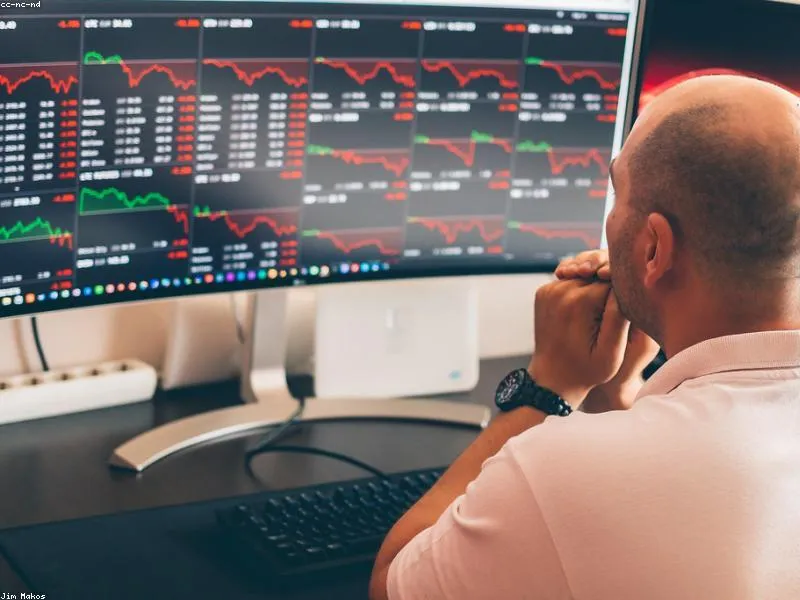
--- ## EOD Trailing vs Tick-by-Tick Trailing: Why the Difference Matters Trailing drawdown comes in two timing variants that create meaningfully different trading environments, particularly in crypto markets where intraday volatility is high. ### Tick-by-tick trailing The floor adjusts in real time throughout the trading session. Every time equity reaches a new intraday high, the floor moves up immediately. **Practical effect:** A trader opens a BTC position. The trade runs $3,000 in their favour during the session. The floor has moved up $3,000. The trade then pulls back $1,500 before the trader exits for $1,500 profit. On a tick-by-tick model, the floor moved up $3,000 during the intraday high, not $1,500 when the position was closed. The trader finished the session with $1,500 net profit but lost $3,000 of drawdown buffer. This means that in volatile markets, trades that run in your favour before reversing are disproportionately costly in terms of drawdown preservation, even when they close profitable. ### EOD (end-of-day) trailing The floor adjusts once per day at session close, based on closing equity only. Intraday equity peaks do not move the floor until the session ends. **Same trade on EOD model:** The BTC trade runs $3,000 intraday, pulls back to $1,500 at close. Floor moves up $1,500, the closing profit, not the intraday peak.
Disciplined trader focusing on consistent execution
With EOD trailing drawdown, the floor is determined at day's end, not by every intraday tick.
**The practical difference across a volatile session:** | Event | Tick-by-tick floor change | EOD floor change | |---|---|---| | Trade runs +$3,000 intraday | Floor +$3,000 | No change | | Trade closes +$1,500 | No further change | Floor +$1,500 | | Net drawdown buffer consumed | $3,000 | $1,500 | Over many sessions in a volatile crypto market, the EOD model preserves significantly more drawdown buffer for the same set of trades. Velotrade uses static drawdown on all plans. The floor is fixed from the initial balance and never trails upward regardless of profits made. This is the most predictable model for traders: your drawdown buffer only grows as your equity grows, never shrinks due to a profitable intraday peak. When evaluating any prop firm, confirm in writing whether their drawdown model is tick-by-tick trailing, EOD trailing, or static. It is one of the most consequential structural differences between firms. For a full side-by-side breakdown of how each timing variant works and which trading strategies each suits, see [EOD trailing vs tick-by-tick trailing drawdown explained](https://velotrade.com/blog/eod-trailing-vs-tick-by-tick-drawdown). --- ## Consistency Rules: The Hidden Constraint Consistency rules are among the least discussed and most consequential restrictions in prop trading. Not all firms enforce them, but those that do significantly constrain how strategies can be executed. A consistency rule limits how much of your evaluation profit target can come from a single trading day. For a full breakdown of [how the consistency rule works and why it costs traders](https://velotrade.com/blog/crypto-prop-firms-no-consistency-rule), see the dedicated explainer. Common implementations: - No single day can account for more than 30-40% of total profit target - No single day can account for more than 30-40% of total profits generated - Minimum number of profitable trading days required **Why this matters:** Crypto markets generate outsized opportunities on specific days: protocol announcements, macro economic events, [liquidation cascades](https://velotrade.com/blog/what-is-liquidation-trading). A trader who correctly positions into one of these events can generate a significant return in a single session. Under a consistency rule, that return may be partially or fully disqualified from the profit target, requiring the trader to either spread the return artificially across more sessions or, in some implementations, restart the evaluation. **Velotrade has no consistency rule at any stage.** Your daily profit distribution is not evaluated. Only drawdown compliance matters. This is a meaningful differentiator for traders whose strategies concentrate returns around high-volatility events. --- ## Position Sizing and Leverage Limits Most crypto prop firms restrict: - Leverage per asset (e.g., maximum 10x on major pairs) - Maximum position size per trade as a percentage of account balance - Total exposure across correlated instruments These limits matter most for traders who rely on high leverage or who want to concentrate into a single large position. Leverage caps in prop accounts are typically lower than what's available on retail exchanges, but sufficient for most directional strategies. For the exact multiples Velotrade applies to each instrument, see [prop firm leverage](https://velotrade.com/blog/prop-firm-leverage). The critical interaction: position sizing limits and daily loss limits work together to constrain the maximum single-trade stop loss you can afford. If the daily loss limit is $2,500 and you want to lose no more than 50% of the daily limit on any single trade ($1,250), you need to size every position so that a stop hit produces a maximum $1,250 loss. That calculation determines your maximum position size for every trade, regardless of conviction level. --- ## Why Drawdowns Cause Most Failures Most traders do not fail prop challenges because their strategy is unprofitable. They fail because they break rules under pressure in response to losses. The sequence is predictable: 1. Trader loses $800 on the first trade of the session 2. Remaining daily limit: $1,700 3. Trader enters a second trade to recover, sizing up to "make back" the loss faster 4. Second trade loses $1,200 5. Remaining daily limit: $500 6. Trader is now constrained to tiny positions with $500 daily limit remaining 7. Frustration leads to one more trade that breaches the limit This sequence does not require a bad strategy. It requires a normal human response, the desire to recover a loss, combined with an automatic enforcement system that has no tolerance for that response. **The fix is process, not willpower.** A pre-written rule that ends trading after two consecutive losses removes the decision from the emotional state that makes it dangerous. Hard stops that trigger at 60% of daily limit reduce size. Pre-determined exit points for the session that do not depend on P&L eliminate the pressure to chase recovery. For a full breakdown of the behavioural patterns that cause most failures, see: [Why most retail traders fail prop challenges](https://velotrade.com/blog/why-traders-fail-prop-challenges) --- ## News Trading, Weekend Holds, and Other Administrative Rules Beyond loss limits and drawdown mechanics, administrative rules vary significantly between firms and directly affect which strategies can be executed. To see exactly how these rules differ across every major firm, the [prop firm rules database](https://velotrade.com/data/prop-firm-rules) compares drawdown model, loss limits, consistency rule, news, weekend, and EA policy side by side. **News trading:** Some firms explicitly prohibit holding positions through scheduled major news events: economic releases, FOMC decisions, major protocol announcements. The rationale is that news creates unpredictable volatility that conflicts with the firm's risk management. The practical effect is that traders cannot participate in some of the highest-opportunity moments in crypto and macro markets. Velotrade explicitly allows news trading. You can hold positions through any scheduled event. Daily loss and drawdown limits still apply, so having a pre-defined plan for news events remains essential. For a full breakdown of which firms allow or restrict news trading, see [crypto prop firms that allow news trading](https://velotrade.com/blog/crypto-prop-firms-news-trading). **Weekend holding:** Some firms require all positions to be closed before market close on Friday. This prevents overnight and weekend exposure, which in crypto can include significant moves during lower-liquidity periods. Forcing position closure before weekends can result in poor exits and missed continuation moves. Velotrade allows weekend holding. Positions can be held through weekends without restriction. For a full breakdown of which firms allow weekend holding and which restrict it, see [crypto prop firms that allow weekend holding](https://velotrade.com/blog/crypto-prop-firms-weekend-holding). **The practical implication of these differences:** A trader who trades macro event catalysts and needs to hold through weekends cannot execute their strategy at a firm that prohibits both. Before paying any evaluation fee, map your specific strategy requirements against each administrative rule explicitly. --- ## How to Approach Prop Firm Rules Before Starting Before entering any evaluation, you should be able to answer these questions from memory without checking the rules page: 1. What exact action ends the account immediately? 2. How much drawdown room do I have right now in absolute dollar terms? 3. What is my maximum position size today given the remaining daily limit? 4. Does my firm use static, EOD trailing, or tick-by-tick drawdown? 5. What is my hard stop, the loss level at which I stop trading for the day, below the daily limit? If a strategy requires frequent drawdowns near the daily limit to function, it is structurally incompatible with prop trading regardless of long-term expectancy. Knowing this before paying is cheaper than discovering it during the evaluation. For guidance on evaluating whether a specific firm's rules suit your approach, see: [How to evaluate a crypto prop firm](https://velotrade.com/blog/how-to-evaluate-a-crypto-prop-firm) --- ## See Velotrade's Rules Before You Decide Velotrade publishes its full drawdown rules, daily loss limits, and termination conditions clearly with specific numbers. No consistency rule. News trading and weekend holding allowed. Static drawdown on all plans, the floor is fixed from the initial balance and never moves. To compare how these rules differ across the top crypto prop firms, see [best crypto prop firms in 2026](https://velotrade.com/blog/best-crypto-prop-firms). For a full independent review of how Velotrade applies these rules in practice, see [Velotrade review 2026](https://velotrade.com/blog/velotrade-review). Once you understand the rules, the next step is learning [how to get a crypto funded trading account](https://velotrade.com/blog/crypto-funded-trading-account). For a step-by-step guide to applying these rules during an actual evaluation, see [how to pass a 1-step crypto prop challenge](https://velotrade.com/blog/how-to-pass-a-1-step-crypto-prop-challenge) or [how to pass a 2-step crypto prop challenge](https://velotrade.com/blog/how-to-pass-a-crypto-prop-challenge). You can also review the [full trading rules](https://velotrade.com/rules) or [compare challenge types and pricing](https://velotrade.com/challenges) directly. And if you would rather learn the rules without risking a fee first, you can [win a funded account for free](https://velotrade.com/free-challenge) through Velotrade's Sprint Trading game. --- ## FAQs ### Are prop firm drawdown rules negotiable? No. Drawdown rules are enforced automatically by the platform and are not adjusted for individual traders. There are no exceptions for unusual market conditions, technical issues on the trader's side, or profitable strategies that breach rules. ### Can a profitable account still fail? Yes. Accounts are terminated for rule breaches regardless of overall profitability. A strategy that has made 8% return but breaches the daily loss limit on one bad session will still end the evaluation. ### What is the difference between EOD trailing and tick-by-tick trailing drawdown? EOD trailing adjusts the drawdown floor once per day at session close based on closing equity. Tick-by-tick adjusts in real time every time equity reaches a new intraday high. EOD is significantly more trader-friendly in volatile markets because intraday peaks do not consume drawdown buffer during the session. ### Why do prop firms use trailing drawdowns instead of static? Trailing drawdowns reduce the firm's exposure as the trader's account grows. As equity increases, the floor rises, limiting the amount of paper profit that can be lost before account closure. This protects the firm from scenarios where a trader runs up a large gain and then loses it all back. From the firm's perspective, it caps the maximum reversal from peak equity. ### Should I trade the same way as on my personal account? Not necessarily. Strategies that work on unrestricted personal accounts may fail under strict prop firm rules, particularly if they rely on averaging down, wide intraday drawdowns, or flexibility around daily loss management. Calibrate your position sizing and strategy parameters to the specific rules of the evaluation before starting. ### Where can I see Velotrade's exact rules? Velotrade publishes its full trading rules at [Velotrade Rules](https://velotrade.com/rules). ### How does the daily loss limit interact with trailing drawdown? They are independent limits. Breaching either one ends the account. The daily loss limit caps your worst single-session outcome. The trailing drawdown caps your total lifetime loss from the peak. A trader can comply with the daily loss limit every day and still breach the overall drawdown by accumulating consistent daily losses over multiple sessions. # What Is a Crypto Prop Firm? How Crypto Prop Trading Works Canonical URL: https://velotrade.com/blog/what-is-crypto-prop-trading Markdown mirror: https://velotrade.com/blog/what-is-crypto-prop-trading.md Canonical HTML page is the search and user-facing source of truth. Published: 2026-02-05T10:00:00Z Author: Vittorio De Angelis Category: Crypto Prop Trading What is a crypto prop firm and how does crypto prop trading work? How funded crypto accounts, challenges, drawdown rules, and profit splits are structured in 2026. --- A crypto prop firm is a [proprietary trading firm](https://velotrade.com/blog/what-is-a-prop-firm) that provides capital to traders who execute trades on the firm’s behalf, with profits shared between the two parties. The trader does not use client funds or their own deposited funds. Instead, they operate under rules and risk limits set by the firm. This arrangement is called crypto prop trading. In retail accessible models, traders usually have to pass an evaluation, often called a [prop trading challenge](https://velotrade.com/challenges), before they get access to a funded crypto account. These evaluations test whether a trader can generate profits while respecting strict drawdown and risk management rules. **Quick answer:** A crypto prop firm funds you to trade crypto with its capital, not your own, and splits the profits (often 80 to 90% to the trader). You typically pass a one or two step evaluation to unlock a crypto funded account, then trade within set drawdown and daily loss limits. Velotrade funds accounts from $5K to $200K with a static maximum drawdown and no consistency rule. ![Highlights of this article](https://velotrade.com/images/blog/highlights-of-the-article.webp) ## Highlights of this article - Crypto prop trading means trading digital assets using a firm’s capital, not your own and not client funds - Most retail crypto prop firms require a [prop trading challenge](https://velotrade.com/challenges) before granting a funded crypto account - Rules matter as much as profit, especially drawdown limits, daily loss limits, and position sizing - Evaluation fees are typically non refundable, and many traders fail due to rule breaches rather than strategy - The model offers access to larger nominal capital, but reduces autonomy and depends on firm policies and payout reliability ## What is prop trading? Prop trading, short for proprietary trading, is when a firm trades financial markets using its own capital rather than client funds, and splits the resulting profits with the traders it employs or funds. In traditional finance, prop trading desks were internal to banks and investment firms. In the retail model that emerged in the 2010s and scaled through the 2020s, independent prop firms open access to funded accounts to external traders who pass a structured evaluation. Crypto prop trading applies this model specifically to digital assets: Bitcoin, Ethereum, and other crypto derivatives. The rules are calibrated for 24/7 markets and crypto's higher intraday volatility. Velotrade is a [crypto prop firm](https://velotrade.com/crypto) built for this, funded accounts from $5K to $200K, no consistency rule, news trading allowed. ## What is a crypto prop firm? A crypto prop firm gives traders access to institutional crypto capital in exchange for meeting risk-management rules and sharing profits. Most retail models require passing an evaluation with strict loss limits. If you breach the rules, the account is usually closed, even if your strategy is profitable overall. ## Glossary of common terms The terms below cover the core concepts used across every crypto prop firm. For a complete reference covering 35+ terms including drawdown models, payout mechanics, platform terminology, and performance metrics, see the [crypto prop trading glossary](https://velotrade.com/blog/crypto-prop-trading-glossary). **Crypto prop firm:** A proprietary trading firm that funds traders to trade crypto under defined rules **Funded crypto account:** An account where you trade with the firm’s allocated capital rather than your own **Prop trading challenge:** An evaluation phase where you must hit targets without breaking drawdown rules **Profit split:** How profits are shared between trader and firm **Maximum daily loss:** The maximum loss allowed in a 24 hour period **Maximum drawdown:** The total loss limit from a starting balance or high watermark **Trailing drawdown:** A drawdown limit that moves up as equity reaches new highs **Consistency rule:** A rule limiting how much profit can come from one day or one trade ## How crypto prop trading works At its core, crypto prop trading is a capital for skill exchange.
Professional crypto trading setup with multiple monitors
A professional trading environment helps manage risk and execution precision.
A crypto prop firm sets the rules and provides a [funded account](https://velotrade.com/funded-trading-account). A trader executes a strategy within those rules. Profits are shared according to a predefined profit split. Retail models usually follow a staged workflow: 1. You choose an account size and pay an evaluation fee 2. You trade an evaluation account under profit targets and loss limits 3. If you pass, you receive a funded crypto account under ongoing monitoring 4. You trade under the same risk rules 5. Profits can be withdrawn during payout windows, subject to firm conditions If you want the detailed version, see: [How crypto prop firm rules and drawdowns work](https://velotrade.com/blog/crypto-prop-firm-rules-explained) At its heart, every trade is a call on price direction, the same skill priced by [prediction markets](https://velotrade.com/blog/prediction-markets-explained). Traders who want to test that skill before paying an evaluation fee can practise for free in [crypto trading competitions](https://velotrade.com/blog/crypto-trading-competition) like Velotrade's Sprint Trading, where top players win real funded challenge accounts. > "The first funded evaluation is almost always a psychology test, not a trading test. Most traders who fail have strategies that work. What breaks them is the daily loss limit staring them in the face when they are down 2% and tempted to recover it before the session ends.", Velotrade trading team ## Funded crypto accounts and prop trading challenges A [crypto funded trading account](https://velotrade.com/blog/crypto-funded-trading-account) means you trade under the firm’s capital allocation and rules, not your own deposited funds. You do not own the capital. You are allowed to trade it within constraints. A prop trading challenge is the evaluation used by most retail focused prop firms to filter traders before funding. While each firm differs, challenges commonly include: - A profit target relative to the notional account balance - A maximum daily loss - A maximum overall drawdown - Strategy restrictions, depending on the firm - Minimum trading days or time limits, depending on the firm Evaluation fees are typically non refundable, whether you pass or fail. Passing does not guarantee long term funding, because accounts can be closed for rule breaches at any time. Before paying any evaluation fee, the [prop trading ROI calculator](https://velotrade.com/tools/challenge-roi) shows your break-even timeline and 12-month earnings potential for any account size. {{cta:roi}}

Note: The most common reason traders fail is not that their strategy is “bad”, but that they breach risk rules under pressure.

## Common prop firm rules and drawdown limits Prop firm rules exist to cap risk and enforce discipline. The most important ones are drawdown rules and daily loss limits. - **Maximum daily loss** limits how much you can lose in one day - **Maximum drawdown** limits total loss from a starting balance or a high watermark - **Position sizing and leverage caps** limit how much exposure you can take - **Consistency rules** limit how much of your profit can come from a single day To see how these rules are applied in practice, view the [Velotrade trading rules](https://velotrade.com/rules).

Example: A $100,000 evaluation with a 5% max daily loss and a 10% max drawdown usually means:

  • You cannot lose more than $5,000 in a single day
  • You cannot drop below $90,000 total equity without failing
  • Even if you recover later, breaching the limit typically ends the evaluation immediately
For deeper explanation and variations like trailing drawdown, see: [Crypto prop firm rules and drawdowns explained](https://velotrade.com/blog/crypto-prop-firm-rules-explained) ## Origins of prop trading and its evolution into crypto Proprietary trading existed in traditional markets long before crypto. Historically, banks and trading firms ran internal desks that traded equities, currencies, and derivatives using the firm’s capital rather than client money. Over time, proprietary trading moved toward independent firms, and remote evaluation models became popular online. As crypto markets matured and derivatives like perpetual futures became widely traded, each carrying [funding ticks](https://velotrade.com/blog/what-are-funding-ticks) that prop traders must manage, prop style models adapted to digital assets and became a category of their own. All crypto prop trading happens in secondary markets, where existing assets trade between participants rather than being newly issued. For a full breakdown of how primary and secondary crypto markets work and why the distinction matters for funded account trading, see [primary vs secondary crypto market explained](https://velotrade.com/blog/primary-vs-secondary-crypto-market). The historical timeline from traditional prop desks to modern crypto firms is summarized in this section. ## Types of crypto prop trading models Two broad models exist. ### Institutional prop trading desks Traders operate from trading firms or quantitative funds. They are employees or partners, typically paid via salary and performance incentives. They do not pay evaluation fees. ### Retail accessible crypto prop firms Traders participate remotely, usually by paying an evaluation fee and earning through profit splits if funded. Rules are enforced automatically and accounts can be closed for breaches. To see the full range of tradeable [instruments](https://velotrade.com/instruments) available on a funded account, or to compare current retail crypto prop firms side by side, see [best crypto prop firms in 2026](https://velotrade.com/blog/best-crypto-prop-firms). If you are coming from a forex or futures prop background and want to understand how crypto prop firms differ from what you already know, see [best prop firms for crypto traders](https://velotrade.com/blog/best-prop-firms-for-crypto-traders). ## Why many traders fail prop trading challenges Prop evaluations are difficult because they combine profit targets with strict loss limits and time pressure. Many traders fail because they breach rules under stress. Common behavioral causes include: - Increasing risk after losses to catch up - Trading outside a tested plan - Overtrading due to deadlines - Ignoring loss limits and hoping to recover If you want the full breakdown, see: [Why most retail traders fail prop challenges](https://velotrade.com/blog/why-traders-fail-prop-challenges) ## Risks and limitations of crypto prop trading Crypto prop trading has multiple layers of risk that do not exist in personal account trading. Understanding them before paying an evaluation fee is part of the due diligence.
Crypto chart analysis showing market volatility
Understanding market structure and volatility is key to navigating prop firm risk limits.
**Market risks** Crypto is a high-volatility asset class. BTC/USD can move 5-10% in a single session around a macro event or major protocol announcement. Drawdown limits that look comfortable at the start of a challenge can be breached quickly if a position is held through a large adverse move. The rules do not suspend during volatile periods. A breach ends the evaluation regardless of whether the account recovers afterward. **Firm risks** Not every prop firm operates with the same integrity. Payout reliability varies, some firms delay or deny withdrawals using administrative friction. Rule interpretation can shift over time, with terms updated after enrollment. Some firms have closed without warning, leaving funded traders with outstanding balances unresolved. Choosing a firm with transparent rules, a named founding team, and independent payout records from the trading community significantly reduces this risk. **Model risks** Many prop firms are structured to profit primarily from evaluation fees, not from funded trader performance. If failure rates are high, that generates repeat revenue. This creates an incentive to design rules that are difficult to comply with, even if that outcome is not always intentional. Understanding which business model a firm operates under, fee-dependency vs volume-based hedging, matters for assessing how aligned the firm’s interests are with yours. **Personal risks** The evaluation fee is typically non-refundable. For traders who fail repeatedly without adjusting their strategy or approach, fees accumulate. The psychological pressure of trading against strict loss limits with real money at stake can cause traders to deviate from their tested approach: taking more risk to recover, exiting too early to protect the account, or avoiding trades they would otherwise take. These behavioral shifts are one of the most common causes of challenge failures. Before paying, assess whether your strategy has been tested under rules equivalent to the evaluation conditions. This is not legal or financial advice, but traders should assume regulation differs by jurisdiction and do their own due diligence before committing capital. ## Crypto prop trading vs trading your own account Trading your own account means full control and full personal financial exposure. You keep all profits and absorb all losses. There are no drawdown rules, no daily loss limits, no rules about minimum trading days. Trading with a [crypto prop firm](/) limits personal financial exposure mainly to evaluation fees, but introduces constraints, profit splits, and dependency on the firm’s policies and operational stability. Your funded account can be closed at any time for rule breaches, the capital does not belong to you. Some traders use a hybrid approach, one personal account plus a prop account. This allows building a track record and earning a profit split while maintaining independent trading with personal capital. It adds complexity but reduces dependency on a single model. For a detailed comparison of the two models, see: [Funded trading vs leverage trading](https://velotrade.com/blog/funded-trading-vs-leverage-trading) ## Who crypto prop trading may suit, and who should be cautious **May suit:** - Traders with a tested strategy and at least 6-12 months of real-money trading history - Traders who have identified a consistent edge but lack the capital to trade it at meaningful scale - Risk-disciplined traders who can operate within defined loss limits without behavioral deviation under pressure - Traders interested in scaling across multiple funded accounts after establishing a track record **Approach with caution:** - Traders who have not yet proven consistency on a personal account, the evaluation fee tests whether the strategy survives real rules, not whether the trader is learning - Anyone treating evaluation fees as an unlimited learning budget, repeated failures without strategy adjustments become expensive quickly - Traders who struggle with emotional control under time pressure or loss sequences, since prop evaluations amplify those pressures - Beginners who have not yet developed a systematic approach to entries, exits, and position sizing ## Due diligence checklist before choosing a crypto prop firm Before paying any fees, verify each of the following: - **Drawdown model type:** Is it EOD trailing or tick-by-tick trailing? The difference materially affects how much room you have to manage trades through intraday volatility. - **Rule documentation:** Are the drawdown rules explained with specific worked examples, not just percentages? Vague language around "equity" vs "balance" creates enforcement disputes. - **Payout terms:** Are withdrawal thresholds, minimum payable amounts, and processing timelines clearly defined with no ambiguous conditions? - **Consistency rule:** Does one exist? If so, what is the exact calculation? This can disqualify traders who had their best day early in the evaluation. - **News trading and weekend holding:** Are these explicitly permitted or restricted? Check the actual rules document, not the marketing page. - **Independent payout records:** Can you find third-party forum posts, Discord screenshots, or community discussions confirming the firm actually pays? Anonymous testimonials on the firm’s own website are not evidence. - **Company transparency:** Is there a named founding team and a verifiable company registration? For a more detailed framework, see [how to evaluate a crypto prop firm](https://velotrade.com/blog/how-to-evaluate-a-crypto-prop-firm) and [top crypto prop firm red flags](https://velotrade.com/blog/crypto-prop-firm-red-flags). ## Ready to start your challenge? If you are still building toward your first funded account, see the full guide on [how to become a funded crypto trader](https://velotrade.com/blog/how-to-become-a-funded-crypto-trader) for a step-by-step breakdown of what it takes. Before your first payout arrives, understand how funded trading income is classified in your jurisdiction, see [crypto prop firm tax guide: what funded traders need to know](https://velotrade.com/blog/crypto-prop-firm-tax-guide). To compare the leading crypto prop firms and find the right fit, see [best crypto prop firms in 2026](https://velotrade.com/blog/best-crypto-prop-firms), or if you are newer to trading, [best crypto prop firms for beginners](https://velotrade.com/blog/best-crypto-prop-firms-for-beginners) covers which firms have the most forgiving rules and lowest entry costs. If you are weighing whether to use a prop firm at all, see [crypto prop firm vs trading your own account](https://velotrade.com/blog/crypto-prop-firm-vs-own-account) for a direct comparison of both models. For a detailed independent review of Velotrade's specific rules, drawdown model, and payout structure, see the [Velotrade review 2026](https://velotrade.com/blog/velotrade-review). For a full explanation of how a prop firm account is structured, what you receive, what rules apply, and what you can earn, see [what is a prop firm account](https://velotrade.com/blog/what-is-a-prop-firm-account). If you have a tested strategy and are ready to put it to work, [explore Velotrade's 1-step and 2-step crypto prop challenges](https://velotrade.com/challenges). Account sizes from $5,000 to $200,000, up to 90% profit split, news trading allowed, and no consistency rule. There is also [a genuinely free route in through Sprint Trading](https://velotrade.com/free-challenge), a no-deposit prediction game where the top players win real challenge accounts. ## FAQs ### What is a crypto prop firm? A crypto prop firm is a proprietary trading firm that allocates trading capital to traders through a paid evaluation process. Traders who pass the evaluation receive a funded account and earn a share of the profits they generate. Personal financial risk is limited to the evaluation fee. ### Is crypto prop trading legal It depends on the jurisdiction and the firm’s structure. Regulation differs widely and continues to evolve. Always review a firm’s terms and local rules. ### Do I trade real money or demo accounts Most evaluations are simulated. Funded accounts can vary by firm, some may route real trades, others may manage exposure internally. The important point is that rules are enforced regardless. To practice the mechanics first at no cost, see [crypto trading simulator](https://velotrade.com/blog/crypto-trading-simulator). ### Can I lose my own money Usually you are not risking deposited capital in the funded account, but evaluation fees are typically non refundable, and repeated attempts can add up. ### How do profit splits work Profit splits define how gains are shared between trader and firm. Many firms advertise high splits, but payout terms and compliance rules matter just as much. ### What are the most important rules to understand Maximum daily loss, maximum drawdown, and how drawdown is calculated, including whether it is trailing. These rules often determine success more than strategy. ### Why do so many traders fail prop challenges Most failures happen when traders breach risk rules under time pressure, overtrade, or increase position sizing after losses. ### How do I choose a crypto prop firm Start with rule clarity, payout terms, and public reputation. If documentation is vague or payouts are disputed often, do not treat the firm as reliable. # How to evaluate a crypto prop firm before paying fees Canonical URL: https://velotrade.com/blog/how-to-evaluate-a-crypto-prop-firm Markdown mirror: https://velotrade.com/blog/how-to-evaluate-a-crypto-prop-firm.md Canonical HTML page is the search and user-facing source of truth. Published: 2026-02-04T15:00:00Z Author: Vittorio De Angelis Category: Crypto Prop Trading A practical checklist to evaluate crypto prop firms. Learn what to check in rules, payouts, transparency, and red flags before joining. --- Not all crypto [prop firms](https://velotrade.com/blog/what-is-a-prop-firm) operate the same way. Before paying any evaluation fee, traders should assess rule clarity, payout reliability, operational transparency, and whether the firm's structure is compatible with how they actually trade. Most negative experiences in crypto prop trading are not caused by bad trading. They are caused by misunderstanding firm rules, underestimating hidden constraints, or joining a firm that is not operationally stable. This guide provides a practical due diligence checklist to evaluate a crypto prop firm before committing time or money. Work through each section before paying any evaluation fee. ![Highlights of this article](https://velotrade.com/images/blog/highlights-of-the-article.webp) ## Highlights of this article - Rule clarity matters more than advertised profit splits - Vague drawdown definitions and inconsistent documentation are major red flags - Payout terms, processing times, and dispute history should be scrutinised independently - Operational transparency separates credible firms from those that shift rules retroactively - Platform quality and execution environment affect strategy performance regardless of rules - Velotrade's structure is used throughout as a concrete reference for what good practice looks like --- > Want a firm that passes all of these checks? [See how Velotrade's challenges compare →](https://velotrade.com/challenges) ## Why Evaluating a Crypto Prop Firm Matters More Than You Think Crypto prop trading combines trading risk with platform risk and counterparty risk. Even though traders typically do not deposit large trading balances, evaluation fees are non-refundable, and the cost accumulates across multiple attempts. Beyond fees, the less visible cost is time: weeks or months spent in an evaluation at a firm with opaque rules or inconsistent enforcement. The firms operating in this space vary significantly. Some publish detailed, worked-out rules with specific numerical examples. Others describe rules in vague language that leaves critical questions unanswered until a dispute arises. The difference between these categories is knowable in advance, but only if you know what to look for. Evaluating a firm carefully before joining is not due diligence for its own sake. It directly determines whether the time and money spent on an evaluation is likely to produce a fair result. For a full overview of the prop trading model itself, start here: [What is crypto prop trading](https://velotrade.com/blog/what-is-crypto-prop-trading) --- ## Criterion 1: Rule Clarity and Documentation Rule clarity is the single most important evaluation factor. The majority of [crypto funded trading account](https://velotrade.com/blog/crypto-funded-trading-account) terminations happen because of rule breaches, not because strategies are unprofitable. Most rule breaches happen because traders did not fully understand the rules before they encountered the situation where they mattered. A well-structured prop firm should document the following with specific numbers and worked examples: **Loss limits:** - The exact daily loss limit as a percentage and as a dollar figure for each account tier - Whether the daily limit resets at UTC midnight, local midnight, or a different time - Whether the daily limit is measured from the opening balance of the day or from the intraday equity high **Drawdown type:** - Whether the drawdown is static (fixed from initial balance) or trailing (moves as equity grows) - If trailing, whether it adjusts tick-by-tick during the session or at end-of-day only - The exact formula used to calculate the floor at any point in time **Termination conditions:** - What exactly happens when a limit is breached: immediate closure, warning, or grace period - Whether limits apply to equity only or to balance including unrealised P&L - Whether rule changes apply to active evaluations or only to new ones

Note: If you cannot explain a firm's drawdown rules clearly before paying, you should not expect clarity after joining. If the rules page raises questions, assume the answers are unfavourable until confirmed in writing.


For a deeper breakdown of how these rules work in practice, see: [Crypto prop firm rules and drawdowns explained](https://velotrade.com/blog/crypto-prop-firm-rules-explained) --- ## Criterion 2: Payout Terms and Reliability High profit splits are meaningless if payouts are inconsistent, delayed by fine print, or disputed without resolution. When evaluating a crypto prop firm, payout mechanics matter more than headline profit split percentages.
Business handshake representing trust and agreement
Trust is the foundation of any prop trading relationship. Verify payout history before joining.
**What to verify before joining:** - **Payout schedule**: Is withdrawal available on demand, weekly, bi-weekly, or monthly? Are minimum thresholds documented? - **Verification requirements**: What identity verification is required? Is this completed at onboarding or only when you request a payout? - **Processing time**: What is the documented timeframe from request to receipt? Is there a published SLA? - **Payout conditions**: Are there any performance or compliance conditions that can delay or cancel a withdrawal request? - **Method**: What payment methods are available? Crypto, bank transfer, or third-party processors? Are there fees? For a detailed guide on what to confirm across each of these points before purchasing, see [crypto prop firm payout speed: what traders need to check](https://velotrade.com/blog/crypto-prop-firm-payout-speed). **Independent verification:** Testimonials on a firm's own site are not a reliable signal. Look for independent trader experiences in communities, forums, and review platforms where the firm's brand team does not moderate content, and give the most weight to [publicly verifiable withdrawals](https://velotrade.com/payouts) that anyone can confirm on-chain. A pattern of delayed payouts, disputed withdrawals, or unexpected condition changes is a meaningful warning signal regardless of how the firm responds to those complaints publicly. One specific thing to look for: firms that change payout rules after traders have passed evaluations. If the rules that applied when you paid the fee change before you reach the funded stage, that is a significant operational risk. --- ## Criterion 3: Drawdown Model Compatibility With Your Strategy Different drawdown models create fundamentally different trading environments. Choosing a firm whose drawdown model is incompatible with your strategy is as problematic as choosing a firm with unfair rules. **Tick-by-tick trailing drawdown** adjusts the floor in real time every time your equity reaches a new high. Every profitable trade that subsequently pulls back reduces your future risk tolerance. If you trade strategies with wide intraday swings, common in crypto markets, a tick-by-tick model will systematically compress your drawdown room even on profitable sessions. **EOD trailing drawdown** adjusts the floor once per day at session close, based on your closing equity. Intraday equity peaks during the session do not move the floor. This allows you to manage open trades based on their merits without the floor tracking every tick. For crypto markets, where 5-8% intraday swings are routine, EOD trailing is materially more trader-friendly. **Practical scenario:** A BTC trade runs $3,000 in your favour before closing out at $1,500 profit. - Tick-by-tick: your floor has moved up $3,000 - EOD: your floor moves up $1,500 at day close On the same session and same trade, the tick-by-tick model has taken $1,500 more of your drawdown buffer than the EOD model. Across many sessions, this difference determines whether you can trade through normal market volatility. Velotrade uses static drawdown on all plans. The floor is fixed from the initial balance and never trails upward regardless of profits made. Before joining any firm, confirm in writing whether their model is tick-by-tick, EOD trailing, or static, and get a worked example showing how the floor moves after a specific sequence of trades. --- ## Criterion 4: Consistency Rules and Behavioural Restrictions Consistency rules are among the most misunderstood and least disclosed restrictions in prop trading. They limit how much of your total evaluation profit can come from a single trading day. If you earn 40% of your profit target on one exceptional day, a strict consistency rule can disqualify that day's profit from counting toward the target. **Why this matters:** Crypto markets are volatile. Large single-day moves, in BTC, ETH, or altcoins, regularly create outsized opportunities. A trader who correctly positions into a major move can generate a significant return in a single session. If that return is then invalidated by a consistency rule, the trader must either re-earn it across more sessions or, depending on the rule, restart the evaluation. Velotrade has no consistency rule at any stage. Your daily profit distribution is not evaluated. Only drawdown compliance matters. **Other behavioural restrictions to check:** - Are specific strategies explicitly prohibited? (martingale, grid trading, copy trading, EAs) - Is news trading restricted or prohibited entirely? - Can you hold positions over weekends? - Are there restrictions on holding through scheduled economic releases? Firms that prohibit news trading effectively prevent you from trading during some of the highest-probability setups in crypto markets. Firms that prohibit weekend holding force you to close positions before Sunday, potentially at poor prices, to comply with a rule that has no strategic logic. --- ## Criterion 5: Platform Quality and Execution Environment
Reviewing prop firm terms and conditions carefully
Read the full rules documentation, not just the summary, before paying any evaluation fee.
The platform you trade on during an evaluation determines whether your strategy can be executed as designed. Evaluate these factors before paying: **Available instruments:** - Which crypto assets are available? Spot, perpetuals, or both? - Are the specific pairs you trade available with sufficient liquidity? **Execution quality:** - What is the typical spread on major pairs? - Is slippage documented or available from historical data? - Are market orders, limit orders, and stop orders all available? **Charting and tools:** - Does the platform support the chart types and indicators your strategy requires? - Are mobile apps available if you trade across devices? - Is there an API for algorithmic traders? Velotrade provides [full API access](https://velotrade.com/api-access) on every account with no extra fee. **Stability:** - What is the platform's documented uptime history? - Are there known outage windows around major market events? Velotrade uses DXtrade. Before trading on any platform for an evaluation, paper trade or demo for at least one week to understand its specific execution characteristics. --- ## Criterion 6: Operational Transparency and Company Background Operational transparency is harder to assess than rule clarity, but it predicts long-term reliability more accurately. **Questions to answer before joining:** - Is the company registered and in which jurisdiction? Can this be independently verified? - Who are the people behind the firm? Do they have documented backgrounds? - How long has the firm been operating in its current form? - Is there a physical presence or registered address? - What happens to your funded account if the firm ceases operations? **Why this matters for crypto prop specifically:** The crypto prop space has seen firms close without warning, leaving funded traders with outstanding withdrawal requests unresolved. Unlike regulated financial entities, most crypto prop firms operate in jurisdictions with limited trader protection. The evaluation fee and the funded account balance both carry counterparty risk that is not visible in the marketing. This does not mean avoiding newer firms, but it does mean that transparency about who operates the firm and how it is structured should factor into your decision alongside trading conditions. For a focused breakdown of the specific warning signs to watch for, see [top crypto prop firm red flags](https://velotrade.com/blog/crypto-prop-firm-red-flags). To compare all major firms on their key rules and trading conditions in one place, see the [crypto prop firm directory](https://velotrade.com/prop-firms). --- ## Criterion 7: Support Quality and Dispute Resolution The quality of support becomes critical in edge cases: a technical outage during a major trade, a drawdown calculation that does not match your records, a payout that is delayed beyond the stated processing time. Before joining, assess: - Is there a documented support channel with response time commitments? - Is there a formal dispute process? - How are borderline rule cases handled. Is there discretion or are all cases automatic? - What is the escalation path if initial support cannot resolve the issue? Test support before paying the evaluation fee. Send a question about a specific rule interpretation and assess the quality of the response. A firm that cannot answer specific rule questions clearly before you join is unlikely to handle disputes fairly after. --- ## Red Flags Summary The following patterns consistently indicate higher risk. One or two may be explainable in context. Multiple signals together should stop the evaluation process entirely. | Red Flag | Why It Matters | |---|---| | Drawdown definitions differ across pages | Rules that contradict themselves cannot be enforced consistently | | No worked examples for rule calculations | Ambiguity favours the firm in disputes | | Consistency rules not disclosed upfront | Material restriction buried in fine print | | Payout history unavailable or disputed | Core function of the business unreliable | | Rules changed after evaluation payment | Retroactive rule changes are non-negotiable contracts | | No documented company background | Counterparty risk not assessable | | Support cannot answer specific rule questions | Enforcement will also be inconsistent | | Heavy marketing focus with minimal rule detail | Acquisition-focused, not trader-focused | --- ## Final Due Diligence Checklist Before paying any evaluation fee, you should be able to answer yes to all of the following: - I have read the full rules page, not the summary, and I understand every section - I can state my exact daily loss limit in dollars for the account size I am purchasing - I know whether the drawdown model is static, tick-by-tick trailing, or EOD trailing - I know whether the firm has a consistency rule and if so, what the exact threshold is - I have confirmed that my strategy type (news trading, weekend hold, etc.) is permitted - I have verified the payout schedule, minimum withdrawal, and processing time in writing - I have reviewed independent trader experiences from outside the firm's own channels - I have tested the platform for at least one week before trading evaluation capital on it If any of these are unclear, pause. The cost of pausing is zero. The cost of joining the wrong firm is real. --- ## See How Velotrade Stacks Up Velotrade publishes its full drawdown rules, daily loss limits, and termination conditions clearly, with worked examples. No consistency rule. News trading and weekend holding allowed. Static drawdown on all plans. HQ in Hong Kong with a team background in institutional finance. For a full independent assessment of how Velotrade performs against each criterion in this guide, [read our full Velotrade review](https://velotrade.com/blog/velotrade-review). To see how Velotrade and other top firms compare side by side, see [best crypto prop firms in 2026](https://velotrade.com/blog/best-crypto-prop-firms), or compare the exact rules of every firm in the [prop firm rules database](https://velotrade.com/data/prop-firm-rules). If you are coming from a forex or futures background and want to understand how crypto prop firms differ from what you already know, see [best prop firms for crypto traders](https://velotrade.com/blog/best-prop-firms-for-crypto-traders). For standalone reviews of the major firms in this category, see [FundedNext review 2026](https://velotrade.com/blog/fundednext-review), [DNA Funded review 2026](https://velotrade.com/blog/dna-funded-review), and [FTMO review 2026](https://velotrade.com/blog/ftmo-review). If you are newer to trading and want a firm-by-firm breakdown calibrated for beginners, see [best crypto prop firms for beginners](https://velotrade.com/blog/best-crypto-prop-firms-for-beginners). If you are still deciding whether a prop firm makes sense versus trading your own capital, see [crypto prop firm vs trading your own account](https://velotrade.com/blog/crypto-prop-firm-vs-own-account). Once you have evaluated your options, the next step is [how to become a funded crypto trader](https://velotrade.com/blog/how-to-become-a-funded-crypto-trader). You can also review the [full trading rules](https://velotrade.com/rules) or [compare challenge types and pricing](https://velotrade.com/challenges) directly. {{cta:roi}} --- ## FAQs ### How do I know if a crypto prop firm is legitimate? A legitimate firm clearly documents its rules with specific numbers and worked examples, has a verifiable company background, and has an independent track record of paying funded traders. If any of these are missing, treat it as a risk until confirmed. For a full breakdown of the legitimacy question, including how the business model works and what scam operations look like, see [are crypto prop firms legit](https://velotrade.com/blog/are-crypto-prop-firms-legit). ### Are crypto prop firm payouts guaranteed? No. Payouts are conditional on rule compliance during the funded period. Additionally, payouts carry counterparty risk if the firm is not operationally stable. Independent payout verification is essential before joining. ### Can I lose my own money with a crypto prop firm? You do not risk a trading balance, but evaluation fees are non-refundable. Repeated failed attempts at multiple firms can accumulate to several hundred or thousands of dollars. Joining the right firm on the first attempt has significant financial value. ### What should I check first when evaluating a prop firm? Start with drawdown rules and payout terms. These two areas cause the majority of disputes and failures. Everything else matters, but misunderstanding drawdown mechanics and not receiving payouts are the two most common serious problems. ### What is a consistency rule and why does it matter? A consistency rule limits how much of your profit target can come from a single trading day. On volatile crypto days where large moves occur, a consistency rule can invalidate exceptional performance and require you to rebalance profits across more sessions. Not all firms have consistency rules. Velotrade does not. ### How do challenge fees compare across crypto prop firms? Challenge fees range from $35 for a $5,000 account at the low end to several hundred dollars for larger tiers. The absolute fee matters less than the fee-to-capital ratio and how many attempts it takes to pass. A firm with slightly higher fees but better trading conditions often costs less in total across failed attempts. For a full fee comparison across the major crypto prop firms, see [cheapest crypto prop firms 2026](https://velotrade.com/blog/cheapest-crypto-prop-firms). ### Is evaluating a prop firm really necessary? Yes. Most significant negative experiences in crypto prop trading, from rule disputes to unreceived payouts, could have been identified before joining with basic research. The 30-60 minutes spent on proper due diligence is the highest-ROI activity before any evaluation fee is paid. ### How important is the platform compared to the rules? Both matter. A firm with excellent rules but a platform that cannot execute your strategy reliably produces the same outcome as a firm with bad rules. Evaluate the platform independently from the rules, ideally with a demo period before paying. ### Should I consider instant funding instead of a challenge-based evaluation? Instant funding removes the evaluation step, but typically replaces it with tighter trading rules, a lower profit split, and higher ongoing costs. For most traders, a well-structured challenge with relaxed rules is the better path. See [instant funding prop firms vs challenge-based](https://velotrade.com/blog/instant-funding-crypto-prop-firms) for a full comparison of costs, rules, and who each option suits. For a broader framework on when prop firms are worth paying for at all, see [are prop firms worth it](https://velotrade.com/blog/are-prop-firms-worth-it). # Why most retail traders fail prop trading challenges Canonical URL: https://velotrade.com/blog/why-traders-fail-prop-challenges Markdown mirror: https://velotrade.com/blog/why-traders-fail-prop-challenges.md Canonical HTML page is the search and user-facing source of truth. Published: 2026-02-03T15:00:00Z Author: Vittorio De Angelis Category: Crypto Prop Trading Most prop firm challenge failures come from rule breaches and behaviour, not bad strategies. The real reasons traders fail evaluations, and how to avoid them. --- Industry estimates consistently put pass rates for prop trading challenges below 10%. The majority of traders who attempt evaluations do not reach the funded stage, and of those who do, a significant portion lose the [funded account](https://velotrade.com/funded-trading-account) within the first few months. These numbers are not a coincidence. Prop challenges are not designed to reward effort or raw intelligence. They are designed to identify traders who can operate within strict risk constraints under pressure, consistently, over time. Most retail traders are not prepared for that specific demand. This guide breaks down the real reasons traders fail, what separates the minority who pass from those who don't, and how to approach evaluations in a way that gives you a structural advantage. ![Highlights of this article](https://velotrade.com/images/blog/highlights-of-the-article.webp) ## Highlights of this article - Industry pass rates are below 10%. Most failures are behavioural, not strategic - Rule breaches cause the majority of account terminations, not unprofitable trading - Time pressure and profit targets trigger the same emotional responses that kill accounts - Profitable traders regularly fail challenges because their strategy is structurally incompatible with prop rules - There is a specific set of warning signs that appear before most account breaches - Post-failure analysis is the single highest-ROI activity most traders skip --- ## Prop Challenges Test Discipline, Not Just Profitability The structure of a prop challenge appears simple: reach a profit target without breaching loss limits. In practice, this combination is unusually difficult because it demands two things simultaneously, generating returns and preserving capital, under time pressure. On a personal account, these two demands are partially decoupled. A losing streak reduces your account but does not end it. You can recover slowly, or change strategy, or step back and regroup. On a prop challenge, the mechanisms that allow recovery are the same mechanisms that accelerate failure. Before starting an evaluation, traders should understand what the challenge is actually testing: - **Rule comprehension**: Do you know your exact numbers before every session? - **Loss tolerance without reaction**: Can you absorb a loss without adjusting size or frequency? - **Inactivity discipline**: Can you wait in cash when conditions don't meet your criteria? - **Recovery restraint**: When drawdown room is reduced, does your behaviour change? Most retail traders fail on at least one of these. The challenge reveals that quickly. For an overview of how challenges fit into the broader model, see: [What is crypto prop trading](https://velotrade.com/blog/what-is-crypto-prop-trading) --- ## Failure Reason 1: Revenge Trading After Losses The most common account-ending pattern is revenge trading. A trader loses on the first trade of the session, then immediately enters a second trade to recover. The second trade also fails. They enter a third, larger trade. Within 45 minutes they have lost three times what they would have lost with a single bad trade. Revenge trading is not a personality flaw. It is a normal human response to loss that becomes catastrophic in a rule-enforced environment. On a personal account, the consequences are gradual: you lose more than you should have, but the account persists. On a prop challenge, the daily loss limit triggers and the evaluation ends immediately. **The mechanics of why it gets worse:** When a trader is already down on the session, they are operating under stress. Under stress, risk tolerance increases, not decreases. The desire to recover the loss before the session ends overrides the pre-session plan. Position size increases. Entry criteria get relaxed. The trader is now taking trades they would never take in a calm state. **The fix:** A hard rule: two consecutive losses in a session means no more trading that day. No exceptions. Not a guideline, not a preference. A rule. Write it into a pre-session checklist. The cost of sitting out the rest of the day is zero. The cost of breaking it is usually the account. --- ## Failure Reason 2: Misunderstanding Drawdown Rules Most traders who breach drawdown limits did not intend to. They simply did not know where their floor was before entering the trade that ended the account. Drawdown rules in prop challenges come in two main forms: static and trailing. Static drawdown is calculated from the initial balance and does not move. Trailing drawdown moves upward as the account reaches new equity highs. The critical difference is what happens when you profit. With trailing drawdown, a winning trade reduces your future risk tolerance. Your floor moves up. If you make $2,000 on Monday, your drawdown floor has moved up by some amount depending on the model. On Tuesday, you have less absolute drawdown room than you started with on Monday, even though you are profitable. **Tick-by-tick vs EOD trailing:** Tick-by-tick trailing is the most restrictive model. Every time equity reaches a new intraday high, the floor moves immediately. If a trade runs $2,000 in your favour before pulling back $500 to close up $1,500, a tick-by-tick model has moved your floor up $2,000, not $1,500. You cannot give trades room to breathe. EOD trailing only adjusts the floor at day close based on closing equity. Your intraday highs during a session do not move the floor until the session ends. This is meaningfully more trader-friendly in volatile markets where intraday whipsaws are common. Velotrade uses static drawdown on all plans - the floor is fixed from the initial balance and never trails upward. Understanding this model and applying it to your specific challenge changes how you should manage every trade. For a full breakdown of how drawdown models work in practice, see: [Crypto prop firm rules and drawdowns explained](https://velotrade.com/blog/crypto-prop-firm-rules-explained) --- ## Failure Reason 3: Time Pressure Distorts Decision-Making Many challenges include time limits, typically 30 to 60 days, to prevent traders from waiting indefinitely for perfect setups. These limits are intended to ensure traders demonstrate active, consistent strategy execution. In practice, time limits introduce a form of deadline pressure that changes behaviour in predictable and damaging ways: - **Marginal setups get traded.** As the deadline approaches and the profit target is not hit, traders lower their entry criteria. They take trades they would normally skip because the opportunity cost of waiting feels higher than the risk of entering. - **Frequency increases.** Traders who normally take 3-4 trades per week start taking 2-3 per day trying to accelerate toward the target. - **Risk per trade increases.** With 5 days left and 30% of the profit target remaining, traders increase position size to close the gap faster. All of these responses increase drawdown risk precisely when drawdown room is most constrained. Challenges are most commonly failed in the final week, not the first. **The fix:** Treat the profit target as a by-product of correct process, not a goal to optimise toward. If your strategy takes 6-8 weeks to reach the target, it will not reach it in 3 weeks by trading more aggressively. It will just breach faster. --- ## Failure Reason 4: Oversizing During the Evaluation Traders who want to pass quickly often trade larger than their risk framework supports. This is backwards logic. A larger position does not increase the probability of reaching the profit target. It increases the probability of breaching the drawdown limit before you get there. You can see how risk per trade shifts those odds with a [challenge pass calculator](https://velotrade.com/tools/challenge-pass-calculator). The math is straightforward: on a $50,000 Velotrade account, the daily loss limit is 5% ($2,500). If you risk 3% per trade ($1,500), two losing trades in one session end your day. Three losing trades across different sessions can consume most of your total drawdown room. If you risk 1% per trade ($500), you need five losing trades in a single session to hit the daily limit. Across the full evaluation, you have ten total losing trades before hitting maximum drawdown. The difference in risk per trade, 1% vs 3%, changes the evaluation from a coin flip to a process that can survive normal variance. A [position size calculator](https://velotrade.com/tools/position-size-calculator) makes the right size explicit before you enter. **Position sizing is the single most controllable variable in funded account longevity.** Traders who understand this pass challenges. Traders who do not lose evaluations they should have passed. Use the [crypto prop challenge calculator](https://velotrade.com/tools/prop-challenge-calculator) to see exactly how many losing trades your account can absorb before hitting the daily limit. {{cta:calculator}} --- ## Failure Reason 5: Strategy Incompatibility With Prop Rules A strategy can be genuinely profitable over 12 months and still be structurally incompatible with a prop challenge. Profitability and challenge-compatibility are not the same thing.
Frustrated trader reacting to market moves
Emotional reactions often lead to impulsive decisions and rule breaches.
**Strategies that commonly fail in prop environments:** | Strategy Type | Why It Struggles | |---|---| | High drawdown, high expectancy | Average drawdown exceeds daily loss limit before profit materialises | | Martingale or scale-in recovery | Averaging into losses accelerates drawdown beyond any limit | | News scalping without stops | Spike risk during releases can hit daily limit in a single candle | | Low frequency, high conviction | Requires waiting; creates pressure to force trades near deadline | | Highly correlated multi-position | Correlated losses hit daily limit simultaneously | **Strategies that adapt well:** - Low drawdown, rule-driven systems with defined stops on every trade - Consistent position sizing with no averaging or scaling after losses - Strategies with clear entry criteria that can be applied selectively The question to ask before attempting a challenge is not "has this strategy made money?" but "what is the maximum drawdown this strategy has ever produced in a single day, and does that fit within the daily loss limit?" --- ## Failure Reason 6: Ignoring the Psychological Pressure Differential Personal account trading and prop challenge trading create different psychological environments, and many traders underestimate the gap. On a personal account, losing money is real but gradual. You can tell yourself the account will recover. You can reduce risk, step back, or change strategy. The feedback loop is slow enough that emotional decisions have time to be corrected. On a prop challenge, every session has explicit stakes: breach the daily limit and the day is over. Breach the overall drawdown and the evaluation is over. This pressure is present on every trade, every session. Traders who have not experienced this environment often discover that their emotional responses under this kind of pressure are significantly different from what they expected. Common first-challenge experiences include: - Taking smaller than normal position sizes out of fear, then missing the profit target - Becoming hypervigilant about P&L during open trades and closing winning positions too early - Inability to execute entries on good setups due to anxiety about the outcome - Post-loss emotional states that carry into the next session None of these are signs of a bad trader. They are signs of a trader who has not adapted to the specific psychological demands of a rule-constrained environment. That adaptation takes time and repetition. --- ## Why Profitable Traders Still Fail Challenges A substantial number of challenge failures come from traders who are demonstrably profitable on personal accounts. This is one of the most counterintuitive aspects of prop trading and the most important to understand.
Red chart indicating a failed challenge
Recognizing the visual signs of a deteriorating equity curve can help prevent total failure.
The core reason: **variance in the short term does not match long-term expectancy.** A strategy with 65% win rate and 1.5:1 reward-to-risk can still produce three consecutive losing trades. On a personal account, three consecutive losses are an unremarkable event. On a prop challenge with 5% daily limits and a 30-day window, those three losses could end the evaluation. A strategy that is profitable over 200 trades is not guaranteed to be profitable within the first 30 trades of a challenge. The shorter the evaluation window, the more variance dominates the outcome. **What this means practically:** - A strategy that requires 50+ trades to show its edge is not suitable for a short challenge window - A strategy with individual losses that approach the daily loss limit is not challenge-compatible even if the long-run expectancy is positive - The right question is not "what is my average monthly return?" but "what is my worst single-day loss in recent history?" --- ## Structural Factors Beyond Trader Control Not every failure is behavioural. Some evaluations fail due to external structural factors: - **Sudden market volatility**: Crypto markets can move 8-12% in minutes during exchange outages, protocol announcements, or macro events. A well-placed stop can be triggered by a spike that immediately reverses, ending a session unnecessarily. - **Slippage and execution**: Simulated environments have varying degrees of slippage. Strategies calibrated on personal accounts may experience different fill quality in evaluation environments. - **Session timing**: Challenges with fixed calendar windows may overlap poorly with specific market conditions. A challenge running entirely through a low-volatility period makes reaching profit targets mechanically harder. These factors are real and should be accounted for. They are also not the primary reason most evaluations fail. Structural factors explain a minority of failures. Behavioural factors explain the majority. --- ## Warning Signs During an Evaluation Traders approaching failure often show the same recognizable patterns in the days before breach: - **Increasing trade frequency** without corresponding improvement in setup quality - **Taking marginal setups** that would normally be filtered out - **Adjusting rules mid-challenge**: moving stop losses, changing profit targets, switching timeframes - **Focusing on the profit target number** rather than the process that produces it - **Trading outside their normal market conditions** because they feel behind If you notice any of these patterns in your own evaluation, the correct action is to reduce size immediately or stop trading for the day. The account surviving with less drawdown room is better than the account ending while you try to recover. --- ## Post-Failure Analysis: The Highest-ROI Step Most Traders Skip The majority of traders who fail a challenge pay the fee again and attempt the same evaluation with the same strategy and the same behaviour. This produces predictable results. The highest-value activity after a failed challenge is a session-by-session review of what caused the breach: 1. **Which specific trade ended the evaluation?** Was it the position sizing, the entry, or the emotional state at entry? 2. **Were there warning signs in the sessions before the breach?** Increasing frequency? Marginal setups? 3. **Did the strategy itself breach the rules, or did execution deviate from the plan?** 4. **What would need to change, in rules, in strategy, in behaviour, for the next attempt to produce a different outcome?** Without this analysis, additional attempts are expensive repetitions. With it, each failed challenge becomes structural data about what specifically needs to change. --- ## How to Approach Prop Challenges Realistically Before starting any evaluation, honest answers to these questions will tell you whether the timing is right: - What is the worst single-day loss my strategy has produced in the last 90 days? Does it fit within the daily loss limit? - Can I remain in cash for 5+ consecutive sessions when market conditions don't meet my criteria? - Can I accept a breach without immediately retrying with increased position size? - Have I reviewed the exact rules, not the summary, the actual rules, and can I explain them clearly? If the answer to any of these is no, the challenge is likely a poor fit at this stage. For guidance on choosing a firm that matches your trading style, see: [How to evaluate a crypto prop firm](https://velotrade.com/blog/how-to-evaluate-a-crypto-prop-firm). And for a checklist of warning signs before you pay any challenge fee, see [top crypto prop firm red flags](https://velotrade.com/blog/crypto-prop-firm-red-flags). To compare the leading crypto prop firms and find one whose rules suit your strategy, see [best crypto prop firms 2026](https://velotrade.com/blog/best-crypto-prop-firms). If you are coming from a futures or forex background, see [best FTMO alternative for crypto traders](https://velotrade.com/blog/ftmo-alternative-crypto). For a practical guide on passing once you know what to avoid, see [how to pass a 2-step crypto prop challenge](https://velotrade.com/blog/how-to-pass-a-crypto-prop-challenge). --- ## Ready to Take a Challenge With Fair Conditions? Velotrade's [prop trading challenges](https://velotrade.com/challenges) are built for traders who run real strategy logic: no [consistency rule](https://velotrade.com/blog/crypto-prop-firms-no-consistency-rule), news trading allowed, weekend hold allowed, and static drawdown on all plans (the floor is fixed from the initial balance and never moves against you). [See challenge options and account sizes →](https://velotrade.com/challenges) If you would rather build that discipline before paying an entry fee, you can also [earn a challenge account for free](https://velotrade.com/free-challenge) by playing Sprint Trading. --- ## FAQs ### Does failing a prop challenge mean my strategy is bad? No. Failure most commonly means the strategy's drawdown profile, variance, or execution style does not match the challenge constraints. A profitable long-term strategy can fail challenges repeatedly if its short-term variance exceeds daily loss limits. ### Why do prop challenges have time limits? Time limits prevent indefinite waiting for perfect conditions. They also introduce deadline pressure that filters traders who cannot maintain discipline when behind on profit targets. Both effects are intentional. ### Can I retry a prop challenge after failing? Most firms allow retries with another evaluation fee. Retrying without identifying and changing the specific cause of failure usually produces the same result. Analyse first, retry second. ### Are prop challenges designed for traders to fail? They are designed to filter aggressively. Only a small percentage of traders meet both the profit and discipline requirements simultaneously within a fixed time window. That is the design intent, not a flaw. ### How can I improve my chances of passing? Focus on three things: position sizing that creates buffer for normal variance, strict adherence to a no-revenge-trading rule, and patience that allows waiting for high-quality setups regardless of time pressure. ### What is the most common cause of breach? Revenge trading after a loss is the single most common sequence. A trader absorbs a loss, increases size or frequency to recover, compounds the loss, and hits the daily limit within the same session. ### Why do experienced traders sometimes fail on their first challenge? The psychological environment of a rule-enforced evaluation is genuinely different from personal account trading, even for experienced traders. The pressure changes behaviour in ways that are not immediately obvious until you experience them. Most traders need at least one challenge attempt to calibrate to the format. For an honest framework on when prop firms are worth paying for, see [are prop firms worth it](https://velotrade.com/blog/are-prop-firms-worth-it). # Never Get Liquidated Again: Risk Management for Funded Crypto Traders Canonical URL: https://velotrade.com/blog/never-get-liquidated-again-prop-trading Markdown mirror: https://velotrade.com/blog/never-get-liquidated-again-prop-trading.md Canonical HTML page is the search and user-facing source of truth. Published: 2026-01-03T00:00:00Z Author: Vittorio De Angelis Category: Crypto Prop Trading Most funded accounts breach through poor position sizing and revenge trading, not a single bad trade. Here is the risk management framework every prop trader needs. --- Most traders who lose funded accounts do not blow up on a single bad trade. They erode their drawdown room across multiple sessions through poor position sizing, revenge trading, and ignoring daily loss limits. The breach happens slowly, then suddenly. Most of that poor sizing comes from watching margin instead of [notional value](https://velotrade.com/blog/notional-value-explained), the true exposure each position carries. This guide covers the risk management framework every funded crypto trader needs to protect their account, stay within [crypto prop firm](https://velotrade.com/blog/what-is-crypto-prop-trading) rules, and build a sustainable edge over time. ![Highlights of this article](https://velotrade.com/images/blog/highlights-of-the-article.webp) ## Highlights of this article - Prop trading changes the liquidation equation: you do not get margin-called, but you do get account breaches - The 3 rules that determine your survival: daily loss limit, maximum drawdown, and position sizing - Static drawdown gives you the most room, the floor never moves against you regardless of intraday or end-of-day equity peaks - Most accounts breach due to revenge trading and oversizing, not a single catastrophic loss - A pre-session risk checklist eliminates the decisions that cause breaches --- ## Liquidation vs Account Breach: A Critical Distinction In personal crypto trading, [liquidation](https://velotrade.com/blog/what-is-liquidation-trading) is the enemy. You trade with leverage on an exchange, the market moves against you, and your margin is wiped. You lose your capital. In prop trading, the mechanic is different. You are not trading with borrowed margin in the exchange sense. There is no liquidation engine coming for your position. Instead, your funded account operates within 2 firm rules: a daily loss limit and a maximum drawdown. Breach either one and the account closes. The capital at risk is the firm's, not yours. This is meaningfully better than retail liquidation, but it requires a different mental model. On a personal account, you manage margin. On a funded account, you manage drawdown. The skill set overlaps, but the rules are different enough that traders who ignore the distinction consistently underperform. Understanding your exact numbers before each session is not optional. It is the foundation of funded account survival. --- ## The 3 Numbers Every Funded Trader Must Know Before any session, you need to know 3 numbers: ### 1. Your Daily Loss Limit Most crypto prop firms set a daily loss limit of 4-5% of the initial account balance. At Velotrade, the daily loss limit on a 2-step challenge is 5%. On a $50,000 account, that is $2,500. That is the maximum you can lose in a single calendar day. Hit that number and the account is closed for the day automatically, or breached entirely on some platforms. The daily loss limit resets at 00:30 UTC. It does not carry over. But it also does not give you permission to lose $2,500 every day and still survive. If you lose $1,500 on Monday and $1,500 on Tuesday, you have consumed $3,000 of your drawdown room across 2 sessions even though neither day hit the daily limit. ### 2. Your Current Drawdown Floor The maximum drawdown is the total distance between your starting balance (or high-water mark, depending on the model) and the lowest your account can go. At Velotrade, the 2-step challenge has a 10% maximum drawdown. On a $50,000 account starting at $50,000 with Velotrade's static drawdown, your floor starts at $45,000 and stays there regardless of profits. With static drawdown, the floor never moves up, so your buffer only changes if you take losses. This means every dollar of profit genuinely expands your available room rather than raising the floor against you. Knowing your current floor before each session tells you exactly how much room you have. Trade within that room. Do not guess. The [prop trading drawdown calculator](https://velotrade.com/tools/prop-trading-drawdown-calculator) shows your exact floor, daily budget, and how many losing trades you can take for any account size. ### 3. Your Maximum Position Size for the Day This is derived from your daily loss limit and your strategy's average stop distance. The formula: ``` Max position size = Daily loss limit / Average stop distance (%) ``` If your daily loss limit is $2,500 and your average stop is 1.5% from entry, your maximum single position size is: ``` $2,500 / 0.015 = $166,666 notional ``` On a $50,000 account with 3x leverage, that is your entire account. In practice you should never deploy your full daily risk on one trade. Size to 30-50% of the daily limit per trade and leave room for multiple attempts. Leverage also varies by instrument on a funded account: up to 50x on forex majors, 10x on BTC, and 6x on commodities and index ETFs (see [prop firm leverage](https://velotrade.com/blog/prop-firm-leverage) for the full breakdown). Higher available leverage does not mean you should use it. Your real constraint is the daily loss limit and your stop distance, not the maximum leverage offered, so the position-size math above is what protects the account, whatever the headline leverage. ![Position sizing is the single most controllable variable in funded account longevity](/images/blog/never-get-liquidated-again-prop-trading/position-sizing.webp "Position sizing is the single most controllable variable in funded account longevity") --- ## Static Drawdown: Why It Gives You the Most Room Not all drawdown models are equal. The model your prop firm uses changes how you should manage risk on a day-to-day basis. **Tick-by-tick trailing drawdown** adjusts your floor in real time. Every time your equity reaches a new high, your floor moves up immediately. If you open a trade, it runs $2,000 in your favour, then reverses, your floor has already moved up $2,000. You cannot give the trade room to breathe without cutting into your drawdown. **EOD trailing drawdown** only moves the floor at market close. Your intraday equity highs do not affect your floor during the session. You can run a trade up, let it pull back, and manage it on its merits without the floor tracking every tick. **Static drawdown** is the most trader-friendly model. The floor is fixed from the initial balance and never moves, so no intraday peak or end-of-day close can raise the floor against you. Your drawdown buffer can only shrink if you take losses; it is never consumed by profitable trades. Velotrade uses static drawdown on all plans. Your floor is set from the initial balance and never trails upward. This is structurally the most trader-friendly model for crypto markets where intraday volatility is high and mean-reversion moves are common. The practical difference: on a volatile BTC session where you run up $3,000 before giving back $1,500 to close up $1,500, a tick-by-tick model has moved your floor up $3,000. An EOD model has moved your floor up $1,500. A static model has not moved the floor at all. For a full breakdown of how trailing drawdown mechanics work, see [crypto prop firm rules explained](https://velotrade.com/blog/crypto-prop-firm-rules-explained). --- ## The 5 Mistakes That Cause Most Account Breaches Data from prop firm operators consistently points to the same patterns in failed accounts. None of them are about market knowledge. All of them are about risk discipline. ### 1. Revenge Trading After a Loss A trader loses $800 on the first trade of the session. Instead of stepping back, they immediately enter a second trade to recover. The second trade also loses. They enter a third, larger trade. By the time they stop, they have lost $2,200 in 45 minutes and breached the daily limit. The fix: implement a hard stop after 2 consecutive losses in a session. No more trades that day. No exceptions. ### 2. Ignoring the Daily Loss Limit Until It Is Almost Gone Some traders treat the daily loss limit as a target rather than a ceiling. They trade freely and only check their P&L when they feel something is wrong. By then, there is $200 of daily limit left and they are mid-trade. The fix: set an alert at 60% of your daily loss limit. When it triggers, reduce position size by half. At 80%, close open trades and stop for the day. ### 3. Averaging Down Into Losing Positions Adding to a losing position to lower your average entry is one of the fastest ways to breach a funded account. A trade that is down 1.5% becomes a trade that is down 1.5% on double the size. The drawdown compounds. The fix: no averaging down. If the trade is wrong, exit. Re-evaluate from a flat position. ### 4. Holding Positions Without a Plan Through Volatility Events News events, protocol announcements, and macro data releases can move crypto assets 5-10% in seconds. Holding a leveraged position into a scheduled news event without a predefined plan is not trading. It is gambling with your drawdown. The fix: before any scheduled event, decide in advance. Either flat before the event, or in with a defined stop. Do not make that decision mid-event. ### 5. Oversizing Early in the Challenge Traders who need to pass a challenge quickly often trade larger than their risk framework supports. This is backwards. A larger position does not help you pass faster. It increases the probability of breaching before you reach the profit target. The fix: treat the evaluation period the same as the funded account. The goal is not to pass quickly. The goal is to trade correctly. Correct trading passes challenges at its own pace. --- ## Building a Pre-Session Risk Checklist Discipline in trading is not willpower. It is process. A pre-session checklist removes the in-the-moment decisions that lead to breaches. Before every session, answer these questions: | Question | Answer before trading | |---|---| | What is my current account balance? | | | Where is my drawdown floor today? | | | How much drawdown room do I have left? | | | What is my daily loss limit in USD? | | | What is my maximum position size for this session? | | | Are there any news events scheduled today? | | | At what loss level will I stop trading for the day? | | If you cannot answer all of these before entering a trade, you are not ready to trade. ![A pre-session checklist removes impulsive decisions that cause most account breaches in funded trading](/images/blog/never-get-liquidated-again-prop-trading/risk-routine.webp "A pre-session checklist removes impulsive decisions that cause most account breaches in funded trading") --- ## Position Sizing Across Account Levels The percentage-based rules above apply at any account size. Here is what they look like in concrete numbers across Velotrade's account tiers: | Account | Daily Loss Limit (5%) | Max Drawdown (10%) | 1% Risk Per Trade | |---|---|---|---| | $5,000 | $250 | $500 | $50 | | $10,000 | $500 | $1,000 | $100 | | $25,000 | $1,250 | $2,500 | $250 | | $50,000 | $2,500 | $5,000 | $500 | | $100,000 | $5,000 | $10,000 | $1,000 | {{cta:drawdown}} Risking 1% per trade means your daily loss limit covers 5 full stop-outs. Even on a bad day where every trade fails, you still have your account. That is the margin of safety that allows you to keep showing up. --- ## The Mindset Shift: Managing Drawdown, Not Margin The transition from personal account trading to funded account trading requires one fundamental mindset shift. On a personal account, your enemy is margin. You manage leverage to stay solvent. On a funded account, your enemy is drawdown erosion. You manage risk-per-trade to stay within the rules. Traders who bring their personal account habits directly to a funded account, trading large to catch up, letting losses run, averaging down, fail quickly. Not because they are bad traders. Because they are applying the wrong framework. The best funded traders are not necessarily the most profitable traders. They are the most consistent traders. They protect the drawdown room on bad days, which gives them the runway to profit on good days. For context on the broader evaluation structure, see [how to pass a 2-step crypto prop challenge](https://velotrade.com/blog/how-to-pass-a-crypto-prop-challenge). To understand why most traders fail before they even reach the funded stage, see [why traders fail prop challenges](https://velotrade.com/blog/why-traders-fail-prop-challenges). For a complete overview of how a [crypto funded trading account](https://velotrade.com/blog/crypto-funded-trading-account) works, including account structure, drawdown mechanics, and payout terms, that guide covers everything before you commit to a challenge fee. Ready to apply this framework? [View Velotrade challenge options →](https://velotrade.com/challenges) --- *This article is for informational purposes only and does not constitute financial or investment advice. Always review a firm's full rules before starting a challenge.* ## FAQs ### What is the difference between liquidation and a prop firm account breach? Liquidation happens on personal accounts when your margin falls below exchange requirements. A prop firm account breach happens when you exceed the daily loss limit or maximum drawdown. With a funded account, you are not using personal margin. Breach the rules and the account closes, but you do not lose your own capital beyond the challenge fee. ### How do I calculate my maximum position size on a funded account? Divide your daily loss limit by your average stop distance as a percentage of account size. On a $50,000 account with a $2,500 daily loss limit and a 1% stop, your maximum single trade risk is $500. Adjust notional size so that a 1% move against you equals $500. ### What is static drawdown? Static drawdown means your drawdown floor is fixed from the initial account balance and never moves upward. No intraday equity peak and no end-of-day close can raise the floor against you. Your buffer only shrinks if you take actual losses. Velotrade uses static drawdown on all plans. ### How many losing trades can I absorb before breaching? On a Velotrade $50,000 account, your daily loss limit is $2,500 and your total drawdown is $5,000. If you risk 1% per trade ($500), you can absorb 5 losing trades in a day before hitting the daily limit and 10 total before hitting maximum drawdown. Proper position sizing creates meaningful buffer. ### What causes most funded accounts to fail? The most common causes are revenge trading after a loss, averaging down into losing positions, and oversizing during the challenge to pass faster. All of these are risk discipline failures, not market knowledge failures. ### Does Velotrade have a consistency rule? No. Velotrade has no consistency rule at any stage. Your daily profit distribution is not evaluated. Only your drawdown compliance matters. ### Can I trade news events on a Velotrade funded account? Yes. Velotrade explicitly allows news trading. You can hold positions through scheduled economic releases and protocol announcements. The daily loss limit and drawdown rules still apply, so a predefined plan for news events is essential. ### How do I know if a prop firm is worth trusting before I pay? Check for independent payout proof outside the firm's own website, verify the drawdown model type (EOD vs tick-by-tick), and review whether terms can change unilaterally after enrollment. For a full checklist of what to look for, see [top crypto prop firm red flags](https://velotrade.com/blog/crypto-prop-firm-red-flags). # Why Crypto-Native Infrastructure Matters at a Multi-Asset Prop Firm Canonical URL: https://velotrade.com/blog/why-crypto-only-matters Markdown mirror: https://velotrade.com/blog/why-crypto-only-matters.md Canonical HTML page is the search and user-facing source of truth. Published: 2025-12-28T00:00:00Z Author: Vittorio De Angelis Category: Crypto Prop Trading Crypto-native infrastructure produces better rules, faster execution, and no generalist compromises - even at a multi-asset prop firm. Here's why it matters for funded traders. --- Most prop firms offer everything: forex, commodities, indices, crypto. It sounds like more value. In practice, it means spreading expertise thin across asset classes that operate nothing alike - and the traders who pay the price are the ones trading crypto. Velotrade is a multi-asset prop trading firm. But its infrastructure, rules, and risk architecture were built with crypto-native precision as the design principle. That distinction shapes everything: the drawdown model, the news and weekend policies, the platform choice, and the consistency rule. Here is why that foundational approach matters and what it means for you as a trader. ![Highlights of this article](https://velotrade.com/images/blog/highlights-of-the-article.webp) ## Highlights of this article - Multi-asset firms that retrofit crypto onto forex infrastructure create avoidable friction for crypto traders - Weekend holding and news trading are allowed because the risk model is purpose-built for 24/7 markets - Static drawdown and leverage parameters are calibrated for crypto volatility, not ported from forex norms - No consistency rule is viable when the risk architecture is built around the asset class, not borrowed from one - Specialized execution infrastructure offers faster fills and tighter spreads for crypto-specific trading strategies --- ## Crypto-Native vs Generic Multi-Asset: A Direct Comparison | Feature | Crypto-Native Design | Generic Multi-Asset Firm | |---|---|---| | Market hours | 24/7 across crypto products | Mixed (forex 24/5, stocks 9:30-16:00) | | Leverage | Calibrated for crypto volatility | Generalized across all assets | | News trading | Crypto-specific events allowed | Often restricted to protect multi-asset risk | | Weekend holding | Permitted (crypto never closes) | Often banned (market gap risk on stocks/forex) | | Drawdown model | Designed for crypto move ranges | Ported from forex norms | | Execution stack | Built for crypto market microstructure | Adapted from traditional trading platforms | | Consistency rule | Not required with precise risk calibration | Applied as a catch-all across asset classes | ## The Complexity Trap of Generic Multi-Asset Firms Many prop firms pride themselves on offering multiple asset classes. On the surface, this seems like a value-add for traders. In reality, it often leads to a jack-of-all-trades, master-of-none situation - specifically for crypto. Each asset class has unique characteristics, regulatory requirements, and market dynamics. A firm trying to support forex, commodities, indices, and crypto simultaneously must spread its resources, expertise, and technology across all these domains. The result is mediocre execution across the board rather than excellence in any one area. Crypto markets are fundamentally different from traditional assets. They operate 24/7, have unique volatility patterns, face different regulatory frameworks, and require specialized infrastructure for custody, execution, and risk management. A firm that treats crypto as just another asset class alongside forex or stocks is unlikely to optimize for these unique characteristics. When a prop firm's risk team must cover equities, forex, and crypto simultaneously, crypto gets treated like a loud, unpredictable version of forex. Parameters get set conservatively. Rules get ported from other asset classes rather than designed for digital assets. Traders bear the cost of that generalism through tighter-than-necessary restrictions. Velotrade is a multi-asset firm - but one that built its rule design, risk systems, and platform choices around crypto-grade precision and then extended that infrastructure to cover the full asset range. The difference shows up directly in the trading conditions. ![24/7 crypto trading desk with multiple monitors](/images/blog/why-crypto-only-matters/trading-desk-24h.webp "Crypto markets never close. A firm that builds its rules and risk systems around this reality from the ground up produces fundamentally different conditions than one that borrows from forex assumptions.") ## The 24/7 Market Reality Crypto doesn't close. BTC trades on Sunday morning, at 3am on a Tuesday, during public holidays that shut down every other financial market. This isn't just a quirk. It's a fundamental difference in how opportunities arise and how risk accumulates. Generic multi-asset prop firms typically ban weekend holding. Their reasoning is rational for stocks and forex: over weekends, those markets close and gaps at Monday open can be unpredictable. But crypto markets don't close. A weekend hold in crypto is just a hold. The same [secondary market](https://velotrade.com/blog/primary-vs-secondary-crypto-market) microstructure applies. The same liquidity is present, often more so during high-volatility periods. At Velotrade, weekend holding is allowed because the risk model accounts for how crypto actually trades. A position held through Saturday into Monday is managed the same way as any other holding. There's no artificial cutoff that forces you out of a trade simply because a clock struck Friday close. For a full list of which firms allow weekend holding and which restrict it, see [crypto prop firms that allow weekend holding](https://velotrade.com/blog/crypto-prop-firms-weekend-holding). The same logic applies to news trading. A firm managing 4 asset classes under generic risk infrastructure cannot allow unconstrained news trading across all of them. The tail risk on simultaneous macro events across multiple markets is too complex to hedge without precise domain-specific calibration. A firm with crypto-native risk architecture can allow news trading because the exposure is understood precisely, not estimated conservatively across a mismatched framework. ## Drawdown Design That Matches How Crypto Actually Moves By building infrastructure specifically optimized for digital asset trading, Velotrade is able to offer a drawdown model suited to how crypto markets actually move. This means static drawdown on all plans - CLASSIC 1-Step, CLASSIC 2-Step, and PRO 1-Step. The floor is fixed from the initial account balance and never trails upward at all. In crypto markets where price action can spike and retrace within a single session, this distinction is significant. A tick-by-tick trailing drawdown model - common at firms that adapted forex infrastructure for crypto - permanently tightens your floor on every intraday equity peak. The static model eliminates that problem entirely: as equity grows, the dollar buffer between your balance and the breach level expands. This model is only viable when you understand precisely what risk parameters are appropriate for the asset class in question. Want to see how these rules play out in practice? [View Velotrade's challenge options →](https://velotrade.com/challenges) ## Simpler Compliance and Regulatory Framework Multi-asset firms must navigate a complex web of regulations across different jurisdictions and asset classes. Forex regulations differ from commodities regulations, which differ from securities regulations, and crypto regulations are in a category of their own. By building with crypto compliance as a design priority from the start, rather than adding it as a product extension, Velotrade's rule architecture reflects the nuances of crypto-specific regulatory requirements across the jurisdictions where traders operate - without the operational overhead of managing multiple entirely separate regulatory regimes simultaneously. This also means the compliance team has depth in crypto-specific regulations rather than surface-level coverage of many separate rule sets. When the rules are precise, they're also harder to obscure with fine print. ## Faster Execution and Better Technology Execution speed in crypto markets can mean the difference between profit and loss, particularly for scalpers, algo traders, and news traders who need fills within tight time windows. With infrastructure built around crypto market microstructure - websocket connections to exchanges, optimized order routing, and risk management systems calibrated for digital assets - Velotrade achieves faster execution than platforms that route crypto orders through generalized trading systems designed primarily for forex. This includes direct integrations with major crypto market makers and exchanges, rather than adapting traditional market infrastructure. The result is faster execution, tighter spreads, and better fills. In a market where milliseconds matter, specialized technology provides a tangible edge. Scalpers in particular notice this. A multi-asset platform optimized for forex execution may introduce latency on crypto orders that is invisible in a daily swing trade but catastrophic for a scalping strategy. The infrastructure is built to serve the full range of crypto trading styles, including those that demand the fastest fills. ![Cryptocurrency trading infrastructure and exchange connectivity](/images/blog/why-crypto-only-matters/crypto-infrastructure.webp "Specialized infrastructure means direct exchange connections and risk systems calibrated for digital asset volatility, not ported from forex.") ## Deep Crypto Market Expertise The founding team didn't just add crypto to a forex firm. They brought institutional finance expertise specifically into the crypto space - from Dresdner Kleinwort, JP Morgan, and Bank of America - and built risk parameters, platform choices, and rule architecture around how crypto markets actually behave. This expertise shapes countless details. Risk parameters that account for crypto-specific events like funding rate mechanics and liquidity cascades. Educational resources focused on crypto trading strategies. A support team that understands the difference between a perpetual swap funding rate and a liquidation cascade, and can explain why both matter for your challenge P&L. When you trade with a firm that built on this foundation, you're not just getting access to markets. You're trading within a system built by specialists who deeply understand the domain - and then extended that precision to cover forex, stocks, indices, and commodities without compromising it. ## What This Means for Your Challenge Rules The crypto-native design isn't just philosophical. It shows up directly in the challenge rules on offer. **No consistency rule.** Generic multi-asset firms impose consistency requirements as a catch-all risk control across asset classes. When the risk architecture is precisely calibrated for each instrument type, you don't need a blunt cap to compensate for estimation uncertainty. Velotrade has no consistency rule at any stage. **News trading allowed.** A generalist firm managing multiple asset classes with shared risk infrastructure restricts news trading because simultaneous macro events are difficult to hedge without domain-specific precision. Velotrade allows it. **Weekend holding allowed.** No artificial cutoff because the model accounts for how 24/7 markets actually work. **Static drawdown on all plans.** The drawdown floor is fixed from the initial balance and never moves up regardless of profits made. Your buffer only grows as your account grows. **Static drawdown on PRO 1-Step.** The most trader-friendly drawdown model in the category, viable only when risk calibration is precise. For a full look at the challenge rules and how they compare to other firms, see [crypto prop firm rules explained](https://velotrade.com/blog/crypto-prop-firm-rules-explained) and [how Velotrade compares to other options](https://velotrade.com/blog/best-crypto-prop-firms). For warning signs that reveal when a firm's rules are designed against traders rather than for them, see [top crypto prop firm red flags](https://velotrade.com/blog/crypto-prop-firm-red-flags). To see how the no consistency rule specifically works in practice, see [crypto prop firms with no consistency rule](https://velotrade.com/prop-firms/no-consistency-rule). For a full independent review of Velotrade's challenge structure, drawdown model, and payout terms, see [Velotrade review 2026](https://velotrade.com/blog/velotrade-review). Ready to trade with a firm built on crypto-native infrastructure? [View challenge options →](https://velotrade.com/challenges) --- *This article is for informational purposes only and does not constitute financial or investment advice.* ## FAQs ### Why do crypto-native prop firms allow news trading when other firms don't? Generic multi-asset prop firms restrict news trading because simultaneous macro events across forex, equities, and crypto create hedging complexity when risk systems aren't calibrated at the domain level. A firm with crypto-native risk architecture can calibrate for crypto-specific news events precisely. At Velotrade, news trading is allowed at every stage: evaluation and funded. ### Why does crypto-native design mean weekend holding is allowed? Crypto markets don't close. The ban on weekend holding at many multi-asset firms exists because equities and forex close on Fridays, creating gap risk at Monday open. Crypto has no closing bell. A position held Saturday to Monday faces the same market conditions as any other hold. There's no structural reason to force weekend exits when the risk model accounts for 24/7 market behavior. ### Is a crypto-native prop firm riskier than a generic multi-asset firm? Not for crypto traders. A firm with crypto-native risk systems calibrates parameters for crypto volatility specifically. Generic multi-asset firms often apply conservative, catch-all parameters to crypto because their risk models weren't built for it. Precise drawdown models and leverage parameters are only viable when the entire focus is on understanding how the asset class actually moves. ### Does specialization affect payout reliability? Positively. A firm whose infrastructure is built around its core offering has aligned compliance and operations around it. There's no cross-subsidy between asset classes or operational complexity from managing entirely separate regulatory regimes. Velotrade's payouts are structured around a coherent, well-designed business model. ### What is the no consistency rule and why can crypto-native firms offer it? The consistency rule, used by many prop firms, caps how much any single trading day can contribute to your evaluation profit, typically at 30-50%. It exists partly as a blunt risk control for firms managing multiple asset classes without precise domain calibration. A firm with accurate, domain-specific risk management doesn't need this instrument. At Velotrade, there is no consistency rule at any stage. Your best trading day counts in full. ### How does crypto-native infrastructure affect execution quality? Execution quality improves when the technology stack is built around the instrument type. Velotrade's order routing, exchange integrations, and latency optimization are designed specifically for crypto market microstructure. Generic multi-asset platforms must generalize their infrastructure, which often introduces latency or spread differences on crypto that traders running precise strategies will notice. ### What assets can I trade at Velotrade? Velotrade is a multi-asset prop trading firm. Instruments span crypto, forex pairs, stocks (TSLA, NVDA, AAPL), indices (US500, NAS100, GER40), and commodities (XAUUSD, XAGUSD, USOIL) on the DXtrade platform. For the current full list of tradeable instruments, see the [challenges page](https://velotrade.com/challenges) or the [trading page](https://velotrade.com/trading). # Institutional Hedging in Crypto Prop Trading: How It Creates Win-Win Partnerships Canonical URL: https://velotrade.com/blog/institutional-hedging-explained Markdown mirror: https://velotrade.com/blog/institutional-hedging-explained.md Canonical HTML page is the search and user-facing source of truth. Published: 2025-12-20T00:00:00Z Author: Vittorio De Angelis Category: Crypto Prop Trading Most prop firms profit when traders lose. Velotrade uses institutional hedging so your success is our success. Here's how it works. --- The traditional [crypto prop firm](https://velotrade.com/blog/what-is-crypto-prop-trading) model has a problem most firms won't admit: many of them profit when you lose. They sit on the other side of your trades, creating a structural conflict of interest that explains a lot of the behavior traders find frustrating. Strict rules with hidden traps. Trailing drawdowns that tighten when you're winning. Payout requests that mysteriously drag. These aren't arbitrary annoyances. They're symptoms of a model where the firm's interests and yours point in opposite directions. Velotrade uses institutional hedging. The difference matters. Here's what it means and why it changes the dynamic entirely. ![Highlights of this article](https://velotrade.com/images/blog/highlights-of-the-article.webp) ## Highlights of this article - Most prop firms profit when traders lose (B-book model), creating a structural conflict of interest in rule design - Institutional hedging removes this conflict: Velotrade earns from trading volume, not from trader failures - This alignment explains the rule structure: no consistency rule, news trading allowed, static drawdown - Up to 90% profit split is sustainable because revenue does not depend on keeping trader earnings low - Transparency and trader longevity are in Velotrade's direct financial interest under this model --- ## The Two Prop Firm Business Models | Feature | B-Book Model | Institutional Hedging | |---|---|---| | How the firm profits | From trader losses | From your trading volume | | Conflict of interest | High: firm wins when you lose | None: firm wins when you win | | Rule design incentive | Rules that cause failures | Rules designed for longevity | | Transparency | Often opaque | Aligned with clarity | | Challenge fee dependency | High (evaluation fees are the main revenue) | Lower (ongoing trading generates revenue) | | Trader success = firm success | No | Yes | ## The Problem with Traditional Prop Firm Models Most retail prop firms operate on a simple premise: collect evaluation fees from thousands of traders, knowing that the vast majority will fail. The few who succeed get paid from a pool of evaluation fees, with the firm pocketing the difference. This is sometimes called the "B-book" model, borrowed from retail forex brokerage. The firm takes the other side of your trades rather than routing them to the market. When you win, the firm loses. When you lose, the firm wins. Even among firms that don't outright trade against you, many are structured so that payout obligations are funded primarily by other traders' evaluation fees. The business model depends on failure rates staying high. There's no structural incentive to help traders succeed. This adversarial dynamic explains a great deal. It explains why some firms have consistency rules designed to cap your best days. It explains trailing drawdown structures that tighten on profitable accounts. It explains slow payout processes that hope you'll breach before you collect. Not every firm operates this way deliberately, but the B-book structure creates pressure in that direction regardless of intent. ## How Institutional Hedging Works Institutional hedging is a risk management technique used by banks, hedge funds, and large financial institutions. Instead of taking directional bets or trading against clients, institutions use hedging to generate consistent, low-risk returns regardless of market direction. Here's how it works at Velotrade: when you take a position, our system doesn't bet against you. Instead, we use institutional liquidity bridges to hedge your exposure in real-time across multiple venues. We earn the spread and optimize execution while neutralizing directional risk. We profit from your trading activity, not from your trading losses. All of this activity occurs in the [secondary crypto market](https://velotrade.com/blog/primary-vs-secondary-crypto-market), where post-issuance trading between participants happens continuously. Your consistent, disciplined trading generates volume. Volume, combined with smart drawdown management on our side, is something we can hedge efficiently across institutional counterparties. The better you perform and the longer you trade profitably, the more value you generate for both sides of the relationship. This is not a unique concept in finance. Prime brokers, market makers, and institutional trading desks use hedging models constantly. What's unusual is applying it to retail prop trading, where the simpler B-book model has historically dominated. ## Why This Aligns Our Interests Perfectly Want to see what trader-aligned rules actually look like? [View Velotrade's challenge options →](https://velotrade.com/challenges) With institutional hedging, Velotrade makes money when you make money. Your success directly translates to our success. We want you to succeed because successful traders generate consistent volume. We want you to manage risk well because disciplined, controlled trading is easier and more profitable to hedge. We want you to trade long-term because sustained relationships are more valuable than one-time evaluation fees. This alignment is why our rules are structured the way they are. We don't need hidden consistency requirements or trailing drawdowns to protect ourselves. Our hedging model is designed for trader success. Complexity in the rules would reduce trading volume. Traps that cause failures would shrink our base of active funded traders. Transparency is in our interest. Clear rules lead to better risk management by traders, which produces more predictable volume, which is easier to hedge. When you win, we win. The simplest version of the incentive is also the truest one. ![Two people reviewing trading agreements and conflict of interest documents](/images/blog/institutional-hedging-explained/prop-firm-conflict.webp "The B-book model puts the firm on the other side of your trades. Understanding this conflict explains most of the rule structures traders find frustrating.") ## The Real Cost of the Conflict-of-Interest Model It's worth being specific about what the B-book model actually costs traders, because it's not just a philosophical objection. **Tick-by-tick trailing drawdown.** Many prop firms trail the drawdown floor against every intraday equity peak. If your account spikes to a new high mid-session and then pulls back, the floor has already moved up. A normal pullback from that intraday high breaches the account even though you're still profitable on the day. That model protects the firm's downside, not yours. **Consistency rules.** Capping how much any single trading day contributes to your evaluation profit sounds fair until you realize it specifically penalizes traders whose style produces occasional strong days: news traders, momentum traders, high-conviction swing traders. These rules don't exist because they reflect better trading. They exist because they make challenges harder to pass. **Payout friction.** Some firms create multi-step verification processes, mandatory waiting periods, and arbitrary review stages for payouts. In a model where payouts reduce firm profits, there's an incentive to introduce friction. In a hedging model, payouts are expected costs of a functioning relationship. ## The Infrastructure Behind Institutional Hedging Institutional hedging isn't something you can bolt onto a traditional prop firm model. It requires significant infrastructure: direct relationships with institutional liquidity providers, sophisticated hedging algorithms, real-time risk management systems, and substantial operational capital. This is where Velotrade's founding team background is relevant. The founders come from institutional finance backgrounds, including experience at banks and financial institutions where these relationships and systems are standard tools. We have the connections and operational knowledge to implement genuine institutional hedging, not just a marketing claim. Our hedging systems analyze your positions in real-time, execute hedges across multiple venues to optimize spreads, monitor portfolio-level risk across all active funded traders, and adjust dynamically as market conditions change. This infrastructure is what enables us to offer up to $200,000 in trading capital while maintaining the risk profile of an institutional operation. ![Institutional trading floor with data screens and order flow systems](/images/blog/institutional-hedging-explained/institutional-trading.webp "Institutional hedging requires direct liquidity provider relationships, real-time hedging systems, and significant operational capital. This infrastructure is what makes trader-aligned rules sustainable.") ## What This Means for Your Challenge Rules The hedging model isn't just a backend detail. It directly shapes the rules you trade under. **Static drawdown.** We use a static drawdown model: your floor is fixed from your starting balance and never moves - not intraday, not at end-of-day. If you spike during a session, the floor doesn't move; if you close at a new high, it still doesn't move. You always know exactly where your limit sits from day one. See the full [crypto prop firm rules explained](https://velotrade.com/blog/crypto-prop-firm-rules-explained) for details. **No consistency rule.** We don't need to cap your best days. Consistent volume is valuable. Variable volume from occasional strong sessions is still volume. There's no hedging reason to penalize high-conviction days. **News trading allowed.** Our risk systems are built to handle positions during scheduled macro events. We don't need blanket bans to protect the book. **Up to 90% profit split.** Our revenue comes from trading activity, not from taking a large cut of trader profits. We can afford to pay higher splits because the business model doesn't depend on keeping trader earnings low. For a side-by-side look at how Velotrade's rules compare to other firms in the space, see [best crypto prop firms 2026](https://velotrade.com/blog/best-crypto-prop-firms). The no consistency rule is one of the clearest outputs of this model. See [crypto prop firms with no consistency rule](https://velotrade.com/prop-firms/no-consistency-rule) for a full breakdown. And if you want to understand why most traders fail funded challenges, see [why traders fail prop challenges](https://velotrade.com/blog/why-traders-fail-prop-challenges). The B-book model and rule traps it creates are also covered in [top crypto prop firm red flags](https://velotrade.com/blog/crypto-prop-firm-red-flags). B-book incentives are a big part of that story. For retail traders considering the funded path, see [how to become a funded crypto trader](https://velotrade.com/blog/how-to-become-a-funded-crypto-trader) for a practical overview of what the process involves, and [crypto funded trading accounts explained](https://velotrade.com/blog/crypto-funded-trading-account) for a breakdown of how the account structure works. Ready to trade with a firm whose success depends on yours? [View challenge options →](https://velotrade.com/challenges) --- *This article is for informational purposes only and does not constitute financial or investment advice.* ## FAQs ### What is the B-book model in prop trading? The B-book model means the firm takes the other side of your trades rather than routing them to external markets. When you profit, the firm loses. When you lose, the firm profits. This creates a structural conflict of interest where the firm benefits from trader failure. Many retail prop firms, particularly those relying heavily on evaluation fees, operate on some version of this model. ### How does institutional hedging remove the conflict of interest? In an institutional hedging model, the firm routes and offsets your positions through external liquidity providers rather than taking the opposing side itself. The firm earns from your trading activity, specifically through volume and spread optimization, not from your losses. This means the firm's financial interest is aligned with your success as a trader, not your failure. ### Does institutional hedging affect execution quality? Positively. When the firm routes your orders to real liquidity providers rather than filling them internally, you get genuine market prices. There's no incentive to manipulate fills, widen spreads artificially, or introduce latency that benefits the house. Execution quality under an institutional hedging model reflects actual market conditions. ### Why do B-book firms use tick-by-tick trailing drawdown? Tick-by-tick trailing drawdown benefits the firm by creating a mechanism where profitable traders can still fail on normal pullbacks. Every intraday equity spike raises the floor immediately, even if the session closes lower. Velotrade uses a static model instead: the floor is fixed from your starting balance and never moves at all. Intraday volatility doesn't tighten your limit, and neither does anything else. ### Is the 90% profit split possible because of the hedging model? Yes. In a B-book model, profit splits are often lower because payouts directly reduce firm revenue. The firm earns when traders lose, so paying traders a high split on their winnings costs the firm twice: once in the payout, and once in the foregone loss. In a hedging model, your profitable trading generates revenue through volume. The firm can afford to pay high splits because its revenue doesn't depend on keeping yours low. ### How does Velotrade verify that it actually uses institutional hedging? The transparency is in the rules themselves. A firm that truly profits from your success has no reason to design rules that cause failures. No tick-by-tick trailing drawdown. No consistency rule. News trading allowed. Weekend holding allowed. These aren't marketing features bolted on for optics. They're the natural output of a business model that benefits from trader longevity, not trader failure. ### What happens to my trades during high-volatility events? Our hedging systems are designed to manage exposure during high-volatility periods. This is why news trading is permitted: the infrastructure handles it. In a B-book model, news events create unmanageable directional risk for the firm if they're sitting on the other side of large trader positions. That's why B-book firms ban news trading. We don't need to. # Funding Ticks Explained: Why Tick Data Precision Matters in Crypto Prop Trading Canonical URL: https://velotrade.com/blog/what-are-funding-ticks Markdown mirror: https://velotrade.com/blog/what-are-funding-ticks.md Canonical HTML page is the search and user-facing source of truth. Published: 2025-12-15T00:00:00Z Author: Vittorio De Angelis Category: Crypto Prop Trading Funding ticks determine when your stops trigger and how drawdown is calculated. Learn why tick data precision is critical in any funded crypto account. --- Funding ticks are the raw, tick-by-tick price updates your [crypto prop firm](https://velotrade.com/blog/what-is-crypto-prop-trading) uses to trigger stop losses, calculate drawdown, and execute market orders. Most retail traders never think about them. But in a funded account, where limits are calculated to the decimal and a single bad fill can be the difference between passing and failing a challenge, tick-level precision is not a detail. It's the foundation. This guide explains what tick data is, why the quality of tick data varies between firms, and what it means for your strategy, your stop losses, and your challenge pass rate. ![Highlights of this article](https://velotrade.com/images/blog/highlights-of-the-article.webp) ## Highlights of this article - A tick is a single price update; in crypto, ticks arrive multiple times per second on a continuous 24/7 feed - Aggregated (candle) data hides micro-movements that can trigger real stop losses and cause unexpected drawdown breaches - Algo traders and scalpers are most exposed to backtest-versus-live discrepancies caused by data feed differences - Velotrade uses institutional-grade tick data with direct exchange connectivity and no synthetic wick manipulation - Matching your backtest data source to your live execution environment is the most reliable way to reduce unexpected challenge failures --- ## What Is a Tick? A tick is a single price update. Every time a transaction occurs at a new price on an exchange, that's a tick. In a liquid market like BTC/USD, ticks arrive many times per second. In a quiet period, they might come every few seconds. But they never stop while the market is open. For crypto, which trades 24/7, tick data is a continuous, never-ending stream of price updates from the exchange. The distinction between a tick and a candle is critical. A 1-minute candle shows you 4 data points: open, high, low, close. It tells you the range of the minute and where price ended. But it hides everything that happened in between. If price spiked to the high at second 5 and then spent the rest of the minute recovering, the candle shows you the outcome, not the journey. Tick data shows you the journey. ## Aggregated Feeds vs Tick-by-Tick Data This is where prop traders get caught out. Not all firms feed you the same data. | Data type | What you see | What you miss | Risk to funded account | |---|---|---|---| | Aggregated (1-min candles) | OHLC per minute | Every price update inside the candle | May not show wicks that hit your stop | | Bar/OHLCV (seconds) | OHLC per second | Sub-second price movements | Misses fast spikes in volatile markets | | Tick data | Every price update | Nothing | Most accurate representation of execution | | Institutional tick data | Every update with volume | Nothing | Full picture including order flow | The gap between aggregated and tick-level data sounds technical. The consequences are practical. ### The Wick Problem Imagine Bitcoin is trading at $65,000. In one second, a large sell order hits the book, price drops to $64,700, and then buyers absorb it and price snaps back to $64,950 within the same second. On a 1-minute candle: you see a wick on the low. If the wick reached below your stop at $64,800, your stop triggered, even though price was back above it almost immediately. On a tick feed: you see every update. You know exactly what happened, in what sequence, and at what price your order executed. The problem for prop traders isn't losing money on a stop. Stops are risk management. The problem is when your live execution is based on one data stream and your strategy was backtested on another. The wick that hit your stop in live trading might not appear on the backtest data you used to build the strategy. Your system looks clean in testing and fails in live. This discrepancy is one of the most common sources of unexpected challenge failures among algorithmic traders. ![Crypto price chart showing tick-level price movements and wicks](/images/blog/what-are-funding-ticks/tick-chart-analysis.webp "The same one-minute candle can look clean on an aggregated feed while hiding a wick that triggered your stop loss at the tick level.") ## Why Tick Data Quality Matters in a Prop Challenge In a prop challenge, you're operating with hard limits: a daily loss cap and a max drawdown. These limits are calculated in real time against your actual equity, including floating P&L from open positions. That means if price moves against you by 1 tick beyond your theoretical limit, the account breaches, even if it recovers immediately after. The precision of the tick data that your prop firm uses to calculate your drawdown determines exactly how tight that margin is. There are three specific ways this affects challenge traders. **Stop loss execution.** Your stop loss is triggered based on the price feed the platform receives. If the platform uses tick-level data from the exchange, your stop executes at the actual price the exchange reported. If the platform uses aggregated or delayed data, there may be discrepancies between what you see and what triggers your orders. **Drawdown calculation.** Some prop firms calculate your max drawdown based on closed P&L only. Others, including Velotrade, calculate it based on floating equity. If your drawdown is calculated against live equity, the tick-level accuracy of your price feed matters for every open position. A 10-tick adverse move on a large position can push your floating equity closer to the limit than your closed P&L suggests. **Spread during volatility.** In fast-moving markets, the spread between bid and ask widens. Aggregated data may show you a mid-price that doesn't reflect the actual spread at the moment your order executes. Tick data shows you the true bid and ask at every point in time. If you're entering during a news event, the difference between theoretical mid and actual fill can be significant. ## How Different Trading Styles Are Affected Tick data quality doesn't matter equally for all strategies. Here's how it breaks down by style. **Scalpers.** This is where tick data matters most. Scalpers target moves of a few ticks to a few dozen ticks. If your data feed is missing intermediate price updates or your fills are based on aggregated prices, slippage at your scale eats the strategy entirely. Tick-level data and low-latency execution are not optional for scalping. They're the minimum requirement. **Algo/bot traders.** If your system was backtested on tick data but runs in live on aggregated data, you're trading a different strategy than you think. The two data sets produce different signal timing, different entry/exit points, and different performance profiles. Always match your backtest data source to your live execution environment. **Swing traders.** Less affected on a per-trade basis, but still relevant for stop placement. If you're placing stops at technical levels and your firm's data shows wicks that your charting platform doesn't, stops get hit on noise that your analysis didn't account for. **News traders.** High impact. During a major announcement, BTC/USD can move 1-2% in under a second. The spread explodes. The tick stream captures this chaos precisely. An aggregated feed may show a smooth candle that masks 50 milliseconds of extreme volatility. If you're trading news events, you need to understand exactly what your execution environment looks like at the tick level during those periods. ![Trading monitor displaying real-time market data and order flow](/images/blog/what-are-funding-ticks/trading-monitor-data.webp "Real-time tick data gives you the full picture of what the market is doing between candles. In a funded account, that detail can be the difference between a clean session and an unexpected breach.") Trading on a firm that uses institutional-grade data? [Start your Velotrade challenge →](https://velotrade.com/challenges) ## How Velotrade Handles Tick Data Velotrade's trading infrastructure is built on institutional-grade connectivity. This affects tick data quality at 3 specific levels. **No phantom wicks.** We don't manipulate price feeds. What you see on the chart is what executed across the exchange connection. The data feed is a direct representation of the market, not a smoothed or adjusted version of it. **High-frequency support.** Scalpers need to see every tick. Our infrastructure supports high-frequency strategies that rely on capturing micro-movements. The latency between a tick arriving and your order filling is minimized at the infrastructure level. **Consistent data for drawdown calculation.** The same price feed that drives your chart drives the drawdown calculation. There's no discrepancy between what you see and what the risk system tracks. This matters particularly for floating equity drawdown, where you need to know in real time how close you are to your limit. ## How to Use Tick Data to Prepare for a Prop Challenge You don't need to become a data engineer to benefit from tick-level thinking. These practical steps apply to any prop trader. **1. Backtest with tick data, not candle data.** If your broker or data provider offers tick history, use it. The difference in strategy performance between tick-level and candle-level backtests is often substantial, especially for short-term strategies. Tools like TradingView, MetaTrader 5, and dedicated algo platforms all support tick-level backtesting. **2. Watch the spread in live markets.** Open your platform during a high-volatility period, like a CPI announcement or a major crypto news event. Watch the bid-ask spread in real time. See how wide it gets and how quickly it narrows. This is what your fills look like during news events. Understand it before it costs you. **3. Compare your live performance to your backtest across the first 2 weeks.** The first 2 weeks of any live or challenge account are a calibration period. If your live results differ significantly from backtest expectations, the data feed discrepancy may be part of the explanation. Look at which trades underperformed and whether they were active during high-volatility moments. **4. Understand where your drawdown limit sits in tick terms.** On a $50,000 account with a 5% daily loss limit, you have $2,500 of daily loss allowance. For BTC/USD at $65,000 trading 1 BTC, a 384-tick adverse move (roughly 0.6%) on a full position reaches that limit. Know the tick distance to your limit before entering. **5. Choose the right firm for your strategy.** Avoid prop firms that use simulated ticks that don't match live market conditions. A simulated tick feed is designed to pass certain statistical tests while deviating from real market microstructure. It will make your backtest look cleaner than your live results deserve. For more on the rule mechanics that affect how your drawdown is calculated and tracked, see [crypto prop firm rules explained](https://velotrade.com/blog/crypto-prop-firm-rules-explained). For a comparison of how different firms approach data and execution, see [best crypto prop firms 2026](https://velotrade.com/blog/best-crypto-prop-firms). Synthetic or manipulated tick feeds are one of the structural red flags covered in [top crypto prop firm red flags](https://velotrade.com/blog/crypto-prop-firm-red-flags). Tick data discrepancies are also one of the main reasons traders fail challenges unexpectedly. See [why traders fail prop challenges](https://velotrade.com/blog/why-traders-fail-prop-challenges) and the full [guide to passing a 2-step crypto prop challenge](https://velotrade.com/blog/how-to-pass-a-crypto-prop-challenge) for how to prepare. For a broader overview of how [crypto funded trading accounts](https://velotrade.com/blog/crypto-funded-trading-account) are structured and what to expect when you start with a prop firm, that guide covers the model from the ground up. Ready to trade with institutional-grade data? [Start your challenge →](https://velotrade.com/challenges) --- *This article is for informational purposes only and does not constitute financial or investment advice.* ## FAQs ### What is a tick in trading? A tick is a single price update. Every time a transaction executes at a new price on an exchange, a new tick is recorded. In liquid crypto markets like BTC/USD, ticks arrive multiple times per second. The cumulative stream of ticks is the most granular representation of price movement available. ### What is the difference between tick data and candlestick data? Candlestick data aggregates price into time intervals. A 1-minute candle shows the opening price, closing price, high, and low for that minute. Tick data shows every individual price update within that minute. Tick data reveals wicks, gaps, and micro-movements that candles smooth over. ### Why does tick data matter for prop trading specifically? Prop trading accounts have hard drawdown limits calculated in real time against your equity. Tick-level price accuracy determines exactly when your stop losses trigger, how your floating P&L moves, and where your drawdown limit is at any given moment. Inaccurate or aggregated data can create discrepancies between what you expect and what actually triggers. ### What is a phantom wick? A phantom wick is a price spike shown on a prop firm's platform that doesn't reflect actual exchange prices. Some firms manipulate their price feeds to create wicks that trigger stop losses or breach drawdown limits at levels that wouldn't have been reached on a real exchange feed. Trading with a firm that uses direct exchange data eliminates phantom wick risk. ### Does tick data matter more for scalpers than swing traders? Yes. Scalpers target moves of a few ticks to a few dozen ticks, so data precision at the tick level is foundational. Swing traders working with larger targets and wider stops are less sensitive to single-tick discrepancies. However, swing traders placing stops at technical levels can still be affected if the price feed used by the platform differs from the data they used to identify those levels. ### How does tick data affect algorithmic trading in a prop challenge? Algorithmic traders backtest on historical data. If your backtest used tick data but your live execution runs on aggregated or delayed data, the strategy's signal timing, fill prices, and performance profile will differ. Many algo traders discover a profitable backtest performs poorly live for exactly this reason. Match your backtest data source to your live execution environment. ### How do I know if a prop firm uses real tick data or simulated data? Ask directly. A reputable firm should be able to explain its data feed source and whether it uses direct exchange data or a synthetic feed. Indirectly, you can compare the platform's price behavior during high-volatility events to the exchange you know. Significant discrepancies in wicks or spread behavior during news events are a signal worth investigating.